Home Blog Page 4273

Senate approves new passport measure

PHILSTAR

By John Victor D. Ordoñez, Reporter

THE PHILIPPINE SENATE on Monday approved on third and final reading a measure that seeks to streamline the passport application process.

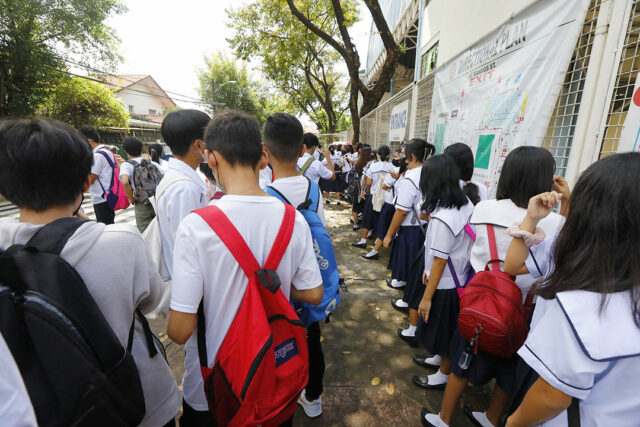
Twenty senators present voted unanimously in favor of the New Philippine Passport Act, a priority measure of President Ferdinand R. Marcos, Jr., which will allow senior citizens and migrant workers to renew their passports virtually, without having to go to line up at the Department of Foreign Affairs (DFA) office.

The measure also allows Filipinos who lost their passports to request emergency passports, which would be valid for a year. Emergency travel document certificates may also be sought for passports lost overseas before they return to the Philippines.

The measure also seeks to establish a watchlist for people who have been denied passports or have had their passports canceled, which would fast-track the approval processes.

Meanwhile, senators also approved on final reading a bill seeking to expand the coverage of monetary benefits under the Centenarian Law to 80-year-old and 90-year-old Filipinos.

Senior citizens within the age range would be allowed to receive a cash gift amounting to P100,000, even if they are not yet 100 years old. The current law only allows senior citizens within one year of reaching 80, 90, or 100 years old to receive cash gifts.

The National Economic and Development Authority would have to consider inflation when dividing the cash gift into three payments, according to the bill.

“Finally, our elderly can reach 80 or 90 and be blessed with a gift that can help them live their day-to-day lives and wait for an even bigger gift at 100 years old,” Senator Sherwin T. “Win” Gatchalian said in a statement, commenting in the bill’s approval.

SSS payment period extended

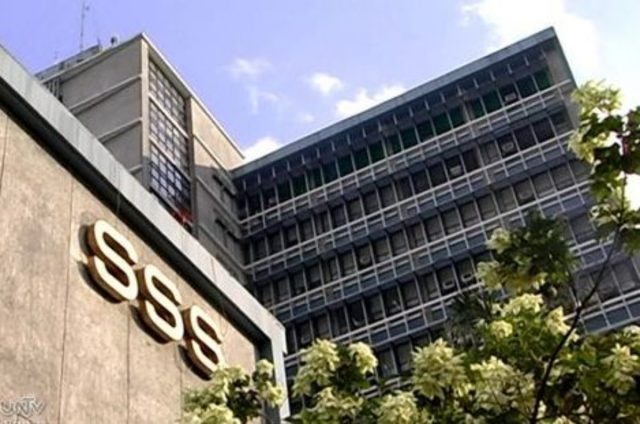
THE SOCIAL Security System (SSS) has extended the deadline for the remittance of contributions in areas affected by typhoons “Egay” and “Falcon” up to Saturday, Sept. 30.

The areas affected include Ilocos Norte, Ilocos Sur, La Union, Pangasinan, Cagayan, Bataan, Bulacan, Nueva Ecija, Pampanga, Tarlac, Cavite, Rizal, Occidental Mindoro, Abra, Apayao, Benguet, Ifugao, and Mountain Province, the SSS said in a circular dated Sept. 25.

The SSS will also afford the same grace period to members in areas where the local government had declared a state of calamity due to the two typhoons.

The extensions apply to business employers with contributions previously due in June 2023, as well as to household employers, coverage and collection partners, and individual members including the self-employed, voluntary members, and non-working spouses with contributions due in April, May, and June. 

The extension also applies to employers with approved installment proposals and have post-dated checks due in June or July.

“No contributions paid retroactively by individual members shall be used in determining his/her eligibility to any benefit arising from a contingency wherein the date of payment is within or after the semester of contingency,” the SSS noted. Aaron Michael C. Sy

Senate OK’s P12-B NEDA budget

BW FILE PHOTO

THE SENATE Finance Committee has approved the proposed P12.21-billion budget of the National Economic and Development Authority (NEDA) and its attached agencies next year, a large chunk of which would be used for maintenance and other operating expenses worth P8 billion.

At the same hearing, Senator Sherwin T. Gatchalian asked officials from the Philippine Statistics Authority (PSA) if the National Identification System could be used to improve verification of registered subscriber identity modules (SIM), given the uptick in their use in scams.

“We are working with the Department of Information and Communications Technology (DICT) and telecommunications firms in implementing this (registration), and they can refer to the National ID system when they register users,” National Statistician Claire Dennis S. Mapa said.

“Right now, we have registered 81 million in the national ID system, which is 80% of the population,” he added. 

However, Mr. Mapa said only about 39.7 million physical Philippine Identification Cards and 40.8 digital IDs have been delivered as of Sept. 8.

Senator Ronald “Bato” M. Dela Rosa suggested that the PSA could scrap issuing physical IDs and focus on going digital since the pace for the former is too slow. — John Victor D. Ordoñez

P2-B PGH budget cut worrisome

PNA

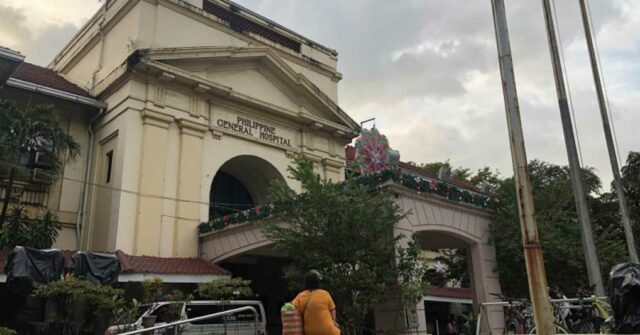
A HEALTH workers’ union questioned on Monday the P2-billion cut in the proposed budget of the Philippine General Hospital (PGH) for next year, warning that the move would significantly affect the services of the understaffed hospital, which primarily serves indigent patients.

The PGH was allocated a zero-budget for capital outlay and the hiring of additional health personnel, such as nurses, nursing aides and clinical utility workers, under the proposed P5.768-trillion national budget for 2024, Karen Mae Faurillo, president of All UP Workers Union-Manila/PGH, said in a Viber message.

Ms. Faurillo said charity wards in PGH are short of two to three utility workers and nursing attendants. She noted that the hiring and filling up of nurse positions in the hospital could not cope with the attrition rate, “with 10-12 nurses resigning every month.”

“The low salary and heavy patient/workload compel our nurses to leave and seek work abroad,” she said. 

“Understaffing results in frequent 16-hour duty, sickness, and demoralization among our health personnel,” she added.

Ms. Faurillo also lamented the proposed P842-million cut in PGH’s Maintenance and Other Operating Expenses (MOOE), which led to a P294-million slash in the Medical Assistance for Indigent Patients (MAIP) program.

The union is demanding a P1-billion allocation for the MAIP program.

“We resist this move as this will badly affect the services that PGH gives to the patients. The zero budget for facilities and equipment will only make it worse,” she said.

“Queuing for special procedures such as MRI (magnetic resonance imaging and CT (computerized tomography) scan can take months,” she said. “There was a point at the OPD procedures when scheduling was stopped because it could no longer accommodate the influx of patients. The equipment need timely maintenance as well.”

PGH is a tertiary state-owned hospital operated by the University of the Philippines (UP) System, which received a P22.587-billion allocation under the proposed 2024 national budget, which is lower than the P25.516-billion budget it got this year.

Of the total proposed budget for UP, P10.494 billion will be earmarked for higher education, P1.5 billion for advanced education, P766 million for research, P382 million for technical advisory extension, and P5.496 billion for hospital services or for the UP-PGH.

The hospital got P5.412 billion for this year.

Ms. Faurillo said their union has been demanding a P10-billion budget for PGH in the past four years.

“[The] Majority of the PGH patients are poor and rely on the free and quality healthcare that PGH delivers,” she said. “It only makes sense that if the Marcos government is sincere in addressing the concerns of the people, it should augment, not cut, the PGH budget.”

Reacting to this development, Kabataan Party-list said in a Viber message: “It seems that upgrading hospitals like PGH aren’t a priority in the infrastructure program of the [Ferdinand R.] Marcos Jr. administration.”

It noted that the proposed budget for the Department of Health next year was also slashed by P10 billion.

The group called for the realignment of the confidential and intelligence funds of the Office of the Vice President and the Department of Education to social services like health and education. Kyle Aristophere T. Atienza

Tedurays expelled from land

COTABATO CITY — More than 300 ethnic Tedurays, an indigenous people (IP) in Maguindanao del Norte, were driven away from their ancestral lands by gunmen who shot at their houses before dawn on Sunday.

Brig. Gen. Allan Cruz Nobleza, director of the Police Regional Office-Bangsamoro Autonomous Region, and Major Gen. Alex Santos Rillera, commander of the army’s 6th Infantry Division, separately confirmed the incident on Monday after dispatching teams to Sitio Tubaran in Datu Odin Sinsuat town to investigate.

“We were forced to leave. We have no way but to give in because we can’t fight them. We are unarmed,” a Teduray farmer, who for security reasons asked to be identified only as “Moh Kedew,” told reporters at an evacuation site where they are temporarily sheltered.

Sunday’s strafing of houses in Sitio Tubaran was preceded by incursions by heavily armed men earlier this month into Teduray villages in two barangays in South Upi town, also in Maguindanao del Sur.

Initial investigation showed the assailants were armed with M-14 and M-16 assault rifles. Mr. Rillera said army intelligence agents have listed names of the possible attackers based on the tip of locals and these are now being validated by their police counterparts. John Felix M. Unson

Dawlah Islamiya gunman killed in Ampatuan clash

COTABATO CITY — Soldiers shot and killed a member of the Dawlah Islamiya (DI) terror group and wounded three others in an encounter over the weekend in Ampatuan town, Maguindanao del Sur.

Army Brig. Gen. Oriel L. Pangcog, commander of the 601st Infantry Brigade, and Col. Roel R. Sermese, Maguindanao del Sur police director, separately confirmed to reporters on Monday that the DI member killed in a clash by patrolling troops from the 40th Infantry Battalion is a long wanted terrorist.

Mr. Pangcog said the shooting started from the group of terrorists, who had opened fire at soldiers deployed in the area to check on villager complaints that armed men were in the area.

Muslim clerics opposed to the activities of the Dawlah Islamiya (DI) informed authorities that two other members of the terrorist group were wounded in the clash.

Mr. Pangcog said that when soldiers found the body of the slain terrorist, he was in possession of an M79 grenade launcher, an M-14 assault rifle, and an improvised .45-caliber machine pistol. — John Felix M. Unson

Balancing tradition and technology seen as key challenge in tourism’s digital evolution

The Philippines aims to position itself as a forward-thinking and responsible tourism destination, ready to offer travelers the experiences they seek in the digital age, the Tourism department said.

This year’s Philippine Travel Exchange (PHITEX) “puts a spotlight on the country’s digitalization and sustainability efforts to meet global demands,” the Department of Tourism (DoT) said in an e-mailed statement on Monday.

The tourism industry worldwide is currently undergoing a significant digital evolution, driven by emerging technologies such as the Internet of Things (IoT).

“Amid this transformative surge, the tourism industry must be poised for action,”  Tourism Promotions Board Chief Operating Officer Marga Nograles said.

One of the key challenges in this digital transformation is striking a balance between preserving the Philippines’ rich cultural heritage and natural wonders while integrating modern technologies, she noted.

“We must not only embrace this digital evolution but also guide the way, ensuring that tradition coexists harmoniously with modernization,” she said.

DoT Secretary Christina Garcia Frasco said that the Philippines has already seen over 3.8 million international visitors as of Sept. 19, with P316.9 billion in estimated revenue. The department targets international tourist arrivals of 4.8 million this year. 

The PHITEX 2023, organized by the Tourism Promotions Board Philippines, earned P296 million in negotiated sales from local and international stakeholders last Sept. 20-21 in Cebu, according to the agency. 

It yielded P55,171,600 on its first day and P232,964,100 on the second as total income, excluding sponsorship and participation fees.

The event saw 164 seller delegates from 119 local companies, alongside 88 foreign buyers. — Miguel Hanz L. Antivola

PPP bill approved on 3rd reading

PPP.GOV.PH

THE SENATE on Monday approved on third and final reading a priority bill that seeks to streamline the framework for public-private partnerships (PPPs) and to address bottlenecks in pursuing these ventures.

In a 20-0-0 vote, legislators approved Senate Bill No. 2233 or the proposed PPP Act, which seeks to amend the Build-Operate-Transfer Law to attract more investment and boost the government’s infrastructure program.

The bill also seeks to establish a PPP Governing Board, which will oversee policy related to PPPs.

The board will be headed by the National Economic and Development Authority Secretary, with the Finance Secretary as vice-chair.

The Commission on Audit will also be tasked to issue guidelines on auditing PPP projects.

The House of Representatives approved its version of the bill on third reading in December.

As of Sept. 1, there were 104 PPP projects in the pipeline at an estimated cost of P2.521 trillion. Some 180 projects are being implemented worth P2.639 trillion, according to the Department of Finance.

“We are confident that through this measure, the identified bottlenecks and challenges in the PPP process will be effectively addressed, further fostering a more competitive and enabling environment for PPPs,” PPP Center of the Philippines Executive Director Maria Cynthia C. Hernandez said in a statement, commenting on the Senate’s approval.

She added that the proposed law will also help generate more jobs in the infrastructure industry and attract more private investment.

Senators on Monday also approved another priority bill of President Ferdinand R. Marcos, Jr. that seeks to ease the process of paying taxes, with the goal of boosting compliance with tax obligations.

Senate Bill No. 2224, written by Senator Sherwin T. Gatchalian, will allow taxpayers to file returns and pay their taxes through electronic channels or authorized agent banks.

“We aim to simplify the process of paying taxes in the hope of enhancing tax compliance and strengthening taxpayers’ rights,” Mr. Gatchalian said last month.

At the same plenary hearing, a priority bill that aims to protect online consumers with stricter digital commerce regulations was also approved on final reading.

Senate Bill No. 1846, or the Internet Transactions Act of 2022 written by Sen. Mark A. Villar, will classify entities involved in e-commerce as businesses operating within the country, making them subject to domestic law. 

The House of Representatives approved its version of the bill on third and final reading last December. In June, the President certified the measure as urgent, citing the need to improve the regulation of e-commerce transactions and upgrade consumer protections.

“It will address the pressing need to ensure that Filipinos can harness the benefits of the digital world without compromising their privacy and security,” Mr. Villar said last month in a statement detailing the measure. — John Victor D. Ordoñez

EV industry group seeks exemption from Customs import assessment

REUTERS

THE Electric Vehicle Association of the Philippines (EVAP) said it requested an exemption for its members from going through the Bureau of Customs’ (BoC) Import Assessment System.

“This initiative aims to streamline the clearance process, making it more efficient for EVAP members. Subject to the usual post-clearance audit process,” EVAP said in a statement. 

The Import Assessment System typically applies to vehicle imports, but EVAP is applying for pre-approval, the organization’s chairman Rommel T. Juan said in an e-mail.

On Saturday, the electric vehicle (EV) organization met with the BoC to address and clarify policies concerning the importation of electric vehicles.

“The meeting was pivotal in ensuring a seamless and efficient process for importing electric vehicles into the Philippines,” the EV association said.

The BoC was represented by Assistant Commissioner Vincent Philip C. Maronilla.

“The BoC is in the midst of overcoming these initial challenges, as the EV industry is rapidly expanding, thanks to the recent implementation of Electric Vehicle Industry Development Act (EVIDA) law,” Mr. Maronilla said in a statement. 

Under the revised implementing rules and regulations of EVIDA, corporate and government vehicle fleets have been set a 5% EV quota and are also required to set aside dedicated EV parking slots and install charging stations.

“This collaboration aims to pave the way for a smoother and more efficient importation process for electric vehicles, ensuring that this transformative industry continues to flourish in the Philippines,” Mr. Juan added.

In May, EVAP expressed its support for the removal of import tariffs on two-wheeled electric vehicles.

It said that the removal of tariffs for two-wheelers will help the Philippines achieve its goal of reducing greenhouse gas emissions and improving air quality. — Justine Irish D. Tabile

PCCI to help encourage greater use of FTAs

THE Philippine Chamber of Commerce and Industry (PCCI) said it entered into a partnership with the Department of Trade and Industry (DTI) to promote greater use of free trade agreements (FTAs).

On Monday, PCCI and DTI signed a memorandum of understanding (MoU) to promote the Regional Comprehensive Economic Partnership and other free trade and preferential trade agreements, which is expected to help businesses and industry associations rise their participation in global value chains.

“The MoU is intended to create a strategic and institutional partnership between the government and the business community to capitalize on these agreements,” the PCCI said in an advisory.

Under the MoU, the two parties will conduct trade education and mentorship programs, establish trade assistance centers or help desks in key regions and provinces, provide networking and linkage opportunities, and share resources.

The partnership also gives the PCCI access to DTI data and DTI assistance in PCCI collaboration with other government instrumentalities.

The PCCI agreed to promote FTAs within its membership and identify industry associations to serve as pilot participants for international trade assistance centers. — Justine Irish D. Tabile

Palay farmgate price up 8.6% in July; unmilled rice costliest in Central Visayas

PHILIPPINE STAR/EDD GUMBAN

THE average farmgate price of palay, or unmilled rice, rose 8.6% year on year in July to P19.38 per kilogram, according to the Philippine Statistics Authority (PSA).

“Similar to the previous month, all regions, except Eastern Visayas, continued to record positive year-on-year growth rates in the average farmgate prices of palay in July 2023,” the PSA said in a report.

The highest farmgate price was recorded in the Central Visayas at P22 per kilo, 19.95% higher from a year earlier.

This was followed by Central Luzon with average palay prices hitting P21.04 per kilo, up 22.5% from a year earlier, the highest growth rate registered for the month.

The Ilocos region averaged P20.23 per kilo, up 5.9% year on year. July palay prices were flat from a month earlier.

The lowest farmgate price was in Caraga, where palay fetched P17.36 per kilo, up 12.3% from a year earlier.

Eastern Visayas recorded a year-on-year decline of 4%, with palay prices averaging P17.47 per kilo.

On a month-on-month basis, the PSA said that the average farmgate price rose 0.8% from June.

“Nine regions recorded increases in the average farmgate prices of palay, while six regions posted decreases during the month,” it added.

The PSA said that Central Visayas reported the highest month-on-month rise at 10.7%, while Caraga saw a 5% decline. — Adrian H. Halili

ADVERTISEMENT
ADVERTISEMENT