Home Blog Page 4269

Hollywood prepares for partial return to work after writers’ deal

PEDRO MARROQUIN-UNSPLASH

LOS ANGELES — Talk show producers started planning new episodes on Monday, the first steps to put Hollywood back to work after writers reached a tentative deal to end their nearly five-month strike.

The Writers Guild of America (WGA), which represents roughly 11,500 film and television writers, reached a preliminary three-year deal with major studios on Sunday. The agreement still must be approved by the union’s leadership and members.

While actors remain on strike, late-night and daytime talk shows may resume production once their writers receive the Guild’s greenlight to return to work in the coming days or weeks.

The Drew Barrymore Show is aiming to go back on the air in October, a source with knowledge of the plans said. Ms. Barrymore had sparked a backlash by announcing she was going to bring the show back in mid-September, a decision she reversed.

Representatives for late-night shows such as The Tonight Show with Jimmy Fallon had no comment on when they would air fresh episodes.

Scripted series will not be able to resume filming until the SAG-AFTRA actors union reaches an agreement with studios. The actors walked off the job in July, demanding higher wages and limits to the use of artificial intelligence on screen.

Film and television producer Todd Garner said he expects that once actors reach a deal, scores of productions will race to restart at once.

“Remember during the pandemic, when Long Beach had all of those ships waiting?” said Mr. Garner, referring to the logjam of cargo ships stranded in the southern California port. “That’s our business right now. I’m guessing there are 250 ships in the harbor right now.”

Major television shows and movies are contractually in first position with actors, Mr. Garner said. Work on uncompleted projects such his own movie, Mortal Kombat II, will need to be finished first, before other projects can get under way.

“Until we get all these big ships out of the harbor, nothing new is going to be started, unless it’s with actors who previously weren’t committed to something else,” Mr. Garner said.

Shares of big media companies gave up early gains on Monday.
Warner Bros. Discovery closed down nearly 4%, Comcast fell almost 1% and Walt Disney dropped 0.3%.

Investors of the media companies have been concerned about the financial fallout from the strikes that had initially boosted cash flows due to lower spending, but has started eating into earnings.

The deal with writers “will also mean the studios and streaming services will now focus fully on actors’ demands,” said Susannah Streeter, head of money and markets at Hargreaves Lansdown.

“Already it’s likely that the big studios will face a significant hit in 12-18 months time, with so little in the pipeline and bosses are now desperate for new content to attract eyes to big and small screens.”

Warner Bros. Discovery had earlier warned that the company’s full-year adjusted core profit would take a hit of up to $500 million due to project delays from disruptions.

Its shares have dropped nearly 14% since the writers’ strike started on May 2, while Paramount, Disney and Netflix have lost between 20% and 45%. In comparison, the benchmark S&P 500 index has risen nearly 5%.

Netflix, however, rose 1.3%. Analysts have said the streaming giant was better placed than its media rivals as it has production operations and staff in regions outside of the US, which are not affected by the strike.

“The total spend on shows will be little changed, as studios will either cut spending from other elements of show production or reduce the number of new shows they produce (a process already under way) to pay for increased costs from writers,” said Rosenblatt analyst Barton Crockett. — Reuters

First Gen says LNG terminal to run before yearend

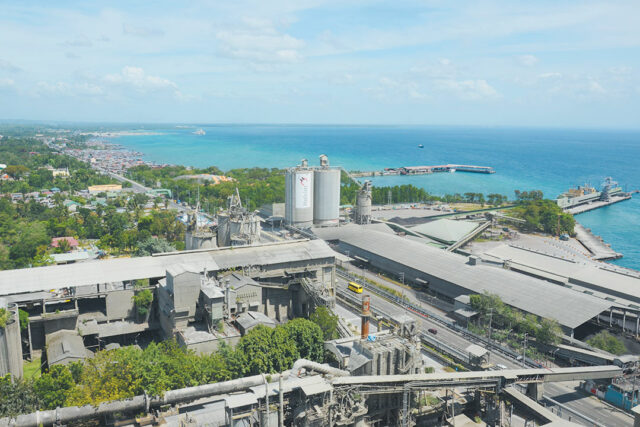
LOPEZ-LED First Gen Corp. aims to start operating its offshore liquefied natural gas (LNG) terminal in Batangas before yearend and to complete the commissioning process by October, its president said.

“Hopefully, before the end of the year, it’s already complete, it’s already operational. What we need to do is to figure out how to [sustain] our regular LNG supply,” First Gen President and Chief Operating Officer Francis Giles B. Puno told reporters on the sidelines of a conference on Tuesday.

He said the sourcing of the supply would depend on the market, but preferably during summer months when LNG is more affordable.

Mr. Puno said First Gen had received its first LNG shipment last month.

“We have the floating storage and regasification unit [FSRU], then we have the onshore facilities. Both of them are going through commissioning, so they are not yet connected. So, sometime by mid-October, hopefully, they will be connected,” he said.

In July, First Gen told the local bourse that it had secured an LNG cargo from Shell Eastern Trading Pte. Ltd. for the delivery of 154,500 cubic meters of LNG.

An LNG carrier will facilitate the gassing-up and cooling-down of the BW Batangas FSRU at Subic Bay before the cargo’s transfer into storage tanks on board.

The BW Batangas is the FSRU of First Gen’s wholly owned subsidiary FGEN LNG Corp. and floating gas infrastructure developer BW LNG.

It will provide LNG storage and regasification services to First Gen’s existing and planned gas-fired power plants and third-party terminal users.

After the LNG transfer into the storage tanks, the BW Batangas will then return to FGEN LNG’s terminal in Batangas to complete commissioning activities.

The cargo will be used by the company’s four natural gas-fired power plants in Batangas with a combined capacity of 2,017 megawatts that are currently supplied by the Malampaya gas field.

LNG is seen as the answer to the country’s power needs amid a looming power crisis with the expected depletion by 2027 of the Malampaya field, the country’s only indigenous source of natural gas.

On Tuesday, First Gen shares went up by 34 centavos or 1.86% to close at P18.58 apiece. — Sheldeen Joy Talavera

Oscar-winning Italian actress Sophia Loren hospitalized after fall

SOPHIA LOREN in the 1964 hit film Marriage Italian Style. -IMDB.COM

ROME — Oscar-winning Italian film star Sophia Loren, a national icon and one of the most enduring movie divas of the 20th century, has had surgery after a fall in her home in Geneva, her spokesperson said on Monday.

The operation on Ms. Loren, 89, “went well and now she needs to rest and everything will be resolved,” the spokesperson told Reuters in an e-mail.

He gave no details but said Italian media reports were correct. The reports said she had an accidental fall in her home in Geneva on Sunday and had suffered a broken hip.

Ms. Loren has won two Oscars, the first in 1961 for her tragic portrayal of a war-time mother in Vittorio De Sica’s neo-realistic classic La Ciociara (Two Women). The second was a career award in 1991.

Some of her most memorable and successful films were made with fellow Italian co-star Marcello Mastroianni, who died in 1996. She has also co-stared with Cary Grant, Marlon Brando, Frank Sinatra, and Paul Newman, among other 20th century film giants.

Her most recent starring role was in 2020’s La Vita Davanti a Se (The Life Ahead).

In it, she plays a former prostitute and Holocaust survivor who looks after children of working prostitutes in the southern Italian city of Bari and helps an orphaned Senegalese migrant boy who had robbed her.

It was directed by her son, Edoardo Ponti.

News of the fall and hospitalization was first reported on the Facebook page of Sophia Loren Restaurant, a chain of venues that bears her name.

It said she had been planning to open a new one, the fourth in Italy, in Bari on Tuesday. — Reuters

Four days in a Palawan paradise: GDP growth and 400 years of evangelization

RIOHONDO-EN.WIKIPEDIA

(Part 3)

Because of the very nature of the Palawan Business Club (PBC) that was put up to apply the spirit of solidarity to the business community in this paradise province — which is endowed with 1,200 islands, lush forests, pristine beaches (especially San Vicente), and very diverse aquaculture and marine endowments — they sought my advice on which of the national socio-economic objectives they can particularly contribute to.

To define the national economic good, both Jess Estanislao and I made reference to the National Economic and Development Authority (NEDA) vision of Ambisyon Natin 2040 in which every Filipino should have attained the material comfort that citizens of First World Country (like South Korea or Taiwan) have already attained today. I also referred to what the present Administration should do to move towards that goal.

I first told them of my firm conviction that, on the basis of what we already have accomplished during the decade prior to the pandemic, the objective of the Government of Ferdinand Marcos, Jr. to attain GDP growth annually of 6-7% in the next five to six years is very much within reach. The reason I give is that with the critical mass of sound economic institutions (like the Central Bank and Department of Finance) we have built over the last 30 years of slow and painful reforms, together with our demographic dividend of a young and growing population, our population (115 million today) will be the basis of  consumption-led growth, with purchasing power being mostly generated by OFW remittances, the earnings of the business process outsourcing-information technology (BPO-IT) industry, and the ever reliable domestic tourism sector.

Although our GDP growth of 6-7% is already among the highest in the region, it will not be enough to bring down our double-digit poverty incidence of some 13-15% to the desirable single-digit level of 9% or lower. We must have growth of 8-10% to really combat poverty more aggressively. To attain this rate of growth, the President must deliver on three critical points:

1. Improve the productivity of the agricultural sector so that it can grow at a modest 2-3%, which is the standard that was set by Thailand and Vietnam over the last two decades.

2. Increase the ratio of investment to GDP from an average of 21% today to close to the average of our East Asian neighbors, which is anywhere from 25% to 35%.

To do this there is no alternative but to attract a massive amount of Foreign Direct Investments (as Vietnam is doing) because the Philippines is highly indebted and is unable to generate enough long-term capital needed to continue the build, build, build program and to invest in large-scale agribusiness ventures like the Lionheart Farms. It is a good sign that large agribusiness enterprises from the United States, like Cargill and John Deere, are coming in a trade mission sometime in September to explore opportunities of investing in the Philippines in what called “precision agriculture” which can bring in both advance technology and long-term capital from the US.

Only capital and technology from abroad will enable us to accelerate our growth of 6-7% annually based on a consumption-led economy to 8-10% with a greater push from the side of capital formation or investments. The Government can only do so much as it tries to lower the debt-to-GDP ratio to much more comfortable levels below 60%. It must be recalled that before the pandemic that debt-to-GDP ratio was hovering at 30%, earning us upgrades in our credit rating.

3. Reduce significantly the huge financial leakages caused by corruption, both on the part of the Government and that of the private sector.

It is obvious that the Palawan business community — in partnership with both national and local governments — can do much when it comes to investments to improve agricultural productivity as Lionheart Farms is already doing. As regards increasing investments — especially FDIs — groups like the Palawan Business Club and the various business chambers have an important role in organizing road shows in countries rich with long-term capital and appropriate technology like Japan, South Korea, Taiwan, and Spain.

In fact, the PBC is already planning an intermediate stage of holding the next road show in the first quarter of 2024 in Metro Manila, to facilitate the attendance of the CEOs of the large business conglomerates and financial institutions that can be the source of at least whatever domestic long-term capital is still available before venturing abroad. In this regard, I told them how the Maharlika Fund — if properly focused on the right industries — can help attract larger amounts of FDIs.

Finally, I told them it was a good sign that their Governor was closely coordinating with the Institute for Solidarity of Asia (ISA) in the very important task of combatting corruption at all levels. In fact, Jess was even more bullish than I about the attainable growth rate if corruption is indeed eradicated. He said that Palawan should not be satisfied with a regional GDP growth rate of only 8-10% but should strive for a higher rate of 10-12%, closer to the rates attained by China during the glory years of Deng Xiao Peng in the last century.

To illustrate in a dramatic way that economic progress is not the end-all and be-all of integral human development, the rest of four days in paradise were spent on the celebration of the 400th anniversary of the start of Christian evangelization by the Agustinian Recollect Order in 1623.

The celebration had enough significance to warrant the presence of the Papal Nuncio himself, the Very Rev. Charles John Brown and the Archbishop of Manila, His Eminence Jose Cardinal Advincula. Also present were Bishop Pablo Virgilio David, President of the Catholic Bishops’ Conference of the Philippines (CBCP) and the Most Rev. Socrates C. Mesiona, Apostolic Vicariate of Puerto Princesa.

In one of the sessions during the Palawan Business Club road show, Rev. Fr. Rene Paglinawan, Order of Augustinian Recollect (OAR) and Archivist of the Order in Rome, gave the audience very important insights about the history of Christianity in Palawan. It was in 1623 when systematized evangelization of the entire province (the biggest in the Philippines) was started by the Agustinian Recollect order in Puerto Princesa. There were already some priests in Cuyo island before that year, but it was in 1623 that formal evangelization began.

Christianity in the Philippines has gone a long way during the last four centuries. Fr. Paglinawan is a top official in the entire Agustinian order worldwide. He is the order’s archivist based in Rome. He reminded me of top Filipinos who are also global heads of important religious orders, such as Brother Armin Luistro, F.S.C, who now heads the worldwide organization of the De La Salle Christian Brothers. Then there is Cardinal Luis Tagle who is one of the top officials in the Vatican, considered by some as a papabile.

(To be continued.)


Bernardo M. Villegas has a Ph.D. in Economics from Harvard, is professor emeritus at the University of Asia and the Pacific, and a visiting professor at the IESE Business School in Barcelona, Spain. He was a member of the 1986 Constitutional Commission.

bernardo.villegas@uap.asia

Holcim Philippines sets Nov. 27 as target date for PSE delisting

BW FILE PHOTO

HOLCIM PHILIPPINES, Inc. has set Nov. 27 as its target date for delisting from the stock exchange, claiming it has satisfied the required conditions.

In a letter addressed to the stock exchange dated Sept. 25 and disclosed on Tuesday, Holcim Philippines said that its stockholders approved on Sept. 22 the cement manufacturer’s plan to voluntarily delist.

“The company believes that it has satisfied all the conditions in Philippine Stock Exchange (PSE) Memorandum CN No. 2020-0104, the amended voluntary delisting rules, to delist its common shares from the main board of the PSE,” Holcim Philippines said.

“The delisting rules provide that a petition for delisting must be filed with the PSE together with the tender offer report at least 60 days prior to effective date of delisting. The target date of the delisting is Nov. 27, which is more than 60 days from the date of this petition,” the company added.

The board of directors of Holcim Philippines approved the voluntary delisting on June 29.

In a separate disclosure, the company said the second tranche of its tender offer is set from Sept. 30 to Oct. 30.

The tender offer price for the second tranche is P5.33 per share, which is the same as the first tranche.   

The PSE suspended the trading of Holcim shares when Holderfin B.V. bought 594.95 million common shares or 9.22% of the company’s outstanding capital stock from Sumitomo Osaka Cement Co., Ltd.

As a result, Holcim Philippines’ public float fell to 5.05%, or below the minimum requirement for listed firms. Holderfin conducted a tender offer for 325.58 million of Holcim’s issued and outstanding common shares at P5.33 apiece.

In the first half, Holcim Philippines recorded a 26.3% jump in its attributable net income to P834.72 million from P661.05 million a year ago.

Based on its website, Holcim Philippines has cement manufacturing facilities in La Union, Bulacan, Misamis Oriental, and Davao, as well as aggregates and dry mix business and technical support facilities for building solutions. — Revin Mikhael D. Ochave

Better Call Saul creators beat Liberty Tax’s defamation, trademark lawsuit

BOB ODENKIRK in a scene from Better Call Saul. -IMDB.COM

NEW YORK — Better call this: Case dismissed.

The creators of the hit crime drama Better Call Saul on Monday won the dismissal of a defamation and trademark infringement lawsuit by Liberty Tax Service for depicting a shady fictional tax firm that appeared to resemble its own.

US District Judge Paul Gardephe in Manhattan ruled in favor of AMC Networks and Sony Pictures Television over the depiction of Sweet Liberty Tax Services in an April 2022 episode.

Mr. Gardephe said Liberty Tax offered no “particularly compelling” allegations that viewers would be confused into thinking Sweet Liberty was one of its more than 2,500 offices.

Better Call Saul starred Bob Odenkirk as Saul Goodman, a corrupt lawyer also known as Jimmy McGill.

The disputed episode “Carrot and Stick” showed Sweet Liberty in a trailer in the New Mexico desert, using an inflatable Statute of Liberty and American flag motif, and run by former Goodman clients Craig and Betsy Kettleman to skim tax refunds.

In a 30-page decision, Mr. Gardephe said that to the extent the defendants used Liberty Tax’s trademarks, it was to advance the plot, not for marketing purposes or to disparage the Virginia Beach, Virginia-based company.

“The Kettlemans’ use of plaintiff’s trade dress is a gaudy and shabby appropriation of patriotic imagery that highlights their hypocrisy and the tawdry nature of their crimes, all of which has genuine relevance to [the] story,” the judge wrote.

Mr. Gardephe distinguished the case from hip-hop duo Outkast’s use as a “marketing tool” of civil rights activist Rosa Parks’ name to title a 1998 song that had nothing to do with her.

An appeals court revived Ms. Parks’ trademark claim, and the case later settled.
Peter Siachos, a lawyer for Liberty Tax, said his client will explore its legal options, including an appeal or refiling the lawsuit in a state court.

AMC’s and Sony’s lawyers did not immediately respond to requests for comment. Both said their use of Sweet Liberty was protected by the US Constitution’s First Amendment.

Better Call Saul was a prequel to the series Breaking Bad. It ran for six seasons, ending in August 2022. — Reuters

Why the PPP is ideal for public service infrastructure projects

PIKISUPERSTAR-FREEPIK

Infrastructure projects implemented under a Public-Private Partnership (PPP) scheme are advantageous to the government in terms of improving transparency and accountability, shifting taxpayers’ liability to the users, and improving the delivery of public service.

Such are the findings of the comparative study which I, together with Stratbase ADR Institute, conducted on the New Centennial Water Source-Kaliwa Dam Project (NCWS-KDP) and Wawa Bulk Water Supply Project-Upper Wawa Dam (WBWSP-UWD), otherwise known as the Kaliwa Dam Project (KDP) and Upper Wawa Dam (UWD) respectively.

Foremost, we looked at the regulatory framework as a key area of comparison between the two dam projects. Generally, frameworks in the form of laws, regulations, decrees, and policies can be mandatory and coercive, or voluntary (i.e., integrity pacts, codes of conduct, and policy agreements). They are designed to mitigate corruption, even though they are not enough to prevent and fight it on their own. They are fashioned to ensure policy compliance, transparency, accountability, and fairness. Overall, regulatory frameworks aim to strike a balance between facilitating economic activities and safeguarding societal well-being. Project owners and stakeholders are expected to follow regulatory guidelines and requirements to improve processes, strengthen security, and achieve other business objectives.

The study explored two relevant regulatory frameworks under which the KDP and UWD projects have been subjected to: Official Development Assistance (ODA) on one hand, and PPP, on the other hand. The former is governed by RA 8182 or the Official Development Assistance Act of 1996 (as amended by RA 8555 in 1998). The latter is governed by a hybrid PPP (RA 6957 or Build-Operate-Transfer Law of 1990 as amended by RA 7718 in 1994, and Executive Order 30 of 2023 which re-organized the PPP Governing Board).

On the participation of the private sector in national development and involvement in competitive bidding on government infrastructure projects and consulting services, Sec. 20, Art. 2 of the 1987 Philippine Constitution and RA 9184 (Government Procurement Reform Act of 2002), respectively, are relevant. The latter identifies the principles of transparency, competitiveness, system of accountability, and public monitoring of the procurement process (Sec. 3, Art. 1).

Conceptually, PPP involves collaboration and cooperation between a government agency and a private-sector company. They are engaged in financing, building, and operating projects that can be used to finance, build, and operate large-scale government projects such as roads, bridges, or public transportation networks, hospitals, and infrastructure projects for social, economic, and cultural development, among others. With private funding, such a partnership makes these projects possible in the first place and allows them to be completed sooner.

Considering the PPP framework and benefits, the UWD opted for a business-to-business (B2B or B-to-B) transaction between WawaJVCo., Inc. (UWD’s project owner) and Manila Water Co., Inc. (MWCI, one of MWSS’ water concessionaires) through an “offtake agreement” to obtain easy finance. Conceiving the agreement within the context of a B2B transaction, Melvin Tan, President of WawaJVCo., Inc., said that the 30-year contract between WawaJVCo., Inc. and MWCI guarantees not only a long-term partnership between two private enterprises, but also secures the repayment of debts to their creditors.

In March 2023, Mr. Tan said in an interview that “(T)he Wawa Bulk Water Supply Project is (also) a private-public partnership between the Metropolitan Water Sewerage System (MWSS) and WawaJVCo.” He added that “the government’s involvement is mainly to step in if the concession agreement between Manila Water and MWSS expires in 2037.” Clearly, in the case of the UWD and MWCI partnership, government participation and collaboration are ensured through the enforcement of the concession agreement entered between MWSS and MWCI.

In a nutshell, it is argued that although PPP and B2B are conceptually different, they do overlap in certain cases, more so B2B can operate within the PPP context. In the same light, any unresolved dispute on the offtake agreement between WawaJVCo., Inc. and MWCI has to be arbitrated by Philippine courts. The government enforces the terms of contracts between parties to the degree that companies bring one another to court just as individuals do.

It appears, therefore, that a hybrid framework of PPP fulfills not only the commercial interest of private enterprises but also efficiently delivers a project and service traditionally provided by the public sector.


Dr. Rizal G. Buendia is a non-resident fellow of the Stratbase ADR Institute.

Inclusivity, eco-friendly trends seen reshaping the beauty industry

By Patricia B. Mirasol, Reporter

THE push for inclusivity and eco-friendly practices continues to impact the landscape for beauty businesses, according to an industry player.

The beauty industry is not just about enhancing one’s appearance; it is also a platform for empowering individuals while safeguarding the environment, said Theresa Carbonel-Buenaflor, founder of the 16-year-old makeup brand Ellana Mineral Cosmetics.

The push for inclusivity in the beauty industry acknowledges that beauty knows no bounds. This means offering products that cater to individuals with diverse skin tones, Ms. Buenaflor said in an interview with BusinessWorld.

Ellana Mineral Cosmetics was established on Sept. 9, 2007, with the goal of addressing the concerns of individuals with delicate skin, she noted.

Her inspiration stemmed from a friend who grappled with the scarcity of makeup suitable for her.

“I wanted to make something to address Coney [Avellana’s] problems,” Ms. Buenaflor said.

According to her, the challenge was apparent — individuals with morena (medium brown) skin tones found themselves underserved in a market dominated by Western brands.

“She had morena skin, and there weren’t a lot of options for people with morena skin,” she said. “It was a lot of Western brands then.”

“It was hard to match the shade of the Filipina skin tone. We were the first in that movement,” she added. 

The early years saw Ellana Mineral Cosmetics selling products at bazaars from 2008 to 2012, carving a niche presence. Soon thereafter, it transitioned to a recognized name in the beauty sector, securing spots in retail giants such as Landmark, Watsons, and Robinson’s Department Store. 

Ellana’s core customer profile is predominantly female, aged between 18 to 45 years old, living in urban and urbanizing areas, and within the B, C1, and C2 socioeconomic classes. They are also knowledgeable about skin concerns and value-driven, Ms. Buenaflor said. 

NEW GENERATION
The new generation, known as Gen Z Filipinos, is redefining beauty standards.

They are not merely consumers; they are conscious advocates for eco-friendly products and brands, Ms. Buenaflor said.

The values and preferences of Gen Zs revolve around sustainability, environmental responsibility, and ethical consumption. Hence, the brand remains vegan and cruelty-free, adhering to principles that resonate strongly with Gen Z Filipinos, Ms. Buenaflor said.

They’re really more into the eco, the clean beauty, and it resonates to them more versus the people who are used to traditional makeup,” she noted.

Producing vegan makeup is not as stringent as halal products, she said, referring to ingredients and processes permissible under Islamic law.

“Vegan is just choosing plant-based ingredients. You can use synthetic ingredients as long as it’s not animal-based,” she noted. “Cruelty-free is easy because it’s simply doesn’t test on animals nowadays, and a lot of people can claim that.”

The eco-friendly promise, in contrast, is challenging because “not a lot of people understand what it is all about,” she also said.

To reduce its carbon footprint, the company made the decision to cut down on packaging by introducing refillable sachets and reusable jars. It also started using glass instead of plastic.

Availing of a loose mineral foundation from its product line, for instance, means having to purchase the refillable sachet separately from the reusable jar.

“A lot of people would ask me, ‘Why are you making it hard on the customer? Just put the powder directly in the jar.’ It’s the effort. It’s that conscientious act of reusing your jar that… you don’t have to throw it away.”

Ms. Buenaflor, who grew up with parents who are vegan, said it was about the advocacy of being conscientious about what one uses. 

She said the larger beauty industry is likewise heading towards this direction.

“I went to Cosmoprof [an international beauty trade show] in Singapore last year, and the theme was everything sustainable,” she said, adding that it was not like that in the past.

An August 2023 study by Statista cited the global beauty and personal care market’s 2023 revenue at $579.2 billion. Its compound annual growth rate (CAGR) is also forecasted to be 3.53% between 2023 to 2028.

In the Philippines, the same market amounts to $5.89 billion in 2023, with a 2023-2028 CAGR of 0.83%. 

PRICING
Ellana has recently started lowering its product prices in a bid to become more accessible to its core market.

“As a 16-year-old brand, you’re not young anymore,” Ms. Buenaflor said. “The values that we have are being championed by the younger generation, so we need to be more leveled towards that demographic.”

“That’s why we’re also addressing accessible prices,” she added.

Planning and bulk prices are how the company manages this. Apart from the raw materials, “a lot of the costs that go into it are actually the packaging,” which makes buying in bulk a means to achieve its objective of lower prices, Ms. Buenaflor said.

Planning is a crucial aspect, and ingredient sourcing is another challenge, she noted. Half of Ellana’s raw materials are from South Korea.

“Everything has to come from outside,” she said. “There’s a lack of processing plants and manufacturing facilities that are really focused on ingredients in [this] country.”

Even so, the Philippine beauty industry, Ms. Buenaflor said, has become more competitive since she started selling lip balms as a college student in 2003.

Even during the pandemic, “there was an explosion of beauty brands, which is good, honestly,” she noted. “I believe that with a lot of competition comes innovation, more creativity, and many more things to play with, unlike 20 years ago.”

The industry is still perceived as a shallow one, according to Ms. Buenaflor. “We get a lot of those — even up to now,” she said, “but to see how a transformation is…even putting on red lipstick can build confidence. I think it’s very rewarding to see that.”

Suntrust Resort’s board approves increase in its capital stock to P28B

LISTED Suntrust Resort Holdings, Inc. said its board had given the green light for the increase in the company’s authorized capital stock to meet regulatory and contractual obligations.

In a regulatory filing on Tuesday, Suntrust said its board approved on Sept. 25 the capital hike to P28 billion divided into 28 billion common shares with a par value of P1 each 

Previously, the company’s authorized capital stock was at P23 billion consisting of 23 billion common shares at P1 apiece.   

“[The higher capital stock is meant to] ensure that there is a sufficient number of unissued shares in the event that convertible bonds issued by the company to Fortune Noble Ltd. and Summit Ascent Investments Ltd. are converted into shares by any or both of them,” Suntrust said.

“[The move is also] pursuant to the requirement of the Philippine Stock Exchange, Inc. in connection with the previous listing of Fortune Noble’s 2,550,000,000 shares in the company, that the company conduct a follow-on offering of at least 10% of its outstanding capital stock within one year from Feb. 10, 2023,” the company added.

Aside from the higher capital stock, Suntrust’s board also approved the inclusion of retail activities to the company’s business purposes to expand its revenue sources.

“This is to enable the company to engage in retail activities, which is in line with its primary purpose of developing and operating tourism-related facilities such as hotels, resorts, private clubs, leisure parks, entertainment centers, restaurants, food and beverage outlets, other recreational facilities, and allied businesses, services, and facilities,” Suntrust said. 

On Tuesday, Suntrust shares at the local bourse closed unchanged at 84 centavos apiece. — Revin Mikhael D. Ochave

UK police investigate sex assault allegations following Russell Brand reports

RUSSELL BRAND in a scene from the 2008 film Bedtime Stories. -IMDB.COM

LONDON — British police said on Monday they had launched an investigation into a number of allegations of non-recent sexual offences following media reports that four women had accused actor and comedian Russell Brand of a string of sexual assaults.

Earlier this month, the Sunday Times newspaper and Channel 4 TV’s documentary show Dispatches reported the women had accused Mr. Brand, 48, of sex offenses, including a rape, between 2006 and 2013.

Mr. Brand has rejected the “very serious criminal allegations,” saying on his social media channels that he had never had non-consensual sex.

“Following an investigation by Channel 4’s Dispatches and The Sunday Times, the Met has received a number of allegations of sexual offenses in London,” London’s Metropolitan Police said in a statement.

“We have also received a number of allegations of sexual offences committed elsewhere in the country and will investigate these.”

Police declined to give details of the dates, the number of incidents, or the details of the offences under investigation.

However last week, in wake of the reports, the police did say they had received an allegation of a sexual assault reported to have taken place in Soho, central London, in 2003.

“We continue to encourage anyone who believes they may have been a victim of a sexual offence, no matter how long ago it was, to contact us,” said Detective Superintendent Andy Furphy, who is leading the investigation.

Since the allegations were first published and broadcast, British media have detailed other accounts by women alleging inappropriate behavior by Mr. Brand, the former husband of US singer Katy Perry and once one of the country’s most high-profile comedians and broadcasters.

It also led to his promoters announcing the remaining dates of a stand-up tour he was on had been postponed, while YouTube said last Tuesday it had blocked Brand from making money from his online channel.

Mr. Brand accused “big tech,” the government, and mainstream media of trying to shut down independent voices when he started his regular broadcast on Monday on the online video site Rumble, where he has 1.6 million followers.

“I now, in particular, have a new experience on the way that the media and the state can cooperate and corroborate one another’s narratives and stories,” he said, although he made no direct reference to the assault allegations.

“I am beginning to sense that if you publicly question important stories that are agenda-led like, for example, the war in Ukraine or the response to the COVID pandemic then it appears there is some significant heft behind controlling those narrative spaces.”

Canadian-based platform Rumble has rejected calls from British lawmakers, among others to stop Mr. Brand, who has starred in a number of films such as Get Him to the Greek, from making money from the site. — Reuters

Is your Starbucks Halloween cup creating a new waste problem?

IF STARBUCKS CORP. wants to start reducing the environmental impact of its drinking vessels, its plans for pumpkin spice latte season could be a step in the wrong direction.

The company is planning to move away from using disposable cups by 2030, Associated Press reported last week. All packaging will be reusable, recyclable, or compostable by that date, although single-use vessels will still be available until a better long-term solution is found, according to a spokesperson.

How, then, to consider the range of “hauntingly beautiful Halloween drinkware” it announced earlier this month? There’s a glow-in-the-dark green plastic venti beaker; mugs shaped like pumpkins and skulls; and a six-pack of reusable cups decorated with ghosts and more pumpkins. Before you rush to buy, it’s worth considering a paradox: You may be better off, in environmental terms, getting your cappuccino in standard disposable paperboard.

Most of us think that single-use packaging is one of the most important threats to the environment out there — a consequence of its highly visible presence in our lives. Less obvious are the ways that materials, water, and energy can add up to a comparable ecological toll.

While the advantages of switching to reusable cups are genuine, they can also be surprisingly slight, and dependent upon aspects of usage that few of us think much about. A seasonal-themed beaker that’s cleaned in the sink every day for a month and then stuck at the back of the cupboard once Halloween passes may end up having a higher climate impact than the 30 paperboard cups you’d use instead.

Washing, for instance, comprises about 90% of the emissions impact from reusable drinking vessels. The most efficient way to do that is in a fully loaded dishwasher, which uses less water and heating energy than standing at a sink cleaning by hand. As a result, mugs that aren’t dishwasher-safe — such as vacuum-insulated vessels, or those with cork liners — can have a markedly higher carbon footprint than ceramic, polypropylene or glass ones.

It’s also worth switching from thinking about the number of items you’re throwing away, to the amount of material you’re using. Reusable cups are so robust because they weigh many times more than disposable ones. That translates into a larger volume of raw materials. Tougher packaging substances are also normally heated to high temperatures during manufacture, consuming abundant energy. Steel foundries, glass furnaces, and ceramic kilns all operate at well over 1,000 degrees Celsius (1,832 degrees Fahrenheit), and even plastics need to be heated to around 300C, compared to temperatures of less than 100C for paperboard.

One classic 1994 study found that it took about 14 megajoules to make a typical ceramic cup, compared to 0.55 MJ for paper and 0.2 MJ for polystyrene foam, a super-light material that’s rarely used for takeaway drinks these days.

All reusable cups have a “breakeven point” — the number of times you have to use them before they become more environmentally friendly than the disposable alternative. If you drink from a ceramic mug 20 times before breaking it or sticking it in the attic, you’re almost certainly better off using 20 paper cups instead. If you use it 2,000 times, it’s clearly the superior option.

A 2021 review of research on the subject by the United Nations Environment Program found that it might take several hundred uses before earthenware mugs start having a lower carbon footprint than disposable ones. Most people will probably get that many turns out of such a cup, but it’s a less dramatic difference than one might imagine. One of the studies reviewed (commissioned by — hmm — two Finnish paper and packaging companies) found that ceramics never reached such a breakeven point. Steel vessels perform better, but reusable plastic cups, breaking even after 30 uses or so, were best of all.

Our biggest problem in all this is that it’s not just our packaging that’s disposable, but our culture as a whole. In Victorian times, buying a plain tea service could consume about two weeks’-worth of a middle-class salary. Goods are incomparably cheaper now — and as a result, they’re easier to take for granted. If you buy an iridescent Halloween-themed venti cup and use it for four weeks in October before switching to one with fir trees and reindeer in time for Christmas, you may not be shrinking your carbon footprint at all. And beware: That $13 Wednesday Addams dress or $3.11 faux leather cuff that matches the latte cup so well in your Instagram story? It’s a piece of disposable plastic, too.

BLOOMBERG OPINION

Globe and IPOPHL team up to fight online piracy

BW FILE PHOTO

GLOBE TELECOM, Inc. has partnered with the Intellectual Property Office of the Philippines (IPOPHL) to establish a site-blocking mechanism against online piracy.

In a statement on Tuesday, Globe said that it had signed a memorandum of understanding with IPOPHL to establish a platform against content piracy.

“Just as we have taken our advocacy to such great lengths, we’re fully committed to stopping piracy. And hopefully, in the digital economy, the Philippines can start looking forward to a creative industry that is robust and free from all these challenges,” Globe’s Chief Sustainability and Corporate Communications Officer Maria Yolanda C. Crisanto said in a statement.

The partnership seeks to establish a site-blocking mechanism against any unauthorized distribution and sale of pirated content on the internet, Globe said, adding that the partnership is also the first of its kind in Asia.

Aside from preventing the illegal distribution of content, the mechanism also aims to minimize the exposure of users to potential malware threats and phishing attacks.

“The MoU’s primary objective is to establish a voluntary site-blocking practice against the unauthorized distribution and sale of pirated content over the internet and set an example for other stakeholders who are not yet signatories to the MoU,” Globe said.

Globe said it had committed to fighting online piracy, adding that the creative industry has been a major contributor to the economy.

It cited a recent report conducted by Media Partners Asia, a Singapore independent research firm, which said that efforts to fight piracy are needed as it could lead to a potential revenue loss of $1 billion for the Philippines by 2027. — Ashley Erika O. Jose

ADVERTISEMENT
ADVERTISEMENT