Home Blog Page 424

China intensified SCS coercion last year, says Philippine Navy

FILE PHOTO of a China Coast Guard vessel fires a water cannon at the BRP Datu Pagbuaya near Thitu Island, in the latest flare-up between Manila and Beijing in the disputed South China Sea. — PCG

By Kenneth Christiane L. Basilio, Reporter

CHINESE maritime forces stepped up coerciveness in the South China Sea (SCS) last year by shifting their deployment patterns, in a move that a Philippine armed forces report said shows Beijing’s willingness to raise tensions in the disputed waterway.

The People’s Liberation Army Navy (PLA-N) and the China Coast Guard have boosted coordination during deployments near maritime features, complementing each other’s presence in a bid to expand control over the contested waters, according to the report shared to reporters by Rear Admiral Roy Vincent T. Trinidad, the Philippine Navy’s spokesman on the South China Sea, on Monday.

“PLA-N presence in 2025 became more consistent, predictable and geographically closer to contested areas,” the six-page report said.

It added that Chinese forces have “shifted from intermittent support to a persistent deterrent posture,” signaling Beijing’s intent to escalate tensions in the South China Sea.

The Chinese Embassy in Manila did not immediately reply to a Viber message seeking comment.

The Philippines is at odds with China over the South China Sea, where Beijing asserts control over almost the entire waterway based on a “nine-dash line” map. A United Nations-backed arbitral tribunal ruled in 2016 that China’s claim is illegal, a decision Beijing has rejected.

Chinese maritime forces have maintained a persistent presence around contested features, with that posture sometimes leading to clashes at sea as the Philippines resists Beijing’s expansive claims in the South China Sea.

It added that the Philippines broadened joint maritime activities with allied nations last year to push back against China’s sweeping sea claims, holding 20 drills with the US, Japan, Australia and others in 2025.

“Following nearly every maritime cooperative activity, however, China has responded through a combination of kinetic and non-kinetic actions, including increased PLA-N, China Coast Guard and Chinese maritime militia vessels presence near Philippine islands and features,” the report said.

“This recurring pattern highlights both the strategic importance of maritime cooperative activities in preserving the rules-based international order and China’s continued reliance on illegal, coercive, aggressive and deceptive actions to counter Philippine-led cooperation without escalating to open conflict,” it added.

PHL-FRANCE VFA
Amid heightened tensions, the Philippines continues to widen its security network as it nears the conclusion of a new defense pact with France.

A separate document, Mr. Trinidad shared on Monday, showed the Philippines and France are expected to seal a visiting forces agreement (VFA) in early this year, paving the way for closer defense cooperation between the two nations.

The Department of National Defense did not immediately respond to a request for comment sent via Viber.

President Ferdinand R. Marcos, Jr. approved negotiations on a VFA with France in March last year. Since then, the two sides have held talks, with the most recent discussions taking place in December.

In a Dec. 11 statement, the Defense department said the negotiations reflect a shared commitment to deepen defense ties, improve interoperability, and strengthen cooperation in support of regional peace and stability.

Once concluded, the agreement would make France the first European country to secure a VFA with the Philippines. Manila has already signed VFAs with Australia, Japan and New Zealand, while similar talks with the United Kingdom are ongoing.

Such a military pact would be advantageous for the Philippines as France is a respected naval power, said Chester B. Cabalza, founding president of Manila-based think tank International Development and Security Cooperation.

“Paris is a powerhouse supporter of the Philippines in the blue ocean economy, military and coast guard modernizations, and environmental concerns and disinformation issues,” he said in a Facebook Messenger chat.


Yearender: PHL budget system seen as test case for transparency reforms

PRESIDENT Ferdinand R. Marcos, Jr. signed the General Appropriations Act for Fiscal Year 2026 during a ceremony at Malacañan Palace on Monday, Jan. 5. — NOEL B. PABALATE/PPA POOL

By Adrian H. Halili, Reporter

THE government’s budgetary system has become a proving ground for transparency reforms, analysts said, as mounting public pressure forces lawmakers to demonstrate greater openness in the wake of corruption scandals.

Analysts noted that unless transparency is imposed in policies, paired with civil society participation, and stripped of patronage-laden allocations, the measures risk being dismissed as optics rather than systemic change.

Joy G. Aceron, convenor-director of transparency group G-Watch, said that it is not enough for only a part of the budget process to be transparent.

“There should be transparency, participation and accountability at all levels from preparations to implementation,” she said in a Facebook Messenger chat, noting that mobilization and education of people should accompany the effort to open the budget process.

Congress has imposed several transparency initiatives for the deliberation of the P6.793-trillion national budget for next year, amid heightened public backlash over opaque budget insertions in the 2025 budget.

The multibillion-peso corruption scandal involving congressional insertions, and anomalous flood control projects fueled further public outcry, as investigations implicated senior lawmakers and government officials.

This has forced the government to impose transparency measures, which Ms. Aceron described as “performative.”

“I don’t think the government knows how to do transparency, participation and accountability that actually work, or they are probably not interested in making it work,” she said. “They only need to appear transparent.”

Adolfo Jose A. Montesa, an adviser for the People’s Budget Coalition, said the backlash from the corruption scandal has pushed legislators to re-earn public trust.

“We hope that it doesn’t end with these one-way mechanisms,” he said in a Viber message. “Genuine participation entails dialogue, and to truly prevent corruption, civil society should have avenues to truly engage the budget process.”

The administration has been under mounting scrutiny over anomalous flood control projects revealed to be substandard, unfinished, or completely nonexistent. This is despite budget allocations to the Public Works department for flood mitigation ballooning to about P500 billion since 2022.

This has also prompted separate investigation by Congress and the Independent Commission for Infrastructure, a three-month old commission created by the President.

According to Mr. Montesa, better transparency is a necessary first step towards broader participation and public scrutiny.

He added that uploaded budget documents had allowed civil society organizations to analyze all the projects of the Department of Public Works and Highways (DPWH) and tag “red flags” based on duplicated projects and overpricing.

Transparency reforms could remain futile if it does not prompt civil society to influence government decision making, Ms. Aceron said.

“Transparency is only a means or tool,” she said. “If the budget was made transparent, but there is no way civil society could have influenced the decisions and hold the legislators to account, transparency will have no meaning.”

Among its transparency reforms, the House and Senate had approved a resolution that allows the live streaming of the bicameral conference committee hearing, a session previously closed to the public. The Senate also moved to have all budget-related documents — including transcripts, hearings and briefings — to be posted within an online platform.

Analysts have, however, noted that live streaming the bicameral sessions expanded visibility of lawmakers as they finalized the national spending plant but fell short of actually being transparent.

Ederson DT. Tapia, a political science professor at the University of Makati, said that despite opening the bicameral panel’s hearing to the public, budget deliberations remained largely closed doors.

“They have improved procedural visibility but not necessarily substantive transparency. Livestreams show deliberations, and documents are published, but key decisions are often settled before formal sessions,” he said in a Messenger chat.

The bicameral conference for the 2026 budget has drawn public ire due to off-camera caucuses and negotiations limiting accountability, as lawmakers tried to reconcile budget allocations for building materials for infrastructure and government aid.

Ms. Aceron said that the general condition of the budget process remained opaque as only a portion of deliberations was televised.

“No efforts to enable participation and accountability in any part of the budget process, and decisions were not explained,” she added.

“There remains a lot of questions about the budget, especially when it comes to allocations that perpetuate patronage, like the ayuda programs and those prone to corruption, like the unprogrammed allocations,” she said.

Senators and congressmen resolved the disagreeing provision of the 2026 national budget after six days of deliberations, delayed by disagreements over additional funding for the DPWH.

Congress ratified the bicameral committee report for the budget on Dec. 29, which President Ferdinand R. Marcos, Jr. signed on Jan. 5, vetoing some P92.5 billion worth of unprogrammed funds.

LEGISLATIVE INITIATIVES
Analysts said that lawmakers must approve several legislative proposals or institutional mechanisms that would change how public funds are approved and monitored, to lessen cases of misuse.

Anthony Lawrence A. Borja, an associate political science professor at De La Salle University, said that the government must pass measures that would improve freedom of information (FOI) and public participation.

“Along with the FOI, strengthening local development councils and expanding participatory budgeting at all levels of government are necessary to ensure that public funds remain actually public instead of slipping into private pockets,” he said in a Messenger chat.

Although the 1987 Constitution recognizes the people’s right to access public information, an enabling law is needed for full implementation. Several measures to improve FOI have already been in the 20th Congress.

FOI proposals have pushed since 1992 but failed to pass, primarily due to a lack of legislative urgency.

Hansley A. Juliano, a political science lecturer at the Ateneo de Manila University, said that the government must empower budget suggestions from civil society organizations.

“As much as we rely on (the) Department of Budget and Management and Department of Finance to prepare the overall draft of the budget, the Constitution is clear that civil society and sectoral stakeholders have a say in the impacts of budgets,” he said via Messenger chat.

Mr. Juliano added that public participation must be normalized and integrated in committee hearings, not just as a discretionary courtesy.

According to Mr. Tapia, key government budget reforms must include mandatory publication of bicameral working drafts and amendment rationales, a searchable public budget database down to the project level, strengthened independent fiscal institutions, and clearer limits on post-enactment realignments.

“Ultimately, transparency must be embedded in rules, not left to discretion or goodwill,” he added.

Mr. Montesa also noted that the passage of the Citizen Access and Disclosure of Expenditures for National Accountability bill, Senate Bill No. 1506, which requires the government to upload all budget data onto a digital portal, would improve budget scrutiny.

The Senate approved the proposed measure on final reading last month, it awaits action from the House of Representatives.

“Facilitating this kind of transparency will not only enable better accountability, but also open doors for wider participation,” he said.

Philippines calls for enforcement of international law amid US-Venezuela conflict

A person holds a Venezuelan flag as government supporters gather after US President Donald Trump said the US has struck Venezuela and captured its President Nicolas Maduro, in Caracas, Venezuela, January 3, 2026. — REUTERS/GABY ORAA

THE PHILIPPINES has called on the United States and Venezuela to respect international laws and restore peace and order, the Department of Foreign Affairs (DFA) said on Monday, following the US’ attack and capture of the Venezuelan President.

“The Philippines calls on concerned parties to respect international law, including the UN (United Nations) Charter, exercise restraint to prevent escalation of conflict, restore peace and order in Venezuela and promote the safety and well-being of all the people, including the Filipinos living in Venezuela and the surrounding countries,” the agency said in a statement.

The UN Charter mandates that member states maintain peace, achieve global cooperation, and enforce international laws.

The agency said earlier that it is closely monitoring the situation in Venezuela and ensured that the Philippines would support the over 70 Filipinos in the country.

The Philippine Embassy in Bogotá, which serves as the country’s non-resident mission for Venezuela, earlier issued a travel advisory for the country warning Filipinos of the ongoing conflict in the South American nation.

“The Philippines views with concern the evolving events in Venezuela and its consequential impact on peace and stability in the region as well as on the rules-based international order,” the agency added.

The DFA also stressed the need to enforce international law, as well as respecting the independence and sovereign equality of states, the peaceful resolution of disputes, the prohibition against the threat or use of force, and non-interference in the domestic affairs of sovereign states.

US President Donald J. Trump over the weekend announced that US forces conducted a “successful” strike against Venezuela, one of the world’s largest oil reserves, and captured its leader Nicolas Maduro and his wife.

Mr. Maduro was brought to the US to face charges, including drug trafficking, which he denies. The US is set to “temporarily” take over the South American country. — Adrian H. Halili

Acquisition of Cabral files raises questions over data protection

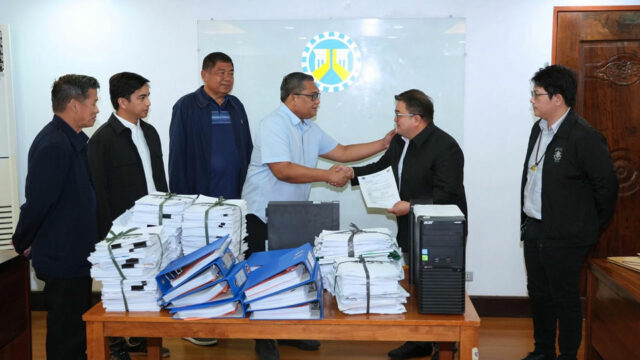
THE Department of Public Works and Highways turned over the computer unit and ten years’ worth of government records from the office of late former Undersecretary Maria Catalina E. Cabral to the Office of the Ombudsman, Dec. 23, 2025. — DPWH

A DIGITAL rights advocate on Monday called on the government to urgently authenticate the acquisition of the so-called Cabral files, citing concerns over the protection of government data and the integrity of official records.

Ronald B. Gustilo, national campaigner for Digital Pinoys, flagged reports that Batangas Rep. Leandro Antonio L. Leviste allegedly copied and removed government documents from the office of the late Department of Public Works and Highways (DPWH) Undersecretary Maria Catalina E. Cabral, raising questions over unauthorized access to sensitive files.

“If the allegations are true, the first question that must be answered is how these files were secured,” Mr. Gustilo told BusinessWorld by telephone, speaking in a mix of Filipino and English.

“What is alarming is the idea that someone can physically access government offices and take sensitive files,” he said. “It is critical to authenticate the documents because it will determine who was actually involved in the projects, whether the funds were used properly, and if any public officials were implicated beyond mere appearances on a list.”

According to Mr. Gustilo, Mr. Leviste may have violated rules on the proper handling of government documents, bypassing formal channels for accessing official records.

“Congressman Leviste could have just written DPWH, requesting for it. He could have used the freedom of information. He could have filed for a resolution calling for an investigation into these matters. Then he could subpoena these documents,” he said. “What he did instead, when he physically accessed the files, is very concerning.”

“There is a question now — how can the government protect its documents if there is a person who can barge into an office and get the files? That’s very dangerous.”

Mr. Gustilo warned that even if the documents are later found to be authentic, evidence obtained through illegal means may not be admissible in court.

Earlier, Malacañang and the DPWH have said that copies of the documents held by third parties, including Mr. Leviste, are being treated as hearsay and lacking probative value until verified against the original government records.

The DPWH has since formally turned over the responsibility for authenticating the Cabral files to the Office of the Ombudsman, which is conducting a forensic examination of the original records. — Erika Mae P. Sinaking

Zaldy Co counsel skips DoJ investigation on ‘ghost’ projects

PHILIPPINE STAR/MIGUEL DE GUZMAN

THE counsel of former Party-list Rep. Elizaldy “Zaldy” S. Co, who is facing a plunder complaint, did not attend the Department of Justice’s (DoJ) preliminary investigation on Monday, a spokesperson said.

“No counsel appeared for Elizaldy Co. But then that does not mean that the proceedings will be suspended just because he did not appear,” Justice Spokesperson Raphael Niccolo L. Martinez told reporters on Monday.

“We’re working with the timeline here and any respondent for that matter. If they do or do not appear, we will proceed in accordance with the timeline under the rules,” he said.

The department on Monday conducted preliminary investigation into the plunder complaint and six criminal complaints involving anomalous flood control projects in Bulacan, filed by the National Bureau of Investigation (NBI).

Mr. Co’s plunder case is being handled separately, according to Mr. Martinez saying the NBI filed it over alleged “ghost” projects involving more than P50 million and an alleged conspiracy with Department of Public Works and Highways officials, though he did not name the individuals or locations involved.

Six of the cases stemmed from flood control projects under the Bulacan first district engineering office that were reported as 100% completed but were later found to be either grossly deficient or entirely nonexistent. The projects involved contracts awarded to Wawao Construction and Top Notch Catalyst Builders.

Mr. Martinez said the six cases are separate from five other complaints earlier submitted for resolution and involved different project transactions. Among those named as respondents are Senator Ramon “Bong” B. Revilla, Jr. and Senator Joel Villanueva, each implicated in separate cases.

“Senator Bong Revilla is a respondent in one case, while Senator Joel Villanueva is a respondent in another,” Mr. Martinez told reporters, clarifying that the two are not co-respondents but are both linked to the broader investigation involving the Bulacan engineering district.

The charges related to the flood control projects include direct bribery, corruption of public officers, violations of the Anti-Graft and Corrupt Practices Act, breaches of the Government Procurement Reform Act, and alleged bid rigging.

The deadline for the submission of counter-affidavits in the plunder case has been set for Jan. 15.

Mr. Revilla and Mr. Villanueva have also personally filed their counter-affidavits on Monday.

“Former Sen. Revilla and Sen. Villanueva are respondents in two cases involving two different projects, respectively,” Mr. Martinez told reporters. “The charges include, among others, Direct Bribery, Corruption of Public Officials, Malversation through Falsification, as well as violations of Republic Act 9184 and Republic Act 3019.”

Mr. Villanueva, accompanied by legal counsel Ramon S. Esguerra, submitted a comprehensive counter-affidavit denying allegations over complaints filed by the NBI Public Works and Bid Rigging Task Force.

“We are here to show our commitment to due process, to the legal process — that’s why we are here — despite the fact that our belief remains the same: that the complaint is really ridiculous,” Mr. Villanueva told reporters in Filipino.

His counsel stated that the counter-affidavit contains factual and legal refutation of the accusation as the complaint failed to identify the exact amount of money the senator allegedly received and highlighted that witness accounts were inconsistent regarding the source and delivery of funds.

He added that the complaint was incomplete, missing pages and annexes, prompting the filing of a Motion for Production of Evidence.

Meanwhile, Mr. Revilla’s counter-affidavit contests charges of bribery and corruption related to flood control projects, which his camp described as “baseless” and “hearsay.”

“The allegations against former Senator Ramon Bong Revilla have no basis. Complaints like this, filed without foundation, seem to have been made merely to harass or inconvenience an individual,” Mr. Revilla’s spokesperson, Francesca Lourdes M. Señga, told reporters in Filipino.

“The complaint is based on incredible and incompetent evidence. In fact, it relies on hearsay from sources that are incredible, unbelievable, and unreliable,” she said.

“Hoping against hope na ma-dismiss (it would be dismissed) and they will follow their own rules. There is no prima facie evidence with reasonable certainty of conviction,” Mr. Esguerra added, who also serves as Mr. Revilla’s legal co-counsel.

Once the preliminary investigations are completed and the cases are submitted for resolution, the DoJ will transmit its findings to the Office of the Ombudsman for the possible filing of formal charges in court, Mr. Martinez said. — Erika Mae P. Sinaking

First phase of EDSA busway rehab completed

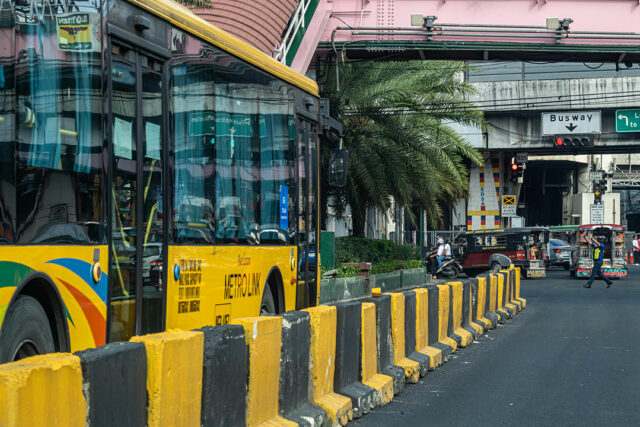
EDSA Busway — Taft Avenue in Pasay City — PHILIPPINE STAR/RYAN BALDEMOR

THE Department of Transportation (DoTr) said the Epifanio de los Santos Avenue (EDSA) busway lane has returned to normal operations after completing the first phase of rehabilitation work.

The rehabilitation of the EDSA busway lane is part of the ongoing EDSA rebuild project, which is expected to be fully completed by May 31, 2026, the Transportation department said, noting that the completion is well within the timeline.

“It’s just the right timing because most passengers are now going back to school and back to work, so their travel using the busway continues to be fast and more convenient,” Transportation Acting Secretary Giovanni Z. Lopez said in a statement on Monday.

The Department of Public Works and Highways (DPWH), together with the Metropolitan Manila Development Authority and the DoTr, started the rehabilitation of EDSA on Dec. 24.

The revised plan reduced the timetable of the rehabilitation works to an eight-month timeframe from the initial plan of two years.

The revised plan is divided into two phases and is expected to be completed by May 31, 2026, the DPWH said previously, adding that the project cost is now estimated at P6 billion from the earlier P17-billion quote.

The first phase of the project covers all re-blocking works and asphalt overlay of subway lanes both for northbound and southbound. This round-the-clock construction work started last Dec. 24 and ended on Jan. 5.

The construction work for the second phase will only be from 10 p.m. to 4 a.m. starting Jan. 5, until May 31, 2026. — Ashley Erika O. Jose

MMDA to hasten accident response 

PHILIPPINE STAR/WALTER BOLLOZOS

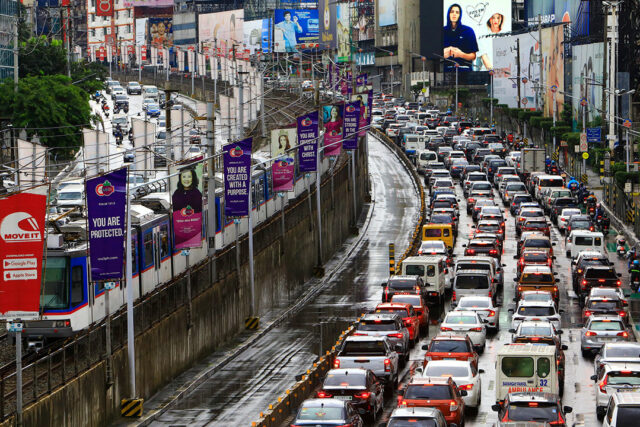
THE Metropolitan Manila Development Authority (MMDA) on Monday said it is seeking to implement a faster response time for road accidents within the Philippine capital’s major thoroughfares.

“We are looking at a response time of maybe five minutes and then 10 to 15 minutes for the clearing operations, so that there are no more obstructions,” newly appointed MMDA General Manager Nicolas D. Torre III said in a livestreamed news briefing, in mixed Filipino and English.

He added that the agency aims to reduce clearing operations, which usually take 15 to 30 minutes, by training additional MMDA personnel.

“We will try to speed up because we will also add personnel. We will also train personnel,” he said.

There were an estimated 27,181 road incidents in 2024, according to data from the MMDA.

Mr. Torre was earlier appointed by President Ferdinand R. Marcos, Jr. as the MMDA’s new general manager. He was previously the chief of the Philippine National Police, but was relieved in August last year.

He will handle the agency’s day-to-day operations, including traffic management, enforcement, and clearing operations for Metro Manila’s major roads and waterways.

“The general manager will handle all operational matters. About 70 to 80% of the job will be under him directly.” MMDA Chairman Romando S. Artes said. — Adrian H. Halili

DENR urged to review RE projects

STOCK PHOTO | Image by FREEPIK

A FISHERS’ group has called on the Department of Environment and Natural Resources (DENR) to review several renewable energy (RE) projects, citing potential risks to marine and aquatic resources and the livelihoods of coastal communities.

In a statement on Monday, Pambansang Lakas ng Kilusang Mamamalakaya ng Pilipinas (PAMALAKAYA) said traditional fishing grounds and coastal communities in various regions may be affected by RE projects implemented by local and foreign investors.

The group urged the DENR to reconsider granting environmental permits to projects facing opposition from residents and environmental advocates.

“A transition to clean energy should not trample socio-economic rights of the fisherfolk and coastal communities. Moreover, it should not lead to privatization and corporatization of communal fishing grounds,” PAMALAKAYA National Chairperson Fernando L. Hicap was quoted as saying in a statement.

PAMALAKAYA said some of the planned RE projects, which threaten coastal livelihoods, include offshore wind farm projects in Camarines Sur, Ilocos Norte, and Guimaras Strait; a wind farm project in Quezon Province; and a floating solar project in Laguna de Bay.

The fishers’ group said the Laguna project could affect more than 8,000 fisherfolk and over 2,000 individuals in the aquaculture sector. Meanwhile, offshore wind farms in Ilocos Norte may affect around 6,500 fisherfolk from the towns of Burgos, Pagudpud, Bangui, and Pasuquin.

The DENR did not immediately respond to a Viber message seeking comment. — Vonn Andrei E. Villamiel

VAT rate cut possible if exemptions curbed — DoF

DOF.GOV.PH

FINANCE Secretary Frederick D. Go said his department is seeking to avoid revenue-eroding  measures, but added that the proposed cut in the value-added tax (VAT) rate is possible if accompanied by the removal of VAT exemptions.

“The Department of Finance (DoF) is naturally predisposed not to want revenue-eroding measures. But of course, everything is possible,” he told reporters on the sidelines of a Palace briefing on Monday.

Pwede naman (It’s possible). But we have to remove all the VAT exemptions,” Mr. Go said when asked whether he supported a reduction of the current VAT rate.

VAT is a 12% tax imposed on sales, leases, barter, and imports of goods and services. VAT collections account for around a fifth of the BIR’s total revenue.

House of Representatives and Senate legislators have floated a VAT rate of 10%, which could complicate government fiscal consolidation efforts.

Senator Erwin T. Tulfo’s Senate Bill No. 1552 aims to return the VAT rate to the original 10%, aligning with the bill filed by Batangas Rep. Leandro Antonio L. Leviste last year.

“One of the reasons why we have a low VAT efficiency is that there are so many exemptions to  VAT,” Mr. Go said.

“Also, if that means reducing revenue for the country, we should also correspondingly reduce expenditures,” he said.

In a 2022 report, the International Monetary Fund expressed support for the removal of Philippine exemptions and zero ratings to increase revenue, including those for senior citizens, who are entitled to a 12% VAT exemption under the Expanded Senior Citizens Act.

Mr. Go added that among the many targets the government monitors, the most important to him is the fiscal deficit target.

The government aims to bring down the deficit to P1.65 trillion, or 5.3% of gross domestic product, in 2026, and eventually to P1.55 trillion, equivalent to 4.3%, by 2028.

The Bureau of the Treasury reported that revenue collections stood at P4.15 trillion in the first 11 months, running ahead of the P4.1 trillion year-earlier pace.

At the same briefing, Executive Secretary and former Finance Secretary Ralph G. Recto said the government will issue a budget call soon to kick off the drafting of the 2027 budget.

“We’ll make a budget call soon, so the government can start drafting the 2027 budget. But for the meantime, let us first focus on executing the 2026 budget,” Mr. Recto told reporters.

President Ferdinand R. Marcos Jr. signed the record P6.792-trillion national budget for 2026 on Monday. — Aubrey Rose A. Inosante

Expanded agri budget expected to support food security, productivity efforts as DA takes on farm road program

DA.GOV.PH

By Vonn Andrei E. Villamiel

THE Department of Agriculture (DA) said the P6.79-trillion 2026 national budget and its higher allocation for agriculture is expected to boost food production, rural development, and long-term food security.

In a statement, Agriculture Secretary Francisco P. Tiu Laurel, Jr. said the budget, signed into law on Monday, heralds increased spending on infrastructure, postharvest facilities, and other forms of support for farmers, likely leading to improved productivity, less waste, and stable supply.

Mr. Laurel, however, said that the actual funding will depend on the final details of the General Appropriations Act (GAA), which he has yet to review.

“I haven’t seen the actual GAA in its entirety, so it’s difficult to comment on all the details. We’re happy that the budget has finally been released, but we still need to review what the final version entails,” he was quoted as saying in a statement.

According to the ratified appropriations bill, the DA and its agencies will receive P185.77 billion, up 20.71% from the funding proposed in the National Expenditure Program (NEP), the document prepared by the executive branch that is sent to Congress to kick off the budget legislation process.

The DA will receive a P33-billion budget for the repair, rehabilitation and construction of farm-to-market road (FMR) projects in designated key production areas, a more than doubling the P16-billion NEP allocation.

The DA is set to take over the FMR programs from the Department of Public Works and Highways (DPWH) starting next year.

The budget for the Rice Competitiveness Enhancement Fund (RCEF) has also been tripled to P30 billion, following amendments to the Rice Tariffication Law.

The RCEF, which is financed by duties on imported rice, supports farmer benefits like seed, mechanization, credit and extension services.

A P20-billion allocation will also fund the new Animal Industry Competitiveness Act, which aims to modernize the livestock, poultry, and dairy industries.

Mr. Laurel said proper scrutiny is needed to ensure funds reach farmers, fisherfolk, and other participants in the value chain. He added that public spending needs to translate into tangible benefits on the ground.

The DA said it is focusing on post-harvest support to address losses from inadequate storage and logistics.

“The 2026 budget is expected to help the sector withstand climate risks, market volatility, and supply disruptions while supporting a more competitive and sustainable Philippine agriculture,” the DA said.

While the DA welcomes the higher budget, an industry official said agriculture’s long-standing priorities like border inspection need to be addressed.

Jayson H. Cainglet, executive director of the Samahang Industriya ng Agrikultura, told BusinessWorld that border inspection facilities “have long been requested by the industry and were subsequently mandated under the Food Safety Act of 2013. Since 2019, funds have been allocated for these, but they have never materialized,” he said via Viber.

He added that farmers are also pushing for at least P50 billion in palay (unmilled rice) procurement to establish a significant government presence in the market, as well as programs that would incentivize millers to upgrade milling and other post-harvest facilities.

Mr. Cainglet said the higher budget should also be accompanied by to higher tariffs on imported rice, pork, and chicken imports, which have the potential to raise at least P50 billion in government revenue annually.

Digitalization, engagement seen helping rebuild trust in Customs

PHILSTAR FILE PHOTO

By Aubrey Rose A. Inosante, Reporter

THE Bureau of Customs (BoC) said digitalization and consistent engagement will be key to regaining the trust of businesses, which had been damaged by the alleged misuse of the tax audit process.

Customs Commissioner Ariel F. Nepomuceno told BusinessWorld in December that he is pursuing full automation to minimize opportunities for corruption.

“To regain the public trust, our services will be brought up to global standards, which means (BoC) should be fully automated,” he told BusinessWorld in December.

Mr. Nepomuceno, appointed commissioner in late June, said restoring confidence also requires continuous outreach to stakeholders, apparently addressing the conclusions contained in a US State Department report.

In September 2025, the State Department Investment Climate Statements report said the BoC is “still considered one of the most corrupt agencies in the country,” and noted that corruption remains a significant barrier to attracting investment.

The report added that the US embassy received multiple reports from US firms of overly invasive searches, inconsistent customs charges, and solicitations of “facilitation fees” from agency officials.

“We engaged with the American Chamber of Commerce even before the report was released. We reached out. When they were here, they raised no complaints, so we were puzzled,” he said.

In a meeting, he said some of the issues were raised by the US Embassy attaché team. One complaint involved foreign vessels laying cables on the seabed, which were taxed even though they had no intention of operating in the Philippines.

“The issue was resolved even before that report came out. We had recommended that it should not be taxed since there was no intent to operate locally — although the vessels were in Philippine waters,” Mr. Nepomuceno said.

Another concern involves Astrophysics, Inc., a supplier and maintainer of X-ray scanners to the BoC, which posted unpaid claims of about P54 million, he said.

“If the contract says you must pay, then you pay. Services rendered should be compensated. I will assume a presumption of regularity that the contract is valid, so we have to pay. But what can you do if there is no contract?” he said.

He noted that any services rendered must be filed formally as a money claim and approved by the Commission on Audit before Congress can allocate funds.

Mr. Nepomuceno said government funds cannot be disbursed without a valid contract authorizing payment for services. He added, however, that the claim should be given the benefit of the doubt and treated as a “challenge” for the agency.

The European Chamber of Commerce of the Philippines (ECCP) also released a report that said among companies engaged in trade, 18% described Customs procedures as speedy and efficient; 48% said they were acceptable but needed improvement, while 34% found them burdensome.

ECCP represents more than 900 member companies.

Domestic tourism picking up slack from faltering international visitor numbers

PHILSTAR FILE PHOTO

By Justine Irish D. Tabile, Reporter

DOMESTIC TOURISM has been bridging the gap opened up by the dearth of international arrivals, which are likely to decline this year, analysts said.

“Domestic tourism has been the key stabilizer for the tourism industry as international arrivals lagged,” according to John Paolo R. Rivera, a senior research fellow at the Philippine Institute for Development Studies.

Speaking via Viber, Mr. Rivera said: “When global travel took longer to recover post-pandemic, local demand helped fill the gap where families, balikbayans (returning overseas residents), and weekend travelers sustained hotel stays, food services, transport, and leisure activities.”

He said the domestic base helped support jobs and businesses at tourist destinations but also kept cash flowing through the ecosystem despite softer foreign visitor numbers.

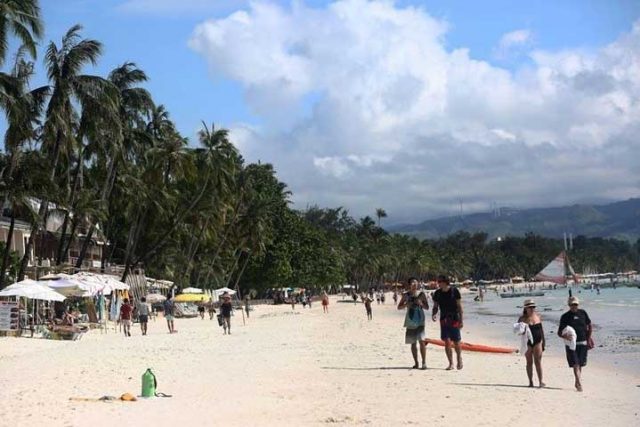
In a statement on Monday, the Department of Tourism (DoT) said domestic tourism surged during the holiday season, with some holiday destinations recording over 100,000 arrivals.

“Leading holiday destinations saw robust visitor turnout, with Boracay Island in the Western Visayas recording 118,745 tourists from Dec. 15 to 28, as Filipinos gathered to celebrate Christmas by the beach,” it said in a statement.

“The region also welcomed cruise passengers during the holidays, with Star Navigator and Norwegian Sun making multiple port calls and bringing in thousands of passengers and crew, further adding to local tourism activity,” it added.

The department also reported 102,124 and 62,640 tourists in Cebu City and Panglao Island in Bohol during the same period, “reflecting sustained domestic travel to the Central Visayas despite the region having faced a series of natural calamities earlier in the year.”

Baguio City, a traditional Christmas destination for Luzon residents, received 117,137 visitors from Dec. 15 to 31.

Camarines Sur welcomed 92,000 arrivals, and Albay 45,000.

According to the department, steady holiday traffic was also seen in Northern Luzon destinations, including La Union, Ilocos Sur, and Nueva Vizcaya.

“Island destinations remained popular for a ‘summer in December’ experience. El Nido, Palawan welcomed 40,000 tourists, while Coron recorded 17,850 visitors. Puerto Galera also drew 13,204 holiday travelers,” the department said.

In Mindanao, Sarangani welcomed 26,191 visitors, Siargao Island 32,742, Bukidnon 9,488, and Camiguin Island 6,558.

Despite the strong domestic tourism, Mr. Rivera said the challenge is to convert the momentum “into broader recovery by improving connectivity, diversifying products beyond beaches into culture and adventure, and enhancing digital booking and safety standards.”

“This is so that the industry is better positioned when international tourism fully rebounds,” he added.

The DoT reported that international arrivals dipped 2.16% in the first 11 months to 5.25 million.

The decline was led by a 21% drop in arrivals from South Korea to 1.134 million.

Colliers Research Director Joey Roi H. Bondoc has said that it will be difficult for 2025 arrival numbers to beat the 5.95 million international arrivals booked in 2024.

“What is really driving the hotel sector right now in the Philippines is really the domestic market,” he said by phone.

“But the problem is it is not enough because while local tourists are growing in numbers and are occupying conference halls and hotel rooms, it is different when you have that foreign money injected into the scene. That would have tremendous multiplier effects, which we are not seeing right now,” he added.