Home Blog Page 4236

Creative industries expected to register double-digit growth

TOPDRAWANIMATION.COM

THE Department of Trade and Industry (DTI) said it expects the creative industry to post double-digit growth in the next three years.

Rafaelita M. Aldaba, undersecretary for the DTI’s competitiveness and innovation group, told reporters on Thursday that the country will be targeting to maintain its place as a source of creative services exports.

“The estimates based on our forecast say that we will be seeing double-digit growth for creative industries in the next three years,” Ms. Aldaba said.

At the Philippine Creative Cities and Municipalities Competitiveness Congress, Ms. Aldaba said that the industry accounted for 7.3% of the economy, amounting to P1.6 trillion last year.

She said that the Philippines is likely to achieve its goal of becoming among the top creative economies in ASEAN.

“The statistics show that we are currently number one in terms of creative services exports,” she said. “And considering all our effort to level up, upgrade, and improve jobs as well as the investments including the programs that we implement together with other government agencies to promote creative industries, we will be able to achieve that.”

Citing a report from the Philippine Statistics Authority, Ms. Aldaba said Philippine creative industries generated 6.98 million jobs in 2022, adding that the sector accounted 6.6% of Philippine trade, amounting to $7 billion.

“All these show that the Philippine creative industries are not just about creativity, they are about jobs, businesses, and economic growth. They preserve our cultural heritage and shape our future,” she said. 

“They are vital for our economy contributing significantly to our gross domestic product, creating jobs, and fueling innovation,” she added.

Trade Secretary Alfredo E. Pascual said that the “Philippine Creative Industries Development covered by law and funded in our budget will be able to do a lot.”

He added that local government units (LGUs) play a significant role by identifying talent at the grassroots.

“The LGUs play a pivotal role in shaping the nation’s competitiveness as their grassroots interaction is significant in pursuing robust economic development,” he said.

The DTI promotes the sector through initiatives such as the Philippine Creative Industries Month and the Young Creatives Challenge.

“The Young Creatives Challenge really inspires our talented young people — songwriters, script writers, artists… to come up with the best creation to inspire others,” Mr. Pascual said. — Justine Irish D. Tabile

Key Maharlika posts attracting multiple applicants

THE Maharlika Investment Corp. (MIC) has received at least eight applications since the candidate search for the sovereign wealth fund began, Budget Secretary Amenah F. Pangandaman told reporters on Wednesday.

At least three applicants were seeking the chief executive officer (CEO) position, she added.

“That’s what I got initially. Three of the applications were for the CEO position. I’m guessing more came in. That was two weeks ago,” she said.

Applications and nominations for positions in the MIC began on Sept. 12, with the deadline expiring on Wednesday.

Most applicants were bankers, and some are from overseas, Ms. Pangandaman noted.

She added that the total applications will be reported to her on Friday, when she will help conduct candidate deliberations.

Six positions overall are available: President and CEO of the MIC, two regular directors and three independent directors. Recommendations will be made to President Ferdinand R. Marcos, Jr. on Oct. 2, Ms. Pangandaman said.

The MIC will be chaired by the Secretary of Finance, in an ex-officio capacity. The board will also include the president and CEO of the Land Bank of the Philippines (LANDBANK) and the Development Bank of the Philippines (DBP).

The MIC will be guided by an advisory body composed of secretaries of the Department of Budget and Management, the National Economic and Development Authority, as well as the national treasurer.

The MIC, which will oversee the Maharlika Investment Fund (MIF), will have an authorized capital stock of P500 billion ($8.9 billion). The initial P125 billion in funding will come from the National Government (P50 billion) LANDBANK (P50 billion) and DBP (P25 billion).

MIF is expected to launch operations in 2024, Finance Secretary Benjamin E. Diokno said in July. — Aaron Michael C. Sy

Japanese positive on looser PHL investment regulations, but wary about business climate

THE Board of Investments (BoI) said Japanese investors are attracted by the liberalization program underway in the Philippines, but expressed concerns regarding ease of doing business issues.

In a statement on Thursday, the BoI said that 15 Japanese investors expressed optimism about the opening up of key Philippine industries and the economic outlook and trade policies at the 10th Consultative Group meeting for the Philippines-Japan Economic Partnership Agreement.

It added that Daisuke Nihei, minister for economic affairs of the Embassy of Japan in the Philippines cited the amendments to the Foreign Investment Act, Retail Trade Liberalization Act, Public Service Act as well as the Renewable Energy Act as the Philippines’ economic highlights.

“We saw the strong commitment of the Philippine government in attracting foreign investors,” the BoI quoted Mr. Nihei as saying.

However, the Japanese investors raised concerns in the Philippine business environment such as the value-added tax refund system, tax incentives under the Corporate Recovery and Tax Incentives for Enterprises Act, and the application process for the transfer of assets in an economic zone, among others.

The investors also cited concerns about restrictions on accrediting contractors and the export controls on the mining industry.

In a separate statement, Philippine Economic Zone Authority (PEZA) Director General Tereso O. Panga said it is bullish on attracting more Chinese investors.

“With our robust economic performance and aggressive investment strategy, we are bullish on attracting more Chinese investment, especially in our ecozones, which can provide the best business ecosystem for our investors,” Mr. Panga said.

Philippine Ambassador to China Jaime A. FlorCruz said many Chinese investors have expressed interest in locating in the Philippines.

“In the past six months since I took this role as Ambassador, I have met many Chinese executives actively seeking investment opportunities across numerous industries in the Philippines. Many are now poised to invest in the Philippines,” Mr. FlorCruz said.

To date, a total of 164 Chinese companies and projects are registered with PEZA and have generated P25.82 billion worth of investments as of May. They have created 16,221 direct jobs as of March. — Justine Irish D. Tabile

PHL warned of inflation risk from unrestrained spending

PHILIPPINE STAR/MIGUEL DE GUZMAN

A HOUSE of Representatives think tank has warned of runaway inflation if the government of President Ferdinand R. Marcos, Jr. fails to rein in spending.

“Given the present level of inflation and the inflationary pressure accumulated in the past three years, the risks associated with maintaining a high public spending strategy are not insignificant and, perhaps more importantly, growing over time,” the Congressional Policy and Budget Research Department (CPBRD) said in a report this month.

“The observed relationship between government spending and inflation (or lack thereof) over the past dozen years lends urgency to the necessity of developing a rule-based framework to govern monetary and fiscal policies — particularly to stabilize inflation,” it added.

The CPBRD said that government spending has steadily increased since 2010, indicating that the government does not consider inflation in its spending plan.

The Bureau of the Treasury  reported that the government spent P1.52 trillion in 2010, P1.56 trillion in 2011, P1.78 trillion in 2012, P1.88 trillion in 2013, and P1.98 trillion in 2014.

It spent P2.23 trillion in 2015, P2.55 trillion in 2016, P2.82 trillion in 2017, P3.41 trillion in 2018, P3.80 trillion in 2019, P4.23 trillion in 2020, and P4.68 trillion in 2021.

In 2022, government expenditures increased by 10.35% to P5.16 trillion.

“The government constantly runs the risk of exacerbating inflationary pressures and, by extension, heightening the severity of economic contractions,” the CPBRD said.

Inflation in August was 5.3%, the 17th consecutive month in which inflation surpassed the BSP’s 2-4% target range.

In order to ensure proper spending without the risk of inflationary pressures, the government must promote “strategic resource allocation and operational efficiency,” by spending in sectors that give the “largest multiplier effects.”

“A set of rules that compels the government to moderate its spending during times of surging inflation, for example, will likely prove beneficial in managing overall inflationary pressure,” the CPBRD said.

“Perhaps more importantly, enforced rules would make it difficult for political actors to engage in politically profitable but economically costly spending strategies,” it added. — Beatriz Marie D. Cruz

PHL among top climbers in global innovation index

WIPO

THE PHILIPPINES was named one of the top climbers of the decade following the release of the Global Innovation Index (GII) 2023, in which it placed 56th out of 132 economies, the World Intellectual Property Organization (WIPO) said.

This year’s edition of the GII put the Philippines up three spots with a GII score of 32.2 out of 100. Its ranking in 2022 had been 59th.

The index measures the innovation capacity of economies based on two sub-indices — innovation input and innovation output.

Philippines climbs to 56<sup>th</sup> in 2023 Global Innovation IndexIn innovation input, the index gauges the ability of the economy to facilitate innovative activity in institutions, human capital and research, infrastructure, market and business sophistication.

On the other hand, the innovative output sub-index measures the economies’ ability to enable innovative activity based on knowledge and technology outputs and creative outputs.

The Philippines ranked 69th in innovation inputs, from 76th a year earlier. It ranked 52nd in innovation outputs, one place lower from 2022.

The Philippines received its top grades in business sophistication, knowledge and technology outputs, and market sophistication, while its weakest grades were in human capital and research, infrastructure, and institutions, WIPO said. 

Among 37 lower-middle income economies, the Philippines’ innovation capability was ranked fourth just behind India (40), Vietnam (46) and Ukraine (55). It was 11th among 16 economies in Southeast Asia, East Asia, and Oceania.

Reacting to the results, Intellectual Property Office of the Philippines Director General Rowel S. Barba said that the Philippines needs to produce more knowledge assets to address the decline in innovation outputs.

“Filipinos need to urgently produce more knowledge assets that positively impact markets and society, in effect, reversing the decline of our innovation outputs to 52nd from 51st in 2022 and 40th in 2021,” Mr. Barba said.

“But we recognize that innovating in these times will also be challenging amid high inflation, monetary tightening policies and geopolitical tensions,” he added.

He said that the improved innovation ranking is a “welcome development” but added that “we have to continue being dissatisfied.”

“Dissatisfied not just in our current posture in the global innovation map but in the current way of things around us, whether products, solutions, systems, processes or practices,” he said.

“We need to develop among Filipinos a mindset that continuously innovates to challenge the norm until such a time that innovating becomes our norm,” he added.

Leonardo A. Lanzona, Jr., an economics professor at the Ateneo de Manila, said that the jump in ranking is mainly due to exposure to digital technology. 

“A number of our workers are employed in online labor platforms which means that transactions are undertaken through the internet,” Mr. Lanzona said in an e-mail.

However, he said that the engagement does not mean that Filipino workers are better off than those in other countries as much of their work involves lower value-added activities and poor working conditions, which result in high underemployment.

“This means that we are not productively using our seemingly advanced exposure to these technologies. People are engaged in these transactions for the simple reason that they have no other option,” he added.

Rizal Commercial Banking Corp. Chief Economist Michael L. Ricafort said that the improvement may have to do with the further reopening of the economy.

He added that there are “no more large lockdowns since 2022” and “the final resumption of in-person schooling since August 2022 after being restricted for nearly 2.5 years (also helped improve) productivity and innovation,” Mr. Ricafort.

He added that the second-biggest business process outsourcing industry after India will also help drive innovation.

“The harnessing of technology and innovation to further strengthen its competitiveness in the higher end of the global supply and value chain would be required and inevitable … especially with the emergence of AI and the need to adopt the use of AI-related technologies,” he added. — Justine Irish D. Tabile

DoE says still on track to hit renewables goal

STOCK PHOTO | Image by Insung Yoon from Unsplash

THE Department of Energy (DoE) said the Philippines is on track to hit its target for the increased share of renewable energy (RE) in the power generation mix, to 35% by 2030 and to 50% by 2040.

“In summarizing the clean energy scenario for Philippine Energy Plan (PEP) 2020 to 2040, which is also the minimum for the Philippine Energy Plan for 2023 to 2050, we have 35% of power generation through renewables by 2030 and the RE lines up to 50% by 2040,” Energy Undersecretary Felix William B. Fuentebella said at an energy investment forum.

“It’s good to note that we are on track as far as these targets in renewable energy are concerned,” he added.

At the end of 2022, RE accounted for 22.1% of the energy mix, while coal took up 59.6%. Natural gas and oil-based energy sources accounted to 16% and 2.3% respectively.
The 50% target for RE is part of the updated PEP Clean Energy Scenario (CES), under which natural gas, coal, and oil reduce their shares of the power mix to 26.6%, 23.1%, and 0.1%, respectively, by 2040.

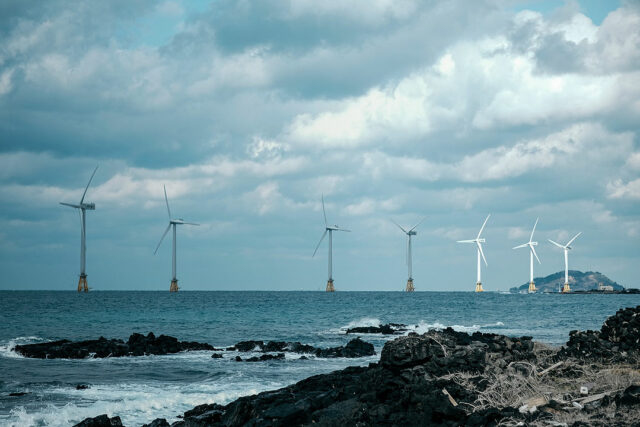
“We are looking into a greater clean energy scenario where we have the penetration of offshore wind and nuclear, and another scenario where we have a higher penetration of offshore wind technology,” he said.

Mr. Fuentebella said that the DoE has “integrated everything” into the updated energy plan which is set to be completed this month.

Aside from RE targets, he said that the DoE has set a “conservative” target of 5% energy savings on oil products and electricity by 2040, as well as 10% electric vehicle penetration rate in road transport by 2040.

“We will exponentially increase our targets once we synergize all these strategies with information, communication technology and we protect it with our energy resilience policies,” he said.

Mr. Fuentebella said that achieving the goal would require investment of about $153 billion, with $97 billion for RE, including the pre-development and construction of power plants.

Investment in the upstream sector focusing on oil and gas exploration and development, coal exploration and production, renewable energy (pre-development activities) will amount to $10.05 billion, $13.12 billion, and $510 million, respectively.

The downstream sector, on the other hand, will require investment of $2.94 billion for oil distribution and import terminals, $1.78 billion for liquefied natural gas terminals, and $2.38 billion for biofuels production.

Transmission projects will require investments amounting to $6.97 billion. — Sheldeen Joy Talavera

Legislative protection for Verde Island Passage seen as far off

PCG

THE Department of Environment and Natural Resources (DENR) said it will take time before the Verde Island Passage is protected by legislation.

“We are still a bit far from reaching this point but right now we are in agreement that the Verde Island Passage needs to be protected,” DENR Assistant Secretary Marcial C. Amaro, Jr. said during a forum organized by the Center for Energy, Ecology, and Development.

“Hopefully… (there) are other means that would provide for the enforcement of laws within the area and substantial increases in budget allocation to address the… conservation and protection of the (area),” Mr. Amaro added.

He said any measures must ensure the continued provision of ecosystem services “which sustain the livelihoods of the coastal communities and other dependents.”

The Verde Island Passage is a strait between Batangas and Mindoro Island noted for a high concentration of fish, coral, crustacean, mollusk, seagrass, and mangrove species, making it a leading biodiversity site.

The provinces of Batangas, Oriental Mindoro, Occidental Mindoro, Marinduque, and Romblon are located along the passage.

“We want emphasize the importance of the Verde Island Passage because of the connectivity dimension… what happens in the passage affects areas outside and beyond,” he said.

“Protecting the (passage) translates into safeguarding fisheries, coasts and marine environment,” he added.

Environment Secretary Maria Antonia Yulo-Loyzaga said that the DENR and the governors of the five provinces expressed their support for legislation to protect the Verde Island Passage after an oil spill this year.

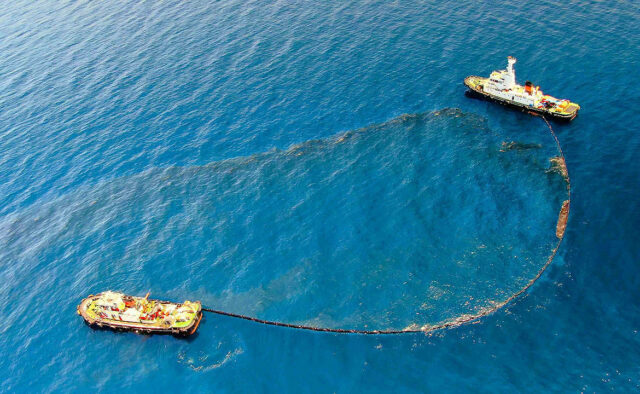
In late February, the MT Princess Empress sank off Naujan, Oriental Mindoro, while carrying 800,000 liters of oil.

The DENR said that at least 21 locally managed marine protected areas were affected by the spill.

The environmental damage to the area was initially estimated at P7 billion. — Adrian H. Halili 

DA 2024 rice program budget set at P30.87 billion

PHILIPPINE STAR/MICHAEL VARCAS

THE Department of Agriculture (DA) said in a statement that it will set aside P30.87 billion from its 2024 budget for the National Rice Program.

The DA’s overall budget for 2024 is P167.5 billion, according to the National Expenditure Program (NEP).

It said that next year’s funding priorities reflect President Ferdinand R. Marcos, Jr.’s order to “boost agricultural production for food security and economic growth.”

“The DA’s 2024 NEP focuses on investments that lower production costs, improve the value chains, and promote (farm) consolidation and modernization,” the DA said.

The DA added that P6.09 billion will go to the National Fisheries Program, and P5.28 billion to the National Corn Program.

The DA said that under next year’s NEP, livestock will get P4.35 billion and high-value crops P1.94 billion.

Additionally, the National Organic Agriculture Program, National Urban and Peri-urban Agriculture Program, and the Halal Food Industry Development Program will be given P921 million, P436 million and P19 million, respectively.

It added that under the NEP, the DA is set to spend P9.80 billion for hybrid rice seed assistance, P9.55 billion for fertilizer assistance, and P2.750 billion for credit programs.

About P2.49 billion will also go to yellow corn seed and fertilizer, and P2.20 billion to hog repopulation.

“Moreover, P1 billion will be allotted for Quick Response Fund, P492.7 million for the Kadiwa Program (a network of direct-from-the-farm food stores), P374 million for onion cold storage, and P236.6 million for aquaculture and mariculture,” the DA said.

It added that about P230 million was set aside for hatcheries, P149.31 million for durian planting expansion, and P30.91 million for community gardens.

The House of Representatives on Wednesday approved the National Government’s proposed P5.786-trillion budget for next year. This was a 9.5% increase from this year’s budget. — Adrian H. Halili

Peso drops to new 10-month low

BW FILE PHOTO

THE PESO dropped to a new 10-month low against the dollar on Thursday due to market worries over possibilities of a US government shutdown.

The local currency closed at P56.98 versus the dollar on Thursday, weakening by three centavos from Wednesday’s P56.95 finish, data from the Bankers Association of the Philippines’ website showed.

This was the peso’s weakest finish in over 10 months or since its P57.375-per-dollar finish on Nov. 22, 2022.

The local unit opened Thursday’s session stronger at P56.888 per dollar, which was also its intraday best. Its weakest showing was its close of P56.98 against the greenback.

Dollars traded went down to $980.6 million on Thursday from the $1.35 billion on Wednesday, Bankers Association of the Philippines data showed.

“The peso weakened anew due to renewed market worries over the possibility of a US government shutdown over the weekend,” a trader said in an e-mail.

The peso was also dragged down by the dollar’s continued strength and high global crude oil prices recently, Rizal Commercial Banking Corp. Chief Economist Michael L. Ricafort likewise said in a Viber message.

For Friday, the trader said the peso could depreciate further ahead of potentially stronger US producer inflation data.

The trader sees the peso moving between P56.80 and P57 per dollar on Friday, while Mr. Ricafort sees it ranging from P56.85 to P56.99. — AMCS

Shares up on window dressing, increased buying

PHILIPPINE SHARES rose further on Thursday on month-end window dressing and as buying activity was boosted by increased liquidity following changes to the composition of the main index.

The Philippine Stock Exchange index (PSEi) went up by 10.84 points or 0.17% to end at 6,385.52 on Thursday, while the broader all shares index rose by 6.33 points or 0.18% to 3,419.21.

“It’s been a remarkable run for the local market so far as it posted its sixth straight day of gains on the strength of a mix of window dressing, technical buying, and institutional portfolio adjustments,” China Bank Capital Corp. Managing Director Juan Paolo E. Colet said in a Viber message.

The removal of the Aboitiz Power Corp. (AP) and Metro Pacific Investments Corp. (MPIC) from the main index resulted in excess liquidity, which boosted activity in the market, Mr. Colet added.

Effective Tuesday, Bloomberry Resorts Corp. and Century Pacific Food, Inc. became part of the PSEi, replacing MPIC and AP.

The local bourse continued to climb on “bargain hunting and as investors recalibrated their portfolios following the PSEi’s off-cycle rebalancing,”

Regina Capital Development Corp. Head of Sales Luis A. Limlingan said in a Viber message.

The market was boosted by investors redeploying proceeds from the MPIC tender offer, China Bank Securities Corp. Research Associate Lance U. Soledad likewise said in an e-mail.

Last week, MPIC told the local bourse that its tender offer had closed, with the cross date on Sept. 26 and settlement date on Sept. 28.

In July, MPIC said the tender offer price went up to P5.20 per share from P4.63 per share initially offered by the consortium, which is backed by First Pacific Co. Ltd., GT Capital Holdings, Inc., and Mitsui & Co. Ltd.

Sectoral indices were split on Thursday. Services rose by 17.47 points or 1.15% to 1,534.29; holding firms climbed by 24.04 points or 0.39% to 6,082.15; and mining and oil went up by 19.90 points or 0.18% to 10,526.57.

Meanwhile, property dropped by 5.96 points or 0.22% to 2,631.79; financials declined by 2.31 points or 0.12% to 1,862.55; and industrials went down by 3.93 points or 0.04% to 9,038.76.

Value turnover decreased to P5.17 billion on Thursday with 777.99 million shares changing hands from the P6.73 billion with 764.54 million shares seen on Wednesday.

Advancers outnumbered decliners, 113 versus 76, while 59 shares closed unchanged.

Net foreign buying stood at P194.03 million on Thursday versus the P301.32 million in net selling seen on Wednesday.

For Friday, Mr. Limlingan said investors will take their cue from US gross domestic product and housing data that were set to be released overnight.

MPIC is one of the three key Philippine units of Hong Kong-based First Pacific, the others being Philex Mining Corp. and PLDT Inc.

Hastings Holdings, Inc., a unit of PLDT Beneficial Trust Fund subsidiary MediaQuest Holdings, Inc., has a majority share in BusinessWorld through the Philippine Star Group, which it controls. — SJT

Philippines eyes permanent structure at shoal

AN AERIAL VIEW of the BRP Sierra Madre at the contested Second Thomas Shoal on March 9, 2023. — REUTERS

By Kyle Aristophere T. Atienza, Reporter

THE PHILIPPINES may replace a dilapidated ship that it grounded at Second Thomas Shoal (Ayungin Shoal) in 1999 with a permanent structure, its military said, amid increasing tensions with China.

President Ferdinand R. Marcos, Jr. wants the military to ensure that the grounded BRP Sierra Madre remains “strong enough to be able to fly the Philippine flag until a permanent structure is erected there,” Armed Forces of the Philippines Western Command chief Alberto Carlos told reporters on the sidelines of a security forum in Manila on Wednesday. “We intend to comply with that order.”

Senators are deliberating on the proposed P5.786-trillion national budget for next year, and some of them are pushing to boost the budgets of the Philippine Coast Guard and other security agencies. The House of Representatives passed its version of the budget bill on final reading on Wednesday night.

“We are happy with the news that came out recently as far as the funding for the permanent structure at Ayungin Shoal [is concerned],” Mr. Carlos said, referring to Second Thomas Shoal. “Initially there was a P100-million budget for a permanent structure, and now they increased it to P600 million. And they call it a ranger station.”

Tensions between the Philippines and China have worsened in recent weeks after the latter’s coast guard fired water cannons at Philippine vessels trying to deliver food and other supplies to BRP Sierra Madre on Aug. 5.

The Philippines intentionally grounded the World War II-era ship there in 1999 to assert its claim and after China seized Mischief Reef in 1995. China has created a large artificial island on the atoll, which is 250 kilometers west of the Philippine island of Palawan, including a 2,700-meter runway and associated airfield.

China’s coast guard and maritime militia vessels have continued to conduct “dangerous maneuvers” against Philippine resupply vessels after the incident.

“We will have to reclaim and transform the area into a dry Island that can withstand waves and storms,” Joshua Bernard B. Espeña, a resident fellow at the Manila-based think tank International Development and Security Cooperation, said in a Facebook Messenger chat. “Manila has to brace for the possibility of more dangerous maneuvers and targeting from China’s maritime forces.”

The Philippines would also need faster naval and coast guard ships “to conduct complementary force protection.”

Earlier this month, the town of Quezon in Palawan province passed a resolution urging all municipalities in the province to allocate P500,000 for the refurbishment of the rusting military outpost.

Mr. Espeña said once a permanent structure, particularly a man-made island, is established, it must be protected with medium-range missiles, air defense systems and early warning systems.

“A permanent base would also have to be optimized towards achieving sea control and anti-access/area denial,” he said. “As much as we want to civilianize this place, this is too dangerous given how contested this place is, especially if we are not intentional in weakening the Chinese position.”

‘EFFECTIVE OCCUPATION’
Mr. Espeña proposed to make the structure hybrid — “a military base and a thriving hub for marine science research.” “This increases the costs imposed on Beijing.”

Blake Herzinger, a research fellow at the foreign policy and defense program of the United States Studies Center, earlier said that the permanent structure should be manned by “combined rotational forces from both the Philippines and US Marine Corps” to deter Chinese efforts to block Philippine resupply missions.

BRP Sierra Madre, named by the US as USS Harnett County during World War II, was donated to the Philippines in 1976.

China last month said the Philippine government had pledged to remove the grounded ship from the shoal, which is about 200 kilometers from the Philippine island of Palawan and more than 1,000 kilometers from China’s nearest major landmass, Hainan Island.

Mr. Marcos has said he’s “not aware of any such arrangement or agreement.” If there exists such an agreement, “I rescind that agreement now.”

Experts have said China has tried to advance its claims in the South China Sea through psychological warfare or disinformation.

At the security forum, Mr. Carlos said they are seeking to boost Philippine presence in the South China Sea through the “effective occupation of the islands that we already occupied” and a stronger naval presence.

The country also seeks to enhance maritime domain awareness, which would allow it to “know what is happening in our area, precisely where they are, where are all the vessels of interest, the militia vessels, the Chinese Coast Guard.”

Mr. Carlos, during the briefing with reporters, said they expect a shift in the allocation of resources and forces to address external security threats.

“It’s a normal tweaking of strategy, normal tweaking of the course of action that you will take considering the situation on the ground,” he added. “We are happy with the initial signs that we are saying. We see ships being deployed in the West Philippine Sea from other areas. It’s a work in progress.”

China claims more than 80% of the South China Sea based on a 1940s map that a United Nations-backed tribunal in The Hague voided in 2016.

The Philippines recently removed a floating barrier that the Chinese Coast Guard had installed at Scarborough Shoal (Bajo de Masinloc).

Philippine authorities have said the barrier denied Filipino fishermen access to the traditional fishing ground over which Manila, Vietnam, and Beijing have fishing rights. The shoal falls within the Philippines’ exclusive economic zone.

The Philippine Coast Guard earlier this month reported the destruction of coral reefs at Iroquois Reef and Sabina Shoal, which were surrounded by Chinese maritime militia vessels.


Congress told to remove China loans as funding sources in 2024 budget

The floating barrier with an estimated length of 300 meters was discovered on Sept. 22 at the vicinity of Bajo de Masinloc. — PHILIPPINE COAST GUARD

PHILIPPINE lawmakers should remove Chinese loans from the funding sources for the proposed P5.768-trillion national budget for next year given security and debt risks due to worsening ties with China, according to an investment analyst.

“Even if we increase spending for maritime defense, we still open our national budget to flashpoints that make our nation kowtow to Beijing,” Terry L. Ridon, public investment analyst and InfraWatch PH convenor, said in a statement. “Things may just cancel out and still leave us back at square one.”

Under the 2024 Budget of Expenditures and Sources of Financing submitted by the Budget department, six major infrastructure projects will be financed by Chinese loans. One of these is the Philippine National Railways (PNR) South long-haul project worth P175.32 billion.

Also expected to be funded by China are the Davao City Expressway projects (P80.53 billion), Ambal-Simuay River and Rio Grande de Mindanao River flood control projects (P39.22 billion) and Chico River pump irrigation project (P4.50 billion).

Bridges crossing the Pasig-Marikina River and Manggahan Floodway bridge construction project under the China Government Financing Facility needs P15.29 billion, while the Samal Island-Davao City connector project needs P23.04 billion.

“These projects often come with strings attached, including the potential for increased Chinese influence and the risk of falling into a debt trap,” Mr. Ridon said.

The House of Representatives on Wednesday night passed House Bill 8980 or the General Appropriations bill on third and final reading. Senators are still holding budget hearings and are expected to pass their version of the bill next month.

House appropriations committee Chairman and Party-list Rep. Elizaldy S. Co earlier said the House would realign the combined P650-million confidential and intelligence funds of the Office of the Vice President (OVP) and Department of Education (DepEd) to the budgets of intelligence and security forces.

The Philippines recently removed a floating barrier set up by China at Scarborough Shoal that blocked access by traditional Filipino fishermen, a sign that the conflict between the two countries is escalating, Surigao del Sur Rep. Johnny T. Pimentel told the ABS-CBN News Channel.

“It is correct the budget was already passed without any deduction, but… the budget that we passed last night is not yet final because we’ll have to go to the bicameral [conference committee],” he said.

Among the agencies that will benefit from the intelligence funds are the National Intelligence Coordinating Agency (NICA), National Security Council (NSA), Philippine Coast Guard (PCG) and Bureau of Fisheries and Aquatic Resources.

“This move aligns resource allocation with national priorities, but it also raises questions about the transparency and accountability of such a large-scale financial shift,” Mr. Ridon said. — Beatriz Marie D. Cruz