Home Blog Page 4225

Peso up on drop in oil prices, dollar

BW FILE PHOTO

THE PESO rose against the greenback on Wednesday after global oil prices went down to three-week lows and the dollar slightly eased against other major currencies.

The local currency closed at P56.71 versus the dollar on Wednesday, strengthening by seven centavos from Tuesday’s P56.78 finish, data from the Bankers Association of the Philippines’ website showed.

The local unit opened Wednesday’s session weaker at P56.82 per dollar. Its intraday best was at P56.67, while its worst showing was at P56.85 against the greenback.

Dollars traded went up to $1.53 billion on Wednesday from the $932.2 million on Tuesday.

The peso rose against the dollar on Wednesday due to lower global crude oil prices recently, Rizal Commercial Banking Corp. Chief Economist Michael L. Ricafort said in a Viber message.

Oil prices lingered among three-week lows on Wednesday with the NYMEX crude oil benchmark at around $88 per barrel compared with the high of $95.03 seen on Sept. 28, Mr. Ricafort said.

The peso also appreciated after the US dollar weakened slightly against other major currencies since reaching 10-month highs recently, he added.

The US dollar likewise eased against the Japanese yen but still remained above 149 yen a dollar due to a potential intervention from the Bank of Japan, Mr. Ricafort added.

“The peso appreciated ahead of a likely softer US private employment report overnight,” a trader added in an e-mail.

For Thursday, the trader said the peso could strengthen further against the dollar as September inflation could have picked up.

This could prompt the Bangko Sentral ng Pilipnas (BSP) to implement a rate hike at its Nov. 18 meeting, the trader added.

The trader sees the peso moving between P56.55 and P56.80 a dollar on Thursday, while Mr. Ricafort expects it to range from P56.60 to P56.80.

PESO MAY WEAKEN FURTHER
Meanwhile, the peso could trade at the P57-a-dollar level until the third quarter of 2024 amid elevated inflation, although a hawkish BSP could provide support to the currency, MUFG Global Markets Research said in a report.

“We forecast gradual weakness in the peso against the US dollar at P57.30 in three months and P57.50 in 12 months… Risks to our peso forecasts come from oil, rice, and the US dollar,” it said.

“Latest high frequency data shows that rice prices have moderated in September following the imposition of the price ceiling. However, risks to inflation are still tilted to the upside, including further increases in global food and energy prices, coupled with potential hikes in jeepney fares and minimum wages,” it added. 

MUFG Global Markets Research expects the peso to end the first quarter of 2024 at P57.50 and to stay at that level until the third quarter of 2024.

It previously saw the peso closing at P56.20 per dollar at end-2023, P55.50 by the end of the first quarter of 2024, and P55.20 in the second quarter.

The central bank expects inflation to return to its 2-4% annual target next month, barring any supply shocks, BSP Governor Eli M. Remolona earlier said.

Still, the peso could be supported by a hawkish central bank, MUFG Global Markets Research said, adding they expect another rate increase from the BSP if inflation risks grow.

Meanwhile, they expect the BSP to cut borrowing costs by 50 basis points in the second half of 2024.

Mr. Remolona earlier said they are open to hiking rates outside of their scheduled policy meetings, ruling out easing in the near term.

The peso could also be supported by a narrowing current account deficit and improved foreign direct investments next year, MUFG Global Markets Research added. — AMCS
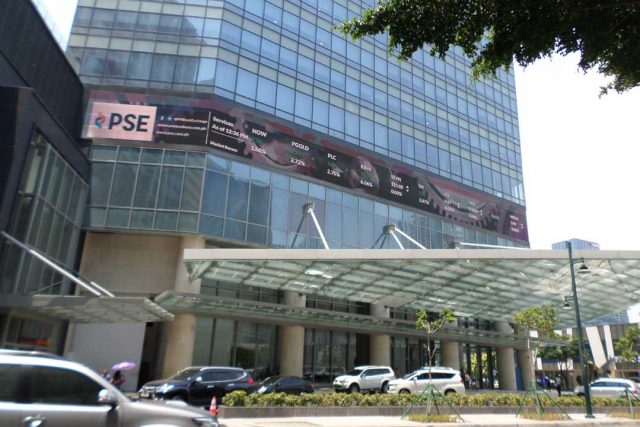

PSEi drops in cautious trade before inflation data

BW FILE PHOTO

SHARES dropped on Wednesday as the market stayed on the sidelines ahead of the release of September inflation data, which could affect the Bangko Sentral ng Pilipinas’ (BSP) next policy decision.

The benchmark Philippine Stock Exchange index (PSEi) went down by 7.79 points or 0.12% to end at 6,298.20 on Wednesday, while the broader all shares index dropped by 7.06 points or 0.2% to 3,398.56.

“Many were on the sidelines, with the market value turnover registering at P4.68 billion. Investors were waiting for inflation as this would be crucial data for the decision of the Bangko Sentral ng Pilipinas regarding the interest rates,” Philstocks Financial, Inc. Research Analyst Claire T. Alviar said in a Viber message.

Value turnover went down to P4.68 billion on Wednesday with 733.61 million shares changing hands from the P5.94 billion with 858.83 million shares seen on Tuesday.

The market traded sideways before the release of September inflation data on Thursday, Regina Capital Development Corp. Head of Sales Luis A. Limlingan likewise said in a Viber message.

“Perhaps they want to see the actual figure before taking any positions in the market,” he said.

A BusinessWorld poll of 17 analysts yielded a median estimate of 5.4% for September inflation, near the low end of the 5.3-6.1% forecast of the BSP for the month.

If realized, September inflation would faster than the 5.3% print in August but would be lower than the 6.9% in the same month in 2022.

This would also mark the 18th straight month that inflation exceeded the BSP’s 2-4% annual target.

Shares closed lower after US job openings data indicated the labor market is still strong and bond yields marched higher, Mr. Limlingan added.

US job openings unexpectedly increased in August amid a surge in demand for workers in the professional and business services sector, pointing to a still-tight labor market that could compel the US Federal Reserve to raise interest rates next month, Reuters reported.

Job openings, a measure of labor demand, were up 690,000 to 9.610 million on the last day of August. That was the most in just over two years. Data for July was revised higher to show 8.920 million job openings instead of the previously reported 8.827 million. Economists polled by Reuters had forecast 8.800 million job openings in August.

Almost all sectoral indices dropped. Mining and oil fell by 302.40 points or 2.72% to 10,786.26; industrials dropped by 37.74 points or 0.41% to 8,986.73;  financials decreased by 4.98 points or 0.27% to 1,839.69; holding firms went down by 13.68 points or 0.22% to 5,981.62; and services slipped by 1.78 points or 0.11% to 1,515.67.

Meanwhile, property rose by 21.17 points or 0.81% to 2,619.15.

Decliners outnumbered advancers, 111 versus 72, while 53 shares closed unchanged.

Net foreign selling dropped to P669.83 million on Wednesday from P881.06 million on Tuesday. — SJT with Reuters

Common tower project worth P50B endorsed for green lane

BW FILE PHOTO

THE Board of Investments (BoI) said it endorsed for green-lane treatment a P50-billion common passive telecommunications tower infrastructure project which it expects to generate 9,700 jobs.

In a statement, the BoI said that the project is aligned with the Philippine Development Plan 2023-2028’s goal of expanding and upgrading infrastructure.

“The project shall support the government’s initiative to enhance telecommunications services nationwide and increase connectivity, mobile network access, and internet penetration in unserved and underserved regions of the country,” the BoI added.

The telco project is under EdgePoint Towers, Inc., a unit of EdgePoint Infrastructure Sdn. Bhd. The Philippine unit builds and leases towers for telcos and digital services providers.

It will be the second such project granted green lane status after that of PhilTower Consortium, Inc., which applied to build P52 billion worth of telco infrastructure.

EdgePoint claims an optimal tower design that uses less material, with indigenous materials employed where possible instead of steel. It will also seek to use renewable energy in powering towers.

With the endorsement, the BoI One-Stop Action Center for Strategic Investments will monitor the action taken by government agencies on Edgepoint’s applications for permits and licenses.

Telecommunications infrastructure is one of the priority sectors of the BoI, alongside electric vehicles.

Its other priority sectors are: smart and high-tech lighting manufacturing, outsourced semiconductor assembly and testing, green metals, high-tech agriculture, renewable energy, and data centers.

EdgePoint has said it hopes to increase its sites and client network in the Philippines, a projection founded on its optimistic outlook for the industry.

“(It is) targeting to own and manage approximately 6,400 shared passive telecommunications towers nationwide by 2030,” the BoI said.

In May, the company activated its first tower colocation tenancy partnership with DITO Telecommunity Corp., which involved a 48-meter tower in Tanay, Rizal. — Justine Irish D. Tabile

Producers talked out of price hikes until yearend

PHOTO BY BERNARD HERMANT

THE Department of Trade and Industry (DTI) said manufacturers had arrived at a “consensus” to delay price increases until the end of 2023.

“What happened in our meeting with the manufacturers is at least six of those who had submitted requests for price adjustments said that they are withdrawing their requests,” Trade Secretary Alfredo E. Pascual said at a briefing on Wednesday.

“This had an influence on the other manufacturers resulting in us having a consensus to hold off on price adjustments until the end of year,” he added.

On Sept. 21, the DTI convened a meeting with manufacturers of basic necessities. It was attended by 29 manufacturers and two industry associations, representing goods like canned sardines, coffee, processed milk, bread, salt, detergent, candles, condiments, bottled water, canned meat, toilet soap, and batteries.

According to Mary Jean T. Pacheco, assistant secretary and officer-in-charge of the DTI’s Consumer Protection Group, the six manufacturers withdrawing their requests make bottled water, candles, condiments, bread and toilet soap.

“We’re meeting with canned sardine manufacturers tomorrow because we continue to appeal that there will be no price adjustments until the end of the year,” Ms. Pacheco added.

Mr. Pascual said that the DTI is also considering allowing canned sardine prices to be “rounded off” on the advice of the Bangko Sentral ng Pilipinas (BSP).

“This is strictly not a price adjustment, but rounding off the price, because the BSP ordered the rounding off of prices by 25 centavos,” he said.

According to the BSP, rounding off is supposed to generate efficiencies in the delivery of goods and services and to maximize government resources by reducing demand for coins needed to make change.

Melquiades Marcus N. Valdez II, DTI director for consumer policy and advocacy, said that the department will encourage manufacturers to apply the rounding-off scheme.

“The manufacturers will send us notices of their adjustments,” Mr. Valdez said. “After that we assess whether there is profiteering or whether it is within the 10% threshold dictated in the Price Act. Once we come up with the price, we will verify with the BSP (details of) the price rounding scheme — whether we will round up or down,” he added. — Justine Irish D. Tabile

DBM to keep disbursements above 20% of GDP to help drive spending

BUDGET SECRETARY AMENAH F. PANGANDAMAN — COURTESY OF DEPARTMENT OF BUDGET AND MANAGEMENT FACEBOOK PAGE

THE Department of Budget and Management (DBM) said it wants to keep disbursements above 20% of gross domestic product (GDP) to ensure the government has the resources to spend ready at hand.

“At the DBM, we will sustain government disbursements at above 20% of gross domestic product on average as we continue to prioritize expenditures,” Budget Secretary Amenah F. Pangandaman said.

The disbursement rate is among various initiatives to ensure the government meets its spending goals while keeping debt manageable, the DBM said in a statement on Wednesday.

“For fiscal consolidation to remain on track in the long term, we are also working on public spending efficiency,” Ms. Pangandaman said.

She said Executive Order No. 29 will strengthen the implementation of the Integrated Financial Management Information System in government agencies and lay the groundwork for reforms such as the budget modernization bill.

The DBM is also “working on the draft guidelines for the rationalization of government programs and projects that are targeted to be included in the FY 2025 National Budget Call.”

“The government’s fiscal consolidation strategy, which supports the administration’s socioeconomic development agenda, will be underpinned by increasing revenue effort through tax policy and tax administration reforms, as well as declining deficit trajectory over the medium term,” she added.

The government is aiming to bring down its debt-to-GDP ratio to below 60% by 2025 and cut its deficit-to-GDP ratio to 3% by 2028.

The government set its deficit ceiling at P1.499 trillion this year, equivalent to 6.1% of GDP. In the first eight months of the year, the budget deficit narrowed 12.06% to P732.5 billion.

Ms. Pangandaman also noted that the government is also working on amending procurement law.

“Our proposed procurement reforms include the implementation of the Modernized Philippine Government Electronic Procurement System (MPhilGEPS), e-Marketplace and the adoption of a Green Public Procurement Strategy,” she added. — Luisa Maria Jacinta C. Jocson

Legislator calls proposed taxes on junk food, beverages unenforceable

A woman shops for snacks at a supermarket in Quezon City, Jan. 16, 2023. — PHILIPPINE STAR/MIGUEL DE GUZMAN

PROPOSALS to tax junk food as well as raise the current tax on sweetened beverages are not feasible, a senior legislator said.

“On a junk food tax, I don’t see a way of implementing it,” Albay Rep. Jose Maria Clemente S. Salceda said during a forum organized by the Philippine Stock Exchange, Inc. in Taguig City on Wednesday.

Mr. Salceda, who also chairs the House Committee on Ways and Means, called the proposal on the junk food tax is “not enforceable.”

“We have enough studies on it. We dove into it and we found out that we cannot do it. This junk food (tax) should be junked because it is not enforceable,” Mr. Salceda told reporters when asked for additional comment.

“How do we implement it in the factory? By (inventory) removals? At retail? At point of sale? The cost of enforcement is much higher than the revenue increments,” he added.

Mr. Salceda also said that the proposed higher taxes on sweetened beverages will not help reduce obesity.

“The sugary drinks tax would produce more malnutrition (while not) reducing obesity,” Mr. Salceda said.

“In simple language, we now have the highest tax on sugar in the world at P6. Mexico’s is the equivalent of P3. Their obesity (rate) was 76%, and reduced to 67%. The Philippines’ obesity (rate) is 22% … we don’t have an obesity problem,” he added.

Mr. Salceda said he has yet to receive a copy of the tax proposal from the Department of Finance (DoF).

“The (DoF) did not even give me a copy of their proposal. I should’ve filed it already,” Mr. Salceda said.

“My question first is the enforceability, second is the fundamental soundness. What are you trying to cure? Where is the link?” he added.  

The DoF in June proposed to impose a tax on junk food and increase the tax on sweetened beverages, citing high obesity rates. It estimated that the combined measures could generate P76 billion worth of revenue in the first year of implementation.  

The proposal calls for a P10 tax per 100 grams or a P10 tax per 100 milliliters on packaged foods that lack nutritional value and go beyond the Department of Health’s specified thresholds for fat, salt, and sugar content. These products include confectioneries, snacks, desserts, and frozen products.    

The proposal also seeks a sweetened beverage tax of P12 per liter for any kind of sweetener, from the current P6 per liter.

Finance Secretary Benjamin E. Diokno said last week that he does not expect the junk food tax proposal to pass this year since it has no sponsor at the Senate and the House of Representatives. — Revin Mikhael D. Ochave

ISPs express support for new site-blocking rules

THE Intellectual Property Office of the Philippines (IPOPHL) said internet service providers (ISPs) have committed to act promptly in disabling sites that are subject to blocking orders.

“ISPs and anti-piracy partners commended the new site blocking rules released by IPOPHL last month, vowing to do their part in immediately disabling access upon order from IPOPHL and the National Telecommunications Commission (NTC) to help the creative economy flourish more fully,” IPOPHL said in a statement on Wednesday.

On Sept. 20, IPOPHL signed the rules governing site blocking contained in Memorandum Circular 23-025, which takes effect two months from publication.

Globe Telecom, Inc. Senior Vice-President for Corporate Communications Maria Yolanda C. Crisanto said the new rules align with its anti-piracy campaign, which has been running since 2017.

“We are no longer tied down. We can do something about piracy,” Ms. Crisanto said.

However, she added that the company is still hoping for site blocking legislation “for stronger and wider-scale implementation.”

PLDT Inc. Deputy Chief Information Security Officer Ellen Solosod said the blocking orders will help minimize cases of users “falling prey to illegal websites or pirate websites.”

“We vow we will work closely with IPOPHL and National Telecommunications Commission to put a stop to piracy,” Ms. Solosod said.

DITO Telecommunity Corp. Intellectual Property Manager Enriquito L. Cruz said: “The collaborative effort to block pirated sites protects the substantial revenue (generated by) the creative sector, which totaled P1.60 trillion or 7.3% of 2022 gross domestic product.”

He added that allowing wide-scale piracy will be equivalent to “economic sabotage” by damaging the creative industry.

SkyCable Head of Core Network and Engineering Solito G. Mapolon called providing access to legitimate content “a critical responsibility of ISPs.”

The four companies signed a memorandum of understanding with IPOPHL a week ago, committing to block sites upon request after a finding issued by the regulators.

“This approach streamlines the current process which requires the involvement of the NTC, the agency being the primary regulator of ISPs,” IPOPHL said.

Citing a recent report by the Asia Video Industry Association, IPOPHL said visits originating in the Philippines landed on pirate streaming sites that were 21.66 times more likely to be infected with malware compared to mainstream sites, with 10% of such visits resulting in malware infection.

“When visiting pirate torrent sites, Filipino consumers are 16.66 times more likely to be infected with malware, with an infection rate of 18%,” it added. — Justine Irish D. Tabile

Privacy risk warning issued for AI Yearbook

PHILSTAR FILE PHOTO/@MEGANBATA AND @KRYZZZIE / INSTAGRAM

THE National Privacy Commission (NPC) asked the public to exercise caution in the use of an artificial intelligence (AI)-supported application that renders user photographs in the style of retro yearbook portraits.

“While the AI Yearbook trend itself may seem harmless, it is essential for individuals using the application to be cautious about the privacy implications it may pose,” the commission said in a statement on Wednesday.

“We encourage responsible data handling and privacy protection in all online activities,” it added.

The AI Yearbook photos are shareable on social media and require in-app purchases.

The app behind the trend is known as EPIK — AI Photo Editor, developed by SNOW Corp.

The NPC added that it will “continue to observe and assess this trend to ensure that personal data is being handled in compliance with Data Privacy Act and our issuances.”

The Data Privacy Act aims to protect and secure personal data in information and communications systems in the government and in the private sector.

The data safety section of the EPIK application on Google Play Store claims no user data is shared with third parties.

However, it collects data such as name and user identification for account management and photos and videos for functionality and developer communications.

It added that the developer provides users a way to request for their data to be deleted.  — Justine Irish D. Tabile

Reserve prices could be shelved in third green energy auction round

EDC HANDOUT

THE Energy Regulatory Commission (ERC) and Department of Energy (DoE) said they are considering doing away with reserve prices for the third round of the Green Energy Auction (GEA), and could rely solely on an evaluation of bid submissions instead.

“The ones for this year are for geothermal and pumped storage hydro. We’re still in discussions with the DoE because it’s a different technology; the costs are front-ended,” ERC Chairman and Chief Executive Officer Monalisa C. Dimalanta told reporters on the sidelines of a wind energy forum on Tuesday.

“We’re studying if it’s possible not to put a reserve price… and we’ll just evaluate after the bids are submitted,” she added.

In May, the DoE said that it could offer 9,000 megawatts (MW) worth of geothermal and hydroelectric projects for GEA-3. The auction is scheduled for the fourth quarter of 2023.

In GEA-2, the government auctioned capacity of 11,600 MW. The DoE said in July that the auction resulted in bids for 3,580.76 MW worth of renewable energy capacity, but the result was later downgraded to 3,440 MW after some participants failed to comply with bid requirements.

The GEA program aims to promote renewables as a primary source of energy through competitive selection of renewable energy output.

“If I were an investor I’d want a reserve, so I don’t have regulatory risk after. But if the reserve is too low… then maybe they’d rather have that risk. They’d rather bet on post-bid regulatory approval than the pre-approved low price,” she said.

Asked for details on the no-reserve scenario, she said: “Kung hindi kami mag-set ng reserve price or cap… (If we do not set a reserve price or cap) we’ll have to evaluate on a per offer basis.

Ms. Dimalanta said regulators are still conducting focus group discussion with investors. They will also check with the banks to determine which options are “more palatable” from the project finance point of view. — Sheldeen Joy Talavera

Small farmers exempted from issuing receipts

PHILIPPINE STAR/KRIZ JOHN ROSALES

THE Bureau of Internal Revenue (BIR) said it is exempting small farmers from issuing receipts and invoices.

In its latest Revenue Regulations, the BIR exempted agricultural producers from the requirement of issuing principal and supplementary receipts or invoices on the sale of agricultural food products.

“Provided, that the gross sales/receipts for the year shall not exceed P1 million,” it added.

It defined agricultural producers as suppliers, sellers, producers, contract growers and millers of agricultural products whose annual gross sales or receipts for tax purposes do not exceed P1 million.

Agricultural products refer to products in their original state which are generally used in food for human consumption. These range from farm produce, livestock, poultry, marine products, ordinary salt, and agricultural inputs.

“The agricultural products will still be covered by these revenue regulations even if they have undergone simple processes of preparation or preservation for market, such as freezing, drying, salting, broiling, roasting, smoking, or stripping,” it added.

Agricultural producers will also now be required to record their sales transaction in a “simplified sales book.”

If the annual gross sales or receipts of the producer surpasses the P1 million mark, it will be required to issue official receipts or invoices for every subsequent transaction valued at P100 or more.

Producers are also required to register with the BIR, along with their simplified sales book.

The regulations also state that “income payments made by buyers or purchasers engaged in trade or business to agricultural producers not exceeding the cumulative amount of P300,000 within the same taxable year, shall be exempt from withholding tax.”

However, income payments that exceed the P300,000 limit are subject to 1% withholding tax. — Luisa Maria Jacinta C. Jocson

Balisacan calls on developing countries to collaborate in regulating competition

ECONOMY SECRETARY Arsenio M. Balisacan — PHILIPPINE STAR/KRIZ JOHN ROSALES

DEVELOPING countries must collaborate on competition policy to improve enforcement, National Economic and Development Authority Secretary Arsenio M. Balisacan said.

“Many of the countries in our region already have a competition law and policy. Enforcing competition law and policy particularly for developing economies is very challenging partly because of the novelty of the competition law in many of these countries and the lack of experience,” he said in a World Bank ‘Services for Development in East Asia and Pacific’ virtual briefing on Wednesday.

Mr. Balisacan served as the competition commissioner during the Duterte administration.

Collaboration will “ensure the competition policy they put in place is sensitive and compatible with their stage of development,” he added.

“What happens sometimes as we try to put in a regime, we look at what developed countries do, in Europe and the US, and there are of course strong pressures to adapt those measures… but I think developing countries and the Philippines in particular have to be a bit more aggressive and be informed that what works for other environments may not work for them,” he added.

Mr. Balisacan said that the digital economy is “even more challenging” due to strong network effects and data concentration.

“The competition authorities, when we were established and were quite new, had difficulty initially,” he said, citing the need for sharing regulatory tools for enforcement and data about digital platforms.

Mr. Balisacan added that the reforms to the Public Service Act (PSA), which took almost 25 years, were driven by the need for foreign direct investment to support the economy.

“At the same time, evidence shows that it is this highly protectionist regime that has contributed to this low progress in increasing opportunities for employment and productive sources of livelihood,” he added.

The amended PSA Act allows full foreign ownership in more public services such as telecommunications, airlines, and railways. It took effect in April. — Luisa Maria Jacinta C. Jocson

Asia-Pacific continues to build coal-fired power plants — ESCAP

THE Asia-Pacific region continues to build coal-fired power plants even as countries embark on a transition to clean energy, the United Nations Economic and Social Commission for Asia and the Pacific (UNESCAP) said.

In a report on Wednesday, ESCAP said that more than 180 gigawatts (GW) of capacity are under construction “despite the UN calling urgently for an end to coal-fired generation.”

ESCAP noted that Bangladesh, Cambodia, China, India, Indonesia, Japan, Pakistan, the Philippines, the South Korea, and Vietnam continue to build coal-fired plants.

“This presents a serious risk of overinvestment and the potential creation of future stranded assets in a carbon constrained world,” ESCAP said.

The report noted that the Asia-Pacific region “is by far the largest user of coal,” accounting for about 80% of the world’s consumption in 2021.

The Department of Energy (DoE) estimated that as of July, the Philippines has a total coal installed capacity of 12,472 megawatts (MW).

To date, the Philippines also has coal power projects with a total capacity of 2,405 MW classified as “committed” — indicating firm arrangements for their financing — and 1,520 MW in “indicative” status.

In 2020, the DoE issued a moratorium on greenfield coal-fired power plants to accelerate the shift to a more flexible power mix.

Asked to comment, Gerry C. Arances, executive director of Center for Energy, Ecology, and Development, said in an e-mail that “the government continues to ignore the urgency of a coal phase-out by promoting only voluntary rather than mandatory phaseout and repurposing of existing plants as its approach.”

“The climate-aligned solution of shifting renewable energy is clearly within arm’s reach for the Philippines, with at least 5-5 GW of renewables about to come in through the Green Energy Auction Program alongside other favorable developments,” Mr. Arances said.

“Amid all these, coal becomes and increasingly undesirable power source — and the ESCAP hits the mark in warning of coal assets greatly risking stranding at this point,” he added.

The DoE has said that the Philippines is on track to hit its target to increase the share of renewable energy (RE) in its power generation mix to 35% by 2030 and to 50% by 2040.

At the end of 2022, RE accounted for 22.1% of the energy mix while coal made up 59.6%.

ESCAP said that successful energy transition will depend on “finding ways to manage the phase-out of existing coal-fired power.”

“Transforming the energy system to meet sustainability goals involves reducing reliance on fossil fuels — notably coal — in addition to scaling up clean energy in an inclusive manner,” ESCAP said.

Renewable energy production is the seventh of the 17 sustainable development goals (SDGs). The goal targets energy sustainability and energy access for all by 2030.

Of the 17 SDGs, the ESCAP said in its “Asia and the Pacific SDG Progress Report 2023” in March that the region has made the most progress on SDG 7, along with industry, innovation and infrastructure (SDG 9).

“Delivering on the SDG 7 targets has been challenging but steady progress has been made by countries of the Asia-Pacific region,” the ESCAP Energy Division said in an e-mail to BusinessWorld. — Sheldeen Joy Talavera

ADVERTISEMENT
ADVERTISEMENT