Home Blog Page 4221

Robinsons Offices shines bright at the 11th PropertyGuru Philippines Property Awards

Robinsons Offices beams with pride as GBF Centers 1 & 2 secure the Best Office Development Award. In photo (from L-R): Jessa Bandiola, Assistant Marketing Manager; Jericho P. Go, Senior Vice President and General Manager; Luis Enrique T. Mangosing of Metro Development Managers, Inc; JP Balboa, Vice President – Robinsons Offices; and Engr. Manny Arce, Vice President – RLC

With Robinsons Land Corporation’s impressive tally of 14 category wins and four Highly Commended citations at the 11th PropertyGuru Philippines Property Awards, it’s no surprise that the Gokongwei Group’s real estate development arm was crowned as the Best Developer in the Philippines for the second year in a row.

Aside from the company’s extensive portfolio of commercial and residential properties, hotels and resorts, and integrated developments, Robinsons Offices – one of the leading providers for Business Process Outsourcing (BPO) companies in the country – particularly played an important role in RLC’s back-to-back “Best Developer” triumph at this year’s awards.

Best Office Development

GBF Center 1. An architectural marvel & a catalyst for economic growth along the C5 IT Corridor.

Held each year, the PropertyGuru Philippine Property Awards recognize outstanding real estate developers and developments, setting the benchmark for excellence in the real estate sector.

“In the Best Office Development category, Robinsons Offices earned the judges’ vote for GBF Centers 1 and 2, a premier office building development featuring twin 30-story towers in RLC’s Bridgetowne Destination Estate,” shares Robinsons Offices Senior Vice President and Business Unit General Manager, Jericho P. Go. Mr. Go adds that ushering in the future of workspaces in the country, GBF Centers 1 and 2 embody sophistication, sustainability, and functionality. Their eye-catching design, dominated by geometric sheets of reflective glass, bring a refreshing visual element to the fast-changing C5 IT corridor.

With the return of on-site work and the continuous expansion of companies, particularly of BPOs, GBF Centers 1 and 2 are well-poised to serve as catalysts for economic growth, reflective of Robinsons Offices commitment to job generation and strengthening economic opportunities.

Mr. Go shares that it also recognizes that economic development doesn’t have to come at the price of sustainability. In line with RLC’s sustainability goals, the office development is equipped with a rainwater collection facility and LED lights, minimizing the structure’s environmental impact. With the installation of bicycle racks and electric charging stations for electric vehicles, it also helps the community it serves to easily make more sustainable lifestyle choices.

Best BPO Office Development

Robinsons Offices takes the spotlight as Cybergate Iloilo Towers 1 & 2 is recognized as the Best BPO Office Development Award. In photo (from L-R): James Arco, Head for Business Development; MA Buenaventura, Associate Lease Director; Jericho P. Go, Senior Vice-President and General Manager; Jules Kay of PropertyGuru Asia Property Awards; and Ogie Natividad, Assistant Vice-President – Robinsons Offices

Cybergate Iloilo Towers 1 and 2, located in Pavia, Iloilo, stand as prime examples of innovation, sustainability, and paying homage to the local community. Why Pavia? Mr. Go states that Pavia is a fast- developing municipality, just north of the bustling Iloilo City while having better accessibility to the airport. Here, RLC has developed Grade A office buildings that are meticulously designed to cater to the dynamic needs of multinational, BPO, IT, and even traditional companies.
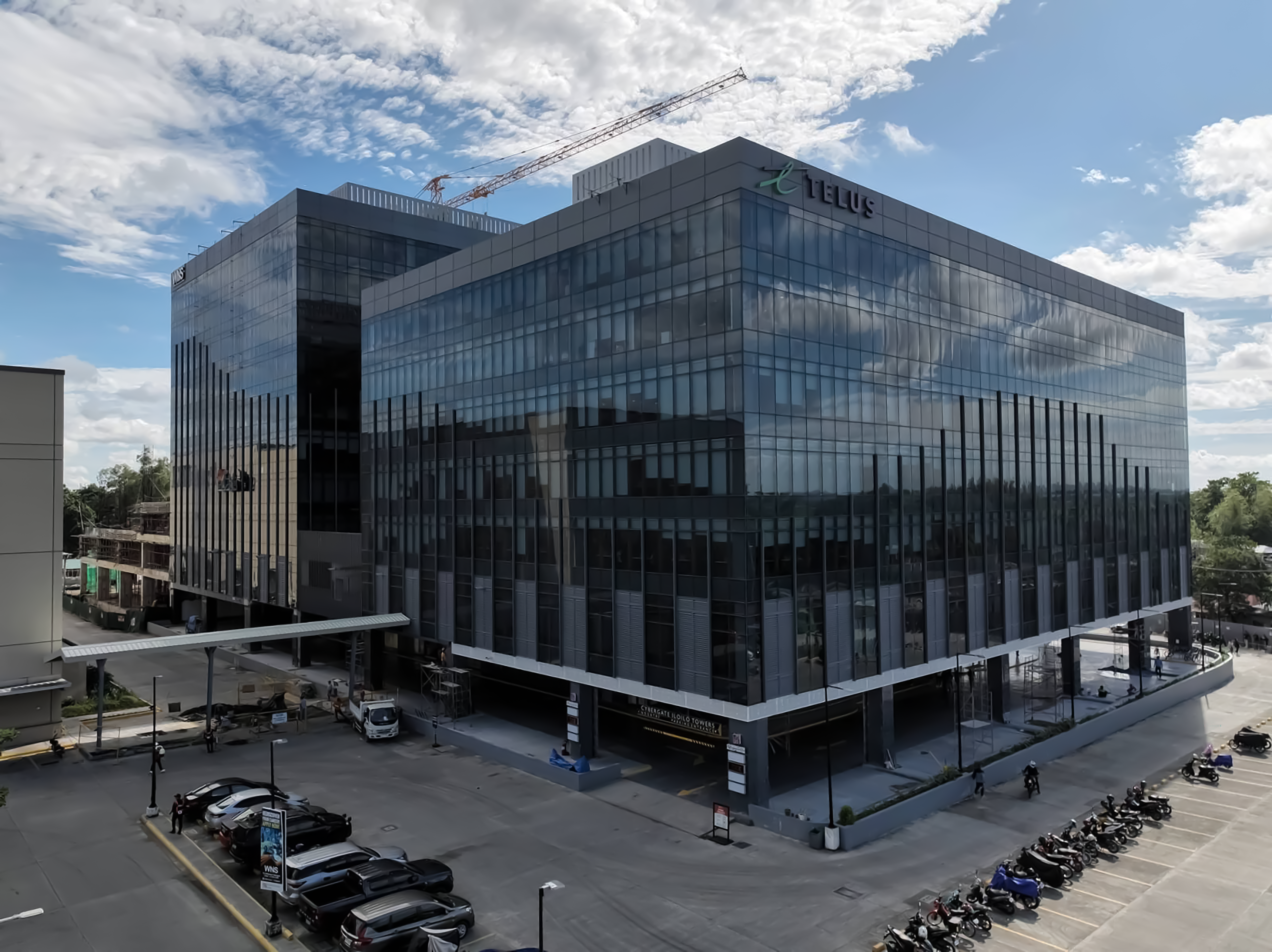
Cybergate Iloilo Towers. Tangible representations of Robinsons Offices’ commitment to keeping families together.

Cybergate Iloilo’s design prioritizes efficiency, boasting unobstructed column-free office floor plates, allowing tenants to maximize space and therefore be able to implement more efficient office designs. It also promotes inclusivity and accessibility with its gender-sensitive facilities including toilets, ramps, and elevators. The architectural brilliance extends to the exterior, showcasing curtain wall glass with aluminum accents to reflect Iloilo’s remarkable progress. The interiors, meanwhile, pay homage to the city’s rich heritage, drawing inspiration from local textiles like Hablon and its vibrant Dinagyang Festival.

Beyond its thoughtful design, Cybergate Iloilo represents Robinsons Offices’ commitment to provincial development, easing urban congestion through reverse migration, and creating local employment opportunities. This not only enriches the local economy but also aligns with a broader vision—a future where every Filipino can thrive within their own borders, eliminating the need to seek opportunities abroad. Through these efforts, Robinsons Offices does its part to ensure that families can prosper and communities can flourish, right here at home.

Best Green Development (Highly Commended)

Robinsons Offices’ commitment to sustainability shines as Cyber Omega receives a Highly Commended Award for Best Green Development. In photo (from L-R): Solomon Puro II, Project Director; Jen Llait, Business Development Manager; Elton John Peralta, Head of Special Projects; Matthew Balanon, Head of Building Management – Robinsons Offices

Nestled along Pearl Drive in Ortigas Center, Robinsons Offices’ Cyber Omega, a PEZA-registered prime office development, is an ideal choice for businesses thanks to its prime location near a university and a thriving residential and commercial community.

Cyber Omega. A symbol of progress in the heart of Ortigas, seamlessly integrating functionality, sustainability, and efficiency.

Earning a “Highly Commended” citation in the PropertyGuru Award’s Best Green Development category, Cyber Omega takes pride in its commitment to sustainability and energy conservation. Its resource-efficient design and green building features, such as precast panels and energy-efficient windows, have led to reductions of 24% in energy costs, 55% in water, and 50% in materials’ embodied energy, helping Cyber Omega attain EDGE-certified status. More than just numbers, these savings in power, water, and embodied energy is enough to cover 11 football fields, power 400 Philippine households annually, provide clean water to more than 17 million Filipinos for a year, and fill up about 24,000 cars. EDGE, or Excellence in Design for Greater Efficiencies, is an internationally recognized green building certification system created by the International Finance Corp., a member of the World Bank Group, for a measurable approach to sustainability.

Complementing its green design, the building prioritizes adaptability and operational efficiency with flexible large, column-free tenant spaces while ensuring accessibility for Persons with Disabilities (PWD). The

provision of bicycle racks and showers encourages occupants to embrace eco-friendly modes of transport and fosters a culture of sustainability within the workspace, while the breathtaking expansive views of Ortigas and beyond capture the interplay of both nature and the bustling cityscape below.

Commitment Towards Nation-building

RLC’s 18 awards and commendations at the 11th PropertyGuru Philippines Property Awards stand as a testament to its unwavering commitment to innovation and sustainability. Mr. Go concludes, “Robinsons Offices is set in its mission to develop premium, sustainable, and future-ready offices as part of our commitment towards nation-building. We thank PropertyGuru for recognizing our developments as tangible catalysts of economic and social growth. The GBF Centers, the Philippines’ Best Office Development, is proudly poised to attract top IT-BPM AND multinational companies. These companies are expected to help generate the much-needed jobs that will enable us to restart the economy. Our Cybergate Iloilo Towers 1 and 2 in Pavia, the Best BPO Office Development, bring employment opportunities from the robust IT-BPM industry out to the countryside—in our bid to decongest the crowded metropolis, stimulate reverse migration, and ultimately help keep families together. Lastly, Cyber Omega’s highly commended recognition as Best Green Development, rounds up our mission to bestow a greener and brighter tomorrow for our generation and the generations to come.”

In this shared victory, Robinsons Offices shines bright, creating spaces that not only redefine the workspaces of today, but also point the way toward a more prosperous, inclusive, and sustainable future.


Spotlight is BusinessWorld’s sponsored section that allows advertisers to amplify their brand and connect with BusinessWorld’s audience by enabling them to publish their stories directly on the BusinessWorld website. For more information, send an email to online@bworldonline.com.

Join us on Viber at https://bit.ly/3hv6bLA to get more updates and subscribe to BusinessWorld’s titles and get exclusive content through www.bworld-x.com.

Philippine bomb warnings ‘most likely a hoax’ — aviation police

YOUSEF ALFUHIGI-UNSPLASH

An anonymous warning that bombs could go off on planes headed out of the airport in the Philippine capital Manila was “most likely a hoax,” the chief of the Philippines’ aviation security group said on Friday.

“Airport operation is continuous, it’s normal,” the group’s director Jack Wanky added.

Also on Friday, the country’s aviation regulator released to media an Oct. 4 memo of the order given to airport security managers to beef up security, thoroughly inspect baggage, and conduct round-the-clock surveillance after receiving the email threat.

The Oct. 4 memo included a screenshot of what it said was the threat, which did not contain the word “bomb” but said “an airplane will explode” at Manila’s international airport today and “please beware”.

“Cebu, Palawan, Bicol and Davao will also be hit”, the anonymous email said.

A source at Philippines Airlines, who declined to be identified because they were not authorized to speak to the media, said the flag carrier was operating “business as usual”.

A spokesperson at Cebu Pacific Air said the airline was “following usual protocols”.

Transport Secretary Jaime J. Bautista said patrols had been increased and K9 units deployed at all terminals of Manila’s international airport, and law enforcement agencies were coordinating closely.

“There is no expected impact to any scheduled flights and we would like to ensure the traveling public that protocols are in place to ensure everyone’s safety and security,” Mr. Bautista said in a statement.—Reuters

Jobless rate dips to 3-month low in August

PHILIPPINE STAR/RUSSELL PALMA

The Philippine Statistics Authority (PSA) reported on Friday that more Filipinos found jobs in August, leading to the lowest jobless rate in three months, with better job quality.

The jobless rate — the share of unemployed Filipinos to the total workforce — hit 4.4% in August, preliminary results of the latest Labor Force Survey showed. This was smaller than the 4.8% recorded in July and the 5.3% logged in August last year.

This share was the lowest since 4.3% in May.

Philippine Labor Force Situation

This translated to 2.21 million jobless Filipinos as of August, about 60,000 fewer than 2.27 million from the previous month. It was also down by 468,000 from 2.68 million in August 2022.

The ranks of employed Filipinos in August reached 48.07 million, an addition of around 3.44 million from 44.63 million in July. This level was also greater than 47.87 million tallied in August last year.

The employment rate inched up to 95.6% that month from 95.2% in July. This was also better than 94.7% in the same month last year.

Job quality improved in August as the underemployment rate — the share of employed Filipinos who want to have additional hours of work in their present job, an additional job, or a new job with longer working hours to the total employed population — slid to 11.7% from 15.9% the previous month. It was also down from 14.7% in the same month in 2022.

It matched the underemployment rate in May and marked the lowest share in five months or since the 11.2% in March.

The underemployed Filipinos totaled 5.63 million in August, falling from 7.10 million in July and 7.03 million in 2022.

In a statement, the National Economic and Development Authority (NEDA) attributed the government’s efforts to create high-quality jobs as the reason for the decrease in both unemployment and underemployment.

In a separate press chat on Friday, NEDA Secretary Arsenio M. Balisacan said that the Philippine Development Plan (PDP) is working not just on reducing unemployment and underemployment but is also geared to “the creation of [high-quality] jobs that offer everyone decent pay.”

“We need nothing less than a massive investment to create high-quality jobs. That’s why our economic team, our President, has been marketing the country not only to local entrepreneurs here but also to foreign investors to come and invest in the Philippines. That’s what will create high-quality jobs,” Mr. Balisacan said.

The size of the labor force expanded month on month by 3.38 million to 50.29 million in August. However, it declined by 265,000 from 50.55 million in August last year.

This translated to a labor force participation rate of 64.7% that month, picking up from 60.1% in July but smaller compared with the 66.1% in August 2022.

Meanwhile, fewer fresh job seekers entered the labor force in August as new entrants that month totaled 754,000 from 1.64 million in July. It was also lower than the 1.02 million new entrants logged in August last year.

Year to date, unemployment averaged 4.6%, lower than 5.8% in the January-August period last year.

In the eight months to August, the underemployment rate averaged 12.8% (from 14.3%); the employment rate reached 95.4% (from 94.2%); and the LFPR averaged 64.8% (from 64.2%).

Filipinos worked for an average of 40.8 hours a week in August, down from 42.3 hours in July. Compared to August last year, this was a bit more from 40.5 hours a week.

Services remained the country’s top employer in August with a 57.3% share, while the agriculture sector cornered 24.5% and industry accounted for 18.2%.

On an annual basis, job gains were seen in the following subsectors: fishing and aquaculture (up by 572,000); construction (up by 534,000); agriculture and forestry (up by 378,000); human health and social work activities (up by 153,000); and administrative and support activities (up by 143,000).

Meanwhile, agriculture and forestry led the month-on-month job improvement in August after adding 1.97 million employees. It was followed by wholesale and retail trade (up by 1.13 million); construction (up by 286,000); fishing and aquaculture (up by 206,000); and education (up by 182,000).

Josua T. Mata, secretary-general of Sentro ng mga Nagkakaisa at Progresibong Manggagawa, said in a Viber message that while employment figures slightly improved, the quality of jobs being generated remains low with slightly less than a fifth of those in the labor force being either unemployed or underemployed.

He said that the country’s economic performance is still not improving and that the government will have to revise its strategy and start a “robust” public employment plan to achieve the needed jobs.

“As such, the aim of the Philippine Development Plan (PDP) 2023-2028 to accelerate poverty reduction by steering the economy back on a high-growth path will remain nothing but an empty promise,” Mr. Mata said in a Viber message. — Andrea C. Abestano with inputs from Luisa Maria Jacinta C. Jocson

Philippine manufacturing output peaks in August

By Abigail Marie P. Yraola, Researcher

Factory production expanded to 8.5% in August, its fastest pace this year, logging higher growth compared to the previous year, the Philippine Statistics Authority (PSA) reported on Friday.

Manufacturing output, measured by the volume of production index (VoPI), climbed to a seven-month high in August compared to the 4.6% growth seen in the same month last year, according to the preliminary results of the Monthly Integrated Survey of Selected Industries (MISSI).

This reading indicated faster growth compared to the 4.9% growth in July. It was also the fastest growth in seven months or since the 8.6% growth posted in January.

Looking at the monthly figures, the manufacturing sector’s VoPI increased by 4% in August, inching up from the 3.8% growth the previous month. Adjusting for seasonality factors, VoPI grew at a slower pace by 2.7% compared to the 3% growth seen in July.

The August results brought average factory output growth to 5.8% for the year to date, much lower than the 21.1% average growth seen in the same period in 2022.

Robert Dan J. Roces, chief economist at Security Bank Corp., said in a Viber message that the uptick in August likely signifies a rebound in demand and possible operational efficiencies within the manufacturing sector.

He added that the average growth stands at 5.8%, which he explained is considerably lower than 2022’s 21.1%. This could be attributed to the base effects, slower trade, and inflation, he noted.

Consumer price growth in 2022 averaged 5.8%, exceeding Bangko Sentral ng Pilipinas’ (BSP) 2-4% target.

In response to this accelerating inflation, the central bank hiked interest rates by a cumulative of 425 basis points between May 2022 and March where the key rate now stands at a 16-year high of 6.25%.

Meanwhile, the trade balance in 2022 logged a $58.24 billion deficit, the largest recorded data since 1991, the earliest year for which the data is available.

In 2022, the value of merchandise exports logged $78.98 billion while imports recorded $137.22 billion.

Domini S. Velasquez, chief economist at China Banking Corp., said that this higher growth of VoPI bodes well for the economy.

“The manufacturing sector remained resilient despite minimum wage hikes implemented in NCR and Calabarzon,” she said in a separate Viber message.

She further explained that in Asia, a slight rebound is seen in the manufacturing sector, with China posting its first expansion since April this year.

“If this trend continues, we expect the domestic manufacturing sector to continue to expand modestly despite higher interest rates,” Ms. Velasquez said.

The NCR Tripartite Wages and Productivity Board approved a P40 increase in the daily minimum wage in Metro Manila, which took effect on July 16.

This brought the daily minimum wage to P610 for workers outside the agriculture sector and P573 for those in the agriculture sector, service retail establishments with 15 or fewer workers, and manufacturing companies with less than 10 workers.

In September, the Regional Tripartite Wages and Productivity Board of Cagayan Valley approved a P30 increase that would be given in two tranches, which brought the daily minimum wages in the region to P450 for nonagriculture workers and P430 for workers in agriculture establishments.

For Central Luzon, the wage board has approved a P40 increase for nonagriculture, agriculture and retail service establishments while for the SOCCSKSARGEN region, a P35 increase in daily wages has been approved and will also be given in two tranches.

Contrary to the VoPI growth, the manufacturing Purchasing Managers’ Index (PMI) in August stood at 49.7%, marking the first time in two years that the PMI reading was below the 50 mark.

The PMI is a leading indicator for future manufacturing activity, as it reflects forward demand expectations in the form of raw material orders for use by factories in a few months’ time.

A reading above 50 indicates an expansion in expected manufacturing activity while below 50 denotes a deterioration in operating conditions.

The statistics agency said that three industry divisions were responsible for the faster growth in August, led by coke and refined petroleum, rising to 48% from 35.6% in July.

Food products logged a 0.7% growth, a turnaround from the 3.4% contraction in July while the annual decline in the output of computer, electronic, and optical products slowly declined to 5.2% from 17% in July.

Additionally, the PSA said that while seven other industry divisions recorded annual increases during the period, 12 categories posted contractions which include manufacture of furniture, logging the largest annual drop with 31.9% from the 36.9% decline in July.

Annual declines in VoPI were Machinery and equipment except electrical which steepened to 29.3% in August from its 16.8% decline in July and wearing apparel with 16.7% from its 23.1% contraction in the prior month.

August capacity utilization averaged 73.9%, a tad higher than the revised 73.6% in July. The August reading was also higher than the 71.5% posted in August last year.

According to the statistics agency, all industry divisions exceeded 50% utilization during the period.

Mr. Roces said looking ahead, the strong August performance bodes well for short-term factory output, although factors like global supply chain issues and trade policies will be key determinants for the sector’s health for the remainder of the year.

Philippines’ bulk prices slow in August

PHILIPPINE STAR/ RUSSELL A. PALMA

The Philippines’ bulk prices eased year-on-year in August due to the high base effects of global crude oil prices last year, while a weaker peso and storm damage in July drove month-on-month growth, the Philippine Statistics Authority (PSA) said on Friday.

General wholesale price index (GWPI) preliminary data from the PSA showed the country’s bulk prices eased by 5% in August from 7.6% in the same month last year. However, on a monthly basis, the rate in August was higher than July’s 4.5%.

The growth matched May’s figure and was the highest in six months or since the 6.8% growth seen in February.

Year to date, GWPI averaged 5.1%, which is slower than the 7.3% recorded in the same period a year ago.

All island groups posted slower GWPI in August this year compared to a year ago, with Luzon easing to 5% from 8%, the Visayas to 4.2% from 6.2%, and Mindanao to 3.4% from 4.3%.

Rizal Commercial Banking Corp. Chief Economist Michael L. Ricafort said that the slower uptick in wholesale prices can be attributed to higher base effects of global crude oil prices in August last year, which reached $89 levels compared to the $83 levels of August this year.

“However, wholesale prices were faster than 4.5% a month before (July 2023) due to higher global crude oil prices since July 2023 after the output cuts by Saudi Arabia and Russia to support world crude oil prices and prevent them from going down further,” he said in an e-mail.

Mineral fuels, lubricants, and related materials contributed to the slower GWPI in August as it decreased by 6.8%, a turnaround from the 38.5% growth seen in August 2022.

This was followed by food commodities which eased to 7.9% from 12.4%, and beverages and tobacco which eased to 6.2% from 8.9%.

Commodities that logged faster growth were miscellaneous manufactured articles (4.4% in August this year compared to 2.8% from August 2022), manufactured goods classified chiefly by materials (5.3% from 3.9%), and crude materials, inedible except fuels (-4.9% from -5.8%).

Mr. Ricafort said that the monthly growth increased because the peso’s value dropped from P54.88 in July to P56.595, making imported items more expensive during that month.

During the latter part of July, the country was hit by two typhoons (Doksuri and Khanun) leaving parts of the country flooded.

Mr. Ricafort said that damage caused food prices to rise, especially for vegetables and farm products. The increase in rice prices, even with limits in place, also played a role in the overall price rise for August.

For the coming months, Mr. Ricafort said that prices could pick up due to seasonal factors as the Christmas holiday season comes closer. The uptick in the third quarter as sectors prepare for seasonal demand can also lead to higher bulk prices.

Moreover, upticks are expected from the increase in the minimum transport fares effective Oct. 8, 2023, and wage adjustments from other regions, possibly leading to a second-round inflation effect.

“As a result, higher inflation could still lead to some increase in policy rates that could also add to borrowing costs/financing costs at the wholesale level, thereby weighing on demand, investments, and other business/economic activities,” Mr. Ricafort said. — Bernadette Therese M. Gadon

Capturing perfect basketball moments with vivo V29 5G: Slam dunk in innovation

The stars aligned as the world of cutting-edge technology and the thrill of basketball converged at the vivo V29 Grand Launch, sending shockwaves through tech-savvy and sports-loving Filipinos.

As the phone hit the Philippine market on Sept. 25, it carried with it not just a promise of elegance but the power to capture the perfect basketball moments through its remarkable 50MP optical image stabilization (OIS) Ultra-sensing camera and the Aura Light 2.0.

Aesthetic marvel that transcends smartphone photography

The vivo V29 5G has taken the smartphone world by storm since its unveiling, and its appeal is crystal clear. Designed with meticulous care and finesse that defines vivo’s design ethos, the smartphone is an aesthetic masterpiece.

Its sleek and elegant design, available in a range of eye-catching colors, makes it a style statement in itself. However, the beauty of this phone goes beyond skin-deep, with its unrivaled prowess in smartphone photography.

The vivo V29 5G, celebrated as the Aura Portrait Master, perfectly encapsulates the essence of ‘Love and Passion, Spotlighted.’

With its extraordinary ability to capture flawless, intricate portraits even in the most challenging low-light conditions, the vivo V29 5G stands as a testament to how love and passion for photography can truly shine, illuminating moments in a way that sets it apart from the rest.

Aura Portrait Master 2.0

At the forefront of the vivo V29 5G’s offerings lies its exceptional camera, accompanied by a wealth of enhancements, including the advanced Aura Light 2.0 featuring intelligent Smart Color Temperature Adjustment, as well as a diverse selection of modes like the Sports mode to elevate your photography experience.

In a basketball-crazy nation like the Philippines, these features take smartphone sports photography to the next level.

The vivo V29 5G’s Aura Light 2.0 with Smart Color Temperature Adjustment is tailored for taking stunning basketball court photos.

By accurately adapting to the ever-changing lighting conditions on the court, it ensures that your photos showcase true-to-life colors and maintain balanced exposure even in challenging lighting situations.

Meanwhile, the Sports Mode is designed to capture fast-paced action with exceptional clarity and precision, ensuring you never miss a single moment of the game.

Whether you’re cheering for your favorite team in the arena or capturing your own slam dunks at the neighborhood court, the vivo V29 5G’s Sports Mode camera guarantees that your memories are preserved in all their glory.

But what makes this feature even more exciting is the partnership that transformed the sports and tech world for the better.

Game-changing collaboration

The grand launch of the vivo V29 5G was not just about showcasing a new smartphone; it was also a celebration of the marketing partnership between vivo Philippines and the National Basketball Association (NBA).

The collaboration brought the glitz and glamor of the NBA right to our doorstep, as the NBA made a dazzling appearance at the event.

Franceso Suarez, Head of Marketing Partnerships, Events, and Basketball Operations at NBA Asia

Francesco Suarez, the Head of Marketing Partnerships, Events, and Basketball Operations at NBA Asia, delivered a message that underscored the significance of this marketing partnership.

“We are very fortunate to work with partners like vivo who share our commitment to finding new and creative ways to engage fans around the world and their love for the game,” said Suarez.

The partnership represents a testament to the shared values of innovation, excellence, and the love of basketball that bind vivo and the NBA together.

Slam dunk from NBA legend

Adding to the excitement of the event, the crowd had the privilege of hearing from NBA Legend and Hall of Famer Dominique Wilkins.

From left to right: Event host, Francesco Suarez (NBA Asia), Dominique Wilkins (NBA Legend and Hall of Famer), and Ted Xiong (vivo Philippines)

The two-time Slam Dunk Contest Champion shared his insights into the impressive quality of the vivo V29’s camera, emphasizing how having a class-leading camera phone can be a game-changer, both for professional photographers and everyday users.

“What I’m really excited about is the picture, the clarity, and what it brings. I’m always looking for something new and improved to use for my everyday life and for my kids,” Wilkins shared.

With the captivating marketing partnership with the NBA, the vivo V29 5G is poised to be a slam dunk in the Philippines.

The vivo V29 5G is a companion for those who want to capture the thrilling moments of basketball in all their glory.

As the vivo V29 5G makes its debut in the Philippines on September 25, 2023, it promises not just an aesthetically pleasing device but also the power to transform every basketball moment into a work of art.

It’s time to embrace innovation and capture the magic of the game like never before. Grab vivo V29 at vivo Philippine’s official website, e-stores such as Shopee, Lazada and TikTok, as well as physical stores nationwide. Follow the official vivo accounts on Facebook, X, Instagram, TikTok, and YouTube for the latest updates.

Fans in the Philippines can shop for official NBA merchandise at the NBA Stores at SM Megamall and SM Mall of Asia and at NBAStore.com.ph. For all the latest NBA news and updates, fans in the Philippines can visit www.nba.com, download the NBA App, and follow the NBA on Facebook, X, and TikTok.


Spotlight is BusinessWorld’s sponsored section that allows advertisers to amplify their brand and connect with BusinessWorld’s audience by enabling them to publish their stories directly on the BusinessWorld website. For more information, send an email to online@bworldonline.com.

Join us on Viber at https://bit.ly/3hv6bLA to get more updates and subscribe to BusinessWorld’s titles and get exclusive content through www.bworld-x.com.

Philippines puts 42 airports on heightened alert following bomb warnings

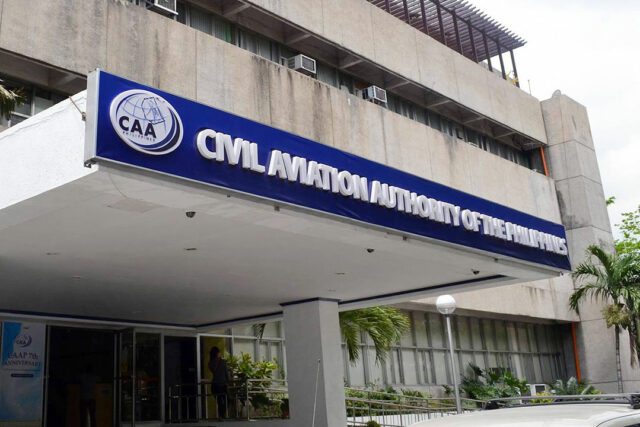
CIVIL AVIATION AUTHORITY OF THE PHILIPPINES

The Philippines has placed 42 airports on heightened alert following a series of warnings that bombs could be set off on planes, its civil aviation authority said on Friday.

“Immediate enhanced security measures” were being implemented across all Philippine commercial airports, the Civil Aviation Authority of the Philippines (CAAP) said in a media advisory, adding the warnings were being verified.

It was not immediately clear when the threats, which came via email, were issued.

It said the flights identified were headed to Cebu, Bicol, Davao and Palawan.

On Friday, the aviation regulator released to media an Oct. 4 memo of the order given to airport security managers to beef up security, thoroughly inspect baggage and conduct round-the-clock surveillance after receiving the email threat.

The Oct. 4 memo included a screenshot of what it said was the threat, which did not contain the word “bomb” but said “an airplane will explode” at Manila’s international airport today and “please beware”.

“Cebu, Palawan, Bicol and Davao will also be hit”, the anonymous email said.

A source at Philippines Airlines, who declined to be identified because they were not authorized to speak to the media, said the flag carrier was operating “business as usual”.

A spokesperson at Cebu Pacific Air said the airline was “following usual protocols”.

Transport Secretary Jaime J. Bautista said patrols had been increased and K9 units deployed at all terminals of Manila’s international airport, and law enforcement agencies were coordinating closely.

“There is no expected impact to any scheduled flights and we would like to ensure the traveling public that protocols are in place to ensure everyone’s safety and security,” Mr. Bautista said in a statement.— Reuters

Southeast Asian ministers commit to eventual elimination of crop burning

STOCK PHOTO | Image by Peggy und Marco Lachmann-Anke from Pixabay

 – Southeast Asian agriculture and forestry ministers have agreed to take collective action to minimize and eventually eliminate crop burning in the region, amid deteriorating air quality and concern about cross-border haze.

In a statement after a meeting of the Association of Southeast Asian Nations (ASEAN) in Malaysia, members recognized “the adverse environmental and health impacts of crop burning practices,” and committed to collectively reduce and phase it out.

“The meeting recognized the need for sustainable alternatives to crop burning, including the adoption of innovative and environmentally friendly agricultural practices,” it said.

The pledge comes as air quality hit unhealthy levels in several parts of Malaysia in recent days and after weeks of elevated pollution in Indonesia.

Malaysia’s environment minister in an interview with Reuters on Thursday called on Indonesia and ASEAN to take action as air quality worsens, blaming it on fires from crop burning in Indonesia.

Almost every dry season, smoke from fires to clear land for palm oil and pulp and paper plantations in Indonesia blankets much of the region, bringing risks to public health and worrying tourist operators and airlines. Many of the companies that own these plantations are foreign or foreign-listed.

Jakarta has denied detecting any smoke drifting over its borders into Malaysia.

The ASEAN meeting agreed to develop and implement educational campaigns and training programs on sustainable agricultural practices, providing technical guidance on alternative methods for land clearing.

“This will require collective efforts, sustained commitment, and collaboration among (ASEAN members) farmers, local communities, and relevant stakeholders,” it said.

The ministers also agreed to review and update existing regulations and guidelines with the aim of phasing out the use of antimicrobials in food production, they said. – Reuters

S.Korea considers $50.5 million fine against Google, Apple over app market practices

RODION KUTSAEV-UNSPLASH

 – South Korea’s telecommunications regulator said on Friday that Alphabet Inc’s Google and Apple have abused their dominant app market position and warned of possible fines totaling up to $50.5 million.

The Korea Communications Commission (KCC) said in a statement that the two tech giants forced app developers into specific payment methods and caused unfair delay in app review.

The KCC is notifying the companies for corrective action, and will deliberate on the fines, the statement said.

“Since the start of the fact-finding investigation in August 2022, we have worked closely with KCC to explain how we are complying with the new law whilst ensuring that through our alternative billing, we continue to provide a safe and high-quality experience for all. What KCC has shared today is the ‘pre-notice’ and we will carefully review and submit our response. Once the final written decision is shared with us we will carefully review to evaluate the next course of action,” Google said in a statement to Reuters.

Apple did not immediately respond to Reuters’ requests for comment.

In 2021, South Korea passed an amendment to the Telecommunication Business Act banning app store operators from forcing software developers to use their payments systems.

The KCC said that Google and Apple‘s enforcement of certain payment methods, and Apple‘s “discriminatory charging of fees to domestic app developers” is likely to undermine the law’s purpose of promoting fair competition.

After hearing from the companies, the regulator could decide to impose fines of up to 68 billion won ($50.47 million), including 47.5 billion won for Google and 20.5 billion won for Apple, KCC said. – Reuters

Further policy tightening could hurt consumers — NEDA chief

A couple shops at a supermarket in Makati City. — PHILIPPINE STAR/ RUSSELL PALMA

The Philippines’ economics minister on Friday cautioned against further central bank interest rate hikes that he said could hurt consumers already reeling from high inflation.

“If I were in the monetary board, I would say no (to rate hikes). We are the most aggressive in the region in raising interest rates,” National Economic and Development Authority (NEDA) Secretary Arsenio M. Balisacan said.

Annual inflation quickened for a second month in September due mainly to the faster pace of increases in food and transport costs, raising the possibility the central bank would resume hiking rates at its meeting in November.

The 6.1% inflation in September, which was the fastest in four months and above the 5.3% rate in August, brought the year-to-date average inflation to 6.6%, well outside the central bank’s 2%-4% target for the year.

But Mr. Balisacan, who is not a member of the central bank’s policy-making monetary board, said raising interest rates “can hurt” the economy and consumers.

“The source of the inflation is supply side. It is not the demand side that requires a monetary solution,” Mr. Balisacan said.

He said he was also wary of the impact of higher interest rates on the peso for that could make the local currency stronger and make the country’s exports more expensive.

“A relatively weak peso can make the economy grow faster,” Mr. Balisacan said.

Despite downside risks to growth, Mr. Balisacan said the government is not giving up on its 6.0%-7.0% target for the year. — Reuters

ChatGPT-owner OpenAI is exploring making its own AI chips -sources

STOCK PHOTO | Image by Rolf van Root from Unsplash

 – OpenAI, the company behind ChatGPTis exploring making its own artificial intelligence chips and has gone as far as evaluating a potential acquisition target, according to people familiar with the company’s plans.

The company has not yet decided to move ahead, according to recent internal discussions described to Reuters. However, since at least last year it discussed various options to solve the shortage of expensive AI chips that OpenAI relies on, according to people familiar with the matter.

These options have included building its own AI chip, working more closely with other chipmakers including Nvidia and also diversifying its suppliers beyond Nvidia.

OpenAI declined to comment.

CEO Sam Altman has made the acquisition of more AI chips a top priority for the company. He has publicly complained about the scarcity of graphics processing units, a market dominated by Nvidia, which controls more than 80% of the global market for the chips best suited to run AI applications.

The effort to get more chips is tied to two major concerns Altman has identified: a shortage of the advanced processors that power OpenAI‘s software and the “eye-watering” costs associated with running the hardware necessary to power its efforts and products.

Since 2020, OpenAI has developed its generative artificial intelligence technologies on a massive supercomputer constructed by Microsoft, one of its largest backers, that uses 10,000 of Nvidia’s graphics processing units (GPUs).

Running ChatGPT is very expensive for the company. Each query costs roughly 4 cents, according to an analysis from Bernstein analyst Stacy Rasgon. If ChatGPT queries grow to a tenth the scale of Google search, it would require roughly $48.1 billion worth of GPUs initially and about $16 billion worth of chips a year to keep operational.


CUSTOM CHIPS ERA

An effort to develop its own AI chips would put OpenAI among a small group of large tech players such as Alphabet’s Google and Amazon.com that have sought to take control over designing the chips that are fundamental to their businesses.

It is not clear whether OpenAI will move ahead with a plan to build a custom chip. Doing so would be a major strategic initiative and a heavy investment that could amount to hundreds of millions of dollars a year in costs, according to industry veterans. Even if OpenAI committed resources to the task it would not guarantee success.

An acquisition of a chip company could speed the process of building OpenAI’s own chip – as it did for Amazon.com and its acquisition of Annapurna Labs in 2015.

OpenAI had considered the path to the point where it performed due diligence on a potential acquisition target, according to one of the people familiar with its plans.

The identity of the company OpenAI examined purchasing could not be learned.

Even if OpenAI goes ahead with plans for a custom chip – including an acquisition – the effort is likely to take several years leaving the company dependent on commercial providers like Nvidia and Advanced Micro Devices in the meantime.

Some big tech companies have been building their own processors for years with limited results. Meta’s custom chip effort has been beset with issues, leading the company to scrap some of its AI chips, according to a Reuters report. The Facebook owner is now working on a newer chip that will span all types of AI work.

OpenAI‘s main backer, Microsoft, is also developing a custom AI chip that OpenAI is testing, The Information has reported. The plans could signal further distancing between the two companies.

Demand for specialized AI chips has soared since the launch of ChatGPT last year. Specific chips, or AI accelerators, are necessary to train and run the latest generative AI technology. Nvidia is one of the few chipmakers that produces useful AI chips and dominates the market. – Reuters

Canada welcomes panel directing US to review softwood lumber policy

STOCK PHOTO | Image by Pexels from Pixabay

Canada welcomed on Thursday a trade dispute panel ruling which said the US should review parts of its policy on softwood lumber which includes duties on most such products exported from its northern neighbor.

The duties are the legacy of a decades-long trade dispute over the structure of Canada’s timber sector that could not be resolved when a quota agreement expired in 2015. US producers say Canada unfairly subsidizes its lumber sector.

The United States has based its tariffs on a finding that Canadian timber harvested from federal and provincial lands with low government-set stumpage fees constitutes an unfair subsidy, while most US timber is harvested from private land at market rates.

On Thursday, the ruling said that it was directing the US to review the treatment of export taxes. The US Commerce Department in July set a duty rate of 7.99% on the product.

“Canada is pleased that the NAFTA (North American Free Trade Agreement) dispute panel agrees that elements of the US dumping determination are inconsistent with US law,” Trade Minister Mary Ng said in a statement.

NAFTA was substituted by the United States-Mexico-Canada Agreement (USMCA) in 2020.

The US commerce department did not immediately respond to a request for comment from Reuters. – Reuters

ADVERTISEMENT
ADVERTISEMENT