Home Blog Page 4190

Germany clears use of two Heron TP combat drones by Israel — Spiegel

A GERMAN national flag flies atop the illuminated Reichstag building in Berlin, Germany Dec. 9, 2022. — REUTERS

FRANKFURT — Germany has given Israel the go-ahead to use two Heron TP combat drones in its counter-attack against Palestinian Islamist group Hamas, German magazine Der Spiegel reported on Wednesday.

Germany had rented the two Israel-made combat drones to train 16 prospective German drone pilots in Israel but the military trainees are now returning to Germany because of the Hamas attack.

German Defense Minister Boris Pistorius on Wednesday approved a request by Israel for the drone use over the weekend, said Der Spiegel, which did not specify its sources.

A spokesperson for the defense ministry in Berlin said she could not immediately comment on the Spiegel report.

Israel’s death toll rose to 1,200 on Wednesday with over 2,700 wounded, its military said, from Hamas militants’ hours-long rampage after breaching the fence enclosing Gaza on Saturday.

Israeli reprisal strikes on blockaded Gaza have killed 1,100 people and wounded 5,339, Gaza’s Health Ministry said. — Reuters

North Korea’s Kim shares letters with Russia’s Putin, wishes victory over ‘imperialists’

KREMLIN.RU/EVENTS/PRESIDENT/NEWS/60363/PHOTOS-COMMONS.WIKIMEDIA.ORG

SEOUL — North Korea leader Kim Jong Un exchanged letters with Russian President Vladimir Putin on Thursday, vowing to advance their ties and wishing him victory over what he called hegemony and pressure from imperialists, Pyongyang’s state media KCNA said.

The letters mark the 75th anniversary of bilateral relations, and came about a month after Mr. Kim’s rare trip to Russia during which he and Mr. Putin discussed military cooperation, including over North Korea’s satellite program, and the war in Ukraine.

In his letter, Mr. Kim said he was extremely satisfied with their “candid, comprehensive” discussions during the visit. He pledged to further develop relations to a “new height” and wished Mr. Putin good luck in resisting Western pressure over Ukraine.

“I hope that the Russian people, who have set out to build a strong nation, will always achieve only victory and glory in their struggle to protect the country’s sovereignty, dignity, security and peace by crushing the imperialists’ persistent hegemonic policy and anti-Russia scheme to isolate and stifle it,” Mr. Kim said.

Mr. Putin, in his message to Kim, said their recent meeting was more evidence of developing ties.

“I am convinced that to implement the agreements will contribute to further expanding the constructive bilateral cooperation for improving the well-being of the peoples of the two countries and ensuring security and stability in the Korean peninsula and Northeast Asia as a whole,” he said.

Mr. Kim’s visit has stoked U.S. concerns that a revived Moscow-Pyongyang axis could bolster Russia’s military in Ukraine and provide Mr. Kim with missile technology banned under U.N. resolutions.

Washington has accused has accused North Korea of providing weapons to Russia for its war in Ukraine, including artillery shells, shoulder-fired rockets and missiles.

Pyongyang and Moscow have denied any arms transactions, but promised to deepen defense cooperation. — Reuters

Indonesia ex-agriculture minister named as graft suspect

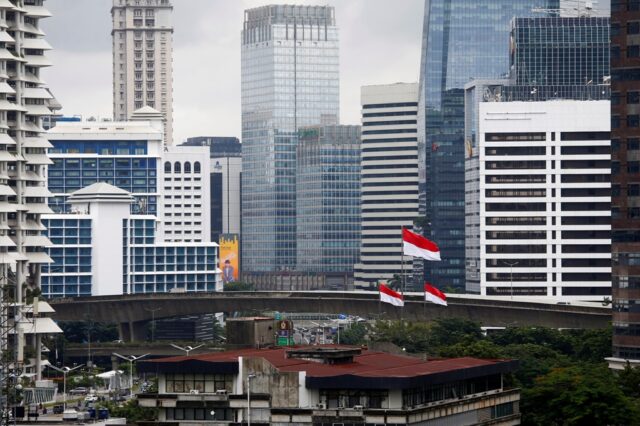
INDONESIAN national flags fly at a business district in Jakarta, Indonesia, Feb. 5, 2021. — REUTERS

JAKARTA — Indonesia’s anti-graft agency (KPK) has named the country’s former agriculture minister as a suspect in a graft case, its deputy chief said, becoming the sixth member of President Joko Widodo’s cabinet to face corruption allegations.

Syahrul Yasin Limpo, who resigned last week after KPK raids on his multiple houses and ministry, said via his lawyer that he will cooperate with the investigation.

KPK named Limpo as a suspect for allegedly instructing two colleagues to force officials to pay him at most $10,000 in exchange for positions or participation in procurement projects at the ministry.

The money allegedly came from the ministry’s marked up budget and further investigation against Limpo is ongoing, deputy KPK chief Johanis Tanak said late on Wednesday.

Limpo and his colleagues allegedly received about 14 billion rupiah ($892,288), Johanis said, adding some of the money was allegedly used to pay for Limpo’s luxury car and credit card bills.

The KPK said raids on Limpo’s houses and ministry had found billions of rupiah in cash.

Indonesia’s president, commonly known as Jokowi, appointed an acting agriculture minister last week.

Limpo is the sixth minister in Jokowi’s cabinet to face corruption allegations. Earlier this year, authorities arrested the then communications minister on corruption charges. — Reuters

BSP open to 25-bp hike in November

BANGKO SENTRAL ng Pilipinas Governor Eli M. Remolona, Jr. — COURTESY OF BANGKO SENTRAL NG PILIPINAS

THE BANGKO SENTRAL ng Pilipinas (BSP) is open to increasing its key policy rate by 25 basis points (bps) at its meeting on Nov. 16, its governor said on Wednesday, after inflation accelerated for a second straight month in September.

BSP Governor Eli M. Remolona, Jr. told reporters higher borrowing costs have not affected Philippine economic growth, which may indicate there is still room for monetary tightening.

“I would not rule out a 25-basis-point rate hike,” he said.

The BSP has kept the benchmark interest rate at a near 16-year high of 6.25% at its last four meetings. It hiked borrowing costs by 425 bps from May 2022 to March 2023 to tame red-hot inflation.

Mr. Remolona said he is “not sure” if headline inflation would return to the 2-4% target within the year due to the “significant spike” in September.

“The core number went down a little bit, so that’s encouraging. For us, the core number is what reflects monetary policy. But the headline number could affect expectations and then we have to worry,” he said.

Headline inflation accelerated to 6.1% in September from 5.3% in August. This marked the 18th straight month that inflation exceeded the central bank’s 2-4% target.

In September, core inflation eased to 5.9% from 6.1% in August, but still faster than 5% a year earlier.

Year to date, inflation has averaged 6.6%, higher than 5.1% a year ago and still above the BSP’s revised 5.8% forecast for 2023. Year to date, core inflation has averaged 7.2%.

“The upside risk that we feared, some of them have materialized already. One thing we were worried about is transport fare hikes and that has happened. I wouldn’t say that we’re done with the tightening,” Mr. Remolona said.

The Land Transportation Franchising and Regulatory Board has approved a P1 provisional jeepney fare increase nationwide, which took effect on Oct. 8. The minimum fares for traditional and modern jeepneys are now P13 and P15, respectively.

“So far, we think it hasn’t really affected our growth prospects. We’re watching that very, very carefully,” Mr. Remolona said.

“We try not to affect growth prospects, what we try to do is relieve pressure from the demand side that is leading to inflation without affecting the growth prospects,” he added.

The Philippine economy grew by 4.3% in the second quarter, its slowest expansion in more than two years, mainly due to weaker consumption and a drop in government spending.

For the first half, GDP growth averaged 5.3%. The economy has to expand by 6.6% in the second half to meet the government’s 6-7% target.

Third-quarter GDP data will be released on Nov. 9.

Meanwhile, Security Bank Corp. Chief Economist Robert Dan J. Roces in a Viber message said it is unlikely that inflation would return to the BSP’s 2-4% target range by the end of the year.

Security Bank has raised its inflation forecast this year to 6.1% from 5.6%.

“This sets the risk for the BSP to potentially hike interest rates, possibly before the next scheduled meeting on Nov. 16. A rate hike could aim to dampen inflation but might also slow down economic activity, but we do not think an off-cycle hike will take place,” he said.

Mr. Roces noted that “critical decision points” for the central bank at its next meeting will be the foreign exchange scenario, the US Federal Reserve’s next policy meeting, October inflation data, and third-quarter GDP data.

“As such we retain our 6.25% policy rate outlook for end-of-year 2023 yet recognizing the upside risks,” he added.

RISK TO STABILITY
Meanwhile, Mr. Remolona said the Philippine banking system is “in very good shape.”

“When you look at the usual regulatory measures, capital, liquidity, these things are well above (regulatory requirements). Even so, that doesn’t ensure that there is no systemic risk,” he said.

The BSP chief noted some major corporations have elevated debt levels, which may pose a risk to the country’s financial stability.

“There’s some risk that some of them may not be able to pay off their loans. But so far, it’s very manageable. It’s something that we’re watching,” he said.

“We’re also making sure that should there be a need by the banks for emergency liquidity, we will be in a position to provide the emergency liquidity. Although we don’t see any need at the moment for [it],” he said.

The Philippines is in discussion with foreign central banks that are part of the Executive Meeting of East Asia Pacific when it comes to financial stability, the BSP chief said. — Keisha B. Ta-asan

SEC defends proposed fee increase

SEC.GOV.PH

THE SECURITIES and Exchange Commission (SEC) defended a plan to increase its fees and charges amid opposition from some of the country’s top business groups, saying the rates have not been adjusted since 2017.

This comes after business groups, led by the Philippine Chamber of Commerce and Industry (PCCI), sent a letter to the SEC objecting to the proposed hike in fees and charges which they described as “obscene” and “unconscionable.”

In a five-page statement on Wednesday, the SEC said it will meet with the business groups today (Oct. 12) to address their concerns and clarify certain statements in their letter, “including the use of non-comparable values, and generalization of Supreme Court rulings.”

“The meeting will seek to unite the viewpoints of the Commission and its stakeholders toward ensuring that the new schedule of fees continues to advance the Marcos administration’s thrust of promoting business and capital formation in the country,” it said.

The corporate regulator said the proposed increase in its fees and charges was the result of “a thorough and careful study.”

“The schedule of fees and charges was last updated in 2017, based on a proposal from 2014. This means that the current rates are based on operational and administrative costs prevailing almost 10 years ago,” the SEC said.

To sustain the development of IT-related systems and the delivery of its services, the SEC said that “fees and charges must sufficiently cover the cost of maintaining and upgrading them continuously for the benefit of the transacting public.”

The SEC released the proposed schedule of new fees and charges for stakeholders’ comments on Aug. 2. No fees have been increased.

“The SEC assures stakeholders that any adjustments in the fees and charges collected from the transacting public are carefully studied to ensure that they are commensurate with the cost of regulating the corporate sector and capital market, and reasonable such that no unnecessary burden shall be passed onto the transacting public,” it said.

In an Oct. 2 letter to the SEC, the business groups urged the regulator to review, “if not totally scrap” the proposal which it described as “anti-business.”

They opposed the SEC’s proposal to charge corporate issuers one-fourth of 1% of total indebtedness when creating bonded indebtedness.

They also objected to the proposed fee on the total transactions cleared and settled in the previous year by the Securities Clearing Corp. of the Philippines and the Philippine Depository Trust Corp. at 0.1 basis point (bp) and 0.05 bp, respectively.

“Consistent with the ease of doing business law, we then strongly recommend that SEC submit this proposed policy to the Anti-Red Tape Authority (ARTA) for a regulatory impact assessment to check against harmful impacts to business and the economy,” they said.

The business groups also argued that the SEC’s proposal could discourage the entry of new investments, as well as hinder the growth of small and medium enterprises.

Aside from the PCCI, the letter was also signed by the Management Association of the Philippines, Philippine Retailers Association, Philippine Franchise Association, Chamber of Thrift Banks, Philippine Exporters Confederation, Inc., Federation of Filipino Chinese Chambers of Commerce and Industry, Inc., and Employers Confederation of the Philippines. — RMDO

Meralco rates go up in October

Households in Metro Manila face higher electricity bills in October. — PHILIPPINE STAR/MICHAEL VARCAS

RESIDENTIAL CUSTOMERS in areas served by Manila Electric Co. (Meralco) will see higher electricity bills this month, with typical households set to pay about P84 more.

In a statement, Meralco said the overall rate for a typical household increased by P0.4201 per kilowatt-hour (/kWh) to P11.8198/kWh in October from P11.3997/kWh in September.

The adjustment is equivalent to an increase of about P84 in the total electricity bill of residential customers consuming 200 kWh.

Households that consume 300 kWh, 400 kWh and 500 kWh will see an increase of P126, P168 and P210, respectively, in their October billing.

Meralco attributed this month’s higher power rates to the P0.3015 increase in the generation charge to P7.1267 per kWh from P6.8252 last month.

Joe R. Zaldarriaga, Meralco spokesperson and vice-president for corporate communications, told a virtual briefing the generation charge went up due to higher charges from power supply agreements (PSA) and independent power producers (IPP).

PSAs, which accounted for 47% of its energy requirements for the month, increased by P0.1658/kWh. Meralco said this was partly due to the forced shutdown of the 420-megawatt (MW) FirstNatGas-San Gabriel power plant after gas supply from Malampaya was restricted. However, this was offset by lower coal prices.

Charges from IPPs rose by P0.4599/kWh due to the rising cost of fuel used by the First Gas plants.

“The persisting supply restriction of the Malampaya natural gas field compelled the 1,000-MW First Gas-Sta. Rita and 500-MW First Gas-San Lorenzo power plants to switch to more expensive alternative fuel to ensure supply continuity,” Meralco said.

Charges from the Wholesale Electricity Spot Market (WESM) inched up by P0.0525/kWh as the supply situation in the Luzon grid improved last month. WESM accounted for 18% of Meralco’s total energy requirements in September.

Transmission charges also saw a net increase of P0.0264/kWh due to higher ancillary service charges, Meralco said.

“Because of the higher generation and transmission charges, taxes and other charges subsequently registered a net increase of P0.0661/kWh,” it said.

The power utility said universal charges increased by P0.0264/kWh to P0.2238/kWh. This after the Energy Regulatory Commission (ERC) approved a higher universal charge for missionary electrification.

Last month, the ERC extended the suspension of the collection of the feed-in tariff allowance (FIT-All) of P0.364/kWh. FIT-All is collected from on-grid electricity customers to fund the payment to renewable energy developers in a bid to support the development and promotion of renewables.

Meanwhile, Lawrence S. Fernandez, vice-president and head of utility economics of Meralco, said the two upcoming liquefied natural gas (LNG) terminals in Batangas City would ensure the reliability of LNG supply in the grid, when Malampaya gas supply is not available.

Meanwhile, Meralco is on standby for the upcoming Barangay and Sangguniang Kabataan elections on Oct. 30, Mr. Zaldarriaga said. 

Meralco has already inspected 3,000 polling and canvassing centers within its franchise area. It has also prepared over 300 generator sets and close to 800 flood lights that can be used in case of power interruptions.

Meralco’s controlling stakeholder, Beacon Electric Asset Holdings, Inc., is partly owned by PLDT Inc.

Hastings Holdings, Inc., a unit of PLDT Beneficial Trust Fund subsidiary MediaQuest Holdings, Inc., has a majority stake in BusinessWorld through the Philippine Star Group, which it controls. — SJT

PHL keeps close eye on oil amid possible supply disruption

Oil prices continue to rise amid tensions in the Middle East. — PHILIPPINE STAR/MIGUEL DE GUZMAN

THE GOVERNMENT is keeping a close eye on potential spillovers from the Israel-Hamas conflict and its impact on the Philippine economy, Bangko Sentral ng Pilipinas (BSP) Governor Eli M. Remolona, Jr. said on Wednesday.

In a press chat with reporters, Mr. Remolona said the conflict has not “really affected” oil prices yet.

“The effects on oil prices have been minimal, but it may have spillover effects on global growth, for example, so that’s what we’re monitoring,” he said in mixed English and Filipino.

“In the past, something like this would have caused oil prices to spike, but so far it has not. The peso hasn’t really depreciated so far because of this. So, so far, so good. But of course, we’re watching. We’re watching developments. It’s a global phenomenon, by the way, so it’s not specific to us,” he added.

Oil edged higher on Wednesday as investors grappled with the prospect of supply disruptions due to the Middle East turmoil, Reuters reported.

Brent crude rose by 25 cents or 0.3% to $87.90 a barrel by 5:50 a.m. GMT. US West Texas Intermediate (WTI) crude rose by 24 cents or 0.3% to $86.21 a barrel.

Brent and WTI surged by more than $3.50 on Monday as the military clashes raised fears that the conflict could spread beyond Gaza but settled lower in Tuesday’s session.

Israel produces very little crude oil, but markets are worried that the conflict could escalate and disrupt Middle East supply, worsening an expected deficit for the rest of the year.

Monetary Board (MB) member Bruce J. Tolentino said “any intensification” of tensions in the Middle East could result in higher crude prices.

“As global crude prices move up, so will the prices of refined (petroleum) products in the Philippines. So, this is a crucial upside risk to monitor in the near term,” he said in a text message.

Another spike in global oil prices may stoke inflation, which the BSP is expecting to return to the 2-4% target in the fourth quarter.

Headline inflation accelerated for a second straight month in September amid higher food and transport costs. Inflation quickened to 6.1% in September, bringing the nine-month average to 6.6%. The BSP last month raised its full-year forecast to 5.8% from 5.6%.

GlobalSource Partners Country Analyst and former BSP Deputy Governor Diwa C. Guinigundo said signals so far indicate that the Israel-Hamas conflict might last longer than initially expected.

“Given the extent of the damage and death in Israel and with the firm declaration of war by (Prime Minister Benjamin Netanyahu), there is some basis to say the hostilities might be prolonged,” he said in a text message.

Mr. Guinigundo said that oil prices could surge if other oil-producing nations are drawn into the conflict.

“If (Saudi Arabia) and OPEC+ oil cutbacks are maintained, this could further exacerbate the instability in oil prices and the world economy,” he said.

“Supply chains might be affected and that could have a more extensive impact. Of course, it’s difficult to quantify all these assertions,” he added.

Top oil exporter Saudi Arabia said on Tuesday it is working with regional and international partners to prevent the escalation of the situation in Gaza and neighboring areas, and reaffirmed it supports efforts to stabilize oil markets.

“In the actual geopolitical context, crude oil could further rise toward the $90-$100 per barrel range but a rise beyond the $100 level is unlikely with the morose global economic outlook,” said Ipek Ozkardeskaya, senior analyst at Swissquote Bank, in a note. — Luisa Maria Jacinta C. Jocson with Reuters and Keisha B. Ta-asan

PSE seeks to widen investors’ access to market

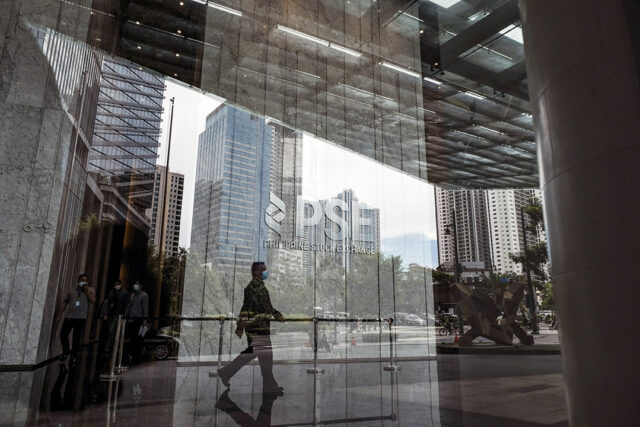
BLOOMBERG

THE PHILIPPINE Stock Exchange (PSE) wants to reduce the required minimum units to trade a company’s share in a bid to widen access of smaller investors and boost market liquidity.

The PSE, in a memorandum dated Oct. 9, is proposing to revise the board lot sizes to “democratize stock trading” and accommodate a minimum investment of P100 ($1.80).

The proposal comes as the PSE ramps up efforts to boost liquidity in the exchange by introducing short selling and stock trading via mobile apps.

The PSE is aiming for a nationwide launch of stock trading via popular fintech app GCash this month, PSE Chief Executive Officer Ramon S. Monzon said last week.

Mr. Monzon said GCash, which registered 76 million users last year, wanted to reduce the minimum board lot, which may encourage more people to trade.

The PSE said the number of online stock market accounts rose nearly 9% to about 1.3 million last year, or around three-fourths of the total, in what the bourse described as “muted growth” compared to previous years. However, average value per online transaction increased 33% to about P46,200, PSE said.

Interested parties may submit comments on the proposed amendment by Oct. 23, the PSE memo said. — Bloomberg

Metro Pacific Health aims to buy more hospitals to expand network  

By Revin Mikhael D. Ochave, Reporter

THE healthcare arm of conglomerate Metro Pacific Investments Corp. (MPIC) is focused on acquiring more hospitals while staying open to creating a new one, its top official said.

“Definitely, the priority is mergers and acquisitions (M&A) because we feel that there is a huge opportunity in many parts of the country where we are not present, for acquisition. We will continue that,” Metro Pacific Health Corp. (MPH) Chief Executive Officer Harish Pillai said during a media roundtable in San Juan City on Wednesday.

However, Mr. Pillai said that MPH is not closing its doors on developing its own hospital as long as there is an opportunity for the company.

“We are opportunistic. Somewhere, if we feel that there is a density of the population but no good asset to acquire, then yes, we might think of a model for moving away from brownfield [hospitals]. You can actually put in the money to build a greenfield hospital, that is not an issue, But we have to look at the viability of operations,” Mr. Pillai said.

Brownfield hospitals are existing hospitals while greenfield hospitals are new ones.

“We are a growing company. We are committed to increasing the size of our portfolio. There are many provinces where we don’t have a presence. So definitely, we are exploring opportunities,” Mr. Pillai said.   

The company’s M&A roadmap considers the type of hospitals and locations for any possible acquisitions, he said.

“The required funding is available. Funding is never an issue,” he added.   

Mr. Pillai also disclosed that MPH is also looking to further tap outpatient centers amid increasing demand.

“When we look at our roadmap, I definitely see much more increase in our outpatient centers because that is what the market research is showing, that if given the choice, people would prefer to go to an outpatient center rather than come to a hospital,” Mr. Pillai said.   

Meanwhile, MPH Chief Nursing Officer Annabelle R. Borromeo said the company is holding its Project Nightingale, an initiative that seeks to empower Filipino nursing students and existing nurses in the country.

The three-part event, which will happen on Oct. 20, will include the national championships of the MPH’s Battle of the Nightingales (BOTN) inter-nursing school quiz-based competition; the awarding of the MPH nursing excellence award; and the MPH Healthcare Expo which would showcase the hospitals under the group. 

“We believe that Project Nightingale is the next step in our shared goal of nation-building, emphasizing our role in shaping the healthcare landscape in the Philippines. With this program, we are creating the foundation for the next generation of nurses, and developing our current crop of talents as well, in order to enhance the healthcare industry as a whole for years to come,” Ms. Borromeo said.

MPH has 22 hospitals under its network. Its latest acquisition is a majority stake in Antipolo Doctors Hospital, which was announced last week. Its other hospitals include Makati Medical Center, Asian Hospital and Medical Center, Cardinal Santos Medical Center, Riverside Medical Center, and Davao Doctors Hospital.

MPH claims to be the largest group of private hospitals in the country.

The company’s private hospital network also features 26 outpatient care centers, two allied health colleges, and a centralized laboratory.

MPIC is one of three key Philippine units of First Pacific, the others being Philex Mining Corp. and PLDT Inc. Hastings Holdings, Inc., a unit of PLDT Beneficial Trust Fund subsidiary MediaQuest Holdings, Inc., has a majority stake in BusinessWorld through the Philippine Star Group, which it controls.

Ayala group sells P5.7-B stake in Manila Water

AYALA Corp. and its subsidiary are selling common and preferred shares in Manila Water Co., Inc. worth about P5.7 billion via a buyback transaction.

“The sale is aligned with Ayala’s strategy to rationalize its portfolio and raise P50 billion in proceeds. The proceeds will be used to pare down debt and/or fund future investments,” the listed conglomerate told the stock exchange on Wednesday.

Ayala and its unit Philwater Holdings Co., Inc. will sell around 289 million common shares and 436 million participating preferred shares, respectively, to Razon-led Manila Water.

It said that once the cash transaction is completed, Ayala will retain an effective 23.5% voting stake and an effective 22.5% economic stake in Manila Water.

Ayala said the Manila Water common shares were priced at P17.1647 apiece based on a 30-day volume-weighted average price as of Oct. 10, 2023, minus a 4% block discount, “aligned with the standard deal structure of block sales.”

It added that the preferred shares were priced on a negotiated basis at P1.7165 each, “considering the participation features of such shares to dividends to common shares on a 1/10 basis.”

Separately, listed water concessionaire Manila Water said the share repurchase had been executed as a regular block sale consistent with the rules and guidelines of the stock exchange.

Manila Water serves the east zone network of Metro Manila, covering parts of Marikina, Pasig, Makati, Taguig, Pateros, Mandaluyong, San Juan, portions of Quezon City and Manila, and several towns in Rizal province.

The water company holds the right to provide water and used water services to the east zone under a concession agreement entered into between Manila Water and the Metropolitan Waterworks and Sewerage System in August 1997.

Manila Water’s concession was extended by another 15 years by MWSS and the government in 2009, extending the term from May 2022 to May 2037.

On Wednesday, Ayala shares closed unchanged at P615.50 apiece, while Manila Water shares rose by 1.22% or 22 centavos to close at P18.20 each. — S.J. Talavera

From clothing to ramen to sushi

TEMAKI rolls

The Farillas couple explains the similarities in their different business ventures as they open their latest, Nagi Sushi

TWO different culinary disciplines of Japan are melded by the Ramen Nagi group, with the opening of its first sushi restaurant in the Philippines (and the first outside Japan), Nagi Sushi.

While Ramen Nagi (celebrating its 10th year in the Philippines) concentrates on the rich Japanese noodle soup, Nagi Sushi will be focused on the more delicate sushi. However, in Nagi Sushi, one can also have the ramen options in case the craving for something more substantial comes.

During a tasting on Oct. 6 at its first branch in The Shops at Ayala Triangle, Makati, we did exactly that, taking the Original King ramen (with a rich pork broth), which unfortunately came before our delicate sushi rolls. But we still got to taste our sushi — just delicate slices of tuna and salmon, or with rice, or in the case of one roll, wrapped up in a cone with rice and other toppings. Besides, the best was yet to come.

During the opening, Nagi Group’s sushi chef butchered a very fresh fish in front of the gathered guests for a sushi masterclass. A knife tore through skin and flesh like paper, while bones snapped like twigs. According to the chef, one needs a special knife, one with thick edges, to do this. He said that one can learn how to cut a fish in one day, but to become an expert, one has to practice every day (he has been working with fish for 30 years). “You have to apply what you have learned,” he said through an interpreter.

Tackling the 50-kilogram tuna must have been hard, and we felt his assistant’s difficulty in cutting through the tough tail. The chef said that a good fish must be fat, with lots of fat lining the belly, and its blood should be red.

The belly and other parts were quite easy to cut however, and even then, the prized belly was ignored for something more special: the nakaochi. These are bits of flesh that cling to the spine, which are scraped and collected on a plate, and brushed lightly with soy sauce. This was extra-tender, with a very firm, very dense texture that announced itself as fish flesh. The deep ruby-red slivers literally melted in the mouth with the slightest tap of the tongue towards the palate.

PLAINS, PRINTS, AND SUSHI
Like Ramen Nagi, Nagi Sushi was also brought here by the Farillas couple who are behind the clothing company Plains and Prints. “We want to bring it here to show Filipinos that ramen and sushi really go well together,” said Roxanne Farillas, co-founder of Plains and Prints.

They first brought Ramen Nagi to the Philippines in 2013, and now have 37 branches. It’s this growth that led to the Japanese principals entrusting them with Nagi Sushi’s first store outside Japan. “We have the most branches outside of Japan,” said Ms. Farillas. Of this large number of branches, she noted that “It’s very important to be in different sites. Metro Manila has many different cities. For the prime malls, we have to position ourselves there so it’s easy access for all.”

She reminisced about the journey of bringing Ramen Nagi here with her husband, Erickson. “We travel a lot for work and leisure. We came across this hole-in-the-wall ramen place in Hong Kong. There was a long line,” she said, which attracted them. “Niligawan namin iyong (we courted) principals for quite a long time,” she remembers.

It paid off, and no’ the principals come once a month to check if their ventures’ offers are close to the taste of the original Japanese outlets. Ms. Farillas points out that all their ingredients are imported from Japan. In the case of Nagi Sushi, the Japanese chefs will stay for a few months to train everyone. “That is something we’re very proud of,” she said. Expansion plans for Ramen Nagi might include ventures outside Luzon.

What are the differences between running a clothing company and a restaurant chain? The similarities? A huge difference is in manpower, with restaurants having to have staff in the front and back of the house. “Unlike in the retail stores, [where] it’s really just about sales associates,” she said. “[Then] there’s wastage,” she noted about the food biz, unlike in clothes where they can be stocked indefinitely. Still, some values work wherever they’re used, and Ms. Farillas said, “We’re very hands-on. My husband is very hands-on with Ramen Nagi. He still is involved with Plains and Prints, but now, he’s more focused on the restaurant business.”

“Detailed with everything,” was a trait she noted about her husband. “I guess that’s the same treatment that we did with apparel and food.” — Joseph L. Garcia

Now it’s Bangkok’s fine-dining scene that’s luring tourists to Thailand

THAI fine dining establishment Le Du —FACEBOOK.COM-LEDURESTAURANT

WHEN chef Thitid Tassanakajohn first opened his Thai fine dining establishment Le Du in Bangkok in 2013, his four-course set menu was 990 baht ($28 today). It was a steal compared to fine dining establishments worldwide, but a fortune in a city where Thai cuisine had for decades been characterized as street food.

Mr. Tassanakajohn was told he’d be forced to close within months for charging so much for food made with local products. On nearby sidewalks, dishes featuring similar ingredients were available for less than a dollar.   

The chef, of course, prevailed. Le Du currently has a Michelin star, and Mr. Tassanakajohn has a second restaurant, Nusara. The classic Thai eatery — named after his grandmother and located near the royal palace — is ranked No. 3 on Asia’s 50 Best Restaurants list. 

Le Du and Nusara are two of a cluster of upscale restaurants in the Thai capital that are climbing up international and regional best restaurant lists. They’ve turned one of the planet’s foremost destinations for cheap eats into a port of call for foodies seeking a luxurious experience alongside their khao mun gai (steamed chicken on rice).

“You know street food with Bangkok, with Thailand. Everyone in the world knows,” Mr. Tassanakajohn says. “We are a new destination for more fine dining, more sophisticated bars and restaurants.”

Restaurants like his are catering to culinary-minded travelers who are increasingly important to Thailand’s tourism industry, which accounted for an estimated 11.5% of gross domestic product before the pandemic, according to S&P Global Market Intelligence. The Tourism Authority of Thailand is targeting revenue of 2.3 trillion baht this year — with 20% of that coming from food. The agency says it aims for gastronomy to account for 25% of tourist spending by 2027.   

“What we’ve seen with our travelers is that they are interested and they want to combine those fine dining experiences at the restaurants with those really top-notch local food experiences.” says Nicola Marshall, who designs and oversees culinary tours at Intrepid, an Australia-based global travel company. Clients might fly into Bangkok a day or two before a tour and book themselves into a fine-dining restaurant, she says, before embarking on a guided trip full of less-pricey eats.

“Thai politicians often say we want ‘high quality tourists,’ meaning we want tourists with high purchasing power. But do we have enough fancy places for them?” says Somprawin Manprasert, chief economist at Siam Commercial Bank, one of Thailand’s biggest lenders. “That’s why I think having more fine dining spots in Thailand — like right now — creates a good opportunity that really allows us to attract big-spender tourists.”

Today, six Bangkok restaurants that are listed by the Michelin Guide in the “special occasion” and “spare no expense” price categories have two stars each, and more than 20 spots have one star. Nine establishments appeared on the latest Asia’s 50 Best Restaurants list — compared to seven for Tokyo and five for regional finance capital Hong Kong. Le Du tops Bangkok’s entries in the overall World’s 50 Best rankings, at No. 15; the Indian-influenced hot spot Gaggan Anand comes in at No. 17.

Michelin stars are so plentiful that Mathias Sühring — one of the German twin brothers running the two-Michelin-star, contemporary German dining spot Sühring — says Bangkok chefs are now competing to see who’ll be the first to win a third.

The recognition has solidified Bangkok’s reputation as a place to indulge in expensive fare while still often paying less than at gastronomic hubs such as Hong Kong and New York. Although the meals are expensive in a city where plates of food like pork skewers (moo ping) and pad thai go for a few dollars, they can run less than at most other global capitals. A dinner at Copenhagen’s Noma, one of the world’s top-ranked eateries, costs 5,950 Danish krone ($857) per person, with wine pairings. At Gaggan Anand, it’s around $327 per person, also including beverages.

“Luxury is cheaper here, it’s more accessible and more affordable,” says Gaggan Anand, who comes from Kolkata and was one of the first international chefs to open his own, eponymous fine dining restaurant in Bangkok more than a decade ago.

Chefs keep prices down in part by taking advantage of the lower cost of setting up and operating restaurants in Southeast Asia’s second-largest economy. Bangkok is an attractive place for an ambitious chef, who might not have the financial backing to open elsewhere. The city’s high-end dining scene is also benefiting from the steady improvement of supply infrastructure over the last decade. Upscale restaurants can now access high-quality regional ingredients, from seafood to vegetables and even dairy, they might have once had to import.   

Along with the influx of international tourists, locals also have embraced the city’s new status as a fine dining hub, in part because of COVID-19: Asia had some of the world’s strictest border measures. Long closures and disruptions hit culinary capitals like Hong Kong and cities in Japan and mainland China. Prevented from traveling, Thais, like others in Asia, began exploring the dining spots near their homes.

Thailand, like many countries, is still working to recover economically from the pandemic. Tourism, especially from China, is rebounding but has yet to reach pre-pandemic levels. China contributed nearly one-third of almost 40 million tourist arrivals in 2019 and is crucial to the industry’s recovery. Boosting it is a priority for new Prime Minister Srettha Thavisin, who’s instituted some measures such as visa-free entry for Chinese travelers. Thailand now expects to attract 2.9 million arrivals and billions of dollars in revenue from an ensuing tourism boom from the mainland.

Recent political gridlock also rattled markets. Before Mr. Thavisin came to power in August, Thailand spent months under a caretaker government with limited ability to pass policies or approve spending. At the same time, competing regional culinary and tourism destinations, like Tokyo and Singapore, have reopened.   

Likewise, restaurants are still struggling to regain their pre-pandemic business. Gaggan Anand was “killing it” at 300 covers a week pre-COVID but is currently open just four days a week at about one-third of the previous capacity, its chef says.

Some operating prices have risen after COVID. Le Du’s Mr. Tassanakajohn says the cost of vegetables, meat, seafood, and cooking oil had increased at least 20% since the pandemic. Staff wages have also gone up 10% to 15%, he adds, as the country’s labor supply has dwindled. As a result, Le Du raised prices for its set menu by 25% post pandemic, to the equivalent of roughly $125, even as competition to attract tourists intensifies.

At Le Du, Thais now make up about 25% of diners. Another quarter each come from Hong Kong and Singapore, estimates  Mr. Tassanakajohn, and the rest largely from Europe and the US.

Mr. Tassanakajohn says competition will remain fierce for both Thai and foreign chefs in his city. And they could soon have more rivals. While Bangkok remains the country’s culinary hub, the 2024 edition of Michelin’s Thailand guide will widen its scope, including the tourist-friendly island of Koh Samui. — Bloomberg


ADVERTISEMENT
ADVERTISEMENT