Home Blog Page 4188

Peso may rise before Sept. inflation data

BW FILE PHOTO

THE PESO could strengthen against the dollar this week ahead of the release of September inflation data and as the Bangko Sentral ng Pilipinas (BSP) chief said they would consider an off-cycle rate increase.

The local unit closed at P56.575 per dollar on Friday, strengthening by 40.50 centavos from its P56.98 finish on Thursday, data from the Bankers Association of the Philippines showed.

Week on week, the peso strengthened by 22 centavos from its P56.795 per dollar finish on Sept. 22.

The local currency opened Friday’s session at P56.75 against the dollar, which was also its weakest showing. Its intraday best was at P56.52 versus the greenback.

Dollars exchanged rose to $1.19 billion on Friday from $980.6 million on Thursday.

The peso strengthened on Friday as the dollar generally slid against other currencies and lower global crude oil prices, Rizal Commercial Banking Corp. Chief Economist Michael L. Ricafort said in a Viber message.

For this week, the peso could strengthen due to hawkish signals from the central bank and before the release of September inflation data on Thursday, Mr. Ricafort said.

BSP Governor Eli M. Remolona, Jr. told Bloomberg last week that he is open to an off-cycle rate hike before their Nov. 18 meeting and ruled out cuts in the near term.

Meanwhile, a BusinessWorld poll of 17 analysts yielded a median estimate of 5.4% for September inflation, near the low end of the BSP’s 5.3-6.1% estimate.

If realized, September inflation would be faster than the 5.3% seen in August, but lower than the 6.9% in the same month last year.

For this week, the peso could range from P56.30 to P56.80 per dollar, Mr. Ricafort said.

PSE index may hit 6,400 level on bargain hunting

BW FILE PHOTO

THE MAIN INDEX is expected to climb and hit the 6,400 level this week on bargain hunting ahead of the release of September inflation data.

The Philippine Stock Exchange index (PSEi) went down by 64.28 points or 1% to close at 6,321.24 on Friday, while the broader all shares index shed 18.38 points or 0.53% to 3,400.83.

Week on week, the PSEi gained 178.45 points or 2.91% from its close of 6,142.79 on Sept. 22.

For this week, analysts expect Philippine shares to climb, although trading would be driven by the release of key economic data.

“The PSEi may rise to around 6,400 and then enter a tight consolidation phase within the range of 6,300 to 6,400 as it builds momentum,” Seedbox Securities, Inc. Equity Trader Jayniel Carl S. Manuel said in an e-mail.

“The recent unsustainable rally, coupled with a drop on the final day of September’s trading, has raised concerns in the market, which may lead to a consolidation phase aimed at establishing a more stable foundation for growth,” Mr. Manuel added.

The PSEi’s current trading level could still attract investors to pick up cheap stocks, which could push the market higher, he said.

“Despite last week’s rally, the local market remains at attractive levels as its price to earnings ratio as of Sept. 29 is at 13.61x, below its 2018-2022 average of 19.08x. As to whether the bargain hunting will continue [this] week may depend on the upcoming data,” Philstocks Financial, Inc. Senior Research Analyst Japhet Louis O. Tantiangco said in a Viber message.

“Investors are expected to watch out for the upcoming September inflation data as this would give clues on the Philippines’ consumer price situation as well as on the BSP’s (Bangko Sentral ng Pilipinas) policy outlook,” Mr. Tantiangco said.

August inflation data will be released on Oct. 5, Thursday.

A BusinessWorld poll of 17 analysts yielded a median estimate of 5.4% for September headline inflation, close to the lower end of the central bank’s 5.3% to 6.1% forecast for the month.

If realized, this would be faster than the 5.3% print in August but lower than the 6.9% seen last year.

A faster inflation print would drag the market lower “due to the negative implications on our economic performance and the resulting possibility of the BSP tightening further,” Mr. Tantiangco said.

“Higher market interest rates are particularly damaging to high-growth sectors such as consumer discretionary. As a consequence, such sectors are expected to remain volatile, ushering in potential uncertainty,” Globalinks Securities and Stocks, Inc. Head of Sales Trading Toby Allan C. Arce said in a Viber message.

Mr. Tantiangco added that investors are also waiting for the release of S&P Global Philippines Manufacturing Purchasing Manager’s Index data on Monday and August labor market data on Friday.

For this week, he placed the PSEi’s support and resistance between 6,150 and 6,600. — SJT

Indonesia assures PHL of continued access to coal

REUTERS

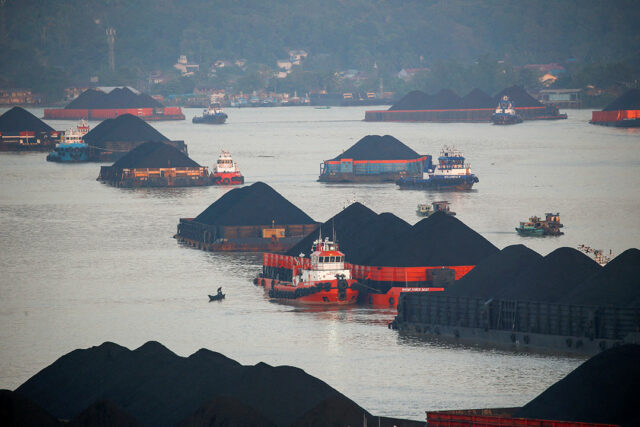
THE Department of Energy (DoE) said that the Philippines has received assurances from Indonesia of continued access to the latter’s coal exports.

“Indonesia reiterated to us its assurance that the Philippines will get a continued supply for coal-fired power plants,” Energy Secretary Raphael P.M. Lotilla told reporters last week.

The commitment was made after the 41st ASEAN Ministers on Energy Meeting hosted by Indonesia in August.

The Philippines imports 80% of the coal needed by its coal-fired power plants, Mr. Lotilla said, with Indonesia the top source country.

The DoE estimated that the Philippines imported 31.24 metric tons (MT) of coal in 2021, up from 29.52 MT in 2020.

In January last year, Indonesia imposed a month-long ban on coal exports after its state power utility announced low stockpiles of coal at Indonesian power plants.

“They had a two-tiered pricing system where the prices for domestic use of coal was much lower than the export price. So, Indonesian miners (ended up selling) to the international market, the export market,” Mr. Lotilla said.

“It reached a point that they were running out of supply for their domestic coal-fired power plants and that’s why they had to impose a moratorium,” he added.

Mr. Lotilla said the Philippines and Indonesia have agreed to discuss an “emergency response or assistance” mechanism in case supply constraints arise again, in their capacity as members of the Brunei Darussalam-Indonesia-Malaysia-Philippines East ASEAN Growth Area (BIMP-EAGA) aggrupation.

“In other words, for a BIMP-EAGA member like the Philippines that is importing coal from Indonesia, then we can have arrangements whenever there are constraints,” he said. — Sheldeen Joy Talavera

Inflation pressures highlight need for productive spending

PHILIPPINE STAR/ MICHAEL VARCAS

By Beatriz Marie D. Cruz, Reporter

THE GOVERNMENT must ensure that its spending is weighted towards productive investments like education, health, and infrastructure if it is to avoid the buildup of inflationary pressure, analysts said.

“Government spending must be direct — infrastructure, health, education, social services. Spending is necessary but prudence must be exercised especially in a time where poverty is persistent,” John Paolo R. Rivera, president and chief economist at Oikonomia Advisory & Research, Inc., said in a Viber message.

He said that the impact of government spending on inflation “is conditional on supply of resources being demanded by government.”

“Government spending is okay as long as these spending items have productive consequences on the economy,” he said, citing the need to avoid ‘white elephants’, unnecessary travel, waste, unliquidated spending, and other leakages.

The Congressional Policy and Budget Research Department (CPBRD) said government spending has steadily increased since 2010, indicating that inflation has been given little weight in formulating spending plans.

“The government constantly runs the risk of exacerbating inflationary pressures and, by extension, heightening the severity of economic contractions,” the CPBRD said in a report made available this month.

According to the Bureau of the Treasury, the government spent P1.52 trillion in 2010, P1.56 trillion in 2011, P1.78 trillion in 2012, P1.88 trillion in 2013, and P1.98 trillion in 2014.

It spent P2.23 trillion in 2015, P2.55 trillion in 2016, P2.82 trillion in 2017, P3.41 trillion in 2018, P3.80 trillion in 2019, P4.23 trillion in 2020, and P4.68 trillion in 2021.

In 2022, government expenditure increased by 10.35% to P5.16 trillion.

ING Bank N.V. Manila Senior Economist Nicholas Antonio T. Mapa called government spending this year  “so far… disappointing, highlighted by the contraction recorded in Q2.”

Gross domestic product (GDP) expanded 4.3% in April to June, the weakest reading in over two years, the Philippine Statistics Authority (PSA) said in August.

“As such the underspending is one of the main reasons for the below-consensus GDP growth so there may still be very little risk of overspending resulting in a build-up of inflationary pressures,” he added.

Government spending contracted by 7.1% in April to June, according to the PSA. National Economic and Development Authority Secretary Arsenio M. Balisacan attributed this to the absence of election-related spending.

Mr. Mapa said that government expenditure can be a key source of growth when spent on projects that improve or increase productivity.

Rizal Commercial Banking Corp. Chief Economist Michael L. Ricafort said that “higher prices/inflation could fundamentally increase the government’s expenditures, widen the budget deficit, which, in turn, could lead to more government borrowings and overall debt.”

Trade deficit revised to $27.98 billion in first half

BW FILE PHOTO

THE DEFICIT in the balance of trade in the first half widened compared to the preliminary estimate, with the final import bill higher than initially reported, the Philippine Statistics Authority (PSA) said.

The revised trade deficit was $27.979 billion, up from the $27.955 billion initially posted in August. The deficit is narrower than the $28.403-billion deficit from a year earlier. 

The value of merchandise exports in the first half was revised to $34.944 billion from $34.941 billion previously reported. The revised tally represents a 9.3% decline from the $38.536 billion posted in the first half of 2022.

Imports were also revised higher to $62.924 billion from $62.896 billion previously reported in August. The revised total represents an 8% decline compared with the year-earlier $68.377 billion.

The Development Budget Coordination Committee’s export and import growth assumptions are set at 1% and 2%, respectively, for this year.

Accordingly, total trade was revised to $97.868 billion against the earlier estimate of $97.837 billion.

“Imports and exports both eased to three-month lows recently amid higher inflation that weighed on spending worldwide, higher interest rates that increased financing costs that slowed down investments and global trade,” Rizal Commercial Banking Corp. Chief Economist Michael L. Ricafort said in an e-mail.

The PSA reported, citing preliminary data, that the consumer price index accelerated to 5.3% in August from 4.7% in July. It slowed from the 6.3% posted a year earlier.

“Membership in the Regional Comprehensive Economic Partnership (RCEP), which is the world’s biggest free trade agreement, would help attract more foreign direct investment to locate in the Philippines as a production or marketing base, as well as an access point to bigger export markets,” Mr. Ricafort said.

“The RCEP will also expand the sources of cheaper imports for foreign investors that manage their respective global supply chains with reduced import tariffs in the coming years,” added Mr. Ricafort. — Lourdes O. Pilar

DTI seeks more funding for creatives to maintain PHL lead within ASEAN

PHOTO COURTESY OF THE METROPOLITAN THEATER

THE Department of Trade and Industry (DTI) said more funding for the creative sector is needed to maintain the Philippines’ regional lead in exporting creative services.

“We hope to get a bigger share of the budget because considering all these huge programs that we’re planning to implement,” Trade Undersecretary Rafaelita M. Aldaba told reporters on Thursday.

“We are already number one in ASEAN in terms of creative services exports, but we really need to be able to sustain this position. And we can only do that if we can if we continue to provide all the necessary support to allow our creatives to compete abroad,” she added.

According to Ms. Aldaba, the department received over P400 million from the 2023 budget for the industry, and is requesting up to P600 million for 2024.

The budget will be going to programs that will promote creative industries at the city and municipality level, capacity-building, market intelligence reports, and a creative venture fund.

“The focus is really on promoting and growing more creative cities… There are a lot of opportunities for the creative sector. But at the same time, we need government support,” she said.

The government’s support could take the form of new technology that can level up the Philippines’ creative output.

The DTI also wants to build a creative learning academy to help with capacity building and upskilling and reskilling of the work force.

Asked when DTI plans to launch the venture fund, Ms. Aldaba said the department hopes to launch it next year.

“Of course, we first need to have the budget. So, we’re hoping next year, we’ll be able to formally launch the program,” she said.

“What we envision is for the government to be able to provide equity, soft loans, and at the same time, grants through vouchers to address the needs of the individual companies, startups, and especially the micro, small and medium enterprises,” she added.

Ms. Aldaba said that DTI allotted P100 million for the creative venture fund. — Justine Irish D. Tabile

Palace decision not to cut rice tariffs seen averting market disruption during harvest

PHILIPPINE STAR/ANDY ZAPATA JR.

By Luisa Maria Jacinta C. Jocson, Reporter

THE President’s rejection of the proposal to reduce tariffs on rice imports will help stabilize prices, as supply receives a boost from domestic farmers, who get to bring in their harvest without disruption from cheap imports, analysts said.

Raul Q. Montemayor, chairman of the Federation of Free Farmers, said the organization supports the Palace’s decision not to lower tariffs.

“Harvests are already starting, there will be no supply problem until the end of the year, and because of increased supply, prices will naturally go down and stabilize,” he said in a Viber message.

“But at some point next year, we will still have to import because our total annual output is enough for only about 80% of our annual (demand),” he added.

President Ferdinand R. Marcos, Jr. last week rejected a proposal from the economic team to cut the tariff on imported rice to as low as 0% from 35%.

Samahang Industriya ng Agrikultura (SINAG) last week expressed its support for the Palace’s decision, calling it a “significant milestone for the agriculture sector.”

SINAG Executive Director Jayson H. Cainglet said that issues driving up rice prices include distribution gaps and hoarding and profiteering.

“Even if the executive order on tariff reduction was signed, it would not have solved these problems,” he said in a Viber message.

“We have no rice shortage, we are safe beyond the first quarter of next year. (There is) no basis for tariff reduction,” he added.

Philippine Chamber of Commerce and Industry President George T. Barcelon said that the rejection likely means that Mr. Marcos prefers sticking to the temporary price cap.

“This would allow the economics of supply and demand to play out… What’s important is for the government to be vigilant regarding hoarders and price manipulators. Policies to maintain price stability in the food commodities are fundamental to containing inflation to help low-income earners,” he said in a Viber message.

By executive order, rice retail prices were capped at P45 a kilo for well-milled rice and P41 for regular-milled rice, starting Sept. 5.

To address spiraling prices, Mr. Montemayor said that the government should still manage imports to prevent depressing the price of palay (unmilled rice) and disincentivizing farmers.

“Otherwise, we will end up becoming even more reliant on imports at a time when international prices are rising, and countries are restricting their exports.”

“We can resolve hoarding, profiteering and smuggling — if we can finally convict those involved. We have zero convictions despite all the raids, padlocking, seizures. That’s why these people remain emboldened,” he said.

“The problem is the distribution gaps; especially the market abuse of a few importer-traders and those involved in profiteering. The government must finally sustain support and subsidies to increase our rice yield,” he added.

If cost of production can be reduced to P10-12 per kilogram and farmgate prices are at P18-20 per kilogram, then well-milled rice prices could fall to as little as P36-38 per kilogram, Mr. Cainglet said.

On the other hand, Foundation for Economic Freedom President Calixto V. Chikiamco said that complying with the rice caps would have helped if the tariff cut was approved.

“The recent rejection is disappointing… In fact, the rice price cap would be rendered unnecessary as traders would be able to offer regular rice at P41 per kilo and well-milled rice at P45 per kilo without the 35% tariff,” he said.

Mr. Chikiamco said higher prices may likely lead to an imbalance of supply and demand. He also noted that the only way to stabilize prices is to “flood the market with rice.

“However, the National Food Authority can no longer import rice.  It has also not built enough reserves,” he said.

“Without sufficient reserves, especially during the lean season from late December to March, any disruption from adverse weather conditions can cause a further imbalance in supply and demand and cause prices to skyrocket.  By that time, the government may be helpless to do anything about it,” he added.

The US Department of Agriculture (USDA) last month downgraded its forecast for Philippine rice production due to crop damage caused by typhoons.

Milled rice production is estimated to slip to 12.55 million metric tons (MT) for the market year 2023-2024, lower than its previous forecast of 12.6 million MT.

Rice imports are also expected to decrease to 3.5 million MT, down from the USDA’s earlier estimate of 3.8 million MT.

Innovation ranking to improve with more science and tech investment, DTI says

PHILSTAR FILE PHOTO/PIXABAY

THE Department of Trade and Industry (DTI) said more investment is needed in science and technology to improve its Global Innovation Index ranking.

“To continually improve our position, we need to address weaknesses by investing in science, technology, engineering, arts and math education and vocational training programs that focus on skill-building for the future,” Trade Undersecretary Rafaelita M. Aldaba told BusinessWorld in a Viber message.

She added that innovation could also be unlocked through diversification into higher-value industries and services and simplifying regulations to make businesses focus more on innovating rather than dealing with bureaucratic hurdles.

The Philippines rose three spots to 56th out of 132 economies in the Global Innovation Index 2023 compiled by the World Intellectual Property Organization.

Ms. Aldaba said improving the Philippine ranking would be an excellent indicator of progress.

“But it should also serve as a catalyst for continuous improvement and strategic planning to ensure that the positive trend continues,” she added.

She said that what contributed to the improvement are the firms “offering sophistication and high-tech imports along with improvements in market sophistication covering credit, investment, trade, diversification and markets.”

The Philippines ranked 69th in innovation inputs against 76th a year earlier. It placed 52nd in innovation outputs, one spot lower.

Its best category was business sophistication, knowledge and technology outputs, and market sophistication, but was worst-placed in human capital and research, infrastructure, and institutions. — Justine Irish D. Tabile

NCR retail price growth steady in August  

RETAIL PRICE growth in Metro Manila was flat in August, ending five consecutive months of increases, the Philippine Statistics Authority said.

Price growth in the National Capital Region (NCR), as measured by the general retail price index (GRPI), remained at 3.9% year on year in August.

The August reading remains the highest since the 4.4% posted in June 2023.

In the eight months to August, NCR retail price growth averaged 5.1%, up from 3.7% a year earlier.

The increase in the GRPI was driven by the faster growth posted in the miscellaneous manufactured articles of 1.8%, against 1.7% in the previous month.

Indices for chemicals, including animal and vegetable oils and fats, and machinery and transport equipment remained unchanged from the previous month’s growth rates of 3.1% and 1.4%, respectively.

Slower price growth was seen in the indices of food (6.9% in August from 8.2% in July); beverages and tobacco (4.9% from 6.1%); crude materials, inedible except fuels (3.8% from 4%) and manufactured goods classified chiefly by materials (2.3% from 2.5%). — Lourdes O. Pilar

Stagnation still possible if youthful economies fail to invest — DBS  

Young students form a line as they wait for their respective room assignments for their afternoon class at Malanday Elementary School, June 8, 2022. — PHILIPPINE STAR/ WALTER BOLLOZOS

AN ECONOMY with a younger population like the Philippines can fail to grow robustly if it fails to invest in key areas like health, skills, and infrastructure, according to DBS Bank Ltd.

In a report issued by DBS economists Taimur Baig and Radhika Rao on Sept. 25, the bank noted misperceptions among economies in Asia which have contrasting demographic dynamics.

“Demographics is not destiny. Ageing societies can continue to prosper; youthful societies can stagnate,” it said.

The bank noted that China, Hong Kong, Taiwan, Thailand, South Korea, and Singapore have ageing demographics while Bangladesh, India, Indonesia, Malaysia, and the Philippines skew younger.

According to the bank, the younger working population in economies like the Philippines have at least two decades more to expand, though this will not immediately translate to economic growth.

“Without job creation, job seekers, young or old, become chronically unemployed, sapping economic vitality,” it said. “Without adequate infrastructure and logistics, even a cheap labor force can be insufficient in driving competitiveness.”

Meanwhile, an ageing economy can continue prospering by enhancing productivity, it added.

In several Philippine economic briefings abroad, Finance Secretary Benjamin E. Diokno has said that the Philippines is in a “demographic sweet spot,” with a young cohort entering or currently in the work force.

During the economic briefing in Dubai last month, Mr. Diokno said the Philippine labor force has a median age of 25 years.

“The current demographic sweet spot will fuel the country’s economic growth,” he earlier said.

The Philippine Statistics Authority (PSA) estimates the youth labor force in July at 5.97 million, out of a youth population of 20.16 million. The PSA defines the youth age bracket as 15-24 years.

This translated to a youth labor force participation rate of 29.6%, lower than 37.1% posted a year earlier.

Youth that are new entrants into the labor force more than doubled to 1.13 million in July from 496,000 a month prior.

However, the youth employment rate fell to 86% in July from 90.1% in June and the year-earlier 88.1%.

The proportion of youth not in education, employment or training increased to 14.7% from 12.9% in July 2022. — Keisha B. Ta-asan

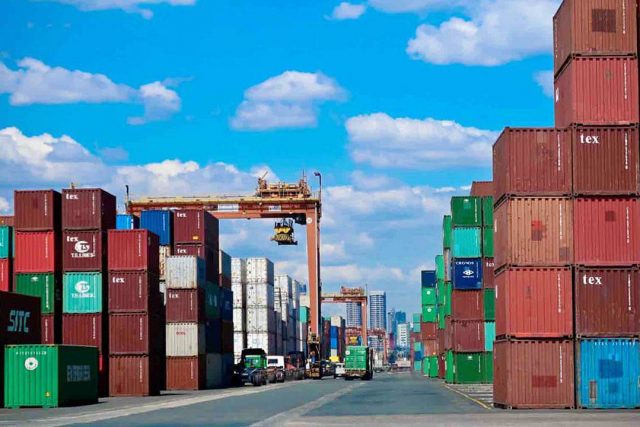
Reimagining the digital supply chain

In recent years, there has been a substantial change in the global landscape of supply chains. Companies are dealing with a wide range of challenges that are changing the way they see supply chain strategy, from geopolitical conflicts to digital disruptions and pressures from climate change and the sustainability agenda. A new paradigm reimagining supply chains is emerging in reaction to these disruptions, forcing businesses to reconsider their existing strategies and adopt a comprehensive approach to capitalize upon new opportunities while ensuring resilience.

Because of this, traditional and analog supply chain strategies may no longer be capable of effectively responding to supply chain shocks. Instead, an agile, digital supply chain consisting of intelligent monitoring, real-time data visibility and management, and crisis and exception management frameworks, among other things, can be a massive game-changer. However, there are no shortcuts to the digital transformation of the supply chain, as merely adding technology to existing supply chain management systems and processes for the sake of supply chain digitalization will not deliver the real value that businesses desire.

This is the second article in a supply chain series that previously looked at integrated supply chain planning.

SUPPLY CHAIN CHALLENGES
According to an EY report, exponential data growth is another fundamental problem that continues to overwhelm most businesses at an accelerated pace. Companies that can effectively navigate the increasing complexity of new digital business models will be able to maintain a competitive advantage, but companies that are unable to do so will inhibit their ability to derive meaningful insights, leading to a barrier to achieving automation and efficiency.

The disruption brought about by digital technology has significantly reshaped supply chains, accelerating supply chain digitalization. According to the Evolution to Revolution: MHI Annual Industry Report, 78% of supply chain executives in the study acknowledge the revolutionary value of digital technologies. The whole supply chain will benefit from the new opportunities for efficiency improvements as well as improved decision-making brought forth by this shift toward digitalization.

Digital supply chain reimagination has also become defined by the mounting demand to improve resiliency, combat climate change, and promote sustainability. Consumers are more aware of how products affect the environment, with 75% of US consumers voicing worries in this area, according to an article titled “Majority of US Consumers Say They Will Pay More for Sustainable Products” by Sustainable Brands, a community of brand innovators shaping the future of commerce. In order to meet these changing customer expectations, businesses are adopting supply chain redesign driven by sustainability.

THE FOUR PILLARS OF SUPPLY CHAIN REIMAGINATION
In order to navigate these complexities and seize opportunities, companies have to embrace a comprehensive approach to supply chain reimagination, utilizing a framework that revolves around the following four key pillars.

Supply chain sustainability and resiliency. This pillar emphasizes tech-led process excellence to build resilient supply chains through enhanced visibility and improved agility. To guarantee continuous operations and satisfy customer demands, integrated business planning, manufacturing reliability, and secure alternative bill of materials (BoMs) and sources of supply all play critical roles.

End-to-end (E2E) cost optimization. For a company to stay competitive, better cost management along the entire supply chain is essential. Among the key levers necessary to achieve long-term cost reductions and operational efficiency are strategic sourcing, the elimination of manufacturing waste, and maximizing logistics expenditures. Adopting a centralized operating model for supply chain through Global Business Services (GBS) or Shared Services Center (SSC) solutions can also create significant cost savings.

Supply chain process digitalization. The digitalization of supply chains opens up new opportunities for agility and efficiency. Real-time decision-making and enhanced collaboration are made possible by autonomous planning, digital factories, and procurement analytics. E2E visibility and quality management through the use of the Control Tower system also allow seamless integration between functions, enhancing the effectiveness and response of the supply chain as a whole. Leveraging a Digital Twin (a virtual model of the physical supply chain that includes a digital counterpart of every piece of the process) enables companies to run a parallel version of the supply network and simulate scenarios for better insights before making transformative changes.

Strategic interventions. This final pillar includes supply chain redesign driven by sustainability, carbon footprint optimization, and segmentation and portfolio optimization. Companies can future-proof their operations and align their supply chains with shifting market dynamics by carefully reevaluating their operations and implementing asset-light solutions.

Companies may significantly affect their profit and loss statements by concentrating on these four supply chain reimagination areas.

UNLOCKING BENEFITS FOR BUSINESSES
According to an assessment of prior supply chain engagements conducted by EY, adopting a supply chain reimagination framework has had a substantial positive impact on customers in four areas.

First, implementing strong resilience measures can result in gains in total revenue of 3% to 5%, a forecasting accuracy of 5%, supplier lead times of 50% to 60%, and overall equipment efficiency (OEE) of 15% to 30%.

Second, through route optimization and freight rate benchmarking, focusing on cost optimization can result in reductions of 4% to 6% in direct material costs, 5% to 10% in manufacturing expenses, and 6% to 10% in transportation costs.

Third, embracing digital transformation in the supply chain can lower production costs by 5% to 10%, inventory carrying costs by 10% to 15%, and warehouse and distribution center operating expenses by 6% to 10%.

Last, through network redesign, strategic interventions can reduce transportation costs by 10% to 25% and increase on-time-in-full (OTIF) performance so that it reaches 95% or higher.

REIMAGINING THE FUTURE OF SUPPLY CHAIN MANAGEMENT
The supply chain landscape is rapidly changing as a result of a convergence of major disruptions and the demand for sustainability and resilience. However, businesses that use the framework for supply chain reimagination can elevate themselves to a leading position during this change. Enhancing digitalization, building robust supply chains, controlling costs, and aligning operations with shifting market dynamics are all possible for firms that take a comprehensive approach and make full use of technology, process excellence, and strategic interventions.

Reimagining the digital supply chain is no longer a choice — it is imperative for businesses seeking long-term success as the business climate continues to evolve. Organizations may maximize the potential of their supply chains and succeed in a complex and dynamic world by reevaluating their strategies and embracing these four pillars, charting a path to increased resilience, sustainability, and autonomous supply networks.

The next article in this series will discuss why green supply chains are the key to long-term value.

This article is for general information only and is not a substitute for professional advice where the facts and circumstances warrant. The views and opinions expressed above are those of the authors and do not necessarily represent the views of SGV & Co.


Jan Ray G. Manlapaz is a consulting partner and Mary Andrea T. Bacani is a Supply Chain and Operations (SCO) senior manager of SGV & Co.


Experience Super-Sized Fun at SM’s 65th Anniversary this October

SM Mall of Asia

It’s October and it only means one thing at SM — Super Month!
Suit up for some super-sized deals, treats, and fun as SM celebrates its 65th anniversary. Check out the month-long festivities filled with spectacular activities, immersive attractions, and unforgettable experiences that will leave you thrilled and excited.

SM lights up the sky with Super Blue Illumination
Signaling the start of SM’s 65th celebration, key malls and iconic landmarks will bathe in a brilliant shade of blue starting Oct. 1. A sight to behold and an event to watch out for, the Super Blue Illumination is a captivating display of dazzling lights that signify SM’s enduring legacy and commitment to bringing fun, awesome, and memorable malling experiences for over six decades.

It’s a shopper’s paradise with Super Buy 1 Get 1 Deals
October isn’t complete without a month-long parade of super-sized deals and promos at SM Deals! Expect Buy 1 Get 1 Deals from your favorite dining, shopping and entertainment brands, extravagant discounts, exclusive bundles, and exciting freebies you can swipe to redeem in-store when you download and register on the SM Malls online app. And with a diverse range of brands and product offerings at SM, surely there’s something for everyone in everyone’s shopping paradise.

Indulge yourself with Super Treats
Fun and frenzied October awaits as SM unleashes its Super Treats! On Oct. 15, indulge the movie buff in you as SM Cinema offers a Php 65 movie ticket deal and a Php 65 caramel popcorn combo. It’s truly a match made in cinema heaven!

From October 1 to 30, knock down pins all you want as SM Game Park and SM Bowling offer Php 65 off on unlimited bowling for one hour. For the skating aficionados, SM Skating will also be slashing off Php 65 on the all-day pass.

And for the thrill seekers, you are in for a super treat! Have a whole day of wonder and excitement with a Php 65 entrance fee at Skyranch Tagaytay for all Mondays of October until 12 noon.

Create core memories at the Super Play Spots
Gather your squad and have fun at the Super Play Spots. With well-lit, Instagrammable areas, you’ll have the perfect backdrop for your Super Month memories. These Super Play Spots promise hours of entertainment whether you’re a social media maven or simply looking for a fun day out. Check out the Super Play Spots at SM Mall of Asia, SM Megamall, SM City North Edsa, SM Aura, SM Southmall, SM City Dasmariñas, SM Seaside City Cebu, SM Cagayan Downtown Premier, SM Lanang, SM City Clark, SM City Marikina, and SM City Iloilo.

Experience the magic of SM City Marikina’s Super Play Spot’s Kaleidoscope Tunnel – a dazzling experience for family and friends of all ages!

Drive away in style at the Super Raffle Giveaway with VISA
From Oct. 1 to Nov. 30, eleven lucky shoppers can get a chance to drive away in style at SM’s Super Raffle Giveaway with VISA. All you need to do is to shop for a minimum single receipt purchase of Php 2,000 via tap to pay using your VISA card at participating SM Retail Stores in 75 SM Malls nationwide. Get a chance to win one of the six brand-new Hyundai Stargazers and one of the five brand-new Hyundai Cretas. These brand-new Hyundai cars will really make your daily commute a super experience so shop till you drop and maybe drive away with a new set of wheels!

SM’s Super Month promises to be a 65th-anniversary celebration like no other. Don’t miss out on the super-sized deals, indulgent treats, and the chance to win big. Mark your calendars and get ready for a super malling experience at your favorite SM mall.

To stay updated for everything SUPER this October, visit www.smsupermalls.com or follow @SMSupermalls on social media.


Spotlight is BusinessWorld’s sponsored section that allows advertisers to amplify their brand and connect with BusinessWorld’s audience by enabling them to publish their stories directly on the BusinessWorld website. For more information, send an email to online@bworldonline.com.

Join us on Viber at https://bit.ly/3hv6bLA to get more updates and subscribe to BusinessWorld’s titles and get exclusive content through www.bworld-x.com.