Home Blog Page 4182

Philippines places Gaza under Alert Level 4; Filipinos told to come home
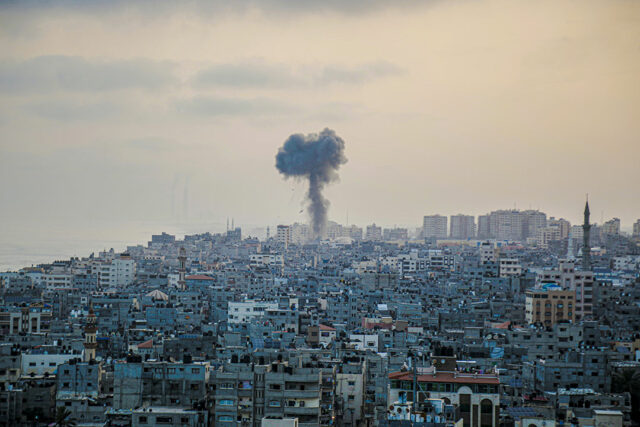
MOHAMMED IBRAHIM-UNSPLASH

By John Victor D. Ordoñez, Reporter

THE DEPARTMENT of Foreign Affairs (DFA) on Sunday placed Gaza under Alert Level 4, forcing Filipinos to evacuate and come home amid the worsening conflict between Israeli forces and Hamas militants.

The Philippine government has accounted for 131 Filipinos in Gaza, with at least 78 of them waiting near the Rafah Border Crossing and looking to cross into Egypt, Foreign Affairs Undersecretary Eduardo Jose A. de Vega told BusinessWorld in a WhatsApp message on Sunday.

“All of the rest have left northern Gaza or Gaza City, which is expected to be the main site for hostilities,” he said. “The Philippine Government continues to work on the repatriation of our nationals and will provide updates on developments.”

Hamas militants backed by a barrage of rockets stormed from the blockaded Gaza Strip into nearby Israeli towns, killing dozens in a surprise attack on Oct. 7.

A stunned Israel launched airstrikes in Gaza, with its prime minister Benjamin Netanyahu vowing to inflict an “unprecedented price.”

“Mandatory does not mean that we will go to you and then drag you out,” Mr. De Vega separately told ABS-CBN News TeleRadyo in mixed English and Filipino. “But we are telling you to evacuate.”

“And if you are left behind then we can’t stop you, we cannot prevent it.”

At least three Filipinos have died in the crossfire, all of them caregivers. Three others were still missing.

On Wednesday, Philippine Ambassador to Israel Pedro R. Laylo, Jr. said at least two Filipinos died when Palestinian Islamists attacked at the weekend.

There was still no repatriation call for Filipinos in Israel, which was still under Alert Level 2, Mr. De Vega earlier said.

The Department of Migrant Workers last week said 313 Filipinos had marked themselves safe.

Deputy Chief of Mission of the Israeli Embassy to the Philippines Esty Buzgan told a virtual news briefing last week that there was no plan to lift the blockade in Gaza yet, citing concerns about more Hamas militants entering Israel.

About a third of the more than 30,000 Filipinos in Israel live in Tel Aviv, according to Overseas Workers Welfare Administration (OWWA) chief Arnell A. Ignacio. 

A fifth live in the central district, 12% live in Israel’s third-largest city Haifa and 6.4% are from the northern district.

A tenth of the Filipinos live in the capital Jerusalem, while 5.3% live in the southern district, which is near Gaza.

Mr. Ignacio said 90% of Filipinos in Israel work as caregivers, 8% are permanent residents, 497 are student-interns and 19 are tourists.

Meanwhile, the Trade Union Congress of the Philippines (TUCP) urged the Philippine government to speed up the repatriation of overseas Filipino workers (OFWs) caught in the war.

“We call on the government, spearheaded by the Department of Foreign Affairs (DFA), DMW and Overseas Workers Welfare Administration to work triple time to operationalize a contingency plan with definitive timelines for the repatriation of our countrymen from Gaza and those in Israel who wish to return to the Philippines,” TUCP President and Party-list Rep. Raymond Democrito C. Mendoza said in a statement late Saturday.

“Safe passage and transportation are needed… should the conflict further escalate.”

Filipino hotel workers would still be deployed to Israel in the absence of a deployment ban, Migrant Workers officer-in-charge Hans Leo J. Cacdac said last week.

Mr. Cacdac told a news briefing on Thursday 22 OFWs in Israel were still awaiting approval for their repatriation, 19 of whom were caregivers and three hotel workers.


Marcos off to Saudi for ASEAN-Gulf summit

PHILIPPINE STAR/KRIZ JOHN ROSALES

By Kyle Aristophere T. Atienza, Reporter

PHILIPPINE President Ferdinand R. Marcos, Jr. is scheduled to fly to Saudi Arabia this week for a summit between Southeast Asian and Gulf leaders.

The palace announced his participation in the Oct. 18-20 summit in an advisory on Oct. 9.

In September, Foreign Affairs Undersecretary Antonio Morales said the visit of Mr. Marcos to Saudi Arabia would “further strengthen the strong, friendly and vibrant relations that happily exist between our two countries.”

The first ministerial meetings between the Association of Southeast Asian Nations (ASEAN) and the Gulf Cooperation Council were convened in 2009 in Bahrain.

Aside from Saudi Arabia, Gulf countries consist of Bahrain, Kuwait, Oman, Qatar and the United Arab Emirates.

“As Riyadh now seeks to diversify the nature of its economic ties beyond oil exports, it will be crucial for Manila to leverage this shift by crafting new areas of cooperation in areas such as food, technology and health,” Don Mclain Gill, who teaches foreign relations at De La Salle University, said in a Facebook Messenger chat.

As Saudi Arabia seeks to broaden ties with countries to the East, the Philippines should leverage its position not just as a Southeast Asian country but also as part of the Indo-Pacific region, he said.

“This also comes at a time when the Philippines is in need of a proactive action plan to broaden the nature of its economic and political relations beyond the traditional framework amidst the exacerbating geopolitical conditions in the region,” he added.

There are about 1.7 million Filipinos in Saudi Arabia, which was the Philippines’ 16th largest trade partner last year.

“The President should explore multilateral and bilateral measures that can reduce the prices of our oil imports, such as advocating that the Gulf states reconsider their decision, as part of OPEC+, to limit oil production until the end of 2024,” said public investment analyst and InfraWatch PH convenor Terry L. Ridon.

Saudi Arabia first implemented a cut in oil output by a million barrels per day in July and has since extended it monthly until the end of the year.

In his meetings with Gulf countries, Mr. Marcos should promote the Philippines as an emerging investment destination and discuss how the government has “liberalized broad sections of the public service sector.”

The large number of Muslims in the Philippines has paved the way for deeper cooperation between it and Gulf countries, said Chester B. Cabalza, founder of Manila-based International Development and Security Cooperation.

“The Philippines has an active and strong Muslim population that creates synergy in maintaining stronger economic and political partnerships with the Arab and Gulf states in West Asia,” he said via Messenger chat.

“Our economic co-existence with the Gulf region is vital in Manila’s goal of achieving to become an upper middle-income economy under this administration,” he said. “Safeguarding our trade relations with Saudi Arabia and members of the Gulf region elevates our interest to maintain peace and order in the region.”

Environmental protection sought as solution to disaster risk

By Beatriz Marie D. Cruz, Reporter

AN ASIA-PACIFIC regional conference on disaster risk management in the Philippines next year should push the country to adopt more environmental protection-based solutions including harnessing renewable energy, environmental groups said at the weekend. 

Gerry Arances, executive director of the Center for Energy, Ecology and Development (CEED), said the conference should look at the environmental impacts, not just the “metrics of economic planning targets” of projects such as the construction of gas and fossil fuel plants.

“Only when fossil fuel projects are officially identified as the biggest source of increasing disaster risk and halted for this reason can we say that the world has truly embraced a holistic disaster risk reduction and management strategy,” he said in a Viber message. 

“Disaster risk reduction and management resilience are mainly focused on infrastructure instead of reducing the root cause of violent weather phenomena’s increasing frequency and intensity,” he added.

The Philippines is set to host the Asia-Pacific Ministerial Conference on Disaster Risk Reduction on Oct. 14 to 17, 2024. Asian delegates will share experiences and innovations to mitigate climate and disaster risks in the region.

“The conference will provide an important opportunity to review ongoing disaster risk reduction efforts, share innovative solutions and make new commitments to accelerate risk reduction in the world’s most disaster-prone region,” Mami Mizutori, special representative of the United Nations (UN) Secretary-General for Disaster Risk Reduction, said at a news briefing last week announcing the Manila conference. 

Convened by the UN Office for Disaster Risk Reduction, the conference will refer to the midterm review of the implementation of the Sendai Framework for Disaster Risk Reduction 2015-2030 at the regional level, Ms. Mizutori said.

The review has raised concerns about climate financing, as well as enhancing a more gender-inclusive and localized disaster risk response.

“The challenges we face are complex and they do not affect everyone equally,” Environment Secretary Maria Antonia Yulo-Loyzaga said in a statement on Friday. “They require a convergence of efforts, synergies from across sectors so that we are able to respond to each of the different exposures and vulnerabilities.”

Nationwide private sector partnership entails on-the-ground visibility to help raise awareness on disaster preventive measures, according to Philippine Chamber of Commerce and Industry (PCCI) President George T. Barcelon.

“The private sector especially organizations like the PCCI have a broad range throughout the country so we have more ground visibility,” he told BusinessWorld on the sidelines of the briefing. “What are the areas that are prone to disaster?” he asked, adding that the government needs preventive action.

Solutions like harnessing clean and renewable energy sources such as solar, wind, geothermal and hydropower, as well minimizing single-use plastics to manage pollution should be discussed in the conference, Gregg Yan, founder and executive director of environmental group Best Alternatives, said.

Mr. Yan also said the illegal wildlife trade in Asia needs urgent discussion. “For decades, it has been depleting Asia’s endangered animals including pangolins, sea turtles and tigers,” he said in an e-mail. “Stronger intergovernmental cooperation to stamp out this silent trade is needed to save our region’s wildlife from forever disappearing from our forests, rivers and seas.”

“If we cannot achieve the 1.5°C goal, we predict that by 2030, the number of disasters will advance,” Ms. Mizutori told last week’s briefing, referring to the Paris Agreement’s goal to limit global warming to 1.5°C by cutting greenhouse gas emissions by 43% by 2030.

“The Philippine Atmospheric, Geophysical and Astronomical Services Administration forecast would show the number of typhoons will not increase but will intensify,” Science and Technology Secretary Renato U. Solidum, Jr. told the same briefing.

Climate change could cut the Philippines’ economic output by 13.6% by 2040, the World Bank said in a report last year.

DICT launches investigation into House website hacking

DICT.GOV.PH

By Ashley Erika O. Jose, Reporter

THE DEPARTMENT of Information and Communications Technology (DICT) said on Sunday that it is now investigating the cyberattack on the House of Representatives (HoR) website in the wake of recent incidents targeting government systems.

“We already are in coordination with the HoR regarding their cyber security incident and are now doing an extensive investigation on the matter,” DICT Assistant Secretary Renato A. Paraiso said in a Viber message to reporters on Sunday, hours after the HoR was defaced.

Uploaded on its website was an image of a trollface with the words, “You’ve been hacked, have a nice day,” written. “Happy April Fullz kahit October palang! Fix your website hacked by ~3musketeerz,” the caption read. [Happy April Fullz even if it’s just October! Fix your website hacked by ~3musketeerz.]

The caption was also placed on the House’s press releases and its committee hearing schedule on the website.

In a separate statement, House General Reginald S. Velasco said they have coordinated with the DICT, particularly its Cybercrime Investigation and Coordinating Center (CICC), and other law enforcement agencies to investigate the incident.

As of press time late Sunday, the DICT’s Mr. Paraiso said they were still determining the identity of the hackers, adding that they were not dismissing the possibility that the same group behind previous cyberattacks on several government agencies are responsible.

“As of now we’re still investigating to determine the perpetrators. Initially we can’t say if it’s connected but the timing is [suspicious],” he said without elaborating.

Last week, Mr. Paraiso said that upon their investigation, the DICT believes that a “local group” described as “somewhat amateurish” was behind the Philippine Statistics Authority (PSA) data breach.

He said the local hacker was not as “sophisticated” as Medusa, the foreign group, behind the ransomware attack on Philippine Health Insurance Corporation (PhilHealth) that compromised at least 600 gigabytes of data.

On the part of the House, Mr. Velasco said: “We are committed to ensure the security and integrity of our digital platforms, and we will implement additional measures to prevent such incidents in the future.”

The public was also advised to be suspicious of e-mails or messages that claim to be from the House.

Sunday’s incident is the latest handiwork of hackers, following recent cyberattacks on the Department of Science and Technology (DoST), the Philippine National Police (PNP), the Philippine Statistics Authority (PSA). — with Beatriz Marie D. Cruz

Transport strike downplayed

PHILIPPINE STAR/ MICHAEL VARCAS

A TOP Cabinet official expressed confidence on Sunday that public transportation will not be paralyzed by the threat of drivers and public utility vehicle operators to wage a strike on Monday and Tuesday.

Transport group Malayang Alyansa ng Bus Employees at Laborers (MANIBELA) will lead the nationwide transport strike to call for the suspension of the government’s Public Utility Vehicle Modernization Program, which will replace diesel-powered traditional jeepneys with more environment-friendly vehicles.

However, Department of the Interior and Local Government (DILG) Secretary Benjamin C. Abalos assured the public that 95% of the country’s transport groups nationwide will still operate and ply their routes.

Still, Abalos said the government has prepositioned several vehicles at strategic areas to convey passengers who might be affected by the transport strike.

Meanwhile, at least nine schools, mostly in Metro Manila, have announced the suspension of face-to-face classes due to the transport strike.

Mr. Abalos said several governments, among them the Metropolitan Manila Development Authority, the Land Transportation Office, the Department of Transportation, and the police will be monitoring the situation.

In a statement, MANIBELA insisted that the government should allow traditional jeepneys to operate beyond the Dec. 31 deadline set by the Land Transportation, Franchising and Regulatory Board (LTFRB).

“MANIBELA transport group will lead a transport strike and protest in front of the LTFRB, DoTr and Malacañan Palace simultaneously to express our dismay to some officials of the LTFRB, especially to those involved in multi million pesos ‘lagayan scheme,’” it said. — Ashley Erika O. Jose

Intel funds questioned anew

HUMAN RIGHTS group Karapatan said on Sunday that secret funds taken away from government agencies should be used for social service programs and not security agencies that allegedly undermine privacy concerns of citizens.

“In the hands of the NSC (National Security Council), NICA (National Intelligence Coordinating Agency), and agencies working in line with the National Task Force to End Local Communist Armed Conflict (NTF-ELCAC), these confidential funds will only be used for killing, surveilling, threatening and endangering the lives and security of persons, resulting in more human rights violations,” Karapatan secretary general Cristina Palabay said in a statement.

Last week, congressmen stripped several agencies including the Office of the Vice President (OVP) of their confidential funds, transferring P1.23 billion worth of these funds to security agencies amid tensions in the South China Sea dispute.The NICA and the NSC were among recipients of these funds — P300 million and P100 million, respectively.

Ms. Palabay claimed that the NICA and NSC cannot be trusted that its confidential funds will be used to protect national sovereignty. “They are more obsessed with leading the Marcos Jr. regime’s counter-insurgency program, raking in millions while promoting their made-up stories of surrenderees and rebel returnees, and with their criminal acts of abductions, unjust arrests and killings,” she said. — Beatriz Marie D. Cruz

Sulu beaches ready for tourism

COTABATO CITY — Former beachfront enclaves of the Abu Sayyaf terrorist group in Sulu have been operating as tourist attractions in the past two years with hoping to draw more now that they have been dubbed as “peace villages” by local security officials.

The entire province of Sulu was declared “Abu Sayyaf-free” by the multi-sectoral Sulu Provincial Peace and Order Council last month, Army Lt. Gen. Steve D. Crespillo, head of the military’s Western Mindanao Command, said on Sunday.

“Their strongholds got transformed into ‘peace villages’ and those Abu Sayyaf members who had returned to mainstream society are the ones protecting these areas now from incursions by bad people,” Brig. Gen. Allan C. Nobleza, director of the Police Regional Office-Bangsamoro Autonomous Region, added.

Michael A. Macion, the regional coordinator for hospital management and concerns of the Bangsamoro Health Ministry, confirmed that during a recent tour of health facilities in Sulu, his team was toured to the beaches of Parang town, where the calm and peace were very much felt.

The Abu Sayyaf, founded in Basilan by the religious extremist Abduradjak Janjalani, once held bastions in most of the 18 towns in Sulu. But in the last six years, Mr. Crespillo said more than 400 Abu Sayyaf members have surrendered through the facilitation of local authorities.

A member of the 80-seat Bangsamoro regional parliament, the lawyer Hadji Nabil A. Tan, said the deployment about three years ago in Sulu of an Army battalion comprised of Tausug personnel proved critical in the weakening of the Abu Sayyaf in the province.

“They (Abu Sayyaf gunmen) avoided getting into actual combat with soldiers who speak our common vernacular and are warriors, too, who shall fight for pride and honor, for the Philippine flag,” Mr. Tan, who was born and raised in Sulu, said.

A Cotabato City-based orthopedic surgeon, Mr. Macion attested: “I and my companions were so impressed. Our hosts, health ministry employees in the province and chief of the Integrated Provincial Health Office there, Doctor Farah Tan-Omar, toured us around and we went to a very nice beach resort in Parang municipality and enjoyed a lot while we were there.

Mr. Nobleza said they are grateful to the Bangsamoro Ministry of the Interior and Local Government (MILG) for its continuing capacity-building programs for LGUs in Sulu and other essential interventions being facilitated by the office of Regional Local Government Minister Naguib G. Sinarimbo.

At present, the MILG is constructing a P25-million reformatory center in Barangay Langhub in Patikul, Sulu that shall function as a livelihood skills learning and religious reorientation facility for violent religious extremists who have returned to the fold of law, particularly former members of the Abu Sayyaf. — John Felix M. Unson

Build power lines, gov’t urged

BW FILE PHOTO

A SENATOR has asked the government to speed up the development of transmission facilities for offshore wind projects, citing the need to boost the Philippine renewable energy (RE) sector.

“The country would be better positioned to attract renewable energy investments if transmission facilities are readily available for these RE facilities, particularly for offshore wind farms,” Senator Sherwin T. Gatchalian said in a statement over the weekend.

Citing data from the Department of Energy (DoE), he said the government has awarded 79 offshore wind service contracts this year amounting to 61.91 gigawatts of installed capacity. The offshore wind contracts were for planned projects in Northern Luzon, Northern Mindoro and Southern Mindoro.

Mr. Gatchalian said pushing for more RE projects would help bring down the cost of energy compared to coal-fired and gas-powered power plants.

Earlier this month, the DoE said it is looking into upgrading ports that would service offshore wind projects with assistance from the Asian Development Bank.

President Ferdinand R. Marcos, Jr. in April signed an executive order (EO) directing the Energy department to craft a framework that would expedite the rollout of offshore wind projects.

The Department of the Interior and Local Government is also tasked to submit to the DoE a list of permits required by all local government units to pursue these projects, according to a copy of the EO.

RE accounted for about 22% of the Philippines’ energy mix, with coal-fired power plants providing nearly 60% as of the end of 2022.

Based on the Philippine Energy Plan 2020 to 2040, the government seeks to raise the contribution to the power mix to 35% by 2030 and to 50% by 2040.

Last year, Energy Secretary Raphael P.M. Lotilla signed a circular allowing full foreign ownership of RE projects, from the previous cap of 40%.

“There would be no point in removing limitations on foreign ownership if the country’s national grid does not have the transmission facilities that would absorb additional energy output coming from these RE facilities,” Mr. Gatchalian said. — John Victor D. Ordoñez

EO boosts food stamp program

PRESIDENT Ferdinand R. Marcos, Jr. has issued an executive order making his administration’s food stamp program a flagship project and tasking the Department of Social Welfare and Development (DSWD) to implement its expansion.

Signed on Oct. 12, Executive Order (EO) No. 44 aims to address hunger experienced by low-income households by giving them monetary-based assistance through Electronic Benefit Transfer (EBT) cards that can be used in purchasing select food items.

Under the order, the DSWD shall identify eligible beneficiaries and collaborate with relevant stakeholders, including local government units, to determine the appropriate staffing pattern and corresponding qualification standards for creating additional positions necessary for the program’s implementation.

The DSWD is tasked to create the EO’s implementing rules 30 days from its effectivity. Its implementation will be funded by DSWD’s appropriations and its partner agencies. — Kyle Aristophere T. Atienza

Gaza braces for Israeli ground assault

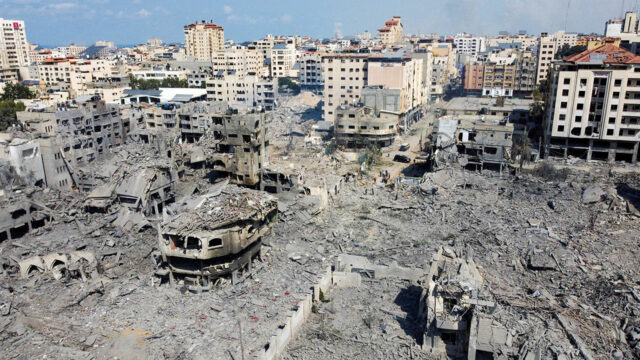
A view shows houses and buildings destroyed by Israeli strikes in Gaza City, Oct. 10, 2023. — REUTERS

GAZA/JERUSALEM — Israeli troops prepared on Sunday for a ground assault on the Hamas-controlled Gaza Strip as the country hit back for an unprecedented assault on its territory, and Iran warned of “far-reaching consequences” if Israel’s bombardment was not stopped.

Israel has vowed to annihilate the militant group Hamas in retaliation for a rampage by its fighters in Israeli towns eight days ago in which its militants shot men, women and children and seized hostages in the worst attack on civilians in the country’s history.

Some 1,300 people were killed in the unexpected onslaught, which shook the country with horrifying mobile phone video footage and reports from medical and emergency services of atrocities in the overrun towns and kibbutzes.

Israel responded by subjecting Gaza to the most intense bombardment it has ever seen, putting the small enclave, home to 2.3 million Palestinians, under total siege and destroying much of its infrastructure.

The expected ground assault had not begun by the early hours of Sunday.

US Secretary of State Antony Blinken began a meeting with Saudi Crown Prince Mohammed bin Salman in Riyadh soon after 7:30 a.m. (0430 GMT), a US official said, as he works with regional allies to prevent the war from spiraling into a bigger conflict and help win release of the hostages.

Gaza authorities said more than 2,300 people had been killed, a quarter of them children, and nearly 10,000 wounded. Rescue workers searched desperately for survivors of nighttime air raids. One million people had reportedly left their homes.

Israeli Prime Minister Benjamin Netanyahu’s government also told the militant group Hezbollah, which neighbors Israel to the north, not to start a war on a second front, threatening the “destruction of Lebanon” if it did.

On Sunday, a senior Israeli official accused Iran of trying to open such a second front by deploying weapons in or through Syria, in a response to a post on social media platform X that posited such a scenario.

“They (Iranians) are,” wrote Joshua Zarka, head of strategic affairs for Israel’s foreign ministry.

Iran’s mission to the United Nations warned late on Saturday that if Israel’s “war crimes and genocide” were not halted immediately, “the situation could spiral out of control” and have far-reaching consequences.

Hamas and Hezbollah are backed by Iran.

Hamas leader Ismail Haniyeh, meeting Iran’s foreign minister on Saturday in Qatar, discussed the Palestinian group’s attack in Israel “and agreed to continue cooperation” to achieve the group’s goals, Hamas said in a statement.

The Israeli military said that in an airstrike in Khan Younis it killed a commander of Hamas’ elite Nukhba Force who led the Oct. 7 attack on the two Israeli border villages of Nirim and Nir Oz.

US President Joseph R. Biden, Jr. and other world leaders warned against any country broadening the conflict. International organizations and aid groups urged calm and pressed Israel to allow humanitarian assistance to get through.

In New York, Russia asked the United Nations Security Council to vote on Monday on a draft resolution on the Israel-Hamas conflict that calls for a humanitarian ceasefire and condemns violence against civilians and all acts of terrorism.

WARNINGS AGAINST WIDER CONFLICT
Mr. Biden called Mr. Netanyahu on Saturday and, while reiterating “unwavering” support for Israel, discussed international coordination to ensure innocent civilians have access to water, food and medical care.

Mr. Biden also spoke with Palestinian President Mahmoud Abbas, who stressed the urgent need to allow humanitarian aid corridors in Gaza.

The US Department of Defense said the Eisenhower aircraft carrier strike group would start moving towards the eastern Mediterranean to join another carrier strike group already there.

Defense Secretary Lloyd Austin said it was “part of our effort to deter hostile actions against Israel or any efforts toward widening this war following Hamas’ attack on Israel.”

On Friday, the Israeli military told residents of the northern half of the Gaza Strip, which includes the enclave’s biggest settlement, Gaza City, to move south immediately.

On Saturday, it said it would guarantee the safety of Palestinians fleeing on two main roads until 4 p.m. (1300 GMT). Troops were massing as the deadline passed.

Hamas told people not to leave, saying roads out were unsafe. It said dozens of people had been killed in strikes on cars and trucks carrying refugees on Friday. Reuters could not independently verify this claim.

Some residents said they would not leave, remembering the “Nakba,” or “catastrophe,” when many Palestinians were forced from their homes during the 1948 war that accompanied Israel’s creation.

“They are striking us, but we are not going to leave our homes and we will not be displaced,” said Shaheen, sitting at home with her grandchildren facing relentless Israeli bombardment and shortages of bread, drinking water and power.

Israel says Hamas is preventing people from leaving in order to use them as human shields, which Hamas denies.

The Palestinian Health Ministry said early on Sunday that 300 people, mostly children and women, had been killed, and 800 more had been injured in Gaza during the last 24 hours.

The only route out of Gaza not under Israeli control was a checkpoint with Egypt at Rafah.

Egypt officially says its side is open, but traffic has been halted for days because of Israeli strikes. Egyptian security sources said the Egyptian side was being reinforced and Cairo had no intention of accepting a mass influx of refugees.

A US State department official said the United States was working to open the crossing to let some people out, and had been in touch with Palestinian-Americans who want to leave Gaza.

Washington later said it had told its citizens to try to reach the crossing.

Israel says its evacuation order is a humanitarian gesture while it roots out Hamas fighters. The UN says so many people cannot be safely moved within Gaza without causing a humanitarian disaster.

HEZBOLLAH WARNING
The violence in Gaza has been accompanied by the deadliest clashes at Israel’s northern border with Lebanon since 2006, raising fears of war spreading to another front.

Hezbollah said it fired at five Israeli outposts in the disputed Shebaa Farms area with guided missiles and mortar bombs. Reuters saw missiles fired at an Israeli army post and heard shelling from Israel and gunfire.

Israel’s Kan radio reported five border villages were under lockdown in response to a suspected incursion from Lebanon.

Mr. Netanyahu security adviser Tzachi Hanegbi said Israel was “trying not to be drawn into a two-front war” and warned Hezbollah to stay out of the fighting. — Reuters

Ripple effects seen on markets globally from Middle East conflict

MODELS of oil barrels and a pump jack are displayed in this illustration photo taken on Feb. 24, 2022. — REUTERS

WASHINGTON — Economists and market strategists are anticipating further ripple effects globally from the Middle East conflict, watching to see if the situation draws in other countries with the potential to increasingly drive up oil prices and send capital flowing to safe havens.

Israel was preparing on Saturday to launch a ground assault in the Hamas-controlled Gaza Strip, after telling Palestinians living in the territory to flee south. The Israeli national security adviser, meanwhile, warned Lebanese militant group Hezbollah not to start a war on a second front.

“It looks like we’re headed for a massive ground invasion of Gaza and a large-scale loss of life,” said Ben Cahill, senior fellow in the Energy Security and Climate Change Program at the Center for Strategic and International Studies (CSIS). “Anytime you have a conflict of this scale, you will have a market reaction.”

In the past week, concerns about the conflict have fed through to asset prices, contributing to weakness in stocks on Friday with the S&P 500 down 0.5%. Safe-haven assets saw buying with gold up more than 3% on Friday and the US dollar touching a one-week high. Oil prices leapt nearly 6% on Friday as investors assessed what the conflict could mean for supplies from nearby countries in the world’s top oil producing region.

“If it looks like a broadening conflict, oil prices will rise further,” said Michael Englund, chief economist at Action Economics LLC in Boulder, Colorado.

An expanding conflict would also likely cause inflation and, as a byproduct, interest rates around the world to accelerate, said Bernard Baumohl, chief global economist at The Economic Outlook Group in Princeton, New Jersey.

However, while inflation and rates in other countries will likely rise in this worst-case scenario, the US could be the exception as foreign investors pour capital into what they deem a safe haven during global conflict, Mr. Baumohl noted.

“Interest rates could go down,” he said. “Expect the dollar to strengthen.”

Other fuels could also be impacted, as seen in recent developments such as Chevron halting natural gas exports through a major subsea pipeline between Israel and Egypt.

“The bigger risk to the oil market is that this conflict draws in neighboring countries,” said CSIS’ Cahill.

Rising oil prices are unlikely to have a significant impact on US gas prices or consumer spending, analysts noted.

“The consumer is unlikely to see a significant impact on gas prices anytime soon,” Mr. Englund said. — Reuters

Australia’s referendum failure could lead to ‘Trump-style’ politics — analysts

REUTERS

SYDNEY — Australia’s decision to deny constitutional recognition to its First Peoples could herald a more divisive “Trump-style” politics at the next national election, while pushing the prime minister to pivot to cost of living issues, some analysts said.

Prime Minister Anthony Albanese misread the public mood, analysts said on Sunday, as he took responsibility for the referendum result, in which only the national capital voted “Yes” from among eight states and territories.

More than 60% of Australians voted “No” to altering the constitution to recognize Aboriginal and Torres Strait Island people through the creation of an Indigenous advisory body.

While Albanese said he respected the decision and his government would seek “a new way forward,” some analysts saw the conservative opposition buoyed by its success in opposing the landmark vote.

For Albanese, the referendum loss would be “a personal as well as a political blow — he’s very committed to equity for First Nations peoples,” said Chris Wallace, a specialist in political history and leadership at the University of Canberra.

Now he is expected to pivot to addressing cost of living issues pressing on voters, which had made it harder to win the referendum, she added.

Australia had rejected the “prime minister’s referendum,” said opposition party leader Peter Dutton, adding that his conservative Liberal party would look to form policies to take to the next national election, due in 2025.

Mr. Dutton had opposed the referendum to cement his political position, and showed himself to be “an effective, even superior campaigner,” said Mark Kenny, a professor at the Australian National University.

“He’s going after the blue-collar Labor base in the suburbs and regions, informed by the teachings of Trump and Farage,” Mr. Kenny added. “Australia may be in for a much more aggressive and divided style of politics seen in the US and UK.”

Albanese made an error of judgment in pursuing a referendum that lacked cross-parliamentary support, as Liberal coalition partner the Nationals opposed it a year ago, said Mr. Kenny, who is with the university’s Australian Studies Institute.

Elected in 1996, Albanese saw the failure of the 1999 referendum for Australia to become a republic. Despite that experience as a lawmaker “he squandered it, misreading the mood spectacularly,” Mr. Kenny said.

No referendum has passed in Australia without bipartisan backing.

Moderate voters abandoned the Liberal party at last year’s election, switching to so-called Teal independent candidates in key inner city seats, and installing a Labor government for the first time in nine years.

Analysis of Saturday’s referendum result showed outer metropolitan suburbs in the most populous states of New South Wales and Victoria voted “No,” while the inner city seats that switched from Liberal to independent last year voted “Yes.”

Mr. Dutton may not try to win back these Teal seats at the next election, Mr. Kenny said, adding that almost all of Labor’s rural and outer-suburban, working-class seats voted “No.”

On Sunday, Nationals lawmaker Bridget McKenzie criticized “Yes” voters as “very privileged, highly educated Australians in wealthy suburbs.”

Former Liberal Prime Minister Tony Abbott, who will join the board of Fox Corp next month, praised Mr. Dutton’s “courageous” campaign against the referendum in an interview with Sky News.

Mr. Abbott said what had been rejected was a change in the system of government, not the Aboriginal people.

However, Simon Banks, managing director of government relations firm Hawker Britton and former chief of staff to three Labor leaders, said there would not be calls for Albanese to resign, and Dutton instead had “the biggest political problem.”

He added, “Dutton has made the task for the Liberal Party to recover the so-called Teal seats significantly harder. Meanwhile, national opinion polls show no significant adverse electoral impact for Labor.”

The latest Newspoll, published on Friday, shows Labor still two points up on the 2022 election result, and Albanese’s popularity dipping only slightly, preferred by half of voters to be prime minister, compared with Mr. Dutton’s 30%.

The Liberal’s “wrecking ball campaign” was easy to run, Mr. Wallace said, but “to win the next election, it will have to replace Mr. Dutton with a more likeable leader.” — Reuters

ADVERTISEMENT
ADVERTISEMENT