Home Blog Page 4181

Industry ponders the ‘long road’ before hydrogen becomes viable
REUTERS

By Sheldeen Joy Talavera, Reporter

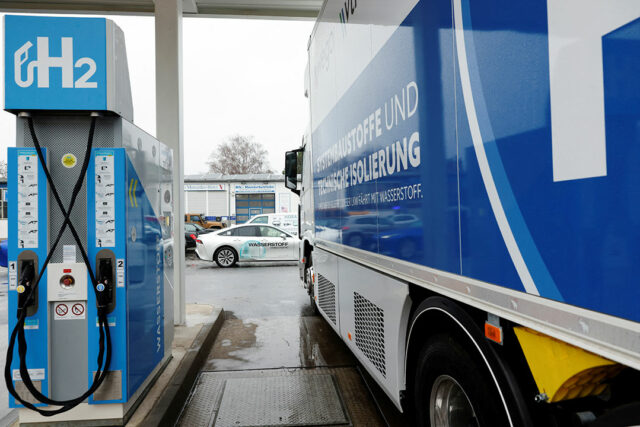
HYDROGEN is expected to play a key role in advancing the green energy transition, though it will take time before it becomes cost-effective, analysts said.

Sam Reynolds, an energy finance analyst at the Institute for Energy Economics and Financial Analysis, told BusinessWorld that hydrogen for power generation has a “long road ahead before it becomes a viable, affordable energy source.”

He said that green hydrogen, which is produced from renewables, costs up to $8 per kilogram, equivalent to $60 per million British thermal units — about six times of the price of liquefied natural gas in Asia.

“Although the price of green hydrogen is expected to fall over the next several decades, this will depend on the Philippines’ ability to build out enough domestic renewable energy capacity to both meet electricity demand and potential demand for hydrogen production,” he said.

Nevertheless, the benefits promised by hydrogen remain enticing” Jephraim C. Manansala, chief data scientist for the Institute for Climate and Sustainable Cities, said in an e-mail.

“Hydrogen, whether explored from indigenous sources (native hydrogen) or produced from renewable energy, offers an opportunity to enhance our energy security and contribute to the energy transition,” he added.

The Philippine Energy Plan 2020-2040 considers hydrogen to be a key alternative fuel. Its use in power generation is expected to support national objectives to diversify fuel sources, reduce greenhouse gas emissions, and increase the share of renewable energy (RE) in the power mix.

“What is up for discussion internally, of course with the Department of Energy (DoE), is that whether or not we tap hydrogen produced from renewable energy as a subset of renewable energy, or (whether to treat it as a) subset of alternative fuels,” Patrick T. Aquino, director of the DoE Energy Utilization Management Bureau, said in a public consultation Friday. 

The DoE has drafted a circular that seeks to set national policy and guidelines governing hydrogen use. It treats hydrogen as an “innovative energy source to meet energy demand in the power, transportation, commercial, and industrial sectors.”

In the proposed circular, the DoE said that the “prospective uses of hydrogen in the energy sector shall be divided into power generation and electricity storage applications and non-power applications.”

“In power generation, hydrogen has the potential to serve as a backup power source to complement the variability of sources like solar and wind. It can also be a solution for supplying electricity to off-grid and remote areas, as many of these areas currently rely on diesel as their primary fuel source,” Mr. Manansala said.

Analysts are skeptical about the use of hydrogen in co-firing applications, especially in coal power plants, due to efficiency, sustainability, and cost concerns.

“Co-firing with fossil-based ammonia can even result in higher emissions compared to natural gas power plants, largely due to ammonia production emissions,” Mr. Manansala said, citing a report from Bloomberg New Energy Finance.

Mr. Reynolds said that “co-firing hydrogen ammonia in coal-fired power plants would still emit significant amounts of carbon dioxide.”

“And while clean hydrogen production holds promise for decarbonization across various sectors, 96% of global hydrogen supply is currently produced using fossil fuels,” he added.

Mr. Aquino set the regulations in the proposed circular will take heed of environmental considerations.

“Later on, once we do convene the Hydrogen Energy Industry Committee, committee members can see possible technological innovations or interventions that can be done to minimize these particular aspects,” Mr. Aquino said.

“We also take note that under existing regulations, the impact or the categorizations outlined are not specifically spelled out, but we are mindful (that) commitments of the Philippine government to mitigate climate change (are) important,” he added.

Hydrogen is being deployed — through transport, power generation, or industrial use — in Japan, China, South Korea, the US, and Germany, according to Mr. Aquino.

“Creating a strategy and guidelines for the hydrogen economy is a valuable move toward advancing the energy transition,” Mr. Manansala said.

“We welcome the DoE’s foresight in recognizing hydrogen as a viable and cleaner energy option that can help augment the future energy demand in the Philippines,” he added.

Mr. Reynolds said that the transport of hydrogen may be a challenge due the country’s “very little infrastructure.”

“Hydrogen is very difficult to transport because of its low energy density, which can cause pipeline embrittlement and safety issues. Conversion of hydrogen to ammonia might make transportation easier but would entail significant energy losses, lowering round-trip efficiency and raising costs,” he said.

Mr. Aquino said private companies are gearing up to study where to locate future hydrogen infrastructure.

“We take cognizance of the fact that we do have private sector proponents… actively looking and exploring sites,” he said.

Analysts said the Philippines has yet to scale up RE and backed hydrogen deployment in industries with limited alternatives for decarbonization.

Mr. Manansala said RE sources “must still be deployed at speed and scale to support the future energy demand and the green hydrogen economy.”

“In the power sector, renewables and battery storage facilities are likely to prove more cost-effective for the energy transition and power sector decarbonization efforts,” Mr. Reynolds said.

The government wants to boost the share of RE in the power mix from about 22% at the end of 2022 to 35% by 2030 and 50% by 2040.

“As part of our forthcoming Philippine Energy Plan, we have seen the potential, the role of alternative fuels like hydrogen. That’s why we are already indicating and preparing for the space by which hydrogen can play an integral role in our energy sector or even as part of our energy transition,” Mr. Aquino said.

GOCC subsidies up nearly 22% in August

PHILSTAR FILE PHOTO/PHILHEALTH

SUBSIDIES provided to government-owned and -controlled corporations (GOCCs) rose 21.87% in August, the Bureau of the Treasury (BTr) said.

Budgetary support to GOCCs jumped to P18.933 billion in August from P15.536 a year ago earlier.

Month on month, subsidies declined 43% from the P33.238 billion in July.

The government provides subsidies to GOCCs to help cover operational expenses not supported by revenue.

The Philippine Health Insurance Corp. (PhilHealth) was the top recipient in August, with P12.931 billion or 68.3% of subsidies during the month.

The National Irrigation Administration (NIA) received P3.047 billion, while the National Housing Authority (NHA) got P992 million.

Other top recipients were the National Food Authority (P221 million), the Philippine Children’s Medical Center (P220 million), the Philippine Fisheries Development Authority (P196 million), the Philippine Heart Center (P178 million), the Philippine Coconut Authority (P125 million), the National Kidney and Transplant Institute and the National Dairy Authority (P116 million each), and the Small Business Corp. (P100 million.)

GOCCs that received at least P50 million in August were the Philippine National Railways (P92 million), the Lung Center of the Philippines (P74 million), Development Academy of the Philippines (P71 million), and Subic Bay Metropolitan Authority (P50 million).

Meanwhile, the National Electrification Administration, the Bases Conversion and Development Authority, the Civil Aviation Authority of the Philippines, the Philippine Crop Insurance Corp., the Philippine Postal Corp., the Power Sector Assets and Liabilities Management Corp., and the Social Housing Finance Corp. received subsidies during the month.

In the eight months to August, subsidies amounted to P115.867 billion, up 17.5% from a year earlier.

PhilHealth took in P50.614 billion or almost half (43.68%) of the subsidies in the January-August period, followed by the NIA (P28.842 billion) and the NHA (P5.518 billion). 

Rizal Commercial Banking Corp. Chief Economist Michael L. Ricafort said that the higher subsidies in August were likely due to higher inflation, which drove up expenditures.

“Faster pace of government spending to make up for underspending earlier this year could have also increased GOCC expenditures as well,” he added. — Luisa Maria Jacinta C. Jocson

Tourism workers trained under service excellence program exceed 100,000

THE Department of Tourism (DoT) said Sunday that frontline tourism workers who had undergone the Filipino Brand of Service Excellence (FBSE) program have exceeded 100,000.

Tourism Secretary Christina Garcia Frasco said the number of graduates exceeds the target set for the Office of Industry Manpower Development, which “manifests the commitment of the (current) administration to transform the tourism industry.”

“Less than a year since the 100,000-goal for FBSE training was set, we have hit more than what we aimed for,” Ms. Frasco said.

“We thank our stakeholders for rising to the challenge, as well as the trainers, participants, and our partner institutions who have closely collaborated with us on this initiative,” she added.

As of Oct. 13, the DoT tallied 100,407 tourism workers across the accommodation, travel and tour, transport, academe, farm tourism, tour guide, and tourist police industries.

The program aims to sustain excellence in hospitality and enhance the quality of tourism services.

Meetings, incentives, conferences, and exhibitions (MICE) professional and FBSE Level 1 Regional Trainer Orly Ballesteros said the program highlights Filipino excellence in services to the rest of the world.

“I hope that sooner than later this culture of excellence will become the norm rather than an exception,” he added.

According to DoT, supporters of the FBSE include the Manila International Airport Authority, Megaworld Corp., Enchanted Kingdom, Best Western Plus, and Hilton Hotels and Resorts. — Justine Irish D. Tabile

DTI to establish National Innovation Gateway, supported by regional hubs

THE Department of Trade and Industry (DTI) said it will establish the DTI National Innovation Gateway, which will house centers for advanced technology and provide one-stop government solutions for businesses and investors.

According to Trade Secretary Alfredo E. Pascual, the DTI Innovation Gateway in Manila will host an industry 4.0 pilot factory, Center for Artificial Intelligence Research and Development, and a micro-, small-, and medium-enterprise innovation academy, among others.

“The Gateway will serve as an epicenter of government, enterprises, and academia collaboration and make Manila a center of international collaborative innovation,” Mr. Pascual said.

Meanwhile, the DTI also plans to establish regional innovation hubs focused on feature renewable energy, smart technology for resilience, agriculture, and e-mobility.

The regional hubs will facilitate the spread of of applied research and development, skills development, and innovation infrastructure.

Mr. Pascual said the DTI will be collaborating on the initiative with Don Mariano Marcos Memorial State University, Batangas State University, and the University of Science and Technology of Southern Philippines.

The DTI is also looking at developing the Philippine Hub Of Entrepreneurial Networking and Innovation eXchange (PHOENIX), which will serve as laboratories for businesses and innovators.

“PHOENIX is a transformative initiative that will harness the collaborative energy of the National Innovation Hub in Manila, supported by the regional innovation hubs and Knowledge, Innovation, Science, and Technology parks,” Mr. Pascual said. — Justine Irish D. Tabile

BIR launches taxpayer registration portal

THE Bureau of Internal Revenue (BIR) said that its taxpayer registration-related applications portal will be available today, Oct. 16.

“The portal is an alternative option that can be used by taxpayers to submit registration-related applications through e-mail application,” the BIR said in a memorandum circular.

Documents that can be submitted via the portal include applications for Taxpayer Identification Number, registration of Overseas Filipino Workers, and nonresident citizens, application for authority to print, and transfer of registration of employees and other nonbusiness taxpayers.

Taxpayers may access the portal through the BIR website.

The BIR has been transitioning into digital operations after adopting a 10-year digitalization roadmap in 2019. — Luisa Maria Jacinta C. Jocson

How RCEP impacts ASEAN supply chains

The Regional Comprehensive Economic Partnership (RCEP) came into force for the Philippines in June. The RCEP is a trading bloc comprising the members of the Association of Southeast Asian Nations (ASEAN) and ASEAN Plus One Free Trade Agreement (FTA) partners Japan, China, South Korea, Australia, and New Zealand. According to the RCEP text, one of the agreement’s objectives is to “establish a modern, comprehensive, high-quality, and mutually beneficial economic partnership framework to facilitate the expansion of regional trade and investment and contribute to global economic growth and development…”

This is the fourth article in a supply chain series that looks at reimagining the integrated supply chain. This article will discuss how the RCEP may impact supply chains in the ASEAN.

RCEP’S VALUE
RCEP builds on and updates the existing ASEAN Plus One FTAs and considers important trade realities, such as competition and the interdependency of value chains. It covers areas not previously included in the individual ASEAN Plus One FTAs, such as intellectual property, e-commerce, competition, small- and medium-sized enterprises (SMEs), and government procurement.

RCEP also recognizes the diversity of its members in terms of development level and provides technical cooperation and capacity building to support the implementation of the Agreement, with the intent to make it more beneficial for all entities involved. In addition, RCEP is seen as a high-quality agreement as it eases market access through trade and investment rules and supports global and regional supply chains.

RCEP AND SUPPLY CHAINS
RCEP has the potential to support and ease regional and global value chains. The updated trade deal further lowered tariff rates or accelerated the reduction thereof. Furthermore, it commits the members to a single set of Rules of Origin (ROO), the criteria to determine the national source of a product. ROOs determine whether products are eligible for preferential treatment under trade agreements, much like a passport indicates the nationality of a visitor and, therefore, whether the holder is eligible to enter a country visa-free by treaty rules.

A significant provision is cumulation, which allows an RCEP firm to count inputs or goods from other RCEP partners as local content to meet ROO requirements. The regional value content (RVC) is closely related to ROOs because it helps determine the minimum percentage of regional value a product must have to qualify for preferential trade treatment. For example, if the RVC is set at 40% of the free-on-board price, an RCEP firm can include inputs from other RCEP partners to fulfill this requirement. Meeting the requirement allows the firm to enjoy preferential tariff rates when exporting to other RCEP countries. Otherwise, higher most-favored-nation (MFN) rates will apply.

BUSINESS OPPORTUNITIES
According to figures from the Philippine Statistics Authority, the Philippines sources about 70% of its imports from and ships half of its exports to the rest of the RCEP membership. This suggests that the new trading bloc is both a source of materials and a market for produce at the same time.

Accounting for nearly a third of the global population and output, the new trading bloc is now the largest in the world. Furthermore, RCEP is also the first FTA that jointly covers China, Japan, and South Korea. For firms along regional supply chains, savings come in the form of zero or substantially lower tariff rates when importing inputs from and exporting produce to the RCEP.

Firms intending to benefit from RCEP’s preferential tariff rates should consult issuances of various national customs bodies. Some ancillary documents may be required, covering direct consignment, third-country invoicing, and back-to-back certificates of origin. Firms should consider the administrative costs of compliance and compare them with the incremental benefits arising from the difference between MFN and preferential rates.

RCEP IN THE PHILIPPINES
Overall, RCEP could have developmental implications for the Philippines. When large exporting firms partner with SMEs at the enterprise level, the latter are also effectively participating in and benefiting from regional supply chains.

At the macroeconomic level, RCEP can help stimulate growth. RCEP’s effectivity coincides with significant structural reforms like the Corporate Recovery and Tax Incentives for Enterprises, which lowered the corporate income tax rate, and the amendments to the Public Service Act, Foreign Investment Act, and Retail Trade Liberalization Act, which further liberalized the economy. The government is also pursuing an infrastructure program that amounts to 5-6% of GDP. These bode well for investment-led growth.

Continuous infrastructure investment and development can strengthen the Philippine link to regional and global supply chains. In the 2023 edition of the World Bank’s Logistics Performance Index, the Philippines scored 3.3 out of 5, up from 2.9 in 2018. This improvement may be attributed to the increase in the infrastructure score from 2.73 in 2018 to 3.2 in 2023.

Altogether, structural reforms, infrastructure programs, and improved regional market access provided by RCEP can help the country bid for more export-driven growth.

This article is for general information only and is not a substitute for professional advice where the facts and circumstances warrant. The views and opinions expressed above are those of the authors and do not necessarily represent the views of SGV & Co.


Lester Jeff D. Pawid is a Strategy and Transactions (SaT) Senior Manager and Mary Andrea T. Bacani is a Supply Chain and Operations (SCO) Senior Manager of SGV & Co.

Altas keep Letran winless; SSC-R outlasts EAC, 86-70

UPHSD Altas went to its defense in the first half and its gunners in the second as it kept three-peat champion Letran winless.

Games Tuesday
(Filoil EcoOil Arena)
2 p.m. — UPHSD vs San Beda
4 p.m. — LPU vs JRU

UNIVERSITY of Perpetual Help went to its defense in the first half and its gunners in the second as it kept three-peat champion San Juan de Letran University winless while enhancing its own bid with a 74-59 win yesterday in NCAA Season 99 at the Filoil EcoOil Arena.

Going to their defense when their offense turned sour, the Altas kept the Knights bottled up and trailed by just three points, 25-22, in the first two quarters before Art Roque and Jelo Razon detonated three-point bombs and combined for 10 — six by the former and four by the latter — in the final cantos.

That sent UPHSD to its second straight win and third overall against four defeats that also kept it in the Final Four hunt.

Mr. Roque, a sophomore, ended up with a spectacular line as he did not only get it done on offense where he erupted for a game-high 22 points but also did other great things — 11 rebounds, two assists, two steals and two blocks with just an turnover to show.

UPHSD coach Myk Saguiguit was also impressed of the sweet-shooting, high-leaping Mr. Roque’s heroics.

While UPHSD basked in celebration, Letran silently sang its school hymn and went to its dugout after falling to its seventh straight defeat and its worst start in recent memory.

Earlier, Raymart Escobido unloaded a 23-point performance while seniors Jessie Sumoda and Romel Calahat lorded it over the boards as San Sebastian College-Recoletos (SSC-R) likewise claimed its third win in seven games at the expense of Emilio Aguinaldo College (EAC), 86-70.

While Mr. Escobido delivered his best game of the season, Messrs. Sumoda and Calahat did their damage inside where they pounded their way to 10 rebounds apiece while chipping in 14 and nine points, respectively.

The Generals fell to 4-3.

In the third and final game, College of St. Benilde (CSB) went to Prince Carlos and Miguel Oczon in the fourth quarter as it edged Arellano University (AU), 72-66, to post its third straight win and fourth overall against three losses.

The Chiefs stumbled to 1-6. — Joey Villar


The scores:

First Game

San Sebastian 86 — Escobido 23, Sumoda 14, Una 13, Calahat 9, Are 7, Re. Gabat 7, Desoyo 6, Ra. Gabat 5, Felebrico 2, Shanoda 0

EAC 70 — Gurtiza 20, Maguliano 14, Robin 13, Cosejo 12, Ochavo 2, Bacud 2, Quinal 2, Tolentino 2, Angeles 2, Cosa 1, Balowa 0, Umpad 0, Luciano 0, Ednilag 0

Quarterscores: 19-13; 42-31; 62-49; 86-70

Second Game

UPHSD 74- Roque 22, Razon 12, Pagaran 12, Abis 6, Barcuma 5, Omega 5, Nitura 3, Ferreras 3, Orgo 2, Nunez 2, Gelsano 2, Cuevas 0

Letran 59- Cuajao 15, Reyson 12, Monje 10, Ariar 5, Guarino 4, Fajardo 4, Nunag 4, Batallier 2, Santos 2, Garupil 0, Bautista 0, Jumao-as 0, Bojorcelo 0

Quarterscores: 11-13; 21-25; 44-39; 74-59

Third Game

CSB 72- Oczon 16, Carlos 15, Sangco 12, Nayve 11, Turco 4, Jalalon 4, Arciaga 3, Gozum 2, Morales 2, Mara 2, Corteza 1, Marcos 0, Lepalam 0, Jarque 0

AU 66- Valencia 16, Ongotan 13, Capulong 12, Talampas 8, Sunga 7, Villarente 3, Dayrit 22, Mallari 2, Geronimo 0, Abastillas 0, Yanes 0

Quarterscores: 16-12; 26-36; 51-47; 72-66

Lady Blazers rout Lady Warriors in straight sets in SSL

CSB LADY BLAZERS made short work of the UE Lady Warriors in only 68 minutes, 25-18, 25-21, 25-4.

Games Saturday
(Rizal Memorial Coliseum)
11 a.m. — NU vs AU
2 p.m. — CSB vs FEU
5 p.m. — UE vs AdU

NCAA champion College of St. Benilde (CSB) routed University of the East (UE) in the battle of coach Jerry Yee’s teams while University of Santo Tomas scored a quick bounce-back win over Arellano University in the Shakey’s Super League (SSL) Collegiate Pre-Season Championship playoffs yesterday (Oct. 15)  at the Rizal Memorial Coliseum in Manila.

Behind a scattered attack, Lady Blazers made short work of the Lady Warriors in only 68 minutes, 25-18, 25-21, 25-4, as the Golden Tigresses avenged their first loss against National University (NU) with a 25-16, 31-29, 25-18 win over the Lady Chiefs.

University of Santo Tomas claimed solo second in Pool E with a 4-1 record with St. Benilde tying Adamson University for the No. 2 seed in Pool F at 3-1. NU (4-0) and Far Eastern University (4-0) lead Pools E and F, respectively.

Angeline Poyos (12) and Regina Jurado (7) provided coverage for the wards of coach Kungfu Reyes.

Earlier, Zamantha Nolasco and Jade Gentapa cashed in 12 and 11 points, respectively, to show the way for the Lady Blazers, who were mentored by Mr. Yee against his fellow squad in the Lady Warriors.

Mr. Yee’s deputy coach Dr. Obet Vital called the shots for UE.

Arellano University, which stunned Ateneo de Manila University on Saturday night with an impressive straight-sets win, slid to 3-2 in Pool E as UE fell to 2-2 in Pool F. — John Bryan Ulanday

Berardi helps Italy thrash Malta; Hungary, Denmark also win on road to Euro Group C

ITALY forward Domenico Berardi scored twice as the home side cruised to a 4-0 win over Malta in their Euro 2024 Group C qualifier on Saturday while Hungary, Slovenia and Denmark also enjoyed victories as they chase a place at the finals.

European champions Italy had few problems at the Stadio San Nicola in Bari against a struggling Malta side without a win so far in the qualifying campaign for the tournament in Germany.

Luciano Spalletti’s were missing several key players, including Ciro Immobile, Lorenzo Pellegrini, Mateo Retegui and Federico Chiesa, all sidelined by injury.

Sandro Tonali and Nicolo Zaniolo also left the squad earlier this week after being informed of their involvement in an investigation by Turin prosecutors.

Italy’s win leaves them in second place ahead on goal difference of Ukraine, who won 2-0 against North Macedonia. Both teams have 10 points but Italy have a match in hand on all their group rivals except England, who top the group with 13 points.

England host Italy in their next qualifier on Tuesday.

Giacomo Bonaventura opened the scoring after 23 minutes, netting his first international goal with a skilful right-foot curler into the top corner from just inside the penalty area.

At 34 years and 53 days, midfielder Mr. Bonaventura became the oldest Italy player to score his first goal for the national team — more than 10 years after his debut.

“Sorry it took so long, I got there eventually,” he told Sky Sports Italia. “I was lucky, it went well … these games against a very defensive team are tough to open the scoring.”

Mr. Berardi increased Italy’s lead with a left-foot curler just before halftime and added his second goal in the 64th minute with a precise finish from a cut-back.

In the closing moments, Davide Frattesi scored the final goal of the night, skilfully slotting a low shot from the edge of the area into the bottom corner.

ENGLAND CLASH
Mr. Spalletti praised his side for their determined approach to the match against the group minnows.

“The important thing is the three points, never letting it be in doubt, without taking this test lightly, showing a professional attitude,” Mr. Spalletti told RAI Sport.

“You can see these players are eager to get to know each other more and play good football, so we are pretty pleased.”

Italy face England at Wembley Stadium on Tuesday when a win would put them level on points with Gareth Southgate’s side, who will themselves clinch a place at the finals with a victory.

“That is a match where we can really see what our potential is. Once we have played, then I’ll tell you what that potential is,” added Mr. Spalletti.

Hungary remain top of Group G after beating second-placed Serbia 2-1, with all the goals coming in the first half. Hungary have 13 points, three points above Serbia with a game in hand.

The Hungarians will qualify for the European Championship if they win away to Lithuania on Tuesday.

In Group H, leaders Slovenia beat third-placed Finland 3-0 with a Benjamin Sesko double, including a penalty and a late goal by Erik Janza. They are level on 16 points with second-placed Denmark, who won 3-1 at home to Kazakhstan. — Reuters

Rice Vanguards eye quick North semifinals passage

DEFENDING champion Nueva Ecija tries to finish off Pasay in Game 2 of the 2023 Maharlika Pilipinas Basketball League (MPBL) quarterfinals today at the Ynares Sports Arena in Pasig.

Riding on a thrilling 85-81 comeback win in Game 1 at the Nueva Ecija Coliseum, the Rice Vanguards troop into the battlefield at 6 p.m. with all the momentum on their side in an attempt to earn a quick passage to the North Division semifinals.

Sixth-seeded San Juan also eyes to close out No. 3 Makati at 8 p.m. after a stunning 94-85 win in Game 1.

The No. 2 seed Nueva Ecija will not have its Sixth Man home crowd this time around but the Bong Cuevas-owned squad is determined to still get the job done with no intention of allowing a rubber match against the gritty opposition.

“We need to adjust on defense and pressure them hard,” said Mr. Cabiltes.

“We need to finish this series in Game 2. It’s gonna be tough and physical but we’re gonna be ready for it.”

Chris Bitoon and Michael Mabulac have been tasked anew to spearhead the Rice Vanguards’ mission after anchoring their win in Game 1 from a 15-point deficit in the third quarter, with support from Byron Villarias and Renz Palma.

In front of the passionate Novo Ecijanos, the Rice Vanguards uncorked a scorching 30-5 rally in the second half to earn the gritty win that kickstarted their title retention bid in style.

Standing in Nueva Ecija’s way is the ever-tough Pasay, seeded seventh after the prelims, with  Dhon Reverente leading the charge following a near upset win in Game 1 before a late meltdown.

Meanwhile, No. 1 seed Bacoor got back on No. 8 Iloilo, 92-52, as No. 5 Quezon beat No. 4 Zamboanga, 65-58, to equalize the series and force deciding games in the South Division quarterfinals. — JB Ulanday

TNT Triple Giga vie for Season 3 Leg 1 honor as PBA 3×3 returns

AFTER a two-month break, it’s back to the PBA 3×3 half-court wars for multi-titled TNT and 10 equally determined opponents.

The Triple Giga, winners of four straight conference championships, look to sustain the charge as they vie for the Season 3 Leg 1 honors beginning today (Oct. 16) at the Ayala Malls Circuit in Makati.

TNT, however, won’t have reliable big man Lervin Flores, who was called up by the injury-hit Tropang Giga in 5-on-5, as well as top gun Almond Vosotros, who was listed as a reserve, for the opening leg.

Tasked to carry the fight for the Triple Giga are veterans Ping Exciminiano, Samboy de Leon and Gryann Mendoza, who will join forces this time with Matt Salem.

Seeded second in the conference-opener, TNT leads Pool B with Ken Bono-led San Miguel Beer, NorthPort and debuting guest team MCFA Solver providing early challenge.

Top-seed Cavitex, represented by the tested core of are Tonino Gonzaga, Jorey Napoles and Bong Galanza plus big man Marion Magat, headlines Pool A and dukes it out with Pioneer Elastoseal and Blackwater.

No. 3 Barangay Ginebra, parading a new-look squad composed of holdovers Ralph Salcedo and JJ Espanola in combo with newbies Nichole John Ubalde and Lean Vincent Martel, competes in Pool C against No. 4 Meralco, which retained its tested cast of Alfred Batino Joseph Sedurifa and Jeff Manday with JJ Manlangit, and darkhorses Terrafirma and Purefoods.

Games start at 10:30 a.m. with the teams racing for tickets to tomorrow’s quarterfinal stage. — Olmin Leyba

Outclassed Liberty

Disappointment was etched into just about every line of head coach Sandy Brondello’s face the aftermath of Game Two of the Women’s National Basketball Association Finals. It wasn’t simply that the Liberty lost anew; it was that they found themselves outclassed from opening tip. After having promised to play better following the beatdown they experienced in Game One, they instead got even worse. And by the time the final buzzer mercifully aborted the massacre, their weaknesses on both sides of the court weee laid bare for all to see.

In the post-match presser, Brondello grudgingly noted that the Aces had much to do with the outcome. That said, she refused to acknowledge that the Liberty do not have the tools to stand toe to toe with the defending champions. To be sure, she needs to stay confident moving forward, if for no other reason than because the series isn’t over yet. And having just steered the Liberty to their best regular season in history, she knows full well what they are capable of. The big question, of course, is whether they can make the requisite adjustments to at least keep pace with the overwhelming favorites. It’s one thing to parade the best-laid plans, and quite another to see these through.

Indeed, the Liberty need to not just be their best selves in attempting to be the first hopefuls in WNBA annals to claim the hardware after being down zero to two in the finals. They have to exceed all expectations, relying on their skills sets AND scrapping from the get-go. And in order not to be overwhelmed by the Sisyphean endeavor, they would do well to set their sights on prevailing a moment at a time. They should be after every loose ball, go for every rebound, run through every pick, defend every shot. Forget about the score; there can be no quit in them through every play.

In this regard, Brondello’s right. The Liberty cannot but lead their efforts with pride. They’re much better than what they have shown so far; their collective talent and roster depth make them the Aces’ equals on paper. As with all success stories, however, the eating is where the pudding is validated. And, so far, all they have done is prove the bitterness of their servings. Today, they have the opportunity to set things right. In front of a partisan crowd at Barclays Center, they should be primed to turn their fortunes around. If not, then they need look no farther than their own locker room to find their worst enemies.


Anthony L. Cuaycong has been writing Courtside since BusinessWorld introduced a Sports section in 1994. He is a consultant on strategic planning, operations and human resources management, corporate communications, and business development.

ADVERTISEMENT
ADVERTISEMENT