
How PSEi member stocks performed — October 20, 2023
Here’s a quick glance at how PSEi stocks fared on Friday, October 20, 2023.
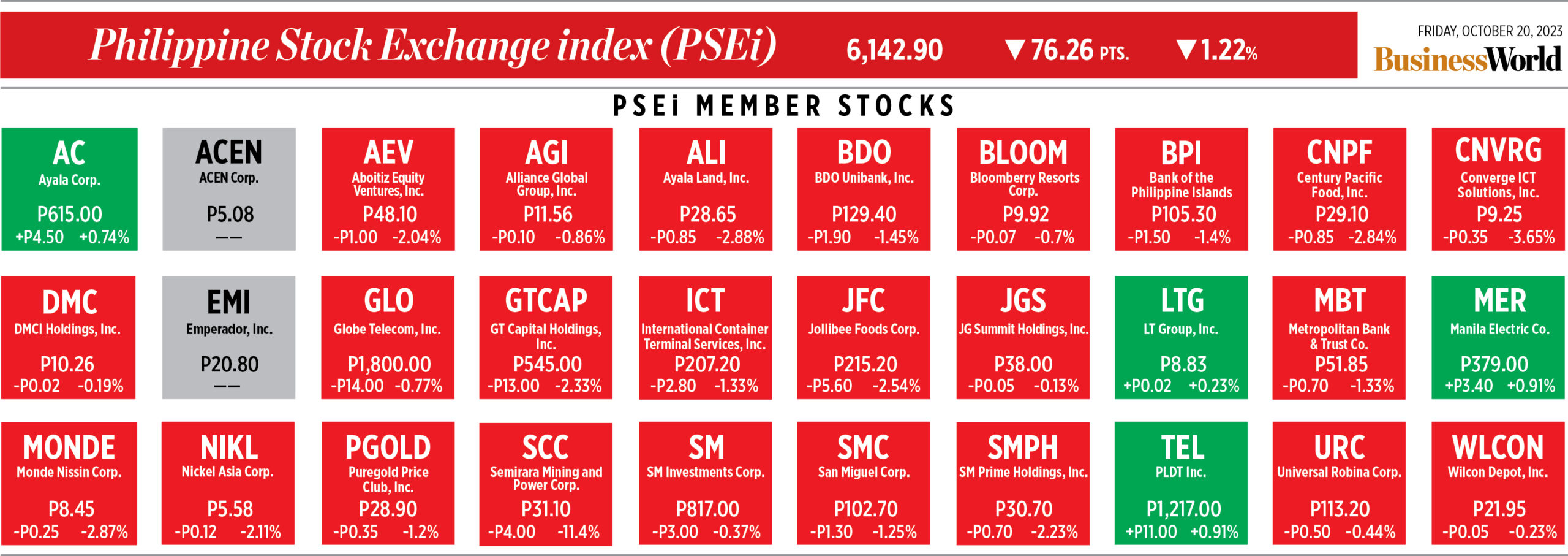

Here’s a quick glance at how PSEi stocks fared on Friday, October 20, 2023.
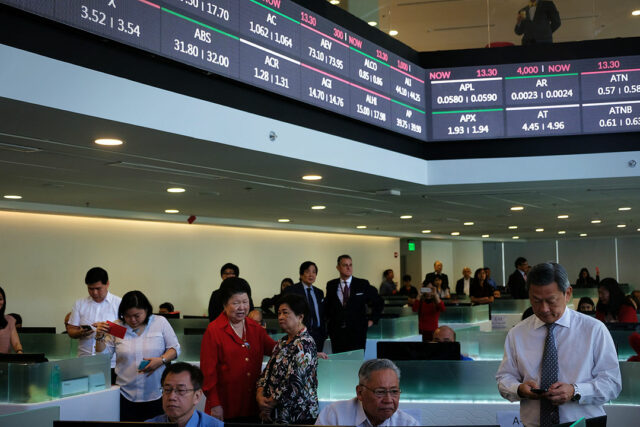
INVESTORS are expected to remain cautious and stay on the sidelines this week as they continue to monitor developments in the Middle East and how they will affect the global economy.
The benchmark Philippine Stock Exchange index (PSEi) went down by 76.26 points or 1.22% to close at 6,142.90 on Friday, while the broader all shares index shed 36.37 points or 1.08% to end at 3,329.42.
Week on week, the PSEi fell by 13.33 points or 1.97% from its close of 6,266.34 on Oct. 13.
“The failure of the index to hold above the important 6,150 support level last Friday will shift the tone of trading towards caution this week,” China Bank Capital Corp. Managing Director Juan Paolo E. Colet said in a Viber message.
“Increasing US Treasury yields and the volatile Israel-Hamas conflict have dampened risk sentiment as investors wrestle with tight monetary policy, upward oil price pressure, and geopolitical tension,” Mr. Colet added.
The market is expected to be in a generally cautious mood due to the war, online brokerage 2TradeAsia.com likewise said.
“As geopolitical tensions increase, confidence in future fundamentals decrease — and so do asset prices. After all, risk aversion is the human tendency to switch to more certain outcomes to avoid loss,” 2TradeAsia.com said in a report.
The war has compelled investors “to reevaluate their strategies and shift their focus from riskier assets to safer investments,” Globalinks Securities and Stocks, Inc. Head of Sales Trading Toby Allan C. Arce said in a Viber message.
Israel pounded southern Gaza with air strikes early on Sunday and said it would intensify its attacks in the enclave’s north, as Washington pledged more air defences to the Mideast in response to recent attacks on US troops in the region, Reuters reported.
Palestinian media reported at least 11 Palestinians were killed in an Israeli strike in the southern Gaza city of Khan Younis, and that Israel was striking the southern city of Rafah.
The strikes came hours after Israeli military spokesperson Rear Admiral Daniel Hagari called on Gazans to move south out of harm’s way.
Israel started its “total siege” of Gaza after an Oct. 7 cross-border attack on southern Israel by militants of the Islamist movement Hamas killed 1,400 people, mainly civilians, in a shock rampage that has traumatized Israel.
Meanwhile, inflation concerns at home could affect this week’s trading, Mr. Arce added.
Minutes of the Bangko Sentral ng Pilipinas’ Sept. 21 meeting released last week said the Philippines may miss its 2-4% annual inflation target for a third straight year in 2024.
For this week, online brokerage 2TradeAsia.com placed the PSEi’s support at 6,000 and resistance at 6,300, while Mr. Arce put support at 6,142 and resistance at 6,261-6,300. — SJT with Reuters
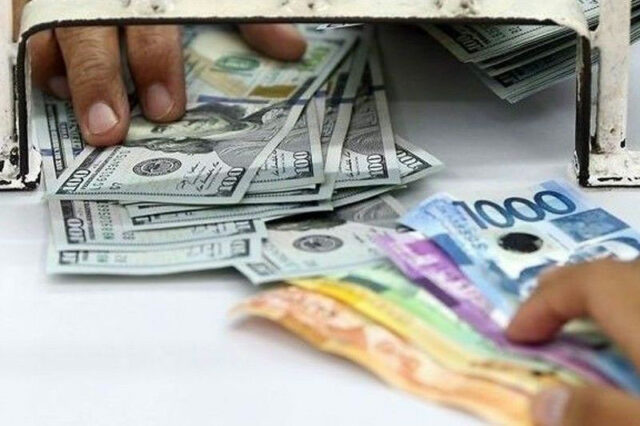
THE PESO may trade sideways against the dollar this week amid a lack of catalysts but may get support from an increase in remittances.
The local unit closed at P56.84 per dollar on Friday, inching up by three centavos from its P56.87 finish on Thursday, data from the Bankers Association of the Philippines showed.
Week on week, however, the peso weakened by 2.9 centavos from its P56.811 per dollar finish on Oct. 13.
The local currency opened Friday’s session at P56.75 against the dollar, which was also its intraday best. Its weakest showing was at P56.84 versus the greenback.
Dollars exchanged went down to $912.27 million on Friday from $990.3 million on Thursday.
The peso strengthened on Friday amid expectations of a seasonal increase in remittances, rising despite a stronger dollar and higher crude oil prices, Rizal Commercial Banking Corp. Chief Economist Michael L. Ricafort noted in a Viber message.
For this week, the peso could continue to trade sideways amid a lack of catalysts but could strengthen if it breaches the P56.50-per-dollar level, Security Bank Corp. Chief Economist Robert Dan J. Roces said in a Viber message.
The peso could get support from an expected increase in remittances before the trading break next week, Mr. Roces said.
For this week, he sees the peso moving between P56.50 and P56.80 per dollar, while Mr. Ricafort expects it to range from P56.60 to P56.98. — AMCS
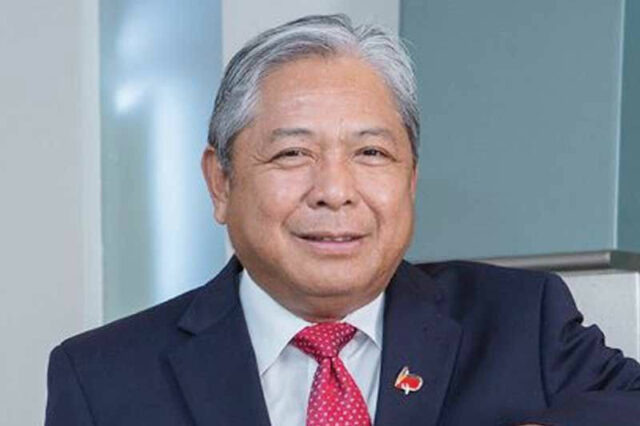
BUSINESS GROUPS called corruption allegations against Transportation Secretary Jaime J. Bautista a “demolition job” designed to obstruct reforms in the industry.
In a letter addressed to President Ferdinand R. Marcos, Jr., three organizations led by the Philippine Chamber of Commerce and Industry declared their full support and confidence in Mr. Bautista.
“We call for the speedy resolution of what we consider as another ‘demolition job’ to stop the Secretary from pursuing the needed reforms in the transportation sector that (are) very critical in and for our supply and value chain,” the business groups said.
“We owe this to the Secretary who could have just enjoyed his retirement, but has stepped up in this capacity as his selfless contribution to nation building and public service,” they added.
Mr. Bautista filed a cyber-libel complaint against the chairman of a transport group and a journalist over reports that linked him to corruption.
On Oct. 16, the Department of Transportation (DoTr) said Mr. Bautista filed a complaint against Mar S. Valbuena, chairman of the Malayang Alyansa ng Bus Employees at Laborers, and journalist Ira Panganiban.
The business groups said that Mr. Bautista’s appointment was one of the most credible appointments to the cabinet.
“He has steered the modernization and other reforms in the Department to enable it to respond to domestic stakeholder needs and global developments,” they said.
They cited the need for a quick resolution because the economy is at a “crucial juncture” as the effects of the pandemic ease while geopolitical tensions ratchet up, changing trade and investment patterns.
“These factors will continue to challenge the health of the country’s trade and investment and therefore the speed of the economic recovery,” the business groups said.
The statement was also signed by the Employers Confederation of the Philippines and the Philippine Exporters Confederation, Inc. — Justine Irish D. Tabile
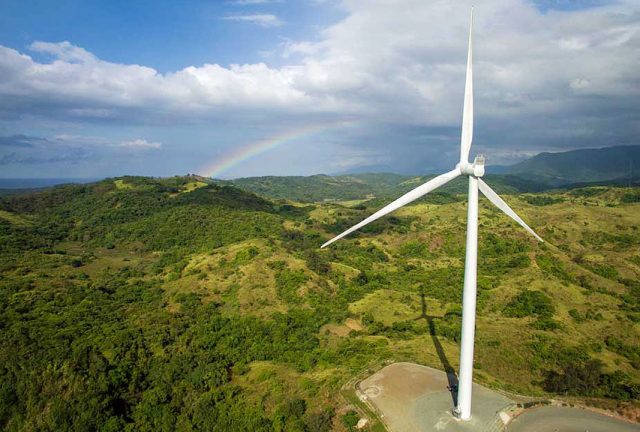
THE PHILIPPINES will need to invest $62 billion in its energy industry by 2040 in order to accelerate decarbonization, the World Bank said.
“Rapidly decarbonizing the power sector entails doubling the cumulative capital investments in power systems by 2040 from $31 billion to $62 billion in present value terms, compared with the current ambitions of the government,” the bank said in a background paper.
“Mobilizing the additional financing for accelerated decarbonization requires increased and strengthened government financial facilitation and policy intervention in removing barriers to and reducing risks for private sector investments,” it added.
The World Bank said that the Philippines has “substantial” renewable energy (RE) resources, especially in solar and wind energy, but these are not properly utilized.
The government must address key challenges such as constraints to grid capacity, climate resilience requirements, adequate financing, and managing the risks to the coal transition, according to the bank.
“Decarbonizing the power sector holds the key to a successful clean energy transition in the Philippines. Power generation is the largest source of greenhouse gas emissions. Its transition to low- or zero-carbon technologies also enables the decarbonization of transport through electrification. This would effectively address most of the CO2 emissions from energy production and consumption,” it said.
“Accelerated decarbonization would result in substantial changes in the mix of power generation technologies. The power system would become predominantly RE-based by 2040,” it added.
An accelerated decarbonization scenario would also require ramped-up capital spending for the integration and scaling-up of renewable energy, the lender said.
“Mobilizing financing for accelerated decarbonization requires enhanced government facilitation or intervention in removing barriers and reducing risks for private investors. There are still multiple legal/regulatory and bureaucratic constraints to overcome, including limitations on foreign ownership of solar and wind projects and the land rights issues slowing project development,” it added.
In the next five years, the government must “build a solid foundation” for accelerated decarbonization, the World Bank said.
“The pathway toward accelerated decarbonization has a steep climb in the latter period of the planning horizon. To be successful in reaching the goal, early efforts in building the support and momentum are crucial,” it said.
“The government already has some critical enabling policies in place to support an accelerated deployment of RE although gaps still exist in policy implementation. Improvement and amendment of existing policies are also needed to remove constraints to competition, financing and ease of doing business,” it added.
The paper cited key short- to medium-term plans including promoting competition in the investment of RE; intensifying energy efficiency efforts; and improving power system planning, among others.
“The Philippines would benefit from an energy transition toward low- and zero-carbon alternatives. A clean energy transition will substantially increase the use of indigenous and renewable energy resources such as hydropower, solar, and wind while reducing reliance on imported fossil fuels, enhancing energy security,” the World Bank said.
“A cleaner energy future is expected to be more affordable given the global trends of declining cost of deploying and integrating solar and wind power, enhancing the competitiveness of the economy,” it added.
The government is aiming to achieve a 35% and 50% renewable energy share in the power generation mix by 2030 and 2040, respectively. — Luisa Maria Jacinta C. Jocson

THE Bureau of Internal Revenue (BIR) said it has released the final draft of its proposed creditable withholding tax policy for gross remittances of electronic marketplace operators to online sellers.
In the final draft, a withholding tax of 1% will be imposed on one-half of the gross remittances by domestic e-marketplace operators to the online merchants for the goods or services sold through their facility.
In April, the BIR released an advisory announcing its proposal to impose a withholding tax on online sellers. The initial draft rule also proposed a creditable withholding tax of 1% on one-half of the gross remittances of online platform providers to their partner sellers or merchants.
The proposal would amend Revenue Regulations No. 2-98, which does not address income payments by online platforms.
The BIR defines an electronic marketplace as a “digital platform whose business is to connect online consumers with online merchants, facilitate and conclude the sales, process the payment of the products, goods or services through platform, or facilitate the shipment of goods or provide logistics services and post-purchase support within such platforms, and otherwise retains oversight over the consummation of the transaction.”
These would include marketplaces for online shopping; food delivery platforms; platforms for booking of resort, hotel, motel, inn, bed space, and other related accommodations; and other service or product marketplaces.
The final draft also defined gross remittances as the total amount of the value of the goods or services, net of the following: sales returns; separately billed delivery or shipping fees; and value-added tax, collected by the e-marketplace operator from the online consumer and subsequently remitted to the online seller; and consideration for the use of the e-marketplace.
The final draft states that the withholding tax will not apply if annual total gross remittances to an online merchant for the past taxable year do not exceed P250,000; if the cumulative gross remittances to an online merchant in a taxable year has not yet exceeded P250,000; or if the online merchant is a cooperative duly registered with the BIR with a valid Certificate of Tax Exemption.
“Since tax herein involved and being withheld is income tax, the burden of the tax is really upon the seller although the mode of payment of the tax is through withholding by the buyer, or by the e-marketplace operator, in case the payment for the sale of goods or services were made therein,” the BIR said.
“As such, the tax withheld is considered a part of the consideration agreed upon between the seller and buyer resulting, therefore, to a net take to the seller of only the difference between the agreed consideration/selling price and the tax withheld,” it added.
The BIR also said in its advisory that it is accepting comments on the final draft until Oct. 27. — Luisa Maria Jacinta C. Jocson
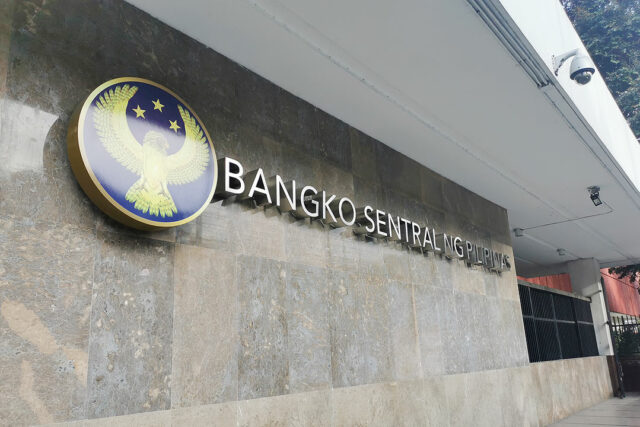
FOREIGN CURRENCY and deposits of the Bangko Sentral ng Pilipinas (BSP) totaled $7.85 billion as of August, the central bank said.
This is more than double (106.5%) the $3.8 billion recorded a year earlier. Foreign currency reserves are convertible assets of the central bank.
The BSP’s reserve assets include foreign investments, gold, foreign exchange, its reserve position in the International Monetary Fund (IMF), and special drawing rights.
These reserve assets are included in the BSP’s monthly reporting of gross international reserves (GIR). However, the GIR report does not disclose some of the BSP’s reserve assets such as currency and deposits overseas.
The BSP estimates that currency and deposits with financial institutions overseas was $6.5 billion at the end of August, up 166% from a year earlier.
Meanwhile, reserve assets held in other central banks, such as the Bank for International Settlements and the IMF, fell 0.7% to $1.35 billion during the period.
In the first eight months, other reserve assets also slipped 2.4% to $8.08 billion.
These assets include financial derivatives and loans to nonbank nonresidents, among others.
The BSP also estimated that dollar reserves fell 0.4% to $99.56 billion at the end of August from $99.95 billion at the end of July.
This was the lowest dollar reserve level since the $99.39 billion posted in June.
Foreign exchange holdings serve as an indicator of the economy’s ability to pay its debts in the event of an economic downturn.
The BSP is expecting to end the year with $99.5 billion in dollar reserves and $102 billion by the end of 2024. — Keisha B. Ta-asan

THE PHILIPPINES could be a major beneficiary of expanded net-zero financing for developing countries, an analyst said.
“The problem currently is there is still a high cost of financing projects and borrowing,” Jose M. Layug, Jr., president of the Developers of Renewable Energy for Advancement, Inc., said in a Zoom interview over the weekend.
“I’m hoping that with this call, they’ll make financing more affordable, more optimal, and perhaps reduce the interest rates. Hopefully, with this call, we’ll have more foreign investments in the Philippines,” he added, referring to the United Nations Conference on Trade and Development’s (UNCTAD) support last week at the 8th World Investment Forum for increased net-zero finance for developing economies.
“The investment needs are much higher in developing than in developed economies, relative to their existing asset bases,” UNCTAD Secretary-General Rebeca Grynspan said in a media release on Oct. 17.
“International project finance constitutes 55% of total project finance values, rising to over 75% in the least developed countries (LDCs),” UNCTAD said.
The United Nation (UN) agency also stressed the role of international investors in providing finance to reduce the cost of capital for projects, which lowers the spread on debt finance by an average of 8% in developing countries.
“Collaboration with multilateral development banks and government stakes in public-private partnerships can further decrease the spread by 40%,” it said.
UNCTAD is an intergovernmental organization within the UN for the integrated treatment of trade and development, and interrelated issues of finance, technology, investment, and sustainable development.
Mr. Layug said that the Philippines stands to benefit as the government has fully opened renewable energy (RE) development to foreign investors.
“If we have more foreign investment then we can have more RE projects in the Philippines and that only can be good for us. It will really help us in the transition because more and more renewable projects will get built, so that’s our hope,” he said.
According to Mr. Layug, interest rates in the Philippines for RE projects are about 8-9%. “It’s quite high compared to other countries,” he said.
The Bangko Sentral ng Pilipinas kept key interest rates unchanged at 6.25% last month for a fourth straight meeting after hiking borrowing costs by 425 basis points from May 2022 to March 2023.
Riedo A. Panaligan, president of the Center for Renewable Energy and Sustainable Technology, said the center supports UNCTAD’s call, which presents an opportunity to leverage both public and private investment towards achieving the national clean energy targets.
“However, we also want to emphasize that climate finance should not result in more debt for the Philippines and any other developing country,” Mr. Panaligan said in an e-mail.
“Furthermore, foreign investments should result to strengthening our own local green energy industry and not create a disadvantageous business environment in favor of foreign-controlled companies,” he added.
As of end-2022, RE accounted for about 22% of the Philippines’ total energy mix, with coal-fired power plants shared for almost 60%. The government wants to boost the RE share to 35% by 2030 and 50% by 2040. — Sheldeen Joy Talavera

THE Department of Energy (DoE) said the rollout of electric vehicles (EVs) will greatly depend on coordination of policy with the Department of Transportation (DoTr), with charging infrastructure seen as key to accelerated adoption.
Patrick T. Aquino, director of the DoE’s Energy Utilization Management Bureau, made the remarks on policy coordination during the 11th Philippine Electric Vehicle Summit last week.
The Electric Vehicle Association of the Philippines is expecting EV penetration to hit 6.6 million units by 2030.
Senator Sherwin T. Gatchalian, vice-chairman of Senate’s energy committee, said the DoE should also work with other agencies to expedite the rollout of charging stations.
“The biggest constraint in the adoption of EVs is the charging station. There’s no shortage of brands and EVs in the country, but some people are hesitant because they have nowhere to charge the EVs. So, the biggest challenge is the lack of necessary infrastructure and policies,” Mr. Gatchalian said.
The DoE is moving to accelerate the EV rollout to 10% of all vehicle fleets under its Comprehensive Roadmap for the Electric Vehicle Industry (CREVI) from the initial 5% as required by Republic Act No. 11697 or the Electric Vehicle Industry Development Act (EVIDA).
Under CREVI, the government hopes to have at least 850,100 EVs and 20,300 EV charging stations by 2040.
The revised implementing rules and regulations of EVIDA, which were signed last year, set a 5% minimum share for EVs in corporate and government vehicle fleets.
The DoE said that the transition to EVs will also help the government achieve its sustainability goals.
The government has set a target of at least a 50% electric share of all vehicle fleets by 2040. — Ashley Erika O. Jose

Digital technology is crucial to achieving important goals that include fulfilling compliance requirements, meeting the reporting needs of stakeholders, and implementing operational changes within an organization to meet environmental, social, and governance (ESG) and sustainability targets.
The global push to achieve the 2050 net-zero target has resulted in an increased awareness of the role of IT in accelerating sustainability. According to the EY Reimagining Industry Futures Study 2023, which was based on an online survey of 5G perceptions among 1,325 enterprises worldwide, 54% of businesses believe that emerging technologies can play a vital role in this effort.
The Exponential Roadmap 1.5.1, developed by the Exponential Roadmap Initiative, an accredited partner of the United Nations’ Race to Zero campaign, outlines a path to reach net zero emissions from businesses by 2030 through natural climate solutions. The information and communications technology (ICT) sector has the potential to reduce global carbon emissions by 15% and 35% directly and indirectly by 2030.
While the use of digital technology is crucial for sustainability, it is equally important to prevent it from becoming a major contributor to global emissions. The adoption of new technologies could lead to increased energy consumption, hindering progress towards emission reduction targets.
THE NEED FOR GREEN IT
Green IT refers to IT products and services that help organizations reduce their environmental impact, such as the issue of IT energy consumption. For example, the International Energy Agency says that data centers and data transmission networks were responsible for nearly 1% of energy-related GHG emissions in 2020. Green software, which incorporates low-carbon principles in software development and utilization, is also an important green IT practice. While the software itself does not emit carbon, it influences energy consumption.
E-waste already poses environmental risks due to hazardous substances that include mercury, lead, and cadmium, which are capable of contaminating air, water, and soil. E-waste disposal adds to the ICT sector’s greenhouse gas emissions. In 2019, there were 53.6 million tons of e-waste, which could rise to 74.7 million tons by 2030, according to Statista. In addition, the mining and extraction of these materials further contribute to soil erosion and deforestation, emphasizing the need for effective material reuse and waste processing.
The ICT sector can innovate green IT and maintain a net positive impact by implementing sustainable practices throughout its value chain, covering energy efficiency and sustainable supply chains.
Furthermore, organizations can drive the positive impact of green IT and software by fostering an ecosystem of collaboration among stakeholders in the value chain, involving the following key players in the mix: technology providers, technology buyers, governments and other regulatory authorities.
TECHNOLOGY PROVIDERS
Technology companies, ranging from global leaders to startups, are actively increasing their focus on green IT innovation and offerings to meet the growing demand and expectations in the market. As they do so, they have the responsibility to manage and disclose their carbon footprints to comply with regulatory requirements and standards, encompassing scope 1 to scope 3 emissions that result from the production and use of their technologies.
Industry groups consisting of technology providers are in a favorable position to establish standards and best practices within the sector, like prioritizing energy-efficient hardware, e-waste management, and the sustainable procurement of IT equipment. Additionally, they can proactively collaborate with governments to develop policies that promote the adoption of green IT.
In the Philippines, a related law is the Renewable Energy Act of 2008, which encourages the adoption of energy-efficient technologies across various sectors. There is a need for more local green-IT-specific laws or policies. Accordingly, the country would benefit from formal studies identifying green IT-related gaps and opportunities. Technology providers can incorporate green IT principles into their product and service designs to reshape the future of the IT landscape, positively impacting society and the environment.
TECHNOLOGY BUYERS
As sustainability becomes a central part of an organization’s core strategies, companies are actively seeking suitable technologies, digital platforms, and applications to support their sustainability and ESG goals. While their main focus is on selecting technologies that meet sustainability requirements and tackle sustainability challenges, it is crucial for them to also consider the potential environmental impact of implementing these technologies on a larger scale.
Forward-thinking and innovative companies that prioritize sustainability in their business strategies include green IT implementation in their roadmap for sustainability transformation. They must integrate green IT principles into a robust and sustainable sourcing and procurement framework while carefully choosing technology providers from the request for proposal process onwards. They may even take the extra step of adopting an internal carbon pricing mechanism to ensure that strategic decisions align with their climate ambitions. By generating market demand for green IT, these companies can drive innovation in future green IT landscapes.
GOVERNMENTS AND OTHER REGULATORY AUTHORITIES
Government and regulatory authorities also play a crucial role in driving the adoption of green IT to accelerate the transition to a sustainable future, keeping in mind the following priorities:
• Provide detailed action plans with clear accountability.
• Improve the design and implementation of green initiatives.
• Incentivize the market and implement mandatory changes.
• Increase funding to promote innovation.
• Serve as a role model for other sectors of the economy.
• Promote a people-centered approach involving the whole of society.
Governments that have mature regulations and standards for sustainability can take the lead in implementing strategies within their organizations and departments. For instance, the United Nations, through its specialized agency, the International Telecommunication Union (ITU), establishes standards, guidance, and criteria for ICT organizations on setting net zero targets and strategies.
THE SIGNIFICANCE OF GREEN IT
The adoption of green IT and software by both organizations and societies will have a significant bearing on global sustainability ambitions. By nurturing a collaborative system of stakeholders within the value chain, organizations can benefit greatly from green IT and software.
This article is for general information only and is not a substitute for professional advice where the facts and circumstances warrant. The views and opinions expressed above are those of the author and do not necessarily represent the views of SGV & Co.
Joseph Ian M. Canlas is a consulting partner and part of the Climate Change and Sustainability Services team of SGV & Co.

CHINESE SHIPS on Sunday collided with Philippine vessels trying to deliver food and other supplies to Filipino troops at Second Thomas Shoal in the South China Sea, a Philippine task force said.
The “dangerous blocking maneuvers” of the China Coast Guard vessel 5203 had caused it to collide with an Armed Forces of the Philippines-contracted indigenous resupply boat 13.5 nautical miles (25 kilometers) east-northeast of BRP Sierra Madre, the National Task Force for the West Philippine Sea said in a statement.
BRP Sierra Madre is a World War II-era ship that the Philippines deliberately grounded at the shoal in 1999 to assert its sovereignty claim.
“The provocative, irresponsible and illegal action of China Coast Guard vessel 5203 imperiled the safety of the crew of Unaiza 2,” it said, referring to the Philippine ship.
The embassies of the US and Canada in Manila condemned the Chinese vessels’ action, saying it put the lives of Filipino crew at risk.
China’s “continuing acts of intimidation and coercion undermine safety, stability and security across the region and increase the risk of miscalculation,” the Canadian Embassy said in a statement. It commended “the professionalism and restraint” exercised by the Philippine Coast Guard.
The Philippine task force said a Chinese maritime militia vessel had “bumped” a Philippine Coast Guard patrol vessel that was escorting the resupply mission about 6.4 nautical miles northeast of the shoal.
The mission was ongoing, with another supply boat named Unaiza May 1 expected to reach BRP Sierra Madre, it added.
The Chinese vessels violated the sovereign rights and jurisdiction of the Philippines, the Philippine task force said.
It also accused the ships of blatantly disregarding international maritime conventions and a 2016 ruling by a United Nations-backed tribunal that voided China’s expansive sea claims.
In a statement posted on its website, the Chinese Coast Guard accused the Philippine vessels of transporting construction materials to the shoal that it calls Ren’ai Reef, which it said was illegal.
It also said the vessel was “illegally sitting on the beach.”
Tensions between the Philippines and China have worsened after the Chinese Coast Guard fired water cannons to block Manila’s attempt to deliver food and other supplies to the grounded ship on Aug. 5.
Philippine officials have said China has no business dictating what the Philippines can and cannot transport within its exclusive economic zone in the South China Sea.
Philippine President Ferdinand R. Marcos, Jr. last week vowed to upgrade coast guard vessels and other equipment amid rising tensions with China.
“We can see that our capability is increasing so we can defend the maritime territory of the Philippines,” he told reporters in Filipino, as he led the inspection of a Philippine Coast Guard vessel that was water cannoned by the Chinese Coast Guard near Second Thomas Shoal in August.
He said the coast guard would soon have 40 40-foot vessels that would help boost the country’s maritime capability.
The upgrade is needed not just because they are on the frontline of maritime defense but also because of the function they play in search-and-rescue and disaster response, the President told reporters on the sidelines of the celebration of the 122nd founding anniversary of the Philippine Coast Guard in Manila.
Armed Forces chief Romeo S. Brawner, Jr. last week said a Chinese People’s Liberation Army Navy vessel had come as close as 350 yards as it tried to cut off a Philippine navy vessel near Thitu Island, which Filipinos call Pag-asa.
Chinese Foreign Ministry spokesperson Mao Ning told a news briefing on Oct. 16 the Philippines violated China’s sovereignty by occupying the island.
A United Nations-backed tribunal in 2016 voided China’s claim to more than 80% of the South China Sea based on a 1940s map. China has ignored the ruling. — Kyle Aristophere T. Atienza

THE PHILIPPINES has placed Lebanon under Alert Level 3 amid the worsening war between Israel and Iran-backed militant group Hezbollah, calling on Filipinos to come home.
Foreign Affairs Secretary Enrique A. Manalo approved the order for voluntary repatriation on Saturday, Undersecretary Jose Eduardo A. de Vega said in a WhatsApp message on Sunday.
Israel launched extensive air strikes in Gaza after Hamas militants backed by a barrage of rockets stormed from the blockaded Gaza Strip into nearby Israeli towns, killing 1,400 people, mostly civilians, in a surprise attack on Oct. 7.
Israel launched a counterattack on the Palestinian enclave, sending waves of air strikes, enforcing a blockade and deploying tens of thousands of its troops for a ground assault.
Hezbollah, which is allied with Hamas, and Israeli military forces have been exchanging fire at the Lebanese-Israeli border in the past few weeks, in the worst escalation of violence in the area since a 2006 war between Israel and the Islamist group.
There are about 17,500 Filipinos in Lebanon, most of whom are domestic workers, Mr. De Vega told ABS-CBN Teleradyo.
“Filipinos are being informed that there is a program for repatriation and are advised to go home,” he said. “We are trying to avoid repatriation during gunfire and conflicts.”
He noted that Israel was still under Alert Level 2, while Gaza was under Alert Level or forced repatriation.
On Oct. 20, Hezbollah launched anti-tank missiles across the border, prompting the Israeli Defense Forces to launch air strikes against Hezbollah in Lebanon, killing 19 Hezbollah fighters.
The Hamas-run Gaza Health Ministry has said about 4,137 Palestinians have died and more than 13,000 wounded during the war.
“We are already telling Filipinos in Lebanon that it would be better for them to move away from the conflict,” Mr. De Vega said. — John Victor D. Ordoñez
