Home Blog Page 407

Choco Mucho seen as PVL early favorite with Laure, return of Rondina

CHOCO MUCHO FLYING TITANS — FACEBOOK.COM/PREMIERVOLLEYBALLLEAGUE

Games on Jan. 31
(FilOil EcoOil Arena)
4 p.m. – Galeries Tower vs Cignal
6:30 p.m. – Akari vs Choco Mucho

THE ARRIVAL of Eya Laure, the biggest off-season acquisition of the year, and the eagerly anticipated return of Sisi Rondina will be the highlight when Choco Mucho tackles Akari in Jan. 31’s Premier Volleyball League (PVL) All-Filipino Conference at the Filoil EcoOil Arena.

Ms. Laure has chosen the Flying Titans as her new home after leaving the defunct Chery Tiggo Crossovers last year and her entrance and the homecoming of Ms. Rondina, who took a break for the Southeast Asian Games beach volley gold medal that she eventually won in Thailand last December, should install the Rebisco franchise as an early title favorite.

It will also be a reunion of sorts for Mses. Laure and Rodina, who played UAAP college ball together at University of Santo Tomas years back.

Gametime is set at 6:30 p.m.

Akari had its share of key pickups in Cza Carandang, Judith Abil and Jyne Soreño but none beats the mammoth catch like Ms. Laure.

The season will be officially ushered in by the duel pairing a new-look Galeries Tower against a Cignal side that practically retained its super core in Vanie Gandler, Erika Santos, Roselyn Doria, Dawn Catindig, Gel Cayuna and Ishie Lalongisip at 4 p.m.

The Highrisers, in contrast, have undergone a complete rebuild after adding 14 players and installing a new coach in Clarence Esteban.

Down to 10 teams but with a better quality of play and balance, the league will implement a single-round elimination format with the team that ends up with a sweep receiving an outright semifinal seat.

Should there be no sweep, however, the top four teams will clash in the qualifying round knockout matches, with the winners advancing to the next round.

The losing teams, meanwhile, are not immediately eliminated. Instead, they drop into the newly introduced Play-In Stepladder phase — another first for the league — where teams ranked fifth to 10th get a second chance to stay alive.

Rankings throughout the eliminations and beyond will be determined using the FIVB Team Classification System, which accounts for wins, set ratio, and points ratio, reinforcing fairness and consistency.

The semifinals will be contested in a single round-robin format, again using the FIVB system to rank the teams with the top two battling each other in a best-of-three finale at the Araneta Coliseum, with the organizing Sports Vision targeting an April 28 conclusion. — Joey Villar

Top seed world number one Aryna Sabalenka sees off China Bai Zhuoxuan to progress to third round

MELBOURNE — World number one Aryna Sabalenka came through a rough patch in the opening set to defeat China’s Bai Zhuoxuan, 6-3, 6-1, on Rod Laver Arena and advance to the third round of the Australian Open on Wednesday.

Sabalenka, Melbourne Park champion in 2023 and 2024, powered to a 5-0 lead only to falter, with Bai holding serve and then breaking the Belarusian.

The Chinese world number 702 began to frustrate her opponent, picking up a third game in a row as Sabalenka grew increasingly agitated before eventually closing out the set.

However, the 27-year-old steadied herself at the start of the second set and showed the gulf in class between the pair to win another four straight games before eventually confirming her progress to the next round.

“Tricky opponent, she really stepped in on the first set and for a moment I felt: what shall I do? She’s crashing it,” said Sabalenka.

“Super happy I was able to close that set, I think it gave me a little more confidence that I’m there, that my game is there. Focus step by step.

“There’s always a little gap to improve but I’m happy that in that game I didn’t lose it and I was focused and I was trying to tell myself, one at a time, it’s going to come back,” added Sabalenka.

“You’re ok, just keep fighting, keep trying and I’m glad I did it well.” — Reuters

OKC Thunder finish off roadswing with visit to struggling Milwaukee

COMING OFF another big victory, the Oklahoma City (OKC) Thunder wrap up their road trip with a Wednesday night battle against the Bucks in Milwaukee.

The Thunder matched up with the Cavaliers on Martin Luther King (MLK) Jr. Day and dominated, 136-104, bouncing back from a two-point loss in Miami that snapped a five-game winning streak.

Shai Gilgeous-Alexander led the way once again with 30 points on 12-for-20 shooting. Chet Holmgren added 28 along with eight rebounds, and Ajay Mitchell dished nine assists off the bench.

“Mitchell did a really good job of finding (Holmgren) on pick and pops, it was a loud offensive night for Holmgren,” Thunder coach Mark Daigneault said. “What he does every night is he impacts the final score with his overall floor game, defense, the space he creates for us.”

The reigning league MVP, Gilgeous-Alexander leads the Thunder with 31.8 points and 6.2 assists per game. Holmgren is averaging 8.4 boards and two blocks in addition to 18 points.

Milwaukee comes in off a much-needed 112-110 victory over the Hawks in Atlanta on MLK Jr. Day. The Bucks lost a 23-point advantage in the second half but held on for a key win over a team just in front of them in the Eastern Conference standings, snapping a three-game losing streak.

The Bucks got the balanced scoring they needed with Giannis Antetokounmpo still on a minutes restriction, though the superstar still led with 21 points while five others scored in double figures. Bobby Portis added 19 off the bench and AJ Green poured in six 3-pointers.

Antetokounmpo’s numbers have taken a slight dip given his restriction following his return from a calf strain, though he is still leading the Bucks with 28.5 points and 9.8 rebounds along with 5.5 assists per game. Kevin Porter, Jr. is adding 16.8 points, 7.4 assists and 2.1 steals per game in just 23 games.

One change on Monday for the Bucks included Porter coming off the bench in favor of Kyle Kuzma, something he had not done all season to that point.

On the injury front, the Thunder will be limited in some capacity as both Alex Caruso (groin) and Jaylin Williams (left glute contusion) left Monday’s game. Caruso is listed as out versus Milwaukee while Williams is questionable.

Meanwhile, Jalen Williams (hamstring) is out and will be re-evaluated in two weeks. Center Isaiah Hartenstein (calf) is also still listed as out.

The Thunder swept the regular-season series against Milwaukee in dominating fashion a season ago and have won three straight over the Bucks by at least 18 points.

However, those numbers do not include the unofficial NBA Cup championship game in last season’s in-season tournament, which the Bucks controlled, 97-81, in Las Vegas. — Reuters

Ruthless Coco Gauff cruises past Danilovic into AO third round

MELBOURNE — Third seed Coco Gauff beat Olga Danilovic, 6-2, 6-2, to move into the third round of the Australian Open (AO) on Wednesday, denying the Serbian the chance to knock out a second American Grand Slam champion after she eliminated Venus Williams.

Gauff, who beat Kamilla Rakhimova, 6-2, 6-3, in the first round, made quick work of Danilovic in 77 minutes at a sunny Margaret Court Arena to book a third-round encounter with compatriot Hailey Baptiste.

Danilovic’s chances of beating Gauff looked slim after just 22 minutes when the American surged out of the blocks to consolidate two early breaks and lead 5-0.

The Serbian attempted to impose herself by taking risks from the baseline, but the strategy quickly unravelled as unforced errors spilled from her racket under relentless pressure.

“Today I felt better than my first round, despite the score. Even though first round was a straightforward score, there were so many games that went long — 10-minute games that were deuce, ad, back and forth,” Gauff added.

“I think today I did better closing those games out quicker.”

Trying to go toe-to-toe and hit through Gauff proved a fruitless endeavour, although Danilovic found some success when she mixed in the drop shot and ventured forward behind her serve.

Gauff, by contrast, was composed and clinical, leaving Danilovic short of breath between points by sending her sprinting from corner to corner.

There was a flicker of relief when Danilovic finally got on the board after Gauff’s fourth double fault gifted her a game.

The respite was short-lived, however, as Danilovic returned the favor with her first double fault on set point.

Gauff showed no signs of easing off in the second set and secured another early break to go 3-0 ahead.

Danilovic summoned all her resolve in a gruelling 10-minute service game to get on the board, but it did little to stall Gauff’s momentum.

After Danilovic saved one match point, Gauff converted a fifth break point to seal the match. — Reuters

Japan court sentences ex-PM Abe’s assassin to life in prison, NHK reports

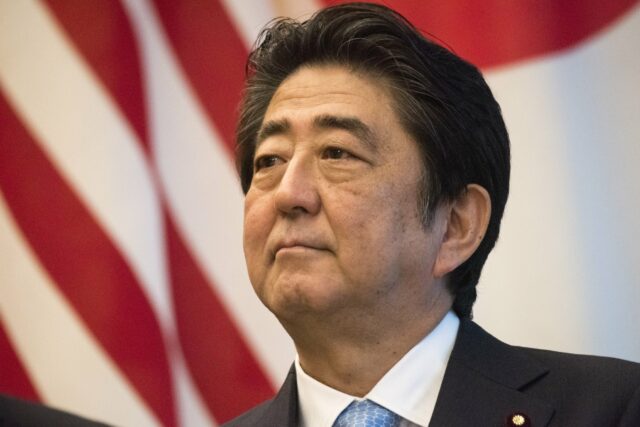
Former Prime Minister Shinzo Abe. Image via Chairman of the Joint Chiefs of Staff/Flickr/CC BY 2.0

NARA, Japan — A Japanese court on Wednesday sentenced a 45-year-old man to life imprisonment for fatally shooting former Prime Minister (PM) Shinzo Abe, public broadcaster NHK reported, in an incident that stunned the nation three and a half years ago.

Tetsuya Yamagami was arrested on the spot in July 2022 after fatally firing at Mr. Abe with a homemade gun while he was delivering a campaign speech in the western city of Nara. Mr. Abe, the country’s longest-serving premier, was 67.

A guilty verdict was all but certain after Mr. Yamagami admitted to killing Mr. Abe in the first court hearing at the Nara District Court in October, and attention had been on the severity of the sentence.

Prosecutors sought a life sentence last month, calling the act an “extremely grave incident that is unprecedented in post-war history.”

Although he was no longer Japan’s leader at the time, Mr. Abe remained a powerful and binding force within the ruling Liberal Democratic Party (LDP). His absence has left a vacuum within the party, which has since seen two leadership races and, by extension, a revolving door of prime ministers.

Mr. Abe himself served as prime minister for a total of 3,188 days over two separate terms, stepping down in September 2020 citing health reasons.

His protegee Sanae Takaichi now leads Japan and the LDP, but the party’s grip on power has considerably diminished.

Mr. Abe’s killing also brought to light a deep link between his party and the Unification Church, an organization many consider a cult. An in-party investigation found that more than a hundred lawmakers had dealings with the group, leading many voters to shun the LDP, which has ruled Japan for most of the post-war period.

Media have quoted Mr. Yamagami as telling the court that he held a grudge against the Unification Church after his mother’s large donation to it caused financial hardship for their family, and that he took out his anger on Mr. Abe because the former prime minister had once sent a video message to an event held by a group affiliated with the church.

Founded in South Korea in 1954, the Unification Church is famous for its mass weddings and counts Japanese followers as a key source of income.

Mr. Yamagami’s lawyers, meanwhile, argued that the family’s misfortune caused by the donation to the Unification Church should be taken into consideration and limit his prison term to 20 years at most.

While Mr. Abe was a divisive figure domestically, he was among the few global leaders to have a strong rapport with US President Donald J. Trump.

Mr. Abe was the first foreign leader to meet Mr. Trump after his 2016 election victory and the two went on to forge a close bond over rounds of golf in the United States and Japan. Prime Minister Ms. Takaichi has repeatedly referenced their friendship in her own dealings with Mr. Trump. — Reuters

S. Korea’s Lee plays down proposed US chip tariffs, warns of higher prices

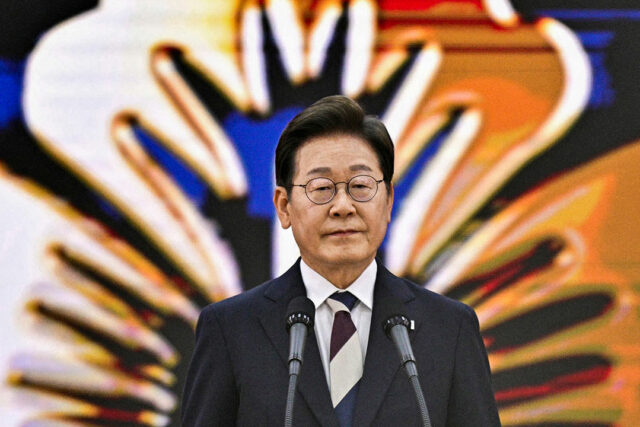
SOUTH KOREA’S President Lee Jae-myung delivers a speech after taking his oath during his inauguration ceremony at the National Assembly in Seoul on June 4, 2025. — REUTERS

SEOUL — South Korean President Lee Jae Myung said on Wednesday if Washington introduced higher US tariffs on semiconductor imports, it would likely boost US prices, playing down concerns about the proposed duty.

US Commerce Secretary Howard Lutnick has said that South Korean and Taiwanese chipmakers may face tariffs of up to 100% unless they commit to increased production on American soil.

Mr. Lee said that given South Korean and Taiwanese chipmakers’ dominance of the market, a 100% US import duty would likely sharply raise prices for chip products in the United States.

“They have a monopoly of 80 to 90%… so most of it is likely to be passed on to US prices,” Mr. Lee told a news conference.

South Korea’s Samsung Electronics and SK Hynix, and Taiwanese chipmaker TSMC, dominate the global market in memory chips and chip contract manufacturing, respectively.

South Korea already has safeguards in place under a trade agreement with the US to ensure its chipmakers would not be left at a disadvantage to Taiwanese or any other global competitors, Mr. Lee said.

South Korea’s exports rose to a record $709.4 billion in 2025, up 3.8% from a year earlier, as semiconductor shipments jumped 22% on strong demand for artificial intelligence investments.

Chip exports to the US accounted for 8% of the total $173.4-billion semiconductor exports, while China remained the biggest market, followed by Taiwan and Vietnam.

SLUMPING WON CURRENCY
Mr. Lee also touched on the slumping won in his remarks, citing expectations by South Korean authorities that the currency would strengthen to around the 1,400 per dollar level in a month or two.

The president cautioned domestic policies alone would not be sufficient to stabilize foreign exchange markets as it was somewhat correlated with weakness in the Japanese yen, adding that the won was faring comparably better.

Mr. Lee also said the domestic stock market, which was the world’s best performer last year with a 76% jump, was still undervalued.

NORTH KOREA TALKS
Mr. Lee said he was pursuing diplomatic efforts to enable North Korea and the US to resume dialogue and that a pragmatic approach was needed to deal with Pyongyang.

“There is a benefit to making the North stop making nuclear materials and not export nukes and stop developing ICBMs,” he said, referring to intercontinental ballistic missiles, adding it would be hard to imagine the North would actually give up its nuclear weapons program.

He said North Korea was producing enough nuclear material to make 10 to 20 nuclear weapons a year.

North Korea has so far snubbed outreach by Mr. Lee and US President Donald J. Trump to resume dialogue. The talks have stalled since Mr. Trump met the North’s leader Kim Jong Un in 2019, amid disagreement over lifting sanctions against Pyongyang and nuclear dismantlement.

RELIGION IN POLITICS
Mr. Lee also underscored a need to root out religious influence in politics.

“The principle of separation of church and state should never be broken. And it must be punished strictly,” Mr. Lee said.

South Korea’s parliament is currently reviewing a bill on setting up a special prosecutor to investigate the Unification Church’s involvement in politics, and is debating whether to include in the probe the Shincheonji Church of Jesus, founded and headed by self-proclaimed messiah Lee Man-hee.

Han Hak-ja, the head of the Unification Church, now known as the Family Federation for World Peace and Unification, is on trial for allegedly seeking to bribe the wife of former President Yoon Suk Yeol and another close confidante.

Ms. Han has denied wrongdoing. — Reuters

Surging in polls, Thailand’s reformist opposition tests new election playbook

PIXABAY

BANGKOK — Three years ago, a party of reform-minded progressives swept Thailand’s election in the wake of mass anti-establishment protests only to be blocked from taking power and forced to disband.

Now reborn as the People’s Party, Thai voters are once again backing the progressives’ promises of change, making the party the clear frontrunner for the Feb. 8 polls, ahead of rivals that joined forces against its predecessor after the last election in 2023.

Two surveys released in mid-January showed the People’s Party and its prime ministerial candidate as the overwhelming favorites, trouncing the ruling Bhumjaithai Party and the populist Pheu Thai, which led a previous ruling coalition.

“We are at the best position we’ve ever been in,” Deputy Leader Rangsiman Rome told Reuters, saying its detailed policy proposals were pulling in support alongside efforts to woo the undecided.

“For those that accused us of not being ready to run the country, we are showing them the opposite: that we have the team.”

The People’s Party will need to win at least 250 of the 500 seats in parliament in order to secure a clear majority.

It is currently at 30% to 34% in most opinion polls, so even if the momentum carries the party to victory, its ability to govern may still be stymied by its rivals.

A surge in nationalism following a fierce border conflict with Cambodia is providing ammunition to the campaigns of Thailand’s conservatives, who are using the dispute to attack the People’s Party agenda.

The party also faces potential legal action from an anti-graft agency that could suspend dozens of its members and ban them from politics for attempting to amend Thailand’s royal insult law in 2021.

OLD TUSSLE, NEW PLAN
The groundwork for the People’s Party popularity has been carefully engineered, particularly after the progressives’ anti-establishment stance left its forerunner unable to form a government despite winning the last general election.

Move Forward picked up 151 seats in parliament in 2023 on a platform that included reforming the royalist military and breaking up business monopolies.

But a military-appointed Senate blocked its prime ministerial candidate in a parliamentary vote, opening the way for Pheu Thai to govern Southeast Asia’s second-largest economy.

It was another round in the decades-long tussle between popular political movements and Thailand’s conservative establishment, backed by the military, that has triggered bouts of instability, including violent protests and coups.

Around a year after the election, a Thai court ordered the dissolution of Move Forward, ruling that its campaign to amend a law that protects the monarchy from criticism risked undermining the democratic system.

Within hours of the ruling, its leaders announced they had formed the People’s Party.

OUTSIDE TALENT
This time around the progressives appear to be moderating their position, including dropping their call to amend the royal insult law and softening their stance on the military.

Four People’s Party members told Reuters that its campaign would double down on promoting detailed governance plans and a new team of experienced professionals.

“We think that it could help restore people’s faith and trust in the People’s Party,” one of them said.

But the strategy of bringing in outside talent has caused upset within the grouping.

Kalyapat Rachitroj, a former lawmaker, resigned from the party earlier this month, arguing that the appointment of outsiders meant long-term members were overlooked.

“You can bring in hundreds more technocrats, professors, PhDs, and elites, but none of them are worth as much as a single idealist who has to leave,” she wrote on social media.

ALTERNATIVE TO RULING PARTY
The People’s Party unveiled its team of experts on Jan. 11, presenting them as potential cabinet ministers, alongside their slate of prime ministerial candidates including leader Natthaphong Ruengpanyawut and key economic strategist Sirikanya Tansakun.

Among the new inductees were former Thai envoy to the US Pisan Manawapat, former law dean at Bangkok’s Thammasat University Munin Pongsapan and Peangpanor Boonklum, a veteran corporate lawyer and former PTT executive.

“The move allows the party to present their own alternative to Bhumjaithai’s team of technocrats, which could help the party pull wavering voters, especially middle-class urbanites,” said independent analyst Mathis Lohatepanont.

Bhumjaithai, led by Prime Minister Anutin Charnvirakul, has named career diplomat and current Foreign Minister Sihasak Phuangketkeow as one of its prime ministerial candidates.

If it returns to power, the ruling party has said business executive Suphajee Suthumpun and former bureaucrat Ekniti Nitithanprapas will continue as commerce and finance ministers.

Although it is still too early to gauge the overall impact of the People’s Party’s new strategy, the softening of its position on contentious issues gives it more elbow room after the votes are counted, said Mr. Lohatepanont.

“This could be seen as both an election strategy to broaden the base and also as a way to ensure that their options are kept as open as possible in forming a government,” he said. — Reuters


Trump, Erdogan discuss Syria and Gaza in call

REUTERS

WASHINGTON/ANKARA — Turkish President Tayyip Erdogan discussed developments in Syria and Gaza with US counterpart Donald J. Trump in a telephone call on Tuesday as Syria’s Turkey-backed government announced a ceasefire with US-allied Kurdish forces after days of clashes.

Turkey separately weighed if Mr. Erdogan should join the US leader’s “Board of Peace” initiative.

“President Erdogan stated that Turkey was closely following developments in Syria, that Syria’s unity, harmony and territorial integrity were important for Turkey,” the Turkish presidency said in a statement.

Earlier Mr. Trump said he had a “very good call” with Mr. Erdogan, without elaborating.

Syria’s government seized swathes of territory in the northeast this week and gave the Kurdish-led Syrian Democratic Forces (SDF) four days to agree on integrating into the central state.

The SDF’s main ally, the United States, said the partnership with the group had changed nature after Syria’s new government emerged.

The Turkish presidency added that Mr. Erdogan and Mr. Trump also discussed the fight against the Islamic State militant group and the “situation” of its prisoners in Syrian jails.

Turkey deems the SDF a terrorist organization linked with the outlawed Kurdistan Workers Party (PKK), which has mounted a four-decade insurgency against the Turkish state.

In its peace process with the PKK, Ankara has called for the group and its affiliates to disband and disarm.

Ankara, the main foreign backer of Syria’s new government, has praised Damascus’ advances against the SDF and repeatedly called for it to integrate with the Syrian state apparatus.

ERDOGAN THANKS TRUMP FOR ‘BOARD OF PEACE’ INVITE
Mr. Erdogan told Mr. Trump Turkey would continue to coordinate with Washington on Gaza, the Turkish presidency said.

“President Erdogan thanked US President Trump for the invitation to the Gaza Board of Peace,” it added.

A United Nations Security Council resolution, adopted in mid-November, authorized the “Board of Peace” and countries working with it to establish an international stabilization force in Gaza.

In October, a fragile ceasefire began in Gaza under a Trump plan on which Israel and Palestinian militant group Hamas had signed off.

Earlier on Tuesday, Turkey said Mr. Erdogan would decide soon on joining the initiative. Turkey has been critical of Israel’s assault on Gaza, casting it as genocide, while Israel has repeatedly opposed a Turkish role in Gaza.

More than 460 Palestinians, more than 100 of them children, and three Israeli soldiers have been reported killed since the Gaza truce began.

Under Mr. Trump’s Gaza plan, the board was meant to supervise Gaza’s temporary governance. Later, Mr. Trump said it would be expanded to tackle conflicts around the world.

Many rights experts say that Mr. Trump’s chairing of a board to supervise a foreign territory’s affairs would resemble a colonial structure.

Diplomats fear such a board for global issues could harm the work of the United Nations.

Among those the White House has named to the board are Secretary of State Marco Rubio, Britain’s former Prime Minister Tony Blair, and Mr. Trump’s son-in-law, Jared Kushner. — Reuters

EU plan to phase-out high-risk tech draws fire from China’s Huawei

REUTERS

BRUSSELS — The EU plans to phase out components and equipment from high-risk suppliers in critical sectors, according to a draft proposal released by Brussels on Tuesday – a move criticized by China’s Huawei, which is set to be among the companies affected.

The measures, set out by the European Commission in revisions to the EU’s Cybersecurity Act, follow a rise in cyber and ransomware attacks and growing concerns over foreign interference, espionage and Europe’s reliance on non-EU technology suppliers.

The Commission, the 27-nation bloc’s executive arm, did not name any companies or countries.

Europe has, however, been tightening scrutiny of Chinese technology. Germany recently appointed an expert commission to reassess trade policy toward Beijing and has banned the use of Chinese components in future 6G telecoms networks.

The US banned approvals of new telecoms equipment from Huawei and Chinese rival ZTE in 2022 and has urged European allies to follow suit.

“Chinese companies have long operated in Europe in compliance with laws and regulations and have never endangered Europe’s national security,” Guo Jiakun, a spokesperson for China’s foreign ministry, said on Wednesday. He urged the EU to avoid “going further down the wrong path of protectionism”.

NEW MEASURES CREATE MORE SAFETY, TECH SOVEREIGNTY, EU SAYS
“With the new Cybersecurity Package, we will have the means in place to better protect our critical (information and communications technology) supply chains but also to combat cyber attacks decisively,” EU tech chief Henna Virkkunen said in a statement.

Huawei echoed criticism from China’s foreign ministry.

“A legislative proposal to limit or exclude non-EU suppliers based on country of origin, rather than factual evidence and technical standards, violates the EU’s basic legal principles of fairness, non-discrimination, and proportionality, as well as its WTO (World Trade Organization) obligations,” a Huawei spokesperson said.

“We will closely monitor the subsequent development of the legislative process and reserve all rights to safeguard our legitimate interests,” she said.

The new measures will apply to 18 key sectors identified by the Commission, including detection equipment, connected and automated vehicles, electricity supply and storage systems, water supply systems, and drones and counter‑drone systems. Cloud services, medical devices, surveillance equipment, space services and semiconductors are also classified as critical.

The EU adopted a 5G security “toolbox” in 2020 to curb the use of perceived high-risk vendors such as Huawei over concerns about sabotage or espionage. Some countries have yet to remove such equipment due to its high replacement cost.

Under Tuesday’s proposals, mobile operators will have 36 months from the publication of the high-risk supplier list to phase out key components. Phase-out periods for fixed networks, including fiber-optic and submarine cables, as well as satellite networks, will be announced later.

“This is an important step in securing our European technological sovereignty and ensuring greater safety for all,” Ms. Virkkunen said.

Restrictions on suppliers from countries deemed to pose cybersecurity risks would take effect only after a formal risk assessment initiated by the Commission or at least three EU countries. Any measures would be based on market analysis and impact assessments.

Telecoms lobby group Connect Europe warned that the proposals would increase the burden on the industry, with additional regulatory costs running into the billions of euros.

The updated Cybersecurity Act must still be negotiated with EU governments and the European Parliament in the coming months before it becomes law. — Reuters

Israel orders Gaza families to move in first forced evacuation since ceasefire

Displaced Palestinians walk at a beach tent camp, after it was flooded by rising seawater during a winter storm in Khan Younis, southern Gaza Strip, December 28, 2025. — REUTERS

CAIRO — Israeli forces ordered dozens of Palestinian families in the southern Gaza Strip to leave their homes in the first forced evacuation since October’s ceasefire, as residents and Hamas said on Tuesday the military was expanding the area it controls.

Residents of Bani Suhaila, east of Khan Younis, said the leaflets were dropped on Monday on families living in tent encampments in the Al-Reqeb neighborhood.

“Urgent message. The area is under IDF control. You must evacuate immediately,” said the leaflets, written in Arabic, Hebrew, and English, which the army dropped over the Al‑Reqeb neighborhood in the town of Bani Suhaila.

Israel’s military denied having plans to forcibly displace Palestinians from the area. It confirmed the leaflet drops but said they were aimed at warning Palestinians not to cross the armistice line with Hamas.

In the two-year war before the US brokered ceasefire was signed in October, Israel dropped leaflets over areas that were subsequently raided or bombarded, forcing some families to move several times.

Residents and a source from the Hamas militant group said this was the first time they had been dropped since then.

SIDES FAR APART ON NEXT PHASES
The ceasefire has not progressed beyond its first phase, under which major fighting has stopped, Israel withdrew from less than half of Gaza, and Hamas released hostages in return for Palestinian detainees and prisoners.

Virtually the entire population of more than 2 million people are confined to around a third of Gaza’s territory, mostly in makeshift tents and damaged buildings, where life has resumed under control of an administration led by Hamas.

Israel and Hamas have accused each other of major breaches of the ceasefire and remain far apart on the more difficult steps planned for the next phase.

Mahmoud, a resident from the Bani Suhaila area, who asked not to give his family name, said the evacuation orders impacted at least 70 families, living in tents and homes, some of which were partially damaged, in the area.

“We have fled the area and relocated westward. It is maybe the fourth or fifth time the occupation expanded the yellow line since last month,” he told Reuters by phone from Khan Younis, referring to the line behind which Israel has withdrawn.

“Each time they move it around 120 to 150 meters inside the Palestinian-controlled territory, swallowing more land,” the father-of-three said.

HAMAS CITES STATE OF HUMANITARIAN DISRUPTION
Ismail Al-Thawabta, director of the Hamas-run Gaza government media office, said the Israeli military had expanded the area under its control in eastern Khan Younis five times since the ceasefire, forcing the displacement of at least 9,000 people.

“On Monday, 19 January 2026, the Israeli occupation forces dropped warning leaflets demanding the forced evacuation of the Bani Suhaila area in eastern Khan Younis Governorate, in a measure that falls within a policy of intimidation and pressure on civilians,” Mr. Thawabta told Reuters.

He said the new evacuation orders affected approximately 3,000 people.

“The move created a state of humanitarian disruption, increased pressure on the already limited shelter areas, and further deepened the internal displacement crisis in the governorate,” Mr. Thawabta added.

Israel’s military has previously said it has opened fire after identifying what it called “terrorists” crossing the yellow line and approaching its troops, posing an immediate threat to them.

It has continued to conduct air strikes and targeted operations across Gaza. The Israeli military has said it views “with utmost severity” any attempts by militant groups in Gaza to attack Israel.

Under future phases of the ceasefire that have yet to be hammered out, US President Donald Trump’s plan envisages Hamas disarming, Israel pulling out further, and an internationally backed administration rebuilding Gaza.

More than 460 Palestinians and three Israeli soldiers have been reported killed since the ceasefire took effect.

Israel launched its operations in Gaza in the wake of an attack by Hamas-led fighters in October 2023 which killed 1,200 people, according to Israeli tallies. Israel’s assault has killed 71,000 people, the enclave’s health authorities say. — Reuters

South Korea court sentences ex-PM Han to 23-year jail term in case related to martial law

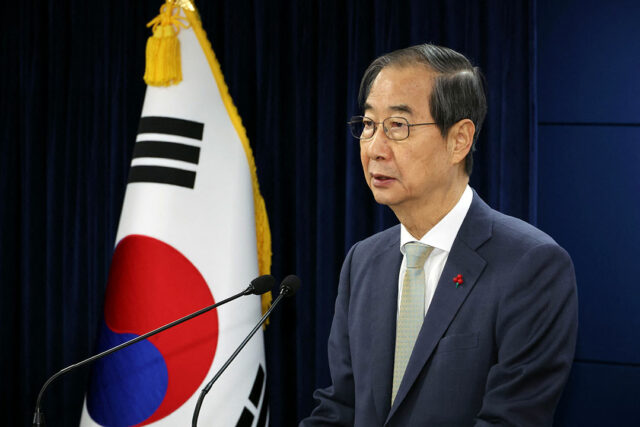
ACTING South Korean President and Prime Minister Han Duck-soo delivers an address to the nation at the government complex in Seoul, South Korea, Dec. 14, 2024. — YONHAP VIA REUTERS

SEOUL — A South Korean court on Wednesday sentenced former Prime Minister Han Duck-soo to 23 years in jail for charges including engaging in a key action of insurrection concerning ex-President Yoon Suk Yeol’s declaration of martial law in December 2024.

The Seoul Central District Court found Mr. Han guilty because he was considered instrumental in setting up the outward appearance of a cabinet meeting that facilitated the martial law declaration, a judge said, calling it a “top-down insurrection”.

“The defendant was a Prime Minister who had been indirectly given democratic legitimacy and responsibility… Nevertheless, the defendant chose to turn a blind eye… and participate as a member of the December 3 insurrection,” the judge said.

“As a result of the defendant’s actions, South Korea was in danger of returning to the dark past when the basic rights and liberal democratic order of the people were violated, potentially preventing them from escaping from the quagmire of dictatorship for a long time.”

The lower court also found Mr. Han guilty of related charges such as perjury and creating a false official document.

Mr. Han had denied wrongdoing for all charges except partial perjury.

Mr. Han, 76, is the first former cabinet minister to be handed a ruling by a lower court on criminal charges directly related to martial law.

Mr. Han was detained by the court immediately after the ruling.

The ruling can be appealed, and Mr. Han’s lawyer said he expected the ruling to be appealed up to the Supreme Court. — Reuters

Philippines to restore access to Grok after developer commits to safety fixes

The xAI Grok logo is seen in this illustration taken, Feb. 16, 2025. — REUTERS/DADO RUVIC/ILLUSTRATION

MANILA – The Philippines will restore access to Elon Musk’s AI chatbot Grok following commitments from its developer to remove image-manipulation tools that previously raised child safety concerns, its cybercrime investigation unit said on Wednesday.

“The Grok AI app has reached out to us and stated that its platform will no longer use any content manipulation,” the Cybercrime Investigation and Coordinating Center said in a statement posted on Facebook.

“Even after lifting the ban, the CICC will still closely monitor the app to ensure they comply with the rules and regulations in our country,” it added.

The Philippines last week blocked Grok amid concerns about its ability to generate sexualised images, including content that could pose child safety risks.

The move to block came as governments and regulators from Europe to Asia cracked down on sexually explicit content generated by Grok on the social media platform X, launching probes, imposing bans and demanding safeguards. — Reuters

ADVERTISEMENT
ADVERTISEMENT