Home Blog Page 3974

Right incentive system should be balanced with revenue mobilization — IMF
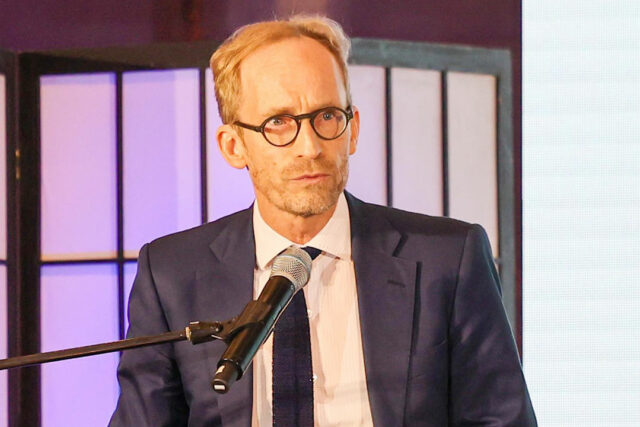
RAGNAR GUDMUNDSSON

By Keisha B. Ta-asan, Reporter

THE PHILIPPINES should create the right tax incentive system and properly mobilize tax revenues to achieve a more sustainable growth, the International Monetary Fund (IMF) said.

“Creating an environment that is conducive to attract more investments would be good eventually for growth prospects in the medium to the long run, but at the same time, we need to ensure that the Philippines and the government has adequate resources to finance its other priority expenditures,” IMF Representative to the Philippines Ragnar Gudmundsson told BusinessWorld on Nov. 22.

Last week, a House of Representatives committee approved the amendments to the Corporate Recovery and Tax Incentives for Enterprises (CREATE) Act, which seeks to address conflicting provisions on tax incentives.

The CREATE MORE (CREATE to Maximize Opportunities for Reinvigorating the Economy) bill would allow companies inside economic zones and freeports to enjoy duty-free privileges and value-added tax (VAT) exemptions on imports and local purchases.

The bill would also empower the President to modify, craft and grant incentive packages, without the recommendation of the Fiscal Incentives Review Board (FIRB).

Jonathan L. Ravelas, senior adviser at Reyes Tacandong & Co., said the amendments to the CREATE law and improving the overall business environment could help attract more foreign investments into the Philippines.

“Providing the right tax incentives for companies in the specific sectors we want in economic zones and freeports is crucial to encourage their growth and contribute to the country’s economic development,” Mr. Ravelas said. 

The CREATE MORE bill seeks to introduce a “simplified and streamlined” tax refund system for registered business enterprises.

Under the bill, domestic and export companies, even those inside ecozones and freeports, would continue to enjoy duty exemptions, VAT exemption on importation, and the VAT zero-rating of local purchases as provided in their respective investment promotion agency registrations.

The measure also seeks to reduce the corporate income tax to 20% for those under the enhanced deduction regime from 20-25%.

Mr. Ravelas said President Ferdinand R. Marcos, Jr. should be careful in modifying incentive packages without the recommendation from the FIRB.

“While it may expedite decision making, careful oversight is necessary to prevent potential misuse of power. Striking the right balance is key for effective and transparent governance,” he said.

He also said the government should focus on sectors such as manufacturing, which can employ a lot of people and improve their skills.

Latest data from the Department of Finance showed revenue losses from the CREATE law reached P80.4 billion in 2022, higher than P68 billion in losses in 2021. This included P59.2 billion in losses arising from the reduction in corporate income tax rates.

The CREATE law was implemented as a pandemic relief measure for businesses through income tax reductions.

Meanwhile, IMF’s Mr. Gudmundsson said it is important for the government to have tax revenues that can support programs for education, health, and social protection. 

“Especially as the Philippines moves to an upper middle-income country status, mobilizing revenues and resources domestically becomes more and more important because there will be reduced access to concessional financing,” he said.

National Economic and Development Authority Secretary Arsenio M. Balisacan earlier said the Philippine government is preparing to be less reliant on official development assistance once the country achieves upper middle-income status.

The World Bank classifies the Philippines as a lower middle-income economy, with gross national income (GNI) per capita of $3,950 in 2022.

The World Bank norm for lower middle-income countries is a GNI per capita of $1,136 to $4,465. The bracket for upper middle-income economies is set at $4,466 to $13,845. — Keisha B. Ta-asan
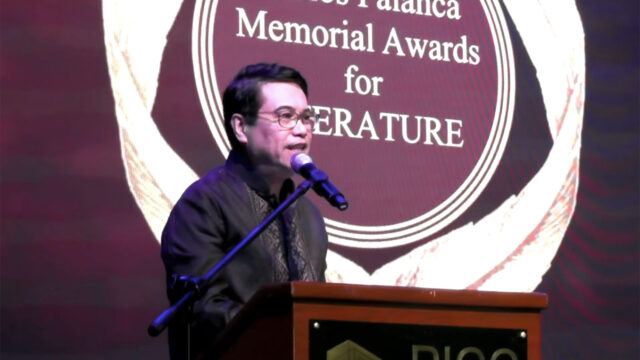
Newcomers make up over half of this year’s Palanca winners

DR. LUIS P. GATMAITAN delivers his guest of honor speech at the 71st Carlos Palanca Memorial Awards for Literature.

FROM 1,405 ENTRIES, the 71st Carlos Palanca Memorial Awards for Literature chose 54 winners, of which 30 are first-time awardees. The annual ceremony recognizing Filipinos who exhibit the gold standard in writing excellence was held at the Philippine International Convention Center in Pasay City on Monday night.

There were 20 writing categories awarded as the Novel and Nobela categories were not open this year. These categories are open only every two years.

Biologist and research associate Rio Renato Pulido Constantino was awarded the Essay category grand prize for “The Year of the Periwinkle.” The essay is a reflection on the importance of soil and plants in grounding people, written during Mr. Constantino’s ordeal with cancer over the span of a year.

Meanwhile, another first-time awardee was teacher Kimberly Rose L. Pillo, who won the grand prize in the Sanaysay category. Her honest piece, “Kung Paanong Nagmukha akong Sponge sa harap ng mga Pinggan,” helped her clinch the award, a dream come true that she never expected.

The youngest winners this year are 13-year-old twin sisters, Glorious Zavannah Exylin C. Alesna and Glorious Zahara Exylin C. Alesna, who took home the third and second prizes for the Filipino and English essay categories in the Kabataan Division respectively.

BIG WINNERS
There were two big winners that evening.

Playwright Miguel Antonio Alfredo V. Luarca won first place in both Filipino and English full-length play categories for his works Nekropolis and Dogsblood.

Meanwhile, Ian Rosales Casocot, a teacher at the English Department of Siliman University in Dumaguete, bagged 2nd place in three categories in the English division: short story (“Don’t Follow Me, I Don’t Even Know Where I’m Going”), poetry for children (“Bisaya for all that we gugma”), and one-act play (The Midsummer of Manuel Arguilla). This brings his total haul of Palanca Awards through the years to nine.

THE ROLE OF WRITERS
Every Filipino writer, regardless of age, gender, medium or genre of choice, or years of experience, has a role in nation-building, said Dr. Luis P. Gatmaitan, guest of honor at the awarding ceremony.

Noong pandemya, iniligtas tayo ng mga kuwento (During the pandemic, stories saved us),” said Mr. Gatmaitan in his speech.

An award-winning children’s book author, columnist, and radio host inducted into the Palanca Awards Hall of Fame in 2005, Mr. Gatmaitan said that stories in any shape, form, or platform can be more effective in relaying messages than plain facts and figures.

Studies have shown that only two areas of the brain are activated while taking in facts and figures whereas three areas are activated when reading or listening to stories, he said.

“This makes our role as writers very important.”

Meanwhile, Criselda Cecilio-Palanca, in a speech representing the family behind the award, pointed out that artificial intelligence can never really replace writers.

“Nuance, poignance, ambience, petulance, pathos, subtlety, irony, and humor are some of the many variables that are still on our side,” she said.

Established in 1950 in memory of Don Carlos Palanca Sr., the Palanca Awards aims to develop Philippine literature by providing incentives for writers, to serve as a treasury of Philippine literary gems, and to assist in their dissemination. — Brontë H. Lacsamana


Winners of the 71st Palanca Awards


FILIPINO DIVISION

MAIKLING KUWENTO
1st prize — “Ang Tariktik” by Peter Solis Nery

2nd Prize — “Buwaya” by Jay Jomar F. Quintos

3rd Prize — “Boses Pusa” by Ella Jane G. Hermonio

MAIKLING KUWENTONG PAMBATA
1st prize — “Si Toyo at si Suka” by Jaylord S. Losabia

2nd Prize — “Si Liya at ang Dapithapon sa Ilaya” by Mikka Ann V. Cabangon

3rd Prize — “Babasagin, babasagin!” by Iza Maria G. Reyes

SANAYSAY
1st prize — “Kung Paanong Nagmukha akong Sponge sa harap ng mga Pinggan” by Kimberly Rose L. Pillo

2nd Prize — “Auslander: Mga Danas sa Alemanya” by Al Joseph A. Lumen

3rd Prize — “Ako ay si Ako nga” by Edward Joseph Fernandez

TULA
1st prize — “Epistolaryo ng Bagamundo at ang tugon ng Multo” by Mikael de Lara Co

2nd Prize — “Ang Hindi Maiwasang Patlang” by Rogelio dela Rosa, Jr.

3rd Prize — “Ex Novo Mvndo” by Ralph Lorenz G. Fonte, M.D

TULA PARA SA MGA BATA
1st prize — “Tutula, Tutuli, Tutulo” by Dexter B. Gragasin

2nd Prize — “Ako, mga tulang pambata” by Genaro R. Gojo Cruz

3rd Prize — “Tugma ng Buhay kong Payak” by Keisiah Dawn T. Tiaoson

DULANG MAY ISANG YUGTO
1st prize — Ang Lipnayan ng ating mga Katawan by Eljay Castro Deldoc

2nd Prize — The Divine Family by Dan Ian Paulo B. Mariposque

3rd Prize — Fermata by Dustin Edward D. Celestino

DULANG GANAP ANG HABA
1st prize — Nekropolis by Miguel Antonio Alfredo V. Luarca

2nd Prize — Pingkian by Christian R. Vallez

3rd Prize — Atin ang Panahon by Joshua Lim So

DULANG PAMPELIKULA
1st prize — Love Child by Jonathan P. Jurilla

2nd Prize — Elehiya by Jimmy F. Flores and Emmanuel Q. Palo

3rd Prize — Beki Naman by Raymund T. Barcelon


ENGLISH DIVISION

SHORT STORY
1st prize — “Vile Creatures” by Exie Abola

2nd Prize — “Don’t Follow Me, I Don’t Even Know Where I’m Going” by Ian Rosales Casocot

3rd Prize — “Amadito and Amanda” by Katrina D. Torralba

SHORT STORY FOR CHILDREN
1st prize — NO WINNER

2nd Prize — “The Legend of Ipot-ipot” by Jonny Bernas Pornel

3rd Prize — “The Race to Uswag” by Elvie Victonette B. Razon-Gonzalez

ESSAY
1st prize — “The Year of the Periwinkle” by Rio Renato Pulido Constantino

2nd Prize — “Profile of a Stateless Person: Notes on a Deportation Proceeding” by Russell Stanley Geronimo

3rd Prize — “Normalizing Survival” by Francine M. Marquez

POETRY
1st prize — “Translating Wildfires” by Patricia Mariya Shishikura

2nd Prize — “Carrying” by Vince Raphael V. Agcaoili

3rd Prize — “Lou Reed Meets Delmore Schwartz at a Bar” by Michael Maniquiz

POETRY WRITTEN FOR CHILDREN
1st prize — “Odd Numbers” by John Patrick F. Solano

2nd Prize — “Bisaya for all that we gugma” by Ian Rosales Casocot

3rd Prize — “Paper Planes” by Simone Marie Sales

ONE-ACT PLAY
1st prize — Neneng by Randy Q. Villanueva

2nd Prize — The Midsummer of Manuel Arguilla by Ian Rosales Casocot

3rd Prize — My Lover’s Presscon by Rossielle Sarabia Manicad

FULL-LENGTH PLAY
1st prize — Dogsblood by Miguel Antonio Alfredo V. Luarca

2nd Prize — NO WINNER

3rd Prize — NO WINNER


REGIONAL DIVISION

SHORT STORY-CEBUANO
1st prize — “Lenteng Pilokilay” by Neile Genica M. Sy

2nd Prize — “Ang Magsusulat Nga Haduol na sa Kamatayon” by John Dante

3rd Prize — “Alindasay” by CD Borden

SHORT STORY-HILIGAYNON
1st prize — “Kauhaw sa Tingadlaw” by Ritchie D. Pagunsan

2nd Prize — “Lola Violeta” by Alvin Q. Larida

3rd Prize — “Puno sang Aligotgot” by Serafin I. Plotria, Jr.

SHORT STORY-ILOKANO
1st prize — “Diro Ti Disierto” by Rodolfo D. Agatep, Jr.

2nd Prize — “Idiay Langit, Awan Lanit” by Jorge Richard P. Guerrero

3rd Prize — “Piglatan” by Clarito De Francia


KABATAAN DIVISION

SANAYSAY
1st prize — NO WINNER

2nd Prize — “Aranya sa Kisame” by Amancio A. Caponpon V

3rd Prize — “Sa Panahon ng Bagabag at Balisa: Paghagilap sa Pira-pirasong Retaso ng Hinahon at Pa(g)hinga” by Glorious Zavannah Exylin C. Alesna

ESSAY
1st prize — “Living on play in a world on pause” by Francis Roberto San Antonio Sevillena

2nd Prize — “The Bully is you” by Glorious Zahara Exylin C. Alesna

3rd Prize — “Five More Minutes, Please!” by Rheyn Khrieztine S. Dela Pena

Irish writer Lynch wins Booker Prize with dystopian Prophet Song

LONDON — Irish writer Paul Lynch won the 2023 Booker Prize on Sunday for his novel Prophet Song, the story of a family and a country on the brink of catastrophe as an imaginary Irish government veers towards tyranny.

The novel, Mr. Lynch’s fifth, seeks to show the unrest in Western democracies and their indifference towards disasters such as the implosion of Syria.

“From that first knock at the door, Prophet Song forces us out of our complacency as we follow the terrifying plight of a woman seeking to protect her family in an Ireland descending into totalitarianism,” Esi Edugyan, chair of the Booker’s 2023 judges, said.

“This is a triumph of emotional storytelling, bracing and brave.”

Mr. Lynch, who was previously the chief film critic of Ireland’s Sunday Tribune newspaper, said he wanted readers to understand totalitarianism by heightening the dystopia with the intense realism of his writing.

“I wanted to deepen the reader’s immersion to such a degree that by the end of the book, they would not just know, but feel this problem for themselves,” Mr. Lynch said in comments published on the Booker Prize website.

He became the fifth Irish author to win the Booker Prize, after Iris Murdoch, John Banville, Roddy Doyle, and Anne Enright, the organizers of the competition said. The Northern Irish writer Anna Burns won in 2018.

Past winners of the Booker, which was first awarded in 1969 include Margaret Atwood, Salman Rushdie, and Yann Martel.

Prophet Song is published in the UK by Oneworld which also won the prize in 2015 and 2016 with Marlon James’ A Brief History of Seven Killings and Paul Beatty’s The Sellout. — Reuters

ADB: Potential NAIA bidders seek longer deadline

PHILIPPINE STAR/MIGUEL DE GUZMAN

THE Asian Development Bank (ADB) has recommended extending the bid submission deadline for the rehabilitation of the Ninoy Aquino International Airport (NAIA) until January next year.

In a document obtained by reporters, the bank said the proposal is meant to give potential bidders more time to prepare and submit their bids, which it said would result in “more competition and a better financial outcome for the Philippine government.”

“It would also provide concrete evidence of the government’s commitment to encourage new players, and foreign investment in Philippine public-private partnerships (PPP), without causing undue delay to NAIA’s modernization and the PPP program,” said ADB, the project’s transaction advisor.

To date, the Department of Transportation (DoTr) said NAIA’s rehabilitation had attracted eight potential bidders.

The department initially set the deadline for bid submission on Dec. 27. It earlier said that it expects to announce the winning bidder by the first quarter of 2024.

In November, it announced that a Turkish airport operator had joined seven other entities that have bought bidding documents for the project that will upgrade the Philippines’ main gateway.

The other potential bidders eyeing NAIA’s rehabilitation are Incheon International Airport Corp., San Miguel Holdings Corp., Manila International Airport Consortium, Cengiz Insaat Sanayi ve Ticaret A.S., GMR Airports International, Spark 888 Management, and Asia Airport Consortium.

Of the prospective bidders, four entities have requested an extension, the ADB said, adding that if the bid submission will not be extended only two entities can comply.

“Four including large, credible international airport operators with no prior investment in the Philippines have requested an extension,” it said.

It noted that the entities had asked for more time “to request and analyze additional information” from the Manila International Airport Authority and the DoTr.

It added that the entities also requested “to secure their internal corporate approvals, which will take longer in light of the upcoming holiday season.”

NAIA’s rehabilitation aims to decongest the airport by helping improve its annual passenger capacity to 62 million from the current 35 million.

The ADB warned that if the initial December deadline is retained, only two prospective bidders — largely big corporations — would be able to submit bids.

“They have both submitted unsolicited proposals for NAIA in the past and are thus significantly more familiar with NAIA than the other four prospective bidders,” ADB said.

It said that extending the bids would attract more bidders and would ensure a competitive avenue that may yield a better financial outcome for the government.

“The winning bidder would have bested robust competition from a larger number of bidders giving the public further assurance that the concession was awarded to the best possible bidder. It would also send a strong statement that the government is committed to ensuring a level playing field for all investors, now that recent reforms allow local and foreign investors to compete for NAIA on the same terms, without foreign ownership restrictions,” it said.

Separately, a representative from the DoTr said in a Viber message confirmed that some prospective bidders had requested an extension of the bid submission date.

However, the prequalifications, bids, and award committee or PBAC for the project has issued a bid bulletin indicating that the bid submission date remains on Dec. 27, 2023, the source added.

According to the NAIA-PPP concession agreement, the contract term for the project is 15 years, extendable by another 10 years. The project will be a rehabilitate-operate-expand-transfer arrangement, as provided for under the Build-Operate-and-Transfer Law.

NAIA’s rehabilitation aims to decongest the airport by helping improve its annual passenger capacity to 62 million from the current 35 million.

The winning bidder for the airport upgrade is required to pay an upfront amount of about P30 billion and an annual payment of P2 billion, plus a share of revenue, according to the draft concession agreement. — Ashley Erika O. Jose

Basic Energy seeks nod to deploy 6,500 electric buses

BW FILE PHOTO

BASIC ENERGY Corp. is seeking franchises to deploy 6,500 electric buses (e-buses) in different routes in the country within five years, the company said on Tuesday.

In a project brief disclosed to the local bourse, the listed energy firm said it is seeking 82 franchises from the Department of Transportation (DoTr) and the Land Transportation Franchising and Regulatory Board to deploy initially 10 up to 80 class 2 e-buses in each province.

Basic Energy presented to the DoTr the updates of its Green Energy E-Transport Program (GEEP) and the related e-charging facilities.

“GEEP is a holistic program that covers both the energy supply from a renewable energy source and the demand coming from modern e-buses,” the company said.

Aside from e-buses, the company said it would place retail stations “that will be solarized and equipped with power storage and EV (electric vehicle)-charging facilities” along the franchised routes.

The company is also seeking the support of the National Electrification Administration in collaborating with distribution utilities in installing 5-megawatt solar systems and battery energy storage systems to cover the clean energy needs of the e-buses.

Basic Energy has tapped Ecology Builders and Development Corp. to serve as its local assembler of the EV units. Its wholly owned subsidiary Basic Energy Renewables Corp. will install rooftop solar panels, battery storage facilities and e-charging stations.

“The e-buses will be sold to transport cooperatives/operators with two models to choose from at competitive prices vis-à-vis Euro 4 diesel-engine powered version, not to mention, the 40% savings in energy costs,” the company said.

It also aims to consolidate various sources of renewable energy and their related business into what it intends to call “Basic e-Hub.”

“This will consist of e-transport services such as charging facilities for the e-buses and e-jeeps, in cooperation with a local transport cooperative.”

Under Republic Act No. 11697 or the Electric Vehicle Industry Development Act, EVs must comprise 5% of the total fleet of industrial and commercial companies, public utility operators, local government units, national government agencies, and government-owned and -controlled corporations.

Data from the Electric Vehicle Association of the Philippines showed that there are about 15,300 EV units in the country, including 354 electric motorcycles and 88 e-buses.

On Tuesday, shares of the company went down by P0.0006 or 3.23% to close at P0.18 apiece. — Sheldeen Joy Talavera

Redefining the way we see

KALEIDO, Misteryoso Seryoso Pilosopo Jusko by Gerone Soriano

THE PERVASIVE influence of screens and digital encounters has dramatically affected people’s perception of art (for better or for worse), something that was further aggravated by the pandemic.

To rekindle the joy of seeing art in person, diverse facets of contemporary photography are currently displayed in the exhibition titled “Braille for the Seeing” at the Cultural Center of the Philippines’ (CCP) Bulwagang Roberto Chabet.

The featured artists in the group exhibit are Poklong Anading, Idan Cruz, Teo Esguerra, Angel Flores, Neo Maestro, Rhaz Oriente, Gary-Ross Pastrana, Angela Silva, Gerome Soriano, Jan Sunday, Stephanie Syjuco, Miguel Lorenzo Uy, and MM Yu.

The idea for the exhibit started in 2019, sparked by discussions between Mr. Esguerra and Mr. Soriano about the growing movement away from sensory engagement and towards the digitalization of art appreciation.

The two submitted a proposal to the CCP for an exhibition that would redefine, re-examine, and reimagine photography through sculpture, video, and interactive art. Little did they know that a pandemic would delay everything.

It took more than two years for planning for the exhibition to resume, once the unprecedented disruption to everyone’s lives had died down. Now, the project is as relevant as ever, with a larger group of artists, a new venue, and an audience recently liberated from restrictions.

“Thanks to the deprivation of genuine human interaction over the last three years, we are today just too eager to keep in touch, to read or learn anew from each other. This exhibit can help us open all our senses, not just our eyes that are photosensitive, but every other faculty,” Ariel S.R. Yonzon, associate artistic director of the CCP Production and Exhibition Department, said during the launch early in November.

For “Braille for the Seeing,” artist Teo Esguerra expanded his previous works that used photo paper, instead allowing viewers to participate and apply chemicals to the work to add to it. The piece called Permanence changes every time someone applies something new.

“My previous work had a bottle of spray paint on the side so viewers can spray some black on it. Now, they have the option to scribble and draw anything,” Mr. Esguerra said.

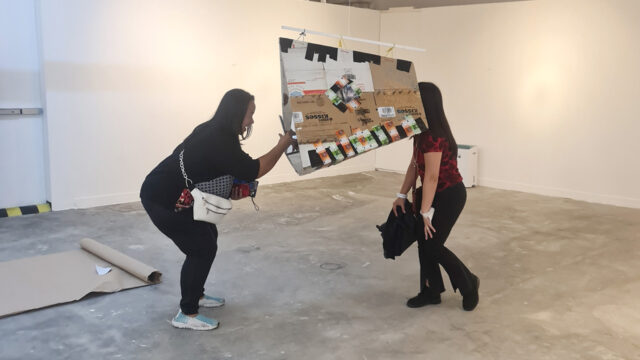
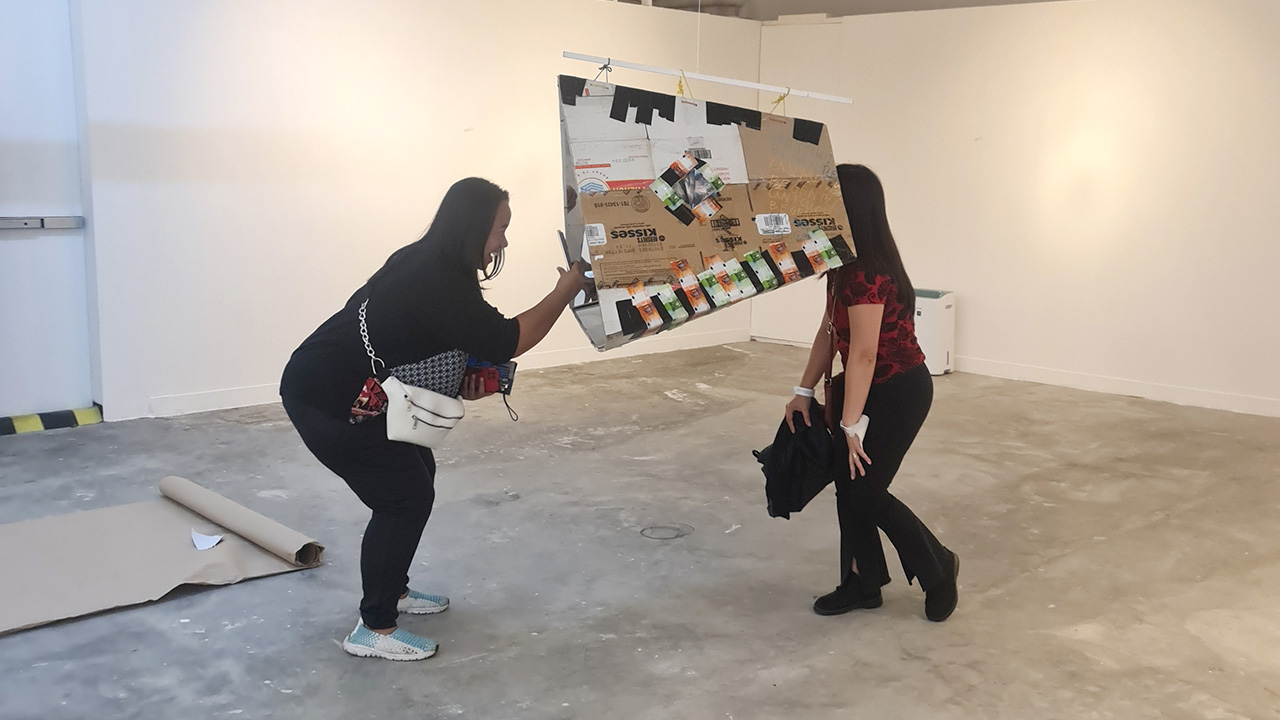
Gerome Soriano’s installation, Kaleido, Misteryoso Seryoso Pilosopo Jusko, is a massive, colorful cardboard kaleidoscope that lets visitors interact with it. Peeking inside allows one to see interesting reflections, which makes for great pictures or selfies.

It is his biggest kaleidoscope to date, with previous ones only reaching handheld size, according to Mr. Soriano.

“Our proposal used to be different because the space was different. All these works adapted to the delay and aligned to the new space. This kaleidoscope, for example, works better in bright, well-lit areas like this,” he said.

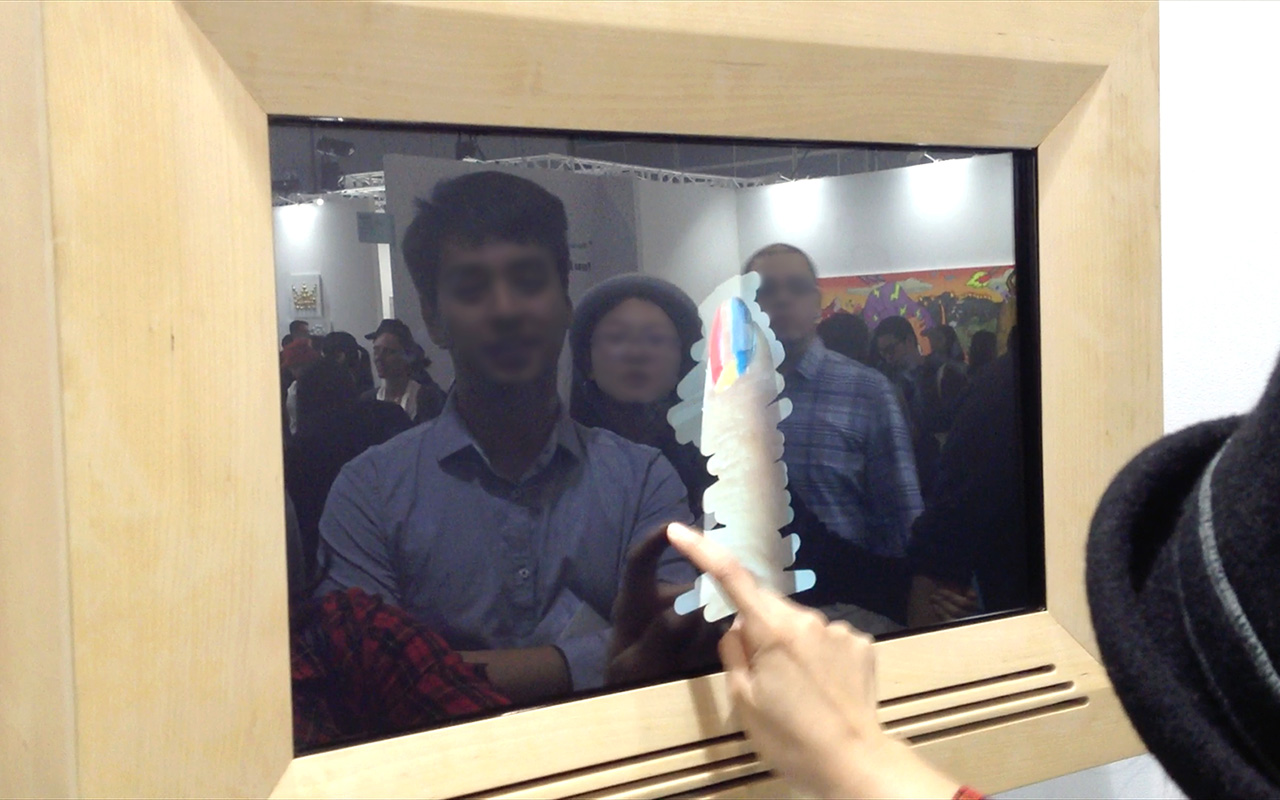
Poklong Anading, who just did a three-week artist residency in Gwangju, South Korea, presented his work Untitled (dwelling) which depicts the community he was immersed in during his time there. It is a screen showing images of locals’ fingernails that he painted, which viewers must touch continuously to reveal each full photo.

Mr. Anading said: “I painted, for free, the fingernails of random participants. But the audio component that plays while you touch the images is more important for me. It’s me talking with participants while painting their nails.”

For him, his full integration with the place and the people in the community was a significant contrast with the idea that art is just studio-based.

Meanwhile, MM Yu made Untitled Landscape, a collection of photos shown on a screen that portray images of greenery seeping through the cracks of landscapes being changed. She aims to show how urban progress comes with nature still trying to survive amid all the concrete.

“We’re running out of space and I wanted to delve into how nature is just accommodating us and how cities adapt to so-called progress. I tried to find landscapes in places where there are no more landscapes,” Ms. Yu said.

Reminding viewers of the great change in human behavior due to digitalization is Rhaz Oriente’s Iris Insight. It is a series of printed photos that show close-ups of people’s irises while they’re using gadgets.

She explained to BusinessWorld that, be it a cellphone or laptop, it was possible to catch the image of the eye bathed in blue light.

“I used a macro lens to focus on the irises of people, to the point that you’re not sure what you’re looking at anymore. It’s like an up-close documentation of people,” she said.

“Braille for the Seeing” is on view at the CCP’s Bulwagang Roberto Chabet, at the third floor of the Tanghalang Ignacio B. Gimenez (CCP Blackbox Theater) at the CCP Complex in Pasay City. The exhibit runs until Dec. 10. — Brontë H. Lacsamana

Casual, distant, aesthetically limited: 5 ways smartphone photography is changing how we see the world

SMARTPHONES are a staple of modern life and are changing how we see the world and show it to others. Almost 90% of Aussies own one, and we spend an average of 5.6 hours using them each day. Smartphones are also responsible for more than 90% of all the photographs made this year.

But compare the camera roll of a 60-year-old with that of a 13-year-old, as we recently did, and you’ll find some surprising differences. In research published in the Journal of Visual Literacy, we looked at how different generations use smartphones for photography as well as broader trends that reveal how these devices change the way we see the world.

Here are five patterns we observed.

1. We make images more casually and with a wider subject matter

Before the first smartphone camera was released in 2007, cameras were used more selectively and for a narrower range of purposes. You might only see them at events like weddings and graduations, or at tourist hotspots on holidays.

Now, they’re ubiquitous in everyday life. We use smartphones to document our meals, our daily gym progress, and our classwork as well as the more “special” moments in our lives.

Many middle-aged people use smartphones most for work-related purposes. One of our participants put it this way: “I often take photos of info I want to save, or of clients’ work when I want to then e-mail it to myself to put on the computer. I feel like I’ve gotten a little slack on socially taking photos of friends … but in the day-to-day, I feel like I use it very practically now for basically work, grabbing a photo to upload it online somewhere.”

2. We aren’t as selfie-obsessed as some would think

Our participants only used their phone’s front “selfie” camera 14% of the time. They acknowledged the stigma around selfies and didn’t want to be perceived as narcissistic.

3. We’re seeing more vertical compositions

In years past, whether you had a bulky DSLR camera or a lightweight disposable, the “default” grip was to hold it with two hands in a horizontal way. This leads to photos in landscape orientation.

But the vertical design of smartphones and accompanying apps, such as Instagram and Snapchat, are resulting in more photos in portrait orientation. Participants said holding their smartphone cameras this way was more convenient and faster.

4. We like to keep our distance

Participants made more images of people from farther away compared to getting close. Intimate “head and face” framing was only present in fewer than 10% of the images.

In one participant’s words: “I feel like my friends and I get frustrated with parents, when they’re zooming in a photo or they walk in really close. My mom would always get one like right in my face, like this is too close! I don’t want to see this. The zoom in, oh, it’s frustrating!”

5. We get inspired by what we see online

Teenagers in particular mentioned social media, especially Instagram, as influencing their visual sensibilities. Older adults were more likely to attribute their sense of aesthetics to physical media, such as photography books, magazines, and posters.

This aesthetic inspiration impacts what we take photos of, and also how we do it. For example, young people mentioned a centered compositional approach most often. In contrast, older generations invoked the “rule of thirds” approach more often.

One participant contrasted generational differences like this: “There seems to be a real lack of interest [by younger people] in say, composition, or the use of light or that sort of aesthetic side of getting an image. When my partner and I were kids […] our access to different aesthetics and images was actually very limited. You had the four channels on TV, you had magazines, you had the occasional film, you had record covers, and that was it, you know. Whereas, kids these days, they’re saturated with images but the aesthetic aspect doesn’t seem to be that important to them.”

Why the way we make images matters

While technology is changing the way people see the world and make photographs, it’s important to reflect on why we do what we do, and with what effects.

For example, the camera angle we use might either give or take away symbolic power from the subject. Photographing an athlete or politician from below makes them look stronger and heroic, while photographing a refugee from above can make them look less powerful.

Sometimes the camera angles we use are harmless or driven by practicality — think photographing a receipt to get reimbursed later — but other times, the angles we use matter and can reinforce existing inequalities.

As the number of images made each year increases and new ways to make images emerge, being thoughtful about how we use our cameras or other image-making technology becomes more important. — The Conversation via Reuters Connect

T.J. Thomson is a Senior Lecturer in Visual Communication & Digital Media at RMIT University. Shehab Uddin is a Program Director, Higher Degree Research, at the Pathshala South Asian Media Institute. The research underpinning this article was supported by a research grant from the International Visual Literacy Association. T.J. Thomson receives funding from the Australian Research Council.

AC Health readies P3-billion cancer care hospital

THE healthcare arm of Ayala Corp. is set to open its P3-billion Healthway Cancer Care Hospital (HCCH) in Taguig City early next year, marking the full operation of what is said to be the country’s first specialty hospital for cancer.

“We plan to open our operations by phases,” said Jenara Rosanna F. Ong, HCCH chief operating officer, during a media briefing on Tuesday. “By first week of January [2024], we are targeting to open all our services, including operating room, intensive care units, and the wards.” 

Located at Arca South, the hospital was inaugurated on Nov. 24. HCCH is under the Healthway Medical Network, which is a part of the AC Health ecosystem.

The new hospital, which has five floors, offers 100 beds, 18 chemotherapy infusion units, four specialized operating theaters, two advanced endoscopy rooms, and two linear accelerators. It also features an expanded outpatient chemotherapy unit and an integrated outpatient department with a specialized women’s health center.

AC Health President and Chief Executive Officer Paolo Maximo F. Borromeo said during the media briefing that HCCH already has 200 doctors on its roster.

“Not all of them are practicing exclusively. We don’t demand exclusivity but we do demand commitment,” Mr. Borromeo said.

“Our vision is to be the leading private cancer care institution, providing world-class treatment but at lower cost, so we can extend the best value, private cancer treatment to a broader base of Filipinos,” he added.

According to AC Health, the launch of HCCH is in response to the need for “affordable and accessible cancer care services to Filipinos.” 

“We saw that over 100,000 cases a year were diagnosed, and estimated that at least another 100,000 were undiagnosed. Of those that were diagnosed, many diagnosed late stage, many left untreated due to the hopelessness and the massive financial burden,” Mr. Borromeo said.

Meanwhile, Mr. Borromeo said that Healthway Medical Network is set to open new outpatient centers in Cebu, Cagayan de Oro, and Davao by yearend to early January next year, which would put its total outpatient centers to 15.

“We are opening the three new branches in December to January. What makes our model very unique is we are an integrated ecosystem. Everything is connected,” he said.

Mr. Borromeo added that there are no plans yet for AC Health to have an initial public offering (IPO). 

“Probably not in the near term. But for us at Ayala Corp., we also want to make sure that we are incubating businesses within the group,” he said when asked about the possibility of an IPO.

As of September, Ayala Corp. saw a 35% increase in its attributable net income to P32.31 billion from P23.90 billion a year ago as consolidated revenues improved 13.5% to P245.38 billion.

Shares of Ayala Corp. at the local bourse rose P5 or 0.77% to P657 apiece on Tuesday. — Revin Mikhael D. Ochave

Britain’s Sunak cancels meeting with Greek PM in row over Parthenon sculptures

FACEBOOK.COM/BRITISHMUSEUM

ATHENS/LONDON — Greek Prime Minister (PM) Kyriakos Mitsotakis accused his British counterpart Rishi Sunak of canceling a scheduled meeting in London on Tuesday in a diplomatic row over the status of the Parthenon Sculptures.

Greece has repeatedly asked the British Museum to permanently return the 2,500-year-old sculptures that British diplomat Lord Elgin removed from the Parthenon temple in the early 19th century when he was ambassador to the Ottoman Empire.

“I express my annoyance that the British Prime Minister canceled our planned meeting just hours before it was due to take place,” Mr. Mitsotakis said in a statement.

“Greece’s positions on the issue of the Parthenon Sculptures are well known. I had hoped to have the opportunity to discuss them with my British counterpart. Anyone who believes in the rightness and justice of his positions is never afraid of confronting arguments,” he said.

The Greek government has been in discussions with British Museum chair George Osborne on a possible loan deal for the sculptures, which have been a source of dispute between the two countries for centuries.

Mr. Mitsotakis complained in an interview with the BBC on Sunday that talks over a possible return of the sculptures to Athens were not advancing quickly enough.

He said that the continued presence of the sculptures in the British Museum was like cutting the “Mona Lisa in half” and it was not a question of ownership but “reunification.”

A British government official, who asked not to be named, said the row over the marbles meant it was not suitable for the meeting to go ahead.

Earlier, a spokesperson for Mr. Sunak said there were no plans to return the sculptures.

Asked about Mr. Mitsotakis’ statement, Mr. Sunak’s office said Britain’s relationship with Greece was “hugely important” and the two countries needed to work together on global challenges like tackling illegal migration.

Deputy British Prime Minister Oliver Dowden was available to meet Mr. Mitsotakis to discuss these issues instead, Mr. Sunak’s office said.

The British government has always ruled out giving up ownership of the marbles, which include about half of the 160-meter (525-ft) frieze that adorned the Parthenon, and says they were legally acquired.

A law prevents the British museum from removing objects from the collection apart from in certain circumstances, but the legislation does not prohibit a loan.

A meeting between Mr. Mitsotakis and British opposition leader Keir Starmer went ahead on Monday as planned. The Financial Times last week reported that Starmer would not block a “mutually acceptable” loan deal for the sculptures.

Labor declined to comment. — Reuters

Ayala-led IMI appoints Larrazabal as chairman

LISTED Ayala subsidiary Integrated Micro-Electronics, Inc. (IMI) has named Alberto M. de Larrazabal as its new chairman of the board after his predecessor resigned.

IMI said in a stock exchange disclosure on Tuesday that Mr. Larrazabal, who is an incumbent director, is replacing former director and chairman of the board Delfin L. Lazaro, who resigned due to personal circumstances.

According to the company, Mr. Larrazabal’s appointment was approved by the board of directors and endorsed by its corporate governance and nomination committee on Nov. 24. 

Meanwhile, the listed company said the vacancy on its board is to be filled up “in due course.” 

IMI is the manufacturing arm of AC Industrial Technology Holdings, Inc., a wholly owned subsidiary of Ayala Corp. The company manufactures electronics for various markets such as automotive, industrial electronics, and aerospace.   

As of September this year, its attributable net loss expanded to $85.26 million from $4.71 million in the same period last year.   

The company’s nine-month revenues dipped 0.9% to $1.03 billion from $1.04 billion a year ago. 

On Tuesday, shares of IMI at the local bourse declined eight centavos or 2.29% to P3.41 each. — Revin Mikhael D. Ochave

‘Authentic’ is Merriam-Webster’s Word of the Year

“AUTHENTIC” is the word of the year, Merriam-Webster announced Monday, saying users are seeking out its meaning as they try to navigate what is real and what is fake.

Merriam-Webster said searches for “authentic” — which it defines in part as “not false or imitation” — saw a substantial increase in 2023.

“The rise of artificial intelligence (AI) helped drive interest in the word,” Peter Sokolowski, Merriam-Webster’s Editor at Large, said in a statement. “The line between ‘real’ and ‘fake’ has become increasingly blurred.”

While Merriam-Webster’s word of 2023 is “authentic,” the Cambridge dictionary chose “hallucinate” — in reference to when AI hallucinates and produces false information. And the Collins dictionary “AI” — the abbreviation for artificial intelligence.

Merriam-Webster said that other words that stood out in searches for 2023 included “rizz” — a word driven by internet slang meaning “romantic appeal or charm” as a noun and “to charm or seduce” as a verb; “deepfake” meaning an image or recording that has been altered to misrepresent what someone has said or done; and “coronation” which saw searches rise with the crowning of Britain’s King Charles III in May. — Reuters

Gov’t makes full award of T-bills as yields drop on strong demand

BW FILE PHOTO

THE GOVERNMENT fully awarded the Treasury bills (T-bills) it auctioned off on Tuesday as yields fell across the board amid easing inflationary worries here and abroad.

The Bureau of the Treasury (BTr) raised P10 billion as planned via the T-bills it offered on Tuesday as total bids reached P72.215 billion, more than seven times the amount on the auction block.

Broken down, the Treasury made a full P3-billion award of the 91-day T-bills, with tenders for the tenor reaching P25.615 billion. The three-month paper was quoted at an average rate of 4.753%, 137 basis points (bps) below the 6.123% seen for the P5-billion award made for the tenor on Nov. 13. Accepted rates ranged from 4.72% to 4.78%.

The government likewise borrowed the programmed P3 billion through the 182-day securities, as bids for the paper reached P22.38 billion. The average rate for the six-month T-bill stood at 5.181%, down by 133.2 bps from the 6.513% quoted for the previous awarding worth P5 billion, with accepted yields ranging from 5.11% to 5.27%.

Lastly, the BTr raised P4 billion as planned via the 364-day debt papers, with bids reaching P24.22 billion. The average rate of the one-year T-bill went down by 83.3 bps to 5.727% from the 6.56% fetched for the P5 billion borrowed two weeks ago. Accepted yields were from 5.59% to 5.75%.

The government did not auction off T-bills last week to make way for its maiden offering of one-year tokenized bonds, from which it raised P15 billion at a coupon rate of 6.5%.

At the secondary market on Tuesday, the 91-, 182-, and 364-day T-bills were quoted at 5.7399, 5.9376%, and 6.2694%, respectively, based on PHP BVAL Reference Rates data published on the Philippine Dealing System’s website.

“The lower rates tendered today reflected easing inflationary concerns locally and globally,” a trader said in an e-mail on Tuesday.

Philippine headline inflation eased to 4.9% in October from 6.1% in September. This brought the 10-month average to 6.4%, still above the Bangko Sentral ng Pilipinas’ 2-4% target and 6% forecast for the year.

Meanwhile, the US consumer price index (CPI) was unchanged in October for the first time in more than a year and followed a 0.4% rise in September. Year on year, the CPI rose by 3.2%, slower than 3.7% the prior month.

T-bill yields were significantly lower than secondary market levels after global oil prices declined to four-month lows recently, Rizal Commercial Banking Corp. Chief Economist Michael L. Ricafort said in a Viber message.

On Tuesday, US crude eased 0.13% to $74.76 per barrel and Brent was back below $80, with oil prices swaying between gains and losses ahead of Organization of the Petroleum Exporting Countries’ meeting later this week, Reuters reported.

Slower US inflation fanned dovish expectations for the US Federal Reserve, which caused global yields, including local rates, to go down, Mr. Ricafort added.

Traders hunkered down on bets that the Federal Reserve could start cutting interest rates in the first half of next year, Reuters reported.

Traders are now eyeing US core personal consumption expenditures price index — the Fed’s preferred measure of inflation — this week for more confirmation that inflation in the world’s largest economy is slowing.

The US central bank kept its target rate steady at the 5.25%-5.5% range for a second straight time during its Oct. 31-Nov. 1 meeting.

It has hiked borrowing costs by a cumulative 525 bps since it began its tightening cycle in March last year.

The Federal Open market Committee will next meet on Dec. 12-13 to review their policy stance.

On Wednesday, the BTr will offer P20 billion in reissued seven-year Treasury bonds with a remaining life of five years and 10 months.

The government borrows from local and foreign sources to help fund its budget deficit, which is capped at 6.1% of gross domestic product this year. — AMCS

ADVERTISEMENT
ADVERTISEMENT