Home Blog Page 3973

Israel, Hamas to release more people amid call to widen truce

A woman holds a spray can next to a child as hostages are released by the Palestinian militant group Hamas, amid a hostages-prisoners swap deal between Hamas and Israel, in Tel Aviv, Israel, Nov.26, 2023. — REUTERS

GAZA/JERUSALEM — Hamas and Israel were expected to release more hostages and prisoners on Wednesday, the last day of a prolonged six-day truce in the Gaza Strip conflict, as attention focused on whether mediator Qatar could negotiate another extension.

Israeli media, citing the prime minister’s office, reported that Israel had received a list of hostages expected to be released by Hamas on Wednesday. The prime minister’s office had no immediate comment.

Israel has said the truce could be prolonged further, provided Hamas continues to free at least 10 Israeli hostages per day. But with fewer women and children still in captivity, keeping the guns quiet beyond Wednesday may require negotiating to free at least some Israeli men for the first time.

The Palestinian militant group Hamas and allied group Islamic Jihad freed 12 hostages on Tuesday, bringing the total released since the truce began on Friday to 81. Those have been mostly Israeli women and children along with foreign citizens.

The hostages — 10 Israeli women and two Thai citizens — were aged 17 to 84 and included a mother-daughter pair. All were given initial medical checks then moved to Israeli hospitals where they were to meet their families.

A short time later, Israel released 30 Palestinians from Ofer Prison in the occupied West Bank and a Jerusalem detention center. The Palestinian Prisoner’s Club, a semi-official organization, said half were women and the remainder were teenage males. That brought the total number of Palestinians released under the truce to 180.

The hostages were among some 240 people seized by Hamas gunmen during a rampage into southern Israel on Oct. 7 in which Israel says 1,200 people were killed. Israel’s bombardment of Hamas-ruled Gaza in retaliation has killed more than 15,000 Gazans, health authorities there said.

Qatar, which mediated indirect talks between Hamas and Israel that resulted in the ceasefire, on Tuesday hosted the spy chiefs from Israel’s Mossad and the United States’ CIA.

The officials discussed possible parameters of a new phase of the truce deal including Hamas releasing hostages who are men or military personnel, not just women and children, a source briefed on the matter said. They also considered what might be needed to reach a ceasefire lasting more than a handful of days.

Qatar spoke to Hamas before the meeting to get a sense of what the group might agree to. The Israelis and Hamas are now internally discussing the ideas explored at the meeting, the source added.

Separately, foreign ministers of the Group of Seven nations on Tuesday called in a joint statement for an extension of the ceasefire and more humanitarian aid.

About 159 hostages remain in Gaza. The White House said on Tuesday this includes eight to nine Americans. US national security spokesperson John Kirby said the US was hopeful Hamas would release more Americans, and the US government would work with Qatar to extend the pause in fighting.

“We want to see all the hostages out. The way to do that is these pauses,” Mr. Kirby told reporters traveling on the president’s plane on Tuesday.

DISEASE IN GAZA
The truce has brought Gaza its first respite after seven weeks of fighting and bombardment that has reduced much of the seaside enclave to rubble. It had been due to expire overnight into Tuesday, but both sides agreed to extend the pause to allow for the release of more people.

Israel’s siege has led to the collapse of Gaza’s health care system, especially in the north where no hospitals remain functioning. The World Health Organization said more Gazans could soon be dying of disease than from bombing and many had no access to medicines, vaccines, safe water and hygiene and no food.

More than two-thirds of Gaza’s 2.3 million people have lost their homes to Israeli bombardments, with thousands of families sleeping rough in makeshift shelters with only the belongings they could carry. They are desperately short of food, fuel and clean water.

“We have a dramatic humanitarian situation. At the same time, we want to have the full release of all hostages, that we believe should be unconditional and immediate. But we need a humanitarian ceasefire in Gaza now,” U.N. Secretary-General Antonio Guterres told reporters on Tuesday.

The temporary ceasefire has allowed about 800 aid trucks to enter Gaza, and the first of three US planes with humanitarian supplies for Gaza landed in Egypt on Tuesday.

U.N. aid chief Martin Griffiths was to travel to the Jordanian capital Amman on Wednesday to discuss opening the Kerem Shalom crossing to allow for humanitarian aid to enter Gaza from Israel.

Located at the intersection of Israel, the Gaza Strip and Egypt, the Kerem Shalom crossing transported more than 60% of the aid going into Gaza before the current conflict.

Aid for Gaza now comes through the Rafah crossing on the Egyptian border, which was designed for pedestrian crossings and not trucks. — Reuters

North Korean special economic zone poised for revival in new Russia trade

REUTERS

SEOUL — Once a North Korean experiment in limited capitalism, the Rason Special Economic Zone (SEZ) appears to be the epicenter of the isolated country’s growing cooperation with Russia, experts say, including possible shipments of arms for the war in Ukraine.

With apartment blocks and booming markets flooded with imported goods, the Rason SEZ, established in the 1990s on the border with China and Russia, was a dream destination for many North Koreans before tighter sanctions hit and pandemic-era border closings choked off nearly all trade and tourism, two experts who study Rason said.

In recent months, there have been clear signs that the area is poised for a comeback, with ships docking there for the first time since 2018, and satellite imagery suggesting a spike in trade from both the port and a rail line to Russia.

Although China — with its vastly larger economy and deeper historic ties with North Korea — might seem the obvious driver of a recovery in Rason, experts say the country’s deepening cooperation with Russia may make a more immediate impact.

“Now that North Korea and Russia are becoming very close against the backdrop of the Ukraine war, Russia might send more tourists to North Korea, which can reinvigorate tourism (in Rason),” said Jeong Eunlee, a North Korea economy expert at South Korea’s government-run Korea Institute for National Unification.

Russia can also sell coal, oil, and flour through Rason, Jeong said, and if more North Korean workers are allowed to cross the border, they can send Russian medicine and other goods home for relatives to sell.

The Russian Federal Customs Service said it had “temporarily suspended the publication of foreign trade statistics.”

China accounted for 97% of North Korea’s overall trade in 2022, according to South Korea’s Korea Trade Investment Promotion Agency (KOTRA).

But Russia resumed oil exports to North Korea in December 2022 and had exported 67,300 barrels of refined petroleum to North Korea by April, United Nations data shows, the first such shipments reported since 2020.

Lee Chan-woo, a North Korea economy expert at Teikyo University in Tokyo, said Russian wood cut by North Korean loggers could be resold to China through Rason, a town of about 200,000 people.

Cho Sung-chan of Hananuri, a South Korean nonprofit that has financed a food-processing factory in Rason, predicted Russian influence there would grow.

“Assuming North Korea and Russia’s honeymoon period becomes a long one, North Korea could get Russian support on food, energy and infrastructure through Rason,” Cho said.

The two countries discussed expanding trade and testing delivery of meat products next year, Russia’s natural resources minister Alexander Kozlov said on his Telegram channel after meeting with North Korean officials in Pyongyang in November.

MILITARY LOGISTICS
Since August, Rason’s port has seen visits from Russian ships linked to that country’s military logistics system, according to US and South Korean officials and reports by Western researchers citing satellite imagery.

Those ships are suspected of military supplies from North Korea to Russia, the reports said. The Kremlin has denied such shipments.

From Rason’s port, North Korea has sent Russia an estimated 2,000 containers suspected of carrying artillery shells, and possibly short-range missiles, South Korean military officials have told reporters.

Since late 2022, activity has been spotted around Rason’s Tumangang station, which has rail links to Russia, said Chung Songhak, a senior researcher at the Korea Institute for Security Strategy who analyses satellite imagery around Rason.

More train carriages were spotted after the Russian defense minister visited Pyongyang in July, Chung said, citing satellite imagery, adding that possible new cargo depots popped up in May.

When leader Kim Jong Un visited Russia in September, he discussed restarting a stalled joint logistics project in Rason, building a new road bridge connecting it with Russia and additional grain supplies, Mr. Kozlov said.

‘GLOBAL HUB’
Since Mr. Kim’s grandfather Kim Il Sung designated Rason a special zone in 1991 after the Soviet Union’s collapse and as China opened further, North Korean officials have tried to attract investment there.

Rason, the oldest and largest of North Korea’s 29 economic development zones, has been central to the country’s push to attract foreign investment.

It has one of North Korea’s first and biggest markets, was the site of the country’s first mobile network, and is the only place where North Korea legalized buying and selling homes in 2018, according to experts and North Korea’s government publications.

The other zones have had poor results because of shaky infrastructure and international sanctions, according to South Korea’s National Institute for Unification Education.

Abraham Choi, a Korean American pastor who works on religion exchanges with North Korea, said that when he last visited Rason in 2015, he saw both Chinese and Russian tourists.

South Korean media reports said that the Rason border with China had reopened in January 2023 and that trucks were trickling in. Mr. Choi said there were no signs yet of large groups of foreign tourists visiting Rason.

Lee of Teikyo University said that whichever outside country helped reinvigorate the special economic zone, it offered a potential bright spot for North Koreans after years of pandemic restrictions.

“Rason took a harder hit than other places in North Korea because it used to be on the front lines of the opening,” Lee said. “Now many businesses have collapsed there, but as soon as the border fully reopens, North Koreans might think that the paradise can come back.” — Reuters

Pope Francis strips conservative US cardinal of Vatican privileges

REUTERS

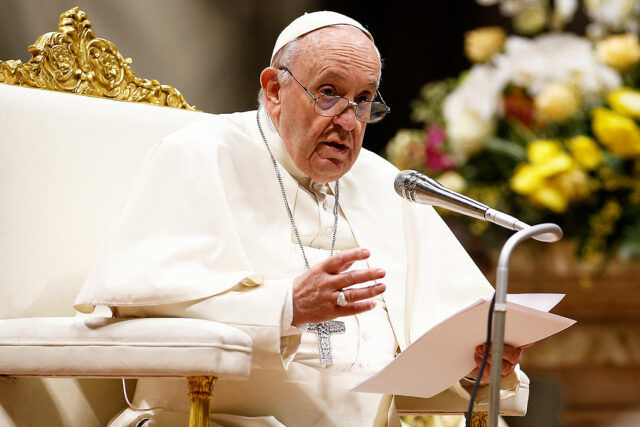
VATICAN CITY — Pope Francis has removed some of the Vatican privileges of conservative American Cardinal Raymond Burke, including a large, subsidized apartment and his salary, a senior Vatican official said on Tuesday.

The official, who spoke on the condition of anonymity, participated in a regular Vatican meeting when the pope made the announcement to senior aides last week.

He quoted the pope as saying that Mr. Burke, one of his fiercest critics, was “working against the Church and against the papacy” and that he had sown “disunity” in the Church.

Mr. Burke has had no senior Vatican job for years. He is a consultant to one of its tribunals, as are numerous cardinals who live outside Rome, and spends most of his time in his native state of Wisconsin.

The official who was at the meeting denied media reports that Pope Francis had called the 75-year-old Mr. Burke “an enemy.”

Mr. Burke is a hero to traditionalists in the Church, particularly in the United States, where he is often a guest on conservative Catholic media outlets that have made criticism of the pope a mainstay of their operations.

The move by Francis was his second involving a conservative American prelate this month.

On Nov. 11, the pope dismissed another conservative critic, Bishop Joseph Strickland of Tyler, Texas, after Mr. Strickland refused to step down following a Vatican investigation.

While conservatives are a minority in the Church, they have significant clout in advanced countries such as the United States, in part because of their link to conservative politics.

Mr. Burke has been opposing the pope’s reforms almost from the start.

In 2014, a year after Pope Francis was chosen, the pope removed Mr. Burke as head of a Vatican tribunal and moved him to a largely ceremonial post several days after Mr. Burke said the Church under Francis was “like a ship without a rudder.”

Most recently, in October, Mr. Burke was one of five cardinals who openly challenged a global month-long Vatican meeting, known as a synod.

Before the meeting began, Mr. Burke was the star quest of a gathering of conservative in a theater just a few blocks from the Vatican.

There, he called for a defense against the “the poison of confusion, error and division” in the Church.

A person close to Mr. Burke said the cardinal had not yet been formerly informed of the pope’s decision, which was first reported by the conservative Italian outlet, La Nuova Bussola Quotidiana. — Reuters

Jimmy Carter makes rare public appearance at his wife’s memorial

FORMER US President Jimmy Carter and former first lady Rosalynn Carter arrive onstage at the 2008 Democratic National Convention in Denver, Colorado, Aug. 25, 2008. — REUTERS

ATLANTA — Jimmy Carter, the 99-year-old former US president who entered hospice care in February, made a rare public appearance on Tuesday, looking frail as he attended a memorial service in Atlanta for his wife, Rosalynn Carter, who died on Nov. 19.

Using a wheelchair and dressed in a dark suit and tie, he entered the Glenn Memorial United Methodist Church and was helped to the front row near his wife’s flowered-covered casket, where he sat flanked by his children.

Folded across his lap was a blue-and-white blanket, embroidered with a smiling portrait of his wife. The couple was married for 77 years.

As first lady, Rosalynn Carter played a prominent role in his presidency from 1977 to 1981, and in his humanitarian work after the couple left the White House. She died at age 96.

Jimmy Carter did not address mourners during the service. His son James Earl “Chip” Carter III kissed him on the forehead after delivering a tribute to Rosalynn Carter, calling her “the glue” that held the family together.

The former president has faced several health issues, including cancer, and decided to end medical intervention and enter hospice care at his home in Plains, Georgia, nine months ago. His wife, who had been diagnosed with dementia, joined him in hospice care only a few days before her death.

The Carters were the longest-married US presidential couple, having wed in 1946 when he was 21 and she was 18.

During the memorial, their daughter, Amy Carter, read from a letter Jimmy Carter sent to Rosalynn while he was serving in the Navy.

“My darling, every time I’ve ever been away from you, I have been thrilled when I returned to discover just how wonderful you are,” he wrote. “When I see you, I fall in love all over again.”

The Carters made their last joint public appearance in September when they attended the Plains Peanut Festival in their rural hometown, both dressed in clothes bearing the logo of Habitat for Humanity, the non-profit group focused on providing affordable housing that the couple have long supported.

As late as 2019, when he was 95 years old, he worked for several days a year alongside his wife as a volunteer for Habitat.

“He’s coming to the end, and he’s very, very physically diminished,” Jason Carter, one of the former president’s grandsons, told the New York Times shortly before Tuesday’s service. “He has been this moral rock for so many people, but she really was that rock for him.” — Reuters

Smart spending tips: Achieving a fulfilling holiday season without breaking the bank

A CHRISTMAS tree display was unveiled at SM City Marikina in this undated file photo. — PHILIPPINE STAR/ MIGUEL DE GUZMAN

As the holiday season begins, Filipinos start spending more on gifts and festivities. Financial management app Lista offers some tips on saving and managing expenses.

“Holiday shopping can become excessive quite easily. However, with careful planning and budgeting, festivities don’t have to drain your finances or push your credit cards to the limit,” Lista Co-Founder Khriztina T. Lim said in an e-mail interview with BusinessWorld.

For Lista, it starts with the mindset. Shoppers should prioritize thoughtful spending over extravagant gestures, emphasizing meaningful experiences rather than materialistic ones.

As Christmas nears, Filipinos will buy gifts, but choosing alternative gifts that demand time and effort can increase their sentimental value, Lista said.

“Investing in moments with family and close friends is a special exception worthy of celebration. Rather than relying on traditional gift shopping, I find more value in curating food baskets for my loved ones annually. Whether it’s a jar of garlic confit paired with breadsticks or a DIY champorado kit accompanied by a heartfelt note, these simple yet thoughtful gestures make for more meaningful gifts than store-bought items,” Ms. Lim said.

Discuss spending limits with family or friends and use sales and discounts to save money. Be cautious about deviating from priorities. Ms. Lim also advised sticking to a shopping list and researching before setting priorities.

“Additionally, suggesting alternative celebrations, such as shared experiences or potluck gatherings, redirects the emphasis towards quality time rather than the financial burden of expensive gifts. This approach can contribute to a more enjoyable and inclusive holiday experience for all participants,” she added.

“It’s also vital to underscore the value of sticking to one’s budget, avoiding overspending, and staying on track with expenditures,” Ms. Lim said.

In terms of financial goals, shoppers should set realistic objectives for both the long and the short term to avoid overspending.

The key is to prioritize essential needs and formulate a comprehensive shopping list. Shoppers can use cash or debit cards to automatically set spending limits. Lista also suggests opting for more budget-friendly celebrations.

“Long-term goals, such as saving for a down payment on a house or a retirement fund, should be balanced with short-term goals like travel or acquiring gadgets. Avoiding burnout or discouragement requires finding the right balance and allowing oneself a chance to experience a sense of accomplishment through short-term goals,” Lista said. — Aaron Michael C. Sy

Argentina’s Milei seeks foreign policy, IMF reset in Washington trip

ARGENTINE president-elect Javier Milei addresses supporters after winning Argentina’s runoff presidential election, in Buenos Aires, Argentina, Nov. 19, 2023. — REUTERS

 – Argentina’s president-elect Javier Milei met on Tuesday with top US officials in Washington and his economic team huddled with IMF officers as he seeks to formulate a plan to reshape the country’s foreign policy and lead its economy out of crisis.

Mr. Milei told reporters as he left the White House that his meeting had been “excellent.” Among those in attendance were national security adviser Jake Sullivan and Juan Gonzalez, the National Security Council’s senior director for the Western Hemisphere.

“We talked about the economic and social conditions in Argentina at the moment,” Mr. Milei said in brief comments before he was whisked off in his official car. Mr. Milei aligned himself with Western values, his office later said.

The White House said Mr. Sullivan and Mr. Milei had discussed during their meeting the importance of building on a strong bilateral relationship on economic issues and shared priorities such as investment in clean energy and technology.

Mr. Milei, a far-right libertarian who takes office on Dec. 10, won election this month pledging radical reforms such as dollarization and “shock” austerity to fix Argentina’s economy. Inflation is near 150%, foreign currency reserves are in the red and a recession is looming.

His foreign policy, meanwhile, is unabashedly pro-United States and pro-Israel, with a cooler stance on top trade partners Brazil and China.

Mr. Milei is a unicorn, the leader of a major Latin American economy who is ostentatiously pro-American,” said Benjamin Gedan, director of the Latin America program at Washington-based think-tank the Wilson Center.

While Mr. Milei‘s incoming team has looked to moderate earlier criticism of China and Brazil’s leftist government, the US trip ahead of his inauguration underscores his priorities.

He has also pledged not to join the China-led BRICS trade group. That’s a sharp change in approach from outgoing center-left President Alberto Fernandez, who visited Moscow as Vladimir Putin was readying his invasion of Ukraine in February last year and recently returned from a visit to Beijing.


THE $44 BILLION QUESTION

Mr. Milei also needs to get the country’s $44 billion deal with the International Monetary Fund back on track, with support from the US – the IMF‘s largest shareholder – key to any revamp.

IMF Managing Director Kristalina Georgieva said earlier on Tuesday that she would meet Mr. Milei at the lender’s headquarters, but the meeting did not happen. The IMF did not respond to a request for comment on the missed meeting.

Economic advisors to Mr. Milei, Nicolás Posse and Luis Caputo, met with the IMF‘s No. 2 Gita Gopinath and other fund officials, the fund said separately.

“They discussed the country’s complex challenges and plans for urgently strengthening stability and setting the basis for more sustainable growth,” the IMF said in a statement.

A US Treasury official confirmed that Mr. Milei‘s advisors met with Treasury officials to discuss the president-elect’s economic agenda, but declined to provide details. The Treasury manages the dominant US shareholding in the IMF.

Argentina is by far the largest global debtor to the Washington-based lender but its program has ran off the tracks, and the IMF has been losing patience. The program is used mostly to pay the Fund back for a failed $57 billion program from 2018.

During his campaign Mr. Milei vowed to dollarize South America’s second-largest economy, though he seems to have put that on the back burner while he looks to overturn a deep fiscal deficit and tamp down inflation. He has stuck, however, to pledges that he will radically change the mandate of the central bank.

The IMF has said in the past that dollarization is not a substitute for sound macroeconomic policy. Lack of an orthodox policy framework under the current administration and a sharp increase in central bank-financed spending in the run-up to the presidential election further hurt the Argentine economy.

Mr. Milei and IMF officials had a first virtual meeting on Friday, which Ms. Georgieva called a “very constructive engagement”.

Mr. Milei‘s office said the meeting with the IMF was part of protocol to explain the incoming team’s economic plan and not in search for more financing.

Ms. Georgieva, however, told Reuters in an interview that the IMF was “very keen” to support Argentina and the country could be a candidate to receive a relatively small amount of extra financing through a trust for middle-income countries. – Reuters

Countries urged to curb factory farming to meet climate goals

PHILSTAR FILE PHOTO

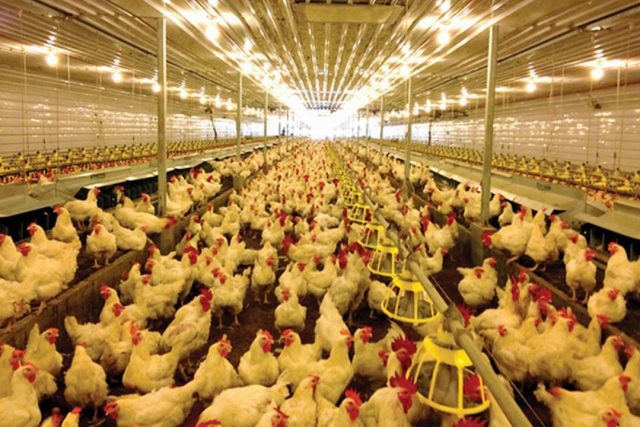
 – Restricting factory farming should play a key role in efforts to cut climate-warming greenhouse gases, an environmental charity said on Wednesday, as emissions from “food systems” emerge as a major focus of COP28 climate talks in Dubai starting Thursday.

Factory farming alone is responsible for at least 11% of global emissions, according to research published on Wednesday by World Animal Protection. The charity said around 70% of the 80 billion animals reared every year for food were held in factory farm systems, contributing 6.2 billion metric tons of CO2 emissions annually.

The COP28 presidency of the United Arab Emirates has urged countries to sign a “leaders’ declaration” committing them to align food production with broader emissions goals. It is also spearheading initiatives to promote agricultural innovation.

“What’s very exciting about this COP is that the leaders’ declaration commits countries that sign it to include food systems in their nationally determined contributions and their national adaptation plans,” said David Garrahy, external affairs manager at World Animal Protection.

Food systems as a whole contribute about a third of global greenhouse gas, with animal agriculture responsible for a fifth, he said.

Analyzing more than 400 attribution studies, the charity said factory farming from the global north alone was responsible for around $8 billion in damage caused by recent extreme weather in Asia, Africa and South America.

It called for a 10-year moratorium on new factory farms and urged countries to redirect subsidies to more sustainable livestock and plant-based food production. It also said big industrial farming conglomerates must contribute more to climate loss and damage funds.

COP28 will stage a “Food4Climate” Pavilion as well as a “Food Day” to highlight the role played by food production in global warming, deforestation and habitat destruction.

Mr. Garrahy said some have branded food as a distraction from the key task of tackling fossil fuels, but food systems account for around 15% of global fossil fuel consumption.

“I don’t think you can bring an end to fossil fuels without addressing food systems. We don’t accept that this is a diversion tactic. It is at the heart of the Paris Agreement.” – Reuters

Second-hand shopping a $1-bln-plus business for Amazon in Europe

REUTERS

 – Consumer demand for refurbished and pre-owned goods in Britain and across Europe has created a billion pound ($1.3 billion) business for Amazon, its UK boss said.

Many retailers and manufacturers expect that trend to continue as shoppers, hit by rising prices and borrowing costs, look to save cash and buy more sustainably.

John Boumphrey, Amazon‘s UK Country Manager, told reporters that in the UK alone the online retail giant last year sold more than 4 million used or refurbished products at a discount.

In the first nine months of 2023, Amazon‘s sales of secondhand goods in the UK increased by more than 15% on the same period last year, he added.

Amazon UK’s total revenue in 2022 was 24 billion pounds.

“Customers are telling us that they’re shopping second hand items to save money in the ongoing cost of living crisis and because they want to shop more sustainably,” Mr. Boumphrey told reporters.

He was speaking at the launch of Amazon UK’s “Second Chance Store” – a Christmas pop-up shop in London selling returned and refurbished items.

Amazon has a goal to have net zero carbon emissions by 2040.

Many environmental campaigners are skeptical about the willingness of major companies to cut emissions, seeing it as more of a public relations exercise. But large companies say they can make a difference due to their scale.


REGULATORY CHANGE

Mr. Boumphrey also told Reuters that Amazon bosses were frustrated by the amount of regulatory change in Europe, and Britain in particular, and were questioning whether they have enough visibility to invest.

“There’s an awful lot of changes to regulation, not only in the UK but also in Europe, and one of the things they’re asking is: is this going to give us long term certainty,” he said in an interview.

He highlighted concerns over the Digital Markets, Competition and Consumers Bill, currently making its way through the UK parliament, which will give Britain’s antitrust regulator legal powers to tailor rules for big tech companies.

Mr. Boumphrey’s comments come after the UK government this week hailed 29.5 billion pounds of foreign investment as a sign Britain was regaining its business appeal following the uncertainty triggered by its departure from the European Union and last year’s political turmoil.

Amazon has invested 56 billion pounds in Britain since 2010, including 12 billion in 2022 alone, Mr. Boumphrey said. – Reuters

Uber to partner with London cabbies after decade of dispute

REUTERS

 – Uber will open up its platform to London‘s black cabs early next year, the ride-hailing firm said on Wednesday, signallng a dramatic turnaround in its relationship with drivers of the British capital’s iconic taxis.

In recent years, London‘s black cab drivers – who have to pass a test called “The Knowledge” requiring them to memorize thousands of routes within the city – blocked the streets in protests against the ride-hailing service.

At the time, they argued Uber‘s app-based ordering and demand-sensitive pricing threatened their livelihoods.

Black cabs are the only London vehicles which can pick up passengers from the street or taxi ranks within the city, and can also be booked through other apps.

The new service, which will be rolled out in early 2024, follows nearly a decade of tensions between the two parties, including an unsuccessful legal challenge by black cab drivers against Uber‘s London operating license in 2019.

Black Cabs are an iconic part of the capital, loved by Londoners and visitors alike, and we are proud to work side by side,” General Manager of Uber UK Andrew Brem said in a statement.

Under the new arrangement black cab drivers will be offered jobs with a pre-determined price range through Uber, which they can accept or reject. Uber will not charge black cab drivers a commission for the first six months of the deal.

In May, Uber said it was seeing an influx of European taxi drivers joining its platform with Britain, France, Germany and Spain representing its biggest markets on the continent.

Hameed Hameedi, the first London cab driver to sign up with Uber, said: “Nowadays more passengers than ever are using apps so Uber opening up to Black Cabs will be a huge advantage to the trade.” – Reuters

Senate OK’s P5.77-T nat’l budget

BW FILE PHOTO

THE PHILIPPINE SENATE on Tuesday approved on final reading its version of the bill on the proposed P5.768-trillion national budget, as senators focused on boosting the budgets of defense agencies to ensure national security.

In a 21-0-1 vote, senators approved the appropriation measure, which was certified as urgent, on second and third reading on the same day.

The proposed 2024 national budget is 9.5% higher than this year’s budget, and is equivalent to 21.7% of the country’s gross domestic product.

Senator Juan Edgardo M. Angara, who chairs the Senate Finance Committee, said the Senate’s version would significantly increase the allocations for the Department of National Defense, the Armed Forces of the Philippines, and the Philippine Coast Guard to bolster national security, amid worsening tensions with China. He did not provide details.

“More funds were included in the budgets of the Philippine Army, Air Force, Navy and the General Headquarters to purchase much-needed equipment, set up the needed infrastructure, and conduct the necessary capability enhancements and trainings and the Philippine Coast Guard,” he said.

Senators increased the Department of Science and Technology’s budget by P1 billion and gave the Department of Education (DepEd) an additional P50 million to boost local mental health programs in schools, Mr. Angara said.

He added that senators approved a request from the National Economic and Development Authority to establish an innovations revolving fund to provide grants for innovation programs and projects.

Representatives from the Senate and the House will now meet in a Bicameral Conference Committee to reconcile conflicting provisions of their respective budget bills.

At a news briefing on Tuesday, Finance Secretary Benjamin E. Diokno said Mr. Marcos is likely to sign the 2024 national budget before he leaves for Japan in mid-December.

Mr. Marcos will be in Japan to attend the 50th anniversary of the Association of Southeast Asian Nations-Japan Friendship and Cooperation Commemorative Summit.

During Tuesday’s plenary session, Senate Minority Leader Aquilino Martin D. Pimentel III abstained from voting noting that he disapproved of President Ferdinand R. Marcos, Jr.’s certification of the measure as urgent.

“I will not object anymore. I will just make a manifestation of my continuing objection to the use of a presidential certification for the budget when I do not see any emergency or calamity right before us, which will be addressed by the certification,” he said.

In September, he urged Mr. Marcos not to overuse the power to certify bills as urgent and to reserve the exercise of it for times of calamity.

Mr. Angara did not mention augmentations to the confidential and intelligence funds of state agencies.

Earlier this month, Vice-President and Education Secretary  Sara Z. Duterte-Carpio said her office would no longer pursue its request for P500 million in confidential funds next year “because it is seen to be divisive.” 

She also said that DepEd would forgo its request for P150 million in confidential funds next year, asking senators to realign the amount to the country’s learning recovery program, which includes capacity training programs for teachers among others.

Congressmen last month stripped several agencies including the Office of the Vice-President of their confidential funds, transferring P1.23 billion worth of these to security agencies. — JVDO

Rising prices, slow LGU spending seen as threats to PHL growth outlook

Workers unload vegetables at a street market in Manila, Philippines, Nov. 20, 2023. — REUTERS

RISING FOOD PRICES, a stronger-than-expected El Niño, sluggish local government spending and high interest rates are among the domestic threats to the Philippines’ growth target for next year, the Finance department said on Tuesday.

At a Palace briefing, Finance Secretary Benjamin E. Diokno said possible “elevated prices due to inadequate food supply” is a major domestic risk to the government’s 6.5%-8% gross domestic product (GDP) growth target for 2024.

He noted that a stronger-than-expected El Niño, which may last until June 2024, and the spread of highly infectious animal diseases could tighten food supply.

The “limited” absorptive capacity of local government units (LGU) and some government corporations is also a threat to the growth goal, he added.

Mr. Diokno also cited cooling pent-up demand and the impact of interest rate hikes as risks to the economic outlook.

The Bangko Sentral ng Pilipinas (BSP) has hiked borrowing costs by 450 basis points since May 2022 to tame inflation.

Headline inflation eased to a three-month low of 4.9% in October but exceeded the BSP’s 2-4% target for the 19th straight month. Year to date, inflation averaged 6.4%.

Mr. Diokno said the BSP expects inflation to ease to the 2-4% target range by the first quarter of 2024.

“It might increase again but it will end up at the midpoint between the 2-4% target range by 2024 and 2025,” he said. “That means inflation is going to be managed well. It will be within the target range for the next two years.”

Earlier this month, the BSP raised its baseline inflation forecast to 6% in 2023 (from 5.8% in September) and to 3.7% in 2024 (from 3.5%) but cut its 2025 inflation estimate to 3.2% (from 3.4%).

Despite the risks to the outlook, Mr. Diokno said the government is confident its 6.5%-8% growth target for 2024 to 2028 is achievable.

“What are we doing to do [to achieve] that? Number one, we should continue our anti-inflation drive because lower inflation means more purchasing power for consumers,” he said.

The Finance chief said the government will “rigorously implement government spending catch-up plans in the last quarter 2023 and avoid underspending in the first semester of 2024 through efficient budget execution.”

A recovery in government spending helped the economy grow by a faster-than-expected 5.9% in the third quarter.

For the first nine months, economic growth averaged 5.5%, still below the government’s 6-7% full-year target. The economy will need to grow by 7.2% in the fourth quarter to hit the low end of the government’s target.

Mr. Diokno pointed out the Philippines’ 5.5% GDP growth in the January-to-September period outpaced China’s 5.2%, and Indonesia’s 5.1%.

“If you can see, Asia is the fastest-growing region in the world; we are the fastest-growing economy in the fastest-growing region in the world,” he said.

Mr. Diokno said the economy also faces external risks such as geopolitical and trade tensions, a property crisis and the latest pneumonia outbreak in China, as well as a possible US recession.

EO 10 EXTENSION PUSHED
Meanwhile, the Finance department continues to lobby for the extension of the reduced most-favored nation tariff rates for rice, corn, and pork under Executive Order (EO) No. 10. The lower tariff rates are in force until Dec. 31.

To address supply issues, the government is also considering the use of remote sensing technology such as satellites for corn and rice production, Mr. Diokno said. “Through the use of technology, the government will fast track the response to address the impact of adverse weather conditions and the implementation of the El Niño mitigation and adaptation plan.”

He said the government will continue to provide subsidies to vulnerable sectors such as farmers and transport workers.

“What is important is targeted intervention, targeted subsidy for those who will be affected by the inflation,” he said. “So, these are usually the farmers, the fisherfolks and the transport sector.”

At the same briefing, Mr. Diokno said the Philippines hopes to benefit from the relocation of major production activities of foreign manufacturers and other businesses from China, which has been beset by economic challenges including a property crisis that has shaken investor confidence.

Companies that have moved their supply chains out of China have chosen Vietnam and Indonesia, he noted. “Maybe, we will be included in that grouping,” he said, referring to the so-called VIP group.

GLOBAL CORPORATE TAX
Meanwhile, Mr. Diokno said it may be too early for the Philippines to adopt the 15% global minimum corporate tax being pushed by the Organisation for Economic Co-operation and Development (OECD).

“It’s too early to go to mid-15%. But that’s a good floor,” he said. “You will have to weigh whether you can really afford the 15% rate.”

Under the new rules pushed by the OECD, companies paying below 15% in a low-tax jurisdiction will face a top-up levy either in that jurisdiction or in their home country starting in 2024.

Albay Rep. Jose Ma. Clemente S. Salceda, House Ways and Means Committee chair, said proposed changes to the Corporate Recovery and Tax Incentives for Enterprises law should also consider the possible impact of the 15% global minimum corporate tax, which other countries have adopted.

Mr. Diokno said that in any event, an investor will go to a country not only because of the tax regime but also for the economic opportunities. — Kyle Aristophere T. Atienza

Growth seen to slow in Q4

ECONOMIC ACTIVITY may slow in the fourth quarter despite holiday spending. — PHILIPPINE STAR/EDD GUMBAN

THE PHILIPPINES is unlikely to hit its growth target of 6-7% this year as economic activity may slow in the fourth quarter.

The Bank of America (BofA) Global Research raised its Philippine gross domestic product (GDP) growth forecast to 5.4% this year from 4.8% previously.   

“We place 2023 GDP growth at 5.4%, up from 4.8% previously, and still implies slightly slower growth in the fourth quarter of 2023,” the bank said in a report dated Nov. 9.

If realized, this would be slower than the 7.6% growth recorded in 2022.

“We think the surge in government spending seen in the third quarter may not extend into the fourth quarter given the constraint posed by the budget and the fiscal deficit,” it added.

The Philippine economy grew by 5.9% in the third quarter from the 4.3% in the second quarter. For the first nine months, economic growth averaged 5.5%.

The economy will need to grow by 7.2% year on year in the fourth quarter to reach the low end of the government’s 6-7% target.

At the same time, the BofA Global Research raised its Philippine GDP forecast for 2024 to 5.4% from 5% previously. This is also below the government’s 6.5-8% target.

The bank trimmed its Philippine inflation forecasts following the lower-than-expected inflation print in October.

It now sees inflation averaging 6% this year (from 6.1% previously) and at 3.3% in 2024 (from 3.5%).

Annual headline inflation slowed to a three-month low of 4.9% in October from 6.1% in September. But it still marked the 19th straight month that inflation breached the central bank’s 2-4% target band. For the 10-month period, inflation averaged 6.4%.   

BofA Global Research expects the BSP to maintain the key interest rate at 6.5% this year, before cutting by 100 basis points (bps) to 5.5% in 2024. 

HIGH RATES
Meanwhile, the ASEAN+3 Macroeconomic Research Office (AMRO) said the BSP can keep the key policy rate at its current level as inflation is expected to further ease.

“According to AMRO’s baseline projections, the output gap is expected to remain positive while inflation should gradually return to its target band in 2024, which suggests that the current tightened monetary policy stance is appropriate,” AMRO said in its latest Annual Consultation Report.

“The policy rate can be maintained at the current level to keep monetary policy tight, as it is above the neutral rate and the projected decline in inflation will keep the policy rate positive in real terms,” it added.

At its policy meeting earlier this month, the BSP kept its target reverse repurchase rate at 6.5%, the highest in 16 years.

Since May 2022, the Monetary Board has raised borrowing costs by a total of 450 bps.

The Monetary Board will have its last policy meeting for the year on Dec. 14.

AMRO’s model showed that the central bank’s current policy rate of 6.5% is “appropriate” based on the think tank’s growth and inflation forecasts for this year.

“The BSP’s monetary policy tightening between 2022 and October 2023 has been timely and necessary, as inflation was also demand-driven according to AMRO’s findings,” it added.

However, AMRO also said that if inflation remains elevated and above the target range for a prolonged period, there may be a need for additional monetary tightening.

“However, the decision should take into account the delayed transmission of past tightening, and the impact of additional rate hikes on financial stability — in particular, the financial health of vulnerable borrowers such as households and MSMEs (micro, small, and medium enterprises),” it said.

“In a different risk scenario, if downside risks were to result in a sharp and persistent economic slowdown in the coming quarters, monetary policy easing in coordination with a reallocation of budgetary funds to support vulnerable groups could be warranted. In that way, fiscal policy can provide support without derailing the fiscal consolidation plan,” it added.

The central bank said inflation could fall within the 2-4% target in the first quarter of 2024. However, BSP Governor Eli M. Remolona, Jr. earlier said inflation may pick up again to above 4% from March to July next year.

The think tank said that the government’s policy mix should be “flexible and data dependent.”

“Authorities should be vigilant in monitoring the evolving economic situation under high uncertainties, particularly with respect to price and growth developments,” it added.

It also recommended an “all-of-government approach” to address supply-side factors and help bring down inflation. Targeted subsidies may also be implemented to help lower-income groups cope with rising prices.

Also, AMRO said that the BSP can use macroprudential tools to strengthen financial stability.

“Additional macroprudential tools such as the debt-service-ratio may also be considered to ensure appropriate lending standards in light of more intensive competition in the consumer loan segment. In view of high nonperforming loan ratios which are pandemic-related, banks are encouraged to help households and MSMEs in distress to restructure their debts,” it said. — Keisha B. Ta-asan and Luisa Maria Jacinta C. Jocson

ADVERTISEMENT
ADVERTISEMENT