Home Blog Page 3961

AMLC says gov’t agencies continue to implement action plans vs dirty money

PHILIPPINE STAR/WALTER BOLLOZOS

PHILIPPINE GOVERNMENT agencies continue to ramp up efforts to address strategic deficiencies in its anti-money laundering and counter-terrorism financing efforts to ensure it exits the Financial Action Task Force’s (FATF) “gray list” by January, the dirty money watchdog said.

The Anti-Money Laundering Council (AMLC) said the Philippines is committed to bolstering the effectiveness of its anti-money laundering (AML), counter-terrorism financing (CTF) and counter proliferation financing regime, even as the January 2023 deadline imposed by the FATF has lapsed.

“Despite the FATF’s note on the lapse of January 2023 deadlines, it is crucial to highlight that the nation’s pertinent agencies remain dedicated to swiftly and effectively implementing the outstanding action plans,” it said in a Nov. 30 statement.

Last October, FATF kept the Philippines in its gray list of jurisdictions under increased monitoring for dirty money risks. It noted the Philippines still needs to address five out of the 18 deficiencies. 

President Ferdinand R. Marcos, Jr. gave all government agencies until Nov. 30 to address deficiencies in their AML strategies.

He also directed the AMLC to submit a a comprehensive report on the status of the implementation of the National Anti-Money Laundering, Counter-Terrorism Financing and Counter-Proliferation Financing Strategy 2023-2027 on or before Dec. 8.

AMLC said key government agencies are focused on enhancing risk-based supervision of designated nonfinancial businesses and professions (DNFBP).

This includes implementing anti-money laundering and counter-terrorism financing controls to manage risks linked with casino junkets, and intensifying the investigations and prosecutions of money laundering and terrorism financing cases.

The government is also focused on refining law enforcement agencies’ access to beneficial ownership information to ensure its accuracy and timeliness.

“The Philippines has made leaps in becoming a strong international partner in money laundering and terrorism investigations, building a strong beneficial ownership information system in line with best practices, and establishing a robust DNFBP risk-based framework ahead of the global network,” AMLC said.

“The relevant agencies’ commitment extends beyond timelines, focusing on establishing a robust and compliant AML/CTF framework in the Philippines,” it added.

AMLC urged the private sector to help in the government’s efforts to exit the FATF’s gray list by January 2024.

“First, for covered persons — designated nonfinancial businesses and professions, registration with AMLC of lawyers, accountants, company service providers, dealers in precious metals and stones, and real estate brokers and developers is a critical component of an effective risk-based supervision of DNFBPs,” it said.

Companies are also urged to enroll in the Securities and Exchange Commission’s Electronic Filing and Submission Tool (e-fast) and submit the general information sheet with beneficial ownership declarations.

“The Philippines values the guidance and recommendations from international bodies like the FATF and remains committed to continuous improvement and collaboration,” the AMLC said.   

“By working hand in hand with our international partners and leveraging the collective strength of our national agencies, the Philippines continues its momentum in addressing its strategic deficiencies and further ensure the resilience and integrity of its financial landscape.” 

The Philippines has been on the FATF’s gray list since June 2021. Government officials earlier said they hope the Philippines can exit the gray list by January 2024. 

Earlier, International Monetary Fund Representative to the Philippines Ragnar Gudmundsson said the country should boost its efforts against money laundering and address risks related to dirty money to maintain a sound macroeconomic environment.

“Efforts to exit the FATF gray list should be stepped up to reassure foreign investors and reduce financial transaction costs,” Mr. Gudmundsson said during the BusinessWorld Forecast 2024 economic forum on Nov. 22. — Keisha B. Ta-asan
More foreign chambers oppose PPA’s proposal to hike storage fees

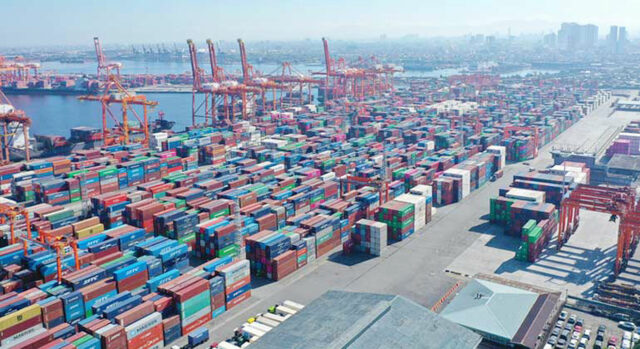
PHOTO COURTESY OF ICTSI

MORE FOREIGN CHAMBERS are opposing the Philippine Ports Authority’s (PPA) proposal to increase storage fees, saying this is ill-timed.

British Chamber of Commerce Philippines Executive Director Chris Nelson said the PPA’s proposal to hike port storage fees should be reviewed since it may affect inflation.

“The key at the moment is to actually keep bringing inflation down… When you put on storage fees, then of course there’s going to be a pass on to the importers or whoever’s distributing it,” he told reporters on Thursday.

Inflation eased to 4.9% in October from 6.1% in September. This was the slowest pace in three months but October marked the 19th straight month that inflation breached the central bank’s 2-4% target band.

“At this particular moment, you do not want prices going up, we want prices to be lower. So, I think it would be very good if we did look at that,” Mr. Nelson said.

At a public consultation in October, the PPA proposed a 32% increase in the storage charges for import, export, and transshipment containers, according to the Philippine Exporters Confederation, Inc. (Philexport). The PPA also plans to impose a 150% surcharge on the corresponding storage rates with an increase for reefer containers.

The PPA has said the increase in storage charges will ensure optimal use of the yards and encourage immediate withdrawal of containers to prevent congestion.

German-Philippine Chamber of Commerce and Industry President Stefan Schmitz said that the increase in storage fees might not be the “right signal” amid the high inflation environment.

“I think we see it even internationally that everybody’s trying to adjust pricing one way or the other. Inflation presses us all so I’m not sure whether [the increase] is the right signal right now, right when everybody is trying to do things more efficiently than trying to charge more,” he said.

Instead of raising storage fees, Mr. Schmitz said the PPA should look into why containers are being delayed. 

“I think you need to have a look at the reasons why things are delayed. Is it because of inefficiencies during clearances or is it the importers mistake? I can understand that the PPA doesn’t make a distinction there, but I don’t think [that the increase] is the right message, personally,” he added.

In its position letter submitted to the port regulator on Nov. 6, Philexport said the PPA’s proposal should go through a regulatory impact assessment as a standard operating procedure under the Ease of Doing Business law.

Philexport said that the increase is “too onerous” if the PPA will be imposing fees on the overstaying containers due to reasons beyond the shipper’s control such as during the arming and disarming of E-TRACC devices on containers, and downtime of the PPA’s information technology systems, among others.

Meanwhile, the Anti-Red Tape Authority (ARTA) said that it is waiting for any formal request regarding the proposed hike in port storage fees.

“What we always say is that if there is a proposed increase by way of a regulation, it should undergo the regulatory impact assessment,” ARTA Secretary Ernesto V. Perez told reporters last week.

“It is the mandate of ARTA to require the PPA to subject any proposed regulation to increase fees to conduct regulatory impact assessment,” he added. 

Last month, the European Chamber of Commerce of the Philippines opposed the increase in storage charges, saying it will make the country less competitive for trade. 

Last week, American Chamber of Commerce of the Philippines, Inc. Executive Director Ebb Hinchliffe said that the chamber is not in favor of any kind of increase in storage fees as businesses are still recovering from the pandemic.

According to Mr. Hinchliffe, the Joint Foreign Chambers will soon release a statement regarding the issue.

Sought for comment, the PPA is yet to respond as of press time. — Justine Irish D. Tabile

Financial services for every Filipino

In promoting the value of financial services among Filipinos, it should be ensured that such services are accessible to everyone. This is what financial inclusion aims.

World Bank defines financial inclusion as a state in which “individuals and businesses have access to useful and affordable products and services that meet their needs — transactions, payments, savings, credit, and insurance — delivered in a responsible and sustainable way.”

Having access to these services gives people the ability to save and manage their finances, generate income, as well as prepare and recover from difficulties. Hence, as the World Bank considers, financial inclusion can be “a key enabler to reduce extreme poverty and boost shared prosperity.”

Financial institutions have a fundamental part in making financial inclusion happen. As the largest Filipino-owned stock life insurance firm with a commitment to believing in every Filipino’s capacities and dreams, Cocolife does its part in achieving financial inclusion through accessibility and affordability and extending the reach of its financial services as well as advocating for equity and equality as an organization.

Cocolife offers a range of financial services — from insurance, investments, to loans — to support Filipinos’ respective financial needs and goals.

When it comes to life and health insurance, Cocolife designed its products with flexibility to cover every Filipino’s unique needs, while also ensuring its affordability to their financial capacities. This is because the company believes that every Filipino should be able to access insurance and healthcare.

“Cocolife aims to bring insurance to the household of every Filipino family. Given the benefits of a sound insurance cover for individuals and families, our countrymen should be able to maximize its benefits to have a more financially secure and stable life,” Cocolife’s SVP-Head of Operations Jose Alfonso Aquino said.

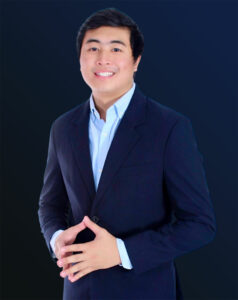
Jose Alfonso Aquino, Senior Vice-President and Head of Operations, Cocolife

“Cocolife’s plans are affordable and flexible since they can be customized according to one’s budget and need. You can have a plan adjusted according to a preferred life coverage and attach more benefits such as riders,” he added, ensuring also that the insurance company can give plans for every Filipino of various income levels.

The company also makes investing accessible for Filipinos through some of its insurance offerings. Its affordable investment-linked life insurance plan LifeVest allows them to financially protect their families while also growing their investments. It also has Flexi-Investment that lets clients design their investment and insurance plan to match their needs.

While also ensuring that its products are diverse and can meet the needs of Filipinos, Cocolife also seeks to expand the reach of its service throughout the Philippines.

Among Cocolife’s efforts to broaden its reach is to have a presence in key areas near to rural areas. The company also utilizes a digital platform to enhance the accessibility of its services. It recently launched its new customer portal Cocolife MyPolicy, which its clients can access over the Internet and allow them to make transactions.

So far, Cocolife has 41 branches across the country, covering locations such as Butuan, General Santos, Palawan, Tacloban, and Tarlac.

Cocolife also ensured the accessibility of its services to persons with disabilities (PWDs). “Our head office, all branches nationwide, bancassurance partners, and online marketing and sales channels are readily available to service them,” Mr. Aquino assured.

The company also made partnerships with other sectors to give assistance to Filipinos with disabilities. Last March, Cocolife worked with the Mobile Hope Program headed by Councilor Arthur L. Allad-iw and the local government unit of Baguio City to donate wheelchairs, crutches, and canes.

Fairness and equality are promoted as well in Cocolife’s entire operations, as it believes everyone deserves to have the best service. The company assures that its services and products know no race, religion, preference, and title.


It also actively takes part in information advocacies to uphold awareness for the lesbian, gay, bisexual, transgender, queer, questioning, intersex, asexual (LGBTQIA+) community.

“Cocolife ensures equality in accommodating and processing applications regardless of gender. The company adheres to strict compliance to policies and procedures to ensure that every policyholder is treated equally with the highest standard of service and respect,” Mr. Aquino said.

And as it promotes financial inclusion through its service, Cocolife also applies this to the people within the organization, particularly through education. The company holds financial literacy programs for its people to gain a more profound understanding of finance and investment and how to apply these principles to their everyday lives.

Opportunities are also presented to the people at Cocolife, such as participation in local and international conventions and taking postgraduate programs. It also values a culture of work-life integration in the organization.

Cocolife is one of the employers recognized in HR Asia The Best Company to Work For in 2022 and 2023.

Learn more about Cocolife’s new and comprehensive life insurance products by visiting www.cocolife.com.


Spotlight is BusinessWorld’s sponsored section that allows advertisers to amplify their brand and connect with BusinessWorld’s audience by enabling them to publish their stories directly on the BusinessWorld website. For more information, send an email to online@bworldonline.com.

Join us on Viber at https://bit.ly/3hv6bLA to get more updates and subscribe to BusinessWorld’s titles and get exclusive content through www.bworld-x.com.

MPTC looks to tap local, foreign banks to reduce debt before IPO

METRO PACIFIC Tollways Corp. (MPTC) is looking to tap local and foreign banks as it seeks to raise fresh funds after putting its planned initial public offering (IPO) on hold, its top official said.

“The general outlook is we need to raise money to reduce our debt level. The problem is our debt level is huge — we have the highest level in MPIC, even higher than Meralco (Manila Electric Co.),” Rogelio L. Singson, president and chief executive officer of MPTC, told reporters on the sidelines of a forum last week.

MPTC, the tollways unit of Pangilinan-led Metro Pacific Investments Corp. (MPIC), earlier said it will defer its IPO to 2025 as the company studies its options amid a plan to form a joint venture company with San Miguel Corp. (SMC).

MPIC earlier announced it was planning to list MPTC on the stock market after its delisting from the Philippine Stock Exchange in October.

The joint venture company with SMC to build expressways could be the candidate to list at the Philippine Stock Exchange.

“Our (debt) level is about P145 billion to P150 billion but as we finish where revenues are coming, we’re able to pay off. That is why we are looking at IPO or strategic investors,” Mr. Singson said.

With the company postponing its planned IPO to 2025, the company is looking at tapping foreign and local banks, Mr. Singson said, adding that it needs to raise about 30% of its debt or between P40 billion to P45 billion.

Asked whether the MPTC is looking at a bond issuance, Mr. Singson said: “In what form, I do not know yet, but we need to raise funds to gap our debt level before the IPO.”

“We need to reserve a portion for IPO. If we need to raise P45 billion, half of that will be from strategic investors, half IPO. We want the public to share,” he added.

MPTC is the tollways unit of MPIC, one of three key Philippine units of Hong Kong-based First Pacific Co. Ltd., the others being Philex Mining Corp. and PLDT, Inc.

Hastings Holdings, Inc., a unit of PLDT Beneficial Trust Fund subsidiary MediaQuest Holdings, Inc., has a majority stake in BusinessWorld through the Philippine Star Group, which it controls. — A.E.O. Jose

Pharrell Williams takes Louis Vuitton to Hong Kong harbor runway

EU.LOUISVUITTON.COM

HONG KONG — Pharrell Williams took to Hong Kong for his second Louis Vuitton runway outing, showcasing the label’s latest menswear designs on a runway overlooking the city’s harbor at night. (See the show here: https://tinyurl.com/ymdewq9d)

The event drew crowds to the Victoria Dockside, a waterfront promenade lining a sprawling complex of shopping malls, exhibit halls and hotels built by Adrian Cheng, the scion of one of Hong Kong’s top property developers.

The LVMH-owned label’s star-studded event comes as post-pandemic tourist flows resume in the region, and as Hong Kong seeks to regain its luster after prolonged periods of lockdowns deflated its retail scene.

Luxury labels are flocking to Asia, and China especially, a key market for the industry, while rising inflation cools appetite for high-end fashion in the United States and Europe.

Fans gathered before the show — some on boats — angling to see celebrities like Chinese actor Dylan Wang and Hong Kong boy band Mirror, as a traditional wooden junk boat floated nearby, its sails lit up with Louis Vuitton monograms.

Ukulele players in T-shirts kicked off the show, playing music composed by Williams, American rapper Swae Lee, and Puerto Rican reggaeton singer Rauw Alejandro.

Models marched down the Avenue of Stars — covered in sand — parading relaxed, tailored looks evoking sailor uniforms, breezy Hawaiian shirts, and varsity jackets with prominent shell motifs.

Williams, 50, famous for pop hits “Happy” and “Blurred Lines,” generated considerable buzz with his first runway show for the label — the world’s biggest — in Paris in June, performing on the Pont Neuf with Jay-Z. — Reuters

China, Chongqing, Changan (Part 1): Swinging for the fences

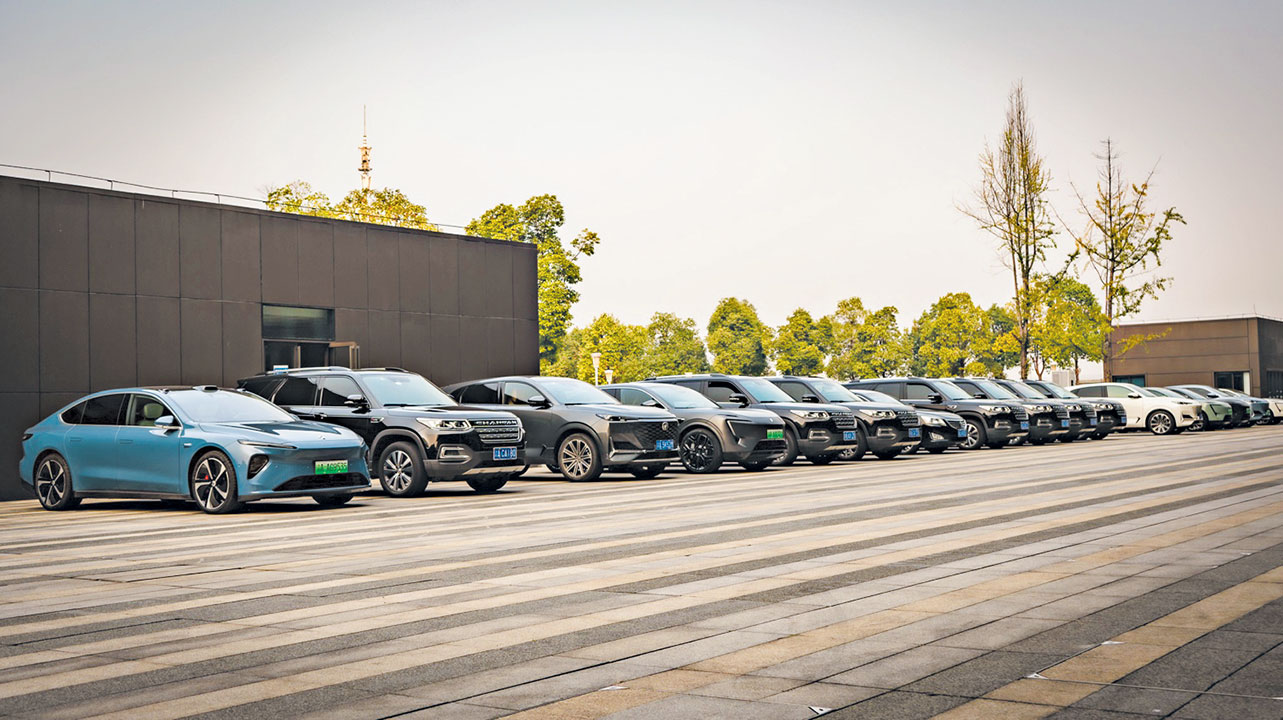
A line of Changan vehicles and its affiliated brands are parked at the Changan Global R&D facility in Chongqing, China. — PHOTO BY KAP MACEDA AGUILA

The China automaker has lofty global aspirations, and the numbers show them

UNDERSTANDABLY, there are now loftier aspirations for Changan Auto in the Philippines when it did a reboot of sorts last September — publicly debuting under a new country distributor group.

London-based Inchcape, the “largest independent global automotive distributor and retailer in the world” with a presence in over 40 markets across five continents, takes over the reins of China’s oldest car maker — adding to its considerable local portfolio of brands here which include Mercedes-Benz, Jaguar, Land Rover, Jeep, Dodge, RAM, Chrysler, Harley-Davidson, and a Mazda dealership, following its merger with CATS.

But obviously due to its more accessible price points, Changan Auto is envisioned to move more units and fill the garage of a greater number of car browsers.

It takes a couple of hours by plane from Hong Kong to Chongqing, which lies in a mountainous region. The undulating terrain is seemingly only broken by the tranquil meandering of the mighty Yangtze, which at some point meets with the Jianling River.

The Chongqing Jiangbei International Airport is built to impress — appearing a little too large for the present traffic of visitors, at least the time we are there. But that may just also be the People’s Republic of China’s Central Government future-proofing the municipality for anticipated growth. Indeed, opened in 1990, the airport has gone through multiple expansion phases.

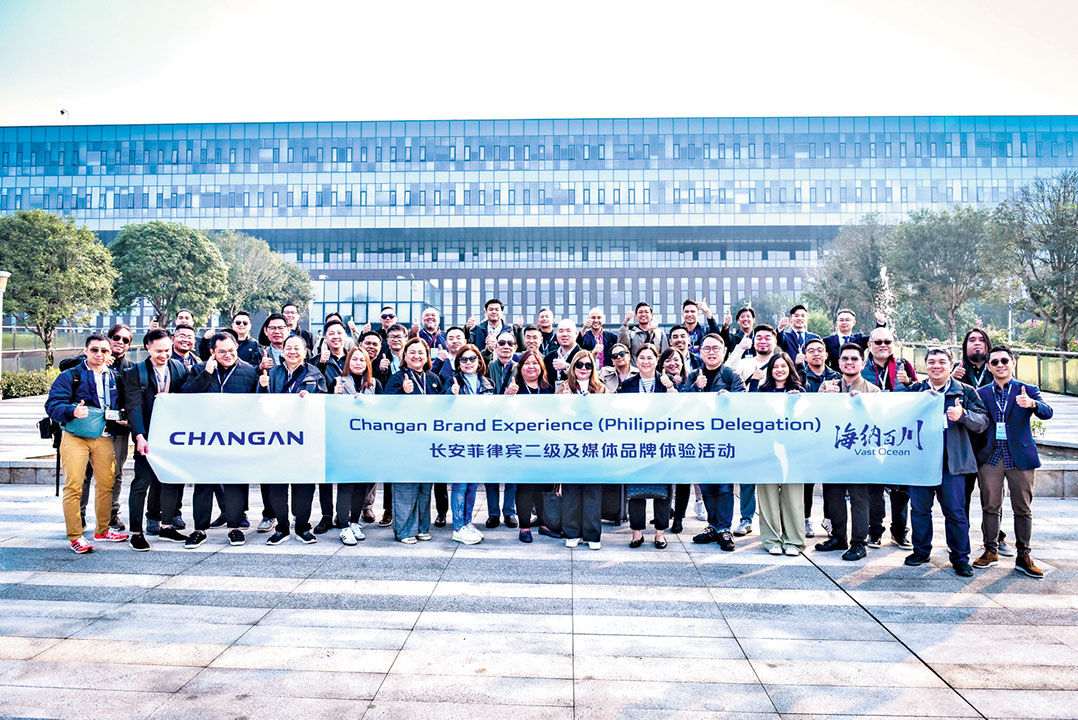
Our group of dealers, bank partners, members of the media, and content creators are greeted by a cold rush of air as we step out of the terminal and head for our bus. This place can get very hot and humid, we are told by our local guide, but we have fortuitously come at a time where the weather is mild.

Hereabouts is home to Changan Auto, the smallest of the so-called “Big Four” state-owned vehicle marques. However, it is the biggest seller of ICE (internal combustion engine)-powered vehicles in the country.

Changan develops vehicles of sub-brands Deepal (or Shenlan, purveying electric vehicles), Avatr (its premium EV line with joint investor CATL, the world’s leading battery manufacturer), Changan Qiyuan (electric vehicle line under the Changan brand), Changan Uni (ICE-powered vehicles), Oshan (mid-level SUVs and MPVs), and Kaicene (commercial vehicles).

Speaking with “Velocity,” Changan Auto Philippines General Manager Maricar Parco shares, “That’s the beauty of this partnership between Changan and Inchcape. The whole brand portfolio of Changan Auto is available for Inchcape Philippines. Again, we introduced the Changan ICE vehicles and previewed the Deepal which we hope to introduce as soon as next year. And because of the proximity of China to the country, we can get our vehicles quite quickly, and it’s really just a matter of having the business proposition approved.”

During a presentation at the massive Changan Global R&D Center, we are told that Changan’s global footprint involves some 72,000 employees, and has created around one million jobs across the supplier/contractor chain. With a market capitalization of RMB210 billion, Changan has 73 branches and subsidiaries, nine manufacturing hubs, and 27 vehicle and power plants in 64 countries and regions. Its global dealership network is 9,000-strong, peopled by 120,000 service staff, and considers the following as its key markets: Mexico, Pero, Chile, Russia, Uzbekistan, Egypt, Saudi Arabia, South Africa, Thailand, and Pakistan.

The Chongqing facility is the nexus of a global network of 10 R&D centers located in Beijing, Shanghai (software development center), Hefei, Japan (styling design center), the US (intelligent driving R&D center), Hebei (light vehicle R&D center), the UK (power R&D center), Germany (styling design center), and another in Europe (design center). Its R&D activities are overseen by a combined complement of 17,000 people from 30 countries.

Back to Inchcape, the Philippines actually becomes its first partnership with Changan Auto in Asia-Pacific, effectively becoming a gateway to presumably more markets here.

If you’re wondering, “Chang-an,” means “lasting safety” in its traditional Chinese form, and the company embraces this as it claims to not only boast a “comprehensive and complete product lineup to the Filipino that is competitive in pricing, yet also exceptional when it comes superior driving performance, in-car technology, and intelligent driving and safety systems.”

At the brand’s aforementioned recent relaunch, Changan International Corp. Vice-General Manager Tom Yin said that the main goals of Changan are electrification, increased connectivity, and a so-called “vast ocean” plan that targets the sale of 1.2 million cars outside of China by 2030.

Meanwhile, Inchcape Philippines Managing Director Alex Hammett had insisted that the global partnership with Changan, inked this year, promises “much better services” to the growing number of Changan customers in the Philippines. Inchcape is poised to leverage its “industry-leading digital and data analytics capabilities based here in the Philippines,” continued Mr. Hammett. “(It’s here) where we have our digital center with over 650 employees working on digital solutions, AI (artificial intelligence), machine learning, cybersecurity, and so on.”

During a recent conversation with this writer, the executive revealed plans to set up a regional Inchcape office in the Philippines. It makes sense, he said, owing to the presence of the digital delivery center, the Filipinos’ fluency in the English language, and Inchcape’s confidence in its CATS Group partner.

Inchcape Philippines Chief Operating Officer Francis Jonathan “Frankie” Ang told “Velocity” the group and its affiliated brands are currently in the process of laying down the IT infrastructure that will bring its systems up to speed with Inchcape worldwide standards and redound in obvious benefit to both internal and external stakeholders.

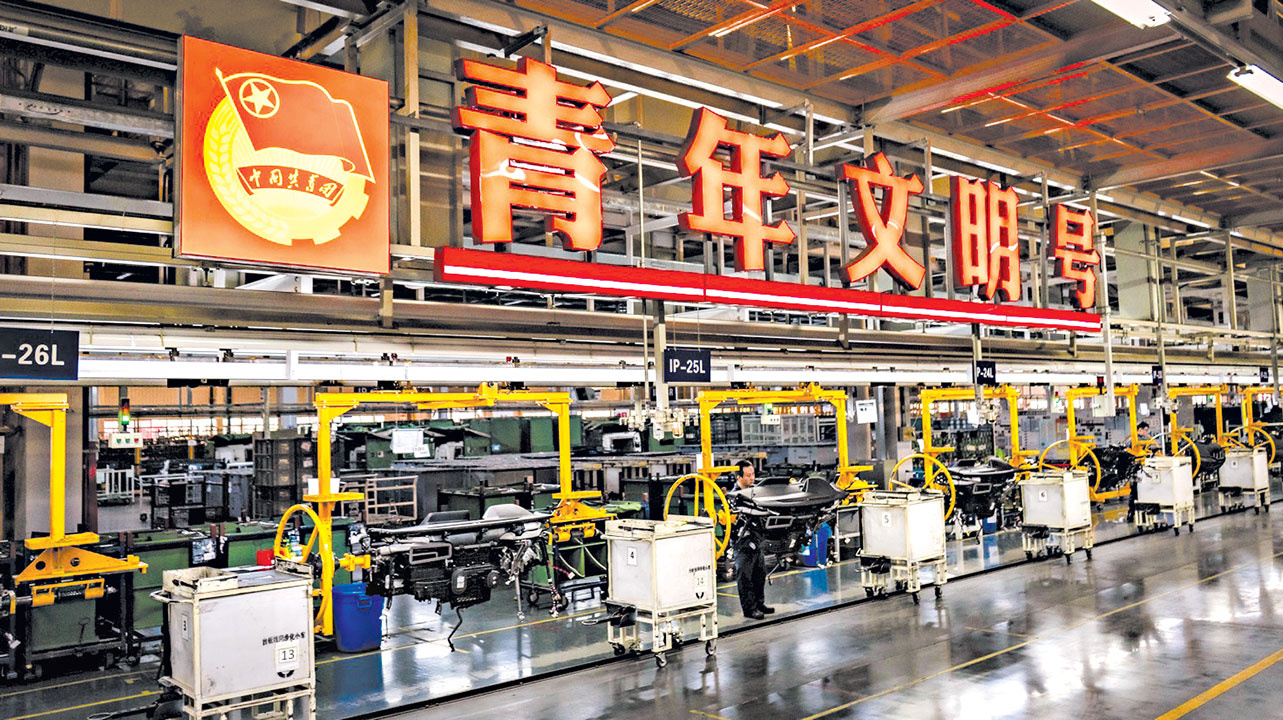
Seeing the girth and breadth of Changan’s operations in Chongqing, it’s easier to fathom how serious the brand is about putting out products that not only look good, but are keenly tuned and tested to pass the sniff test of increasingly discerning car buyers in China, and well beyond its borders.

More about this in our next issue.

Megaworld partners with Suntrust to develop new township project in Palawan

MEGAWORLD Corp. is allocating P7 billion for the development of its new township property project that will rise in Puerto Princesa City, Palawan within the next five years.

The listed property developer has partnered with its wholly owned unit Suntrust Properties, Inc. for the development of the six-hectare Baytown Palawan, it said in a statement on Sunday.

Baytown Palawan will be Megaworld’s 31st township project and will feature residential condominium projects, hotels, and commercial retail developments.

Land development for the project will begin next year, Megaworld said, adding that its unit Suntrust Properties will develop the condominium clusters within the Baytown Palawan, while it will handle the development of the upscale and exclusive residential units within the estate.

“We are bringing the vibrant concept of our very own Forbes Town BGC to Puerto Princesa. We are excited on how Baytown will be able to transform the cityscape of Puerto Princesa,” said Javier Romeo K. Abustan, vice-president of sales and marketing at Megaworld Palawan.

“Finally, we are building our signature concept of a ‘lifestyle estate’ in this Palawan capital city where the residential components of the township perfectly blend with the commercial hub, and of course, the hotel developments within the mix as well. Our themed residential condominium clusters will complement the city’s relaxing natural environment,” said Harrison M. Paltongan, president of Suntrust Properties.

Baytown Palawan is Megaworld’s second mixed-use development project in Palawan and is Suntrust Properties’ first development project in the province.

The company is also developing the 462-hectare Paragua Coastown in San Vicente, Palawan, which features residential condominium projects, commercial retail developments, and hotels.

Megaworld saw a 64.9% increase in its third-quarter attributable net income to P4.14 billion from P2.51 billion in the previous year.

Its nine-month attributable net income rose by 43.3% to P12.02 billion from P8.39 billion in the same period last year.

On Friday, shares in Megaworld closed at P2.03 apiece, down by three centavos or 1.46% from the previous day. — AEOJ

Annyeong, KG Mobility PHL!

Posing with KG Mobility vehicles are (from second from left): TCCCI Executive Director Selene Yu, TCCCI Senior AVP and Director for National Sales Services Chris Yu, KG Mobility Philippines Brand Head and TCCCI SVP and Director Dave Zaballero, TCCCI EVP and Director for National After-Sales Services Rose Dimalanta, and TCCCI EVP and Director for Marketing and Communications Services Lyn Buena. — PHOTO FROM KG MOBILITY PHILIPPINES

TCCCI takes charge of a comebacking auto brand from South Korea

RECENTLY, The Covenant Car Company, Inc. (TCCCI) — already long-known here as the country’s exclusive importer and distributor of Chevrolet vehicles — formally revealed the latest addition to its portfolio of car brand distributorships: KG Mobility. And just like the name sounds, KG Mobility is a South Korean automotive brand now owned by the KG Group. It used to go by the name SsangYong, when it was still under Mahindra of India.

The Korean automotive company has long been recognized for its expertise in manufacturing SUVs in South Korea. Its roots date back to 1954, showcasing almost 70 years of experience in Korean SUV production.

“Products from Korea, including automobiles, are recognized around the world for their outstanding build quality, aesthetic refinement, and for being curated with expert oversight — merits which we are sure will endear Filipinos toward KG Mobility Philippines’ appealing lineup of vehicles,” pointed out KG Mobility Korea Executive Managing Director Ki Young Hwang. He added, “We look with anticipation (to) the growth and development of KG Mobility Philippines. With our partners from TCCCI, the Filipino motoring public can expect a captivating lineup of new-generation KG Mobility SUVs and pickup trucks, while providing reliable, customer-oriented after-sales and technical support for a worry-free ownership experience.”

It’s actually quite refreshing to welcome a new slew of (rebranded) Korean vehicles in the Philippines… and I’m sure Filipino K-Pop fans will be savvy to discover them. TCCCI is very happy to have been awarded the local distributorship, even as several other groups had bid for it. The arrangement between the KG Group and TCCCI was formalized over the third quarter of this year.

“The establishment of KG Mobility Philippines is yet another testament to the ongoing partnership between the Philippines and Korea,” shared TCCCI Chairman of the Board Amb. Jose L. Cuisia, Jr. “The Covenant Car Company, Inc. is very pleased to offer our discerning Filipino car buyers these innovative, safe, and modern automobiles from KG Mobility. We are optimistic that the local motoring public will respond positively to our portfolio of product offerings, and we are likewise eager to grow KGM Philippines into a household name for expertly crafted, reliable, Korean-made automobiles,” he maintained.

KG Mobility’s flagship model, the Torres SUV — PHOTO BY ANGEL RIVERO

Meanwhile, TCCCI Executive Vice-President Lyn Buena, shared with “Velocity” that the company already has a series of KG Mobility roadshows lined up for NCR’s business and lifestyle hubs until the end of the year. These are designed to set a brand-awareness campaign in motion. She also pointed out that, in her opinion, KG Mobility will enjoy its own unique identity in the Philippine motoring landscape that it is not likely to get lost in the blur of all the other new car brands that are coming in.

With that said, KG Mobility Philippines targets to have at least 12 dealer partners in the Philippines within the next 12 months. But interested buyers can already start inquiring and placing their orders now, via existing dealer offices in Alabang, Greenhills, and Angeles City.

Of course, what is critical to a new brand’s successful growth in the Philippines is its carefully selected product lineup, which KG Mobility Philippines has put very much thought into. The brand is starting its journey with the introduction of five value-rich products, namely: the Tivoli Crossover SUV, Tivoli Grand SUV, Torres SUV, Rexton mid-size SUV, and Musso Grand Pickup.

Of the lot, the Torres compact SUV is the brand’s flagship model. And testament to its innovative design and features, it also happens to be short-listed as one of the 36 candidates vying for the 2024 “World Car of the Year” title.

Lastly, to make offerings even more attractive, KG Mobility Philippines’ products will include a five-year/100,000-km (whichever comes first) vehicle warranty, and 24/7 emergency roadside assistance via a dedicated customer support hotline. There will also be home vehicle servicing packages available, for special after-sales cases. Oh, and TCCCI also said that the dealership network will be open to servicing the existing SsangYong-branded models in the Philippines.

Going gold

PHOENIX COLLECTION

Francis Libiran mark’s 25th year eschewing silver

TRADITIONALLY, 25th anniversaries were celebrated with silver gifts. For designer Francis Libiran’s he seems to look forward to another 25 years, building up to a golden anniversary.

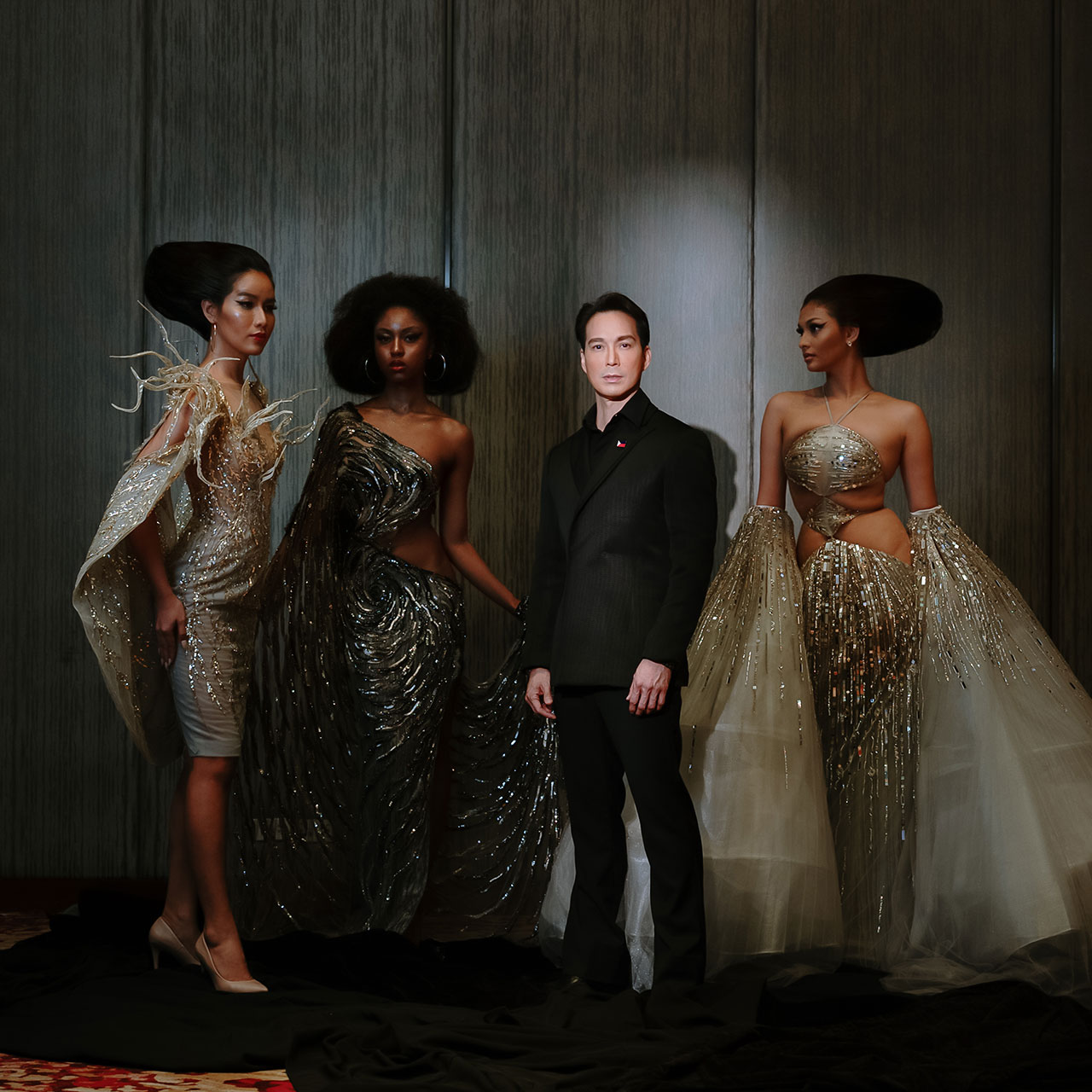
Hardly a trace of silver was seen during his anniversary runway show on Nov. 24 at the City of Dreams. Mr. Libiran showed off a collection inspired by the phoenix, the legendary bird that dies in a burst of flames, only to be resurrected anew in the ashes. Flashes of red, gold, and orange, all resembling the purifying flames of the phoenix, were used profusely throughout the show.

The show opened with two gold dresses, with one having sleeves and shoulders that seemed to bounce away from the body, while another dress had a trailing sleeve, resembling wings. The motif of wings was seen many times: in a gold embroidered jacket, and in another red dress. There were dresses with necklines with tendrils extending from the collar and framing the face, truly resembling fire. The rest of the dresses were remarkably dramatic: think black dresses draped with capes, and another with shoulders formed by crumpled layers of cloth that made one think of an explosion. Models walked and moved slowly, deliberately; as if ballerinas frozen in motion. A red finale dress showed was strewn with crystals, with trailing sleeves dyed to look like flames (the stage’s stark lighting only added to the effect).

This was decidedly different from most of the things Mr. Libiran has done before. His work has been seen on America’s Next Top Model, worn by then-host Tyra Banks herself. Other global celebrities he has designed for include Darren Criss, Angela Bassett, Nikki Reed, Mena Massoud, and Billy Porter — he’s already quite a favorite with local celebrities such as Anne Curtis. He has designed for various productions and television shows, and even sporting events: designing the parade uniforms of Team Philippines for three seasons of the Southeast Asian games. With all these, his work displays an elegant structured form that he can credit to his background in architecture. For this show however, he lets loose and lets drama and emotion reign.

“I want to showcase a different type of Francis Libiran this time. I really played with textures, layers,” he told BusinessWorld in a backstage interview. As for where his architectural background comes into play, he said, “Structure. If you saw how it was constructed, it has that architectural touch to it.”

The show was a treat for the other senses. Some of the chosen music for the runway included covers of “Can’t Take My Eyes Off Of You” and “Damn Your Eyes.” Asked about his song choices, Mr. Libiran said, “May meaning iyon eh (it has a meaning).” Prodded further, he laughed and said, “Secret.”

As for the sense of smell, Mr. Libiran is venturing into perfumery, with scents like Gardenia Mango, Spice Oud, and Neroli Clavel, created by Renato Lopena, Jr. A part of the proceeds from the perfume sales will go to CBN Asia and Operation Blessing Foundation Philippines.

The perfumes also mark new beginnings in new ventures: the scents will be sold online and in his stores. Furthermore, he’s planning to jump into furniture design and ready-to-wear. “Ang dami pa (there’s still a lot more),” he said. “Since I’m an architect by profession, anything related to design.”

In the optimism of years past, people once celebrated their 25th birthdays and called them “quarter of a century parties,” everyone hoping to hit 100 someday. Mr. Libiran looks back on his own 25 years: “Being in the business for 25 years is something very meaningful for me. It has its ups and downs.” — Joseph L. Garcia

A dependable partner for every business

Most businesses operate on routine. Business models rely on meeting set expectations through pre-planned strategies on projected timetables.

This is largely why massive disruptions like the COVID-19 pandemic have caused so much devastation in the global economy. Unpredictability and volatility are bad for business.

It is clear why many businesses, small and medium enterprises (SMEs) in particular, place a premium on dependability in their strategic partners. It is very important to have stable partners who can be relied on even in the most trying circumstances, especially when it comes to the healthcare benefit programs for their employees.

Cocolife, the largest Filipino-owned stock life insurance firm and the first ISO-certified Filipino insurance company, has proven to be a such a trustworthy partner, especially in the wake of the COVID-19 pandemic.

Even now, the company is thinking of new ways to help their partners adjust to post-pandemic life.

“Since the start of the new normal, businesses and consumers have increasingly shifted into e-commerce, providing and purchasing goods and services online,” Atty. Alloysius R. Yebra, executive vice-president and head of healthcare division of Cocolife, said.

Atty. Alloysius Yebra, Executive Vice-President of Healthcare Division, Cocolife

“Thus, to keep up with the industry trend, our Healthcare [Group] and the entire Cocolife Group have moved towards digitalization to effectively utilize the internet as an avenue to cater to the evolving needs of our clients. This is also part of our initiative to make healthcare, life and non-life insurance, and investment products more accessible to Filipinos.” Atty. Yebra also noted that Cocolife has begun making improvements with their Healthcare Call Centers in line with initiatives aimed at maintaining and fostering good relationships with the company’s brokers and agents, who play a vital role in the industry.

“Cocolife-Healthcare should be the choice of clients due to its versatility in terms of our portfolio of offerings and our vast network of accredited service providers and facilities nationwide. We are committed to providing the best health insurance service to every Filipino,” Atty. Yebra said.

Currently, Cocolife offers life, accident, and health insurance plans; hospitalization plans; medical reimbursement programs; and third-party administration programs, among others. Cocogen, a member of the Cocolife group, provides non-life insurance designed to protect Filipino homes, businesses, automobiles, and even pets.

“My dream is for every Filipino family to have health insurance, not just ordinary health insurance but Cocolife-Healthcare insurance. I want every Filipino to associate reliable and accessible health insurance with Cocolife. In order to achieve this, I will work hard to ensure that our clients receive the best possible service. I will work on coordinating customer feedback, analysis of market trends, and implementation of solutions,” Atty. Yebra said.

Reliability beyond insurance

The Cocolife group has also strived to move beyond insurance as a way to engage and serve Filipinos.

”In any company, the people or their employees is still its best asset. To ensure the company’s success, business owners should take care of their employees as they render their talents and service to the company,” Maricar Mangulabnan, senior vice-president and head of group marketing at Cocolife, said.

Maricar Mangulabnan, Senior Vice-President and Head of Group Marketing, Cocolife

While businesses can avail of Cocolife’s comprehensive employee benefit packages to boost morale and retain employees of corporate clients, the company also offers packages designed for small to medium enterprises.

“We have group life insurance plans that can cover at least a group of three people with insurance benefits ranging from P300,000 to as much as P1 million,” Ms. Mangulabnan said. “Cocolife can come up with insurance benefit programs to suit the requirements of any business, big or small. We are flexible and committed to provide the best service possible to our clients in the most reasonable cost.”

“Cocolife has been a consistent leader in corporate and institutional insurance. With its long-running experience in the group insurance industry, Cocolife has been exposed and has been the preferred insurance benefit provider of entities from almost all types of business sector. Cocolife caters to start-up companies, SMEs, conglomerates and even local government units and agencies.”

Atty. Yebra added that the entire Cocolife group is continually studying and monitoring the market’s needs to come up with innovative solutions to best address its clients’ preferences. In relation to this, Cocolife has a specific department that primarily focuses on the development of these new and innovative products.

Atty. Yebra pointed out that with their wide array of quality and innovative insurance and investment solutions, Cocolife aims to become a one-stop shop designed to serve every Filipino.

“I am optimistic that the Philippine healthcare sector will grow significantly in the coming years. It will grow due to technological advancements, the increased health and wellness awareness of Filipinos, and implementation of national policies with regard to health. All these indicators point towards significant growth in the industry,” he said.

“Cocolife Healthcare will contribute to this growth by continuously adapting to our clients’ needs and improving processes that lead to the most efficient service. With our vast network of accredited service providers and facilities nationwide, we will continue to make healthcare more accessible to Filipinos from all walks of life.”

Learn more about Cocolife’s new and comprehensive life insurance products by visiting www.cocolife.com.


Spotlight is BusinessWorld’s sponsored section that allows advertisers to amplify their brand and connect with BusinessWorld’s audience by enabling them to publish their stories directly on the BusinessWorld website. For more information, send an email to online@bworldonline.com.

Join us on Viber at https://bit.ly/3hv6bLA to get more updates and subscribe to BusinessWorld’s titles and get exclusive content through www.bworld-x.com.

Development of energy, data center infrastructure to boost real estate sector

FREEPIK

THE DEVELOPMENT of renewable energy and data center infrastructure in the country is expected to drive the real estate sector’s growth next year, according to real estate services firm Santos Knight Frank.

“Globally, the need for data centers is massive. In the Philippines, we have a number of data center groups and a number of telcos have been aggressive in that space. Renewables, there are also a number of big players in there. A lot of that would contribute to this growth,” Rick Santos, chairman and chief executive officer of Santos Knight Frank, said in a briefing last week.

The construction of new infrastructure in the pipeline is also expected to support the appreciation of residential prices, Mr. Santos said.

The strong push for infrastructure development in these sectors, such as data hyperscalers and new renewable energy facilities, will help improve the real estate segment by increasing demand for warehousing, cold storage and distribution, he added.

The Philippines is seen as an attractive location for hyperscalers due to the country’s strategic position in the Southeast Asian region, he said.

The Department of Information and Communications Technology expects data centers’ capacities to increase by five times to 300 megawatts (MW) by 2025.

For renewable energy, the government is targeting to grow its capacity, with about 50,366.96 MW worth of renewables listed as indicative projects for years 2024 and 2026.

The real estate sector is expected to end this year strong amid contributions from the commercial and residential segments, Mr. Santos said.

“The office market has continued its road to recovery post-COVID. The increased demand from conventional office tenants and flexible office operators has significantly contributed to the upswing in commercial leasing requirements. We are expecting this momentum to continue in 2024,” he said.

Santos Knight Frank data showed Manila’s current office occupancy rate is at 80%, improving in three straight quarters from the all-time low of 75% in the fourth quarter of 2022. Bonifacio Global City and Makati continue to post the highest occupancy rates at 89% and 80%, respectively.

“The increased demand from conventional office tenants and flexible office operators has significantly contributed to the upswing in commercial leasing requirements. We are expecting this momentum to continue in 2024,” Mr. Santos said.

Santos Knight Frank noted occupiers in the Philippines still prefer quality buildings that provide good value.

In the third quarter, prime buildings’ vacancy rate stood at 17%, lower than the 20% average office buildings’ vacancy.

This, despite prime monthly lease rates (P1,244 per square meter or sq.m.) being higher than the market’s P980 per sq.m., the data showed.

Makati City had the highest rate with weighted average lease rate of P1,143 per sq.m. a month, followed by Fort Bonifacio (P1,098 per sq.m.) and Bay Area at (P902 per sq.m.), based on the data. — AEOJ

Lazada launches PiliPino campaign to boost and celebrate the best of local e-commerce

From L-R: Lorina Tan, Apple Caballes-Suntay, Evan Maderazo, Margarita Gutierrez, Nina Ellaine Dizon, Cat Juan Ledesma, Myrza Sison, Rianna Puno Garcia, Lynn Pinugu, Bianca Gonzalez Intal, Mia Colborne, Pauline Castro, and Michelle So

Lazada, She Talks Asia highlight the stories of Filipina entrepreneurship

Leading e-commerce platform in the Philippines, Lazada, introduces PiliPino by Lazada, a holistic program that aims to drive inclusive growth by boosting and celebrating the best of Philippine e-Commerce – people, places, and products. The program will champion micro, small, and medium enterprises (MSMEs) and aspiring entrepreneurs through mentorship and sustained support, from onboarding to the launch and growth of their businesses on the platform.

“Many of our products and sellers on Lazada are proudly local. We feel honored to be able to help them in maximizing their online businesses, as well as guiding their consumer reach through the tools, technology, and support that we provide. PiliPino by Lazada is our umbrella campaign for ‘choosing Filipino’ as our social responsibility. This is inspired by the intention of mentoring and empowering Filipino entrepreneurs, elevating homegrown businesses, and promoting sustainability,” says Pauline Castro, Head of Traffic Strategy and Product Operations.

Proving its dedication to championing Filipino artistry and entrepreneurship, Lazada marked the beginning of PiliPino by Lazada through “She Talks Conversations,” in partnership with women empowerment community and advocacy agency, She Talks Asia. Led by She Talks Asia Co-Founders Lynn Pinugu and Bianca Gonzalez-Intal, the event was held to create a space for women to share their own personal stories and exchange insights that will help Lazada build on their new program.

“She Talks Asia is honored to partner with Lazada for the PiliPino campaign. As a community and organization committed to empowering women and amplifying underrepresented voices, we are proud to join Lazada in their impactful efforts to support local businesses, particularly those championed by remarkable women, helping them expand their reach and propel toward sustained growth and success,” says She Talks Asia CEO and Co-founder Lynn Pinugu.

Lazada invited women entrepreneurs who have endured the ropes of building their businesses while balancing work, family, and personal lives. With the She Talks Conversations led by Try Local PH Founder Cat Juan Ledesma, the women entrepreneurs were given the chance to share, listen, learn, and relate to one another’s stories. These women entrepreneurs include Apple Caballes-Suntay of Storage Solutions, Evan Maderazo of Sundals, Lorina Tan of Tiny Buds and Blooms, and Michelle So of Blithe.

Pauline Castro, Head of Traffic Strategy and Product Operations at Lazada Philippines

The women shared their journeys as entrepreneurs, from hardships to triumphs experienced, as well as their own personal mentors who helped pave the way to their success. Like many businesses, they too dealt with the hardships brought about by the COVID-19 pandemic, which enabled them to learn the ropes of e-commerce and build their businesses on Lazada.

“I started working with the communities my late mother used to work with, and I began to understand why she did what she did—why she chose to help our fellow Filipinos. Today, I am working on building a community called ‘Localpreneurs,’ a platform to empower small startups and local businesses on their entrepreneurial journey while keeping our local communities in mind,” says Evan Maderazo, Founder of Sundals.

Lorina Tan of Tiny Buds and Michelle So of Blithe

“We are not just doing this business for ourselves. One of our products uses purified water, and we thought that if we can take this water and put it in our products, how unfair is it that there are still children in the Philippines that don’t have access to water, even to just wash their hands? This is how we were able to come up with a project called Drops of Hope, where the proceeds of our products, Tiny Buds Baby Bottle Wash or Waterfill Wipes, go to the building of sustainable water fillers,” says Lorina Tan, Founder of Tiny Buds.

From L-R: Try Local PH Founder Cat Juan Ledesma, Apple Caballes-Suntay of Storage Solutions, Evan Madarezo of Sundals

The personal stories of the women sparked conversations between the guests invited by Lazada, such as fellow women entrepreneurs Nina Ellaine Dizon of Colourette Cosmetics and Maica Salud-Tady of Vestido.

Following the dialogue of the women entrepreneurs, Lazada is set to live out its commitment to helping MSMEs flourish in their respective industries by providing up-and-coming entrepreneurs with opportunities to grow and maximize their potential through the mentorship program, which will be piloted in key priority areas across the Philippines, as well as the microsite for Filipino-made products.

PiliPino Launch in partnership with She Talks Asia at Manila House

“Lazada takes social sustainability at the core of its business operations, recognizing the meaningful relationships it has built among Filipinos. Through PiliPino by Lazada, we aim to create an ecosystem that drives growth and positive change in our local communities with the help of our women entrepreneurs whose stories can be shared with many others,” says Castro.

To discover the best of local MSMEs and communities, visit PiliPino on Lazada.


Spotlight is BusinessWorld’s sponsored section that allows advertisers to amplify their brand and connect with BusinessWorld’s audience by enabling them to publish their stories directly on the BusinessWorld website. For more information, send an email to online@bworldonline.com.

Join us on Viber at https://bit.ly/3hv6bLA to get more updates and subscribe to BusinessWorld’s titles and get exclusive content through www.bworld-x.com.

ADVERTISEMENT
ADVERTISEMENT