Home Blog Page 3921

China ready to offer grants to Vietnam to build faster rail links — ambassador to Vietnam

REUTERS

HANOI — China is ready to offer grants to Vietnam to upgrade a railway link from Guangxi to Hanoi, and speed up plan to develop other railway systems connecting the two countries, the Chinese ambassador to Vietnam said, according to Vietnamese state media.

“Both of our countries need to enhance interconnections on land, sea, air and on the internet,” Xiong Bo told Vietnamese reporters late on Sunday, Tuoi Tre newspaper reported, ahead of a visit to Hanoi by Chinese President Xi Jinping starting on Tuesday. — Reuters

No global carbon price? Some companies set their own

PEXELS-PIXABAY

BOSTON/DUBAI/SAN FRANCISCO — A growing list of global companies are setting a price or charging themselves for each metric ton of their carbon emissions, looking to shape their investments and business for future pollution taxes or other new climate rules.

Their prices are all over the place, from less than $1 per metric ton of carbon emissions to $1,600, the most of any company worldwide, set by California drugmaker Amgen.

Regulators, too, have offered a range of prices, including the Biden administration’s “social cost” of carbon, around $200, and a suggestion from the International Monetary Fund that it should be at least $85 by 2030.

Incorporating the cost of carbon dioxide and other greenhouse gas emissions into business decisions has been a dream of climate activists for decades as a way to force corporations to cut emissions.

While a standardized global carbon price is not going to be set at the COP28 climate summit underway in Dubai, the concept has many uses in business such as enabling executives to charge their own divisions extra to use power from fossil fuels, thus making renewables more attractive.

“While there are other strategies to do so, failure to use this tool could imply that companies may be failing to adequately plan for the medium- to long-term realities of the cost of carbon,” said Amir Sokolowski, global director for climate change at CDP.

An analysis by the non-profit for Reuters found that 20% of 5,345 global companies making climate-related disclosures said they used an internal carbon price last year, up from 17% the year before. Another 22% planned to do so in the next two years, although historically only a fraction of the companies that planned to implement one have done so.

The analysis from CDP, not previously published, reveals both that companies have embraced the new planning tool but also that much debate remains about what prices will spur significant action by companies to cut emissions.

Shown the trends, several analysts told Reuters the emerging picture is one of executives getting ready for some type of new emissions regulation even if they lack a clear sense of what’s ahead.

Companies are “getting ready for the reality that it’s going to be required” said Columbia University economist Joseph Stiglitz. But the median prices are still too low to have a major impact on corporate decision-making, making the effort a “mixed bag”, the Nobel Prize winner said.

Companies do not have a simple path to follow, since using a high carbon price can dramatically change investment plans, while using a low one can bring charges of “greenwashing.”

Several executives who spoke with Reuters said internal pricing plans help them cut emissions and clarify the implications of capital spending and other business activities for the planet.

Market prices for carbon offsets can range from $5 to $1,500 a metric ton, said Joe Speicher, chief sustainability officer at software maker Autodesk.

Autodesk has steadily raised its internal carbon price to $20. Ideally regulators would clarify how companies should treat emissions costs, Speicher said. “Wouldn’t it be nice to have a public authority to help to create a more coherent market?” he said.

The company uses the price to help identify things like the value of its investments in carbon-removal projects, he said.

TYING IN TO MARKETS
Various carbon markets operate globally, including the European Trading System, where carbon currently trades around $70 per metric ton.

Many companies have designed their own internal mechanisms. When carmaker Volvo embraced internal carbon pricing, it could not find a good model to follow because “very, very few companies” used such prices throughout their business, Jonas Otterheim, Volvo’s head of climate action, said in an interview.

Volvo has incorporated a “shadow price” of 1,000 krona per metric ton, about $92, in decisions ranging from which model vehicles to produce to what materials to use in factories. Adding the cost of carbon pollution to aluminum, for instance, made using aluminum created with renewable energy a “super high priority” because it has less than a quarter of the carbon emissions of typically made material, he said.

Similarly, Volvo reconsidered the real cost of its bigger cars as stricter EU rules come into effect.

The discussion “actually made us change the whole volume planning of the company to say that we should not prioritize some cars versus other even though they look more profitable, because they will actually sort of give us a penalty that other cars won’t,” Otterheim said.

Drugmaker Amgen assesses an “internal fee” of $1,000 per metric ton on higher-emitting projects. Proceeds are then used to fund emissions-cutting projects. For example, a utility expansion project in Ireland added $700,000 to its sustainability budget, a spokesperson said.

In its 2023 CDP climate report, Amgen said it also uses an “investment evaluator” to judge whether to buy new emissions-reduction equipment, using an even higher price for carbon.

“Sustainability projects that cost more than traditional projects but are less (than) $1,600 per (metric ton) of CO2e emissions reduced are considered reasonable for design,” the report states. Amgen as a science-based company aims to be carbon-neutral within its own operations by 2027, the spokesperson said.

A PRICE THAT BITES
Several analysts who spoke with Reuters offered a range of views about what price companies should use.

Gunther Thallinger, a board member of German insurer Allianz and a member of a U.N. climate advisory council, said a comprehensive global carbon market would be “a massive boost” to efforts to cut emissions. 

But the current variation in prices is a problem, especially with some prices below $5 per metric ton.

“I fear this is going in the direction of greenwashing,” he said.

However, Anita McBain, head of EMEA ESG Research for Citi, said practical uses matter more than high prices.

“We’d rather see a carbon price with teeth than one without. We’d rather see a $25 price that’s actually influencing decisions versus a $75 price that’s just a tick-the-box,” she said. 

For the latest news from companies, data, and decisions around ESG finance, sign up for the Sustainable Finance newsletter here. — Reuters

Climate-hit nations seek COP28 action on ‘adaptation emergency’

PHILIPPINE STAR/KRIZ JOHN ROSALES/PPA POOL

DUBAI — Sierra Leone student Henry David Bayoh is under no illusions about the challenges his West African nation faces from climate change, from vulnerable farmers struggling to grow crops in higher heat to city neighborhoods hit by fatal landslides.

In the capital Freetown, where Bayoh lives in a low-lying community called Aberdeen near the ocean, sea levels are rising, beaches are being eroded and flash floods hit when it rains heavily.

Faced with such threats, people need help to become more resilient and to protect their incomes, he said at the COP28 U.N. climate summit in Dubai this weekend.

He called for more funding for community efforts to adapt to a warmer world – including the nature-friendly farming methods he promotes in his work with Irish aid agency Trocaire.

“Climate change is existential. It is affecting our very survival,” Bayoh told Context during a march for climate justice. “Adaptation is a key priority for us and it should be top of the agenda.”

At COP28, governments and activists from vulnerable countries across the Global South are making similar pleas to negotiators hammering out what a global goal on adaptation – enshrined in the 2015 Paris Agreement – should look like in practice, and how it can be funded and its progress measured.

On Saturday, Collins Nzovu, Zambia’s green economy and environment minister, told journalists adaptation is “a matter of survival for us in Africa” to curb the damage to lives and livelihoods from more extreme weather fueled by climate change.

“We are in an adaptation emergency,” said Nzovu, speaking for the Africa group of countries at the talks.

He said African nations have yet to receive the support they need to respond and called for “new, additional and predictable finance” for that purpose.

MORE MONEY?
Talks in Dubai on the adaptation goal have snagged on disagreements over finance, with developing nations calling on rich countries to show how they will meet a vague commitment, made two years ago, to at least double finance for adaptation by 2025, from 2019 levels of around $20 billion.

According to the latest data from the Organization for Economic Co-operation and Development, adaptation finance in 2021 was just under $25 billion, a 14% decrease from the previous year.

At COP28, rich countries have offered about $170 million in contributions to the U.N.’s Adaptation Fund. That is only a little over half of the fund’s $300-million goal this year for projects such as flood defenses and early-warning systems.

In November, the U.N. Environment Program said annual adaptation costs in developing countries are expected to hit $215 billion to $387 billion each year from now until 2030 – 10 to 18 times more than actual finance levels, with the gap growing. That shortfall in adaptation cash is likely to lead to rising demand for disaster aid or for cash from a new “loss and damage” fund set in motion at COP28, experts warned.

“We are likely to get on a path where we will find ourselves in a humanitarian crisis because our adaptation funding is not matching the (impacts from) rising emissions,” said Mohamed Adow, director of Kenya-based think-tank Power Shift Africa.

He and other observers at the talks said donor countries, including the United States, Britain and the European Union, had obstructed efforts to get more ambitious language on adaptation finance into the “play-book” for the global goal on adaptation.

WATER, FOOD AND HEALTH
Development experts in Dubai, however, did welcome a set of targets in the text to build resilience by 2030 in a range of areas, including water supplies, agriculture, health, ecosystems, infrastructure, urban areas and cultural heritage.

Claire Seaward, global campaigns director for WaterAid, noted that access to clean water and sanitation services “is a first line of defense that builds communities’ resilience to better face the climate crisis”.

But within the targets, “we need quicker time-frames, stronger targets for achieving progress, and real accountability for meeting the financing target of at least doubling of public finance by 2025”, she said in comments to Context.

Cassie Flynn, global director of climate change at the United Nations Development Program (UNDP), which has the largest portfolio of adaptation projects among U.N. agencies, said investing in adaptation is “just the smart choice to make”.

Figures from a 2020 UNDP paper put the economic costs due to climate change of urban flooding at $1 trillion a year, while adaptation costs to deal with this and other problems were estimated at $80 billion-$100 billion per year, she noted.

The need to adapt to climate change is no longer just a matter for vulnerable developing countries but for all parts of the world, she said, noting that North America has been hit hard by wildfires and Germany has suffered huge losses from floods in recent years.

Agreement in Dubai on a framework for the global goal on adaptation would help governments think more ambitiously and offer new opportunities for finance in climate action plans, she said, calling it “an immense opportunity we shouldn’t squander”.

“We have entered a new era. Adaptation isn’t a choice – it is necessary to keep people safe,” Flynn said in an interview.

“No matter what country you are in, no matter what size economy you are, no matter what the world looks like from your vantage point, adaptation is for everyone.” — Reuters

Global Dominion Financing is the fastest growing auto finance company

Global Dominion Financing, Inc. was named as the Fastest Growing Auto Finance Company by the International Finance Awards 2022.

International Finance Awards recognizes industry talent, leadership skills, industry net worth, and capability on an international platform. The winners are awarded on the strength of their credentials and past accomplishments.

The criteria include path-breaking initiatives in corporate social responsibility or charitable activities, corporate governance, and activities that benefit the global finance community, in addition to outstanding performance in their respective fields.

The title was awarded to Global Dominion Financing, Inc. due to its unwavering commitment to empowering Filipinos to achieve their goals through easy and innovative loan products that cater to diverse needs, offering affordable solutions and convenient payment options. The company’s focus on collateralized products, focusing on vehicle financing comprises about 85% of its business. Global Dominion Financing, Inc. prides itself on their fast processing of loans that are done within 24 hours at more than 70 strategically located branches nationwide.

Patricia Poco-Palacios, Global Dominion Financing, Inc. president & COO

“We thank International Finance for this recognition, the Fastest Growing Auto Finance Company in 2022. I am personally grateful to our team members who have consistently demonstrated outstanding performance and commitment to our purpose. And, of course, we thank our customers and partners for their continued support. Our success would not have been possible without their trust,” said Patricia Poco-Palacios, Global Dominion Financing, Inc. President & COO.

Robert B. Jordan Jr., Global Dominion Financing vice-chairman and CEO

“The auto finance industry has been growing and is evolving faster globally, so we are very humbled to know that Filipinos’ trust to Global Dominion when it comes to auto financing is continuously growing strong. We will pay it forward by further improving our service speed while keeping our processes simpler. We endeavor to be of service to more Filipinos and adapt to what they need, be it hybrid cars, more SUVs, or even trucks for their businesses,” said Robert B. Jordan Jr., Global Dominion Financing Vice Chairman and CEO.

Ruben Y. Lugtu II, Global Dominion Financing chairman of the Board

“This recognition is a testament to our hard work and a reflection of the trust and support we have received from our valued customers. We express our heartfelt gratitude for their unwavering loyalty. Their trust in Global Dominion Financing has played a pivotal role in our growth, and we are committed to continually exceeding their expectations,” said Ruben Y. Lugtu II, Global Dominion Financing Chairman of the Board. “On behalf of Global Dominion Financing, I extend my appreciation not only to our diligent employees, whose commitment drives our success, but also to our esteemed partners who have been instrumental in our journey,” Lugtu added.

In 2022, Global Dominion’s loan portfolio grew to P6.8 billion—a significant 45%-growth. Revenues grew to P2.051 billion, posting a 70% growth (from 2021 to 2022), while net income grew by 43% to P465.4 million (from 2021 to 2022).

Global Dominion Financing, Inc.’s Car Financing (brand new and second-hand) makes it easier for ka-partners to get their dream car or trucks (for business owners) with convenient processing methods, easy repayment terms, and low interest rates. It has the best loan and financing offers with the most competitive features in the country, known for providing refinancing also known as car collateral loan or sangla OR/CR, both online and through its 84 branches located nationwide.

To inquire, go to https://gdfi.com.ph/ and fill out a form, and a loan officer will get back to you within 24 hours.


Spotlight is BusinessWorld’s sponsored section that allows advertisers to amplify their brand and connect with BusinessWorld’s audience by enabling them to publish their stories directly on the BusinessWorld website. For more information, send an email to online@bworldonline.com.

Join us on Viber at https://bit.ly/3hv6bLA to get more updates and subscribe to BusinessWorld’s titles and get exclusive content through www.bworld-x.com.

China’s actions in S. China Sea undermine regional stability – US State Dep’t

ADAM SZUSCIK-UNSPLASH

MANILA – The United States has called out China for interfering in the Philippines’ maritime operations and undermining regional stability, urging Beijing to stop “its dangerous and destabilizing conduct” in the South China Sea.

The Philippines and China have traded accusations over a ramming incident at the weekend involving their vessels while Manila’s vessels were on a resupply mission to Second Thomas Shoal where its soldiers are stationed in a deliberately grounded navy vessel.

“Obstructing supply lines to this longstanding outpost and interfering with lawful Philippines maritime operations undermines regional stability,” State Department spokesperson Matthew Miller said in a Dec. 10 statement shared by the US embassy in Manila on Monday.

The United States has called on China to comply with a 2016 arbitral ruling that invalidated its sweeping claims in the South China Sea.

At the weekend, the Chinese coastguard called on the Philippines to stop its “provocative acts”, saying China would continue to carry out “law-enforcement activities” in its waters.

The United States also reiterated its support for treaty ally, the Philippines, and reaffirmed its commitment to the mutual defence pact between the two countries.

Philippines President Ferdinand R. Marcos, Jr. separately said the presence of Chinese coast guard vessels and maritime militia in his country’s waters is illegal and their actions against Filipinos is an outright violation of international law.

The Philippines has further steeled its determination to defend and protect its nation’s sovereign rights in the South China Sea amid “aggression and provocations” by China, Marcos posted on the X social media site late on Sunday.

“We remain undeterred,” the President said. — Reuters

Peso set to ride remittance wave on Philippine holiday spending

BW FILE PHOTO

The Philippine peso has outperformed its Asian peers this year and a seasonal pick-up in overseas remittances ahead of Christmas will likely extend the gains.

Remittances are a key pillar of the nation’s economy, which typically receives the highest cash transfers in the last month of the year as workers send money home for holiday spending. The inflows have helped strengthen the currency in all but three Decembers in the last 10 years, data compiled by Bloomberg show.

Rizal Commercial Banking Corp. sees the peso rising as high as P54 per dollar by year-end — its strongest level since February and an increase of about 2% from last week’s close of P55.31. Australia & New Zealand Banking Group estimates the currency will rise to P55.2 versus the greenback by the month-end.

“Markets expect the seasonal increase in overseas Filipino workers remittances and conversion to pesos in the fourth quarter, especially in the latter part toward the Christmas season — a consistent pattern seen for many years,” said Rizal chief economist Michael Ricafort.

The Philippines was the world’s fourth-largest recipient of remittances in 2022. Inflows during January-September rose 2.8% from a year ago to $24.5 billion and figures for October are due Friday.

Besides the boost from remittances, the nation’s lower-than-expected inflation is also “encouraging” for bond inflows, which will help drive the currency higher, said Irene Cheung, FX strategist at ANZ in Singapore.

Philippine consumer prices rose 4.1% in November from a year ago, the slowest pace since March 2022 and near the central bank’s 2%-4% target. While the decline gives Bangko Sentral ng Pilipinas room to leave its key rate unchanged for a second meeting on Dec. 14, Governor Eli Remolona last week said both a rate pause and a hike are on the table. A hawkish tone will help support the peso.

While the currency is expected to benefit from broader weakness in the dollar, a narrower trade gap and stellar economic growth are also providing tailwinds. The World Bank sees Philippines’ growth accelerating to 5.8% next year, driven by a healthy labor market and stable remittances growth.

The nation’s “surprisingly strong” growth and a smaller-than-expected trade deficit “on the back of lower oil prices” is adding to the peso’s strength, said Michael Wan, a senior currency analyst at MUFG Bank. — Bloomberg

Primeworld Land tops off highly anticipated Primeworld Pointe in Cebu

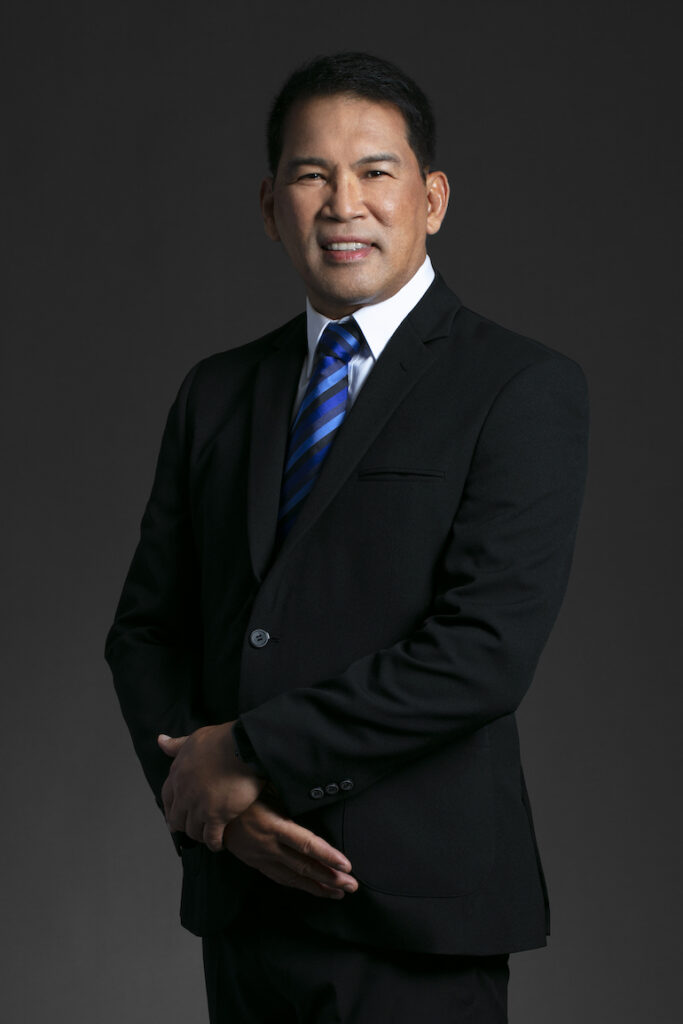
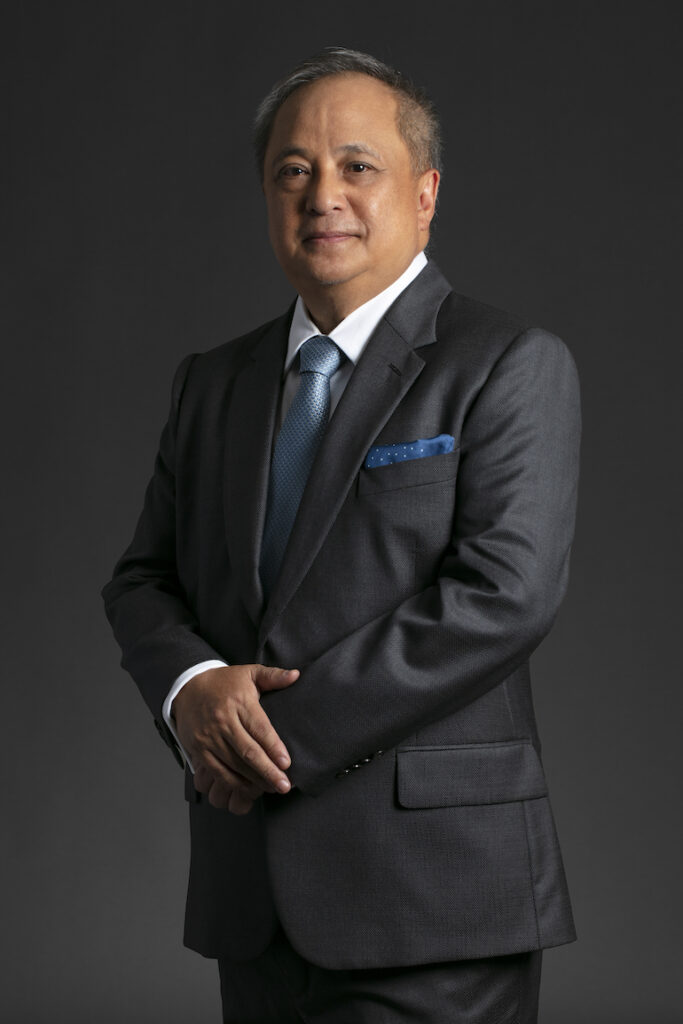
From L-R: Sherwin Uy (CEO, Primeworld Land), Johnny Uy (Chairman, Primeworld Land), VIPs, Ar. Alex Tan (CEO, Hamm-Asia Global Builders Corporation)

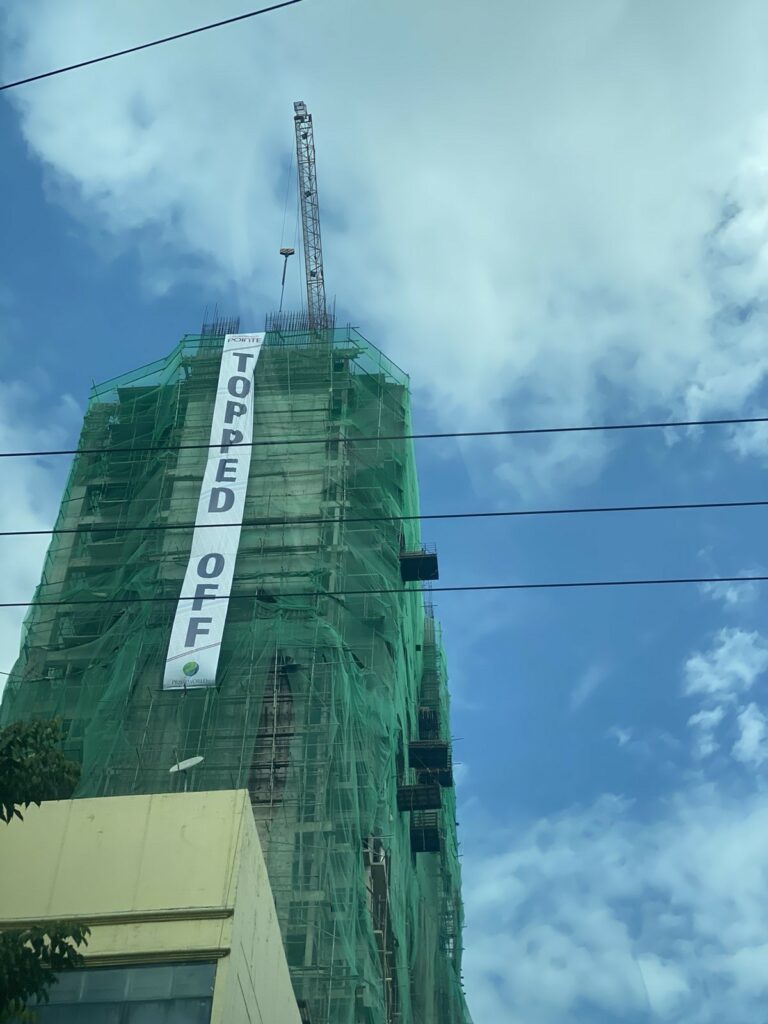
On Dec. 2, the skyline of Cebu City witnessed a historic moment as Primeworld Land achieved a significant milestone with the topping-off ceremony of Primeworld Pointe. This grand event not only marked the completion of the residential condominium’s towering structure but also positioned it as the best investment property for Metro Cebu in 2022, according to Dot Property Philippines.

Primeworld Pointe as of Dec. 2, 2023

Nestled in the prestigious location of La Guardia 1st St., Lahug, Primeworld Pointe stands as a testament to Primeworld Land’s dedication to creating secure and high-quality homes where Filipino families can thrive. The topping-off ceremony unfolded as an illustrious affair, graced by the presence of Primeworld Pointe’s project development and sales & marketing team, top executives from Primeworld Land, including CEO Sherwin Uy, and distinguished figures from Hamm-Asia Global Builders Corporation and Resourceworld Management Corporation. Notable VIP guests and industry experts, such as Anthony Leuterio of Filipino Homes, added to the aura of prestige.

Primeworld Pointe Project Development Team

The celebration extended beyond the ceremony itself, featuring a comprehensive product knowledge seminar aimed at updating sales partners about the latest developments. The atmosphere buzzed with excitement during a raffle draw, creating an engaging backdrop for the momentous occasion. Attendees were treated to a delightful spread of food and refreshments, fostering an atmosphere of camaraderie and celebration.

In the face of recent disruptions, Primeworld Land has displayed unwavering resilience, reaffirming its commitment to enhancing the quality of life for Filipino families through groundbreaking projects like Primeworld Pointe. The development has earned acclaim as an ideal investment, offering a prime location and the promise of value appreciation, making it an attractive prospect for those seeking to expand their real estate portfolios in the city.

While Primeworld Pointe surpassed its initial structural completion schedule, the developer has taken proactive steps by initiating finishing works on the lower floors, hinting at the possibility of an earlier completion date. Even in its current state, Primeworld Pointe beckons professionals and families alike with high-quality, yet affordable spaces, fostering a comfortable and well-integrated lifestyle.

Encompassing an impressive 998 square meters, Primeworld Pointe rises majestically with 22 floors, 386 units, and 72 parking spaces. The units, ranging from 21 to 51 square meters, offer one-, two-, and three-bedroom layouts, each adorned with a balcony, parking space, and panoramic city views. The residence boasts a wealth of luxury amenities, including a pool lounge, swimming pools, reception area, fun playgrounds, gyms, and function rooms.

Beyond its architectural splendor, Primeworld Pointe’s strategic location places it in close proximity to various shopping centers, offices, business districts, hospitals, and universities in Cebu City. A mere 5-minute walk from Cebu I.T Park, a bustling hub for businesses and establishments, provides residents with a distinct advantage, seamlessly integrating work and life. Additionally, its accessibility to Ayala Cebu Center Tower and Uptown Cebu further enhances the living experience, striking a harmonious balance between convenience and leisure.

Primeworld Pointe transcends the label of a mere residential development; it stands as a testament to Primeworld Land’s enduring commitment to redefining living standards and creating spaces where Filipino families can truly prosper and live fulfilling lives. In the Queen City of the South, Primeworld Pointe stands tall as a beacon of modern living, inviting residents to experience an integrated way of living and working comfortably.

Primeworld Land’s development projects can be found across Luzon, Visayas, and Mindanao. For more information about Primeworld Land, you may visit www.primeworldland.com.


Spotlight is BusinessWorld’s sponsored section that allows advertisers to amplify their brand and connect with BusinessWorld’s audience by enabling them to publish their stories directly on the BusinessWorld website. For more information, send an email to online@bworldonline.com.

Join us on Viber at https://bit.ly/3hv6bLA to get more updates and subscribe to BusinessWorld’s titles and get exclusive content through www.bworld-x.com.

Philippines eyes constitutional amendments to ease economic restrictions

PHILIPPINE STAR/KRIZ JOHN ROSALES

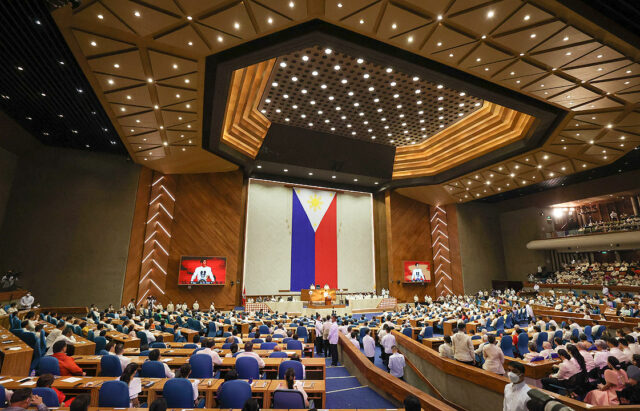
Philippine lawmakers are considering efforts to amend the country’s constitution to ease restrictive provisions on economic ownership, a top congressional leader said on Monday.

“We want to lift the restrictive provisions vis a vis the economy,” House Speaker Martin G. Romualdez said in an economic briefing.

Mr. Romualdez said top congressional leaders of the country’s political parties are meeting Monday to discuss procedural issues that have hampered past efforts to amend the Philippines’ 1987 constitution.

The amendments, he said, will allow lawmakers to “regulate” economic sectors that can be opened for foreign investors.

Foreign business chambers have been urging Congress to lift current limits to foreign investment, including the so-called 60-40 rule, which caps foreign ownership of local firms at 40%.

Past efforts to rewrite the constitution have failed. Critics have said efforts to amend the constitution could also open doors for lawmakers to lift term limits for elected officials. — Reuters

Celebrating Christmas season the Filipino way

Photo from Wikimedia Commons

December marks the year’s end and a time for holidays and festivities. Dazzling decorations are up; Christmas carols are often on replay; and streets and neighborhoods are filled with colorful lights. Globally, celebrating Christmas differs in each country; and in the Philippines, people have more unique ways of celebrating the holiday.

Unlike other countries, a Filipino Christmas is quite lengthy; and the Christmas season here is known to be the longest Christmas season in the world. Filipinos are starting to decorate and light up their surroundings, play popular Christmas songs, and planning for festivities as early as September.

Christmas is a festive time when loved ones come together. The season is a reminder of the love and strong bond that ties families for a long time. Many families travel a long way to celebrate the holiday to reunite with families and friends over delicious meals and fun stories that fill homes with laughter and joy.

Season of feasting

Photo from Wikimedia Commons

For many Filipino households, Christmas is not complete without the food. Most Filipinos start celebrating Christmas at midnight with the traditional Filipino Christmas feast of Noche Buena. The most common dishes served at Noche Buena include lechon, spaghetti, hamon, fruit salad, and queso de bola; albeit the options nowadays are endless.

For sweet treats, there are rice cakes such as bibingka — a traditional soft and sweet rice cake that is baked in clay pots or leaves and paired with egg, cheese, or unsweetened coconut shreds as a topping; and puto bumbong, purple-steamed rice cakes cooked in bamboo tubes.

Season of giving

Christmas is also known as the season of giving. In addition to exchanging well-thought gifts, there is another means of giving that puts a twist to the usual gift-giving. “Monito Monita” is usually done among family, friends, schoolmates, or workmates. In the gift exchange, before giving the gift straightforwardly, you must describe the person. A further twist to this giving is where participants give something related to a given theme, such as “something cute,” “something heavy,” etc.

While unwrapping gifts is great, there’s nothing as exciting as opening a red envelope with money inside, which is called ang pao, often given by godparents (ninong or ninang) to their godchildren (inaanak).

Accentuating with decorations

Photo from Wikimedia Commons

Enchanting decorations also make Christmas in the Philippines more unique, from blinking colorful lights, our very own parol, and other unique fixtures.

One of the most popular Christmas decorations in the country is our own version of the Christmas lantern, the parol, which comes in a large circle with a star in the center. Today, parols are hung everywhere — on lampposts, houses, malls and offices, shining bright at night. It also comes in a variety of shapes, sizes, designs, patterns, and materials.

Also, parols are admired because of their unique designs that leave people mesmerized every time they see them. Parols have always been a part of Filipino Christmas celebrations and they are always a part of every feast and parade across the country. Aside from being a decoration, parols are also considered a beacon of hope, a symbol of the vibrant Christmas culture and of hard work.

Belen, or the nativity scene, is another symbol unique to the Filipino Christmas celebration, which is a combination of different materials and can be seen in churches, homes, schools and office buildings. It is a three-dimensional art representing the birth of Jesus Christ: the baby Jesus in a manger, surrounded by the Virgin Mary, St. Joseph, the shepherds, their flock, the Three Kings and some animals and angels. Derived from the Spanish name for Bethlehem, the birthplace of Jesus Christ, the belen was introduced in the Philippines by the Spanish Franciscans during the colonial period.

Christmas trees are also a common fixture in homes and offices; and in the Philippines, these trees are more than evergreens, and they differ in size, color, and design.

Strings of blinking tivoli lights, snowflake ornaments, and Santa Claus with his reindeer are also some of the decorations that bring joy and comfort on the streets or at home.

Season of gathering

Christmas carols have been a tradition worldwide, but Filipinos are found to do caroling differently. Singing carols from house to house, the way it was done in the country, has a little twist and more humor. In addition to the traditional caroling with costumes or lyric books, Filipinos use recycled instruments and made-up lyrics.

Another tradition that lives on in the Philippines is celebrating mass during Christmas. There are many religious practices that Filipinos observe during the season. For instance, they attend the night mass (Simbang Gabi), where they spend the nine days leading up to Christmas attending mass early in the morning or late at night. There is a belief that when people finish the nine days, they can be granted a wish.

On Christmas Eve, they also attend the Christmas mass or the Misa de Gallo, a celebration involving the lighting of candles, projecting displays, or sometimes the reenactment of the birth story of baby Jesus.

This year, there are several performances available for public viewing that embody the genuine essence of the Filipino Christmas tradition. These shows include the first all-Filipino Christmas ballet Puso ng Pasko, performed by the artists of Alice Reyes Dance Philippines and the Cultural Center of the Philippines’ Professional Artist Support Program. The performance was premiered at the Metropolitan Theater in Manila last Dec. 1 and 2, and there will be a free public tour across Luzon, with stops at Pampanga, Tarlac, Nueva Ecija, Makati City, and the Malacañan Palace.

Stronger relationships, physically and virtually

In recent years, Filipinos celebrated Christmas differently. Due to the coronavirus pandemic, the holiday celebration was more restricted; but that was not a hindrance for still celebrating the season with each other. Many families used digital platforms to communicate with their loved ones; buying and sending gifts are made online; and gatherings are held through videoconferences.

Now, as the world returns to a new normal, Christmas celebrations are gradually returning to how they used to be. There are more people flocking to malls for shopping, gathering in churches for worship and reflection, and families will surely reconnect over a rich feast of sumptuous food and drinks, celebrating the fruits of hard work done for almost a year.

Whether it is celebrated physically or virtually, the season is about a celebration of love, the joy of giving, sharing blessings, and spending time and creating memories with loved ones — this is the true essence of Filipino Christmas. — Angela Kiara S. Brillantes

Achieving stress-free Christmas shopping

Photo by Jill Wellington from Pixabay

As the holiday season draws near, the festive spirit in the Philippines comes alive with colorful decorations, lively carols, and the busy atmosphere of Christmas shopping.

In Filipino culture, shopping during the holiday season is a long-standing tradition, with Filipinos enthusiastically taking part in gift-giving as a way to show love and appreciation to their loved ones.

According to a survey conducted by market research company Ipsos, holiday shopping budgets are rising after being stagnant for three years, with 32% of consumers planning to increase their budget. Additionally, PwC stated that almost 40% of consumers will spend more overall than last year.

However, there seems to be mixed feelings about spending this holiday season, with concerns about affordability and crowded retail places.

Despite the negative feelings brought by the current situation, Filipinos have found ways to continue shopping and express their love for their families and friends, as they still remain excited to celebrate. In fact, according to the latest data from the Bangko Sentral ng Pilipinas (BSP), Filipino consumers remain optimistic, with an outlook index of 18.9% in the third quarter of 2023, albeit lower than the 20.5 % recorded in the second quarter.

The following are some tips to make your shopping less stressful as just few weeks are left before Christmas Day.

Plan ahead

Long queues, last-minute decisions, and crowded stores can turn a festive experience into a chaotic one. Procrastination is the enemy of stress-free shopping, so planning it ahead of the sprees is essential.

Having a well-thought-out list and making purchases in advance allows you to choose thoughtful and quality gifts without succumbing to the pressure of time constraints.

In addition, planning ahead enables the consumer to secure popular items before they fly off the shelves.

For instance, Gen Z has specific shopping preferences related to planning, according to PwC. They tend to look for gift ideas in stores (67% vs. 58% overall) and on social media (41% vs. 31% overall). They also prefer to use social media for comparison shopping (34% vs. 27% overall) and to learn about sustainable companies (70% vs. 51% overall).

Set a budget

According to a recent CNET Money survey, 69% of respondents admitted that they are likely to overspend on purchases during the upcoming holiday season. Out of these, nearly one-third of shoppers said their overspending would happen in December, while 27% said they would probably overspend during fall holiday shopping events.

Having a budget during the holiday season is like a financial roadmap that helps prevent overspending. People can allocate specific amounts for gifts, decorations, and other expenses, allowing them to prioritize their spending and avoid going overboard. 

Moreover, the American Psychological Association (APA) reports that financial concerns are often cited as the leading cause of stress during the holiday season. Therefore, a well-defined budget not only prevents overspending but also contributes to overall financial well-being, reducing stress levels and promoting a positive holiday experience.

Get the best deals

During the holiday season, many people feel the pressure of finding the perfect gifts for their loved ones. This, combined with the financial strain of the holidays, can lead to increased stress. While the pursuit of sales and bargains may bring joy, it can also lead to excessive spending, which can bring on even more stress after the celebrations.

Maximizing your purchasing power is possible by taking advantage of buying deals that offer more value for money. Whether it’s a discount, buy-one-get-one-free offer, or bundled package, utilizing these bargains ensures that every dollar spent goes further.

In addition, the holiday season often comes with a time crunch, and shopping for gifts can be a time-consuming process. However, searching for deals can simplify the process of gift hunting by targeting discounted items quickly.

Knowing where to look for the best deals can save time spent navigating crowded stores, leaving more room to concentrate on choosing meaningful gifts.

Collaborate and delegate

One of the key benefits of delegating and collaborating during the holiday season is the ability to share responsibilities. Instead of taking on the entire burden of shopping, consider dividing the tasks among family members or friends.

To make the process more manageable and efficient, create a shopping list and assign specific items to each person. Delegating responsibilities not only reduces the overall workload, but also fosters a sense of collaboration and shared accomplishment among the circle.

Moreover, discussing gift ideas, seeking advice, and sharing the responsibility of finding the right presents can alleviate stress and create a more positive and enjoyable holiday experience. — Mhicole A. Moral

Preparing a holiday feast with less hassle

Photo by vivienviv0 from Pixabay

Christmas is a time for many good things, most importantly feasting, gift-giving, and bonding with the people who matter the most.

A Christmas feast, or Noche Buena as we call it here in the Philippines, is the centerpiece of the lavish occasion. Family members come together and share a delicious meal. For generations, Noche Buena is not only a continued tradition but also proof of the strong bond of Filipinos and their loved ones. Also, Christmas, among other significant celebrations, is often the time where most delicious and favorite foods are cooked and served at the table.

Yet, it takes hours of planning the menu, getting ingredients, and preparing dishes before a great and rewarding feast is enjoyed at Christmas Day. Here are some tips to keep in mind in order to have a less hassle and a smoother preparation for that much-awaited Christmas feast this year.

The first step is to make a list. Save yourself from being stressed by planning ahead of time. Prepare according to the size of your kitchen and how many dishes you are going to cook. Know how many people will be included in the feast, what they would like to have on Noche Buena, as well as whether they have food allergies. Make sure as well to have an adequate supply of the ingredients and things needed for the feast. Do not forget to factor in your budget as well.

Then, it might help to have a tentative timeline for getting the ingredients, cooking the meals, and even ordering some food. Planning your feast a few days, or even weeks, ahead will allow you to have more time for shopping and could even save you more time for the preparation period.

When shopping for ingredients, take the time to compare prices and brands that are suitable and more affordable for the feast you have in mind. Take the opportunity as well to look for Christmas sales, promos, and bazaars that might match well with your Noche Buena list. You can also look out for Christmas food in bundles, baskets, or boxes at more affordable prices.

Also, there are many alternatives you can choose from that are much better. For instance, there are products that are locally-produced and more affordable. This also gives you an opportunity to support these businesses.

In relation to alternatives, there’s nothing wrong with going for lower-priced varieties. Other kinds of cheese that as tasty as quezo de bola might go well in place of the traditional round fixture, for instance. Chicken can be considered in place of beef or pork; or a nicely-cooked embutido for morcon.

Amid all these preparations, nonetheless, do not forget learn to enjoy yourself and stay relaxed. Invite a welcoming atmosphere for your family and guests as you prepare those heartwarming meals for everyone to indulge in. As much as you aim for a fantastic feast, do not forget to have fun during the process, especially if you find joy in cooking or baking.

And when Christmas Day finally comes, and all the dishes have been prepared at the table, treat yourself by savoring the dishes you have prepared. After all, Christmas is an opportune time for enjoying the fruits one’s hard work, including the creation of a hearty feast. — Angela Kiara S. Brillantes

The dream behind the global icon for Filipino food

Ernesto M. Tanmantiong, Jollibee Foods Corp. president, CEO and executive director

Perhaps there is no Filipino brand more well-known than Jollibee. The homegrown fast food chain has created an empire of over 1,500 locations, spanning from here in the Philippines, to the United Arab Emirates, to Canada and the United States. To this day, the brand’s beaming bee mascot continues to go toe-to-toe with global fast food giants in terms of market share and revenues.

It is no surprise then, that Ernesto M. Tanmantiong, the president, CEO, and executive director of Jollibee Foods Corp. (JFC), has been named “Management Person of the Year 2023” by the Management Association of the Philippines (MAP).

The award was previously known as the Management Man of the Year and is an award given by MAP to individuals in business or government who have attained distinction in management and have made valuable contributions to the country.

Despite the award’s nearly six-decade run, just 47 recipients have been recognized thus far since finding the MAP Management Person of the Year is “a tedious process.” Lilia B. de Lima, the award’s judging committee vice-chairperson, pointed out that the award’s criteria include integrity, prestige and distinction in the business community; exceptional ability in performing management functions; and tangible contributions nationwide, among others.

Mr. Tanmantiong has been chosen for “being able to accelerate Jollibee’s globalization and transform it into one of the world’s largest, fastest-growing restaurants,” according to Ms. de Lima.

The feat is all the more remarkable as Jollibee — like much of the restaurant industry — is one of the companies that have suffered the most from the coronavirus pandemic.

“The quick-service restaurant industry was among the hardest-hit sectors by the pandemic. Even though we all are trying hard, this crisis spared nobody. For the Jollibee Group, this meant we had to close hundreds of stores, affecting many of our people, and resulting in a loss in 2020 — a first in our company’s history,” Mr. Tanmantiong had said in a previous interview with Esquire.

“This number could have gone higher if not for the substantial pivots we made to adapt to the changing needs of our customers and our business transformation. I cannot emphasize enough our appreciation for the hard work of our people and our partners, and through their collective effort, we swung back to profitability by the fourth quarter of 2020 and continue to grow and expand in 2021.”

Not that setbacks could hold his ambitions for the company down for long. It is no secret that it has ever been the dream of both Mr. Tanmantiong and his brother Tony Tan Caktiong, the founder and chairman of Jollibee Foods, to become the world’s biggest name in fast food.

“We never thought that we would grow this big, but my brother Tony always likes to dream big. So when we were operating the two ice cream parlors in the seventies, the goal at that time was to be number one in all the ice cream parlors in the Philippines,” he had said, speaking to CNBC.

“Yes, that was already the aim, to be number one. Then when we started introducing hamburgers and transforming the ice cream business into a hamburger business, the goal was to be the number one hamburger chain in the Philippines. At the same time, we were already thinking of expanding abroad.”

Mr. Tanmantiong said that when they achieved the number one position in the Philippines, they dared to dream bigger, setting a new goal post of becoming the largest restaurant company in Asia. They blew past that goal in 2014.

When they set the goal further to be the top 10 in the world in terms of market capitalization, they also achieved in record time. Now, the aim is to be one of the top five restaurant companies in the world in terms of market capitalization.

“We continue to dream big, and even despite the changes brought by the pandemic, our vision remains unchanged: to become one of the top five restaurant companies in the world by serving great tasting food and bringing the joy of eating to everyone,” he had said.

Serving up smiles amid crisis

Due to its size and influence, Jollibee had been instrumental in helping Filipinos during the pandemic through working with the government’s Inter-Agency Task Force, as well as its FoodAID Program. The company has donated over P300 million worth of food to thousands of frontliners and families who were severely affected by the pandemic.

Together with civic groups and other companies in the private sector, Jollibee also launched Project Karinderya to reestablish 320 karinderyas or eateries that have closed due to the pandemic, which benefitted more than 6,400 family beneficiaries or approximately 32,000 individuals.

Customers remain at the core of Jollibee’s operations, and no matter how high Mr. Tanmantiong’s dreams are for the company, he believes that they will continue to keep it that way.

“Many of the changes we’ve gone through were always predicated on our customers — from the time we shifted to hot meals from ice cream during our early ice cream parlor beginnings to today, where we pivot our business to adapt to the changing habits brought by the pandemic. We always strive to stay in tune with our customers, from their shift to digital, reliance on delivery and take-out, and dining in larger groups with their families at home. We responded as quickly as possible,” he had said.

“As the Jollibee Group grows, we want to make sure that the communities we serve grow with us. On top of providing employment opportunities, we also leverage on our expertise as a food company to help communities through the Jollibee Group Foundation.”

He noted that Jollibee programs are centered around access to food, such as the Farmer Entrepreneurship Program, which trains small farmers to become entrepreneurs. The program provides them a setup where they can directly sell to institutional buyers such as JFC, and improve their livelihoods substantially and sustainably.

“We are inspired to do more for our people and customers, to offer more of our great-tasting food to everyone, and to create more progress for the communities where we operate,” Mr. Tanmantiong said.

“We are humbled and honored to be among the brands that are loved by so many people across the globe. We have come a long way from our ice cream house beginnings in 1975. Back then, we were just looking for a stable source of livelihood for our family.”

“But through everyone’s hard work, we’ve grown into a company with over 5,800 stores across 34 countries carrying 17 brands. We know there’s still much to do, and we will not stop in our mission of serving delicious food, bringing the joy of eating to everyone,” he added.

Aside from his leadership position at JFC, Mr. Tanmantiong is also at the helm of Vismin Foods Corp., chairman of Jollibee Vietnam Corp. Ltd., chief executive officer of Jollibee Foods Corp. (USA), treasurer and director at Red Ribbon Bakeshop Holdings, Inc., and treasurer and director at Tokyo Terriyaki Corp. (which are all subsidiaries of JFC), and treasurer and director at Winall Holding Corp.

Mr. Tanmantiong is also on the board of 65 other companies. He holds an undergraduate degree from the University of Ateneo de Manila. — Bjorn Biel M. Beltran


ADVERTISEMENT
ADVERTISEMENT