Home Blog Page 3920

Ex-Japanese soldiers found guilty in landmark sexual assault case

STOCK PHOTO | Image by rawpixel.com from Freepik

FUKUSHIMA, Japan — A Japanese court on Tuesday found three former soldiers guilty of sexually assaulting a female colleague, in a victory for the victim whose long battle for justice challenged taboos in a traditional, male-dominated society.

The case of 24-year-old former Self-Defense Forces member Rina Gonoi, which has drawn broad international attention, relates to a 2021 incident during her time in the army when she alleges she was assaulted by three male colleagues.

The defendants, who denied their acts amounted to sexual assault, were each given a two-year suspended sentence, local media reported.

“I think it was good for Japan’s society that the court handed down a guilty verdict and accepted the claims that I’ve made from the very beginning,” an emotional  Ms.Gonoi told reporters outside the Fukushima district court after the ruling.

“(The verdict) shows that it’s not OK to do things for a laugh, that such acts are an actual crime,” she said, pausing mid-sentence to retain her composure.

Ms. Gonoi, who said she was subjected to persistent harassment after enlisting in 2020, alleged that the three men pinned her to the ground, pulled her legs apart and pressed their crotches against her in simulation of a sex act.

She complained to her superiors at the time of the incident but later decided to leave the army when no action was taken.

After Ms. Gonoi went public in 2022, Japan’s defense ministry issued a public apology to her and announced that five men connected to the incident had been dismissed and four others punished. Her allegations also sparked a widespread survey by the Japan’s defense ministry into sexual assault in the military.

Her rare decision to go public with her accusations garnered attention in a conservative society where speaking out against sexual violence has remained largely taboo.

It also coincided with an effort by Japan to recruit more women soldiers and build up its military to deter its powerful neighbor China and nuclear-armed North Korea.

Ms. Gonoi’s battle has attracted international recognition: Time Magazine named her on its list of 100 emerging world leaders while the British Broadcasting Corp. included her among its 100 most influential women globally.

“I am appreciative of the fact that they value what I’m doing. There is a tendency in Japan when people speak up, they get criticized,” Ms. Gonoi told Reuters in an interview ahead of the verdict.

But at home she has also been the target of online vitriol.

“I have gotten many derogatory comments. But I know the world values what I’m doing,” she said.

Separately, Ms.Gonoi has also lodged a civil case against her former peers and the government, seeking damages for the alleged assault and the subsequent inaction despite her complaints. — Reuters

Children are the best investment for China — Beijing think tank

REUTERS

HONG KONG — Children are the most worthy investment for China’s economy to help stimulate consumption and expand domestic demand a Beijing policy institute said, after the country posted its first population drop in more than six decades last year.

China, the world’s second-largest economy, has struggled to mount a strong post-pandemic recovery and any decline in its future workforce and consumer demand could have a profound impact on its economy.

“In the current Chinese economy, children are the best investment. Infrastructure investment is becoming saturated, manufacturing has overcapacity … but investment in the number of children is not enough,” said the policy paper by the Yuwa Population Research institute published on Tuesday.

The paper urged authorities to “urgently” reverse a rapid decline in the number of newborns.

China’s advantage will shrink in the future as the young population shrinks rapidly, while economic measures such as cutting interest rates, activating the capital market and optimizing real estate regulation have not helped to bolster economic growth and the recovery remains weak, it said.

In order to boost the economy, the Yuwa report recommended that maternity subsidies be distributed at a national level rather than by local governments and targeted measures be implemented to reduce the large cost of childbearing and rearing.

Local governments have announced a series of measures to help lower childcare costs in recent years but many policies have not been implemented or remain on paper due to insufficient funding and lack of motivation by local governments, it said

“Nowadays people are unwilling to get married and have children … Because the cost of childbearing is too high, the difficulty for women to balance family and work, the average fertility willingness of Chinese people is almost the lowest in the world.”

Current subsidies are still insufficient, lower than most European countries it said.

China reported a drop of roughly 850,000 people for a population of 1.41175 billion in 2022, marking the first decline since 1961, the last year of China’s Great Famine.  Reuters

US consumer group seeks stronger warnings on Botox, similar treatments

CONSUMER ADVOCACY group Public Citizen on Tuesday filed a petition with the US Food and Drug Administration (FDA) seeking to require makers of Botox and several similar injections to include stronger warnings about the risk of a potentially fatal muscle-paralyzing disease.

These injections, which use various versions of botulinum toxins to contract specific muscles by blocking certain nerve signals to erase wrinkles, already have a ‘black box’ warning in their labels about the risks of the intended effect spreading to other areas. The consumer group asked the FDA to make it clear that these adverse effects could happen even at recommended dosages.

The new petition seeks a stronger warning on the label of six toxin-based injections including market leader Botox from AbbVie, Revance Therapeutics’ Daxxify, Evolus’  Jeuveau, Supernus Pharmaceuticals’ Myobloc, Galderma’s Dysport and Xeomin from Merz Therapeutics.

Public Citizen also asked the FDA to remove promotional statements that claim there are no definitive serious side-effects of distant spread of toxin effect associated with the toxins.

The request comes after the advocacy group analyzed over 5,400 reports of deaths, life-threatening events and other serious side effect related to Botox and rival toxin-based wrinkle treatments between January 1989 and March 2021 that were recorded in FDA’s adverse events database.

The FDA maintains the database to help it identify unusual or emerging side effect trends that may require further investigation or actions, such as adding warnings to a product.

The group is asking the FDA to add clear warnings about systemic iatrogenic botulism, a condition that can cause progressive muscle paralysis if the toxin used in these products spreads beyond the intended treatment site.

The FDA said it will review the petition and respond directly to Public Citizen. Merz said it closely tracks the FDA adverse event database, and submits safety reports to the agency on a regular basis, while Revance and Evolus declined to comment. The other companies did not respond to requests for comment.

An earlier petition by Public Citizen in 2008 based on an analysis of 180 reports led to the FDA adding the current black box warning about the risk of Botox’s effect spreading to other areas of the body.

The group is now asking the FDA to add a clearer warning about the risk of botulism from Botox and other treatments. The term “botulism” is only mentioned in the labeling of Botox and related drugs once, toward the end of the prescribing information, it said.

The 5,400 reported adverse events may be an understatement, the advocacy group’s health services researcher Azza AbuDagga said, citing a study that found less than a tenth of adverse events related to drugs are reported.

The group is also asking the FDA to make it clear in labels that botulism cases associated with recommended doses of the products need prompt administration of botulinum antitoxins to avoid disease progression. — Reuters

Myanmar is now world’s largest source of opium — United Nations

FLOWERS hang during a nationwide flower campaign against the military coup in Yangon, Myanmar, April 2, 2021. — REUTERS

BANGKOK — Myanmar has become the world’s largest source of opium, thanks to domestic instability and a decline in cultivation in Afghanistan, the United Nations (UN) said in a report on Tuesday.

The 95% decline in opium cultivation in Afghanistan after a drug ban by the Taliban in 2022 has seen global supply shifted to Myanmar, where political, social and economic instability brought about by a 2021 coup drove many to poppy farming, the UN Office on Drugs and Crime (UNODC) report said.

Myanmar farmers now earn about 75% more from opium poppy farming, as average prices of the flower have reached about $355 per kilogram and the cultivation area has increased by 18% year on year, from 40,100 to 47,000 hectares, boosting the potential yield to its highest level since 2001, the UNODC said.

“The economic, security and governance disruption that followed the military takeover of February 2021 continue to drive farmers in remote areas towards opium to make a living,” UNODC Regional Representative Jeremy Douglas said.

Opium cultivation areas expanded most in Myanmar’s border regions in northern Shan State, followed by Chin and Kachin states, as yield expanded by 16% to 22.9 kilograms per hectare because of more sophisticated farming practices, UNODC report said.

The surge in fighting between the Myanmar military and armed ethnic-minority groups will most likely accelerate the expansion of opium cultivation, Mr. Douglas said.

The Myanmar junta did not respond to a Reuters request for comment.

The expansion of opium cultivation feeds into a growing illicit economy in Myanmar that include high levels of synthetic drug production and trafficking as well as other criminal enterprises from money laundering to online scam centers run by organized crime. — Reuters

Spain charges arbitrator who awarded $15 billion to sultan’s heirs in Malaysia dispute

REUTERS

MADRID — A Madrid court has started criminal proceedings against a Spanish arbitrator who awarded $15 billion to the descendants of a former sultan in the latest escalation of a 19th-century dispute between the heirs and Malaysia over a land deal.

The Spanish state prosecutor and Malaysia accused Gonzalo Stampa of contempt of court, saying he failed to comply with a ruling by a Madrid court to drop the case and instead moved it to a court in Paris, Malaysia’s Law Minister Azalina Othman Said said in a statement on Monday night. Stampa declined to comment.

The dispute stems from an 1878 deal between European colonists and the late Sultan of Sulu for the use of his territory, which spanned parts of the southern Philippines and present-day Malaysia on the island of Borneo.

Malaysia paid a token sum annually to the sultan’s heirs to honor the agreement but stopped in 2013, prompting the heirs to seek arbitration.

In February 2022, Stampa awarded $14.9 billion to the heirs, who have since sought to enforce it against Malaysian government-owned assets around the world. Malaysia has obtained a stay on the case in France, but the ruling remains enforceable globally under a U.N. arbitration treaty.

Azalina said the matter affected Malaysia’s sovereignty, and accused Stampa of evading the oversight of the Spanish courts.

She also raised questions over legal fees paid to Stampa after his ruling.

“The amount he awarded is one of the highest in the world for arbitration. It’s a percentage of our GDP. You’re going to bankrupt a country like ours,” Azalina said.

Stampa’s fees after delivering the award came to about $2.3 million, court documents showed. The heirs’ $20 million litigation costs were funded by Therium, a London-based firm that provides financing for litigation and arbitration cases.

The heirs, who suffered a setback in June after a Paris court upheld the Malaysian government’s challenge against a partial award, are also trying to strengthen their case in Madrid.

Last week, they filed a criminal case against the Spanish justice system, claiming a court clerk in Madrid improperly sent an email ordering Stampa to step down from the case.

The email did not include any legal documents, failed to attach the ruling and did not stipulate the possibility of an appeal, said Carlos Aranguez, a lawyer for the plaintiffs.

“There is a crime of prevarication, procedural fraud, false documentation and coercion,” he said. “We are seeking a declaration that there has been interference in the administration of the award.”

The court has not yet decided whether to hear the heirs’ case. Spain´s High Court declined to comment. — Reuters

IMF board approves $900M in funds for Ukraine as IMF chief Georgieva meets Zelenskiy

THE International Monetary Fund (IMF) logo is seen outside the headquarters building in Washington, U.S. — REUTERS

WASHINGTON — The International Monetary Fund’s executive board (IMF) on Monday approved a $900 million disbursement for Ukraine from its $15.6 billion loan program, hours before IMF chief Kristalina Georgieva met with Ukrainian President Volodymyr Zelenskiy.

Georgieva met with Zelenskiy for nearly an hour at IMF headquarters in Washington and told him the IMF’s executive board was unanimous in its support for Ukraine, apart from one country, IMF officials said, in a clear reference to Russia.

The board approved a staff agreement reached last month with Ukrainian authorities after the second review of Kyiv’s progress on a four-year Extended Fund Facility loan approved earlier this year. That paves the way for $900 million disbursement, bringing total IMF funding for Ukraine this year to $4.5 billion.

“The EFF continues to provide a strong anchor for the authorities’ economic program, and its implementation has been broadly on track despite the extremely challenging backdrop,” the IMF said in a statement.

Georgieva said Ukraine’s economy had proven resilient despite Russia’s invasion in February 2022 and the “enormous social and economic costs” it posed.

“Looking ahead, whereas the recovery is expected to continue, the outlook has significant risks stemming mainly from the exceptionally high war-related uncertainty,” Georgieva said in a statement. “It is also critical that external financing on concessional terms continue on a timely and predictable basis.”

Zelenskiy is in Washington to meet with U.S. President Joe Biden and top congressional officials as he seeks to shore up support for continued U.S. security assistance to help Kyiv continue its fight against Russia’s invasion.

Ukraine has received more than $68.5 billion in budgetary support since the war started, finance ministry data shows.

Its government expects a budget deficit of about $43 billion in 2024 and plans to cover it with domestic borrowing and financial aid from its Western partners. But Ukrainian officials are growing worried about the certainty of financing, and some analysts predict Western aid could start diminishing next year.

Gavin Gray, the IMF’s mission chief for Ukraine, called on Ukraine to conduct an “ambitious” external commercial debt restructuring in the first half of 2024 to help restore debt sustainability.

Gray told reporters the IMF had upgraded Ukraine’s growth forecast for 2023 to 4.5% from an earlier range of 1% to 3%, and expected growth of 3% to 4% in 2024, citing what he called the “remarkable resilience” of the economy. A second official said 2023 growth could potentially exceed 4.5%.

Asked about possible international donor fatigue, Gray said Ukraine continued to face risks on securing external financing, but they were not necessarily higher than during first review of Ukraine’s $15.6 billion loan program.

He said the IMF would conduct a third review under the EFF loan in the spring, and would be looking for moves by Ukraine to bolster its tax revenues. — Reuters

Australia mid-year budget to flag spending curbs amid inflation risks

REUTERS

SYDNEY — Australia’s mid-year budget update will include about A$10 billion ($6.56 billion) in savings, official data showed on Tuesday, as the government looks to cut spending in a bid to contain high inflation.

The Mid-Year Economic and Fiscal Outlook, which will be released on Wednesday, would show the federal Labor government had reined in spending, bringing the total amount of savings delivered since the 2022 election to A$49.6 billion.

“We know households are doing it tough at the moment and our responsible approach will ensure we are not putting upwards pressure on inflation,” Finance Minister Katy Gallagher said in a statement.

Australian households are under broad financial pressure from high inflation and rising interest rates, but a top central banker last week said severe stress is still rare and the vast majority of borrowers can service their loans.

The Reserve Bank of Australia has been raising rates since the middle of last year to curb inflation which spiked as high as 7.8% last December, before slowing to 5.4% in the third quarter.

“We are continuing to show restraint and to find savings and reprioritisations to account for new spending, some of which is unavoidable,” Gallagher said.

The “unavoidable spending pressures” would come to about A$5.2 billion, which Gallagher blamed on the former coalition government. A total of A$1.5 billion will be used to end the COVID-era pandemic visa scheme, while A$392 million will be used for COVID-19 responses, including continued support for aged care.

Gallagher did not mention if Australia would record a second successive surplus this year. Australia recorded a budget surplus of A$22.1 billion ($14.5 billion) for the year to June 2023, five times earlier estimates, as strong jobs growth and bumper mining profits helped it post its first surplus in 15 years. — Reuters

China’s Xi visits Vietnam after Biden, seeks stronger ties

SCREENSHOT VIA APEC

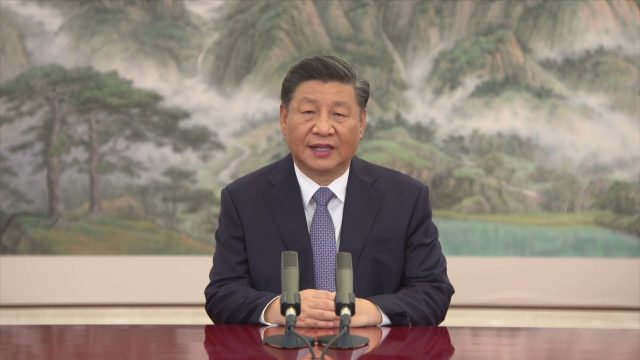
HANOI — China’s President Xi Jinping starts a two-day visit to Vietnam on Tuesday to upgrade ties between the Communist countries three months after United States President Joe Biden travelled to Hanoi, as the major powers vie for influence in the Southeast Asian nation.

Xi’s first trip to Vietnam in six years, has been months in the planning and had even been briefly considered to take place days before Biden’s visit, officials have said.

Despite ties that have been very close on the economic front, the neighbors have been at odds over boundaries in the South China Sea and have a millennia-long history of conflict.

“Asia’s future is in the hands of no one but Asians,” Xi said in an opinion piece published in the newspaper of the Vietnamese Communist party ahead of his visit.

A “community with a shared future” between the two countries would have strategic significance, he added, while warning against rising “hegemonism” in the world, an apparent reference to the United States, though he did not name it.

Xi’s visit was delayed also because of lengthy talks over use of the phrase “shared future”, favored by Beijing to describe ties between the two sides, though initially resisted by Hanoi, officials and diplomats have said.

“DOZENS” OF DEALS
Beyond taking ties to a level Beijing may see as being above those with the United States, upgraded status would come with the signing of “dozens of co-operation documents,” Vietnam’s state newspaper Tuoi Tre quoted China’s ambassador Xiong Bo as saying before Xi’s visit.

Deals are expected to include Chinese investments to upgrade rail links between the neighbors, which would include grants, though the volume and terms of possible loans are not clear.

Boosting transport links would allow Vietnam to export more to China, especially farm products, while Beijing wants to further integrate the country’s north with its southern supply chain networks.

Chinese firms have moved some operations to Vietnam quicker this year than before the COVID-19 pandemic, looking to be closer to Western clients there, lower risks from U.S.-China trade tension and cut exposure to China’s weakened economy.

Stronger rail networks would speed import of components from China for assembly in Vietnam, effectively expanding China’s Belt and Road Initiative (BRI).

In his op-ed piece, Xi called for faster co-operation on building infrastructure.

China has pushed to include Vietnam in its Digital Silk Road, which may entail investments for new undersea optical fibre cables, the 5G network and other telecoms infrastructure.

Although the Hanoi metro is Vietnam’s only project to have received BRI loans, it has not been labelled as such in a country where anti-Chinese sentiment is still widespread enough that such moves could be viewed as getting too close to Beijing.

Xi urged wider co-operation in security, connectivity, green energy and critical minerals, in a reference to the rare earths, of which China is the world’s leading refiner while Vietnam has the second largest estimated reserves after its neighbor. — Reuters

United Auto Workers union files charges vs VW, Honda, Hyundai

CARLOS ARANDA-UNSPLASH

The United Auto Workers (UAW) union said Monday it filed unfair labor practice charges against Honda Motor, Hyundai Motor and Volkswagen citing aggressive anti-union campaigns to deter workers from organizing.

The UAW said last month it was launching a first-of-its-kind push to publicly organize the entire nonunion auto sector in the U.S. after winning new record contracts with the Detroit Three automakers.

Last week, the UAW said more than 1,000 factory workers at Volkswagen’s Chattanooga, Tennessee, assembly plant have signed union authorization cards, or more than 30% of workers.

The UAW filed charges over actions by Honda in Indiana, Hyundai in Alabama, and Volkswagen in Tennessee.

A Honda worker said management illegally told workers to remove union stickers from hats, the UAW said. Hyundai illegally polled employees about their support for the UAW and confiscated union materials and barred their distribution in non-work areas, the union charged.

Honda and Hyundai did not immediately comment.

The UAW said VW threatened and coerced employees “from exercising rights to engage in protected activity by prohibiting employees from discussing unionization during working time and restricting employees from distributing union materials.”

Volkswagen said on Monday it “respects our workers’ right to determine who should represent their interests in the workplace… We take claims like this very seriously and will investigate accordingly.”

The Detroit-based UAW said last month workers at 13 nonunion automakers were announcing simultaneous campaigns across the country to join the union, including at Tesla, Toyota , Volkswagen, Honda, Hyundai, Rivian, Nissan , BMW and Mercedes-Benz.

The UAW’s deals with General Motors, Ford Motor and Stellantis included an immediate 11% pay hike and 25% increase in base wages through 2028, cuts the time needed to reach top pay to three years from eight years. Many foreign automakers have recently boosted pay and benefits in response. — Reuters

INSIGHT: Storm hitting Chinese ports is a wakeup call for climate risk to markets

CARLOS DE SOUZA-UNSPLASH

DUBAI — As Typhoon Doksuri aimed toward mainland China, major southeast ports were forced to turn away dozens of vessels for days.

The storm, supercharged by the warm July waters of the Pacific, delivered Beijing’s worst flooding in more than 50 years, shuttering factories, ruining crops, collapsing homes and displacing tens of thousands of people. China’s losses from natural disasters in July and August stood at an estimated $10 billion.

But that official Chinese damage tally reflected only a fraction of the costs wrought by the typhoon. 

Rebuilding flood-hit areas and climate-proofing infrastructure will cost far more – with China issuing 1 trillion yuan ($139 billion) of sovereign bonds to help.

Beyond that amount, Chinese exports and imports were weaker than expected in July, at least in part from the storm, said economist Robin Koepke at the International Monetary Fund.

Such disasters will become more frequent, increasingly testing the world’s 1,340 major ports and global shipping routes.

Despite the increasing risk, companies and financial systems remain unprepared for the disruptions to come due to patchy data, short-term pressures and an over-reliance on insurance, more than two dozen sources told Reuters.

Many companies are not reporting the risks and in some cases are not even aware of it, according to data shared exclusively with Reuters by CDP, the world’s biggest corporate disclosure platform for environmental issues.

About 80% of the near 5,000 companies to report in 2023 said they were exposed to climate risks, yet only 53% reported physical risks such as typhoons could damage their operations. Even fewer – about 40% – disclosed the potential financial impacts. Countries at this year’s U.N. climate conference in Dubai are grappling with an enormous deficit of up to $366 billion per year in how much money is available for adapting to climate change — including climate-proofing infrastructure like ports.

“Physical climate and natural hazard risks have barely been factored into financial markets,” said Rowan Douglas, CEO, Climate Risk and Resilience at insurance broker Howden.

“But it is critical that they are — and fast,” Douglas said.

SUPPLY CHAIN STRAIN
In the case of Doksuri, the damage wouldn’t have been limited to China, the IMF’s Koepke said.

Those port disruptions would have cascaded further to affect trading partners as far as Malta, in the Mediterranean, and Djibouti, the East African coastal gateway to landlocked Ethiopia.

As the front doors to the global economy, ports are especially vulnerable – handling about 50% of global trade while being exposed to worsening storms and rising seas.

Extreme weather is already costing more than $7.5 billion a year in port infrastructure damage and lost revenues, according to risk analysis researcher Jasper Verschuur at Oxford University. When factoring for the hits to global trade, the damage estimate shoots up to just over $100 billion a year.

The same weather, seen even more broadly, is risking at least $120 billion per year in global economic activity, as those cargo disruptions ripple out to affect manufacturing and export activities.

To help governments and companies prepare for these hits, a team from the IMF and Oxford last month launched a storm monitoring system called PortWatch – offering real-time warnings and analysis of the possible economic consequences, including to downstream countries in disrupted supply chains.

“It doesn’t behoove anyone to disclose those risks,” said Alexander Martonik, who heads the business solutions team for financial services and insurance at ESRI, which provided the satellite and data mapping technology that underpins PortWatch.

Alerts to potential disruption can let manufacturers plan for delayed shipments or help to calm jittery financial markets.

But “when everyone has the same information, there’s more transparency, it’s more proactive investments that can help overall minimize disruptions before they occur,” Martonik said.

For water-related risks to infrastructure companies, including port managers, 55% said they were vulnerable but only 45% reported on those risks this year – and just 33% provided financial impact estimates, the CDP data show.

FINANCIAL BLIND SPOT
In coming years, the financial pressure on companies, and by extension the world’s economy, will only become more acute.

Data from analysis firm Sustainalytics shared exclusively with Reuters looked at the potential cost to companies in different sectors based on two climate scenarios: capping global warming at 2 degrees Celsius or maintaining business as usual.

Direct cumulative losses due to physical climate risks would average $285 million per company by 2050 even in the more benign scenario, while the higher emissions scenario would see this rise to $352 million, the data show.

Within sectors, the impact varied: energy companies, for example, could each expect an average hit of $1.3 billion to $1.6 billion from damaged assets, with utilities at $931 million to $1.2 billion.

For the entire energy sector, those losses through 2050 would tally to $423 billion in the worst-case scenario. All sectors combined are looking at losing nearly $2 trillion, the data show.

The likeliest cause of damage? In all sectors, flooding and coastal inundation pose the biggest threats, as many companies have operations centered around coastal cities and ports.

“I don’t think that financial institutions are doing a good job in understanding the risks,” said Ommid Saberi, who heads the building resilience index at the World Bank’s private finance arm, the International Finance Corporation (IFC).

There is “a level of due diligence happening” on direct investments, but it is based largely on historical conditions and not on the projections of how climate change will play out, Saberi said.

NOT SO INSURED
Months after Typhoon Doksuri tore across China, one Chinese television company knew it had a problem.

The company, Beijing Gehua CATV Network Co, flagged to the stock market in October that it had suffered asset losses from the storm that totaled 44.81 million yuan ($6.24 million). Most of those losses came from damage to fixed assets, including fiber optic cables, server room equipment, office buildings and inventory.

The company’s insurance plan only partly covered the losses, Gehua said in October.

The disaster “would have certain impact on the company’s 2023 operating results,” it said, cautioning investors “to pay attention to investment risks.”

Gehua did not reply to Reuters’ requests for comment.

Despite the certainty of such examples increasing, business experts warn that many companies do not have plans to climate-proof their business.

Of the world’s 2,500 largest companies, 59% do not have a plan for adapting to climate impacts — a statistic that has not changed in three years, according to data from S&P Global Sustainable1 shared with Reuters.

Companies that do have climate adaptation plans don’t necessarily have timelines for those plans, even as climate change escalates, the data show.

That leaves them overly reliant on insurance, experts said – a problem as some insurance carriers begin to balk at climate-risky regions, for example home insurance near California’s fire-prone forests.

“The insurance bodies always have a horizon interest of one year, so they insure the properties always one year, one year, one year,” the IFC’s Saberi said.

That quick-turn timeline can present a conflict for companies and banks that broker longer-term loans. “The financial institutions provide financing for five years, 10 years, 20 years, 30 years,” Saberi said.

For daily comprehensive coverage on COP28 in your inbox, sign up for the Reuters Sustainable Switch newsletter here. — Reuters


US House passes bill banning uranium imports from Russia

SAMUEL SCHROTH-UNSPLASH

WASHINGTON — The United States House of Representatives on Monday passed a ban on imports of Russian uranium as lawmakers seek to add pressure on Moscow for its war on Ukraine, though the measure has waivers in case of supply concerns for domestic reactors.

The bill must pass the Senate and be signed by President Joe Biden before becoming law. It is uncertain whether there will be enough time in the Senate schedule for it to be voted on this year.

The bill, passed by voice vote in the House after the chamber suspended usual voting rules on the measure, would ban the imports 90 days after enactment, subject to the waivers.

The House bill contains waivers allowing the import of low-enriched uranium from Russia if the U.S. energy secretary determines there is no alternative source available for operation of a nuclear reactor or a U.S. nuclear energy company, or if the shipments are in the national interest.

“The risks of continuing this dependence on Russia for our nuclear fuels are simply too great,” said Republican Representative Cathy McMorris Rodgers before the vote. “It’s weakening America’s nuclear fuel infrastructure, which has declined significantly because of reliance on these cheap fuels.”

The United States banned imports of Russia oil after the invasion of Ukraine last year and imposed a price cap with other Western countries on sea-borne exports of its crude and oil products, but it has not banned imports of its uranium.

U.S. nuclear power plants imported about 12% of their uranium from Russia in 2022, compared to 27% from Canada and 25% from Kazakhstan, according to the U.S. Energy Information Administration. The United States was the source of about 5% of uranium used domestically that year, the EIA said.

Allowed imports of Russian uranium under the waiver would be gradually reduced to 459 metric tons in 2027 from about 476.5 tons in 2024. — Reuters

[B-SIDE Podcast] Augmenting human capabilities and creativity with generative AI

Follow us on Spotify BusinessWorld B-Side

The constant pursuit of innovation is a testament to human’s inherent curiosity and creativity. With the advancement of technology, people are constantly seeking innovative solutions to enhance their efficiency and productivity. In this regard, generative artificial intelligence (AI) is one of the most promising technologies, which complements human capabilities, augments creativity, and drives progress in various fields.

In this B-Side episode, David Hardoon, chief data and AI officer at Union Bank of the Philippines and chief executive officer of Aboitiz Data Innovation, discusses with BusinessWorld Multimedia Editor Arjay L. Balinbin the capabilities of Generative AI.

Read the full story by Mhicole A. Moral:
https://www.bworldonline.com/special-features/2023/12/06/562187/augmenting-human-capabilities-and-creativity-with-generative-artificial-intelligence/

Follow us on Spotify BusinessWorld B-Side

ADVERTISEMENT
ADVERTISEMENT