Home Blog Page 3894

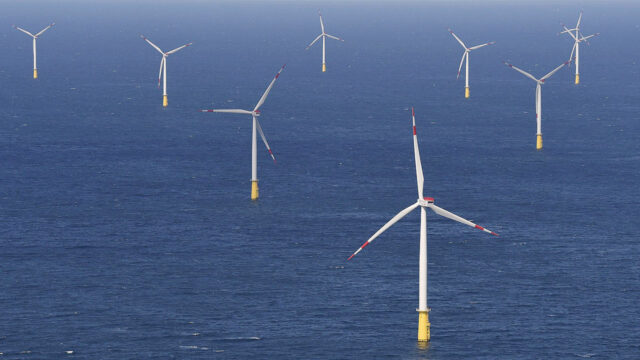
Gov’t urged to invest in offshore wind projects

REUTERS

By Sheldeen Joy Talavera, Reporter

THE GOVERNMENT needs to consider coming in as an investor in offshore wind energy projects, an industry official said.

“Offshore wind is a big undertaking. Maybe the government wants to also have a stake there because… it’s huge in scale,” Jose M. Layug, Jr., president of the Developers of Renewable Energy for Advancement, Inc., said on the sidelines of a launch event last week.

Mr. Layug noted that PNOC Exploration Corp., a subsidiary of the state-owned Philippine National Oil Co., holds a 10% interest in Service Contract 38, or the Malampaya gas field development project.

“Maybe, government might want to be part of that first offshore wind project. I raised that earlier so the government could consider it,” he said.

Asked to comment, Energy Secretary Raphael P.M. Lotilla said any government venture into offshore wind would depend on the availability of funds.

“It depends on the availability of financing, but there are other ways where government can assist,” he said at the same event.

Mr. Lotilla said that the government can assist in terms of rights acquisition for users of submarine resources, the sea floor, and offshore areas.

“Where government can facilitate, we should be open to consider facilitating,” he said.

The Department of Energy (DoE) has awarded 82 offshore wind energy service contracts, with a potential capacity of 63.359 gigawatts (GW).

These projects are located in the north of Luzon, west of Metro Manila, north and south of Mindoro, Panay, and the Guimaras Strait. All these projects are currently in the pre-development stage, with proponents conducting assessments on resource volumes, site suitability, and project viability.

The DoE and the Asian Development Bank initially identified at least nine ports which can be upgraded or repurposed to service offshore wind operators.

Under the Philippine Offshore Wind Roadmap, the Philippines has an estimated potential capacity of 178 GW from offshore wind resources.

This is expected to help the Philippines achieve its aim of increasing the share of renewables to 35% by 2030 and 50% by 2040.

GSIS sets aside over P843 billion for public school fire insurance coverage

PHILIPPINE STAR/ BOY SANTOS

THE Government Service Insurance System (GSIS) has set aside P843.11 billion to provide fire insurance cover for public school buildings starting next year.

The pension fund for government employees will provide for one year fire, lightning, and natural catastrophe cover for more than 132,000 public school buildings effective Jan. 1, 2024, the GSIS said in a statement on Sunday.

“With the rising frequency of natural calamities, protecting public school buildings becomes a priority of the government. Our partnership with the Department of Education (DepEd) is a step towards ensuring financial resilience in support of its MATATAG agenda,” GSIS President and General Manager Jose Arnulfo A. Veloso said.

The funds were put together by the GSIS and the Bureau of the Treasury under the Treasury’s National Indemnity Insurance Program (NIIP).

The NIIP aims to provide insurance protection to critical government assets such as schools, hospitals, roads, and bridges, the GSIS said.

The GSIS has also provided 24/7 personal accident insurance cover for the death and medical expenses of all DepEd personnel.

“We are committed to look after the well-being of our DepEd members by providing them with strong insurance protection,” Mr. Veloso said. 

GSIS net income rose 117% year on year to P80 billion in the first 10 months, driven by revenue from financial assets.

This accounted for 66.67% of the net income target for 2023, as announced by GSIS Executive Vice-President Michael M. Praxedes in August. — Aaron Michael C. Sy

Foreign chambers express support for FDI-friendly charter amendments

REUTERS

By Justine Irish D. Tabile, Reporter

THREE foreign chambers have expressed their support for a proposal in Congress to amend economic provisions of the 1987 Constitution next year to attract more foreign direct investment (FDI).

American Chamber of Commerce of the Philippines (AmCham) Executive Director Ebb Hinchliffe said that the chamber has always recommended the removal of ownership restrictions in the Constitution.

Article 12 of the Constitution limits foreign ownership of land and businesses to 40%, while the remaining 60% set aside exclusively for Philippine citizens or corporations.

“If repeal is not possible, we have also supported proposals to insert the phrase ‘unless otherwise provided by law’ to allow Congresses to deliberate on and pass reforms,” Mr. Hinchliffe told BusinessWorld in a Viber message.

He said that the removal of the restrictions will attract more investment to the Philippines.

“Certainly, there will be more investment (once the restrictions are) repealed or amended. Anything that can make it easier to invest here and fewer restrictions will attract FDI,” he said.

During the second Aquino administration, the House failed to approve the Resolution of Both Houses (RBH) No. 1 on final reading.

Introduced by Speaker Feliciano Belmonte, RBH No. 1 aimed to include the phrase “unless provided by law” in Sections 2, 3, 7, 10, and 11 of Article 12 of the Constitution.

The resolution will also include the phrase in Section 4 of Article 14 and Section 11 of Article 16 of the Constitution.

In 2021, RBH No. 2 was passed on the third and final reading which also proposed to amend sections of Articles 12, 14 and 16.

Written by Speaker Lord Allan Q. Velasco, RBH No. 2 also proposed to add the phrase “unless otherwise provided by law” which Mr. Velasco said is meant to free up the economy to foreign investors as the needs of the time dictate.

British Chamber of Commerce of the Philippines Executive Director Chris Nelson said that the chamber believes the 60-40 ownership rule makes some foreign investors reluctant to invest.

“As you know, there are some businesses where you can only have 40% or minority ownership for foreign entities, and that obviously creates a reluctance in some investors,” Mr. Nelson said in a phone interview.

He said that there is a need to look at certain industries with low foreign participation. He also expressed support for the government’s decision to allow 100% foreign ownership in renewable energy (RE) projects.

“The public service sector should look at those industries and sectors which foreign investors still can’t get into,” he said.

“Clearly, removing those barriers will send a signal to foreign investors as the Philippines is moving even more forward,” he added.

Last year, the implementing rules and regulations of the Renewable Energy Act of 2008 were amended to allow 100% foreign capital in RE projects. Previously, foreign ownership in RE projects was limited to 40%.

German-Philippine Chamber of Commerce and Industry (GPCCI) President Stefan Schmitz said amendments easing restrictions for foreign investment will be positive for FDI.

“We believe that easing these restrictions will significantly enhance investment flexibility, crucial in attracting substantial FDI,” Mr. Schmitz said in a Viber message. 

“This influx of FDI is not only expected to generate numerous job opportunities for Filipinos but also essential for the Philippines to maintain its competitive edge in the rapidly evolving ASEAN market,” he added.

He said that the chamber’s support for these reforms reflects the findings of the Fall 2023 AHK (German Chamber of Commerce) Business Outlook Survey in which economic policy conditions in the Philippines were named as a primary concern among German companies.

“The relaxation of these economic restrictions on foreign investors is thus seen as a significant change that can substantially benefit our business community,” Mr. Schmitz said.

He said that the GPCCI realizes that reforms will be complex process and thus commits to supporting initiatives that will lead to a more dynamic, inclusive, and robust Philippine economy.

“We recognize that reforming constitutional economic provisions is a lengthy process. However, the GPCCI is steadfast in advocating for a thoughtful, inclusive, and efficient amendment process,” he added.

Net inflows of FDI slumped to $422 million in September, the lowest level in over three years. This was 42.2% lower than the $731-million FDI inflow seen a year earlier and 46.5% lower than the $790 million a month prior.

 This brought the nine-month FDI net inflow to $5.9 billion, representing a 15.9% decline from the $7 billion a year earlier.

DoF hoping MCC engagement opens more doors for accessing financing

THE Department of Finance (DoF) said Philippine involvement with the US government’s Millennium Challenge Corp. (MCC) threshold programs will be a channel for further access to financing agreements.

“We welcome the eligibility of the Philippines under the Millennium Challenge Corp. threshold program which we hope will allow us to further access the bigger compact program. We appreciate the MCC Board’s approval of the selection of the Philippines’ eligibility to the grant-based resources of the MCC,” Finance Secretary Benjamin E. Diokno said in a statement.

On Dec. 13, the MCC Board selected the Philippines as eligible to develop a threshold program. The programs aim to “support policy and institutional reforms towards economic growth.”

The DoF said this was in recognition of its “renewed commitment to advancing reforms in good governance, human rights, and anti-corruption.”

According to the MCC website, the corporation partners with the world’s poorest countries that are committed to just and democratic governance, economic freedom and investing in their populations.

The Philippines’ engagement falls under a threshold program, which is a smaller grant focused on policy and institutional reforms.

“A threshold program is a contract between the MCC and a country that provides financial assistance to assist countries meet requirements to access large scale grants resources by becoming ‘compact eligible’ through support for policy and institutional reforms by addressing a country’s constraints to economic growth,” the DoF added.

A compact program is a longer-term agreement for countries that meet the MCC’s eligibility criteria.

The Philippines’ last compact grant concluded in 2016 and was worth $434 million. It also had a threshold grant worth $20.7 million that ran from 2006 to 2009.

“The Philippine government stands ready to work hand in hand with the US government towards developing and implementing important programs that will unlock growth in the Philippines and redound to economic and social transformation,” Mr. Diokno added.

Separately, the DoF said the Privatization Management Office remitted P1.2 billion to the National Treasury this year.

This was 84.6% higher than its target for 2023 and surpassed its performance from 2018 to 2021. — Luisa Maria Jacinta C. Jocson

IPOPHL expects piracy complaints to surge

THE Intellectual Property Office of the Philippines (IPOPHL) said that the number of piracy complaints and reports could further grow next year after the launch of the agency’s site blocking initiative.

“Since we have (will start) site blocking… in January, we are now preparing our team,” Director General Rowel S. Barba told reporters last week.

“This is to make sure that the people who investigate the reports and complaints are ready to inspect because we are really expecting a surge in complaints,” he added.

Mr. Barba said IPOPHL is expecting a higher number of piracy and counterfeiting reports and complaints this year from only at 200-level last year.

“I think we can attribute (the increase) to people being more aware now that they can report counterfeiting and piracy,” he said.

Last month, IPOPHL introduced the Intellectual Property (IP) Enforcement Tracking System which aims to aid the National Committee on Intellectual Property Rights (NCIPR) in cracking down on counterfeiting and piracy.

The system will also help NCIPR in identifying modus operandi patterns, potential leads and emerging hot spots for IP infringement activities and profile IP rights violators.

It was developed by Multisys Technologies Corp. which committed to deliver the project by this month, in time to be operational in January.

In September, IPOPHL launched new rules on site blocking through Memorandum Circular 23-025 which aims to improve the Philippine position from third in piracy rates in East and Southeast Asia.

To support its site blocking initiatives, IPOPHL is hoping to hire more people to handle the increasing work.

“We will be adding more people. We have an existing core team, so I think we will hire five additional members,” Mr. Barba said.

“Right now, the core team is composed of ten people. For site blocking, we are allocating at least five members as a core team so we really have to hire more people, because the existing people will not be enough,” he added. — Justine Irish D. Tabile

Sustainability and tax: The future is calling

The journey to sustainability started with the Industrial Revolution, when economic growth was characterized by faster and large-scale manufacturing processes. This came at the expense of a degrading environment, unhealthy labor practices, and aggressive cost-saving mechanisms.

 Now, sustainability has evolved into a critical key performance metric that drives long-term value for investments and embraces corporate responsibility in the use of natural resources, uplifting of social communities, and upholding accountability for regulatory obligations.

As the economy moves towards achieving the UN Sustainable Development Goals (SDGs), taxation plays the role of a catalyst that facilitates an enduring partnership between the government and businesses in building a competitive and resilient nation.

This is the eighth and last article in our series following the 2nd SGV Tax Symposium, which focused on how a sustainable and effective tax ecosystem can advance the sustainability agenda for both the public and private sectors. This article will highlight the role of taxation in a company’s sustainability strategy that aligns with government priorities and contribute to building a better Philippines.

SUSTAINABILITY AND ESG
One of the ways businesses build public trust and stakeholder confidence is by having key performance indicators (KPIs) that demonstrate their environmental, social, and governance (ESG) commitments. Businesses that integrate ESG metrics into their sustainability strategies not only create long-term value, but also set a baseline standard for future growth.

During the Conversation with the C-Suites panel at the 2nd SGV Tax Symposium, Chief Finance, Risk, and Sustainability Officer of Metro Pacific Investments Corp. (MPIC), June Cheryl Cabal-Revilla, said MPIC’s holistic approach to sustainability embodies a framework for economic, environmental, social, and governance (EESG) measures which are complemented by defined KPIs.

“Apart from the usual economic or financial resilience, we put priority on environment and climate resilience, then on social, organizational, and community resilience because that involves all our employees and the communities around us who are also our customers. Lastly, we focus on governance and reputational resilience, which cut across everything that we do. That has been our way of life for three to four years now. It has been embraced by everyone in the company/group,” Ms. Cabal-Revilla said. In addition, they have already incorporated sustainability in planning their capital expenditures.

According to Ms. Cabal-Revilla, “there is a desire for governmental entities to gain a more comprehensive understanding of the essence of sustainability. This desire emphasizes EESG principles, their impact, and the ability to echo their critical nature to the greater public.”

Although businesses have the influence and tools to create positive outcomes, it takes a whole-of-society approach sustained by long-term government support to meet the challenges of sustainability.

TAX AND ENVIRONMENTAL SUSTAINABILITY
Alongside regulations, taxation is also a key tool in promoting sustainable development practices and in impeding activities harmful to the environment through targeted fiscal incentives and punitive taxes. According to the Organisation for Economic Cooperation and Development (OECD), environmentally related taxes “provide incentives for further efficiency gains, green investment and innovation and shifts in consumption patterns.”

In the Philippines, businesses can be partners of the government in its green campaign by aligning their investments and projects with the priority sectors of the Philippine Economic Zone Authority (PEZA) and Board of Investments (BoI). Green industries such as renewable energy projects, energy efficiency activities, and eco-industrial park development, among others, are also eligible for incentives. These highlight the administration’s goal to make the Philippines a regional hub for globally competitive, innovative, and sustainability-driven industries.

In addition to tax incentives, the government can also potentially explore imposing additional charges for environmental and health damage. Such punitive taxes can stimulate businesses and consumers to seek cleaner solutions that reduce greenhouse gas emissions while simultaneously raising revenue to fund vital government social services.

TAX AND SOCIAL RESPONSIBILITY
Taxation also contributes to the social externalities of economic activity by creating and/or attracting investments that create employment opportunities in rural and less developed areas, build infrastructure to support trade and industry, and sustain government and private expenditures for education, health, and social welfare activities.

TAX AND TRANSPARENCY IN GOVERNANCE
Proper tax governance in ensuring that businesses pay a fair amount of tax is an issue held highly not only in local tax audit and enforcement programs, but also globally given recent regulatory developments against base erosion and profit shifting (BEPS).

 The Bureau of Internal Revenue (BIR), under the leadership of Commissioner Romeo Lumagui, Jr., embodies this principle on sustainability with its four pillars: excellent taxpayer service; integrity in the revenue service; audit and enforcement; and digitalization. Guided by these pillars, the BIR aims to protect the interests of the government and its stakeholders, and at the same time foster a business climate that is conducive to growth, diversification and profitability.

In alignment with the BIR’s priority programs, companies reinforce their own governance with an oversight mechanism that upholds accountability for tax planning and decisions made around its tax compliance and reporting.

SUSTAINABILITY AS COLLABORATIVE EFFORT
The road to sustainability is not just one person’s journey. It requires a collective effort from the government, the private sector, and the taxpaying public who must all work hand-in-hand to achieve the Philippines’ sustainable development goals for a strong and better future.

The 2nd SGV Tax Symposium, in relaunching the SGV Tax Vision, articulates on the interdependency among taxpayers, regulators, and tax practitioners who each play a significant and complementary role in enabling businesses and driving socio-economic growth for the whole country.

In a sustainable tax ecosystem, taxpayers embody a culture of integrity with their knowledge on tax rules and a better appreciation of their social responsibility and commitment to nation-building by paying the correct taxes.

Regulators enable taxpayers to align their expenditures with government priorities and contribute the most in meeting desired outcomes. This is achieved by providing detailed and specific policies and regulations with clear accountability and measurable targets, produced in close collaboration with concerned industries and affected communities.

 Tax practitioners support taxpayers and regulators alike by being equipped with the necessary skills to competently explain tax rules while upholding the value of integrity. They thereby foster an environment where taxpayers are compliant, government can deliver on its commitments, the public can access job opportunities, businesses can realize their long-term value, and the Philippines becomes a conducive place for investment.

While the factors that drive sustainability changes arise from different backgrounds, in the end, consistent and continuous collaboration is vital to attaining effective and long-term sustainable development, growth and resiliency.

This article is for general information only and is not a substitute for professional advice where the facts and circumstances warrant. The views and opinions expressed above are those of the authors and do not necessarily represent the views of SGV & Co.


Margaux A. Advincula is a tax partner and head of the SGV Clark Office, and Michelle C. Arias is a tax senior director.


Meeting of Israel, Qatar officials raises prospects of hostage talks

COLE KEISTER-UNSPLASH

CAIRO/GAZA/JERUSALEM — Israel appeared to confirm that new negotiations were under way to recover hostages held by Hamas, after a source said Israel’s intelligence chief met the prime minister of Qatar, a country mediating in the Israeli-Palestinian conflict.

Prime Minister Benjamin Netanyahu told a press conference on Saturday the war in Gaza was existential and must be fought until victory. He said Gaza would be demilitarized and under Israeli security control.

Israel’s offensive in Gaza helped clinch a partial hostage-release deal in November, Mr. Netanyahu said, vowing to maintain intense military pressure on Hamas. He has vowed to destroy the militant Palestinian group, which runs the densely populated strip.

“The instruction I am giving the negotiating team is predicated on this pressure, without which we have nothing,” he said.

Hamas militants killed 1,200 people and captured 240 hostages in a surprise raid into Israel on Oct. 7. Israel’s counteroffensive has killed close to 19,000 people, according to Gaza health authorities, and left thousands buried in the rubble.

Aid organizations say the destruction of Gaza and the displacement of most of its 2.3 million people — many living in tents and makeshift shelters without food or clean water — is a humanitarian crisis.

The head of Israel’s Mossad spy agency, David Barnea, met Qatari Prime Minister Mohammed bin Abdulrahman Al Thani late on Friday, according to a source with knowledge of the matter, as attention turned to a possible Gaza truce and a prisoner and hostage deal.

The meeting in Europe was apparently the first between senior officials from Israel and Qatar, which has been acting as a mediator, since the collapse of a seven-day ceasefire in late November.

‘GET THEM OUT OF HELL’
Mr. Netanyahu sidestepped a question about the meeting but confirmed he had given instructions to the negotiating team.

“We have serious criticisms of Qatar,” he said, alluding to the gas-rich Gulf state’s ties to Hamas and Israel’s arch-foe Iran. “But right now we are trying to complete the recovery of our hostages.”

Hamas said in a statement it “affirms its position not to open any negotiations to exchange prisoners unless the aggression against our people stops once and for all,” adding: “The movement communicated this position to all mediators.”

The accidental killing of three hostages by Israeli forces has put increased pressure on Mr. Netanyahu to find a way to secure the release of those held.

As Mr. Netanyahu spoke, several hundred people staged a protest in Tel Aviv, with some holding placards, including one saying “get them out of hell.” A speaker shouted: “Bring them home now!”

At nightfall on Saturday, residents reported intensified fighting in the centre of Khan Younis in southern Gaza, with Israeli planes and tanks bombing and shelling and the sound of rocket grenades, apparently fired by Hamas fighters.

“Every day the situation gets worse. Food gets less, water gets worse. Only death, fear and destruction get greater,” said Samira, 40, a mother of four, who is displaced in Rafah, near the southern border with Egypt.

In signs of the wider ramifications of the conflict, Yemen’s Iranian-backed Houthis said they had attacked the Israeli Red Sea resort of Eilat with a swarm of drones, one of several drone incidents reported in the region on Saturday.

Two major freight firms said they would avoid the Suez Canal as the Houthis stepped up attacks on commercial vessels in the Red Sea.

The US Central Command said the destroyer Carney had shot down 14 Houthi drones in the Red Sea. Britain said one of its warships had shot down a suspected attack drone targeting merchant shipping. — Reuters

US warns NK against nuclear attacks

STOCK PHOTO | Image by Pexels from Pixabay

WASHINGTON  — The United States has warned North Korea (NK) that any nuclear attack against the nation or its allies “is unacceptable and will result in the end of the (Kim Jong) Un regime,” a joint US-South Korean statement said on Saturday.

“The US side reiterated that any nuclear attack by the DPRK against the ROK will be met with a swift, overwhelming, and decisive response,” the statement said.

The second US-Republic of Korea Nuclear Consultative Group (NCG) convened in Washington on Friday for talks on nuclear deterrence as part of a commitment by the two countries to share more insight into planning in the event of conflict with North Korea. Pyongyang has developed and tested a range of ballistic missiles that can reach targets in South Korea, Japan and the US mainland.

Kim Tae-hyo, South Korea’s deputy national security adviser said on Friday that North Korea may test-launch an intercontinental ballistic missile this month, which was considered a nuclear threat regardless of its range because it can carry a nuclear warhead.

The third NCG will be convened in Korea next summer. — Reuters

For Kuwait’s new emir, Saudi ties are key

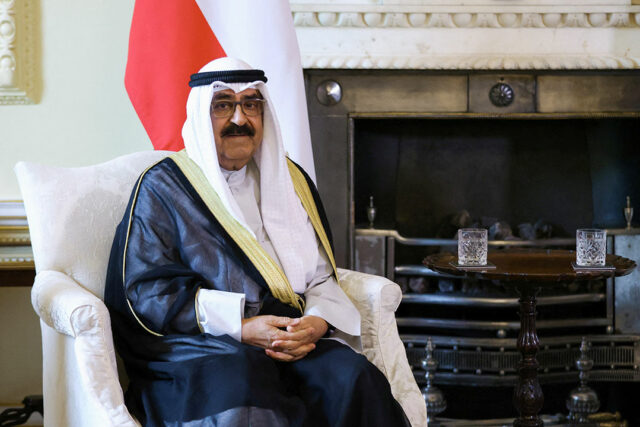
KUWAIT’S Crown Prince, Sheikh Meshal Al-Ahmad Al-Jaber Al-Sabah is seen at 10 Downing Street, in London, Britain, Aug. 29, 2023. — REUTERS

KUWAIT — Sheikh Meshal al-Ahmad al-Sabah was named as Kuwait’s new emir on Saturday after the death of his brother Sheikh Nawaf al-Ahmad al-Sabah aged 86.

Sheikh Meshal, 83, spent much of his career helping build the Gulf state’s security and defense apparatus before stepping into the public eye when he became crown prince three years ago.

He was thrust further into the spotlight when he was handed most of the frail Emir Sheikh Nawaf’s duties in November, 2021.

Sheikh Meshal becomes Kuwait’s third emir in just over three years. Until 2020, the post had been held for 14 years by Sheikh Sabah al-Ahmad, a prominent figure in the Arab world known for helping lead Kuwait out of the ruins of Iraq’s 1990 invasion.

As he takes the helm of the Organization of the Petroleum Exporting Countries oil producer, Sheikh Mehshal is expected to preserve key Kuwaiti foreign policies including support for Gulf Arab unity, Western alliances, and good ties to Riyadh — a relationship seen as a top priority to him.

He may also look to expand ties to China as it seeks a bigger role in the region, especially after Beijing sponsored a deal that normalized ties between Iran and Saudi Arabia in March.

Sheikh Meshal signed several economic agreements during a visit to China in September, when he attended the opening ceremony of the Asian Olympic Games.

“He desires stability, and stresses the importance of Kuwait’s relationship with Saudi Arabia in particular,” a Kuwaiti source said, adding that Sheikh Meshal was concerned about the regional situation and afraid of wars in the region.

A Western diplomat described Sheikh Meshal as an early riser with a methodical work style. “He pays attention to details, sometimes to the very small details,” the diplomat said. While Sheikh Sabah had been closer to diplomatic work, Sheikh Meshal was closer to the military, the diplomat said.

Sheikh Meshal was deputy chief of the National Guard from 2004-2020 and head of State Security for 13 years after joining the interior ministry in the 1960s. He had been offered several senior roles in the past but declined them, experts say.

He attended Britain’s Hendon Police College and was credited with helping to reform the National Guard.

Sheikh Meshal is the seventh son of former ruler Ahmed Al-Jaber, and a brother of three former rulers, Sheikh Jaber Al-Ahmad, Sheikh Sabah Al-Ahmad, and Sheikh Nawaf Al-Ahmad. He is married and has five sons and seven daughters.

Some believe he may move to further align Kuwait with Riyadh. His first calls after taking on Sheikh Nawaf’s duties were with King Salman and Crown Prince Mohammed bin Salman, and his first trip outside the Kuwait was to Saudi Arabia, which he has visited more than any other country.

As emir, he will have to grapple with long-running strains between the ruling family and its critics in the perpetually deadlocked and fractious parliament that critics say have hindered fiscal and economic reform.

Kuwait’s legislature wields more influence than similar bodies in other Gulf monarchies. The resulting political deadlock has for decades led to cabinet reshuffles and dissolutions of parliament.

The first two years of Sheikh Nawaf’s rule were buffeted by political turbulence with eight governments formed and three parliamentary elections held.

In 2022, Sheikh Meshal intervened in a protracted dispute between the government and parliament. He dissolved parliament, decreed new elections and replaced the prime minister but declared no intention to interfere in the vote or the selection of parliament speaker.

His move was widely welcomed by the opposition.

He also pledged to adhere to the constitution and not to amend, revise, or suspend it, in a speech delivered on behalf of the emir in June 2022. Parliamentarians and analysts considered this historic.

Although the 2022 elections were annulled by the Constitutional Court in March 2023, the subsequent vote – won by a majority of lawmakers who declare themselves “reformists” – led to a rare consensus between parliament and the government. — Reuters

Asylum seekers may overwhelm parts of Europe, says UK’s Sunak

British Prime Minister Rishi Sunak — REUTERS

ROME — British Prime Minister Rishi Sunak said on Saturday that he would push for global reforms to the asylum system and warned the threat of growing number of refugees could “overwhelm” parts of Europe.

In a speech in Italy, Mr. Sunak made some of his strongest criticisms of the global asylum system as he tries to revive his government’s plans to send refugees to live in Rwanda.

Mr. Sunak made the comments at a political festival organized by the party of his Italian counterpart Giorgia Meloni, where he warned that some “enemies” were deliberately “driving people to our shores to try and destabilize our societies.”

“If we do not tackle this problem, the numbers will only grow. It will overwhelm our countries and our capacity to help those who actually need our help the most,” Mr. Sunak said.

“If that requires us to update our laws and lead an international conversation to amend the post-war frameworks around asylum, then we must do that.”

Britain’s former Home Secretary Suella Braverman earlier this year called for changes to United Nations Refugee Convention that obliges all signatories to grant asylum to people fleeing persecution.

The provision has been one of the biggest legal barriers to the British government’s efforts to stop small boat crossings and to send would-be asylum-seekers to Rwanda for processing.

Britain and Italy announced plans on Saturday to jointly co-finance the journey home for migrants stranded in Tunisia, according to statements from both countries, but did not say how much would money was being provided.

Last month, Italy agreed with Albania to build sea migrant reception centres in Albania to host migrants trying to come ashore in an effort to try to bring down numbers that have nearly doubled in the past year.

A few days ago, Mr. Sunak survived a major threat to his leadership on Tuesday when he won a vote in parliament on an emergency bill to revive his plan to send asylum seekers to Rwanda, seeing off a rebellion from some of his lawmakers. — Reuters

Consumer pessimism persists in Q4; businesses upbeat — BSP survey

PHILIPPINE STAR/WALTER BOLLOZOS

Consumers remained pessimistic in the fourth quarter (Q4) due to elevated prices and lower salaries, a survey by the Bangko Sentral ng Pilipinas (BSP) showed.

The BSP confidence index (CI) among consumers decreased to 19% in the fourth quarter from a 9.6% contraction in the third quarter.

Rising prices, lower income, limited job opportunities, and doubts about the effectiveness of government policies on various economic aspects were the factors consumers attributed to their negative sentiment in the fourth quarter, the BSP said.

Consumers were more hesitant to buy big-ticket items in the fourth quarter this year, with the confidence index sliding to -71.3% from -62.7% in the third quarter.

“Consumer outlook is more pessimistic across the three component indicators and across income groups,” the BSP noted, adding that pessimism increased in low- and middle-income groups, while optimism turned into pessimism in the high-income group.

The BSP also observed a decrease in the percentage of households with loans and savings.

At the same time, the confidence index dropped to 5.6% for the first quarter of next year, down from the previous 7.8%.

Over the next 12 months, the index declined to 15% from 18.9%.

BUSINESS OPTIMISM

Meanwhile, the confidence index for businesses went up to 35.9% in the fourth quarter, up from 35.8% in the previous quarter.

The respondent companies were optimistic due to expectations of increased sales and production during the holidays, sustained economic recovery, business expansions in several sectors, development of new products and services, and expectations of robust consumer spending.

“However, the current quarter’s consumer index was tempered by concerns of pessimistic firms over the negative economic impact of the ongoing conflicts in Gaza and Ukraine, elevated inflation, and higher interest rates,” the BSP said.

The nationwide consumer survey response rate for this quarter was slightly lower at 97.4% from 97.6% in the previous quarter, the central bank noted.

Meanwhile, the business survey response rate increased to 65.1% from 64.9%.

According to the central bank, it interviewed 5,398 households for the survey conducted from Oct. 2 to 13 and 1,548 business owners for the survey held from Oct. 5 to Nov. 14.—Keisha B. Ta-asan

vivo brings heat to NBA 3X with V29 Series 5G plus thrilling on-court activity

Global smartphone leader and Official Smartphone of the National Basketball Association (NBA), vivo, brought the heat to the NBA 3X Philippines 2023, unveiling its V29 Series 5G and engaging basketball enthusiasts with thrilling on-court activity.

Celebrating a decade of basketball excitement, NBA 3X Philippines 2023 brought together players of all skill levels for a thrilling 3-on-3 basketball competition, showcasing the dynamism of the game. As the official partner and smartphone of the NBA in the Philippines, vivo showcased its commitment to blending technology and passion for sports.

The highlight of the event was vivo’s latest marvel, the V29 Series 5G – the Aura Portrait Master 2.0. Attendees had the opportunity to see its innovative features and sleek design that define vivo’s position at the forefront of smartphone technology.

Complementing the competition, vivo hosted the “Five-Man Standing Free Throw Edition,” a captivating on-court activity where participants competed for victory, with the last five standing receiving exclusive vivo premium belt bags.

At the event area, the vivo booth allowed attendees to experience the latest smartphone lineup, including the V29 Series 5G, Y36, Y27, Y17s, and Y02t, showcasing vivo’s dedication to delivering cutting-edge technology to its users.

The participation of vivo in the NBA 3X Philippines 2023 is just the start of a fruitful partnership. Soon, select vivo stores will feature dedicated NBA sections, providing fans with a unique space to indulge in NBA content, including live streaming of games and programming through NBA League Pass.


To elevate the excitement for NBA fans in the Philippines, vivo has launched captivating promotions, including the ongoing “Christmas Make a Wish” raffle promo. Until Jan. 31, 2024, participants can share their Christmas wishes for a chance to win three tickets to an NBA regular-season game, three autographed Wilson basketballs, and 50 codes for NBA League Pass. To join the promo and make your Christmas wish, visit www.vivoglobal.ph/what-is-your-christmas-wish.

vivo’s presence at NBA 3X Philippines 2023 underlines the brand’s dedication to seamlessly merging technology with the spirit of sports, providing an unparalleled and immersive experience for fans.

Official NBA merchandise is available at NBA stores at SM Megamall and SM Mall of Asia, as well as NBAStore.com.ph. For all the latest NBA news and updates, Filipino fans can visit www.nba.com, download the NBA App, and follow the NBA on Facebook, X, and TikTok.

For more information on vivo Philippines and its latest product offerings, visit vivoglobal.ph and follow the official vivo accounts on Facebook, X, Instagram, TikTok, and YouTube.


Spotlight is BusinessWorld’s sponsored section that allows advertisers to amplify their brand and connect with BusinessWorld’s audience by enabling them to publish their stories directly on the BusinessWorld website. For more information, send an email to online@bworldonline.com.

Join us on Viber at https://bit.ly/3hv6bLA to get more updates and subscribe to BusinessWorld’s titles and get exclusive content through www.bworld-x.com.

ADVERTISEMENT
ADVERTISEMENT