Home Blog Page 3866

PHL expected to import more rice due to El Niño

Farmers use a threshing machine after harvesting what was left of their rice plants during a dry spell in Quirino province, which was affected by the El Nino weather phenomenon, March 4, 2010. — REUTERS

By Luisa Maria Jacinta C. Jocson, Reporter

THE EL NIÑO weather event’s impact on agriculture production in the Philippines could lead to a surge in rice imports to account for the supply shortfall, the World Bank said.

“El Niño is expected to dampen farm production and increase the need for rice imports,” the multilateral lender said in its latest Food Security Update.

A strong El Niño is expected to continue until January next year and is seen to persist until May 2024, according to the latest advisory by the Philippine Atmospheric, Geophysical and Astronomical Services Administration (PAGASA).

The weather event increases the likelihood of below-normal rainfall conditions, which could bring dry spells and droughts in some areas of the country.

By the end of May 2024, 65 provinces are projected to experience a drought while six will face a dry spell.

The Philippines, one of the world’s biggest rice importers, will likely grapple with soaring prices of the staple.

The World Bank said global sugar and rice prices have increased by double-digits due to the El Niño and its impact on production and trade.

“El Niño has led to dry conditions in South and Southeast Asia, affecting sugar production in India and Thailand, the two largest exporters after Brazil,” it added.

Federation of Free Farmers Chairman Raul Q. Montemayor said that the El Niño will more likely affect the wet season harvest in the Philippines, which normally begins in the middle of the year.

“It could affect plantings for the next (wet season) crop which usually starts in May or June.  There will be less rainfall in rainfed areas while irrigation dams may not be fully replenished and filled to capacity,” he said in a Viber message.

“This will result in delayed planting and/or reduced planted area. Crops may not survive if the drought lingers during the July-September lean months. The impact in terms of production will be felt when farmers harvest again in September-November,” he added.

The latest crop condition assessment by PAGASA showed that most of the provinces in Luzon received “inadequate amounts of water required to support both the rice and corn crops.”

Mr. Montemayor warned that securing imports may be difficult or expensive if other Southeast Asian countries like Thailand or Vietnam are also hit by the El Niño.

“Additionally, other countries that normally do not import but also want to ensure their food security through imports, such as Indonesia, will start competing with us for the available supply and this could drive up prices,” he said.

Rice imports have reached 3.22 million metric tons (MT) as of Dec. 7, according to the Bureau of Plant Industry.

The US Department of Agriculture is projecting rice imports to hit 3.8 million MT this year.

To address spiraling rice prices, the government earlier placed a temporary price cap on regular and well-milled rice from September to October this year.

The government should not just rely on imports as a stopgap measure and instead must provide further support to farmers and the agriculture sector, Mr. Montemayor said.

“Helping our farmers produce as much as possible despite less rainfall is the most important step.  This would involve the rehabilitation of irrigation systems, water harvesting and impounding, and installation of irrigation pumps. This could be complemented by a public campaign to save water, reduce rice wastage, and promote rice substitutes,” he added.

The World Bank also noted other steps being taken by the Philippine government to ensure adequate rice supply, such as expediting rice importers’ clearances.

“In addition, a law has been proposed designed to minimize food waste and promote balanced eating habits by mandating that restaurants serve smaller-portioned, half-cup rice orders,” it added.


Global rice prices hit highest level in 15 years

Workers load sacks of flour in a delivery truck in Manila, July 11, 2022. — PHILIPPINE STAR/ MIGUEL DE GUZMAN

RICE PRICES reached a fresh 15-year high on mounting concerns that increased demand and the impact of El Niño will further tighten supplies of the grain that is a staple for billions across Asia and Africa.

Thai white rice 5% broken, an Asian benchmark, climbed by 2.5% from the prior week to $650 a ton on Wednesday, according to the Thai Rice Exporters Association. That’s the highest level since October 2008.

Prices most recently rallied to that milestone in early August in the wake of sweeping export curbs from top shipper India and as dry weather threatened the Thai crop. After retreating for most of September and October, price gains quickened in November. This could keep food inflation elevated in the coming months, especially in rice-reliant countries like the Philippines.

India’s Prime Minister Narendra Modi is also concerned about accelerating food inflation before general elections next year. The cost of rice is increasing despite export restrictions, a good harvest and ample state stockpiles, according to the food ministry. The staple has risen about 12% annually in the past two years, and officials have asked millers to cut retail prices.

Thai Prime Minister Srettha Thavisin said this week Indonesia plans to buy 2 million tons from the country by the end of next year. Local millers delayed sales after the news on hopes of higher prices, said Chookiat Ophaswongse, an honorary president of the Thai Rice Exporters Association, adding that the strong Thai currency also contributed to rising prices.

Looming supplies from Vietnam and Thailand may limit the potential for any sharp upside in the market, Mr. Chookiat said, noting Thailand has sufficient water reserves to guarantee a good second crop. High prices will also encourage farmers to expand planting, he said by phone on Thursday.

“Still, we expect the price to remain at pretty high levels early next year on lingering food security concerns and India’s ban,” Mr. Chookiat said.

The increase in the cost of the grain is in stark contrast to other staples — wheat and corn. The Thai white rice price is up by 36% in the past year, while wheat futures in Chicago are down 20% and heading for the first decline in seven years. Corn futures have lost about 30% this year. — Bloomberg

Prime Energy plans $187M for Malampaya Phase 4 in 2024

BW FILE PHOTO

PRIME Energy Resources Development B.V. announced on Thursday a plan to spend $187 million (around P10.4 billion) next year for the Malampaya Phase 4 project.

The project involves drilling at least two deepwater wells in the Camago and Malampaya East fields by 2025, with the potential for commercial gas production pending successful drilling results, Prime Energy said in a statement.

“If the drilling is successful and proves that gas reserves can be produced commercially, the necessary pipelines will be installed and tied into the existing Malampaya production facilities,” the company noted.

“Production from the new wells is expected in 2026,” it added.

Extensive investment is crucial for the execution of the project, requiring advanced drilling equipment, subsea equipment, umbilicals, pipelines, and securing a drilling rig, according to Prime Energy Managing Director Donnabel Kuizon Cruz.

“The planned drilling and development requires an investment of more than $600 million,” she said.

Prime Energy and its partners secured a 15-year renewal of Service Contract No. 38 (SC 38) until 2039, signed by President Ferdinand R. Marcos, Jr. and Secretary of Energy Raphael P.M. Lotilla on May 15 this year, paving the way for exploration and development of additional gas reserves.

“To underpin the significant investment required, Prime Energy and its partners have sought the support of the DoE (Department of Energy) to ensure that there is a market for the new gas volumes, and to streamline and simplify the permits and requirements imposed by various government agencies which could hamper the completion of Malampaya Phase 4 on time and within budget,” the company said.

At the same time, Prime Energy said that China has not claimed the Malampaya contract area, expressing confidence in uninterrupted drilling and development activities set to take place in 2025 and 2026.

Last week, Mr. Marcos cited the need to address “issues” in the South China Sea to initiate energy exploration projects before the depletion of the Malampaya.

In May, Mr. Marcos said that the government would continue talks with China regarding claims and concerns about the Malampaya gas fields.

“The only way to resolve the issues that are outstanding is to once again keep talking and to come to a consensus to come to an agreement and to continue to negotiate,” Mr. Marcos said in a May 5 statement.

The Malampaya consortium is composed of Prime Energy, Udenna Group’s UC38 LLC, and the state-owned Philippine National Oil Energy Corp.

Prime Energy, a subsidiary of Prime Infrastructure Capital, Inc., holds a 45% operating stake in the Malampaya consortium.

The Malampaya gas field, the country’s sole natural gas provider, is expected to be depleted by 2027.

Malampaya is located in the West Philippine Sea, about 65 kilometers offshore from Palawan. It produces around 146 billion cubic feet of gas per year, according to the Energy department. — Sheldeen Joy Talavera

A guide to the Metro Manila Film Festival 2023

AN ACTION adventure film, a fantasy drama, a romance, a historical drama, two comedies, two horror thrillers, and two family dramas make the lineup for this year’s Metro Manila Film Festival (MMFF). Organized by the Metropolitan Manila Development Authority (MMDA), the film festival starts on Dec. 25 and runs until Jan. 7, 2024.

Now on its 49th year, the film festival carries the theme “Tara na! Makisaya!” (Let’s go have fun!).

“We encourage everyone to support the MMFF and experience the magic of cinema that promotes family bonding and cultural appreciation. MMFF is a celebration best experienced with family and friends,” Movie and Television Review and Classification Board (MTRCB) Chairperson Lala Sotto said in a press release.

The movies were selected from a record-high 30 submissions, according to MMDA. This year, 10 were chosen instead of the usual eight.

MMFF’s Gabi ng Parangal or awards ceremony will be held at the New Frontier Theater in Quezon City on Dec. 27.

Established in 1975, the Metro Manila Film Festival aims to promote and enhance Philippine cinema. During its run, no non-festival film, local or foreign, can be screened in regular theaters.

Here are the 10 official entries to the MMFF 2023 in alphabetical order:

BECKY AND BADETTE
(produced by The Ideafirst Company)
Directed by Jun Robles Lana

This is a comedy about friendship and second chances. It charts the struggles of Becky and Badette, two high school best friends, who, in their mid-40s, are still struggling to make ends meet but never lose hope that their dream of one day becoming famous celebrities will come true. It stars Eugene Domingo and Pokwang.
MTRCB Rating: PG

BROKEN HEARTS TRIP
(produced by Smart Films Productions, BMC Films)
Directed by Lemuel Lorca

This is a comedy-drama about five LGBTQ individuals who will finally have the time of their lives after countless heartaches, frustration, and seemingly endless grief. In a reality competition that features a series of trips to the most beautiful tourist spots in the Philippines — dubbed “The Broken Hearts Trip” — they are tasked to remain single until the end of their journey. The film stars Andoy Ranay, Christian Bables, and Teejay Marquez.
MTRCB Rating: PG

FAMILY OF TWO (A MOTHER AND SON STORY)
(produced by Cineko Productions)
Directed by Nuel Naval

This drama tells the story of Maricar, whose world revolves around her son Mateo whom she raised singlehandedly. When Mateo moves to Singapore to pursue his career and his girlfriend, he devises a plan to find a good man who can look after his mother while he is gone. The film stars Alden Richards and Sharon Cuneta.
MTRCB Rating: G

FIREFLY
(produced by GMA Network)
Directed by Zig Dulay

This fantasy film tells the story of 10-year-old Tonton and his single mother Elay, who live a humble but happy life together. When Elay finds out she is terminally ill, she races against time to leave behind as many stories as she can for her son. One story catches Tonton’s imagination: the tale of the firefly who defeats the island beast with its light. The film stars Alessandra de Rossi and Euwenn Mikaell.
MTRCB Rating: PG

GOMBURZA
(produced by Jesuit Communications Foundation and Cignal TV)
Directed by Pepe Diokno

This historical film tells the story of the three martyr priests — Mariano Gomez, Jose Burgos, and Jacinto Zamora — who, in 1872, were executed by the Spanish colonial government when they were falsely accused of sedition and treason. A heroic drama laden with intrigue, battle scenes, and love of country, it is an epic tribute to the people behind the birth of the Filipino consciousness. It stars Cedrick Juan, Dante Rivero, and Enchong Dee.
MTRCB Rating: PG

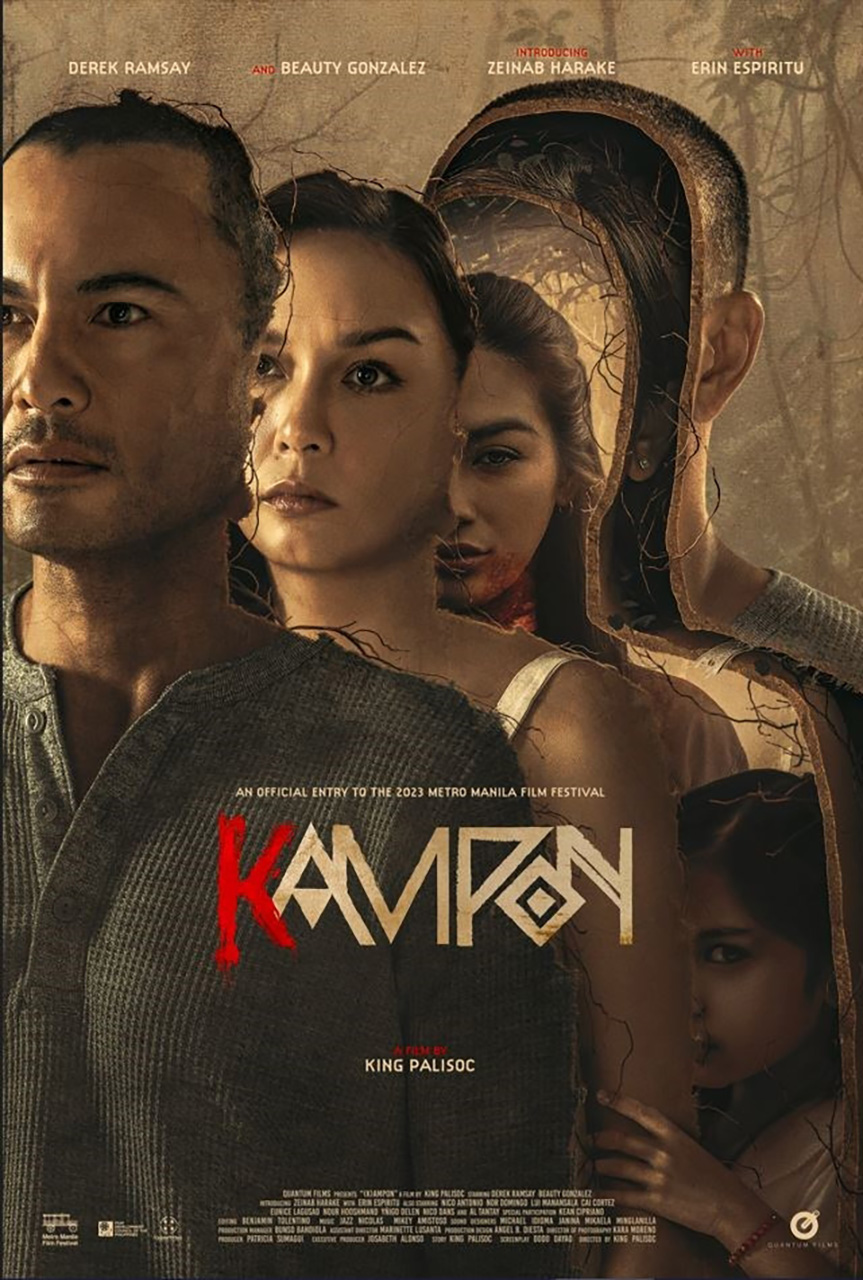
KAMPON
(produced by Quantum Films)
Directed by King Palisoc

This horror film follows a childless couple, Clark and Eileen, who welcome a little girl who knocks at their door claiming to be Clark’s child. Despite the unexpected situation, the wife accepts the child and temporarily fosters her while figuring out their next steps. As Clark investigates the child’s history, Eileen begins to develop an odd and eerie relationship with her. The film stars Beauty Gonzales and Derek Ramsay.
MTRCB Rating: R-13

MALLARI
(produced by Mentorque Productions)
Directed by Derick Cabrido

This horror film follows Jonathan Mallari, a man in search of his family’s supernatural cure for his dying girlfriend. In the process, he uncovers the history of his 1800s serial killer priest ancestor Severino, which triggers not a cure but a curse. Malevolent hauntings, uncontrollable soul travel, and the mysterious return of the serial killings in the present-day ensue. The film stars Elisse Joson, JC Santos, and Piolo Pascual.
MTRCB Rating: R-13

PENDUKO
(produced by Sari Sari Network, VIVA Films)
Directed by Jason Paul Laxamana

This adventure film is based on the Filipino comic book character, Pedro Penduko. The son of a philanthropic rural faith healer, he runs away to the city to live independently and pursue the finer things in life. There, he is recruited by an underground company called Hatinggabi, where people with supernatural gifts like Pedro are formally trained and sent to heal victims of sorcery in exchange for money. The film stars Albert Martinez, John Arcilla, and Matteo Guidicelli.
MTRCB Rating: G

REWIND
(produced by ABS-CBN Film Productions, Star Cinema)
Directed by Mae Cruz-Alviar

This romance drama is about John, who feels guilty about his life choices. He fails to get a promotion at work, is estranged from his father and son, and has a rocky marriage with his wife, who suddenly dies in a car accident. When he meets a man who offers him a chance to rewind and correct all his mistakes — at the cost of his own life — John accepts. The film stars Dingdong Dantes and Marian Rivera.
MTRCB Rating: PG

WHEN I MET YOU IN TOKYO
(produced by JG Productions)
Directed by Conrado Peru and Rommel Penesa

This romance is about unconditional love, sacrifice, and aging. It follows an elderly Filipino couple: Joey, an OFW permanent resident of Japan who is wounded and traumatized by his ex-wife’s betrayal, and Azon, also an OFW permanent resident in Japan who makes him give love another shot. The film stars Christopher De Leon and Vilma Santos.
MTRCB Rating: PG

Brontë H. Lacsamana

SEC allows PSE to acquire more shares in PDS Group

THE Securities and Exchange Commission (SEC) has granted the application of the Philippine Stock Exchange, Inc. (PSE) for exemptive relief, allowing it to exceed the mandatory ownership in Philippine Dealing System Holdings Corp. (PDS Group).

In a media release on Thursday, the SEC said that its Commission En Banc approved on Dec. 19 the petition of PSE for additional shares in PDS Group, the operator of the fixed-income exchange.

This means PSE is now allowed to exceed the mandatory limit of 20% on ownership and voting rights in an exchange, permitting it to own up to 100% of the PDS Group, subject still to certain conditions.

As of today, PSE owns 20.98% of the issued and outstanding capital stock of the PDS Group. 

Earlier, PSE announced its intention to acquire full ownership of the PDS Group.

With this move, the SEC is permitting unified or integrated local bourses, referring to a financial market where assets like stocks and bonds are traded under a single entity.

The Securities Regulation Code states that no industry or business group may beneficially own or control, directly or indirectly, more than 20% of the voting rights of the exchange.

“The SEC, however, may adopt rules, regulations or issue an order, upon application, exempting an applicant from the ownership limit if such ownership  or control will not negatively impact on the exchange’s ability to effectively operate in the public interest,” the commission said.

“In this case, PSE would essentially merge with Philippine Dealing & Exchange Corp. (PDEx) and the Philippine Depositary & Trust Corporation (PDTC) to create a unified marketplace,” Globalinks Securities and Stocks, Inc. Head of Sales Trading Toby Allan C. Arce said in a Viber message.

The PDS Group is composed of the Philippine Dealing & Exchange Corp. (PDEx), which operates the organized secondary market for trading fixed-income securities issued by corporations. It also calculates the Philippine Dealing System Treasury Reference Rates, which serve as the benchmark for the valuation and marking-to-market of interest rate-sensitive instruments.

“Combining operations could streamline processes, reduce overhead, and optimize infrastructure, leading to cost savings and improved profitability,” Mr. Arce added.

The Commission En Banc has also approved the transfer of the shares of stock of an exchange controller to allow the PSE to acquire shares in PDS that are currently owned by other PDS shareholders.

“An integrated bourse would enable the PSE to offer efficient listing and trading solutions across a variety of securities, including equities, bonds, and eventually options. Hopefully this leads to a deeper and more active secondary market for bonds and other fixed income instruments,”  China Bank Capital Corp. Managing Director Juan Paolo E. Colet said in a Viber message.

A larger and diversified exchange could be more “competitive,” as it would attract international capital and investments, Mr. Arce said.

“On the other hand, a dominant PSE could stifle competition and innovation, making it harder for smaller players to compete and limiting investor choice,” he said.

The SEC has also ordered the PSE to submit regular updates, which include timelines of plans, commitments, reduction in fees, valuation, enhancements of systems, and launch of new products quarterly after the acquisition.

“Increased control over markets raises concerns about the PSE’s influence on price discovery and potential manipulation. Strong oversight and transparency are crucial. While the overall market benefits, smaller investors may face challenges adapting to a new structure and potentially higher fees,” Mr. Arce said. — Ashley Erika O. Jose

Film in 2024: Barbie early awards nods, delayed movies top releases

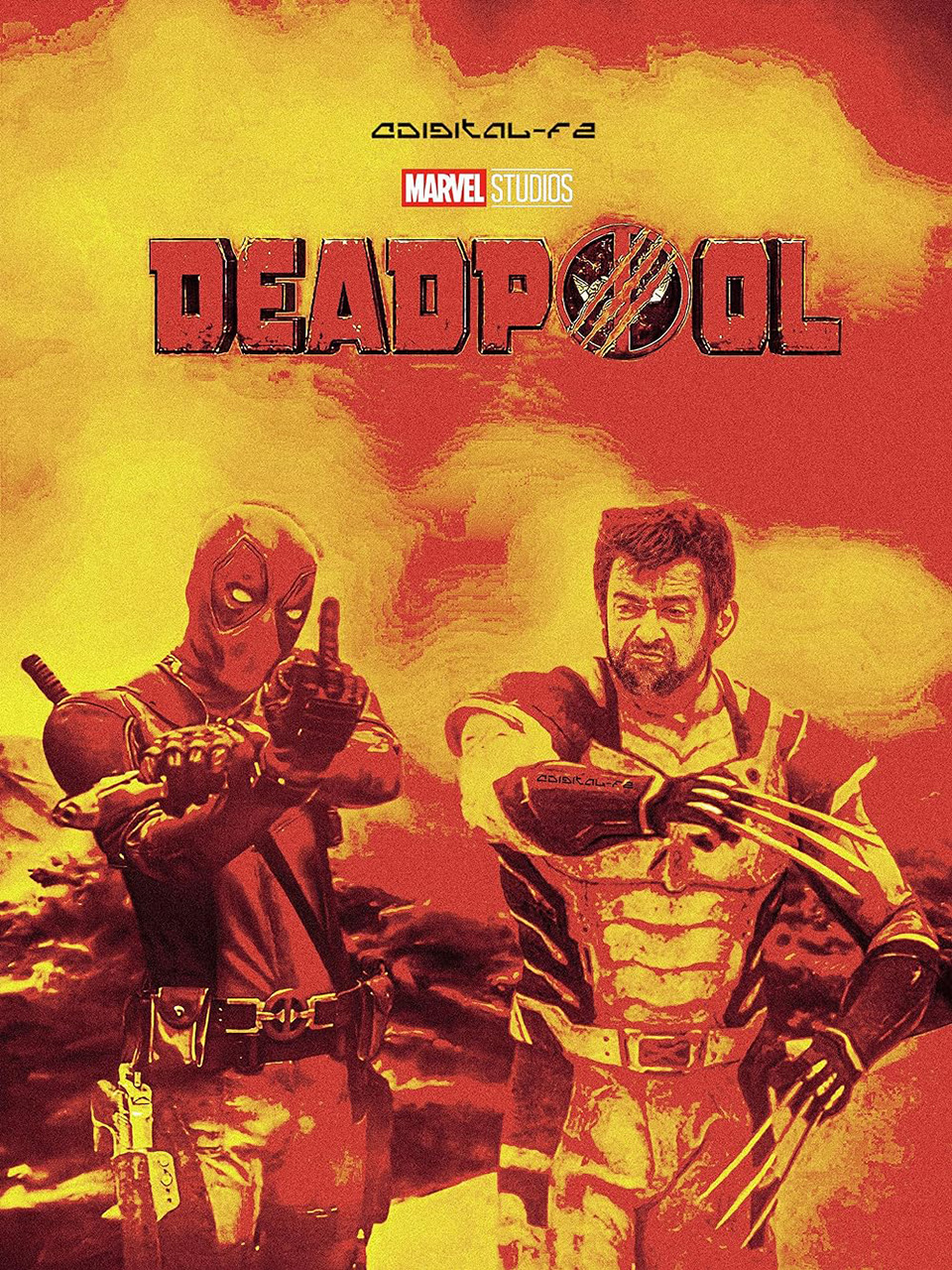
LONDON — From delayed sci-fi sequel Dune: Part Two to the held-up third Deadpool movie, 2024 will see some major movie releases as the industry recovers from this year’s twin Hollywood strikes which halted film production.

Awards season kicks off the year, with smash hit Barbie leading the Golden Globe nominations with nine nods. Historical drama Oppenheimer, which featured in a summer box office clash with Barbie dubbed “Barbenheimer,” has eight nominations.

Gothic comedy Poor Things, which triumphed at the Venice Film Festival, and love story Past Lives are also strong contenders, as is Martin Scorsese’s Killers of the Flower Moon, about the 1920s murders of American Indians in Oklahoma.

“It’s early days but … you have already seen that Barbie and Oppenheimer are going neck to neck,” said Leo Barraclough, director of international features at Variety.

“One film that’s come up just recently is Anatomy of a Fall which is the French film that won at Cannes … Past Lives is a favorite with a lot of people and (historical drama) The Zone of Interest is certainly going to be there.”

Among next year’s releases are films pushed back from 2023, like the big-budget Dune sequel and tennis drama Challengers, as studios readjusted schedules because of the four-month long actors’ strike, which ended in November.

Deadpool 3, whose production was halted by the strike, had its release date moved from May 2024 to July 2024.

“There’s a double effect. Firstly, production was held up, so films like Gladiator 2 (have) been delayed in terms of shooting and, so now the release is going to be towards the end of next year,” Mr. Barraclough said.

“Other films got pushed into next year in terms of releases partly because of the need to promote them.”

Also on the 2024 slate are spy movie Argylle, origins story Furiosa: A Mad Max Saga, stuntman action flick The Fall Guy, Beetlejuice 2, and sci-fi drama Mickey 17 by Oscar-winning Parasite director Bong Joon-ho.

For younger audiences, family movie releases include Despicable Me 4, Kung Fu Panda 4, and Inside Out 2.

A survey by ticket-seller Fandango showed the top 10 most anticipated 2024 movies were mainly sequels and spin-offs, with Deadpool 3 at No. 1. — Reuters

Ayala unit invests in North Luzon-based pharma firm St. Joseph Drug

STJOSEPHDRUG.COM

AYALA CORP., through its unit Ayala Healthcare Holdings, Inc. (AC Health), has acquired a minority stake in pharmaceutical company St. Joseph Drug, the listed company announced on Thursday.

In a regulatory filing, Ayala Corp. said that AC Health’s pharmaceutical arm, AHCHI Pharma Ventures, Inc. (APV), signed definitive agreements with St. Joseph Drug (Joleco Resources, Inc.) on Dec. 15 for the acquisition of a “significant” minority stake.

APV serves as the listed company’s vehicle for its pharmaceutical businesses, which include Generika Drugstore and the pharmaceutical importation and distribution arms, Medica and MedEthix.

The company did not disclose both the transaction amount and the percentage of the stake to be acquired.

“This is a well-thought-out acquisition that gives AC Health access to a promising regional pharmacy chain. The investment could drive expansion in provincial markets and aligns with AC Health’s broader strategy of growing its pharmacy platform,” China Bank Capital Corp. Managing Director Juan Paolo E. Colet said in a Viber message.

This move would allow AC Health to expand its pharmaceutical footprint in the Philippines, Mr. Colet said. 

“I wouldn’t rule out the possibility of AC Health eventually taking majority control of St Joseph Drug,” he added. 

“The addition of St. Joseph Drug to our portfolio is in line with our commitment to enhance accessibility and affordability of healthcare for Filipinos nationwide… We will greatly enhance synergies and efficiencies within our pharmacy platform to further improve our products and services throughout our AC Health network,” AC Health President and Chief Executive Officer Paolo Maximo F. Borromeo said.

Established in 1958, St. Joseph Drug is a Luzon-based company that has more than 112 stores in North Luzon.

“Adding St. Joseph Drug to its portfolio expands AC Health’s reach in North Luzon, a region with historically limited access to quality and affordable medication. This could lead to increased market share and revenue in the near term,” Globalinks Securities and Stocks, Inc. Head of Sales Trading Toby Allan C. Arce said in a Viber message.

With the acquisition  AC Health can also optimize St. Joseph Drug’s existing distribution network and potentially reduce operational costs, Mr. Arce said.

“This could lead to lower drug prices for consumers and improve profitability. St. Joseph Drug brings its own established brand and loyal customer base to AC Health. This can solidify AC Health’s position as a leading healthcare provider in the Philippines,” Mr. Arce added.

“The acquisition could fuel further innovation and growth in AC Health’s pharma business, opening doors for new ventures and services,” he said.

he local bourse on Thursday, shares in the company closed P17 or  2.35% lower at P705 each. — Ashley Erika O. Jose

Elephant Gym brings bass-driven math rock to Manila

PHOTO BY BRONTË H. LACSAMANA

Concert Review
Elephant Gym Live in Manila
Dec. 16

Balcony Music House

By Brontë H. Lacsamana, Reporter

FOR Elephant Gym guitarist Tell Chang, it was essential to have Manila as one of the first stops in the band’s world tour this year.

Back in 2018, Filipino fans warmly welcomed the Taiwanese indie rock trio, who headlined the All of The Noise mini music festival. Though it took them five years to arrange a return, the wait was well worth it.

Elephant Gym had a sold-out one-night-only performance at the Balcony Music House in Poblacion, Makati, on Dec. 16.

“The reason we put Manila as our third stop (out of 40 stops) of our tour is because we know the audience here goes crazy,” Mr. Chang said at the show.

While the occasional shouts of “I love your music!” and screams of “Marry me!” often took them aback, Mr. Chang, the bassist (his sister) KT Chang, and the drummer Chia-Chin Tu drew energy from the craziness of Filipino fans to give a remarkable performance.

MAKING AN IMPRESSION
The concert started with the audience singing “Happy Birthday” to Mr. Chang, whose birthday coincided with the show. Shortly after, the band launched into the first four songs of the night — “Frog,” “Games,” “Underwater,” and “Half” — all very intense and instrumentally complicated pieces.

“The four songs we just played are heavy because we want you guys to have an impression that we are strong,” Ms. Chang said after the fourth song.

While she said this in a soft-spoken, sweet manner, it’s worth noting that Ms. Chang’s agile bass playing was the most badass thing this writer saw in any music gig this year.

For those unfamiliar with Elephant Gym, their genre is math rock, which deserves its own explanation.

Math rock is a style of indie or experimental rock that emerged in the United States in the 1980s with bands like Slint, Chavez, and Don Caballero. As its name suggests, it seems mathematical, as it features complex and unusual time signatures.

Many who listen to it might think it sounds odd, but it can be engaging and impressive and kind of like a massage for the ears and mind. (This writer listens to math rock while working since it calms the brain in a stimulating way while not grabbing so much attention as to be distracting.)

As a math rock outfit, Elephant Gym is able to interlace threads of jazz, electronic, and classical music into a unique patchwork of contemporary rock.

The word “elephant” in the band name symbolizes their bass-driven melodies while “gym” refers to nimble, irregular rhythms, a staple of math rock music.

MAKING MUSIC
The fifth song of the night was “Midway,” a fan favorite as it features expressive vocals from Ms. Chang that complement the fast-paced guitar, bass, and drums.

“As musicians, we are always on the midway because we always worry about people not getting into our music,” Ms. Chang said to introduce the song.

She then admitted that making music could be very difficult for artists nowadays who can be overly conscious of what others think.

“But when we got here, we saw so many nerdy guys like you in this venue, so we think that is the reason we make music, because we know you will like it!” Ms. Chang concluded, drawing laughs and cheers from the audience.

Elephant Gym was launched in 2012 in Kaohsiung, Taiwan, with no assurance that any Taiwanese, let alone people from other countries, would take to more of the already-niche sound of math rock.

Little did they know that in 2023, they would have a sizeable following in the Philippines.

COMPLEX EMOTIONS
After the beautiful melodies of “Midway” came the equally exhilarating “Spring Rain” and then the more challenging tune of “Quilt.”

Mr. Chang took over the microphone from his sister at this point and introduced the next song, “D.”

“Commercial and pop culture always talk about the joyful and bright side of life, but musicians or artists like us tend to dig into the negative emotions such as anger, anxiety, depression, and fear, a lot,” he said.

From this familiarity with the negative comes an acceptance of everything and a chance to find peace, he explained — a mindset evident in Elephant Gym’s music, in all its musical twists and turns and complexities.

“D,” followed by “Shadow,” “Head,” and “Body,” all of which flowed together as if in one, long track, featured Ms. Chang on the keyboard. As expected, her keyboard playing was as spirited as her bass playing.

The next song was “Go Through the Night,” their popular tribute to Japanese math rock band Toe, one of the flagbearers of the genre from the early 2000s up to today.

“The acoustic guitar part is sampled from Toe. They’re our hero, and our first album Balance is mixed by their guitar player,” said Mr. Chang. Much of the crowd sang along to the memorable opening notes of the acoustic guitar and moved their bodies with enthusiasm as the band built on the sample.

MORE VARIETY
Elephant Gym closed out their live show in Manila with an eclectic mix of their songs, both relatively new and old.

The jazzy yet dissonant “Witches” kept heads bobbing. Meanwhile, the immensely popular “Finger” started off with a soft, catchy tune that the crowd sang along to, until the guitar riffs intensified and the drums sped up, causing people to headbang more fiercely.

As the song “Moonset” began playing, an audience member excitedly yelled out the title, a hilarious contrast to the mellow, jazzy rhythm that followed.

Then came the last two songs, “Ocean in the Night” and “Galaxy,” from their first album. The twinkly, complicated instrumentals along with the siblings’ vocal blending made for a wonderful conclusion to an energetic night, a showcase of Ms. Chang, Mr. Chang, and Mr. Tu’s technique and stage presence.

“We’re very thankful that you guys came here to experience all the emotions in our music,” Mr. Chang told the crowd.

While math rock is not that popular a genre (with local acts like Tom’s Story and tide/edit having a small niche among Filipino indie music lovers), it’s safe to say that Elephant Gym managed to carve out their own space within it.

As their name suggests, they provided compelling music driven by powerful bass lines and their love to play around as they please — and they successfully brought it to Manila for one night.

Meralco eyes 3 sites for micro-modular reactor deployment

MANILA Electric Co. (Meralco) is considering three areas for its pre-feasibility study to deploy micro-modular reactor (MMR) systems, a company official said.

In a briefing on Tuesday, Meralco Executive Vice-President and Chief Operating Officer Ronnie L. Aperocho said that most of the sites considered by the Department of Energy (DoE) are outside the company’s franchise areas.

“Because this is a Meralco undertaking, we want [the areas to be] within our franchise. So, we’re considering at least three sites but we just have to harmonize with [Undersecretary Sharon S. Garin],” he said.

The three areas under consideration are Talim Island in Laguna de Bay, municipality of San Rafael in Bulacan, and Isla de Provisor in Manila.

Last month, Meralco signed a deal with the US-based company Ultra Safe Nuclear Corp. (USNC) to study the potential deployment of one or more MMR systems in the Philippines.

Under the agreement, USNC will conduct a four-month pre-feasibility study to familiarize Meralco with MMR systems and their effective utilization in the country.

The pre-feasibility study, according to the distribution utility, will assess financial, technical, safety, siting requirements, and commercial viability, among other topics.

Meralco will then have the option to conduct a more detailed feasibility study focusing on the adoption and deployment of MMR energy systems.

According to USNC, the MMR energy system can “safely and reliably” provide up to 45 megawatts (MW) thermal of high-quality heat, delivered into a centralized heat storage unit.

One or more MMR nuclear batteries combine their heat in the heat storage unit, from which electric power or superheated steam can be extracted through conventional means to meet a wide range of power requirements, from tens to hundreds of MW.

Meanwhile, Mr. Aperocho said that they hope to send the company’s scholars by the time USNC starts building the MMR system at the University of Illinois for them to follow through the process.

“Our plan in terms of the scholarship program is by the time that the construction has started, let us say 2025, that’s the time that will send scholars and hopefully to the University of Illinois because they have a good scholarship program,” he said.

In September, Meralco formally launched its scholarship program that will support aspiring Filipino nuclear engineers under a two-year graduate program. The program is scheduled to run from 2025 to 2027.

Meralco is eyeing top global engineering universities, including the University of California in Berkeley, the University of Illinois, the Korea Advanced Institute of Science and Technology, the University of Ontario Institute of Technology, and Université Paris–Saclay, for the program.

The application process for the pilot batch of the program will open in 2024.

Meralco’s controlling stakeholder, Beacon Electric Asset Holdings, Inc., is partly owned by PLDT Inc.

Hastings Holdings, Inc., a unit of PLDT Beneficial Trust Fund subsidiary MediaQuest Holdings, Inc., has an interest in BusinessWorld through the Philippine Star Group, which it controls. — Sheldeen Joy Talavera

CIC’s rating system may boost lending, banks’ asset grade

LENDERS expect a recently introduced compliance rating system to boost banks’ lending and asset quality, and result in greater financial inclusion.

Last month, state-led Credit Information Corp. (CIC) issued a circular that will implement a Compliance Rating System to monitor the compliance of Submitting Entities in Production (SEPs).

Union Bank of the Philippines, Inc. (UnionBank) said in an e-mailed statement that the rating system boosts financial inclusion by “providing lenders with accurate credit information which is key in the credit decisioning process.” 

“The new guidelines ensure strict compliance of all submitting entities with the credit reporting requirements,”  the bank said, referring to the CIC circular titled “Implementing Guidelines for the Compliance of all Submitting Entities under the Credit Information System Act.”

CIC acts as a central credit registry of Filipinos’ credit information. Its new system will charge a Compliance Assistance Fee for SEPs that will cover the cost of providing technical support and enforcement. 

“With the banks’ increased knowledge of the customers’ credit history, it is assumed that credit assessment would be more thorough. This would lead to better asset quality and improved NPL (nonperforming loans),” China Banking Corp. (China Bank) Consumer Banking Segment Head Aloysius C. Alday, Jr. said in an e-mail.

UnionBank said lenders will be able to have better risk-adjusted returns and price loans better.

The banking industry’s gross NPL ratio went up to 3.44% in October from 3.4% in September and 3.41% in the same month last year, preliminary data from the Bangko Sentral ng Pilipinas (BSP) showed.

The latest figure is also the highest bad loan ratio since 3.46% in May.

Meanwhile, bad loans rose by 9.2% year on year to P449.435 billion from P411.632 billion. Month on month, it inched up by 1.2% from P444.313 billion in September.

Mr. Alday said that while some banks might struggle with setting up data sharing, they are likely to benefit in the long term as overall lending will grow due to better know-your-customer (KYC) data.

Nonetheless, all banks will need to comply with CIC’s compliance rating system to cope with the increasing risks, especially for smaller lenders, UnionBank said.

“It is important to address the risks. Otherwise, smaller entities should evaluate their options, particularly limiting their offerings to simpler products or services to avoid the additional cost of compliance,” the Aboitiz-led bank said.

Outstanding loans by big banks rose by 7.1% to $11.3 trillion in October from $10.55 trillion a year earlier, BSP data showed.

This was faster than the 6.5% expansion in September, marking the fastest pace in bank lending growth in two months or since the 7.2% seen in August.

On a month-on-month seasonally adjusted basis, outstanding universal and commercial bank loans inched up by 1.4%.

“This compliance will result in each bank’s portfolio growth with facilitated credit assessment and better asset quality with the deeper knowledge of each loan customer,” Mr. Alday said.

“However, this will be limited to existing ‘banked’ customers who have existing records,” he noted.

To address this, CIC may use existing data shared by the banks to develop credit scoring for the unbanked. — Aaron Michael C. Sy

K-Pop star G-Dragon cleared of drug allegations

YGFAMILY.COM

SEOUL — K-Pop star G-Dragon has been cleared of allegations of illegal drug use by South Korean police, according to media reports.

Police had been investigating the singer and rapper, whose given name is Kwon Ji-yong, amid an ongoing crackdown on illegal drugs by the government of conservative President Yoon Suk Yeol.

On Tuesday, the Incheon Metropolitan Police decided not to charge the former leader of the K-pop band BIGBANG for alleged drug use after they had not obtained testimonies to support the charges against him, Yonhap News Agency reported.

Reuters could not immediately reach the police or G-Dragon for comment on Wednesday.

G-Dragon, a fashion muse and a writer of many hit songs, had strongly denied the allegations, showing up at a police station last month for questioning to prove his innocence.

In a sit-down interview with Yonhap News TV last month, the 35-year-old star again denied any illegal drug use. “I have never used drugs, received or given drugs from or to anyone,” he said, referring to negative drug test results.

A series of drug charge arrests, including of chaebol heirs and celebrities, has prompted authorities to vigorously pursue a crackdown on narcotics and increase customs inspections.

South Korea has tough drug laws, and crimes are typically punishable by at least six months in prison or up to 14 years for repeat offenders and dealers. — Reuters

AUB’s e-wallet HelloMoney expands to South Korea, Malaysia, and Hong Kong

ASIA UNITED Bank Corp. (AUB) has expanded the use of its e-wallet HelloMoney to South Korea, Malaysia, and Hong Kong, making the platform available in four countries or regions including Japan.

“We will continue to bring HelloMoney closer to more users to make mobile banking easier and for more merchants to help their business grow and thrive in the post-pandemic world,” said Wilfredo E. Rodriguez, Jr., AUB executive vice-president and head of operations and information technology, in a statement on Thursday.

“With Alipay+’s global presence through its integration with local merchants worldwide, our HelloMoney users will have a wider reach in payment acceptance while ensuring a safe and secure digital transaction,” he added.

The expansion into South Korea, Malaysia, and Hong Kong is powered by AUB’s partnership with Alipay+, along with several cross-border payments, and marketing and digitalization solutions operated by Ant International.

HoneyMonehy users may conduct transactions by scanning a Quick-Response (QR) code displayed in merchant stores abroad.

For South Korea, HelloMoney users can scan the ZeroPay QR, available in more than 1.7 million merchants nationwide.

In Malaysia, HelloMoney users can scan DuitNow QR, operated by PayNet, which is available in 1.8 million merchants.

Mr. Rodriguez said over the years, AUB has been building “a digital arsenal,” which he said includes “pioneering initiatives and innovations — from end-to-end digital account opening, to enabling clients to make banking easy through their mobile phone and merchants to sustain their businesses even with restricted mobility during the pandemic.”

HelloMoney was launched by AUB in 2019, as the bank looked to enable users to open an account without going to a physical branch and perform bank-to-bank fund transfers. 

Through the e-wallet, users may also buy prepaid load, remit money through PeraPadala, pay via QR code, settle bills, withdraw cash through ATM, and shop online using HelloMoney’s own virtual Mastercard.

“Members of state-owned Pag-IBIG Fund can also manage their account and perform banking transactions through the Pag-IBIG Loyalty Card Plus via HelloMoney,” AUB said.

As of end-October, HelloMoney transactions grew by 65% to 30 million from 19 million in the same period last year. This was equivalent to P115 billion, 82% higher than year-ago’s P63 billion.

AUB’s net income rose by 15.04% year on year to P1.95 billion in the third quarter amid continued core business expansion and lower provisions. — Aaron Michael C. Sy

ADVERTISEMENT
ADVERTISEMENT