Home Blog Page 3865

Whisky and the coal mining ‘shack’: Taiwan election is not only about China

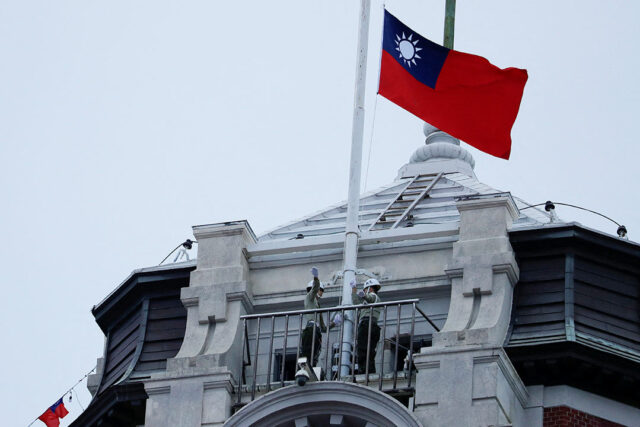
Honor guards raise a Taiwanese flag at the Presidential Palace in Taipei, Taiwan Oct. 10, 2023. — REUTERS

TAIPEI — As Taiwan’s election approaches next month, it is not only fraught ties with China competing for electors’ attention.

The candidates are exchanging blows over everything from property disputes to whether drinking whisky is out of touch, in a raucous and freewheeling display of the island’s democracy.

Taiwan’s Jan. 13 presidential and parliamentary election will define how the Chinese-claimed island deals with Beijing and the subject is indeed a major bone of contention.

But it is far from the sole issue debated at rallies, press conferences and on television talk shows where the uncensored exchanges are a major contrast to China, which says it is a socialist democracy but has been ruled only by the Communist Party since the founding of the People’s Republic in 1949.

One subject taking much limelight in Taiwan is whether the childhood home of Lai Ching-te from the ruling Democratic Progressive Party (DPP) and currently frontrunner to be next president according to most polls, was illegally expanded by his family in an old coal mining area north of Taipei.

Mr. Lai has denied anything untoward took place. But he has pledged to donate the tidy-looking house, which using Chinese-language wordplay on his name the opposition have called Mr. Lai’s “rascally shack,” so it can be turned into a miners’ museum. “I’ve seen that villagers in mining areas are worried the houses they’ve settled down in would be considered illegally built and be demolished. I’m very sorry about this. It is my responsibility to help everyone find a way to protect their housing rights,” Mr. Lai said last week.

The property ownership of the other two presidential candidates, Hou Yu-ih from the main opposition party the Kuomintang (KMT) and Ko Wen-je from the small Taiwan People’s Party (TPP), have also garnered attention.

The DPP has criticized Mr. Ko for co-owning farmland illegally turned into a parking lot, and Mr. Hou of profiting from renting out a large number of apartments his wife owns.

Mr. Ko has promised to tear up the parking lot. Mr. Hou has denied wrongdoing, and his wife said on Wednesday the apartments “from beginning to end do not belong” to him, denouncing “political smears and suspicion.”

Mr. Hou’s running mate, the outspoken media personality Jaw Shaw-kong, said this week nobody was being forced to live in the apartments, many of which were rented to students.

“If people think they are too expensive then boycott them,” Jaw Shaw-kong told reporters.

Illegally adding to buildings or putting farmland into other uses are not uncommon problems in Taiwan given the sometimes vague or unenforced regulations.

JOHNNIE WALKER
Mr. Lai has a lead of around 5 percentage points in most polls, though some have shown Mr. Hou only one or two points behind.

One focus for all three parties has been how to appeal to the young, with an estimated 1 million new voters eligible to cast ballots at this election.

Mr. Ko has honed in on bread-and-butter issues like the high cost of housing, and young people have flocked to his rallies even if he has trailed in the polls.

But the TPP has been attacked as out of touch with ordinary people for Mr. Ko’s choice of running mate, Cynthia Wu, whose family is a major shareholder of conglomerate the Shin Kong Group.

The TPP’s opponents mocked Mr. Wu for comments at a vice presidential debate on Friday where she said “when I was young, everyone loved to drink Johnnie Walker,” referring to the popular Scotch whisky.

Wang Ting-yu, a senior DPP lawmaker, shot back on his Facebook page that when he was young, “we mostly drank plain water.”

Ms. Wu downplayed the furor.

“Sarsaparilla, beer, guava juice and Johnnie Walker is for us Chinese what should be on the table to drink. OK? So there’s no need to make a fuss about it,” she told reporters. — Reuters

Gaza war likely to last months, Israel says

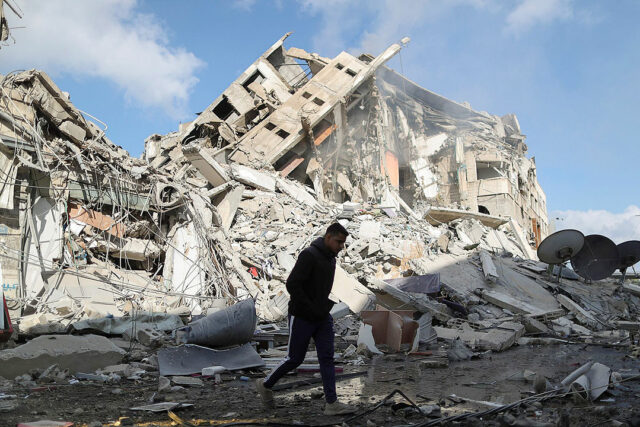
A Palestinian man walks past the remains of a tower building which was destroyed by Israeli air strikes, amid a flare-up of Israeli-Palestinian violence, in Gaza City May 13, 2021. — REUTERS FILE PHOTO

CAIRO/GAZA/JERUSALEM — Israel’s war on Hamas will last months, Israel’s military chief said, as a string of incidents outside the Gaza Strip highlighted the risk of the conflict spreading.

Israel’s Chief of Staff Herzi Halevi told reporters in a televised statement on Tuesday from the Gaza border that the war would go on “for many months.”

“There are no magic solutions, there are no shortcuts in dismantling a terrorist organization, only determined and persistent fighting,” Mr. Halevi said. “We will reach Hamas’ leadership too, whether it takes a week or if it takes months.”

Israeli actions intensified around Christmas, particularly in a central area just south of the seasonal waterway that bisects the Gaza Strip. The Israeli army told civilians to leave the area, though many said there was no safe place left to go. 

“We are gravely concerned about the continued bombardment of Middle Gaza by Israeli forces, which has claimed more than 100 Palestinian lives since Christmas Eve,” said United Nations Human Rights Office spokesperson Seif Magango on Tuesday.

“Israeli forces must take all measures available to protect civilians. Warnings and evacuation orders do not absolve them of the full range of their international humanitarian law obligations.”

Israel is determined to destroy Hamas despite global calls for a ceasefire in the 11-week-old war.

Since Hamas killed 1,200 people and captured 240 hostages on Oct. 7 in the deadliest day in Israeli history, Israeli Prime Minister Benjamin Netanyahu has responded with an assault that has laid much of Hamas-ruled Gaza to waste.

Palestinian health authorities say nearly 21,000 people have been killed in Israeli strikes, with thousands more feared buried under rubble. Nearly all the enclave’s 2.3 million people have been driven from their homes, many several times.

Gaza authorities buried 80 unidentified Palestinians on Tuesday whose bodies were handed over by Israel through the Kerem Shalom border crossing, the health ministry said.

According to the Islamic Waqf, or religious affairs ministry, the bodies were collected from the northern part of the Gaza Strip. They were buried in a long ditch at a Rafah cemetery in the south.

“Pictures are being taken to identify them later,” a representative of the Gaza Islamic Waqf said during the burials.

Israel says it is doing what it can to protect civilians, and blames Hamas for putting them in harm’s way by operating among them, which Hamas denies. But even Israel’s closest ally the United States has said it should do more to reduce civilian deaths from what President Joseph R. Biden has called “indiscriminate bombing.”

SPREAD THREAT
There are growing signs the conflict is starting to spread.

Yemen’s Iran-backed Houthi militia claimed responsibility for a missile attack on Tuesday on a container ship in the Red Sea and for an attempt to attack Israel with drones.

The Houthis have been attacking ships they say have links to Israel in the entrance to the Red Sea, one of the world’s busiest shipping lanes. The attacks are a response to Israel’s assault on Gaza, the militia says.

An Israeli airstrike killed a senior leader of Iran’s Revolutionary Guards in Syria on Monday.

And on the Lebanon border on Tuesday, Israel said Hezbollah fired anti-tank missiles at a church, wounding nine Israeli soldiers and a civilian, after which it fired rockets from near a mosque, drawing retaliatory airstrikes.

In India, meanwhile, there was an explosion near the Israeli embassy in New Delhi. Authorities said no staff were hurt.

“We are in a multi-front war and are coming under attack from seven theatres: Gaza, Lebanon, Syria, Judea and Samaria (the West Bank), Iraq, Yemen and Iran,” Israeli Defence Minister Yoav Gallant told lawmakers on Tuesday, listing six places where Iran-backed militants are active, as well as Iran itself.

“We have already responded and taken action in six of these theatres,” he said, without specifying the one that had yet to see Israeli action.

Israeli Minister of Strategic Affairs Ron Dermer was meeting US Secretary of State Antony Blinken and national security adviser Jake Sullivan in Washington on Tuesday for talks on the war and the return of hostages, the White House said.

The United States has openly pressed Israel in recent weeks to scale down its war to a more targeted operation of raids on Hamas leaders. But Washington is still seen in the region as a supporter of Israel and US forces have been attacked by Iran-backed militants in the Middle East.

The US military carried out retaliatory airstrikes on Kataib Hezbollah militants in Iraq on Monday after a drone attack on a US base in Erbil left one US service member in critical condition and wounded two. — Reuters

Timeless and bold: Why you should check out Calvin Klein’s watch collection

The holiday season is setting in and a flurry of celebrations have you eagerly anticipating each event. As your calendar fills up with invitations to intimate get-togethers and dazzling yearend functions, the need for the perfect accessory that suits every occasion becomes essential.

The Holiday Timepiece

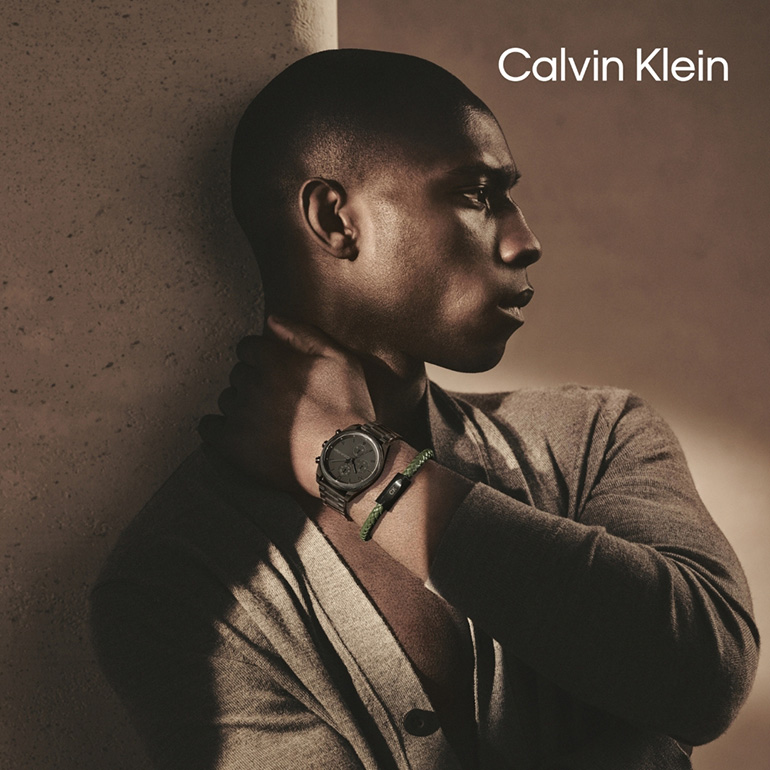
Calvin Klein watches are carefully crafted to be classic and stylish, an aesthetic of the brand renowned around the world, and this lineup is no different. The newest collection from Calvin Klein makes a watch more than a way to tell time — it becomes an extension of your personal style as every piece enhances your ensemble for any festive affair. By balancing the essence of elegance and modernity, the collection is curated to make the perfect fashion statement.

Calvin Klein 25200322 Women’s Ionic Carnation Gold Plated Steel Quartz Basic Slim Watch | P12,800

The FW23 Collection also makes for a perfect gift to put under your loved one’s Christmas tree! These beautiful watches become a treasure that symbolizes an everlasting bond. It is a promise to mark each moment with sophistication and style. Share in the joy of giving by gifting a piece that will encapsulate the memorable moments. These are the best occasions to gift a watch that captures the significance of every wonderful event life brings us!

Anniversary: Celebrating a Journey of Love

Calvin Klein 25200349 Men’s Ionic Thin Gold Plated Steel Quartz Basic Calendar Watch | P12,800

To wear alongside your cherished wedding ring, a watch can express the enduring journey of your love. Gifting a watch shows how you cherish the shared experiences, conquered tests, and countless moments of joy in your relationship. Celebrate your anniversary with another symbol of commitment to your partner, illuminating your shared future ahead.

Career Milestones: Celebrating New Horizons

Calvin Klein 25200366 Women’s Two-Tone Steel Watch | P12,800

As one reaches new career milestones, each contract signed becomes a symbol of the recognized dedication and pursuit of excellence in their career. This moment of triumph deserves to be celebrated with a watch that shows you entering a new phase of your life. A look to your wrist reminds you of how much value your time holds and serves as a constant reminder of the new horizons waiting to be explored.

Birthdays: Celebrating Life

Calvin Klein 25200359 Men’s Ionic Black Plated Steel Watch | P14,800

Blowing out the candles on the cake, we celebrate the fruitful year that has passed and the hopes and wishes we have for the year ahead. Birthdays mark a moment of growth, being thankful for the accomplishments and lessons learned. Whether for a friend, family member, or loved one, a watch becomes a meaningful token of appreciation for the time spent together. This joyous occasion should be celebrated with a timepiece that reminds the wearer of the moments that matter and the exciting chapters yet to unfold.

Christmas: Celebrating the Holiday Season

Calvin Klein 25200339 Women’s Ionic Thin Gold Plated Steel Mesh Watch | P12,800

As we adorn our homes with festive decorations and gather around the Christmas tree, we are reminded of the warmth, joy, and nostalgia that we feel during the holiday season. Commemorate the festivities with a watch that mirrors all the time you’ve spent with your family and friends. Make the act of gifting a timepiece a way to express your love for the timeless memories created through the magic of the Christmas season.

The #TimelessMemories Campaign

A watch becomes more than a timekeeper once you let it adorn your wrist. It turns into a reflection of the chapters of your life. When you find a piece that perfectly resonates with your personality, it becomes a cherished companion in making #TimelessMemories. Whether it’s the everyday moments or extraordinary milestones that transcend time, each tick tells a different story. Every glance at your Calvin Klein watch becomes a journey of nostalgia, a reminder of the meaningful past and the exciting future that has yet to come.

Available in select SM, Rustan’s, and Landmark Department Stores nationwide. Also available at Calvin Klein Watches SM North EDSA, The Watch Store SM North EDSA, The Watch Store SM Fairview, and The Watch Store SM Davao. You can also shop online at https://thewatchstore.com.ph/pages/calvin-klein.


Spotlight is BusinessWorld’s sponsored section that allows advertisers to amplify their brand and connect with BusinessWorld’s audience by enabling them to publish their stories directly on the BusinessWorld website. For more information, send an email to online@bworldonline.com.

Join us on Viber at https://bit.ly/3hv6bLA to get more updates and subscribe to BusinessWorld’s titles and get exclusive content through www.bworld-x.com.

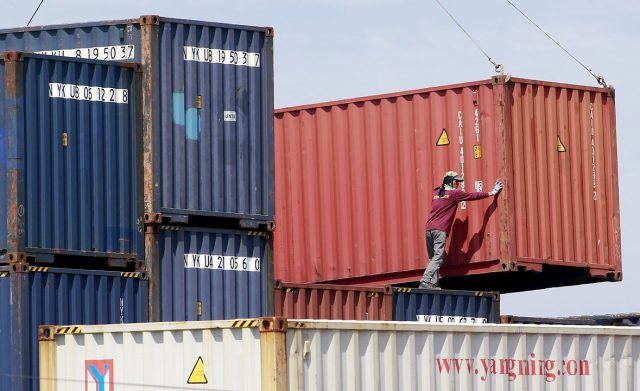
Shipping firms take first steps towards Red Sea return

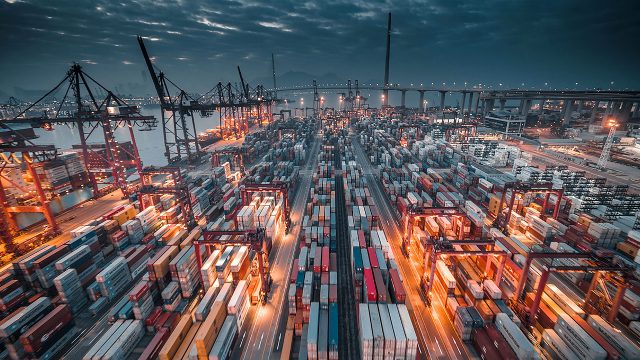
UNSPLASH

 – France’s CMA CGM is increasing the number of vessels traveling through the Suez Canal, it said on Tuesday, joining Maersk in returning to the area after US-led efforts to prevent attacks.

The world’s top shipping companies, including Maersk and Hapag-Lloyd, stopped using Red Sea routes after Yemen’s Houthi militant group began targeting vessels this month, disrupting global trade through the Suez Canal.

Instead they have rerouted via southern Africa, a longer and more expensive journey. The canal is the quickest sea route between Asia and Europe.

Shipping firms are now reviewing whether it is safe to return after the United States announced a multinational maritime security initiative in the Red Sea in response to attacks on vessels by Yemen’s Houthis.

CMA CGM has undertaken “an in-depth evaluation of the security landscape”, it said in a statement.

“We are currently devising plans for the gradual increase in the number of vessels transiting through the Suez Canal. We are monitoring the situation constantly and we stand ready to promptly reassess and adjust our plans as needed.”

German container shipping group Hapag-Lloyd HLAG.DE will decide on Wednesday whether to resume journeys through the Red Sea, a spokesperson said.

“We will decide tomorrow how we will proceed,” a Hapag-Lloyd spokesperson said on Tuesday, declining to comment further.

The company had said last week it would redirect 25 ships by the end of the year to avoid the area.

Danish-based Maersk had said on Sunday that it was preparing to resume shipping operations in the Red Sea and the Gulf of Aden, citing deployment of the U.S.-led military operation designed to ensure the safety of commerce in the area.

Maersk did not immediately respond to requests for comment on Tuesday about when it would return vessels to the Suez Canal and what assistance it had received from the U.S.-led maritime force.

In a notice posted on its website on Tuesday, CMA CGM listed 28 of its vessels as being re-routed around the Cape of Good Hope, compared with 22 in a previous list published last Thursday.

CMA CGM is among container lines to have introduced surcharges due to the re-routing of vessels, adding to rising costs for sea transport since the Houthis started targeting vessels.

Mediterranean Shipping Co. said container ship United VIII was attacked while transiting the Red Sea on Tuesday. The Houthis also on Tuesday claimed to have fired missiles at the vessel, without saying it was struck.

Two explosions in the Red Sea were reported by a vessel sailing off the coast of Yemen on Tuesday, shortly after two unmanned aircraft were sighted, a British maritime authority said.

The British maritime authority said the vessel was in contact with coalition forces and that reports said the crew was safe and the vessel was continuing its voyage. – Reuters

South Korea sanctions 8 North Koreans over arms trade, cyberattacks

REUTERS

 – South Korea imposed sanctions on eight North Koreans linked to nuclear and missile development through arms trade, cyberattacks and other illicit activities, Seoul’s foreign ministry said on Wednesday.

The sanctions came days after North Korea fired a new intercontinental ballistic missile (ICBM), which South Korea and the United States strongly condemned as a grave violation of U.N. Security Council resolutions.

The newly blacklisted people include Ri Chang Ho, head of the Reconnaissance General Bureau involved in overseas hacking operations, and Yun Chol, who helped supply nuclear materials while working at the North Korean Embassy in China, the ministry said.

“The eight were involved in generating profits for the North Korean regime and financing nuclear weapons and missiles development by earning foreign currency through illegal cyber activities or stealing technology and trading sanctioned goods including weapons,” it said in a statement.

Amid a prolonged stalemate at the U.N., Seoul has slapped sanctions against Pyongyang independently or together with Washington and Tokyo, seeking to squeeze its funding sources.

South Korea has blacklisted 83 individuals and 53 entities related to North Korea’s weapons programs since October 2022. – Reuters


World’s biggest nuclear plant in Japan to resume path towards restart

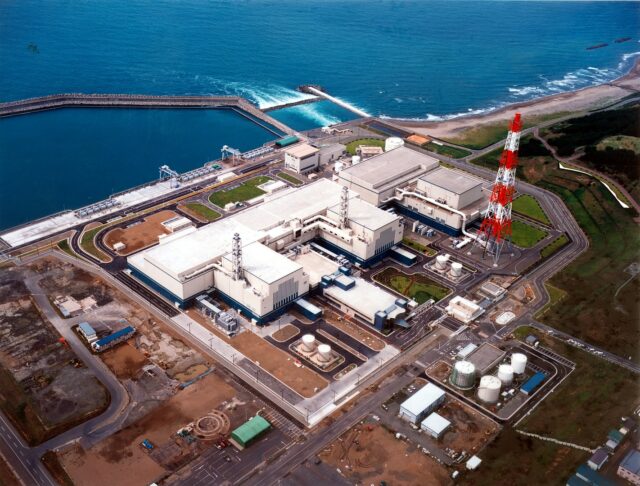
Source: http://tinyurl.com/e6hec83m CC BY-SA 2.0

 – Japan’s nuclear power regulator on Wednesday lifted an operational ban it imposed on Tokyo Electric Power’s 9501.T massive Kashiwazaki-Kariwa power plant two years ago, clearing the path for it to resume a process towards a restart.

Tepco has been eager to bring the world’s largest atomic power plant back online to slash operating costs, but a resumption still needs local consent in Niigata prefecture, on the Sea of Japan coast.

With capacity of 8,212 megawatts (MW), the plant has been offline since around 2011, when the Fukushima disaster prompted the eventual shutdown of all nuclear power plants in Japan at the time.

In 2021, the Nuclear Regulation Authority (NRA) barred Tepco from operating Kashiwazaki-Kariwa, its only operable atomic power station, due to safety breaches including the failure to protect nuclear materials and missteps that led to an unauthorised staff member accessing sensitive areas of the plant.

Citing improvements in the safety management system, the NRA on Wednesday lifted a corrective action order that had prevented Tepco from transporting new uranium fuel to the plant or loading fuel rods into its reactors – effectively blocking a resumption.

Shares in Tepco had risen sharply after the NRA indicated early this month that it would consider lifting the operational ban after conducting an on-site inspection and meeting with the company’s president. – Reuters

China threatens more trade sanctions on Taiwan as election nears

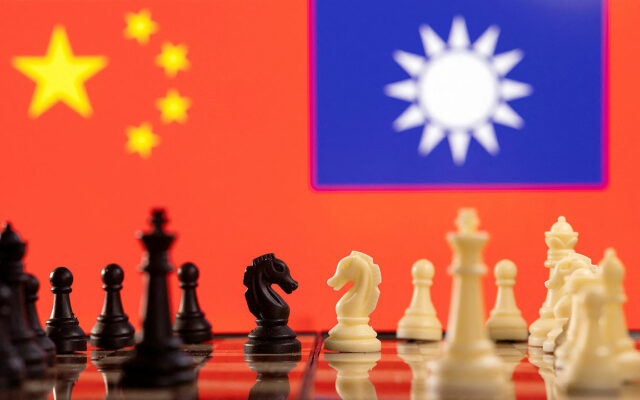
CHESS PIECES are seen in front of displayed China and Taiwan’s flags in this illustration taken Jan. 25, 2022. — REUTERS

 – The Chinese government on Wednesday threatened to place further trade sanctions on Taiwan if the ruling party “stubbornly” adheres to supporting independence, in a further escalation of the war of words as Taiwanese elections approach next month.

Taiwan’s Jan. 13 presidential and parliamentary elections are taking place as China, which views the island as its own territory, has sought to force Taiwan to accept Chinese sovereignty claims.

Taiwan this month accused China of economic coercion and election interference after Beijing announced the end of tariff cuts on some chemical imports from the island, saying Taipei violated a trade agreement between the two sides signed in 2010.

That came after China said it had determined Taiwan had put up trade barriers in contravention of both World Trade Organization (WTO) rules and the 2010 trade deal.

Speaking at a regular news briefing in Beijing, Chen Binhua, spokesperson for China’s Taiwan Affairs Office, said the “root cause” of resolving problems related to the 2010 deal was Taiwan’s ruling Democratic Progressive Party’s (DPP) adherence to the island’s formal independence.

“If the DPP authorities are determined to persevere, continue to stubbornly adhere to their Taiwan independence position, and refuse to repent, we support the relevant departments taking further measures in accordance with the regulations,” Chen said.

China detests both the DPP and its presidential candidate, current Vice President Lai Ching-te, who is leading in the polls, believing they are separatists.

Lai says he has no plans to change the island’s formal name, the Republic of China, but that only Taiwan’s people can decide their future. He has also repeatedly offered talks with China but has been rebuffed.

The defeated republican government fled to Taiwan in 1949 after losing a civil war to Mao Zedong’s communists who founded the People’s Republic of China.

Chen said Taiwan was “facing a crossroads” about where to go, and that anything can be discussed on the basis of opposing Taiwan’s independence. He reiterated that Taiwan independence means war.

However, Chen also extended his “heartfelt thanks” to Taiwanese companies which had donated money to help deal with the aftermath of an earthquake in a remote part of northwestern China this month which killed 1949 people.

But he made no mention of condolences by Taiwan President Tsai Ing-wen to China after the disaster and offers of help from her government. – Reuters

Philippines attracts four bids for $3B airport upgrade

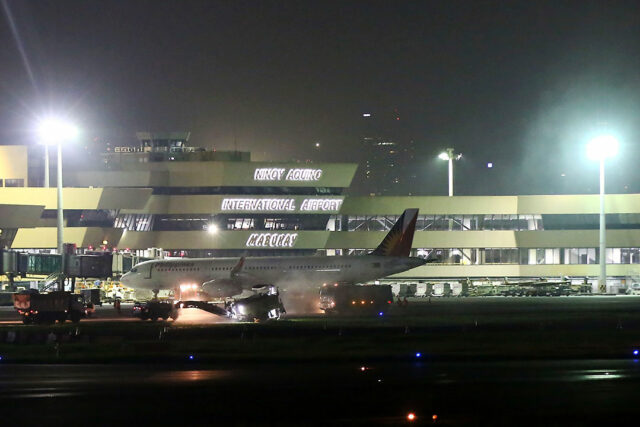
The government on Wednesday opened the bidding for the Ninoy Aquino International Airport public-private partnership project. — PHILIPPINE STAR/MIGUEL DE GUZMAN

MANILA – The Philippines’ auction for a P170.6 billion ($3 billion) upgrade of its main international airport attracted four bidders, the transportation ministry said on Wednesday.

Firms that submitted bids were the Manila International Airport Consortium, Asian Airport Consortium, GMR Airports Consortium, and SMC SAP & Co Consortium, the bids and awards committee said.

The transportation ministry will award in the first quarter the 15-year concession that is extendable by another 10 years. — Reuters

AC Health strengthens pharma footprint through investment in St. Joseph Drug

In photo (L to R): Anthony L. Cruz (Director — St. Joseph Drug); Maria Eleanor L. Cruz-Valero (Corporate Secretary — St. Joseph Drug); Atty. Yet Abarca (President and CEO — APV and Generika Drugstore); Paolo Borromeo (President and CEO — AC Health); Ma. Socorro Dorotea “Gigi” L. Cruz (Chairman, President, and CEO — St. Joseph Drug); Marilene L. Cruz-Bernal (Treasurer and COO — St. Joseph Drug); Maria Catherine L. Cruz-Bangsal (Director — St. Joseph Drug); and Joselito L. Cruz (Director – St. Joseph Drug)

Ayala Healthcare Holdings, Inc. (AC Health) has acquired a significant minority stake in North Luzon-based pharmaceutical company, St. Joseph Drug (Joleco Resources, Inc.). The definitive agreements were signed last Dec. 15 between St. Joseph Drug and AC Health’s pharmaceutical arm, AHCHI Pharma Ventures, Inc. (APV).

Established in 1958 by pharmacist Jose “Pepe” Cruz and his wife Leila Lagman from Dagupan City, St. Joseph Drug has grown from a modest provincial drugstore with three employees and a 3.5-meter storefront into a leading regional pharmaceutical chain spanning over 112 stores across Northern Luzon.

“The addition of St. Joseph Drug to our portfolio is in line with our commitment to enhance accessibility and affordability of healthcare for Filipinos nationwide. St. Joseph Drug, alongside our existing retail pharma brand, Generika Drugstore, will expand our capacity and footprint to distribute quality and affordable medicine to our countrymen. Together with our pharma importation businesses I.E. Medica and MedEthix, we will greatly enhance synergies and efficiencies within our pharmacy platform to further improve our products and services throughout our AC Health network,” said Paolo Borromeo, President and CEO of AC Health.

Ma. Socorro Dorotea “Gigi” L. Cruz, Chairman, President, and CEO of St. Joseph Drug, also expressed enthusiasm about the partnership, stating, “This partnership with AC Health marks a significant milestone in St. Joseph Drug’s journey. We are proud to have established St. Joseph Drug as a household name in Northern Luzon over the years, and we look forward to broadening our reach with AC Health.”

AHCHI Pharma Ventures, Inc. (APV) serves as the holding company for AC Health’s pharmaceutical businesses. Composed of Generika Drugstore, the pioneer in generic retail pharmacies, and I.E. Medica and MedEthix, its pharma importation and distribution arms, APV now includes St. Joseph Drug. This strategic acquisition enables AC Health to strengthen its pharma footprint and reach more Filipinos throughout the country.


Spotlight is BusinessWorld’s sponsored section that allows advertisers to amplify their brand and connect with BusinessWorld’s audience by enabling them to publish their stories directly on the BusinessWorld website. For more information, send an email to online@bworldonline.com.

Join us on Viber at https://bit.ly/3hv6bLA to get more updates and subscribe to BusinessWorld’s titles and get exclusive content through www.bworld-x.com.

BoI-approved investments hit P1.16T

Philippine flags line the road in the City of Dasmariñas in Cavite, June 2, 2023. — PHILIPPINE STAR/EDD GUMBAN

THE BOARD of Investments (BoI) said on Tuesday that total approved investments reached a record P1.16 trillion so far this year, thanks to a surge in renewable energy projects as the sector was opened up to full foreign ownership.

In a statement, the BoI said it had greenlit P1.16 trillion as of Dec. 18, 59% up from P729 billion approved in 2022.

“There are three more projects worth about P350 billion that are currently being assessed and, if they are able to comply with both the substantive and transparency requirements, they may be able to make it to the BoI Board and Mancom deliberations on Dec. 28 — our last for the year,” Trade Undersecretary and BoI Managing Head Ceferino S. Rodolfo said in a statement.

The P1.16-trillion figure so far is still 29% below the revised P1.5-trillion investment approval target set by the Department of Trade and Industry (DTI) for the year. The DTI earlier upwardly revised the BoI’s initial P1-trillion target for 2023.

“The BoI hitting P1.16 trillion for 2023 reaffirms strong investor confidence in the administration of President Ferdinand R. Marcos, Jr. — their responsiveness to the policy initiatives of the President and the effectiveness of the aggressive investment promotion activities,” Trade Secretary and BoI Chairman Alfredo E. Pascual said.

“We are all-the-more optimistic about opportunities that lie ahead in 2024, with the BoI poised to further catalyze smart- and sustainability-driven investments in the country,” he added.

Domestic approvals hit P398.76 billion, accounting for 34% of the total approvals, and 26% higher than the year-ago figures.

On the other hand, foreign investment approvals soared by 452% to P763.22 billion this year.

The BoI said it approved P968.14 billion worth of investments for the renewable energy and power sector, accounting for 83.45% of the total for the year.

This was more than double the P409.03 billion investments approved a year ago, as the Philippine government allowed full foreign ownership in the renewable energy (RE) sector starting November 2022.

Foreign nationals and foreign-owned entities are now allowed to explore, develop and use RE resources in the country such as solar, wind, biomass, ocean or tidal energy. Foreign ownership of RE projects was previously limited to 40%.

“Noteworthy projects approved for January to December were seven offshore wind power projects located in Cavite, Laguna, Dagupan, San Miguel Bay, Negros, and Northern Samar, amounting to a total of P759.84 billion,” it added.

Mr. Pascual, in June, said that investments in renewable energy projects could make up about a third of the agency’s investment approval targets for the year.

Meanwhile, the BoI approved P96.16 billion worth of projects in the information and communication sector this year.

The manufacturing sector had P22.03 billion worth of approved investments, while infrastructure (toll roads) had P20 billion, and P15.63 billion was for mass housing.

The BoI said these investment approvals are expected to generate 47,195 jobs from a total of 303 projects.

In terms of domestic investments, Western Visayas made up the largest share with P316.89 billion worth of investments, followed by Calabarzon (P211.89 billion), Bicol Region (P162.92 billion), Eastern Visayas (P128.62 billion) and Ilocos Region (P122.18 billion).

Meanwhile, foreign investments from Germany contributed the largest share with P393.28 billion, followed by the Netherlands with P333.61 billion, Singapore with P17.38 billion, and the United States with P3.38 billion. — A.H. Halili

External debt service burden surges to $10.8 billion as of end-September

A person shows U.S. dollars at a currency exchange store in Manila, Philippines, October 21, 2022. — REUTERS

By Keisha B. Ta-asan, Reporter

THE PHILIPPINES’ external debt service burden more than doubled in the January-to-September period, according to preliminary data from the Bangko Sentral ng Pilipinas (BSP).        

Based on data posted on the BSP’s website, the country’s debt service burden on its external borrowings skyrocketed by 130.7% to $10.846 billion from $4.702 billion in the same period in 2022.   

Month on month, it rose by 22% from $8.89 billion recorded as of end-August.   

As of end-September, the debt service burden is equivalent to 3.5% of gross domestic product (GDP), higher than 1.6% recorded in the comparable year-ago period.

The debt service burden refers to the amount of money a country needs to pay back its foreign creditors. It includes both the principal and interest payments on its external debt.   

BSP data showed principal payments jumped by 110.6% to $5.861 billion in the January-to-September period from $2.78 billion during the same period in 2022.   

Interest payments surged by 159.7% to $4.985 billion in the first nine months of the year from $1.919 billion a year ago.

Principal external debt service is mostly fixed medium- to long-term credit, while interest payments are on fixed and revolving short-term credit from banks and nonbanks.

“The sharp increase in foreign debt payments may have to do with increased foreign borrowings by the government since last year amid the need to hedge against rising interest rates as well as to diversify its sources of borrowings/funding in the global markets, both from commercial and multilateral sources,” Rizal Commercial Banking Corp. Chief Economist Michael L. Ricafort said in a Viber message.   

Central banks across the world have tightened monetary policy to tame inflation. The BSP was regarded as one of the most aggressive central banks in the region after it hiked the key interest rate by 450 basis points (bps) from May 2022 to October 2023.    

Meanwhile, separate BSP data showed the country’s outstanding external debt increased by 10.1% to $118.833 billion at end-September from $107.91 billion in the same period a year ago. It also inched up by 0.8% from $117.9 billion as of end-June.

External debt refers to all types of borrowings by Philippine residents from nonresidents, following the residency criterion for international statistics.

The external debt ratio, or the external debt as a percentage of GDP, was equivalent to 28.1% of GDP. This was slightly lower than 28.5% in the previous quarter.

“For the coming months, external debt servicing costs could remain elevated amid increased foreign borrowings in recent months amid the further diversification of the government’s funding sources in global markets as well as to provide continued supply/liquidity of Philippine sovereign bonds in the world market as part of capital market development,” Mr. Ricafort said.   

However, possible rate cuts from both the US Federal Reserve and the Monetary Board due to easing inflation may help mitigate external debt servicing costs, he added.   

BSP Governor Eli M. Remolona, Jr. earlier said the BSP is unlikely to cut interest rates in the coming months, as monetary policy in the Philippines is in a “higher for longer” scenario.   

The Monetary Board kept its benchmark rate at a 16-year high of 6.5% for a second straight meeting during its December meeting. Interest rates on the overnight deposit and lending facilities were also left unchanged at 6% and 7%, respectively.

Policy easing will only be considered if inflation and inflation expectations are within a “comfortable” range, Mr. Remolona added.   

Headline inflation eased to 4.1% in November and brought the 11-month inflation average to 6.2%. November marked the 20th straight month that inflation breached the BSP’s 2-4% target band for this year.

The central bank expects inflation to average 6% this year.   

Cost of doing business, navigating international rules hindering wider Philippine utilization of trade deals

REUTERS

By Justine Irish D. Tabile, Reporter

EXPORTERS lack the knowledge to tap trade agreements and face a higher cost of doing business in the Philippines, rendering their products uncompetitive relative to other countries’ exports, a business group said.

The Philippine Chamber of Commerce and Industry said cost-of-doing-business issues center on high power and logistics costs.

“The cost of doing business is still quite high (here) compared to the other countries… These are some of the issues that the government has to address for us to really gain full benefit from (taking advantage of) free trade agreements (FTAs),” PCCI President George T. Barcelon told BusinessWorld by phone.

Mr. Barcelon said that aside from incentives, the Philippines must seek to be a competitive market as it is yet to see strong, sustained inflows of foreign direct investment (FDIs).

“It is top of mind in our meeting with the Anti-Red Tape Authority and foreign chambers that there are these issues to be addressed,” he said.

“As of now, we are not seeing any real good inflow of FDIs as investments are still headed towards Vietnam, Indonesia, and Thailand. This is something that needs work,” he added.

Net inflows of FDI slumped to their lowest level in over three years, amounting to $422 million in September. This was 42.2% lower year on year and down by 46.5% from a month prior.

This brought the FDI net inflows to $5.9 billion in the first nine months of the year, representing a 15.9% decline from a year earlier.

Mr. Barcelon said that the Philippines must upskill its workers to move its products higher up the value ladder.

“Once we have increased to a higher value, be it agricultural or electronic products… the other thing that I think the government must be aware is the cost of compliance and permits,” he said.

He said that the added costs do not align with the government’s target of rightsizing the bureaucracy.

“What businesses see is that there is more bureaucracy, and bureaucracy sometimes can be interpreted as the flip side of corruption,” he added.

Last year, the Philippines improved its ranking on the global corruption index compiled by Transparency International. It placed 116th out of 180 countries in the 2022 Corruption Perceptions Index, a spot higher than its worst-ever showing of 117th place in 2021.

Despite the improvement in ranking, the Philippine score was 33, its lowest ever in the index and below the global average of 43 and the Asia-Pacific average of 45.

TRADE DEALS
Trade and Industry Undersecretary Allan B. Gepty said some investment must be made in navigating the preferential arrangements and their compliance rules to be in a position to access trade agreements.

“There are still many businesses who are not that aware of these preferential arrangements, including compliance procedures,” Mr. Gepty said in a Viber message.

“The continuing program is for advocacy and education so that exporters can avail of the preferential arrangements and other businesses can be encouraged to export or even do business in other countries,” he added.

Mr. Gepty said the Department of Trade and Industry (DTI) plans to sustain its campaign to inform and educate stakeholders on the benefits of FTAs such as the Regional Comprehensive Economic Partnership (RCEP) and other preferential agreements such as the European Union’s (EU) Generalised Scheme of Preferences Plus (GSP+).

The Philippines has been a beneficiary of the GSP+, a special trade scheme for vulnerable low- and lower-middle-income countries, since 2014. GSP+ grants zero duties on 6,274 Philippine products.

The current arrangement was set to expire by the end of 2023. However, the Council of EU Member States and the European Parliament amended the GSP scheme to extend it to 2027.

Under the current scheme, eligible countries, such as the Philippines, will have to comply with 27 international conventions on human rights, labor rights, climate action, and good governance.

The Philippines was threatened with the loss of its GSP+ status during the Duterte administration due to European concern over extrajudicial killings and alleged human rights violations.

The Duterte administration’s “war on drugs” was condemned by the European Parliament in a resolution passed in February 2022, which asked the country to act on human rights abuses.

On the other hand, RCEP, the world’s biggest FTA involving a third of the global economy, counts among its members Association of Southeast Asian Nations, Australia, China, Japan, New Zealand, and South Korea.

The deal aims to increase trade among RCEP participants by allowing minimal to zero restrictions on shipment volumes, tariffs, and import taxes.

The Philippines was the last participating country to ratify the FTA on June 2, more than two and a half years since the participating countries concluded the deal in November 2020.

Mr. Gepty said that the late ratification is one of the reasons why it is still too early to assess RCEP utilization in the Philippines.

“Since its implementation in the Philippines only started in June, it would still be too early to gather and process data. We are coordinating with concerned agencies to gather relevant data for purposes of monitoring,” he said.

Mr. Barcelon added: “RCEP was just ratified in the middle of the year, so it will take some time to really get the benefits from it.”

He said that most RCEP countries are already Philippine trading partners.

“Some of the benefits that I would see are for our agricultural sector to be able to expand their market in Japan, among others,” he added, citing the benefits of the lowered tariffs for Philippine produce under RCEP.

Tereso O. Panga, director-general of the Philippine Economic Zone Authority (PEZA), said there has been an increase in investment approvals from some RCEP countries.

“There has been a marked increase in our ecozone investment approvals this year from Australia and China, countries we consider in PEZA as non-traditional sources of economic zone (ecozone) FDI and exports,” Mr. Panga said in a Viber message.

“Clearly, we can attribute this trade and investment market diversification to the country’s recent accession to RCEP,” he added.

PEZA reported that approved investments from Australia more than doubled to P772.82 million in the first 11 months while investments from China grew 65.8% to P1.28 billion during the period.

“With the entry of more Chinese and Australian investors, we can expect these locators to be exporting their products and services back to their principal headquarters or to other RCEP member countries to take advantage of the lower trade barriers and improved market access from trading partners,” Mr. Panga said.

He said that the increase in investment after the implementation of trade agreements was also seen in the case of European countries.

“We see the same trend with the huge growth in ecozone FDI from EU member countries. In addition, we expect our ecozone exports to the EU to likewise achieve a significant increase given the latter’s continued grant of GSP+ privileges to Philippine exporters,” he said.

“With PEZA accounting for more than 60% of the exports of goods and commodities, we are pursuing more locators seeking to avail of the benefits under RCEP and the proposed EU-Philippines FTA to grow their operations in the country,” he added.

In the first 11 months, PEZA approved P16.56 billion in investments from EU member countries, sharply higher compared with the P2.44 billion in approvals a year earlier.

Philip Dupuis, head of trade for the EU Delegation to the Philippines, said the Philippines retains the potential to more fully utilize GSP+.

“Utilization by the Philippines… has been relatively good. I think we are utilizing two-thirds of the eligible exports, more or less, if I remember well, but it could be better,” Mr. Dupuis said in a chance interview.

He said that it is important to determine whether exporters have an ingrained preference for trading with nearby or familiar markets.

“I think there is a lot of work for us to do in terms of making the European market better known, but the companies also need to inform themselves because all the materials are there,” he said.

“Obviously, if you are satisfied with your exports to Japan and the US, then you don’t necessarily look at the EU market. But I think the potential is there; there is potential to grow for Philippine companies in Europe,” he added.

Mr. Dupuis also said that the EU legislators are still looking to update the GSP+ scheme after the current deal’s extension, as the EU Council and Parliament have yet to reach agreement on updating GSP rules.

The EU and the Philippines have also resumed talks for an FTA since the suspension of the negotiations in 2017. Negotiations were put on hold due to issues over intellectual property rights and data exclusivity, among others.

The two parties are expected to complete the initial phase of the negotiations by the end of December, which involves the identification of the chapters that would form part of the FTA.

The two first launched negotiations for an FTA in 2015.

Rizal Commercial Banking Corp. Chief Economist Michael L. Ricafort said that there is also a need to push the participation of micro, small, and medium enterprises (MSMEs) to further increase utilization of GSP+.

“Some MSMEs that are part of the export supply chain and ecosystem have yet to maximize the potential of GSP+,” Mr. Ricafort said in a Viber message.

He added that supporting “online businesses and transactions would also be able to maximize the economic benefits and potential of these FTAs, given their immense possibilities to expand export markets.”

Mr. Ricafort said FTAs are helpful for effectively expanding the markets of Philippine exporters at much reduced cost, making them more competitively priced.

He said such trade deals also attract more investment, with investors from nearby countries using the Philippines as a stepping stone to access the benefits of preferential agreements such as GSP+.


ADVERTISEMENT
ADVERTISEMENT