Home Blog Page 386

Using AI responsibly and competitively

IN BRIEF:

• Many C-suite executives may not fully understand consumer concerns regarding AI, which can create gaps in trust and hinder adoption.

• Transparency in responsible AI practices is essential for enhancing consumer confidence and engagement with AI technologies.

• A collaborative approach across the entire C-suite is crucial for effectively implementing responsible AI initiatives and aligning with consumer expectations.

Artificial intelligence (AI) is evolving rapidly, with businesses striving to harness its potential across various products, services, and operations. However, successful implementation hinges both on speed and principles of responsible AI, which are crucial for fostering adoption and ensuring long-term value.

While many organizations have established responsible AI guidelines, the effectiveness of these principles in practice remains questionable. A key concern is whether C-suite leaders truly grasp consumer apprehensions about AI and are prepared for the emerging risks associated with advanced AI technologies.

To shed light on these issues, EY initiated the Responsible AI Pulse survey, a global survey conducted in March and April that involved 975 C-suite leaders, including CEOs, CFOs, CHROs, CIOs, CTOs, CMOs, and CROs, all responsible for AI within their organizations. These respondents represented companies with annual revenue exceeding $1 billion across 21 countries in the Americas, Asia-Pacific, and EMEIA. The initial findings reveal a significant disconnect between C-suite perceptions and consumer sentiments regarding responsible AI, with many executives displaying misplaced confidence in their practices and alignment with consumer concerns, potentially hindering user adoption and trust as autonomous AI models become more prevalent.

Furthermore, the findings from the EY AI Sentiment Index Study are referenced, which surveyed 15,060 individuals across 15 countries to assess global sentiments toward AI.

C-SUITE LEADERS’ PERCEPTIONS VS CONSUMER SENTIMENT
CEOs are notably more attuned to responsible AI issues and consumer sentiments compared to their peers in the C-suite. While 31% of C-suite leaders claim their organizations have fully integrated AI solutions, this figure may not accurately reflect the true potential of AI. Achieving comprehensive AI integration requires a fundamental rethinking of business processes, identification of high-value use cases, and investment in foundational elements such as data governance and talent management.

As organizations prepare to invest in advanced AI models that support reasoning and decision-making, it is crucial for C-suite leaders to recognize that AI implementation is an ongoing journey. Continuous education on AI risks and governance is essential for maintaining trust among consumers and stakeholders.

BUILDING CUSTOMER TRUST
To foster customer trust, organizations must prioritize transparency and accountability in their AI practices. In particular, organizations can ensure their AI practices align with ethical standards and legal requirements to build customer trust by adhering to the principles outlined in the NPC Advisory No. 2024-04, particularly regarding the Data Privacy Act.

Transparency is crucial; by clearly informing data subjects about AI usage, its purpose, and potential risks, organizations establish a foundation of trust. Ensuring a lawful basis for AI use — such as consent or contracts — while focusing on data minimization reassures customers that their data is handled responsibly.

Accountability and human oversight are similarly vital. Organizations must take responsibility for AI outcomes, ensuring significant decisions involve human judgment. This commitment mitigates risks and prioritizes customer interests, enhancing confidence in AI capabilities.

Addressing fairness, bias, and accuracy is also essential. By actively working to eliminate bias and maintain accurate datasets, organizations demonstrate their dedication to ethical practices. Empowering customers with data subject rights — allowing them to object, rectify, and review automated decisions — further reinforces trust.

Implementing governance mechanisms, such as risk analyses and grievance processes, signals to customers that their concerns are valued. Additionally, using Model Contractual Clauses (MCCs) for cross-border data transfers ensures safe handling of information, bolstering customer confidence.

MISALIGNMENT OF RESPONSIBLE AI PRINCIPLES
Even though nearly two-thirds of C-suite leaders believe they are well-aligned with consumer perceptions of AI, data from the EY AI Sentiment Index reveals a stark contrast. Consumers express significantly greater concerns regarding responsible AI principles, such as accuracy, privacy, and accountability. This misalignment may stem from inadequate communication about AI governance and risk management practices.

Interestingly, companies still in the process of integrating AI tend to be more cautious in their assessments of alignment with consumer attitudes. These organizations often demonstrate a stronger awareness of responsible AI concerns, particularly regarding privacy and security.

THE ROLE OF CEOS IN RESPONSIBLE AI LEADERSHIP
CEOs emerge as leaders in responsible AI awareness, showing a better alignment with consumer concerns compared to other C-suite roles. Their broader responsibilities and customer-facing roles enable them to champion responsible AI initiatives effectively. As AI continues to permeate various aspects of business, CEOs are well-positioned to advocate for responsible practices and guide their peers in the C-suite.

C-LEVEL CONSIDERATIONS
To address the gaps identified in the survey, C-suite leaders should prioritize listening to consumer feedback to better understand their concerns about responsible AI. Engaging with consumers allows leaders to gain insights into the specific issues that matter most to their audience. This process should involve customer-facing executives and those in traditionally back-office roles, ensuring that all leaders are aware of consumer sentiments and can respond accordingly.

Additionally, it is crucial for C-suite leaders to integrate responsible AI principles throughout the entire AI development process. This means adopting practices that prioritize human-centric design and proactively addressing the key risks associated with AI applications. By embedding responsible AI into every stage of innovation, organizations can ensure that their solutions are not only effective but also aligned with consumer expectations and ethical standards.

Finally, transparent communication about responsible AI practices is essential for building consumer trust. Organizations must clearly articulate how they manage AI-related risks and the measures they have in place to uphold responsible practices. By effectively showcasing their commitment to responsible AI, companies can differentiate themselves in the marketplace, enhancing their competitive advantage and fostering greater consumer confidence.

GAINING AN ADVANTAGE WITH RESPONSIBLE AI USE
In the Philippines, the Department of Trade and Industry (DTI) has launched the National Artificial Intelligence (AI) Strategy Roadmap 2.0 and the Center for AI Research (CAIR), establishing the country as a Center of Excellence in AI research and development. This initiative aims to leverage AI’s transformative potential to enhance the economy and improve the quality of life for Filipinos, emphasizing responsible AI adoption through ethical governance. CAIR will focus on developing AI solutions for regional challenges like sustainable agriculture and disaster resilience, supporting the broader goals of innovation and inclusive development.

To secure a competitive edge, C-suite leaders must prioritize consumer concerns, embed responsible AI throughout the innovation lifecycle, and clearly communicate their practices. By aligning with consumer expectations and addressing the risks associated with emerging AI technologies, organizations can position themselves as leaders in responsible AI, ultimately creating long-term value.

This article is for general information only and is not a substitute for professional advice where the facts and circumstances warrant. The views and opinions expressed above are those of the author and do not necessarily represent the views of SGV & Co.


Lee Carlo B. Abadia is a technology consulting principal of SGV & Co.

FEU clinches first UAAP Season 88 win against Soaring Falcons

FAR EASTERN UNIVERSITY doused cold water on Adamson University’s last-ditch rally to escape with a breakthrough 64-58 win in the UAAP Season 88 men’s basketball tournament — UAAP/JOAQUI FLORES

Games on Wednesday
(Mall of Asia Arena)
7:30 a.m. – NUNS vs AdU (16U)
9:30 a.m. – Ateneo vs UPIS (16U)
12:30 p.m. – NU vs AdU (Women)
2 p.m. – NU vs AdU (Men)
4:30 p.m. – Ateneo vs UP (Men)
7 p.m. – Ateneo vs UP (Women)

FAR EASTERN UNIVERSITY (FEU) doused cold water on Adamson University’s last-ditch rally to escape with a breakthrough 64-58 win in the UAAP Season 88 men’s basketball tournament Sunday at the Mall of Asia Arena.

Janrey Pasaol drilled in the dagger trey in the final minute as the FEU Tamaraws averted a meltdown from an 11-point lead in the payoff period to enter the winner’s circle at 1-3 midway through the first round after a string of stinging one-possession defeats.

Mr. Pasaol, brother of PBA cager and University of the East legend Alvin, finished with 13 points including 11 in the second half laced by six rebounds, five assists and two steals in 25 minutes of play to take the Tamaraws home.

His finishing touches complemented the steady play of Gambian anchor Mo Konateh, who scooped up 18 points and 21 rebounds laced by three assists, a steal and two blocks, as well as Kirby Mongcopa with 15 points, five rebounds, two assists and two blocks.

“We’re grateful and blessed to be in this moment. It’s an example of our resilience as could’ve easily been down to ourselves after disappointing losses but we just worked harder,” said head coach Sean Chambers, in his second season as collegiate mentor after a decorated career as import in the PBA.

“In life when your backs are against the wall, you either give up or you work harder. Our team has learned and still learning as a young team. We had our moments against Ateneo de Manila University and De La Salle University and to finally get a win is a big confidence-builder for us.”

FEU was tagged as one of the darkhorses this season after a late run that nearly propelled the team to the Final Four in Season 87 but got plunged into a 0-3 hole instead after backbreaking defeats to Ateneo in overtime, 86-83, and La Salle, 74-72, with its one blowout loss coming against National University, 84-68.

But the Tamaraws had seen enough, leaving the Soaring Falcons off the dust in the third period from a 31-all deadlock at the turn to take command.

FEU then was on poise to run away at 56-45 early in the final frame off a Mongcopa jumper before Adamson staged a 13-5 uprising capped by Cedrick Manzano’s wide-open layoff from a pick-and-roll with Matthew Montebon to strike within 58-61 with still 1:49 to go.

Mr. Pasaol then came to the rescue, continuing his fine play as FEU’s new scoring leader after the departure of Rookie of the Year Veejay Pre to the University of the Philippines.

Mr. Montebon was the only twin-digit scorer wtih 14 points for the Soaring Falcons, who absorbed their second straight loss to tie Tamaraws at sixth place ahead of the winless UE at the cellar. Adamson’s lone win so far came at the expense of reigning champion UP following Ray Allen Torres’ game-winning triple, 62-59.

In women’s basketball, Cheska Apag (18) and Elaine Etang (12) led the way as Adamson (1-2) eluded FEU (1-2), 57-56. — John Bryan Ulanday

The Scores:

FEU 64 – Konateh 18, Mongcopa 15, Pasaol 13, Owens 9, Daa 5, Bautista 2, Felipe 2, Macapagal 0, Ona 0, Montemayor 0, Jones 0, Bagunu 0, Salangsang 0.

AdU 58 – Montebon 14, Erolon 9, Anabo 8, Perez 8, Ojarikre 5, Torres 3, Manzano 3, Medina 2, Fransman 2, A. Ronzone 2, Jaymalin 2, C. Ronzone 0, Cañete 0, Barcelona 0, Demisana 0, Tumaneng 0.

Quarterscores: 16-17, 31-31, 52-45, 64-58.

UPHSD beats Lyceum, 73-61, shares NCAA lead

FACEBOOK.COM/GMASYNERGY

Games on Tuesday
(Filoil EcoOil Arena)
8:30 a.m. – SSC-R vs AU (jrs/srs)
2:30 p.m. – JRU vs EAC (srs/jrs)

UNIVERSITY of Perpetual Help System DALTA (UPHSD) drew strength from Mark Gojo Cruz and its rock-solid interior defense as it turned back Lyceum of the Philippines University, 73-61, on Sunday and claimed a piece of the lead in NCAA Season 101 at the Filoil EcoOil Arena.

Mr. Gojo Cruz, a sophomore gunner who is a product of the school’s high school program, erupted for 18 points including 12 in the second quarter when the Altas turned a shaky one-point edge into a double-digit lead that they nursed until the end.

It also helped that UPHSD dominated the boards, 48-34, and defended the interior solidly.

It was the second win in a row for the Las Piñas-based dribblers, who have joined the back-to-back title-seeking Mapua Cardinals at the helm.

“I’m conditioning my mind that even though I’m just a sophomore, I still have to lead,” said Mr. Gojo Cruz, who spiked his strong scoring game with four rebounds, the same number of assists and three steals.

The Baliwag, Bulacan native had also made a conscious effort to improve on his defense.

“My goal is really to be more refined defensively, my scoring will just be bonus,” he said.

Mr. Gojo Cruz also gave credit to the arrival of veteran transferee Patrick Sleat, who has taken some of the defense away from the latter with his penchant to create shots and orchestrate plays.

“He (Mr. Sleat) really helped me a lot because he’s so good on one-on-ones that it’s now easier for me to create,” said Mr. Gojo Cruz.

It was the Pirates’ second straight setback.

In the other game, San Beda grabbed its second straight triumph and share of the top spot after blasting bitter rival Letran, 68-58.

The Knights slipped to 0-2. — Joey Villar

The scores:

First Game

UPHSD 73 – Gojo Cruz 18, Nuñez 13, Orgo 9, Sleat 9, Boral 8, Abis 6, Maglupay 4, Tulabut 4, Gelsano 2, Alcantara 0, Casinilio 0, Duremdes 0, Roluna 0

LPU 61 – Villegas 18, Montaño 11, Daileg 9, Peñafiel 8, Versoza 6, Aurige 4, Gordon 3, Moralejo 2, Barba 0, Aviles 0, Pallingayan 0, Matienzo 0, Casiño 0, Paulo 0

Quarterscores: 21-20; 46-34; 59-43; 73-61

Second Game

San Beda 68– Miller 22, Sajonia 11, Lina 6, Reyes 6, Gonzales 5, Celzo 5, Etulle 4, Estacio 3, Puno 2, Bonzalida 2, Culdora 2, Songcuya 0, Jalbuena 0

Letran 58 – Manalili 13, Cuajao 10, Rosilio 7, Buensalida 6, Estrada 5, Omega 5, Santos 4, Roque 4, Tapenio 3, Gazzingan 1, Gammad 0

Quarterscores: 22-18; 37-34; 53-45; 68-58

Teoscar Hernandez’s three-run blast powers LA Dodgers past Phillies in Game 1 of NLDS

TEOSCAR HERNANDEZ hit a three-run homer in the seventh inning to lift the visiting Los Angeles Dodgers to a 5-3 victory over the host Philadelphia Phillies in Game 1 of the National League Division Series (NLDS) on Saturday.

Dodgers starter Shohei Ohtani uncharacteristically allowed three runs on the mound and struck out four times, but Los Angeles rallied against left-hander Cristopher Sanchez and the Phillies. Enrique Hernandez had a two-run double for Los Angeles in the sixth to close the deficit to 3-2.

“(Ohtani is) not always going to be perfect … but it’s a quality start for him. He gets the win,” Dodgers manager Dave Roberts said. “This team’s done it a lot. Different guys pick each other up.”

Sanchez gave up two runs and four hits in 5 2/3 innings before David Robertson (0-1) and Matt Strahm combined to surrender the lead. J.T. Realmuto knocked in two runs for the Phillies, who will aim to even the best-of-five series when the teams reconvene for Game 2 on Monday in Philadelphia.

“That’s a tough loss, but we’ve got to shake it off and come out here Monday and get after it again,” Philadelphia manager Rob Thomson said. “We’ve got to put it behind us, but these guys are pretty good at that.”

Sanchez struck out Ohtani on three pitches to open the game as part of a 1-2-3 first inning. He allowed a pair of baserunners in the second, but retired Andy Pages on a strikeout to end the threat.

That set the stage for Philadelphia to score three times in the bottom of the second, highlighted by Realmuto’s two-run triple. Two batters later, Harrison Bader lofted a sacrifice fly to deep left to make it 3-0.

Bader later exited with groin tightness.

In the fifth, Alex Call led off with an infield hit against Sanchez, who then retired the next three hitters — recording a pair of strikeouts — to keep the visitors scoreless.

Los Angeles finally got to Sanchez in the sixth. Freddie Freeman drew a two-out walk and Tommy Edman singled to set the stage for Enrique Hernandez’s two-run double that made it 3-2 and ended the night for Sanchez.

Robertson opened the seventh by allowing a single and a hit batter. Strahm then came on and retired Ohtani and Mookie Betts before Teoscar Hernandez lofted a 1-0 fastball over the wall in right-center to put Los Angeles ahead 5-3.

“He left one over the plate and I put a good swing on it,” Hernandez said.

Ohtani (1-0) allowed three runs and three hits in six innings. He walked one and struck out nine in his first career postseason start as a pitcher.

“I was a little nervous, imagining myself out there on the mound,” Ohtani, who remained in the game as a designated hitter, said through a translator. “But once I was out there on the mound and on the field, that went away.”

Tyler Glasnow and Alex Vesia combined to get the Dodgers through the seventh and eighth innings. Vesia came on with the bases loaded and two outs in the eighth and got pinch hitter Edmundo Sosa on a fly ball to center.

Roki Sasaki worked around a one-out double in the ninth to earn the save.

Philadelphia finished with just five hits, including only one from the top four batters in its lineup. — Reuters

Blue Jays break playoff losing streak with blowout of Yankees

TORONTO — Alejandro Kirk homered twice and the Toronto Blue Jays trounced the New York Yankees 10-1 on Saturday in Game 1 of the American League Division Series.

Vladimir Guerrero Jr. had three hits, including a homer, and added a sacrifice fly while Nathan Lukes had three RBIs to help the Blue Jays earn their first postseason win since 2016 — snapping a streak of seven straight losses.

Aaron Judge had two hits for the Yankees, but the slugger struck out with the bases loaded and no outs in the sixth with the Blue Jays clinging to a 2-0 lead. Kevin Gausman’s full-count pitch plunged low and outside, but Judge chased the off-speed offering.

Guerrero hit his first career postseason home run with two out in the first against Luis Gil (0-1), a shot to left on a 2-1 changeup.

In the second, Guerrero was a factor defensively. He snared Ryan McMahon’s broken-bat line drive and stepped on first for an inning-ending double play.

Kirk led off the home second with his first career postseason homer when he cranked a first-pitch fastball to left.

Tim Hill replaced Gil after Guerrero’s two-out single in the third and allowed Addison Barger’s infield hit before ending the inning. Gil gave up two runs and four hits with no walks and two strikeouts in 2 2/3 innings.

Lukes made a diving catch before skidding across the right-field line to rob Jazz Chisholm Jr. of a hit in the fifth.

The Yankees loaded the bases with none out in the sixth on Anthony Volpe’s double high off the left-field wall, Austin Wells’s single and Trent Grisham’s walk. Judge struck out before Cody Bellinger’s walk forced in a run. After Gausman retired Ben Rice on an infield fly, Louis Varland came in and struck out Giancarlo Stanton with a 101-mph fastball to end the inning.

“I would take Louis Varland against anybody right now,” Gausman said. “He has taken his game to another level. That was one of the greatest trades we’ve ever made.”

Gausman (1-0) allowed one run, four hits and two walks with three strikeouts in 5 2/3 innings.

Seranthony Dominguez replaced Varland in the seventh after McMahon’s one-out single.

Luke Weaver walked Daulton Varsho to lead off Toronto’s seventh. Anthony Santander and Gimenez singled to score a run. Fernando Cruz replaced Weaver. Pinch runner Myles Straw was forced at third on Ernie Clement’s bunt and George Springer walked to load the bases. Lukes lined a two-run double to right and Guerrero hit a sacrifice fly to center for a 6-1 lead.

Brendon Little pitched around Judge’s double in the eighth.

Kirk led off the home eighth with a homer against Paul Blackburn. Gimenez added an RBI double, Clement had a sacrifice fly and Lukes contributed an RBI single. — Reuters

Survival

The first game of a best-of-seven affair is rarely definitive, but it often sets the temperature for the rest of the series. At the Michelob ULTRA Arena the other day, it burned slowly and steadily in a contest that rewarded poise rather than precision. The Aces outlasted the Mercury despite the latter’s scorching-hot opening; starting guard Kahleah Copper scored 19 by halftime to lead an offense that made more than half its shots from the field. As the night wore on, however, the rhythm gave way to disjointed notes, and the lead thinned until it vanished altogether. Even as there was no collapse, the gradual erosion could not be denied.

Interestingly, head coach Becky Hammon needed two and a half quarters to find her footing. The Aces went to a zone defense — used sparingly all season — and it broke the Mercury’s cadence. What had been fluid turned uncertain, with shooters suddenly second-guessing open looks. In the fourth, the visitors went an ice-cold six-of-18 from the field. Meanwhile, the Aces leaned on their bench, and depth — not normally associated with them — became the difference. Dana Evans and Jewell Loyd combined for nearly forty off the pine, outscoring their bench counterparts by more than two to one. Needless to say, their force of will was rewarded with a favorable outcome.

To be sure, there was no prior indication that the set-to would be settled easily. With 24 seconds left and the Aces clinging to a one-point lead, principal nemesis Alyssa Thomas stepped to the line and missed two free throws. The sequence — with a player of her caliber faltering under pressure — hung in the air. The Mercury fouled, absorbing two points off made charities to retain possession. It was the right call; unfortunately, bench tactician Nate Tibbets’ inbounds play could not be executed as planned, and Satou Sabally’s desperate heave at the buzzer was off-target. For all intents, it was a fitting end to a contest defined by inches: protagonists on both sides collectively holding their breath while carrying polar-opposite expectations.

The numbers told part of the story. Four-time Most Valuable Player awardee A’ja Wilson posted 21 points, 10 rebounds, five assists, and not a single turnover — the first such stat line in WNBA history. It reflected the Aces’ efficiency in halving the Mercury’s error count, a measure that, after the final buzzer, held more value than shooting splits. What truly separated the title hopefuls was intent. The black and silver played the long game, trading style for structure, flash for control. The purple and orange, for all their capacity to hit the ground running, never quite regained their preferred pace.

And so the series tilts, not decisively but meaningfully all the same. Game One revealed no clear superior — only who better understood the importance of adjustment. The Mercury will talk of missed chances and the need to solve area coverage. The Aces will seek confirmation that patience can be weaponized. Both know that Finals basketball is about survival.


Anthony L. Cuaycong has been writing Courtside since BusinessWorld introduced a Sports section in 1994. He is a consultant on strategic planning, operations and human resources management, corporate communications, and business development.

Takaichi win as Japan leader may delay, not derail, BoJ rate hikes

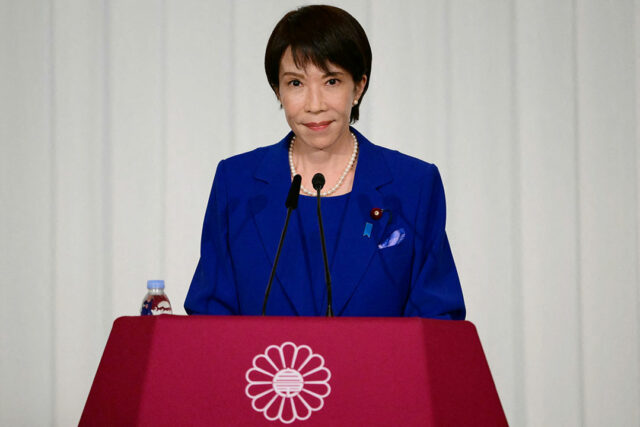
Sanae Takaichi, the newly elected leader of Japan’s ruling party, the Liberal Democratic Party (LDP), attends a press conference after the LDP presidential election in Tokyo on October 4, 2025. — YUICHI YAMAZAKI/POOL VIA REUTERS

TOKYO — With Sanae Takaichi set to become Japan’s prime minister, advancing expansionist economic policies, chances have risen that the central bank will avoid raising interest rates this month, though the pause may not last if it batters the yen.

Ms. Takaichi, likely to become Japan’s first female leader next week after winning the presidency of the ruling party on Saturday, stood out in the race as the only proponent of big spending and loose monetary policy.

Parliament is expected to vote the conservative nationalist in as premier on Oct. 15 since her Liberal Democratic Party (LDP) is the largest in parliament, though this is not assured as the LDP’s coalition lost its majorities in both houses under her predecessor, Shigeru Ishiba.

NEW LEADER COMPLICATES BOJ RATE HIKES
Upon winning the race, Ms. Takaichi made clear the government will take the lead in setting fiscal and monetary policy — and that her priority would be to reflate demand and the broader economy.

Describing recent price rises as driven by higher raw-material costs, Ms. Takaichi warned it was premature to declare victory over deflation as companies start to feel the pain from President Donald J. Trump’s US tariffs.

“What would be best would be to achieve demand-driven inflation, where wages would rise and drive up demand, which in turn causes moderate price rises that boost corporate profits,” she told a press conference after her victory.

Her ascension makes it more likely the Bank of Japan (BoJ) will refrain from raising rates on Oct. 30, analysts say.

“Takaichi is not seen as supportive of interest rate hikes, which could make it more difficult for the BoJ to proceed with tightening,” said Kazutaka Maeda, an economist at Meiji Yasuda Research Institute.

“While rate hikes may not be ruled out entirely, the central bank could adopt a more cautious and gradual approach,” he said, adding the next increase may be delayed until early next year.

Some analysts, however, doubt whether Ms. Takaichi will push back too hard against the BoJ’s plan for slow, moderate tightening as inflation — rather than Japan’s long-time curse of deflation — is now the bigger economic problem, costing Mr. Ishiba’s LDP a huge election loss in July.

The BoJ ended decades of massive stimulus last year, raising its policy rate to 0.5% in January on the view Japan was on the cusp of durably achieving its 2% inflation target.

Before Ms. Takaichi’s victory, markets were pricing in more than a 60% probability of a rate hike this month, with inflation above target for more than three years, a hawkish board split at the September policy meeting and calls for a near-term rate hike by a dovish policymaker.

But Governor Kazuo Ueda kept markets guessing last week, warning of global uncertainties that could discourage firms from raising wages.

“Ueda appeared to be in no rush hiking interest rates anyway. Takaichi’s win will make it even more likely the BoJ will take a wait-and-see mode and hold off raising rates in October,” said Mari Iwashita, executive rates strategist at Nomura Securities.

At the same time, former central bank official Nobuyasu Atago said, “The BoJ faces a new challenge of creating a channel of trust and communication with Takaichi’s administration, which might take some time.”

‘THINGS HAVE CHANGED’ SINCE ABE
Ms. Takaichi has been a vocal advocate of “Abenomics,” a hefty mix of government spending and monetary stimulus deployed by her mentor, then-premier Shinzo Abe, to pull Japan out of deflation and ease the pain of a surging yen on the export-reliant economy.

Although she has toned down comments such as calling last year’s rate hike “stupid,” Ms. Takaichi has retained ties with reflationist-minded lawmakers and economists who advise her on policy.

Her stance contrasts with that of Mr. Ishiba and his predecessor Fumio Kishida, who nodded to the BoJ’s efforts to roll back stimulus as accelerating food inflation — partly caused by higher import costs from a weak yen — hit households.

With markets fully pricing in another rate increase by early next year, delaying a hike for too long could unleash sharp yen falls that would boost import prices, exacerbating inflation.

Some investors expect Ms. Takaichi’s win to push the dollar, now around 147 yen, above 150 yen — a level of yen weakness that drew verbal warnings from Japanese authorities in the past.

“Given her reflationist streak, there’s a chance Takaichi could meddle in monetary policy,” said former BoJ board member Takahide Kiuchi, who expects no rate hike this month. “But I don’t think her administration would force the BoJ to overhaul its rate-hike plans altogether, unless the US economy weakens significantly.”

Diplomatic considerations could also affect Ms. Takaichi’s stance on monetary policy, some analysts say.

The Trump administration, which favors a weaker dollar to boost US exports, has signaled displeasure over the yen’s softness, with Treasury Secretary Scott Bessent saying in August the BoJ was “behind the curve” in tackling inflation.

Mr. Trump is expected to visit Japan this month, with some media reporting he could arrive days before the BoJ’s Oct. 29-30 meeting.

“In the past the yen was strong, so low interest rates were acceptable. Now that higher inflation is causing difficulties, it’s probably harder for Takaichi to criticize monetary policy as much as before,” said Tomohisa Ishikawa, chief economist at Japan Research Institute.

“Things have changed from when Takaichi used to work together with Abe.” — Reuters

Israel strikes Gaza as Palestinians pin hopes on Trump’s Gaza plan 

Protesters hold a large Palestinian flag during a demonstration in support of Palestinians and to condemn Israeli forces’ interception of the Global Sumud Flotilla vessels, which were aiming to reach Gaza and break Israel’s naval blockade, in Madrid, Spain, Oct. 4, 2025. — REUTERS/ANA BELTRAN

CAIRO/GAZA — Israeli planes and tanks pounded areas across the Gaza Strip overnight and on Sunday, destroying several residential buildings, witnesses said, as Palestinians desperately awaited implementation of a US plan to end the war.

US President Donald J. Trump, who had called for an end to the bombing, said on Saturday on his Truth Social platform that Israel had agreed to an “initial withdrawal line” inside Gaza and that “when Hamas confirms, the Ceasefire will be IMMEDIATELY effective.”

The Israeli escalation comes as Egypt prepares to host delegates from Hamas, Israel and the United States, and Qatar, to kick off talks over the implementation of the most advanced effort yet to halt the conflict.

SENSITIVE ISSUES
Hamas had drawn a welcoming response from Mr. Trump on Friday by saying it accepted certain key parts of his 20-point peace proposal, including ending the war, Israel’s withdrawal, and the release of Israeli hostages and Palestinian captives.

But the group has left some issues subject to further negotiation, as well as questions unanswered, such as whether it would be willing to disarm, a key demand from Israel to end the war.

“Progress would depend on whether Hamas would agree to the map, which shows the Israeli army would remain in control of most of the Gaza Strip,” said a Palestinian official, close to the talks.

“Hamas may also ask for a strict timetable for the Israeli withdrawal from Gaza. The first phase of talks will determine how things are going to proceed,” he told Reuters, asking not to be named.

In Gaza City, which Israel describes as one of Hamas’ last bastions, Israeli forces pressed ahead with attacks and warned residents who left against returning, saying it was a “dangerous combat zone.”

On Sunday, witnesses said Israeli planes escalated attacks against targets across the city, Gaza’s biggest urban center.

This followed a tense night in which drones dropped grenades on the rooftops of residential buildings and troops blew up explosive-laden vehicles, demolishing dozens of houses in two Gaza City neighborhoods, Sabra and Sheikh Radwan.

WHERE IS TRUMP?
“Where is Trump in all of this?” said Rami Mohammad-Ali, 37, from Gaza City, now displaced in the city’s western side, near the beach.

“The explosions don’t stop, the drones drop bombs everywhere, as if nothing has happened. Where is the truce Trump told us about?” he asked.

Local health authorities said at least one Palestinian was killed, and several others were wounded in those attacks. Three other people were killed in separate Israeli strikes across the enclave, medics said.

Amjad Al-Shawa, head of the Palestinian NGOs Network, which liaises with the United Nations and international humanitarian organizations, said Gaza City has begun experiencing acute shortages of food and fuel, days after Israel blocked the route from the south to the north.

“We are speaking about tens of thousands of children who suffer malnutrition, elderly who need extra care, those are in danger now because of the Israeli occupation blockade of Gaza City and the escalation of the attacks,” Shawa told Reuters.

Under Mr. Trump’s plan, all Israeli hostages, alive and deceased, were due to be released within 72 hours of Israel publicly accepting the agreement.

But it was not clear at what precise point the clock on that 72-hour deadline would start ticking, given Israeli Prime Minister Benjamin Netanyahu agreed to the timeline several days before Hamas responded.

Israel says 48 hostages remain, 20 of whom are alive.

There may be logistical challenges too. Sources close to Hamas told Reuters handing over living hostages could prove relatively straightforward, but retrieving bodies of dead ones amid the huge devastation and rubble of Gaza may take longer than a few days to achieve.

Mr. Trump said on Friday he believed Hamas had shown it was “ready for a lasting PEACE” and he called on Mr. Netanyahu’s government to halt airstrikes in Gaza.

Domestically, Mr. Netanyahu is caught between growing pressure to end the war — from hostage families and a war-weary public — and demands from hardline members of his coalition who insist there must be no let-up in Israel’s campaign in Gaza.

Far-right Finance Minister Bezalel Smotrich said on X that halting attacks on Gaza was a “grave mistake.”

Smotrich and Security Minister Itamar Ben-Gvir, also a hardliner, have significant influence in Netanyahu’s government and have threatened to bring it down if the Gaza war ends.

Israel began attacking Gaza after the Oct. 7, 2023, Hamas-led attack on Israel in which some 1,200 people, mostly civilians, were killed and 251 taken hostage, according to Israeli tallies.

Israel’s campaign has killed more than 67,000 people in Gaza, most of them civilians, according to Gaza health authorities, and decimated the enclave. — Reuters

Russia rains drones and missiles on Ukraine; Poland scrambles aircraft

REUTERS/THOMAS PETER

LVIV, Ukraine — North Atlantic Treaty Organization (NATO) member Poland said it scrambled aircraft early on Sunday to ensure its air safety after Russia launched airstrikes on Ukraine, with Ukrainian officials reporting missiles and drones raining down on the Lviv region near the Polish border.

“Polish and allied aircraft are operating in our airspace, while ground-based air defense and radar reconnaissance systems have been brought to the highest state of readiness,” Poland’s operational command said in a post on X.

Eastern-flank NATO members are on high alert after Poland shot down suspected Russian drones in its airspace in September and drone sightings and air incursions, including in Copenhagen and Munich, have led to chaos in European aviation.

Lithuania’s airport in Vilnius was closed for several hours overnight after reports of a possible series of balloons heading towards the airport late on Saturday.

According to flight tracking service Flightradar24, early on Sunday, commercial flights were using routings typically used when Poland’s Lublin and Rzeszow airports near the border with Ukraine were closed.

Reuters could not independently verify the Flightradar24 report.

There were no immediate notices on the US Federal Aviation Administration’s website about possible flight disruptions in Rzeszow and Lublin.

ALL OF UKRAINE UNDER THREAT OF ATTACK
All of Ukraine was under air raid alerts for several hours overnight, with Ukraine’s Air Force issuing most dire warnings of missile and drone attacks for the Lviv region.

Andriy Sadovyi, the mayor of Lviv — a western Ukrainian city about 70 km (43 miles) from the border with Poland — said the city’s air defense systems were engaged heavily in repelling first a drone and then a Russian missile attack.

As of 7:30 a.m. (0430 GMT), parts of the city were left without power and public transport was yet to start running, with Mr. Sadovyi saying on the Telegram messaging app that it was “dangerous to go out into the streets.”

Reuters witnesses said the pounding of what sounded like air defense systems in operation came from all directions.

A late Saturday night attack on the city of Zaporizhzhia, the capital of the broader frontline region of Zaporizhzhia, left one person dead and nine injured, Ivan Fedorov, the regional governor said on Telegram.

“Apartment blocks and private houses were damaged, cars burned,” Mr. Fedorov said. “Windows were blown out, yards wrecked.”

More than 73,000 customers in the southeastern region were left without power, he added.

Some 55 km (35 miles) southwest of the city of Zaporizhzhia, the Russian-held Zaporizhzhia Nuclear Power Plant has been cut off from external power since September 23. — Reuters

How the Gaza aid flotilla used cameras and data to win global attention

Protesters hold a large Palestinian flag during a demonstration in support of Palestinians and to condemn Israeli forces’ interception of the Global Sumud Flotilla vessels, which were aiming to reach Gaza and break Israel’s naval blockade, in Madrid, Spain, Oct. 4, 2025. — REUTERS/ANA BELTRAN

ATHENS — When armed Israeli soldiers boarded a flotilla of boats trying to deliver food and medicine to Gaza on Wednesday night, two web developers in Glasgow scrambled to keep track of the vessels as millions of people worldwide tuned in to monitor their fate.

As grainy footage from onboard cameras broadcast the raids live on the flotilla’s website, the developers updated the status of the vessels in real-time and posted short videos of each takeover. The clicks were unprecedented, they said: the site registered 2.5 million visits on Wednesday and 3.5 million on Thursday.

“I have never seen numbers like that – not on a website I’ve ever made,” said Lizzie Malcolm, the co-director of Rectangle, a design and software development studio that helped track the vessels on behalf of the organisers.

NEW FLOTILLA EN ROUTE IN HIGH-PROFILE CAMPAIGN
The Global Sumud Flotilla was seeking to breach an Israeli naval blockade of Gaza, which has been decimated by a two-year Israeli assault.

It consisted of more than 40 civilian boats carrying about 500 parliamentarians, lawyers and activists, including Swedish climate campaigner Greta Thunberg.

The flotilla failed to reach Gaza – the boats were intercepted and escorted to Israel. But over the course of ten days it emerged as the highest-profile opposition to Israel’s blockade. Buoyed by that publicity, another flotilla of 11 boats has already set sail.

Through a sophisticated social media campaign, updated boat-tracking technology, savvy website design and grassroots organising, the mission gained massive attention and support, energising a global movement to lift the blockade.

While Israel says its naval blockade is legal as it battles Hamas militants in the coastal enclave, and officials have repeatedly denounced the mission as a provocation, the flotilla has widespread support.

Wednesday’s seizure triggered protests in cities across Europe and as far afield as Argentina, Mexico and Pakistan, and drew criticism from politicians and leaders from Colombia to Malaysia.

CREATING A MOVEMENT
Israel first imposed a blockade on Gaza in 2007 when Hamas took over the territory, but efforts by activists to raise awareness have gained traction since the outbreak of the war in October 2023, which was triggered by Hamas’ attack on Israel.

This latest campaign has gained more attention than ever before.

The flotilla benefited from, and contributed to, a wider political shift since June, which has seen nations including France and the UK recognise Palestinian statehood in reaction to Israel’s offensive, said Dan Mercea, a professor of digital and social change at St George’s, University of London.

“The cultural impact is beginning to show. That is not just the flotilla, but they are making a difference.”

An attempt in June by the March to Gaza group, in which activists were scheduled to march to Egypt’s Rafah border crossing with Gaza, was disrupted when Egypt deported dozens of activists. Other, smaller flotillas have tried to breach the naval blockade, but their efforts have garnered less attention.

Then in June, organisations including the March to Gaza held a meeting in Tunis, in which they discussed clubbing together.

“The idea was that a bigger thing was needed. There were discussions about how to communicate with people and an exchange of knowledge,” said Antonis Faras, from the Greek contingent of the March to Gaza movement.

HUGE SUPPORT FROM THE START
The Global Sumud Flotilla was born and it had a clear mission: to break Israel’s blockade.

The organisation had huge support from the start. When it sent out an invitation for people to participate, it received 20,000 applications, Faras said. In Italy, a charity called Music 4 Peace began collecting aid donations, with a target of 40 tons. In five days they collected more than 500 tons.

Across Europe, missions started to prepare. The Greek contingent sourced 25 boats from across Europe. When it asked for donations, it received more than it could carry.

In Italy, local organisers cultivated relationships with unions, who supported the flotilla with strikes and actions at various ports. That grassroots connection paid off on Wednesday: within hours of the Israeli interception, people were on the streets in protest, and the unions had called a general strike for October 3.

The movement was broken down into countries, each one with its own press spokesperson.

“The protests’ success stems from the fact that every region meticulously worked on their territory… this structure proved to work,” said Maria Elena Delia, a spokesperson for the Italian delegation.

A LIVE FEED TO THE WORLD
The flotilla sent regular updates on X, Telegram and Instagram and held press conferences via Zoom with activists on the boat. Nelson Mandela’s grandson was on board. Thunberg gave interviews from the ship’s deck.

It had live feeds from the boats, and improved ship tracking devices. In Glasgow, Malcolm and her partner Daniel Powers, who collaborated with London-based Forensic Architecture research group, benefited from added layers of tracking capabilities, including backup from Garmin devices and even cellphones should other methods fail.

The cameras on board gave people a rare live view on Wednesday night as the Israeli navy demanded captains turn off their engines as soldiers boarded the boats with guns and night vision goggles. As part of an agreed safety protocol, the activists sat in life vests, their hands in the air.

Malcolm and Powers watched the images from their studio in Glasgow as the night went on, updating the list of boats and changing their status one by one from “sailing” to “intercepted”.

“We have seen how much people want to watch this. It does something. There is something positive in this – you are really willing them to get there,” Malcolm said. — Reuters

Japan’s Takaichi pledges to raise number of women in cabinet on par with Nordics

Sanae Takaichi, the newly elected leader of Japan’s ruling party, the Liberal Democratic Party (LDP), attends a press conference after the LDP presidential election in Tokyo on October 4, 2025. — YUICHI YAMAZAKI/POOL VIA REUTERS

TOKYO — In her campaign to become Japan’s first female prime minister, Sanae Takaichi made a bold promise to narrow the country’s wide gender gap in politics and lift the number of women in cabinet to a par with socially progressive Nordic countries.

Now that she has shattered the glass ceiling to be chosen leader of the ruling party on Saturday – setting her on course to emulate her hero Margaret Thatcher, Britain’s first female premier – Takaichi must try to deliver on promises her party has struggled to keep.

“The emergence of a single female leader alone may not drastically improve women’s standing in politics,” said Tohko Tanaka, a gender studies professor at the University of Tokyo, noting it was 26 years after Thatcher’s premiership before Britain had its second female leader, Theresa May.

FEW WOMEN LAWMAKERS FOR TAKAICHI CABINET
Japan’s next prime minister “must tackle gender issues with a long-term perspective, amid severe labour shortages and the alarmingly inadequate inclusion of women,” Tanaka said.

Japan ranked 118 out of 148 countries in the World Economic Forum’s latest Global Gender Gap Report, the lowest among the Group of Seven industrial powers.

While gender equality was not a top issue in the Liberal Democratic Party’s election campaign that focused on tackling inflation and rule-breaking foreigners, Takaichi’s promises to form a cabinet with women’s representation “not particularly lower than Nordic countries” stood out.

“I wouldn’t appoint women just because they’re women,” she told a party rally last week. “But the plan is to pick far more women who are capable and willing to serve the nation.”

Just 10% of outgoing Prime Minister Shigeru Ishiba’s 20 cabinet members are women, while its highest female representation was just above a quarter. Nordic governments range from Denmark’s 36% to Finland’s 61% female ministers.

To fill her cabinet, Takaichi has a relatively small pool of female lawmakers to draw from, although non-politicians are allowed to head government ministries. Only 13% of the LDP’s lawmakers across both houses are women, well short of the party’s target of 30% by 2033 – a goal already trailing a government target.

PROMISES UNFULFILLED
Past initiatives to close Japan’s gender gap have delivered mixed results.

Former premier Shinzo Abe, Takaichi’s mentor, pulled more women into the workforce through his “womenomics” initiatives, but critics say progress has been too slow, especially for executive roles.

In 2020, the government pushed back its deadline of having women in at least 30% of leadership posts across society by a decade to 2030.

Takaichi also proposes measures such as establishing women’s health centres nationwide, but her broader conservative policies have damaged her support among some women, polls show.

For example, she has defended legal restrictions that married couples must use a single surname, which in practice means wives overwhelmingly take their husbands’ names and which critics say disproportionately affects women’s careers. Conservatives regard the current law as indispensable to family unity.

The centre-right LDP faces a challenge from Sanseito, an upstart far-right party whose leader has criticised gender equality policies for contributing to Japan’s record-low birthrate, a claim resonating in some anti-establishment movements globally. — Reuters

US services sector activity flatlines in September

An American flag is displayed in New York, Jan. 27, 2023. — REUTERS/ANDREW KELLY

WASHINGTON — US services sector activity stalled in September amid a sharp slowdown in new orders, while subdued employment added to mounting evidence of sluggish labor market conditions because of sagging demand and supply of workers.

The survey from the Institute for Supply Management (ISM) on Friday also showed a measure of prices paid by services businesses for inputs hovering near three-year highs last month.

Signs of stagnating activity and elevated services inflation could complicate matters for the Federal Reserve, with financial markets expecting another interest rate cut this month.

The survey assumed more importance than usual after a lapse in funding forced a shutdown of the US government early this week and delayed the release of the closely watched monthly employment report for September. It was the first time since the 2013 government shutdown that the employment report, crucial for decision-making by officials at the US central bank, businesses and households, was not published.

AN ECONOMY ‘IN SUSPENDED ANIMATION’
Keeping tariffs on imports have eroded business sentiment, constraining activity across the services and manufacturing sectors.

“This is an economy that is in suspended animation, as businesses wait for the Trump administration to settle on a clear and predictable policy for tariffs and immigration,” said Stephen Stanley, chief US economist at Santander US Capital Markets. “Once policy-related uncertainty recedes, I expect business activity to pick back up.”

The ISM said its nonmanufacturing purchasing managers index (PMI) fell to 50 last month, the breakeven point, from 52.0 in August. Economists polled by Reuters had forecast the services PMI easing to 51.7. The services sector accounts for more than two-thirds of US economic activity.

Ten service industries, including public administration, wholesale trade and utilities reported growth. Among seven that contracted were mining, construction and retail trade.

Some businesses in the accommodation and food sector said import duties were starting to have an impact, “particularly for food products from India, China and Southeast Asia, coffee from South America,” adding “our year-over-year cost increases are getting progressively greater.”

Construction businesses reported “tariffs are beginning to be passed through on materials that are metal based.” Utilities providers said “we’ve had more tariff charges last month than in previous months.” For other businesses like those in wholesale trade, “demand is simply weak.”

The survey’s measure of new orders received by services businesses dropped to 50.4 from 56.0 in August. Backlog orders

were depressed for the seventh consecutive month, while export demand remained subdued.

Stocks on Wall Street were trading higher. The dollar dipped against a basket of currencies. US Treasury yields rose.

EMPLOYMENT REMAINS DEPRESSED
Though a gauge of services sector employment inched up to 47.2 from 46.5 in August, it was the fourth straight month that it was mired in contraction territory, with companies not backfilling positions and also failing to find qualified workers. That aligns with other data that have suggested the labor market has stagnated.

Economists blame this on the drag from uncertainty stemming from tariffs as well as the rise of artificial intelligence. At the same time, immigration raids have reduced labor supply, creating a dynamic that has left the labor market in paralysis.

Data from the Chicago Federal Reserve on Thursday, which combines private and available public numbers, estimated the unemployment rate was unchanged at 4.3% in September.

The government reported before the shutdown on Tuesday there were 0.98 job openings for every unemployed person in August compared to 1.0 in July.

Economists expect the lackluster labor market will spur the Fed to reduce borrowing costs further this month. The US central bank resumed easing policy in September, cutting its benchmark overnight interest rate by 25 basis points to the 4.00%-4.25% range, to aid the labor market.

But with the full inflationary effects of tariffs still to be felt, a rate cut is not guaranteed.

The ISM survey’s measure of prices paid by businesses edged up to 69.4 from 69.2 in August. This price gauge has been above the 60 mark for 10 months in a row.

Services inflation has firmed up in recent months, driven by higher airline fares as well as rises in prices at restaurants, and more expensive hotel and motel rooms.

“The Fed is in a tough spot and now flying partly in the dark due to the delay of key releases,” said Sal Guatieri, a senior economist at BMO Capital Markets. “But if other economic indicators also land on the soft side, it will likely bite its lip over sticky inflation and cut rates again later this month.” — Reuters