Home Blog Page 3720

Return to pre-2020 track to require 9.4% growth

ASIANTERMINALS.COM.PH

THE PHILIPPINES needs to grow by 9.4% annually until 2028 to have a change of elevating output to P80 trillion by 2036, the growth trajectory that the government had projected before the pandemic, an analyst said.

During a webinar on Jan. 26, GlobalSource country analyst Diwa C. Guinigundo said while growth in the Philippines bounced back in 2022 despite the setbacks from the pandemic, more still needs to be done.

“The enormous drop in economic activity during the pandemic and the relatively modest economic growth in subsequent periods pose a big challenge,” according to Mr. Guinigundo, a former central bank deputy governor.

“Before the pandemic, we were looking at a higher trajectory of growth, inching towards P80 trillion in 2036 from 2022’s P22 trillion. To overcome this setback, growth has to average 9.4% through 2028 to return to the original path,” he said.

The Philippine Statistics Authority (PSA) estimated the nominal gross domestic product (GDP) of the Philippines at P17.2 trillion as of the third quarter.

“If we go to the government’s target of around 7-8% annually, by 2036, we might be reaching only P60 trillion,” Mr. Guinigundo said.

Under the medium-term macroeconomic assumptions of the Development Budget Coordination Committee (DBCC), the economy is targeted for an expansion of 6.5-8% each year until 2028.

“We need to concentrate on strengthening our governance and institutions to help in a generalized effort to capitalize on our favorable demographics, emerging industrial structure, and international trade,” he said.

The economy may have slowed in the fourth quarter last year, with GDP growth of 5.7%, according to a median forecast of 20 economists polled by BusinessWorld.

If realized, the fourth-quarter GDP growth would underperform the 5.9% performance in the third quarter and the 7.1% expansion in the fourth quarter of 2022.

The poll also yielded a median estimate growth of 5.5% for 2023, missing the DBCC’s 6-7% GDP growth target. This would lag the 7.6% expansion in 2022 and the weakest since the 9.5% contraction in 2020.

The PSA will announce fourth-quarter and full-year GDP data today.

Meanwhile, Mr. Guinigundo said price pressures have eased since September. The impact of some supply shocks was mitigated in the fourth quarter through higher imports and lower tariff duties.

Headline inflation eased to a 22-month low of 3.9% in December, from 4.1% in November. It marked the first time that inflation fell within the BSP’s 2-4% target band after 20 months, from a peak of 8.7% in January 2023.

Inflation accelerated to 6% in 2023 from 5.8% in 2022. It breached the 2-4% target band for the second straight year amid soaring food and oil prices.

However, upside risks to inflation remain, and the Bangko Sentral ng Pilipinas (BSP) is expected to keep policy rates higher for longer, according to Mr. Guinigundo.

“I don’t believe the BSP will start moving in the first half of 2024. It is very clear that the risk-adjusted inflation forecast of the BSP continues to exceed the 2-4% at 4.2%,” he said.

The central bank’s key interest rate currently stands at 6.5%, the highest in 16 years. This was after the BSP emerged as the most aggressive central bank in the region after raising key policy rates by 450 basis points (bps) from May 2022 to October 2023.

BSP Governor Eli M. Remolona has said inflation may settle within the 2-4% target band in 2024 and 2025, citing the central bank’s baseline forecast. The BSP sees inflation averaging 3.7% this year and 3.2% in 2025.

However, should risks materialize, the BSP’s risk-adjusted forecasts show that inflation could settle above the 2-4% target, or at 4.2%, this year before reverting to 3.4% in 2025.

“The BSP will be expected to move in the second half of 2024, and that is when the risk-adjusted inflation forecast shows within-target readings of their forecast,” Mr. Guinigundo said.

A longer-than-expected El Niño episode in the Philippines could also lead to higher inflation, he said. El Niño is expected to be strong in the first quarter, but the weather event may continue to moderate until May.

“With the prolonged dry spell, power rates are bound to rise and food commodities become more prohibitive due to lower production,” he said.

“With higher inflation likely a possibility, this could also affect consumer spending and ultimately growth,” he said.

Mr. Guinigundo noted that the Philippines needs more structural reforms in agriculture.
“We should start with rice, corn, and other crops… It is important that rice trade is rationalized and rice production is given more assistance from the government in terms of infrastructure,” he said.

“The farmers themselves should be provided education to realize that they’re not farmers but consumers,” he added. — Keisha B. Ta-asan


Cordillera vegetable farmers eyed for assistance on production costs

BW FILE PHOTO

THE Department of Agriculture (DA) said on Tuesday that it is studying ways to lower production costs for vegetable farmers in the Cordillera Administrative Region (CAR).

In a statement, Agriculture Secretary Francisco P. Tiu Laurel, Jr. said in a meeting with the vegetable industry that the DA is focused on cost relief which will raise farmer incomes even if their revenues stay the same.

“The overall cost of production can be lowered, but the farmers’ income can be maintained or even increased — that’s what we should think about,” Mr. Tiu Laurel said.

Industry representatives called on the DA to address the high cost of fertilizer, seed, and pesticides.

Issues also raised included the lack of market access for goods bearing the Good Agricultural Practices (GAP) certification and lack of recognition by local governments of their special food lane transport privileges.

He said various initiatives will create broader markets for GAP-certified products, while the network of government-subsidized KADIWA stores will be expanded.

Traders have been offering low prices for highland vegetables, forcing some CAR farmers to dump their crops and seek government intervention.

The DA’s CAR regional office has reported that the drop in prices was due to a dearth of buyers for upland vegetables between Dec. 28 and Jan. 3.

Mr. Tiu Laurel said the DA will actively enforce Executive Order No. 41, which suspended the collection of fees by local government units from goods vehicles. — Adrian H. Halili

Storage, transportation named focus areas for hydrogen dev’t

THE Department of Energy (DoE) said its guidelines for the hydrogen industry have identified energy storage and transportation as key focus areas for the development of the resource.

“The DoE recognizes the role of hydrogen in the energy transition as an innovation capable of meeting future energy demand with various applications in the power, transportation, commercial, and industrial sectors,” the DoE said in a circular dated Jan. 12.

The circular covers all activities related to the establishment, construction, operation, maintenance, decommissioning, and disposal of projects or facilities using hydrogen resources.

Under the guidelines, the DoE said that “prospective uses of hydrogen in the energy sector shall be divided into power generation and electricity storage applications and non-power applications.”

“Power generation and electricity storage shall include use of electricity produced from hydrogen energy supplied to the grid or as backup and off grid power supply, industrial scale energy storage, co-firing with hydrogen derivatives in existing fossil fuel power plants, and hydrogen and its derivatives multigeneration systems,” the DoE said.

The DoE also organized the Hydrogen Energy Industry Committee (HEIC) to oversee the implementation of the circular.

HEIC is tasked to develop and implement the roadmap for the hydrogen energy industry.
It is also directed to study the needed infrastructure for hydrogen energy adoption, as well as collaborate with local and international organizations on research and development related to industrializing hydrogen energy.

Patrick T. Aquino, director of the DoE Energy Utilization Management Bureau, has said in public consultations for the draft circular that hydrogen is being deployed in transport, power generation, or industrial use in Japan, China, South Korea, the US, and Germany.

“As part of our forthcoming Philippine Energy Plan, we have seen the potential, the role of alternative fuels like hydrogen. That’s why we are indicating and preparing (where) hydrogen can play an integral role or an important role in our energy sector or even as part of our energy transition,” Mr. Aquino said.

Asked to comment, Bienvenido S. Oplas, Jr., president of Minimal Government Thinkers, said that hydrogen as an energy source is “still very immature” and can be “costly and risky.”

“So we should not hurry going there, let the industrialized, technology-advanced countries start it first on a large scale before the Philippines and other developing countries adopt it,” he said in a Viber message.

Compared to hydrogen, Mr. Oplas said there are “very mature sources” such as nuclear, coal, natural gas, oil plants, and hydro power.

“Humanity has been using these for many years, their risks have been mapped and prepared for/anticipated.” — Sheldeen Joy Talavera

US sounded out on electronics, minerals tie-ups

THE Department of Finance (DoF) said it discussed possible collaboration in electronics, minerals, and energy with a US State Department official.

In a statement on Tuesday, the DoF said Finance Secretary Ralph G. Recto met with Undersecretary for Economic Growth, Energy, and Environment Jose W. Fernandez to discuss “areas of strategic partnerships and closer cooperation in matters of common concern, including strengthening economic resilience.”

“Undersecretary Fernandez highlighted specific areas of interest for the US, particularly critical minerals, semiconductors, and energy security,” the DoF said.

“In response, Secretary Recto expressed a strong willingness to collaborate on the said areas, emphasizing the important role of the US as an anchor for potential investment that could signal increased attention from other global investors,” it added.

Mr. Recto also promoted trade partnerships with the US to “diversify supply chains and enhance economic resilience.”

He said the Philippines is working to address concerns on ease of doing business, citing the proposed amendments to the Corporate Recovery and Tax Incentives for Enterprises Act.

Mr. Recto has said he proposed a free trade agreement with the United States in a separate meeting.

Separately, Mr. Recto met with the Securities and Exchange Commission Philippines (SEC) on Tuesday.

Mr. Recto instructed the SEC to work with the Bureau of Internal Revenue to share data and improve tax collection.

“Secretary Recto also assured the SEC of the DoF’s staunch support for its reforms and initiatives to further digitalize systems, boost the Philippine stock market, intensify consumer protection, enhance supervision and regulation of the financial system, promote trade and investments, and advance financial literacy and sustainability, among others,” it added. — Luisa Maria Jacinta C. Jocson

Financial literacy courses urged for OFWs

THE GOVERNMENT needs to develop programs to enhance financial literacy, social protections and skills among overseas Filipino workers (OFWs), according to a discussion paper issued by the Philippine Institute for Development Studies (PIDS).

“Results of primary data collected from interviews with selected OFWs and their family members suggest that young OFWs dream of retiring early but may not be provided systematic support for financial literacy,” it said in a paper, “Long-Term Effects of Labor Migration in the Philippines.”

The paper, written by Jose Ramon G. Albert, Ma. Teresa Habitan, Aubrey D. Tabuga, Jana Flor V. Vizmanos, Mika S. Muñoz and Angelo C. Hernandez, concluded that the government must promote financial literacy programs to help “futureproof” OFWs and their dependents.

“Financial literacy programs can educate OFWs on managing their earnings, savings, and investments, encouraging them to invest in sustainable projects that contribute to the economic development of the Philippines,” it said.

“The government has been providing some financial literacy programs and tried to provide better financial instruments for OFWs through the OFW Bank,” it said.

It also cited initiatives by the Bangko Sentral ng Pilipinas to improve financial literacy among OFWs.

“The communication of government initiatives to improve the financial literacy and stability of OFWs has, however, not been systematic enough to make a solid impact,” it added.

The Philippine Statistics Authority’s Survey on Overseas Filipinos indicated that remittances were primarily used for consumption (47.4%), followed by savings (24.8%) and investments in property, business ventures and financial instruments (12.6%).

Remittances typically account for 10% of gross domestic product. The central bank estimates that cash remittances rose 2.8% to $30.211 billion in the first 11 months of 2023.

The PIDS paper also pointed to the need to improve social protection plans such as health insurance, pension, unemployment benefits, and other safety net schemes.

“Advocating for family reunification and extending access to social protection programs for OFW families is paramount,” it said.

“Furthermore, addressing mental health and providing essential social support to both OFWs and their families is equally vital. OFWs are at a higher risk of developing mental health problems due to the stress of working abroad and separation from their families,” it added.

It also called on the government to develop programs that will help upskill OFWs.

“Additionally, developing comprehensive skills development and training programs, especially focusing on digital and soft skills, will prepare OFWs with future skills to provide them with more competencies,” it said.

“These programs should also help facilitate their integration into the host country’s society as well as assist them to preserve their cultural identity,” it added. — Luisa Maria Jacinta C. Jocson

Philippines, Vietnam agree to boost cooperation between coast guards

By Kyle Aristophere T. Atienza Reporter

THE PHILIPPINES and Vietnam on Tuesday agreed to boost cooperation between their coast guards and prevent untoward incidents in the South China Sea.

The two Southeast Asian countries, which have competing claims over some parts of the South China Sea, announced the deal during Philippine President Ferdinand R. Marcos, Jr.’s state visit to Hanoi.

The disputed water, a conduit for $3 trillion (P169 trillion) of annual ship-borne trade, is claimed by China almost in its entirety.

The two memoranda of understanding on security covered “incident prevention in the South China Sea” and “maritime cooperation” between their coast guards, according to a Vietnamese official who announced the deals during a formal ceremony at the country’s presidential palace.

The agreements in Hanoi, details of which were not disclosed, could risk angering China, especially if these paved the way for future compromises on disputed claims. China tends to view progress in the resolution of border disputes among other claimants with skepticism.

Both Hanoi and Manila have had run-ins with China’s coast guard in the past, but altercations have been frequent in the past year between vessels of China and US ally the Philippines, adding strain to deteriorating relations.

Before meeting Vietnam’s President Vo Van Thuong, Mr. Marcos said Vietnam was “the sole strategic partner of the Philippines” in Southeast Asia and stressed that maritime cooperation is the foundation of that relation.

“The world and regional situation are evolving in a rapid and complicated manner and therefore, we need to unite and cooperate more closely,” Vietnamese Prime Minister Pham Minh Chinh said, adding that Mr. Marcos’ visit had helped boost bilateral relations.

The coast guards of both countries would form a committee to “discuss common issues and interests,” the Philippine presidential palace said in a statement.

Mr. Marcos said the two countries also signed a deal on “incident prevention and management” in the South China Sea. “I hope that through dialogue, we can maintain a peaceful, friendly and harmonious environment in the South China Sea.”

“It is imperative to the Philippines and the world that the sailings and the air traffic over the South China Sea remain free for the large amount of trade that goes through those areas,” he added.

The Philippines, Vietnam, Brunei, and Malaysia — which are all ASEAN members — as well as Taiwan and China hold different but in some cases overlapping claims over some features in the South China Sea, which Beijing claims almost in its entirety.

‘NATURAL PARTNER’
Vietnam, one of the world’s biggest rice exporters, also sealed agreements with the Philippines, a top importer of the grain, covering rice trade and agriculture cooperation.
In his two-day visit to Hanoi, Mr. Marcos is meeting Vietnamese leaders, but not Communist Party chief Nguyen Phu Trong, according to official schedules, in what would be Mr. Trong’s third consecutive absence from meetings with visiting leaders this month.

Mr. Trong, 79, attended a Parliament session in mid-January, partly dispelling concerns about his health after he was not included in official schedules of visiting leaders from Laos and Indonesia.

Before meeting Vietnamese political leaders on Tuesday, Mr. Marcos met Pham Nhat Vuong, the head of Vingroup, Vietnam’s largest conglomerate, on Monday.

Vietnam was said to be the “last man standing” in the South China Sea conundrum when the Philippines pivoted to China during the rule of Rodrigo R. Duterte.

“Vietnam is a natural partner of the Philippines due to common concerns against China,” Joshua Bernard B. Espeña, who teaches international relations at the Polytechnic University of the Philippines, said in a Facebook Messenger chat.

He said the two have been vocal about how “things should be dealt with in the South China Sea — pragmatism over inaction.”

“We must all appreciate small informal steps that may optimize the operational designs of ASEAN (Association of Southeast Asian Nations) claimant states’ capabilities,” he said. “Absent a military alliance, this is as close as to some ASEAN member state coordinating altogether.”

In his meeting with Mr. Pham, Mr. Marcos said the Philippines considers both the United States and China as key actors in the region.

“The US is the Philippines’ only treaty ally,” he said. “As such, we continue to pursue military cooperation with the US to strengthen our defensive capabilities and our ability to respond to humanitarian crises and disasters.”

He expressed concerns over tensions between China and Taiwan, which China also claims as its own.

Any conflict in Taiwan would affect the northern territories of the Philippine archipelago “and may compromise the safety and well-being of 170,000 Filipinos”

“I understand that Vietnam has a sizable population in Taiwan as well.”

The Philippine leader last year gave the US access to four more military bases on top of the five existing sites under their 2014 Enhanced Defense Cooperation Agreement (EDCA), angering China, which said the move threatened regional peace.

Three of the new EDCA sites are in parts of northern Luzon facing Taiwan while one is on the island of Palawan facing the South China Sea.

“While Hanoi is not a US ally, it welcomes Washington’s regional presence as a stabilizer,” Mr. Espeña said. “Especially regarding the expansion of EDCA and other activities related to the alliance, Hanoi’s elites silently welcome Manila’s moves.”

“I think this is because ASEAN member states are becoming more slowly aware of collective deterrence — reinforcing your partner’s capabilities through informal coordination since another’s downfall can affect one’s security.” — with Reuters

Marcos says he’ll keep Sara in Cabinet

VICE-PRESIDENT SARA DUTERTE-CARPIO — PPA POOL/YUMMIE DINGDING

PRESIDENT Ferdinand R. Marcos, Jr. on Tuesday said he would keep Vice-President Sara Duterte-Carpio as his Education secretary, adding that his relationship with her was unchanged.

The President, who was in Vietnam for a state visit, noted that Ms. Duterte-Carpio had not attacked him.

“It’s exactly the same because she hasn’t said anything of that nature,” Mr. Marcos told reporters in Hanoi, alluding to his predecessor Rodrigo R. Duterte’s attack at the weekend when he called him a drug addict.

During a political rally in Davao City on Sunday, city Mayor Sebastian Z. Duterte, son of the ex-President, urged Mr. Marcos to step down.

The President on Monday struck back at Mr. Duterte, the Vice-President’s father, saying the firebrand leader’s fentanyl use could have affected his judgment.

Mr. Marcos and Ms. Duterte-Carpio ran in tandem and won the 2022 elections under the UniTeam alliance.

“UniTeam is not just one party,” Mr. Marcos said. “It’s the unification of all political forces in the Philippines. That’s still there. It is still vibrant.” — Kyle Aristophere T. Atienza

Speaker helped civic group in ‘Cha-cha’ signature campaign

By John Victor D. Ordoñez, Reporter

THE SPEAKER had helped a so-called people’s initiative to get enough signatures in the push to amend the 1987 Philippine Constitution, the head of the civic group behind the campaign told senators on Tuesday.

“Yes, we coordinated with the Speaker and congressmen in getting the 3% [signature requirement] per congressional district,” Noel Oñate, lead convenor of the People’s Initiative for Reform Modernization and Action (PIRMA), told a Senate committee investigating the signature drive.

“They (congressmen) are just helping, but we are at the forefront,” he added.
At the hearing, Senator Maria Imelda “Imee” R. Marcos, who heads the Senate committee on electoral reforms, presented a photo of PIRMA members with the Speaker and Party-list Rep. Elizaldy S. Co during a meeting on Jan. 8.

Before that, Mr. Oñate denied meeting with Mr. Romualdez.

Ms. Marcos, the President’s sister and the Speaker’s cousin, earlier said as much as P20 million was offered to districts in several provinces that could deliver 20,000 signatures in favor of Charter change (“Cha-cha”).

The Constitution may be amended either through a constitutional convention composed of delegates, by Congress sitting as a constituent assembly or through a people’s initiative.
Under the law, the signatures must account for at least 12% of voters nationwide and 3% of voters in each legislative district. The Supreme Court rejected a similar campaign in 1997 in the absence of an enabling law.

Any proposed amendments or revisions must be ratified by majority of Filipinos in a plebiscite.

Mr. Oñate said the meeting with the Speaker took place at his house in Forbes Park, Taguig City. He added that he denied meeting with the congressmen on the people’s initiative campaign because it had slipped his mind.

PIRMA reached out to the Speaker and other congressmen for “administrative and advisory” assistance in collecting signatures, Mr. Oñate said.

The group was responsible for a TV advertisement pushing Charter change.

Mr. Oñate said about P27.5 million of the P55 million used in the group’s campaign had come from his own pocket, while the other half came from donations from supporters and congressmen.

Ms. Marcos and Senate Minority Leader Aquilino Martin “Koko” D. Pimentel III asked him to reveal his donors for the signature campaign at the next hearing, which he agreed to do.

In a separate statement, Mr. Romualdez confirmed his participation in the meeting, saying it was “in the spirit of open dialogue and understanding of civic actions spearheaded by our citizens.”

“My role, as misinterpreted by some, is not as an orchestrator but as a facilitator for healthy democratic processes,” he said. “The initiative and its operations are entirely led and managed by the group themselves.”

Mr. Romualdez denied involvement in the alleged vote-buying that took place during the collection of signatures for the Charter change push.

Earlier, Albay Rep. Edcel C. Lagman said municipal mayors had been asked to pay every voter who signed the petition P100.

“As the Speaker of the House, my primary role is to steer legislative actions within Congress and ensure that all processes are conducted with integrity, fairness and in accordance with our laws,” Mr. Romualdez said.

Meanwhile, House Majority Leader and Zamboanga City Rep. Manuel Jose “Mannix” M. Dalipe urged the Senate to pass the Resolution of both Houses (RBH) No. 6, which proposes changes to economic provisions of the Constitution.

“We should pass Senate President Zubiri’s RBH No. 6 so that the people’s initiative can’t prosper through a plebiscite because it is clear in the law that you cannot have two in a span of five years,” he told a news briefing in mixed English and Filipino.

The Commission on Elections on Monday suspended proceedings related to the people’s initiative.

Last week, the 24-member Senate issued a statement against the initiative, saying it is “ridiculous” for the Senate to have a “dispensable and diluted role” in the “Cha-cha” push.

Mr. Zubiri on Monday said President Ferdinand R. Marcos, Jr. is set to ask the House of Representatives to stop its push to amend the Constitution through a people’s initiative.

“I urge the public and media to approach this topic with an understanding of the distinct roles in our democratic framework and to avoid conflating support for civic discourse with direct involvement in specific initiatives,” Mr. Romualdez said.

BuCor, PEZA sign deal to set up economic zones in penal colonies

COMMONS.WIKIMEDIA.ORG

THE BUREAU of Corrections (BuCor) and the Philippine Economic Zone Authority (PEZA) on Tuesday agreed to set up economic zones at idle penal colonies after the former released more than 600 inmates to decongest its prisons nationwide.

In a statement, the Department of Justice (DoJ) said the BuCor and PEZA would identify idle penal colonies that could be used as agricultural and economic zones.

“Under this partnership, idle lands of the BuCor which formerly had little to no use will now be maximized to produce economic and agricultural output making a major contribution to the country’s food security,” the DoJ said.

During the signing event, BuCor Director General Gregorio Pio P. Catapang, Jr. said potential idle lands that could be used to set up ecozones measured about 32,300 hectares in total.

The lands are composed of 25,000 hectares in Ihawig Palawan, 7,000 hectares in Sablayan Mindoro and 300 hectares in the national penitentiary in Muntinlupa City.

“It is our firm belief that the ecozone model should not only remain relevant but must be pivotal as well in advancing our country’s socioeconomic development,” PEZA Director General Tereso O. Panga said during the agreement signing event on Tuesday.

“To date, our 422 economic zones host more than 4,350 locator projects, employing more than 1.8 million Filipinos and generating more than $65 billion in actual export sales,” he added.

In a separate statement, the DoJ said the prison bureau has released about 9,228 inmates since July 2022, noting that the agencies adhered to the United Nations Standard Minimum Rules for the Treatment of Prisoners.

“The reforms we’ve introduced are not just about improving systems; they’re about recognizing the potential in every individual and fostering their contribution to society,” Justice Secretary Jesus Crispin C. Remulla said.

The DoJ noted that it has been simplifying the parole and clemency processes and lowering bail amounts for poor inmates.

Many of the country’s jails fail to meet the United Nations’ minimum standards given inadequate food, poor nutrition and unsanitary conditions, according to Human Rights Watch.

Earlier, Mr. Remulla said the government was working on accelerating legal proceedings for inmates still in jail due to pending criminal cases. — John Victor D. Ordoñez

PAF relocation pushing through

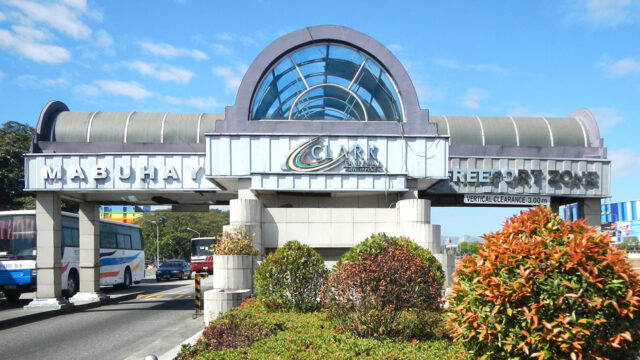
THE RELOCATION of Philippine Air Force (PAF) facilities from Clark Freeport Zone, Pampanga goes full swing with next month’s bidding for the initial phase to transfer the housing facilities to an 85-hectare area in New Clark City, Tarlac — estimated to cost about P742 million.

This was confirmed by the Bases Conversion and Development Authority (BCDA) in a statement on Tuesday on the P4.24-billion project aimed at freeing up 300 hectares of prime property in the middle of the Clark Freeport commercial area.

“With the support of the Marcos administration, the BCDA is now ready to commence the relocation of PAF’s housing and operational facilities,” BCDA President and Chief Executive Officer Joshua M. Bingcang said.

The project is part of the memorandum of agreement the BCDA signed with the Department of National Defense in 2019.

“Once completed, this project will allow us to provide modern and world class facilities for the Air Force,” he added of the plan to transfer the PAF’s operational facilities to a 147-hectare area within the OMNI Aviation near the Clark International Airport (CRK).

With PAF’s facilities relocated from Air Force City, the BCDA would use the freed-up land for more developments such as the proposed 100-hectare Clark Central Business District and the second runway of the CRK.

“The transfer of PAF’s facilities is just the first step to unlocking more opportunities in Clark. We believe that Clark still has so much to offer, and we are committed to bring out its full potential for the benefit of the people of Pampanga and nearby provinces,” said Mr. Bingcang.

Up for bidding in February is the first phase of the project which involves site development works and management services in the 85-hectare lot in New Clark City.
Upon the completion of the first phase of the project, the BCDA will move forward to the construction of PAF’s housing and support facilities which is estimated to cost P3.5 billion. — Justine Irish D. Tabile

Households to get solar kits

THE NATIONAL Electrification Administration (NEA) has partnered with the State Grid Corp. of China (SGCC) to facilitate donations of solar kits to households in the provinces of Cagayan and Isabela.

In a statement on Tuesday, the NEA said that it has signed separate memorandums of understanding (MoUs) with the SGCC in partnership with Cagayan II Electric Cooperative, Inc. (CAGELCO II) and Isabela II Electric Cooperative (ISELCO II).

“The project is similar to the photovoltaic mainstreaming program of the NEA that uses various solar kits to energize households and other state-owned facilities within the recipient communities,” the agency said.

According to the NEA, the MoUs will facilitate the donations and grants from the SGCC in building off-grid photovoltaic energy storage and power supply systems to selected barangays served by the partner electric cooperatives.

The MoUs were signed by NEA Administrator Antonio Mariano Almeda and SGCC Chief Representative to the Philippines Yao Yousheng.
CAGELCO II and ISELCO II are represented by Board President Arnel Onza and Board Chairman Sherwin A. Balloga, respectively. — Sheldeen Joy Talavera

Stiffer cover-up penalty sought

PHILIPPINE STAR/EDD GUMBAN

LAW enforcement officers guilty of covering up heinous crimes should face harsher penalties under the law, a party-list congressman said on Tuesday.

In a statement, Party-list Rep. Brian Raymund S. Yamsuan pushed for the passage of House Bill (HB) No. 7972, which seeks to amend Article 19 of the Revised Penal Code.

At present, the law imposes a penalty of 40 years in jail for heinous crimes such as drug trafficking and 12 years imprisonment — a penalty two degrees lower — for being an accessory to the same crimes.

What HB 7972 proposes is that law enforcers involved in the destruction or concealment of evidence for heinous crimes be imprisoned for up to 20 years, which is only one degree lower than the penalty for the actual crime. “They [law enforcers] should be held to a higher standard of behavior and conduct,” Mr. Yamsuan said.

The bill is currently pending at the House revision of laws committee.

In November 2023, the House dangerous drugs panel recommended to indict several police officers involved in an alleged cover-up of a drug buy-bust operation in 2022 in Tondo, Manila City, where P6.7 billion worth of illegal drugs were seized. — Beatriz Marie D. Cruz

ADVERTISEMENT
ADVERTISEMENT