Home Blog Page 371

Tame Philippine inflation leaves room for BSP easing this year — HSBC

IN 2025, Philippine inflation settled at 1.7%, the slowest in nearly a decade or since the 1.3% clip in 2016. — PHILIPPINE STAR/MIGUEL DE GUZMAN

PHILIPPINE INFLATION may remain subdued over the next two years amid softer global commodity prices, allowing the Bangko Sentral ng Pilipinas (BSP) to ease further, Hongkong and Shanghai Banking Corp. (HSBC) Private Bank said. 

In its 2026 outlook on the Philippine economy and market, HSBC said headline inflation will likely pick up to 2.4% this year and quicken to 2.8% in 2027. Both are within the central bank’s 2%-4% target.

“Cheaper imports from China and easing global commodity prices have led to low and stable inflation,” Fan Cheuk Wan, chief investment officer for Asia at HSBC Private Bank and Premier Wealth, said.

In 2025, Philippine inflation settled at 1.7%, the slowest in nearly a decade or since the 1.3% clip in 2016. This was slightly faster than the central bank’s 1.6% full-year forecast but below its target.

With inflation seen within target and growth prospects remaining dim, HSBC expects another 25-basis-point (bp) reduction to the key policy rate within the first quarter of the year.

“Tighter fiscal policy and slower infrastructure spending will curb capital imports, narrowing the current account deficit and giving leeway for the BSP to keep monetary policy accommodative,” Ms. Fan said.

“We expect one more 25-bp rate cut by the BSP to 4.25% in Q1 2026 to support domestic demand recovery.”

If realized, the benchmark interest rate would reach its lowest since August 2022 or when it stood at 3.75%. It would likewise match the 4.25% rate in September 2022.

In 2025, the Monetary Board delivered five straight 25-bp cuts from April to December, which brought the key borrowing costs to an over three-year low of 4.5%. It has so far slashed a total of 200 bps since it began its easing cycle in August 2024.

BSP Governor Eli M. Remolona, Jr. said another rate cut remains on the table but noted that the current policy rate is already “very close” to their desired rate, hinting at the end of their easing cycle.

Still, he said that weaker-than-expected growth may prompt them to deliver a total of two rate cuts this year.

The Monetary Board will have six policy meetings this year, with the first review scheduled for Feb. 19.

NEUTRAL PESO
Meanwhile, HSBC’s Ms. Fan said the peso is projected to remain range-bound this year, with a P59.20 finish against the dollar likely by yearend.

“After the Philippine peso weakened to its record low level against the US dollar in 2025, we expect the peso to remain largely range-bound this year and will reach P59.20 at the end of 2026,” she said. “We hold a neutral view on the peso over the next six months.”

The peso fell to a new record low of P59.44 versus the greenback on Jan. 14.

“On the Philippine stock market, its significant underperformance against the regional peers in 2025 has already priced in the growth headwinds from weaker infrastructure investment and subdued domestic demand,” Ms. Fan added.

The flood control corruption scandal battered both the peso and the stock market amid weak investor and business confidence as probes implicated government officials and private contractors in receiving kickbacks from infrastructure projects.

On Nov. 14, the Philippine Stock Exchange index plunged to 5,584.35, its weakest close in nearly five and a half years or since the 5,570.22 close on May 28, 2020.

However, HSBC said discounted stock valuations could buffer the local stock market against further downside risks, adding that the market may see an 8% income growth this year.

“The deeply discounted valuations should limit further downside for the market,” Ms. Fan said. “Hence, we maintain our neutral view on Philippines stocks.” — Katherine K. Chan


Philippine banks’ loan growth steadies in Nov.

PJCOMP-FREEPIK

PHILIPPINE BANKS’ loan growth held steady in November, preliminary data from the Bangko Sentral ng Pilipinas (BSP) showed.

Outstanding loans of universal and commercial banks, net of reverse repurchase agreements, grew by 10.3% year on year to P13.988 trillion in November from P12.676 trillion in the same month in 2024.

November’s growth rate matched the pace of October. October saw the slowest growth in bank lending since the 10.1% recorded in June 2024.

On a seasonally adjusted basis, bank lending expanded by 0.9% month on month.

“Outstanding loans from universal and commercial banks (U/KBs) to businesses and individual consumers expanded in November,” the central bank said in a statement released late on Tuesday.

“Preliminary data show that loans from U/KBs grew at a steady rate of 10.3% year on year in November,” it added.

BSP data showed that big banks’ outstanding loans to residents grew by an annual 10.7% to P13.681 trillion in November, slightly easing from the 10.9% growth seen in the previous month.

On the other hand, loans to nonresidents fell by 4.5% year on year to P307.253 billion from the 11.1% drop logged in October.

Banks’ loans to residents for production activities grew by 9% to P11.789 trillion in November, slowing from 9.1% in the previous month.

This as lending for electricity, gas, steam, and air-conditioning supply sector jumped by 26.6%. Other segments that showed growth in lending include transportation and storage (12.7%); wholesale and retail trade, repair of motor vehicles and motorcycles (11.6%); real estate activities (9%); information and communication (7%); and financial and insurance activities (3.5%).

Meanwhile, big banks’ consumer loans to residents — which account for credit card, motor vehicle, and general-purpose salary loans but exclude residential real estate loans — rose by 22.9% in November to P1.892 trillion, slightly slower than the 23.1% growth in October.

Broken down, credit card loans jumped by 29.5% to P1.158 trillion, picking up from the 29.2% growth in October, while lending growth for motor vehicles eased to 16.3% at P524.037 billion from 17.6% in the previous month.

On the other hand, loans for general-purpose salaries reached P164.932 billion in November, climbing by 6.4%. This is a tad faster than 5.8% a month ago.

Rizal Commercial Banking Corp. Chief Economist Michael L. Ricafort said the consistent double-digit expansion in bank lending can help spur the local economy, especially after the sharp slowdown in the third quarter of 2025.

“Banks’ loan growth still at double-digit levels could still bode well as a leading indicator to the broader economic growth,” he said in a Viber message.

Mr. Ricafort noted that the 10.3% loan growth in November was mainly because of the fast growth in consumer loans, particularly credit card and motor vehicle loans, “amid the country’s favorable demographics.”

In the coming months, banks may see more demand for loans if the BSP lowers key borrowing costs and the reserve requirement ratio (RRR) further to match the Federal Reserve’s moves.

“Loan growth could continue to sustain at double-digit growth levels if the Fed cuts rates further in the coming months that could be matched by the BSP, alongside possible cut/s in local banks’ RRR, all of which could further reduce borrowing costs that could spur greater demand for loans or credit and help boost investments and overall economic growth,” Mr. Ricafort said.

The Monetary Board has so far slashed the benchmark policy rate by a total of 200 bps since August 2024, bringing it to its lowest in over three years at 4.5%.

BSP Governor Eli M. Remolona, Jr. left the door open for another 25-bp cut at its first meeting this year on Feb. 19, though noted that the current easing cycle is nearing its end as the current policy rate is approaching their neutral rate.

On the other hand, the Fed has so far delivered 175 bps in cuts since September 2024, bringing its key policy rate to the 3.5%-3.75% range. It is scheduled to have its first meeting this year on Jan. 27-28.

MONEY SUPPLY

Meanwhile, separate BSP data showed that domestic liquidity (M3) rose by 7.6% year on year to P19.439 trillion in November from P18.071 trillion. This was slower than the 8.3% climb in October.

M3 is considered as the broadest measure of liquidity in an economy.

The country’s money supply expanded by 1.2% month on month on a seasonally adjusted basis.

Domestic claims, which include claims from private and government entities, jumped by an annual 10.6% year on year to P21.984 trillion, picking up from the 10.5% growth in October.

This as higher borrowings boosted net claims on the central government by 11% to P5.888 trillion. This was up from 10% growth a month earlier.

Meanwhile, claims on the private sector rose by 11.1% to P14.162 trillion, faster than the 11% the previous month, amid “continued expansion in bank lending to non-financial private corporations and households.”

Claims on a sector refer to that sector’s liabilities to depository corporations such as banks and the central bank.

Central bank data also showed net foreign assets (NFA) in peso terms climbed by 4.4% in November versus the 2.1% expansion in October.

“NFAs of the BSP increased by 1.9%,” the BSP said. “Similarly, NFAs of banks grew primarily on account of lower foreign currency-denominated bills payable.”

Broken down, the central bank’s NFAs grew by 1.9% year on year, a turnaround from the 0.4% decline in October, while banks’ NFA climbed by 26.9%, slightly faster than the 26.3% the previous month.

NFAs reflect the difference between depository corporations’ claims and liabilities to nonresidents.

“The BSP monitors bank loans because they are a key transmission channel of monetary policy,” the central bank said. “Looking ahead, the BSP will ensure that domestic liquidity and bank lending conditions remain aligned with its price and financial stability objectives.” — Katherine K. Chan

Marcos expects surge in large-scale data center investments after UAE talks

PRESIDENT FERDINAND R. MARCOS, JR. meets with executives of UAE–based DAMAC Digital. — PRESIDENTIAL COMMUNICATIONS OFFICE

PRESIDENT Ferdinand R. Marcos, Jr. expects interest in large-scale data center investments to accelerate following his discussions with executives of United Arab Emirates (UAE)-based DAMAC Digital, which is looking to expand its footprint in Southeast Asia’s fast-growing digital infrastructure market.

DAMAC Digital is studying plans to build what could become the Philippines’ largest data center in Laguna, a project officials said would anchor broader investments in cloud computing and artificial intelligence (AI), according to a statement from the Presidential Communications Office on Wednesday.

Mr. Marcos told executives that the sector would be given priority support, highlighting the administration’s push to attract capital into higher-value, technology-driven industries.

“We are very excited about DAMAC Digital’s planned investment in the Philippines, including what is set to be the largest data center in the country, with up to 250 megawatts (MW) of capacity,” he said in a Facebook post.

“This positions the Philippines as an emerging data center hub in the region. We continue to welcome investments that strengthen our digital economy, create high-quality jobs, and prepare our country for the demands of the future,” he added.

The government expects demand for data centers to rise sharply as digital payments, e-commerce, and AI adoption expand across the region.

DAMAC Digital, the digital infrastructure arm of Dubai-based DAMAC Group, has committed more than $3 billion to Southeast Asia and aims for 250 MW of operational capacity in the region by 2026.

A Philippine project would add to its global portfolio spanning the US, the Middle East, Europe, and Asia.

The discussions took place during Mr. Marcos’ visit to Abu Dhabi, where the Philippines signed its first Comprehensive Economic Partnership Agreement in the region with the UAE.

Officials said the trade deal, alongside potential investments such as DAMAC’s, is expected to attract foreign capital to strategic sectors and support growth as the economy pivots toward digital industries.

DAMAC Digital, originally launched as EDGNEX Data Centres in 2021 and rebranded in June 2025, develops, constructs, and manages data centers for hyperscale wholesale, retail colocation, cloud services, and AI-driven workloads, with a focus on sustainability, innovation, and international connectivity. — Chloe Mari A. Hufana

SMGP plans $300-M perpetual bond sale for refinancing, renewables

SAN MIGUEL GLOBAL POWER

SAN MIGUEL Global Power Holdings Corp. (SMGP), the power generation arm of San Miguel Corp. (SMC), plans to return to the offshore debt market with the issuance of up to $300 million in senior perpetual capital securities to refinance existing obligations and fund renewable energy projects.

In a disclosure to the Philippine Dealing & Exchange Corp. on Tuesday, SMGP said its board of directors approved the offer and issuance of the securities, which will be listed on the Singapore Exchange Securities Trading Ltd.

The company said the proceeds will be used to purchase and redeem its outstanding senior perpetual capital securities issued on Jan. 21, 2020, which carry an initial distribution rate of 5.7%.

Part of the funds will also be used to finance the pre-development of solar and hydropower projects, as well as capital expenditures related to battery energy storage system projects.

Through its wholly owned subsidiary SMC Global Light and Power Corp., SMGP is developing solar power projects with a combined capacity of about 2,670 megawatts across various sites in Luzon and Mindanao. These projects, located in Bataan, Davao, Bulacan, and Isabela, are targeted for completion through 2029.

“For the avoidance of doubt, the net proceeds will not be applied in connection with any of the Corporation’s and its subsidiaries’ existing and planned coal-fired power assets and/or liquefied natural gas assets,” SMGP said.

Standard Chartered Bank was appointed as sole lead manager, while DB Trustees (Hong Kong) Ltd. will serve as trustee. Deutsche Bank Aktiengesellschaft, Hong Kong Branch, was named principal paying agent, calculation agent, transfer agent, and registrar. Latham & Watkins was tapped as listing agent.

SMGP currently supplies about 20% of the national grid, with a total installed capacity of 5,710 megawatts.

On Wednesday, shares of SMC rose 0.06% to close at P85 apiece. — Sheldeen Joy Talavera

Megaworld launches office leasing unit, taps ex-ALI executive as head

MEGAWORLD

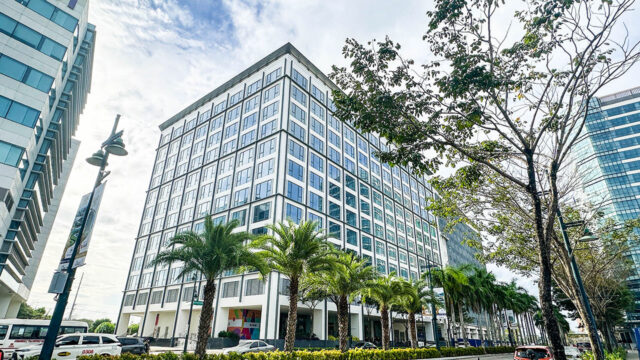
TAN-LED property developer Megaworld Corp. has launched a new leasing group as it seeks to aggressively grow its office portfolio across the country.

The new unit, Megaworld Global Offices, will operate alongside the company’s existing Megaworld Premier Offices to help reach its target of two million square meters of leasable office space, the company said in a regulatory filing on Wednesday.

The two teams will focus their office expansions in key growth areas, including the Ilocos Region, Pampanga, Cavite, Bacolod, and Cagayan de Oro.

Megaworld Global Offices will be headed by Francisco Ma. D. Roxas, a former executive of Ayala Land, Inc. (ALI), who brings 30 years of experience in real estate development and property management.

He previously served as the chief operating officer of ALI’s unit Ayala Land Offices, and was instrumental in the growth of the company’s portfolio amid the demand for hybrid-friendly and sustainability-led office spaces.

“We continue to see strong demand for office spaces in the country, even with the rapid emergence of artificial intelligence (AI) and other new technologies,” Megaworld President and Chief Executive Officer Lourdes T. Gutierrez-Alfonso said.

“These digital advancements continue to fuel growth across many industries and create opportunities for finance, IT, and healthcare professionals,” she added.

The company is also targeting more Fortune 500 multinational firms, including startups, to expand its tenant base of nearly 200 companies.

Most tenants are located in major townships that have evolved into cyberparks, such as Eastwood City in Quezon City; Uptown Bonifacio, McKinley Hill, and McKinley West in Taguig City; and Iloilo Business Park.

Megaworld currently operates about 1.6 million square meters of office space across 90 towers nationwide, hosting around 200,000 employees, primarily from the business process outsourcing and corporate sectors.

Its tenants include global companies such as Google LLC, The Coca-Cola Company, Wells Fargo & Company, IBM, Accenture plc, and JPMorgan Chase & Co. 

The company has also been incorporating sustainability features in its properties, with 32 office buildings nationwide certified or registered under the Leadership in Energy and Environmental Design (LEED) program.

In the first nine months of 2025, Megaworld’s attributable net income surged by 16% P15.93 billion, driven by high rental income and sales.

At the Philippine Stock Exchange, Megaworld’s shares closed flat at P2.21 each on Wednesday. — Beatriz Marie D. Cruz

Bistro Group sparks with local concept

PINATISANG MANOK

Applies its lessons from foreign franchises to Siklab

THE Conrad S Maison branch of Siklab — formerly a food hall concept by The Bistro Group — seems to reflect a new pivot to further develop their homegrown brands. While the franchise of the US restaurant Dave & Buster’s that they operate at the Opus mall seats 1,500, due to the play area, in terms of dining, this 260- to 290-seater is the biggest outlet of The Bistro Group to date.

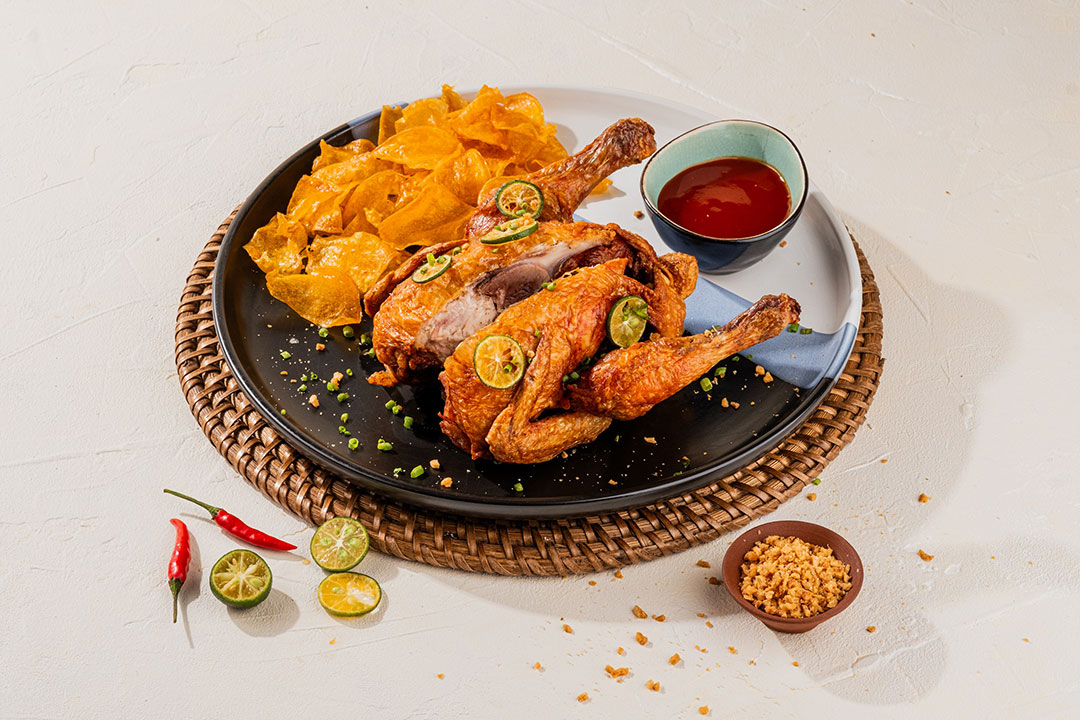
BusinessWorld went to a preview dinner at Siklab on Jan. 7, tasting their Filipino favorites. We particularly liked their Sinilabang Manok (the word siklab means “spark,” so it’s like saying “sparked chicken”), which serves as a version of Bacolod’s inasal (barbecue), that has a very pronounced hit of lemongrass. Their pancit palabok (a noodle dish) can stand toe-to-toe with anybody’s, while their Pinatisang Manok (chicken cooked with fish sauce) is an almost-perfect clone of a heritage fried chicken dish from another restaurant group. Everybody at the table liked their version of bibingka (a steamed rice cake), fluffy like a cake, topped with muscovado sugar, coconut, salted egg, and cheese.

Guia Abuel, chief operating officer of The Bistro Group, said that they had previously launched local brands Siklab and Krazy Garlik in 2014, but had them shuttered in 2018 due to what they thought was their lack of experience in running local brands. After all, The Bistro Group is known for bringing US restaurant franchises here, such as TGI Friday’s (their first) and Morton’s The Steakhouse.

Times have changed, and this Siklab — its largest — is the third branch, after their first relaunch in Shangri-La Plaza mall, then a second branch in Cavite’s Evo City. By the end of the month, Ms. Abuel predicts that they’ll be able to open four more: along Kamagong St. in Makati City, Park Triangle in BGC, Vermosa in Cavite, and at Evia Lifestyle Mall in Las Piñas.

“With the experience we’ve had through the years, we felt that the company is already prepared to come out with a locally conceptualized restaurant,” she said.

“The past few years, we’ve seen successes of local Filipino restaurants. I will not name our competitors, but they were an inspiration for us. We have all cuisines already… but we don’t have a local concept.”

One might think that concentrating on mostly foreign flavors in their decades-long history might prove to be a handicap in making something Filipino, but she says that the systematic operations influenced by their Western counterparts helped them build better. “They have a great foundation of standards,” she said. “It’s an American style of service: friendly, generous.

“We kind of applied these learnings in the way we run our business now, in a homegrown set up,” she said.

On that note, how do they set themselves apart as a Filipino restaurant in the Philippines, counting that most of their experience has been with foreign brands? “There are a lot of good local restaurants, but in terms of execution… I think we can be ahead of them.

“We’re a matured operator. Of course, food is everything, but it’s not everything. It’s the quality of service, the ambiance. It’s a total package.” — Joseph L. Garcia

SPNEC seeks DoE reconsideration of Sta. Rosa solar project termination

PHILSTAR FILE PHOTO

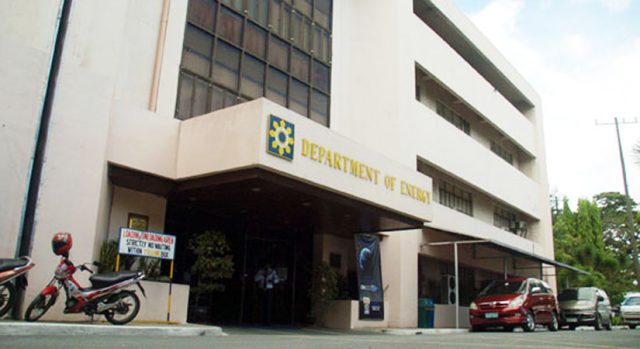
SP NEW ENERGY CORP. (SPNEC) said it is asking the Department of Energy (DoE) to reconsider the termination of its service contract for a solar power project in Sta. Rosa, Nueva Ecija, which experienced delays due to unforeseen circumstances.

“The company is in discussions with the Department of Energy regarding said force majeure claim and intends to request for the reconsideration of the termination,” SPNEC said in a statement to the local bourse on Wednesday.

The company received a notice of termination for the Sta. Rosa service contract, which it had previously flagged as subject to a force majeure claim.

SPNEC won the contract to develop the 280-megawatt (MW) project during the first green energy auction in 2022.

GEA-1 projects are targeted for completion by 2025.

The company cited challenges such as transmission constraints that affected project progress.

“Pending the outcome of said discussions and request for reconsideration, no adverse impact is expected on the overall business, operations, and financial condition of the company,” SPNEC said.

In the same disclosure, SPNEC clarified that it is a separate entity from Solar Philippines Power Project Holdings, Inc., a company currently facing penalties after the DoE terminated several renewable energy contracts.

It said that it “is not the ‘Solar Philippines’ mentioned in the news articles,” although the Leviste-led firm is a stockholder in SPNEC.

Solar Philippines has been fined P24 billion for failing to deliver nearly 12,000 MW of renewable energy over the past two years.

The DoE terminated 33 of its service contracts, accounting for around 64% of more than 18,000 MW of potential capacity.

Responding indirectly to the issue, businessman-turned-politician Rep. Leandro L. Leviste said on Facebook that he will address concerns in the proper forum.

Iginagalang ko ang mga kawani ng gobyerno at tutugon ako sa kanilang mga pahayag sa tamang forum. Paumanhin po sa mga natatamaan, pero ang pinaglalaban ko lamang ay ang katotohanan. Lubos ang aking pasasalamat sa mga nananawagan para sa transparency sa paggamit ng pondo ng bayan,” he said. (I respect workers in government, and I will address their statements in the proper forum. I apologize to those who may feel affected, but what I am standing up for is simply the truth. I am deeply grateful to those calling for transparency in the use of public funds.) — Sheldeen Joy Talavera

Tailor fitting food halls to the locations

COCO FRESH TEA

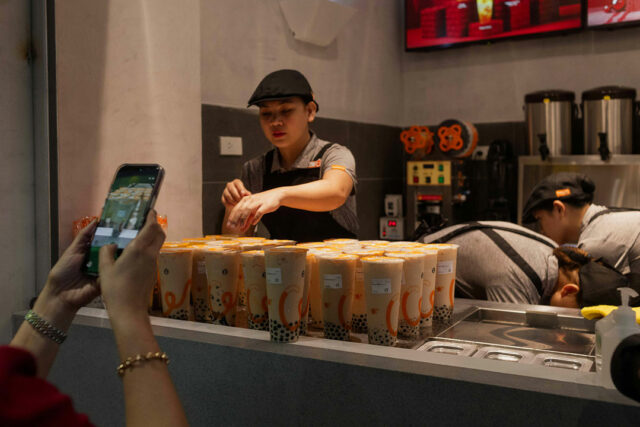
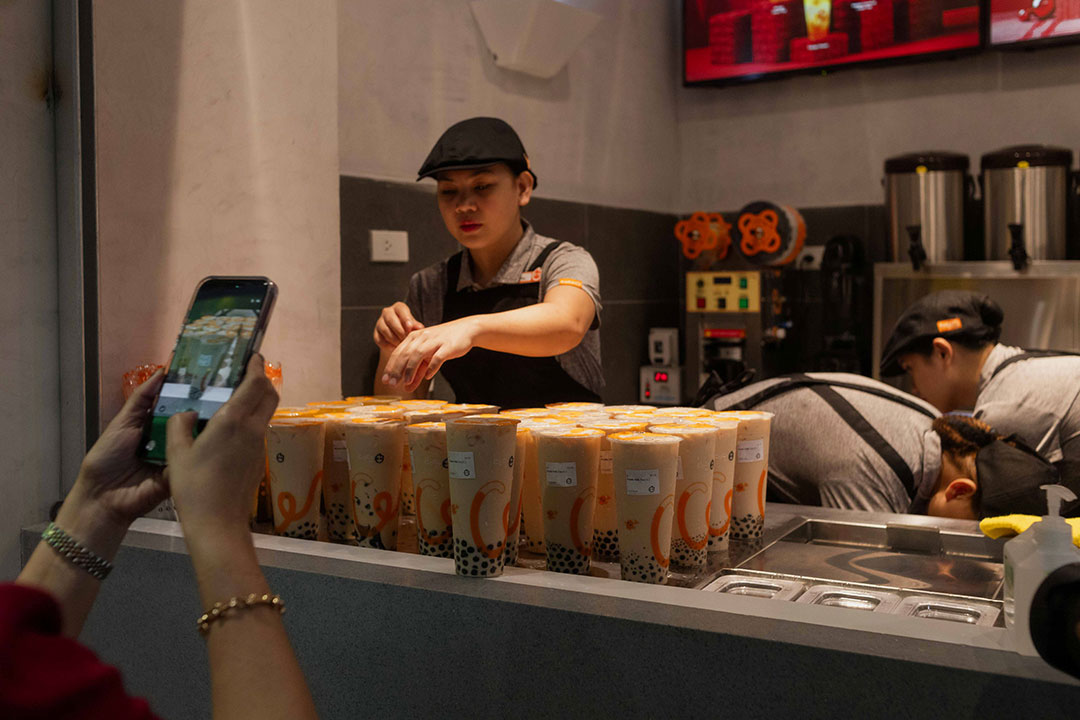
THE Sundry Food Hall opened last month in Bonifacio Global City (BGC), but more than its numerous food options, the logic behind the operations makes for a more interesting story. It not only took the food hall out of the usual mall location, but also tailor fit its options depending on location. And aside from dining in, customers have the option to order from a variety of restaurants through delivery partners at one go.

The BGC branch, in GSC Corporate Tower, Triangle Drive, BGC, is the concept’s seventh: the others are in España, Taft, Pasig, Commonwealth, Makati, and Parañaque. This branch contains CoCo Fresh Tea & Juice, 24 Chicken, Wann Mann, Bangkok Station, Potato Corner, Big Al’s Cookie Jar, Hearts & Bells, Merry Moo and Louie’s Buko.

The Sundry Food Hall concept was founded by husband-and-wife team Jai Reyes and Josephine Kamiyama as a cloud kitchen during the pandemic. Then since 2024, they pivoted most of the cloud-kitchen branches to dine-in operations.

Each Sundry Food Hall location has a different set of restaurant partners. “We rely a lot on the data, per area, [for] who we think is going to do well,” Mr. Reyes told BusinessWorld. “I guess we learned through experience also. One branch of the same brand doesn’t perform as well in the other branch. We get a lot of data from Grab and Foodpanda. In a particular area or radius, we get their help in suggesting to us what type of cuisines are being searched for.”

The concept is a boon for customers: “You get to eat in a place where you can have various options,” he said. “You can really order from different brands in just one sitting.

“We kind of took the food hall out of the mall, because the delivery numbers do better when we’re right by the roadside with a dispatch window. That’s a huge advantage for our tenants,” he said.

They provide the space and the common area staff. The tenants simply set up their kitchens and provide a kitchen crew. “Lower investment, and faster expansion. That’s what we tell our tenants. We provide the space, where all they need to do is put equipment, and bring their staff.”

At the same time, customers can order from multiple restaurants and pay just one delivery fee.

They are also moving down south, with planned expansions in Alabang and Santa Rosa. In line with the “faster expansion” selling point to their tenants, the move down south, according to him, is so that their tenants can have a footprint south of Manila.

On another note, those who still remember Jai Reyes as the Ateneo de Manila University Blue Eagles basketball player in the 2000s will be pleased to know that he now serves as commissioner for the University Athletic Association of the Philippines (UAAP), the league he once played in.

Asked about his own transition from basketball to business, he said, “All athletes someday get told that it’s time to hang it up,” he said. “I was scared, but just like sports, you just do your work. Apply it, learn from your mistakes, and then move on again.” — J. L. Garcia

MREIT allocates P184M from share sale to township projects

Paragua Coastown — MEGAWORLDINTERNATIONAL.COM

MREIT, INC., the real estate investment trust (REIT) of listed Megaworld Corp., said it has earmarked P184 million from the proceeds of a recent block sale of its shares for ongoing township projects in Bacolod, Cebu, and Palawan.

In its reinvestment progress report, Megaworld said P70.7 million was allocated for the development of Paragua Coastown, its eco-tourism township in San Vicente, Palawan.

The funds, disbursed through its unit Megaworld San Vicente Coast, Inc., would be used for building and land improvements within the township.

MREIT also allocated P63.98 million for its Bacolod projects via Megaworld Bacolod Properties, Inc., covering planned expansions such as malls, offices, and land development.

Meanwhile, P49.5 million was earmarked for The Mactan Newtown in Cebu through Megaworld Oceantown Properties, Inc.

The disbursements were made between Dec. 23 and 31, 2025, MREIT said.

The funds came from the December block sale of MREIT’s 98 million common shares, which raised P1.32 billion. As of Dec. 31, MREIT’s remaining proceeds from the sale stood at P1.14 billion.

In a separate disclosure, MREIT said it has disbursed P380 million between Oct. 1 and Dec. 31, 2025 from a separate block sale transaction of 168.63 million common shares of MREIT in September.

Of the P2.21-billion net proceeds, MREIT earmarked P160 million for The Mactan Newtown, P130 million for Paragua Coastown, and P90 million for its Bacolod projects.

MREIT’s asset portfolio includes office, retail, residential condominium, residential and commercial lots, and hotels, all located within Megaworld townships such as Eastwood City, McKinley Hill, McKinley West, Iloilo Business Park, and Davao Park District.

Kevin Andrew L. Tan, president and chief executive officer of parent firm Alliance Global Group, Inc., said Megaworld plans to inject 250,000 square meters (sq.m.) of new office and mall assets into MREIT this year.

This is in line with MREIT’s goal to expand its asset portfolio to one million sq.m. of gross leasable area by 2027.

In the first nine months of 2025, MREIT posted a 27% increase in distributable income to P2.8 billion, driven by its newly acquired office assets.

Shares of MREIT fell by 0.43% or six centavos to close at P13.90 each on Wednesday. — Beatriz Marie D. Cruz

Dining In/Out (01/15/26)


A whisky masterclass to start 2026

THE Whisky Library, home to Manila’s largest whisky collection, opens the year with a dedicated Macallan masterclass anchored on A Night on Earth: The First Light, a limited-edition single malt inspired by the first sunrise of the year. Taking place on Jan. 21, from 7-9 p.m., the masterclass is guided by The Macallan brand expert Hans Eckstein and is designed as an exploration of how time, place, and tradition shape whisky. The evening features a tasting of four expressions from The Macallan’s A Night on Earth collection: A Night on Earth in Scotland, The Journey, The First Light, and A Night on Earth in Jerez. The series examines how different cultures mark moments of celebration, translating these occasions into whisky through flavor, design, and narrative. At the center of the experience is The First Light, a release inspired by New Zealand, which is among the first places in the world to witness the sunrise that begins the year. The single malt is matured in a combination of sherry-seasoned European and American oak casks, with a portion of ex-bourbon casks, resulting in a profile shaped by balance and layered character. Designed as a structured tasting experience, the masterclass allows guests to engage with the collection through guided discussion and sensory exploration in an intimate setting. The masterclass costs P4,500 net. Limited slots available so reserve through https://tickets.newportworldresorts.com/products/the-macallan-a-night-on-earth-masterclass.


Carmen’s Best unveils new flavors, new milk bar

CARMEN’S BEST has expanded its ice cream product line with new limited-edition flavors and dairy treats. The two new ice cream flavors are: Ube Halaya, a homage to the Filipino classic reimagined as a smooth, sweet ice cream; and Tiramisu, a local twist on the Italian dessert with espresso-infused mascarpone ice cream. The launch of these new flavors also marks a new chapter in the brand’s partnership with HOPE Philippines. When customers buy Ube Halaya and Tiramisu ice cream in pints or scoops, part of the sale goes toward building public school classrooms in different areas of the country, an initiative spearheaded by HOPE Philippines. The two flavors are now available nationwide online at carmensbest.com and in leading supermarkets. They come in exclusive 440 ml pints at P520 each. They are also offered at Carmen’s Best scooping stations in Rockwell, SM North EDSA, Mall of Asia, SM Makati, and Shangri-La Mall for P195 per scoop. Carmen’s Best has also launched the all-new Carmen’s Best Milk Bar, a local gourmet ice cream treat crafted with 100% fresh milk and no artificial colors or sweeteners. It contains 183 calories and provides 12% of the recommended daily calcium intake. It is available online at carmensbest.com, in groceries, and at all Carmen’s Best ice cream stores for P88 per bar or P528 for a box of six. Meanwhile, Carmen’s Best Milk has two new variants: Barista Fresh Milk, crafted to complement coffee, and Salted Caramel Milk. Carmen’s Best has partnered with 7-Eleven to offer convenient on-the-go sizes in stores nationwide.


Pancake House introduces brioche toasts

BELOVED flavors find a new canvas in Pancake House’s Brioche Toasts. Diners can try PB&J (Peanut Butter and Jelly) Brioche Toast (P229); Blueberry & Cream Cheese Brioche Toast (P249), with cream cheese and blueberry swirls, served with banana slices; and the Crème Brûlée Brioche Toast (P299) which has custard layered between two slices of toasted brioche, finished with a caramelized sugar crust, and served with banana slices. They are available at all Pancake House stores for dine-in, takeout, curbside pick-up, and delivery until March 31.


Krispy Kreme presents Chocomania

START the new year on a sweet note with Krispy Kreme Philippines’ latest collection: Chocomania, co-branded with Mars chocolates. This limited-time collection features three chocolate doughnuts inspired by classic Mars favorites, paired with the new Choco Caramel Twix Chiller. The doughnuts are: White Choco Malt topped with Maltesers, a soft chocolate dough coated in white chocolate, finished with crunchy Maltesers and additional white chocolate; Choco Caramel topped with Twix has rich dark chocolate dough loaded with Twix, crushed Graham crackers, and gooey caramel fudge; and Dark Choco Candy, a chocolate donut coated in dark chocolate, drizzled with white chocolate, and topped with M&Ms. Pair the doughnuts with the Choco Caramel Twix Chiller, an iced-blended mix of kreme base, double chocolate syrup, caramel fudge, and graham cracker crunch, topped with whipped kreme, chopped Twix, and a swirl of salted caramel. The Chocomania Collection is currently available until Feb. 28, starting at P80 per donut, available in all Krispy Kreme stores nationwide.


McDonald’s offers P99 McSavers

MCDONALD’S Philippines welcomes 2026 with McSavers Sulit Busog Crispy Chicken Fillet meals that cost P99. Options include the original Crispy Chicken Fillet with the original gravy, the Crispy Chicken Fillet ala King with a creamy sauce, and the recently introduced Golden Curry Fillet with a creamy and slightly spicy and sweet curry sauce. All three are served with extra rice, plus a regular drink. McSavers Sulit-Busog Meals are available through dine-in, take-out, drive through, and delivery.


Jollibee brings back Mix & Match

JOLLIBEE has brought back its Mix & Match option. Starting at P78, diners can pair popular mains and sides. Main options priced at P78 include the Yumburger, Jolly Spaghetti, and one-piece Burger Steak, while P88 mains include the Cheesy Yumburger, Crunchy Chicken Sandwich, and Jolly Hotdog. Side choices include Soda Float, Peach Mango Pie, Choco Sundae, Jolly Crispy Fries, and the newly introduced Iced Mocha. This year, Jollibee Mix & Match is endorsed by the girl group BINI. Jollibee Mix & Match is available nationwide for dine-in, takeout, and drive-through.

BSP 7-day term deposit yields dip

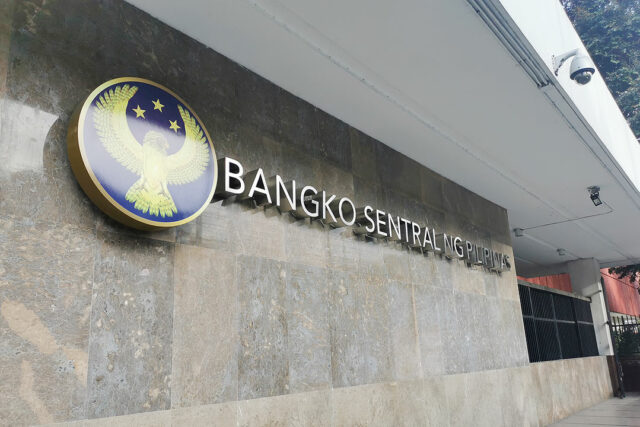
Bangko Sentral ng Pilipinas main office in Manila. — BW FILE PHOTO

YIELDS on the Bangko Sentral ng Pilipinas’ (BSP) seven-day term deposits fell slightly on Wednesday as investors priced in a possible policy easing at the central bank’s first Monetary Board meeting this year.

Total bids for the one-week term deposit facility (TDF) reached P150.07 billion, surpassing the BSP’s P110-billion offer and last week’s P127.6 billion in tenders. The central bank accepted the full P110 billion. The resulting bid-to-cover ratio rose to 1.36 times from 1.16.

Accepted yields narrowed to 4.44% to 4.5149%, with the weighted average rate easing by 0.89 basis point week on week to 4.501%, almost matching the BSP’s key overnight borrowing rate of 4.5%.

Michael L. Ricafort, chief economist at Rizal Commercial Banking Corp., said the modest decline reflects dovish signals from the central bank, which could cut rates in February.

The BSP is near the end of its easing cycle, but the strong demand may indicate investors locking in yields ahead of a potential reduction, he said.

The Monetary Board has lowered key borrowing costs by 200 basis points (bps) since August 2024, bringing the benchmark to a more than three-year low of 4.5%.

In 2025, the central bank delivered five straight 25-bp cuts. BSP Governor Eli M. Remolona, Jr. has signaled that a further 25-bp cut is possible but unlikely given current economic data.

Local inflation remained benign at 1.8% in December 2025, below the BSP’s 2%-4% target for the 10th consecutive month. Slower economic growth, partly due to weather-related disruptions and cautious infrastructure spending, also supports continued accommodative policy.

External factors could influence future moves. A possible US Federal Reserve rate cut would allow the BSP to ease further while maintaining interest rate differentials that stabilize the peso.

Recent policy reforms and governance measures, including initiatives on anti-corruption and fiscal accountability, have bolstered investor confidence, contributing to strong demand at the TDF auction.

The TDF and BSP bills serve as tools to absorb excess liquidity and guide market rates toward the policy benchmark.

Investors continue to monitor both domestic economic trends and global central bank actions, weighing their implications for borrowing costs, liquidity management and peso stability in the months ahead. — Katherine K. Chan

Filipino SMEs, is your brand positioning on point?

BRAND MARKETING expert Emmanuel “Bingo” Soriano during the podcast. — THE RJ LEDESMA PODCAST

Brand positioning has transformed the world since its beginnings in the 1960s and ’70s. And today, in a new era of online platforms and live selling, it remains as relevant — and powerful — as it has been since its inception. Local brands in particular should take note. Brand positioning has been a chronic blind spot for many Filipino SMEs, according to Emmanuel “Bingo” Soriano, a brand marketing expert with decades of experience in Unilever and as a consultant for brands such as HSBC, Purefoods, and Burger King.

It is because of this gap that Mr. Soriano has established his podcast, The Branding Nerd, and established Brand Con, where he is the founder and Chair. The event was held last November at Newport World Resorts, but I was able to catch up with him on my own podcast to talk about why brand positioning is such an important tool for Filipino SMEs and what they have to gain.

Like Bingo, I’ve had a parallel experience with brand-intense corporations when I was in Procter & Gamble. At the same time, I can appreciate his message as I am today — an entrepreneur with my own businesses. What follows are some of the highlights of my hour-long conversation with one of the country’s top brand marketing minds.

WHAT IS BRAND POSITIONING?
Before anything else, let’s first define what a brand is.

According to Mr. Soriano, “The definition I use actually comes from Al Ries, the father of Laura [Ries, the keynote speaker of Brand Con]. His definition is this: [A brand] is a singular idea or concept that you own in the mind of your prospect.”

Creating this brand — brand positioning — is easier said than done, and it affects every aspect of your business.

“To be able to own that concept in the mind is very difficult to do,” he continued. “That, to me, should be the aspiration of every single brand, to own a concept in the mind of their market and nobody else will own that.”

To achieve this goal he has created a framework, the Brand Building Framework, that he uses with the brands he works with.

“You follow the framework,” he summarized. “You position yourself. You create your identity. You execute consistently across the six P’s (product, price, place, promotions, people, process). If you do that over time, you will own the concept.”

In the full interview, he discussed many companies that have successfully positioned themselves in their respective markets to great effect, from worldwide juggernauts like Netflix and Starbucks, to local darlings such as Jollibee and Cebu Pacific.

“You don’t have to be everything to everybody,” he continued. “As long as you are attractive and clear in the mind of your prospect, you’re going to win. You’re going to be a market leader.”

‘IT’S ALL ABOUT EDUCATION’
Knowledge and expertise about branding is, unfortunately, in short supply in the Philippines.

“In the Philippines,” he said, “there tends to be a misconception of what branding is all about, or at least there’s a limited understanding. So, I wanted to present something more holistic and deeper.”

To this end, he established The Branding Nerd as well as Brand Con to educate Filipino companies about brand positioning — in particular SMEs.

He continued by saying “What I’m discovering is that there’s really a big need for our companies in the Philippines to understand the fundamentals, the foundational understanding of what really branding is all about.”

Through efforts like Brand Con, Mr. Soriano gathered many of the top experts in branding at one educational conference. Last year’s Brand Con had luminaries such as Laura Ries, a marketing expert from TBWA New York and marketing firm Ries & Ries. On the local side, there were marketing experts like the current chairman of the 4A’s, Melvin Mangada, and Norman Agatep, Co-Founder of Grupo Agatep. Bridging the gap between marketers and entrepreneurs, there were Grace Dimacali, founder of Mary Grace Café, and Paco Magsaysay, founder of Carmen’s Best. There’s simply so much to be learned from these branding experts and entrepreneurs.

UNDERSTAND YOUR CUSTOMER
At the core of what Mr. Soriano is teaching these SMEs is understanding your customer — a core tenet of brand positioning.

“One common thing I’ve noticed among Philippine companies is that they don’t understand their customer,” he lamented. “They haven’t really clearly defined who their customer and their segment is.

“One other common thing I’ve noticed is that companies don’t do market research in the Philippines,” he explained. “I have one client who’s been in the business for 37 years — never done research.”

These two observations, of course, are inextricably linked. But the good news is that the tools to understand your customers are within reach. And they don’t have to be expensive either.

From experience, I can understand how SMEs focused on the demands of the day-to-day may be reluctant to spend on marketing research. But Mr. Soriano encourages SMEs to simply engage with customers and talk to them. And this is so true; it’s so easy to engage customers in today’s online world.

He adds, “The purest definition of market research is simply finding out what the customer is looking for. And you’re always in front of customers. You can always ask them.”

THE DIFFERENCE BRAND POSITIONING MAKES
According to Mr. Soriano, “Brand positioning is really understanding what your customers are looking for, the most important factors, whatever segment you’re in, and who are the current competitors, who are the brands out there. When you put them together, you can literally draw a map.”

For Filipino SMEs, brand positioning doesn’t have to be difficult or expensive. It can be as easy as 1-2-3. Marketing experts like Mr. Soriano have even built a framework for SMEs to follow.

“I think the biggest benefit is really understanding the framework,” he says.

The framework he has built even has a workbook that SMEs can follow like a roadmap. And, what’s more, when you draw that map, opportunities arise. Your customers become real, and your business plan becomes clearer.

Your company could lead new segments, like Cebu Pacific did when they entered affordable travel. You could lead mindshare like Jollibee did by owning Langhap sarap. Or you could navigate your brand through change like Netflix did from on-demand video into the streaming age.

For entrepreneurs and SME owners, the difference brand positioning makes is clear. The question is, are you ready to raise your brand positioning game?

Note: In my previous column featuring Wee Community Developers, Inc., I stated that “Colliers recognized WeeComm as the ninth largest real estate developer in the country.” Upon review, I’d like to clarify that Colliers does not issue formal rankings or make such declarations. This note is shared to ensure accuracy and clarity moving forward.


RJ Ledesma (www.rjledesma.com) is a Hall of Fame Awardee for Best Male Host at the Aliw Awards, a multi-awarded serial entrepreneur, motivational speaker, and business mentor, podcaster, an Honorary Consul, and editor-in-chief of The Business Manual. Mr. Ledesma can be found on LinkedIn, Facebook and Instagram. The RJ Ledesma Podcast is available on Facebook, Spotify, Google and Apple Podcasts. Are there entrepreneurs you want Mr. Ledesma to interview? Let him know at ledesma.rj@gmail.com.