Home Blog Page 370

LANDBANK starts public offer of 1.5-, three-year sustainability bonds

LANDBANK.COM

LAND BANK of the Philippines (LANDBANK) on Wednesday began the public offering of its dual-tenor sustainability bonds.

The state-run bank has priced the Agriculture, Sustainability, Environment and Socioeconomic Development or ASENSO Bonds at 5.1714% per annum for the 1.5-year Series B tranche and at 5.5615% per annum for the three-year Series C papers.

They are available for purchase at LANDBANK branches, its selling agents, and through the LANDBANK Mobile Banking App (MBA). The lender said the ASENSO Bonds are the first corporate or bank bond offering made available via in-app subscription.

“The ASENSO Bonds allow Filipinos to grow their savings through attractive returns, while directly supporting projects that strengthen agriculture, protect the environment, create jobs, and uplift communities,” LANDBANK President and Chief Executive Officer Lynette V. Ortiz said in a statement. “This is finance with purpose. This is capital with conscience — where every peso helps move the nation forward.”

LANDBANK is looking to raise P30 billion via the issuance. It earlier said that the bond proceeds will be used to fund eligible green projects, including renewable energy, energy efficiency, green buildings, clean transport, sustainable water management, and pollution prevention, as well as social projects such as food security, affordable housing, health, education, access to essential services, employment generation, and broader socioeconomic development.

The public offer period is set to run until Feb. 6. The bonds will be listed on the Philippine Dealing & Exchange Corp. on Feb. 16.

The papers are being sold for a minimum investment of P10,000 and in increments of P10,000. Interest on the bonds will be paid quarterly starting from the issue date.

LANDBANK has mandated China Bank Capital Corp. (Chinabank Capital) as the sole issue manager for the bond offering, with LANDBANK and Chinabank Capital acting as the selling agents.

The bank last tapped the domestic bond market in November 2020 as it raised P5 billion via the sale of two-year fixed-rate ASEAN Sustainability Bond with an interest rate of 2.5872% per annum.

LANDBANK’s net income climbed by 41.79% year on year to P35.64 billion in the first nine months of 2025. — Aaron Michael C. Sy

Synthetic identity fraud risks on the rise in PHL as digitalization continues

PIXABAY

By Beatriz Marie D. Cruz, Reporter

PHILIPPINE organizations must strengthen their identity verification processes as the proliferation of synthetic accounts could increase cases of digital fraud, according to iProov.

“We strongly believe that the amount of synthetic fraud out there is vastly underestimated. For 2026, the scale of this will start to become understood,” iProov Chief Technology Officer Dominic Forrest said in a video interview with BusinessWorld.

Synthetic identity fraud refers to the use of fabricated information and credentials to create a fake persona.

This is mostly done by organized crime groups and nation-state actors, supporting both small- and large-scale scams, Mr. Forrest said.

The Philippines’ digital-first economy also creates a large surface attack for criminals using synthetic accounts, he added, with these attackers likely to target weak points like account recovery, password reset, and app installation on new devices.

The rise of remote work also increases the risk of synthetic account fraud, especially if the identity of a user is not verified.

“It’s perfectly possible for one person to do the interviews, get a job, and then assign somebody else to commit a crime,” Mr. Forrest said.

The country’s critical information infrastructure, namely water, power, and telecommunications, are also vulnerable to account takeovers and may cause major outages, he said.

To boost their safeguards, companies, especially in industries like finance and utilities, must do quarterly or monthly biometric checks to confirm the identity behind user accounts.

Financial institutions should also ensure that their facial biometrics have strong liveness detection for high-risk situations, such as new devices, account recovery, and high-value transfers, Mr. Forrest said.

“If you can tie it to a human being who you can prove exists, then the synthetic account cannot exist in the first place.”

With organizations seeking science-based biometrics to verify their user base, iProov is optimistic about its growth prospects, he said.

“What will drive growth is the growing understanding of the criticality of ensuring identity, and that will come either from organizations or industries doing this themselves or are being mandated to do so by the government.”

He cited as an example UnionBank of the Philippines, Inc., which integrated iProov’s science-based biometric technology last year. This system can distinguish between real and synthetic identities through express liveness and dynamic liveness tests.

More than 60% of Filipino adults experience financial scams yearly, with individuals losing an estimated P12,000 to fraudulent activity, the Global Anti-Scam Alliance said in its State of Scams in the Philippines 2025 Report.

Special permits to cover routes of suspended Aleson Shipping

M/V TRISHA KERSTIN 3 — KINGPRINCE2424/WIKIMEDIA.ORG

THE DEPARTMENT of Transportation (DoTr) said the Maritime Industry Authority (MARINA) is set to grant permits to other shipping lines to operate on routes previously served by Aleson Shipping Lines, Inc. while the company remains suspended.

“While Aleson Shipping Lines is grounded, PCG (Philippine Coast Guard) and MARINA are conducting a comprehensive safety audit of Aleson’s vessels, we need to ensure the safe travel of passengers,” Transportation Acting Secretary Giovanni Z. Lopez said in a media release on Wednesday.

The Transportation department said MARINA will issue special permits to shipping lines that comply with safety regulations to operate routes connecting Zamboanga City to Isabela City and Lamitan City in Basilan; Siasi City and Jolo in Sulu; and Bongao in Tawi-Tawi.

Special permits will also cover routes between Pulauan, Dapitan City and Dumaguete City; and Dumaguete City and Siquijor.

“If ever there is a shortage of commercial vessels to transport, the PCG’s 44-meter vessels will be utilized to provide free rides for those affected by the audit and inspection being conducted by the PCG and MARINA,” he added.

MARINA Director Luisito U. Delos Santos said the maritime regulator will strengthen safety regulation and enforcement by intensifying audits and conducting more frequent, targeted inspections of high-risk vessels and operators.

“Our objective is straightforward: to prevent avoidable tragedies, protect lives at sea, and restore public confidence by ensuring that safety is never treated as optional in domestic shipping,” he said in a statement.

On Tuesday, DoTr ordered the suspension of passenger operations of Aleson Shipping Lines following the sinking of one of its vessels. — Ashley Erika O. Jose

From P10,000 capital to a real estate empire: What is the secret to entrepreneurial success?

EON GROUP OF COMPANIES founders Felix Tiu and Bernadette Chavez-Tiu during the podcast. — THE RJ LEDESMA PODCAST

In a famous online challenge, the Trade Up Challenge, participants are tasked to make trades of higher and higher value and see how far they can go. Everyone starts with a ballpoint pen, or at times even a paperclip. They then make a trade with anyone, not for cash, but for any other item. By the end, some participants are so successful with their trades that they find themselves trading a car or luxury items.

Beyond salesmanship, the Trade Up Challenge is a lesson in negotiation, and in value. And what’s true here for salespeople is also true for entrepreneurs — especially for Felix and Bernadette Tiu, the founders of the EON Group of Companies. This power couple started with P10,000 in capital and a market stall and “traded up” from one business to the next until they had a successful real estate development company which has sold over 10,000 units across their vertical and horizontal developments.

In my many conversations with entrepreneurs, I’ve found that they share many common traits. They come from a wide variety of business ventures of different sizes, and yet they often cite the same reasons for their success. While of course the business itself is important, it’s become increasingly clear to me that it’s not the key ingredient of successful entrepreneurs’ “secret sauce.” It is their skills, their attitudes, and their approach to business — their superpowers, if you will.

Felix and Bernadette Tiu are great examples of this in action. Today, EON is a company primarily in real estate development. From their roots in Iloilo, they have built a veritable real estate empire that stretches to Cagayan de Oro and Guimaras. And yet, the Tius weren’t always in real estate. In fact, EON began as a stall in the marketplace selling basic commodities like sugar and cooking oil. From there, they “traded up” to other businesses. They got into trading, distribution, manufacturing, even micro finance. And eventually, they entered real estate, where they are redefining the industry with their quick turnaround, high sell-through rates, and close partnership with brokers.

So what makes the Tius so successful at entrepreneurship? What are their superpowers? In my interview with the power couple on the RJ Ledesma Podcast, they talked about some of the things which I think make a significant difference for entrepreneurs. Let’s take a closer look.

OPPORTUNITY AND RISK
Foremost among the superpowers of entrepreneurs like Felix and Bern Tiu is the ability to spot opportunity.

In our conversation, Ms. Tiu immediately links this with risk-taking. Speaking about her husband Felix, she says, “One thing that he’s got is guts. I mean, he’s not afraid of taking all the risk, but he’s always making sure that he’s gonna do his best, he’s gonna have a goal, a plan, and must reach that goal. And he’s just so hardworking. He’s so blessed with this gift of… identifying opportunity.”

For Felix Tiu, though, this talent of spotting business opportunities isn’t magic. It’s the product of hard work, study, and experience.

Explaining the origins of their next business after the market stall, Mr. Tiu said, “Candies was the best place to get into in terms of a business. Specifically, we identified lollipops because, in all our product lines before, lollipop is the one that is selling well.” And, what’s more, there were only a few competitors making lollipops, he added, which allowed the company to become the second largest lollipop maker in the country.

It is this considered approach that allowed the Tius to enter business after business, from trading to food manufacturing and ultimately to real estate. Mr. Tiu advises young entrepreneurs to learn how to take a risk when they spot an opportunity.

He said, “in everything that you do, you should always learn how to take a risk. You should not put all your eggs in one basket. And all the exploration and all the investment that you want to get into, you should have a feasibility study… You should make a calculated risk.”

HARD WORK AND PERSEVERANCE
The next entrepreneurial superpower I want to highlight is one that is both basic and essential: the value of hard work.

For Mr. Tiu, it is his most important piece of advice, saying, “For me, my advice, number one, is to be hardworking.”

Ms. Tiu adds a deeper dimension to this work ethic by focusing on perseverance.

“The word perseverance should always be there,” she said. “I always believe that if you just persevere, you will always get to your goals. I’m always telling all the brokers, even the sellers or the new recruits, to just persevere because success is getting up one more time every time you fall.”

RESPECTING CONSUMERS AND PARTNERS
Finally, the Tius embody a value that many successful entrepreneurs possess: an unwavering commitment to their customers and their partners. “We’ve always stood by our principle to deliver quality and affordable products to all our clients,” Mr. Tiu says.

Concretely, he talked about how brokers can speak to the owners of EON Realty directly, and how they have consistently been the fastest real estate developer to pay brokers’ commissions.

Perhaps the greatest entrepreneurial superpower the Tius possess is the passion they have for every business they enter. Ms. Tiu says, “My kids are always telling me to just give up my position and give it to others. And I said, ‘And what am I going to do? You know, this is the place where I can just laugh my heart out and talk to people.’ And I just love what I’m doing. Maybe that’s one thing that lessens my wrinkles.”


RJ Ledesma (www.rjledesma.com) is a Hall of Fame Awardee for Best Male Host at the Aliw Awards, a multi-awarded serial entrepreneur, motivational speaker, and business mentor, podcaster, an Honorary Consul, and editor-in-chief of The Business Manual. Mr. Ledesma can be found on LinkedIn, Facebook and Instagram. The RJ Ledesma Podcast is available on Facebook, Spotify, Google and Apple Podcasts. Are there entrepreneurs you want Mr. Ledesma to interview? Let him know at ledesma.rj@gmail.com.

Composer Philip Glass drops Kennedy Center world premiere over Trump takeover

WASHINGTON — American composer Philip Glass withdrew the world premiere of his symphony Lincoln from the Kennedy Center on Tuesday, saying the work’s values conflict with those of the performing arts venue that was taken over by President Donald J. Trump.

Glass is the latest musical luminary to withdraw from the Kennedy Center since Mr. Trump named himself chairman and filled its board with his allies last year. The Washington National Opera said this month it planned to leave its home of 50 years.

“After thoughtful consideration, I have decided to withdraw my Symphony No. 15 ‘Lincoln’ from the John F. Kennedy Center for the Performing Arts,” Mr. Glass, who turns 89 on Jan. 31, wrote in a statement posted on X.

Symphony No. 15 is a portrait of Abraham Lincoln, and the values of the Kennedy Center today are in direct conflict with the message of the Symphony,” he wrote.

The symphony had been scheduled to be performed in June.

TRUMP-APPOINTED BOARD APPROVED NAME CHANGE
In December, the institution’s board voted to rename it as the Donald J. Trump and John F. Kennedy Memorial Center for the Performing Arts, or Trump Kennedy Center for short.

Since then, many groups and artists have withdrawn from scheduled performances, citing the Republican leader’s takeover.

Democrats, noting that the center’s name was established by Congress, have said Mr. Trump’s rebranding has no force of law. John F. Kennedy’s family denounced the renaming move as undermining the slain president’s legacy.

Proponents of the name change said Mr. Trump had strengthened the institution through fundraising and a focus on renovation.

Roma Daravi, a spokesperson for the center, did not mention Mr. Glass but characterized his decision as political.

“We have no place for politics in the arts, and those calling for boycotts based on politics are making the wrong decision,” she said in a statement.

Mr. Glass’ Symphony No. 15 “Lincoln” was commissioned by the National Symphony Orchestra and the Kennedy Center, the Washington Post reported.

Its premiere, already delayed, was due to be the centerpiece of the center’s “250 Years of Us” program to mark 250 years since the signing of the Declaration of Independence, the newspaper said.

Jean Davidson, executive director of the National Symphony Orchestra, said, “We have great admiration for Philip Glass and were surprised to learn about his decision at the same time as the press.” — Reuters

PHL organizations lack mature cyber risk management — report

REUTERS

PHILIPPINE organizations are among the least mature in the region in implementing third-party cyber risk management (TPRM) despite their increasing vulnerability to cyberattacks, according to US-based cyber defense company BlueVoyant.

According to a survey presented in its State of Supply Chain Defense Report, BlueVoyant said only 23% of organizations in the Philippines have an established or optimized TPRM, the lowest globally.

This compares to 32% of Asia-Pacific organizations that have an established TPRM system.

The survey also showed that 64% of Philippine organizations rarely or sometimes used dedicated third-party risk management platforms.

Meanwhile, 100% of Philippine organizations surveyed said they were negatively impacted by a supply chain–related cyber breach in 2025, with 40% experiencing at least two breaches via third parties last year.

“As vendor ecosystems expand and operational dependencies deepen, the findings underscore the urgent need for organizations to enhance program maturity to manage critical supply chain risks,” BlueVoyant said.

Key barriers that Philippine organizations experience include the internal resistance to change (25%) and cross-stakeholder collaboration (25%).

It added that 18% struggle to get suppliers to complete risk questionnaires and 16% face challenges in collecting accurate insights.

Despite this, about 63% of Philippine organizations said they work with third-party firms to fix cybersecurity issues, with 23% of them collaborating directly with vendors throughout the process.

The report also noted that 98% of organizations in the Philippines increased their TPRM spending in the last 12 months, with investments focused on remediation (38%), reporting (37%) and monitoring of third parties (34%).

They are also tapping artificial intelligence to help in monitoring cyber threats, with 53% planning to use it for managing risk questionnaires.

Also, 97% of organizations expect their third-party networks to grow, with 41% anticipating a growth of 6% to 10%.

Across the Asia-Pacific region, organizations cited integration with enterprise risk and governance, risk and compliance tools as their top operational challenges.

“This could suggest that they’re investing in tools before building a strong foundation,” BlueVoyant said.

William Oh, head of Asia-Pacific at BlueVoyant, said Philippine organizations need to strengthen their foundations and executive alignment to address persistent threats within the third-party ecosystem.

“As the Philippines increasingly recognize cybersecurity central to the economy’s digitalization, third-party cyber risk management is emerging as a crucial aspect in organizational resilience,” he said in a statement.

BlueVoyant commissioned independent research organization Opinion Matters to conduct its sixth annual survey for the report.

It surveyed 100 C-suite leaders in the Philippines that have expertise on cybersecurity, supply-chain oversight, or enterprise risk across organizations with over 1,000 employees from Sept. 16 to 25.

The survey has a total of 1,800 respondents from countries across the Asia-Pacific, North America, Europe, and Australia. — Beatriz Marie D. Cruz

Peso hits 1-month high on dollar’s slump

BW FILE PHOTO

THE PESO jumped to a one-month high against the dollar on Wednesday as US President Donald J. Trump said the greenback’s value remains “great” despite its recent slide.

The local unit ended at P58.74 versus the dollar, surging by 34.5 centavos from its P59.085 finish on Tuesday, data from the Bankers Association of the Philippines showed.

This was the peso’s strongest close in more than a month or since ending at P58.71 on Dec. 26.

The local currency opened Wednesday’s trading session stronger at P58.85 against the dollar. Its intraday best was at P58.69, while its worst showing was at just P58.90 against the greenback.

Dollars traded rose to $1.46 billion from $1 billion on Tuesday.

“The dollar-peso closed lower, dragged by broad dollar weakness due to Trump’s ‘Sell America’ rhetoric and potential joint intervention by the US and Japan in the foreign exchange market [to correct the yen’s slide],” a trader said by phone.

The peso jumped as the dollar hit a four-year low on Mr. Trump’s comments, Rizal Commercial Banking Corp. Chief Economist Michael L. Ricafort said in a Viber message.

For Thursday, the trader sees the peso ranging from P58.50 to P58.90 per dollar, while Mr. Ricafort expects it to move between P58.65 and P58.85.

The dollar headed for its biggest weekly fall since last April on Wednesday after Mr. Trump brushed off this month’s slide, triggering even deeper losses against the euro, yen and pound ahead of the Federal Reserve policy decision, Reuters reported.

The dollar index, which tracks the performance of the US currency against six others, was 0.22% higher at 96.114, but it remained near four-year lows, having lost nearly 2.8% since last Wednesday, its steepest weekly decline since last April’s “Liberation Day” market turmoil.

Mr. Trump said on Tuesday the value of the dollar was “great,” when asked whether he thought it had declined too much. Traders took his comments as a signal to intensify dollar selling.

While the president’s comments were not exactly new, they came at a time when the dollar has been under pressure as traders braced for a possible coordinated currency intervention by US and Japanese authorities to stabilize the yen.

“It shows there’s a crisis of confidence in the US dollar,” said Kyle Rodda, a senior market analyst at Capital.com. “It would appear that while the Trump administration sticks with its erratic trade, foreign and economic policy, this weakness could persist.”

The dollar tumbled over 9% in 2025 and has started the year on the back foot, already down about 2.3% in January as investors grappled with Mr. Trump’s erratic approach to trade and international diplomacy, fears over the Federal Reserve’s independence and huge increases in public spending.

Investors’ focus will be on the Federal Reserve’s policy decision later in the day, where the central bank is expected to stand pat in a pause that investors see lasting beyond US central bank chief Jerome H. Powell’s final meetings in March and April. — Aaron Michael C. Sy with Reuters

Landers Fairview ‘temporarily’ closes following fire

QUEZONCITY.GOV.PH

LANDERS SUPERSTORE announced the temporary closure of its Fairview branch in Quezon City after a fire broke out on Wednesday.

In a Facebook post, the company said: “Landers Fairview is temporarily closed. We apologize for the inconvenience.”

“In the meantime, you can still shop at Landers Balintawak, Landers UP Town Center, or any Landers Superstore branch near you,” it added.

Many netizens expressed dismay at the closure and hope for its reopening soon, citing the supermarket’s proximity to their homes.

“For renovation na ulit ang Landers Fairview, kung kailan mag-two years na this February” (Landers Fairview is undergoing renovation again, just as it is turning two years this February), a netizen said.

Landers Fairview began operations in February 2024 at Belfast corner Quirino Highway, Brgy. Pasong Putik, Novaliches, Quezon City.

The fire erupted on Wednesday, reaching fifth alarm less than an hour after the first alarm was declared.

According to the Bureau of Fire Protection, the fire was declared under first alarm at 4:44 a.m., raised to fifth alarm at 5:16 a.m., and declared under control at 7:59 a.m.

Asked about reopening plans, the company said: “We will announce it once we have the details.”

A members-only retail store, Landers Superstore also has branches in Cavite, Aseana City, Davao City, Naga City, Taguig City, Pampanga, Laguna, Bacolod, Bonifacio Global City, Manila, Cebu, Pasig, and Alabang. — Justine Irish D. Tabile

Regulating and insuring automated driving

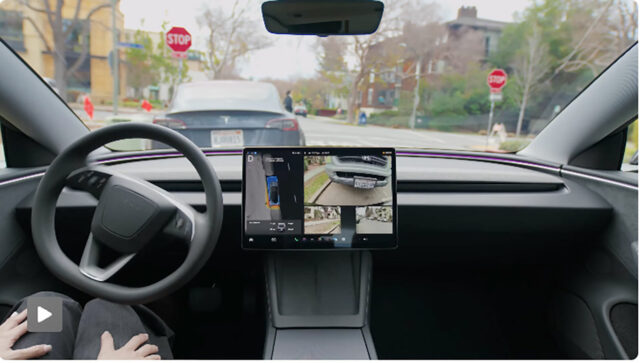
A VIDEO SCREENSHOT of a supervised automated parking of a Tesla vehicle. — TESLA.COM

I recently watched a video of a Tesla in the United States navigating a parking lot by itself while its owner sat in the driver’s seat. Other than pushing a button, the owner did nothing. The car eased between parking markers on its own. It looked like magic, until you imagine it happening here.

If that car hit another vehicle while it parked, who would we blame in the Philippines? We would blame the person in the seat. Our laws give us no other choice. We would deem that driver at fault even if he never touched the steering wheel or the pedals.

Carmakers now sell not just metal and batteries, but software-defined driving. They market self-parking, highway automation, and hands-off capability, even if most systems on the road today still require driver supervision. Still, we are surely moving from driver assistance toward conditional automation.

Philippine traffic law assumes there is a human driver at all times. Republic Act No. 4136, the Land Transportation and Traffic Code, defines a driver as every licensed operator of a motor vehicle. Republic Act No. 10913, the Anti-Distracted Driving Act, penalizes the use of mobile communications devices and electronic entertainment or computing devices while driving, subject to limited exceptions. These statutes were written for a world where a person controls the steering wheel and pedals.

So the moment a vehicle truly drives itself, even for a short interval like parking, our enforcement choices become muddled. If the system steers and brakes, does the person still “operate” the vehicle in the sense the law means? If a crash happens, do we hold the human liable for the machine’s driving decision? If the system demands a takeover and the person ignores it, should we treat that failure as the core fault rather than the manner of driving?

The United Kingdom offers a useful approach. Its Automated Vehicles Act 2024 recognizes a “user in charge” (UiC) when an authorized self-driving feature is engaged. In that mode, the UiC is generally not held criminally liable for offenses arising from self-driving activities.

At the same time, the law assigns responsibility for the self-driving system to an Authorized Self-Driving Entity (ASDE), a regulated entity behind the feature. The UiC retains non-driving duties, including being fit and ready to take over when the vehicle issues a transition demand.

The UK also keeps an important safeguard. Even with authorized self-driving engaged, mobile phone use remains prohibited for the UiC. I agree with that. The law shifts liability for the vehicle’s manner of driving to the ASDE, but it does not excuse careless behavior inside the cabin.

Japan also illustrates the same logic. Conditional automated driving has been allowed on public roads there in practice since April 2020, but drivers must take over immediately and properly when conditions require it. The system performs the driving task within defined conditions, while the driver remains the fallback.

Germany goes further. It allows driverless operation in defined operating areas and requires “technical supervision” by a human who can monitor and intervene even from outside the vehicle. Germany assigns accountability to a role that fits the technology.

These changes reflect a market and governance reality. Carmakers cannot credibly sell self-driving if the person inside remains legally treated as the driver for every consequence of the machine’s decisions. Regulators, on the other hand, cannot accept a future where nobody carries responsibility. So these jurisdictions defined roles and tied them to strict conditions.

The next step, as a matter of course, is insurance. After an accident, the question that matters most is not philosophical liability but who pays, and how fast. We need a process that compensates victims quickly, then determines liability, whether human or machine.

We should not spend years proving whether a sensor failed, a software update misfired, or a human ignored a takeover request. Yet that is what will happen if we treat automated driving as a simple negligence case against the person in the driver’s seat.

Philippine road crash liability remains largely fault-based. But our compulsory motor vehicle liability insurance already includes a limited no-fault indemnity for death or bodily injury, payable without the need to prove fault or negligence, but subject to set limits. For bigger claims, disputes still tend to turn on proving who was legally liable.

At the same time, compulsory liability insurance does not yet speak clearly to automated driving and the possibility of product or software failure causing an accident. When an automated system drives, a crash can result from defective code, training data, mapping, calibration, or cybersecurity vulnerabilities.

Pay-first, argue-later should remain the default posture even for incidents involving authorized self-driving. The UK offers an instructive model. When an insured automated vehicle causes an accident while it is “driving itself,” the insurer pays in the first instance, then uses mechanisms that preserve recovery rights and allocate responsibility after compensation.

Evidence sits at the heart of all of this. Every automated driving dispute begins with a question: who controlled the vehicle at the time, the human or the system? We can investigate and question human drivers. But we also need a credible way to examine automated driving systems, and to assign responsibility when the system, not the human, drove.

We should start by clearly distinguishing driver assistance from conditional automation. If a driving system merely assists, the human remains the driver under existing rules. If a system performs the dynamic driving task within a defined operational design domain, the law should recognize that mode and assign a status like UiC.

A competent authority should also approve which features qualify as self-driving, under which conditions, and on which roads. We can start with allowing initially only low-speed applications like parking in controlled environments, then widen coverage as standards and infrastructure mature.

A conditional system always ends with a question: can the human take over when the system asks? We should specify what counts as a valid transition demand, what minimum warning time applies, and what the UiC must do. If the person fails to respond and an accident follows, liability should attach to that failure.

More important, we need reliable event data. Mode engagement, alerts, and takeover demands must be recorded in a form insurers, regulators, and courts can access under clear privacy safeguards. Without this, every serious claim becomes a guessing game. Automated cars will need black boxes or event data recorders that can establish, at a minimum, whether the system or the human controlled the vehicle during the accident.

Also, no-fault indemnity under existing compulsory insurance should extend to authorized self-driving incidents so victims get compensated quickly. Then insurers should be able to recover from the responsible entity when the system, not the human, caused the loss.

The easiest policy failure is the lazy one. We either ban automated driving out of fear, or we allow it to spread quietly and then blame the human occupant for everything when something goes wrong. Both paths will create a messy market and invite unjust outcomes when accidents happen.

I would rather we do the harder work. We should now calibrate regulation and authorize what we believe can safely operate locally, define the roles, assign accountability to the entity behind the automated system when the system drives, and make sure victims get paid quickly when accidents happen.


Marvin Tort is a former managing editor of BusinessWorld, and a former chairman of the Philippine Press Council

matort@yahoo.com

One Battle After Another leads BAFTA nominations; Sinners also recognized

One Battle After Another (2025)

LONDON — Action-packed dark comedy One Battle After Another led nominations for the BAFTA Film Awards on Tuesday, with vampire thriller and box office smash Sinners also widely recognized at Britain’s top movie honors.

One Battle After Another, in which Leonardo DiCaprio plays a washed-up revolutionary whose daughter is kidnapped, secured 14 nods, of which five were for its cast including Mr. DiCaprio and Chase Infiniti, who plays his daughter, in the leading acting categories. Their co-stars Teyana Taylor, Sean Penn, and Benicio del Toro were nominated in supporting acting categories.

The critically acclaimed movie also secured a best director nod for Paul Thomas Anderson and is up for the awards’ top prize, best film, alongside Sinners, Hamnet, Marty Supreme, and Sentimental Value.

SINNERS RECEIVES 13 NOMINATIONS, HAMNET 11
Sinners, celebrating blues music and Black culture in the Segregation-era US South, received 13 nods, including for actor Michael B. Jordan who plays twins returning to their hometown to set up a juke joint. Director Ryan Coogler was nominated in the directing and original screenplay categories while cast member Wunmi Mosaku is up for supporting actress.

“It’s a great year for filmmaking, and I think what we see is that it’s a year of really strong, bold storytelling,” Chief Executive Officer of BAFTA Jane Millichip told Reuters.

“There’s a group of movies that I would say are tackling quite big geopolitical subjects, and they’re doing it through very different lenses… And then you have a group of movies which are much more personal.”

Hamnet, which fictionalizes the relationship between William Shakespeare and his wife Agnes and the death of their son, followed with 11 nods.

Jessie Buckley was nominated for leading actress for playing Shakespeare’s wife, Agnes, while Paul Mescal received a supporting actor nod for his portrayal of the bard. Chloe Zhao was the only woman in the best director category. Adapted from Maggie O’Farrell’s bestselling 2020 novel of the same name, the film follows the highs and lows of their love story as well as the grief over the loss of their son Hamnet, which leads Shakespeare to write Hamlet.

Hamnet is the most nominated film directed by a woman in all BAFTA history. So that’s something really positive,” Chair of BAFTA, Sara Putt, said when asked about the recognition of female filmmakers this year.

“I think we’re still on a journey. We’re very pleased we have the intervention at long-listing stage to make sure that more films are being watched and therefore more films being directed by women are being watched. Cutting the cake in a different way, there are 46 films nominated and over a quarter of those films were directed by women.”

COMPETITION FOR BEST DIRECTOR
Alongside Mr. Anderson and Mr. Coogler, Ms. Zhao faces competition from Josh Safdie for table tennis tale Marty Supreme, Yorgos Lanthimos for absurdist comedy sci-fi Bugonia, and Joachim Trier for Norwegian family drama Sentimental Value for the best director prize.

Marty Supreme secured 11 nominations in total, including expected recognition for Timothee Chalamet in the title role.

The leading actor category also includes Robert Aramayo for playing a Tourette’s syndrome campaigner in I Swear, Ethan Hawke as lyricist Lorenz Hart in Blue Moon, and Jesse Plemons for Bugonia, in which his character kidnaps a female pharmaceuticals boss, played by Emma Stone, believing she is an alien.

Ms. Stone was recognized in the leading actress category, alongside Rose Byrne for her portrayal of a mother whose life is unravelling in If I Had Legs I’d Kick You, Kate Hudson for Song Sung Blue, the story of a Neil Diamond tribute band, and Renate Reinsve for Sentimental Value.

Cynthia Erivo and Ariana Grande were snubbed in the acting categories for their performances in Wicked: For Good.

The musical sequel was only nominated for costume design and makeup and hair, although that was better than the Academy Awards, where it has scored zero nods. Its predecessor received seven BAFTA nominations.

The BAFTA Film Awards will be handed out at a ceremony in London on Feb. 22. — Reuters

Term deposit yield slips as demand wanes

BW FILE PHOTO

THE BANGKO SENTRAL ng Pilipinas’ (BSP) one-week term deposits fetched a slightly lower average yield on Wednesday even as the offer was undersubscribed, as likely weak fourth-quarter economic growth fueled bets for further monetary policy easing.

The central bank’s seven-day term deposits attracted bids amounting to P106.037 billion, below the P110-billion offer and the P162.768 billion in tenders for the same volume placed on the auction block last week.

This resulted in a bid-to-cover ratio of 0.9640 times, down from the previous 1.4797 ratio. This was the first time since Dec. 23 that the term deposit facility (TDF) offering was undersubscribed.

The BSP only accepted P83.899 billion in bids to keep the average rate low.

Accepted yields ranged from 4.45% to 4.5125%, a tad higher than the 4.44% to 4.5075% logged a week earlier. With this, the weighted average rate of the one-week papers slipped by 0.09 basis point (bp) week on week to 4.4973% from 4.4982%.

Expectations of a rate cut from the BSP next month due to likely soft fourth-quarter and full-year 2025 Philippine gross domestic product (GDP) growth caused term deposit yields to inch lower, Rizal Commercial Banking Corp. Chief Economist Michael L. Ricafort said in a Viber message.

He said further easing would “help spur local economic growth… alongside expansionary fiscal spending through catch-up government spending, especially on infrastructure.”

Last week, BSP Governor Eli M. Remolona, Jr. said that another cut remains uncertain, adding that while they will consider the latest Philippine GDP data when the Monetary Board meets on Feb. 19, weaker-than-expected growth wouldn’t automatically warrant further easing as inflation remains their primary concern.

The central bank has slashed benchmark borrowing costs by a total of 200 bps since its rate cut cycle began in August 2024, bringing the policy rate to 4.5%.

The government will release fourth-quarter and full-year 2025 GDP data on Thursday, Jan. 29.

The Philippine economy likely expanded by 4.2% in the fourth quarter, based on a BusinessWorld poll of 18 economists and analysts. This would put full-year growth at 4.8%, below the government’s 5.5%-6.5% target.

Meanwhile, Mr. Ricafort said the undersubscription seen on Wednesday was likely due to reduced liquidity in the financial system amid the strong demand seen for the Bureau of the Treasury’s recent auctions of government securities and its $2.75-billion triple-tranche global bond issue that was settled on Tuesday.

The central bank uses the TDF and BSP bills to mop up excess liquidity in the financial system and better guide market rates towards the policy rate.

It last auctioned off both the seven-day and 14-day deposits on Oct. 29. It has not offered 28-day term deposits for over five years to give way to its weekly offerings of securities with the same tenor.

Based on the BSP’s latest monetary policy report, its market operations have absorbed P1.5 trillion in liquidity as of mid-November 2025, with 5.4% of this being siphoned off via the term deposit facility. — Katherine K. Chan

Samsung Galaxy A07 5G launched in the Philippines

SAMSUNG.COM.PH

SAMSUNG Electronics this week launched in the Philippines its latest entry-level smartphone, the Galaxy A07 5G.

The latest addition to the Galaxy A series is priced at P8,290 for the 64GB variant and P9,990 for the 128GB model. It is available in two colors: Black and Light Violet.

Based on the brand’s website, the Galaxy A07 5G has a 6.7-inch PLS LCD display with a refresh rate of up to 120Hz. It is 8.2mm thick and weighs 199 grams.

It’s powered by a MediaTek Dimensity 6300 chipset that Samsung said supports faster loading and a smooth user experience, and a 6,000mAh battery.

The phone also has an IP54 water and dust resistance rating.

“Its superior surface durability, such as Glass Fiber Reinforced Polymer for the back also provides protection against scratches or breakage,” it added.

The Galaxy A07 5G also features a dual rear camera setup with a 50-megapixel (MP) wide lens and a 2MP depth lens.

“Producing crisp and sharp photos, the advanced image processor balances light and shadow for clear results in various conditions so you’ll never miss the essence of any detail. Equipped with a depth camera, you can also look forward to adding a natural bokeh effect to your images,” Samsung said.

Meanwhile, it also has an 8MP front camera.

The device also comes with enhanced AI features, including Gemini and Circle to Search.

Samsung said the Galaxy A07 5G will get six generations of Android OS upgrades and six years of security updates. It is also equipped with Samsung Knox Vault for data protection. — BVR