Globe reiterates its call for the public to exercise extra vigilance as law enforcers warned of a fresh rise in online and text fraud.
Anton Bonifacio, Globe Chief Information Security Officer, said fraudsters are finding new ways to bait potential victims to circumvent the SIM Registration Act and sustained industry efforts to block spam and scam SMS.
Because of Globe’s tighter regulations, Mr. Bonifacio said scammers are increasingly shifting to over-the-top (OTT) media services such as chat apps and spoofing, or the use of illegal devices to trick customer phones, all of which operate outside the scope of telcos.
“As much as we improve our filtering systems and enhance the implementation of the SIM Registration Act, fraudsters continue to find new ways to make victims out of mobile and internet users. We would like to reiterate our appeal to the public: please, please never engage with unsolicited calls, texts or chat messages and never give your personal details to strangers,” said Mr. Bonifacio.
According to police data, cases of cyber identity theft in the Philippines increased by 12.2% in 2023, with 1,597 cases logged compared to 1,402 in 2022.
Meanwhile, Globe’s own data showed that scam and spam texts continued to increase, with 5.48 billion unwanted SMS blocked in 2023, double the figure in 2022 at 2.7 billion. Globe has been stringent in fending off scam and spam SMS, blocking all person-to-person SMS with URLs since September 2022, an industry first.
Out of the total, there’s a silver lining. Globe saw a marked decline in bank-related spam and scam SMS blocked in 2023 at 21.9 million — a 73.7% drop from 83.39 million in 2022 — owing to Globe’s anti-fraud partnerships with major banks and financial institutions.
Through its 24/7 #StopSpam portal meanwhile, Globe also blocked a total 220,669 SIMs in 2023, majority of which are competitor SIMs. This figure is nearly four times the total in 2022.
Other than blocking efforts, Globe continues its public campaign on online safety, most recently teaching senior citizens on risks to watch out for when using apps. At Globe’s recent #SeniorDigizen learning session, some 200 elderly were taught how to protect their email accounts and how to keep their mobile wallet secure, among other digital skills tackled at the half-day event.
“As we push for digital inclusion, we also want to make our online safety efforts as inclusive. Globe will always find ways to reach as many of our customers as possible to protect them against the dangers that lurk online,” said Mr. Bonifacio.
Globe recently spent $90 million to boost cybersecurity, complementing the $20-million infrastructure it earlier invested in to fight spam and scam messages.
To report spam or scam SMS, visit Globe’s #StopSpam portal.
Spotlight is BusinessWorld’s sponsored section that allows advertisers to amplify their brand and connect with BusinessWorld’s audience by enabling them to publish their stories directly on the BusinessWorld website. For more information, send an email to online@bworldonline.com.
Join us on Viber at https://bit.ly/3hv6bLA to get more updates and subscribe to BusinessWorld’s titles and get exclusive content through www.bworld-x.com.
LONDON — Britain on Tuesday said it would spend more than 100 million pounds ($125 million) to launch nine new research hubs in artificial intelligence (AI) and train regulators about the technology.
“AI is moving fast, but we have shown that humans can move just as fast,” technology minister Michelle Donelan said in a statement. “By taking an agile, sector-specific approach, we have begun to grip the risks immediately.”
Nearly 90 million pounds would go towards the hubs, which will focus on using AI in areas including healthcare, chemistry and mathematics, and a partnership with the United States on responsible AI, the government said.
Another 10 million pounds would help regulators address the risks and harness the opportunities of AI, it said, such as developing practical tools to monitor risks in sectors from telecoms and healthcare to finance and education.
Britain hosted an international summit in November on AI safety.
More than 25 countries who attended signed the “Bletchley Declaration”, which focuses on identifying risks of shared concern and developing cross-country policies to mitigate them. — Reuters
Mexican President Andres Manuel Lopez Obrador. — Andres Manuel Lopez Obrador/Facebook
MEXICO CITY — Mexico’s president proposed sweeping constitutional reforms in a speech on Monday, including measures to overhaul the judiciary, electoral law, pensions, and environmental regulations, just months before a presidential election.
“The reforms that I propose seek to establish constitutional rights and strengthen ideals and principles related to humanism, justice, honesty, austerity and democracy,” President Andres Manuel Lopez Obrador said in a speech in the capital, Mexico City, on Mexico’s Constitution Day, a national holiday.
The leftist Mr. Lopez Obrador and his allies do not have the two-thirds super majority in Congress needed to change the constitution, but the proposed reforms are expected to shape the political debate ahead of the June presidential vote.
Former Mexico City mayor and ruling party candidate Claudia Sheinbaum is currently leading in the polls to succeed Mr. Lopez Obrador, who by law can only serve one six-year term.
The 20 constitutional reforms Mr. Lopez Obrador announced included cutting the number of lawmakers in the Lower House of Congress and Senate, electing judges by direct vote, and reducing spending for political campaigns and political parties.
They would also mandate annual increases in minimum wage above inflation, outlaw fracking and open-pit mining, limit water concessions in areas of the country grappling with water shortages, and increase scholarships for impoverished children.
He said the aim of the reforms are to “reorient the state to put it at the service of the people.”
The proposed constitutional reforms would be handed to the Lower House of Congress for discussion later on Monday, he said. — Reuters
WASHINGTON — The Biden administration has sent five senior US Treasury officials to Beijing this week for economic talks that will include China’s “non-market” policies that are adding excess industrial capacity, a Treasury official said on Monday.
The delegation, led by Treasury Undersecretary for International Affairs Jay Shambaugh, planned to hold frank conversations on Monday and Tuesday as part of the US-China Economic Working Group about Beijing subsidies that the US says encourage overproduction of goods, potentially flooding global markets.
Affected industries include electric vehicles, a sector whose development in the United States the Biden administration is trying to boost with its own tax subsidies.
The group will discuss the US and Chinese economic outlooks, investment screening regimes for national security in both countries, and opportunities to cooperate on climate change and debt relief to poor countries, the Treasury official said.
The emphasis on China’s industrial subsidies comes as the Biden administration is continuing a review of US tariffs imposed on hundreds of billions of dollars worth of Chinese imports by former President Donald Trump.
US Treasury Secretary Janet Yellen and other senior administration officials have called for the punitive duties of up to 25% to be shifted to a more strategic focus.
Mr. Trump, the expected Republican presidential nominee, has signaled he would double down on stronger tariffs if elected, calling for China’s most-favored nation trading status to be revoked, a move that would effectively raise nearly all tariffs on Chinese goods. President Biden is expected to take a tough but more nuanced approach to China.
The meeting is the third since Secretary Yellen and her Chinese counterpart, Vice Premier He Lifeng, launched the group in September alongside the parallel Financial Working Group.
That group met in Beijing in late January, with Treasury officials receiving assurances that Chinese banks were “doing well” despite China’s real estate and financial market turmoil, according to Ms. Yellen.
The meetings are the first for the economic group in Beijing. The group last met in San Francisco ahead of November’s Asia Pacific Economic Cooperation Summit after an initial virtual meeting. — Reuters
SYDNEY — Australia looks set to pass a reshaped tax cuts bill, that would give low-income earners more breaks and trim benefits to the wealthy, as the opposition pledged support on Tuesday after initially criticizing the government’s shift in policy.
The conservative opposition’s decision came as the parliament resumed after a two-month recess.
The center-left Labor government has been promoting the new tax policy, unveiled last month, saying it would benefit more Australians. But the opposition criticized Prime Minister Anthony Albanese for breaking an election pledge that he would not modify the tax policy, legislated by the previous conservative coalition government in 2019.
Mr. Albanese has defended the changes citing broad financial pressure on families from high inflation.
“It’s the right decision done for the right reasons at the right time. And that’s what we’ll be advocating in the parliament,” the prime minister told reporters in Canberra on Tuesday.
Under the new policy, more people will fall into lower tax brackets from July 1 and tax cuts for the wealthy would likely halve, with the savings redirected to those on low incomes.
Opposition leader Peter Dutton blamed Labor for the country’s high inflation but said he would not stand in the way of providing support to “Australians who are doing it tough”.
“The prime minister has made this change for his own political survival. We are supporting this change not to support the prime minister’s lie but to support those families who need help now,” Mr. Dutton said during a press briefing.
Mr. Albanese is trying to lift his approval ratings with his promise of higher tax breaks for the majority of Australians as his Labor party battles to retain the federal seat of Dunkley in a by-election set for March 2.
A Newspoll survey for The Australian newspaper out on Monday showed 62% of voters supported the government’s decision though Mr. Albanese’s ratings remained largely unchanged. On a two-party preferred basis, Labor led the opposition 52-48%. — Reuters
THE PHILIPPINE ECONOMY is expected to fare better in the second half of the year, as easing interest rates could lift consumption and improving external climate may boost trade, according to Moody’s Analytics.
“The economy will fare better this year, especially in the second half. Fading inflation will give the Bangko Sentral ng Pilipinas (BSP) confidence to lower borrowing costs,” Moody’s Analytics said in its weekly report released on Monday.
Headline inflation is expected to cool down in the coming months due to favorable base effects. A BusinessWorld poll of 16 analysts last week yielded a median estimate of 3.1% for January inflation, which is within the 2.8-3.6% month-ahead forecast of the BSP.
If realized, this will be the second consecutive month that inflation will be within the BSP’s 2-4% target band. It will also be slower than the 3.9% print in December and 8.7% a year ago.
However, Moody’s noted that household spending will be under pressure in the first half.
“Volatile inflation prints in the first half of the year will persuade the BSP to stay on hold, leaving us to expect its first rate cut to be in June at the earliest,” it said.
To tame inflation, the Monetary Board hiked borrowing costs by a total of 450 basis points (bps) from May 2022 to October 2023, bringing the key rate to a 16-year high of 6.5%.
BSP Governor Eli M. Remolona, Jr. earlier said the central bank is still hawkish, and is prepared to tighten as necessary amid risks to inflation. He hinted that the BSP may consider cutting borrowing costs in the second semester.
“As borrowing costs ease, private consumption and investment should benefit. An improving external climate will bolster trade, and an expected upturn in demand for semiconductors and electronics will brighten prospects in the second half,” Moody’s Analytics said.
The Philippine economy grew by 5.6% in 2023, slower than the 7.6% expansion in 2022 and fell short of the government’s 6-7% target.
In the fourth quarter, gross domestic product (GDP) expanded by 5.6%, slower than the revised 6% GDP growth in the previous quarter and the 7.1% expansion a year ago.
“On the expenditure front, households and private investment did the heavy lifting in the final quarter. Easing inflation, a tight labor market, and a healthy inflow of remittances gave consumers confidence to spend,” Moody’s said.
Household final consumption jumped by 5.3% in the October-to-December period, faster than 5.1% in the previous quarter but slower than 7% a year earlier. This brought the full-year household spending to 5.6%, slower than 8.3% in 2022.
The top contributors to fourth-quarter consumption were restaurants and hotels (16.2%), transport (12.2%) and recreation (7.3%).
Meanwhile, ING Bank N.V. Manila Senior Economist Nicholas Antonio T. Mapa said Philippine GDP in 2023 heavily relied on household consumption.
“Consumption remained surprisingly robust with Filipinos indulging in a possible ‘one for the road’ round of revenge spending, powering 4.2 percentage points of the overall 5.6% GDP. Although this strong pace of expenditure came at the cost of higher consumer debt and lower savings,” he said in a note.
Moody’s Analytics also said government spending and trade were the economy’s weak spots in the fourth quarter.
Government spending contracted by 1.8% in the fourth quarter, a reversal of the 6.7% growth in the previous quarter and 3.3% a year ago. Year to date, state spending posted flat growth of 0.4%, significantly slower than the 4.9% in 2022.
“Meanwhile, a leap in investment, which was led by the construction and durable equipment industries, came as a surprise given high borrowing costs in the Philippines,” Moody’s said.
Gross capital formation — the investment component of the economy — jumped by 11.2% in the October-to-December period, faster than 3.3% a year ago. This brought the full-year gross capital formation to 5.4%, slower than 13.8% a year ago.
However, Mr. Mapa said private investment only contributed 0.7 percentage point to the overall GDP growth in 2023. This is the slowest pace of contribution since 2012, excluding the coronavirus pandemic.
“We can trace the slide in capital formation numbers to aggressive rate hikes in 2022, which undoubtedly resulted in slower bank lending growth to productive sectors and resulted in a slower pace of private construction activity and investment in durable equipment,” he said.
Given the underinvestment during the lockdowns, Mr. Mapa said the Philippines must see a substantial and sustained push for investments.
“Private investment ensures that the productive capacity of the economy is constantly pushed out further, ensuring improved efficiency and productivity for a more sustained pace of expansion, beyond simply relying on household spending to carry the load,” he said.
For 2024, he said the government has set another elevated growth target to help propel the Philippines to upper middle-income status as soon as possible.
This year, the government is targeting to achieve a 6.5-7.5% GDP growth.
“If the Philippines is serious about chasing faster growth and the quick ascension to higher income levels, we must recognize the role that private investment can play in helping the economy achieve just that” Mr. Mapa said.
He added that while private consumption will continue to be the main driver of growth this year, private investment could also drive growth in the short and medium term, as this could push higher productive capacity. — Keisha B. Ta-asan
THE National Government (NG) may struggle with expediting infrastructure spending as it pursues fiscal consolidation, analysts said.
“The decline in infrastructure (in November) is an indication of the government’s problems with its fiscal consolidation. This means that the government’s policy to reduce fiscal deficit and debt accumulation has not been working as expected,” Ateneo de Manila University economics professor Leonardo A. Lanzona said in an e-mail.
“In the process, funds that should be used for infrastructure are delayed to meet these objectives. As fiscal consolidation remains uncertain, it is unlikely that infrastructure spending will be higher this year,” he added.
Latest data from the Department of Budget and Management (DBM) showed that infrastructure and other capital outlays declined by 29.4% to P56.7 billion in November from P80.2 billion in the same month a year ago.
Month on month, infrastructure spending slumped by 47.2% from P107.3 billion in October.
“This was mainly due to the different timing of big-ticket disbursements in the Department of Public Works and Highways (DPWH), with the ongoing processing of payments for approved billings and disbursement vouchers for civil works, supplies, and equipment, as well as right-of-way claims,” the DBM said.
“Actual payments for these were expected to be taken up in December 2023 following the release of additional cash allocations in the same month,” it added.
Bienvenido S. Oplas, Jr., president of a research consultancy and of the Minimal Government Thinkers think tank, noted that the decline in infrastructure spending in November was due to timing of the release of funds.
“In the third quarter, there was a ramped up funding release for infrastructure (which) normalized or ‘slowed down’ in the fourth quarter. Overall, infrastructure spending is still higher than 2022,” Mr. Oplas said in a Viber message.
In the January-November period, infrastructure spending rose by 18.5% to P1.02 trillion from P861.8 billion in the same period in 2022.
Rizal Commercial Banking Corp. Chief Economist Michael L. Ricafort said that LGUs with large budget allocations are still “adjusting the learning curve to improve utilization.”
“More funds (were) allocated and devolved from the National Government, especially on the various infrastructure projects,” he said in a Viber message.
Infrastructure disbursements during the 11-month period increased by 11.8% to P1.22 trillion. These include estimated NG infrastructure disbursements and infrastructure components of subsidy and equity to government-owned and -controlled corporations (GOCCs) and transfers to local government units (LGUs).
The DBM earlier said faster implementation of projects, especially infrastructure, was likely in December 2023.
“Although the actual full-year 2023 fiscal performance data will still be released between February and March 2024, the recovery of spending performance during the second half of 2023 is notable, particularly the acceleration of infrastructure expenditures,” it added.
Based on its Medium-Term Fiscal Framework, the government’s infrastructure program is set at P1.29 trillion for 2023, equivalent to 5.3% of gross domestic product (GDP).
Broken down, this comprises NG infrastructure (P989.9 billion), infrastructure subsidy (P101.9 billion) and infrastructure transfers to LGUs (P199 billion).
This year, the program is set at P1.4 trillion or 5.2% of GDP, based on the latest Development Budget Coordination Committee data.
The government is hoping to sustain infrastructure spending of up to 5-6% of GDP annually.
In 2022, infrastructure spending jumped to P1.02 trillion from P895.1 billion in 2021.
“It’s a welcome development that year-to-date numbers show infrastructure spending to be rising. However… it may not be rising fast enough to the target level,” Union Bank of the Philippines, Inc. Chief Economist Ruben Carlo O. Asuncion said in a Viber message.
Mr. Asuncion said that infrastructure spending may have been impacted by the challenges faced by government expenditures.
Latest data from the local statistics authority showed that government spending contracted by 1.8% in the fourth quarter, bringing full-year spending to a flat growth of 0.4%.
The economy grew by 5.6% in 2023, falling short of the full-year 6-7% target and much slower than the 7.6% expansion logged in 2022.
“Although it is respectable headline growth, we may see slower pace of spending (in general) because of the National Government’s focus or priority of debt and deficit management that may bode well in the longer term,” Mr. Asuncion said.
The government is targeting to reduce its debt-to-GDP ratio to below 60% by 2025 and deficit-to-GDP ratio to 3% by 2028.
National Economic and Development Authority Secretary Arsenio M. Balisacan earlier said that slower government spending was “intentional” as part of the NG’s fiscal consolidation plan.
Government agencies were initially ordered to craft catch-up plans for spending for the second semester after government spending fell sharply by 7.1% in the second quarter.
Mr. Asuncion said it may be difficult to meet infrastructure spending targets this year due to the agencies and LGUs’ “perennial problem of absorptive capacity and the capability to spend the budget.”
“Moreover, the elevated interest rates are an added layer of difficulty for infrastructure spending because of the need for the government to deal with interest payments over using more of the limited budget to spend on more productive expenditures like infrastructure development that has multiplier effects on the economy,” he added.
From May 2022 to October 2023, the Bangko Sentral ng Pilipinas (BSP) hiked borrowing costs by 450 basis points. This brought the key interest rate to 6.5%, the highest in 16 years.
The Marcos administration has approved 198 infrastructure flagship projects with an indicative total project cost of P8.78 trillion.
The Philippines embraced short selling, which is limited to brokers and their clients, when its peers like China and South Korea are tightening control over it. -- BW FILE PHOTO
By Revin Mikhael D. Ochave,Reporter
JOHN RUSSELL DC. MANARANG, 22, is excited about finally being able to short sell on the Philippine Stock Exchange (PSE), thinking this would let him take a profit when the market is down.
“I am considering short selling because I don’t like buying long,” Mr. Manarang, who runs a food cart business, said in a Facebook Messenger chat. “Even when you short sell, you could still be a profitable trader.”
After a nearly three-decade wait, traders have been allowed since November to short sell stocks in the Philippines after regulators approved a proposal first made by the Philippine Stock Exchange, Inc. in 1996 — five years before Mr. Manarang was born.
A total of 52 stocks including all shares on the Philippine Stock Exchange index (PSEi), and one exchange-traded fund, may be sold short, meaning investors can borrow a security, sell it on the open market and expect to buy it back later at a lower price.
The Philippines embraced short selling, which is limited to brokers and their clients, when its peers like China and South Korea are tightening control over it amid higher US interest rates. Aside from the Philippines, short selling is being done in Singapore, Hong Kong, Malaysia, Thailand and Indonesia.
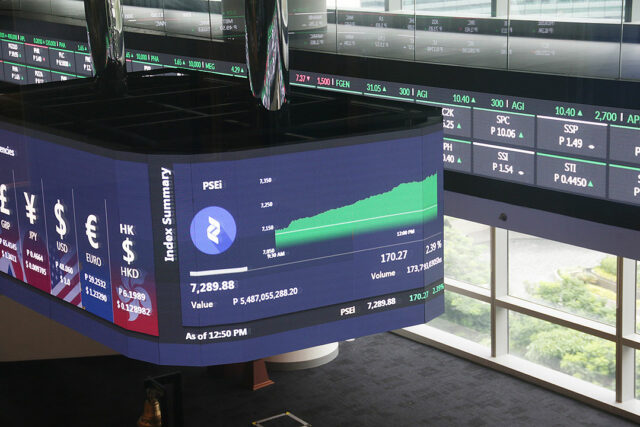
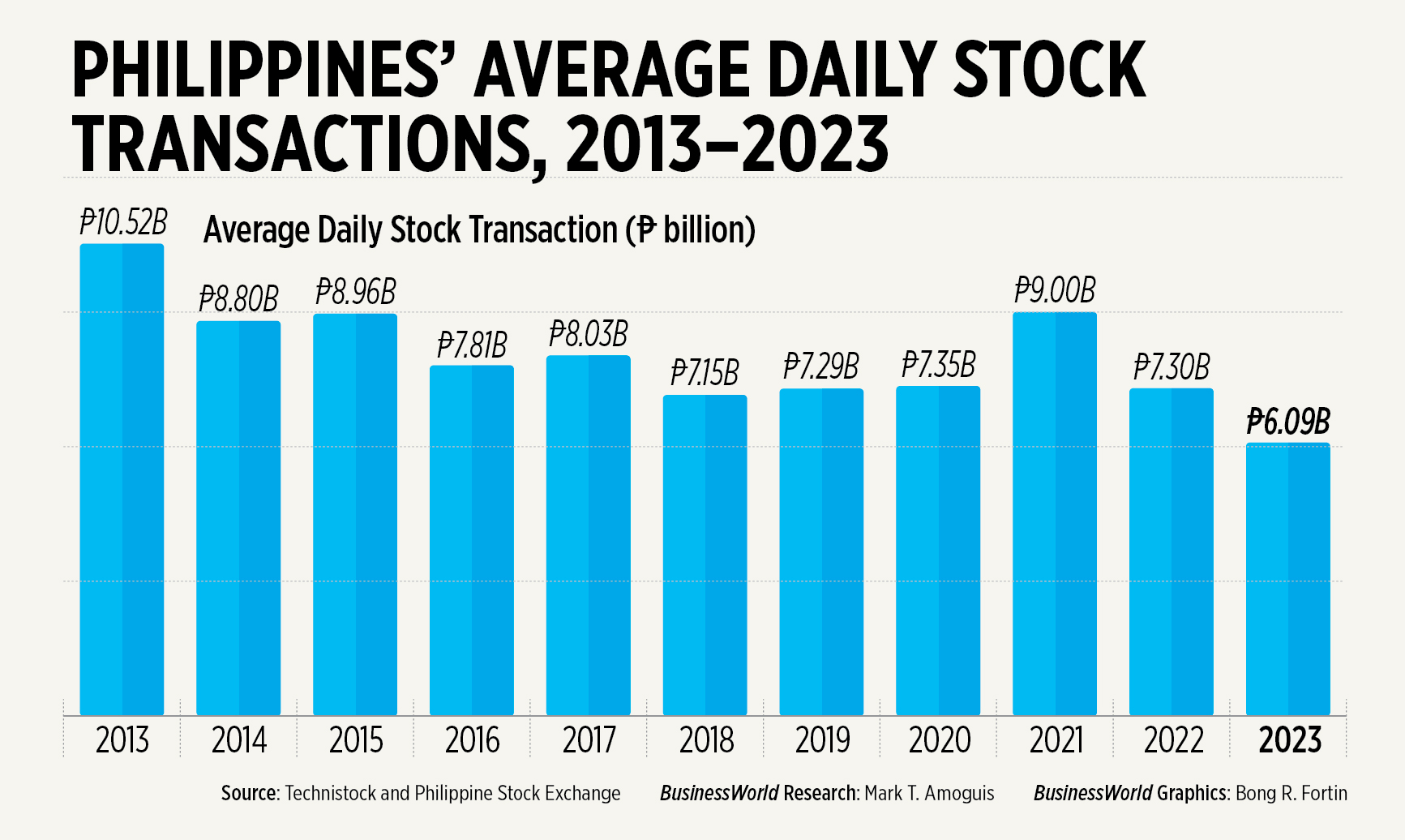
The PSE is seeking to revive interest in a market where average daily stock transactions have slumped by about 40% in the past decade, and foreign equity investments have sunk for the past six years, according to Bloomberg data.
But not so many traders share Mr. Manarang’s excitement, based on the slow adoption of the trading strategy in the country, Juan Paolo E. Colet, managing director at China Bank Capital Corp., is not surprised.
“First, the backend and client systems and processes of local brokers are configured for a long-only market, so it takes time to adopt the necessary changes,” he said in a Viber message. “Second, many investors are still not knowledgeable on how short selling works and even some seasoned market participants find the setup quite complex.”
Short selling is also being introduced when there is more upside rather than downside risks in the Philippine stock market, “so that premise makes short selling a challenging trading strategy to deploy,” Mr. Colet said.
Still, local brokerages are planning to introduce short selling to their clients by June, he said.
Alfred Benjamin R. Garcia, senior research analyst at AP Securities, Inc., said short selling could increase market liquidity.
“Think of it as a one-way street that suddenly became two-way,” he said in a Viber message. “It will also help price discovery.”
“Currently, the prevailing strategy is you find an undervalued stock, buy it and hold until it reaches fair value, or close to it,” Mr. Garcia said.
“But stocks that are overvalued remain overvalued because there is no financial incentive for the market to bring it down to its fair value. With short selling, ideally, the market will be incentivized to seek out overvalued stocks and correct this overvaluation,” he added.
‘RISKIER’ Short selling would let investors trade and make money in either bullish or bearish market conditions, said Michael L. Ricafort, chief economist at Rizal Commercial Banking Corp. “The penultimate objective is to create a healthy balance in the market for both long and short trade positions to co-exist in the local stock market,” he said in a Viber message.
“Local adoption should be based on established global best practices, especially for risk management for our local stock market,” he added.
Mr. Colet said short selling could become “very risky” for retail investors. “If they are not careful, they can lose more money compared with a long-only investment in stocks.”
“On that note, it is important for the PSE and brokerages to properly educate investors about the uses, risks and requirements of shorting,” he added.
Mr. Garcia said short selling could be riskier than buying stocks.
“We need more market education campaigns,” he said. “It’s significantly riskier than buying because when you buy, hypothetically your investment will never reach zero unless the stock delists, and you weren’t able to tender.”
“But when you short sell, you can potentially zero out your investment if the stock keeps going up. But there are safeguards in place for that,” he added.
PSE President and Chief Executive Officer Ramon S. Monzon earlier said the bourse does not expect any spikes in liquidity in the short term following the November short-selling launch.
“We are not expecting any spike in liquidity in the short term since market participants, including brokers and investors, will need time to understand the requirements and risks of securities borrowing and lending and short selling,” he said.
“This is typical in any market introducing a new product or service, most especially in more complex ones like shorting. Short selling is also not a cure-all for market liquidity but a necessary step and building block towards developing other products such as derivatives,” he added.
Over time, the PSE expects more shares to become available for short selling.
Mr. Manarang, mentioned at the outset, said he’s aware of the risks of short selling. “I’m willing to face the risks, even if I don’t fully know where the prices will go.”
Filipino shoppers prefer established consumer brands, according to a report by a consultancy firm. -- PHILIPPINE STAR/MIGUEL DE GUZMAN
THE Philippines is among the top three most favorable markets for established consumer brands as traditional trade dominates the retail space, according to a report by Bain & Co.
In a report, the consultancy firm said Malaysia, India, and the Philippines were the top three most favorable markets for incumbent consumer product brands. Meanwhile, South Korea, Singapore, and China were most favorable for rising consumer brands.
“The trend could be linked to the channel dynamics across markets. For example, the thriving e-commerce sector and well-established networks of third-party suppliers are making countries like South Korea particularly conducive for emerging consumer brands’ growth,” said Jichul Kang, head of Bain’s consumer products practice in South Korea, in a statement.
“On the other hand, the dominance of traditional trade and relatively low penetration of e-commerce make countries like the Philippines more favorable markets for established brands,” Mr. Kang added.
In the Philippines, incumbent brands got a bigger market share in eight out of 23 consumer product goods (CPG) categories which are spirits, wine, bath and shower, oral care, confectionery, edible oils, laundry care, and bottled water.
Meanwhile, incumbent brands in the Philippines only lost in seven categories which are color cosmetics, fragrances, hair care, skincare, pet food, sweet biscuits, and drinking milk products, which Bain said still indicates incumbent brands’ dominance.
Market share of the remaining eight categories studied by Bain was stable or had little to no change as “the complex channel dynamics” in the Philippine market makes it challenging for new entrants to come in.
The report studied incumbent brands’ market share in 23 CPG categories from 2018 to 2022.
Traditional trade still dominates the retail market in the Philippines. Bain said traditional trade accounted for around 53% of the retail value across the 23 categories it studied in the Philippines, while retail e-commerce sales penetration is seen at 2%.
“This significant share underscores the importance of robust route-to-market capability for brands aiming to succeed in the market. Such a landscape presents a formidable barrier to entry for new competitors,” Bain said.
Category wise, the beauty and personal care sector was where insurgent brands performed better, as new entrants beat incumbents in four out of six categories in the Philippines.
In contrast, established brands continued to have a bigger share in the alcoholic and non-alcoholic beverage, food, and home care sectors.
Meanwhile, Bain said that local incumbent brands in the Philippines showed stronger ability to gain share in winning categories despite foreign incumbents leading in market share across most categories.
“The success of these local brands can be attributed to their extensive distribution networks in rural areas and lower-tier cities, where they effectively leverage traditional trade channels,” Bain said.
To gain even better footing in the market, Bain said that incumbent companies must look for more effective strategies in managing their brands.
“While market, category characteristics, and macro situations contribute to incumbents’ success to some extent, what matters most is how they manage their categories and brands,” it said.
“Successful incumbent companies are adept at incorporating the most effective strategies from insurgent competitors while leveraging their inherent strengths,” it added.
Bain noted incumbent companies should innovate by looking at emerging trends.
“Our study challenges the notion that insurgent brands universally disrupt incumbents. Many incumbents have successfully maintained or grown their market share amid tight competition,” said David Zehner, head of Bain’s Asia-Pacific consumer products practice.
“The successful incumbents thrived by blending their incumbent strengths and insurgent tactics, allowing them to counter threats and strengthen their market position effectively,” Mr. Zehner added. — Justine Irish D. Tabile
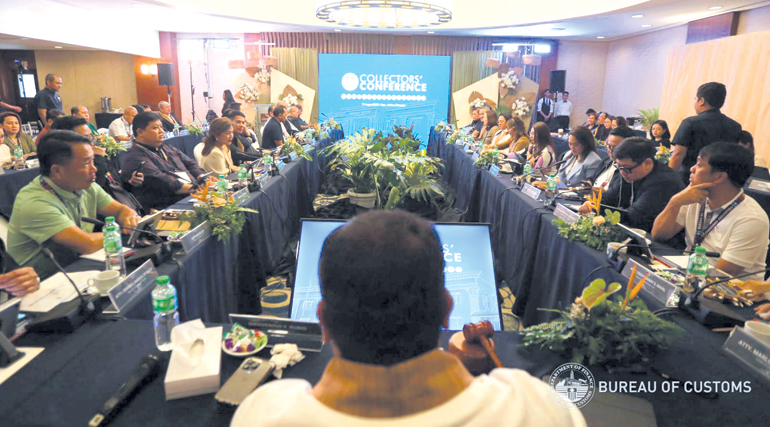
Finance Secretary Ralph G. Recto's visit in BoC on Jan. 24 — Photo from facebook.com/BureauOfCustomsPH
One of the earliest recordings of Philippine history contain examples of how the datus and rajahs of old bartered with traders from distant lands. This practice led to the relative wealth and prosperity of the country at the time, created long-lasting connections with the country’s neighbors, and laid the foundation for what would become the customs system.
Today, centuries later, the Bureau of Customs (BoC) continues in this tradition, cultivating new alliances and paving a path towards shared prosperity by upholding a responsive, adaptive, and resilient customs administration that collaborates and engages with all of its stakeholders.
All ten Customs Administrations of ASEAN Member States, including the Philippines, signed the Mutual Recognition Arrangement for their Authorized Economic Operator (AEO) Programs to establish a transparent trading environment last year.
Meanwhile, the BoC also collaborated with the United States Agency for International Development’s ASEAN Policy Implementation (API) to enhance customs practices and develop synergies with other ASEAN member countries.
This is not to mention the numerous events, discussions and assemblies that the organization participated in and hosted last year, which include: the 34th Meeting of the ASEAN Customs Procedures and Trade Facilitation Working Group, the Brunei Darussalam-Indonesia-Malaysia-Philippines East ASEAN Growth Area Trade Facilitation Cluster, the 31st Meeting of the ASEAN Single Window Steering Committee, to further boost international relations, broaden networks, and enhance customs management through knowledge and best practice sharing.
Commissioner Bienvenido Y. Rubio delivered a congratulatory message to 113 loyalty awardees and 58 customs officers who completed their post-graduate degrees in 2023 during the fourth flag-raising ceremony of the BoC this year. — Photo from facebook.com/BureauOfCustomsPH
“The BoC stands at the forefront of championing economic growth and securing the sustainability of the supply chain. With this, we recognize our immense responsibility to consistently develop and formulate new means in which we can build stronger alliances for a more progressive customs management,” Commissioner Bienvenido Y. Rubio said.
It stands to reason that such efforts will lead to better trade and commerce between ASEAN member states. Last year, the bureau had collected P883.624 billion, surpassing its P874.16 billion target by 1.08%, according to the Department of Finance.
“I commend the BoC for its outstanding performance in 2023. In 2024, expect the bureau to continue modernizing its customs administration and processes to effectively curb illicit trade, generate more revenues to fund the government’s priority development projects, ensure the protection of our consumers, and enhance the country’s ease of doing business,” Former Finance Secretary Benjamin E. Diokno said.
Moving forward, Mr. Rubio raised their goal to P959 billion for 2024, focusing on increasing collections by continuing its fight against smuggling and the continuous improvement of modernization projects.
Photo from facebook.com/BureauOfCustomsPH
Key among these initiatives is the Enhanced Value Reference Information System (e-VRIS), which is a critical risk assessment tool for safeguarding government revenues and facilitating trade. The BoC is also actively working on implementing an ICT-enabled clearance system for express shipments and in the process of drafting Customs Administrative Orders (CAO) and Customs Memorandum Orders (CMO) for e-Commerce to prevent revenue leakages.
A long, storied history
The Philippine customs system during the Spanish rule underwent many significant changes that led to its current evolution. When the Spanish Customs Law of 1582 was introduced, it marked the beginning of a more formalized customs process in the country. This period also saw the establishment of a Tariff Board, which standardized duties on imports, a practice that continued until the end of Spanish rule.
The American colonial period brought further transformations. The Americans initially enforced the Spanish Tariff Code of 1891 but soon enacted the Tariff Revision Law of 1901 to align the customs services with American practices. This era witnessed the restructuring of customs positions and the creation of the Bureau of Customs and Immigration under the Department of Finance and Justice — a significant step in the evolution of the customs service in the Philippines.
Post-World War II and the establishment of the Commonwealth Government saw the Bureau of Immigration separated from Customs; and, in 1957, the Tariff and Customs Code of the Philippines (Republic Act No. 1937) was enacted. This act was a landmark in the history of the bureau, as it represented the first autonomous Philippine Tariff Policy.
Photo from facebook.com/BureauOfCustomsPH
The bureau underwent a major reorganization in 1965, which streamlined its operations and elevated several offices to departmental levels. The period of Martial Law in the country saw further amendments to the customs code, with significant changes being introduced by Presidential Decree No. 34 in 1972.
The bureau saw another pivotal moment in 1986 in the form of Executive Order No. 127, which further led to a comprehensive reorganization down the line, expanding the bureau’s structure and introducing technological advancements, including the establishment of the Management Information System and Technology Group (MISTG) in 1998.
A key component of the bureau’s evolution has been the Enforcement and Security Service (ESS), established to combat smuggling and enforce customs laws. From its early days as the Harbor Police in 1902 to its current form, the ESS has been instrumental in securing the nation’s borders and safeguarding revenue.
Since then, a key focus for the bureau has been combating corruption and smuggling, perennial challenges in customs administration. Various measures, including stricter enforcement of laws, enhanced port surveillance, and internal reforms, have been implemented to address these issues. Legislative reforms and policy changes have also been a constant feature, aligning the bureau’s operations with the broader economic policies of the Philippine government and global trade practices.
The bureau’s efforts to align with international customs standards have involved collaboration with international agencies and adherence to global regulations, facilitating smoother international trade. Capacity building and training of personnel, meanwhile, have been crucial in keeping up with the demands of modern customs administration, encompassing new technologies, international practices, and ethical standards.
Public engagement and transparency have become increasingly important, reflecting broader governance reforms in the Philippines. Reflecting this, the bureau’s operations have become more transparent and accessible, aiming to foster public trust and accountability. Additionally, the bureau has had to navigate various global and regional changes, including shifts in trade patterns and economic crises, adapting its strategies and operations accordingly.
The COVID-19 pandemic presented unique challenges, with the bureau playing a pivotal role in managing the flow of essential goods under new health and safety protocols. This period underscored the bureau’s agility and responsiveness to unprecedented global events.
Ongoing modernization efforts continue to shape the bureau, with a focus on improving efficiency, reducing bureaucracy, and enhancing the effectiveness of customs processes. These efforts reflect the bureau’s commitment to adapting to changing times while maintaining its core functions in customs administration.
Photo from facebook.com/BureauOfCustomsPH
Perhaps one of the most significant is how it attempted to modernize border security and streamlining operational processes through the National Customs Intelligence System (NCIS) that launched in December last year.
The NCIS, developed by BoC’s Management Information Systems and Technology Group (MISTG) upon the initiative of the Intelligence Group, will serve as a secured data warehouse for intelligence information from various units of the agency. It provides a database to generate actionable intelligence information, and support case build-up, risk profiling, and analysis.
The system’s capabilities extend to equipping authorized officials with data-driven insights, thereby enhancing the bureau’s operational efficiency and effectiveness and reinforcing its ability to better safeguard national borders and facilitate international trade.
Photo from facebook.com/BureauOfCustomsPH
With the launch of the NCIS, the bureau has taken a giant leap forward in its intelligence capabilities, ushering in a new age of effective and efficient management of intelligence activities. With the system up and running, BoC can face the future with more intelligence, more resilience, and unwavering commitment to paving the nation’s path to progress. — Bjorn Biel M. Beltran
VACANCY RATES for prime offices in Metro Manila are projected to rise this year due to the potential increase in flexible work arrangements in the information technology and business process management (IT-BPM) sector, according to global real estate services firm Cushman & Wakefield.
“With the large volume of office space expected to be completed in the first half of 2024, as well as the proposed amendments to legislation that will allow for the IT-BPM sector to operate on a more flexible work-arrangement, vacancies are projected to increase,” Cushman & Wakefield Director and Head of Tenant Advisory Group Tetet Castro said in a statement on Monday.
The rules on remote work schemes should be clarified, or there is a risk of affecting office space absorption, said Claro G. Cordero, Jr., Cushman & Wakefield director and head of research.
“The current confusion… will further stall expansion decisions of IT-BPM companies. These future growth plans will stimulate office space absorption in the local market,” he said.
Under the CREATE to Maximize Opportunities for Reinvigorating the Economy (CREATE MORE) bill, the IT-BPM sector will be allowed to “conduct business under alternative work arrangements.”
The Justice department issued a legal opinion on Jan. 3 regarding the applicability of tax incentives for registered business enterprises on remote work, saying that IT-BPM companies within economic zones should work onsite to retain their tax perks.
Justice Secretary Jesus Crispin C. Remulla said that Section 309 of the Corporate Recovery and Tax Incentives for Enterprises (CREATE) law “requires registered projects under an investment promotion agency (IPA) administering an ecozone or freeport to be exclusively conducted or operated within the geographical boundaries of the zone or freeport.”
Meanwhile, Cushman & Wakefield reported that the vacancy of prime and Grade A office spaces in Metro Manila dipped slightly to 16.3% in the fourth quarter of 2023 from 16.8% in the previous quarter.
It added that the average asking rent declined in the last quarter, with the average asking rent down by 1.8% to P1,023 per square meter (sq.m.) per month, down by 1.5% from the P1,038 per sq.m. in the same period in 2022.
“By end-Q4 2023, over 93,000 sq.m. of office space has been added to the supply bringing the overall stock of Prime and Grade ‘A’ office space in Metro Manila to roughly 9.5 million sq.m.,” the company said.
According to Mr. Cordero, the return of global office space demand to 2019 levels is still far from fruition due to higher inflation rates.
“Despite inflation rates cooling down, global interest rates will remain elevated. As a result, the return to pre-pandemic global demand for office spaces from traditional sources remains distant,” he said.
Cushman & Wakefield said that retail space demand could improve amid rising activity levels and investments from international retailers. However, the demand could be hampered by high prices and interest rates.
“The near-term outlook of the other key drivers of industrial segment, particularly the manufacturing and trade industries, remain challenged amidst unfavorable global business climate whilst overall prospect for growth remains solid to cater to e-commerce supply chain requirements,” Mr. Cordero said.
The real estate services firm also mentioned that demand and capital values in the residential market could improve due to anticipated rate cuts, resilient job market, and strong overseas Filipino remittances. — Revin Mikhael D. Ochave
MANILA ELECTRIC Co. (Meralco) on Monday denied claims of anticipated power rate increases resulting from closed bidding with generation companies that supply through gas-fired plants using imported liquefied natural gas (LNG).
In a statement, the power distributor said the conducted bidding aimed to secure enough power at the lowest cost.
Meralco closed the bidding for its 1,800-megawatt (MW) and 1,200-MW capacities for its baseload requirements last month.
“This is to minimize, if not avoid, dependence on the Wholesale Electricity Spot Market, where prices are known to be highly volatile especially during the dry season given the higher demand and the historically tight supply,” Meralco said.
The power distributor responded to claims by the consumer group People for Power Coalition (P4P), which warned of additional power rate increases if Meralco’s new contracts with generation companies using fossil fuels are approved.
“Meralco has already gone two for two with its worsening power prices. It seems to be hell-bent on making 2024 a year of expensive electricity for consumers,” P4P Convenor Gerry C. Arances said in a statement.
P4P cited the rate indication set by Meralco, which has projected an increase in February power rates, attributing the pressure on the generation charge to higher fuel prices, particularly on imported LNG used by gas-fired power plants.
“Meralco is set to begin its new contracts just as the country enters the summer, considered as the power industry’s peak season. Previous years saw the surge of power prices and widespread outages of fossil fuel plants during that period,” P4P said.
Meralco said that the conduct of competitive selection processes (CSPs) aimed “to benefit the public by ensuring sufficient and reliable energy at the most competitive cost” in accordance with the policies set by the Energy Regulatory Commission (ERC).
For the 1,800 MW baseload requirement, GNPower Dinginin Ltd. Co., Mariveles Power Generation Corp., and Excellent Energy Resources, Inc. (EERI) submitted the lowest bids.
GNPower, a partnership among Aboitiz Power Corp. through unit Therma Power, Inc., AC Energy and Infrastructure Corp., and Power Partners Ltd. Co., owns a 1,336-MW coal-fired power plant in Mariveles, Bataan.
Mariveles Power has a coal-fired power project in Bataan while EERI is constructing an LNG combined cycle plant in Batangas. Both companies are subsidiaries of San Miguel Global Power Holdings (SMGPH), the energy arm of San Miguel Corp.
Meanwhile, South Premiere Power Corp. (SPPC), another subsidiary of SMGPH, is advancing to the post-qualification stage after its bid has been declared as the most favorable for the 1,200-MW bid.
SPPC is the administrator of the natural gas-fired power plant in Ilijan, Batangas.
All contracts resulting from the CSPs will be subject to the regulatory proceedings of the ERC.
Meralco’s controlling stakeholder, Beacon Electric Asset Holdings, Inc., is partly owned by PLDT Inc.
Hastings Holdings, Inc., a unit of PLDT Beneficial Trust Fund subsidiary MediaQuest Holdings, Inc., has an interest in BusinessWorld through the Philippine Star Group, which it controls. — Sheldeen Joy Talavera








 Short selling is also being introduced when there is more upside rather than downside risks in the Philippine stock market, “so that premise makes short selling a challenging trading strategy to deploy,” Mr. Colet said.