Home Blog Page 3681

Swiss firms cited easy business conditions in PHL — minister

REUTERS

SWISS companies now see the Philippines as an attractive investment destination due to the improved business environment compared to previous years, Switzerland’s Foreign Minister said in Manila on Thursday.

“There is a growing interest by Swiss companies investing in this country, with the free trade agreement between the European Trade Association (consisting of) Switzerland, Norway, Iceland and Lichtenstein, and (the Philippines),” Swiss Federal Councilor and Minister of Foreign Affairs Ignazio Cassis said during a meeting with Foreign Affairs Secretary Enrique A. Manalo.

“Doing business between the Philippines and Switzerland has become easier and more attractive than earlier.”

He said that more about 28,000 jobs with decent salaries have been created through recent Swiss-Philippine business deals.

In January 2023, the Philippines bagged $24.7 million in initial investment commitments from Swiss firms during a roadshow on the sidelines of the Philippines-EFTA and the 5th Philippines-Switzerland Joint Economic Committee meetings in Switzerland.

Swiss companies engaged in metal processing and optical security were among those that expressed interest in doing business in the Philippines during the roadshow.

“We have a multi-faceted appreciation for the Philippine-Swiss relations, spanning political, economic and people-to-people connections,” Mr. Manalo said at the bilateral meeting.

More than 15,000 Filipinos live and work in Switzerland, while 4,000 Swiss nationals live in the Philippines, he said.

According to the Board of Investments, Switzerland was the Philippines’ 26th largest trading partner in 2021, 17th largest export market, and 29th largest source of imports.

Philippine exports to Switzerland rose 17.3% to $528.2 million in 2021.

“Indeed, the strongest ties that bind the Philippines and Switzerland are the various individuals and families who personify Philippine-Swiss connections,” the Philippine Foreign Affairs Secretary said. — John Victor D. Ordoñez

Rice supply deemed sufficient through first six months — DA

PHILSTAR FILE PHOTO

THE Department of Agriculture (DA) said the supply of rice will be sufficient during the first half of the year, with supply to include the dry season harvest supplemented by imports.

“We have enough rice, so prices should remain stable through the first half of the year. Our priority now is market stability,” Agriculture Secretary Francisco P. Tiu Laurel, Jr. said on Thursday.

Mr. Laurel said prices may remain elevated until September due to concerns over the impact of El Niño on the global rice supply and “heightened demand for the grain that… is keeping international prices high.”

Palay or unmilled rice production rose 1.5% to 20.06 million metric tons (MT) in 2023. This translates to about 13.2 million MT of milled rice.

The DA has targeted palay production of 20 million MT of palay in 2024, which would be little changed from 2023, to account for El Niño.

The government weather service, known as PAGASA (Philippine Atmospheric, Geophysical and Astronomical Services Administration), has said that the effects of El Niño may last until the second quarter. An estimated 63 provinces will experience droughts or dry spells.

In a bulletin, the DA said that El Niño damage has been valued at P151.3 million, affecting palay and corn in the Western Visayas and Zamboanga Peninsula. The agency estimates that 6,618 MT have been lost, while 3,291 hectares were affected by the dry spell.

“Most of the damage and losses were incurred by rice and corn that are in their reproductive stage,” it added.

The DA has also said that rice import shipments between December and January amounted to 750,000 MT, bolstering domestic supply.

The Philippines imported 3.58 million MT of rice in 2023, according to the Bureau of Plant Industry.

Vietnam, the Philippines’ major source of imported rice, recently signed a five-year agreement to ship 1.5 million to 2 million MT of rice per year through private-sector exporters.

In October, India also gave the Philippines a quota of 295,000 MT of non-basmati white rice, after imposing restrictions on exporting the grain to assure domestic supply is adequate.

The Philippines is projected to remain the world’s top importer of rice, with shipments projected at 3.8 million MT in 2024, according to the US Department of Agriculture.

“What we need to guard against now are profiteers who may attempt to exploit the situation by using El Niño as excuse to hoard rice to push prices to unreasonably high levels,” Mr. Laurel said.

He added that the DA will work with the Department of Trade and Industry and law enforcement agencies to monitor surges in the market price of rice.

The national average price of well-milled rice was P54.42 per kilogram in late January, while regular- milled rice was P49.9 per kilo, according to the Philippine Statistics Authority. — Adrian H. Halili

UK chamber of commerce raises concerns on reported plan to suspend MAV for pork imports

REUTERS

THE British Chamber of Commerce of the Philippines (BCCP) said on Thursday that it is concerned about the plan to suspend the minimum access volume (MAV) for pork, saying that such a move would affect domestic supply and run counter to existing trade agreements.

“The BCCP has been a consistent advocate of the lowered tariffs on meat and has supported the last two consecutive extensions as this will further assist in augmenting the pork supply,” the chamber said in a statement.

“We are concerned about the Department of Agriculture’s (DA) reported plan on the suspension of MAV for pork and we support the reported comments of MAV Advisory Council (MAC) on the impact on domestic supply and existing trade agreements,” it added.

The MAV is a feature of the global trading system, by which a participating country agrees to open its market to shipments from overseas producers of selected commodities, up to a designated limit.

Citing the Philippine Star, the BCCP said that the suspension could impact the domestic supply of meat and risk trade agreements, including bilateral ones.

“We reiterate our support for Executive Order (EO) No. 50 and its full implementation to manage inflation and food supply,” the BCCP said.

“We hereby acknowledge the role of agriculture in Philippine economic growth, and we look forward to the Bicameral Conference and therefore, the passage of the Anti-Agricultural Economic Sabotage Act,” it added.

In December, President Ferdinand R. Marcos, Jr. signed the EO 50 which extended a lower tariff regime on pork, rice, corn and coal.

Tariff rates were kept at 15% (within the MAV quota) and 25% (for shipments exceeding the quota) for pork, 5% (within the quota) and 15% (for shipments exceeding the quota) for corn, and 35% (all shipments) for rice until Dec. 31 to help manage down prices.

“The British Chamber maintains its commitment to ensuring food security and helping with the challenge of inflation by introducing quality British meat and establishing long-term relations with the importers to support the Philippine market,” it said.

BCCP Executive Director Chris Nelson has said that total trade in goods and services between the UK and the Philippines grew to 2.9 billion pounds last year, with UK exports to the Philippines accounting for 1.3 billion pounds.

The top exports of the UK to the Philippines include meat and meat preparations. The Philippines is also UK’s second top pork export destination in Asia, next to China.

Asked to comment, DA Undersecretary for Operations Roger V. Navarro said that a meeting regarding the issue is yet to be held.

“However, the committee already has a position which Secretary Kiko (Francisco P. Tiu Laurel, Jr.) will present to the MAV Advisory Council,” Mr. Navarro told BusinessWorld via a Viber message.

The Philippine MAV for pork currently stands at 54,210 metric tons. — Justine Irish D. Tabile

NCR hubs designed to promote capital to tourists set to be built

PHILSTAR FILE PHOTO

THE Department of Tourism (DoT) is set to launch three more hubs this year designed to promote cities in the National Capital Region (NCR) as tourist destinations.

The so-called Hop-On-Hop-Off (HOHO) hubs are “really meant to drive not just international tourism but also domestic tourism. In some countries, it is really domestic tourism that is driving economic growth,” DoT Regional Director of NCR Sharlene Zabala-Batin told BusinessWorld.

“One of our objectives through HOHO is to make Metro Manila a premier destination… most major cities in the world have a HOHO program so we cannot be left behind,” she added.

The Philippines’ most-heavily promoted destinations tend to be beaches, leading travelers to skip the capital and fly off to resorts in the Visayas, Mindanao and Palawan.

The DoT said that the three remaining HOHO hubs that will be launched later in the year will be positioned as Heart, Lifestyle, and Mind Hubs, feeding visitors to San Juan, Pasig, Mandaluyong, Bonifacio Global City, and educational institutions in Quezon City.

On Thursday, the department launched its third HOHO hub, touted as the Entertainment Hub, covering the cities of Pasay and Parañaque.

The launch of the hubs is part of the HOHO Travel by the Hubs tour program that aims to provide tourists with flexible transportation in exploring cities within Metro Manila.

“The program operates through designated hubs, where tourists have the freedom to choose their preferred destination and duration of stay,” the DoT said.

Meanwhile, Tourism Secretary Maria Esperanza Christina G. Frasco announced on Thursday that the DoT is also working on the launch of layover tours by the second quarter. She said that the DoT is currently working with other National Government agencies as well as with airport authorities which include the Manila International Airport Authority, Bureau of Customs, Bureau of Immigration, and the Philippine National Police.

Ms. Frasco said that the layover tours will initially be connected to the Entertainment Hub due to the cities’ proximity to the Ninoy Aquino International Airport.

Last year, the DoT launched the Business and Culture Hubs which attracted 805 participants in the first six months of operations. — Justine Irish D. Tabile 

Most provinces, top cities had economic growth in 2022

LIMA Estate’s 30-hectare commercial area in Batangas. — BW FILE PHOTO

NEARLY all provinces and highly urbanized cities (HUCs) reported growing economies in 2022, the Philippine Statistics Authority (PSA) said on Thursday.

The Provincial Product Accounts (PPA) indicator had Aklan as the fastest growing of all provinces and HUCs with 22.5% in 2022, accelerating from 3.4% in the prior year.

In terms of share of national gross domestic product (GDP), Laguna led with 5% in 2022, followed by Cavite (3.7%) and Batangas (3.1%).

The combined GDP of the 82 provinces and 17 HUCs, according to the PPA, was P13.68 trillion as of November 2023, accounting for 68.6% of national GDP, the PSA said.

The PSA was publishing the PPA results for the first time for 16 regions outside Metro Manila, which include 82 provinces and 17 HUCs.

The PPA compiles the GDP at the subnational level. — Abigail Marie P. Yraola

ADB urges accelerated clean-energy transition

THE Asia-Pacific region must ramp up its efforts in transitioning to clean energy systems by strengthening government support, expanding financing options and advancing digitalization, according to the Asian Development Bank (ADB).

“Countries across the Asia and Pacific region must expedite their efforts in energy transition to increase the uptake of clean energy solutions and attain their climate and development goals,” it said in a report detailing the results of its Asia Clean Energy Forum.

“The shift should ensure a fair energy transition, dismantle sectoral silos, and encourage stakeholder collaboration. ADB and similar multilateral banks can assist in financial de-risking for countries,” it added.

The bank said government support will be crucial in promoting clean energy policy frameworks to drive investment.

“This backing can develop state-supported financial incentives for clean energy, encourage state entities to invest in clean infrastructure, accelerate the development of policies, such as guidelines for implementing direct power purchase agreements and increase awareness of the market for renewable energy certificates,” it said.

“The formation of agile, effective partnerships is crucial for boosting clean energy demand and accelerating energy transition across Asia and the Pacific. Collaboration among governments, the private sector, philanthropies, and development agencies can enhance clean energy procurement and lower financing costs,” it added.

The bank noted that more companies in the region are shifting to sustainable energy practices, citing ACEN Corp.

“The Philippines’ ACEN Corp. is at the forefront of the renewable energy transition, divesting from coal plants and setting ambitious goals of achieving 100% renewables by 2025 and reaching a renewable energy capacity of 20 gigawatts by 2030,” it added.

The ADB also said that concessional and blended financing must be made more accessible especially for small- and medium-sized enterprises in the region.

It cited financing options such as mezzanine financing, blended funding, and integrated project development processes.

Emerging technologies such as Artificial Intelligence can also be utilized in the clean energy transition, the ADB said.

“Applying algorithms, machine learning, and artificial intelligence can improve data analysis,” it said.

“Blockchain, digital applications, cloud technology, and internet-of-things devices facilitate real-time monitoring of energy consumption and production, enabling more informed decision-making, and driving cost reductions,” it added. — Luisa Maria Jacinta C. Jocson

Marcos says Mindanao separation push ‘doomed to fail’

PHILIPPINE STAR/KRIZ JOHN ROSALES

By Kyle Aristophere T. Atienza, Reporter

PHILIPPINE President Ferdinand R. Marcos, Jr. has warned against the push of his predecessor-turned-critic, Rodrigo R. Duterte, for the separation of the southern island of Mindanao from the rest of the nation, saying it is a violation of the 37-year-old Charter.

“The new call for a separate Mindanao is doomed to fail, for it is anchored on a false premise, not to mention a sheer constitutional travesty,” Mr. Marcos said in a speech at a commemoration event for the 1987 Constitution on Thursday.

Mr. Duterte in late January said local political forces would be regrouping in the Davao region to start a signature campaign for the separation of Mindanao from the Philippines — a move that has been opposed by various government agencies, including the departments of Justice and Defense.

Mr. Marcos said current the leadership of the Bangsamoro region, which was created in 2019 after successful talks between the National Government and Moro separatists, has already “repudiated this preposterous proposal.”

“And so did other political leaders of Mindanao,” he added, noting “effective local autonomy has been achieved across the country, especially in the Bangsamoro region, “without compromising our national integrity in the slightest degree.”

“I strongly appeal to all concerned to stop this call for a separate Mindanao,” he said. “This is a grave violation of the Constitution.”

Earlier in the day, Mr. Marcos led the 17th meeting of the National Government–Bangsamoro Government Intergovernmental Relations Body, where he warned against forces that seek to thwart democratic processes ahead of the first parliamentary election in the Bangsamoro Autonomous Region in Muslim Mindanao (BARMM).

“We cannot allow forces outside of the democratic process to deviate our dreams and our aspirations from a democratic process,” he said in a speech, as he called for the protection of the parliamentary elections in the region in 2025.

He said Filipinos should never allow even a single voter to be disenfranchised by violence, intimidation, or bribery.

The Bangsamoro Transition Authority (BTA) in March last year passed an electoral code that paved the way for the creation of political parties in the region with representatives from women, youth, indigenous people, and settler communities.

The first-ever parliament elections in the region was originally set for May 2022 but was postponed due to the coronavirus pandemic.

“A stronger BARMM is a stronger Mindanao; a stronger Mindanao means a stronger Philippines, bringing us closer to achieving our agendas,” Mr. Marcos said.

Citing its December 2023 survey, research firm WR Numero said recently that 57% of Filipinos hold either a positive or a very positive view of the creation of the BARMM.

It replaced the Autonomous Region in Muslim Mindanao (ARMM) after peace talks between the National Government and the Moro Islamic Liberation Front, which had called for a region with more powers.

Bangsamoro Chief Minister Ahod Balawag Ebrahim and BTA Deputy Speaker Omar Yasser Sema, a second-generation member of the Moro National Liberation Front, have already rejected Mr. Duterte’s separatist call.

Moro rebels have long abandoned calls for secession, they said, citing gains from past peace negotiations.

Mr. Duterte unveiled the plan for a separate Mindanao days after openly attacking the Marcos administration in a political rally in Davao City on Jan. 28, where he called his successor a drug addict and slammed the International Criminal Court for its probe on its deadly war on drugs.

The former populist leader also linked Mr. Marcos and his allies in Congress to a so-called people’s initiative for Charter change and warned that could lead to him being ousted like his late father and namesake.

At the Constitution Day event, which was hosted by the Philippine Constitution Association (Philconsa) and the Manila Overseas Press Club, Mr. Marcos also stressed the need to amend the Charter’s “restrictive” economic provisions.

His support for reform “extends to economic matters only” and “nothing more.”

“We are happy that he also took note of our consistent advocacy in the House of Representatives for changing those restrictive provisions for more than three decades since the 8th Congress, or since 36-37 years ago,” Speaker Martin G. Romualdez, a cousin to Mr. Marcos, said in a statement.

“At the risk of being makulit (stubborn), we have been saying that we do not advocate any political amendment,” said Mr. Romualdez, who joined Mr. Marcos and other officials on the stage.

The House Speaker heads the Constitution association.

Marcos warns against forces seeking to disrupt Bangsamoro polls in 2025

PRESIDENT Ferdinand R. Marcos, Jr. talks to Bangsamoro Autonomous Region in Muslim Mindanao Chief Minister Ahod Ebrahim. Budget Secretary Amenah Pangandaman joined them at Thursday’s meeting between National Government and Bangsamoro officials at the Philippine International Convention Center in Pasay City. -- PHILIPPINE STAR/KRIZJOHN ROSALES

By Kyle Aristophere T. Atienza, Reporter

PHILIPPINE President Ferdinand R. Marcos, Jr. warned the nation on Thursday against forces that seek to thwart democratic processes ahead of the first parliamentary election in the Bangsamoro Autonomous Region in Muslim Mindanao (BARMM) in 2025.

“I strongly appeal to all concerned to stop this call for a separate Mindanao. This is a grave violation of the Constitution,” Mr. Marcos said as he addressed the 17th Meeting of the National Government-Bangsamoro Government Intergovernmental Relations Body at the Philippine International Convention Center in Pasay City.

His call comes on the heels of a separatist threat from his predecessor, Rodrigo R. Duterte, who unveiled a plan last month to separate Mindanao from the rest of the nation.

“We must remind ourselves that we are now operating under different rules and that we cannot allow forces outside of the democratic process to deviate our dreams and our aspirations from a democratic process,” the President said.

He said Filipinos should never allow even a single voter to be disenfranchised by violence, intimidation, or bribery.

The Bangsamoro Transition Authority (BTA) passed in March last year an electoral code that paved the way for the creation of political parties in the region with representatives from women, youth, indigenous people, and settler communities.

The first-ever parliament elections in the autonomous region was originally set for May 2022 but was postponed due to the coronavirus pandemic.

“A stronger BARMM is a stronger Mindanao; a stronger Mindanao means a stronger Philippines, bringing us closer to achieving our agendas,” Mr. Marcos said.

Mr. Duterte, in late January, said local political forces would be regrouping in the Davao region to start a signature campaign for the separation of Mindanao from the Philippines — a move that has been opposed by various government agencies, including the Departments of Justice (DoJ) and of National Defense (DND).

Citing its December 2023 survey, research firm WR Numero said recently that 57% of Filipinos hold either a positive or a very positive view of the creation of the BARMM.

It replaced the Autonomous Region in Muslim Mindanao after peace talks between the National Government and the Moro Islamic Liberation Front (MILF), which had called for a region with more powers.

Bangsamoro Chief Minister Ahod Balawag Ebrahim and BTA Deputy Speaker Omar Yasser Sema, a second-generation member of the Moro National Liberation Front, have already rejected Mr. Duterte’s separatist call.

Moro rebels have long abandoned calls for secession, they said, citing gains from past peace negotiations.

BARMM is composed of the provinces of Maguindanao del Norte, Maguindanao del Sur, Lanao del Sur, Basilan, Sulu, and Tawi-Tawi.

Philippines to boost pool of talent vs cyberthreats

A broken ethernet cable is seen in front of binary code and words “cyber security” in this illustration taken on March 8, 2022. — REUTERS

THE PHILIPPINES is increasing its talent pool in the fight against cybercrimes while boosting the sharing of information with international partners against all forms of digital threats, the Department of Information and Communications Technology (DICT) chief said on Thursday.

President Ferdinand R. Marcos, Jr. has approved a medium-term cybersecurity plan following a year that saw a significant increase in hacking incidents targeting both private and government assets.

The “comprehensive” plan identifies cyber assets and infrastructure that need to be protected and requires coordination among government agencies, DICT Secretary Ivan John Uy said at a Palace briefing, days after a meeting with the President.

“It provides how all of the different government agencies, the different sectors, whether its energy, transportation, finance sector can come together and address quick responses in case there are any attacks or any attempts,” Mr. Uy said.

He said the plan also includes an advance threat assessment to deter any potential attacks with the help of information from international partners.

“For instance, if an attack happens in the bank in another country, then we’ll have information exchange programs through our computer emergency response teams so that we can proactively advise our banks here,” he said.

At present, there are more than two million job vacancies for cybersecurity, and “this is attributable to the fact that during the pandemic, a lot of brick-and-mortar businesses have moved online,” Mr. Uy said.

The cost of cybercrime to the global economy surpassed $8 trillion in 2022, according to Evolve Security, citing data from global data and business intelligence platform, Statista.

The cost may go beyond $11 trillion in 2023, it said in a website post, adding that cybercrime could cost the global economy more than $20 trillion by 2026, “a 1.5 times increase compared to figures in 2022.”

Philippine police chief Benjamin C. Acorda, Jr. earlier said online scams are the most common cybercrimes in the country.

The Philippines’ shopping scam rate hit 35.9%, the highest among 11 Asian countries surveyed, according to the 2023 Asia Scam Report, which was based on data collected from 20,000 respondents.

Mr. Uy said the government seeks to equip more of its workers with skills needed to deter threats confronting the cyber world and hopes to expand its cybersecurity training under a DICT academy to cover private individuals.

“Currently with the resources that we have, we’re currently upskilling government workers first,” he said. “But it’s in our program to be able to deploy more inclusive cyber training to the general public within the year.”

The government is also working with academic institutions for them to adopt the cybersecurity programs that the DICT has been curating, he added.

“And we are also working with industry to provide content,” he said, noting that private sector members like Google and Microsoft are offering certificate programs related to cybersecurity.

On entering into partnerships with private companies offering cybersecurity programs, Mr. Uy stated: “We are identifying which training components should be free and be given to the public. We will be negotiating with these companies to provide maybe a volume discount [for the public].”

In addition, he said the DICT would offer scholarship programs for highly skilled cybersecurity talents, especially those with “hacking” skills.

Interior and Local Government Secretary Benjamin C. Abalos, Jr. on Tuesday said the problem of cybercrime, which is costing the global economy at least $3 trillion yearly, has gotten worse that it has already overtaken theft as the No. 1 crime in the Philippines.

Top cybercrimes in the country include swindling or estafa, illegal access or hacking, identity theft, online libel, and ATM and credit card fraud.

Also on Tuesday, the Philippine National Police (PNP) said it had trained over 400 officers on cybersecurity last year. The agency has been instructed by the President to expand the training to include police stations at the local level.

Personal information of millions of Filipinos had been exposed last year due to massive data breaches, including data from the country’s state health insurer and internal and revenue bureau.

The websites of the Philippine National Police, House of Representatives and the Senate were also not spared from hacking incidents.

Mr. Uy said the government has been looking into criminal organizations and possible foreign actors.

“We take those things very seriously and we actually have built up more competencies in detecting early on any of those attempts to hack into not just government systems, but also private corporations.”

“There have been some private institutions that were also compromised by ransomware,” he added.

Earlier this week, House Speaker Martin G. Romualdez called for a probe into hacking attempts over three weeks ago that targeted government websites, which the DICT had linked to Chinese entities.

When asked whether such attempts could be linked to the Philippines’ sea dispute with China, Mr. Uy said: “That’s not for us to come out with that conclusion yet. It’s too early but anything is possible.”

Agencies targeted by recent hacking attempts were the Overseas Workers Welfare Administration, Mr. Marcos’ office, and the Philippine Coast Guard, which has been on the forefront of efforts to protect Philippine territories in the South China Sea.

“Currently take it on face value and see how things develop,” he said. “In cyber investigations and analyzing all of these, we never rule out anything.”

Mr. Uy said the Philippine government is open to working with other nations including China, Hong Kong, Taiwan, and Singapore — which are all prone to cyber threats — to deter crimes in the cyber world.

“There are many criminal organizations, mercenaries, cyber hackers hiding in different countries and using their talents in bad ways,” he said. “So, coordination among different countries is important to work together and go after these groups.”— Kyle Aristophere T. Atienza


Modernization can proceed with 85% transport consolidation — DoTr

BW FILE PHOTO

By Beatriz Marie D. Cruz, Reporter

THE GOVERNMENT’S Public Utility Vehicle Modernization Program (PUVMP) can proceed with 85% industry consolidation, the Department of Transportation (DoTr) told congressmen looking into the viability of the plan on Thursday.

As of Dec. 31, compliance for public land transportation consolidation was at 76%, accounting for 146,897 public utility vehicle (PUV) units, according to the Land Transportation Franchising and Regulatory Board (LTFRB).

Addressing the Transportation Committee hearing, DoTr Secretary Jaime J. Bautista said the government expects another 10% of PUVs consolidated into a cooperative or corporation by April 30, the extended deadline authorized by President Ferdinand R. Marcos, Jr. last month.

“With an 86% or 85% consolidation rate, we think we can implement this program successfully,” Mr. Bautista told the committee and cited a study conducted during the previous administration that PUVs can be modernized with a 65% industry consolidation.

“The study, which was conducted in the previous government, does not require even a 75% consolidation,” he said.

Under the PUVMP, operators must consolidate individual franchises under cooperatives or corporations to facilitate the acquisition of new, environmentally friendly transport vehicles.

GO AFTER HIGH-EMISSION VEHICLES FIRST — LAWMAKER
During the hearing, Santa Rosa City Rep. Dan S. Fernandez asked transportation agencies pushing for the modernization to go after vehicles that contribute higher carbon emissions first, instead of targeting jeepneys used by daily commuters.

“Our jeepneys contribute a small percentage in [carbon emissions.] Why focus on them?” Mr. Fernandez asked the committee in Filipino.

Citing data from the Land Transportation Office, Mr. Fernandez said that there are 1.27 million private cars in 2022. “Prioritize [modernizing] private cars…airplanes, and sea cargo that contribute to the country’s pollution,” he said.

Earlier, Albay Rep. Jose Ma. Clemente S. Salceda said a traditional jeepney produces about 0.33 kilograms of carbon dioxide emissions per passenger in a year.

Meanwhile, Party-list Rep. Raoul Danniel A. Manuel urged the LTFRB to strengthen its oversight function over transport cooperatives and manufacturers of PUVs on after-sales services.

A video presented to the committee by Party-list Rep. Bonifacio L. Bosita last week showed several modern PUVs reportedly abandoned in a garage in Baybay, Iloilo.

In a meeting, members of the cooperative members that owned the unused modern jeeps cited the lack of spare parts and after-sales services, as well as the continued suspension of the Local Public Transport Route Plan (LPTRP) in Iloilo, for their inactivity, said LTFRB Officer-in-Charge Mercy Jane Paras-Leynes.

In a Viber message, Mr. Manuel said that five modern jeepneys are for repair and 14 are on standby, as seen in the video.

Angara expects SC challenge if ‘Cha-cha’ voted on separately

PHILSTAR FILE PHOTO

By John Victor D. Ordoñez, Reporter

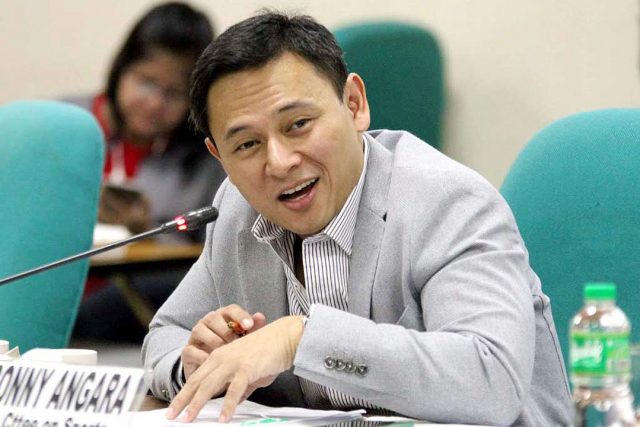
SENATOR Juan Edgardo “Sonny” M. Angara on Thursday said he expects a lawsuit before the Supreme Court (SC) challenging the legality of Congress voting separately on amending the 1987 Constitution if the Senate decides to pursue this method amid calls for a people’s initiative.

“If we (senators) continue the manner of separate voting, if we make it like a law in voting three-fourths separately in amending the Constitution, I see it being challenged before the Supreme Court. I am almost sure [of it],” he said at a press conference on Thursday in mixed English and Filipino.

Senators have rejected a call for Congress to vote jointly on Charter change or “Cha-cha” aimed at amending economic provisions, saying it would “dilute” the Upper Chamber’s vote.

The Constitution provides that changes may be proposed through a three-fourths vote of congressional members. There is a debate whether the Senate and House of Representatives should vote separately or as one Chamber.

The Senate is in the middle of deliberating on the Resolution of Both Houses No. 6 (RBH 6), which is seeking to ease foreign ownership restrictions in education, public utilities and advertising.

Mr. Angara said changing the provisions would not be useful for boosting investment if the country does not fix its problems with corruption and red tape first.

He added that foreign investors look for predictability when conducting business in the country and tend to avoid officials seeking commissions for personal gain.

Earlier, he said the Senate would aim to finish proposing changes to the Constitution by October, the same month the Commission on Elections set the filing of certificates of candidacy for the 2025 midterm elections.

Albay Rep. Jose Ma. Clemente S. Salceda had said that the Senate proposal would only unlock 3.1% in economic output, which he said was not enough.

Senator Robinhood “Robin” Padilla on Monday filed a resolution calling on both chambers of Congress to vote separate on “Cha-cha.”

Mr. Padilla said the framers of the 1987 Constitution had intended for the Senate and the House to vote separately on Charter change, consistent with Congress’ bicameral structure.

The current Charter may be amended either through a constitutional convention composed of delegates, by Congress sitting as a constituent assembly or through a people’s initiative.

For an amendment through a people’s initiative, the signatures must account for at least 12% of voters nationwide and 3% of voters in each legislative district.

The country’s High Court rejected a similar initiative campaign in 1997 in the absence of an enabling law.

ADVERTISEMENT
ADVERTISEMENT