MYANMAR’s former leader Aung San Suu Kyi — REUTERS
MYANMAR’S military-backed party has completed a sweeping victory in the country’s three-phase general election, state media said, cementing an outcome long expected after a tightly controlled political process held during civil war and widespread repression.
The Union and Solidarity Party (USDP) dominated all phases of the vote, winning an overwhelming majority in Myanmar’s two legislative chambers. It secured 232 of the 263 seats up for grabs in the lower Pyithu Hluttaw house and 109 of the 157 seats announced so far in the Amyotha Hluttaw upper chamber, according to results released on Thursday and Friday.
Myanmar’s parliament is expected to convene in March to elect a president, with a new government set to take over in April, pro-military Eleven Media Group reported earlier this month, citing junta spokesman Zaw Min Tun.
The final round of voting in late January brought an end to an election that began on December 28, more than four years after the military seized power in a coup that overturned the elected government of Nobel Peace Prize laureate Aung San Suu Kyi.
Myanmar has been in political turmoil since the coup, with the crushing of pro-democracy protests sparking a nationwide rebellion. Around 3.6 million people have been displaced, according to United Nations.
CRITICS SAY MILITARY STILL IN CHARGE The 11-member Association of Southeast Asian Nations has said it would not endorse the process, and human rights groups and some western countries have also denounced the election as a sham.
Myanmar’s military government insists the polls were free and fair, and supported by the public.
Ms. Suu Kyi’s National League for Democracy was dissolved along with dozens of other parties, and some others declined to take part, drawing condemnation from critics who say the process was designed to entrench military rule.
Under Myanmar’s political system, the military is also guaranteed 25% of parliamentary seats, ensuring continued control even after power is formally transferred to a civilian-led administration.
PROXY FOR THE ARMED FORCES The USDP was founded in 2010 after decades of military-led rule in the southeast Asian country, with the aim of serving as a proxy for the armed forces, also known as the Tatmadaw.
The party is chaired by a retired brigadier general and packed with other former high-ranking officers. It contested the poll with 1,018 candidates, a fifth of the total registered.
Junta chief Min Aung Hlaing is also expected to play a central role in the next administration.
He has defended the polls as a step toward stability, rejecting criticism from opponents and foreign governments and affirming that state responsibilities will be transferred to the elected government.
“Regardless of any changes among political parties or organizations in the country, Tatmadaw continues to carry out its responsibilities for national defense and security faithfully and without neglect up to the present day,” he was quoted by state media as saying on Monday.
TURNOUT DOWN AS FIGHTING HALTS VOTES Turnout reached around 55% over all three phases, lower than the figure of around 70% in previous elections, including a 2015 vote that brought Ms. Suu Kyi to power, as well as the ill-fated 2020 poll, the results of which were cancelled by the junta before staging the coup.
Voting took place in 263 of Myanmar’s 330 townships, some of which are not under the complete control of the junta.
It was cancelled in many areas due to ongoing fighting between the military and armed ethnic groups, as well as local resistance forces that emerged after the 2021 coup.— Reuters
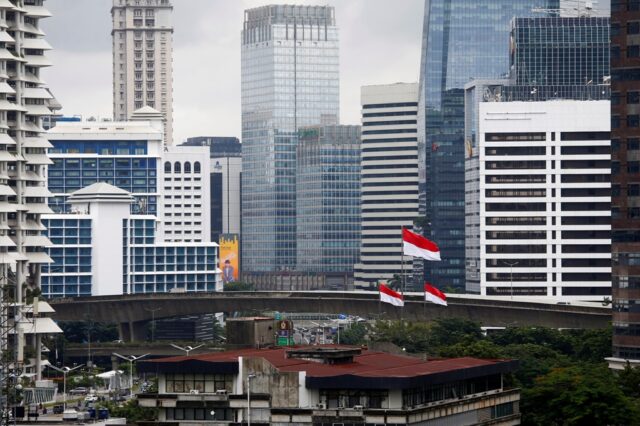
INDONESIAN national flags fly at a business district in Jakarta, Indonesia, Feb. 5, 2021. — REUTERS
JAKARTA/SINGAPORE — Indonesia’s chief economic minister promised increased financial market transparency and improved corporate governance on Friday, after the stock exchange chief resigned to take responsibility for a $80 billion share rout.
Airlangga Hartarto, at a news conference, said authorities were committed to stock market reform and that the country’s economic fundamentals remained sound.
Proposed improvement measures include doubling the free float requirement of shares to 15%, allowing pension and insurance funds to increase capital market investment to 20% of their portfolio from 8%, and checking the affiliation of shareholders with ownership of less than 5%.
“The government guarantees protection for all investors by maintaining good governance and transparency,” Mr. Airlangga said.
Index provider MSCI flagged a possible downgrade of Indonesian stocks to “frontier” status on Wednesday due to concern about share ownership and trading transparency, triggering the steepest two-day share price fall since April.
Indonesia Stock Exchange CEO Iman Rachman resigned on Friday.
“I hope this is the best decision for the capital market. May my resignation lead to improvement in our capital market,” Iman told a press conference. “Hopefully, the index, which opened positively this morning, will continue to improve in the coming days.”
The Financial Services Authority (OJK) will ensure Iman’s resignation does not affect operations, an OJK official told reporters. It will take the lead in implementing reforms and aims to resolve the MSCI’s concerns by May, the official said.
“We remind all investors to remain calm and rational when making investment decisions,” said Inarno Djajadi, who overseas capital markets at the regulator.
The benchmark Jakarta Composite Index dropped more than 8% on Wednesday and Thursday but was last up 1.18%, a day after authorities announced the proposed measures to address MSCI’s concern and ease investor worry.
The rupiah was last at 16,790 to the US dollar, hovering near its weakest-ever rate of 16,985 set last week.
Someone had to take responsibility for the loss of confidence, said Mohit Mirpuri, portfolio manager at SGMC Capital in Singapore, referring to Iman.
“The bigger picture is a reset and an opportunity for the exchange to emerge stronger with clearer standards and governance,” Mr. Mirpuri said.
Foreign capital outflows have increased due to concern about how President Prabowo Subianto is widening the fiscal deficit and expanding state involvement in financial markets.
This month’s appointment of his nephew Thomas Djiwandono to the central bank and last year’s firing of respected finance minister Sri Mulyani Indrawati have shaken confidence in Mr. Prabowo’s stewardship.
Regulators said communication with MSCI has been positive and that they were awaiting a response to their proposed measures which they hoped to implement soon.
Their swift action appears to have allayed investor concern but sentiment remains fragile.
“Policymakers want to fix this,” said Paul Dmitriev, senior analyst and co-portfolio manager at Global X ETFs. “The government has every incentive to fix these issues as systemic outflows would be substantial and could materially impact the market.”
Foreign investors sold around a net $645 million worth of shares in the two-day selloff, exchange data showed. They sold $1 billion worth of shares in 2025. ($1 = 16,780 rupiah) — Reuters
FINANCE SECRETARY FREDERICK D. GO — COURTESY OF DEPARTMENT OF FINANCE FACEBOOK PAGE
FINANCE SECRETARY Frederick D. Go is optimistic that the Philippine economy can recover and hit the government’s growth target on the back of faster, more productive spending.
Mr. Go said on Friday that he is “hopeful” that gross domestic product (GDP) growth can reach the government’s 5%-6% goal this year after expansion hit a post-pandemic low in 2025 due to the fallout from a corruption scandal linked to state infrastructure projects.
“I just have to say, though, that the whole year is four quarters. We’re not going to get there in the first quarter,” he said on the sidelines of an event.
Philippine GDP growth slowed to 3% in the fourth quarter from 5.3% in the same period a year prior and the revised 3.9% print in the third quarter, the government reported on Thursday.
This was the slowest print in nearly five years or since the 3.8% contraction in the first quarter of 2021. Outside of the pandemic, this was the worst since the 1.8% growth recorded in the fourth quarter of 2009, or during the Global Financial Crisis.
This brought full-year 2025 GDP growth to 4.4%, well below the government’s 5.5%-6.5% goal. This was slower than 2024’s 5.7% and was the weakest annual expansion since the 3.9% in 2011, counting out the 9.5% contraction in 2020 due to the pandemic.
These were below the 4.2% and 4.8% median estimates for fourth-quarter and full-year 2025 GDP growth in a BusinessWorld poll.
“We’re growing at 4.4%, so it’s not the end of the world,” Mr. Go said. “But having said that, again, all the fundamentals that allow the economy to grow at 5.5% are intact.”
“None of the macroeconomic fundamentals has changed. So, we should get back on track this year.”
He said they expect public spending to rebound this year, adding that officials have met to clear the spending program, with the top five spenders being the Public Works, Education, Health, Agriculture, and Transportation departments.
“The top five spenders were all there in that meeting, and we agreed with them what their spending will be, how much money will be released. I’m constantly coordinating with DBM (Department of Budget and Management) on the release of these funds because we need them to circulate in the economy.”
He added that they remain committed to fiscal discipline, which means smart spending while keeping the budget gap manageable.
“I sincerely believe it’s not about government spending more and more money every year — it’s about spending the same amount of money, perhaps an even lower amount of money, but using it for more quality and productive spending on projects that have a high multiplier effect.”
Mr. Go added that he also met with President Ferdinand R. Marcos Jr. on Friday on economic concerns.
RATE CUT
Following last year’s disappointing growth print, the Bangko Sentral ng Pilipinas (BSP) may deliver a sixth straight cut next month to prop up the economy, Standard Chartered Bank said.
Standard Chartered economist and foreign exchange analyst for ASEAN (Association of Southeast Asian Nations) Jonathan Koh said the BSP has room for another 25-basis-point (bp) cut amid sluggish growth and subdued inflation.
“So, with growth being soft, potentially coming in at the lower end of the government’s 5-6% forecast for this year, and with inflation being very benign, well within the BSP’s 2%-4% target range, I’m expecting the central bank to cut rates,” he said in a briefing in Makati on Friday. “I’m looking at a 25-basis-point cut in February.”
Standard Chartered’s latest growth forecast for this year stands at 5.7%, but Mr. Koh said they could cut this to around 5%. The government targets 5%-6% growth this year.
“I think sentiment needs to turn around before we actually see a real improvement in terms of growth,” he said.
He added that a protracted slowdown could give the BSP a reason to extend its easing cycle and deliver another 25-bp reduction for a terminal rate of 4%.
“I think if 2026 GDP growth risks falling below 5%, I think that could potentially lead to one more [cut].”
The Monetary Board has reduced benchmark borrowing costs by a total of 200 bps since August 2024, bringing the policy rate to 4.50%.
Last week, BSP Governor Eli M. Remolona, Jr. said another cut is uncertain, given current economic conditions. He added that while they will consider the GDP data, price stability remains their primary concern.
Mr. Koh also said they see the central bank trimming the reserve requirement ratio (RRR) to help boost liquidity that could potentially drive domestic demand.
“I think that’s on the table, potentially (in the) first half of the year,” he said.
The BSP reduced big banks’ RRR by 200 bps to 5% in March last year. It likewise cut digital banks’ reserve ratio by 150 bps to 2.5%, while that for thrift banks was lowered by 100 bps to 0%.
Meanwhile, Standard Chartered sees the peso trading at the P59-a-dollar level this year, with the greenback’s persistent weakness and Philippines’ ample foreign reserves to prevent it from sliding to the P60 range.
“I would say within the Asia region, peso is probably a currency that we are a bit more cautious on,” Mr. Koh said.
Downside risks for the peso include weaker service exports as the rise of artificial intelligence and shifting US policies could affect the business process outsourcing sector, as well as sluggish remittance growth.
Asked if the peso’s weakness could prevent the BSP from easing its policy stance further, Mr. Koh said: “How I see it now, my own view, is downside growth risk outweighs upside inflation risk.”
The central bank is mainly managing the exchange rate to curb inflationary pressures as a weak peso means the country would have to spend more on imports such as oil, he said.
PUBLIC TRUST
Addressing governance issues will be key to the Philippine economy’s recovery, another analyst said.
“The strains the Philippines are experiencing right now are twofold: public trust and tariffs,” Alvin Joseph A. Arogo, first vice president and chief economist at Philippine National Bank (PNB), said at a British Chamber of Commerce Philippines event on Thursday.
“It is essential for the Filipino people to regain public trust in order for strong growth to resume,” he said. “We could expect this weakness in public construction to last until the third quarter, using previous historical experience.”
Even with full-year 2025 growth falling well below market expectations and missing the government’s goal anew, this is “not a disaster,” Mr. Arogo said, adding that he expects the economy to post a “strong recovery” by 2027.
“A 4% growth is the envy of most developed economies. So, just to put it into perspective, 4% is slow for the Philippines, but it’s not a disaster. A disaster is what happened in 2020, when the economy shrank by close to 10%,” he said.
“There’s no need to panic, but some things must change. And at least, even without structural changes, the shift in sentiment alone will allow the Philippines to post stronger growth in 2027. So, 2026 is a critical year, but recovery next year is likely.” — Aubrey Rose A. Inosante, Justine Irish DP. Tabile, and Katherine K. Chan
SEOUL — The defense ministers of South Korea and Japan agreed on Friday to upgrade defense cooperation and plan to work together in incorporating artificial intelligence and unmanned weapon systems, South Korea’s Defense Ministry said.
Japanese Defense Minister Shinjiro Koizumi and his South Korean counterpart Ahn Gyu-back held talks in Yokosuka, Japan, and agreed to conduct joint naval search-and-rescue drills, it said in a statement.
The two Asian allies of the United States have in recent months drawn closer in political ties under new leaders, as they looked to put behind years of frosty relations rooted in Japan’s occupation of the Korean peninsula in the early 20th century.
Mr. Ahn and Mr. Koizumi discussed working together to ensure peace and stability in the region amid the challenges of the global security environment and continuing defense cooperation with the United States, the ministry said.
The meeting follows talks they held in September in South Korea.
Earlier, South Korea’s Yonhap News Agency reported Mr. Koizumi told Mr. Ahn defense cooperation between the two countries, and with the United States, was more important than ever. — Reuters
Colorized transmission electron micrograph of mature extracellular Nipah virus particles (blue) near the periphery of an infected VERO cell (purple). — NATIONAL INSTITUTE OF ALLERGY AND INFECTIOUS DISEASES (NIAID)
HYDERABAD — There is a low risk of the deadly Nipah virus spreading from India, the World Health Organization said on Friday, adding that it did not recommend travel or trade curbs after two infections reported by the South Asian nation.
Hong Kong, Malaysia, Singapore, Thailand, and Vietnam are among the Asian locations that tightened airport screening checks this week to guard against such a spread after India confirmed infections.
“The WHO considers the risk of further spread of infection from these two cases is low,” the agency told Reuters in an email on Friday, adding that India had the capacity to contain such outbreaks.
“There is no evidence yet of increased human to human transmission,” it said, adding that it has coordinated with Indian health authorities.
But it did not rule out further exposure to the virus, which circulates in the bat population in parts of India and neighboring Bangladesh.
Carried by fruit bats and animals such as pigs, the virus can cause fever and brain inflammation. It has a fatality rate ranging from 40% to 75%, with no cure, though vaccines in development are still being tested.
It spreads to humans from infected bats, or fruit they contaminate, but person-to-person transmission is not easy as it typically requires prolonged contact with those infected.
Small outbreaks are not unusual and virologists say the risk to the general population remains low.
The source of infection was not yet fully understood, said the WHO. It classifies Nipah as a priority pathogen because of a lack of licensed vaccines or treatments, a high fatality rate, and a fear it could mutate into a more transmissible variant.
NIPAH NOT NEW TO INDIA The two health workers infected in India’s eastern state of West Bengal late in December are being treated in hospital, local authorities have said.
India regularly reports sporadic Nipah infections, particularly in its southern state of Kerala, regarded as one of the world’s highest-risk regions for the virus, linked to dozens of deaths since it first emerged there in 2018.
The outbreak is the seventh documented in India and the third in West Bengal, where outbreaks in 2001 and 2007 were in districts bordering Bangladesh, which reports outbreaks almost annually, the WHO said. — Reuters
Under the SM for MSMEs program, MSME Hub owners Alamanga (left) and Rainbow Scoops (right) bring locally made flavors and proudly Filipino products closer to the community—proof that when small businesses are given the right platform, they grow and thrive.
Nationwide malls drive MSME upskilling, growth, and sustainable enterprise
Building on strong MSME momentum in 2025, SM Supermalls is entering 2026 with a renewed and sharped focus on empowering Filipino entrepreneurs, leveraging its nationwide mall network to create tangible growth opportunities for micro, small, and medium enterprises (MSMEs).
Through its SM for MSMEs program, SM Supermalls empowered 920 new MSMEs and start-ups in 2025, with nearly 10% successfully transitioning into regular mall tenants through kiosks, counters, or in-line stores nationwide. Since its enhanced rollout in March 2024, the program has supported 2,288 unique MSMEs, providing real-world platforms where entrepreneurs can test, refine, and scale their businesses.
In 2025 alone, 28,761 MSME booth activations were mounted nationwide, driven by a growing consumer demand for locally made, experience-led products across food and beverage, beauty, wellness, and lifestyle categories.
Honoring MSME Excellence
The annual SM for MSMEs Wall of Champions recognized outstanding MSME awardees and finalists whose businesses demonstrated exemplified resilience, innovation, and community impact—serving as a tribute to Filipino entrepreneurship and its vital role in nation-building.
“The private sector has a role to play in enabling the future growth of the MSME sector,” said Steven Tan, President of SM Supermalls. “Supporting the grassroots economy is a long-term commitment we intend to uphold.”
1 of 2
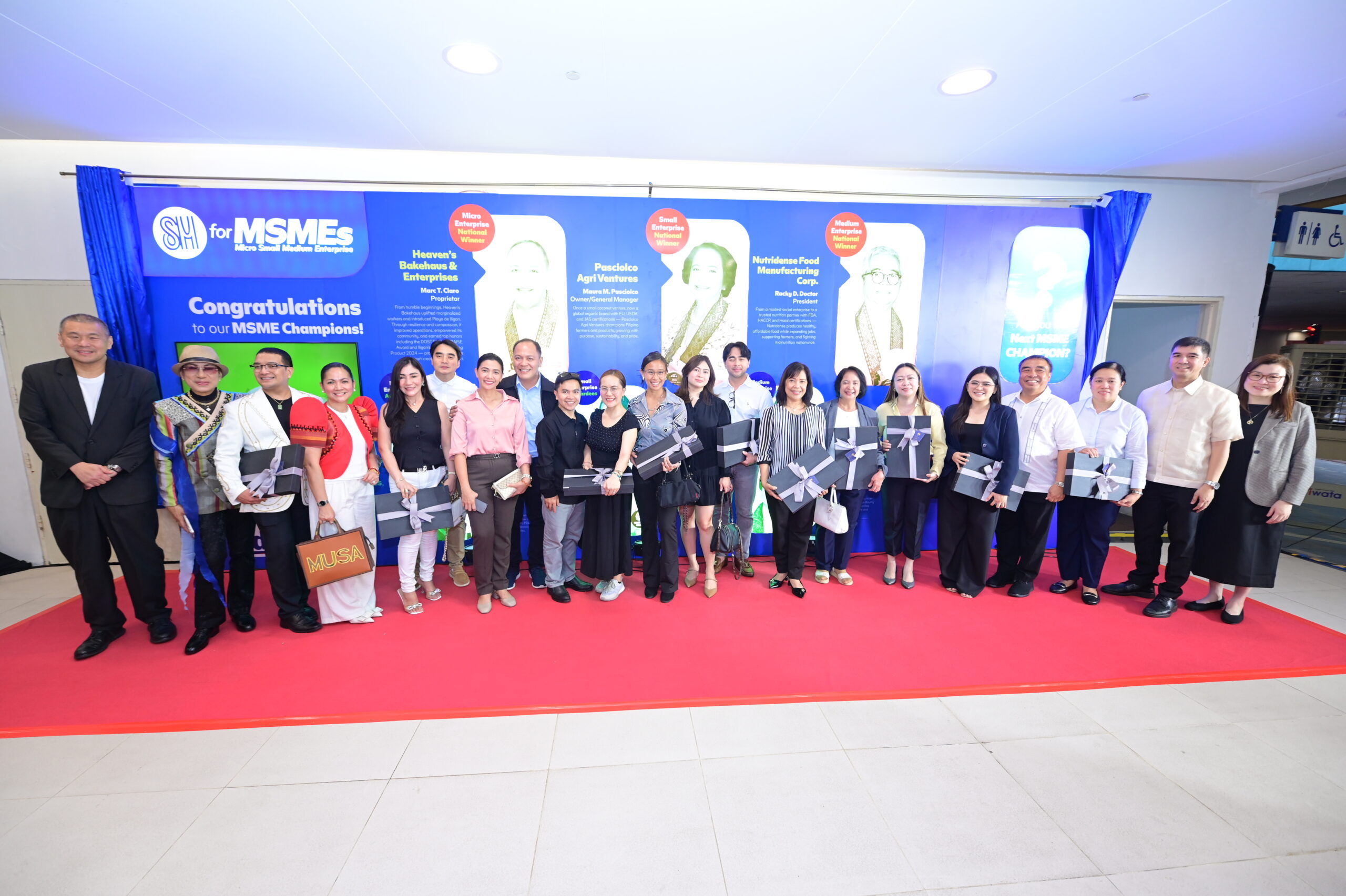
2025 MSME awardees and finalists gathered at the SM for MSMEs Wall of Champions with executives from SM Supermalls and the Department of Trade and Industry, celebrating excellence, resilience, and community impact.
“SM is like a big brother to smaller businesses like us,” said Euclid S. Cezar, President and CEO of Famous Belgian Waffle and a 2025 Medium Enterprise finalist. “Being recognized motivates us to expand, innovate, and bring our products to more communities.”
Nation-Building Through Partnerships
From learning summits and curated markets to large scale trade fairs, SM Supermalls worked closely with key partners including the Department of Trade and Industry, Go Negosyo, media organizations, trade fair organizers, and MSME exhibitors to deliver meaningful, measurable outcomes for entrepreneurs nationwide.
1 of 3
DTI and SM Supermalls spotlight the Philippine coconut industry as MSMEs take centerstage—local entrepreneurs proudly showcasing coconut-based products crafted by Filipino hands.
DTI and SM Supermalls spotlight the Philippine coconut industry as MSMEs take centerstage—local entrepreneurs proudly showcasing coconut-based products crafted by Filipino hands.
DTI and SM Supermalls spotlight the Philippine coconut industry as MSMEs take centerstage—local entrepreneurs proudly showcasing coconut-based products crafted by Filipino hands.
According to the Department of Trade and Industry, MSMEs account for 99.63% of businesses and 66.58% of total employment in the Philippines, underscoring their critical role as the backbone of the national economy.
1 of 3
(L–R) Cong TV, Viy Cortez, Ivy Cortez, and Rolly Cortez joined MSMEs and mallgoers during the VIYLine MSME Caravan at SM City Santa Rosa.
During the VIYLine MSME Caravan opening at SM City Santa Rosa, Cong TV surprised the crowd by revealing himself onstage after posing as a cameraman.
Influencers and entrepreneur-creators met fans and shoppers during the VIYLine MSME Caravan at SM City Santa Rosa, bringing digital communities into real-world marketplaces.
Major 2025 highlights included the DTI National Food Fair, Negros Trade Fair, Women Strong Trade Fair by WomenBizPH, VIYLine MSME Caravan, and the Go Negosyo MSME Summit 2025, which energized the SM Mall of Asia Music Hall with mentorship sessions and business insights, highlighted by Francis Kong’s talk, “Now and Next: The Trends in Business for MSMEs.”
1 of 2
The Go Negosyo MSME Summit 2025 energized the SM Mall of Asia Music Hall last July 19, bringing together entrepreneurs and mentors for inspiring talks, mentorship, and growth opportunities—highlighted by Francis Kong’s session, “Now and Next: The Trends in Business for MSMEs.”
The Go Negosyo MSME Summit 2025 energized the SM Mall of Asia Music Hall last July 19, bringing together entrepreneurs and mentors for inspiring talks, mentorship, and growth opportunities—highlighted by Francis Kong’s session, “Now and Next: The Trends in Business for MSMEs.”
Expanding Opportunities Beyond Metro Manila
1 of 2
The Negros Trade Fair opening day at SMX Aura drew crowds eager to experience Negrense delicacies, craftsmanship, and heritage products.
The Negros Trade Fair opening day at SMX Aura drew crowds eager to experience Negrense delicacies, craftsmanship, and heritage products.
Leveraging its nationwide footprint, SM Supermalls expanded regional trade fairs and themed marketplaces across Luzon, Visayas, and Mindanao, bringing high-visibility platforms closer to local communities and advancing more inclusive, region-led growth.
1 of 2
Women-led enterprises showcased proudly Filipino products at the Women Strong Trade Fair at SM Megamall, championing collaboration, innovation, and inclusive growth.
Women-led enterprises showcased proudly Filipino products at the Women Strong Trade Fair at SM Megamall, championing collaboration, innovation, and inclusive growth.
Kicking Off 2026 With Strong MSME Partnerships
To start 2026, SM Supermalls—together with government agencies, media partners, and trade fair organizers, will host and support a new slate of MSM focused events.
1 of 2
DTI Region IV-A Coco Festival Food Fair
January 14–20, 2026 | SM City San Pablo
Featuring coconut-based products and local delicacies from MSMEs in Region IV-A.
Philstar Nakakalokal Bazaar
January 16–18| SM Seaside City Cebu
Showcasing homegrown food, fashion, crafts, and lifestyle brands from the Visayas and the Cordillera region, highlighting locally made MSME products.
The Silk Events Bazaar (upcoming)
January 28–February 10, 2026 | SM La Union
A curated lifestyle and artisan market offering MSMEs extended exposure in a tourism-driven destination
As SM Supermalls moves into 2026, SM for MSMEs continues to evolve as a scalable growth platform—transforming participation into opportunity, and opportunity into sustainable enterprise for Filipino entrepreneurs nationwide.
Spotlight is BusinessWorld’s sponsored section that allows advertisers to amplify their brand and connect with BusinessWorld’s audience by publishing their stories on the BusinessWorld Web site. For more information, send an email to online@bworldonline.com.
Join us on Viber at https://bit.ly/3hv6bLA to get more updates and subscribe to BusinessWorld’s titles and get exclusive content through www.bworld-x.com.
In this B-Side episode, BusinessWorld explores the evolving Filipino workforce through the lens of executive coaching. Tina Sioson, President of the International Coaching Federation (ICF) Philippines, breaks down skills-based hiring, common recruitment pitfalls, and strategies for Filipino professionals to thrive in 2026 and beyond.
Interview by Erika Sinaking Audio editing by Jayson John Marinas
By Bjorn Biel M. Beltran,Special Features and Content Assistant Editor
THE PHILIPPINE economy entered 2026 with a jolt. Gross domestic product grew just 3% in the fourth quarter of 2025, pulling full-year growth down to 4.4%. While earlier analyst estimates hoped for a high 4% or even 5% finish, the official numbers show a much sharper deceleration in the final months of the year.
Even the country’s economic managers admitted they were caught off guard by the scale of the slowdown.
“To be honest, I did not expect that this would be this sharp,” Secretary Arsenio M. Balisacan of the Department of Economy, Planning, and Development (DEPDev) said in a press conference, adding that while a deceleration was anticipated, the magnitude of the impact highlighted how sensitive the country’s growth had become to sudden shock.
Much of the decline was attributed to a massive corruption scandal involving P545 billion in anomalous infrastructure projects that stalled public spending and shook consumer and investor confidence.
According to the Philippine Statistics Authority (PSA), the fourth-quarter slowdown was accompanied by a sharp contraction in gross capital formation, reflecting delayed investment decisions. Data showed that investment shrank by 10.9% in the quarter, the sharpest decline since the height of the coronavirus disease 2019 (COVID-19) lockdowns in 2021.
Meanwhile, household consumption grew 3.8%, but slower from 4.1% recorded in the prior quarter. Data shows that spending shifted toward essentials and services such as food, non-alcoholic beverages, and restaurants, while discretionary categories such as furnishings, clothing, alcohol and tobacco contracted. This is in the final three months of the year, the period typically considered the strongest for consumption due to holiday spending, bonuses, and year-end purchases.
The most significant drag on growth came from public construction. Government spending on infrastructure construction plunged in the second half of 2025, as much as 40.1% in October after four straight months of decline following the exposure of misappropriated funds linked to infrastructure and flood-control projects.
Freepik
Mr. Balisacan noted that the pullback in public spending was deliberate, aimed at preventing “business as usual” while accountability mechanisms were strengthened.
“It is better to have a slowdown. Correct the problems, build back the trust of our people in their institutions and in their government.”
But the economic cost was substantial. Mr. Balisacan quantified the impact bluntly during the PSA briefing: had public construction spending merely remained flat, full-year growth would have reached a rou nd 5.5% instead of 4.4%. In the fourth quarter alone, he estimated that the contraction in public construction subtracted about 2.2 percentage points from growth.
Infrastructure spending plays an outsized role in the Philippine economy. It creates jobs, feeds into supply chains, and creates positive investment signals for investors. When it stalls, the effects ripple outward: businesses delay new projects and stall hiring plans, while consumers lose discretionary income and tighten their belts.
A TIME FOR REFLECTION
The central question now is whether the reforms planned for this year will be sufficient to rebuild trust and accountability.
Mr. Balisacan mentioned the following planned reforms: the New Government Procurement Act; the proposed Anti-Dynasty Bill; and amendments to the Party-List System Reform Act, the Bank Deposits Secrecy Law, and the Anti-Money Laundering Act.
The DEPDev Secretary added that they are already working on a report centered on making 2026 the rally point for Philippine economy. The report, to be shared with the public mid-February, aims to revitalize the implementation of the Philippine Development Plan and outline strategies to address governance challenges.
“The reform efforts we have begun and continue to pursue have affected the recent growth performance. They are necessary and critical steps,” he said, emphasizing that accepting weaker growth in the short term is preferable to sustaining higher growth built on compromised governance.
“Growth may be higher in the short term, but with corruption all over the place, that would not be expected to last,” he said. The government ’s response has focused on tightening procurement rules, improving transparency, and aligning budgets more closely with approved development plans.
Beyond governance reforms, the government is re-emphasizing investments in education, health, human capital, and climate adaptation as the foundation for long-term growth, with Mr. Balisacan noting that raising productivity through these fundamentals can lift the economy ’s potential growth rate and make it more resilient to future shocks.
From the perspective of long-term investors, successful growth must be “steady, broad-based, and sustainable,” according to Frederic C. DyBuncio, SM Investments Corp. president and chief executive officer, who says this means stable inflation, continued job creation and investments that increase productive capacity rather than relying on short-term demand.
“From our experience as a long-term investor, this kind of growth is supported by consistent policy signals, timely execution, and an environment that allows businesses to plan and invest with confidence,” he told BusinessWorld in an email. “We also need disciplined capital allocation and sustained investment in productivity, technology, and people so growth translates into higher incomes and competitiveness.”
Real estate developer Federal Land NRE Global Inc. (FNG) echoed the sentiment, saying that success in 2026 means more than impressive GDP headline, but restoring confidence at the ground level. “When households feel secure enough to make long-term decisions like buying a home and businesses feel that this is the right time to invest again instead of waiting on the sidelines, that’s when growth becomes meaningful, and success for the country as a whole becomes ensured,” Thomas F. Mirasol, vice-chairman of Federal Land and president of FNG, said in an email.
DEPDev shared that target GDP growth rates for this year and the next are at around 5-6% and 5.5-6.5% respectively. Much of this expectation hinges on the public sector’s ability to make good on their promises of accountability, as firms are now prioritizing projects with clearer timelines and lower exposure to regulatory or operational delays. There is little tolerance for ambiguity in this environment.
“Real estate, in particular, responds strongly to clarity. When people feel they can plan ahead, the broader economy follows. After that point, success becomes all about discipline and execution on our part, to make sure we are positioned to seize the opportunities when and where they arise,” Mr. Mirasol said.
Uncertainty, Mr. DyBuncio added, tends to delay capital decisions in the private sector more than difficult news for diversified corporations with exposure to consumption, finance, and infrastructure. “Consistency and follow-through matter,” he said.
Freepik
WHAT MATTERS MOST
Restoring trust is but one factor for growth this year, however. External risks remain, even if their impact is indirect. The International Monetary Fund, in its January update to its World Economic Outlook, cited that while global growth is projected to remain resilient, “risks to the outlook remain tilted to the downside.”
The world is quickly reevaluating its expectations around artificial intelligence (AI) and how much their investments into AI companies can actually deliver in return. Such a reassessment could trigger market corrections that spill over from technology firms to broader financial markets, eroding household wealth and confidence. Trade tensions could also resurface, prolonging uncertainty and dampening global economic activity, while renewed geopolitical or domestic political disruptions risk unsettling markets, supply chains, and commodity prices.
Fiscal pressures add another layer of risk. Larger government deficits and elevated public debt in major economies could push long-term interest rates higher, tightening financial conditions worldwide.
For an economy like the Philippines, such external shocks can quickly feed through financial markets and trade channels. In particular, the weaker-than-expected growth print for 2025 has renewed expectations of further monetary easing. With inflation recorded at 1.7% in 2025, the lowest level in nine years and below the government’s 2-4% target band, the Bangko Sentral ng Pilipinas (BSP) has greater room to cut rates without immediately risking price instability.
BSP Governor Eli M. Remolona had previously said the slower growth would factor into the central bank’s decision at its Feb. 19 policy meeting. The BSP has already cut its benchmark rate by a cumulative 200 basis points to a three-year low of 4.5% in the current cycle.
These factors do not necessarily derail growth, but they amplify volatility and complicate policy trade-offs.
Mr. DyBuncio is optimistic. “Recent steps to strengthen oversight, transparency and institutional safeguards are constructive. From an investor’s perspective, what matters most is that governance continues to improve while priority infrastructure and social investments proceed without disruption. Clear rules, strong controls, and consistent execution encourage greater private-sector participation alongside public spending,” he said.
FNG noted that future growth can slow and compound if consumers delay major decisions and companies wait for an environment with clearer signals. But such hesitation can reverse very quickly once confidence in the economy improves.
“In real estate we often see that when people feel more certain about the direction of rates and the economy and their own personal expectations, business activity can pick up faster than most might expect,” Mr. Mirasol said.
If there is to be a defining theme that investors hope to see in 2026, it is execution.
“These reforms protect public funds, strengthen our institutions, build a more resilient, inclusive economy, and ultimately, rebuild trust between government and the people we serve,” Mr. Balisacan had said of the government’s plans.
“With discipline, better governance, and sustained reforms. We are decisively moving to ensure that growth in 2026 and beyond is stronger, more inclusive, more resilient, and truly felt by all Filipinos,” he added.
“In its Final Report, the Second Congressional Commission on Education (EDCOM 2) highlighted the problems linked to students’ plummeting proficiency rates, and how ‘mass promotion’ further amplifies the gaps in the education system.
“Mass promotion is many things. There is no real policy of DepEd (Department of Education) to promote students automatically, but it is a confluence of multiple factors,” EDCOM 2 Executive Director Karol Mark R. Yee told BusinessWorld in an interview.
“The ‘mass promotion’ culture in the Philippines could leave a lasting effect on the nation’s economy and workforce if not addressed immediately, according to an expert.
“We would have hollow foundations and we would not be able to reap what is expected to be a lot of gains from that demographic window,” Karol Mark R. Yee, executive director of the Second Congressional Commission on Education (EDCOM 2), told BusinessWorld in an interview.
The commission highlighted its call to end mass promotion culture and its link to other issues within the education system in its final report, launched on Monday.
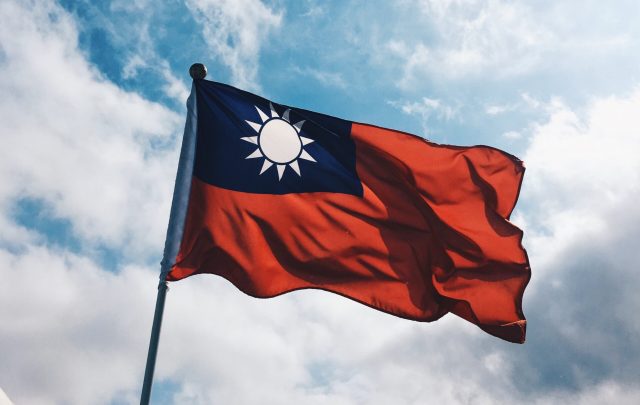
TAIPEI — Taiwan completed the maiden underwater sea trial for its first domestically developed submarine on Thursday, a big milestone in a project aimed at strengthening deterrence against the Chinese navy and protecting vital sea lanes in the event of war.
Taiwan, which China claims as its own territory, has made the indigenous submarine program a key part of an ambitious project to modernize its armed forces as Beijing stages almost daily military exercises to assert its sovereignty claims.
The submarine program has drawn on expertise and technology from several countries, including the United States and Britain, a breakthrough for diplomatically isolated Taiwan, whose government rejects Beijing’s territorial claims.
Taiwan’s CSBC Corp which is leading construction of what is eventually planned to be eight submarines, said in a statement late on Thursday that the first ship, named the Narwhal, had completed its first underwater test at sea.
It said the submarine had carried out a “shallow-water submerged navigation test”.
“Submarines are a key strategic capability with deterrent power,” it said, after the test off the southern Taiwanese port of Kaohsiung.
The Narwhal had been due to be delivered to the navy in 2024, joining two existing submarines purchased from the Netherlands in the 1980s, but the program has been hit with delays.
“Due to constraints in the international environment and pressure from the Chinese communists, Taiwan’s indigenous submarine program has faced various difficulties and challenges from the beginning to the present,” CSBC said.
Taiwan has said it hopes to deploy at least two such domestically developed submarines by 2027, and possibly equip later models with missiles.
The first submarine, with a price tag of T$49.36 billion ($1.58 billion), will use a combat system by Lockheed Martin Corp and carry U.S.-made Mark 48 heavyweight torpedoes.
Taiwan’s armed forces are dwarfed by those of China, which has three operational aircraft carriers and ballistic missile submarines and is developing stealth fighter jets.
Taiwan is modernizing its military to be able to fight “asymmetric warfare,” using mobile and agile systems like submarines, drones and truck-mounted missiles to fend off its much larger adversary China.
Taiwan President Lai Ching-te announced in November 2025 that his government would spend an additional $40 billion on defense. — Reuters
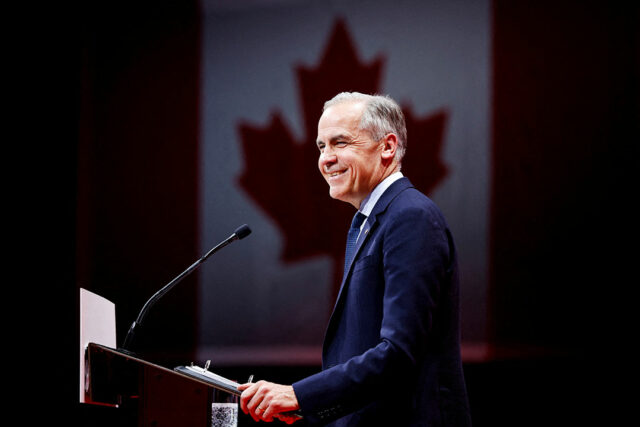
OTTAWA — Canadian Prime Minister Mark Carney, asked about reports that US officials had met separatists seeking independence for the province of Alberta, on Thursday said he expected the US administration to respect Canadian sovereignty.
The Financial Times said State Department officials had held three meetings with the Alberta Prosperity Project, a group that is pushing for a referendum on whether the energy-producing Western province should break away from Canada.
“We expect the US administration to respect Canadian sovereignty. I’m always clear in my conversations with President Trump to that effect,” Mr. Carney told a press conference.
Mr. Trump, he added, had never raised the question of Alberta separatism with him.
The APP, which says Ottawa’s policies are stifling the province, wants another meeting next month with State and Treasury officials to ask for a $500 billion credit facility, the Financial Times reported.
Alberta premier Danielle Smith said she wanted to stay part of Canada but noted that polls show 30% of the population was fed up with what it saw as Ottawa’s excessive interference.
Alberta is landlocked and Ms. Smith is pressing for another oil pipeline to the Pacific Coast. That would have to cross the neighboring province of British Columbia, whose premier David Eby has ruled out the idea.
Mr. Eby, whose relations with Ms. Smith are usually chilly, told reporters earlier that “to go to a foreign country and to ask for assistance in breaking up Canada … is treason”.
Last week, US Treasury Secretary Scott Bessent told a radio station: “I think we should let them come down into the US.”
Asked about a possible Alberta referendum, he replied: “People want sovereignty. They want what the US has got.”
Mr. Carney and Mr. Trump have repeatedly traded barbs in recent weeks. Mr. Carney, who calls the US president a skilled negotiator, suggests some of Mr. Trump’s recent comments could be tied to a review of the US-Mexico-Canada trade pact that is due to start later this year. — Reuters