Home Blog Page 3509

Embiid-less Sixers

What a difference two months makes in the National Basketball Association. This time in January, the Sixers were crowding the Celtics and Bucks at the top of the East. Joel Embiid was on a tear, having just put up a whopping 70 points against the Victor Wembanyama-led Spurs to cement his hold atop the league’s scoring list. Clearly, they benefited from addition by subtraction; in the absence of the disillusioned James Harden, they saw the rise of perfect complement Tyrese Maxey. To argue that things were looking up under new head coach Nick Nurse would be to underscore the obvious.

Fast forward to the present, and the Sixers are hard-pressed to avoid the play-in tournament. Embiid’s extraordinary offensive explosion proved to be the precursor for yet another extended stint in the sidelines. With a meniscus injury keeping their foundational piece off the floor, they found themselves swooning to eighth in conference standings. His loss was particularly rough at the onset, leading them to suffer setbacks in eight of nine contests. And though they subsequently managed to alter their sets on both ends of the court, mediocre is what can best describe their output since then.

Taken in this context, yesterday’s victory was nothing short of critical for the Sixers. True, there’s still a lot of hoops left to play; 14 games remain in their regular season schedule. On the other hand, there can be no discounting the significance of their win against the Heat; the latter have been exchanging places with them for seventh in recent memory, and getting a leg up may well spell the difference between a one-and-done appearance and an extended trek to the hardware.

The triumph at home was brutal. The Sixers shot only 43.5% overall and failed to crack the century mark. Still, the final outcome is what matters, and the 19,782 fans at the Wells Fargo Center rightly went home smiling. Hopefully, it will help build momentum as they go through a brutal phase, with seven of their next eight opponents sporting positive win-loss slates. After that, it’s another encounter with the Heat — and another chance to get ahead. How well they fare in the interim is up to them.


Anthony L. Cuaycong has been writing Courtside since BusinessWorld introduced a Sports section in 1994. He is a consultant on strategic planning, operations and human resources management, corporate communications, and business development.

Prosecutors seek death penalty for mastermind of Vietnam’s largest financial scam

STOCK PHOTO | Image by D Mz from Pixabay

 – Vietnamese prosecutors called on Tuesday for the death penalty to be handed to Truong My Lan, the mastermind of the Southeast Asian nation’s largest financial fraud on record, state media said.

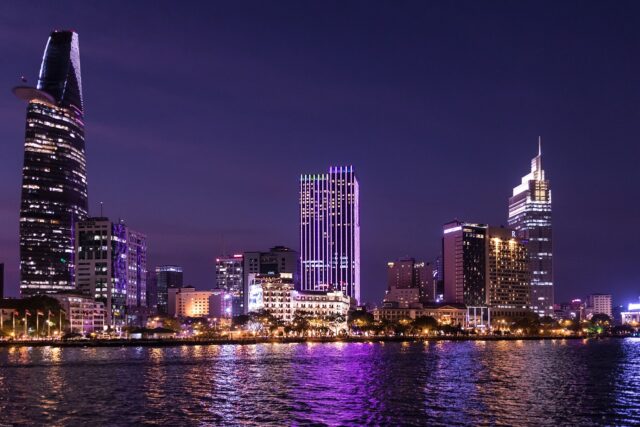
Ms. Lan, the chairwoman of real estate developer Van Thinh Phat Holdings Group, faces a trial in the economic hub of Ho Chi Minh City on accusations of leading a scam that caused damages of $20 billion, or about 4.9% of Vietnam’s gross domestic product.

The trial, expected to run until the end of April, is part of a campaign against graft that the leader of the ruling Communist Party, Nguyen Phu Trong, has pledged for years to stamp out, although with few tangible results.

“Lan didn’t plead guilty and didn’t show remorse,” the Thanh Nien newspaper cited the prosecutors as saying, while demanding the death penalty on the charge of embezzlement.

“The consequences are extremely serious and irreparable, and therefore, there must be a strict punishment for Truong My Lan and remove her from the society,” it added.

A lawyer for Ms. Lan was not immediately available for comment on Tuesday.

Ms. Lan and her accomplices are accused of siphoning off more than 304 trillion dong ($12.46 billion) from Saigon Joint Stock Commercial Bank (SCB), which she effectively controlled through dozens of proxies, investigators say.

Prosecutors have also accused the group of causing damages to the to the tune of a further 193 trillion dong, more than 129 trillion dong of which consists of accumulated interest on the loans they took.

That carried total financial damages in the case to 498 trillion dong ($20 billion), the report said.

From early 2018 through October 2022, when the state bailed out SCB after a run on its deposits, Lan appropriated large sums by arranging unlawful loans to shell companies, investigators say.

She is accused of bribing officials to ignore her activities, including paying an alleged $5.2 million to a senior central bank inspector, the investigators said.

Three independent auditing firms had committed violations in the SCB case, lawmaker Pham Van Hoa said on Monday, without identifying them, the government said.

The remark came in a question to Finance Minister Ho Duc Phoc, the government statement added.

Mr. Phoc faulted auditing in some recent criminal cases, adding that “intentional collusion and violations” by auditors had not been ruled out.

Top global firms, such as Ernst & Young and KPMG, did not flag concerns about the bank in their audits, public documents show. – Reuters

Gaza’s catastrophic food shortage means mass death is imminent

PALESTINIANS gather to receive aid outside a warehouse as Gaza residents face crisis levels of hunger, amid the ongoing conflict between Israel and Hamas, in Gaza City, March 18, 2024. — REUTERS

CAIRO/JERUSALEM/LONDON — Extreme food shortages in parts of the Gaza Strip have already exceeded famine levels, and mass death is now imminent without an immediate ceasefire and surge of food to areas cut off by fighting, the global hunger monitor said on Monday.

The Integrated Food-Security Phase Classification (IPC), whose assessments are relied on by the United Nations (UN) agencies, said 70% of people in parts of northern Gaza were suffering the most severe level of food shortage, more than triple the 20% threshold to be considered famine.

The IPC said it did not have enough data on death rates, but estimated residents would be dying at famine scale imminently, defined as two people out of every 10,000 dying daily from starvation or from malnutrition and disease.

Gaza’s health ministry has said 27 children and three adults have died so far from malnutrition.

“The actions needed to prevent famine require an immediate political decision for a ceasefire together with a significant and immediate increase in humanitarian and commercial access to the entire population of Gaza,” it said.

In all, 1.1 million Gazans, around half the population, were experiencing “catastrophic” shortages of food, with around 300,000 in the areas now facing the prospect of famine-scale death rates.

The prospect of a manmade famine in Gaza has brought the strongest criticism of Israel from Western allies since it launched its war against Hamas militants following their deadly attack on Israeli territory on Oct. 7.

“In Gaza we are no longer on the brink of famine. We are in a state of famine… Starvation is used as a weapon of war. Israel is provoking famine,” EU foreign policy chief Josep Borrell said at a Brussels conference on aid for Gaza.

Israeli Foreign Minister Israel Katz responded that Mr. Borrell should “stop attacking Israel and recognize our right to self-defense against Hamas’ crimes.”

Israel allowed “extensive humanitarian aid into Gaza by land, air, and sea for anyone willing to help,” Mr. Katz said on X, and aid was “violently disturbed” by Hamas militants with “collaboration” by the UN’s aid agency UNRWA.

UN Secretary-General Antonio Guterres called the IPC report an “appalling indictment” and said Israel must allow complete and unfettered access to all parts of Gaza.

Britain’s foreign minister David Cameron said he would carefully review the report: “It’s clear the status quo is unsustainable. We need urgent action now to avoid a famine.”

Israel, which initially allowed aid into Gaza through only two checkpoints on the enclave’s southern edge, says it is opening more routes by land, as well as allowing sea shipments and air drops. The first boat carrying aid arrived last week.

Aid agencies say they still cannot get enough supplies through or distribute them safely, especially in the north.

HOSPITAL ASSAULT
In the ruins of Gaza City, the main settlement in the north of the Gaza Strip, Israeli forces launched a major assault on Al Shifa hospital overnight. Once the Gaza Strip’s biggest hospital, it is now one of the only medical facilities still even partially functioning in the north of the territory.

Israel said it had killed more than 20 Hamas fighters, including a senior Hamas commander, Fayeq al-Mabhouh, in the hospital. Hamas said he was a Palestinian police official tasked with overseeing the protection of aid deliveries in Gaza.

Negotiations for a ceasefire in the war, now in its sixth month, were due to resume on Monday with an Israeli delegation led by the country’s spy chief heading to Qatar. But an Israeli official said nailing down any deal would probably take at least two more weeks, a clear disappointment for Washington which had sought a deal by the start of the Ramadan holy month last week.

President Joseph R. Biden warned Israeli Prime Minister Benjamin Netanyahu in a call on Monday that a military operation in Rafah would deepen anarchy in Gaza and they agreed that teams from each side would meet in Washington to discuss it, the White House said.

Mr. Netanyahu has pledged to push into Rafah in Gaza’s southern tip, where more than half of the territory’s 2.3 million residents have been sheltering to escape an Israeli assault farther north.

The leader in the US Senate from Mr. Biden’s Democratic Party called on Israelis last week to replace Mr. Netanyahu, saying he was wrecking Israel’s international standing by allowing too much suffering in Gaza.

The war began when Hamas fighters stormed into Israel, killing 1,200 people and capturing 253 hostages according to Israeli tallies. Since then, Israel’s assault has killed more than 31,000 Gazans, according to Palestinian health officials.

SPECIAL FORCES
The Israeli military said special forces, supported by infantry and tanks, conducted a “precise operation” on the Al Shifa Hospital compound, based on intelligence that the hospital was being used by Hamas leaders.

“We apprehended more than 200 terrorist suspects that are now being questioned,” said spokesperson Rear Admiral Daniel Hagari. One Israeli soldier was killed in the fighting, he said.

Residents described some of the heaviest fighting in northern Gaza for months.

Mohammad Ali, 32, a father of two who lives near the hospital, told Reuters via a chat app that the sound of the assault awoke the neighborhood at around 1 a.m.

“Soon tanks started to roll, they came from the western road and headed toward Al Shifa, then sounds of gunfire and explosions increased,” he said.

The Gaza health ministry said displaced people inside the hospital had been killed in a fire caused by the raid. — Reuters


Number of South Korea marriages edges up in 2023 after 11 years of falls

UNSPLASH

SEOUL — The number of marriages in South Korea rose in 2023 for the first time in more than a decade, lifted by pent-up demand from couples delaying nuptials during the pandemic, but the data did not point to a sustained rebound in a rapidly ageing society.

The slight rise in marriages last year comes after South Korea’s fertility rate, already the world’s lowest, continued its dramatic decline in 2023, as women concerned about career advancement and the cost of raising children delayed childbirth or decided to not have babies.

A total of 193,657 couples got married last year, up 1.0% from 191,690 a year earlier and the first increase since 2011, Statistics Korea data showed on Tuesday.

That compares with a 0.4% drop in 2022, when South Korea started to ease restrictions on social gatherings put in place during the COVID-19 pandemic. The curbs had seen the number of marriages slide 9.8% in 2021 and 10.7% in 2020.

The 2023 figure, however, remains well below the 239,159 marriages seen in 2019 and compares with an annual figure of more than 320,000 recorded 10 years earlier.

A government official said that couples delaying nuptials was a factor contributing to more marriages in the second half of 2022 and the first half of 2023.

“In the second half of 2023, however, marriages fell year-on-year, indicating that people who had been delaying marriage due to COVID-19 have now mostly got married,” the official told a briefing.

The 2023 increase was also well below the jump in neighboring China, where marriages rose 12.4% last year, as more couples tied the knot after delays due to the pandemic.

Most South Koreans cite high housing costs as the biggest hurdle for getting married. Marriage is seen as a prerequisite for having a baby in the Asian country.

A recent survey of 500 South Koreans aged between 19 to 23 showed 50.4% of respondents did not plan on getting married or having children, Yonhap news agency reported.

The government has vowed to bring in “extraordinary measures” to tackle the low birth rate, with political parties promising public housing and easier loans for young South Koreans ahead of the April legislative election.

Marriages with a foreign national rose sharply for a second straight year, climbing 18.3% to 19,717. — Reuters

Bangladesh, Pakistan and India remain the world’s smoggiest countries in 2023, air quality data show

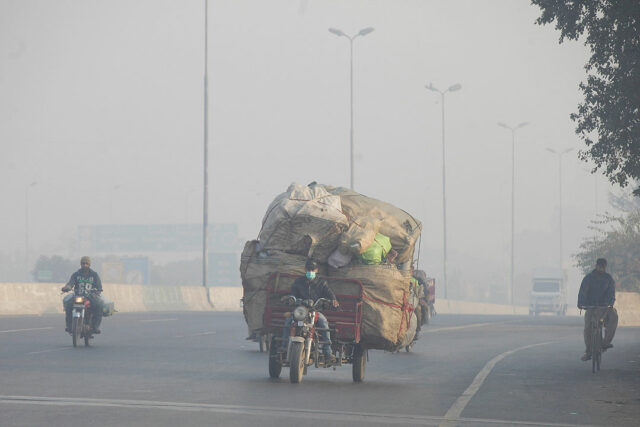
A MAN rides a motor tricycle, loaded with sacks of recyclables, amid dense smog in Lahore, Pakistan Nov. 24, 2021. — REUTERS

SINGAPORE — Pakistan remained one of the world’s three smoggiest countries in 2023, as Bangladesh and India replaced Chad and Iran, with particulate matter about 15 times the level recommended by the World Health Organization (WHO), data published on Tuesday showed.

Average concentrations of PM2.5 — small airborne particles that damage the lungs — reached 79.9 micrograms per cubic meter in Bangladesh in 2023, and 73.7 micrograms in Pakistan. The WHO recommends no more than 5 micrograms.

“Because of the climate conditions and the geography (in South Asia), you get this streak of PM2.5 concentrations that just skyrocket because the pollution has nowhere to go,” said Christi Chester Schroeder, air quality science manager at IQAir, a Swiss air-monitoring organization.

“On top of that are factors such as agricultural practices, industry and population density,” she added. “Unfortunately, it really does look like it will get worse before it gets better.”

In 2022, Bangladesh was ranked as having the fifth-worst air quality, and India was eighth.

About 20% of premature deaths in Bangladesh are attributed to air pollution, and related healthcare costs amount to 4%-5% of the country’s gross domestic product, said Md Firoz Khan, an air pollution expert at Dhaka’s North South University.

Indian pollution also increased last year, with PM2.5 levels about 11 times higher than the WHO standard. India’s New Delhi was the worst-performing capital city, at 92.7 micrograms.

China also saw PM2.5 rise 6.3% to 32.5 micrograms last year, after five consecutive annual declines.

Only Australia, Estonia, Finland, Grenada, Iceland, Mauritius and New Zealand met WHO standards in 2023.

The IQAir report was based on data from more than 30,000 monitoring stations in 134 countries and regions.

Chad, the world’s most polluted country in 2022, was excluded from the 2023 listings because of data issues. Iran and Sudan were also taken off the 2023 list.

Christa Hasenkopf, director of the Air Quality Life Index at the University of Chicago’s Energy Policy Institute, said 39% of countries have no public air quality monitoring.

“Considering the large potential benefits and relatively low cost, it’s stunning that we don’t have an organized global effort to deploy resources to close these data gaps, especially in places where the health burden of air pollution has been largest,” she said.  Reuters

Japan saw record 2.79 million visitors in February due to Lunar New Year boost

EMRAN YOUSOF-UNSPLASH

 – Japan welcomed 2.79 million visitors in February, a record for the month and the most for any month since the COVID-19 pandemic began, boosted by travel during Lunar New Year holidays.

The number of foreign visitors for business and leisure was up from 2.69 million in January, data from the Japan National Tourism Organization (JNTO) showed on Tuesday.

Arrivals in February were 7.1% higher than in 2019, when the Lunar New Year also fell in the second month of the year rather than the first. For all of 2019, Japan welcomed a record 31.9 million visitors before the pandemic struck.

Tourism to Japan all but stopped for more than two years during the pandemic. Since then, the industry has received a major boost from a weak yen that has made Japan a bargain destination for foreign travelers.

Current account data in January showed a record gain attributable to inbound tourism, illustrating the sector’s widening role in the economy. Visitors spent more than 5 trillion yen ($33.3 billion) in the country last year for the first time, exceeding the government’s goal.

Travelers from 19 of 23 countries and territories, including South Korea and the United States, set records for February, the JNTO said.

Japan is the top destination for travelers from 12 countries on Agoda’s online booking platform, said Agoda Chief Executive Omri Morgenshtern.

“Demand for Japan is very strong,” Mr. Morgenshtern said. “I assume, overall, you will see 2024 in the 2019 levels or slightly above.” – Reuters

Mainland Chinese surge into Hong Kong property after stamp duties scrapped

CITYSCAPE view of the Victoria Harbour region in Hong Kong. —MANSON YIM-UNSPLASH

 – After a pandemic-induced lull spanning more than three years, mainland Chinese are snapping up homes in Hong Kong, accounting for up to a third of new property sales weeks after the city removed all additional stamp duties on foreign buyers.

The surge of mainland Chinese buyers into one of the world’s most expensive housing markets – reported by several property agents and developers – comes amid battered confidence in the mainland’s housing market due to a debt crisis and an uncertain economic outlook.

Mainland Chinese now account for 20% to 30% of new home sales, according to estimates by realtors, with some buyers recently purchasing up to eight apartments at once.

Hong Kong in late February removed all additional stamp duties, including those for purchases of second properties, as well as duties on those selling flats within two years of buying them. Foreigners, who had to pay 15% tax since October, from 30% previously, now pay around 4.25%, on par with locals.

The reversal of what was deemed an unsuccessful government push during the 2010s to cool housing prices came after Hong Kong housing prices plunged more than 20% from their 2021 peak due to higher mortgage rates, an outflow of talent and a weak market outlook.

But even though sales have risen, prices remain suppressed as developers offer discounts to clear inventory. S&P Global Ratings estimated transaction volumes this year would recover only moderately from 2023, as interest rates remain high.

Property remains a mainstay of the Hong Kong economy, and the share of purchases by mainland Chinese climbed to 17%, a record high, in the fourth quarter of last year, research by realtor Midland Realty showed.

The increase coincides with a bid by the Hong Kong government to attract talent by waiving an additional stamp duty for foreign buyers, unless they fail to gain citizenship after seven years.

Now, that share has risen further to around 30% in the primary market, Midland said, based on their internal sales.

At a new launch this month by Wheelock Properties and MTR Corp 0066.HK, mainland Chinese professionals planning to move to Hong Kong accounted for around 20% of those who had expressed an intention to buy, the developer said.

Some mainland Chinese are buying in bulk.

Two weeks ago, major property developer Henderson Land 0012.HK sold all 30 apartments on offer at a launch event, according to realtor Centaline. Two buyers bought eight apartments each, and one of them, who spent HK$42 million ($5.4 million) in total, was from mainland China.

In another Henderson development in Kowloon district, a mainland Chinese buyer bought five apartments totaling HK$25 million, according to media reports.

Developers including CK Asset and New World Development have also said they would do more marketing aimed at mainland Chinese.

Buyers in Shenzhen are particularly interested in Hong Kong, property agents say. The southern city and business hub borders the city.

Alan Cheng, CEO of southern China of Centaline Property Agency, said the company had received more than 1,500 enquiries from Shenzhen about Hong Kong property and completed eight transactions in the last two weeks.

“We have clients who have never cared about Hong Kong but are now asking about the threshold and yield for investing in a property,” he said.

“They heard Hong Kong is a good market.” – Reuters

Winners of ‘Sining Filipina’ national art competition announced

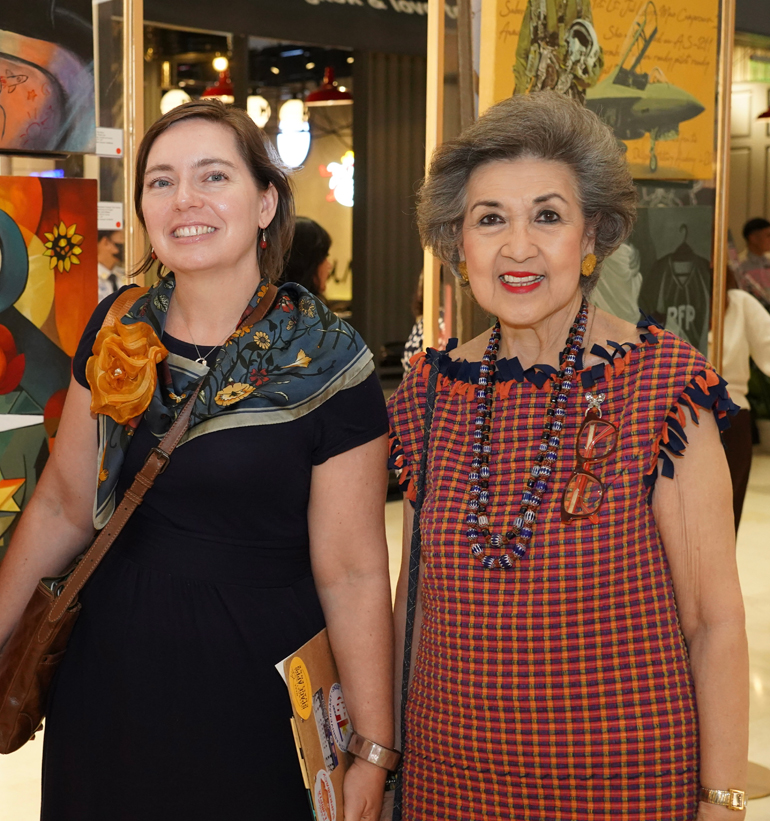
Winners of the Non-Figurative and Figurative categories: (L-R, front): Maria Gemma San Jose (1st place, Non-figurative); Ma. Christina Baltero (3rd place, Figurative); Hanna Joy Sayam (1st place, Figurative); Isabelita Rodillo (3rd place, Non-Figurative); Maria Melissa Sangoyo (2nd place, Non-figurative); and Luckyshia Jenielou Canonigo (2nd place, Figurative). At the awarding ceremony were (L-R, back): SM Supermalls’ President Steven Tan, Singapore Ambassador Constance See, British Ambassador Laure Beaufils, SM Hotels and Conventions Corp. President Elizabeth Sy, US Ambassador MaryKay Carlson, Zonta Club of Makati and Environs President Jeannie Abaya, and BDO Private Bank President Albert Yeo.

It was a celebration of Filipina artistry and women’s empowerment through art as SM Supermalls, BDO Unibank, Inc. and the Zonta Club of Makati and Environs (ZCME) announced the winners of the inaugural Sining Filipina art competition at an awarding ceremony and exhibition opening at SM Aura recently.

Distinguished members of the diplomatic corps, business sector, and the arts community gathered to celebrate the winners and participants of the Philippines’ very first all-female national art competition. ‘Sining Filipina’ aims to highlight Filipina artistry and creativity, and promote their wider participation in Philippine art.

Guests of honor — women leaders themselves — were US Ambassador MaryKay Carlson, British Ambassador Laure Beaufils, Singapore Ambassador Constance See, Embassy of Denmark’s Madame Eva Fischer-Mellbin, Embassy of Nigeria Counsellor/Head of Chancery Charity Ekeadon Davidson, together with SM Hotels and Conventions Corporation President Elizabeth Sy and SM Foundation Executive Director Debbie Sy.

Leading the awarding and exhibition opening ceremonies were SM Supermalls President Steven Tan, BDO Private Bank President Albert Yeo, and ZCME President Jeannie Abaya.

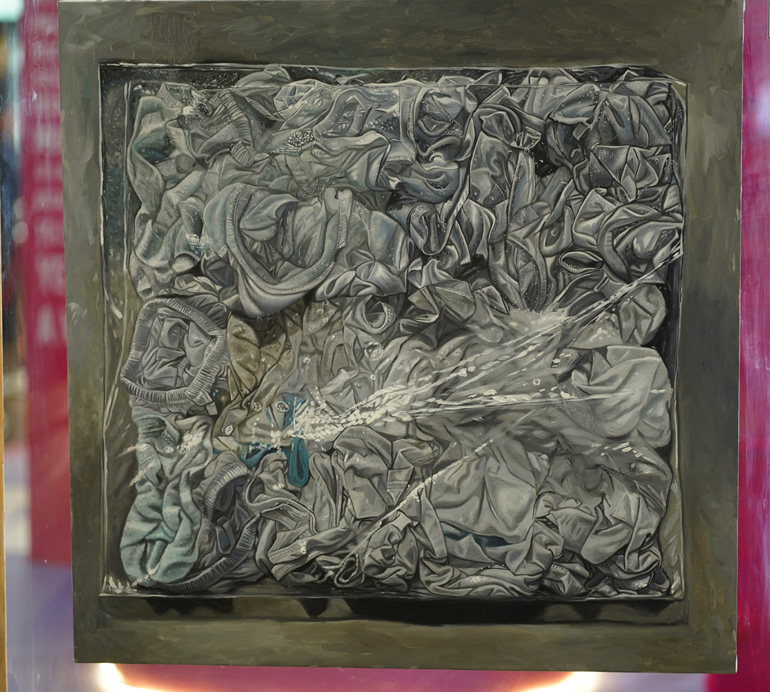
Hanna Joy Sayam from Negros Occidental and her artwork entitled “Pira-pirasong Tela ng mga Marias,” and Maria Gemma San Jose from Ilocos Norte and her artwork entitled “Layers of Experience,” won top honors in the figurative and non-figurative categories, respectively, each taking home the grand prize of Php 250,000.00.

Winners of the Figurative category Luckyshia Jenielou Canonigo (2nd place) and Ma. Christina Baltero (3rd place); and Non-Figurative category winners Maria Melissa Sangoyo (2nd place) and Isabelita Rodillo (3rd place) were awarded a cash prize of Php 150,000.00 for second place and Php 100,000.00 for third. All winners also took home the ‘Sining Filipina’ trophy, specially created by sculptor and Zonta member, Charming Baldemor.

The Sining Filipina trophy, made from mango and narra wood, is a creative representation of everything that it means to be a woman. A play on contrasts presents a piece that is strong yet soft. The trophy was crafted from wood, artfully shaped to form smooth, flowing curves and brushstrokes. The female silhouette was also reimagined to look like a cornucopia — symbolizing abundance and the overflowing creativity in the arts.

The pioneering competition, which provides a platform for women to express their unique perspective and narratives through art, received an overwhelming response with 732 entries coming from women of all ages from all over the country. The esteemed panel of judges that took the formidable task to heart was composed of Metropolitan Museum of Manila President Tina Colayco, Ayala Museum Senior Curator and Head of Conservation Kenneth Esguerra, Ateneo Art Gallery Director and Chief Curator Victoria Herrera, renowned artist Mark Justiniani, and eminent sculptor Julie Lluch.

The awarding ceremony also marked the opening of the exhibition featuring the six winning works and those of the 72 finalists. Proceeds from the sale of the artworks will go towards the artist and ZCME’s charitable programs. The exhibition is ongoing until March 22, 2024 at the Upper Ground Level Atrium of SM Aura.

‘Sining Filipina’ is one of the highlights of SM Supermalls’ Women’s Month celebration this March and is also supported by Airspeed and Brittany Hotel.


Spotlight is BusinessWorld’s sponsored section that allows advertisers to amplify their brand and connect with BusinessWorld’s audience by publishing their stories on the BusinessWorld Web site. For more information, send an email to online@bworldonline.com.

Join us on Viber at https://bit.ly/3hv6bLA to get more updates and subscribe to BusinessWorld’s titles and get exclusive content through www.bworld-x.com.

Philippines sees up to $6 billion of investments in casino sector in next 5 years

PHOTO BY ALICIA A. HERRERA

MANILA —  Foreign and domestic firms are expected to invest much as $6 billion in the Philippines’ casino sector in the next five years, the head of its gaming regulator said, bolstering its status among Asia’s top gambling destinations as competition increases.

At least one new casino-resort will open every other year including in areas outside Manila like Clark, a former U.S. military base north of the capital, and Cebu in the country’s central region, Philippine Amusement and Gaming Corp Chairman Alejandro Tengco said on Tuesday.

“We will have continued growth because of the opening of new casinos and the expansion in the electronic gaming segment,” Mr. Tengco told Reuters at the sidelines of the ASEAN Gaming Summit.

Mr. Tengco said the Philippines would likely hit its target of P450 billion to P500 billion ($8-9 billion) in total gross gaming revenue (GGR) by 2027, a year earlier than expected.

In 2023, the Philippines posted a record P285 billion in total GGR, a key industry metric representing the amount players wager minus their winnings, government data showed.

Gamblers from Japan, South Korea and Singapore, and domestic mass market players took up the slack from the absence of mainland Chinese high-rollers after the pandemic and tightening of rules on junkets.

That allowed casino resort operators like Bloomberry Resorts and Japan’s Universal Entertainment, and units of Philippine conglomerates SM Investments and Alliance Global Group to post strong performances last year, Tengco said.

The Philippines’ freewheeling gaming industry is bracing for regional competition from Japan, which has approved its first casino, and Thailand, which is again considering legalising casinos.

“We have about five to six years to fortify and solidify so when they open, we are mature already,” Mr. Tengco said. — Reuters

Cryptoverse: AI tokens outpace record-breaking bitcoin

NICK CHONG–UNSPLASH

The artificial intelligence boom has hit the crypto market with a bang.

Coins linked to AI-focused crypto projects have jumped alongside tech stocks like Nvidia, driven by insatiable investor appetite for applications like machine-learning.

The rise of many AI crypto tokens has outpaced even that of bitcoin over the past year as the world’s biggest cryptocurrency has surged to record levels.

Their combined market value has ballooned to $26.4 billion, from just $2.7 billion last April, according to CoinGecko data. Tokens linked to these projects are up between 145% and 297% in the past 30 days.

If the more optimistic industry predictions come to pass, there could be more room to run, as some market watchers say crypto and blockchain technology could help solve some of the AI industry’s teething problems such as privacy and a need for computing power.

“As both AI systems and blockchain networks continue to grow, we will see more and more use cases fusing together the two industries,” said Markus Levin, co-founder of blockchain data storage firm XYO Network.

The CoinDesk Indices Computing Index, which includes AI-linked tokens, has leapt over 165% over the past 12 months, outpacing even bitcoin’s BTC= 151% rise to record levels.

Trading volumes in AI tokens have also risen sharply this year, Kaiko Research data showed, hitting an all-time high of $3.8 billion in late February.

“There is a significant chance that … AI applications will be crypto’s raison d’être,” fund manager VanEck’s Matthew Sigel and Patrick Bush said in a note.

Some of the top blockchain projects at the moment include the Render Network, a blockchain platform for peer-to-peer sharing of AI-generated graphics, Fetch.AI, a platform to build AI apps and SingularityNET, an AI services marketplace.

“Investors are starting to realize that if you want real value, you need products that are uncorrelated to the crypto market,” said Ahmad Shadid, founder of AI-focused blockchain startup io.net.


WINNERS AND LOSERS

AI-linked blockchain products include a wide variety of services including payments, trading models, machine-generated non-fungible tokens and blockchain-based marketplaces for AI applications where users pay developers in cryptocurrency.

Investment manager VanEck has predicted that revenue from AI crypto projects could reach $10.2 billion by 2030 in their base case, and over $51 billion in their bullish scenario.

VanEck pointed to the use of crypto tokens as rewards, developing physical computation infrastructure, data verification, and transparency in proving digital ownership as primary areas where blockchain technology lends real-world value to AI development.

Offering crypto tokens as incentives allows quick scalability, said io’s Shadid. His company plans to launch a token later this year.

“The reason we can scale fast is because of the token we have coming out,” he added. “The token incentivizes owners of physical infrastructure to bring their computers on to our network,” Shadid added.

Yet, just as with the AI boom itself, picking winners and losers could be fraught with peril.

“We’re still in the very early stages of AI networks integrating with blockchain-based networks, and the utility of a lot of tokens is still very much uncertain,” cautioned Levin. – Reuters

EU to impose tariffs on Russian grain imports, FT reports

REUTERS

The European Union is preparing to levy tariffs on grain imports from Russia and Belarus to placate farmers and some member states, the Financial Times reported on Tuesday citing people familiar with the plans.

The European Commission is in coming days expected to impose a duty of 95 euros ($103.26) per tonne on cereals from Russia and Belarus, FT said, adding that tariffs of 50% would also be placed on oil seeds and derived products.

The reported move comes as farmers across the European Union call for changes to restrictions placed on them by the bloc’s Green Deal plan to tackle climate change, and for the re-imposition of customs duties on imports of agricultural products from Ukraine that were waived after Russia’s invasion in 2022.

Farmers from neighboring Poland, Hungary and Slovakia, all of which are members of the EU, say the move undercut their prices. Ukraine is not part of the 27-member EU.

Like much of Europe, Poland has also been gripped by protests in recent weeks as farmers demonstrate against EU environmental regulations.

Polish Prime Minister Donald Tusk has also called for an EU ban on imports of Russian and Belarusian agricultural products. – Reuters

EU, Philippines resume stalled trade negotiations

REUTERS

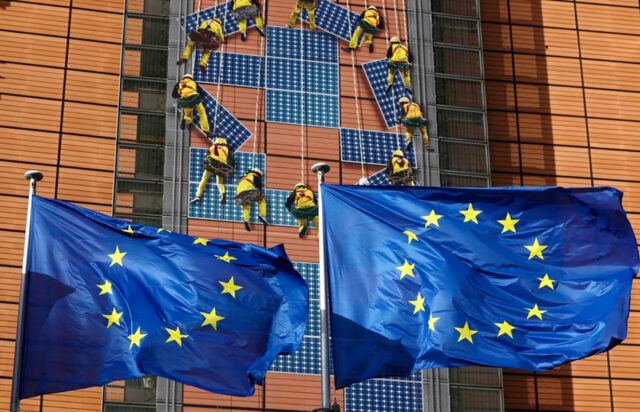
BRUSSELS — The European Union and the Philippines said on Monday they would resume negotiations on a free trade agreement as the EU seeks to tap into Asia’s faster economic growth and gain access to critical raw materials.

Free trade negotiations stalled in 2017 over EU concerns about the human rights record of then Filipino President Rodrigo Duterte, who was succeeded in June 2022 by Ferdinand Marcos.

EU trade chief Valdis Dombrovskis said the bloc welcomed the “positive change of direction” taken by the Philippines’ new administration, while encouraging further progress on human and labour rights.

The European Union is the Philippines’ fourth largest trade partner. Trade in goods was worth 18.4 billion euros ($20 billion) in 2022 and 4.7 billion euros ($5.1 billion) in services in 2021. A trade deal could increase trade by 6 billion euros, Mr. Dombrovskis said.

The EU has targeted agreements with southeast Asian countries and has accords with Singapore and Vietnam and is in negotiations with Indonesia and Thailand.

The EU is eying Filipino raw materials such as nickel, copper and chromite that it needs for its green transition and for which it is currently heavily reliant on China.

The Philippines’ Commissioner for Trade Alfredo Pascual said his country wanted to secure capital and know-how from EU companies to engage in more domestic processing.

His country already benefits from the EU’s tariff-free GSP+ system for developing countries, but aims to rise to upper middle class income status, when GSP+ would no longer apply.

“We want to be able to lock in the benefits of GSP+, plus more,” Mr. Pascual said.

The Philippines currently benefits from tariff-free access to the EU for about two-thirds of products, including coconut oil, vacuum cleaners, tuna and pineapples.

A free trade deal could allow exports of seaweeds, tobacco, wood and ornamental plants, Mr. Pascual said. — Reuters

ADVERTISEMENT
ADVERTISEMENT