Home Blog Page 3482

Zambo-Cotabato bus route starts

COTABATO CITY — Rural Transit Mindanao, Inc. (RTMI) on Friday launched its direct bus route between the cities of Zamboanga and Cotabato, which local officials said would boost trade and commerce in the Bangsamoro region.

“It is good for the business climate of the Bangsamoro region,” said Ronald Hallid Dimacisil Torres, president of the Bangsamoro Business Council. “It will have a big impact on our efforts to boost commerce and trade in the autonomous region via durable linkages between us in mainland Mindanao and our counterparts in the Zamboanga peninsula, in Basilan, Sulu and Tawi-Tawi.”

Zamboanga City is the entry and exit point for residents of the three island provinces who come to Cotabato City to transact with regional offices of the Bangsamoro Autonomous Region in Muslim Mindanao.

Travel time from Zamboanga City to Cotabato City is 13 to 15 hours. The air-conditioned bus fare is P1,100 per passenger, according to an announcement by MRTI over radio stations here on Saturday.

MRTI buses from Zamboanga City to Cotabato City and vice versa will have a brief stopover in Pagadian City, capital of Zamboanga del Sur, where passengers can buy food and drinks that they can bring aboard. — John Felix Miciano Unson

Hotel found violating FIA

BW FILE PHOTO

THE PHILIPPINE Supreme Court (SC) has upheld an appellate court decision that found a hotel company violating the Foreign Investments Act (FIA) after it failed to report to the corporate regulator a change in the nationality of its majority owner.

“The FIA relevantly provides that a non-Philippine corporation must register with the SEC before it does business in the country or invest in a domestic corporation,” the high court’s Second Division said in an 11-page resolution against New Coast Hotel, Inc.

It said the hotel’s allegation of delay on the part of the Securities and Exchange Commission (SEC) in detecting and acting on its offense was unsubstantiated.

“In sum, no error was committed by the Court of Appeals when it held that neither prescription nor laches bar the SEC from penalizing New Coast for its violation of the FIA as the same is in accord with law and jurisprudence,” it added. — Chloe Mari A. Hufana

Canino clinches berth for FIDE World Chess Olympiad in Hungary

RUELLE CANINO — FACEBOOK.COM/NCFPCHESS

DREAMS do come true.

Prodigious Ruelle Canino realized hers on Sunday after claiming one of the three berths to the national team seeing action in the FIDE World Chess Olympiad in Budapest, Hungary this September.

It was sealed by a slambang 83-move draw with Woman FIDE Master Cherry Ann Mejia of a Sicilian in the 10th and penultimate round of the Philippine National Women’s Chess Championship at the Malolos City Hall in Bulacan.

And it could have been a victory after ramming her way into Ms. Mejia’s brittle queenside pawn formation that allowed the wunderkind from Cagayan de Oro to squeeze through a passed pawn.

But Ms. Canino couldn’t translate it to a win as Ms. Mejia masterfully defended and forced the draw via perpetual check.

With a round to go, Ms. Canino has 7.5 points trailing Woman International Master (WIM) Jan Jodilyn Fronda by half a point following the latter’s 62-move triumph of yet another Sicilian over Mhage Sebastian.

That not only plucked Ms. Fronda the solo grip of No. 1, she also claimed an Olympiad spot for herself and man the top board with the possibility of perennial board one player Woman Grandmaster (WGM) Janelle Mae Frayna seeing action in the men’s.

Interestingly, Mmess. Fronda and Canino were clashing in the last round at press time with the winner seizing the one slot to the Asian Indoor and Martial Arts Games in Bangkok, Thailand this November, the top purse worth P85,000 courtesy of host Malolos City Mayor Christian Natividad and the distinction as the best female player in the country.

Ms. Frayna, meanwhile, saw her four-win streak coming to an end after she shockingly fell to underdog April Joy Ramos of Marikina City.

Mercifully, Ms. Frayna remained at No. 3 but she now shared it with WIM Kylen Joy Mordido, who could be the country’s next WGM with two of the three norms required in earning the title already in her hands.

Still with a legitimate chance at that third and last Olympiad seat were WFMs Allaney Jia Doroy and Shanian Mae Mendoza, who both have 5.5 points in this event organized by the NCFP and backed by the Philippine Sports Commission and POC. — Joey Villar

Arana, Team Greats upstage Team Stalwarts, 142-133 in Bacolod

JUSTIN ARANA (15) — PBA.PH

BACOLOD CITY — Newly-minted PBA All Stars Blitz Game Most Valuable Player Justin Arana looks to build on his stellar performance here as he shifts focus to Converge’s fight for survival in the Philippine Cup.

Mr. Arana muscled his way to 36 points and eight rebounds in leading Team Greats over Team Stalwarts, 142-133, Saturday night, emerging as the brightest among the rookies, sophomores and juniors. This augurs well for his confidence going into the difficult grind for the FiberXers, who are winless in five outings despite Mr. Arana’s splendid 19.6-point, 6.4-rebound average.

Mr. Arana and the FiberXers hit the court again on April 3 versus Rain or Shine, needing a bunch of wins, if not a sweep, to salvage a seat to the playoffs.

Mr. Arana delivered a roaring outing in the RSJ match that not only strengthened his self-esteem but also made a strong case for his possible inclusion in the main All Star Game in the near future.

The 6-foot-7 center banged in 24 in the first half to power Greats to a 78-73 cushion. After adding two in the third, he dropped 10 in the final canto to help tow the Greats to the finish line.

Mr. Arana’s 36 was the most points in a Greats-Stalwarts game since Encho Serrano fired 40 in Team Stalwarts 138-158 loss to Greats last year in Passi, Iloilo.

TNT’s Brandon Ganuelas-Rosser and Magnolia’s Jerrick Ahnamisi rifled in 23 and 21 respectively, to back up Mr. Arana, who dismissed getting sole credit for the triumph. — Olmin Leyba

The Scores:

Team Greats 142 — Arana 36, Ganuelas-Rosser 23, Ahanmisi 21, Stockton 9, Tuffin 8, Ildefonso 8, Laput 8, Caracut 8, Ilagan 8, Mamuyac 6, Cu 5, Gomez de Liano 2.

Team Stalwarts 133 — Aurin 23, Calma 22, Munzon 16, David 15, Yu 12, Santillan 12, Asistio 8, Zaldivar 7, Holt 7, Nocum 6, Amores 5.

Quarterscores: 39-45, 78-73, 109-106, 142-133.

UST outlasts NU in thrilling five sets

PHILSTAR FILE PHOTO

UNIVERSITY of Santo Tomas (UST) stamped its class once again on rival and three-time defending champion National University (NU) with a scintillating 28-30, 22-25, 25-23, 25-22, 15-9 reverse sweep to stabilize its Final Four drive in the UAAP men’s volleyball tournament on Sunday at the Smart-Araneta Coliseum.

Reigning MVP Joshua Ybañez tallied a new career-high of 34 points on 31 hits, two blocks and an ace as the Golden Spikers scored a repeat win over the Bulldogs in the second meeting between last season’s finalists for a 5-4 slate to gain a share of the fourth seed with Ateneo de Manila University.

The streak-busters that they were, the Golden Spikers in the process snapped the Bulldogs’ seven-game run after ending the latter’s 34-game, five-year winning spree via sweep back in the opener, 25-23, 26-24, 25-23.

Making it happen were John Sherwin Umandal and Gboy de Vega, who complemented Mr. Ybañez with 15 and 11 points, respectively, in a marvelous comeback for the Season 85 runner-up from two sets down. Dux Yambao orchestrated it with 26 sets.

Prized rookie Jade Disqiuitado (20), Leo Aringo (19), Nico Almendras (13) and Obed Mukaba (12) led the Bulldogs, who slid to 7-2 to surrender the solo lead to Far Eastern University (7-1). — John Bryan Ulanday

NUNS survives 51-point outing from Fil-Am Nation’s Panganiban to rule U19

LOCAL bet National University-Nazareth School (NUNS)survived the 51-point eruption of Naomi Panganiban for the fancied Fil-Am Nation Select Girls 1, 78-73, to reign supreme in the Manila Live Girls Under-19 Championships powered by the Smart-National Basketball Training Center (NBTC) on Sunday at the Mall of Asia Arena.

Cielo Pagaduan and Alicia Villanueva joined hands with 26 and 18 points, respectively, to neutralize the Fil-Am hotshot Ms. Panganiban and anchor the Lady Bullpups’ perfect run in the 14-team tourney that featured a bevy of international squads.

NUNS swept the pool play before dominating Joflow Academy in the quarterfinals, 85-45, and University of Santo Tomas, 88-71, in the Final Four to advance to the Last Dance.

And the Lady Bullpups did not shy away from the challenge from there on even against the Filipino-American stalwarts, standing their ground in the opening salvo before breaking out for a 41-32 lead at the turn.

Ms. Panganiban, despite the defeat, was named the Tournament MVP following her scoring masterclass built on five treys and 12-of-14 freethrow clip. A former Gilas Pilipinas girls standout, Ms. Panganiban averaged 38.8 points on five triples in the first invitational tourney held simultaneously with the Smart-NBTC National Finals.. — John Bryan Ulanday

Caitlin Clark Effect

The Caitlin Clark Effect was evident yesterday as Iowa faced Holy Cross in the first round of the NCAA Tournament. A merchandise truck was parked outside the Carver-Hawkeye Arena, ostensibly for the hapless minority who somehow failed to deck themselves in the hosts’ gear. The gates opened a couple of hours before tipoff, but, by then, lines had already formed around the perimeter. Needless to say, the capacity crowd, officially listed at 14,324, expected not just victory, but a stellar performance from the presumptive Player of the Year.

Indeed, the Hawkeyes, top seed in the Albany 2 bracket, were heavily favored to prevail over the 16th-ranked Crusaders. And, as if projections didn’t already bring enough pressure, at the back of their minds was the eventuality that they would be playing their last match at home with Clark on the marquee. Regardless of how they fare in March Madness, she will be foregoing her last year of eligibility and turning pro — and, with her, four other seniors. In other words, the end of an era is nigh.

Significantly, the Hawkeyes could not summon their magic early on for some reason or another. Considering that their current campaign has included a successful run to the Big Ten title and a cacophony of non-conference sellouts in neutral venues, pressure could not have been the reason. (In the aftermath, head coach Lisa Bluder attributed the their slow start to the 13 days they had to endure between contests.) In any case, they led by just two points after the first quarter. And Clark was no better; she made a turnover 12 seconds in, and four more to match her scoring output in the first 10 minutes of play.

To be sure, Clark and the Hawkeyes eventually buckled down to work. At the half, their lead had grown to 18 off sterling defense; they held the Crusaders to nine points on one-of-12 shooting from the field. And as the payoff period drew closer, the outcome became evident to all and sundry: a blowout that would enable them to play in front of partisan fans one last time. Tomorrow, they face tougher opposition in the West Virginia Mountaineers, but the presupposition and objective remain the same.

How far will the Hawkeyes go in the tournament? Will they manage to once more carve a path to the championship match? Or will they bow out before then owing to the vagaries of do-or-die set-tos? Only time can tell, but one thing is clear all the same: They’re only too glad to let Clark take them as far as she can.


Anthony L. Cuaycong has been writing Courtside since BusinessWorld introduced a Sports section in 1994. He is a consultant on strategic planning, operations and human resources management, corporate communications, and business development.

Coal’s long goodbye in India and China is a climate headache

A coal mine in Chhattisgarh, India. — ANINDITO MUKHERJEE/BLOOMBERG

MORE THAN two years after climate negotiators first attempted to consign coal to history, the dirtiest fossil fuel is having a moment.

Thanks to a combination of China’s energy insecurity — pushing Beijing back to trusted power sources — plus rising Indian demand, the continued fallout from the war in Ukraine and faltering international programs to wean developing economies off fossil fuels, coal is proving remarkably resilient. Output hit a record last year, and producers are preparing for a future where they will be required for decades yet to balance renewable energy.

Even prices are holding up. While thermal coal is trading at just a fraction of the lofty levels reached in 2022, after Russia’s invasion of its neighbor, prices are still well above historic norms. Benchmark Newcastle coal futures are changing hands just under $130 a ton, roughly a quarter of the peak but higher than any level between 2011 and 2020.

Much of this second wind is down to Asia. In 2000, the International Energy Agency (IEA) estimated advanced economies accounted for almost half of coal consumption. By 2026, China and India alone will make up more than 70%. Those two heavyweights and Indonesia started operating new coal power plants amounting to 59 gigawatts last year, and either launched or revived proposals for another 131 gigawatts — about 93% of the world’s total, according to Global Energy Monitor.

“You look at Asia, the demand and the build out of coal-fired power plants, particularly in India — coal’s not going anywhere anytime soon,” Rob Bishop, chief executive officer of Australian miner New Hope Corp., said in an interview.

The extended final act will be a vindication for fossil fuel executives, who have long argued against the feasibility of shifting swiftly out of carbon-intensive power, pointing out benefits in terms of reliability and cost. A mention of coal’s buoyancy earned Saudi Aramco chief executive officer Amin Nasser a round of applause at a major energy conference in Houston last week.

It’s less good news for efforts to curb carbon emissions and reach global climate goals.

For years, analysts expected coal production to plateau after it hit a then-record in 2013. Funding, after all, was drying up. Then came 2021, when power shortages in China set Beijing on a path to order more mining to ensure energy security.

In 2022, Russia’s invasion of Ukraine and blackouts during heatwaves in India further bolstered coal demand. By last year, output had risen to a record 8.7 billion tons, according to the IEA.

That figure is expected to drop this year. But the agency expects it to stabilize through 2026 — in line with industry forecasts of a long goodbye.

All of this is visible on the ground. In China, which produces and consumes half the world’s coal, miners are struggling to maintain growth rates after boosting output 21% over the past three years to 4.7 billion tons. Low-cost reserves have mostly been tapped, leading companies to dig deeper, more expensive mines. Fatalities have also started rising after years of declines.

Record amounts of new solar panels and wind turbines, along with a rebound in hydropower and steadily growing nuclear generation, mean low-carbon energy will likely exceed the growth in electricity consumption, according to the Centre for Research on Energy and Clean Air.

But that clean energy will also be coal’s lifeline, said Zhang Hong, deputy secretary-general of the China National Coal Association. Renewable power only generates when weather permits, so even as other baseload options emerge, cheap and reliable coal will still play a role.

“The next 10 to 15 years will remain a crucial strategic window,” Zhang Hong said.

India is the one country where the IEA forecasts coal output to grow this year, with production set to top 1 billion tons for the first time. Prime Minister Narendra Modi needs to meet growing energy demand while reducing reliance on expensive imports. Yet even after a surge in renewables, nuclear, hydropower and other baseload options have fallen short — so coal is expected to remain the dominant source of power at least until the end of this decade.

Indonesia, meanwhile, the world’s top thermal coal exporter, sees production stable for the next two years. That’s partly to feed surging domestic demand from a booming, power-hungry nickel processing sector, even if lower prices eventually cool enthusiasm.

But it’s also evidence of the difficulty of accelerating the end of coal where economies have newer plants, rising energy demand and an urgent need to create jobs. In 2022, Jakarta agreed to a $20-billion green deal with wealthy governments and financial institutions that would, among other things, close coal power stations early. Coal phaseouts, however, have proved far more challenging than anticipated. Landmark deals remain on the negotiating table.

Coal’s days are numbered, of course. Advances in solar and wind have made those technologies far cheaper than coal power in most parts of the world, and similar gains for batteries and energy storage systems could finally make around-the-clock renewable power affordable enough to transform the energy mix.

But for now, the transition is testing years-long expectations of rapid peaks and subsequent steep declines.

“We see that the world needs more operators to mine coal and support the transition over many decades to come,” New Hope’s Mr. Bishop said. — Bloomberg

UK royal Kate ‘enormously touched’ by support after cancer announcement

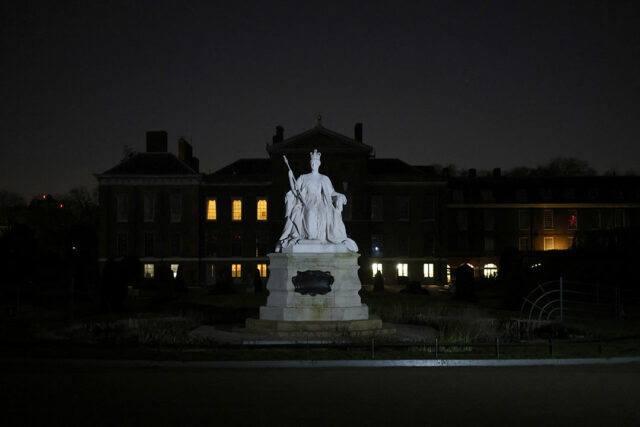
General view of Kensington Palace on the day of an announcement about the health of Britain’s Catherine, Princess of Wales, in London, Britain, March 22, 2024. — REUTERS

LONDON — Kate, Britain’s Princess of Wales, and her husband Prince William have been “enormously touched” by the messages of support received since she announced her cancer diagnosis, a Kensington Palace spokesperson said on Saturday.

Kate said on Friday she was undergoing preventative chemotherapy after tests done following her major abdominal surgery in January revealed cancer had been present.

The 42-year-old wife of heir to the throne Prince William, called the cancer discovery a “huge shock.” The news comes as a fresh health blow to the British royal family: King Charles is also undergoing treatment for cancer.

Kate’s statement via a video message, which was filmed at Windsor Castle on Wednesday, triggered an outpouring of support from well-wishers.

“The Prince and Princess are both enormously touched by the kind messages from people here in the UK (United Kingdom), across the Commonwealth and around the world in response to Her Royal Highness’ message,” the Kensington Palace spokesperson said in a statement.

“They are extremely moved by the public’s warmth and support and are grateful for the understanding of their request for privacy at this time.”

Kate’s Friday announcement dominated British newspaper front pages on Saturday, with supportive messages combined with criticism of those who had speculated about her health in recent weeks.

The public also showed their support.

“Seeing the extraordinary dignity which Kate has shown, and her trying to hold together the royal family, I hope that now what the media will do is to give her and her family the privacy and respect that they deserve,” solicitor Simon Davis, 64, said outside Kensington Palace park.

“It’s good that she said what’s going on because I think it helps a lot of people that experience that,” said Sarah Macdonald-Brown, a 50-year old art gallery owner.

Tourist Karen Ferguson, 42, also showed her admiration for the princess, who is still popularly known by her maiden name Kate Middleton.

“It’s great that she came out and made a public statement so that people know she’s doing OK, and what’s going on. And I think we’re all just sending well-wishes, especially for her young children.”

One of the most personal messages of support came from Kate’s brother, James Middleton.

He posted a childhood photo of him and his sister on Instagram and wrote: “Over the years, we have climbed many mountains together. As a family we will climb this one with you too.”

FRONT PAGES
“KATE, YOU ARE NOT ALONE,” The Sun tabloid’s front page declared, saying she received a “huge outpouring of love and support”. The rival Daily Mirror went with “KATE REVEALS CANCER SHOCK” and shared her remarks about how she had to explain the news to her children Prince George, 10, Princess Charlotte, 8, and Prince Louis, 5.

The Daily Telegraph quoted the princess as saying: “Cancer came as huge shock,” but noted she said she is “going to be OK.”

The Daily Mail rounded on people who have speculated on her health, asking: “How do all those vile online trolls feel now?”

Rumors and gossip on social media, in newspapers and even some US talk shows had abounded since Kate’s January surgery, although her Kensington Palace office had announced at the time that she would be absent from royal engagements while she recovered.

On Friday, messages of support poured in for Kate, including from King Charles, Prince Harry, Prime Minister Rishi Sunak, Archbishop of Canterbury Justin Welby and U.S. President Joe Biden.

Sunak said Kate had “shown tremendous bravery” with her statement, adding she “has been unfairly treated by certain sections of the media around the world and on social media”.

Kate’s diagnosis was also big news internationally.

“Catherine’s Cancer Diagnosis Puts UK Royals on Even More Uncertain Terrain,” said the New York Times, noting that the grave health concerns of both the king and Kate are stretching an already slimmed-down monarchy.

Charles, who took the throne in September 2022 after the death of his mother Queen Elizabeth, underwent a corrective procedure for an enlarged prostate at the same hospital as Kate in January.

Buckingham Palace then revealed in February that the 75-year-old king was to have treatment for cancer, meaning he has had to postpone his public royal duties. — Reuters

World Bank to share more data to attract private investors to developing countries

REUTERS

The World Bank will publish more of its proprietary data, including on debt defaults, starting next week as part of a push to attract more private sector investment to developing countries, World Bank President Ajay Banga said.

Banga, speaking at the China Development Forum early Sunday, China time, said the World Bank Group had mobilized $41 billion of private capital for emerging markets and raised another $42 billion from the private sector for bond issuance last year, with both totals to be eclipsed this year.

But he said more progress was needed, and the bank was taking action on a number of fronts to overcome barriers holding back private sector investment to developing economies.

Economic growth has slowed in developing countries, with growth falling to barely 4% from 6% in two decades, Mr. Banga said, noting that each lost percentage point dragged 100 million people into poverty, while debt levels were rising.

Mr. Banga noted that developing countries also faced an “unimaginable” gap between 1.1 billion young people expected to enter the workforce in the next decade and expected job creation of just 325 million jobs.

To better understand the issues, the bank convened a focus group with 15 chief executives of asset management companies, banks and operators who identified concerns such as regulatory certainty, political risk insurance and foreign exchange risk, he said.

The bank last month already announced reforms that will consolidate its loan and investment guarantee structure and triple its annual guarantees to $20 billion by 2030.

Starting next week, Mr. Banga said, the bank and a consortium of development institutions would also start publishing private sector recovery data by county income level, as a step to inspire investor confidence.

The World Bank would also publish private sector default data broken down by credit rating, as well as sovereign default and recovery rate statistics dating back to 1985, he said.

“All this work contributes to one goal: getting more private sector capital into developing economies to drive impact and create jobs,” Banga said.

The former Mastercard CEO said the bank was also working on a longer-term effort to build a securitization platform that will make it easier for pension funds and other institutional investors to bring their $70 trillion to emerging markets.

Bundling large standardized investments in one package would encourage meaningful investment at scale, overcoming the current patchwork of small, bespoke loans that each had their own documents, risk and pricing, he said.

China’s “remarkable journey” in the past five decades was a testament to what is possible, Mr. Banga said, noting China had created hundreds of millions of jobs, sharply reduced poverty and cut emissions. Once a major World Bank borrower, China is now one of the bank’s biggest donors, he added. – Reuters


Google, Apple breakups on the agenda as global regulators target tech

ARKAN PERDANA-UNSPLASH

 – Big Tech is facing its biggest challenge in decades as antitrust regulators on both sides of the Atlantic crack down on alleged anti-competitive practices that could result in break-up orders to Apple and Alphabet’s Google, a first for the industry.

That in turn could inspire watchdogs around the world to pile on, as evidenced in the growing number of antitrust probes in various countries following the opening of EU and US cases. Since AT&T was broken up exactly 40 years ago, no company has faced the possibility of a regulator-led break-up in the United States until now.

Google has said it disagreed with the EU’s accusations while Apple said the US lawsuit is wrong on the facts and the law.

In 1984, AT&T, also known as Ma Bell, was broken up into seven independent companies called “Baby Bells” to open up one of the most powerful monopolies of the 20th century. AT&T, Verizon and Lumen are currently the only surviving entities.

Regulators now allege companies such as Apple and Google have built impenetrable ecosystems around their products, making it difficult for customers to switch to rival services, which led to the coining of the term walled gardens.

The US Department of Justice on Wednesday warned Apple, a $2.7 trillion company, that a break-up order is not excluded as a remedy to restore competition after it teamed up with 15 states to sue the iPhone maker for monopolizing the smartphone market, thwarting rivals and inflating prices.

Even so, it will likely take years to decide the case, which Apple has vowed to fight.

The US actions come on the heels of other mounting threats across Europe this week.

Big Tech will face more scrutiny shortly with Apple, Meta Platforms and Alphabet likely to be investigated for potential Digital Markets Act (DMA) violations that could lead to hefty fines and even break-up orders for repeated breaches, people with direct knowledge of the matter told Reuters on Thursday, on the condition of anonymity.

EU antitrust chief Margrethe Vestager helped pave the way for drastic measures last year when she accused Google of anti-competitive practices in its money-spinning adtech business and that it may have to divest its sell-side tools.

She said that requiring Google to sell some of its assets seemed to be the only way to avoid conflicts of interest as it would prevent Google from allegedly favoring its own online digital advertising technology services versus advertisers and online publishers.

Vestager is expected to issue a final decision by the end of the year.

European Parliament lawmaker Andreas Schwab, who was heavily involved in drafting landmark EU DMA tech rules that kicked in this month, said lawmakers want bold action against Big Tech which flouts rules.

“If they don’t comply with the DMA, you can imagine what Parliament will ask for. Break-ups. The ultimate goal is to make markets open, fair and allow more innovation,” he said on Friday.


BREAKING UP IS HARD TO DO

It is far from certain that regulators will issue break-up order as they mull options and any action may just result in a fine. Legal experts also suggested the case against Apple, drawing from the 1998 case against Microsoft MSFT.Ocould be more difficult this time.

“In the European Union, there is less of a tradition, with splitting a company seen as a last resort. It has never happened before,” said a Commission official, speaking on condition of anonymity.

Apple’s highly integrated system would also make a break-up difficult compared with Google, said lawyer Damien Geradin at Geradin Partners, who is advising several app developers in other cases against Apple.

“It seems to me much more complicated. You are talking about something that is integrated, for example you can’t force Apple to divest its App Store. That doesn’t make sense,” he said.

He said it would be better to impose behavioral remedies on Apple that obligates it to do certain things while in the case of Google, a break-up order could simply target acquisitions made to strengthen its key services.

“What’s more likely is they (DOJ) go for remedies like opening up hardware functionality, or making sure developers aren’t being discriminated against in terms of pricing,” said Max von Thun, director of advocacy group Open Markets.

“I think they want to say that everything’s on the table, but it doesn’t necessarily mean they’ll choose that path,” he said.

Apple gets most of its nearly $400 billion-a-year revenue from selling hardware — iPhones, Macs, iPads and Watches — followed by its Services business, which will brings in roughly $100 billion a year.

Structural remedies such as break-ups will ultimately be tested in courts, said Assimakis Komninos, partner at law firm White & Case.

“I would say that experiences of imposed structural measures, such as breakups, are not many, but the small past experience shows that this is very tricky, aside from the formidable legal challenges,” he said. – Reuters

Putin vows to punish those behind Russia concert massacre

 – Russia said on Saturday it had arrested all four gunmen suspected of carrying out a shooting massacre in a concert hall near Moscow, and President Vladimir Putin pledged to track down and punish those behind the attack.

Militant Islamist group Islamic State claimed responsibility for Friday’s rampage but there were indications that Russia was pursuing a Ukrainian link, despite emphatic denials from Ukrainian officials that Kyiv had anything to do with it.

Moscow regional governor Andrei Vorobyov said 133 bodies had been recovered from the rubble in 24 hours, and doctors were “fighting for the lives of 107 people.” State TV editor Margarita Simonyan, without citing a source, had earlier given a toll of 143.

In a televised address, Mr. Putin said 11 people had been detained, including the four gunmen. “They tried to hide and moved towards Ukraine, where, according to preliminary data, a window was prepared for them on the Ukrainian side to cross the state border,” he said.

Russia’s FSB security service said the gunmen had contacts in Ukraine and were captured near the border. It said they were being transferred to Moscow.

Neither Mr. Putin nor the FSB publicly presented any proof of a link with Ukraine, with which Russia has been waging war for the past 25 months. Ukrainian President Volodymyr Zelenskiy said it was typical of Mr. Putin and “other thugs” to seek to divert blame.

Ukrainian military intelligence spokesperson Andriy Yusov told Reuters: “Ukraine was of course not involved in this terror attack. Ukraine is defending its sovereignty from Russian invaders, liberating its own territory and is fighting with the occupiers’ army and military targets, not civilians.”

Islamic State has a strong motivation to strike Russia, which intervened against it in Syria’s civil war in 2015, and security analysts said the IS claim seemed plausible as it fit the pattern of past attacks.


PUTIN ADDRESS

Mr. Putin cast the enemy as “international terrorism” and said he was ready to work with any state that wanted to defeat it.

“All the perpetrators, organizers and those who ordered this crime will be justly and inevitably punished. Whoever they are, whoever is guiding them,” Mr. Putin said. “We will identify and punish everyone who stands behind the terrorists, who prepared this atrocity, this strike against Russia, against our people.”

A senior Russian lawmaker, Andrei Kartapolov, said that if Ukraine was involved, then Russia must deliver a “worthy, clear and concrete” reply on the battlefield.

Western nations, including the United States whose ties with Moscow have been fraught since its invasion of Ukraine, condemned the attack and expressed sympathy for the Russian people affected. Arab powers and many former Soviet republics also expressed shock and sent their condolences.

The White House said the US government shared information with Russia early this month about a planned attack in Moscow, and issued a public advisory to Americans in Russia on March 7. It said Islamic State bore sole responsibility for the attack.

“There was no Ukrainian involvement whatsoever,” US National Security Council spokesperson Adrienne Watson said on Saturday.

Verified footage showed camouflage-clad gunmen opening fire with automatic weapons in the Crocus City Hall near Moscow. Video showed people taking their seats, then rushing for the exits as repeated gunfire echoed above screams.

Investigators said some died from gunshot wounds and others in a huge fire that broke out in the complex. Reports said the gunmen lit the blaze using petrol from canisters they carried in rucksacks.

People fled in panic. Baza, a news outlet with good contacts in Russian security and law enforcement, said 28 bodies were found in a toilet and 14 on a staircase. “Many mothers were found embracing their children,” it said.

Russian lawmaker Alexander Khinshtein said the attackers fled in a Renault vehicle that was spotted by police in Bryansk region, about 340 km (210 miles) southwest of Moscow on Friday night. He said a car chase ensued after they disobeyed orders to stop.

Mr. Khinshtein said a pistol, a magazine for an assault rifle, and passports from Tajikistan were found in the car. Tajikistan is a mainly Muslim Central Asian state that used to be part of the Soviet Union.

BBC News’ Russian Service quoted an unnamed source familiar with the security response as saying one attacker was killed in the concert hall, and another in the car in Bryansk. The BBC said it had a copy of that dead man’s passport, who it said was a 30-year-old citizen of Tajikistan.


SUSPECT INTERROGATED

TV editor Simonyan published a video showing one of the suspects, a young, bearded man, being interrogated aggressively by a roadside, replying in heavily accented Russian to a series of barked questions. He said he had flown from Turkey on March 4 and had received instructions from unknown people via Telegram to carry out the attack in exchange for money.

The man was trembling throughout the questioning. He was initially shown lying on his stomach with his hands bound behind his back, his chin resting on the boot of a figure in camouflage uniform. Later he was hauled up onto his knees.

Another man with cuts and bruises to his face was shown being questioned via an interpreter while sitting on a bench with bound hands and feet.

The Kremlin said Putin had held conversations with the leaders of Belarus, Uzbekistan and Kazakhstan in which all sides affirmed their willingness to work together to fight terrorism.


GUNFIRE AND SCREAMS

Long lines formed in Moscow on Saturday for people to donate blood. Health officials said more than 120 people were wounded.

Russia tightened security at airports, transport hubs and across the capital and big public events were cancelled across the country.

Islamic State, which once sought control over swathes of Iraq and Syria, claimed responsibility for the attack, the group’s Amaq agency said on Telegram.

Islamic State said its fighters attacked on the outskirts of Moscow, “killing and wounding hundreds and causing great destruction to the place before they withdrew to their bases safely”. The statement gave no further detail.

On Saturday it released a photograph of what it said were the four attackers, as well as what it said was footage of the attack. The roughly 90-second video showed a close-up view of one of the gunmen opening fire on several victims as he entered what appears to be the concert hall.

A US official said United States had intelligence confirming Islamic State’s claim of responsibility for the shooting. The official, speaking on condition of anonymity said Washington had warned Moscow “appropriately” in recent weeks of the possibility of an attack.

Friday’s attack, about 20 km (12 miles) from the Kremlin, happened two weeks after the U.S. embassy in Russia warned that “extremists” had imminent plans for an attack in Moscow.

Hours before the embassy warning, the FSB said it had foiled an attack on a Moscow synagogue by Islamic State’s affiliate in Afghanistan, known as ISIS-Khorasan or ISIS-K, which seeks a caliphate across Afghanistan, Pakistan, Turkmenistan, Tajikistan, Uzbekistan and Iran.

Mr. Putin changed the course of the Syrian civil war by intervening in 2015, supporting President Bashar al-Assad against the opposition and Islamic State.

“ISIS-K has been fixated on Russia for the past two years, frequently criticizing Putin in its propaganda,” said Colin Clarke of the Soufan Center, a New York-based research group.

The broader Islamic State group has claimed deadly attacks across the Middle East, Afghanistan, Pakistan, Iran, Europe, the Philippines, and Sri Lanka. – Reuters


ADVERTISEMENT
ADVERTISEMENT