Home Blog Page 3471

Government makes full award of reissued seven-year T-bonds

BW FILE PHOTO

THE GOVERNMENT made a full award of the reissued Treasury bonds (T-bonds) on Tuesday at an average rate higher than secondary market levels amid hawkish comments from a Bangko Sentral ng Pilipinas (BSP) policy maker.

The Bureau of the Treasury (BTr) raised P30 billion as planned via the reissued seven-year bonds it offered on Tuesday as total bids reached P46.501 billion, well above the amount on the auction block.

This brought the total outstanding volume for the series to P124.7 billion, the BTr said in a statement after the auction.

The bonds, which have a remaining life of six years and nine months, were awarded at an average rate of 6.237%, with accepted yields ranging from 6.15% to 6.274%.

The average rate of the reissued bonds went down by 57 basis points (bps) from the 6.807% quoted for the papers when they were last offered on Nov. 7, 2023, but 11.2 bps above the 6.125% coupon for the issue.

This was also 3.9 bps higher than the 6.198% seen for both the same bond series and for the six-year tenor at the secondary market on Tuesday before the auction, based on PHP Bloomberg Valuation Service Reference Rates data provided by the Treasury.

“The awarded T-bond rates went higher as market participants digested the latest hawkish remark from Finance Secretary [Ralph G.] Recto of potentially two rate cuts from the BSP this year,” a trader said in an e-mail.

The BSP may cut rates by 50 bps this year, according to Mr. Recto, who is a member of the central bank’s policy-setting Monetary Board.

This will be less than the initial plan of four adjustments, the Finance chief said.

However, he does not expect the easing cycle to begin at the Monetary Board’s next meeting on April 8.

The central bank may also end up reducing borrowing costs by up to 200 bps over the span of two and a half years, he added.

The Monetary Board kept its policy rate steady at a near 17-year high of 6.5% at its February meeting.

The BSP had hiked borrowing costs by 450 bps from May 2022 to October 2023 to help tame elevated inflation.

Rising US Treasury yields also pushed T-bond rates up, Rizal Commercial Banking Corp. Chief Economist Michael L. Ricafort said in a Viber message.

Tuesday’s T-bond auction was the last offering for the first quarter. The government was able to raise P512.3 billion out of its P525-billion borrowing plan for the period following partial awards in previous months.

In March alone, the BTr raised P180 as planned as it made full awards at all its Treasury bill (T-bill) and T-bond auctions amid strong demand and favorable rates.

For the second quarter, the Treasury is looking to borrow P585 billion from the domestic market, or P195 billion via T-bills and P390 billion through T-bonds.

The government borrows from local and foreign sources to help fund its budget deficit, which is capped at 5.1% of gross domestic product this year. — A.M.C. Sy


Globe completes sale of 33 towers to Unity Digital

GLOBE Telecom, Inc. has completed the sale of 33 towers to Unity Digital Infrastructure, Inc  for P396 million, the telecommunications company said on Tuesday.

In total, Globe has closed the sale of 282 towers out of 447 towers to be acquired by Unity Digital. 

Proceeds from the transaction will fund Globe’s capital expenditures, debt repayments and improve the company’s overall balance sheet.

In 2023, Globe signed a sale and leaseback agreement with Unity Digital Infrastructure for the sale of 447 towers valued at a total of P5.4 billion.

The telecommunications company said it anticipates a pre-tax gain of P1.8 billion from the transaction.

Unity Infrastructure is a joint venture telecommunications infrastructure platform of Aboitiz Infracapital, Inc. and global private markets firm Partner Group.

This year, Globe is allocating a total of $1 billion for its capital expenditures which will be funded by internally generated funds, debts, and proceeds from its tower sales.

At the local bourse on Tuesday, shares in the company climbed 0.74% or P13 to end at P1,768 each. — Ashley Erika O. Jose

Workforce development in the Philippines: Legislation is needed

DUALTECH TRAINING INSTITUTE

(Part 2)

The Philippine Congress should replicate its outstanding performance in passing laws that will accelerate the employability and competitiveness of the Filipino workforce in such other critical areas as health, agribusiness (especially in abolishing the many obstacles to the consolidation of farms that resulted from the failed agrarian reform program), the ease of doing business, etc. This is one reason why a good number of us who appeared in hearings of both the House of Representatives and the Senate on the charter change bill opined that the amendment of the Constitution is not an urgent matter. We felt that such an unnecessary effort at this time (advertising, media and educational institutions will not bring large sums in FDIs) will only distract our lawmakers from more pressing issues that require legislative acts.

More examples of recent bills proposed for the benefit of the Filipino workers are the Enterprise-Based Education and Training to Employment Act (Senate Bill No. 363 and House Bill No. 7400) which aims to establish a national enterprise-based education and training (EBET) system that is competency-based and supports work-based training. Similarly, Senate Bill No. 2491 of the National Apprenticeship Program Act of 2023 aims to clarify the articulation of apprenticeships currently based on the Labor Code. Multiple interpretations of the different types of work-based training modalities have led to difficulties in passing laws that support industry-led training programs. For example, the Dual Training Act of 1994 (especially championed by former President Fidel Ramos himself), the Labor Code of the Philippines, and the upcoming bills involving work-based training programs must thoroughly define the different modalities. Industry investment and involvement are crucial in the implementation of work-based training modalities. It is important that the overall framework is aligned with industry needs. The roles of the government, industry, and the academe must be clearly delineated.

To highlight even more the desirability of enlightened legislation on this matter of access by the Filipino workers — both present and future — to skills development opportunities, it is important that these training programs be integrated into a comprehensive lifelong learning framework that maps out all available workforce development pathways. This would require the harmonization of existing frameworks such as the Philippine Qualifications Framework, Philippine Skills Framework, and the Philippine Credit Transfer System.

To cite a very specific example of the need for a lifelong learning framework, a few graduates of the dual training system from the leading example of this modality — the Dualtech Training Institute located at the Carmelray Industrial Estate in Canlubang, Laguna — have been able to use the ladderized system to pursue a college degree in engineering, then to a masteral degree in an allied field, and ultimately all the way to a Ph.D. I cite this example to illustrate that having a comprehensive lifelong learning framework will democratize our educational system even more by enabling the highly qualified graduates of our Technical Education and Skills Development Authority (TESDA)-type schools to still aspire to obtain the highest academic degrees that are usually accessible to only the children of the well-to-do. We will give opportunity to Filipino youth who start out as electricians, for example, in their first occupation to eventually acquire a BS in Electrical Engineering through the ladderized program and all the way to a Ph.D. in electrical engineering, or, should they go up the management ladder, work for an MBA. The reverse case would be the possibility of a graduate of a college degree (such as accounting or law) to train to be a mechanic if that is what would enable him to get a better job in the future. Already there are many college degree holders who later take TESDA-related courses to improve their chances of employment.

In all of these, industry participation is absolutely necessary. While some industry associations and business consortia are already established, the lack of clarity over which government agencies to engage with for workforce development initiatives is crippling their effectiveness. Multiple government agencies — such as the Commission on Higher Education (CHED), TESDA, Department of Agriculture (DA), Department of Tourism, the Department of Information and Communications Technology (DICT), Department of Trade and Industry, and Department of Labor and Employment (DoLE) — are individually implementing their own industry engagement initiatives.

This is a perfect example of what I hear from prospective foreign direct investors who complain that “the right hand of the Government often does not know what the left hand is doing.” Each government agency produces valuable information for workforce development initiatives, but these seem to have caused confusion, with overlapping functions, and additional red tape that discourages industry participation.

Up until very recently, few industry sectors had a clear direction as regards the development of skills and competencies in their respective industries. Theoretically, industry boards were tasked to provide TESDA and the private sector a proper mechanism and venue to collaborate on setting training standards, co-developing training curricula, and crafting policies that strengthen the ability of industries to invest in workforce development. Lamentably, there have been only 40 Registered Industry Boards (RIB) across eight sectors operating at the national, regional, and provincial level. TESDA has not been able to maximize these RIBs. This has led to weak industry engagement resulting in the failure to fully mobilize and harness the 1,109,64 recorded business enterprises in the country.

Today, there is a great clamor for accurate data in formulating any solution to an economic or management problem. As the recently appointed Agriculture Secretary Francisco Tiu Laurel, Jr. realized, the appropriate policies and programs in his department could hardly be formulated without accurate data. That is why he started his term by making sure he would benefit from the new science of data analytics before trying to look for solutions to the many problems related to food security.

In the same way, in the labor sector, organizing RIBs would serve as the primary point of contact for efficient information sharing in the setting of standards for the mastery of targeted skills, learning outcomes, and needs assessment for in-demand skills across all government agencies. Moreover, it would unlock the ability of industry sectors to develop the accurate market information, lobby for policies to minimize government red tape, co-develop policies to maximize economic returns on investment in workforce development, to negotiate for incentives, and identify more effective training and upskilling pathways for labor market needs.

Industries would also benefit from increasing their engagement with their local Public Employment Service Offices (PESOs), especially since these offices, in varying capacities, gather data on the employment status of local residents and provide direct information on labor market trends. Jobs-skills mismatch has already become a widespread issue, and it would benefit industries to take the lead in determining how the LGUs can support them in addressing this problem at the local level.

(To be continued.)


Bernardo M. Villegas has a Ph.D. in Economics from Harvard, is professor emeritus at the University of Asia and the Pacific, and a visiting professor at the IESE Business School in Barcelona, Spain. He was a member of the 1986 Constitutional Commission.

bernardo.villegas@uap.asia

Resurrecting long-forgotten histories through fiction

FOR FILIPINA fictionist Linda Ty-Casper, preserving part of history in the form of historical novels is a kind of advocacy. It defends the Philippines from false depictions and ensures that “we do not forget who we are.”

This is why her book, The Three-Cornered Sun, first published by New Day Publishers in 1979 and now re-published by local press Exploding Galaxies, treats history as more than just a backdrop. Set in the 1896 revolution against Spain, the story is based on recollections of the author’s own grandmother, Gabriela Paez Viardo de Velasquez.

It follows the lives of the members of the Viardo family as they go through that tumultuous moment in history, sometimes on opposing sides. National Artist for Literature Francisco Arcellana, in a review of the first edition, called it “a remarkable work that must rank with the finest fiction in English Filipinos have ever produced.”

But many Filipino readers nowadays barely know Ms. Ty-Casper and her work. Enter Exploding Galaxies, a relatively new publishing house that focuses on republishing out-of-print contemporary Philippine literature, with the goal of reviving lost classics.

“From the moment I read the first lines, the novel felt like it was history breathing and I think that’s what really drew me in,” Exploding Galaxies publisher Mara Coson told BusinessWorld shortly after the book launch on March 16, held at Everything’s Fine bookstore in Makati City.

The novel has the ability to make you feel like 1896 is about to happen right in front of you, Ms. Coson said, simply because of the extensive research.

“It knew exactly where in time it wanted to take its readers back to. I never saw Philippine history quite in that way before,” she added.

Ms. Ty-Casper, now 90 years old and living in Massachusetts, writes in the preface of the new edition, “I didn’t think there were any new readers for it. I’ve never been widely read, for some reason, but I persisted in writing about us, to fill the absence of our side.”

In the year 2024, the Filipino side of history that she talks about is in danger of being forgotten back home, hence Exploding Galaxies’ existence.

“Before we consider our lack of presence everywhere else, I think it starts with discovering these on our own shelves,” Ms. Coson said via e-mail. “So, yes to filling the absence, but here most of all — in bookshops, more libraries, and our conversations.”

For National Artist for Literature Gemino H. Abad, the ground of language shaped by Ms. Ty-Casper is “a people’s culture through their history.”

“She forges her own path through a given language’s lexical wilderness and makes her own clearing there,” he writes in praise of her work.

As for the role of presses like Exploding Galaxies, Ateneo Press, and Anvil Publishing House, to name a few that partake in the revival of overlooked literary works, the need for their advocacy is as urgent as ever.

“Any country is only as good as its system of education, as the knowledge held by its people,” he told BusinessWorld at the book launch. “It’s all about reading, thinking. We human beings, it is our human nature to know the truth.”

Ms. Coson added that there is a long way to go for this new edition of The Three-Cornered Sun, as well as for the first ever book that they re-published last year, Wilfrido D. Nolledo’s 1970 postmodern war novel But for the Lovers.

“I’ve been thankful for the reception that it’s received, but there’s more that needs to be done to open the book up,” she said.

Meanwhile, she teased that next two books in Exploding Galaxies’ lineup will be short story collections. “The series will not always be time traveling back to key moments in history. We will also publish books whose authors were writing about their contemporary times, even if that’s 20, 30, 40 years ago.”

The Three-Cornered Sun is available in Fully Booked, National Bookstore, and select bookstores including Everything’s Fine in Makati and Mt. Cloud Bookshop in Baguio, as well as in online marketplaces Shopee and Lazada. — Brontë H. Lacsamana

Gov’t finalizing proposed changes in charters of DBP, LANDBANK

BILLS seeking to amend the charters of the Land Bank of the Philippines (LANDBANK) and Development Bank of the Philippines (DBP) to allow for their public listing will be filed as soon as Congress resumes session, the Finance chief said.

“There’s a bill (for) LANDBANK, so we’re finalizing the DBP version also. There’s no session right now. When Congress resumes session, we’ll be done with it. We’ll file it,” Finance Secretary Ralph G. Recto told reporters last week.

The Finance department earlier said it wants to amend the charters of both state banks to increase their authorized capital stock. The banks will also be mandated to conduct an initial public offering (IPO).

Mr. Recto did not indicate the amount for the increase in capitalization.

“I don’t remember right now. I filed a bill for DBP to make it P100 billion, but now they’re talking about P300 billion. I don’t know (about) LANDBANK,” he said.

“I can’t remember exactly right now. But yes, we will increase their capitalization. Now, it doesn’t mean that we will fund it with taxpayers’ money immediately. What we can do is we allow them to keep the dividends, which will be part of their capital,” he added.

Earlier this month, DBP said it is seeking to increase its authorized capital stock to P300 billion from P35 billion to expand its products and services.

Mr. Recto added that he is not worried about the lenders’ financial stability.

This, after both banks sought regulatory relief from the central bank last year amid the impact of their contributions to the country’s first sovereign wealth fund on their capital positions.

Globalinks Securities and Stocks, Inc. Head of Sales Trading Toby Allan C. Arce said the proposal to amend the two banks’ charters indicates a “willingness to adapt to changing financial landscapes and regulatory environments.”

“Such amendments could potentially allow for greater flexibility in their operations, including their ability to access capital markets for funding and investment,” he said in a Viber message.

The public listing of the state lenders will help increase transparency, accountability, and potential efficiency in the banks’ operations, Mr. Arce added.

“By opening up to public markets, these banks could attract more investors, diversify their funding sources, and potentially unlock greater value for stakeholders,” he said.

If the listing is successfully executed, this would help inject fresh capital into both banks and strengthen their financial positions, Mr. Arce said.

“This, in turn, could enhance their capacities for lending, supporting economic growth, and development initiatives. Additionally, increased scrutiny and market discipline associated with public listing could encourage greater efficiency and risk management within these institutions,” he said.

“It’s important to note that pursuing an IPO for government-run companies like LANDBANK and DBP would require legislative changes. This could pose challenges and may take time to materialize due to the need for political consensus and legal processes,” Mr. Arce added.

April Lynn Lee-Tan, COL Financial Group, Inc. chief equity strategist, said the proposed increase in the banks’ capitalization is a welcome move.

“Increasing a bank’s capital is always good and will improve its capacity to lend,” she said in a Viber message.

Ms. Tan also noted that it is crucial to assess “whether or not it is attractive for the two banks to list given the unattractive valuations of most banks.”

“An IPO is proven to be an effective financial mechanism to raise funds provided all the required parameters are set in place,” Antonio A. Ligon, a law and business professor at De La Salle University in Manila, added in a Viber message. — Luisa Maria Jacinta C. Jocson

STI Education Systems Holdings unit redeems P2.18B worth of bonds

LISTED STI Education Systems Holdings, Inc. (STI Holdings) said its education unit has fully redeemed Series 7Y bonds worth P2.18 billion.

 The bond offering of STI Holdings’ education unit, STI Education Services Group, Inc. (STI-ESG), had a maturity date on March 23, the listed company said in a regulatory filing on Tuesday.

 “Since the maturity date of the bonds was a nonbusiness day, the redemption payment was made on March 25, the next business day, in accordance with the terms of the bonds,” STI said.

 The Series 7Y bonds is part of the first tranche worth P3 billion under the STI-ESG’s shelf registration of up to P5 billion filed in 2017.

 The net proceeds from the offering were used to finance the company’s campus expansion projects, refinancing of short-term loans incurred for land acquisition, and other general corporate requirements.

 Based on its website, STI-ESG has a school network of 63 schools comprising of 60 colleges and three education centers.

 STI-ESG offers various associate and baccalaureate degrees and technical-vocational programs in information and communications technology, arts and sciences, business and management, education, engineering, hospitality management, tourism management, engineering, education, psychology, and criminology.

In the first half of its fiscal year ending June, STI Holdings saw a 132% increase in its net income to P517.8 million from P223.19 million the prior year.

 The company’s revenues surged by 36% to P2 billion from P1.4 billion in 2023.

 On Tuesday, STI Holdings shares fell by 1.3% or one centavo to 76 centavos per share. — Revin Mikhael D. Ochave

Right of way woes unsolved will hurt Build Better More

CHUTTERSNAP-FREEPIK

Infrastructure is the way to go. This is evident in the emphasis given to infrastructure building by the administration of President Ferdinand Marcos, Jr. saying it is a cornerstone and a priority of his term.

The Build Better More program, for instance, is composed of 197 projects ranging from physical connectivity, water resources, agriculture, health, digital connectivity, power and energy, and other infrastructure.

The aggressive pursuit of infrastructure is backed by action in terms of budget allocation. From the years 2017 to 2021, annual public infrastructure spending ranged between 4.2% to 5.8% of Gross Domestic Product (GDP). During this administration, until 2028, spending will grow to 5% to 6% of GDP.

Supporting this articulated priority of the government is the Philippine Development Plan (PDP), which covers the years 2023 to 2028. The PDP acknowledges the need not just for infrastructure but for sustainable infrastructure. It lays down the path for promoting the inclusivity and seamless connectivity of road, maritime, air, and railway transportation facilities.

In ensuring the long-term resilience and sustainability of structures, the PDP acknowledges the crucial role played by the private sector in infrastructure development. After all, such projects cannot be delivered to the people solely by the government — it is simply not the core competence of government to build and operate infrastructure projects. Its human and financial resources, no matter how carefully planned, will also always be insufficient for undertaking these capital-intensive projects.

Thus, it needs to team up with private corporations for the financing, design, and construction of infrastructure projects. This is only possible through meaningful public-private partnerships (PPP). The private sector, for its part, has thus been invited to participate more fully in revitalizing the economy through increased partnerships.

Unfortunately, while partnerships between the government and the private sector are ideal in principle, there remain operational and practical hurdles like right of way (ROW) issues that need to be overcome as these, for many administrations, have caused delays in the completion of the projects, and hence in the people’s enjoyment of the benefits of these projects. These ROW issues could sometimes drag on for years, casting uncertainty in the future of what was once thought to be a viable and necessary undertaking. Costs increase, much to the dismay of the private partners that invested huge resources at the invitation of the government.

As a result of such roadblocks, not only will the project not be completed, but the national reputation of the country is also damaged, becoming viewed as an investment risk. The investors we need will instead go to where they are confident their investments will prosper.

Thus, if ROW and other similar hurdles are not properly addressed, all the lofty pronouncements extolling the partnership between the public and private sectors will amount to nothing.

STREAMLINING
A recent forum held in Makati attempted to shed light on the matter. During the event, it was highlighted that streamlining the acquisition process for ROW can reduce, significantly, project delays. If ROW issues are addressed and resolved right away, then the private sector will meet their project timelines on time and avoid costly disruptions. The right policies and institutional frameworks and regulations are needed for this. Specifically, the objectives of Republic Act 10752 or the Right of Way Act must be defined clearly and unequivocally.

The Public-Private Partnership Code of the Philippines, passed just in December 2023, focuses on establishing a transparent, rules-based, and efficient PPP framework aiming to address the Philippines’ P23-trillion investment gap. The Code also underscores the need to address ROW issues to fast-track the implementation of PPP projects.

The government must do all it can to help solve the ROW problem. Specifically, the government should take the initiative to expropriate for ROW before project implementation. There should be a clear separation between building infrastructure and ROW matters. Introducing a separate contract for ROW before project identification should be done.

ROW issues can frustrate the vision that our nation has set especially in terms of economic advancement. To prevent ROW from causing delays, additional costs, frustration to affected property owners and inhabitants, and disenfranchisement among private investors, the government must ensure that these operational details are taken care of for the expeditious implementation of all national infrastructure projects.


Victor Andres “Dindo” C. Manhit is the president of the Stratbase ADR Institute.

Breaking the glass canvas

LARA LATOSA knew that women artists deserved to have a platform to tell their stories, even now when representation has improved.

In 2023, she submitted a proposal to Conrad Manila hotel for a show that mixed the perspectives of female veteran and upcoming artists. It would allow these women to express their thoughts, experiences, and wisdoms.

“I wanted to create a special show that highlights the beauty, creativity, and talent of female artists in a male-dominated industry,” Ms. Latosa told BusinessWorld.

As both co-curator and featured artist in the latest installment of Conrad Manila’s “Of Art and Wine” series, Ms. Latosa found it more pressing to put up the exhibit when she realized most of the artists she knew were men.

“Over the years, every time it’s International Women’s Month, there are definitely more women-led shows all over, and just more women overall who are becoming known in the arts scene. But I still find it important to provide a platform for individual female voices to be heard,” she added.

“Breaking the Glass Canvas,” an aptly titled collection of 28 works, was launched at Conrad Manila’s Gallery C on March 19.

Co-curated by Nestor Jardin, it features works by painter Lydia Velasco, mother-of-pearl sculptor Anita Del Rosario, painter Addie Cukingnan, comic surrealist Flor Baradi, abstract artist Meneline Wong, realist painter Celeste Lecaroz, jewelry artist Helena, surrealist Irish Galon, and environmental artist Lara Latosa.

Each of the nine artists were told to choose works that depict their “message to the younger generation, namely women who will see their works.”

“Others offer their perspectives as mothers or as women pursuing their passions,” Ms. Latosa told members of press during the launch. “My three works are each dedicated to myself, to my mom, and to my sister.”

She shows this through the use of abstract waves, each with their own character. They are also a tribute to the natural state of water, tying into her advocacy as an environmentalist.

For mother-of-pearl sculptor Anita Del Rosario, inspiration can be found everywhere. “Everything I create is from the heart,” she said. Her Inang Perlas sculpture, for example, summons feminine strength and grace in each curve.

Flor Baradi takes a different approach. The surrealist’s work Jupiter’s Muse Io in the Celestial Future and Audrey depicts renowned figures of beauty in a whimsical, playful manner.

“My ‘grotesque’ series is about women empowerment, being true to yourself and embracing your uniqueness. They’re a bit ugly for some but they just show that you are your own self, your own beauty,” she said.

The exhibit is on view until May at Conrad Manila’s Gallery C.

For inquiries about the paintings and exhibit, contact (8833-9999) or visit conradmanila.com. — Brontë H. Lacsamana

BSP coin machine collections hit P577 million

PHILSTAR FILE PHOTO

THE VALUE of coins collected through the Bangko Sentral ng Pilipinas’ (BSP) coin deposit machines (CoDMs) reached P577.42 million as of March 15, central bank data showed.

This was 17.2% higher than the P492.58-million coins seen a month prior.

A total of 162.31 million pieces of coins were deposited in the machines, up by 15% from the 141.07 million coins recorded a month before.

The machines also saw a total of 147,517 transactions, the BSP said.

The central bank began deploying the deposit machines in June last year to promote coin recirculation in the country.

The CoDM project aims to address the artificial coin shortage in the financial system and help ensure that only fit and legal tender currency is available for public use.

All denominations of the BSP Coin Series and New Generation Currency Coins Series are accepted by the CoDMs. Unfit and demonetized coins, foreign currency, and foreign objects are rejected by the machines.

The value of coins deposited in CoDMs may be credited to an individual’s e-wallet account or converted into shopping vouchers.

In February, BSP Deputy Governor Bernadette Romulo-Puyat said the central bank wants to roll out more deposit machines this year.

There are 25 coin deposit machines available in select retail establishments of the SM Store, Robinsons Supermarket and Festival Mall.

The BSP is also looking to partner with lenders to allow consumers to credit their deposited coins into their bank accounts, Ms. Romulo-Puyat added. — Luisa Maria Jacinta C. Jocson

PHL coffee shops face cost, supply challenges

FACEBOOK.COM/BUTFIRSTCOFFEEPH

PHILIPPINE micro, small and medium enterprises including coffee shops face challenges in keeping prices low amid high inflation, supply disruptions and impending wage increases, according to a startup owner.

“The challenge is [not] increasing prices because we are aiming to be affordable,” Anna Isabelle Magalona-Co, founder and chief executive officer at But First, Coffee, Inc. said in an interview. “Sometimes, it’s challenging to balance our costs and pricing.”

But First, Coffee sells coffee products and coffee drinks made from beans bought from local farmers.

The company often tests suppliers to ensure prices remain affordable, Ms. Co said. “We check for options and if a supplier increases prices, we look for other items we can decrease to compensate for the increase and retain value,” she added.

The Filipino entrepreneur said local coffee supply still can’t keep up with demand amid the growing number of coffee shops.

“There is really higher demand than supply here in the Philippines,” Ms. Co said. “That is why we cannot avoid increasing prices. But our local farmers and producers are catching up based on talks with some suppliers.”

The Philippine Coffee Board, Inc. estimates local coffee production at 30,000 to 33,000 metric tons (MT) a year, which falls short of the 150,000–200,000 MT yearly demand.

Business groups have raised concerns about a proposed legislated wage increase, which they said could hit small businesses. Ms. Co said the increase, though financially challenging for the company, is needed to support their workers.

“It’s challenging financially,” she said. “But at the same time, the wage hike will enable our employees to have more access to their basic needs and support their families.”

“As a business owner, I’m not only focused on revenues,” the entrepreneur said. “I’m also focused on giving back to our people, especially those who are helping us along the way. So while I know it’s quite challenging financially, if that’s the requirement of the government later on, we will comply.”

Meanwhile, But First, Coffee plans to open 150 stores this year, 100 of which will be franchises. It has 150 stores now.

But First, Coffee also expects to double the number of workers from 200 now. The brand as a whole generates 500 to 700 jobs, Ms. Co said. — Justine Irish D. Tabile

Altus Property income up 29% on higher rental revenue

ALTUSPROPERTYVENTURES.COM.PH

THE real estate firm Altus Property Ventures Inc. (APVI) announced on Tuesday a 29% increase in its 2023 net income, driven by higher rental revenue.

APVI’s net income reached P139.13 million in 2023 from P107.96 million a year ago, a sustained growth from P64.85 million in 2021.

This is mainly attributed to a 4.4% rise of rental revenues to P203.1 million from P194.4 million in 2022.

“The sustained healthy spending behavior of Filipino consumers in essential and discretionary purchases including in food, fashion, leisure, services, and entertainment significantly contributed to the upsurge in foot traffic and revenues,” Altus said in a stock exchange disclosure on Tuesday.

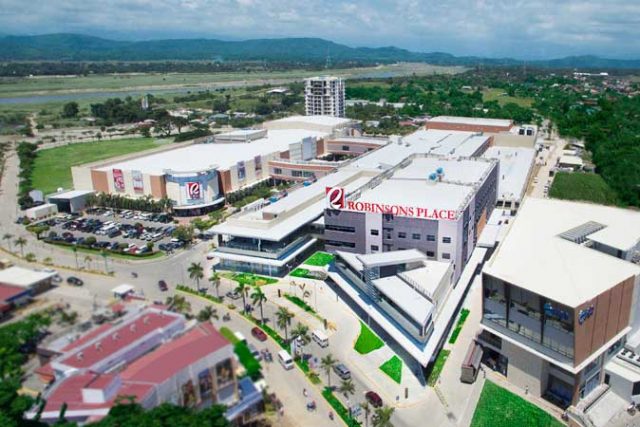
APVI owes all its revenue from the North Wing of Robinsons Place Ilocos, a two-storey mall located at San Nicolas, Ilocos Norte.

The cost of rental services fell 7.5% to P16.1 million in 2023 due to lower levels of repairs and maintenance expenses.

Its general and administrative expenses went down by 13% to P40.1 million from P46.1 million, due to a decrease in the billing of utilities.

Billing of utilities reached P24.78 million, 18.42% lower than last year, attributed to lowered power costs from coal and decreased fuel prices.

In 2023, the company’s total assets rose 16.48% to P1.06 billion from P911.43 million a year ago.

Its liabilities recorded P142.2 million, 8.4% higher than last year.

Earnings before interest, taxes, depreciation, and amortization (EBITDA) improved 10.2% to P157.2 million, while earnings before interest and taxes also rose to 11.7% to P146.6 million.

The EBITDA margin improved to 77% in 2023.

Meanwhile, total equity expanded by 17.8% to P919.4 million in 2023 from last year’s P780.3 million

Altus Property Ventures Inc. (APVI), formerly Altus San Nicolas Corp. is a subsidiary of Gokongwei-led Robinsons Land Corp. — Aubrey Rose A. Inosante

Investors can’t always trust the data, and that’s OK

FREEPIK

I WAS ATTRACTED to finance because it promised some order amid chaos. Here was this market, with billions of transactions a day — and yet it managed to set a price for each asset, a price that put a literal number on the value of future risks, or more precisely how much people value those risks in the present day. The world is inundated with information — about individual companies, about the macro economy, about geopolitical risk, about (not to get too meta) prices themselves — and this price incorporated all that, almost instantaneously. This is the definition of market efficiency.

Except for one small thing: This number, this price, has always been a little wrong. Data, as it turns out, has issues.

A roiling controversy in finance is a reminder that any certainty anyone ever had was an illusion. It concerns an academic paper that questions the benefits of factor investing, in which investors make decisions based on “factors” such as a company’s size or how its share price compares to the value of its assets. The theory is that such investments can deliver better returns than the market as a whole.

The paper argues that the data collected and made public by the fathers of factor investing, Kenneth French and Eugene Fama, changed over time — and when the numbers changed, so did the estimates of the factors and their value to your portfolio. True, both the new and old data suggest there are benefits to factor investing, but how much depends on which data are used.

This is not just an academic argument. The factor model is taught in business schools and often used to assess market performance and the price of capital. Fama and French are also affiliated with Dimensional Fund Advisors (DFA), a mutual fund company which offers funds that over-weight the factors. DFA staff assist with the Fama/French data in a non-transparent way to outsiders.

Full disclosure: I worked at DFA more than 10 years ago with Fama and French on another, unrelated data project. One lesson that has stuck with me is that all financial data, no matter the source, is very noisy. And by noisy, I mean unreliable. Most estimates made from financial data are extremely sensitive to the time frame that is selected and any assumptions that are made (and assumptions must always be made). No one should ever take an estimate of a financial variable as an actual fact.

Constructing a data set requires making many judgments, and data are often revised as more becomes available, either through changes in regulations or measurement practices. And factor data are especially noisy because they require making assumptions about which calculations should be made to define “value stocks” or small companies. It’s a process that is very much open to interpretation.

Noise is not only a fact of life for financial data, it is present in economic data, health data, even data about Reddit comments. As the great Fischer Black said in his prescient article on data noise, published almost 40 years ago: “I think almost all markets are efficient almost all of the time. ‘Almost all’ means at least 90%.”

Even 90% makes for a lot of noise.

Data not only paints a murky picture of the past, it also clouds our vision of the future. The data can’t hide the fact that value investing has had a bad few years, or that the outlook for small firms may not be much better as large technology firms continue to dominate the market.

It could be that these factors are just going through a rough patch, as they do from time to time. Or it could indicate deeper changes. A market that values intangible capital — intellectual property instead of machines — could mean value stocks will have lower returns. An economy in which the ability to scale and dominate markets is more important could mean small companies will be less valuable. A changing world means less reliable and more volatile estimates.

As the replication crisis in the social sciences continues, it’s important to note that few academics have been found to be dishonest. Many of the discrepancies simply reflect the arbitrariness of working with data, and whatever assumptions the researcher had to make. The age of big data should make for more consistent and reliable work — but a lot of data can also include a lot of noise.

This controversy in finance is instructive. The amount of data is just staggering, not only about market transactions but also about such things as medical interventions. It’s often noisy, and not even the latest tools — I’m talking about you, AI — can make it completely reliable. As we move into a world in which data is far more accessible, we should be far more aware of its limitations.

I am not being post-modern here. Data is still an incredibly valuable tool that helps people make more rational and informed choices. Black’s 90% estimate is about right — and 90% is much better than nothing. Even with all the noise, the data still show factor investing can be a sound strategy and good way of understanding the market. But in a world of Big Data, we all need to be prepared for some Big Noise. That means never assuming precision, and tempering what the data tells us with our own good old-fashioned human judgment.

BLOOMBERG OPINION

ADVERTISEMENT
ADVERTISEMENT