Home Blog Page 3458

Cops kill gunrunner in shootout

COTABATO CITY — An entrapment operation targeting illegal firearms trading in Sultan Kudarat town in the southern Philippines went haywire on Saturday, forcing police Criminal Investigation and Detection Group (CIDG) agents to shoot and kill an alleged gunrunner.

Agents of the CIDG-Bangsamoro Autonomous Region, led by Lt. Col. Ariel S. Huesca, were forced to shoot Datun L. Mastura, 56, for pulling a gun on them during a sting to purchase two M16 rifles in Sitio Mamadra, Barangay Limbo, Sultan Kudarat, Maguindanao del Norte.

He shot and wounded Patrolman Raffy Jacinto, said Mr. Huesca.

The second suspect, Norodin M. Sulaiman, 33, an alleged member of the Task Force Ittihad of the Moro Islamic Liberation Front, was arrested after the brief shootout.

Brig. Gen. Prexy D. Tanggawohn, Bangsamoro police director, said Mr. Mastura, a radiology technician at the Sanitarium Hospital in the same municipality, was tipped off by residents of the town to police for his alleged gunrunning activities. 

Mr. Tanggawohn and Mr. Huesca separately told reporters that Mr. Sulaiman is set to be charged with violation of Republic Act 10591 that prohibits possession, or sale of firearms, ammunition and explosives without permission from the Philippine National Police. John Felix M. Unson

BI warns against sex trafficking

PHILSTAR FILE PHOTO

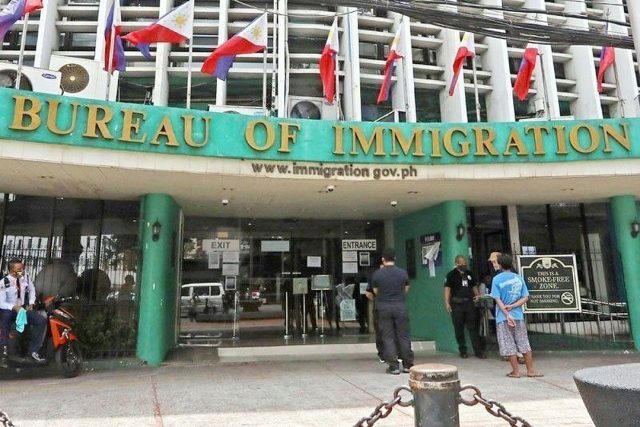
IMMIGRATION Commissioner Norman G. Tansingco issued a warning on Sunday against the so-called bitbit or “tag-along” scheme employed by human traffickers to dupe Filipino women into becoming sex workers abroad.

In a statement, he revealed how Bureau of Immigration (BI) agents intercepted a suspected human trafficker who was about to board his flight to Malaysia with a potential Filipina victim at the Ninoy Aquino International Airport (NAIA) Terminal 3.

The BI said the Malaysian man, who is now detained, claimed that his Filipina companion is his live-in partner and that they are spending a vacation in Kota Kinabalu.

However, BI records showed that this man was allegedly responsible for bringing another Filipina to Malaysia very recently who has since not returned.

“This seems like another case of the bitbit scheme,” said Mr. Tansingco, citing how in 2023, a Filipina was also brought by a frequent traveler to Malaysia where she was held captive by a white slavery ring. The Filipina who was with the man last March 22 has been turned over to the Inter-Agency Council Against Trafficking (IACAT) for assistance, while the suspected human trafficker is being investigated and may face charges of violating the Expanded Anti-Trafficking in Persons Act of 2022. — Chloe Mari A. Hufana

PPP rules must consider LGU officials’ short tenures — PCCI

PHILIPPINE STAR/EDD GUMBAN

By Beatriz Marie D. Cruz, Reporter

THE short tenures of local officials could pose a challenge in implementing Public-Private Partnership (PPP) infrastructure projects at the local level, the Philippine Chamber of Commerce and Industry (PCCI) said.

PCCI President Enunina V. Mangio said in a Viber message that local projects must be weighed with an eye towards the short terms in office for local officials.

“The budgetary commitment may be compromised with frequent changes of administration. In the past PPP projects tended to overrun cost projections, and government was saddled with debt servicing,” Ms. Mangio said.

She said the PPP Code is considered favorable because it “recognizes the need of the private sector for profit to sustain operations while also continually improving the delivery of public services.” 

 The PPP Code was intended to address bottlenecks in the Build-Operate-Transfer (BOT) Law, involving the recognition of past contracts and delays in obtaining approval.

The law’s implementing rules and regulations (IRR) include a provision allowing the private partner to recover investments through commercial development rights, or the grant of a portion of reclaimed land for both solicited projects and unsolicited proposals.

Private partners may also profit by collecting fees from users or through pre-determined payments from the implementing agency.

“Expanding the avenues by which the private sector can earn profit and lessen the market risk associated in providing government infrastructure and facilities helps make projects under the PPP arrangement more attractive to investors,” Ms. Mangio said.

Streamlined approvals are also expected by setting a threshold of P15 billion for a project to go before the National Economic and Development Authority (NEDA) Board. Those below the threshold but do not require government assistance will be sent to the implementing agency.

Projects that require government subsidy must be sent to the NEDA Investment Coordination Committee (ICC), while local projects go before the respective councils.

“That, in a sense, can also diminish the number of PPP projects going to the NEDA board, and that’s part of the streamlining that we are pushing,” NEDA Secretary Arsenio M. Balisacan said during the IRR signing.

Terry L. Ridon, a public investment analyst and convenor of think tank InfraWatch PH, said implementing agencies must remain transparent and accountable to ensure that maximum value from PPPs is extracted.

“The new PPP Code also provides a particular emphasis on limiting government undertakings, particularly on unsolicited proposals, to ensure that government maximizes its upside in each and every PPP proposal,” Mr. Ridon said in an e-mail.

The BOT law previously set a P300-million threshold per project to be evaluated by the NEDA-ICC, which “forced a lot of local government units (LGUs) to structure their projects as joint ventures (JVs) to avoid the tedious approval process.”

“The new Code takes out the need for LGUs to force the structure of big projects into JVs if it is not the optimal structure,” Ronilo Balbieran, an economics professor at the University of Asia and the Pacific (UA&P) said via Viber.

PPP Center Executive Director Ma. Cynthia C. Hernandez has said that around 20 PPPs in the government’s flagship infrastructure list are set for approval by the NEDA-ICC Board this year.

Around 119 PPP projects worth P2.4 trillion are in the pipeline, according to the NEDA. Of these, 95 are national projects, while 24 are local projects.

Maritime regulator seeking Budget dep’t approval to triple staffing levels 

MARINA’S central office building

THE Maritime Industry Authority (Marina) is seeking the approval of the Department of Budget and Management (DBM) to expand its staffing by 2,000 from the current 1,000.

“We have forwarded this to the DBM, we presented to them our structured and proposed plan. I gave them a timeline, if this will not be approved by the DBM maybe we will include this proposal to the comprehensive Marina bill,” Sonia B. Malaluan, Marina administrator, said on the sidelines of a briefing on Tuesday.

Ms. Malaluan said the expansion will be driven by the agency’s plan to establish extension offices.

“If the DBM cannot approve this, maybe we need a law as well. But I am giving it time, if by next year they cannot act on this then we can move to a law to provide these,” Ms. Malaluan said.

Marina is also seeking the passage of the Comprehensive Shipbuilding and Ship Repair Development Bill, which will promote investment and ensure the development of a viable shipbuilding and repair industry.

“The expansion to regions, the strengthening of our regional offices (aims) to provide services closer to our clients and stakeholders. We want to have extension offices,” she said.

Ms. Malaluan said under this proposal, Marina’s central office in Metro Manila will focus on policy, promotion, and developmental projects.

“We are still in the process of an organizational structure plan. We submitted one to DBM in 2021, and it was returned in 2022,” Ms. Malaluan said. — Ashley Erika O. Jose

CREATE MORE’s WFH features seen attracting talent to IT-BPM industry

PIXABAY

AN AMENDMENT permitting alternative work arrangements under a law designed to revive the post-pandemic economy will help attract talent to the information technology and business process management (IT-BPM) industry, an industry official said,

IT and Business Process Association of the Philippines (IBPAP) President and Chief Executive Officer Jack Madrid said the amendment to the Corporate Recovery and Tax Incentives for Enterprises (CREATE) Act allowing IT-BPM employees to work from home will also help in employee retention.

“IT-BPM companies would be able to implement flexible work arrangements, preferred by employees and some employers,” Jack Madrid told BusinessWorld in a Viber message. “This work flexibility also helps with employee attraction and retention.”

The government had denied an industry request to allow flexible work arrangements, citing rules making availment of incentives dependent on the performance of on-site work in economic zones.

CREATE MORE (CREATE to Maximize Opportunities for Reinvigorating the Economy) provisions allow IT-BPM companies to enjoy tax incentives at the discretion of investment promotion agencies, which can decide to approve work-from-home (WFH) arrangements. 

“IBPAP has long been advocating for the amendment of Section 309 of CREATE to achieve work flexibility for our employees without affecting fiscal incentives (for companies),” Mr. Madrid said.

“Registered business enterprises in the Information Technology Business Process Outsourcing sector… may be allowed to conduct business under alternative work arrangements which shall not cover more than 50% of the total workforce or total hours,” according to CREATE MORE’s amended Section 309.

Mr. Madrid said “the future of work” is about flexible work arrangements. “It has been well proven that the services being performed by our 1.7M strong workforce can be done in a hybrid work environment.”

He added that the industry’s main challenge “is finding enough skilled talent to meet demand.”

Other measures to ensure talent keeps flowing include “unlocking scholarship funds from TESDA (Technical Education and Skills Development Authority) and DICT (Department of Information and Communications Technology)” to address the need for technical talent.

The IBPAP recently signed skilling agreements with Microsoft Corp.

IBPAP is expecting the industry to create an additional 1.1 million jobs by 2028, expanding its total workforce to 2.5 million come that year, Mr. Madrid said, according to the industry’s aggressive growth scenario.

The development of digital and connectivity infrastructure to areas outside of Metro Manila will allow the tapping of “unique talent pools,” he said. “Digital infrastructure and nationwide connectivity in enterprises and residences is critical given that over 50% of future growth will be outside Metro Manila,” he added.

Terry L. Ridon, a public investment analyst and convener of think-tank InfraWatch PH, said that concerns regarding digital and connectivity infrastructure rest mainly on reliability and affordability.

“In last-mile areas, such as islands and isolated communities, it is the government’s burden to ensure that the quality of digital services can compare with the rest of the nation,” he told BusinessWorld in a Viber message.

John Paolo R. Rivera, president and chief economist at Oikonomia Advisory & Research, Inc., said such infrastructure makes it easier to enhance “delivery of products and services.”

“It is a facilitating factor… stimulating not only demand but also local and foreign investor confidence in the mechanisms that run the economy,” he told BusinessWorld in a Viber message. — Kenneth Christiane L. Basilio

EDSA Busway bidding seen possible next year

PHILIPPINE STAR/MICHAEL VARCAS

THE Department of Transportation (DoTr) is confident it can bid out the Epifanio delos Santos Avenue (EDSA) Busway project next year. 

The timeline was disclosed after the DoTr made good time on the signing of the Ninoy Aquino International Airport (NAIA) public-private partnership (PPP) project last month.

The NAIA PPP project is considered the fastest project to progress from submission to investment coordination committee approval to concession agreement signing. 

Transportation Undersecretary Timothy John R. Batan said the signing of the NAIA PPP project sets a precedent for the agency’s other projects.

“(The NAIA PPP) is our fastest. Of course, we try to work as much as possible to push as much as we can to match that, if not faster. But of course, each project is different,” Mr. Batan told reporters.

Currently, the DoTr is finalizing the feasibility study on the bus system, Mr. Batan said.

“We just had the market sounding which is part of all PPP projects. So, within the next few months we’ll finalize the EDSA Busway feasibility study,” he said.

In February, the PPP Center and the DoTr said they had conducted the initial market sounding activity for the EDSA Busway project. 

The DoTr said it is hoping to privatize the EDSA Busway via a solicited bidding scheme similar to that of the NAIA PPP project.

In October, the DoTr said it expects to start the bidding for the EDSA PPP project in 2025.

The EDSA Busway Project involves the financing, design, construction, procurement of low-carbon buses, route planning, and operations and maintenance of the busway.

Last year, the PPP Center and the DoTr signed a technical assistance agreement for the provision of project preparation and transaction advisory services.

Once finalized, the study will be forwarded to the National Economic and Development Authority (NEDA) for approval to officially commence with bidding.

“We’ll submit this to NEDA, similar to what we did with the NAIA PPP. We will get approvals and then we will eventually bid it out,” Mr. Batan said. — Ashley Erika O. Jose

Think tank warns of public utilities being run to serve interests of foreign investors

PHILIPPINE STAR/ WALTER BOLLOZOS

THE GOVERNMENT needs to ensure that public utilities opened up to foreign investment be run to serve national development goals while regulating the for-profit aspect of such projects, a think tank said.

“Strong regulation or even state-owned enterprises (SOEs) are crucial for public utilities to serve national development goals and not be run mainly for the profit of foreign investors,” Jose Enrique A. Africa, executive director of IBON Foundation, said in a Viber message.

Mr. Africa said that the government’s “obsolete free market framework” prevents it from “actively” developing greater Filipino or state-owned capacity in the public utilities sector.

In March, the House of Representatives approved on final reading the proposed amendments to certain economic provisions of the 1987 Constitution. 

Resolution of Both Houses  (RBH) No. 7 seeks to ease economic restrictions on the foreign ownership of public utilities, education and advertising companies. The RBH called for the restrictions to be bypassed by specific laws enacted by legislators. The amendments to the Constitution are to be implemented by inserting the phrase “unless otherwise provided by law” in Articles 12, 14, and 16 of the charter. 

The Constitution limits investment in those industries to be at least 60% Filipino-owned.

Leonardo A. Lanzona, Jr., economics professor at the Ateneo de Manila, said that the proposal will require “substantial regulation” due to the possibility that “low-quality institutions” or “unscrupulous investors” may enter the country.

“In this case, the government needs to have a plan as to what direction the public utility, education and advertising company has to take, and use these regulations to bring the country to what our systems should have,” he said via e-mail. 

Opening up the economy’s public utilities, particularly energy, would increase competition in the market, thereby “improving the efficiency of delivering electricity services,” according to Noel M. Baga, convenor of think tank Center for Energy Research and Policy.

“It is a basic principle in economics that allowing more players into the energy market increases competition, leading to positive outcomes for the Filipino people,” he said in an e-mail to BusinessWorld.

Allowing 100% foreign ownership in projects to explore, develop, and utilize natural resources would contribute to energy production, Mr. Baga said.

In 2022, the DoE amended the implementing rules and regulations of the Renewable Energy Act of 2008 to allow 100% foreign investment in renewable energy projects.

“Local energy companies often lack the capital needed to develop our indigenous natural resources for energy use, making foreign investment crucial for utilizing our resources effectively,” Mr. Baga said. 

According to Mr. Africa, competition is “overrated especially in natural monopolies like public utilities.”

“Instead of the impossibility of making natural monopolies competitive, it’s better for development to build state capacity in public utilities to at least regulate or better yet to run these effectively,” he said. — Sheldeen Joy Talavera

Puerto Galera reports tourism revival after oil spill

DEPT. OF TOURISM

PUERTO GALERA, a Mindoro harbor serving as a jumping-off point for diving excursions, saw a marked increase in visitor arrivals during Easter, showing signs of tourism recovery after the area’s resorts lost business following an oil spill in February 2023, according to an official working for the Puerto Galera visitor’s office.

Tourist arrivals — both domestic and foreign — were tallied at 17,000 from March 24 and could rise to 20,000 once all figures are consolidated, Noe Lineses said in a Facebook Messenger chat on the morning of Easter Sunday.

A year earlier, the tally was 8,000, he said.

“We had several positive news articles related (to the campaign) to recognize Puerto Galera as the diving capital of the Philippines.”

“We also now have one of the cleanest water quality readings in Oriental Mindoro,” he added.

Mr. Lineses said the local government has been promoting new attractions, such as a heritage park and a boardwalk along the village of Sabang, the home base for many diving operations.

Puerto Galera is situated within the Verde Island Passage, a hotspot for marine shore fish biodiversity. It hosts over 60 dive shops bringing visitors to 32 dive sites.

Oriental Mindoro was hit hard by an oil spill from a tanker that sank off the town of Naujan on Feb. 28, 2023, triggering months-long fishing bans in various municipalities. — Kyle Aristophere T. Atienza

PHL needs more nature-based infra to mitigate flooding — OECD

PHILIPPINE COAST GUARD PHOTO

THE PHILIPPINES needs to invest in infrastructure that incorporates nature-based solutions to flooding, according to the Organisation for Economic Co-operation and Development (OECD).

In a working paper, “Nature-based solutions for flood-management in Asia and the Pacific,” the OECD said that existing studies on flood management in the Philippines lack both scientific basis and government-supported.

“A lack of guidelines, rules and evidence hampers nature-based solutions implementation,” the OECD said. “Challenges to adopting nature-based solutions can also come from institutional and legislative barriers.”

Nature-based solutions for flood control vary depending on location, the OECD said, noting how river basins and coastal areas have their own risk profiles.

It cited the need to address clogged waterways caused by solid waste, dikes and bridges. Instead, the Philippines must revive old river channels, add vegetation along riverbanks, and construct bypass channels for water passage.

Flood management infrastructure in urban areas also remains outdated and cannot handle average levels of rainfall, the OECD said.

“Areas surrounding the city’s waterways are often characterized by high population density, with dwellings encroaching over the water and disrupting water flow, and a significant share of informal settlers residing in inadequate housing near waterways, making them especially exposed to flooding,” it said.

The OECD noted that government budgets for flood protection increased between 2008 to 2016, a possible reaction to widespread flooding resulting from Typhoon Ketsana (Philippine name: Ondoy) in 2009.

However, it noted that results of the investment are unclear “as there has been no noticeable decrease in the death toll and economic damage from floods.”

Asia-Pacific countries were urged to invest in ecosystem restoration and conservation to reduce flood risk. The OECD called for the “balanced” use of “green” and “grey” infrastructure based on the flood risk profile of each area to help manage water-related disasters.

The Philippine economy may incur losses worth $124 billion between 2022 and 2050 due to heavy floods, storms and prolonged droughts, research firm GHD has said.

Floods in the region account for 41% of the 5,216 recorded disasters between 1980 and 2022, occurring the most in the Philippines, China, Indonesia, and India, the OECD said. — Beatriz Marie D. Cruz

2024 trends for financial institutions

IN BRIEF:

• This year, firms continue to prioritize consumer impact, ESG, digital assets, the digitalization of finance and use of AI, financial crime, and operational resilience.

• An institution-wide approach is imperative for business strategy, governance, and risk management, which involves setting clear targets and supporting sustainability disclosures.

• There will be increased regulatory scrutiny on board and management oversight in various areas, including senior leadership compensation and culture, and whether these align with stakeholder goals and the firms’ fiduciary duties.

This year, the global financial services landscape will be impacted by factors such as volatile geopolitics, rising energy costs, and rampant inflation. The spillover regulatory effects from high-profile bank failures in 2023 will also be felt this year and beyond, but they are not entirely unfavorable.

For example, more global regulatory reforms are taking shape to address the impact of the TBTF dilemma, or the perception that “the banks are too big to fail.” This theory refers to the situation where interconnected financial institutions have grown so large that their collapse could severely impact the entire financial system.

The 2024 EY Global Financial Services Regulatory Outlook Report highlights areas of longstanding regulatory interests. Among the priorities discussed, this article will explore five trends for banks and financial institutions.

DIGITALIZATION OF FINANCE AND INTEGRATION OF AI
With digitalization becoming the norm, some firms are struggling to update legacy systems, leading to greater regulatory scrutiny. This challenge will impact not only banks but also other institutions. Consequently, regulators will raise their standards of operational resilience, particularly in areas like technology. Doing so requires firms to reduce deficiencies in IT outsourcing, IT security, and data governance.

Financial regulators are looking to implement new rules for better control and ethical use of artificial intelligence (AI). Adopting responsible AI practices bolsters customer trust and strengthens a company’s reputation, setting it apart from its competitors. This strategic positioning can unlock growth opportunities and drive long-term success.

INCREASING IMPORTANCE OF ESG
There is greater regulatory oversight on environmental, social, and governance (ESG)-related reporting and disclosures as well as climate-risk management and stress-testing. Financial regulators worldwide are focusing on net-zero transition planning, with a growing supervisory focus on carbon markets and greenwashing risks.

In 2023, the International Sustainability Standards Board (ISSB) issued disclosure standards with the goal of harmonizing sustainability reporting. The Philippines is one of the countries planning to adopt these standards.

The significant decline in the variety and variability of life forms on Earth, also known as biodiversity loss, is also posing a systemic risk to economies and financial systems. This phenomenon encompasses the reduction of species, genetic diversity, and natural habitats on the planet. With the ISSB identifying it as an upcoming focus area, biodiversity loss is expected to receive increased attention.

Regulators require firms to have concrete plans to manage their financial risk exposure as they transition to net-zero. Net-zero targets will require an organization-wide transformation, a robust plan that considers biodiversity and climate-related risks, and a flexible roadmap for firms to enable these changes.

An institution-wide approach should incorporate business strategy, governance, and risk management when setting clear targets and supporting sustainability disclosures. Firms should also invest in ESG training for key personnel.

ADOPTION OF OPEN FINANCE AND CROSS-BORDER PAYMENT INTEGRATION
Several jurisdictions are developing open finance frameworks, such as the European Union, Australia, Hong Kong, Indonesia, the Philippines, and Brazil. Additionally, they have adopted a regulatory-driven approach for open finance. As such, a global standard may be necessary to avoid regulatory fragmentation. Open Finance regulation will require firms to set up multi-year strategic, operational, and technological transformation programs.

In the Philippines, the Bangko Sentral ng Pilipinas (BSP) launched its Open Finance Pilot project in 2023 and updated its Open Finance roadmap. More and more jurisdictions worldwide are expected to adopt and expand their Open Finance frameworks to facilitate seamless cross-border transactions. One example of a recent model for collaboration in the financial sector is the linkage of Singapore’s PayNow with India’s UPI and Thailand’s PromptPay.

PERSISTENCE OF FINANCIAL CRIME AND FRAUD
Addressing financial crimes remains a priority for regulators. The increase in scam payments requires new tools and regulatory compliance mechanisms. Firms may need to consider using more sophisticated technologies, such as AI-powered solutions, to enhance digital transaction security and anti-money laundering (AML) efforts.

Given the global nature of financial crimes, various regulators and governments are working together to expand AML measures. In 2023, firms faced supervisory scrutiny over AML violations as authorities intensified economic sanctions and re-evaluated the oversight of politically exposed persons.

While technology is creating new types of threat, it also offers new tools in the fight against financial crime. Fraud and investment scams, especially at the retail level, are pushing customers toward risk-taking behavior. Bank transfers account for most scam payments, requiring critical monitoring and analysis. Crypto crime prevention and regulatory scrutiny will continue to surge, and firms in other industries will need to adopt data and AI solutions for financial crime compliance.

BOARD AND MANAGEMENT OVERSIGHT
Several regulators released post-mortem analyses on 2023’s bank failures, highlighting the need for timely and comprehensive resolutions — a goal some banks failed to achieve. Consequently, boards must possess a thorough understanding of their policies, systems, and controls to identify and address risk management challenges and oversight weaknesses.

Firms must consider whether their performance and incentive structures work and whether they are aligned with stakeholder goals and the firms’ fiduciary duties. Furthermore, they should also consider board and management oversight issues from a new perspective, instead of relying on established practices.

NAVIGATING THE REGULATORY ENVIRONMENT
Given the ever-evolving nature of the financial landscape, firms will need to prioritize consumer impact, ESG, digitalization, financial crime, and operational resilience. By focusing on people, processes, and technology, firms can maneuver and leverage the tumultuous — but opportunistic — regulatory environment.

Next week, we will discuss critical areas that financial services firms need to prioritize in the age of digitalization and AI.

This article is for general information only and is not a substitute for professional advice where the facts and circumstances warrant. The views and opinions expressed above are those of the authors and do not necessarily represent the views of SGV & Co.


Christian G. Lauron is the Financial Services Organization (FSO) leader and Janeth T. Nuñez-Javier is the sector representative for Banking and Capital Markets (BCM) of SGV & Co.


Quizon clinches third and final GM norm in Hanoi chessfest

DANIEL QUIZON — BW FILE PHOTO

THE LONG wait for the Philippines’ next chess Grandmaster (GM) could be over soon.

This after Daniel Quizon inched a few steps closer to becoming one after claiming his third and final GM norm following a magnificent, come-from-behind title conquest in the second and final leg of the Hanoi Grandmaster Chess Tournament in Vietnam on Sunday.

The 20-year-old two-time national champion scored the needed seven-point requirement that he capped with a smashing win over Vietnamese GM Bui Vinh in the ninth and final round in claiming the last required result to close in on the coveted title.

But it didn’t look like it early on after absorbing a stinging second-round defeat to Vietnamese FIDE Master Banh Gia Huy.

And then he went on a rampage as he strung together five straight wins and 6.5 points in the last seven rounds that he capped with shock wins over GMs Nguyen Anh Dung and Bus of Vietnam and a draw with GM Vojtech Plat of the Czech Republic.

Mr. Quizon, whose other GM results came in two Eastern Asia Juniors editions in 2018 in South Korea and last year in Kota Kinabalu.

All Mr. Quizon needed to do now to become a full-pledged GM is to reach the 2500-rating plateau.

The Dasmariñas bet’s current live rating is 2460.6, including the 19.3 he earned in this leg and the 9.3 he gained in last week’s first leg where he finished tied for first before dropping to second after tiebreaks were applied.

To reach 2500, Mr. Quizon said he would join a tournament in Thailand this month, three meets in Vietnam the next and two or three tournaments that his coach, FIDE Master Roel Abelgas, is planning to stage in May and June.

And there’s the FIDE World Chess Olympiad in September where Mr. Quizon earned a spot and will make his debut after ruling the National Championships in Marikina City last January.

If Mr. Quizon eventually clinches the GM title, he would be the 17th Filipino to ever become one with the last coming 14 years ago when Richard Bitoon, now United States-based, accomplished such status.

There, he would join an elite group that included Eugene Torre, Rosendo Balinas, Joey Antonio, Mark Paragua, Darwin Laylo, Banjo Barcenilla, Oliver Barbosa, Julio Catalino Sadorra and Wesley So. — Joey Villar

Eala-Cascino tandem wins W75 Croissy-Beaubourg in France

ALEX EALA — FACEBOOK.COM/ALEXEALA

ALEX EALA added another diadem to her growing treasure chest by winning her second professional doubles crown in France.

Linking up with home bet Estelle Cascino, the Filipina-French duo pulled off a stunning 7-5, 7-6(4) upset of the No. 1 seed pair of Maia Lumsden from Great Britain and another local ace Jessika Ponchet over the weekend to win the W75 Croissy-Beaubourg in France.

Ms. Eala and Ms. Cascino waxed hot early by erecting big leads — a 3-0 blitz in the first then a 2-0 gap in the second — but the fancied Ms. Lumsden, WTA No. 77, and Ms. Ponchet, WTA No. 142, retaliated to make it a ball game before the former pulled through in one hour and 31 minutes.

The Filipina-French pair, unseeded in the tournament, stared at similar 4-5 deficits in both sets only to carve out gritty escape acts, especially in the tiebreaker of the second frame for the hard-earned straight-sets finale triumph.

The 18-year-old Ms. Eala is ranked No. 171 in the Women’s Tennis Sensation (WTA) while Ms. Cascino, 28, is at No. 146, but that did not stop them from claiming the scalp of their higher-ranked and more seasoned opponents in the prestigious $75,000 tourney.

Ms. Eala and Ms. Cascino, previously ousted Switzerland’s Celina Naef and India’s Prarthana Thombare, 5-7, 6-2, 10-6, in the opening round, the No. 2 duo of Great Britain’s Emily Appleton, the Netherlands’ Isabelle Haverlag, 6-4, 6-0, in the quarterfinals, and Russian Kira Pavlova and Luxembourg’s Marie Weckerle, 6-3, 6-3, in the semifinals.

Ms. Eala captured her first doubles crown last January with Latvian partner Darja Semenistaja in the W50 Pune in India to shore up her promising career already marked by four singles titles.

The Filipina sensation is also a holder of two junior doubles Grand Slams in the 2020 Australian Open, with Indonesian pal Priska Madelyn Nugroho, and the 2021 French Open, with Russian partner Oksana Selekhmeteva, as well as the elusive junior singles Grand Slam in the 2022 US Open. — John Bryan Ulanday

ADVERTISEMENT
ADVERTISEMENT