Home Blog Page 3354

Philippine, Lithuanian envoys to talk about trade ties

PHILIPPINE Foreign Affairs Secretary Enrique A. Manalo and Lithuanian Foreign Minister Gabrielius Landsbergis will meet in Manila this week to discuss boosting ties in clean energy, trade and investment, and science and technology, according to the Department of Foreign Affairs (DFA).

“The Foreign ministers will also discuss regional and international issues of mutual concern,” it said in a statement on Tuesday. “The exchange of perspectives and insights underscores the shared commitment of the Philippines and Lithuania to peace, stability and the rules-based international order.”

Mr. Landsbergis’ visit will be the first high-level call by a Lithuanian official to Manila in 30 years. He will be in the country from April 23 to 25.

The two envoys will also tackle cooperation in health and laser technology that could be used in medicine, the DFA said.

In October, Lithuanian nonresident Ambassador to the Philippines Ricardas Slepavicius told Philippine President Ferdinand R. Marcos, Jr. that his country was keen on working with Manila on cybersecurity and laser technology.

Lithuania, which he said captures 10% of the global market for scientific lasers, would like to work with Philippine universities and scientists to produce high-quality laser devices.

“In terms of the technology, that’s certainly something that we should look into,” Mr. Marcos told Mr. Slepavicius after the envoy presented his credentials to him in Malacañang, based on a statement released by the Presidential Communications Office.

The Philippines and Lithuania have had diplomatic relations for the past three decades. — John Victor D. Ordoñez

BIFF faction leader, 10 fighters killed in clash

By John Felix M. Unson, Contributor

COTABATO CITY — One of the three top faction leaders of the Bangsamoro Islamic Freedom Fighters (BIFF) wanted for 47 heinous crimes was killed along with 10 of his followers in a clash with soldiers in Datu Saudi Ampatuan town, Maguindanao del Sur province on Monday.

Mohiden Alimodin Animbang, more notoriously known as “Kagui Karialan” who is tagged as the brains behind 20 deadly bombings in Central Mindanao over the last seven years, succumbed to three bullet wounds in the torso on the grass field where he and his men traded shots with Army Scout Rangers and personnel of the 1st Brigade Combat Team (BCT).

Members of different Municipal Peace and Order Councils in the province and commanders of units under the Army’s 6th Infantry Division confirmed on Tuesday morning that Mr. Animbang was among the 11 lifeless bodies on the field.

Army Brig. Gen. Jose Vladimir R. Cagara of the 1st BCT and his superior, Major Gen. Alex S. Rillera, 6th ID commander, separately told reporters that among the 10 other who were killed was the BIFF leader’s younger brother, Sa-ga Alimodin Animbang.

The younger Mr. Animbang was one of 74 men trained by Malaysian terrorist Zulkifli bin Hir, alias “Marwan,” in bomb-making. Marwan was killed on Jan. 25, 2015 in an encounter with the police Special Action Force in Ma-masapano, Maguindanao del Sur.

Mr. Caraga said Monday’s gunbattle broke out when soldiers responded to a report from local officials that heavily armed men were gathered in the village of Kitango in Datu Saudi Ampatuan.

“We are thankful to the vigilant people who promptly provided our units in Maguindanao del Sur with information about the convergence there of these terrorists, enabling us to immediately launch a calibrated anti-terror strike,” Mr. Rillera said.

The slain BIFF leader had 47 criminal cases pending before various courts from charges of arson, bombing, and large-scale extortion to murders such as gangland-style executions of villagers on mere suspicion of conniving with the police and military.

Gov’t to roll out vaccine for ASF

REUTERS

PRESIDENT Ferdinand R. Marcos, Jr. said on Tuesday that by June, his government would be rolling out a vaccine against African swine fever (ASF), a highly contagious viral disease in hogs.

The country’s first ASF vaccine will come from Vietnam, he told farmers at a town hall forum in Occidental Mindoro.

“We’re now purchasing the vaccine. We will roll out soon, probably by June or July, we will be able to release the vaccines,” the President, speaking in Filipino, said. “We’re just waiting for the production in Vietnam because it is the developer of the vaccine.”

Last February, Agriculture Undersecretary Roger Navarro told Palace reporters that Mr. Marcos spoke with the suppliers during his visit to Vietnam a month before. The Philippines has been struggling to contain ASF since the first confirmed outbreak of the hog disease in 2019.

The Department of Agriculture-Bureau of Animal Industry in 2023 recommended Vietnam’s AVAC vaccine for the Food and Drug Administration’s issuance of product registration certificate following positive results of its trial in the main island of Luzon from March to May 2023.

The test done in six areas in Luzon yielded 100% production of antibodies with no reported side effects among four-week-old to 10-week-old hogs. — Kyle Aristophere T. Atienza


PHL human rights unchanged — US

PHILSTAR FILE PHOTO

THE UNITED STATES’ latest Department of State report on human rights concluded that “there were no significant changes in the human rights situation in the Philippines” despite noting that extrajudicial killings by police agents have already decreased in the past year.

In a its 2023 Country Reports on Human Rights Practices, the US found that the Philippines’ human rights condition has not changed as the administration of President Ferdinand R. Marcos, Jr. continued his predecessor’s anti-drug policies.

“Extrajudicial killings, largely by police but also by other security forces, remained a serious problem. In addition, politically motivated killings, including of journalists, were reported during the year,” the report stated, noting 209 killings related to anti-drugs operations between January and August 2023.

The Commission on Human Rights reported to have investigated 51 new complaints last year, including 82 reports allegedly perpetrated by the Philippine National Police.

“Impunity was a significant problem in the security forces, particularly in the PNP, as reported by local and international human rights organizations such as Amnesty International and Human Rights Watch,” it added.

Mr. Marcos’ predecessor, Rodrigo R. Duterte, was known for his hard stance against illegal drugs, drawing scrutiny from the international community and the International Criminal Court. — Chloe Mari A. Hufana


Court asked to review OceanaGold renewal of mineral development deal

ADVOCACY group Legal Rights and Natural Resources Center (LRC) said Tuesday that it requested a court review of OceanaGold Philippines, Inc.’s renewed mineral development deal for its mine in Nueva Vizcaya.

“A Petition for Certiorari seeking the reversal of the Financial or Technical Assistance Agreement (FTAA) issued to the mining firm was filed yesterday at the Bayombong Regional Trial Court,” the group said in a statement.

An FTAA is the deal entered into with the government allowing companies to engage in large-scale mineral exploration, development, and utilization.

OceanaGold Philippines operates the Didipio gold and copper mine in Nueva Vizcaya.

LRC alleged that the FTAA was issued in the absence of consultation with communities and with disregard for local autonomy.

“The Local Government Code requires the national government to conduct consultations with stakeholders before the implementation of an environmentally critical project,” Ryan Roset, senior legal fellow for LRC, said.

Projects with high potential for a negative environmental impact are classified as environmentally critical projects.

“Since no prior approvals have been secured by OceanaGold over its renewed FTAA, the project cannot be implemented and should be deemed illegal,” Mr. Roset added.

In a resolution, the local government of Didipio said that it had declined the request of the Didipio Earth Savers Multi-Purpose Association — one of the parties to the case — to support the bid to cancel the mining company’s FTAA.

Asked to comment, OceanaGold said that it has yet to receive a copy of the complaint filed by LRC.

“We can assure you that OGPI, as a mining partner of the government, goes beyond compliance in adhering to the Philippines’ strict mining regulations, including what is required from us based on our FTAA,” the company said in an statement.

OceanaGold added that it had undergone an environmental impact assessment, which is required prior to the grant of an Environment Compliance Certificate for the Didipio Mine.

“We respect all opinions of our stakeholders, and we continue to be open for dialogue and productive engagements,” it said.

In 2021, OceanaGold was granted a 25-year renewal of its FTAA, two years after its initial FTAA had expired.

Under the renewed agreement, the company is required to list 10% of its common shares on the bourse. It is set to conduct its initial public offering on May 13 by listing 2.8 billion shares for P7.9 billion. — Adrian H. Halili

SBMA to raise cargo-handling charges by 15%

SBMA

THE Subic Bay Metropolitan Authority (SBMA) Board has approved a proposal to increase vessel, cargo handling, and miscellaneous tariffs by 15%, while decreasing the free cargo storage period and introducing new port charges.

“The tariff adjustment, free storage (period) decrease, and introduction of new items are proposed for the purpose of cost recovery, remaining competitive with other ports in Luzon, and supporting the requirement to invest continuously in terminal improvements to attain world-class operations,” the SBMA said in a notice published Wednesday.

The SBMA said that the 15% tariff increase will exclusively apply to vessel and cargo handling charges and miscellaneous tariffs of containerized cargoes and will be executed in two tranches.

The first tranche covers a 10% increase and is targeted for implementation by June, while the remaining 5% will be implemented by September, according to Board Resolution No. 24-04-0574.

According to the SBMA, the increase in tariffs is due to inflation and a weakening peso.

The resolution also stated that the free storage period for reefer and out-of-gauge (OOG) cargoes will be reduced to five days from 10.

“In comparison to Manila, the free storage period for reefer and OOG freight is a maximum of five days from the date of discharge,” the SBMA said.

Meanwhile, the SBMA said that the new cargo handling and port charges will be implemented at New Container Terminals 1 and 2, citing rising operating costs.

The new charges include pier lighting from 6 pm to 6 am ($2.47/hour), crane standby ($179.79/hour), premium for non-cellular vessels ($146.62/hour), equipment RTG rental (P4,749.58/hour), and lift-on/lift-off (P966). — Justine Irish D. Tabile

Senator seeks nat’l security probe

SENATOR Ana Theresia N. Hontiveros-Baraquel filed on Tuesday a resolution seeking a probe on the potential national security risks of foreigners using fake government documents to pose as Filipinos amid reports of Chinese students enrolling in local schools with “questionable” credentials.

“I have led countless Senate inquiries that revealed how foreigners not only abuse our immigration process, but also use fake documents to obtain birth certificates and Philippine passport,” she said in a statement.

“It is only natural that we look into if this trend is, in any way, related to Chinese harassment in the West Philippine Sea.”

Under Proposed Senate Resolution No. 1001, Ms. Hontiveros-Baraquel urged the Senate Committee on National Defense and Security to probe the uptick of foreigners with fake credentials.

Senate Majority Leader Emmanuel Joel J. Villanueva earlier sought a probe of the influx of Chinese students amid worries that some of them might be spies.

Rommel C. Banlaoi, former president of the Philippine Association for Chinese Studies, earlier said that worries about the uptick in Chinese students in the northern Philippine province of Cagayan could be a sign of anti-Chinese sentiment amid tensions in the South China Sea between Manila and Beijing.

“The Philippines is not for sale,” Ms. Hontiveros-Baraquel said. “Nobody should treat our national identity like goods to buy or sell.”

Lawmakers have also sought to ban offshore gaming operators, which are often Chinese companies that hire their own nationals given alleged links to crimes.

Tensions between Manila and Beijing have worsened in the past year as China’s coast guard continues to block resupply missions at Second Thomas Shoal, where the Philippines grounded a World War II-era ship in 1999 to assert its sovereignty.

Immigration Commissioner Norman G. Tansingco earlier said 1,516 Chinese nationals in Cagayan had been given student visas.

“The Philippines is always open to young people from all over the world who want to study in our schools,” the opposition senator said. “But it is a different conversation if fake papers are used and if it is just a cover to enroll in our schools.” — John Victor D. Ordoñez

Cash utilization rate 99% at end of March

BW FILE PHOTO

THE National Government’s (NG) cash utilization rate hit 99% at the end of March, the Department of Budget and Management (DBM) said.

In a report, the DBM said national and local governments, as well as state-owned corporations, have used P952.65 billion of the P959.74 billion worth of notices of cash allocation (NCAs) issued as of the end of March.

Unused NCAs amounted to P7.09 billion, the DBM said.

The utilization rate is ahead of the pace compared to the 98% posted a year earlier.

NCAs are a quarterly disbursement authority that the DBM issues to agencies, allowing them to withdraw funds from the Bureau of the Treasury to support their spending needs.

By the end of the first quarter, line departments had used 99% of their allotments or P658.87 billion out of the P665.74 billion worth of NCAs.

At the end of March, line departments had utilized P326.62 billion of their NCAs.

Agencies that had a 100% budget usage rate include the Congress of the Philippines as well as the Departments of Agrarian Reform, Education, Energy, Foreign Affairs, and Interior and Local Government.

The Departments of Labor and Employment, Public Works and Highways, Social Welfare and Development, Tourism, and Transportation, as well as the National Economic and Development Authority, also reported 100% budget usage.

Also at 100% were the Presidential Communications Office, the Judiciary branch, the Civil Service Commission, the Commission on Audit, the Commission on Elections, the Office of the Ombudsman, the Commission on Human Rights, and state universities and colleges.

On the other hand, the Department of Migrant Workers posted the lowest budget utilization rate at 46%.

Rizal Commercial Banking Corp. Chief Economist Michael L. Ricafort said increased government spending, especially in infrastructure projects, will help boost gross domestic product (GDP) growth.

Infrastructure spending rose 26.6% to P79.4 billion in February, driven by public works and defense modernization projects, the DBM said in a separate report.

“On top of possible expedited completion of various government projects later this year, preparation for election-related spending in view of the midterm elections in May 2025 or nearly a year from now is another growth driver,” Mr. Ricafort said in a Facebook Messenger chat. — Beatriz Marie D. Cruz

DILG to actively monitor LGUs over collection of unauthorized ‘tolls’

PHILSTAR FILE PHOTO

THE local government department has committed to actively monitor municipalities collecting so-called “pass-through” charges and annual fees from goods delivery vehicles, in order to minimize the impact of logisics costs on prices.

In a briefing, the Department of Trade and Industry (DTI) said the Department of Interior and Local Government (DILG) made the commitment at a National Price Coordinating Council (NPCC) meeting.

The NPCC was discussing the implementation of Executive Order (EO) No. 41.

Signed last year, EO 41 prohibits the collection of pass-through charges on national roads and discourages LGUs from collecting any other sort of fee on all types of vehicles.

“The DILG said it is willing to take a more proactive approach, which means that instead of waiting on reports from trucking groups or associations, they’re willing to help in the monitoring to ensure that the mandate of the cur-rent administration is being followed,” DTI Consumer Protection Group Assistant Secretary Amanda Marie F. Nograles said.

During the meeting, the DILG reported that 44 of the 1,716 LGUs have ordinances imposing pass-through fees; of these, 12 LGUs have yet to suspend the collection of the fees while 32 have complied.

During the meeting, the Philippine Competition Commission (PCC) and the Department of Justice (DoJ) also provided updates on their ongoing study of the suggested retail price (SRP) scheme.

“The PCC reported that it is due to finish its study recommendation to DTI by September, while the DoJ said it has updated its study and will be submitting it to the DTI by the end of this week,” Ms. Nograles said.

The studies are evaluating the effectiveness of the SRP mechanism, which previous studies conducted by the World Bank have concluded are anti-competitive. — Justine Irish D. Tabile

NCR retail price growth flat in March

PHILIPPINE STAR/RUSSELL A. PALMA

RETAIL price growth in Metro Manila was steady in March as growth in food costs slowed, the Philippine Statistics Authority (PSA) said Tuesday.

Price growth in the National Capital Region (NCR), as measured by the general retail price index (GRPI), remained at 2.1% year on year in March compared to February. It had been at 6% a year earlier.

The March reading remains the highest since the 2.5% posted in January this year.

In the first quarter, GRPI growth averaged 2.2%, down from 6.3% in the first three months of 2023.

Slower price growth was seen in the indices for food (2.7% in March from 3% in February); beverages and tobacco (4.3% from 4.8%); and manufactured goods classified chiefly by materials (1.2% from 1.3%). — Lourdes O. Pilar

BIR warns against tax ‘fixers’

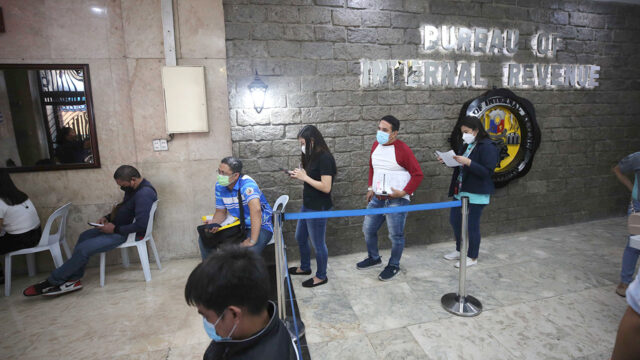
UNDER Republic Act No. 11976 or the Ease of Paying Taxes Act, taxes may be filed and paid anywhere, whether manually or electronically. — PHILIPPINE STAR/RUSSELL PALMA

THE BUREAU of Internal Revenue (BIR) put out a warning to the public on Tuesday against unscrupulous individuals acting as “fixers” and promising to settle an individual’s or company’s tax issues.

Commissioner Romeo B. Lumagui, Jr. issued the warning in a statement announcing the arrest of fixers earlier this month and their being charged with extortion.

“The arrest of this syndicate of fixers serves as a reminder to all taxpayers to avoid dealing with these groups and to always verify the authority of any person in dealing with your tax obligations,” said Mr. Lumagui.

He noted that the syndicate was found to have extorted P3.6 million from a taxpayer using forged documents and their “alleged connection with high-ranking BIR officials.”

“The arrested fixers used acknowledgement receipts with the forged signatures of the aforementioned officials of the BIR for processing of documents, extension of compliance with Computerized Accounting System and processing and fixation of transfer from one Revenue District Office to another,” the bureau said.

“All of these processes are regulated by the BIR itself and may be processed in its offices, there is no need for a ‘fixer’ because there is already a system in place,” it added.

In February, a BIR employee was arrested for extorting a bike shop. – Luisa Maria Jacinta C. Jocson


House to focus on security, economy

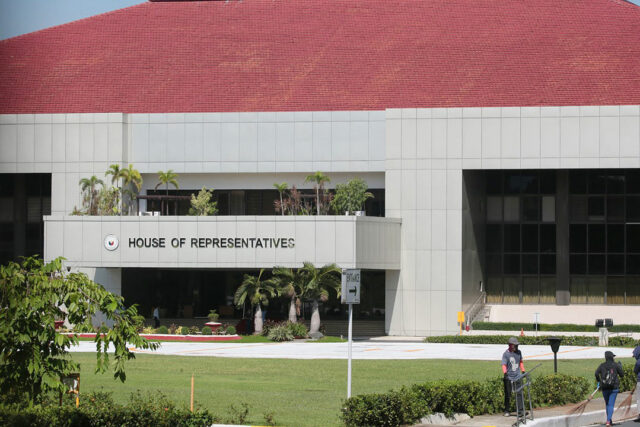
PHILIPPINE STAR/ MICHAEL VARCAS

THE HOUSE of Representatives will focus on bills that aim to strengthen national security and spur economic development, House Speaker Ferdinand Martin G. Romualdez said on Tuesday, ahead of the resumption of sessions in Congress next week.

“Our legislative focus… [are] on the dual imperatives of national security and robust development,” Mr. Romualdez said in a statement. “Peace is the cornerstone of prosperity, we aim to enact laws that fortify our national de-fense and enhance our international security posture.”

Passing House bills that strengthen the country’s security is critical to maintaining “sovereignty and stability” amid foreign, external threats, he said.

Strengthening peace and security is key to creating an environment capable of spurring economic growth, he added, explaining the need to prioritize security and economic bills.

“These, in turn, contribute to further stabilizing our nation by reducing poverty, creating jobs… which in turn diminishes the likelihood of social unrest,” he said.

The House is also looking to deliberate bills that could expand access to public healthcare for Filipinos. “We are committed to expanding access and… making healthcare affordable and accessible.”

Bills seeking to enhance the digital infrastructure of the country are also a priority, he said.

While the House already passed a measure seeking to open public utilities, schools, and advertising to foreigners, Mr. Romualdez said they also passed “more dynamic economic policies” that are geared towards attracting more foreign investment.

“We enacted pivotal tax reform designed… (to) simplify the tax code, encouraging investment,” he said. “These measures have laid the groundwork for a more robust economic framework, attracting foreign investments and stimulating local entrepreneurship.” — Kenneth Christiane L. Basilio

ADVERTISEMENT
ADVERTISEMENT