Home Blog Page 3340

Malaysia’s biggest coffee chain expands to Manila; targets 150 stores by year’s end

VENON TIAN, Chief Operations Officer of ZUS Coffee, looks like he doesn’t have time for joking around. After ZUS Coffee’s founding in 2019, they’ve managed to open 420 stores — while being interrupted by the lockdowns of 2020, mind you. At year’s end, he told BusinessWorld during the opening of another branch in SM Makati, they’re targeting to have a count of 700 stores in Malaysia. The Philippines, there are now 12 stores, this since the compa-ny’s arrival just five months ago. By the end of 2024, they plan to hit a total of 150 in the Philippines.

By his count, they have 420 stores in their native country, making them the biggest coffee chain there. Arguably the world’s biggest coffee chain, American-based Starbucks, has a smaller footprint, with their own website citing “more than 320 stores” (though Mr. Tian gave us a count of 380).

Their first expansion overseas is in the Philippines. Asked why, he said, “In terms of Southeast Asia itself, Thailand’s got very strong competitors; Indonesia’s got (ten) very strong in terms of fast coffee culture. Singapore — there’s just too many brands.”

“[Its a] nice country to go into,” he said about the Philippines. “You’re very familiar in terms of Starbucks, Tim Hortons (a Canadian chain), and all. Then why not introduce what we have?

“I think the Philippines is much more mature [as a coffee market],” he added.

ZUS, while having physical stores, is helped in its operations through an app. Customers have complete control over their coffee experience, from taste to temperature and order time. Reordering their favorite drink is as easy as a click, providing valuable insights for creating new flavors tailored to their preferences. ZUS Coffee specializes in locally inspired specialty coffees, including Filipino favorites like hot and iced Spanish Latte and Gula Melaka, along-side an array of Buttercreme Lattes, Frappes, and more.

It’s the strength of the app to which Mr. Tian credits their rapid expansion, despite opening right before the pandemic. “We have always been digital-ready, from Day 1,” he said. Recalling the lockdowns, “Instantly, overnight, everyone was ordering everything online.”

As for their beans, Mr. Tian says they source 100% Arabica from different countries such as Guatemala, Kenya, and Papua New Guinea, depending on the coffee bean season, to ensure the best quality. ZUS Coffee is committed to the practice of procuring only Direct Trade Beans. Any form of green bean procurement is done directly with the farmers of the beans and allows for quality, sustainability, and fairer prices that is then translated to the final cup that the customers pay for. Direct trade helps farmers develop to have a more sustainable future and growth. While it’s the moral choice, Mr. Tian said, “That helps us create good quality coffee.”

“You need to like your own product in order for people to like your product,” he said. Another sustainable measure they have taken is the use of rice straws. That stems from Mr. Tian’s own experiences as a diver who has seen the plastic pollution underwater.

“Ultimately, we’re running a business. It’s also making us to be able to sleep better,” he said about their sustainable choices. “In order to make myself sleep better, I want to make sure that whatever we use is actually sustaina-ble.”

The ZUS app is available on Google Play and the App Store. Ordering can also be done through GrabFood and foodpanda. — Joseph L. Garcia


Japan-based Taisei Corp. to acquire 25% stake in PetroGreen unit

JAPAN-BASED company Taisei Corp. is set to acquire a 25% stake in a subsidiary of PetroGreen Energy Corp., its parent company PetroEnergy Resources Corp. said on Wednesday.

“We are honored that Taisei has chosen the Philippines to make its first overseas equity investment in renewable energy. Following on the 2022 partnership we forged with Kyuden International Corp.,” PetroGreen Energy Chairperson Milagros V. Reyes said in a statement.

In 2022, Kyuden International completed the initial closing requirements for its acquisition of a 25% stake in PetroGreen Energy.

“Taisei’s entry not only validates PetroGreen Energy performance and integrity as an RE developer and partner but also testifies to the vastly improved energy investment climate in the country under the present ad-ministration,” Ms. Reyes said.

Taisei has signed an agreement with PetroGreen Energy to acquire a significant stake in Rizal Green Energy Corp. (RGEC), PetroEnergy said.

RGEC is a subsidiary of PetroGreen Energy, the renewable energy arm of listed PetroEnergy.

The two parties signed investment framework and shareholders agreements covering funding, construction, and operation for its four solar power facilities.

These renewable plants are the 41-megawatt direct current (MWdc) Limbauan project in Isabela, the 25-MWdc Bugallon project in Pangasinan, the 19.6-MWdc San Jose project in Nueva Ecija, and the 27-MWdc Dagohoy so-lar project in Bohol.

“We are very pleased to be able to contribute to renewable energy in the Philippines, which is experiencing remarkable development, and more importantly, to participate in this project as a business partner with Petro-Green,” said Taisei Executive Vice-President Jiro Taniyama.

Taisei started its operations in the Philippines in 1982 as a general contractor on official-development-assistance-funded infrastructure projects.

Its investment in the PetroGreen Energy unit is Taisei’s first equity investment in renewable energy outside Japan.

At the local bourse, shares in PetroEnergy gained 15 centavos or 3.46% to end at P4.48 apiece. — Ashley Erika O. Jose

Taylor Swift fans descend on London pub name-checked on album

The Black Dog Vauxhall (@theblackdogvauxhall) • Instagram photos and videos

LONDON — Taylor Swift fans are flocking to The Black Dog, a pub in southwest London, after it was name-checked on the US singer’s new album The Tortured Poet’s Department.

Lily Bottomley, the pub’s events and social media manager, said the buzz started online last week before the double album was released on Friday, with “The Black Dog” confirmed as the 17th track.

She had to call in staff to cope with demand, and the pub in the city’s Vauxhall district has capitalized on its new-found fame with a “Swift” burger and “(Taylor’s Version)” cocktails.

Ms. Bottomley could not be absolutely certain her Black Dog was the same one mentioned, but she said there had previously been a “certain blonde regular” at the pub.

Ms. Swift describes her 11th studio album on Instagram as: “An anthology of new works that reflect events, opinions and sentiments from a fleeting and fatalistic moment in time.”

Fans largely believe it is about her former British boyfriend Joe Alwyn. Ms. Swift has referenced other London locations in her songs that sparked interest in where the couple had spent time in the British capital.

They split in April 2023 after six years of dating.

“We’re a very cosy small neighborhood pub, so something like this happening is a dream,” Ms. Bottomley said. “We’re just so thankful to the fans because they’ve just been amazing.”

Katie, a web developer and “Swifty” visiting from Northern Ireland for her birthday, said she liked going to places mentioned in songs.

“I was in New York last year, and I also did a little Taylor Swift walking tour by myself of the places that she’s mentioned there.”

Emilia, a masters student from Vienna, said she could picture Ms. Swift going to the pub. “I appreciate her because she’s lyrically a genius,” she said.

Spotify said on Friday that The Tortured Poet’s Department broke the record for the platform’s most-streamed album in a single day this year, achieving the feat in less than 12 hours. — Reuters

Yields on central bank’s term deposits decline

BW FILE PHOTO

YIELDS on the central bank’s term deposits dropped on Wednesday amid the volatility in global oil prices due to the Middle East conflict.

The term deposit facility (TDF) of the Bangko Sentral ng Pilipinas (BSP) fetched bids amounting to P250.346 billion on Wednesday, well above the P190-billion offering as well as the P224.66 billion tenders for a P280-billion offer seen a week ago.

Broken down, tenders for the seven-day papers reached P122.965 billion, higher than the P90 billion auctioned off by the central bank and the P103.135 billion in bids for the P160-billion offering the previous week.

Banks asked for yields ranging from 6.5% to 6.54%, narrower than the 6.52% to 6.565% band seen a week earlier. This caused the average rate of the one-week deposits to decrease by 0.84 basis point (bp) to 6.53% from 6.5384% previously.

Meanwhile, bids for the 14-day term deposits amounted to P127.381 billion, beyond the P100-billion offering and the P121.525 billion in tenders for the P120 billion auctioned off on April 17.

Accepted rates for the tenor were from 6.55% to 6.5825%, narrowing from the 6.55% to 6.6% margin seen a week ago. With this, the average rate for the two-week deposits fell by 1.56 bps to 6.5668% from 6.5824% logged in the prior auction.

The central bank has not auctioned off 28-day term deposits for more than two years to give way to its weekly offerings of securities with the same tenor.

The term deposits and the 28-day bills are used by the BSP to mop up excess liquidity in the financial system and to better guide market rates.

Term deposit yields went down as global oil prices reached three-month lows amid easing geopolitical tensions in the Middle East, Rizal Commercial Banking Corp. Chief Economist Michael L. Ricafort said in a Viber message.

On Wednesday, oil prices were mostly flat, with US crude at $83.43 per barrel and Brent at $88.47 as investors kept an eye on tensions in the Middle East, Reuters reported.

US crude inventories fell 3.237 million barrels in the week ended April 19, according to market sources citing American Petroleum Institute figures. In contrast, six analysts polled by Reuters had expected a rise of 800,000 bar-rels.

Markets were rattled after Iran launched hundreds of drones and missiles against Israel earlier this month in retaliation for an alleged airstrike by Israel on the Iranian consulate in Syria.

Iran is the third-largest producer in the Organization of the Petroleum Exporting Countries. It produces about 3% of the world’s total output, equivalent to 3 million barrels of oil per day. — Luisa Maria Jacinta C. Jocson with Reuters

The Philippines should continue forging closer security ties with France

YUMMIE DINGDING/ PPA POOL

THE past few weeks have witnessed considerable developments in France’s strategic relations with Southeast Asian countries. On April 8, it was reported that Indonesia had ordered two Scorpene-class attack submarines from France’s Naval Group. Additionally, the deal will also include technology transfers to Indonesia. On April 19, the Indonesian Air Force and the French Air and Space Force agreed to enhance air defense cooperation in their coun-tries. Moreover, within the first two weeks of the month, the French Navy also conducted maritime exercises with the Thai Navy and the Vietnamese Coast Guard. Furthermore, France and Singapore are also set to elevate their ties to a comprehensive strategic partnership, indicating the desire of both countries to maximize the utility of their deepening relations.

From April 22, the French Navy will also participate in the 39th Balikatan Exercise — an annual bilateral exercise between the Armed Forces of the Philippines and the United States military (the Australian Defense Force has also been taking part in the annual exercise since 2014). The Philippine, the US, and French navies will also conduct a multilateral maritime exercise in our exclusive economic zone (EEZ). This is an important steppingstone for the Philippines and France to enhance maritime security cooperation in the West Philippine Sea at a time when China seeks to pursue its expansionist ambitions at the expense of international law.

While France is often considered a European power, it is also an Indo-Pacific power as it has territories in the strategic Western Indian Ocean and Southern Pacific Regions, which are home to over 1.6 million French citizens. In addition, there are also 200,000 French nationals residing in various Indo-Pacific countries. Thus, to ensure the security of its people, 7,000 French personnel are permanently stationed throughout the Indo-Pacific region.

More importantly, as a naval power with the world’s second-largest EEZ, France prioritizes the security of the Indo-Pacific’s maritime domain based on international law. According to its Indo-Pacific strategy, Paris character-izes the region by its maritime dimensions. The strategy also highlighted the South China Sea as one of the most critical areas in the Indo-Pacific region, given China’s large-scale land reclamation and militarization at the ex-pense of international law. Accordingly, France strongly opposes any attempt to unilaterally change existing systems and challenge international law through force. Therefore, given the growing stakes in keeping the In-do-Pacific region secure and rules-based, French foreign policy has given significant attention to working with like-minded partners in Southeast Asia.

Under the administration of President Ferdinand Marcos, Jr., the security partnership between the Philippines and France has been gaining considerable momentum in just a short period. In June 2023, the French destroyer Lorraine and its crew arrived in Manila for a port call. During the press conference, the Commander of the French Armed Forces in the Asia-Pacific, Rear Admiral Geoffroy d’Andigné, emphasized France’s steadfast commitment to playing a larger role in keeping the Indo-Pacific region’s maritime domain free, open, and rules-based. In December 2023, French Minister for the Armed Forces Sebastien Lecornu met with Philippine Secretary of National Defense Gilberto C. Teodoro, Jr. to deepen and broaden the scope of the Philippines-France security partnership in the Indo-Pacific region through more military exercises — indicating a possibility for a Visiting Forces Agree-ment (VFA) between both sides.

More importantly, France has also shown consistency in its support for the 2016 Arbitral Ruling and the undeniable right of the Philippines to exercise its sovereignty and sovereign rights within its waters. When President Marcos Jr. and French President Emmanuel Macron had a telephone conversation in September 2023, both leaders discussed the Philippines’ challenges in the West Philippine Sea. In December 2023, former French Foreign Minister Catherine Colonna stated how Beijing’s expansive and assertive military activities in the South China Sea disrupted regional peace.

This statement also came against the backdrop of the Chinese Coast Guard’s harassment of Filipino fishing boats in the Philippine’s EEZ. The French Embassy in Manila, under Ambassador Marie Fontanel’s leadership, has consistently supported the Philippines’ position in the West Philippine Sea and underscored the importance of adhering to the United Nations Convention on the Law of the Sea (UNCLOS). More recently, the Group of Seven (G7) — composed of Canada, France, the United States, Germany, Italy, Japan, and the United Kingdom — rejected China’s “baseless and expansive” claims in the South China Sea, along with its provocations against Filipino vessels within Philippine EEZ.

France has also expressed its interest in playing an active role in building the Philippines’ defense and maritime security capabilities. It must be noted that France is a major defense and arms provider, and its distinguished status stems from its proactive export policies, government support, and technological advancements. Paris has also supported its partners’ self-reliance interests through joint production and technology transfers. Such capac-ity-building frameworks are vital for the Philippines at a time when Manila has emphasized the need to bolster its defense industry based on the 2023-2028 National Security Policy.

Closer ties with Paris will complement the Marcos Jr. Administration’s foreign policy focus on partner diversification. With notable material capabilities, France presents itself as an alternative option for countries seeking to expand their strategic options amidst the polarizing power dynamics. More importantly, Paris’ adherence to strategic autonomy, along with its robust ties with key partners of the Philippines, makes it a practical collaborator for Manila that seeks to leverage its network of partners in the Indo-Pacific region during great strategic uncertainty. Therefore, forging robust ties with France is in the best interest of the Philippines.


Don McLain Gill is a Philippines-based geopolitical analyst, author, and a lecturer at the Department of International Studies, De La Salle University.

AREIT upbeat despite office market challenges — CEO

AYALA-LED AREIT, Inc. said it remains optimistic about the country’s office market despite ongoing challenges.

“The office market is still challenged as vacancy remains high at 18 to 20%. But fortunately for AREIT, our occupancy was strong at 97% last year because of our diversified asset base, with office spaces alone having a 93% occupancy rate, which is better than the industry,” AREIT President and Chief Executive Officer (CEO) Carol T. Mills said during the company’s annual stockholders’ meeting on Tuesday.

“We expect to maintain this as we only have less than 10% of our leases expiring this year,” she added.

She said that AREIT’s occupancy rate could be maintained through the business expansion of companies, as well as the continuation of hybrid work.

“Hybrid work continues but with majority of the work being done on-site for most companies today, we have seen higher pedestrian counts in our buildings compared to last year, and we expect hybrid work to continue. Business expansion has also driven many companies to retain office space, especially in the more prime and more productive locations,” she noted.

“In any case, our diversified mix with malls, hotels, and industrial assets complementing offices will certainly help mitigate vacancy risks,” she added.

She also said that AREIT’s portfolio is equipped to mitigate the effects of high interest rates.

“We recognize that interest rates tend to move up and down in the short term. But we deliberately focus on the long-term value and fundamentals of prime commercial real estate.”

“By focusing on strong fundamentals of ALI’s commercial assets, and continuously growing AREIT’s portfolio, the impact of interest rate movements in the interim can be mitigated,” she added.

The Philippine central bank recently opted to keep its target reverse repurchase rate at 6.5% for a fourth consecutive meeting. Interest rates on the overnight deposit and lending facilities were also maintained at 6% and 7%.

Ms. Mills said the company is expecting approval from the Securities and Exchange Commission in the third quarter for a deed of exchange involving a transaction exchanging shares for P28.6 billion worth of assets.

The swap deal involves ALI and its subsidiaries Greenhaven Property Ventures, Inc. and Cebu Insular Hotel Co., Inc., as well as ACEN Corp. unit Buendia Christiana Holdings Corp. (BCHC).

The deed of exchange involves the issuance of 841.26 million primary common AREIT shares to ALI, Greenhaven, Cebu Insular, and BCHC at P34 per share in exchange for the ownership of Ayala Triangle Tower 2 office building, Greenbelt 3 and 5, Holiday Inn and Suites Makati, Seda Ayala Center Cebu, and a 276-hectare industrial land in Palauig, Zambales.

On Wednesday, AREIT shares rose by 0.15% or five centavos to P34 per share while ALI shares increased by 1.79% or 50 centavos to P28.45 apiece. — Revin Mikhael D. Ochave

PHL digitalization efforts aim to address health, education gaps

unplash

THE GOVERNMENT is looking to adopt artificial intelligence (AI) and blockchain technologies to advance digitalization in key areas like healthcare and education, the Department of Information and Communications Technology (DICT) told the UN Economic and Social Commission for Asia and the Pacific (ESCAP).

“We will harness the power of data analytics to inform evidence-based policy making and drive greater efficiency and effectiveness in government services,” DICT Secretary Ivan John E. Uy said during the ESCAP’s 80th ses-sion in Bangkok, Thailand on Monday.

The Philippines is working to keep up with global digitalization efforts to boost healthcare access and address climate-related risks and an ongoing learning crisis.

“We will leverage emerging technologies such as artificial intelligence, blockchain… to address some of the most pressing challenges, from healthcare, education, to climate change and disaster resilience,” Mr. Uy said.

He said the Philippines is also looking to invest in digital skills development to upskill Filipino workers in the digital economy, a sector that is projected to reach up to $150 billion in gross merchandise value by 2030.

The value of digital transactions in the Asia-Pacific region are expected to reach $6.7 trillion by 2026, according to ESCAP.

“We will foster an environment that encourages innovation and entrepreneurship, providing support and resources to startups and small businesses as they harness the power of technology to drive economic growth and create jobs,” Mr. Uy said.

Oleg Shamanov, deputy permanent representative of the Russian Federation to ESCAP, said countries must also consider the risks associated with AI tools.

“AI can be useful, but why don’t we raise the issue of the risks that come with its utilization in an irresponsible fashion?,” he said.

“In the digital era, using new tools, platforms, methods for lifelong and continuous learning has got much more important,” Davood Manzoor, vice-president and the head of Planning and Budget Organization in Iran, told the forum.

Digital innovations should also be in line with countries’ commitment to reduce global emissions to net zero by 2050 under the Paris Agreement, said George Lam, chairman of the ESCAP Sustainable Business Network.

“We urge governments to create clear and predictable policy frameworks that foster and accelerate green innovation and transformation to a net zero carbon emission,” he said. — B.M.D. Cruz

Dining In/Out (04/25/24)

White asparagus season at Old Manila

EMPERORS and kings put a high premium on white asparagus, which is why it has always been referred to as the “Food of Kings.” King Louis XIV of France, the Sun King, was so enamored of the tender young spears of white as-paragus, harvested as soon as they appear above ground, that he built special greenhouses so he could have a ready supply year-round. “Fortunately, these days you don’t have to be a king to enjoy white asparagus,” said Gaël Kubler, Old Manila Chef de Cuisine, in a statement. The White Asparagus Festival returns to The Peninsula Manila’s Old Manila restaurant starting April 26. “Old Manila’s seasonal menu will feature white asparagus which we have flown in fresh from France’s Landes region. They are a true celebration of springtime,” said Mr. Kubler. For inquiries or reservations, call The Peninsula Manila at 8887-2888, ext. 6694 or e-mail diningPMN@peninsula.com for Restaurant Reservations, or visit peninsula.com.

Lobsters at Solaire’s Fresh

ENJOY the feast at Fresh which has a seafood cascade of steamed lobster claw, citrus-poached lobsters, lemon sweet shrimp, ginger-steamed blue swimmer crab, and poached New Zealand black mussels in its buffet. But there is more. Three international chefs have created special lobster dishes for Fresh. Xu Fan, the chef behind the Michelin-starred Xujia Cuisine in Chengdu, created a Szechuan Boston lobster adorned with a Szechuan spicy umami dress-ing. Cristina Bowerman, Chef Patron of Glass Hostaria, a one-Michelin Star restaurant in Rome, created a poached lobster salad featuring Boston lobster with mixed lettuce, celery, and green apples in seaweed mayo. And Goh Fu-kuyama, the chef behind La Maison de la Nature Goh, which secured a spot in Asia’s 50 Best Restaurants list and boasts a Michelin star, prepared a twist on the classic Boston lobster dish with Homard Tom Yum sauce. These lobster creations by chefs Xu Fan, Bowerman, and Fukuyama are available upon request and for dinner any day of the week at Fresh. For inquiries, call 8888-8888 or e-mail restaurantevents@solaireresort.com.

M&S Foodhall adds tea and coffee varieties

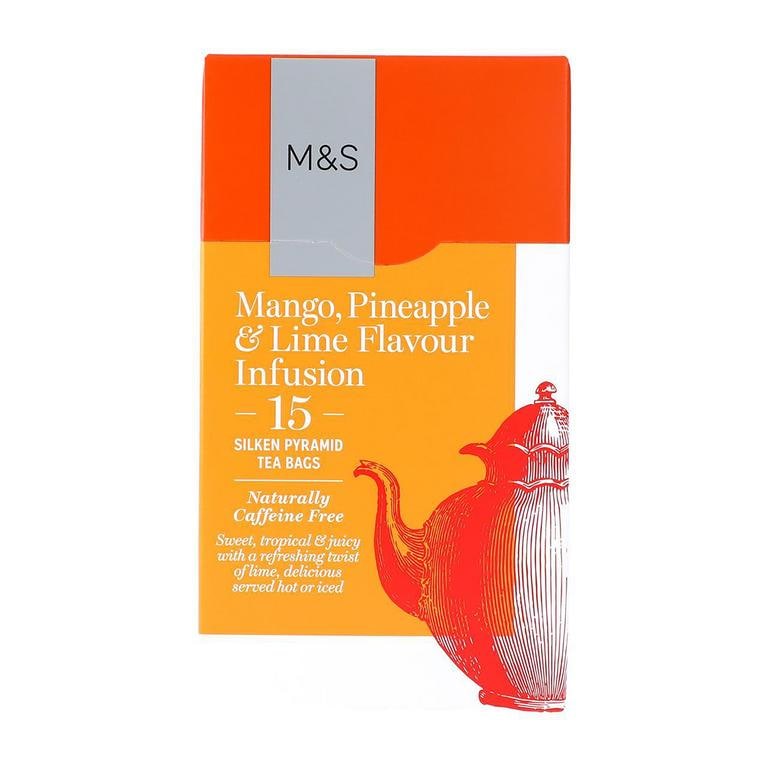
JUMPSTART mornings and make afternoon breaks more interesting with new Fairtrade teas and coffees from the Marks & Spencer (M&S) Foodhall. New treats include unique shortbread flavored M&S Luxury Gold Shortbread Biscuit Teabags and M&S Sticky Toffee Rooibos Infusion Teabags. For a refreshing, naturally caffeine-free and tropical tea, try the M&S Mango Pineapple & Lime Infusion Teabags. Meanwhile, the M&S Defence Teabags is a warming blend of citrus, manuka honey, and turmeric and ginger (which comes with a boost of Vitamin C). M&S Dreamy Infusion Teabags are there for bedtimes with its cozy blend of chamomile, valerian root, elderflower, and rose. On the coffee side, M&S Lazy Weekend Ground Coffee has notes of lemon and hazelnut, while M&S House Blend Ground Coffee has notes of caramel and berries. M&S Jump Start Ground Coffee is a little bit punchier. Shop in-store through the M&S Philippines Viber Community at bit.ly/MSPH-VC, or shop selected lines online on www.marksandspencer.com.ph. Marks & Spencer has 20 stores in the Philippines.

Jollibee launches Iced Mocha

JOLLIBEE is releasing its new Iced Mocha drink. Their freshly brewed coffee, made with 100% Arabica beans, is now mixed with creamy chocolate. The Iced Mocha is available in both regular and large sizes. A new Iced Mocha Float is also available. “More than that kick of caffeine, we now usually drink coffee for that mood-boosting feeling, and Jollibee’s new Iced Mocha is all about giving you the two contrasting experiences of rich, freshly brewed coffee and creamy chocolate, blended perfectly for that much-needed coffee break vibe,” says Luis Berba, Marketing Director of Jollibee, in a statement. Jollibee Iced Mocha is priced at P60, and P75 for the Iced Mocha Float. Available for dine-in, takeout, or delivery via the Jollibee App, JollibeeDelivery.com, #87000, GrabFood, and Foodpanda.

Sprite throws a party

Sprite is throwing “the freshest party of the season” on April 27 and 28 at Flotsam and Jetsam, San Juan, La Union. Sprite has a lineup of activities for the party that will blast your “init meter” (they made one). Highlights include a giant 30-foot bottle of Sprite blasting water, inflatable Sprite slides, and a Sprite Cooling Chamber. Celebrity Joshua Garcia will also be there. The details are available on Sprite Philippines’ official Facebook and Instagram pages or visit www.coca-cola.com/ph/en.

Tala Philippines, Maya Bank ink deal for loan channeling initiative

FINANCIAL TECHNOLOGY company Tala Financing Philippines, Inc. (Tala Philippines) has partnered with digital lender Maya Bank for a loan channeling initiative, it said on Wednesday.

“This collaboration represents a groundbreaking initiative in the country and the broader Southeast Asian market to channel an unprecedented amount of P2.75 billion through independent digital platforms to ensure millions more Filipinos have access to credit,” Tala Philippines said in a statement.

The partnership was formalized during this week’s Money 20/20 Asia event in Bangkok, Thailand, it said.

“We’re thrilled to partner with Maya Bank in this endeavor, knowing that their mission and values are well-aligned with Tala’s. We consider this a milestone in our commitment to become an accessible, reliable and trusted partner to our customers, one that helps them build financial resilience, stability, and ultimately, wealth,” Tala Philippines President and Head of Finance, Strategy & Analytics Charisse P. Alvarez said.

“We are proud to join forces with Tala, reinforcing our mutual dedication to inclusivity in financial services. This partnership is set to significantly expand the availability of financial solutions for Filipinos, leveraging the latest digital and mobile technologies. Our joint effort is a significant step towards closing the financial access gap, ensuring we meet the everyday financial needs of our customers in this digital age,” Maya Bank President Angelo S. Madrid said.

Tala Philippines, which has digital wallet platform, has disbursed over P85.32 billion to 2.7 million customers since it began operating in 2017, it said.

The loan channeling partnership is in line with the Tala’s goal to bridge the financial gap in the country and will allow Maya Bank to expand its customer base and product offerings, it said.

Meanwhile, Maya Bank is one of the six Bangko Sentral ng Pilipinas (BSP)-licensed digital lenders in the country, along with GoTyme Bank; Overseas Filipino Bank; Tonik Digital Bank, Inc.; UnionDigital Bank; and UNObank.

Digital banks and e-wallets have helped spur the increase in online transactions in the Philippines over the past few years, the central bank has said.

Digital payments jumped to 30.3% of the volume of retail transactions in 2021 from 20.1% a year prior as more Filipinos used online channels amid mobility restrictions due to the coronavirus pandemic, BSP data showed.

The BSP wanted to onboard 70% of Filipino adults into the formal financial system this year and have digital payments make up 50% of all transactions, both in volume and value, at end-2023. — AMCS

The future of diesel

STOCK PHOTO | Image from Freepik

In the face of environmental concerns like global warming and the global push for clean energy, the story and future of diesel engines is now one fraught with contention and debate. The common discourse seems to lean heavily towards the demise of diesel, given the fast-growing electric vehicle (EV) industry and tightening emission regulations.

I, too, until recently, was of the seemingly mistaken notion that diesel was on the way out. But now I get the impression that I may be wrong. A deeper dive into the subject reveals a more complex narrative, one that suggests that diesel is far from facing its twilight. In fact, it may yet keep its work-horse role in the future of transportation.

Recent comments from car engine industry leaders such as Toyota and Cummins present a compelling argument for the sustained relevance of diesel technology. These discussions shed light on the evolutionary path diesel engines are now taking, one characterized by innovation and efficiency improvements.

Obviously, diesel continues to play a critical role in sectors like farming, mining, logistics, and transportation, particularly in poorer as well as newly industrializing economies. In these specialized sectors, diesel alternatives are not yet viable or commercially feasible. Or alternatives can significantly raise the cost of production.

Japan’s Toyota, a global car giant and a pioneer in hybrid technology, still champions the diesel engine’s longevity, envisioning a future where diesel continues to power the world’s work vehicles. In fact, not long ago, com-pany chairman Akio Toyoda announced the development of a new family of internal combustion engines, indicating that gas and diesel are still very much in.

Moreover, Toyoda believes that purely electric vehicles will never surpass a market share of 30%. Thus, the other 70% of cars are still going to have internal combustion engines, running on gasoline and diesel. Toyota also thinks synthetic fuels and hydrogen could become viable alternatives one day. So, the future of transport is not necessarily just the electric dream.

Toyota’s forecast is perhaps rooted in its recognition of diesel’s efficiency and reliability, particularly in heavy-duty applications where electric alternatives may be impractical due to range and power constraints. Especially in developing countries, where much of public transportation and commercial applications use diesel, the fuel will undergo evolution rather than elimination.

Cummins, a world leader in diesel engine manufacturing, also believes that diesel will remain part of the way forward. The company is in fact now investing more in researching and developing better diesel refining technol-ogy, focusing on reducing emissions and enhancing efficiency, while noting the big role that diesel continues to play in heavy industries and transportation.

But Cummins is not necessarily coming to the table with clean hands. Last year, it agreed in principle to pay $1.675 billion in fines for its alleged involvement in the use of emissions defeat devices on nearly a million diesel pickup trucks. The Indiana-based Cummins was also made liable for about $325 million in pollution remedies. Emission defeat devices are also set to be removed from over 600,000 pickup trucks with Cummins engines.

The diesel engine industry is obviously at a crossroads, with competition from electric vehicles and more stringent emission regulations making the development of cleaner engines more urgent. In this sense, the narrative is not one of extinction but adaptation, as diesel engines undergo transformations to reduce their carbon footprint through advanced emission control technologies and the integration of renewable diesel fuels.

The worldwide momentum towards cleaner energy sources is undeniable, despite the seeming backsliding in some economies. But diesel’s entrenchment in agriculture, mining, transport, and logistics illustrates the enormi-ty of the “clean” challenge. The transition requires not only technological breakthroughs but also changes in infrastructure, economics, and society.

I have now come to the realization that diesel will not simply go quietly into the night, even as Paris, Mexico City, Madrid, and Athens have previously committed to ban diesel cars from their city centers by 2025. California is following suit. Just recently, the European Parliament also voted to ban the sale of diesel cargo trucks in the European Union (EU) by 2040. Last year, the same lawmakers voted to ban the sale of petrol and diesel cars from 2035.

But the EU is not the world. Ditto for the United States. Asian economies, with their large populations, will most likely continue to allow diesel and gasoline engines beyond 2040. And the enduring relevance of diesel can be attributed to its advantages in efficiency and power, particularly for heavy-duty and long-haul applications; and superior torque at low RPMs, making them ideal for trucks, buses, and agricultural equipment.

The advent of cleaner diesel technologies and the development of biofuels also represent a pivotal shift in mitigating the environmental impact of diesel engines. Biofuels in particular offer a chance to reduce carbon emis-sions, enhancing diesel’s sustainability profile. Today’s diesel cars are truly miles away from the slow, clunky, noisy, and smelly smoke belchers of old.

The transition to an electrified future, while inevitable, is a gradual process fraught with challenges, including infrastructure development, energy storage solutions, and the ecological footprint of battery production. Not to mention the disposition of end-of-life batteries, and the fire safety concerns involving EVs involved in accidents.

Diesel’s evolution provides a bridge in this transition, especially in areas where electric alternatives are currently not feasible or economically unviable. But this evolution should show significant results sooner than later. To remain relevant, the diesel engine’s adaptation should quickly align with a broader environmental strategy to address global warming.

The imperative is clear: reduce carbon emissions and dependency on fossil fuels. This is in recognition of the importance of diversifying energy sources, including the role of cleaner diesel, in achieving long-term sustainability goals. The story of the future of diesel is multifaceted, and obsolescence does not seem to be part of it.

It appears that diesel engines are poised to remain a cornerstone in the global energy ecosystem. The path forward demands a balanced approach, one that leverages diesel’s strengths while actively mitigating its environ-mental impact. Only in an evolved form will diesel continue to be relevant. It should veer away quickly from being the symbol of environmental challenge.


Marvin Tort is a former managing editor of BusinessWorld, and a former chairman of the Philippine Press Council

matort@yahoo.com

A dying free market movement in the world

This month is the 20th year that I have been involved in the free market movement. In late April 2004, I went to the US as an Atlas International Fellow. For one month I attended free market conferences, met leaders of market leaning think tanks, research institutes and NGOs in the US and other countries in the world. My trip was sponsored by the Atlas Economic Research Foundation, renamed as the Atlas Network.

I attended the McKinac Leadership Conference at the Mckinac Center in Midland, Michigan, headed by the very articulate and dynamic libertarian Larry Reed. Then the Annual Resource Bank Meeting of the Heritage Foundation, followed by the Atlas Liberty Forum (ALF) at the same hotel in Chicago. My hotel roommate then was the very famous Indian libertarian Barun Mitra, head of the Liberty Institute in Delhi.

This was followed by a series of meetings with free market think tanks in Washington DC, like the Americans for Tax Reforms (ATR) headed by Grover Norquist, the Cato Institute, the Tax Foundation, the Heritage Foundation, etc.

There was one Atlas official who was very friendly with me, Jo Kwong. A Chinese-American libertarian, she recommended me to the Friedrich Naumann Foundation for Freedom (FNF) and FNF has since invited me to their annual Eco-nomic Freedom Network (EFN) Asia conferences: Hong Kong in 2004, Phuket, Thailand in 2005, Kuala Lumpur in 2006, and so on until around 2018 in Singapore. Jo also secured funding for my participation in the ALF in Atlanta in 2008, Los Angeles in March 2009, and the Tear Down the Wall conference in Washington DC in Nov. 2009. In 2010 there was a reorganization in Atlas, Jo and her staff resigned, and ever since I got no sponsored invitations from Atlas.

Another friend who supported me and Minimal Government Thinkers was Julian Morris, then the head of the International Policy Network (IPN) in London. IPN sponsored my participation in the Global Development Summit in June 2005, a global free trade conference to help counter the narratives of the “more government, more taxes, more aid” G8 Summit in Scotland. IPN gave me a modest grant for sustenance of my think tank, plus it support-ed my participation in various free market meetings in Asia from 2006 to around 2011.

After 20 years, I look back and ask myself if the free market movement in the world has progressed, have governments and multilaterals stepped back from too much intervention and coercion in people’s everyday lives?

The quick answer is “no,” and I have observed this since around 2008.

Governments and the United Nations (UN) have invented all sorts of “crisis” narratives since the 1960s until today: population/food crisis, oil/energy crisis, health/NCDs crisis, education crisis, plastic/garbage crisis, climate crisis, virus crisis and so on.

Since all these were “unprecedented” and “man-made” crisis, then the “solutions” are also man-made or more government-focused: universal (or socialized) healthcare, universal education, sin/excise taxes, carbon/oil taxes, renewables subsidy, food subsidy, etc.

To help quantify how much governments have expanded, I checked the size of central government (local governments, if any, are not included) spending and government debts as percent of gross domestic product (GDP). I divided the countries below into four: In Group A are the European countries, in Group B are the North and South American nations, in Group C are the North Asian nations plus India, and in Group D are the ASEAN-6. For many, government spending indeed expanded from 2004 to 2019 (pre-lockdown), including the Philippines where the percentage rose from 19.4% to 21.7% of GDP.

When the lockdown dictatorship was imposed in 2020 in many countries around the world, economic freedom was severely restricted and punished in the name of “fighting the virus.” Government spending jumped from 2020 to 2022, and onwards until 2023.

A more graphic measurement is central government debt as a share of GDP. Here, almost all governments expanded in 2023 over their 2004 levels, except Russia, India, Indonesia, Taiwan and the Philippines (see Table 1).

In the mid 2000s, the Philippines (under the Gloria Macapagal Arroyo administration) had a big public debt (numerator) with a small GDP size (denominator) so the quotient was high — 71% in 2004. With fast growth and hence, larger GDP size during the Benigno Aquino III administration, the government debt/GDP ratio declined to 46% in 2012 and 37% in 2016, and this continued until 2019.

Many free-market groups and leaders made the big mistake of following the United Nations, the World Health Organization, and government narratives that, a.) a lockdown dictatorship was necessary while waiting for the vaccines, b.) that there was no natural immunity via natural infection from the virus, only vax immunity should be trusted, and, c.) only the virus evolves, humans do not evolve and adapt, especially when aided by decades-old and proven treatment.

I checked the websites of some free market think tanks in Asia, Europe, and the US, and I discovered that many of them supported the lockdown, or at least did not issue statements opposing the lockdown. They sheepishly al-lowed government coercion to expand indefinitely. That was so sad.

There are two new trends seen in many developing countries because of the lockdowns and mandatory vaccination. One is that there were high excess deaths in 2021 when there was forced vaccination in many countries.

As I noted in this column last week (“On oil economics and Philippines vital statistics,” April 18), “there were no excess deaths in 2020 over 2019 despite the high number of reported COVID cases, but there was a high num-ber of excess deaths in 2021 (when mass vaccination was done in March 2021 onwards) compared to 2020 and 2019. There were 20,000/month excess deaths in 2021.”

The second trend is the declining birth rates in many countries. In the Philippines, for the period January-August of each year covered, the decline on average was 20,600 fewer births per month from 2020 to 2023.

Combine these two trends — excess deaths in 2021 and declining births in 2021 onwards — the result is declining overall life expectancy in many countries (see Table 2).

The weakening of the free-market movement does not keep me from continuing my advocacy for market-oriented reforms and less government coercion and taxation, explicit or implicit. High and sustained economic growth and job creation is not possible under a restrictive, heavily regulated, and over-taxed business environment.


Bienvenido S. Oplas, Jr. is the president of Bienvenido S. Oplas, Jr. Research Consultancy Services, and Minimal Government Thinkers. He is an international fellow of the Tholos Foundation.

minimalgovernment@gmail.com

AI not a ‘silver bullet’ for companies — experts

STOCK PHOTO | Image by Rawpixel.Com from Freepik

ARTIFICIAL INTELLIGENCE (AI) is no “silver bullet” for companies and integrating tools powered by the technology into their operations should be done strategically and responsibly, experts said.

AI-driven Software as a service (SaaS) companies and data technology firms said during SaaScon PH 2024 held by Sprout Solutions last week said companies must manage their expectations about AI tools.

“We need to scale back [our] expectations because a lot of people are coming from [thinking] ChatGPT is a silver bullet. But we have to be responsible in educating about AI,” Thinking Machines Data Science Enterprise Solutions Engineering and Gen AI Solutions Lead Kyle Patrick Bartido said.

Mr. Bartido said security, cost, privacy, and trust are their clients’ main concerns about using AI.

“There should be a way for a human to override an AI decision or AI’s reputation and also give it some feedback for training,” he said.

Symph Chief Executive Officer (CEO) and Founder Dave Overton likewise noted that incorporating AI models will not solve everything as these tools have limitations.

BlastAsia, Inc., Steer, & Xamun CEO and Co-Founder Arup Maity noted that AI costs can be high and come with no promise of return and even the risk of billions in losses.

“Will it even be worth it in terms of the Philippine cost setting?,” Mr. Maity said.

He said companies can build their own AI models at a fraction of the usual investment costs as start-ups mostly run on limited funding.

Mr. Maity added that firms need to identify four zones where they can take advantage of AI, namely, for cost reduction, revenue increase, a new business model, or simply experimenting and learning.

Senti AI CEO Ralph Vincent Regalado said companies should educate themselves about the kind of investment required to integrate AI, as these tools can drive revenues, help manage operating costs and affect their bottom line if leveraged properly.

“For some of our customers, we usually start with a very small proof of concept to prove a point that this would help them before scaling the actual implementation,” Mr. Regalado said. — A.R.A. Inosante

ADVERTISEMENT
ADVERTISEMENT