Home Blog Page 3298

Charting a resilient future: A business imperative for the Philippines

(First of two parts)

IN BRIEF:

• Climate resilience is becoming an existential necessity in the Philippines due to the country’s vulnerability to climatic upheavals.

• Top government and private officials are stressing the need for resilience against climate impacts and the development of specific insurance products for climate change-related disasters.

• Philippine corporations are carrying out in-depth climate risk evaluations, which are aligned with global sustainability reporting standards.

In an era where climate change reshapes global economies, resilience transitions from a mere buzzword to a fundamental business strategy. For the Philippines, a nation perennially at the crossroads of climatic upheavals, this transition is not just strategic — it’s existential. The imperative for climate resilience is underscored by scientific projections, economic analyses, and policy shifts that beckon Philippine businesses toward sustainability and resilience.

This article discusses the importance of informed action, strategic foresight, and collaboration in building climate resilience. It highlights the pivotal role of business leadership in promoting sustainability and resilience as key drivers of economic growth and competitive advantage in the Philippines.

The second part of this series will focus on practical strategies and success stories, providing a roadmap for businesses to effectively manage climate risk with agility and insight.

Understanding climate resilience

At its core, climate resilience involves the capacity of businesses to adapt, survive, and thrive in the face of climate-induced disruptions. This notion gains prominence against the backdrop of the Philippines’ acute vulnerability to climate risks, highlighted by its ranking on Germanwatch’s most recent Global Climate Risk Index, an annual report that analyzes the effects of weather-related loss events.

Germanwatch is a non-profit organization that monitors global climate policies and human rights issues. Moreover, a recent publication from the Swiss Re Institute, a leading wholesale provider of reinsurance, highlights the economic impact of climate change, identifying the Philippines as the country most economically exposed to weather-related perils like floods and tropical cyclones.

In addition, new research by international journal Nature, the economic commitment of climate change, suggests that the world economy is committed to an income reduction of 19% within the next 26 years due to climate change, regardless of future emission choices.

This damage outweighs the mitigation costs required to limit global warming to 2°C by sixfold over this near-term time frame. The World Economic Forum also states that by 2050, climate change will cause an additional 14.5 million deaths and $12.5 trillion in economic losses worldwide. Healthcare systems will see an additional $1.1 trillion burden due to climate-induced effects, with floods, droughts, and heat waves identified as leading causes of climate-related mortality and economic losses, and the rise and spread of climate-sensitive diseases like malaria and dengue.

The Philippines typically experiences a significant 3% loss in GDP due to weather events, highlighting the urgency for adaptation measures to mitigate economic losses. The Swiss Re report, Changing climates: The heat is (still) on emphasizes the importance of accurately pricing climate change risk to catalyze necessary investments in adapting and resilience-building efforts.

THE WARMING WORLD AND ITS IMPLICATIONS
The Philippine economy, with its significant reliance on agriculture, tourism, and real estate, is particularly susceptible to climate-induced hazards. Flooding and droughts threaten agricultural productivity and asset values, and extreme heat elevates energy demand and costs. Furthermore, typhoons and storm surges can devastate tourism assets, a crucial income source for many communities.

With scientists warning of intensified, extreme weather events in a warming world, the cost to the economy can only go up. The insurance industry, grappling with losses from natural catastrophes, echoes this concern, highlighting a burgeoning coverage gap and the escalating cost of insurance in the Philippines.

LOCAL PERSPECTIVES
The urgency for climate resilience is echoed in the corridors of power, with President Ferdinand R. Marcos, Jr. elucidating the stark reality of the country’s economic exposure to climate risk. In March 2024, the President emphasized the need for the economy to be resilient against climate impacts, suggesting that without these challenges, the country’s economic strength would be more apparent. He made these remarks to highlight the importance of understanding and mitigating climate risks for economic development.

During the APEC CEO Summit in November 2022, the President also underscored the necessity of resilient infrastructure to combat climate threats, further underlining his commitment to climate resilience as a foundational element for the nation’s growth.

In addition, the Finance Secretary has expressed the need for developing insurance products specifically designed to address climate change-related natural disasters. This underscores his recognition of the increasing importance of adaptive measures in the financial sector to mitigate the economic impacts of climate-related events.

REGULATORY LANDSCAPES AND STRATEGIC IMPERATIVES
The Securities and Exchange Commission’s mandate for publicly listed companies (PLCs) to disclose climate hazard exposures and risk mitigation strategies illustrates a pivotal shift toward transparency and accountability in climate risk management. Aligned with global sustainability reporting standards, this regulatory evolution underscores the importance of integrating climate considerations into corporate governance and strategic planning.

Similarly, the mandate of the Bangko Sentral ng Pilipinas on environmental and social risk management and climate stress testing for banks systemically integrates climate resilience in the financial sector, influencing corporate strategies across the board.

CORPORATE LEADERSHIP IN ACTION
Many PLC and non-PLCs are proactively bolstering their defenses against climate change, with key industry leaders conducting in-depth climate risk evaluations in line with Task Force on Climate-Related Financial Disclosures (TCFD) guidelines. These comprehensive assessments deploy sophisticated climate models to gauge the potential severity and occurrence rate of climate-related threats, aiming to assess how these factors might impact corporate assets.

This forward-thinking approach demonstrates a broader commitment to sustainability and risk management, safeguarding stakeholder interests and ensuring long-term corporate value, which goes beyond standard regulatory requirements.

To continue this discussion, the next article will explore how leading Philippine companies are leveraging their proactive sustainability strategies to improve their market position and drive long-term value.

This article is for general information only and is not a substitute for professional advice where the facts and circumstances warrant. The views and opinions expressed above are those of the author and do not necessarily represent the views of SGV & Co.


Bonar A. Laureto is an assurance principal and part of the Climate Change and Sustainability Services team of SGV & Co.
Fake videos of Modi’s aides trigger political showdown in India election

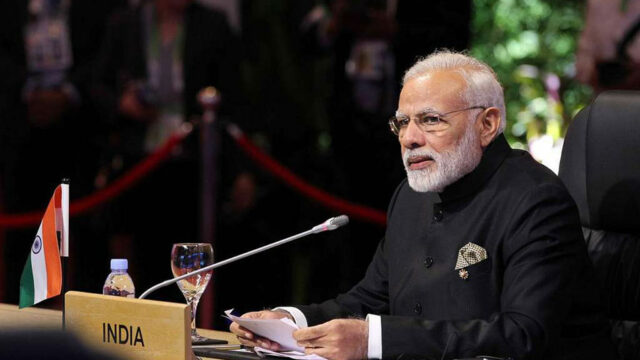
INDIAN PRIME MINISTER NARENDRA MODI — PHILLIPINES GOVERNMENT VIA PICRYL.COM

BENGALURU/LUCKNOW — Manipulated videos are taking center stage as campaigning heats up in India’s election, with fake clips involving two top aides of Prime Minister Narendra Modi triggering police investigations and the arrest of some workers of his rival Congress party.

In what has been dubbed as India’s first artificial intelligence (AI) election, Mr. Modi said last week fake voices were being used to purportedly show leaders making “statements that we have never even thought of,” calling it a conspiracy “to create tension in society.”

Indian police — already investigating the spread of fake videos showing Bollywood actors criticizing Mr. Modi — are now investigating a doctored online clip that showed federal home minister Amit Shah saying the ruling Bharatiya Janata Party will stop certain social guarantees for minorities, a subject sensitive for millions of voters.

Mr. Shah retorted on X, posting his “original” and the edited “fake” speech and alleging — without providing any evidence — that the main opposition Congress was behind the video it created to mislead the public. The minister said “directions have been issued to the police to address this issue.”

Indian police arrested at least nine people, including six members of Congress’ social media teams, in the states of Assam, Gujarat, Telangana and New Delhi last week for circulating the fake video, according to police statements.

Five of the Congress workers were released on bail, but the most high-profile arrest made by the cyber crime unit of New Delhi police came on Friday, when they detained a Congress national social media coordinator, Arun Reddy, for sharing the video. New Delhi is one region where Mr. Shah’s ministry directly controls police. Mr. Reddy has been sent into three-day custody.

The arrest has sparked protests from Congress workers with many posting on X using the #ReleaseArunReddy tag. Congress lawmaker Manickam Tagore said the arrest was an example of “authoritarian misuse of power by the regime.”

Congress’ head of social media, Supriya Shrinate, did not respond to messages and an email seeking comment.

MISINFORMATION
India’s election from April 19 to June 1 will be the world’s largest democratic event.

With nearly a billion voters and more than 800 million internet users, tackling the spread of misinformation is a high stakes job. It involves round-the-clock monitoring by police and election officials who often issue take down orders to Facebook and X as investigations start.

In India’s most populous state of Uttar Pradesh, more than 500 people keep tabs on online content, flagging controversial posts and coordinating with social media companies for their removal when needed, police chief Prashant Kumar told Reuters on Saturday.

Another fake video that sparked a storm last week showed Yogi Adityanath, the state’s chief minister, criticizing Mr. Modi for not doing enough for families of those who died in a 2019 militant attack. Though fact checkers said the video was created using different parts of an original clip, state police called it an “AI generated, deepfake.”

Using internet address tracking, state police arrested a man named Shyam Gupta on May 2 who had shared the fake video post on X a day earlier, receiving over 3,000 views and 11 likes.

The police have accused Mr. Gupta of forgery and promoting enmity under Indian law provisions that can carry a jail term of up to seven years if convicted. Reuters could not reach him as he is currently serving a 14-day custody period.

“This person is not a tech guy. Had he been tech savvy, arresting him quickly would not have been possible,” said police officer Kumar. — Reuters

France’s Emmanuel Macron set to press visiting Xi on trade, Ukraine

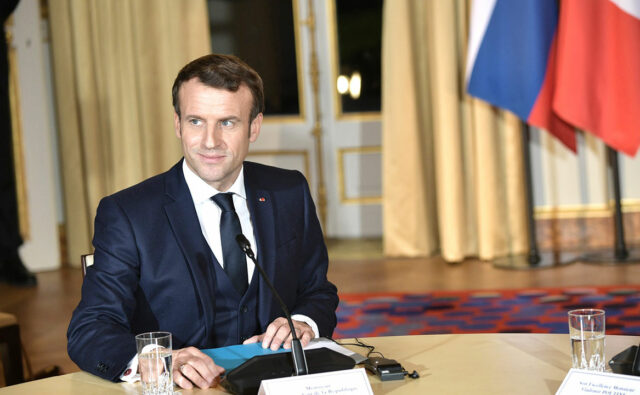
FRENCH PRESIDENT EMMANUEL MACRON — COMMONS.WIKIMEDIA.ORG

PARIS — China’s President Xi Jinping was headed to Paris on Sunday for a rare visit, with his French counterpart Emmanuel Macron set to press him to reduce trade imbalances and try to convince him to use his influence on Russia over the war in Ukraine.

Neither aim will be easily fulfilled during Mr. Xi’s two-day stay in France, where he arrives at a time of growing trade tensions between Europe and China.

France is backing a European Union (EU) probe into Chinese electric vehicle exports and in January Beijing opened an investigation into imports of brandy — which is mostly made in France — a move widely seen as tit-for-tat retaliation amid a growing set of EU probes.

“We must continue to push Chinese authorities to give us more guarantees on trade issues,” an Elysee advisor said ahead of Mr. Xi’s visit, his first trip to Europe in five years.

Mr. Xi was due to arrive at around 4 p.m. (1400 GMT). His official meetings will include joint talks with Macron and European Commission chief Ursula von der Leyen.

Divisions within European Union’s 27 members — and in particular between France and Germany — undermine their ability to influence China. German Chancellor Olaf Scholz will not join Mr. Macron and Mr. Xi in Paris due to prior commitments, sources said.

“Leverage flies out the window if European leaders are sending different messages to Xi,” said Noah Barkin, a senior adviser at the Rhodium Group and close follower of EU-China relations.

France will also seek to make progress on opening the Chinese market to its agricultural exports and resolve issues around the French cosmetic industry’s concerns about intellectual property rights, officials said.

UKRAINE TALKS
France has been keen to nudge China into pressuring Moscow to halt operations in Ukraine, with little progress so far, apart from Mr. Xi’s decision to call Ukraine’s President Volodymyr Zelensky for the first time shortly after Mr. Macron visited Beijing last year.

“China being one of Russia’s main partners, our objective is to use the leverages it has on Moscow to change Russia’s calculations and help contribute to solving the conflict,” the same Elysee adviser said.

A French diplomatic source said: “If the Chinese seek to deepen the relationship with European partners, it is really important that they hear our point of view and start taking it seriously.”

On Tuesday, Mr. Macron will take Mr. Xi to the Pyrenees, mountains he holds especially dear as his maternal grandmother’s birthplace.

The gesture is meant as an echo of Mr. Xi’s decision to take Mr. Macron to share a tea ceremony in the former residence of Mr. Xi’s father in the city of Guangzhou.

“Macron is always in charm mode, he is trying to get foreign leaders on side by establishing a personal rapport with them,” Mr. Barkin said.

“But I hope that he isn’t under any illusions that bringing Xi to a place that is important to him from his childhood is going to bring Xi to tears and lead to compromises from Beijing.”

Mr. Xi will leave France on Tuesday afternoon to head to Russia-friendly Serbia and Hungary. — Reuters

North Korea’s UN ambassador says new sanctions monitoring groups likely to fail

WIKIPEDIA

SEOUL — Efforts led by the US and other Western countries to form new groups to monitor sanctions on North Korea will fail, the country’s United Nations (UN) envoy said on Sunday, according to state media KCNA.

Ambassador Kim Song made the comment in response to a joint statement the US and its allies issued this week calling to continue the work of a UN panel of experts monitoring longstanding sanctions against Pyongyang for its nuclear weapons and missile programs.

Earlier this year, Russia vetoed the annual renewal of the panel amid US-led accusations that North Korea has transferred weapons to Russia for use in its war in Ukraine.

“The hostile forces may set up the second and third expert panels in the future but they are all bound to meet self-destruction with the passage of time,” KCNA quotes Mr. Kim as saying in a statement.

Last month, US Ambassador to the United Nations Linda Thomas-Greenfield visited the Demilitarized Zone, a heavily fortified border between the two Koreas, which remain technically at war and urged Russia and China to stop rewarding North Korea for its bad behavior.

Her trip came after Russia rejected the annual renewal of the multinational panel of experts that has over the past 15 years monitored the implementation of UN sanctions aimed at curbing North Korea’s nuclear and missile programs. — Reuters

Hamas negotiators begin Gaza truce talks; CIA chief also present in Cairo

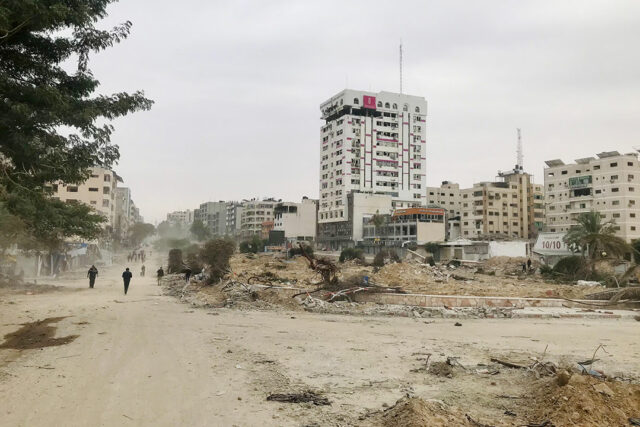
EMAD EL-BYED-UNSPLASH

CAIRO — Hamas negotiators began intensified talks on Saturday on a possible Gaza truce that would see the return to Israel of some hostages, a Hamas official told Reuters, with the Central Intelligence Agency (CIA) director present in Cairo.

The Hamas delegation arrived from the Palestinian Islamist movement’s political office in Qatar, which, along with Egypt, has tried to mediate a follow-up to a brief November ceasefire amid international dismay over the soaring death toll in Gaza and the plight of its 2.3 million inhabitants.

Taher Al-Nono, a Hamas official and advisor to Hamas chief Ismail Haniyeh, said meetings with Egyptian and Qatari mediators had begun and Hamas was addressing their proposals “with full seriousness and responsibility.”

However, he reiterated a demand that any deal should include an Israeli pullout from Gaza and an end to the war, conditions that Israel has previously rejected.

“Any agreement to be reached must include our national demands; the complete and permanent ending of the aggression, the full and complete withdrawal of the occupation from Gaza Strip, the return of the displaced to their homes without restriction and a real prisoner swap deal, in addition to the reconstruction and ending the blockade,” Nono told Reuters.

An Israeli official signaled Israel’s core position was unchanged, saying it would “under no circumstances” agree to end the war in a deal to free hostages.

The war began after Hamas stunned Israel with a cross-border raid on Oct. 7 in which 1,200 people were killed and 252 hostages taken, according to Israeli tallies.

More than 34,600 Palestinians have been killed — 32 of them in the most recent 24-hour period — and more than 77,000 have been wounded in Israel’s assault, according to Gaza’s health ministry. The bombardment has devastated much of the enclave.

While the meetings in Cairo were under way, Israeli forces said they had killed Aiman Zaarab, who they said had been a leader of Islamic Jihad forces in southern Gaza and taken part in the Oct. 7 attack.

HOPE GROWS FOR TRUCE DEAL
Before the talks began there had been some optimism.

“Things look better this time but whether an agreement is on hand would depend on whether Israel has offered what it takes for that to happen,” a Palestinian official with knowledge of the mediation efforts, who asked not to be named, told Reuters.

Washington — which, like other Western powers and Israel, brands Hamas a terrorist group — has urged it to enter a deal.

Progress has stumbled, however, over Hamas’ long-standing demand for a commitment to end the offensive. Israel insists that after any truce it would resume operations designed to disarm and dismantle the faction.

Hamas said on Friday it would come to Cairo in a “positive spirit” after studying the latest proposal, little of which has been made public.

Israel has given a preliminary nod to terms that one source said included the return of between 20 and 33 hostages in exchange for the release of hundreds of Palestinian prisoners and a truce of several weeks.

That would leave around 100 hostages in Gaza, some of whom Israel says have died in captivity. The source, who asked not to be identified by name or nationality, told Reuters their return may require an additional deal.

“That could entail a de facto, if not formal, end to the war – unless Israel somehow recovers them through force or generates enough military pressure to make Hamas relent,” the source said.

Egyptian sources said CIA Director William Burns arrived in Cairo on Friday. He has been involved in previous truce talks and Washington has signalled there may be progress this time.

The CIA declined to comment on Burns’ itinerary.

Cairo made a new push to revive talks late last month, alarmed by the prospect of an Israeli assault against Hamas in the southern Gaza city of Rafah, where more than 1 million Palestinians have taken shelter near the border with Egypt.

Such an Israeli operation could derail fragile humanitarian operations in Gaza and endanger many more lives, according to UN officials. Israel says it will not be deterred from taking Rafah eventually, and is working on a plan to evacuate civilians.

Saturday’s Cairo talks come as Qatar reviews its role as mediator, according to an official familiar with Doha’s thinking. Qatar may cease hosting the Hamas political office, said the official, who did not know if, in such a scenario, the Palestinian group’s delegates might also be asked to leave. — Reuters

Heavy rains in southern Brazil kill nearly 60 people, with over 70 still unaccounted for

SAO PAULO — Heavy rains in Brazil’s southernmost state of Rio Grande do Sul this week killed at least 55 people, local authorities said on Saturday evening, while dozens remain unaccounted for.

Rio Grande do Sul’s civil defense authority said 74 people were still missing and more than 69,000 had been displaced as storms in the last few days have affected nearly two thirds of the 497 cities in the state, which borders Uruguay and Argentina.

The local authority said it is now investigating whether another seven deaths were related to the storms, after earlier in the day it had reported a total of more than 55 deaths.

Floods destroyed roads and bridges in several regions of the state. The storm also triggered landslides and the partial collapse of a dam at a small hydroelectric power plant. A second dam in the city of Bento Goncalves is also at risk of collapsing, authorities said.

In Porto Alegre, the capital of Rio Grande do Sul, the Guaiba lake broke its banks, flooding streets.

Porto Alegre’s international airport has suspended all flights for an indefinite period.

State Governor Eduardo Leite told reporters on Saturday evening that Rio Grande do Sul would need a “Marshall Plan” to recover from the storms and its consequences, referring to a plan for Europe’s economic recovery after World War II.

Brazil’s President Luiz Inacio Lula da Silva, who had visited Rio Grande do Sul on Thursday, will travel back to the state on Sunday to follow the rescue efforts, his chief of communication Paulo Pimenta said on Saturday. 

Mr. Lula said on X that his government is in constant contact with state and cities’ authorities to support the region with whatever they need.

Rains are expected in the northern and northeastern regions of the state until Sunday, but the volume of precipitation has been declining, and should be well below the peak seen earlier in the week, according to the state meteorology authority.

Still, “rivers water levels should stay high for some days,” Mr. Leite said earlier on Saturday.

Rio Grande do Sul is at a geographical meeting point between tropical and polar atmospheres, which has created a weather pattern with periods of intense rains and others of drought.

Local scientists believe the pattern has been intensifying due to climate change. — Reuters

Digital Telecommunications Phils. to hold Annual Meeting of Stockholders on May 27 via MS Teams


Spotlight is BusinessWorld’s sponsored section that allows advertisers to amplify their brand and connect with BusinessWorld’s audience by publishing their stories on the BusinessWorld Web site. For more information, send an email to online@bworldonline.com.

Join us on Viber at https://bit.ly/3hv6bLA to get more updates and subscribe to BusinessWorld’s titles and get exclusive content through www.bworld-x.com.

How DonBelle, BINI, and Adie are making this summer a season of awesome

Phenomenal love team Donny Pangilingan and Belle Mariano, the nation’s girl group BINI, and singer-songwriter Adie are Gen Zs at the top of their game. It’s no surprise that they all said “yes” to Samsung to be its brand ambassadors as they enjoy back-to-back milestones this summer with the newly launched Samsung A55 5G and A35 5G.

We spoke to the new and returning members of #TeamGalaxy on the sidelines of Awesome Summer Fanfest at SM North Edsa Annex held in April, where guests enjoyed kilig-worthy moments with their idols.

DonBelle: An adventure-ready phone for your summer escapades

From He’s Into Her to Can’t Buy Me Love, Donny Pangilinan and Belle Mariano have been on a winning streak, on top of being part of Team Galaxy. Seeing the Samsung Galaxy A55 5G and Galaxy A35 5G was love at first sight.

“I like the Awesome Lilac. It’s so elegant and nice to look at. I don’t know how to describe it. It’s so Belle,” the actress said.

For Pangilinan, he is a fan of Samsung Galaxy A55 5G’s splash resistance.“It’s hard to have a phone that is not splash-friendly, kasi siyempre that’s what you need to take photos safely wherever you are.”

He added that its dustproof feature also aligns with his lifestyle because he loves the outdoors. “When I go outdoors to try new hobbies like hiking and camping, eh requirement din na yung mga cellphone na gamit mo dustproof para it can be as efficient as possible,” Pangilinan added.

Mariano, meanwhile, is a fan of the Object Eraser function. “I think it’s convenient. Ang hirap humanap ng ganon, like, na phone na aalisin talaga yung unwanted objects,” said.

“Tsaka built in na! You don’t have to download an app,” Pangilinan chimed in.

Mariano also noticed the Samsung Galaxy A55 5G’s long battery life. “At work, we read our scripts from our phones na. And it really helps kasi sometimes naman hindi accessible na may power outlet everywhere you go, and mas lalo na kami sa Binondo (set of You Can’t Buy Me Love).” she shared.

So, this summer, where is the love team headed?

“Secret,” Pangilinan said laughingly. “Pero actually ang tagal na namin nag-taping, 8-9 months na. I think it’s time to take a breather. We decided to take the phone around and see what it could do.”

From the Galaxy to the BINIverse

Being tapped as new members of #TeamGalaxy, BINI felt things came full circle as Samsung was their phone when they were still trainees.

“Actually, noong sinabi pong magiging part kami ng #TeamGalaxy sobrang, kung nakita niyo lang po reactions namin, sobrang sumigaw po talaga kami,” BINI leader Jhoanna recalled.

Resident funny girl BINI Maloi, a self-professed selfie princess, said that her favorite feature on Samsung Galaxy A55 5G and Galaxy A35 5G is the Dual Recording.

“Favorite ko siya kasi gusto ko na I can capture yung moments and at the same time nakikita ko rin yung reaction [ko].” she said.

BINI Colet, BINI Mikha, and BINI Gwen agreed, with Colet stressing it can be useful to get their fans’ reactions while they’re performing on stage. BINI Gwen also wants to use the Dual Recording function when traveling to share scenic views with her followers.

Meanwhile, BINI Aiah and BINI Stacey are fond of the Object Eraser function which can remove unnecessary objects from images. BINI Sheena, shared that the Samsung A55 5G gives her an awesome gaming experience, saying “‘Yung ML (Mobile Legends) po niya sobrang liwanag.”

Back-to-back gigs and endorsements are making BINI busy this summer. But they’ll be bringing their Samsung Galaxy A55 5G units with them, even to their outdoor events. “Itong Samsung Galaxy A55 kasi it’s splash resistant. Matalsikan man ng tubig, parang madali kasi siyang makasira ng phone. So, perfect talaga siya,” BINI Jhoanna said.

Asked for tips on how to make their summer of Blooms awesome, BINI Aiah had a quick answer: “Buy Samsung Galaxy A55 5G or Galaxy A35 5G, go to the beach, listen to Pantropiko, and record a dance challenge!!”

Adie: A songwriter’s reliable partner

Adie is the first OPM soloist with multiple songs (Paraluman, Mahika) surpassing 200 million streams on Spotify. He is grateful that the Samsung brand is tapping OPM artists such as BINI to be the faces of Samsung Galaxy A55 5G and Samsung Galaxy A35 5G.

“Nagulat ako, kasi parang ito yung navi-vision kong timeless look ng modern phones ngayon. Parang si Paraluman, ang timeless talaga eh. So ayun, kahuma-humaling,” Adie recalled when he first saw his Awesome Navy variant.

While he also mentioned the dual recording function as a valuable tool for recording his performance and capturing his audience’s reactions, Adie was also amazed at the long battery life the Samsung Galaxy A55 5G provides, which helps his songwriting.

“Yung [long] battery life niya, very helpful yun sa mga artist na katulad ko, Let’s say may naisip na idea or lyrics, kailangan ma-sulat siya agad kasi minsan nagfa-fade yun eh. And at the same time yung melodies na naiisip mo for that song, yun din kailangan mo i-record. Helpful yung A55 kasi yung battery life niya, ‘tsaka yung quality ng mic,” he shared.

Adie also praised the phone’s front camera. “Nagustuhan ko ‘yung front camera niya kasi usually ‘pag nagre-record ako front camera talaga. ‘Di ko ginagamit ‘yung back camera. So ayun yung kadalasang content na nagagawa ko using this phone,” he said.

Recording audio elements using the Samsung Galaxy A55 5G has also been a breeze. “Let’s say, sumisigaw ‘yung tao, ‘yung crowd, ginagamit ko’ yung microphone ng phone. So that pag nilatag siya sa DEW or sa mismong software kung s’an nagmimix yung engineer, ayun nagagamit siya as element,” Adie explained.

This summer, Adie plans to enjoy his “alone time” and probably meet with his OG friends and family. “’Di ako talaga ma-labas na tao, do’n lang ako sa safe space ko or sa area ko,” he shared. “Siguro magagamit ko yung idea na splash resistant siya [Samsung Galaxy A55 5G] para let’s say magtampisaw, magagamit ko yung phone kasi nga splash resistant siya. ”

Even our Gen Z idols need a break this summer. So, whether it’s a workation like BINI’s, zen time like Adie’s, or a private getaway like DonBelle’s, make sure you capture every awesome moment and stay connected when needed using the new Samsung Galaxy A55 5G and Galaxy A35 5G.

#CreateAwesome like your favorite #TeamGalaxy stars! Get the Galaxy A55 5G for P24,990 (8+256GB), while the Galaxy A35 5G can be yours for only P20,990 (8+256GB). A 128GB option is available exclusively via Globe Telecom and Smart Communications. Enjoy awesome freebies, like a travel adapter worth P1,190.

You can also get these phones at 0% interest for up to 18 months installment via home credit, 0% for up to 12 months using your credit card, plus an additional P5,000 discount when you trade in your old device for a new Galaxy A55 or A35 5G.

Learn more about the Samsung Galaxy A55 5G, Galaxy A35 5G, and other Galaxy smartphones by visiting the Samsung NewsroomSamsung Mobile Press, and Samsung.com.


Spotlight is BusinessWorld’s sponsored section that allows advertisers to amplify their brand and connect with BusinessWorld’s audience by publishing their stories on the BusinessWorld Web site. For more information, send an email to online@bworldonline.com.

Join us on Viber at https://bit.ly/3hv6bLA to get more updates and subscribe to BusinessWorld’s titles and get exclusive content through www.bworld-x.com.

Greenpeace calls on the government to mitigate the impacts of the climate crisis

The pale sun casts an orange hue on the morning skies while rising beyond buildings as seen from the Mabini Bridge in Manila on Friday. — PHILIPPINE STAR/MIGUEL DE GUZMAN
A global environmental organization called on the Philippine government to provide solutions that could lessen the impact of El Niño and La Niña.
“We call on our government to ensure measures that will mitigate the impacts of El Niño on our water supply, food production, and power generation,” Greenpeace Philippines said in their statement on extreme heat aggravated by the climate crisis last Tuesday, April 30.
Throughout the week, the country has experienced record-high and dangerous heat indexes based on the report of the Philippine Atmospheric, Geophysical, and Astronomical Services Administration (Pagasa).
To combat the drought in hydropower plants, Senator Sherwin T. Gatchalian suggested the utilization of cloud seeding in a forum last April 25. Cloud seeding is a type of weather modification that induces rainfall.
“Sa Dubai nag cloud seeding sila kaya umulan do’n. Kung kaya mag cloud seeding satin, mag cloud seeding din tayo para yung mga hydropower plants natin gumana. Isa sa mga dahilan kung bakit hindi gumagana ang hydropower plants natin hindi umuulan eh (In Dubai, they used cloud seeding to produce rain. If we have the means, we can also do cloud seeding to get our hydropower plants working. Lack of rain was one of the reasons why our hydropower plants stopped working),” Mr. Gatchalian shared.
On April 28, the Department of Education announced the implementation of asynchronous classes or distance learning in public schools nationwide due to dangerous heat.
Senate President Juan Miguel Zubiri stated last Monday, April 29, in his appeal to adjust the summer school break to safeguard the students during the harsh weather conditions.
“Aside from exposing our students and teachers to the dangers of extreme heat, I honestly believe that the prevailing weather conditions during summer are not conducive to learning,” Mr. Zubiri said.
Farmers, students, and senior citizens are the most vulnerable sectors amid this climate crisis according to Greenpeace.
To lessen the effect of the ongoing heat wave and prepare for La Niña, “a shift in Philippine food and agriculture, to a system that is more environment-friendly and climate-resilient” is advised by the organization.
Improved investments in ecological agriculture are encouraged to aid in enhancing the capability of local farmers in self-sufficiency, and the ability to respond to a crisis like El Niño.
Aside from this, implementing a comprehensive food policy addressing concerns about food, nutrition, and environmental security was mentioned in the organization’s statement. – Almira Louise S. Martinez

Smart drives increase in 5G data traffic powered by the Philippines’ Best 5G Coverage Experience

As 5G is fast becoming the connectivity of choice among mobile subscribers in the country, leading integrated telco network PLDT Inc (PLDT)’s wireless subsidiary Smart Communications, Inc (Smart) saw a sustained increase in average monthly 5G data traffic in 2023, bolstered by its award-winning 5G mobile network.

In 2023, average quarterly 5G data traffic almost doubled, up 95% compared to the previous year. In the fourth quarter of 2023 alone, Smart posted a 16-percent increase in average monthly data traffic on its 5G network, versus the previous period. Driving this growth were the availability of new, more affordable 5G devices and the continued push of Postpaid Unli5G Signature plans.

“As we strive to continue delivering the best mobile experience to our customers, we also ensure that our offers are value-packed and relevant, and that we are also able to make the latest handsets more accessible for our subscribers to make it easier for them to upgrade,” said Alex O. Caeg, Head of Smart Consumer Wireless Business.

Supporting this continuous increase in data usage is Smart’s mobile network, which was recently recognized for delivering the Philippines’ Best 5G Coverage Experience, according to the latest report by independent analytics firm Opensignal.  Smart’s mobile network covers 97% of the population and is part of the Philippines’ largest integrated network that includes PLDT’s 1.1 million kilometer fiber infrastructure.

“Coverage is key to 5G adoption. Our latest citation from Opensignal is a testament to Smart’s commitment to expand the reach of our network across the Philippines. These efforts are also bearing fruit, as can be seen in the increase in our 5G data traffic, which has practically doubled,” Caeg added.

Smart’s initiatives to deliver enhanced mobile products and services are aligned with the PLDT Group’s endeavors to narrow the digital divide and provide connectivity to all, supporting the United Nations Sustainable Development Goals (UNSDG) particularly on SDG No. 9 – Industry, Innovation, and Infrastructure. These also reinforce the Group’s support for the Government’s overall digitalization thrust.

Opensignal Awards – Philippines: Mobile Network Experience Report April 2024, based on independent analysis of mobile measurements recorded during the period January 1– March 30, 2024 © 2024 Opensignal Limited.


Spotlight is BusinessWorld’s sponsored section that allows advertisers to amplify their brand and connect with BusinessWorld’s audience by publishing their stories on the BusinessWorld Web site. For more information, send an email to online@bworldonline.com.

Join us on Viber at https://bit.ly/3hv6bLA to get more updates and subscribe to BusinessWorld’s titles and get exclusive content through www.bworld-x.com.

Taiwan says Chinese planes crossed median line, China carries out landing drills

CHESS PIECES are seen in front of displayed China and Taiwan’s flags in this illustration taken Jan. 25, 2022. — REUTERS

 – Taiwan’s defense ministry said on Friday it had detected a renewed incursion by Chinese military aircraft across the sensitive Taiwan Strait, as China reported its navy had carried out combat drills with landing craft.

Over the past four years, China’s military has significantly ramped up its activities around democratically-governed Taiwan. Beijing views the island as its own territory, a position the government in Taipei strongly rejects.

The defense ministry, in its daily morning update on Chinese activities in the previous 24 hours, said 14 Chinese military aircraft crossed the Taiwan Strait’s median line, getting as close as 41 nautical miles (76 km) to the northern Taiwanese port city of Keelung, home to a major navy base.

The median line is used to serve as an unofficial border between the two sides, but Chinese military aircraft now regularly cross it. China says it does not recognize the line’s existence.

Taiwan said on Thursday that China had carried out a “joint combat readiness patrol” near the island for the second time in a week.

China’s defense ministry did not answer calls seeking comment on Friday, the country being in the middle of its Labor Day holiday.

On Thursday, the Eastern Theatre Command of China’s People’s Liberation Army, which is responsible for the area around Taiwan, showed pictures on its WeChat social media account of ships carrying out what it called live combat landing drills.

It did not say when or where exactly the exercises took place, but showed images of ship-mounted guns opening fire and operating in formation.

“The vanguard of the landing team are always ready to fight,” it said in text to accompany the pictures.

The island’s top security official said on Wednesday that Taiwan is on alert for China to carry out military exercises following the inauguration of President-elect Lai Ching-te later this month.

Taiwan National Security Bureau Director-General Tsai Ming-yen said China had begun using unusual new tactics, including staging night time combat patrols and using landing ships and minesweepers in those patrols.

Mr. Lai, who is inaugurated on May 20 after winning election in January, is strongly disliked by China which believes him to be a dangerous separatist. China’s government has rejected his repeated offers of talks, including one made last week.

Mr. Lai, like current President Tsai Ing-wen, rejects Beijing’s sovereignty claims; both say only the island’s people can decide their future.

Mr. Lai has been Taiwan’s vice president for the past four years. – Reuters

Missile defence successes in Gulf, Ukraine fuel global urgency to acquire systems

AN anti-missile system operates after Iran launched drones and missiles towards Israel, as seen from Ashkelon, Israel, April 14, 2024. — REUTERS

The success of ballistic missile defenses facing their first complex, high-stakes combat scenarios in Israel, the Red Sea and Ukraine will encourage militaries globally to invest in the pricey systems, experts say – and intensify missile arms races.

Iran launched as many as 120 intermediate-range ballistic missiles at Israel on April 13, US and Israeli officials say. US SM-3 and Israeli Arrow interceptors destroyed nearly all of them, leaving drones and smaller threats to the Iron Dome system.

In previous months, interceptors fired from U.S. Navy destroyers stopped Houthi anti-ship ballistic missiles, while in Ukraine, U.S.-made MIM-104 Patriot batteries have shot down advanced Russian Iskander and Khinzal missiles.

Reuters spoke with six experts who said more militaries would look to invest in ballistic missile defense, a potential windfall for companies such as Lockheed Martin and Raytheon, which build those types of systems.

“It’s undeniable that any wealthy country with the technological wherewithal will continue to invest in missile defencs,” said Ankit Panda of the US-based Carnegie Endowment for International Peace, a defense and security think tank. “All of this is a recipe for a conventional arms race.”

European countries such as the Netherlands, Germany, Sweden and Poland already operate RTX subsidiary Raytheon’s Patriot batteries, the most common Western advanced ballistic missile defense system.

Saudi Arabia has used its Patriots for years to defend against Houthi attacks; it and the United Arab Emirates also operate the Lockheed Martin Terminal High Altitude Air Defense (THAAD) system. Kuwait, Qatar and Bahrain have Patriot batteries as well, and Oman has expressed interest in missile defense.

In the US, Lockheed Martin in April won a $17.7 billion contract for a next-generation interceptor for the Ground-Based Midcourse Defense (GMD) program – designed to shoot down small numbers of intercontinental ballistic missiles (ICBMs) aimed at the continental United States.

But the impact may be most acute in Asia, where China has invested heavily in conventionally armed ballistic missiles. A 2023 Pentagon report said the People’s Liberation Army Rocket Force has about 500 DF-26 missiles, designed to accurately strike targets thousands of kilometers away.

That puts US and allied bases in Japan and Guam within range of an attack that may only come with 20 to 30 minutes’ warning.

“In the Pacific, you’ll see further interest in missile defense, which will push the Chinese to build more systems,” said Jeffrey Lewis, director of the East Asia Nonproliferation Program at the James Martin Center for Nonproliferation Studies at the Middlebury Institute of International Studies in California. “Countries will want to acquire (offensive) missiles because they see other countries using them … That will drive up demand for missile defenses.”

US Indo-Pacific Command and China’s Ministry of Defense did not respond to requests for comment.

China rarely discusses its missile arsenal beyond statements that its forces are meant to preserve peace and are not aimed at any specific country.

Raytheon did not respond to a request for comment. A Lockheed Martin spokesperson referred questions to the company’s first-quarter earnings briefing in late April, in which it said it continued to lead the industry in “missile defense missions, which, given world events, are becoming more critical than ever”.


DOLLAR SIGNS

Ballistic missile defense works by spotting an attacking weapon either at launch or in flight, then using a surface-based radar to guide an interceptor to the target.

Interceptions can occur in the atmosphere or in space, and each domain requires different hardware. For instance, fins won’t work outside the atmosphere – interceptors must have small steering rockets to function there.

The necessary high-powered computers, far-seeing radars and missiles as large as telephone poles are not cheap, together stretching into the billions. In 2022, for example, the U.S. approved the sale of both Patriots and THAAD systems to Saudi Arabia, in deals worth as much as $5.3 billion.

In the Indo-Pacific region, wealthier countries such as Japan, Australia and South Korea are prime candidates for missile defense, Mr. Lewis said, while nearly every country in Asia is already investing in missiles.

Japan’s defense ministry said the country “needs to fundamentally and swiftly reinforce its defense capabilities, including integrated air and missile defense”. It said it is investing in improved Patriot missiles, better radars and enhanced naval anti-missile capabilities.

In its latest defense budget, South Korea increased funding by 12% for its Korea Air and Missile Defense System to expand it “from the existing lower-level defense concept,” the country’s defense ministry said in a statement.

“Cases such as the Israel-Hamas conflict and the Russia-Ukraine war have reaffirmed the importance of a ‘ballistic missile defense system’ to respond to increasingly sophisticated missile threats,” the ministry said.

In mid-April, Australia announced a A$500 million ($328 million) contract with Lockheed Martin to deliver its Joint Air Battle Management System for tracking and destroying aircraft and missiles.

The cost of a ballistic missile is often much cheaper than the system meant to stop it.

But that isn’t the right way to consider cost, said Yoji Koda, former commander in chief of Japan’s Self-Defense Fleet, and an advocate of stronger missile defenses in his country.

“In a war economy, the cheaper the better. But sometimes what is necessary, is we need to protect key infrastructure, or key command centers, at any cost. Because without them we would lose.”


THE CHINA QUESTION

Most of China’s conventionally armed ballistic missiles are designed to hit targets on land.

But it also fields steerable warheads meant to hit ships at sea, including the DF-21D and variants of the DF-26, developed by the state-owned China Aerospace Science and Technology Corporation.

Such anti-ship ballistic missiles (ASBMs) had never been used in combat until late 2023, when Houthi forces in Yemen began firing Iranian-made models at ships in the Red Sea.

Between November – the first documented use – and April, U.S. Central Command reported at least 85 ASBMs fired in the region, with 20 interceptions and one civilian ship reported sunk.

CENTCOM has declined to provide specifics about the effectiveness of Iranian ASBMs but has noted missiles posing no threat were not engaged and most that were not intercepted landed harmlessly.

The effectiveness of missile defenses on land and at sea will catch China’s attention, said Tong Zhao, a senior fellow with the Nuclear Policy Program and Carnegie China.

“It raises the possibility that the U.S. and its allies could depend on missile defense significantly against a ballistic missile attack,” Zhao said.

Although the technical specifics of China’s missiles are closely held secrets, the country’s heavy investment means they are likely to be more reliable, and are widely believed to use complex countermeasures to complicate interception.

“For opponents such as China which have missile stockpiles an order of magnitude larger than that of Russia or Iran and which field more sophisticated systems … it’s not clear that the lessons learned invalidate existing operational constructs,” said Sidarth Kaushal, a senior research fellow at the Royal United Services Institute.

But the political and practical incentives to invest in missile defense will be too attractive for many countries to ignore, Lewis said.

“All defense procurement decisions are ultimately about politics,” he said. “The politics of this stuff is really simple: do you want to defend the country or not? And the winning answer is always ‘Yes’.” – Reuters