Home Blog Page 3293

SM Supermalls emerges as one of the Philippines’ largest job creators

SM Mall of Asia Senior Assistant Vice President Perkin So (left), Pasay District Representative Hon. Antonio Calixto (2nd from left), Pasay City Mayor Imelda Calixto-Rubiano (third from left), Department of Labor and Employment (DOLE) Officer-In-Charge (OIC)-Director II Atty. Gerard Peter Mariano (4th from left), Pasay City Public Employment Service Offices (PESO) Manager Filipinas Rosario Sampang (2nd from right), and Technical Education And Skills Development Authority (TESDA) Director Cariza Dacuma (right) during the SM Mall of Asia Job Fair last May 1.

Spearheads weekly nationwide Job Fairs

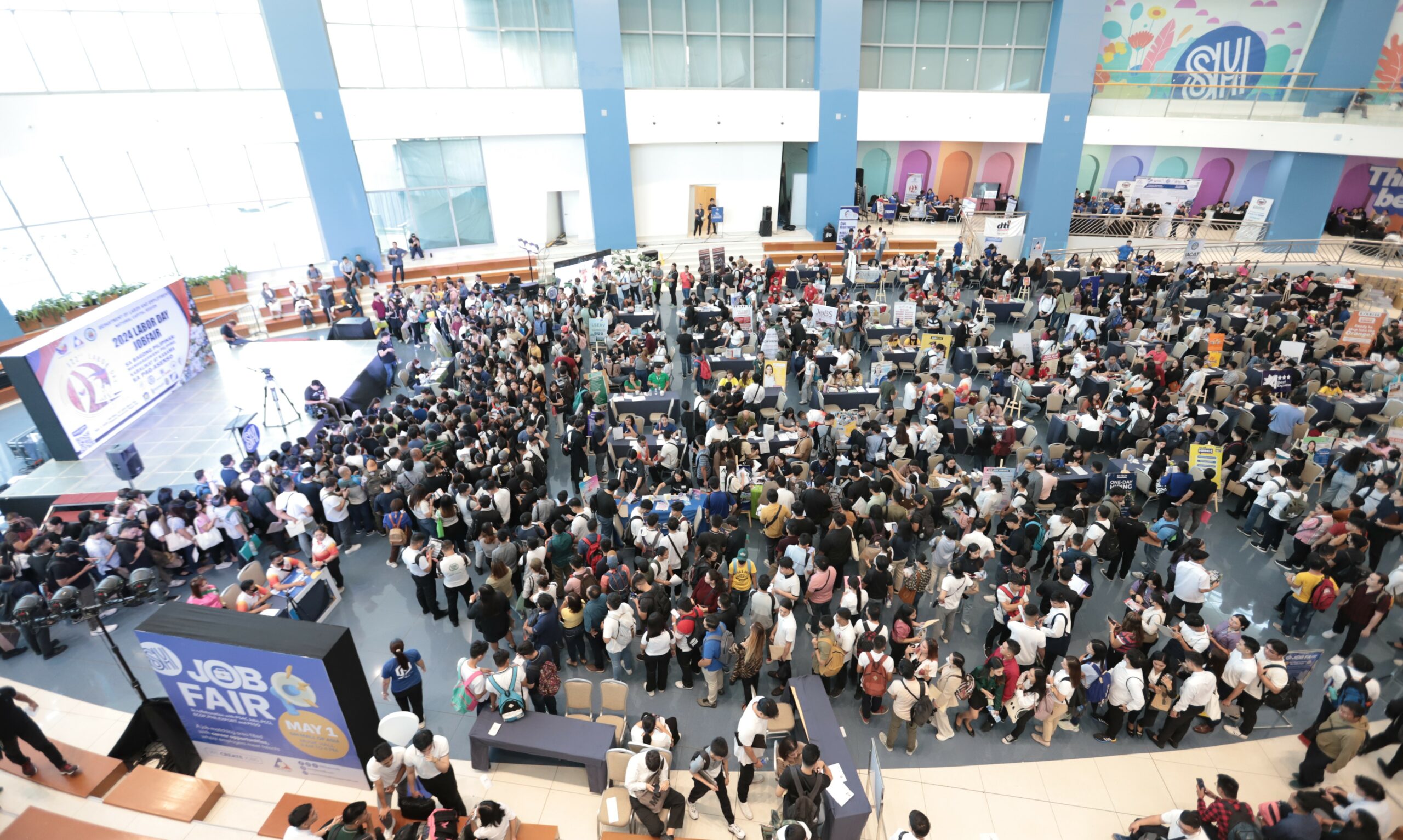
In commemoration of Labor Day last May 1, SM Supermalls reaffirmed its commitment to fostering employment opportunities for Filipinos by hosting simultaneous nationwide job fairs. Partnering with the Department of Labor and Employment (DOLE), Public Employment Service Offices (PESO), Local Government Units (LGUs), industry associations, and SM Retail, SM Supermalls proudly facilitated these events as part of its community efforts.

As one of the largest job creators in the Philippines, SM Supermalls is dedicated to reducing unemployment by holding weekly job fairs across its extensive network of malls. During the May 1 job fair alone, SM Supermalls welcomed nearly 20,000 job seekers, with a significant number receiving on-the-spot job offers, totaling more than 2,000 newly employed individuals. This demonstrates the effectiveness of these initiatives in connecting individuals with immediate employment opportunities.

Hired-on-the-Spot (HOTS)! Last May 1, a successful job applicant receives an on-the-spot job offer at the SM Mall of Asia Job Fair.

SM Supermalls also announced its continued commitment to job creation by hosting weekly job fairs every month until November. These events, held in collaboration with government agencies, industry associations, and private sector partners, aim to provide Filipinos with access to diverse employment opportunities in sectors such as retail, Food and Beverage (F&B), Information Technology (IT), and Business Process Outsourcing (BPO).

“The SM Group is invested in market-leading businesses that are innovative and relevant to the needs of the Filipino, to strengthen the private sector’s role in nation-building,” remarked SM Supermalls’ President Steven Tan. “By hosting weekly job fairs, we are not only connecting individuals with employment opportunities but also supporting the growth of industries crucial to the Philippine economy.”

For more information about SM Supermalls’ upcoming job fairs and employment opportunities, please visit www.smsupermalls.com or follow @SMSupermalls on social media.


Spotlight is BusinessWorld’s sponsored section that allows advertisers to amplify their brand and connect with BusinessWorld’s audience by publishing their stories on the BusinessWorld Web site. For more information, send an email to online@bworldonline.com.

Join us on Viber at https://bit.ly/3hv6bLA to get more updates and subscribe to BusinessWorld’s titles and get exclusive content through www.bworld-x.com.

4PH Pambansang Pabahay borrowers to benefit from program subsidies – DHSUD, Pag-IBIG Fund execs

The Pambansang Pabahay Para sa Pilipino Housing (4PH) Program, the government’s flagship housing project, provides affordably-priced homes and lower monthly amortization costs through various subsidies for Filipino workers who are members of Pag-IBIG Fund, the Department of Human Settlements and Urban Development (DHSUD), together with Pag-IBIG Fund executives, announced last May 1, Labor Day.

“Our housing agenda aims to ensure that all Filipino workers have the means to accessible and affordable housing opportunities. Through the subsidies extended to beneficiaries of the 4PH program, prices of homes and monthly amortization costs will be significantly reduced. This is in line with President Marcos’ Philippine Development Plan 2023-2028 to address the country’s housing needs,” said Secretary Jose Rizalino L. Acuzar, who leads DHSUD and the 11-member Pag-IBIG Fund Board of Trustees.

Subsidies on Price and Interest

The housing czar said that housing units to be sold under the Pambansang Pabahay (4PH) program will be more economically priced than other residential units in the market in keeping with the price ceiling imposed by the government for affordable housing.

Housing loan borrowers who will avail of units under the Pambansang Pabahay (4PH) program through a Pag-IBIG Housing Loan will enjoy an even lower interest rate than what Pag-IBIG Fund currently provides, which is already considered the lowest in the market. DHSUD will subsidize up to 5% of the loan’s outstanding interest rate, allowing borrowers to pay a reduced interest rate on their loans. This will ensure that Filipino workers can now fulfill their homeownership dreams, especially those with limited financial resources.

Focus on sustainability, communal spaces

The Pambansang Pabahay (4PH) program also showcases green features, providing communal open spaces and gardens, as well as amenities such as swimming pools and basketball court ensuring that residents will have comfortable and improved living conditions.

Mr. Acuzar emphasized that future homeowners of the Pambansang Pabahay housing units will experience a well-designed and self-sufficient community through a township model. This framework allows residents to live within cities with access to commercial spaces, educational institutions, healthcare centers, and other essential infrastructure.

“Interested Filipino workers can easily avail of the Pambansang Pabahay (4PH) program through their Pag-IBIG Fund membership by applying for a special Pag-IBIG housing loan under 4PH, and by coordinating with their local government housing board so that they may be listed under the4PH program’s pre-identified applicants. Our work to address the housing backlog is truly a coordinated effort by the national government, the local government units, the housing sector, private developers, and the community,” Mr. Acuzar added.

Pag-IBIG membership as key to homeownership

Pag-IBIG Fund Chief Executive Officer Marilene C. Acosta expressed full support for the program and invites its members to take advantage of the Pambansang Pabahay (4PH) program’s benefits.

“Pag-IBIG Fund fully supports the DHSUD in its proactive approach to addressing housing affordability challenges by helping both property developers and buyers. Our 4PH-Direct Developmental Loans provide the program proponents and property developers with financial means to develop housing projects and affordable yet quality housing units for Filipino workers,” Ms. Acosta said.

Interested buyers, on the other hand, can avail of the Pag-IBIG Pambansang Pabahay (4PH) Housing Loan and enjoy interest and amortization subsidies and borrower-friendly loan terms, assuring them of affordable monthly payments within their budget. For the program to be sustainable, it is vital for our buyer-beneficiaries to pay their amortizations and real property taxes on time, as well maintain the upkeep of the township. As aptly stated by Sec. Acuzar, the communities play a key role in solving the housing backlog,” Ms. Acosta added.


Spotlight is BusinessWorld’s sponsored section that allows advertisers to amplify their brand and connect with BusinessWorld’s audience by publishing their stories on the BusinessWorld Web site. For more information, send an email to online@bworldonline.com.

Join us on Viber at https://bit.ly/3hv6bLA to get more updates and subscribe to BusinessWorld’s titles and get exclusive content through www.bworld-x.com.

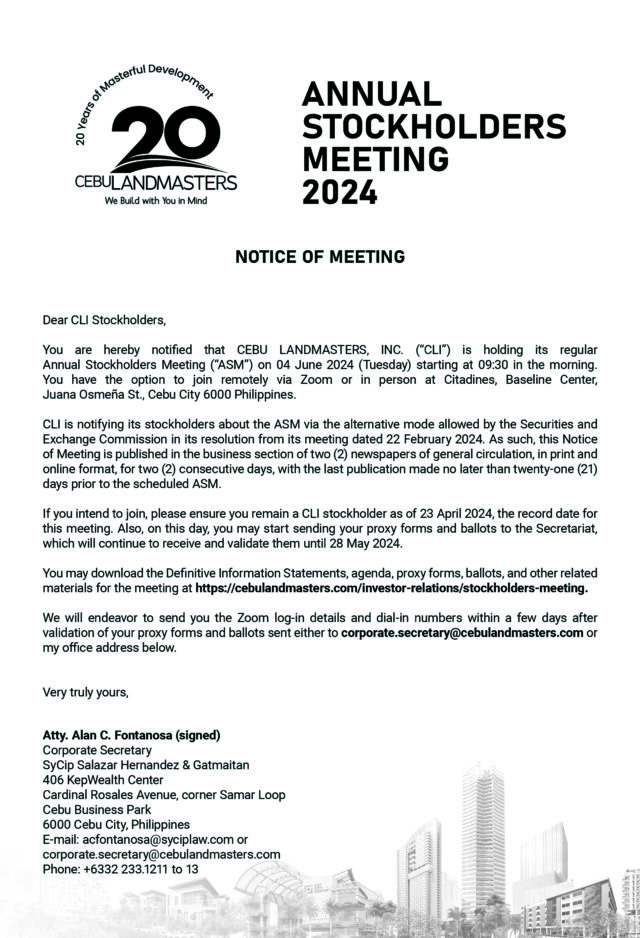
Cebu Landmasters, Inc. to hold Annual Stockholders’ Meeting on June 4


Spotlight is BusinessWorld’s sponsored section that allows advertisers to amplify their brand and connect with BusinessWorld’s audience by publishing their stories on the BusinessWorld Web site. For more information, send an email to online@bworldonline.com.

Join us on Viber at https://bit.ly/3hv6bLA to get more updates and subscribe to BusinessWorld’s titles and get exclusive content through www.bworld-x.com.

Universal Robina Corp. to hold 2024 Annual Meeting of Stockholders on June 3


Spotlight is BusinessWorld’s sponsored section that allows advertisers to amplify their brand and connect with BusinessWorld’s audience by publishing their stories on the BusinessWorld Web site. For more information, send an email to online@bworldonline.com.

Join us on Viber at https://bit.ly/3hv6bLA to get more updates and subscribe to BusinessWorld’s titles and get exclusive content through www.bworld-x.com.

BSP has leeway to keep rates steady

By Luisa Maria Jacinta C. Jocson, Reporter

THE BANGKO SENTRAL ng Pilipinas (BSP) still has room to extend its policy pause even as inflation is expected to have picked up further last month, its top official said.

BSP Governor Eli M. Remolona, Jr. told reporters on Monday the central bank has “leeway” to keep its benchmark rate steady at its meeting this month.

He said the central bank has already considered a potential pickup in April inflation.

“That’s already factored in. We know it will be a bit high because of base effects. If it’s too high, that will postpone our easing,” he said in mixed English and Filipino.

A BusinessWorld poll of 16 analysts last week yielded a median estimate of 4.1% for April inflation. This would surpass the 2-4% target for the first time since 4.1%  in November 2023 and would be faster than 3.7% in March though slower than 6.6% a year ago.

The BSP expects inflation at 3.5-4.3% for the month. April consumer price index data will be released on May 7.

The central bank chief said they are still leaning toward hawkishness amid elevated inflation.

“Inflation is hovering around 3.9%, so that’s risky,” Mr. Remolona said. “Inflation should be around 3%. The 3.9%, it is easy to fall back to 4.1%, so we are still hawkish.”

The BSP may begin to cut rates if inflation can ease to about 3% and stay within that range for several months, he said.

“If we do ease, it would be by just 25 basis points (bps). If it’s more than 25 bps, that’s like there is a recession or a hard landing. Right now, we don’t see it coming.”

The Monetary Board will review policy on May 16. The BSP kept its policy rate at a 17-year high of 6.5% for a fourth straight meeting in April.

The central bank raised borrowing costs by 450 bps from May 2022 to October 2023 to tame red-hot inflation.

ANZ Research said in a report that it does not expect the BSP to deliver any rate cuts this year.

“The narrative in the Philippines is slightly different in that inflation is running close to the upper bound of the official target owing to elevated rice and energy prices, both of which are imported,” it said.

“Persistent currency weakness arising from monetary easing will now potentially push up the landed costs of these imports,” it added.

Mr. Remolona earlier said that if inflation risks persist, policy easing might be delayed to as late as the first quarter of 2025.

PESO INTERVENTION
Meanwhile, Mr. Remolona said the BSP has only had to intervene in the foreign exchange market in “small amounts” amid the recent weakness of the peso.

“We were active in small amounts, not to affect the value but to maintain orderly markets,” he said.

After hitting 17-month lows against the dollar in the past two weeks, the peso has begun to stabilize, closing at P57.22 versus the greenback on Monday, appreciating by 12.5 centavos from its P57.345 finish on Friday.

Year to date, the peso has declined by P1.85 from its end-2023 close of P55.37 a dollar.

The BSP chief added that he is not that concerned about the peso’s recent depreciation.

“There is not much stress yet in movements of the peso. We’d like to intervene significantly when there’s stress,” Mr. Remolona said.

“We know it’s a strong dollar because a lot of other currencies have also weakened. It’s not a very strong ground for intervention,” he added.

In October 2022, the peso reached a record low of P59 against the dollar. This added to inflationary pressures and prompted the BSP to intervene in the foreign exchange market and raise interest rates.

Agricultural output seen flat in Q1 as El Niño bites

Farmers are seen in a rice field in Bustos, Bulacan, Oct. 17, 2023. — PHILIPPINE STAR/KJ ROSALES

THE PHILIPPINES’ agricultural output may have been flat in the first quarter amid the impact of the El Niño dry spell on the sector, especially on palay production, analysts said.

“First-quarter agricultural output in terms of growth should be around 1.8%. It could have been higher, but El Niño contributed to a lack of water, thereby lowering output,” former Agriculture Secretary William D. Dar said in a text message.

If realized, this would be slower than the 2.1% year-on-year growth in the value of farm output in the first quarter of 2023, but faster than the 0.7% expansion in October-to-December 2023.

Agriculture accounts for about a tenth of gross domestic product and about a quarter of all jobs. The Philippine Statistics Authority will release first-quarter agriculture and fishery production data on May 8.

“The overall growth may register a positive figure, but it may remain flat — close to 0.5-1%, mirroring 2023 figures,” Roy S. Kempis, director of the Center for Business Innovation at Angeles University said in a Viber message. 

Raul Q. Montemayor, national manager of the Federation of Free Farmers, said farm output could have contracted amid dry conditions.

“Climatic disturbances have adversely affected agriculture in the past few months, so I would not be surprised to see a decline in overall agriculture growth in the first quarter,” he said in a Viber message.

He said the impact of the weather event is expected to last until this quarter.

“We will see the total effects only when the situation normalizes, probably in the second semester,” he added.

As of April 30, agricultural damage from El Niño had reached P5.9 billion, according to the latest bulletin from the Department of Agriculture (DA).

The agency said volume losses of farm goods had reached 255,467 metric tons (MT), with rice being the most affected crop, accounting for 53.2% of the total.

The state weather bureau said while the El Niño event is weakening, its effects are expected to last until August.

RICE, CROPS MOST AFFECTED
Mr. Dar said rice production have declined during the dry season harvest.

“This will affect our rice supply during the lean months of the year. The same for corn — it is affected by El Niño, thereby output will be lower,” he said.

“(The) government must invest more in water-harvesting structures including solar-powered irrigation systems, as well as the construction of more efficient irrigation systems,” Mr. Dar added.

Crops account for over half of the value of farm output in the country, with palay or unmilled rice’s share at  30% and corn at 5.5%.

“The lack of rain starting February and the rise of temperature towards March 2024 were detrimental to the crop sector,” Mr. Kempis said.

He added that the dry spell hit crops, mainly rice and corn, during their maturing and reproductive stages.

“El Niño affected production during the reproductive and maturity stages in palay. In corn, one end (the tips) of many corn ears where the silks come out were damaged such that these were considered rejects,” Mr. Kempis said, citing DA reports.

Agriculture Assistant Secretary and Spokesperson Arnel V. de Mesa said the country’s unmilled rice production is unlikely to fall below 20 million MT this year despite the dry weather.

“Our target is similar or a little over what we harvested last year of 20.06 million MT,” he told BusinessWorld.

Meanwhile, the fishery sector likely continued to contract in the first quarter, the analyst said.

“With the fishing ban in effect partly covering the first quarter plus the limited access to traditional fishing grounds in the West Philippine Sea, output ii the fishery sector will not produce positive results,” Mr. Kempis said.

Fishery production in the first quarter was affected by both El Niño and the closed fishing season, Mr. Dar said.

The government imposes a three-month closed season to repopulate certain fish species. Fishing bans are declared in Northern Palawan, Ilocos, Negros Occidental, Capiz and Cebu in the fourth quarter.

Closed seasons are authorized by Republic Act No. 8550 or the Fisheries Code.

The DA approved a fish import quota of 25,000 MT for the fourth quarter to boost supply.

LIVESTOCK, POULTRY
As for livestock and poultry, Mr. Kempis said higher temperatures might have had a limited impact on these sectors.

“While temperatures could affect backyard production of livestock and poultry, these are more stable (nonfluctuating); with good management of livestock and poultry, production in the backyard sector will be a source of growth,” he said.

However, Mr. Dar said the African Swine Fever (ASF) remains a major problem for hog farmers. “Intensity management and control is needed,” he added.

President Ferdinand R. Marcos, Jr. said earlier the government would roll out ASF vaccines from Vietnam by June or July.

As of April 15, there were four regions included in the red zone spanning five provinces or 10 municipalities, according to the Bureau of Animal Industry (BAI). Red zones are areas with confirmed ASF outbreaks,

Gregorio A. San Diego, Jr., chairman emeritus of the United Broiler Raisers Association, said poultry production declined during the period, resulting in higher imports.

“There is a dip in performance especially for conventional poultry houses, but our bigger problem is the oversupply for broiler and more so with eggs that have resulted in very low farmgate prices,” he said in a Viber message.

Chicken imports totaled 128.51 million kilograms in the first quarter, according to the BAI. Shipments of turkey stood at 307,835 kilos and duck at 33,375 kilos. — Adrian H. Halili


Gov’t collected P1.4 trillion of revenue as of April — Recto

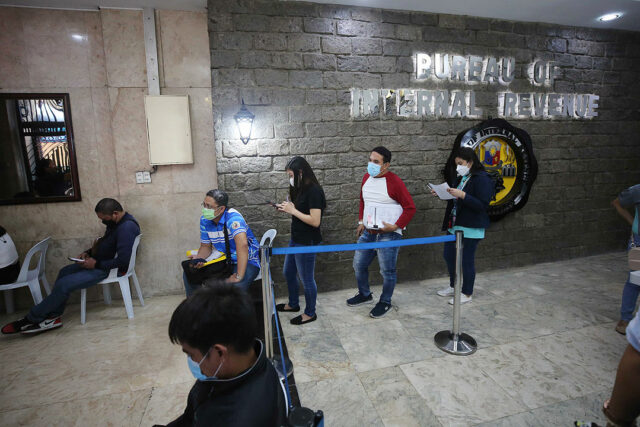
People line up to file their income tax returns at the Bureau of Internal Revenue office in Intramuros, Manila, April 18, 2022. — PHILIPPINE STAR/ RUSSELL A. PALMA

THE GOVERNMENT collected P1.4 trillion in revenue in the first four months of 2024, accounting for almost a third of its full-year target, preliminary data from the Finance department showed.

“My calculation is we are at P1.4 trillion. That’s for the first four months,” Finance Secretary Ralph G. Recto told reporters in mixed English and Filipino on the sidelines of an event on Monday.

Preliminary figures from the department showed that Bureau of Internal Revenue (BIR) collections reached P912.9 billion.

The agency is expected to generate P3.055 trillion this year. It collects about 70% of the government’s overall revenues.

Meanwhile, data from the Bureau of Customs (BoC) showed that it had collected P299.674 billion as of end-April. It aims to collect P959 billion this year.

The Finance department also recorded nontax revenues worth P206.4 billion in January-April, data showed.

“We expect both our tax and nontax revenues to dramatically increase over the coming months as we intensify our revenue mobilization efforts,” Mr. Recto said.

If the pace of its revenue performance continues, the government can meet its fiscal targets, Mr. Recto said. “It’s the first four months of the year. Let’s see if it’s sustainable for eight more months.”

This year, the government is expected to generate P4.3 trillion in revenue, equivalent to 16.1% of the gross domestic product (GDP).

Mr. Recto said there are no plans to increase revenue targets.

“I doubt it very much. As far as (we’re) able to collect what is targeted already, I’m happy with that,” he said.

The budget balance is also expected to remain in a deficit, he added.

“You will always have a deficit. Your debt will increase this year. There’s no doubt about that.”

Latest data from the Bureau of the Treasury (BTr) showed the National Government’s budget deficit widened by 0.65% to P272.6 billion in the first quarter.

The government set a budget deficit ceiling of P1.48 trillion this year, equivalent to 5.6% of GDP. It aims to reduce the deficit-to-GDP ratio to 3.7% by 2028.

GLOBAL BONDS
Meanwhile, Mr. Recto said the BTr is finalizing its first global bond offering for the year.

“The Treasury is timing the market. I think it’ll be within the first half,” he said, noting that most of the global bond offerings this year would be dollar-denominated.

The government’s last global bond issuance was its Sukuk bond offering in December, when it raised $1 billion from its first-ever sale of Islamic bonds.

“We’re open to (other) bonds, whatever is cheap and has less risk,” Mr. Recto added.

The government’s borrowing mix favors domestic sources (75%) to mitigate foreign currency risks. Its borrowing program is set at P2.57 trillion this year. — Luisa Maria Jacinta C. Jocson

Progress of 2025 budget on track, says DBM

BW FILE PHOTO

By Beatriz Marie D. Cruz, Reporter

GOVERNMENT AGENCIES have turned in their 2025 budget proposals to the Department of Budget and Management (DBM) as of end-April, with next year’s spending plan still on track for submission to Congress by July, Budget Secretary Amenah F. Pangandaman said.

“Our preparation for the 2025 national budget is well on schedule,” she said in a Viber message.

“While agencies were able to submit their proposals as of April 30, some are still in the process of providing complete documentation in support of their budget proposals, such as detailed listings, inventory and other similar materials that will prove the implementation readiness of the proposals,” she said.

The National Government’s (NG) spending plan for 2025 is set at a record-high P6.2 trillion, 7.5% or P432.4 billion higher than this year.

This would be equivalent to 21.4% of the gross domestic product (GDP).

“Our Budget Preparation and Execution Group was also able to complete the technical budget hearings on April 30,” Ms. Pangandaman added. The group provides agencies with inputs and recommendations for their budget allocations.

The proposals are now with the DBM’s Preliminary Executive Review Board (ERB), which is set to review them until May 10, according to the Budget chief.

“The Final ERB is tentatively scheduled from May 29 to June 4,” Ms. Pangandaman said.

The ERB, composed of the Budget chief and senior officials of the agency, aims to ensure that priority programs and their respective budgets are in line with the National Government’s agenda.

The DBM will then finalize the National Expenditure Plan and Budget of Expenditures and Sources of Financing, which will be presented to the President and Cabinet members.

“Meanwhile, the scheduled presentation to the President and the Cabinet is on the third week of June, to have ample time for final decisions before printing of the budget documents. Submission of the President to Congress is tentatively targeted on July 22, 2024,” Ms. Pangandaman added.

Under the Constitution, the President must submit its proposed budget to Congress 30 days after the State of the Nation Address. The government wants its spending plan passed before yearend to ensure timely implementation of its projects in 2025 and sufficient funding for public services.

HUMAN CAPITAL DEVELOPMENT
Meanwhile, the DBM in a memorandum reminded agencies to prioritize human capital development in their budgets.

“The NG remains committed to balancing fiscal sustainability while ensuring that the country’s development needs are addressed,” the DBM said in National Budget Memorandum No. 152 dated April 30.

In particular, key programs/activities/projects (PAPs) on education, health and social protection, and labor force productivity should be given higher funding, the department said.

Larger budgets should also be allocated to agriculture, tourism, and micro, small, and medium enterprises, as well as the digitalization of government services.

The DBM also told government agencies to include only the key PAPs indicated in its March 19 memorandum in their Tier 2 proposals for new and expanded programs, as it noted that budgets for Tier 1 proposals — requirements of ongoing projects — are expected to take the bulk of available funding.

“Implementation-ready PAPs that can be completed within the fiscal year, or until the allowable implementation period as provided in the applicable general and special provisions of the General Appropriations Act (GAA), if any, shall be accorded top priority in line with the principles of Cash Budgeting System,” according to the memorandum.

NG agencies were also asked to use existing funds from this year’s budget for the continued implementation of their activities. Maintenance and other operating expenses and capital outlays under the 2024 GAA are valid until end-2025.

“The indispensable role of government in stirring domestic economic activity cannot be overstated,” the DBM said, noting that the underperformance in government spending in the first half of 2023 had affected economic output.

“Swifter budget utilization, coupled with the efficient implementation of PAPs, will be vital for full economic recovery.”

“Agencies are, therefore, urged to continue their efforts to strengthen budget execution and maximize the early release of allotments under the General Appropriations Act as the Allotment Order policy by undertaking proper planning and early procurement, and ensuring comprehensive preparatory works are completed. These include an improved targeting and distribution system for beneficiaries of social programs, as well as preconstruction activities like the acquisition of right-of-way/relocation sites for infrastructure projects, among others,” it added.

ICTSI profit up 35.7% on strength of int’l portfolio

ICTSI.COM

RAZON-LED International Container Terminal Services, Inc. (ICTSI) saw its attributable net income climb by 35.7% to $209.88 million for the first quarter (Q1), boosted by its international portfolio.

“The group continues to benefit from geographic diversification spanning 19 countries which has enabled us to deliver growth, despite regional economic headwinds,” ICTSI Chairman and President Enrique K. Razon told the stock exchange on Monday. 

For the January-to-March period, the company’s attributable net income went up to $209.88 million, marking a 35.7% increase from $164.61 million in the same period last year. 

The company’s combined revenues surged to $637.65 million, up by 11.4% from $572.25 million a year earlier, its financial report showed.

Broken down, its US operations accounted for the majority, or about 41.1% of its revenues at $262.27 million; Asia at $259.37 million or 40.7%, and EMEA, or Europe, the Middle East, and Africa’s operations at $116.01 million, accounting for 18.2%.

“I am pleased to announce an excellent first quarter with ICTSI delivering growth in revenues of 11%. Our international portfolio performed exceptionally well,” Mr. Razon said.

“We look to the future with confidence, and with our highly disciplined business model we remain strongly positioned to continue to deliver financially and operationally for all our stakeholders.”

The listed port operator said it handled a combined volume of 3.09 million twenty-foot equivalent units (TEUs) in the first quarter, lower than the 3.1 million TEUs handled in the first quarter last year.

The lower volume handled during the period was due to the expiration of the concession contract at the Pakistan International Container Terminal and the termination of cargo handling operations at PT Makassar Terminal Services in Indonesia, ICTSI said.

However, the impact of these were mitigated by the improvement in trade activities at certain terminals and its new services, it added.

Capital expenditures (capex), excluding capitalized borrowing costs for the first quarter, amounted to $67.94 million, which was allocated for the ongoing expansion at ICTSI-Contecon Manzanillo and ICTSI-Rio in Brazil, as well as for the expansion of terminals in the Philippines, the company said.

Earlier, the company said it projected a $450-million capex for the year, $60 million of which were carried over from last year’s capex.

The company said its target budget for 2024 was allocated for its recently acquired terminal in Iloilo, the Visayas Container Terminal, formerly known as the Iloilo Commercial Port Complex; expansion in Brazil; the development of the East Java Multipurpose Terminal in Indonesia; and its ongoing expansions in Mexico and the Democratic Republic of Congo.

At the local bourse on Monday, shares in the company gained P5 or 1.46% to end at P347 apiece. — Ashley Erika O. Jose

SM Prime net income jumps 11% to P10.5 billion

SY-LED property developer SM Prime Holdings, Inc. said its consolidated net income grew by 11% to P10.5 billion for the first quarter (Q1) from P9.4 billion last year, driven by improvements across its business segments.

First-quarter consolidated revenues increased by 7% to P30.7 billion compared with P28.6 billion in 2023, SM Prime said in a stock exchange disclosure on Monday.

The company’s mall business posted a 7% revenue growth to P18.2 billion. It took up 59% of overall revenues.

Mall rental income climbed by 8% to P15.8 billion, while other revenues, including cinema and event ticket sales, reached P2.5 billion.

The company’s primary residential business group recorded a 10% increase in revenues to P8.5 billion from P7.7 billion last year, accounting for 28% of overall revenues. Reservation sales reached P26.5 billion during the period.

Revenues of other business segments consisting of offices, hotels, and convention centers saw a 9% growth to P3.4 billion.

Broken down, the company’s office business unit reported P1.8 billion in revenues, while hotels and convention centers business unit reached P1.6 billion in revenues.

SM Prime’s first-quarter consolidated operating income rose by 6% to P14.7 billion from P13.8 billion last year.

“We are encouraged with the performance of all our businesses this first quarter of 2024. We are particularly bullish with our malls business as we plan to open a new mall this month of May, and another three within the year,” SM Prime President Jeffrey C. Lim said.

“For the residential business, our focus remains in addressing housing backlog within the socialized and economic segments,” he added.

SM Prime is the property unit of the Sy family’s listed holding company SM Investments Corp. It earmarked P100 billion for its capital expenditure budget this year.

On Monday, SM Prime shares dropped by 0.18% or five centavos to P27.35 per share. — Revin Mikhael Ochave

AboitizPower profit climbs to P7.9 billion in Q1

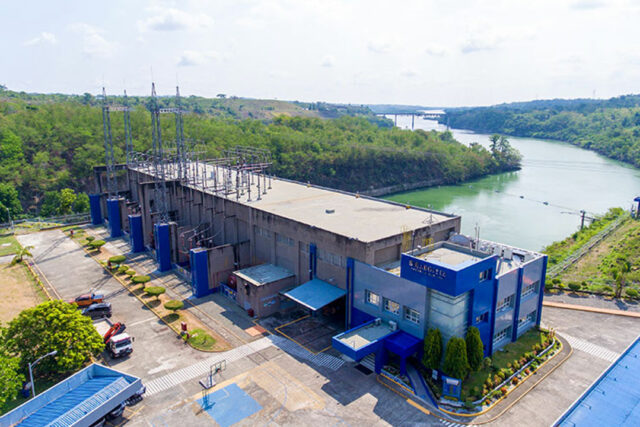
ABOITIZPOWER.COM

ABOITIZ Power Corp. (AboitizPower) announced on Monday that its net income increased by 4% to P7.9 billion for the first quarter from P7.5 billion in the same period last year.

“AboitizPower continued its strong performance in the first quarter of 2024, building on its successful 2023,” AboitizPower President and Chief Executive Officer Emmanuel V. Rubio said in a statement.

Excluding nonrecurring items, the energy company of the Aboitiz group reported a core net income of P7.8 billion, up 3% from P7.6 billion a year ago.

Its generation and retail electricity supply business registered a 5.3% increase in earnings before interest, taxes, depreciation, and amortization (EBITDA) to P13.8 billion.

Capacity sold in the three-month period increased by 1% to 8,812 gigawatt hours (GWh) from 8,725 GWh previously.

AboitizPower’s power distribution business recorded an EBITDA of P2.6 billion, a decrease of 11% due to “favorable timing in pass-through charges that were recognized in 2023 resulting from declining fuel prices.”

Energy sales grew by 9% to 1,526 GWh due to higher demand driven by the effect of the El Niño weather phenomenon, the company said.

“Looking ahead, we’re excited about the new growth drivers emerging this quarter. By leveraging these opportunities, we remain confident in our ability to unlock shared success for all our stakeholders,” Mr. Rubio said.

For 2024, AboitizPower has set aside P73 billion in capital expenditures (capex), higher than the P26 billion in 2023. Of the total, 72% is earmarked for its renewable energy pipeline.

The energy company aims to build 3,700 megawatts (MW) of new renewables, which will grow its capacities to 4,600 MW by 2030.

As part of its initial expansion phase of 1,200 MW, renewable energy projects totaling a capacity of 176 MW are set to come online in the first half of 2024.

This includes the 17-MW binary geothermal power plant in Tiwi, Albay, and the 159-MW solar plant in Laoag, Pangasinan.

The company said construction for an additional 218 MW is ongoing.

“The second phase of AboitizPower’s expansion will see another 1,700 MW of new solar and wind power,” it said.

Meanwhile, the rest of the P73-billion budget for the year is allocated for further improving the reliability of the company’s baseload power plants, land acquisition, and new substations and meters for its distribution business.

The capex does not yet include the investment in Chromite Gas Holdings.

In March, AboitizPower, through its subsidiary Therma NatGas Power, entered into an investment agreement with Meralco PowerGen Corp. to acquire a 40% stake in Chromite Gas.

The investment involves two gas-fired power plants — the 1,278 MW Ilijan power plant and a new 1,320 MW combined cycle power facility — as well as a liquefied natural gas import and regasification terminal. — Sheldeen Joy Talavera

SMPC income down 28% on weaker market prices

SEMIRARA Mining and Power Corp. (SMPC) posted an attributable net income of P6.54 billion for the first quarter, down by 28% from the previous year due to lower selling prices for coal and electricity.

“While we faced some pricing challenges this quarter, our robust export sales and improved plant performance demonstrate the resilience and adaptability of our operations,” SMPC President and Chief Operating Officer Maria Cristina C. Gotianun said in a statement on Monday.

For the January-to-March period, the company’s revenues declined by 11% to P18.43 billion from P20.71 billion in the same period last year.

This was attributed to the “softer market prices for both coal and power segment coupled with higher proportion of noncommercial grade coal shipments.”

SMPC said that the decline in revenues was cushioned by increased coal shipments and electricity dispatch.

The average selling price for Semirara coal declined by 33% to P2,978 per metric ton (MT) from P4,427 per MT in the previous year.

Coal sales went up by 37% to 4.8 million MT, mainly driven by exports which soared by 78% to 2.7 million MT.

Total coal shipments increased by 37% to 4.8 million MT, boosted by strong Chinese and international demand.

Foreign shipments went up by 78% to 2.7 million MT as China sales more than doubled to 2.3 million MT.

Domestic shipments rose by 6% to 2.1 million MT due to an uptick in internal sales, as the company recorded its highest overall plant availability at 92%.

“With better overall plant availability, gross generation increased by 7% from 1,316 gigawatt hours (GWh) to 1,408 GWh,” the company said.

The average selling price for SMPC’s electricity dropped by 28% to P4.47 per kilowatt-hour largely due to the sharp drop in the Wholesale Electricity Spot Prices.

Electricity sales volume grew by 3% to 1,281 GWh due to higher bilateral contract quantity (BCQ) sales, which offset the decline in spot market dispatch for the period.

BCQ sales rose by 38% to 499 GWh while spot sales decreased by 11% to 782 GWh.

During the company’s annual stockholder’s meeting, Ms. Gotianun said that Narra mine has remaining reserves of approximately 45 million MT as of yearend 2023.

“Assuming demand remains stable, primarily from the domestic market, we believe an annual shipment of 16 million MT is sustainable until 2026,” she said.

She also said that exploration activities at the Acacia mine are ongoing, “which could sustain our coal operations for an additional four years.”

The company expects coal demand in China to remain stable in the near to medium term “given its important role in their energy security program,” she noted.

“Coal is not only a primary source of energy but also a critical backup that ensures supply stability. RE (renewable energy) sources typically provide intermittent output so China relies on coal to achieve a consistent energy supply,” she added.

“We do not foresee a rapid decrease in their coal consumption anytime soon.”

Shares of the company on Monday went down by P0.55 or 1.68% to close at P32.20 each. — Sheldeen Joy Talavera

ADVERTISEMENT
ADVERTISEMENT