Home Blog Page 3291

Contact centers see 2024 revenue of $32.16 billion

INDUSTRY.GOV.PH

THE Contact Center Association of the Philippines (CCAP) said it estimates a 9% increase in revenue for the contact center and business process outsourcing industries this year to $32.16 billion.

“The contact center and business process sector, along with the IT-BPM (Information Technology and Business Process Management) industry, remain optimistic and positive in terms of revenue growth through the years,” CCAP President Mickey Ocampo said in a statement on Monday.

The CCAP called the forecast conservative but in line with the industry yearly average revenue growth, citing an analysis by research firm Everest Group.

In 2023, the association’s members booked revenue of $29.5 billion, or 83% of the revenue posted by the IT-BPM industry of $35.5 billion.

In 2024, the IT-BPM industry projected revenue to increase by around 20% to $39 billion.

“The figures prove how resilient the sector has become, successfully overcoming the significant challenges that came its way, including stringent data privacy laws worldwide, the COVID-19 pandemic, recessions, and now, the rise of generative artificial intelligence (AI),” Mr. Ocampo said.

CCAP expects its members to post revenue of $49 billion by 2028, in line with the IT-BPM roadmap 2028, which projects industry revenue of $59 billion by that year.

CCAP said that according to industry studies, 28% of call center firms are planning to establish sites in Cavite, while 23% are planning to launch in San Fernando, Pampanga.

Other areas that are being considered for expansion by CCAP members include Rizal (21%), Batangas City (21%), Puerto Princesa (21%), Laguna (18%), Iloilo (18%), Tarlac (15%), Cebu (15%), Davao (15%), General Santos City (15%), and Bacolod City (10%). — Justine Irish D. Tabile

Exporters caught up in US restrictions on materials from Xinjiang

REUTERS

A US ban on materials made in a western Chinese region and soft demand for Philippine garments have caused exporters to lay off or place on forced leave more than 5,000 workers in the wearables industry, the Confederation of Wearable Exporters of the Philippines (CONWEP) said.

In a virtual briefing on Monday, CONWEP Executive Director Maritess Jocson-Agoncillo said the downsizings involve the country’s top cotton apparel exporter, L&T Clark, which is part of Hong Kong-based Luen Thai Group.

Ms. Jocson-Agoncillo said that industry’s performance has been declining for the past two years due to softened demand.

In 2023, exports of wearable apparel, textiles, travel goods, and footwear declined 19% to $1.36 billion, while exports in the first two months of 2024 declined 12% to $215.86 million.

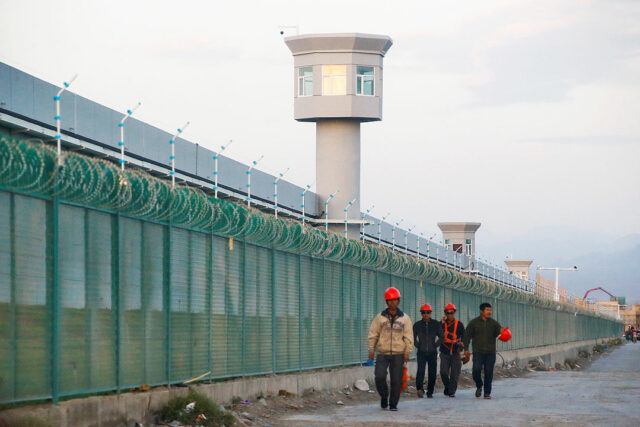
“Over and above this, what really instigated this (the layoff) was the concerns of the industry related to the Uyghur Forced Labor Prevention Act (UFLPA),” she said, referring to a US law sanctioning China due to allegations that residents of Xinjiang, mainly from the Uyghur ethnic minority, have been placed in camps and made to perform forced labor.

UFLPA requires that exporters certify that their shipments contain no materials from Xinjiang, which is a major producer of cotton.

Ms. Jocson-Agoncillo said that the UFLPA has hindered the entry of L&T exports to the US, which cost the company around $5 million, with the cost to the export industry overall estimated at $6 million in losses.

Ms. Jocson said that L&T ended up retrenching around 2,000 employees in Clark, while nine other plants reported, citing various reasons, the retrenchment or forced leave of 3,077 workers in the four months to April.

In a statement on Monday, L&T Clark said the UFLPA presented unforeseeable difficulties for its operations.

“Despite our strict adherence to UFLPA-compliant sourcing practices, we are currently being required by CBP (the US Customs and Border Protection agency) to prove the origin and production practices of all elements of our supply chain,” the company said.

“(This) has led to prolonged delays in clearing recent US shipments, causing significant business interruption and order losses,” it added.

L&T Clark said that the delayed entry of the shipments led to the decision to place employees on forced leave.

“Given the extended and unanticipated time period for determinations on our shipments by CBP, it has become unsustainable to maintain full capacity without causing undue hardship to our employees,” it said.

“As a result, L&T Clark was compelled to implement a retrenchment program. This challenging decision is made with our employees’ well-being in mind, to spare them from uncertainty and prolonged forced leave,” it added.

On April 26, the company announced a retrenchment program for its 2,000 employees, which allowed affected employees to receive comprehensive severance packages that met legal standards.

“Looking to the future, we are hopeful for a rebound in business. Once these conditions improve and orders resume, our goal is to rehire our skilled workforce and restore normal operations,” the company said.

“It is crucial to recognize that these circumstances are the result of external policies beyond our control,” it added.

According to Ms. Jocson-Agoncillo, the industry saw the release of a few of the shipments a week and a half ago amid efforts by the Department of Trade and Industry to address the problem with the US government.

“However, at the end of the day, the damage is done because these shipments were due for November and December and were supposed to be in the stores in February, but since early November, they started getting detained,” she said.

As such, among CONWEP members, “close to about $6 million (worth of shipments) have been compromised,” she added.

Asked for an industry outlook, she said a rebound is possible by the end of the year.

“(The members) are very optimistic that, towards the end of the year until early next year, we can rebound,” she said. “The optimism is coming from the confidence of the buyers. For the Luen Thai Group, the partnership with its major counterpart buyers is there.” — Justine Irish D. Tabile


NGCP declares yellow alert over Luzon grid

PHILSTAR FILE PHOTO

THE National Grid Corp. of the Philippines (NGCP) declared a yellow alert over the Luzon power grid on Monday after more than 1,400 megawatts (MW) worth of plant capacity were reported inoperable.

In an advisory early Thursday, the NGCP said that the yellow alert was raised on Luzon between 3 p.m. and 4 p.m. with peak demand estimated at 13,714 MW for the period, against available capacity of 15,167 MW.

The grid operator said that four plants have been on forced outage since 2023. Three became inoperable between January and March, and nine have been out since April. One plant is running on derated capacity.

As a result of the plant shutdowns and capacity limitations, 1,406.09 MW were unavailable to the grid.

As of the 4:31 p.m., the yellow alert for Luzon had been lifted by the NGCP.

According to the NGCP, the Luzon grid went on red alert for five days and on yellow alert for 11 days in April. The Visayas grid was on red and yellow alerts for five and 10 days, respectively.

The Mindanao grid was on yellow alert for two days during the month.

In May, the NGCP has declared yellow alerts over the Luzon grid for three days.

The Energy Regulatory Commission (ERC) last week ordered the suspension of trading on the Wholesale Electricity Spot Market (WESM) during red alerts to prevent a spike in electricity prices.

Gerry C. Arances, convenor of consumer group Power for People Coalition, welcomed ERC’s decision, saying, “We’d gladly skip even higher electricity prices resulting from outages from burning holes in our pockets.”

“The WESM suspension provides some level of protection to keep that risk at bay,” he said in a statement on Monday.

WESM is the trading floor for non-contracted electricity. The ERC has the power to suspend its operations or declare a temporary WESM failure “in cases of national and international security emergencies or natural calamities” under Republic Act No. 9136 or the Electric Power Industry Reform Act of 2001. — Sheldeen Joy Talavera

US tech firm expected to expand staff to 250

PHILSTAR FILE PHOTO

THE Board of Investments (BoI) said on Monday that a subsidiary of a US information technology (IT) firm opened a new office in Taguig last month that will eventually expand its workforce to 250 direct jobs.

Registered with the BoI, the investment by IT By Design (ITBD) resulted from President Ferdinand R. Marcos, Jr.’s visit to New York last year.

 “The decision of the company to expand in the Philippines came on the heels of the government’s campaign for more knowledge-based and high-technology services and manufacturing investments that leverage the excellence of the Filipino workforce,” the BoI said.

The company specializes in providing custom solutions to companies that offer outsourced management for technology infrastructure and end-user systems.

“Our customers in the US are asking for Filipino talent, which is why we’ve decided to expand our operations in the Philippines,” ITBD Chief Executive Officer Sunny Kaila said.

“We started here with 15 jobs and are now scaling up to 250. Filipinos possess a high level of technical expertise and adaptability, and the potential talent pool is unlimited,” he said.

Part of its investment is to bring AI experts from the US to build the capability of cloud engineers here, making them even more competitive amid growing demand for IT jobs.

The positions on offer at the Taguig office include computer engineers, network engineers, system administrators, technology solution architects, software development engineers, business analysts, and business development representatives.

The company will provide export services to small- and medium-sized businesses in the US. To date, ITBD serves 10 US managed service providers, which it plans to increase through its expansion.

“Initially, the project will implement a 100% on-site work arrangement and may transition to a hybrid work model during its operations, if necessary,” the BoI said.

“The leased office space in Philplans Corporate Center in Bonifacio Global City boasts a total capacity of 250 seats, accommodating all employees working on-site,” it added. — Justine Irish D. Tabile

Bidders invited for Aklan cruise ship port contract 

PHILSTAR FILE PHOTO

THE Philippine Ports Authority (PPA) said it has issued a bid invitation for a cruise ship port in Buruanga, in Western Aklan province.

In a notice, PPA said it is investing P747.58 million for the construction of Cruise Port, Port of Alegria, in Buruanga.

Buruanga is to the southwest of Malay, the municipality that includes Boracay.

PPA said it will fund the project internally.

According to the invitation posted on the PPA website, any bids in excess of the approved amount of the contract will be rejected at the bid opening.

“Bidders should have completed a contract similar to the project. Bidding will be conducted through open competitive bidding procedures using a non- discretionary ‘pass/fail’ criterion,” the PPA said.

The contractor must complete the project within 900 days or two years and five and a half months.

Interested parties may obtain bid documents starting May 3, with bids to be opened on May 28.

The contract includes the construction of the port operational area and causeway and the construction of reinforced concrete pier, the PPA said. — Ashley Erika O. Jose

Trials ongoing for three bird flu vaccines

US DEPARTMENT OF AGRICULTURE/CC BY 2.0/WIKIMEDIA COMMONS

THE Department of Agriculture (DA) said on Monday that three Avian Influenza vaccines are currently undergoing field testing.

“Three companies have been allowed by the (Food and Drug Administration) to conduct field trials… We are just waiting for the result,” Constance J. Palabrica, assistant secretary for Poultry and Swine, told reporters.

“Everything has to go through the FDA, but we are (helping) companies undertaking the trials and we will present (their results) to the FDA for approval.”

Parts of Pampanga and Nueva Ecija have active bird flu cases as of April 26, according to the Bureau of Animal Industry (BAI).

Last year, the DA cleared the commercial use of the avian flu vaccine, with priority given to commercial farms for layer chicken, layer chicken breeders, broiler chicken breeders, free-range breeders, grandparent broiler breeders, as well as smallhold layer/native chicken, duck, game fowl, turkey, and goose farms.

Commercial broiler chicken, smallhold broiler, quail, pigeon, and exotic bird farms were ineligible.

Agriculture Undersecretary Deogracias Victor B. Savellano said that the FDA and the BAI are set to sign a memorandum of agreement regarding the fast-tracking of the approval process for animal vaccines.

“Basically, the two will collaborate on how to hasten everything,” Mr. Savellano said.

He added that the BAI will harmonize its requirements with those of the FDA.

Separately, Mr. Palabrica said there is no need to ban US beef imports following reports of bird flu infecting cattle.

“I don’t think this is a big issue, the jumping of AI into cattle. Even if it jumps, especially with dairy… the avian influenza would be killed if the milk is pasteurized,” he added.

The DA has also taken over the Philippine Inter-agency Committee on Zoonoses from the Department of Health, with the Department of Environment and Natural Resources will serve as vice-chair.

The committee monitors zoonotic diseases, or those with the potential to spread from animals to humans. — Adrian H. Halili

DTI hoping to conclude EU FTA by 2027

REUTERS

THE Department of Trade and Industry (DTI) said that it is optimistic about the free trade agreement (FTA) talks with the European Union (EU) wrapping up ahead of the 2027 target.

“The Philippines aims to finalize these trade talks by 2027 … But I could be more optimistic, given that the negotiations between the Philippines and the European Free Trade Association (EFTA) took only a year to complete. So we have a model to follow,” Trade Secretary Alfredo E. Pascual said at the European-Philippine Business Dialogue on Monday.

EFTA is a bloc of the non-EU European economies Switzerland, Norway, Iceland, and Liechtenstein.

“We hope to be able to align the FTA with our goals of achieving upper middle-income status and moving beyond the EU Generalized Scheme of Preference (GSP) framework. We hope to be able to graduate into the FTA,” Mr. Pascual added.

He cited positive indications from preliminary talks, signaling a high level of understanding between the two sides.

“But it is still hard to speculate because this could still run faster or slower. It is a matter of understanding each other’s interests,” he said.

“I think what could take time would be the discussions on peripheral issues, as this will not only include tariffs; this will also include other requirements that are not trade-related,” he added.

Aside from increasing bilateral trade, Mr. Pascual said that the DTI would consider the FTA talks successful if the Philippines retains its privileges under the GSP Plus scheme, and if it sees an increase in investment.

“In addition to preserving the preferences for the important exports of the Philippines, one important motivation to really push for the FTA is to attract more European investment,” he added.

In terms of priority areas for investment, Mr. Pascual listed electric vehicles, renewable energy, sustainable development, digital trade, and food processing and biotechnology. The DTI is also hoping to strike a deal allowing for more talent mobility.

At the event, the European Chamber of Commerce of the Philippines (ECCP) turned over to the government its 2024 advocacy papers, highlighting at least 14 ECCP advocacy priorities which the chamber hopes will enhance economic outcomes.

“Building upon the successes of previous advocacy initiatives, we remain steadfast in pushing for policies that promote sustainable development and level the playing field for European and Filipino companies alike,” ECCP Executive Director Florian Gottein said.

The 316-page document also includes the chamber’s assessment of the government’s response to its recommendations last year. In particular, it acknowledged the signing of the Ease of Paying Taxes Act, the Internet Transactions Act, and the Public-Private Partnership Code of the Philippines.

“The economic reforms we have discussed are yielding tangible results. There is heightened interest from European investors in areas such as green energy and digital transformation, among others,” ECCP President Paulo Duarte said.

“While there are uncertainties and challenges ahead, we remain optimistic that maintaining open and regular dialogues will be mutually beneficial as we jointly navigate our path towards greater success,” he added. — Justine Irish D. Tabile

GOCC dividends surge to nearly P89 billion

BW FILE PHOTO

DIVIDENDS remitted by government-owned or -controlled corporations (GOCCs) to the National Government (NG) surged to P88.56 billion, with the Land Bank of the Philippines (LANDBANK) as the top contributor, the Department of Finance (DoF) said.

The dividend total is as of May 6, well above the year-earlier P8 billion.

Finance Secretary Ralph G. Recto said this increase follows an order for GOCCs to increase their dividend payout to 75% of their earnings, against the 50% minimum required by Republic Act No. 7656.

Mr. Recto said the DoF expects remittances to hit P100 billion this year.

“These dividends form a major source of non-tax revenue for the government, making possible our goal of raising more funds without the need to impose additional taxes on our people,” he added.

The DoF reported that LANDBANK remitted P32.119 billion, followed by the Philippine Deposit Insurance Corp., which remitted P10.676 billion.

The Bangko Sentral ng Pilipinas accounted for P9.2 billion.

Other top dividend-generating GOCCs were the Philippine Ports Authority (P5.058 billion), the Philippine Amusement and Gaming Corp. (P4.596 billion), the Manila International Airport Authority (P3.459 billion), the Subic Bay Metropolitan Authority (P3.071 billion), the Philippine Charity Sweepstakes Office (P2.685 billion), the Philippine National Oil Co. (P2.645 billion), and the National Transmission Corp. (P2.169 billion).

GOCCs that remitted at least P1 billion included the PNOC Exploration Corp. (P1.998 billion), the Clark Development Corp. (P1.8 billion), the Philippine Economic Zone Authority (P1.364 billion), the Philippine Guarantee Corp. (P1.41 billion), the Bases and Conversion Development Authority (P1.102 billion), the Philippine Reclamation Authority and the Metropolitan Waterworks and Sewerage System (P1 billion each). — Luisa Maria Jacinta C. Jocson

EoPT dates to remember for CAS taxpayers

“An ounce of prevention is worth a pound of cure.” This applies to many aspects of everyday life. It is always better to prevent damage than to be sorry about it in the future. For students or reviewees, it is best to read and study routinely rather than cram to cover the entire topic the night before the exam. For car owners, preventive maintenance means having the vehicle inspected regularly, not only to prolong the vehicle’s good condition but, more importantly, to ensure a safe ride for the passenger. Thus, preventive measures can help us avoid problems.

The same goes for taxpayers. Preventive measures help us avoid possible problems or issues in the future, particularly with tax rules changing so regularly. As we probably know by now, the Ease of Paying Taxes (EoPT) Act has introduced significant amendments, especially on VAT reporting. For VAT purposes, sellers of services must report the VAT based on gross sales and no longer based on collections. As such, sellers of services must now issue VAT Invoices and not VAT ORs. These VAT Invoices will now become the basis for input VAT credits to be claimed by their customers. Moreover, in relation to the EoPT Act, Revenue Regulations (RR) 07-2024 contain several crucial dates for taxpayers who use Computerized Accounting Systems (CAS).

One of the dates to remember is April 27, 2024. For VAT taxpayers engaged in the sales of services and who have already registered their full CAS (with e-receipting or e-invoicing) prior to April 27 (let’s call them affected taxpayers), RR 07-2024 requires them to revisit their system and ensure compliance with the provisions of the EoPT Act (i.e., the affected taxpayers are to report VAT based on gross sales, and are required to issue VAT invoices). This change will have a direct effect on the taxpayer’s financials, not only with regard to the simple naming convention of the primary document, from “OR” to “Invoice.” Hence, this is considered a major enhancement, which would require a new application with the submission of the relevant templates and samples of the system-generated documents and accounting records for the issuance of a new Acknowledgement Certification from the BIR.

Another important date is June 30, 2024. The affected CAS taxpayers have until June 30 to reconfigure or enhance their systems to comply with the EoPT Act. During this period, the affected taxpayers must ensure, among others, that different and proper modules are added to the CAS system to generate invoices on their sales based on gross sales. Also, certain adjustments must be made in case there are branches of the taxpayer using the same system and generate separate invoices, as well as the need to declare the relevant components or middleware in generating the required invoices.

Under RR 07-2024, during the transition period, or until June 30, 2024, the affected taxpayers may still issue their VAT ORs pursuant to their previously approved permit or Acknowledgment Certificate. However, take note that under RR 07-2024, VAT ORs issued beginning April 27, 2024, are not considered valid for claim of input tax by the buyer or purchaser. Consequently, if the CAS taxpayer finds that the needed enhancements cannot be made on or before June 30, the taxpayer may request an extension by seeking approval from the Regional Director or Assistant Commissioner overseeing Large Taxpayers. However, the approved extension to perform the enhancements must be completed on or before Oct. 27, 2024.

Noncompliance by the affected CAS taxpayer with the prescribed issuance of Invoices for the sale of services could lead to violations and penalties. So, after June 30, if the taxpayer still issues an OR, such an issuance will not be considered evidence of sales of goods or services and thus considered a violation for failure to issue or non-issuance of an invoice, subject to civil and criminal penalties. What if the taxpayer has successfully secured the required approval for an extension between July 1, 2024, and Oct. 27, 2024? Will he still be subject to the same penalty? Taxpayers hope that this query will be categorically addressed by the BIR.

In the meantime, as the violation could result in civil and criminal penalties, prevention and awareness are vital to all affected taxpayers. Although there are still issues and questions that taxpayers wish to be enlightened on, including the transitory timeline to comply with RR 07-2024 in relation to the corresponding provisions in the EoPT Act itself, the affected CAS taxpayers may find it prudent to remember and act early on the important dates to prevent possible future disputes with the BIR. After all, it is still much easier to prevent the problem from taking place rather than solving it later; hence, prevention is still better than cure.

Let’s Talk Tax is a weekly newspaper column of P&A Grant Thornton that aims to keep the public informed of various developments in taxation. This article is not intended to be a substitute for competent professional advice.


Ma. Jessica A. Guevarra is a manager from the Tax Advisory & Compliance division of P&A Grant Thornton, the Philippine member firm of Grant Thornton International Ltd.

pagrantthornton@ph.gt.com

Marcos says Philippines won’t fire water cannons at Chinese vessels

PHILIPPINE COAST GUARD PHOTO

By Kyle Aristophere T. Atienza, Reporter

PRESIDENT Ferdinand R. Marcos, Jr. on Monday said the Philippines would never fire water cannons against Chinese Coast Guard (CCG) vessels in the South China Sea in retaliation to avoid worsening tensions.

“What we are doing is defending our sovereign rights and our sovereignty in the West Philippine Sea, and we have no intention of attacking anyone with water cannons or any other such offensive,” he told reporters on the sidelines of an event in Manila.

The Chinese Coast Guard backed by maritime militia ships has been firing water cannons at Philippine government-contracted boats delivering supplies to a Navy outpost at Second Thomas Shoal. The shoal is about 240 kilometers off the coast of Palawan province and about 900 kilometers from the nearest major Chinese landmass.

“While restraint to deescalate can be seen as rational, it also has limits given the issue of image mirroring,” Joshua Bernard B. Espeña, vice-president at Manila-based International Development and Security Cooperation, said in a Facebook Messenger chat. “Just because you think that way doesn’t mean the other also does.”

He said the Chinese Coast Guard is not a civilian agency, unlike the Philippine Coast Guard (PCG).

Mr. Espeña said failing to arm PCG vessels with water cannons could harm people on board. The Mutual Defense Treaty with the US could be triggered if anyone dies, he added.

“If anything, Marcos’ recent decision reeks of dissonance with upholding national interest,” he said. “The incumbent government is urged to reconsider the President’s decision not to arm the PCG with water cannons.”

Last week, the Philippine Coast Guard accused China’s coast guard of raising tensions by firing water cannons against two vessels supporting a mission for Filipino fishermen at Scarborough Shoal, a traditional fishing ground that is within the Philippines’ exclusive economic zone (EEZ).

“The last thing we would like is to raise the tensions in the West Philippine Sea,” Mr. Marcos said, referring to areas of the South China Sea within the country’s EEZ. The Philippines would “not follow the Chinese Coast Guard and the Chinese vessels,” he added.

“It’s not the mission of our navy, our coast guard to start or increase tensions.”

The Chinese Coast Guard last week fired jet stream water cannons against a Philippine Coast Guard ship and another owned by the fishery bureau at Scarborough Shoal, which Manila calls Panatag.

Senator Aquilino Martin L. Pimentel III has said the PCG should equip its vessels with water cannons.

“We should be able to [use] water cannons on those who we believe are violating our laws and sovereign rights up to our exclusive economic zone,” he said last week.

The PCG said its ship sustained damage worth more than P2 million after China’s water cannon attack.

The Philippines has a Mutual Defense Treaty with the US, and security experts have said China’s use of water cannons is a form of harassment that stops short of a military confrontation but gets the job done by establishing control over the geographical space.

Armed Forces of the Philippines chief Romeo S. Brawner, Jr. last year said China was using its coast guard instead of its Navy force to harass Filipino vessels because “they want to act short of declaring war.”

He said the Chinese Coast Guard is not a civilian agency because it is under China’s Central Military Commission, adding that an attack, even with just a water cannon, on a Navy ship could be interpreted “as an act of war already.”

Mr. Brawner in December was aboard a Philippine resupply boat that was hit by water cannons fired by the Chinese Coast Guard.

The PCG was under the Department of National Defense before it was transferred to the Office of the President on March 30, 1998 through an order issued by the late President Fidel V. Ramos.

Less than a month later, Mr. Ramos transferred the PCG to the Department of Transportation and Communications, which was split into two into separate agencies in 2016 through a law signed by the late President Benigno S.C. Aquino III.

Marcos favors return to old school calendar as PHL battles heatwave

BW FILE PHOTO

THE PHILIPPINES will go back to its old academic calendar next year after a heatwave brought by El Niño disrupted classes this year.

President Ferdinand R. Marcos, Jr. on Monday said he had asked his Education secretary to come up with a “concrete plan” for the transition.

“Everyday, you turn on the news [and] face-to-face classes are canceled, face-to-face classes have been postponed, etc.,” he told reporters. “So it’s really needed, highly needed,” he said of the plan.

“I don’t see any objections really from anyone, especially with the El Niño being what it is,” Mr. Marcos said. “That’s part of the plan, that we’re trying to do to bring it back to the old schedule. I think it would be better for the kids. Hopefully by next year, it will be completed.”

The Philippines used to start the school year for public schools in June but postponed it to August starting in 2022 amid a coronavirus pandemic and to prevent heavy rains and typhoons from disrupting classes.

The Education department had to suspend face-to-face classes this year for many public and private schools amid record-high temperatures.

It has since given school heads the power to decide when to switch to remote learning “in cases of extreme heat and other calamities.”

On Monday, the House of Representatives passed a resolution urging the Education department to revert to the old calendar.

The upcoming school year starts in July 2024 and ends in May 2025. The current school year ends on May 31.

The Department of Education (DepEd) in February said schools would gradually transition to the old academic calendar, when classes ran from June to as late as May.

The agency said last week it had suggested a “more aggressive alternative” to end the school year 2024 to 2025 by March next year.

Party-list Rep. France L. Castro welcomed the President’s decision but said it might be too late to recover learning losses.

“Malacañang and DepEd should have listened to the calls of students and teachers,” she said in a text message.

The lawmaker said the government should consult education stakeholders about the transition to the old calendar to address issues including overtime pay for teachers.

As of April, more than 7,000 out of 47,678 schools nationwide had shifted to remote learning due to extreme heat.

The Philippines has been struggling with the effects of El Niño, which had caused P5.9 billion in farm damage as of April 30.

The country’s weather bureau on Monday was expecting heat indexes above 42ºC in 30 areas.

The Philippines was among the last countries to reopen schools after a coronavirus pandemic, and the United Nations Children’s Fund last month said unpreparedness in the face of changing climate threatens the learning recovery efforts.

In 2021, the National Economic and Development Authority said the education sector could lose P11.025 trillion in the next four decades due to the long-term impacts of the pandemic. — Kyle Aristophere T. Atienza

ADVERTISEMENT
ADVERTISEMENT