Home Blog Page 329

US drone makers seek Asia sales as China threat rises

A combat-ready STM Kargu drone on display at the Asian Defense and Security Exhibition (ADAS) 2024. — ED GERONIA

SINGAPORE — Several US drone firms made their debuts at the Singapore Airshow this week, seeking to expand their business beyond the Pentagon to countries in Asia that are increasingly concerned about the threat posed by China’s military build-up.

The lethal success of drones on both sides of Russia’s war in Ukraine has sparked a surge of Silicon Valley investment in drone and military artificial intelligence startups, boosting the valuations of US firms like California-based Anduril Industries and Shield AI.

This wave of interest in the next generation of warfare is reshaping the character of major air shows that have been long-dominated by gleaming commercial airliners, daredevil fighter jets and troop-carrying helicopters.

Drones – from palm-sized quadcopters built for kamikaze strikes to unmanned fighter jets – have moved from the margins to center stage as military commanders, politicians, intelligence officers and defense industry executives converged this week to assess which technologies might give them the edge in a future conflict in the Pacific.

Though most drones used by Ukraine are domestically produced, companies like Anduril, Shield AI, El Segundo, California-based Neros Technologies and Virginia-headquartered AeroVironment have supplied Kyiv with weapons.

Now these companies are aiming to persuade militaries in Taiwan, the Philippines, Singapore, Australia, South Korea, and Japan that their early battlefield experience and initial Pentagon backing prove they can deliver the cutting-edge systems needed as China builds its military presence in the region.

“They’re looking for the ability to conduct intelligence, surveillance, reconnaissance operations while GPS and communications are jammed … it’s what we’re offering to a number of different countries in the region,” Shield AI’s co-founder Brandon Tseng told Reuters at the Singapore show.

Shield AI, whose 9-foot-long (2.7 m), roughly $1 million V-BAT reconnaissance drone has logged hundreds of hours in Ukraine, announced at the show that it will supply Singapore’s ST Engineering with Hivemind, its AI autonomy software suite for unmanned systems.

ASIA OFFICES OPENING UP
Anduril, which has several Pentagon contracts and was valued at $30 billion in a private fundraising last year, opened offices in Taiwan, South Korea and Japan in 2025. It has secured sales of its Altius loitering munition drones to Taiwan.

Alongside their smaller drones, Anduril and Shield AI showcased models of sleek, stealth‑styled Collaborative Combat Aircraft (CCA), which are around $30 million per unit “loyal wingman” fighter-jet drones designed to fly alongside next-generation manned fighters.

Major US defense firms including Boeing, General Atomics, Lockheed Martin, and Northrop Grumman are also developing CCAs.

Neros, which has a US Marine Corps contract for its small Archer quadcopter attack drone, aims to establish factories in South Korea, the Philippines, Singapore and Japan to build stockpiles of expendable, explosive-laden drones that could help overwhelm Chinese forces in the event of a Taiwan Strait conflict, said the company’s Asia growth lead, Kenneth Inocencio.

“Imagine you’re a (Chinese) trooper. You’re about to board your landing craft … 5 kilometers (3 miles) away, your landing craft gets hit by 30 Neros Archers. Some of them (below) the water line. Your landing craft sinks like a few kilometers away from the beach,” Mr. Inocencio told Reuters.

Neros, which produces up to 200 drones a day at its El Segundo factory, won a contract last year from a coalition of countries to supply 6,000 Archer drones to Ukraine.

US firm Red Cat, which will supply the US Army with its Black Widow short-range reconnaissance quadcopter, announced at the Singapore Airshow that it had received an order for the drone from an unnamed Asia‑Pacific country.

“Because of regional conflicts and uncertainty with China and their intentions, a lot of Asia-Pacific allies are tooling up, a handful of them in a big way,” said Stayne Hoff, Red Cat’s director of business development, Asia-Pacific. — Reuters

Canada rolls back EV regulations but boosts incentives

REUTERS

OTTAWA/WASHINGTON — Canadian Prime Minister Mark Carney said on Wednesday his government was scrapping a national electric-vehicle sales mandate, while boosting incentives for EV purchases and charging.

Mr. Carney said Canada will provide C$2.3 billion ($1.68 billion) to fund incentives of up to C$5,000 on EV purchases or leases by individuals and businesses, while also earmarking C$1.5 billion for EV charging. Canada will also provide up to C$3.1 billion for Canada’s auto-manufacturing sector to help it make the costly transition to electric cars.

The measures follow the European Commission’s recent decision to dial back rules that would have effectively phased out sales of gas- and diesel-engine cars, due to the slower-than-expected pace of EV adoption by consumers. But Canada’s fresh incentives offer far more support for EVs than the United States, which recently scrapped key tax breaks for battery-powered cars.

Automakers praised Mr. Carney’s announcement, which drew condemnation from some environmental groups.

Canada said it will introduce stronger emissions standards for the 2027-2032 model years, which it says will help achieve a goal of 75% EV sales by 2035 and 90% EV sales by 2040.

By contrast, the United States in September ended its longstanding $7,500 EV tax credit. Since President Donald Trump took office last year, the US has taken a series of steps to make it easier for automakers to sell gas-powered vehicles.

CHANGES AVOID BURDENS ON AUTO SECTOR: PM
Replacing Canada’s EV sales mandate with stronger vehicle emissions standards “focuses on the results that matter to Canadians, while avoiding undue burdens on the Canadian auto industry,” Mr. Carney said at a press briefing.

In 2023, under then-Prime Minister Justin Trudeau, Ottawa mandated that 20% of all vehicles sold in 2026 be emissions-free. The push was unpopular with vehicle manufacturers, who said it imposed unsustainable costs.

Mr. Carney said he still considered Canada to be “a leader on climate change,” noting the country would release its climate-competitiveness strategy in the coming weeks.

Sam Hersh of the advocacy group Environmental Defense called the new EV strategy “a huge setback.”

“This may be framed as short-term relief for automakers, but it will lead to long-term pain and put the industry on an inevitable path to decline,” Mr. Hersh said.

The Canadian Vehicle Manufacturers’ Association praised Mr. Carney’s action, saying “funding to support renewed purchase incentives and a robust charging infrastructure strategy will help continue to drive EV adoption.”

Ontario Premier Doug Ford called the new strategy a “pivotal” moment as the country’s economy and sovereignty are under attack by US President Donald Trump.

The advocacy group Consumer Choice Center also applauded Mr. Carney’s EV announcement, saying “it was always wrong for the government to try to dictate to Canadians what type of car they ought to buy.”

CANADA FOLLOWS EUROPE
The 27-member European Commission in December agreed to drop its ban on new combustion-engine cars from 2035.

Mr. Carney, citing the damage US tariffs have done to the highly integrated North American auto sector, is pressing the country to diversify its trade and boost domestic manufacturing.

Last November, the federal government scrapped a planned emissions cap on the oil and gas sector and dropped rules on clean electricity, moves designed to spur investment in energy production.

Canada will maintain counter-tariffs on auto imports from the United States and is looking at ways to encourage Canada-based manufacturers to boost production and investment.

Last month, Mr. Carney struck an initial trade deal with China to slash tariffs on EVs. Canada will allow up to 49,000 Chinese EVs at a tariff of 6.1% on most-favored-nation terms, with the quota set to gradually increase to about 70,000 in five years.

Mr. Carney said Chinese EVs would not be eligible for government incentives. — Reuters

Philippine inflation accelerates to 2% in January

Various vegetables are being sold at a neighborhood market in Quezon City, Jan. 6. — PHILIPPINE STAR/MIGUEL DE GUZMAN

By Katherine K. Chan, Reporter

PHILIPPINE INFLATION accelerated to its fastest pace in nearly a year in January amid a faster rise in rents and electricity rates, the Philippine Statistics Authority (PSA) reported. 

Headline inflation picked up to 2% from 1.8% in December but slowed from 2.9% in the same month last year.   

This was the fastest pace seen in 11 months or since 2.1% in February 2025.

It also marked the first time in almost a year that the consumer price index (CPI) hit the Bangko Sentral ng Pilipinas’ (BSP) 2%-4% target. 

The January clip was likewise above the 1.8% median forecast in a BusinessWorld poll of 18 economists but was within the central bank’s 1.4%-2.2% estimate for the month. 

“The main reason for the higher inflation rate in January 2026 compared with December 2025 is the faster price increase in housing, water, electricity, gas, and other fuels, which recorded a 3.3% inflation rate,” National Statistician Claire Dennis S. Mapa said at a news briefing on Thursday. 

Inflation for housing, water, electricity, gas and other fuels quickened to 3.3%, the fastest since 3.8% in August 2024.

According to the PSA, this commodity group had a 45.9% share in the overall inflation uptick in January.

Broken down, inflation for electricity rose to 6.5% year on year in January from the revised 4% in December, while rental prices picked up by 2.9% during the month from 2.4% in December.

This comes even after Manila Electric. Co. trimmed electricity rates by 16.37 centavos per kilowatt-hour (kWh) to P12.9508 per kWh last month from P13.1145 per kWh in December, which meant households consuming an average of 200 kWh paid P33 less in their monthly electricity bill.

In January 2025, Meralco charged P11.7428 per kWh.

The Department of Economy, Planning, and Development (DEPDev) said the government is enforcing programs to manage price pressures emerging from the energy sector. It includes improving the Department of Energy’s Net Metering Program by enforcing time-bound local permitting, simplifying utility documentary requirements and expanding consumer incentives.   

“The program allows consumers to install eligible renewable energy systems and export surplus electricity to the grid, helping lower electricity costs and support the energy transition,” the DEPDev said in a statement.

Mr. Mapa also noted that liquefied petroleum gas (LPG) added price pressures, as inflation settled at -2.8% in January from -5.1% in December.

In January, Petron Corp. hiked LPG prices by P2.18 per kilogram (kg), while Solane imposed a P2.18-per-kg increase.

This means that the price of a household-standard 11-kg LPG tank ranged from P820 to P1,120 last month, based on data from the Department of Energy.   

Meanwhile, Mr. Mapa noted that lessors often begin implementing rental rate adjustments in the first month of the year, which likely propped up rental inflation in January.

“Our reading is that January marks the start of the yearly rental adjustments,” he said in mixed Filipino and English, adding there could be further increases in February and March.

FASTER RESTAURANT INFLATION
Meanwhile, faster electricity and rental rates drove up inflation for restaurants and accommodation services to 4% in January from 2.4% in December. This was the fastest clip since the 4.1% in September 2024.

For restaurants, cafés and the like, inflation picked up to 4.1% in January, from 2.6% in December.

“Energy prices are also rising because, of course, you’re using electricity — maybe rent, since rental prices for places are going up too, plus perhaps wages. So, these are contributing factors to those increases,” Mr. Mapa said.

However, slower inflation for the heavily weighted food and nonalcoholic beverages index tempered overall price pressures in January. 

Food inflation eased to 1.1% from 1.4% in December, as better weather conditions boosted local agriculture production and normalized prices.

Particularly, inflation for vegetables, tubers, plantains, cooking bananas and pulses slowed sharply to 3.3% from 11.6% in the previous month.

“The floods are over now. So, our provinces are producing again, particularly in Luzon,” Mr. Mapa said, adding that prices of some vegetables have normalized.

The PSA likewise saw slower price growth for corn, meat and other parts of slaughtered land animals, fish and other seafood, as well as oils and fats.

RICE PRICES
On the other hand, the decline in rice prices slowed to -8.5% year on year in January after nine straight months of double-digit dips. 

This marked a softer drop from -12.3% in December and was the slowest decline in rice prices in 10 months or since -7.7% in March 2025.

In January, the average price of local regular milled rice fell by 10.28% to P43.29 per kilo from P48.25 per kilo a year ago but inched up by 4.34% from P41.49 in December, according to the PSA. 

Well-milled rice was likewise cheaper by 7.55% year on year at P50.05 per kilo from P54.14 but climbed by 3.73% from P48.25 in December. On the other hand, the cost of special rice edged down by an annual 5.29% to P59.79 per kilo from P63.13 but went up by 2.42% month on month from P58.38.

The Philippines reopened its market to imported rice on Jan. 1 after the government imposed a four-month ban in September.

PSA data showed that core inflation, which excludes volatile prices of food and fuel, likewise accelerated to 2.8% in January, from 2.6% in the same month last year and 2.4% in December.

January saw the fastest core inflation in one-and-a-half years or since the 2.9% print in July 2024.

Meanwhile, inflation in the National Capital Region (NCR) bucked the national trend, easing to 1.9% in January, from 2.3% in December and 2.8% in the prior year.

However, inflation in areas outside NCR matched the nationwide CPI at 2%, accelerating from 1.7% a month ago. Year on year, it cooled from 2.9%.   

Inflation for the bottom 30% of income households was also faster at 1.6% in January from 1.1% in December. However, it eased from 2.4% logged a year earlier.

Meanwhile, Mr. Mapa noted that the PSA is working on rebasing the CPI to 2025 from the current 2018, with the first 2025-based inflation report likely to be released by January 2027.

“Currently, the technical staff is identifying the weight adjustments using our 2025 Family Income and Expenditure Survey, as it’s still [ongoing],” he added.

EASING PATH
With inflation starting to pick up, the central bank may now be more cautious about further monetary policy easing.

Still, analysts see a sixth straight cut at the Monetary Board’s Feb. 19 review remaining on the table, especially amid lingering growth woes. 

“All in all, we think January’s CPI has made the path to further rate cuts rougher,” HSBC Global Investment Research ASEAN economist Aris D. Dacanay said in an e-mailed commentary. “Although growth has slowed to its slowest pace since 2011, barring the COVID-19 pandemic, inflation hasn’t been as benign as warranted over the past two months.”

“Cognizant of this risk, we still think the BSP will likely cut its policy rate in February, since we expect growth concerns to outweigh inflation when deliberating monetary policy,” he added.

Mr. Dacanay noted that the government’s move to lift its rice import freeze and the muted demand could impact commodity prices in the months ahead.

On the other hand, Chinabank Research projects that base effects would push headline inflation  to the upper end of the central bank’s target by the second quarter.

Food supply issues, elevated energy prices and higher transport fares as well as minimum wages could bring price pressures, it added.

“Still, with inflation projected to average within target this year, we think the BSP has room to continue cutting interest rates, possibly at its Feb. 19 meeting, to help support the sluggish economy,” Chinabank Research said in a note.

For 2026, the BSP expects inflation to average 3.2%.

“The inflation outlook continues to be benign while inflation expectations remain well anchored,” the central bank said in a statement. “For 2026 and 2027, inflation is expected to settle within the 3% ± 1 ppt target.”

The benchmark policy rate stands at an over-three year low of 4.5%, after the Monetary Board delivered a total of 200 basis points  (bps) in cuts since it began its easing cycle in August 2024.

“On balance, the Monetary Board sees the monetary policy easing cycle as nearing its end. Any further easing is likely to be limited and guided by incoming data,” it said.

BSP Governor Eli M. Remolona, Jr. earlier said that they could help spur demand to boost the economy by easing borrowing costs, if such a move would still ensure that inflation will remain low.

He left the door open to a 25-bp cut this month after fourth-quarter growth turned out weaker than they anticipated but noted that inflation will be their top consideration.

However, the Monetary Board maintained that they are nearing the end of the current easing cycle.


DA to change benchmark for ‘flexible’ rice tariff scheme

Residents line up to buy P20-per-kilo imported rice from Vietnam at a store in Tondo, Manila, Jan. 31. — PHILIPPINE STAR/NOEL B. PABALATE

By Vonn Andrei E. Villamiel

THE DEPARTMENT of Agriculture (DA) will replace the benchmark price used for the “flexible” rice tariff scheme to better reflect the actual prices of rice varieties that the country imports.

Agriculture Secretary Francisco P. Tiu Laurel, Jr. told BusinessWorld that the agency will no longer use the Food and Agriculture Organization’s (FAO) free-on-board price for Vietnam 5% broken rice as the basis for tariff adjustments.

“Most of our import is not the basic Vietnam 5% broken rice. The majority of the imported rice here is the Vietnam DT8 variant, and that is what we should be monitoring and using as the basis,” he said in a Viber message.

Mr. Laurel said the price of the DT8 rice variety is $430 to $450 per metric ton, which is higher than the FAO’s $361-per-metric-ton quotation for Vietnam 5% broken rice in December.

The flexible rice tariff scheme, which began this year under Executive Order (EO) No. 105, allows import duties to rise or fall in response to global prices. Tariff adjustments are made in increments of five percentage points, with rates capped at 15% and 35%.

Under the EO’s implementing guidelines, signed by the interagency group consisting of the Economy, Agriculture, Trade, and Finance departments in December, the benchmark for tariff adjustments was originally the monthly average FAO price for Vietnam 5% broken rice.

FAO data from December showed Vietnam 5% broken rice at $361.32 per metric ton. This is within the threshold price range of $350 to $367 per metric ton, which translates into a 20% duty under the flexible tariffication formula.

The tariff adjustment for the first quarter of the year was supposed to take effect on Jan. 16, but the DA did not issue a certification, saying that actual prices of imported rice have not fallen below the $367-per-metric-ton trigger level for the duty.

The department also said the 15% tariff rate on imported rice is retained until the end of March.

Mr. Laurel did not say whether the inter-agency group would issue new guidelines or amend the existing rules to reflect the change in the benchmark.

Farmers’ groups have criticized the variable tariffication scheme as being designed to keep the tariff rate low, allowing cheaper imported rice to flood the market and depress farmgate prices.

“The starting point for any adjustment should be 35%. The current scheme only serves to maintain the 15% tariff,” Jayson H. Cainglet, executive director of the Samahang Industriya ng Agrikultura, earlier told BusinessWorld.

Farmers argue that the tariff should return to a fixed 35%, the rate originally imposed on Southeast Asian rice imports when the Rice Tariffication Law took effect in 2019.

The tariff was cut to 15% in June 2024 under EO 62 to help contain inflation. Since then, the landed cost of imported rice has fallen by as much as 40% to 50%, according to Mr. Cainglet.

He added that the low tariff rates primarily benefit importers, while rice producers bear the brunt of the policy, and consumers see little improvement in retail prices.

“We cannot accept the claim that ‘market forces’ are driving rice prices. Farmers struggle while importers receive protection, and consumers have never truly benefited. Tariff reductions and consumer interest are just pretexts for higher profits for importers,” Mr. Cainglet said.

Targeted tax incentives and less borrowings may help Philippines avert ‘growth recession’ — CPBRD

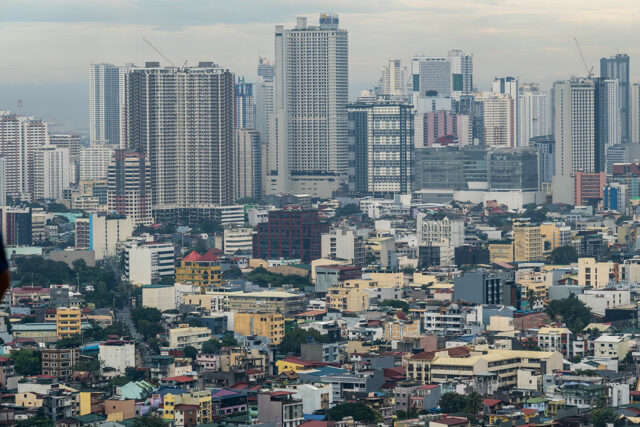
HIGH-RISE buildings dominate the skyline of Makati City’s central business district. — PHILIPPINE STAR/RYAN BALDEMOR

By Kenneth Christiane L. Basilio, Reporter

THE PHILIPPINE government should boost industrial output through targeted tax incentives while cutting reliance on borrowing, allowing the private sector to drive economic activity and support a slowing economy that showed signs of a “growth recession” last year, a congressional think tank said.

The Congressional Policy and Budget Research Department (CPBRD) said Philippine job data point to a recession based on an economic indicator that flags a looming slowdown when the three‑month average unemployment rate climbs half-a-percentage point above its past-year low.

“The burgeoning unemployment problem is likely related to the demonstrably hamstrung industrial sector,” the 24-page report, authored by David Joseph Emmanuel Barua Yap, Jr., Ma. Kristina P. Ortiz and Krishna Margaret U. Mirida, said.

The think tank said employment data breached the Sahm rule for five months from July to November 2025, while seasonally adjusted job figures from 2023 to 2025 showed the threshold was crossed for nine months from February to October 2025.

Seasonally adjusted job data from 2021 to 2025 showed that the Sahm rule was breached only in November 2025, it added.

“All outcomes indicate substantial labor market stress, with employment contracting by 1.76 million workers on average during Sahm — signal months in which the labor force declined or stagnated, and youth unemployment peaking at 3.2 percentage points year on year,” the CPBRD said.

“Viewed in conjunction with the appreciable slowdown of the Philippine economy in the third quarter, evidence suggests that the Philippines entered a ‘growth recession’ in the latter half of 2025,” it added, referring to the revised 3.9% gross domestic product (GDP) growth in the third quarter.

While a formal recession is defined as two consecutive quarters of contraction, recent economic data have raised concerns over a “growth recession,” where GDP growth remains positive amid rising unemployment and underemployment.

Philippine GDP grew by 4.4% in 2025, slowing from 5.7% in 2024, and below the Development Budget Coordination Committee’s 5.5%-6.5% goal. In the fourth quarter, GDP expanded by a weaker-than-expected 3% in a period usually buoyed by holiday spending.

Unemployment rose to 4.4% year on year in November despite the holiday hiring season, translating to 2.25 million jobless Filipinos, defying the usual trend of job gains during the period.

“The numbers constitute evidence that the Philippines may have been in a recession for most of 2025,” the CPBRD said.

The findings underscore mounting pressure on the government to push through reforms aimed at averting a full-blown recession. Policymakers should boost industrial activity by cutting tax and regulatory burdens, while continuing the state’s fiscal consolidation effort, the CPBRD said.

“Given the established linkages across industrial sector performance, quality employment generation, and income generation, the government is enjoined to pursue policies that would unleash the productive potential of Philippine industries,” it said.

Targeted tax exemptions, such as rebates or cuts for “high employment multiplier” industries like manufacturing, logistics and energy sectors, should be implemented to boost job creation and support the development of a sustainable industrial base, the think tank said.

“The cumulative burden of regulatory compliance costs and taxes spanning multiple agencies constrains firm productivity, expansion and job generation potential,” the CPBRD said.

Policymakers should also improve zoning by clustering industrial sites through a public infrastructure program in the suburbs, while cutting tariffs on goods that could enhance worker and production productivity to help spur economic growth, it added.

The CPBRD said the government should also establish a “robust dialogue mechanism” between the private sector and policymakers to ensure industrial policy remains responsive to evolving business needs.

There should also be a review of the wage-setting mechanism to ensure the current system remains effective and responsive to the job market, it added.

Policymakers should also rein in spending and avoid stimulus programs, the think tank said, warning that such measures could backfire and worsen the country’s debt position.

“Insisting upon yet another expansion in government spending to accommodate a stimulus program would inevitably lead to higher debt servicing requirements, an even larger debt overhang, and a heightened risk of a default,” it said.

The Philippines’ outstanding debt climbed to a record P17.71 trillion in 2025, exceeding the projected year-end level of P17.36 trillion by 2% and rising by 10.32% from P16.05 trillion a year earlier.

This brought the outstanding debt as a share of gross domestic product (GDP) to 63.2% as of end-2025, up from 60.7% a year earlier, the Bureau of the Treasury said.

This marks the highest annual debt-to-GDP ratio in two decades, surpassing the 65.7% recorded in 2005. It also exceeds the 60% threshold that multilateral lenders consider manageable for developing economies, as well as the government’s end-2025 projection of 61.3% under its updated medium-term fiscal framework.

“At best, a stimulus program would be exchanging one crisis for another,” the CPBRD said. “At worst, it would compound the ongoing economic slowdown with a debt crisis.”

“Instead, the government is advised to aggressively pursue fiscal consolidation, improve public expenditure efficiency, and prioritize investment over consumption,” it added.

Meanwhile, the slowdown in growth could be largely attributed to the Philippines’ inability to attract investments, coupled with government underspending that has weighed on economic growth.

“This reflects deeper structural constraints such as weak private investment, uneven public spending, governance concerns, and external headwinds that have dampened confidence and productivity,” John Paolo R. Rivera, a senior research fellow at the Philippine Institute for Development Studies, said in a Viber message. “Industry reforms that strengthen ease of doing business, infrastructure delivery, digitalization, and the overall investment climate are therefore critical.”

IBON Foundation Executive Director Jose Enrique “Sonny” A. Africa said policymakers should look beyond tax breaks to spur industrial activity, stressing the need for broad and ambitious reforms to usher in a golden age of industrial development.

“The government really has to have much more ambition and industrial vision for the country,” he said in a Viber message.

“This includes trade protection, regulation of foreign investment to build domestic capacity, promoting indigenous science and technology, strategic coordination of credit and finance, tax and other fiscal incentives, public investment in infrastructure, and expanding mass purchasing power,” he added.

The government should also look at letting local officials handle industrial development policies, Leonardo A. Lanzona, an economics professor at the Ateneo de Manila University, said.

“In this way, the industrial policy will be more in tune with the needs and resources of their communities,” he said in a Facebook Messenger chat.

Reforming towards fair and efficient trade

Customs Commissioner Ariel F. Nepomuceno (left) formally assumed office last July 1, 2025, succeeding Bienvenido Y. Rubio (right), who led the BoC from February 2023 to June 2025. — Photos from facebook.com/BureauOfCustomsPH

As one of the central pillars of economic development, trade and commerce occupy a singularly vital space in a nation’s agenda. When trade is strong, a country bustles with life creating goods, transporting resources, and engendering prosperity. When trade is held back, whether by smuggling, by illicit markets, or rampant malpractices that strangle competition, growth struggles. People can lose jobs, struggle to compete, or be unable to find livelihoods altogether.

To promote efficient, fair, and secure commerce is the purview of the Bureau of Customs (BoC), which celebrates its 124th anniversary this February. The organization has been taking on the supervision of import and export cargoes; the prevention and suppression of smuggling; and ensuring lawful collection of revenues towards a better Philippines for over a century.

Global trade is as old as civilization itself. In the Philippines, long before Spanish or American rule, trade relations were already firmly established between indigenous groups and the country’s neighbors in Southeast Asia. Tributes and primitive trade levies were collected by local datus or rajahs, arguably the predecessor of the customs bureau today. This practice of collecting tributes was known as the Customs Law of the Land.

Naturally, such rules create rulebreakers. For those who deemed the tributes unjust or excessive, black markets emerged that sought to evade the tariffs charged by the datus and rajahs, concealing goods and deceiving authorities. The BoC considered this as smuggling in its primitive form. Even hundreds of years later, the same cat-and-mouse game between smugglers and customs officials persist.

Under Spanish rule, customs law existed as part of imperial trade regulation. After the US took over in 1898, existing Spanish customs practices were gradually overhauled into a more formal revenue collection agency under American colonial law. The Customs Service Act and related legal acts in the early 1900s helped establish the structure that eventually became today’s Bureau of Customs.

In the early decades of the 20th century, successive laws reorganized customs administration, abolishing older roles like the Captain of the Port and creating professionalized collectors of customs across major ports, embedding the bureau firmly within the colonial and later national state apparatus. Across the rest of the 20th century, the agency underwent repeated legal and institutional reforms, from tariff revisions to early automation efforts, as Philippine trade expanded and customs enforcement became more complex.

Globally, structural shifts because of containerization and modern logistics were accelerating legitimate trade and smuggling at the same time. The rise of massive freight ships with internationally standardized shipping containers has both improved efficiency and throughput for authorized traders, and created new challenges for port authorities as smugglers now had the capacity for hiding things at scale.

Modern customs agencies responded by moving from inspecting everything, which was an increasingly impossible task, to risk-based targeting, which meant inspecting only the items suspected of illegal activity while auditing the rest. This culminated in the passage of the Customs Modernization and Tariff Act in the 2010s, which aligned Philippine customs procedures with global standards on trade facilitation, valuation, and risk management.

Today, the BoC operates under the Department of Finance, functioning not only as a border control and trade regulation agency but also as the government’s second-largest revenue collector after the Bureau of Internal Revenue, reflecting its central role in the modern Philippine fiscal and trade system.

Bolstering timeless practices through technology

During the BoC’s New Year’s Call last month, Commissioner Ariel F. Nepomuceno reiterated the bureau’s priority reform agenda embodied in the “I A M” framework (Integrity, Accountability, and Modernization).

In 2025, the BoC achieved a total revenue collection of P934.4 billion, surpassing the previous year’s haul by P17.7 billion or 1.9%. This growth was driven by the BoC’s strict enforcement measures, rigorous monitoring of import declarations, and efforts to ensure that importers pay the correct duties and taxes.

This momentum carried forward into January of this year as Commissioner Ariel F. Nepomuceno announced that they have collected P80.744 billion for the month alone, exceeding its target and reflecting a 100.6% revenue collection efficiency.

“Exceeding our January target is a strong affirmation of the hard work of our Customs personnel and the growing cooperation of the trade community. We are committed to sustaining this level of efficiency to support the President’s economic agenda and to exhibit the BoC’s ability of delivering reliable public service,” the commissioner said.

At the start of the year, Mr. Nepomuceno reaffirmed their continuing efforts to deliver measurable outcomes consistent with the priorities set by the Marcos administration, reiterating the bureau’s priority reform agenda embodied in the “I A M” framework — Integrity, Accountability, and Modernization — which serves as the foundation of the BoC’s ongoing reforms.

At the heart of this reform is an aggressive push for full digitalization, which seeks to eliminate the face-to-face interactions that have historically allowed for “grease money” and corruption. The bureau introduced the upgraded Online Tax Estimator, a more intuitive, web-based tool that helps importers anticipate duties and taxes with greater accuracy, even before lodging declarations. The BoC also launched the Origin Management System (OMS), which automates the issuance and processing of the Product Evaluation Report (PER), a mandatory document for goods intended for export under Free Trade Agreements (FTAs), reducing processing times and promoting export competitiveness.

Meanwhile, to strengthen regional interoperability, the BoC also implemented the ASEAN Electronic Document Exchange, enabling faster cross-border verification of trade documents and ensuring regional interoperability. The proposed integration of the Automated Export Declarations System (AEDS) across economic zones will seek to support the future digitization of export submissions, with the potential to reduce errors and strengthen compliance.

There is also the improved processing for strategic and export-related goods through critical operational upgrades, including the streamlined clearance of aircraft parts at Clark International Airport and the full rollout of the electronic Certificate of Origin (e-CO) portal.

By automating 96% of its procedures, ranging from electronic travel declarations to digital origin reviews, the agency is effectively replacing human discretion with transparent, unalterable data trails.

The BoC confiscated P2.390 billion worth of smuggled goods from July to August 2025.

Alongside digital reforms, policy improvements in 2025 reinforced predictability and reduced administrative burdens for traders. Through initiatives like the Customs Industry Consultative and Advisory Council (CICAC), the agency has opened a direct line of communication with the private sector to identify and remove “bottlenecks” in real time. This efficiency is paired with a much more intensified border protection strategy.

Finally, the most challenging aspect of this reform is the cultural overhaul of the agency’s internal workforce. The BoC is attempting to break old patronage systems by implementing merit-based promotions and pursuing ISO certifications for all 17 major ports across the country.

Among the areas that Mr. Nepomuceno mentioned that the agency was focusing on were personnel welfare and professional development. By professionalizing the ranks and holding officers accountable through “digital footprints,” the bureau aims to foster a culture where integrity is institutionalized rather than optional.

International organizations like the World Bank have expressed support for such initiatives, with the institution granting $88.28 million in financing for the entire modernization program. These reforms are designed to outlast individual administrations, ultimately evolving the BoC into a technology-driven border security firm that balances national security with the rapid pace of global trade.

As times continue to change, the BoC continues to evolve along with it. Although the tools are different, the game plan is the same as it has ever been: serving the Filipino people by facilitating fair and efficient trade for all. — Bjorn Biel M. Beltran

ACEN takes full control of India RE business after stake buyout

THE SITARA SOLAR PLANT in Rajasthan. — ACENRENEWABLES.COM

AYALA-LED ACEN CORP. has strengthened its footprint in India after acquiring the remaining stake held by Singapore-based UPC Renewables in their joint venture, allowing it to take the lead in developing more than a gigawatt (GW) of renewable energy (RE) projects.

ACEN told the local bourse on Thursday that its subsidiary ACEN Renewables International Pte. Ltd. acquired a 50% voting interest in Unlimited Renewables Holdings B.V. (URH) from UPC Renewables.

The transaction involves 2,724 common shares of URH, though the company kept the deal’s value undisclosed.

Following the acquisition, ACEN will assume full ownership of URH, which is currently developing three renewable energy projects across Rajasthan and Karnataka with a combined capacity of 1,059 megawatts (MW), spanning both the construction and advanced development stages.

“This platform is the result of years of close collaboration and shared commitment to developing high-quality renewable energy projects. As ACEN takes full ownership, I am looking forward to continue growing this portfolio and make a meaningful contribution to India’s clean energy transition,” UPC Renewables India Chief Executive Officer Alok Nigam said.

ACEN aims to seize opportunities from “a fast-growing and diversified renewables portfolio in one of the world’s most attractive clean energy markets.”

Patrice Clausse, group chief investments officer and president and chief executive officer of ACEN International, said the company is well positioned to scale up its renewable energy portfolio.

“India’s strong policy support, maturing market structures, and growing demand for renewables provide a solid foundation for sustainable growth,” he said.

As of September 2025, the India market accounts for 37% of ACEN’s net attributable capacity across its international operations. The company operates three solar power projects with a combined capacity of 630 MW.

ACEN is banking on India’s “strong fundamentals” and “supportive policy environment” in the renewable energy market for long-term growth.

The company said India’s regulatory framework is “well-established and predictable,” with strong regulations and effective mechanisms for redress and compensation in case of changes in regulation.

“Combined with an increasingly mature banking sector that can provide long-tenor project financing, India offers a compelling environment for both growth and capital recycling,” ACEN said.

ACEN currently manages a renewable energy portfolio of 7.1 GW across the Philippines, Australia, Vietnam, India, Indonesia, Laos, and the United States. — Sheldeen Joy Talavera

Modernizing frontlines of trade: Inside BoC’s digitalization drive

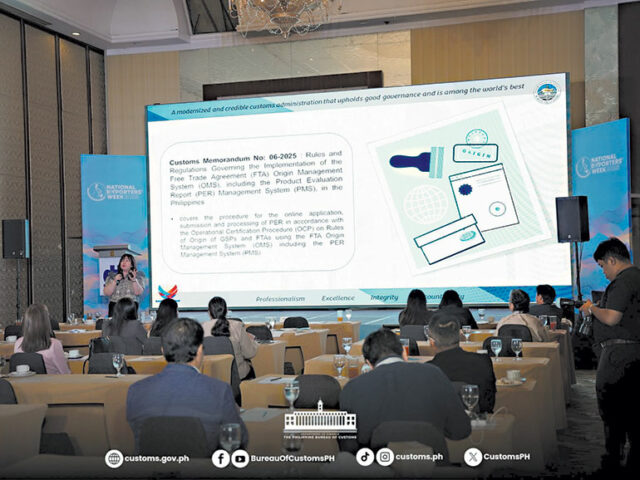
The BoC announced the full digital adoption of the Origin Management System (OMS) during the National Exporters’ Week last December 2025. — Photo from facebook.com/BureauOfCustomsPH

In an era increasingly defined by digital governance, the modernization of border control and customs administration has become a strategic imperative for national development.

The Bureau of Customs (BoC) has embarked on an extensive digital transformation program designed to enhance trade facilitation, increase operational efficiency, strengthen transparency, and reinforce border security.

Anchored on the Philippine Customs Modernization Program (PCMP) and aligned with international frameworks such as the World Trade Organization’s Trade Facilitation Agreement (TFA), the BoC’s digitalization agenda reflects a long-term commitment to building a modern, responsive, and globally competitive customs administration.

The BoC’s digitalization drive is firmly rooted in the implementation of the Customs Modernization and Tariff Act (CMTA), which mandates the adoption of information and communications technology (ICT) to simplify procedures, improve regulatory compliance, and promote efficiency in cross-border trade.

To operationalize this mandate, the agency launched the PCMP, supported by the World Bank Group. Central to this program is the development of a unified Customs Processing System (CPS), which consolidates multiple customs modules into a single digital platform, enabling end-to-end electronic processing of import, export, and transit transactions.

The CPS builds on the legacy of Electronic-to-Mobile (E2M) system, enhancing its functionality by integrating risk-based compliance management, advanced cargo targeting, and non-intrusive inspection services.

This integrated digital architecture enables the BoC to shift from labor-intensive manual processes to data-driven operation.

Over the past years, the BoC has rolled out a wide range of digital solutions that collectively form a comprehensive e-customs ecosystem.

By 2023, the agency had successfully digitalized 160 out of 166 custom processes, achieving a digitalization rate of approximately 96.39%. This remarkable feat contributed to the Philippines ranking second among ASEAN member states in the 2023 United Nations Global Survey on Digital and Sustainable Trade Facilitation, with a score of 87.10%.

Among the major systems introduced were the Liquidation and Billing System (LBS), Electronic Customs Baggage and Currencies Declaration (iDeclare) System, Raw Materials Liquidation System, National Customs Intelligence System (NCIS), and the integration of E2M system with the Electronic Tracking of Containerized Cargo (ETRACC).

In addition, the Payment Application Secure 6 (PAS6) system was deployed to enhance electronic payment processing, ensuring secure, real-time exchange of transaction data. Meanwhile, the ASEAN Customs Declaration Document (ACDD) system supports cross-border data exchange among ASEAN member states, facilitating faster verification of trade documents.

Advancing trade facilitation

In 2025, the BoC intensified its digital reform agenda through the deployment of advanced platforms designed to further streamline trade processes.

Notably, the upgraded Online Tax Estimator enables importers to forecast duties and taxes more accurately before submitting declarations, thereby reducing valuation disputes and compliance risks.

The launch of the Origin Management System (OMS) automated the issuance of Product Evaluation Reports for exports under free-trade agreements, significantly cutting processing time and enhancing export competitiveness.

To improve export documentation, the agency also proposed the integration of the Automated Export Declaration System (AEDS) across economic zones, expected to standardize export submissions, reduce human error, and enhance regulatory oversight.

Parallel upgrades included the full rollout of the electronic Certificate of Origin (e-CO) portal and the ASEAN Electronic Document Exchange, which strengthens cross-border paperless trade.

Strengthening transparency and integrity

Digitalization has also been leveraged as a strategic tool to combat corruption and enhance institutional integrity. By automating discretionary processes and minimizing direct contact between Customs officers and traders, the BoC reduces opportunities for rent-seeking behavior.

The near-complete digitalization of procedures ensures that transactions are traceable, auditable, and governed by standardized workflows.

Complementing technological upgrades, the BoC has institutionalized stakeholder engagement through the establishment of the Customs Industry Consultative and Advisory Council (CICAC). These platforms foster structured dialogue between Customs officials and the private sector, facilitating the identification and resolution of operational issues while reinforcing trust and accountability.

Enhancing regional and international cooperation

The BoC’s digitalization efforts extend beyond national borders, aligning with regional and global frameworks on paperless trade. Through its participation in ASEAN initiatives and cooperation with the United Nations Economic and Social Commission for Asia and the Pacific (ESCAP), the Philippines has committed to the Framework Agreement on the Facilitation of Cross-Border Paperless Trade.

The framework aims to promote interoperability among national single windows and facilitate the mutual recognition of electronic trade documents.

By adopting common data standards and digital protocols, the BoC enhances the Philippines’ integration into global value chains.

Operational efficiency and service delivery

Operational gains from digitalization are evident in faster cargo clearance times, improved risk profiling, and more effective border surveillance.

The integration of cargo electronic tracking systems enables real-time monitoring of containerized cargo, enhancing supply chain visibility and reducing the risk of diversion or smuggling.

Moreover, the rollout of the e-Travel System, a joint initiative with the Bureau of Immigration and other government agencies, allows passengers and crew members to submit baggage and currency declarations electronically prior to arrival or departure.

For traders, the expansion of the Authorized Economic Operator (AEO) and Super Green Lane (SGL) programs, supported by digital risk management tools, provides expedited processing and preferential treatment to compliant businesses. These trust-based facilitation mechanisms reward good governance while allowing Customs authorities to concentrate enforcement efforts on high-risk shipments.

Challenges and future directions

Despite substantial progress, the BoC’s digitalization journey still has its difficulties. Interoperability among legacy systems, cybersecurity risks, capacity-building requirements, and resistance to organizational change remain critical concerns.

Sustained investment in ICT infrastructure, human capital development, and regulatory harmonization will be essential to ensure the longevity of digital reforms.

The digital transformation of the BoC represents a landmark reform in Philippine public administration. Through sustained investment in technology, institutional restructuring, and international cooperation, the BoC has redefined the delivery of customs services, aligning national practices with global standards.

With over 96% of processes now digitalized, the agency stands as a regional leader in trade facilitation and digital governance.

As the Philippines continues to pursue inclusive economic growth and deeper integration into the global trading system, the BoC’s modernization agenda will remain a critical pillar of national competitiveness. — Krystal Anjela H. Gamboa

Korea-backed firm plans P64.3-B pumped storage project in Benguet

COHECOBA.COM

FILIPINO-KOREAN firm Coheco Badeo Corp. is planning to develop a 500-megawatt (MW) pumped storage hydropower project in Kibungan, Benguet.

The proposed Kibungan pumped storage facility is expected to provide additional power supply to the Luzon grid, according to its filing with the Department of Environment and Natural Resources (DENR).

The P64.3-billion project will span 36 hectares and will include upper and lower dams with a combined reservoir capacity of about 3.53 million cubic meters, as well as intake facilities, underground tunnels, an underground powerhouse, and access roads.

Located in Barangay Badeo near the Amburayan River, the facility is expected to store large amounts of energy and respond quickly to fluctuations in power supply and demand.

“With the growing concern on the environment, it has been proven that mini and small hydropower have the least adverse effect on the environment thereby making it the most socially acceptable energy source,” Coheco said.

The company secured a service contract from the Department of Energy in 2016, but the project experienced delays in regulatory proceedings, which it attributed to the COVID-19 pandemic and other challenges.

Based on its project schedule, construction will start once an environmental compliance certificate has been issued, with completion targeted by 2031.

The pumped storage project was among the winning bids in last year’s Green Energy Auction, where more than 6,600 MW of capacity was awarded.

The proposed project is scheduled for public scoping on Feb. 26. The activity is an early stage of the environmental impact assessment process, during which the project proponent will present an overview of the development and gather issues and concerns from stakeholders. — Sheldeen Joy Talavera

Amazon plans to use AI to speed up TV and film production

THE STUDIO points to its hit series, House of David, as an example of how AI could be used in the future. For the second season, the director used AI combined with live-action footage to create battle scenes, seamlessly editing the two together to expand the scope of sequences at lower cost.

LOS ANGELES — Amazon plans to use artificial intelligence (AI) to speed up the process for making movies and TV shows even as Hollywood fears that AI will cut jobs and permanently reshape the industry.

At the Amazon MGM Studio, veteran entertainment executive Albert Cheng is leading a team charged with developing new AI tools that he said will cut costs and streamline the creative process. Amazon plans to launch a closed beta program in March, inviting industry partners to test its AI tools. The company expects to have results to share by May.

Mr. Cheng described AI Studio as a “startup” operating under Amazon founder Jeff Bezos’ “two pizza team” philosophy — keeping the group small enough to be fed by two pizzas. The team consists primarily of product engineers and scientists, with a smaller creative and business contingent.

Amazon is publicly embracing AI in response to spiraling production budgets that limit the number of shows and films companies can finance. The technology will fast-track certain processes to make more movies and TV shows more efficiently.

“The cost of creating is so high that it really is hard to make more and it really is hard to take great risk,” Mr. Cheng said in an interview. “We fundamentally believe that AI can accelerate, but it won’t replace, the innovation and the unique aspects that (humans) bring to create the work.”

The move to adopt artificial intelligence comes as A-list actors like Emily Blunt have expressed fears about the rise of AI — and particularly AI actress Tilly Norwood would make their jobs obsolete.

Amazon emphasized that writers, directors, actors, and character designers will be involved at every stage of production, using AI as a tool to enhance creativity.

Like many other tech companies, Amazon is also pushing nearly every division to find uses for AI and pointed to the successes of the technology as among the reasons it cut about 30,000 corporate jobs since October, its largest layoff ever. That included a number of job cuts at Prime Video.

Mr. Cheng said AI could help Prime Video overcome some of the inherent challenges of large scale film and television production.

The AI Studio is building tools that bridge what Mr. Cheng described as “the last mile” — perhaps a cheeky reference to Amazon’s delivery operation — between existing consumer AI offerings and the granular control directors need for cinematic content. That includes improving character consistency across shots, and integrating with industry-standard creative tools.

Amazon is leaning on its cloud computing division, Amazon Web Services, for help and plans to work with multiple large language model providers to give creators a wider array of options for pre- and post-production filmmaking. Mr. Cheng said protecting intellectual property and ensuring AI-created content won’t be absorbed into other AI models are essential to making the AI Studio work.

The AI Studio is working with producers Robert Stromberg (Maleficent) and his company Secret City, Kunal Nayyar (The Big Bang Theory) and his company Good Karma Productions; and former Pixar and ILM animator Colin Brady, as it explores new tools and how best to implement them.

The Studio, which launched last August, points to its hit series, House of David, as an example of how AI could be used in the future.

For the second season of the biblical epic, director Jon Erwin used AI combined with live-action footage to create battle scenes, seamlessly editing the two together to expand the scope of sequences at lower cost. — Reuters

RCR posts 35% revenue growth on mall asset infusions

Robinsons Magnolia — ROBINSONSLAND.COM

RL COMMERCIAL REIT, Inc. (RCR), the real estate investment trust of Robinsons Land Corp. (RLC), reported a 35% increase in unaudited revenues for 2025, reaching P11.08 billion, driven by asset infusions from its sponsor.

Occupancy rates remained steady at 96% last year, RCR said in a statement to the Philippine Stock Exchange (PSE) on Thursday.

In the fourth quarter alone, unaudited revenues — excluding changes in the fair market value of investment properties — jumped 49% year on year, while quarter-on-quarter revenues rose 12% to P358 million, boosted by the acquisition of nine retail assets from RLC.

The August 2025 property-for-share swap added nine malls to RCR’s portfolio: Robinsons Dasmariñas (Cavite), Robinsons Starmills (Pampanga), Robinsons General Trias (Cavite), Robinsons Cybergate (Cebu), Robinsons Tacloban (Leyte), Robinsons Malolos (Bulacan), Robinsons Santiago (Isabela), Robinsons Magnolia (Quezon City), and Robinsons Tuguegarao (Cagayan).

In 2024, RLC also injected P33.9 billion worth of assets into RCR through a property-for-share swap deal that consist of 11 malls and two office buildings. The malls are located in Novaliches, Cainta, Luisita, Cabanatuan, Lipa, Sta. Rosa, Imus, Los Baños, Palawan, and Ormoc.

“RCR continues to benefit from the upside of mall rental income from the 2024 asset infusion (two offices and eleven malls), together with the 2025 infusion (nine malls),” RCR President and Chief Executive Officer Jericho P. Go said.

The REIT reported unaudited total assets of P167.76 billion and shareholders’ equity of P162.19 billion, remaining debt-free. It was recently included in the PSE index, highlighting its liquidity and capitalization.

RCR ended 2025 with 38 assets, comprising 21 malls and 17 offices, and noted that RLC has a strong pipeline of potential future infusions, including over 1.1 million square meters (sq.m.) of mall gross leasable area (GLA), about 250,000 sq.m. of office GLA, nearly 300,000 sq.m. of logistics space, and around 4,000 hotel rooms.

The REIT is also open to acquiring third-party assets for long-term growth.

Its board has approved a fourth-quarter cash dividend of P0.1112 per share.

For the full year, RCR declared P7.54 billion in dividends, equivalent to over 90% of its unaudited distributable income, payable on March 2 to shareholders of record as of Feb. 20.

RCR’s market capitalization stood at P156.78 billion as of Dec. 31, 2025.

RCR shares rose 0.4% or three centavos to close at P7.53 apiece on Thursday. — Beatriz Marie D. Cruz

Tightening the gates against smuggling

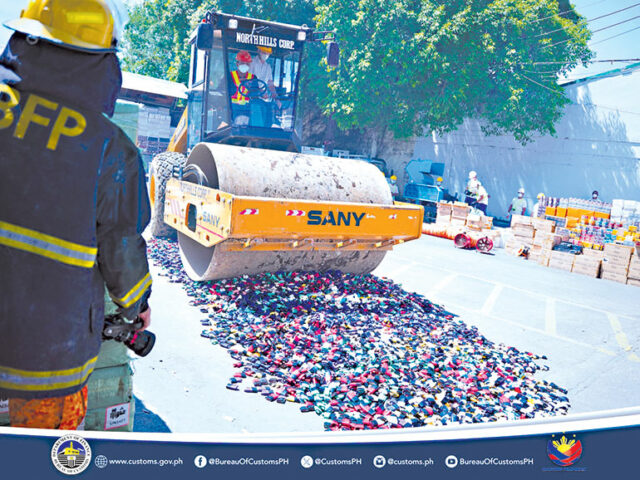
In April 2025, at the BoC’s main office in South Harbor, Manila, 2,977,925 pieces of seized smuggled electronic cigarettes, vape parts, and accessories, valued at P3.26 billion, were publicly condemned. — Photos from facebook.com/BureauOfCustomsPH

Annually, billions of pesos worth of goods and produce pass through the thousands of ports in the Philippines, making up the country’s trade industry that fuels local markets and sustains livelihoods for millions of Filipinos. Yet, alongside the legitimate flow runs a shadow economy of sorts run by smugglers. Hidden in mislabeled containers, routed through informal landing sites, slipped past inspections with forged documents, or allowed through by paid officials, illicit goods quietly enter the country every day.

The government entity tasked with preventing these mishaps and stopping these illegal activities is the Bureau of Customs (BoC). The BoC is tasked with enhancing trade facilitation, strengthening border control, and improving the collection of lawful revenues. While the agency has made strides in enhancing the country’s trade and collecting lawful revenues, the BoC has also significantly strengthened its crusade against smuggling in recent years.

First on the long list of initiatives of the BoC to combat the crime is a sweeping reform agenda being implemented in coordination with the American Chamber of Commerce as well as the US Embassy. The reform comes after the agency was listed as one of the most corrupt offices in the country as per the United States Department of State. The said reform was aimed at curbing corruption issues.

In September, the BoC intercepted two 40-foot container shipments at the Manila International Container Port found to contain misdeclared frozen chicken breasts and fish balls from China.

Another improvement is the bureau’s efforts to further accelerate digitalization in the agency to thwart smuggling. In an interview last year, BoC Commissioner Ariel F. Nepomuceno revealed a Public-Private Partnership (PPP) initiative eyed to modernize how imports and transactions are taxed. Under the proposal, importers would be charged a flat fee of P350 per transaction, regardless of whether it covers a single container van or multiple units. The program is expected to be rolled out within the next one to one-and-a-half years.

Aside from modernization and reform initiatives, the BoC has also signed various partnerships with private organizations and other government agencies to strengthen its campaign against smuggling.

In October last year, the agency signed a Memorandum of Agreement (MoA) with the Land Transportation Office (LTO) seeking to establish a more efficient system connecting vehicle importation and registration. As vehicles are some of the most valuable goods smuggled into the country, the MoA highlights the shared commitment of both agencies to ensure the timely and accurate exchange of data, streamline the tracking of imported motor vehicles, and curb illegal or fraudulent transactions.

In addition, the Philippine National Police and the BoC worked together last year for a series of successful police-initiated operations that led to the confiscation of billions of pesos worth of smuggled cigarettes and other goods.

Partnerships with private organizations have proven beneficial for the agency as well. Earlier this year, the BoC and the Philippine Iron and Steel Institute (PISI) agreed to establish a technical working group tasked with creating a centralized database to track steel imports, improve commodity classification, and support standardized customs valuation anchored on historical data. The partnership also covers initiatives on digitalization, automation, and data-driven governance, including enhanced stakeholder accreditation through the use of artificial intelligence and data analytics.

Similarly, the Federation of Filipino-Chinese Chambers of Commerce and Industry, Inc. (FCCCII) voiced its backing of the Bureau of Customs as it moves to implement broad and stringent governance reforms aimed at preventing corruption both within the agency and in its external dealings.

“In light of the recent issues affecting the Philippine government, it is good that there are leaders such as Commissioner Nepomuceno, who uphold integrity in good governance and create a very competitive and business-friendly environment for businesspeople such as the FFCCCII,” FFCCCII President Victor Lim was quoted as saying.

These improvements in modernization, reform, and partnerships are directly reflected in the agency’s performance to start 2026. Recent developments show that the bureau exceeded its January revenue target while sustaining aggressive nationwide operations against large-scale and high-value smuggling activities.

Last month alone, the BoC collected P80.744 billion, surpassing its revenue target by P513 million and posting a 100.6% collection efficiency. The figure also reflects a P1.49-billion increase, or 1.9% growth, compared to the P79.254 billion collected in January 2025.

Along with robust revenue performance, the BoC scaled its enforcement efforts across the country. In January alone, the agency carried out 66 successful operations, leading to the confiscation of smuggled and prohibited goods estimated at around P886.8 million. Among the most significant captures were illegal drugs valued at more than P309 million, including P114.566 million worth of narcotics hidden in shipments falsely declared as malachite stones. Authorities also seized illicit cigarettes and tobacco products worth roughly P209 million, highlighted by the discovery of an illegal cigarette manufacturing facility in Pampanga during a raid last Jan. 28.

These gains in policy, technology, and interagency cooperation have also translated into tangible results on the ground, most evident in a series of seizures that show the BoC’s efforts.

In the first week of January, Customs authorities seized smuggled cigarettes worth more than P105 million in Bataan and shut down an alleged illegal cigarette manufacturing facility in Mexico, Pampanga in line with President Ferdinand R. Marcos, Jr.’s directive to dismantle illicit trade networks and protect government revenues.

Back in August, the BoC, through its Intellectual Property Rights Division, has seized counterfeit wearing apparel valued at an estimated P428 million at the Port of Manila.

At the same time, Mr. Nepomuceno ordered an investigation into alleged smuggling activities at the Port of Manila, temporarily relieving a Customs Intelligence and Investigation Service field station chief to reinforce internal accountability.

These efforts were further underscored by the seizure of P428 million worth of suspected counterfeit clothing in Tondo, Manila, involving a shipment of 1,287 boxes of counterfeit apparel that arrived in the country in August 2025, reflecting the bureau’s continued focus on both border enforcement and institutional integrity.

Overall, recent reforms, partnerships, and sustained enforcement show the BoC making measurable progress in curbing smuggling while protecting revenues, trade integrity, and public trust. — Jomarc Angelo M. Corpuz

ADVERTISEMENT
ADVERTISEMENT