Home Blog Page 3267

A different side of Hong Kong
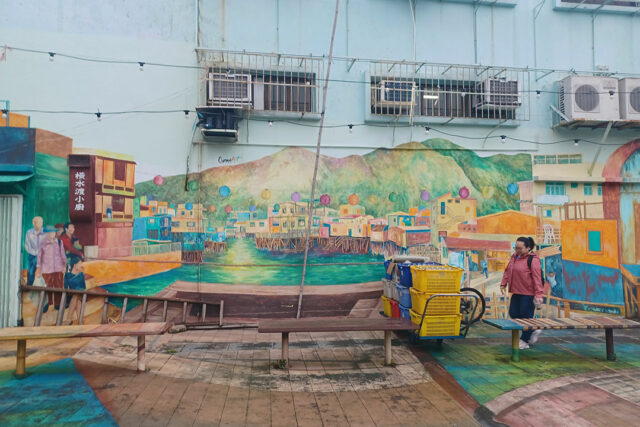
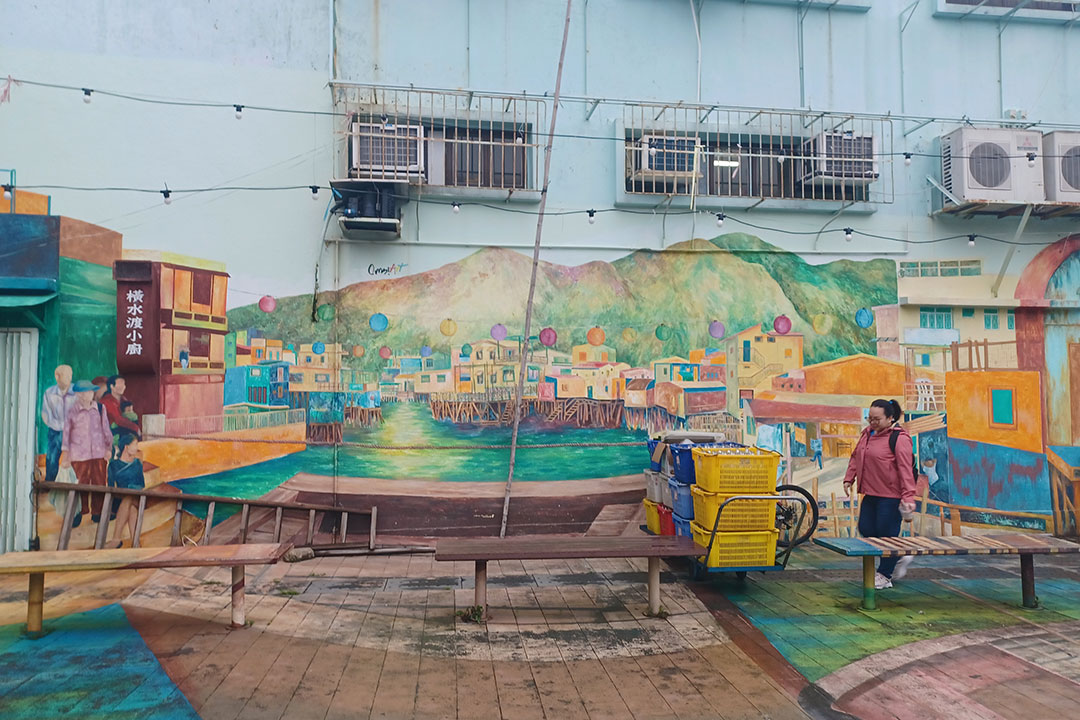
MURALS line the walls in Tai O’s market and temple area — BRONTË H. LACSAMANA

THERE was rain and fog obscuring the beauty of Lantau Island, Hong Kong, when media guests were given a preview of Klook’s newest day tour, inspired by the Filipino-Thai film Under Parallel Skies.

The movie stars Filipino actress Janella Salvador and Thai actor Win Metawin as two unlikely souls, Iris and Parin, who meet and form a connection in Hong Kong. Their whirlwind romance takes them to destinations both familiar and off the beaten path, as they discover love and heartbreak.

While the weather made travel difficult, what with cloudy skies, wet roads, and humid air, the spots the group visited continued to pulse with tourists. Most were locations that the leads of the film had visited.

“About 35% of our customers come from Southeast Asia,” said Michelle Ho, Klook Philippines’ general manager, at an April 25 briefing the day before the tour. “Many of them are from the Philippines and Thailand.”

She added that, based on Klook’s 2024 Travel Pulse survey, Hong Kong is on the top five travel destinations for both countries, making it a perfect setting for Under Parallel Skies and its resulting tour offering.

The Under Parallel Skies Day Tour offers a choice of either the Lantau Island Day Trip (P3,443) or the City Guided Tour (P3,072).

Equipped with raincoats and umbrellas, the media guests only had time for the first package, which is the quieter, more nature-filled one of the two. It’s the right choice for those who have been to Hong Kong before and want to see a different side of the city beyond the trams, city lights, and harbor skyline.

TAI O FISHING VILLAGE
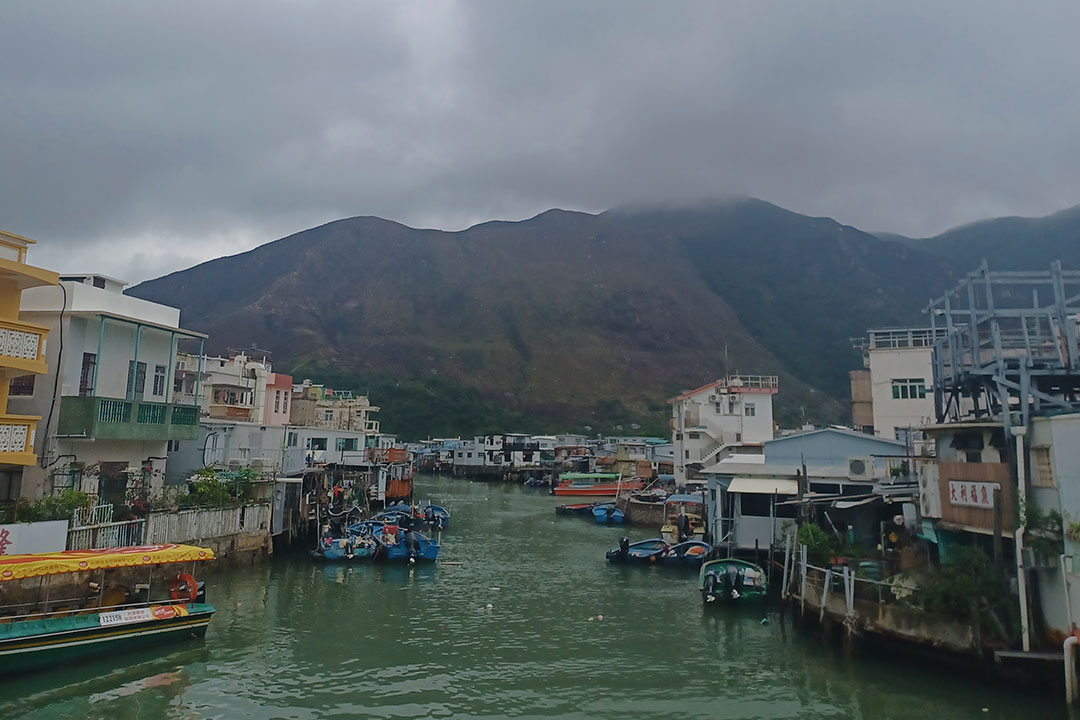
The starting point is the quaint Tai O Fishing Village, tucked away on the far end of Lantau Island. In the film, Iris and Parin’s visit to the peaceful village takes up a few scenes.

The Klook tour includes a boat ride around the fishing village. It is an interesting destination, with traditional wooden stilt homes contrasting with larger steel houses and traditional boats side-by-side with motorboats. Though locals have transformed the village’s façade over the years, the various structures floating on the water are painted different colors, ensuring a vibrant scene with a picturesque backdrop of mountains.

The boat ride concludes with sailing out of the village to the open sea for a chance to spot a dolphin. Perhaps because of the inclement weather there were none to be found, though the location allows one to glimpse part of the longest sea crossing in the world, the Hong Kong-Zhuhai-Macau Bridge.

After getting back on land, the tour continued to Tai O Market, where dried seafood, salted fish, and shrimp paste are the main delicacies. Its charm lies in the locals, who go about their day selling or buying seafood at the market as usual, deftly maneuvering to avoid the slow tourists in their way.

As part of the tour, visitors get a giant fishball on a stick that serves as a light snack before going to the nearby Buddhist Temple. The area is also home to colorful murals that adorn some of the village walls, perfect for picture-taking.

The fishing village is a living museum of Hong Kong’s maritime heritage amid a fast-developing world. Its local traditions endure to this day, such as the Dragon Boat Water Parade, usually held late in June, and the Lantern Festival that takes place in mid-autumn.

To end this part of the tour, the guide handed out frozen pineapple treats, a common summertime snack among locals that want to beat the heat.

BIG BUDDHA
Next up was the most popular destination on Lantau Island (though since Disneyland was built, it has faced serious competition). The Big Buddha, also known as the Tian Tan Buddha, is a giant bronze statue sitting atop a hill.

The behemoth structure, all cast in bronze, stands at 112 feet and weighs 250 metric tons including the lotus leaf throne on which the Buddha sits. Because of its massive size, it really looks like a protective guardian of the mountain and forests as it overlooks the valley of Ngong Ping.

Despite its imposing figure, the Buddha’s raised right hand shows that this is the Protection Buddha, one that has reached enlightenment and can guard from fear, anger, and delusion and show compassion to those suffering.

And suffer you will — since you must first climb 268 steps to reach the statue. This attracts Buddhist pilgrims who are engrossed in prayer as they climb. Even if you aren’t interested in the religion, seeing the magnificent craftsmanship up close and taking pictures of it might make the climb worth it.

Unfortunately, the day the media tour was held was rainy and overcast, so fog obscured the Buddha. Its high placement and sheer size apparently make it visible from many points in Lantau Island, but that afternoon it was totally covered in fog even from the foot of the long staircase.

If poor weather doesn’t deter you from the climb, you will still be rewarded — with ominous shots of the Buddha shrouded in fog. It may look a bit creepy, but it is kind of cool to have a protective Buddha looking out for you in the mist.

The Po Lin Monastery, which built the statue in 1993, is a short walk from the foot of the monument itself. The tour includes a vegetarian lunch at its in-house restaurant. If that isn’t your thing, nearby Ngong Ping Village, the next stop in the tour, has many other restaurants in its vicinity.

NGONG PING CABLE CAR
The tour ends with a cable car ride away from the beautiful mountain views at Ngong Ping Village via the Ngong Ping Cable Car. This ride connects the upland area with Tung Chung down below, and it features 360-degree views of Lantau Island’s green terrain and the ocean beyond Hong Kong.

Again, the inclement weather meant the view was obscured by fog, so in cases like these you may simply enjoy the light breeze as the cable car makes its way down the mountain. On a clear day, the 5.7-kilometer rescue trail etched in the forests below would be visible.

As the cable car reached the foot of the mountains and turned toward its end at the Tung Chung Station, the fog eventually cleared to reveal the cityscape and highways as well as the nearby Hong Kong International Airport.

Upon leaving the cable car, the tour officially ends. At that point, you have many options as to where to go next — shopping at the adjacent Citygate Outlet mall or going exploring via the Tung Chung MTR station next to it. Many hotels also offer shuttles straight from this area to their properties, including the luxurious Sheraton Tung Chung.

The Under Parallel Skies Tour is now available on Klook. — Brontë H. Lacsamana

Meralco sees increase in generation charge for May

MANILA Electric Co. (Meralco) said it expects an increase in power costs from suppliers this month due to higher prices in the Wholesale Electricity Spot Market (WESM).

“This is mainly due to higher WESM prices brought about by the tight supply condition, as power demand surged along with higher heat indices,” Meralco said in a statement on Thursday.

Peak demand in Luzon rose by about 2,400 megawatts compared with the March supply month, the power distributor said.

The generation charge mostly makes up the bulk of a consumer’s monthly bill.

For April, typical households saw a nearly P1 decrease in their monthly electricity bill for the first time this year due to a sharp drop in generation and transmission charges.

The power distributor cut the overall rate by P0.9879 per kilowatt-hour (kWh) to P10.9518 per kWh in April from P11.9397 in March.

Meralco Spokesperson Joe R. Zaldarriaga has said that there is a possibility of an increase in power rates for May as high demand adds pressure to the WESM, the trading floor for electricity.

“We continue to remind the public to practice energy efficiency to have better management over their power consumption and electricity bills,” the energy company said.

Meralco’s controlling stakeholder, Beacon Electric Asset Holdings, Inc., is partly owned by PLDT Inc.

Hastings Holdings, Inc., a unit of PLDT Beneficial Trust Fund subsidiary MediaQuest Holdings, Inc., has an interest in BusinessWorld through the Philippine Star Group, which it controls. — Sheldeen Joy Talavera

Ben&Ben releases introspective single four years in the making

NINE-PIECE folk pop band Ben&Ben has released their new single, “COMETS,” an ode to the ephemeral nature of people and relationships that took four years to make. In embracing change, they also look to the evolving landscape of original Pilipino music (OPM).

Since the nine members got together as Ben&Ben in 2017, the group has amassed a total of 5.4 million listeners on Spotify.

The band is composed of twin brothers Paolo Benjamin Guico (lead vocals, acoustic guitar) and Miguel Benjamin Guico (lead vocals, acoustic guitar), Poch Barretto (lead guitar, backing vocals), Jam Villanueva (drums), Agnes Reoma (bass), Andrew de Pano (percussion, backing vocals), Toni Muñoz (percussion, lead vocals), Keifer Cabugao (violin, vocals), and Patricia Lasaten (keyboard).

Their recent achievements include becoming the Philippines’ number one streamed OPM artist on Spotify in 2023, performing onstage with Ed Sheeran in March this year, and contributing their songs to a musical theater adaptation of the 2007 blockbuster film One More Chance in April.

Following the release of the singles “Could Be Something,” “Courage,” and “Autumn” in 2023, Ben&Ben returns with another single.

Released under Sony Music, the new song is a pop-rock tune that finds meaning in impermanence, penned by the Guico brothers. The track looks back at memories with mixed feelings of loss, pensiveness, hope, and acceptance.

“[The song lets you] reflect on your past,” said Miguel Guico at a press launch on May 8 at Robinsons Galleria, Ortigas.

FOUR YEARS OF WORK
On why the song took four years before being released, he said: “Ito ang tamang time para sa amin, hindi lang ako na kinasal, kundi kaming lahat na ang dami na naming pinagdaanan kaya mas mature na kami (This is the right time for us, not just for me being recently married, but for all of us since we’ve been through a lot and are more mature now).”

The band hopes that the song helps fans think about the “comets” in their lives — the people who come and go and the lessons they leave behind.

It was also a technical struggle to complete the track over those four years, said Paolo Guico.

“We wrote the song back in 2020. We tried performing it on Facebook live and, ever since, inaabangan na siya ng mga Liwanag, pero di namin na-feel na iyun pa iyung tamang tama na ilabas siya (our fans have been anticipating it, but we didn’t feel it was complete yet),” he said.

While they’ve been playing a version of the song in live shows for two years now, it was still not the final one. Indonesian producer Petra Sihombing, whom they met this year, was the last piece of the puzzle that they needed to complete the song.

“He really helped complete the music, what we now know as ‘COMETS,’” said Mr. Guico. “It was a four-year process. It’s like the comets aligned,” he joked.

STUFF TO LOOK FORWARD TO
For Ben&Ben, this year is an exciting one for OPM in general, with many new releases to check out and look forward to.

“Last year was a season of OPM going back to full force through festivals and gigs, so this year everyone’s making music,” said bassist Agnes Reoma. She pointed to P-pop girl group BINI’s album Talaarawan, released in March, which Ben&Ben’s members have on repeat.

The Guico twins added that they’re inspired by contemporaries like funk pop band Lola Amour, which just released their first full-length eponymous album, and indie folk band Munimuni, which just released an album titled ALEGORYA.

Grabe iyung diversity sa OPM ngayon (The diversity in OPM now is insane). P-pop, bands, upbeat dance music, mellow music, you name it, we have it,” they said.

“For listeners, there’s a lot of choices. As an artist too, when you’re surrounded by so many different kinds of music and musicians, you’re bound to inspire each other.” — Brontë H. Lacsamana

Monde Nissin sees strong profitability rebound in APAC business

MONDE Nissin Corp. saw its net income for the first quarter grow by 79.9% to P3.48 billion from P1.94 billion last year, the listed food and beverage manufacturer said.

“The first quarter saw significant expansion in gross margin and overall profitability driven by our APAC-BFB (Asia-Pacific branded food and beverage) business. This was despite top line growth being moderated during the quarter, partially due to the timing of the Holy Week holiday here in the Philippines,” Monde Nissin Chief Executive Officer Henry Soesanto said in a statement on Wednesday.

“Our APAC-BFB margins and profitability have substantially rebounded from last year’s levels, and we believe, given current conditions, that the second quarter will continue to reflect these improvements,” he added.

First-quarter consolidated comparable revenue rose by 2.1% to P20.3 billion despite the fewer selling days due to the Holy Week break, Monde Nissin said in a stock exchange disclosure.

Gross profit climbed by 20.9% to P7.2 billion. Core attributable net income went up by 53.4% to P2.9 billion.

Revenue of the company’s APAC-BFB improved by 2.2% to P16.9 billion, while domestic business revenue rose by 2% to P15.8 billion, impacted by fewer selling days due to the timing of the Holy Week holiday in the Philippines.

For its alternative meat segment led by Quorn Foods, Monde Nissin saw a 2.7% drop in revenue to P3.4 billion due to “continued category softness.”

“For our meat alternative business, we remain vigilant, minimizing costs and looking for efficiencies with the goal of remaining earnings before interest, taxes, depreciation, and amortization flat or better for the year,” Mr. Soesanto said.

The United Kingdom market fell by 2.8% on a comparable and constant currency basis in the first quarter due to the challenging retail market while the foodservice revenue grew by 14.5%.

On Thursday, Monde Nissin stocks gained by 4.65% or 52 centavos to P11.70 per share. — Revin Mikhael D. Ochave

Megaworld income rises to P4.4B with higher residential sales

TAN-led property developer Megaworld Corp. saw an 8% jump in its first-quarter (Q1) attributable net income to P4.4 billion from P4.08 billion last year on higher residential sales as well as mall and hotel revenues.

Consolidated revenues during the January to March period improved by 16% to P18.87 billion from P16.23 billion last year, Megaworld said in a statement to the stock exchange on Thursday.

Megaworld is the property unit of the Tan family’s listed holding company Alliance Global Group, Inc. (AGI).

“We started 2024 by consolidating our strength and forging stability for our core businesses as we look forward to many more opportunities for growth in the coming years,” AGI Chief Executive Officer Kevin L. Tan said.

Real estate sales improved by 29% to P12.1 billion led by strong bookings and unit sales. Leasing revenue also climbed by 6% to P4.6 billion.

Revenue of Megaworld Lifestyle Malls jumped by 20% to P1.5 billion on higher tenant sales and increased occupancy of 93%, while revenue of Megaworld Premier Offices was at the same level at P3.2 billion.

Megaworld Hotels & Resorts revenues surged by 39% to P1.1 billion carried by the growth of meetings, incentives, conventions, exhibitions (MICE) activities and local tourism.

The company attributed the revenue growth to its Boracay Newcoast development, which saw strong bookings of the 1,200-seater Boracay Newcoast Convention Center.

Meanwhile, Mr. Tan said that Megaworld is eyeing to finish 2024 with 35 townships in its portfolio.

“This year, we hope to finish 2024 with 35 townships to coincide with our 35 years in the Philippine real estate industry,” he said.

To date, Megaworld has 31 master-planned integrated urban townships, integrated lifestyle communities, and lifestyle estates across the country.

Some of these include Eastwood City in Libis, Quezon City (18.5 hectares); Newport City in Pasay City (25 hectares); McKinley Hill (50 hectares), McKinley West (34.5 hectares), Uptown Bonifacio (15.4 hectares), and Forbes Town (5 hectares), all in Fort Bonifacio, Taguig City; Lucky Chinatown in Binondo, Manila (3 hectares); The Mactan Newtown in Lapu-Lapu City, Cebu (30 hectares); Twin Lakes in Laurel, Batangas near Tagaytay (1,300 hectares); and ArcoVia City in Pasig City (12.3 hectares).

On Thursday, Megaworld shares fell by 0.57% or one centavo to P1.73 per share. — Revin Mikhael D. Ochave

Global auditions are changing the ‘K’ in K-pop

INSTAGRAM.COM/OFFICIAL_VCHA

K-POP giant JYP Entertainment recently launched VCHA, an all-female idol group composed entirely of members from Canada and the United States, who had passed auditions held in North America. The band says its members’ backgrounds include Korean, white, Latino, Black, Vietnamese, and Hmong ancestries.

The once-novel idea of a K-pop group without Korean members, which caught the attention of the BBC and CNN, now seems on the brink of becoming the norm.

Inspired by the evolving face of K-pop, I have been tracking global K-pop auditions in Canada since 2023.

In the first half of 2023, Canada was the eighth-largest K-pop market in the world.

Between February and April 2024, I visited audition venues: once in Vancouver in February, and twice in Toronto in March and then April. I observed increasing cultural and ethnic diversity among hopefuls aspiring to follow in the footsteps of K-pop groups like BTS, BLACKPINK or Canadian K-pop artists like Toronto-born Keeho in the band P1Harmony.

Boundaries that have traditionally defined K-pop, contributing billions of dollars to South Korea’s economy annually, and captured global attention are blurring.

While BTS’s leader RM defined K-pop as a cultural “premium label” in a 2023 interview, the term “K” might be losing its distinctiveness — prompting questions about what it might encompass in the future.

BEYOND LINGUISTIC BORDERS
Outside the audition venue, I observed participants rehearsing their K-pop songs. They hummed with proficient Korean pronunciation, yet interspersed a notable amount of English in their lyrics.

Data from the Circle Chart, managed by the Korea Music Content Association, corroborates this linguistic blend.

K-pop girl group songs show a significant increase in English language, with 41.3% of lyrics from top digital chart hits in English during the first half of 2023, up from 18.9% in 2018. Similarly, K-pop boy groups have also incorporated more English in their lyrics, but at a more gradual pace.

K-pop management decisions to include idols with Korean or Asian backgrounds from English-speaking countries has been a strategic choice to help groups communicate better in the North American market and overcome language barriers on the global stage.

The clear shift to go beyond all-Korean lyrics associated with K-pop implies K-pop’s sound is not just about the language — but also its adaptability and evolution.

EXPORTING THE K-POP BLUEPRINT
The driving force behind K-pop is no longer just about upholding its core essence: creating and promoting individual artists. It’s more about K-pop innovating and diversifying by exporting the very system that has defined this genre — with its unique blend of meticulous training and management, infectious music, synchronized choreography, and strong fan connections.

Last year, South Korean multinational entertainment company HYBE hosted auditions for potential K-pop stars that attracted 120,000 applicants worldwide. The final 10 participants represented a broad spectrum of cultures including participants from the Philippines, Australia, Brazil, and Switzerland.

HYBE’s chairperson Bang Si-Hyuk also spoke about wanting to shape diverse talents into K-pop-styled global groups.

However, such endeavors are not without their concerns. An industry insider observes K-pop companies are simply copying their successful formula from South Korea or East Asia and applying it to other countries. This approach might miss out on the possibility of pioneering unique narratives or styles that could reflect hybrid K-pop identities.

A K-pop specialist notes it’s crucial to strike a balance to ensure that both Korean and non-Korean fans don’t feel marginalized or overlooked in the process.

LOOKING ABROAD
South Korea now faces challenges with talent shortages, due to an aging population and a saturated domestic music landscape. When investors look to the future, they see hefty investments particularly as the music industry manages a scarcity of venues for new and established artists to secure stage time. The allure of international horizons looks even more compelling given these factors.

K-pop’s rise on the global stage is reflected in the South Korean government’s “K-culture training visa” initiative which allows non-Koreans who enroll at local K-pop or performing arts academies to reside in South Korea for up to two years. This hints at great ambitions for internationalizing K-pop — and potentially drawing more global talents to its shores.

The global K-pop auditions in Canada not only spotlighted Canada’s emerging talent pool, but also indicated a future where Canadian youths might soon shine on the K-pop stage.

K-pop’s definition is dynamic and increasingly inclusive, reflecting the changing tastes and demographics of its global audience. It is evolving beyond its Korean roots, integrating Canadian talent into its worldwide narrative.


Tae Yeon Eom is a sessional lecturer and PhD Candidate, East Asian Culture at the University of British Columbia.

Alternergy starts construction of Alabat wind farm

ALTERNERGY Holdings Corp. announced on Thursday the start of the construction of its 64-megawatt (MW) Alabat Wind Power Project in Quezon province.

The wind project has an estimated cost of P7 billion and is scheduled for completion by November 2025, Alternergy said in a statement on Thursday.

Alternergy awarded the construction contract for the project, along with the Tanay Wind Power Project in Rizal, to China Energy Engineering Group Guangdong Electric Power Design Institute Co. Ltd.

“We are grateful for the support of the local government of Quezon and our host municipalities Alabat and Quezon,” said Alternergy Chairman Vicente S. Perez in a Viber message.

“This wind farm is unique because it is the first to be installed facing the Pacific. It also has the largest rated capacity at 8 MW and is the first in the Province of Quezon,” he added.

Alabat Wind Power Corp. President Gerry P. Magbanua said the company is building up to 204 MW capacity this year.

“Alternergy is marching onwards to our growth path and, more importantly, we will contribute new and renewable capacity to help boost supply reliability of the country,” he said.

Alternergy aims to develop 1,370 MW of renewable sources such as onshore and offshore wind, solar, and run-of-river hydropower projects.

At the local bourse on Thursday, shares in the company rose by P0.02 or 3.03% to close at P0.68 each. — Sheldeen Joy Talavera

Security Bank raises $400M from dollar bonds

BW FILE PHOTO

SECURITY BANK Corp. has raised $400 million from its offering of five-year dollar-denominated notes as it saw strong demand from investors, it said on Thursday.

The issuance of the Regulation S senior unsecured fixed-rate notes was made following a series of global investor calls held on Monday, Security Bank said in a disclosure to the stock exchange.

“We’re very pleased about the strong demand and successful pricing of our dollar bond issuance. This transaction reflects the market’s continued confidence in Security Bank’s credit strength and growth prospects. The issuance also diversifies our funding sources and enhances our ability to serve our clients across various segments and sectors,” Security Bank Executive Vice-President and Financial Markets Segment Head Arnold Bengco said.

“Proceeds of the notes will be used to extend term liabilities, expand funding base, improve liquidity gaps, to fund investments and other general corporate purposes,” the bank said.

The bonds were priced at 5.5%, 110 basis points (bps) above the benchmark US Treasury yield, amid strong demand, it said.

The notes were initially marketed at 140 bps above the US Treasury yield.

Orders for the notes reached more than $1.5 billion, which Security Bank said was the largest orderbook size it has seen for any of its debt issuances.

“Furthermore, the amount of interest in the notes led to a historic spread of 110 bps for the bank,” it added.

“The offering generated strong interest from a diverse pool of investor accounts, consisting of global fund and asset managers, banks, insurance companies, private banks, and other institutions,” Security Bank said.

The bonds were issued out of the bank’s $1-billion medium-term note program established on Aug. 29, 2018.

The transaction is expected to settle on May 14. The notes will be listed on the Singapore Exchange.

Security Bank mandated Mitsubishi UFJ Financial Group and UBS as joint global coordinators for the issue and Standard Chartered Bank and SB Capital Investment Corp. as joint bookrunners.

It expects the bonds to be rated “Baa2” by Moody’s Ratings, which is in line with the debt watcher’s latest assessment of the listed lender, as well as its investment-grade rating on the Philippines.

Security Bank’s net income declined by 13.74% year on year to P9.105 billion in 2023 due to higher expenses and as it set aside more loan loss reserves.

Its shares closed at P69.90 each on Thursday, declining by P1 or 1.41% from the prior session. — A.M.C. Sy

Entertainment News (05/10/24)


Alabang Town Center celebrates Mother’s Day

ALABANG Town Center celebrates Mother’s Day at its Activity Center every day, culminating on May 12. There is Mom’s Corner, a cozy curated lounge where families can take photos. There will be a Keepsake Clay Handprint Activity, running from May 10 to 12, to create a clay handprint symbol of love between mother and child. One can join this activity by presenting a single or accumulated receipt totaling P3,000. For a single or accumulated receipt worth P2,000, parent and child can decorate cookies together. Kiko Milano will hold a makeup workshop on May 11 at 3 p.m. — a single receipt worth P1,000 serves as a ticket to the event. Finally, Pound and Yoga sessions will be held on May 11 and 12 at 11 a.m. which is open for those who will present a single receipt worth P1,000.


Robinsons Malls offer Mothers’ Day deals

FROM May 10 to 12, all Robinsons Malls across the country will have booths dedicated to creating special experiences for moms. There, they can get pampered for free, receive Robinsons Movieworld giveaways and discount coupons from merchant partners, and even have photos taken with their loved ones. There will be Mother’s Day exclusives including special sales and promos from different shops in the malls. With Feast for Moms, the entire family can get great deals from Robinsons Malls’ lineup of new restaurants, including Don Don Tei at Robinsons Galleria and Harlan + Holden Coffee at Robinsons Magnolia. Mothers can also be serenaded by local talents and buskers on May 11 and 12 in select Robinsons Malls nationwide. All moms will get free popcorn and a drink on May 12 in Robinsons Movieworld nationwide.


Araneta City holds Mothers’ Day tribute

ARANETA CITY in Cubao will have several activities from May 10 to 12 to mark Mother’s Day. First up, fur moms can go to Gateway Mall 2’s Pet Mundo PH Bazaar at the Quantum Skyview. Gateway Mall 1 and Farmers Plaza will host a Moms for Moms Bazaar, filled with handmade crafts. At Ali Mall, there will be the POP QC: Mother’s Day Market, a collaboration between Araneta City and the Quezon City Small Business and Cooperatives Development and Promotions Office. It features products created by artisans from Quezon City at the Ali Mall Activity Area from May 10 to 12.


Summer Fiesta in Festival Mall, Alabang

THE SUMMER Fiesta 2024 is ongoing until May 8 12  at the Carousel Court of Festival Mall in Alabang. It will have offers from Anantara Vacation Club, Coast Boracay Island, Jpark Island Resort & Waterpark, La Vista Pansol Resort Complex, Shroff Travel, and Vivere Hotel & Resorts, so that guests can plan their vacations with family or friends. Other companies joining the event are Learning is Fun, Modern Glow, and Sensei.


Spartan Philippines in Porac

THE UPCOMING Spartan Philippines: North ASEAN Series 2024 will be held at Montclair Destination Estate in Porac, Pampanga. This sprawling development — Robinsons Land Corp.’s largest at 233 hectares — has green spaces and is situated in terrain suited for the Spartan Philippines event, which happens from May 11 to 12. The North ASEAN Series is making stops in Vietnam and Thailand, but the starting leg in Pampanga allows athletes and fitness enthusiasts from across the region to secure a spot in the broader Asia Pacific Championship circuit. Competitors are reminded to prepare for the high temperatures and intense sunlight characteristic of Pampanga in May. Proper hydration, sunscreen, and training for heat acclimatization are crucial. To register, log on to Spartan Philippines through https://ph.spartan.com/en/race/detail/8236/overview.


Monkey Man in cinemas this May

AS a lover of action cinema, Hollywood actor Dev Patel (known for Slumdog Millionaire and Lion) has been perfecting his directorial debut and passion project for nearly a decade. Monkey Man is an action-packed crazy ride, a revenge film about faith. “It’s set in a modernized India, and we take one of the oldest mythologies we have and put a brand-new spin on it. We’ve taken something and made it completely original,” he said in a statement. Inspired by the legend of the Hindu deity Hanuman, a symbol of wisdom, strength, courage, devotion and self-discipline, Monkey Man is an action thriller about one man’s quest for vengeance against the corrupt leaders who murdered his mother and continue to systemically victimize the poor and powerless. It comes to Philippine cinemas on May 15.


Hitsujibungaku to perform in Manila

JAPANESE alternative rock trio Hitsujibungaku will be staging a headline show in Manila in July. Their upcoming Philippine debut will be part of a four-city Asian tour, which includes stops in Singapore, Kuala Lumpur, and Hong Kong. Presented by GNN Entertainment Productions and The Rest Is Noise PH, Hitsujibungaku: Live in Manila saw its early bird tickets sold out within a few hours. Regular tickets cost P2,999 and are available via bit.ly/hitsujibungakuph. The concert will be on July 6 at 123 Block in Mandaluyong City, Philippines.

Low-hanging fruit and fiscal woes

In our column in another broadsheet last week, we stressed that building fiscal buffers is urgent. This is one way of ensuring that we reinforce the resiliency of the economy, what with the unprecedented stimulus package and hopelessly weak revenue collection during the COVID-19 pandemic. With sharp increases in both the fiscal deficit and public debt, fiscal buffers need to be built through higher saving, meaningful budget reallocation and conscionable public spending.

This much was also stressed by Krishna Srinivasan, IMF director of the Asia-Pacific Department, during a press briefing on April 18 at the sidelines of the IMF-World Bank Group Spring Meetings. He concluded that “to reduce debt levels and curtail debt service costs, governments need to collect more revenues and streamline expenditure.” The goal here is to “free up budgetary space for spending on developing needs, social safety nets, and climate mitigation adaptation.”

In the light of the no-new-tax fiscal policy, it seems the Philippines may not be keen on putting up enough fiscal buffers to ensure the sustainability of public spending on key social programs and infrastructure projects.

Based on the April 4 review of the Medium-Term Macroeconomic Assumptions and Fiscal Program for Fiscal Year 2024-2028, we are looking at a projected fiscal deficit of P1.48 trillion for 2024. This is 5.6% of GDP. Financing this shortfall would require higher revenues and more careful expenditure lest the government is forced to incur higher debt. Unfortunately, the government had already announced at the end of April that it was hiking its planned borrowing to P2.57 trillion from last year’s P2.19 trillion. This is no small increase; this is a 17% jump. How to explain this also escapes us, particularly in the light of the decision of the economic managers to lower our growth target for this year to 6-7%.

Normally, if growth targets are downgraded, the government should be able to manage with less revenues and less borrowings because public spending does not have to do the heavy lifting.

Offhand, we cannot assign brownie points to the reported decline in the country’s public debt, from P15.18 trillion in February to P14.9 trillion in March. It is simply a flash in the pan. In the first place, such a debt level is nearly twice the pre-pandemic public debt of P7.7 trillion, all in a space of only four years. Relative to the year-ago level of P13.86 trillion, the latest figure is about 8% higher. It should never be lost on us, too, that the decline of nearly P253 billion was due to net repayments of maturing government obligations. Since the National Government (NG) is also planning to issue additional government bonds, we are likely to see the debt stock rise again by perhaps even more.

In fact, during the same month of March, no less than the Bureau of the Treasury announced that the National Government’s debt service bill almost quadrupled, from P142 billion to P534 billion. Debt service consists of both principal and interest payments on the maturing debt stock.

Any decline in the debt stock could only be temporary when the fiscal deficit remains high and the government is not contemplating any compensatory adjustment in the tax structure. A legacy mostly of the pandemic, our huge borrowings, mostly through retail treasury bonds, matured and had to be serviced. Without sufficient revenue, we borrow to service previous borrowings.

True, higher debt servicing was also driven by the higher interest rate following the lead of the Bangko Sentral ng Pilipinas’ policy rate. But our own higher public debt actually motivates possible crowding out in the credit market, and therefore interest rates are driven up. We need to be careful, however, not to meddle with monetary policy to ease the fiscal burden; higher inflation could ensue and exacerbate the fiscal woes. Last year, both private consumption and public spending were curtailed more by price pressures than by the high cost of money.

Fiscal sustainability may not be achieved if it were to be supported by public asset sales or forced increase in the dividends due from government-owned or -controlled corporations (GOCCs). These revenue sources are just not sustainable.

We hope the Finance department’s expectation of a P100 billion proceeds from “the pipeline of government assets that are up for sale to help bridge the Marcos administration’s budget deficit and cut debt” would materialize. If last year’s record of the Privatization and Management Office is to be our yardstick, it’s going to be a tall order. The sale of nonperforming state assets plus dividends and other forms of revenues only aggregated to P1.88 billion.

While legal, the recent increase in the rate of dividends to be collected from the GOCCs from 50% to 75% of their earnings is also analogous with what was done with the Maharlika Investment Fund. Government diverted the same public funds away from, one, directly funding social services and infrastructure on the part of GOCCs, and two, from lending to households and businesses on the part of both the Land Bank and the Development Bank of the Philippines. But, come to think of it, the Implementing Rules and Regulations of the Dividend Law simply says the Finance department may request such an increase, and only in the event that they have excess cash or windfall earnings. The element of uncertainty remains. More importantly, GOCCs have their own specific mandates from the law, and reducing what would be left with them is like undermining their ability to deliver on their respective mandates which have presumably social value.

What is disturbing here is that whatever may be realized from GOCC dividends would be used to “unlock the unprogrammed appropriations of the 2024 General Appropriations Act.” Recall that these unprogrammed appropriations may be funded by whatever money is raised by the Government in the course of the year. For this year, the amount rose by P450 billion from last year’s P281.9 billion to P731.4 billion. This is the same subject of the proposed petition of Senate Minority Leader Aquilino Pimentel III before the Supreme Court questioning its constitutionality.

How much can we expect from the GOCCs?

Some P100 billion is expected from GOCCs, 47 of which had remitted P88.6 billion as of May 6 this year. What is envisioned is that these dividends could help build 1,600 kilometers of farm-to-market roads, construct 8,000 new public classrooms and irrigate an extra 25,000 hectares of farmland. Did Congress miss out on these social requirements in the budget, or were they relegated to the unappropriated portion that would be implemented subject to availability of funds?

It is surprising that we remain in financial straits even if we normally accept extraordinary assistance from some international financial institutions like the Asian Development Bank (ADB). At the end of April, the ADB announced that the Philippines received $4.51 billion worth of financial assistance from its ordinary capital resources on top of the $3.86 billion in co-financing loans.

Perhaps so, because we continue to incur additional, unexpected expenses. The Fund was quite emphatic about the need to rationalize expenditures to attain fiscal sustainability. It’s no exaggeration, but the outstanding is-sue about the unfunded military pension could be a game changer. Restoring the regulatory powers of the National Food Authority would not only undermine the initial progress under the rice tariffication law, but it would also restore the huge financial burden under its mantra of buying high and selling low. Beefing up our military capability would cost us around $35 billion or nearly P2 trillion, easily a third of our annual national budget. Over a period of 10 years, that would be around P200 billion annually. This is urgent in the light of the developments in the West Philippine Sea and the cause of protecting our sovereignty.

What do we make of all this?

If fiscal sustainability is a situation when the debt to GDP ratio is steady, or is moderating over time, our fiscal numbers may be pointing us away from it.

However, a low-hanging fruit is promoting good governance. If the old estimate of 20% of the annual budget being lost to corruption, that would be over P1 trillion, something quite close to the annual fiscal deficit after the pandemic, nearly the same amount that drives us to borrow from both domestic and external capital markets.

Any reduction in corruption is a reduction in the amount we need to borrow, a small but decisive step to fiscal sustainability.


Diwa C. Guinigundo is the former deputy governor for the Monetary and Economics Sector, the Bangko Sentral ng Pilipinas (BSP). He served the BSP for 41 years. In 2001-2003, he was alternate executive director at the International Monetary Fund in Washington, DC. He is the senior pastor of the Fullness of Christ International Ministries in Mandaluyong.

Cemex PHL says market challenges lead to wider Q1 net loss

CEMEX Holdings Philippines, Inc. (CHP) said it saw a wider net loss for the first quarter, amounting to P917.84 million compared with the P355.49 million net loss last year.

The company’s first-quarter revenues dropped by 15% to P3.94 billion from P4.65 billion in 2023 as a result of lower cement prices and strong market competition, CHP said in its quarterly report to the stock exchange disclosed on May 6.

“During the first quarter of 2024, the company’s operations remained negatively affected by challenging market conditions, mainly resulting from intense industry competition, heightened by the presence of imported cement,” CHP said.

“These conditions, together with soft cement demand which has prevailed over the last two years, have resulted in lower cement prices year over year, limiting the execution of the company’s pricing strategy to recover profitability,” it added.

CHP’s cost of sales dropped by 11% to P3.3 billion due to lower fuel and power costs. Operating expenses also fell by 5% to P1.3 billion as a result of supply chain efficiencies.

“The company continues to optimize production and supply chain operations, fixed costs, operating expenses, and working capital to counteract market challenges during the year,” CHP said.

“Through these efforts, the company continued to show resilience, with significant cost containment efforts in fuels and enhanced operating efficiencies,” it added.

Previously, DMCI Holdings, Semirara Mining and Power Corp. (SMPC), and Dacon Corp. bought CHP for $305.6 million under a share purchase agreement to expand the conglomerate’s portfolio. The transaction is scheduled to close before yearend.

DMCI bought the entire shares of Cemex Asia B.V. in Cemex Asian South East Corp. (CASEC), the majority owner of CHP with an 89.96% equity interest. DMCI will acquire a 56.75% stake in CASEC, Dacon will secure 32.12%, and SMPC will purchase the remaining 11.13%.

Dacon has been appointed as the bidder for the mandatory tender offer to acquire the remaining 10.14% of the total issued and outstanding capital stock of CHP.

On Thursday, CHP shares rose by 6.62% or nine centavos to P1.45 apiece. — Revin Mikhael D. Ochave

AUB’s Q1 net income up 16%

BW FILE PHOTO

ASIA UNITED Bank Corp. (AUB) saw its consolidated net income rise by 16% to P2.3 billion in the first quarter on better interest margins and as it set aside less loan loss provisions, it said on Thursday.

The bank’s net profit in the period was a record for the lender and its subsidiaries, it said in a disclosure to the stock exchange.

The performance translated to a return on equity of 20%, the highest in the bank’s history, AUB said.

“It also registered a return on assets of 2.8%, the highest since AUB’s initial public offering in 2013,” it added.

Its financial statement was unavailable as of press time.

“We aim to deliver consistent performance throughout 2024 so we can remain as a ‘challenger bank’ among the country’s top listed universal banks,” AUB President Manuel A. Gomez said.

“With interest rates expected to remain elevated throughout the year, and global shocks a continuing concern, we will remain agile to sustain our performance,” he added.

AUB’s net interest income rose by 10% year on year to P4 billion in the first quarter amid an elevated rate environment and strong revenue growth from its loan portfolio and investment activities.

As a result, its net interest margin stood at 5.2% in the period, up from 4.8% a year prior.

Meanwhile, the bank’s operating expenses increased by 12% year on year due to higher compensation, capital expenditures, and business growth-related expenses.

“Despite the increase, AUB has maintained its operational efficiency as it continued to shift to digital platforms and automation,” the lender said.

AUB’s total loan portfolio stood at P188.3 billion at end-March.

Despite the increase in loans, the bank set aside provisions of P78 million, down by 89% from P709.2 million a year ago.

Its nonperforming loan (NPL) ratio also improved to 0.47% in the first quarter from the previous year’s 1%. NPL coverage ratio was at 116.7%, rising from 113% in the comparable year-ago period.

On the funding side, deposits stood at P283.3 billion at end-March, with 73% of the total being low-cost current account, savings account or CASA deposits.

As a result, the bank’s loan-to-deposit ratio was at 66.5% in the period.

AUB’s assets grew by 6% year on year to P346.7 billion at end-March.

Total equity went up by 18% to P50.7 billion, driven by retained earnings.

The bank said its common equity Tier 1 ratio stood at 17.55% as of March, while its capital adequacy ratio stood at 18.29%, both above regulatory requirements.

“In December 2023, AUB paid 50% stock dividend and special cash dividend of P0.33 per share. Prior to the stock dividend payment, it has already paid out P2 per share in two tranches (P1 each in July and in September 2023),” it added.

The bank’s shares dropped by 50 centavos or 1.15% to close at P42.80 apiece on Thursday. — A.M.C. Sy

ADVERTISEMENT
ADVERTISEMENT