Home Blog Page 3237

In Canada, bodies go unclaimed as costs put funerals out of reach

STOCK PHOTO | Image by chris robert from Unsplash

TORONTO — Some Canadian provinces have logged a jump in unclaimed dead bodies in recent years, with next of kin citing funeral costs as a growing reason for not collecting loved ones’ remains.

The phenomenon has prompted at least one province to build a new storage facility. Demand for memorial fundraisers has surged. The overall cost of a funeral in Canada at the top end has increased to about $8,800 from about $6,000 in 1998, according to industry trade group estimates.

In Ontario, Canada’s most populous province, the number of unclaimed dead bodies rose to 1,183 in 2023 from 242 in 2013, said Dirk Huyer, the province’s chief coroner.

In most of those cases, next of kin were identified but unable to claim the body for a variety of reasons, the most common being money. Finances went from being the reason for 20% of the total unclaimed bodies in 2022 to 24% in 2023.

“It’s distressing because it’s a person who has passed and there’s nobody — family, friends, or others — that are in a position to be able to provide instructions or plans for that person after their death,” Mr. Huyer said.

Officially, in Ontario, a body is deemed unclaimed after 24 hours. But the coroner’s office staff may spend weeks trying to locate next of kin, he said. If the relatives confirm they are unable to claim a body, the local municipality works with a funeral home to provide a simple burial.

In the meantime, the body is kept in a morgue or temperature-controlled storage facility.

“There’s always been families that are in need of additional assistance. (But) I’ve never seen the number of unclaimed remains that currently exist,” said Allan Cole, owner of the Toronto-based funeral home MacKinnon and Bowes.

In Quebec, the number of unclaimed bodies grew to 183 in 2023 from 66 in 2013. In Alberta, the number of bodies for whom no next of kin could be located to claim them rose to 200 in 2023 from 80 in 2016.

Historically, the Health Sciences Centre in St. John’s, Newfoundland and Labrador did not encounter enough unclaimed remains to warrant long-term storage, a spokesperson for Newfoundland Health Services told Reuters.

Now, in the wake of an uproar over unclaimed bodies kept in freezers outside the hospital, the province is constructing a permanent storage unit to hold remains.

“People weren’t claiming bodies because they realized they couldn’t afford to bury them,” said Jim Dinn, leader of the province’s opposition New Democratic Party. “It’s not about building a bigger storage unit: It’s about addressing the underlying cause causing the accumulation of bodies and removing the barriers so people can have a dignified burial.”

Location matters: An adult single grave with the Mount Pleasant Group on average costs $2,800, but the price in midtown Toronto was $34,000 as of April 1, according to the website of the cemetery, funeral and cremation provider across the Greater Toronto Area. The price excludes opening and closing of the grave, funeral, tombstone, taxes and other items.

A funeral can cost C$2,000 to C$12,000, said Funeral Services Association of Canada President Jeff Weafer, up from about C$1,800 to C$8,000 in 1998.

The number of memorial fundraisers on crowdfunding site GoFundMe has ballooned to 10,257 in 2023 from 36 in 2013, a spokesperson for the site said.

Government support for funerals has failed to keep pace with rising funeral costs, advocates have said. The federal government announced a C$2,500 top-up to the C$2,500 death benefit in the Canada Pension Plan in the April budget.

“Losing your life partner or spouse is devastating for a senior. It can also be an immense financial burden after a lifetime of hard work,” Katherine Cuplinskas, press secretary for Finance Minister Chrystia Freeland, wrote in an email.

“That is why we are strengthening the Canada Pension Plan to provide a top-up to the death benefit.”

That is not enough, Weafer said.

“This is not a respectful end for Canadians,” he said. “The reason deceased individuals are going unclaimed by their families is about affordability.” — Reuters

Incoming Taiwan president courts diplomatic allies with shrimp fishing

TAIWAN President-elect Lai Ching-te, of Democratic Progressive Party (DPP), holds a press conference, following his victory in the presidential elections, in Taipei, Taiwan, Jan. 13, 2023. — REUTERS

TAIPEI — President-elect Lai Ching-te took leaders from some of Taiwan’s handful of remaining diplomatic allies shrimping on Sunday, the day before he takes office and has to deal with China which believes the island has no right to the trappings of a state.

Lai, detested by Beijing as a “separatist”, is expected to pledge to secure stability by maintaining the status quo in the island’s relationship with China in his inauguration speech on Monday.

Beijing views proudly democratic Taiwan as its own territory, over the strong objections of the government in Taipei, and has never renounced the use of force to bring the island under its control.

Only 12 countries now maintain formal diplomatic relations with Taiwan, mostly poorer developing nations such as Paraguay, Eswatini, Palau and St Lucia.

Taiwan has faced a sustained campaign from China, which snatched back Nauru from Taiwan shortly after Lai won election in January, to get the remaining allies to recognise Beijing.

“We will work with all sides to build a nation of prosperity and maintain the status quo across the Taiwan Strait,” Lai said at the covered shrimp fishing pond in Taipei’s foothills, shrimping being a popular Taiwanese leisure activity.

“And Taiwan is not alone. We have been working with international friends like you all who also uphold the values of democracy, freedom and human rights,” he added, speaking in English.

Lai was seated next to Eswatini’s King Mswati III, Africa’s last remaining absolute monarch, whose country was rocked by violent pro-democracy protests in 2021.

Lai hugged Paraguay President Santiago Pena as he arrived.

Since winning election in January, Lai, 64 and widely known by his English name William, Taiwan has faced on-going pressure from China, including regular air force and navy activities close to the island.

Also in attendance on Monday will be former U.S. officials dispatched by President Joe Biden, and lawmakers from countries including Britain, Japan, Germany and Canada.

Last week, China’s Taiwan Affairs Office said Lai, who it called the “Taiwan region’s new leader” had to make a clear choice between peaceful development or confrontation.

His domestic challenges loom large too, given his Democratic Progressive Party (DPP) lost its parliamentary majority in the January election.

On Friday, lawmakers punched, shoved and screamed at each other in a bitter dispute over parliamentary reforms the opposition is pushing.

There could be more fighting on Tuesday when lawmakers resume their discussions. — Reuters

Insufficient expertise and resources hinders sustainability in Philippines SMEs

REUTERS

With the increasing number of companies becoming sustainable, many small and medium enterprises (SMEs) in the Philippines were left behind due to a lack of expertise and resources. 

“Many probably do not care a lot about sustainability reporting, and it’s easy to understand why. Unlike bigger organizations, most SMEs lack the time, knowledge, and resources to grapple with such extensive problems like climate change or social prejudice,” the Association of Certified Public Accountants in Public Practice (ACPAPP), said in an article on SMEs’ journey for sustainability. 

Further, ACPAPP mentioned that the most popular way to present sustainability to SMEs is by promoting it as a cost-effective opportunity rather than compliance.  

“Practices such as energy conservation, waste recycling, using energy-efficient equipment, solar power, and water-saving mechanisms help keep costs down and have proven to be more cost-effective than the usual energy use. SME accountants can use their role as financial advisers to encourage SMEs to adopt these practices by pointing out the quick gains a business can achieve over the years through efficiency,” the association claimed. 

The Securities and Exchange Commissioner Javey Paul Francisco also affirmed last March 24 that sustainability reporting is more than just compliance. It is a long-term investment for business, society, and the environment. 

In 2022, the Philippine Statistics Authority (PSA) recorded 1,109,684 businesses in the country, with 99.59% or 1,105,143 categorized under micro, small and medium enterprises (MSMEs). 

PSA defined MSMEs into two categories based on asset size and number of employees.  

  • Micro has one to nine employees with up to P3,000,000 asset size,  
  • Small has 10 to 99 employees and P3,000,001 to P15,000,000 asset size 
  • Medium has 100 to 199 employees and an asset size of  P15,000,001 to P100,000,000.  

“Philippines businesses and supply chains are under increasing pressure to embrace sustainability reporting and full supply chain transparency,” Global Compact Network Philippines (GCNP) and STACS stated in a press release last Wednesday. 

To successfully achieve corporate sustainability and reporting in local businesses and SMEs in the supply chain, GCNP worked with STACS, an Asian Environmental, Social, and Governance (ESG) data and technology solutions company, in building the ESGpedia platform to facilitate the struggle of businesses. 

Integrating the digitalized Sustainability Reporting Form (SuRe Form) into ESGpedia would assist entrepreneurs through digital assessment with guidance notes for additional information on the requirements of the said report.  

“Digital enablement is key in helping companies and SMEs navigate the evolving ESG regulations and maintain competitiveness in the global supply chain,” STACS ESGpedia Managing Director Benjamin Soh shared.  

Later this year, the Securities and Exchange Commission (SEC) will release the SuRe Form and implement reporting, due in 2025.Almira Louise S. Martinez

SM Supermalls partners with public and private sectors to combat online fraud

L-R: Meta Vertical Lead Gino Pineda, SM Supermalls’ President Steven Tan, United States Agency for International Development (USAID) Deputy Director for Economic Development and Governance Eric Florimon-Reed, CitizenWatch Co-Lead Convener Kit Belmonte, Department of Migrant Workers (DMW) Secretary Hans Leo Cacdac, Meta Head for Public Policy Claire Amador, Bayan Academy Chairman Jay Bernardo, Department of Information and Communications Technology (DICT) Cybersecurity Advocacy and Events Lead Christine Apple Pre, Meta Head of Asia-Pacific (APAC) Policies and Campaigns Shanti Alexander, Securities and Exchange Commission (SEC) Commissioner Bryant Fernandez, and Department of Trade and Industry (DTI) Officer-in-Charge of Consumer Advocacy Vivian Alacardo

Encourages shoppers to Be WAIS at Magduda against fraud and scams

In an effort to fortify consumer protection in the digital sphere, SM Supermalls, in collaboration with several government agencies, advocacy groups, and Meta, embarked on a pioneering initiative, aligning with the Be WAIS at Magduda campaign against fraud and scams.

The launch event, held at the SM Mall of Asia Music Hall on May 11, marked the beginning of a concerted effort led by advocacy groups, Bayan Academy and CitizenWatch Philippines, to raise awareness about online fraud risks and equip consumers with the tools to identify and evade fraudulent activities prevalent in the digital landscape.

SM Supermalls affirmed the significance of the partnership in amplifying the campaign’s message. “SM’s partnership with Meta, advocacy groups, and the government sector is one of our efforts to create a digital space as secure as our physical malls, and we are proud to amplify the Be WAIS message to protect Filipinos from these online dangers,” said SM Supermalls’ Senior Vice-President for Marketing Joaquin San Agustin.

The Philippines topped the list for online shopping scam rates in the “2023 Asia Scam Report,” a survey conducted by the Global Anti-Scam Alliance in partnership with the Taiwan-based tech security company Gogolook.

The multi-sectoral collaboration is a testament to their unwavering commitment to fostering digital safety and safeguarding Filipino consumers from the pervasive threat of online scams.

The Be WAIS at Magduda campaign serves as a call for vigilance and skepticism, urging Filipinos to exercise caution and discernment in their online transactions. Through strategic alliances and concerted efforts, SM Supermalls is helping reshape the digital shopping landscape, fostering a secure and trustworthy online ecosystem for all.

Filipino pop rock band The Juans performs at the launch event of the Be WAIS at Magduda campaign.

To know more about SM Supermalls’ efforts and partnerships promoting consumer protection and welfare, visit www.smsupermalls.com or follow @SMSupermalls on social media.


Spotlight is BusinessWorld’s sponsored section that allows advertisers to amplify their brand and connect with BusinessWorld’s audience by publishing their stories on the BusinessWorld Web site. For more information, send an email to online@bworldonline.com.

Join us on Viber at https://bit.ly/3hv6bLA to get more updates and subscribe to BusinessWorld’s titles and get exclusive content through www.bworld-x.com.

Biden signs sweeping aviation safety, reform bill into law

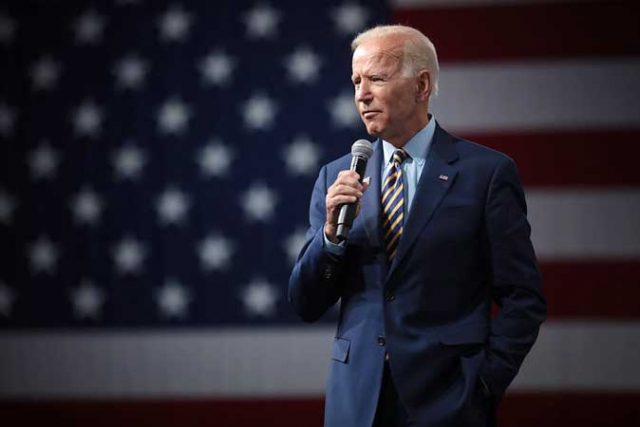
US President Joseph R. Biden, Jr. — Image via Gage Skidmore/CC BY-SA 2.0/Flickr

WASHINGTON – President Joe Biden signed on Thursday sweeping aviation legislation that will boost US air traffic controller staffing, increase funding to avert runway close-call incidents and speed up refunds for canceled flights.

The $105 billion, five-year measure reauthorizes the Federal Aviation Administration. It prohibits airlines from charging fees for families to sit together, requires airplanes to be equipped with 25-hour cockpit recording devices, raises maximum civil penalties for airline consumer violations from $25,000 per violation to $75,000 and boosts aircraft production scrutiny.

“Following flight disruptions, runway close calls and consumer frustrations, this law is set to deliver the safest, most reliable aviation system in the world,” said Senate Commerce Committee Chair Maria Cantwell. “Plane manufacturers will see more safety inspectors on factory floors and tougher safety standards from the FAA.”

Biden has repeatedly clashed with air carriers, calling for new stricter consumer rules and harshly criticizing them for imposing fees. His administration has also aggressively moved to block further consolidation in the passenger airline industry, including successfully blocking a tie-up between JetBlue Airways and Spirit Airlines and quashing an alliance between JetBlue and American Airlines.

The law also adds five daily round-trip takeoff and landing slots at busy Washington National Airport, which Delta Air Lines had lobbied for. The bill also directs the FAA to deploy advanced airport surface technology to help prevent collisions.

Efforts to boost aviation safety in the United States have taken on new urgency after a series of near-miss incidents, as well as January’s door plug mid-air emergency on an Alaska Airlines Boeing 737 MAX 9 flight.

FAA Administrator Mike Whitaker said the bill “allows for more runway safety technology, more air traffic controllers and stronger oversight of aircraft production.”

The bill also will allow Boeing to continue to produce its 767 freighter for another five years through 2033 in the United States, giving it an exemption from efficiency rules taking effect in 2028.

The bill aims to address a shortage of 3,000 air traffic controllers by directing the FAA to implement improved staffing standards and to hire more inspectors, engineers and technical specialists.

The bill does not raise the mandatory pilot retirement age to 67 as House lawmakers had sought to do last year and retains pilot training requirements.

Congress will not establish minimum seat size requirements, leaving that instead to the FAA. The bill requires the Transportation Department to create a dashboard that shows consumers the minimum seat size for each US airline.

Lawmakers also rejected many other consumer provisions the Biden administration had sought, including requiring compensation for lengthy airline-caused delays as is the case in Europe.

The bill reauthorizes the National Transportation Safety Board and boosts staffing at the safety investigation agency. It also seeks to boost adoption of drones and flying air taxis into the national airspace and extends through Oct. 1 existing government counter-drone authority. — Reuters

China property shares rise ahead of housing delivery policies press conference

REUTERS

SHANGHAI – Shares of Chinese property developers rose in early trade on Friday, ahead of a press conference later in the day by China’s housing and financial regulators regarding policies to ensure housing delivery.

Hong Kong’s Hang Seng Mainland Properties Index climbed 1.5% by 0155 GMT, while China’s CSI 300 Real Estate index was up 0.1% after opening 1.2% higher.

Property shares had jumped earlier this week as Bloomberg News reported on Wednesday that China was considering a plan for local governments across the country to buy millions of unsold homes from distressed companies to ease a protracted property crisis.

Major property developer China Vanke advanced 0.2% on Friday, adding 8.5% so far in the week. Defaulted private developer Fantasia surged 19%, expanding its weekly gain to 115%.

China’s CSI 300 Real Estate index has gained 5% so far in the week.

China’s property sector slipped into a debt crisis in mid-2021. Since 2022, waves of policy measures have failed to turn around the sector, which represents around a fifth of the economy and remains a major drag on consumer spending and confidence.

China’s new home prices fell at the fastest monthly pace in more than nine years in April, as intensified efforts by authorities to prop up the ailing property sector show few signs of paying off, official data and Reuters calculations showed on Friday. — Reuters

Bank of Japan in no rush to sell risky asset holdings

REUTERS

TOKYO – Bank of Japan Governor Kazuo Ueda said the central bank had no immediate plan to sell its huge holdings of exchange-traded funds (ETFs), which is drawing increased attention as a potential source of revenue to fund government initiatives.

“We must spend some time in deciding what to do with our ETF holdings, including whether to unload them in the future,” Ueda told parliament on Friday.

The remarks come amid growing debate about how the BOJ should best deal with the legacy of the its efforts to end deflation with heavy money printing, which left it with a huge balance sheet.

The BOJ ended eight years of negative interest rates and other remnants of its radical stimulus program in March, including a framework to buy risky assets such as ETFs that had been in place since 2010.

But the central bank has yet to lay out a plan to unload its huge holdings of ETFs and government bonds partly out of concern of destabilizing financial markets.

The BOJ holds about 37 trillion yen ($237 billion) worth of ETFs. Private estimates put the market value of the holdings at roughly 67 trillion yen as of January, which means latent profits would be around 30 trillion yen.

With the BOJ moving toward normalizing monetary policy, some politicians and market players have flagged ideas on how to unload its huge ETF holdings or tap the proceeds for spending.

Japan’s biggest opposition party, the Constitutional Democratic Party of Japan, has proposed using the dividends from the BOJ’s ETF holdings to fund childcare spending.

Ken Shibusawa, a private-sector member of a government panel, has called on the government to set up a special fund that would buy the BOJ’s ETFs in exchange for perpetual bonds.

The BOJ currently pays profits it earns, including from the ETF dividends, to state coffers. The government has not said how the BOJ’s ETF holdings could be used in the future.

“The only thing the BOJ has power to decide is whether to sell its ETF holdings or not. It has no say on how the proceeds could be used,” said former BOJ executive Kazuo Momma.

“Unless the government comes up with a clear idea, the hurdle for deciding on the fate of ETF is quite high.” — Reuters

Asticom shines with triple honors at 2024 Asia-Pacific Stevie® Awards

Asticom Technology, Inc., Globe’s digital-first shared services and outsourcing arm, has secured three awards at the 2024 Asia-Pacific Stevie® Awards for outstanding tech and customer-focused initiatives.

Asticom was honored with a Bronze award in the “Innovation in Technology Management, Planning & Implementation (Other Service Industries)” category for its “Digital-First Solutions, People-Centric Approach.” This recognition highlights the company’s seamless integration of cutting-edge technologies to enhance the human experience. 

In addition, Acquiro Solutions and Tech, Inc., Asticom’s staffing arm, was acknowledged with another Bronze in the “Most Innovative Tech Startup of the Year” category, underscoring Asticom’s commitment to nurturing innovative startups.

Acquiro also clinched a People’s Choice Stevie® Award for Favorite Companies in the Tech Startups category.

The Asia-Pacific Stevie® Awards are the only business awards program to recognize innovation in the workplace across all 29 markets of the Asia-Pacific region. It is one of the notable programs under the Stevie® Awards, the world’s premier business awards.

The People’s Choice Stevie Awards for Favorite Companies, an integral part of the Asia-Pacific Stevie Awards, empowers the public to vote for their preferred organizations across various industry-specific categories. This year, over 38,000 votes were cast, reflecting significant engagement and community involvement. 

Expressing her excitement about the recent achievement, Mharicar Castillo-Reyes, President and CEO of Asticom, stated, “We are thrilled to share this win with everyone who contributes to Asticom’s success today. From our shareholders, to our dedicated team and valued clients, we are grateful for their unwavering trust and support for our initiatives. Together, we are driving innovation that positively impacts the lives of our fellow Filipinos.”

Asticom’s groundbreaking tech and customer-centric initiatives include automation in project management tools; turnkey digital solutions; custom development; and NXT (www.nxt.com.ph), a talent tech platform featuring advanced recruiting, interviewing, and onboarding tools.

The accolades from the Asia-Pacific Stevie® Awards underscore Asticom’s dedication to fostering a culture of innovation and driving positive change through state-of-the-art technologies.  

For more information about Asticom and its award-winning initiatives, please visit www.asticom.com.ph.


Spotlight is BusinessWorld’s sponsored section that allows advertisers to amplify their brand and connect with BusinessWorld’s audience by publishing their stories on the BusinessWorld Web site. For more information, send an email to online@bworldonline.com.

Join us on Viber at https://bit.ly/3hv6bLA to get more updates and subscribe to BusinessWorld’s titles and get exclusive content through www.bworld-x.com.

Philippines central bank tempers hawkish tone as high rates bite

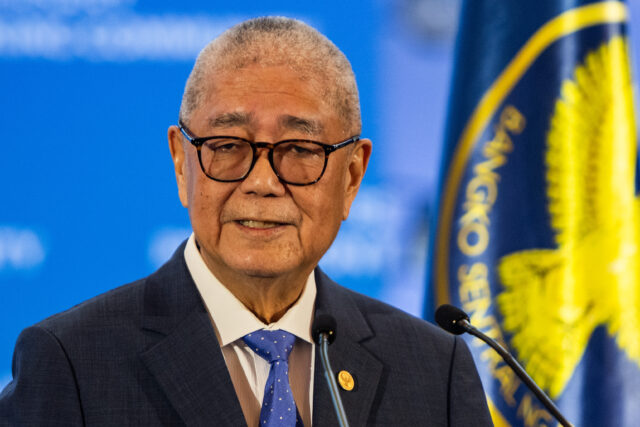
Bangko Sentral ng Pilipinas (BSP) Governor Eli Remolona — BLOOMBERG

A day after signaling the central bank’s readiness to pivot to monetary easing, Philippine central bank Governor Eli Remolona said he would like to see easier liquidity conditions as policy may be becoming tighter than necessary.

“We’re beginning to see a negative output gap. That means it’s possible that we’re beginning to be tighter than necessary for taming inflation,” Remolona said in an interview with Bloomberg Television’s Yvonne Man and Stephen Engle on Friday.

The governor doubled down on his dovish tilt from Thursday when he said that the Bangko Sentral ng Pilipinas may cut its key rate by as much as a half-point this year in an easing cycle that may start as early as August. On Friday, he spoke about reducing banks’ reserve requirement ratio by 450 basis points during his six-year term, seemingly unfazed by the impact on the currency from the shift in his broadly hawkish tone since taking office in July 2023.

Mr. Remolona told Bloomberg TV that he’s “still hawkish, but less so than before” and the change “may put pressure on the peso, but so far it hasn’t.”

The Philippine currency, which had been among the worst-performing this quarter, fell another 0.4% to 57.69 per dollar at 11:48 a.m. in Manila, weakening along with regional peers. The BSP had sold dollars in small amounts recently and it’s ready to intervene if needed, Mr. Remolona said citing the nation’s ample dollar war chest.

The Philippine policymaker may be taking comfort in expectations that evidence of slowing demand and softening inflation in many parts of the world may soon usher in a global easing cycle including in the US. Nomura Holdings Inc. said in a note on Thursday that its “conviction level” for a Federal Reserve rate cut in July is rising.

At home, policymakers are anticipating that the worst of inflation is over while domestic demand has started to show strains from elevated prices and borrowing costs. Looking beyond the headline growth figures last quarter, the data showed signs of weakness in consumption, which makes up around 70% of output while investment growth also cooled.

In Southeast Asia, central banks have been paring back their hawkish stances as greater clarity around the Federal Reserve’s interest-rate path helps tame the strong dollar. Bank Indonesia, which hiked interest rates again in April, also hinted last week it was likely done with tightening.

On Friday, Mr. Remolona said banks’ triple R, which is currently at 9.5% can be slashed to 5% though it’s unlikely to happen while the central bank was still hawkish.

BSP’s last rate hike in October is still working its way through the economy and risks slowing the growth momentum, the governor said. While inflation remains the overriding factor in deciding monetary policy, Mr. Remolona said: “We don’t want to unnecessarily reduce output just to tame inflation. It’s a balancing act.”

Mr. Remolona was sanguine about the peso’s moves, saying it was primarily driven by the dollar’s resurgence. Recent intervention in FX, he said, was to keep markets orderly and not to affect the value of the peso.

“If there’s stress then we might come in. Stress means large offer sizes, high volatility,” said the governor. — Bloomberg

Once beaten, twice evicted: LGBTQ+ Ugandans flee for safety

STOCK PHOTO | Image by Chandlervid85 from Freepik

KAMPALA (Thomson Reuters Foundation) – Evicted from her business. Thrown out of home. Then pummeled by family. That was enough to persuade Cindy to flee a surge in anti-LGBTQ+ violence that is sweeping her native Uganda.

It is one year since President Yoweri Museveni signed the Anti-Homosexuality Act (AHA), one of the harshest anti-LGBTQ+ laws ever enacted globally and a measure that has legalized a swathe of homophobic abuse.

Not least forced evictions – which have more than doubled in number as landlords, families and neighbors oust LGBTQ+ Ugandans from their homes or businesses with full legal backing.

The year-old act made it illegal to rent property to LGBTQ+ people such as Cindy, leading to a wave of evictions along with a surge in day-to-day discrimination.

“Ugandan laws prohibit same-sex relationships and like in many African countries where homosexuality has been criminalized, the punishment…is severe,” said Arnold Akello, a Kampala-based human rights lawyer.

While there is no official data on the scale of evictions, rights groups and lawyers report an uptick in distress calls, despite a slight softening of the law last month.

EVICTED AND BEATEN
Cindy spent five years building up a successful hair salon on the outskirts of Kampala – or she had until February, when her landlord abruptly ordered her to leave.

Given he had evicted her without due notice, Cindy planned to sue before multiple threats persuaded her to drop the case.

A month later, she was evicted from her home, then attacked by relatives for “causing them ridicule for being a lesbian”.

Enough was finally enough.

“I sought refuge at a friend’s house…before crossing over to Kenya,” Cindy told the Thomson Reuters Foundation of her escape in March.

Since then, Cindy – who wanted to use only her first name – said five of her LGBTQ+ friends had also been evicted.

“They don’t even feel safe at the secret shelter where they sought refuge,” she said by phone from a safe house in Nairobi.

TOUGH NEW LAWS
While Uganda had long criminalized gay sex, the AHA was harsher than its colonial-era predecessor: part of a wave of tough new anti-LGBTQ+ measures sweeping parts of Africa.

In Ghana, just like in Uganda, LGBTQ+ people now risk eviction under an anti-LGBTQ+ bill that requires landlords to prevent same-sex relations on their property.

The fallout from such laws is chilling, advocates say.

Two months into AHA, Kampala-based rights group Human Rights Awareness and Promotion Forum said it had logged 36 evictions affecting 75 LGBTQ+ Ugandans. This compared to an average of six evictions a month before the law was enacted.

The rights group said legal clinics trying to help evictees reported that landlords were “zealously” enforcing the law, while most evictions outside the capital went unreported.

Last month, the Constitutional Court struck down a clause in the AHA that criminalized anyone who let a property be used “for the purposes of homosexuality” – but few expect much to change.

“The eviction cases are on the rise because landlords and even members of the public are becoming more bold in unlawfully evicting anybody they suspect to be queer,” said Saida Nakilima, a lawyer with the Kampala rights group.

NO SAFE HAVEN
Take Andrew, who was thrown out of his home in the eastern city of Mbale a week after the Constitutional Court decision.

The 28-year-old, who only gave his first name, said he had lived hassle-free for two years with two fellow gay men and that eviction came nine months before their tenancy expired.

“The landlord told us that he could not defy the government order by housing homosexuals. He declined to offer a refund of part of the rent we had paid and even dared us to go and report him to the police,” Andrew, a website developer, said by phone.

At first, the trio refused to leave but after neighbors brandished threats, they moved to a secret LGBTQ+ shelter.

“I doubt we will get justice,” Andrew said.

That same week, Grace got home from work to find her landlord had hired men to break in and throw out all her possessions after neighbors had reported her.

“The landlord told me that by virtue of hosting my lesbian friends, I was encouraging and promoting what he described as ‘the devil’s behavior’,” said the 26-year-old, who lives in Mukono, a city east of Kampala.

Her parents refused to take her in, accusing her of “embarrassing them”, so she now lives with a friend.

Even shelters that promise ‘safe’ housing for evicted LGBTQ+ Ugandans are no longer deemed safe.

John Grace, coordinator of a Kampala-based NGO refuge, said shelters like his were now limiting new admissions as they had become the target of police raids and homophobic attacks.

“We have been forced to change our mode of operations. Our premises are not open all day as they would initially, and we are only admitting extremely deserving cases,” he said by email. — Reuters

North Korea leader’s sister denies arms exchange with Russia, KCNA says

Military personnel take part in a parade to mark the 90th anniversary of the founding of the Korean People’s Revolutionary Army in Pyongyang, North Korea, in this undated photo released by North Korea’s Korean Central News Agency on April 26, 2022. — KCNA VIA REUTERS

SEOUL – Kim Yo Jong, the powerful sister of North Korean leader Kim Jong Un, again denied arms exchanges with Russia, state media KCNA reported on Friday, saying her nation’s recently developed and updated weapons systems were not for sale to any other countries.

The US and South Korea accused North Korea of transferring weapons to Russia for use against Ukraine, which it invaded in February 2022. Both Moscow and Pyongyang have denied the accusations, but vowed last year to deepen military relations.

Ties between the two countries have strengthened dramatically following North Korean leader Kim Jong Un’s visit to Russia’s far east in September and a summit with President Vladimir Putin.

But Kim Yo Jong said the North Korea-Russia arms deal “theory” made up of prejudice and fiction was the “most absurd theory” that does not deserve anyone’s evaluation or interpretation, according to KCNA quoting her press statement, calling it a false rumor spread by its hostile forces.

Kim Yo Jong added North Korea’s tactical weapons such as rocket launchers and missiles recently shown were not meant for exports, but for defense against South Korea.

North and South Korea remain technically at war because their 1950 to 1953 conflict ended in a truce, not a treaty.

Over the last month, North Korea has deployed thousands of troops as well as heavy equipment such as excavators as it lays mines and barbed wire and builds guard posts along the already heavily armed border with South Korea, South Korean newspaper Dong-A Ilbo reported on Friday, citing multiple government sources.

South Korea’s defense ministry said in a statement that it was closely monitoring the North Korean military’s activities but declined to elaborate further, citing the safety of South Korean soldiers.

Meanwhile, the United States announced fresh sanctions on Thursday on two Russian individuals and three Russian companies for facilitating arms transfers between Russia and North Korea, including ballistic missiles for use in Ukraine.

The debris from a missile that landed in the Ukrainian city of Kharkiv on Jan. 2 was from a North Korean Hwasong-11 series ballistic missile, United Nations sanctions monitors told a Security Council committee in a report seen by Reuters.

The leaders of North Korea’s major partners China and Russia met on Thursday and criticized Washington and its allies for their “intimidation in the military sphere” against North Korea, according to a joint statement from Russian President Vladimir Putin and Chinese President Xi Jinping.

Against the backdrop of stronger security ties and three-way joint drills between the United States, South Korea and Japan, US and South Korean stealth fighters staged joint air combat drills on Thursday, South Korea’s air force said.

Amid a growing partnership between Moscow and Pyongyang, North Korea’s ambassador to Russia on Thursday called Ukrainian President Volodymyr Zelenskiy a U.S. puppet, and said Russia would emerge victorious in its conflict with Kyiv, KCNA reported. — Reuters

Ayala sells Manila Water stake to billionaire Enrique Razon for $252 million

BW FILE PHOTO

Philippine conglomerate Ayala Corp sold its entire stake in utility firm Manila Water Company (MWC) to top shareholder Trident Water Company for a gross consideration of around P14.5 billion ($251.87 million).

Enrique Razon, a Philippine billionaire and a port and casino tycoon who owns Trident Water, acquired a 25% stake in MWC in early 2020. It currently holds 58.32% voting power in the utility firm.

Ayala will sell its 22.27% common shareholding in MWC for at least P21 per share, while its unit Philwater Holdings will divest its 24.48% preferred shareholding for at least P1.70 apiece.

After the sale is concluded, Ayala will no longer hold common shares in MWC, but will retain an effective 12.08% economic stake through the preferred shares, which will be paid off completely over the next five years. — Reuters

ADVERTISEMENT
ADVERTISEMENT