Samsung family’s art collection goes on world tour
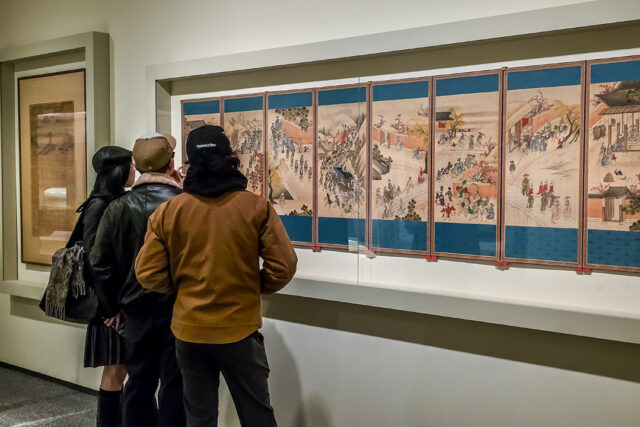
FOR DECADES, one of the world’s most historically significant collections of Korean art has been kept largely out of public view, quietly assembled by South Korea’s richest family: Samsung’s Lee family. Now, the works are on their first-ever overseas tour, riding a global wave of interest in Korean culture that extends well beyond pop music and film into the country’s deepest artistic traditions.
Called Korean Treasures: Collected, Cherished, Shared, more than 200 works from the late Samsung Chairman Lee Kun-hee’s vast art collection opened for viewing at the Smithsonian’s National Museum of Asian Art in Washington in November. Jointly organized by South Korea’s National Museum of Korea and the National Museum of Modern and Contemporary Art, the exhibition will be traveling to Chicago in March and London’s British Museum in September.
The art pieces span roughly 1,500 years of Korean history, from Goryeo dynasty celadon to Joseon-era treasures and notable paintings by famed modern artist Kim Whan-ki. Lee’s private collection, which was donated to the state in 2021 at a time when the Samsung family revealed inheritance plans, encompassed more than 23,000 pieces.
Experts estimated the collection had an appraised value of between 2 trillion won ($1.4 billion) and 3 trillion won when it was donated, while market value could be around 10 trillion won.
The overseas tour comes as Korean culture — both traditional and contemporary — is gaining unprecedented global visibility. Netflix’s KPop Demon Hunters has drawn huge international audiences by weaving Korean folklore and traditional imagery into a modern pop narrative. K-pop sensation BTS has announced their return with an album titled Arirang, referencing the centuries-old folk song often described as Korea’s unofficial national anthem.
“Memory and history are important to Koreans,” Samsung Electronics Co. Executive Chairman Jay Y. Lee said at a gala event in Washington on Jan. 28. “Despite the hardships of colonial rule and the Korean War, my father and grandfather believed it was their duty to safeguard the future of our culture.”
For much of the 20th century, the Korean Peninsula’s cultural heritage was damaged or dispersed, first under Japanese colonial rule and later during decades of authoritarian rule that prioritized industrial growth over preservation.
Samsung’s involvement in cultural patronage dates back to founder Lee Byung-chull, who established the Samsung Cultural Foundation with the aim of recovering lost cultural assets. His vision was partly inspired by US philanthropic models such as the Rockefeller and Carnegie foundations.
“As I grew older, a sense of duty — to ensure that our national cultural heritage would no longer be lost overseas — increasingly led me down the path of collecting art,” Lee Byung-chull wrote in his memoir Ho-Am.
That philosophy shaped Lee Kun-hee’s collecting, which later became the foundation of Seoul’s Leeum Museum of Art. The collection expanded into modern and contemporary art under the leadership of his wife, Hong Ra-hee, and later their children.
The collection will eventually have a permanent public home in South Korea. The country’s culture ministry plans to open the Lee Kun-hee Art Museum near Gyeongbokgung Palace in central Seoul in 2029.
Beyond collecting, the Lee family continues to support Korean culture through artist development programs, including fellowships for classical musicians and overseas residencies in France for contemporary artists.
“Cultural competitiveness is not built overnight,” Lee Kun-hee wrote in a 1997 essay. “Companies need to help raise the cultural infrastructure of society as a whole. Businesses are part of the society, and the 21st century will be an era of cultural competition.” — Bloomberg