Home Blog Page 3101

The Travel Club+ hosts exclusive “First Class: Exploring the World Through Wine” event

Imagine being whisked away to a dream getaway in Italy simply by sipping on a glass of crisp and fruity Prosecco.

That’s exactly the bespoke experience that The Travel Club+’s loyal customers and special guests enjoyed at “First Class: Exploring the World Through Wine,” an intimate and exclusive wine-tasting event held at its flagship branch at Shangri-La Plaza last May 31, 2024, in partnership with Elevaj Wine Experts.

Exploring Old and New World Wine Destinations

Oly Ruiz, a Wine and Spirit Education Trust (WSET) Level 3 expert, and host Jackie Go, with a WSET 2 certification from Elevaj Wine Experts, led the journey through the art of wine in popular regions like Italy, France, and the USA — where Napa Valley is home.

The wine-tasting journey started in the Old World, with the guests’ glasses being filled with Prosecco, followed by some savory Chianti, an incredible wine that pairs perfectly with food. France was the next stop, with a glass of the vibrant Provence Rosé, a crowd-favorite, followed by the sweet and dessert-friendly Monbazillac. Guests also enjoyed New World wines such as the versatile Chardonnay and the full-bodied Cabernet Sauvignon.

Ruiz shared a useful tip on wine pairings, saying that the best food to pair with the wine of your destination is usually also the area’s local cuisine. If you’re looking to embark on a culinary journey of your own, Ruiz also encourages including cities known for producing wine in your travel itineraries as a unique way to immerse with the local culture.

Luggage from the same origins as the wines were also showcased to the guests, making them the perfect partners for culinary travel. Italian brand Piquadro highlighted its lightweight PQ Lite luggage, card case wallets and other leather goods with palpable Italian craftsmanship. To represent France, sophisticated and stylish travel essentials from Delsey Paris were also featured. For those seeking innovation and durability, Briggs & Riley from the United States was presented as the perfect travel companion.

Let Taste Guide Your Travels

One of the guests, Camille Gutierrez, shared that the experience gave her a deeper appreciation for wine. “This event was so informative and packed with learning,” she said.

“You have to find that particular wine made in that specific region or country to appreciate it more and immerse yourself in the local culture,” added event host Jackie Go.

So, uncork your curiosity and plan your next trip with a newfound appreciation for the perfect travel companion — a well-paired glass of wine!

This event is co-presented by Briggs & Riley, Delsey Paris, Piquadro, and Primer Group of Companies, in partnership with Elevaj Wine Experts.

Special thanks to our sponsors: Styling by Neve, Travel Blue, and Grazing Box MNL.

For all things travel, follow The Travel Club on social media: @thetravelclubph and @thetravelclubplus! For all your travel must-haves, visit www.thetravelclub.ph.


Spotlight is BusinessWorld’s sponsored section that allows advertisers to amplify their brand and connect with BusinessWorld’s audience by publishing their stories on the BusinessWorld Web site. For more information, send an email to online@bworldonline.com.

Join us on Viber at https://bit.ly/3hv6bLA to get more updates and subscribe to BusinessWorld’s titles and get exclusive content through www.bworld-x.com.

High shipping costs dent Vietnam’s rice prices

Workers load sacks of flour in a delivery truck in Manila, July 11, 2022. — PHILIPPINE STAR/ MIGUEL DE GUZMAN

Rice export prices from Vietnam this week dipped slightly on rising shipping costs, while prices of rice exported from other major Asian hubs held steady.

Vietnam’s 5% broken rice prices were offered at $570-$575 per metric ton on Thursday, down from a range of $575-$580 a week ago, traders said.

Rising shipping cost, both domestically and internationally, is impacting rice shipments, a trader based in Ho Chi Minh City said, without elaborating.

Another trader in the city said the Philippines’ move to lower its import tariff on rice will boost shipments of Vietnamese rice. For years, the Philippines has been Vietnam’s largest rice export market.

Vietnam’s rice exports in May fell 14.6% from April to 856,000 tons, according to the government’s customs data. For the first five months of this year, the country’s rice exports rose 11.2% from a year earlier to 4.02 million tons.

Top exporter India’s 5% broken parboiled variety was quoted at $539-$546 per ton this week, unchanged from the last week.

“African buyers are continuously making purchases. The depreciation of the rupee is allowing exporters to absorb rising local prices because of falling supplies,” a Mumbai-based trader said.

Thailand’s 5% broken rice was quoted at $630 per ton, unchanged from last week.

Demand continues to come in from regular customers in Indonesia and the Philippines, said a Bangkok-based trader, adding that new demand and additional crops would come in July.

Meanwhile, Bangladesh plans to import 400,000 tons of rice in 2024 as the government struggles to control staple grain prices for the nation, food secretary Ismail Hossain said. — Reuters

India’s opposition leveraged caste and constitution to shock Modi in election

REUTERS

 – A seminal moment in Prime Minister Narendra Modi’s unsuccessful campaign to retain his parliamentary majority occurred days before India’s marathon election began in April.

Speaking in the constituency that includes the Hindu temple town of Ayodhya, lawmaker Lallu Singh said that his and Modi’s Bharatiya Janata Party (BJP) was seeking a supermajority in parliament’s lower chamber to make material changes to the constitution.

Opposition parties latched onto Singh’s remark to assert, without evidence, that the BJP would amend modern India’s founding document to strip Hindus at the bottom of the caste hierarchy of access to affirmative action policies.

The attack line hit a nerve – splitting the Hindu vote and ending the BJP’s decade-long dominance in the country’s most populous state.

Opinion polls had pointed to a landslide in Ayodhya’s home state of Uttar Pradesh and nationally but when results came through on June 4, the BJP had lost 29 seats in the state – nearly half of all the party’s losses nationwide.

“It hit the people like fire,” said Awadhesh Prasad of the opposition Samajwadi Party (SP), whose base comprises Muslim and lower-caste voters in Uttar Pradesh. He successfully wrested the constituency anchored by Ayodhya from Singh, who had held it since 2014.

Despite the BJP’s best efforts to debunk the emerging narrative, the damage was done.

“The prime minister and other leaders tried to explain to the people, but by then their mood was set,” said Dileep Patel, a state BJP official in Varanasi. Singh declined to comment.

Reuters interviewed 29 party leaders and workers from the BJP and rival parties, four analysts and 50 voters for this story. They described how lower caste concerns about affirmative action, along with a shortage of jobs, and complacent BJP activists combined to tip the scales in Uttar Pradesh, which sends the most lawmakers to parliament.

After a decade of electoral near-invincibility that combined economic success with a narrative of Hindu supremacy, Modi’s party was reduced to 240 seats nationwide. He was able to form a third government only with the help of allies, some of whom have a reputation for political fickleness.

It was a reminder that BJP cannot take Hindu votes for granted.


THE SUPERMAJORITY CALL

Ayodhya was supposed to be the safest of seats.

In January, Modi inaugurated a grand temple there to the deity Lord Ram in a ceremony that sparked national euphoria. It also fulfilled a decades’ long pledge used by the BJP to rise from India’s political margins into a major force.

Singh’s speech made no mention of taking benefits from lower castes and Modi’s aides have frequently downplayed concerns about changes to the constitution, which guarantees school and government job quotas to historically disadvantaged castes and tribal groups, both still among India’s poorest.

But it quickly spread on social media, fueling an opposition campaign.

SP chief Akhilesh Yadav wrote on social media that the BJP wanted to end the quota system and keep underprivileged segments of society “as their slaves.”

At election rallies, Yadav’s ally and the opposition’s main figurehead, Rahul Gandhi of the Congress party, began whipping out a pocket-sized copy of the constitution, warning it was under threat.

The message was echoed in media advertisements and by the regional party’s workers in Uttar Pradesh, which a SP spokesperson described as 600,000 strong.

India’s castes have co-existed uneasily with each other for millennia.

The BJP was long considered a bastion of upper-caste Hindus, but Modi, who belongs to a lower caste, had previously made inroads with marginalized groups, according to analysis by the Delhi-based Centre for the Study of Developing Societies (CSDS).

He has sought to unite Hindus by shifting focus from traditional notions of caste, instead putting the spotlight on the poor, youths, farmers and women – which he calls the four biggest castes in modern India. In power, Modi successively backed a man from a lower caste and a woman from a tribal group for India’s largely symbolic presidency.

A relatively united Hindu vote in the last two national elections allowed the BJP to sideline India’s nearly 200 million Muslims and overcome longstanding concerns around unemployment, inflation and rural distress.

Sandeep Shastri, coordinator of a program on Indian elections at CSDS said the number of people voting primarily on Hindu ideology appeared to have plateaued in 2019.

This year, BJP won just 54 of the 131 seats reserved for candidates from underprivileged groups, down from 77 in 2019. It won eight of the 17 reserved seats in Uttar Pradesh, compared to 14 the last time.

Dharmendra Yadav, a 30-year-old in Varanasi constituency who comes from a lower caste, said he believed the BJP “would have ended the reservations.”

“When the opposition raised the issue of the constitution, it just verified it for us,” said Dharmendra, whose surname indicates a caste affiliation with the SP’s Akhilesh, who he is not related to.

Dharmendra previously backed the BJP but went for the opposition this year.

“Caste politics still has a major influence in the Hindi belt,” state BJP official Patel said, referring to states across central India that have been BJP’s stronghold since 2014.


WHERE ARE THE JOBS?

Surveys suggest Mr. Modi remains the world’s most popular elected leader.

But this year, Mr. Modi’s personal majority in his seat, centered around the holy city of Varanasi, shrank by more than 300,000. He retained his constituency with the lowest margin of any sitting premier in over three decades.

“The BJP heavily relied on the prime minister’s leadership to … win votes and also maybe to camouflage problems that people are facing,” said researcher Shastri.

Among those problems is a lack of jobs created over the past decade.

Young voters like Mr. Dharmendra had backed BJP in a landslide in 2014, when Modi promised to create 20 million jobs a year nationwide. The pledge has not been fulfilled.

Mr. Dharmendra said he had taken numerous exams for white-collar government jobs, highly prized for their security and benefits. In February, nearly 4.6 million people applied for 60,000 constable vacancies in Uttar Pradesh, only to have the BJP-run state government cancel the exam after the test was leaked online.

Banaras Hindu University political science professor Ashok Upadhyay said the exam leak, which was not the first and was repeated in March, gave young Indians, who have grown up in an increasingly unequal country, a sense that the job selection process was unfair.

Adding to the BJP’s electoral missteps, some voters and BJP leaders said the party faltered because they had assumed another landslide victory and were dismissive of issues that were important to voters.


DON’T WANT VOTES?

The redevelopment of Ayodhya into a temple town was preceded by the demolition of thousands of homes and stores. Nearly two dozen locals, including BJP supporters, told Reuters they were dissatisfied with the compensation offered.

A SP voter who identified himself by his first name of Shakti said he was part of a group that had lobbied BJP leaders for support.

“They said they didn’t want these 10,000 to 20,000 votes from local businessmen, they would win anyway,” he said.

Another Ayodhya trader confirmed Shakti’s account and local BJP leader Veerchand Manjhi said he had also found it difficult to get locals’ issues addressed by authorities.

District magistrate Nitish Kumar said in response to Reuters questions that the compensation process was fair.

Ratan Sharda, a senior leader of Rashtriya Swayamsevak Sangh (RSS), the BJP’s ideological parent, wrote in the June 16 issue of its “Organizer” magazine that the result was a “reality check.”

BJP activists and leaders were “happy in their bubble, enjoying the glow reflected from Mr. Modiji’s aura, they were not listening to the voices on the streets,” he wrote.


BJP RESILIENCE?

The BJP retains many strengths, including a leader with popular backing across the party, control of Uttar Pradesh’s state government and the backing of the influential RSS, said Delhi University professor Chandrachur Singh.

Analysts such as CSDS’s Sanjay Kumar noted that the BJP did well in states where there wasn’t a strong local party like the SP in Uttar Pradesh, which was able to capitalise on regional discontent.

And while Congress tried to nationalise its message that the BJP posed a threat to affirmative action, caste-based messaging held less appeal in urbanising India’s many cities. “In urban areas, caste is overridden by class identities,” Singh said.

The BJP’s Patel said that the party had launched a detailed review of the loss and was confident of winning state elections in Uttar Pradesh that are due by 2027.

“The BJP either wins, or it learns,” a BJP worker in Ayodhya told Reuters. – Reuters

South Korea, US warn against North Korea-Russia military ties ahead of Putin visit

RUSSIA’s President Vladimir Putin shakes hands with North Korea’s leader Kim Jong Un during a meeting at the Vostochny Cosmodrome in the far eastern Amur region, Russia, Sept. 13, 2023. — SPUTNIK/MIKHAIL METZEL/KREMLIN VIA REUTERS

 – Senior officials of South Korea and the United States held an emergency phone call over a possible impending visit by Russian President Vladimir Putin to North Korea, Seoul’s foreign ministry said on Friday.

South Korea’s vice foreign minister, Kim Hong-kyun, in the phone call with US Deputy Secretary of State Kurt Campbell, said that Putin’s visit should not result in deeper military cooperation between Pyongyang and Moscow in violation of UN Security Council resolutions, the ministry said.

Echoing Kim’s concerns, Campbell pledged continued cooperation to tackle potential regional instability and challenges caused by the trip.

While closely monitoring related developments, the two sides agreed to resolutely respond through airtight cooperation to North Korea’s provocations against South Korea and actions that escalate tensions in the region,” the ministry said in a statement.

On Wednesday, a senior official at Seoul’s presidential office said Putin was expected to visit North Korea “in the coming days”. Russia’s Vedomosti newspaper on Monday reported Putin would visit North Korea and Vietnam in the coming weeks.

Civilian aircraft have been cleared from Pyongyang’s airport and there are signs of preparations for a possible parade in the capital’s Kim Il Sung Square, NK PRO, a Seoul-based website, reported this week, citing commercial satellite imagery.

When Sergei Shoigu, then Russia’s defese minister, visited Pyongyang last year to jumpstart the two countries’ warming ties, he accompanied Kim to a parade and saluted as North Korea’s banned nuclear-tipped missiles rolled by.

Speaking at the Stimson Center think tank in Washington on Wednesday, Campbell said the United States has a very good understanding of what North Korea has provided Russia, which he said has had “a substantial impact on the battlefield”.

Less clear, he said, is what Russia has provided North Korea.

“Hard currency? Is it energy? Is it capabilities that allow them to advance their nuclear or missile products? We don’t know. But we’re concerned by that and watching carefully,” he said. – Reuters

Luzon dams still recovering despite rains

PHILSTAR

The island of Luzon has been affected by local thunderstorms, easterlies, and the southwest monsoon since May, but the dams are still recovering according to the Philippine Atmospheric, Geophysical and Astronomical Services Administration (PAGASA). 

“Hindi sapat yung thunderstorm o yung ulan. So minsan may time na bumababa pa rin siya, minsan pag sobrang lakas medyo makaka-recover ng konti…tataas [Thunderstorms or rain have not been enough. Sometimes the water level of dams still decrease, sometimes if the rain is strong, they will slightly recover],” PAGASA Hydrologist Juan Elmer S. Caringal said in a phone interview. 

Angat dam, which provides 90% of Metro Manila’s water supply, further declined to 177.72 meters, which is 32.28 meters lower than the 210-meter normal high-water level, Friday morning (June 14).  

Meanwhile, the Ipo dam inched down to 100.05 meters, which is 0.95 meters lower than the 101.00 meters normal high-water level. 

La Mesa Dam has lowered to 76.10 meters compared to 80.15 meters normal level, or a 4.05 meters decline.  

In the upcoming months, an upward trend in the water levels at Angat, Ipo, and La Mesa dam is expected, Mr. Caringal explained.  

“Based on historical data namin, lahat yung annual data namin, ang Angat Dam (Ipo and La Mesa) is nakakaka-recover siya, or nagsisimula siyang tumaas [Based on our historical data and all of our annual data, the Angat Dam, Ipo and La Mesa dams are recovering, or starting to go up],” Mr. Caringal said.  

As long as the water level in Angat dam remains constant, there will be no issues with the Ipo and La Mesa dams, as they source water from Angat, he added. 

However, for the other five dams, the periods of water level recovery could vary depending on the topography of the dam and the amount of rainfall it gets.   

For the other five dams, here are the current and normal water levels, and its difference from the normal water level as of Friday (June 14):  

  • Ambuklao- 742.37 meters; 752 meters (Difference: 9.63 meters)  
  • Binga- 570.70 meters; 575 meters (Difference: 4.30 meters) 
  • San Roque- 227.68 meters; 280 meters (Difference: 52.32 meters) 
  • Pantabangan- 177.18 meters; 216 meters (Difference: 38.82 meters) 
  • Magat Dam- 180.64 meters; 190 meters (Difference: 9.36 meters) 
  • Caliraya- 286. meters (No data available for the normal high-water level)  

PAGASA Hydrologist Caringal encouraged the public to save water to help dams reach normal high-water levels.   - Edg Adrian A. Eva

IMF green lights $800 million for Argentina with program ‘firmly on track’

THE International Monetary Fund (IMF) logo is seen outside the headquarters building in Washington, U.S. — REUTERS

 – The International Monetary Fund (IMF) board on Thursday cleared the way for Argentina to draw $800 million to help drive its economic recovery, saying the lending program was “firmly on track”.

Argentina has a $44 billion program with the IMF, which includes economic targets on growth, inflation and reserves. The IMF said in a statement its executive board had completed the eighth review of that extended fund facility arrangement.

“In completing the review, the Executive Board assessed the program to be firmly on track, with all quantitative performance criteria through end-March 2024 met with margins,” the IMF said.

Sustaining the progress will require improving the quality of fiscal adjustment, taking steps towards enhanced monetary and foreign exchange policy framework, and implementing reforms for growth, it said.

Argentina’s government has said it will open talks with the IMF over a new program.

The IMF’s approval comes after President Javier Milei, who took office in December, put in place sweeping fiscal reforms and sharply tightened government spending to tackle triple-digit inflation, a shrinking economy and reserves in the red.

The changes under him have helped Argentina rebuild depleted foreign currency reserves, post fiscal surpluses at the start of the year and stabilize the peso currency.

Argentina’s monthly inflation rate in May was the lowest since 2022, official data showed on Thursday, cooling for the fifth straight month to 4.2% amid the austerity drive by libertarian Milei.

Still, the government faces a challenge with the economy stalling and poverty levels rising. Continued efforts to support the vulnerable, broaden political support and ensure “agile” policymaking will be necessary in Argentina going forward, the IMF said. – Reuters

US government to fund up to $500 mln for studies on oral, nasal COVID vaccines

The US Department of Health and Human Services (HHS) said on Thursday it will provide up to $500 million for mid-stage trials evaluating vaccines administered as a nasal spray or pill to protect against symptomatic COVID-19.

The funding is part of Project NextGen, a $5 billion initiative led by the Biomedical Advanced Research and Development Authority (BARDA), to advance a pipeline of new, innovative vaccines and therapeutics providing broader and more durable protection against COVID-19 infection.

BARDA, which helps companies develop medical supplies to address public health threats, is a part of HHS.

The project is awarding up to $453 million to Vaxart for a study that will evaluate its oral COVID vaccine. The company’s shares more than doubled to $1.78 after market.

It is also awarding privately held Castlevax and Cyanvac around $34 million and $40 million, respectively, to develop their intranasal vaccine candidates.

Each trial will enroll 10,000 volunteers and compare the efficacy and safety of the investigational vaccines to FDA-licensed vaccines.

“Currently approved COVID-19 vaccines are administered intramuscularly and, while extremely effective, are limited in their capacity to induce a robust immune response in mucosal areas such as the mouth, nose and gut, where the SARS-CoV-2 virus first enters the body,” the HHS said. – Reuters

Rate cut probably after Fed — Recto

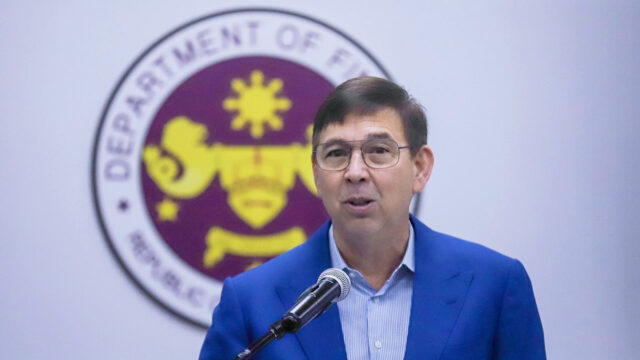
FINANCE SECRETARY RALPH G. RECTO — DEPARTMENT OF FINANCE FACEBOOK PAGE

By Luisa Maria Jacinta C. Jocson, Reporter

THE BANGKO SENTRAL ng Pilipinas (BSP) will probably cut its policy rate after the US Federal Reserve, which has signaled it may start easing as late as December.

Finance Secretary Ralph G. Recto said in a text message that he does not think the BSP will cut rates ahead of the Fed.

Asked if the BSP would begin its easing cycle once the US central bank cuts rates, Mr. Recto, a member of the Monetary Board, said this was “highly probable.”

The Federal Reserve held interest rates steady on Wednesday and pushed out the start of rate cuts to perhaps as late as December, Reuters reported. Fed officials are now projecting only one rate cut for the year compared with previous expectations of three.

HSBC economist for ASEAN (Association of Southeast Asian Nations) Aris D. Dacanay said that the BSP does not have much room to cut ahead of the Fed.

“With no dovish signals by the Fed, we think the space for the BSP to cut as early as August without leading to much volatility in the peso is limited,” he said in an e-mail.

HSBC expects the BSP to begin reducing rates after the Fed in the fourth quarter. The Monetary Board only has two meetings in the fourth quarter — Oct. 17 and Dec. 19.

The Monetary Board has kept its benchmark rate steady at a 17-year high of 6.5% since October 2023.

BSP Governor Eli M. Remolona, Jr. has previously said that the earliest the central bank can begin cutting rates is in August, with a total of 25-50 basis points this year.

Mr. Dacanay said that inflation would need to decelerate and settle firmly within the 2-4% target for the central bank to consider easing.

“Although this isn’t our baseline scenario, what would open the opportunity for the BSP to cut ahead (of the Fed) is if inflation precipitously and immediately eases before the August meeting,” he said.

“And this will be a function of when the tariff rate cut on rice will be implemented and how fast the policy transmission will be.”

The National Economic and Development Authority Board approved a reduction in rice import tariffs to 15% from 35%. This measure is widely expected to bring down rice prices and effectively, inflation.

Bank of the Philippine Islands (BPI) Lead Economist Emilio S. Neri, Jr. said that the Fed’s policy will “definitely” influence the BSP’s next moves.

However, he said that the BSP does not need to wait for the Fed. “Even if the peso comes under heavier-than-usual pressure BSP can cut well ahead of the Fed.”

Mr. Remolona earlier said the BSP does not need to wait for the Fed to begin its own easing cycle.

“As long as Philippine headline inflation prints continue to surprise on the downside, BSP can begin cutting already,” Mr. Neri added, noting to expect only “modest” cuts.

Headline inflation quickened for a fourth straight month to 3.9% in May from 3.8% in April. However, this marked the sixth straight month that inflation settled within the BSP’s 2-4% target band.

The BSP expects inflation to breach the target until July due to base effects.

Rizal Commercial Banking Corp. Chief Economist Michael L. Ricafort said that the BSP would likely match the rate cuts delivered by the Fed later this year and 2025 to maintain healthy interest rate differentials.

“If any Fed rate cut becomes imminent in September 2024, the BSP could start to cut rates by August 2024 since there are no BSP rate-setting meetings in September 2024,” Mr. Ricafort added.

The Monetary Board’s next policy meeting is on June 27. — with Reuters

June Meralco rates jump amid higher generation charge

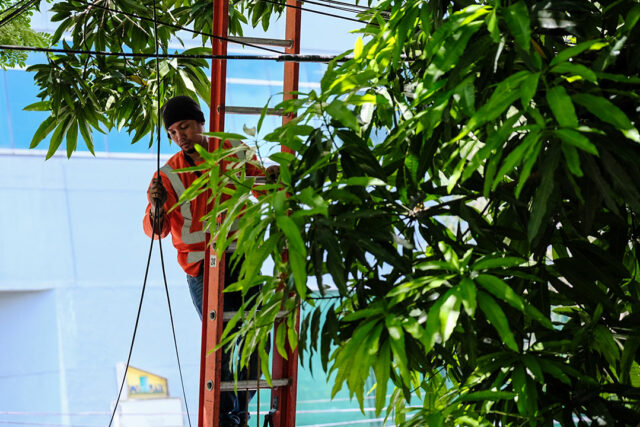
A lineman repairs a broken wire on an electric post in Manila, April 4, 2024. — PHILIPPINE STAR/RYAN BALDEMOR

TYPICAL HOUSEHOLDS in areas served by Manila Electric Co. (Meralco) will have to pay higher electricity bills this month, even as the utility deferred the collection of a portion of generation costs.

Meralco in a statement on Thursday said the overall rate will increase by P0.6436 per kilowatt-hour (kWh) to P12.0575 per kWh in June from P11.4139 per kWh in May.

“Driving this month’s overall rate increase is the generation charge which went up by P0.3466 per kWh mainly due to higher costs from the Wholesale Electricity Spot Market (WESM),” the power distributor said.

Residential customers consuming 200 kWh will see their monthly electricity bill go up by around P129 this month.

Meanwhile, households consuming 300 kWh, 400 kWh, and 500 kWh will see their monthly bills increase by P193, P257, and P322, respectively.

“The increase in the generation charge this month would have been higher but Meralco took the initiative to cushion the impact of the higher pass-through costs to our customers with the help from some of our suppliers which deferred the collection of portions of their generation costs,” Meralco Senior Vice-President and Head of Regulatory Management Office Atty. Jose Ronald V. Valles said.

This move allowed this month’s generation charge to go down by P0.1313 per kWh.

At a briefing, Joe R. Zaldarriaga, Meralco’s vice-president and head of corporate communications, said that the company sent a letter to the Energy Regulatory Commission (ERC) on June 5 to propose the deferral of the collection of around P300 million in generation charges from suppliers Quezon Power (Philippines) Ltd., San Buenaventura Power Ltd. (SBPL), and South Premiere Power Corp. (SPPC).

Meralco will also defer the collection of around P200 million in generation costs.

Mr. Zaldarriaga said the total of P500 million will be collected without interest over the July-to-September 2024 billing period.

“We are still waiting for regulatory approval of our 400-MW (megawatt) interim power supply agreement (PSA) with Limay Power, Inc. which could significantly reduce our WESM exposure and generation costs,” Mr. Valles said.

Among the generation components, WESM charges increased by P1.5203 per kWh due to tight supply conditions in May as average demand rose by more than 1,200 MW.

From January to May, the Luzon power grid was placed on red and yellow alerts for 12 and 27 days, respectively.

Charges from independent power producers (IPPs) went up by P0.0224 per kWh in May due to lower average IPP dispatch, as well as the peso depreciation that affected around 98% of IPP costs that were dollar denominated.

In May, the peso sank to the P58 level against the US dollar for the first time since November 2022.

Meanwhile, charges from PSAs fell by P0.2988 per kWh “following deferral of portion of generation costs and lower fuel costs of SPPC covered by its 2024 emergency PSA and SBPL.”

WESM, IPPs, and PSAs accounted for 33%, 29%, and 38% of Meralco’s total energy requirement for the period.

Transmission charges, on the other hand, went up by P0.145 per kWh due to higher ancillary charges following the partial settlement of the 30% of the amount from all WESM transactions in the March supply period, as ordered by the ERC.

In March, the ERC ordered the suspension of the billing and settlement of reserve market spot quantities due to the observed significant increases.

The ERC also approved the implementation of a new feed-in tariff allowance (FIT-All) rate of P0.0838 per kWh starting this month. This is P0.0474 per kWh higher than the previous rate of P0.0364 per kWh.

The FIT-All is a charge reflected in the bills of consumers that is collected from on-grid customers to support the development and promotion of renewable energy.

Taxes and other charges increased by P0.1046 per kWh.

“Pass-through charges for generation and transmission are paid to the power suppliers and the grid operator, respectively, while taxes, universal charges, and FIT-All are all remitted to the government,” Meralco said.

Distribution charges have been unchanged since August 2022 at P0.0360 per kWh.

“Based on historical data and what we actually see on the ground at this time, I think, and I hope the worst is over as far as the surge in demand is concerned. You can already see more or less the change in the climate, albeit it is still warm from time to time,” Mr. Zaldarriaga said.

ERC ORDER
Meanwhile, the ERC on Thursday said it approved distribution utilities’ (DU) staggered payment of their WESM purchases over a four-month period, starting with bills payable in June.

“As the ERC is set to issue an order to the Independent Electricity Market Operator of the Philippines (IEMOP) and the DUs to immediately implement the payment scheme, the Commission will also direct the IEMOP not to impose penalties on DUs as a result of the said arrangement,” the ERC said in a statement.

The regulator said this will alleviate the impact of the higher generation rates “particularly for consumers of DUs with high WESM exposure.”

Citing Article 32 of the Magna Carta for Residential Electricity Consumers, the ERC said that DUs can offer alternative payment options to consumers.

Sought for comment, Meralco’s Mr. Zaldarriaga said the company will wait for the ERC’s final order to determine its next step.

Meralco’s controlling stakeholder, Beacon Electric Asset Holdings, Inc., is partly owned by PLDT Inc.

Hastings Holdings, Inc., a unit of PLDT Beneficial Trust Fund subsidiary MediaQuest Holdings, Inc., has an interest in BusinessWorld through the Philippine Star Group, which it controls. — Sheldeen Joy Talavera

PHL banks fall short of lending quota for small, medium businesses

A woman arranges bottles of vinegar at a food exhibition. — PHILIPPINE STAR/JOHN RYAN BALDEMOR

PHILIPPINE BANKS failed to meet the mandated quota for small business loans in the first quarter, data from the Bangko Sentral ng Pilipinas (BSP) showed.

Loans extended by the banking industry to micro-, small-, and medium-sized enterprises (MSMEs) amounted to P474.922 billion as of end-March.

This made up only 4.41% of their total loan portfolio of P10.77 trillion, well-below the mandated 10% quota.

Under Republic Act No. 6977 or the Magna Carta for MSMEs, banks are required to allocate 10% of their total loan portfolio for small businesses. Of this, 8% of loans should be allocated for micro and small enterprises, while 2% should go to medium-sized enterprises.

However, banks have long opted to incur penalties for noncompliance instead of taking on the risks associated with lending to small businesses.

As of end-March, BSP data showed lending to micro and small enterprises stood at P191.276 billion, equivalent to just 1.78% of their total loan portfolio and well below the 8% quota.

On the other hand, loans for medium-sized enterprises amounted to P283.646 billion, accounting for 2.63% of their total credit book.

By type of bank, universal and commercial banks disbursed P122.523 billion in loans to micro and small enterprises in the first quarter. This was only 1.33% of their total loan book.

Big banks’ loans to medium-sized enterprises stood at P235.213 billion or 2.37% of their total lending.

Thrift banks extended loans to micro and small enterprises worth P30.263 billion or 3.4% of their loan portfolio, falling short of the quota.

Thrift banks’ loans to medium enterprises hit P28.811 billion, equivalent to 4.61% of their total lending.

Meanwhile, rural and cooperative banks exceeded the quota for lending to MSMEs. They extended loans to micro and small enterprises worth P38.49 billion, equivalent to 17.74%.

Their loans to medium enterprises hit P19.622 billion or 9.29% of their loan portfolio.

Loans granted by digital banks to the micro and small enterprise sector stood at P180 million in the first quarter, comprising 1.02% of their credit book.

Digital banks disbursed P10 million to medium enterprises, equivalent to 0.07% of their portfolio.

During the pandemic, the BSP allowed banks to count MSME loans as alternative reserve compliance with the reserve requirements to help support the sector.

This relief measure expired on June 30, 2023. However, it was extended to thrift banks as well as rural and cooperative banks until Dec. 31, 2025. — Luisa Maria Jacinta C. Jocson

World Bank to support more agriculture projects in PHL

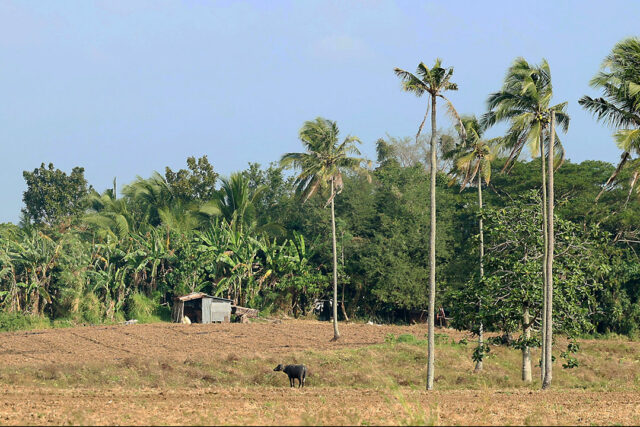
A carabao is seen on a field in Malvar, Batangas, Feb. 24, 2024. — PHILIPPINE STAR/MIGUEL DE GUZMAN

THE WORLD BANK is seeking to fund more Philippine projects that seek to bolster productivity in the agriculture sector amid rising prices of food.

“The World Bank is very supportive of agriculture and agricultural productivity in the Philippines,” Ndiamé Diop, World Bank Country Director for Brunei, Malaysia, Philippines and Thailand, told BusinessWorld on the sidelines of a forum last week.

“For us, agricultural productivity in the medium-to-long term is one of the key ways in which you can reduce food price, a key driver of overall inflation,” he said.

Headline inflation quickened to a six-month high of 3.9% in May amid rising utility and transport prices. It was the fourth straight month of faster annual inflation.

The Philippine central bank has said that the latest inflation data were consistent with its expectations that inflation could quicken through July due to the impact on El Niño on agricultural output.

“We’ve been supporting agriculture for four years, and our support has continued to be strong,” Mr. Diop said.

In November last year, the Department of Agriculture launched three World Bank-funded projects worth a combined $920 million to make the agriculture and fisheries sector more resilient to climate shocks.

These projects include the Philippine Rural Development Project Scale Up, Mindanao Inclusive Agriculture Development Project, and the Philippine Fisheries and Coastal Resiliency Project.

Mr. Diop said the World Bank is also seeking to fund projects that would plug existing gaps in education and digital infrastructure.

“This year, we do have projects in many areas. Education is one area we are supporting this year,” he said. “We are helping to rebuild schools — we call [the project] Safer School Rebuilding.”

The $500-million Infrastructure for Safer and Resilient Schools project will address the physical rehabilitation needs and boost the resilience of disaster-affected schools in the Philippines. The project is expected to cover over 3,000 schools around the country.

The Philippines is one of the most disaster-prone countries in the world. From 2021 to 2023, there were 3,484 school facilities affected by disasters nationwide, data from the Department of Education showed.

“We are [also] helping the digital sector by reducing the digital divide in the Philippines, bringing the fiber optic to the lagging regions to help those regions have better internet connectivity,” Mr. Diop said.

Only 33% of Filipino households have access to fixed internet connection, and 70% of the entire population subscribed to an active mobile broadband, according to a separate World Bank study.

For this year, the World Bank is also funding initiatives on sustainable recovery and climate change, Mr. Diop added.

“Almost every year, we’re supporting policy reforms in many areas, but also in sustainable recovery and climate change. So, all of those are projects we are preparing for and developing this year,” he said.

The World Bank was the country’s third-largest source of official development assistance in 2022, accounting for 21.18% or $6.86 billion of total loans. — B.M.D.Cruz

Striking the balance between familial and career responsibilities in the modern age

Photo from pch.vector on Freepik

For much of the 20th century, the nuclear family archetype included a working father and a stay-at-home mother. This division of labor was largely influenced by cultural norms and economic necessities. This model was reinforced by post-World War II economic prosperity in Western countries, which enabled single-income households to thrive.

However, the modern family structure is becoming increasingly flexible, allowing both parents to share responsibilities more equitably. This family dynamic shifted in the latter half of the century due to several factors, including the feminist movement, economic changes, and evolving social attitudes toward gender roles.

According to the Pew Research Center, the rising trend of stay-at-home dads is driven by several factors, such as women’s advancement in education and the workforce, economic trends, and the impact of the financial crisis.

The growing number of dual-income families, largely driven by women’s educational accomplishments, has resulted in more fathers taking on caregiving responsibilities. With the emergence of remote and flexible work arrangements, many fathers are now able to work from home while simultaneously caring for their children, thus contributing to the family income. Therefore, the trend reflects a changing societal perception of traditional gender roles and family dynamics as fathers increasingly take on a more active role in parenting and household duties.

A study published in a peer-reviewed open-access The Family Journal: Counseling and Therapy for Couples and Families, explained that the Filipino family culture has always placed extreme importance on the family as the most crucial social group in society. From a family systems viewpoint, mothers and fathers have distinct and interconnected roles and contributions within the family, with fathers being the sole breadwinners.

However, the traditional structure of a Filipino family has evolved due to the effects of globalization and migration, leading to a significant shift in family dynamics. The study claims that the increasing trend of demand in labor has resulted in many mothers seeking job opportunities. Consequently, the traditional roles of breadwinner fathers and housekeeper mothers are becoming less common, and there is a noticeable increase in the number of stay-at-home fathers.

Fathers at work

A study published in Academy of Management Perspectives has shed light on the positive work-related outcomes that can benefit organizations when fathers take an active role in parenting. The study found that more involved fathers experience greater job satisfaction and work-family enrichment. They also reported less work-family conflict and were less likely to consider quitting their jobs.

While it may seem counterintuitive, the study also revealed that more involved fathers had lowered career identity. However, this factor was balanced by the perceived support from management that they received, indicating that when organizations acknowledge and support the parenting responsibilities of fathers, they can effectively minimize the potential impact on their career identity.

The Shriver Report supports these findings, indicating that the 21st-century man prioritizes personal success within the context of family. The report suggests that many men place greater importance on fulfilling the roles of a good father, husband, son, or friend over traditional markers of success such as financial independence and professional achievements. In fact, three in five men consider personal achievement at home to be the primary indicator of success, with financial success and independence following at only 24%.

The report also highlights a generational difference in attitudes, revealing that younger men between the ages of 18-49 are more inclined to value the importance of being present in their family lives. On the other hand, older men aged 50 and above still emphasize the significance of being a provider.

Increased involvement at home

Research has consistently shown as well that involved fathers have a positive impact on their children’s development. In fact, a report published by the US-based Institute for Research on Poverty found that positive father involvement is associated with a range of benefits for children. These include higher academic achievement, greater school readiness, stronger math and verbal skills, greater emotional security, higher self-esteem, fewer behavioral problems, and greater social competence compared to children who do not have involved fathers.

Research from Children’s Bureau’s The Fatherhood Project also revealed that when fathers are involved from the start, infants develop strong emotional bonds with them, similar to those they share with their mothers.

The impact of paternal involvement extends well into the future, as children who feel emotionally connected to their fathers are twice as likely to attend college or secure stable employment after high school. These children are less likely to exhibit disruptive behaviors in school or engage in risky behaviors during adolescence. Specifically, children with engaged fathers are 43% more likely to earn A’s in school and 33% less likely to repeat a grade.

The positive influence of engaged fatherhood is also evident in the behavioral outcomes of children, with high levels of father involvement being associated with increased sociability, confidence, and self-control. Furthermore, they are 75% less likely to experience a teen birth, 80% less likely to spend time in jail, and half as likely to suffer from multiple symptoms of depression.

Conversely, the research also indicates that father absence is linked to delayed developmental milestones from early infancy through childhood and into adulthood, emphasizing the enduring impact of paternal influence.

The importance of support

The traditional concept of the “ideal worker” as someone who dedicates their life to their full-time job while their spouse takes care of the home and children is being challenged by the increasing involvement of men in child-rearing. According to Academy of Management Perspectives, this shift conflicts with the prevailing notion of the ideal worker, who is expected to prioritize work above all else.

The research indicates that men’s active participation in childcare contradicts societal expectations of masculinity, which often emphasize men’s dominance over women and traditional gender roles. Men who diverge from these norms by taking on caregiving responsibilities may face marginalization and social disapproval.

The concept of hegemonic masculinity also emphasizes traditional masculine norms, which can create barriers for men who choose to take on caregiving roles. This can lead to feelings of guilt, shame, and isolation as men struggle to reconcile their masculine identities with their new responsibilities.

Although some organizations are leading the way by offering flexible schedules and parental leave policies, many companies are slow to adapt to the changing dynamics of modern families. This lack of support from employers contributes to the growing conflict experienced by men as they try to balance their work and family responsibilities.

In response, the role of fathers will likely become even more integral to both the workplace and the home, benefiting individuals, families, and society as a whole if they are given significant opportunities.

A study by Great Place to Work found that employees who feel supported by their employers are more likely to be productive and satisfied in their roles. This support can take many forms, including flexible work arrangements, parental leave, and a culture that values caregiving roles. Hence, the support allows fathers to be more involved in their children’s upbringing and to prioritize family responsibilities without compromising their careers. — Mhicole A. Moral

ADVERTISEMENT
ADVERTISEMENT