Home Blog Page 3005

Dollar wobbles as comments of Fed’s Powell put focus on Sept rate cut

Pixabay

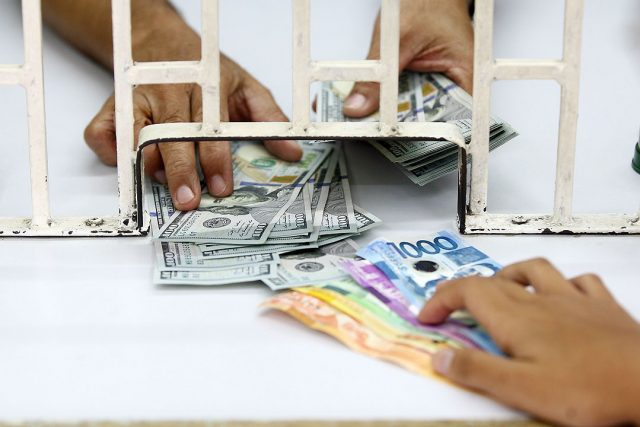
 – The dollar crept off five-week lows on Tuesday, as investors weighed the case for a September rate cut after comments by Fed Chair Jerome Powell and rising odds for the re-election of former President Donald Trump.

The Japanese yen was weaker in Asian hours after Monday’s one-month high of 157.165 to the dollar, keeping traders wary of further intervention by Tokyo.

On Monday, Mr. Powell said the second quarter’s three US inflation readings “add somewhat to confidence” that the pace of price increases is returning to the Federal Reserve’s target in a sustainable way.

The comments, likely Mr. Powell’s last until his press conference after a Fed meeting set for July 30 and 31, shifted rate cut expectations.

Markets now anticipate 68 basis points (bps) of easing this year, with a rate cut in September fully priced in, the CME FedWatch tool showed.

The dollar index, which measures the US unit against six peers, was at 104.3, not far from the one-month low of 104 it touched on Monday.

“Despite dovish inclinations, Powell remained in a data-dependent mode, which is warranted after the Fed has burnt its fingers with inflation running back higher in Q1 after a dovish pivot at the end of 2023,” said Charu Chanana, head of currency strategy at Saxo.

“Markets may need to wait longer for the confirmation of their September rate cut hopes, and growth and labour data will be on the radar, such as retail sales today.”

US retail sales for June due later in the day are expected to show a decline of 0.3% month-on-month.

The euro was at $1.0893, just shy of a four-month high touched on Monday, having erased all of the losses of the past few weeks when it came under pressure from uncertainty about the French election.

The focus will be on the European Central Bank’s policy meeting on Thursday, when it is expected to hold rates, but attention will be on comments from chief Christine Lagarde to ascertain the timing of the next rate cut.

Markets are pricing in 48 bps of cuts this year.

Japanese authorities kept up their warnings against falls in the yen, with Chief Cabinet Secretary Yoshimasa Hayashi saying they stood ready to take all possible measures in the currency market.

Traders suspect Tokyo intervened in the market in another effort to lift the Japanese currency last week after the cooler-than-expected US inflation report.

Bank of Japan data shows authorities may have spent up to 3.57 trillion yen to prop up the frail yen. Markets will be eyeing fresh money markets data to gauge if Tokyo intervened on Friday as well.

The yen was last down 0.4% at 158.64 to the dollar and was weaker across other crosses.

“The yen was due a pullback anyway,” said Kyle Rodda, senior financial market analyst at Capital.com.

“After last week’s soft US data and moves to price in a September Fed cut, plus the intervention by the Ministry of Finance, the yen was pretty hot. It’s just cooling off a bit now.”

Before last week, Tokyo spent roughly 9.8 trillion yen ($61 billion) defending the yen at the end of April and early May, official data show, but the unit has continued to slide, hitting its lowest since December 1986 at 161.96 on July 3.

In cryptocurrencies, bitcoin rose 1% to trade just shy of $65,000, near its highest in a month. Ether was 1% higher at $3,466 for a two-week peak.

Cryptocurrencies, along with shares of companies that could benefit from a Trump presidency, jumped on Monday after an assassination bid on the Republican candidate boosted expectations that he would win the November election.

Sterling was little changed at $1.29625, lurking below its one-year high on Monday, as investors await British inflation data on Wednesday for more clues to interest rate policy.

Among other currencies, the Australian dollar was 0.27% lower at $0.6741, off a six-month high touched last week. The New Zealand dollar eased 0.17% to $0.6064, hitting a two-week low ahead of inflation data due on Wednesday. – Reuters


Musk plans to commit around $45 mln a month to new pro-Trump support committee, WSJ reports

FILE PHOTO: Elon Musk, CEO of SpaceX and Tesla and owner of X, formerly known as Twitter, attends the Viva Technology conference dedicated to innovation and startups at the Porte de Versailles exhibition centre in Paris, France, June 16, 2023. REUTERS/Gonzalo Fuentes/File Photo

 – Billionaire Elon Musk has said he plans to commit around $45 million a month to a new pro-Trump super political-action committee, the Wall Street Journal reported on Monday, citing people familiar with the matter.

Mr. Musk had indicated that he planned to start his donations in July to the America PAC, backing former President Donald Trump’s presidential run, the newspaper said. However, the South Africa-born businessman was not listed on a Monday filing by the group, which shows that it has raised more than $8 million.

Lonsdale Enterprises and the Winklevoss Twins were among the donors to America PAC. Lonsdale donated $1 million and Cameron and Tyler Winklevoss each contributed $250,000.

Mr. Musk and Lonsdale did not respond to Reuters’ request for comments.

On Saturday, Mr. Musk publicly endorsed Mr. Trump for the first time in the US presidential race, hours after Mr. Trump was shot in the ear during a campaign rally.

This move cements Mr. Musk’s shift towards right-wing politics and gives Mr. Trump a high-profile backer in his bid to return to the White House in the Nov. 5 election.

Mr. Trump on Monday chose Ohio US Senator J.D. Vance to be his vice presidential running mate, as the Republican Party officially nominated the former president to run again for the White House. – Reuters

Russian cybersecurity firm Kaspersky to exit US, website shows

source: https://shorturl.at/OF1BW

Russia’s Kaspersky Labs will leave the United States, according to a pop-up seen by users on the anti-virus software maker’s US website, nearly a month after the Biden administration announced plans to bar sales of the company in the country.

Last month, US Commerce Secretary Gina Raimondo announced plans to bar the sale of anti-virus software made by Kaspersky in the country, citing security risks posed by Russia’s influence on the cybersecurity company.

Kaspersky did not immediately respond to a Reuters request for comment.

The government also slapped sanctions in June on Kaspersky’s senior leadership, including the chief business development officer, chief operating officer, legal officer and corporate communications chief, citing cybersecurity risks.

CNN on Monday reported that Kaspersky Labs will “gradually wind down” its U.S. operations and lay off US-based employees, starting July 20.

Kaspersky’s US website did not allow consumers to purchase any products, citing “purchase is unavailable for US customers”.

The new restrictions by the US government on inbound sales of Kaspersky software, which would bar downloads of software updates, resales and licensing of the product, will come into effect on Sept. 29.

New US business for Kaspersky are to be blocked 30 days after the restrictions were first announced on June 20. – Reuters

Japan finds a ‘stealth’ cure for zombie businesses: Let them fail

PHILIPPINE STAR/EDD GUMBAN

 – For much of its 72 years, Hitoshi Fujita’s company was just another mom-and-pop business grinding out metal parts. Then it did something unusual for a small Japanese manufacturer: it expanded, buying two neighboring firms in the last decade.

If more small companies don’t follow suit, Fujita says, the country that transformed global manufacturing in the 20th century is looking at a dim future.

Years of faltering growth and population decline left many of Japan’s small and medium-sized firms squeaking by on state help and almost-free funding. These companies, which account for around seven out of 10 jobs, now face a shake-up as pandemic-era support dwindles and interest rates rise for the first time in 17 years.

Japan’s government is willing to let more underperforming companies fail, three senior government officials told Reuters, a previously unreported acknowledgment that they said reflects an urgent need to replace sclerotic businesses with those able to deliver growth.

While the officials did not expect such change to occur quickly, they described the shift in thinking as a clear departure for a country that has typically sought to avoid bankruptcies and protect existing jobs at the cost of productivity.

The move will help Japan channel workers and investment to its most productive companies in a tight labor market, boosting wages, said the officials, granted anonymity to discuss a sensitive issue.

To be sure, the government expects the change to come via mergers and acquisitions, rather than large-scale bankruptcies and lay-offs, one of the people said. The government has help centers to advise small businesses on M&A.

This rethink of Japan’s traditional approach to business faces several hurdles, not least the social contract that has governed the postwar economy, according to interviews with 20 people, including five government officials, bankers, industry experts and three business owners.

“Many owners of small manufacturers are from the generation before me and tend to manage their business as engineers,” said the 46-year-old Fujita, who runs Sakai Seisakusyo in Kakamigahara, central Japan. “They don’t really have applicable skills when it comes to buying another company.”

Fujita’s firm makes parts for faucets and semiconductors, and he wants to expand more into higher-value components.

In a written response to questions, Japan’s Ministry of Economy, Trade and Industry said it would continue to support small and medium-sized enterprises (SMEs) with funding and other measures, adding that companies needed to boost their earning power through investment and increased productivity.

It said bankruptcies were now “on a slight upward trend” and had returned to pre-pandemic levels, while workers were changing jobs for better conditions, including higher wages.

“We will continue to closely monitor the situation to ensure bankruptcies do not increase at an inappropriate level that would cause the unemployment rate to rise,” it said.


ZOMBIE PROBLEM

Some 251,000 companies were “zombies” last year, meaning their profits didn’t cover interest payments over an extended period, according to research firm Teikoku Databank, the highest in more than a decade. The vast majority had 300 or fewer employees.

Under government measures released in March, banks are encouraged to help turn around weak companies instead of continuing to prop them up with loans. The measures don’t directly mention zombies or “economic metabolism,” a term policymakers use to refer to stronger companies replacing weaker ones.

When asked if more companies would be allowed to fail, one of the senior officials said, “Yes, that is correct.” But the government “cannot say that explicitly” as it would risk a public backlash that would be unwelcome for the ruling party, the official added.

“By stealth, we are doing this, gradually doing this,” the official said. “Japan’s future will be bleak if we cannot raise productivity.”

Japan ranks below the OECD average for annual wages and per capita GDP. The latter, a barometer of labor productivity, shows Japan at $33,834, behind France and Italy.

Still, there are limits to how much creative destruction Japan can stomach. In some rural areas, underperforming businesses remain essential to communities, a fourth official said.

The government is careful not to be seen as “abandoning” support for small companies, said Tatsuro Oya of law firm Ohe Tanaka and Oya, who has experience restructuring small companies.

“They are trying to ease the pain as much as possible through the safety net of redirecting workers to growing companies,” he said.

Prime Minister Fumio Kishida has pressured companies to boost pay. They delivered the biggest increase in three decades this year, averaging 5.1%, with smaller ones averaging 4.5%, according to the Rengo union group, although that doesn’t reflect wages at many non-unionized small companies.


‘ZERO-ZERO’

SMEs shouldn’t be recipients of “welfare policies,” said Akira Amari, an influential lawmaker from the ruling Liberal Democratic Party.

The aim is to help them increase productivity, profits and wages, so they can pay taxes, he said in an interview.

Japan spent 63.2 trillion yen, or about $400 billion, on SME support in the pandemic, according to a 2022 finance ministry report, with around $267 billion disbursed as “zero-zero” loans, which required zero collateral and had zero-interest-payment grace periods.

Bankruptcies have surged as the loans came due. Almost 5,000 companies went under between January and June, the highest first-half tally in a decade, according to Teikoku Databank. Bankruptcies jumped by a third last year.

Amari said repeated M&A would allow smaller companies to expand into higher-margin industries, and allow employees to learn new skills.

“We do not want medium-sized enterprises to remain medium-sized, they should aim to become large,” he said.

Fujita’s company in Kakamigahara made its most recent acquisition in 2020, buying a maker of auto and medical parts.

To negotiate terms, both sides agreed to use a consultant from the help center for small business acquisitions. The government paid half the consultant’s fees.

Some 1,681 small companies were acquired with the help of those centers in the year to March 2023, government figures show.


BREAK FROM PAST

One option for struggling firms is to increase prices, but that’s difficult to do after years of deflation.

Kiryu Shinkin Bank, a small lender in Gunma, north of Tokyo, last year established a team to help hard-hit corporate clients.

Business owners are reluctant to raise prices for fear of losing customers, said manager Takashi Harada. Owners also feel responsible to keep companies going for their employees, preventing drastic change, he said.

“They are so focused on not going out of business,” Harada said.

Still, some family firms are breaking the mold.

When Yukiko Izumi took over her family’s cookie company, Izumiya Tokyoten, after her father died six years ago, it had lost money for a decade.

She cut costs, moved the headquarters from Tokyo to inside its factory in industrial Kawasaki, and raised prices for the first time in 15 years.

She worked with an illustrator to design a new cat-themed product line. It faced some initial internal resistance, but now sells 120,000 packages annually, “a big hit” for the 97-year-old Izumiya, which reported profits for the last three years.

“My father and I did not see eye-to-eye on how to break with the old way of doing things and improve productivity,” Izumi said. “So I decided to change things.”

Now, she is looking to broaden her customer base by targeting inbound tourists.

But for many businesses, crunch time looms as the easy-money era ends and a weak yen drives up costs.

Yasushi Noro, president of NBC Consultants, which advises SMEs, said he hears more from companies struggling with debt and expects that to increase as interest rates go up.

“The SME model that worked until now because of low interest rates is crumbling,” he said. – Reuters

Salmon disrupts rural banking with startup strategy for Rural Bank of Sta. Rosa

Salmon Co-Founder and Rural Bank of Sta. Rosa Chairperson Raffy Montemayor

Salmon Group has disrupted rural banking with its startup strategy model for Rural Bank of Sta. Rosa by strengthening the capital base and accelerating digitalization to drive financial inclusion.

Salmon Co-Founder and Rural Bank of Sta. Rosa Chairperson Raffy Montemayor highlighted the importance of sustainable funding and digital transformation to improve the bank’s products and services, and enhance customer experience.

“We are injecting fresh capital to make Rural Bank of Sta. Rosa a robust financial institution by attracting notable investors such as the International Finance Corp. (IFC), Singapore-based venture capital fund manager NorthStar Group, and Abu Dhabi’s sovereign wealth fund ADQ,” Mr. Montemayor revealed. “The latest investment we received was $7 million from IFC last May,” he added.

The capital injection saw the bank equity of Rural Bank of Sta. Rosa increase by 1,075% to P385 million from P32.8 million. The bank’s total deposits soared by 439% to P440 million from P82 million, and bank loans increasing by 648% to P400 million from P54 million as of end of May.

Mr. Montemayor emphasized the role of technology in the development of Rural Bank of Sta. Rosa’s products and customer experience to expand its customer base beyond its physical branches.

“We are planning to launch our mobile app and debit card within the year subject to the approval of Banko Sentral ng Pilipinas (BSP) to reach customers,” Mr. Montemayor said.

Offering a Competitive 8.88% Time Deposit Interest Rate

The Rural Bank of Sta. Rosa is offering a competitive 8.88% interest rate for time deposits of over P500,000 which is especially beneficial for those in Sta. Rosa and nearby residents. For time deposits of P50,000-P500,000, the bank is offering 6% interest rate for 12 months.

Mr. Montemayor said that the 8.88% time deposit interest rate offer of Rural Bank of Sta. Rosa has no catch or promo period.

“Earning our competitive 8.88% interest rate is straightforward. Simply deposit more than P500,000 to a maximum of P50,000,000. No hidden fees or complex requirements involved,” he said.

To avail of the 8.88% offer, simply visit or call the following branches:

  • Head Office: Sta. Rosa, Laguna (F. Gomez St., Poblacion, Barangay Malusak, City of Sta. Rosa, Laguna 4026). Contact Edward Daniel A. Dela Cruz at (049) 534-1126 or 0997-952-7783.
  • Branch: Bacoor, Cavite (Evangelista Street, Barangay Daang Bukid, Bacoor, Cavite 4102). Contact Arthur Castor at (046) 434-6197 or 0955-861-7848.

Mr. Montemayor also disclosed the plan to add new physical branches set to be located in Metro Manila, Cebu and in Mindanao either in Davao or Cagayan de Oro.

About the Salmon Group Ltd.
Salmon Group is made up of Salmon Group Ltd. and its subsidiaries in the Philippines including Sunprime Finance, Inc. and the Rural Bank of Sta. Rosa (Laguna), Inc., which was established in 1963. The Group is dedicated to expanding financial inclusion by providing customers with cutting-edge, customer-centric, AI and data-driven banking and financial services. It is on a mission to empower clients underserved by legacy banks across Southeast Asia and is supported by world-class shareholders including International Finance Corp., the sovereign wealth fund of Abu Dhabi (ADQ) and other blue-chip international and Filipino investors.


Spotlight is BusinessWorld’s sponsored section that allows advertisers to amplify their brand and connect with BusinessWorld’s audience by publishing their stories on the BusinessWorld Web site. For more information, send an email to online@bworldonline.com.

Join us on Viber at https://bit.ly/3hv6bLA to get more updates and subscribe to BusinessWorld’s titles and get exclusive content through www.bworld-x.com.

Fastest in five months: Cash remittances jump by 3.6% in May — BSP

PHILIPPINE STAR/MIGUEL DE GUZMAN

By Luisa Maria Jacinta C. Jocson, Reporter

MONEY SENT HOME by overseas Filipino workers (OFWs) rose by 3.6% in May, its fastest pace in five months, data from the Bangko Sentral ng Pilipinas (BSP) showed.

The BSP on Monday reported that cash remittances coursed through banks grew by 3.6% to $2.58 billion in May from $2.49 billion in the same month a year ago.

The growth in cash remittances was its fastest in five months or since the 3.8% logged in December 2023.

Overseas Filipinos’ Cash Remittances

Month on month, remittances inched up by 0.8% from $2.56 billion in April.

“The expansion in cash remittances in May 2024 was due to growth in receipts from both land- and sea-based workers,” the BSP said in a statement.

Remittances from land-based workers jumped by 3.8% to $2.06 billion while money sent home by sea-based workers grew by 2.6% to $519.373 million.

In the January-to-May period, cash remittances increased by 3% to $13.365 billion from $12.981 billion a year ago.

This was also its fastest pace of annual growth in a year or since the 3.1% recorded in May 2023.

“The growth in cash remittances from the United States, Saudi Arabia, and Singapore contributed mainly to the increase in remittances in January-May 2024,” the central bank said.

In the first five months, the United States accounted for 40.9% of total remittances.

This was followed by Singapore (7.2%), Saudi Arabia (6.1%), Japan (5.1%), the United Kingdom (4.7%), the United Arab Emirates (4%), Canada (3.4%), Korea (2.8%), Qatar (2.8%) and Taiwan (2.7%).

“This 3.6% increase (in May), reaching $2.58 billion, suggests a combination of positive factors. Economic growth in key remittance source countries like the US, Saudi Arabia, and Singapore might be putting more money in the pockets of OFWs,” Security Bank Corp. Chief Economist Robert Dan J. Roces said in a Viber message.

Mr. Roces said that rising wages of OFWs could also be another factor behind faster remittance growth.

“Finally, favorable exchange rates incentivize sending more money back as it translates to a bigger bump in Philippine pesos received,” he added.

In May, the peso sank to the P58-per-dollar level for the first time since November 2022.

“The continued growth nevertheless is still a good signal for the overall economy as an important growth driver, especially in terms of consumer spending, which accounts for about 74% of the Philippine economy,” Rizal Commercial Banking Corp. Chief Economist Michael L. Ricafort said in a Viber message.

Mr. Ricafort also noted there was a seasonal increase in remittances due to the summer holiday.

Meanwhile, personal remittances rose by 3.7% to $2.88 billion during the month from $2.78 billion. This brought personal remittances at end-May to $14.89 billion, higher by 3% from $14.46 billion in the same period a year ago.

“The increase in personal remittances in May 2024 was due to remittances from land-based workers with work contracts of one year or more and sea- and land-based workers with work contracts of less than one year,” the BSP added.

For the coming months, Mr. Ricafort said he expects modest growth in remittances as OFW families “still need to cope up with relatively higher prices locally that would require the sending of more remittances.”

For the first six months of the year, headline inflation averaged 3.5%. This was slightly higher than the central bank’s 3.3% full-year forecast.

Mr. Ricafort also noted there is a seasonal increase in remittances during the July-August period due to the need to pay for school tuition payments.

The central bank expects cash remittances to grow by 3% this year.

Meralco rates up by P2 per kWh in July as power costs ‘normalize’

Linemen are at work in Manila, April 25, 2024. — PHILIPPINE STAR/RYAN BALDEMOR

By Sheldeen Joy Talavera, Reporter

HOUSEHOLDS SERVED by Manila Electric Co. (Meralco) will face higher power bills this month as rates go up by more than P2 per kilowatt-hour (kWh) due to a normalization in power costs.

In a statement on Monday, Meralco said the overall rate would increase by P2.1496 per kWh to P11.6012 per kWh in July from P9.4516 per kWh in June.

The power distributor attributed this hefty increase to the higher generation charge “as power costs normalized following artificially low rates last month.”

Households consuming 200 kWh will see their monthly bill go up by around P430.

Meanwhile, households consuming 300 kWh, 400 kWh, and 500 kWh would see an increase in their monthly bills by P645, P860, and P1,075, respectively.

Joe R. Zaldarriaga, Meralco’s vice-president and head of corporate communications, said at a briefing that the latest adjustment is “almost unchanged without the steep reduction last month.”

“Our power rates returned to normal that is why from P9.45 (per kWh), we are now back to the P11 range, to be exact, P11.60 (per kWh),” he said.

Driving this month’s increase was the generation charge, which climbed by P2.0021 per kWh as the charges from the Wholesale Electricity Spot Market (WESM) returned to the normal level and as Meralco started the collection of deferred costs.

To recall, the June electricity rate was supposed to be higher than May but was reduced by P1.9623 per kWh after the Energy Regulatory Commission (ERC) ordered the staggered collection of charges related to WESM purchases over a four-month period to soften the impact of the high generation rates.

Aside from the ERC’s order, Meralco also requested, along with Quezon Power (Philippines) Ltd., San Buenaventura Power Ltd. Co. (SBPL), and South Premiere Power Corp. (SPPC), to stagger the collection of around P500 million in May generation costs until September.

“We had a disclaimer as early as last month that in the month of July, anticipate that the increase will be significant as electricity prices will return to its previous level plus the deferred cost will be charged,” Mr. Zaldarriaga said in mixed Filipino and English.

For this month, WESM charges went up by P6.637 per kWh “as charges not only normalized but also reflected the recovery of a portion of deferred WESM costs from the May supply month.”

Meralco said, however, the increase was mitigated by the reduction in spot market prices as average demand in the Luzon grid went down by about 900 megawatts.

Charges from independent power producers (IPPs) rose by P0.4392 per kWh due to higher fuel costs and lower average plant dispatch.

“Charges from power supply agreements (PSAs) also went up by P0.3530 per kWh, as charges normalized and included the recovery of deferred costs for SBPL and SPPC’s 2024 EPSA (emergency power supply agreement),” Meralco said.

WESM, IPPs, and PSAs accounted for 34%, 28%, and 38% of the company’s total energy requirement for July.

Meanwhile, the transmission charge dropped by P0.1550 per kWh “due to the absence of reserve market settlement charges that affected last month’s ancillary service charges.”

In March, the ERC ordered the temporary suspension of the billing and settlement of amounts in the reserve market following the significant price increase reported for the month compared with February.

Taxes and other charges went up by P0.3025 per kWh.

“This month’s rates included an adjustment in generation, transmission, system loss, and lifeline subsidy charges, under the ERC rules governing automatic cost adjustments and true-up mechanism for pass-through charges,” Meralco said.

Distribution charge has remained unchanged at P0.0360 per kWh since August 2022.

Lawrence S. Fernandez, Meralco’s vice-president and head of utility economics, said that there is a possibility of lower rates in August as demand further declines.

“We saw in the spot market that because the rainy season has started, demand also went down and the reserve levels in the spot market have improved, so the price in the spot market also went down. So hopefully, this will continue, and this is reflected in the August generation charge,” Mr. Fernandez said in mixed Filipino and English.

Data from the Independent Electricity Market Operator of the Philippines showed that as of June 25, the initial average WESM price for the entire country went down by 25.2% to P6.15 per kWh.

Meanwhile, Mr. Zaldarriaga said this month’s bills would be delayed as Meralco sought the guidance from the ERC on the implementation of July rate adjustment.

“Rest assured that Meralco will adjust the due dates to give our customers enough time to settle their bills,” he said in a statement.

Meralco’s controlling stakeholder, Beacon Electric Asset Holdings, Inc., is partly owned by PLDT Inc.

Hastings Holdings, Inc., a unit of PLDT Beneficial Trust Fund subsidiary MediaQuest Holdings, Inc., has an interest in BusinessWorld through the Philippine Star Group, which it controls.

NG’s use of GOCCs’ excess funds flagged

PNA/JOAN BONDOC

By Kyle Aristophere T. Atienza, Reporter

BUDGET ANALYSTS on Monday flagged the National Government (NG) for diverting excess funds from state-owned companies, noting that the move may compromise their services while the funds may likely be used by politicians as the 2025 polls near.

The move is a populist approach to addressing the fiscal situation, with the government refusing to push for new taxes despite implementing new programs and projects, they added.

However, the Department of Finance (DoF) in a statement defended the move, saying that tapping “unused and idle” funds of GOCCs is a “more prudent fiscal option than borrowing more or imposing taxes.”

Data from the Bureau of the Treasury (BTr) showed that the Philippine Health Insurance Corp. (PhilHealth) and the Philippine Deposit Insurance Corp. (PDIC) in May remitted P20 billion and 30 billion, respectively, to the NG — thanks to an overlooked provision in the 2024 national budget law authorizing a cash sweep from government-owned and -controlled corporations (GOCCs).

Zy-za Nadine M. Suzara, a public budget analyst and former executive director of policy think tank Institute for Leadership, Empowerment, and Democracy, said the move should be a cause for public concern since it “compromises their ability” to deliver their mandated services.

Initially, the Executive branch requested only P281.91 billion in unprogrammed funds in the then-proposed 2024 national budget.

But in the 2024 General Appropriations Act (GAA) or the final version of the national budget that President Ferdinand R. Marcos, Jr. signed in December 2023, unprogrammed funds ballooned to P731.45 billion, prompting several legislators to file a case before the Supreme Court. The case is still ongoing.

From the usual three sources of unprogrammed funds such as excess revenue collections, new revenues from tax or nontax sources, and approved loans for foreign-assisted projects, the 2024 GAA also included fund balance of GOCCs with consideration of their disbursement in previous years.

“Those funds were appropriated for a reason. The solution to poor spending is not to keep taking out the funds but to improve the capacity of institutions to efficiently deliver their respective mandates,” Ms. Suzara said.

She noted tapping into the funds of the GOCCs is very similar to what legislators initially wanted to do in the original version of the Maharlika Investment Fund, which received seed funding from the Land Bank of the Philippines and the Development Bank of the Philippines.

“This is in fact worse than the earlier version of Maharlika because it gives blanket authority to the National Government to do a cash sweep of just about any GOCC that’s unable to disburse funds,” she explained “At least in Maharlika, the GOCCs were identified in the bill.”

Ms. Suzara said if GOCCs continue to underspend, then it is very likely that they will remit more funds to the Treasury to finance the long list of items under unprogrammed appropriations in the 2024 budget.

“It is ironic that budget items in the unprogrammed appropriations appear to be more of a priority as election nears when in reality, the unprogrammed appropriations is supposed to be just a standby fund for things that aren’t funded in the programmed appropriations,” she added.

“If this is left unchallenged, then we can expect this to continue as the national budget grows annually.”

Economic managers are proposing a P6.352-trillion national budget for 2025, a 10% increase from this year’s P5.768-trillion budget.

Cielo D. Magno, a professor at the University of the Philippines School of Economics who had served as Finance undersecretary under the Marcos Jr. administration, said what the Congress did at the bicameral conference for the 2024 national budget was “unconstitutional” because it was in effect “trying to amend existing laws and charters of GOCCs by inserting a provision in the GAA to finance the unappropriated portion of the GAA.”

“Congress expanded the budget significantly through the unappropriated portion and tried to find the money to finance it by getting the GOCCs’ reserved fund,” she said in an e-mail. “This happened during the bicameral meeting, not during the actual deliberation/consultation of the proposed 2024 budget.”

The move shows the “opaqueness” of the budget process, the opportunities for abuse, and the lack of accountability, she noted.

In line with this year’s GAA, the DoF last February issued Circular 003-2024 which set the guidelines for financing unprogrammed appropriations sourced from the fund balance of GOCCs.

Citing the circular and the GAA, the DoF asked the PhilHealth to remit its unutilized funds worth P89.9 billion to the Treasury.

The landmark Universal Health Care (UHC) Act mandates the state insurer to use its excess funds to boost the benefits of its members and reduce the amount of their annual contributions.

“No portion of the reserve fund or income thereof shall accrue to the general fund of the national government or to any of its agencies or instrumentalities, including government-owned or controlled corporations,” according to Section 11 of the UHC law.

‘DOES NOT AFFECT VIABILITY’
The DoF defended the move to transfer funds from PhilHealth and PDIC to finance unprogrammed appropriations.

“The move does not affect the viability of participating corporations. It does not impair their delivery of services,” it said.

The DoF said PhilHealth and PDIC’s respective boards “approved” the return of excess and unused funds. “The result promotes the common good, based on the list of recipients identified in the national budget.”

It also noted that in the case of PhilHealth, “unused government subsidies are not part of its reserve funds, nor income that is being restricted by the UHC Act to be used by the National Government as a general fund.”

Former Department of Health advisor Antonio J. Leachon said in a statement that excess PhilHealth funds that will be returned to the unprogrammed fund of the national budget are revenues from taxes on tobacco, vapes, alcohol, and sugar-sweetened beverages, “which are specifically earmarked for health programs.”

“It is alarming that despite having excess funds, PhilHealth has yet to comply with the provisions in Section 11 of RA 11223,” he said.

PhilHealth’s reserve fund hit P463.7 billion in 2023.

Ms. Suzara said that in the case of PhilHealth, private hospitals as well as direct and indirect contributors are affected by the NG’s use of its excess funds.

Most vulnerable are indirect contributors such as indigents, beneficiaries of the government’s conditional cash transfer program or the Pantawid Pamilyang Pilipino Program, senior citizens, persons with disabilities, those sponsored by local governments and other Filipinos aged 21 years old and above without capacity to pay premiums, Ms. Magno noted.

Ms. Magno said PhilHealth beneficiaries are supposed to be getting expanded services from the state insurer but it’s not happening “because instead of pressuring and reforming PhilHealth, we are defunding it.”

Lawmakers who were able to insert their pet projects for funding under unprogrammed appropriations are the gainers, she added.

Ms. Magno described the NG’s act of depriving GOCCs of their excess funds as “populist,” saying it has refused to look for other sources of revenues while “reducing the budget for important programs like PhilHealth.”

“But [it has] continuously increased programs and projects that shouldn’t have been prioritized like the confidential and intelligence funds, and the insertions of congressmen and senators,” she said.

“Misplaced priorities, definitely not for the benefit of the Filipino people.”

Finance Secretary Ralph G. Recto has reiterated there will be no new taxes under the Marcos administration.

“It is difficult for civil society and the media to monitor how the National Government is using funds from the GOCCs because there is no real-time reporting of this,” Ms. Suzara said, adding that while the Department of Budget and Management and the Treasury bureau consistently upload reports, they only contain aggregate figures.

“How do we know where the funds are funneled? Which localities or districts benefit? What projects are funded?” she asked. “We will find out about these things only after the Commission on Audit does its audit.”

She urged the Marcos administration to proactively report how the funds from GOCCs are used through a dashboard.

Ms. Magno said she and her colleagues are planning to question the validity and constitutionality of the insertions in the GAA and the DoF Circular 003-2024.

“We are going to file a petition before the Supreme Court,” she said.

PHL likely to grow by 5-6% this year — House think tank

People shop for school uniforms and supplies at a the Commonwealth Market in Quezon City, July 14, 2024. — PHILIPPINE STAR/MIGUEL DE GUZMAN

By Kenneth Christiane L. Basilio

THE GOVERNMENT of President Ferdinand R. Marcos, Jr. might have done enough pump-priming and should let the private sector take on a bigger role in boosting the economy, according to a congressional think tank.

“The resilience and ingenuity demonstrated by Filipinos, particularly in crises, should serve as a reminder that the government can trust the private sector to do its part in growing the economy. To realize this potential, policy makers must prioritize providing a favorable environment for businesses to thrive,” the Congressional Policy and Budget Research Department (CPBRD) said in a report on Monday.

“This includes lowering regulatory burdens, improving infrastructure, investing in education and skills development in areas that offer the highest economic returns, and fostering competition,” it added.

The Philippine economy would probably grow by 5.02% to 6.17% this year, compared with the government target of 6-7%, the CPBRD said, noting that heightened inflationary pressures, tightening fiscal constraints, weak capital formation and anemic growth in critical productive sectors could further hamper growth.

The think tank said inflation is still a “large and growing threat to economic growth and stability.”

“If prevailing inflationary pressure remains unabated, the likelihood of an economic slowdown is heightened,” it added.

For the first six months of 2024, headline inflation averaged 3.5%, slightly higher than the central bank’s 3.3% full-year forecast.

“Anticipated shifts in regional and global value chains, tightening fiscal constraints, growing geopolitical instability, and the Philippines’ vulnerability to climatic shocks (i.e., a single typhoon that hits Central Luzon has the outsized potential to severely aggravate existing agricultural productivity issues) are other potential threats on the horizon,” the think tank said.

The CPBRD expects growth momentum to continue in the second and third quarters, before decelerating in the fourth quarter.

In a low-growth trajectory, the think tank sees gross domestic product (GDP) expanding by 5.05% in the second quarter, 5.7% in the third quarter and 3.56% in the fourth quarter.

“The low-growth trajectory can be viewed as the expected scenario if inflation accelerates and begins eroding productivity — sooner rather than later,” it said.

On the other hand, the CPBRD’s high-growth scenario sees GDP expanding by 6.3% in the second quarter, 7.04% in the third quarter and 5.35% in the fourth quarter.

“While the Philippine economy faces significant headwinds, it also has the potential for robust and inclusive growth. The path forward necessitates a balanced approach that addresses immediate challenges while laying the foundation for long-term sustainable development,” the CPBRD said.

The think tank said a strong partnership between the government and the private sector can help the Philippines realize its full economic potential.

The Philippine economy faces both challenges and opportunities in the current global economic landscape, it said.

“Exploiting its strengths in services, manufacturing, and agriculture, the country can position itself as a competitive player in emerging regional markets — and eventually the global market,” it said.

“This, however, requires a collaborative effort from both the public and private sectors to build robust markets, foster innovation, and leverage emerging technologies.”

Meanwhile, Security Bank Corp. Chief Economist Robert Dan J. Roces said the government’s 6-7% GDP growth target is not out of reach despite elevated interest rates and high inflation.

“Rising remittances and a potential infrastructure spending boost offer promising signs,” he said in a Viber message.

“Streamlining regulations, investing in vital infrastructure, and nurturing a skilled workforce can unlock private sector potential beyond restrictive requirements,” Mr. Roces said adding that the Marcos administration’s focus on infrastructure and public-private partnerships is a step in the right direction.

The government should also limit its intervention in the economy to allow the private sector to stimulate the local economy, Leonardo A. Lanzona, an economics professor at the Ateneo de Manila, said in a Facebook Messenger chat.

“The economy is so dependent on government expenditures that any underspending causes a negative effect on growth,” he told BusinessWorld. “With private consumption and investment declining, the government in turn has crowded out the private sector and hence not been able to meet its targets.”

Rizal Commercial Banking Corp. Chief Economist Michael L. Ricafort said Philippine GDP growth could normalize to around 5.5-6.5% annually in the coming years.

In a Viber message, he said it would be possible for the Philippines to achieve 6% GDP growth in the following quarters due to the continued recovery of businesses and increases in government spending in preparation for the 2025 midterm elections.

A one-stop shop for sneakers, LEGO, Funko Pop, and NBA cards

TOKIASIA.COM

Toki’s founders left their jobs at GCash to start the safest, most trustworthy online marketplace for collectibles in the Philippines.

THE THRILL of finding and obtaining rare, coveted shoes is what bonds the sneakerhead community. Sleek running shoes, chunky and colorful Japanese-style shoes, and classic Air Force Ones worn by many a basketball player are just a few of the many types of sneakers a collector might want.

Frederic Levy, Zoe Ocampo, and Jules Jurado, co-founders of Toki, the largest online sneaker marketplace in the Philippines, found that the average collector doesn’t only collect one kind of thing. In the country, epic constructions like Star Wars spacecraft and sports cars, all made of LEGO blocks, are the second biggest collectible category after sneakers. This is followed by the vast array of cute action figures depicting pop culture characters known as Funko Pops.

The fourth is trading cards, particularly NBA cards, reflecting “a very Filipino-specific situation,” according to Mr. Levy, who is also Toki’s chief executive officer. The Philippines is known to be the most basketball-crazy country in Southeast Asia.

Toki, a new e-commerce platform that started in 2023, has thus far focused on these four categories. The three founders recently toured the media around their headquarters in mySTAY BGC East, Bonifacio Global City, Taguig.

The start-up received around P105 million in seed funding from venture capital firms Kaya Founders and Foxmont Capital Partners. Notable investors from the tech space are Anthony Oundjian from the Boston Consulting Group, Brian Cu from SariSuki, Ernest Cu from Globe Telecom, and Bigboy Cheng of Uratex who is a renowned sneaker collector.

With more than 100,000 users, around 200 sellers, and at least 500 livestream auctions so far — revolving around over 100,000 different products (about 35,000 of which are sneakers) — Toki aims to “bring a more seamless experience to the collectors’ journey, from discovery to purchase.”

Chief executive officer Mr. Levy described to BusinessWorld what a collector had to go through before Toki.  “You have to find your item and your seller on Facebook, negotiate with him on Viber, pay through GCash, handle your delivery or your logistics through Lalamove or Grab. And at the end of all of that, accidents can happen, including fake items.

“Every collector is scammed regularly, even seasoned collectors. It always happens,” he said.

And that’s why he, Ms. Ocampo, and Mr. Jurado decided to leave their jobs at GCash to start the safest, most trustworthy online marketplace for collectibles in the Philippines.

CURATED SELLERS
Toki’s main value proposition is its strict verification process that ensures every seller on the platform is authorized to sell collectibles. Unlike other online marketplaces of the world that are basically open to anyone, Toki has a scoring system for verifying sellers.

According to Ms. Ocampo, the chief product officer, this entails ocular visits to view the seller’s stocks before onboarding them, as well as checking the items before sending them out for delivery.

“We want to make sure that when collectors buy an item from Toki, they will have zero doubt that this item is authentic,” she told the press during the tour.

While the Filipino market for collectibles is a large one — comprising 37% of the population — Toki prides itself in building around the warm, tightknit community that surrounds collecting toys and sneakers.

It’s a platform that encourages livestream auctions, said chief strategy and data officer Mr. Jurado. “The sellers build a connection with the collectors, and it becomes a more enjoyable experience,” he said.

GOING PHYSICAL
What’s next for Toki is a physical extension of these offerings, something the platform already started working on by joining Toycon 2024 in June.

“An online-to-offline experience would provide services like authentication or grading of an item,” said Mr. Levy. “We also envision this kind of physical extension as a destination venue, kind of like a concept store. When you arrive, you can buy some collectibles, maybe see some art pieces, or enjoy the community and trade with them.”

In the meantime, the three founders teased that the next product they’re planning to launch this year is fashion. This means designer clothes, streetwear brands, and vintage pieces.

“We see that there is a lot of overlap of this category with others. We have a lot more in store for Filipino collectors,” he added. — Brontë H. Lacsamana

To be wrapped in warmth

By Brontë H. Lacsamana, Reporter

Album Review
Where the Butterflies Go in the Rain
Raveena
Moonstone Recordings LLC/Empire Distribution

THE BLEND of dance-friendly, Western R&B with Indian instrumentation may be what sets Indian-American musician Raveena apart from the other indie pop singers that arose in the mid-2010s. But with her latest outing released just a month ago, Where the Butterflies Go in the Rain, she proves that it is also the unyielding light and warmth she fills her music with, despite all the harshness going on in the world right now, that is unique to her.

Known to be a more experimental, oftentimes gritty, and more “authentic” genre as compared to mainstream pop, the psychedelic indie, soul, and R&B sounds that Raveena plays with have never felt lighter.

Like her two previous albums, Where the Butterflies Go in the Rain showcases dance-able tracks and heartwarming ballads, but dives deep into themes of love, maturity, comfort.

Raveena’s vocals are airy and sweet, accompanied by the electric sitar, as she likens her partner to a butterfly and tells of love that may soon disappear. “Watching smoke turn into clouds from the backseat / I pray this good thing don’t run away from me,” she sings in the album’s first track, “Pluto.”

The next one is just as soothing and coated with her warm, honeyed voice. “Lucky” once again dwells on a deep, feminine love. Though not as engaging as the first song, the beautiful, almost Indian-style guitar plucking paired with the vocals makes for a relaxing background song.

“Rise” is the third track and a welcome shift in instrumentation, with steady drum beats and lush layers of piano and saxophone melodies. Striking, calming, and smooth like a good cocktail, it’s a poignant tune that blends gospel and jazz influences as Raveena soulfully sings of peace for children caught amid the terrors of war.

The fourth track, “Every Color,” is a short yet cute and well-layered one that evokes South American guitar and drums, sounding slightly tropical. “Give me sound of lovers, give me end of winter, give me every color,” the lyrics go.

“Baby Mama” follows with a sensual, playful mood, as Raveena sings “Come on over and kiss me / Come on over and love me / Come on over and make love.” It’s a fun transition track that leans into R&B’s often sexual undertones.

The sixth song, “Junebug,” is a collaboration with rapper JPEGMAFIA (known by fans as Peggy), whose verse mixes surprisingly well with the softness of Raveena’s style. They dwell on a summer love that may be a scam, with Peggy’s verse going “Think I’m only present for the summer, that’s pretending me / I’m not above it, we smother each other’s energy.”

An easy favorite is “Lose My Focus,” a repeatable track that begins with a harp-filled hook and a strong bridge. This is Raveena taking R&B to the most soothing, sweetest heights.

Raveena then delivers a simple ballad, “Kid,” that has a classical sitar open and leads into a standard acoustic guitar. “Can’t complain, but the hard times had good times that can’t compare / It’s different, but that kid is always here,” she sings as a dreamy ode to childhood.

The 10th track, “16 Candles,” is a collaboration with Ganavya, who provides airy backup vocals. It comes off as a country song with sparse instrumentation, a slightly weaker track but with its own charms as the two singers revisit teenage nostalgia.

“Smile For Me” is a cute, upbeat pop song that has Raveena sing that “seasons change; we still remain.” Closing the album are “Little Bird” and “Water,” an acoustic pairing with unique electronic production.

Raveena’s gentle strength truly flies high as she traverses genres, evoking the timeless talents of Stevie Wonder, Fleetwood Mac, and Corinne Bailey Rae.

In a Reddit thread, she reveals to her fans that she set out in making this album “with the intention to create a body of work that sounded like sunlight and pure love.” There is no doubt she has succeeded, with her latest offerings a perfect playlist for calming, mundane morning or evening routines, and proof of the transcendent power of music.

Where the Butterflies Go in the Rain is out now on all digital streaming platforms.

Entertainment News (07/16/24)


GMG Productions reveals cast of SIX the Musical

THE CAST in the upcoming SIX the Musical International Tour has been announced by its producers — Kenny Wax, Wendy and Andy Barnes, and George Stiles, in association with GMG Productions. SIX tells the extraordinary story of the six wives of King Henry VIII, who step out of the shadow of their infamous husband and reclaim their own narratives in this musical. The company of queens include Billie Kerr as Catherine of Aragon, Yna Tresvalles as Anne Boleyn, Liberty Stottor as Jane Seymour, Hannah Victoria as Anna of Cleves, Lizzie Emery as Katherine Howard, and Eloise Lord as Catherine Parr. They are joined by alternates Izzy Formby-Jackson, Lorren Santo-Quinn, Erin Summerhayes, and Milly Willows. Written by Toby Marlow and Lucy Moss, the modern pop-inspired musical brings these historical figures to life. It will run in Manila for a strictly limited season from Oct. 4 to 20 at The Theatre at Solaire, with tickets on sale exclusively through TicketWorld.


GMA unveils its YouTube channel

GMA Network’s film production arm, GMA Pictures, has launched its own YouTube channel this July. The channel, accessible at www.youtube.com/@GMAPictures, offers many of its popular films such as The Road, Mulawin the Movie, Just One Summer, My Kontrabida Girl, and I Will Always Love You, among others. Also to premiere on the YouTube channel are Ang Panday, Dance of The Steel Bars, I.T.A.L.Y., In Your Eyes, My Lady Boss, The Promise, When I Met U, Tween Academy, You To Me Are Everything, Boy Pick-Up The Movie, Patient X, and Temptation Island. Over 300 movies are expected to be available on the GMA Pictures channel, spanning genres such as action, drama, comedy, romance, adventure, suspense, and historical films.


Paolo Sandejas signs with Sony, releases 1st single

RISING original Pilipino music (OPM) star Paolo Sandejas is the newest addition to Sony Music Entertainment. One of the performers at the recently concluded Wanderland Music and Arts Festival 2024, Mr. Sandejas continues his musical journey with “sirens,” the first single off his upcoming solo album and his first under the new label. He penned the moody alt-pop track based on the idea of “finding home in a person.” It is also a reunion project with Xergio Ramos, who was responsible for producing a previous track called “Someone New.” The new single is out now on all digital music streaming platforms.


Wi Ha Jun fan meet tour to include Manila

SOUTH Korean actor Wi Ha Jun has announced that he will be holding a fan meet in Manila. Called A Wively Day, it will be held on Sept. 15 at the New Frontier Theater in Cubao, Quezon City. Presented by Ovation Productions and Applewood, it will give Filipino fans access to the actor, known for his roles in Squid Game, Gonjiam: Haunted Asylum, Something in the Rain, Romance Is a Bonus Book, and the ongoing series The Midnight Romance in Hagwon. He first visited the Philippines in May of 2023. His fan meeting tour in 2024, A Wively Day, will also be held in Seoul, Tokyo, Osaka, Bangkok, and Jakarta. Tickets for the Manila leg will be available at ticketnet.com.ph. Ticket prices have yet to be announced.


The Knobs releases new single

FILIPINO band The Knobs has released their latest single, “Oh Giliw Ko,” a love song about the joy of commitment in marriage. The pop-rock track was written by the band’s vocalist and bassist, Jayr Corre, who penned it for his own wedding. The single is also the band’s first release in 2024, currently featured on the New Music Friday playlist on Spotify. “Oh Giliw Ko” is out now on all digital music streaming platforms.