Home Blog Page 298

Michael Kors brings ‘New York chic’ to NY Fashion Week with latest collection

MICHAEL KORS — REUTERS/JEENAH MOON

NEW YORK — Michael Kors launched its fall/winter collection on Thursday during New York (NY) Fashion Week as models in wool coats and monochromatic sweaters walked the runway carrying feathered bags.

The show celebrated the brand’s 45th anniversary. The presentation also comes just over a week after Michael Kors parent company Capri Holdings reported a 5.6% drop in the brand’s sales in its holiday quarter attributed to reduced promotions. Michael Kors accounts for more than 80% of the company’s revenue.

Models, including Alex Consani and Christy Turlington, strutted the staircase of the Metropolitan Opera House showing off tailored suits, embroidered florals, and cashmere sweater dresses inspired by the idea of “no nonsense to being chic in New York,” the brand’s namesake said.

New York is “gritty, tough, rough, resilient, and then you turn the corner and it’s glamorous, opulent, and fabulous,” the designer told Reuters. “I think the balance of those two sides of things… that is something that has informed my approach.”

Actresses Gabrielle Union, Dakota Fanning and Leslie Bibb watched the show along with Vogue Chief Content Officer and Global Editorial Director Anna Wintour. — Reuters

Peso likely range-bound as market eyes BSP meet

PHILIPPINE STAR/KRIZ JOHN ROSALES

THE PESO may move sideways against the dollar this week before an expected rate cut by the Bangko Sentral ng Pilipinas (BSP) and following the release of softer-than-expected US inflation data.

On Friday, the local unit closed at P58.02 per dollar, rising by 9.5 centavos from its P58.115 finish on Thursday, data from the Bankers Association of the Philippines showed.

This was the peso’s strongest finish in more than four months or since it ended at P57.95 on Oct. 8, 2025.

Week on week, the peso surged by 56.5 centavos from its P58.585 close on Feb. 06.

The local currency strengthened on Friday as the dollar stayed weak and with players positioning before the BSP’s policy meeting as the central bank is close to ending its current easing cycle, a trader said by phone.

All 16 analysts surveyed in a BusinessWorld poll conducted last week expect the Monetary Board to reduce the target reverse repurchase by 25 basis points (bps) for the sixth straight time at its first meeting of the year on Thursday (Feb. 19) to bring the policy rate to 4.25%.

The peso rose along with regional currencies on Friday, buoyed mainly by a stronger yen, Rizal Commercial Banking Corp. Chief Economist Michael L. Ricafort said in a Viber message.

The yen was set for its strongest weekly gain in a year on Friday, after Japanese Prime Minister Sanae Takaichi’s historic election win allayed some investor worries about the government’s finances, Reuters reported.

On Friday, the yen traded on a weaker footing, leaving the dollar 0.5% higher at 153.46, but it was still headed for a gain of 2.4% for the week, its largest rise since February last year.

For this week, the trader said the peso could weaken ahead of the BSP’s expected rate cut, with the US inflation report released on Friday also expected to dictate the market’s direction to start this week’s trading.

The trader sees the peso moving between P57.80 and P58.20 per dollar this week, while Mr. Ricafort expects it to range from P57.70 to P58.25.

US consumer prices increased less than expected in January amid cheaper gasoline and a moderation in rental inflation, but households faced higher costs for services, suggesting little urgency for the Federal Reserve to resume cutting interest rates before summer, Reuters reported.

The report followed on the heels of news last week of an acceleration in job growth in January and a drop in the unemployment rate to 4.3% from 4.4% in December.

The consumer price index (CPI) rose 0.2% last month after an unrevised 0.3% gain in December, the Labor Department’s Bureau of Labor Statistics (BLS) said.

Economists polled by Reuters had forecast the CPI increasing 0.3%. With January’s CPI report, the BLS published recalculated seasonal adjustment factors to reflect 2025 price movements.

The report was slightly delayed by a three-day shutdown of the federal government. Some economists attributed January’s favorable headline reading to the volatility in the CPI data caused by last year’s longer shutdown that prevented the collection of prices for October.

In the 12 months through January, the CPI increased 2.4%. The slowdown in the year-on-year inflation rate from 2.7% in December mostly reflected last year’s higher readings dropping out of the calculation. The tamer inflation numbers were unlikely to resonate with consumers.

Financial markets raised the odds of a June rate cut. The Fed last month left its benchmark overnight interest rate in the 3.5%-3.75% range.

The Fed tracks the personal consumption expenditures (PCE) price indexes for its 2% inflation target. Both measures are running well above target. Based on the CPI data, economists’ estimates for the January increase in core PCE inflation ranged from 0.2% to 0.5%. Year-on-year estimates for January core PCE inflation were between an increase of 2.9% and 3.2%. The government will publish December PCE inflation data this week. — A.M.C. Sy with Reuters

The Velocity Q&A: Reginald ‘Reggie’ See (Chief Brand Officer GAC International Philippines, Inc.)

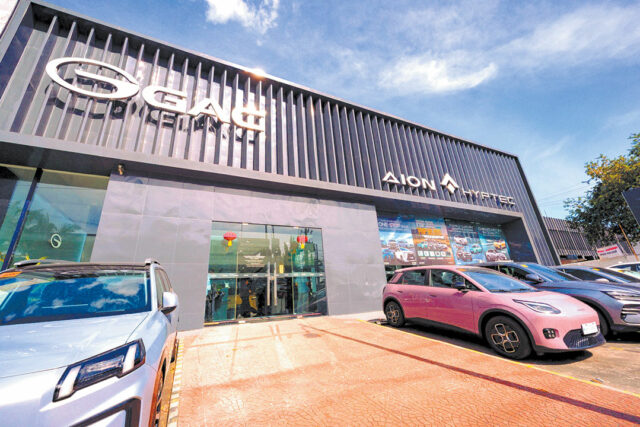
GAC Makati’s façade now features Aion and Hyptec, reflecting the “One GAC” strategy. — PHOTO BY KAP MACEDA AGUILA

Interview by Kap Maceda Aguila

AS 2025 WOUND down last year, it seemed that something else was winding down in our uber-competitive auto industry. That proved to be the operations of Astara, the Madrid-headquartered “global mobility company” which served as the distributor here of Chinese marques GAC, JAC, and JMC, along with French brand Peugeot.

Among the aforementioned brands, GAC (or the Guangzhou Automobile Group Co., Ltd.) was doubtless the strongest in terms of sales. So you could understand the ripple of uncertainty and apprehension that coursed through the market — particularly for people who owned or were looking to own a GAC. Industry observers wondered aloud about the fate of the Chinese state-owned brand, which Astara Philippines added to its portfolio in early 2023.

Despite known for being a Fortune Global 500 firm and with international expansion on its plate, GAC apparently didn’t make enough sense for Astara to maintain its Philippine foothold — which it expressly had been proud of as its first market in the region.

Not to worry. GAC itself apparently likes what it sees in our market. The company now takes over as a “direct subsidiary,” a move that, it announced in a press release, “reflects the company’s long-term commitment to investing in products, distribution networks, customer service, and operational capabilities, and marks an important step in advancing the One GAC strategy in the Philippines.”

“Velocity” recently sat down for a one-on-one interview with GAC International Philippines Chief Brand Officer Reginald “Reggie” See at GAC Makati, where change can already be seen with the addition of GAC model lines (you could say sub-brands, too) Aion and Hyptec — both battery electric vehicle (BEV) specialists, with Hyptec being more premium. All the 30 existing dealerships are expected to reflect this evolution. Here are excerpts from our interview.

VELOCITY: For old customers of course, there may be some understandable worry when Astara left the country — leaving, among others, the GAC brand behind. What’s your message to them?

REGGIE SEE: We are here to ensure a long-term commitment to our customers from the past, present, and in the future. Part of our plan is really to have a One GAC strategy, a global strategy that we want to implement in the Philippines where all GAC brand models will be housed under the GAC brand. Currently, there are three main brands in the GAC Group, which is GAC, Aion, and Hyptec. So we’ll house these under one roof, under one showroom. In the coming months, our customers will be able to see these in showrooms across the country.

When Astara was still taking care of the brand, they of course had warranties, PMS arrangements, and such. Will you be honoring these promises made by Astara on behalf of GAC?

Yes, these customers don’t have to worry. Currently, all authorized GAC dealerships are fully operational. The warranty process is the same because we’re a direct subsidy. In fact, the availability of parts will be improved. Before our operations started this February, we’ve been preparing for quite a bit. So, we actually have a parts warehouse already. As we speak, we’re bringing in parts needed by our customers to our dealers. Soon enough, we will have better and more efficient parts operations for our customers.

What does One GAC mean aside from collecting the other brands or electrified models under one roof?

We are presenting the three brands — GAC, Aion, and Hyptec — as a unified brand to be more consistent for GAC. Number two, we have a unified channel for our customers, meaning we want to optimize our dealer network sales and after-sales service network, so that we can be more consistent in our service delivery and be more responsive to the market. Number three is our united service strategy for a consistent, reliable, and customer-centric approach to the service needs of our customers.

With the addition of Aion and Hyptec, what do you think are the opportunities now being opened for GAC in the Philippines?

Customers wanting any type of automobile type — from ICE (internal combustion engine)-powered, PHEV (plug-in hybrid electric vehicle), HEV (hybrid electric vehicle), and BEV (battery electric vehicle) — can just go to our One GAC showroom. We also want to see that customers are taken care of in terms of after-sales service and parts availability. And we will continue to engage with our dealers and with our customers to provide more fun activities together with them, so we can make the GAC experience better and happier for all our dealers and customers.

Where do you think GAC stands, at least versus other Chinese brands? And what do you see are its unique value propositions?

I think our best unique value proposition is the quality of our vehicles. Once you get inside a GAC vehicle, you’ll find that the touch and feel are different. You will feel the quality, the premium nature — even for a value car. I know people who have bought GACs, and they’re happy with their cars. The build quality of the cars is different from competitors in the same price point. We want to continue with that. We want to add more features to our cars, and we want to provide better after-sales.

French firm files complaint with EU over duty-skirting cut-price Chinese lysine, a key animal feed ingredient

ALEKSANDARLITTLEWOLF-FREEPIK

PARIS — French chemical company Eurolysine said it filed a complaint with the European Union (EU) alleging that a reduction in price of Chinese lysine, used in animal feed, has made penalties to stop unfair pricing ineffective.

The move highlights wider concerns over cheap Chinese imports affecting several sectors and stoking trade spats between the world’s second-largest economy and the 27-member bloc.

Eurolysine, the EU’s sole fermentation-based amino acid producer, said market conditions for lysine, valine and tryptophan had worsened for more than six months, arguing that Chinese prices have fallen below production costs.

Lysine, valine and tryptophan are essential amino acids used in animal feed to support growth, protein synthesis and stress regulation in livestock, making stable pricing critical for Europe’s feed and farming sectors.

Lysine prices are 20% lower than in July 2024, while tryptophan has dropped 60% over a year, Eurolysine, part of French agrifood group Avril, said.

The EU imposed provisional anti-dumping duties on Chinese lysine in early 2025 after an initial complaint filed in April 2024 by Metex Noovistago, now renamed Eurolysine. However, the company said Chinese exporters cut prices further, effectively neutralizing the tariffs.

Eurolysine said it filed a new complaint with the European Commission on Feb. 11, seeking an anti-absorption investigation to ensure tariffs reflect continued undercutting by Chinese suppliers.

The China Chamber of Commerce to the European Union was not immediately available for comment.

Eurolysine also pointed to the EU’s decision to impose definitive anti-dumping duties on Chinese valine starting Feb. 14, saying the measure would need close monitoring to ensure it was not circumvented in a similar way. — Reuters

BSP bills fetch lower rate on oversubscription

BW FILE PHOTO

THE CENTRAL BANK’S short-term securities fetched a lower average rate on Friday as the offer drew strong demand, even as the auction volume was raised.

The 27-day Bangko Sentral ng Pilipinas (BSP) bills fetched P112.904 billion in tenders, exceeding the P100 billion placed on the auction block. However, this was below the P138.162 billion in tenders for a P90-billion offer of 28-day papers the prior week. The tenor offered was adjusted due to a holiday.

With this, the bid-to-cover ratio went down to 1.129 times from the 1.5351 ratio recorded previously.

Despite this, the central bank made a full award of its offering.

Accepted rates were from 4.5% to 4.64%, wider and lower than the 4.58% to 4.67% range seen a week prior. This caused the weighted average accepted yield of the one-month papers to go down by 4.03 basis points to 4.5979% from 4.6382% a week earlier.

The BSP has not auctioned off the 56-day bills since Nov. 3.

The central bank uses the BSP securities and its term deposit facility to mop up excess liquidity in the financial system and to help guide short-term market yields towards its policy rate.

Data from the BSP showed that around 50% of its market operations are done through its short-term securities.

As of mid-November 2025, the central bank’s monetary operations have siphoned off P1.5 trillion in liquidity from the market. Of this, 42.4% was absorbed through BSP securities, 34.6% from overnight reverse repurchase agreements, 17.6% via the overnight deposit facility, and 5.4% through the term deposit facility.

The BSP bills also contribute to improved price discovery for debt instruments while supporting monetary policy transmission.

In August last year, BSP Governor Eli M. Remolona, Jr. said they are gradually shifting away from the issuance of short-term papers to manage liquidity as they want to boost activity in the money market.

The central bank began auctioning off short-term securities weekly in 2020, initially offering only a 28-day tenor and adding the 56-day bill in 2023. — K.K. Chan

Mitigating the growing threat of multidrug-resistant Salmonella

SALMONELLA BACTERIA, a common cause of food poisoning, invade an immune cell. — NATIONAL INSTITUTE OF ALLERGY AND INFECTIOUS DISEASES, NATIONAL INSTITUTES OF HEALTH

Salmonella is a group of bacteria that remains one of the leading causes of diarrhea and foodborne outbreaks worldwide, including in the Philippines. Infection with Salmonella — known as salmonellosis — commonly occurs after consuming contaminated food, particularly products of animal origin such as eggs, poultry, meat, and milk. However, other foods, including vegetables contaminated through manure used as fertilizer, can also transmit the bacteria. Symptoms typically include fever, abdominal pain, diarrhea, nausea, and sometimes vomiting.

In many cases, salmonellosis is self-limiting. Most healthy individuals recover without specific treatment, with supportive care such as fluid and electrolyte replacement sufficient to manage symptoms. Yet the illness is far from trivial. Severe dehydration can develop, particularly among children, older adults, and individuals with weakened immune systems. In such cases, hospitalization may be necessary.

Antibiotics may be required for vulnerable patients or severe infections. However, the World Health Organization (WHO) does not recommend antibiotic treatment for mild or moderate salmonellosis in otherwise healthy individuals. This guidance is grounded in science since unnecessary antibiotic use may not fully eliminate the bacteria and can instead promote the survival of resistant strains. This phenomenon is part of the broader challenge known as antimicrobial resistance (AMR).

AMR is now recognized as one of the most serious global public health threats. The WHO estimates that bacterial AMR directly caused 1.27 million deaths globally in 2019 and contributed to nearly 5 million deaths. The misuse and overuse of antibiotics in humans, animals, and agriculture accelerate this process. Over time, bacteria evolve mechanisms that allow them to survive treatments that once killed them.

Of particular concern is the emergence of multidrug-resistant (MDR) bacteria, sometimes referred to as “superbugs.” These organisms are resistant to multiple antibiotics, severely limiting treatment options. Infections caused by MDR bacteria are often more difficult, more expensive, and sometimes impossible to treat. They lead to longer illnesses, higher healthcare costs, and increased risk of complications and death.

Foodborne pathogens are not exempt from this trend. The Philippines, as both a major producer and consumer of meat, faces heightened vulnerability. This risk was underscored by a study conducted by biologists from the University of the Philippines Diliman examining Salmonella strains isolated from chicken meat sold in retail wet markets across Metro Manila. The findings were concerning as the predominant Salmonella strains exhibited resistance to numerous antibiotics, with some resistant to as many as 12 different drugs.

These results carry important implications for both public health and food safety. Resistant bacteria circulating in food supply chains can lead to infections that are harder to manage clinically. Moreover, wet markets may inadvertently facilitate the spread of resistant organisms through cross-contamination. The risks extend beyond markets into kitchens and households, where improper food handling can enable transmission.

Addressing this challenge requires a coordinated and multi-sectoral response. Surveillance systems must be strengthened to monitor foodborne pathogens and resistance patterns. Equally critical are policies governing antimicrobial use at the farm level. Responsible antibiotic stewardship in animal production is essential to slow the development of resistance.

Investment in research also plays a pivotal role. The development of antimicrobial alternatives, improved diagnostics, and new treatment strategies can help preserve the effectiveness of existing medicines. Policymakers must recognize that AMR is not solely a clinical issue since it is a food security, economic, and national development concern.

Consumers likewise have an indispensable role in mitigation. Basic food safety practices remain among the most effective defenses. Hands, kitchen surfaces, and utensils should be kept clean and sanitized. Raw meat, poultry, and seafood must be handled separately from ready-to-eat foods to prevent cross-contamination. Safe water should always be used in food preparation.

Proper cooking is equally important. Heating food to at least 70°C significantly reduces bacterial risks. Perishable food should be refrigerated promptly, ideally at 5°C or below. Microorganisms multiply rapidly when food is left at room temperature for extended periods.

Finally, combating AMR demands sustained innovation. The research-based pharmaceutical industry continues to invest in antibiotic development, yet scientific and economic barriers remain. Revitalizing the antibiotic pipeline requires supportive policy frameworks, incentives, and global cooperation.

Equally important is stewardship. Preserving the effectiveness of antibiotics, new and old alike, depends on their appropriate use. Preventive measures, including vaccination, must also be fully leveraged. Vaccines that reduce infections ultimately reduce antibiotic demand, slowing the spread of resistance.

Multidrug-resistant Salmonella is more than a laboratory finding. It is a warning signal, one that calls for vigilance, responsible practices, and decisive policy action.


Teodoro B. Padilla is the executive director of Pharmaceutical and Healthcare Association of the Philippines which represents the biopharmaceutical medicines and vaccines industry in the country. Its members are at the forefront of developing, investing and delivering innovative medicines, vaccines, and diagnostics for Filipinos to live healthier and more productive lives.


Style (02/16/26)


Find Filipiniana at the DTI fair

THE Department of Trade and Industry’s (DTI) National Trade Fair (NTF) opens on Feb. 19, Thursday, at 2 p.m. at the SM Megamall Megatrade Hall. The 2026 NTF puts the spotlight on innovation, sustainability, and Filipino craftsmanship, bringing together environmentally responsible products designed to appeal to institutional buyers, industry partners, and the general public. The fair will run until Feb. 22.


(Enfant) terrible summer

MAX&CO.’S Spring/Summer 26 collection channels an Enfant Terrible spirit into versatile pieces with a directional yet refined edge. Sheers, floral prints, pastels, pleating, and soft volume meet sharp tailoring, 1990s references, boxy fits, utility elements and sporty details. Key pieces include transseasonal and spring outerwear like elevated cargo jackets, oversized trenches, luxe bombers, and car coats, while A-line skirts, voluminous trousers, polo shirts, and column and slip dresses in monochromatic prints carry through the season. Footwear and accessories amplify the edgy vibe with sporty oval sunglasses, leather toe-post sandals, modern slingbacks, and structured bags with integrated cut-out handles, in both printed and color-pop versions. Meanwhile, the &Co.LLABORATION series remains a driving force. This season sees the return of artist Pietro Terzini with the “1-800 Gift Alert” capsule, alongside a new partnership with LA-based designer and creative director Sami Mirò, for the “Becoming Undone” capsule. In the Philippines, Max&Co. is exclusively distributed by Stores Specialists, Inc., and has stores at Central Square, Rustan’s Makati, Alabang Town Center, and Eastwood. Visit www.ssilife.com.ph and follow @ssilifeph on Instagram and Facebook for more information.


Hello Glow brings professional-grade formulas

HELLO GLOW delivers professional-grade skincare made for the Filipino skin and real tropical conditions. Designed for everyday use yet powered by clinical-level ingredients, the brand focuses on formulas that actually work in heat, humidity, pollution, and high sun exposure. Instead of copying global formulas made for colder climates, Hello Glow builds systems that address what local skin really goes through — persistent acne, excess oil, uneven tone, early aging, and barrier stress. The Advanced Rejuvenating Set is a four-step system that delivers high-performance actives often found in clinic-level treatments: AHAs, BHAs, bakuchiol, niacinamide, and micro-encapsulated retinol. Together, they work beneath the surface to refine texture, fade stubborn marks, and visibly renew skin. To counter irritation — especially important in hot, polluted environments — the formula is balanced with skin-supporting ingredients like hexylresorcinol, centella asiatica, ceramides, and hyaluronic acid. The Blemish Miracle System is designed to treat active acne while helping prevent future flare-ups. Key ingredients include centella asiatica to calm inflammation, licorice root to fade post-acne marks, chamomile to soothe irritation, rosemary leaf for antimicrobial support, and green tea to regulate oil while delivering antioxidants. Unlike traditional acne treatments that dry and weaken the skin barrier, this system understands that even oily, breakout-prone skin needs hydration. When skin is stripped, it produces more oil. The Active Defense System strengthens skin before problems appear. Tea tree oil helps protect against environmental aggressors while supporting scar care. Salicylic acid keeps pores clear. Green tea balances oil and hydration. Licorice root brightens, while rosemary calms stressed skin and supports early anti-aging. Hello Glow can be found on Shopee, Lazada, and TikTok Shop. Follow @helloglowofficial on Instagram and TikTok, and visit facebook.com/helloglowofficial.


Epson partners with Urban Label by Maria & Co

URBAN LABEL by Maria & Co has joined forces with Epson Philippines Corp. (EPC) to unveil a textile collection that honors Filipino cultural heritage. This collaboration was made possible with the support of ES Print Media, Inc., which connected Epson with designer Beatriz Nicole Benadera. The collaboration centers on the Waling-Waling, celebrated as the Queen of Philippine Flowers. Ms. Benadera drew inspiration from Filipino identity across Luzon, Visayas, and Mindanao, using textiles as the primary canvas for storytelling. These ideas were brought to life by Epson’s SureColor SC-F9430H digital textile printer which enabled original photographic references of the Waling-Waling to be translated into vivid, precise prints that aligned seamlessly with garment structures. Large-scale panels were produced in single outputs, preserving intricate details and ensuring visual continuity across flowing silhouettes. “Working with Epson completely changed my creative process,” said Ms. Benadera. “It allowed textile design to become part of each garment and shifted my approach from designing around limitations to designing with confidence.” More information on Epson’s professional textile printing solutions is available at www.epson.com.ph.

Aboitiz Equity Ventures shares rise on power, real estate developments

ABOITIZPOWER.COM

By Matthew Miguel L. Castillo, Researcher

STOCKS of Aboitiz Equity Ventures (AEV) rose last week as the company announced multiple developments across its power and real estate subsidiaries, analysts said.

Philippine Stock Exchange (PSE) data showed that AEV was the 15th most traded stock by value last week, with a total of 15.04 million shares worth P508.19 million changing hands by Friday.

At the close of last week, the Aboitiz firm’s stock price inched up 1.2% to P33.60 from P33.20 the previous Friday, outperforming weekly declines in both the holding firms sector, which fell 0.14%, and the PSE index (PSEi), which dropped 0.1%.

From its P28 close at the end of 2025, AEV has jumped 20%, outpacing the sector’s 5.7% gain and the PSEi’s 5.5% rise over the same period.

On Monday, the group’s energy arm, Aboitiz Power Corp., acquired the 797-megawatt Caliraya-Botocan-Kalayaan (CBK) hydroelectric power complex from the government through its majority-owned Thunder Consortium.

The acquisition followed a bidding process conducted by the Power Sector Assets and Liabilities Management Corp. last year, in which the consortium offered P36.27 billion for the facility.

Meanwhile, Aboitiz Land, the group’s real estate branch, turned over 400 units across its two villages in LIMA Estate, Batangas, on the same day.

The two property blocks, Brook Village and Sierra Village — spanning 17 hectares and 18 hectares, respectively — offer amenities such as modern clubhouses, swimming pools, and basketball courts.

Linconn M. Lahip, equity trader at Regina Capital Development Corp., said AEV was actively traded last week as investors reacted to the company’s announcements.

“[This was] led by AboitizPower’s takeover of the CBK hydro, which improved long-term earnings visibility [and] strengthened AEV’s power portfolio and reinforced its exposure to stable, renewable energy assets,” he said in a Viber message.

Mr. Lahip added that the 400-unit turnover at LIMA Estate also boosted investor interest, reflecting the group’s diversified growth.

Timson Securities equity trader Juan Alfonso G. Teodoro said in a separate Viber message that the turnover signaled the company is “steadily delivering projects forward,” attracting investor attention and giving a short-term boost to the stock price.

Aside from last week’s developments, Mr. Lahip said AEV may also have benefited from “renewed interest in conglomerates” and portfolio rebalancing ahead of its earnings report on March 9.

According to its latest quarterly report, AEV saw a 22% year-on-year increase in attributable net income for the July-to-September period, reaching P8.95 billion. This brought the nine-month cumulative figure to P17.33 billion, down 7.7% from P18.77 billion in 2024.

Meanwhile, the company’s revenues rose 2.8% to P228.19 billion for the first nine months of 2025.

Mr. Teodoro’s forecasts for attributable net income stand at P10.5 billion for the fourth quarter and P22.41 billion for the full year.

Despite last week’s gains, both analysts noted that the stock fluctuated above and below the previous week’s P33.20 close before ending higher at P33.60 on Friday, Feb. 13.

Mr. Lahip attributed the swings to a “tug-of-war” in investor sentiment — balancing the 20% year-to-date gain against company developments and market fluctuations.

Mr. Teodoro said some dips may have resulted from investors immediately pricing in the Feb. 10 announcements, followed by profit taking as the stock attracted more attention.

For this week, Mr. Lahip placed near-term support at P32.70 to P33 and immediate resistance at P34-34.50, noting that a sustained break of these levels could open room toward P35.50.

Mr. Teodoro set his short-term support at P32.50 and immediate resistance at P34.50, with the next resistance at P35.50-P36 if broken.

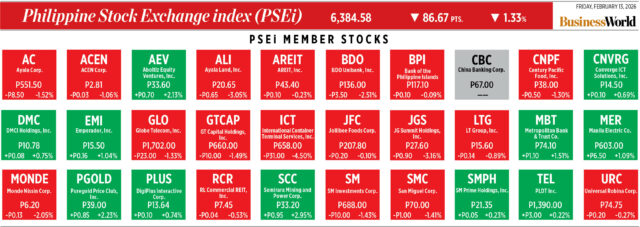
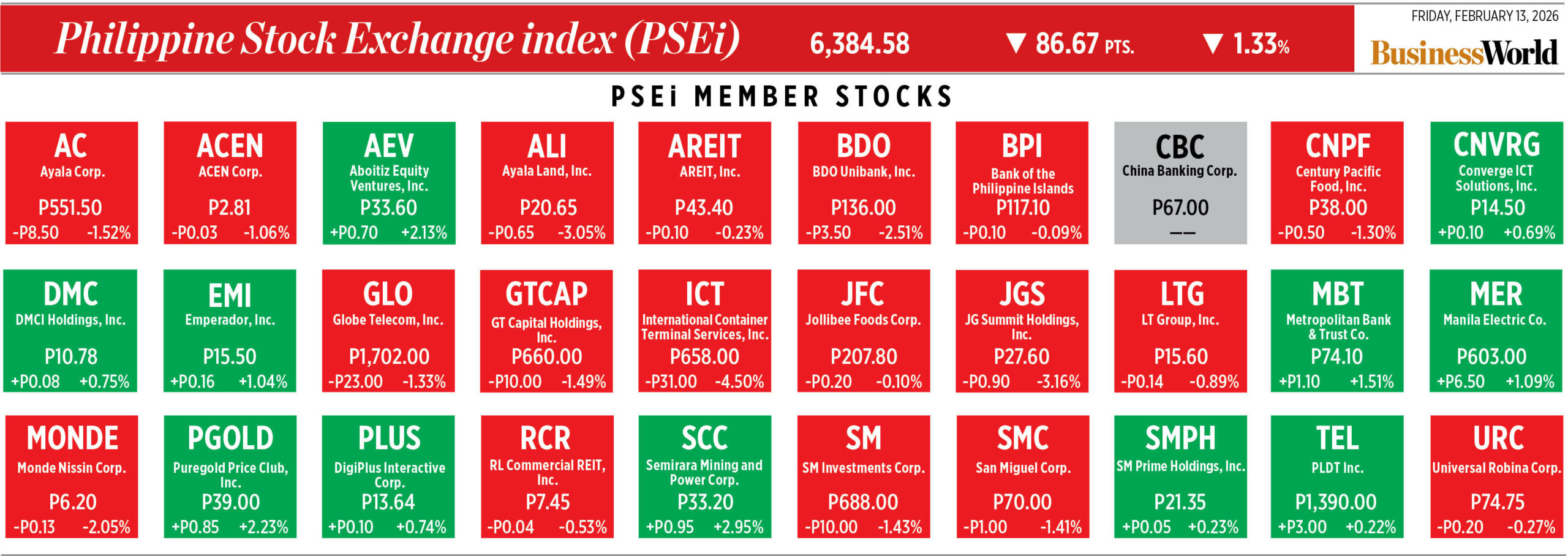
How PSEi member stocks performed — February 13, 2026

Here’s a quick glance at how PSEi stocks fared on Friday, February 13, 2026.


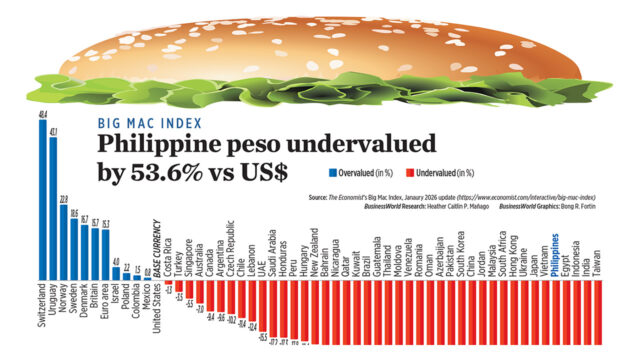
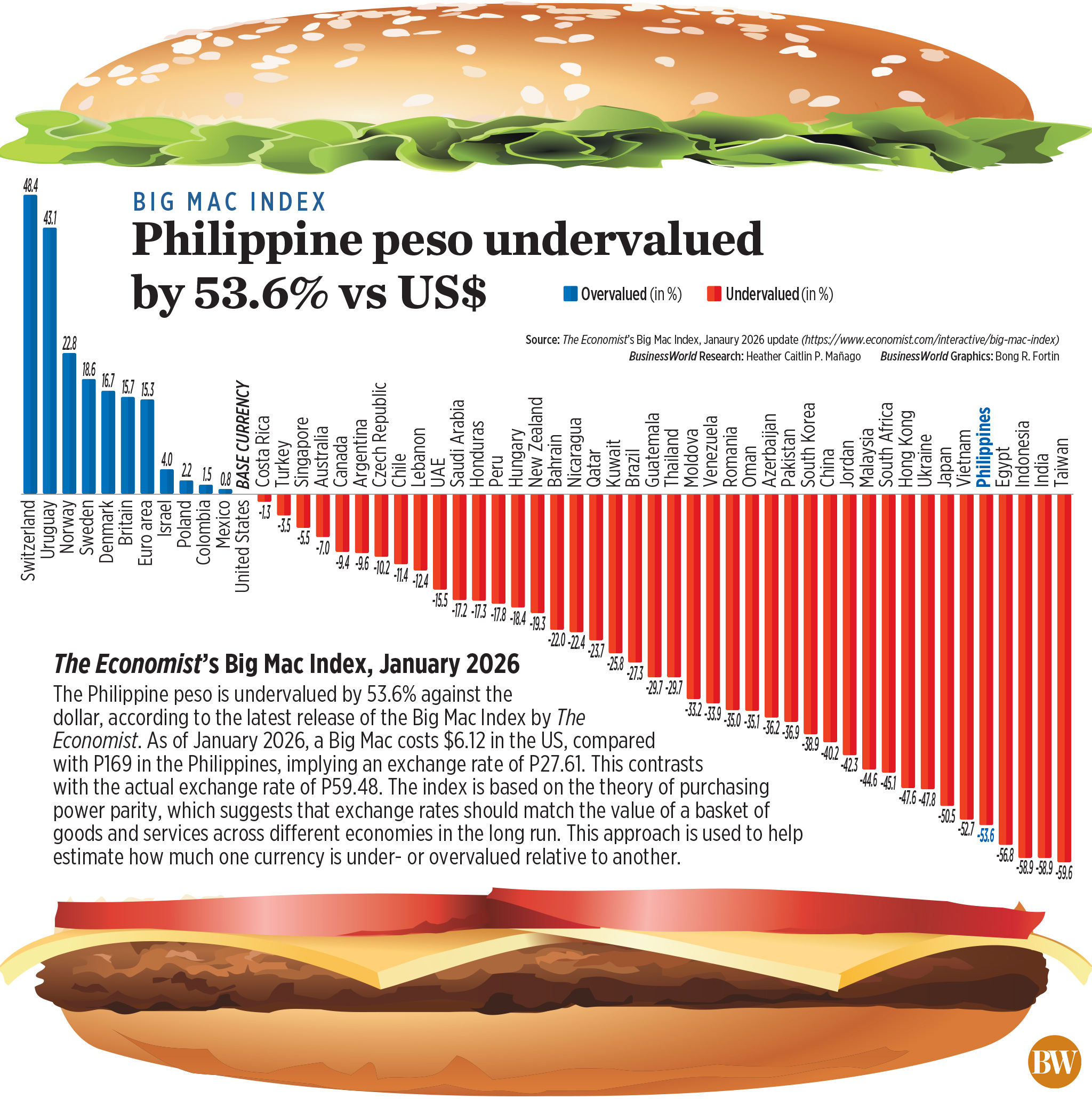
Big Mac Index: Philippine peso undervalued by 53.6% vs US$

The Economist’s Big Mac Index, January 2026

The Philippine peso is undervalued by 53.6% against the dollar, according to the latest release of the Big Mac Index by The Economist. As of January 2026, a Big Mac costs $6.12 in the US, compared with P169 in the Philippines, implying an exchange rate of P27.61. This contrasts with the actual exchange rate of P59.48. The index is based on the theory of purchasing power parity, which suggests that exchange rates should match the value of a basket of goods and services across different economies in the long run. This approach is used to help estimate how much one currency is under- or overvalued relative to another.

Market may stay cautious before BSP decision

REUTERS

STOCKS may move sideways this week and retest the 6,400 mark as investors tread cautiously before the Bangko Sentral ng Pilipinas’ (BSP) policy meeting, where policymakers are widely expected to cut rates but give fresh signals about their monetary easing path.

On Friday, the bellwether Philippine Stock Exchange index (PSEi) sank by 1.33% or 86.67 points to end at 6,384.58, while the broader all shares index fell by 0.94% or 33.96 points to close at 3,560.26.

Week on week, the PSEi inched down by 6.33 points from its Feb. 6 finish of 6,390.91.

“Investors went on profit taking mode following the PSE’s rally mid-week ahead of key macro catalysts and Bangko Sentral ng Pilipinas’ policy meeting,” 2TradeAsia.com said in a market note.

“Cautious sentiment dominated the latter days of last week, causing the market to fail in holding its position at 6,400, and ultimately ending the week with a loss. Investors have taken profits while bracing themselves for upcoming leads,” Philstocks Financial, Inc. Research Manager Japhet Louis O. Tantiangco said in a Viber message.

The PSEi started the previous trading week in the red but posted gains mid-week, even surging past the 6,500 mark on Wednesday and closing at a near seven-month high of 6,498.82, which traders said was largely supported by the peso’s strength against the US dollar. However, it closed lower as the week wound down on profit taking.

For this week, Mr. Tantiangco said the main trading driver is the BSP’s policy meeting on Thursday (Feb. 19). “Another policy rate cut by the BSP may spur positive sentiment in the market.”

All 16 analysts in a BusinessWorld poll expect the Monetary Board to deliver a sixth straight 25-basis-point (bp) cut at its first meeting for the year this week to bring the policy rate to 4.25%.

The BSP has lowered benchmark borrowing costs by a cumulative 200 bps since its easing cycle began in August 2024.

Mr. Tantiangco added that the release of companies’ financial results and remittances data could also provide leads to the market.

“Investors may also monitor the movement of the local currency, with a further appreciation expected to give the local market a boost.”

On Friday, the peso rose by 9.50 centavos to close at a four-month high of P58.020 versus the dollar from its P58.115 finish on Thursday.

However, Mr. Tantiangco said last week’s trading has shown some bearishness in the market as the PSEi again fell below the 6,400 resistance. He said the market will continue to test this level this week.

“If it is able to close above these lines, it may trade with a range of 6,400-6,550. If it fails to do so, however, its trading range is seen from 6,150 to 6,400,” he added.

For its part, 2TradeAsia.com placed the PSEi’s immediate support at 6,300, secondary support at 6,100, and resistance at 6,500. — Alexandria Grace C. Magno

NTC sets P100-M asset threshold for Konektadong Pinoy entrants

PHILSTAR FILE PHOTO

THE National Telecommunications Commission (NTC) said data transmission industry participants (DTIPs) must have assets of at least P100 million to operate core network services under the Konektadong Pinoy law.

In a memorandum circular dated Feb. 2, the NTC also outlined registration requirements for prospective entrants, adding that it will serve as the entity receiving their registrations.

The NTC also said that eligible applicants must have a technical and financial capability to deliver reliable and secure services and must also establish, operate and maintain data transmission infrastructure.

It said that participants that meet all the requirements may apply in one or more segments of the data transmission network.

“In determining financial eligibility, the NTC shall evaluate the financial and economic viability of the applicant’s proposal to operate as a DTIP in its proposed data transmission segment, accounting for the scale and complexity of its proposed operations,” NTC said in its memorandum circular.

The Department of Information and Communications Technology (DICT) has said that one Philippine company is seeking to enter the industry under the provisions of the Konektadong Pinoy Act.

All applicants, except for last mile providers, will be required to pay a performance bond within 30 days, the NTC said, noting that the bond will be equivalent to at least 10% of the applicant’s projected capital expenditure for the first two years, but not to exceed P5 million.

The memorandum requires all applicants seeking to operate in any segment of the data transmission network whether as international gateway facility, core or backbone, middle mile, or last mile provider to allocate minimum assets for each application and to maintain a debt-to-asset ratio within a prescribed threshold.

“The NTC shall periodically review the minimum asset requirements, leverage ratios and related financial thresholds every three years or at such shorter intervals as may be necessary, after taking into account inflation, industry environment and other relevant economic indicators,” it said.

The NTC said that the debt-to-asset ratio for all applicants for all segments is at 70%. The memorandum outlined that the minimum asset requirement for international gateway facility applicants is P1 billion; around P100 million for core or backbone network applicants, P10 million for middle-mile provider applicants, and P500,000 for last-mile providers.

The Konektadong Pinoy Act, also known as the Open Access in Data Transmission Act, lapsed into law in August.

The law streamlines the licensing process for new entrants, boosting competition in data transmission.

About seven foreign companies have signified interest to enter the Philippine telecommunications sector, with each company expected to invest around $1 billion.

Globe Telecom, Inc. President and Chief Executive Officer Carl Raymond R. Cruz said that the company will work closely with the DICT to ensure that DTIPs are subject to strict cybersecurity vetting and certification. 

“We need rules that balance openness with accountability, especially around infra use, security standards, and spectrum coordination,” Mr. Cruz said in a separate statement. — Ashley Erika O. Jose

ADVERTISEMENT
ADVERTISEMENT