Home Blog Page 2909

On the road to a strong, vibrant auto market

freepik / vectorjuice

Fueled by growth and innovation, the Philippine automotive sector is poised for positive changes and new opportunities in the upcoming months.

Anticipated to build the momentum for car sales this year, this second quarter has seen strong growth, fueled by positive consumer demand, business confidence, and stability in automotive sales, according to an industry report.

The recent joint report from Chamber of Automotive Manufacturers of the Philippines, Inc. (CAMP) and the Truck Manufacturers Association (TMA) showed a significant increase of vehicle sales in the past three months, marking a recovery from the slow growth reported last March.

According to the data, the market saw a 22% increase in vehicle sales in April, reaching from 30,643 units of the same month last year to 37,314 units this year. Notably, the increase of sales came from different vehicle categories, including Asian utility vehicles (AUV) bumping to 47.5% (6,816 units); medium truck sales to 40.9% (355 units); passenger car sales to 37.6% (10,069 units), and light commercial vehicles to 10.7% (19,561 units).

Following this growth, vehicle sales also rose to 5.5% (40,271 units) in May. Moreover, month-on-month vehicle sales started to pick up after small declines from March and April.

“Improvements in supply and good consumer demand, coupled with an increase in automotive financial schemes and extensive sales activities, helped boost sales on a month-on-month basis,” Rommel R. Gutierrez, president of CAMPI, said in a statement.

CAMPI-TMA’s report further indicated a surge in commercial vehicle sales last May at 7.6%, AUV at 32.8% (6,769 units), and passenger car sales at 12% (10,967 units). Light-duty trucks and buses also marked an annual growth of 19.9% (531 units), while medium trucks increased by 7.3%. However, light commercial vehicle sales hit a slight decline by 3.8% year on year, and heavy-duty truck sales with 22% in the same month.

Meanwhile, for the month of June, vehicle sales saw a 7.6% increase year on year, with a total of 39,088 units sold compared to 36,211 last year. Passenger car sales saw a fast growth of 17.8% while commercial vehicles increased by 9.8%. However, June’s monthly sales decreased by 2% compared to the month of May.

Overall, for the first half of the year, CAMPI and TMA noted, commercial vehicles dominated vehicle sales growth at 75%, leaving passenger vehicles at 25%. Commercial vehicle sales increased from 151,567 units to 166,404 units, while passenger cars sold 59,875 units compared to 50,848 units in the same period last year. Currently leading the top car sales are units from brands Toyota, Mitsubishi, Ford, Nissan, and Suzuki.

In sum, automotive vehicle sales in the country saw significant growth in the first half of the year, with 226,279 units sold, increasing by 11.8% in the same period in 2023.

As the industry continues to grow, the automotive sector is seeing notable growth, driven by strong local vehicle sales. Industry professionals are highlighting trends that are changing the landscape of automotive and mobility in the country.

Micromobility

pixabay / kimdaejeung

Micromobility is changing how people get around. Micromobility, which covers bicycles, electric scooters and electric bicycles, are popping up on every street and corner, shaping a modern era of transportation.

According to global consulting firm RSM Global, micromobility is redefining the automotive sector, offering a more convenient and low-cost transportation, perfect for daily transportation. These vehicles are small-scale vehicles, used to transport people and goods designed for short-distance travel. It is also customized for public transportation, offering practical and eco-friendly features pushing to help ease traffic and pollution in the metro.

The rise of micromobility is driving a higher demand for eco-friendly and sustainable mobility solutions. It can further revitalize public spaces into user-friendly cities, making areas more walkable, reducing carbon emissions, and increasing more green spaces within the metro, the firm said.

“It’s not just about diversifying products; it’s a reimagining of the automotive industry’s role in urban mobility. This change is leading to an increased focus on integrated mobility solutions that blend cars, public transit, and micro-mobility,” the firm’s report said.

Electric vehicles
unsplash / Michael Fousert

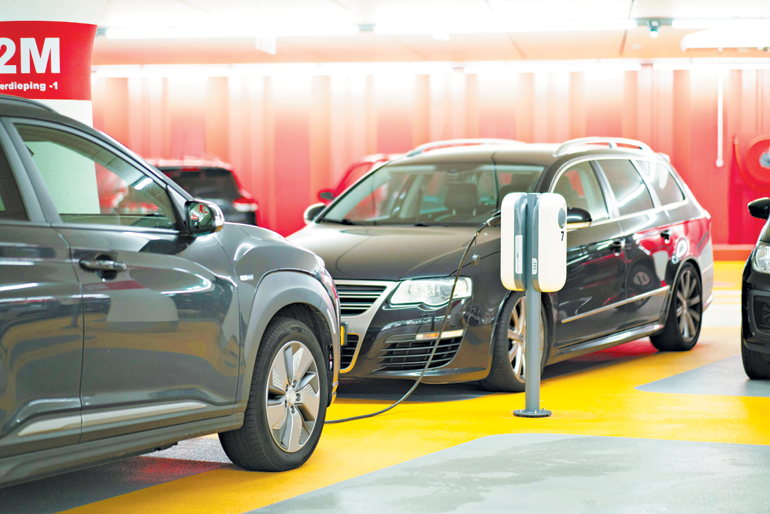
The automotive world is evolving quickly as different advancements in car technology are getting more popular. Among these developments, electric vehicles (EV) is taking the center stage. Powered by battery technology and maximizing electricity stored in rechargeable batters, these vehicles produce zero carbon emissions, improve air quality, and are seen to be more energy- and fuel-efficient. As the world goes electric, many automotive companies and manufacturers are shifting to EVs.

In line with this positive outlook, EV adoption is gaining momentum in the Philippines, albeit at a slow pace. According to the latest Global Automotive Consumer Studies conducted by professional services firm Deloitte, 18% of Filipinos surveyed prefer hybrid electric vehicles (HEV), while 8% prefer plug-in HEV and 4% prefer battery electric vehicles. The largest share of respondents (66%) still prefer a gas or diesel engine, also known as an internal combustion engine (ICE).

Despite the slow adoption, the Philippine EV market is gradually gaining traction as a top choice for transportation. Electric vehicles have played a significant role in boosting car sales, surpassing 10,000 units in 2023. This marks a huge increase from the 1,000 units sold in the previous year, as CAMPI outlined in a recent report.

Ride-sharing services

unsplash / Jason Miraples

Ride-share services is another seen driver in the automotive scene. Due to the shift in consumer demand, in particular, the younger generation are more interested in ride-sharing services than leasing or vehicle ownership, as RSM Global recently reported.

“This trend may lead to a decrease in individual car sales but opens new revenue streams in service-based models,” the firm said. “This could also lead to changes in vehicle design, prioritizing durability and adaptability for multiple users. Moreover, the focus might shift towards digital technologies for seamless access and user experience in shared mobility platforms,” it added.

For the Philippines, ride-hailing services and apps have become the preferred mode of public transportation, providing a more convenient and secure alternative to traditional transportation. Combined with technology and affordability, these services make transportation easier for daily commute rides and also boost business efficiency. Dominating the ride-hailing market is Grab, with expanded services including food delivery and digital payments. Other popular services include Angkas, Move It, JoyRide, and Lalamove.

Moving forward

Looking forward, the auto industry stands at a crucial point, with continued growth, innovation, evolving consumer demand, and technological advancements — all converging to redefine vehicles into more than just a means of transportation, but likely a necessity in life. The market is set to see steady growth in the upcoming months, offering more opportunities for the industry to flourish and thrive in the ever-evolving landscape.

At the start of the year, the local auto industry aimed for 468,300 units of sales, yet it remains confident in reaching 500,000 units before the year ends. With new models coming out and more innovative releases in the lineup, the outlook for the industry is looking bright. — Angela Kiara S. Brillantes
Globe Telecom’s tower sales reach P85.2 billion

GLOBE.COM.PH

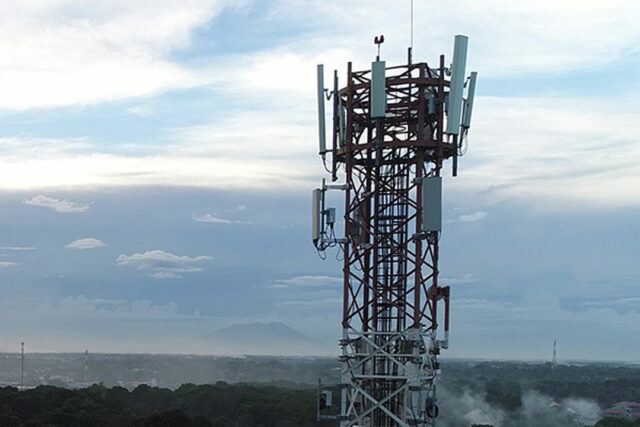
AYALA-LED Globe Telecom, Inc. said it has generated P85.2 billion from its tower sales after fully transferring some of its tower assets to Frontier Tower Associates Philippines, Inc. (Frontier Towers).

“These tower assets are composed of 84% ground-based towers and 16% rooftop towers,” Globe said in a stock exchange disclosure on Thursday.

The telco has closed the sale of 1,037 towers valued at P13.17 billion, marking the completion of 3,529 towers to be acquired by Frontier Towers.

“This transaction provides us with a higher level of financial flexibility to manage our leverage ratios and effectively address the evolving consumer demands while ensuring sustainable network expansion,” Globe Chief Finance Officer Rizza Maniego-Eala said in a statement.

Overall, Globe has transferred 6,628 towers, generating a total of P85.2 billion, out of the 7,506 towers planned for the sale and leaseback arrangement.

“Our strong commitment to fostering collaborative partnerships is exemplified by the full handover of towers sold to Frontier Towers. We firmly believe that our strategic partnerships with tower companies are pivotal in this competitive market landscape,” Globe President Ernest L. Cu said.

Frontier Towers Chairman and Chief Executive Officer Patrick Tangney said the completion of tower sales allows the company to expand its network in the Philippines and further enhance its capacity to provide digital connectivity.

“With this latest closing, we near the 5,000-tower mark and cement our position as the largest digital infrastructure provider in the Philippines,” Mr. Tangney said.

Frontier Towers is an independent tower company focused on building and operating telecommunication infrastructure, including towers and related assets.

In 2022, Globe signed agreements with MIESCOR Infrastructure Development Corp. (MIDC) and Frontier Towers for the sale of 5,709 telecommunication towers and related passive infrastructure for about P71 billion.

Frontier Towers is set to acquire a total of 3,529 towers for P45 billion, while MIDC will acquire 2,180 towers for P26 billion.

In the same year, it also signed an agreement with PhilTower Consortium, Inc. (PhilTower) for the telco’s 1,350 towers.

Proceeds from this transaction will fund Globe’s capital investments, debt repayments, and improve its balance sheet, the company said.

At the stock exchange, shares in the company gained P14, or 0.67%, to end at P2,114 apiece. — Ashley Erika O. Jose

Hottest wheels on the road in 2024

The world speeds along another year, and as always, the automotive landscape grows at a breakneck pace alongside it. The industry has always been at the cutting edge of innovation and human ingenuity, and each of the latest car models dominating Philippine roads today continues to push the boundaries of what we have come to expect from automobiles.

From sleek electric vehicles to powerful SUVs, the 2024 lineup is a testament to the automotive industry’s relentless pursuit of excellence. Whether you’re a tech enthusiast, an eco-conscious traveler, or a thrill-seeker, this year offers a little something for everybody.

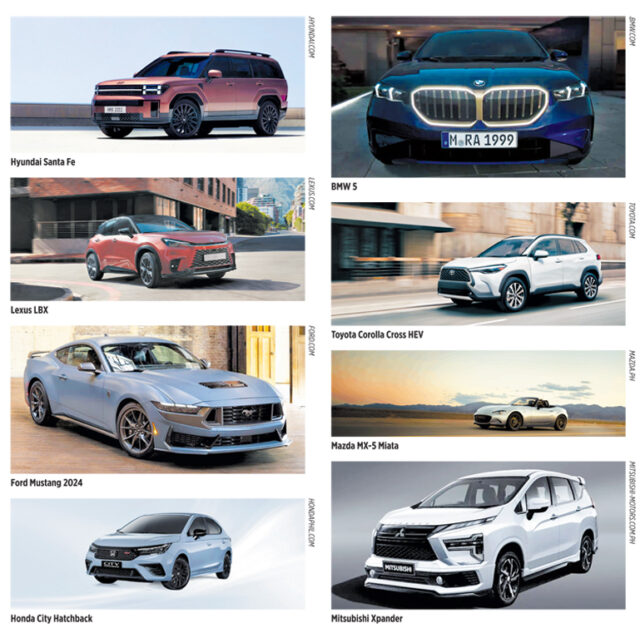
Hyundai Santa Fe

Hyundai Motor Philippines, Inc. will be releasing the next-generation 2024 Santa Fe crossover SUV onto local roads in three variants: the top-spec Calligraphy AWD, the mid-range GLS AWD, and the entry-level GLS 2WD.

This fifth-generation Santa Fe, introduced in South Korea in August 2023, features a bold new exterior design, an enhanced gasoline powertrain, and a host of modern amenities. It replaces the previous diesel-powered model but remains a mid-sized crossover with seating for up to seven passengers.

Under the hood, the 2024 Santa Fe is powered by a 2.5-liter inline-4 Smartstream gasoline engine. The GLS trims feature a naturally aspirated version, producing 191 horsepower (hp) and 246 Nm of torque. The Calligraphy trim, however, is equipped with a turbocharged variant, delivering an impressive 277 hp and 422 Nm of torque.

BMW 5 Series

SMC Asia Car Distributors Corp., the official distributor of BMW vehicles in the Philippines, has expanded its lineup with the introduction of the all-new 2024 BMW 5 Series. Celebrating its 52nd anniversary, the new 5 Series is available in two versions for the Philippine market: the gasoline-powered BMW 520i and the electric BMW i5 eDrive40.

The BMW 520i is equipped with a 2.0-liter gasoline engine that produces 208 hp and 330 Nm of torque, paired with an 8-speed automatic transmission. This model can accelerate from 0 to 100 kilometers per hour (km/h) in 7.5 seconds and reach a top speed of 230 km/h.

Meanwhile, the BMW i5 eDrive40, the all-electric variant, boasts 340 hp and 430 Nm of torque, with a remarkable range of up to 582 kilometers. Utilizing fifth-generation eDrive technology, it accelerates from 0 to 100 km/h in just 6.0 seconds and has a top speed of 193 km/h.

Lexus LBX

Lexus Philippines unveiled its smallest crossover yet, the Lexus LBX, a subcompact luxury hybrid designed for style-conscious buyers seeking practicality and efficiency. Despite its compact dimensions, the LBX retains the distinct Lexus identity, featuring a modified spindle grille flanked by sharp single-projector bi-beam LED headlamps with automatic functionality.

The 2024 Lexus LBX is powered by a 1.5-liter inline-3 gasoline engine paired with a self-charging hybrid electric powertrain, managed by the Lexus Hybrid Control system. This setup delivers a combined output of 136 hp and 185 Nm of torque, allowing the LBX to accelerate from 0 to 100 km/h in 9.2 seconds and reach a top speed of 170 km/h.

Built on the Toyota New Global Architecture (GA-B) platform, the LBX shares its foundation with the Toyota Yaris and utilizes a similar hybrid powertrain to the Toyota Yaris Cross, blending advanced technology with Lexus luxury.

Toyota Corolla Cross HEV

Toyota Motor Philippines (TMP) officially launched the refreshed Corolla Cross Hybrid Electric Vehicle (HEV), following its ASEAN debut in Thailand. This updated XG10 generation model now features a sleeker design and enhanced amenities, with TMP transitioning to an all-hybrid lineup, eliminating the internal combustion-only variants.

The refreshed Corolla Cross boasts larger cockpit displays, including a seven-inch digital and analog instrument panel for the V trim, while the GR-S variant enjoys a fully digital 12.3-inch gauge cluster. Both trims offer power-adjustable driver’s seats for added convenience.

New for the 2024 model is an electronic parking brake with auto-hold functionality, replacing the previous pedal parking brake. All three trims of the Corolla Cross HEV are powered by a 1.8-liter hybrid system, delivering a combined 120 hp and 142 Nm of torque. Power is transmitted to the front wheels through a continuous variable transmission (CVT), with Eco, Power, and Electric Vehicle (EV) modes available to maximize efficiency and performance.

Ford Mustang

2024 also sees the next generation of the Ford Mustang hit Philippine roads, with two variants: the entry-level 2.3-liter EcoBoost Premium and the top-tier 5.0-liter GT Premium. This seventh-generation S650 Mustang, first revealed at the 2022 North American International Auto Show, replaces the S550 model and features a sharper, more modern design alongside enhanced powertrains.

The EcoBoost Premium variant is powered by a turbocharged inline-4 gasoline engine, delivering up to 314 hp and 475 Nm of torque. The GT Premium variant boasts a robust V8 engine, producing an impressive 486 hp and 567 Nm of torque, surpassing the previous generation’s 460 hp and 569 Nm.

Both trims are equipped with a 10-speed automatic transmission and offer six driving modes: Sport, Normal, Slippery, Track, Drag, and Custom. The Mustang’s suspension system includes a McPherson strut front suspension and an Independent Integral-Link rear suspension, ensuring a smooth and controlled ride. Braking is handled by disc brakes on all four wheels.

Mazda MX-5

Mazda Philippines, through Bermaz Auto Philippines, Inc., also unveiled a new generation of a signature model, the MX-5 Miata. The refresh boasts enhanced safety tech and mechanical tweaks across its lineup.

The 2024 MX-5 maintains its iconic design and offers both soft top and retractable fastback (RF) roof styles. New full LED headlamps with integrated LED daytime running lights give the front end a fresh, eye-catching look. Internally, it retains the 2.0-liter Skyactiv-G gasoline engine, producing 181 hp and 205 Nm of torque. The soft top versions offer a choice between a six-speed manual or automatic transmission, but the RF variant now exclusively features the six-speed automatic.

Mazda has also upgraded the MX-5’s power steering for better handling and introduced Dynamic Stability Control with Track Mode (DSC-Track), which intervenes to prevent loss of traction. Additionally, the new Asymmetric Limited-Slip Differential (A-LSD) optimizes cornering by adjusting inputs during deceleration and acceleration.

Honda City

While this hasn’t been announced for the Philippines, the refreshed 2024 Honda City Hatchback made its debut in Thailand with a sportier appearance and a gamut of notable updates. The most significant of which is an exterior change on the front end, now boasting larger upper and lower grilles with a new mesh pattern and a pronounced lower lip.

Under the hood, the 2024 City Hatchback offers two engine options. The first is a 1.5-liter inline-3 engine, delivering up to 120 hp and 173 Nm of torque, paired with a continuously variable transmission (CVT).

For higher-spec trims, there’s a 1.5-liter inline-4 e:HEV engine with the gasoline component that produces 96 hp and 127 Nm of torque, while the electric motor, powered by a lithium-ion battery, adds an impressive 107 hp and 253 Nm of torque.

Mitsubishi Xpander and Xpander Cross

Another new launch from Thailand is the 2024 Xpander and Xpander Cross from Mitsubishi Motors. The new models are now equipped with a hybrid powertrain. The seven-seater MPV hybrids also feature Mitsubishi’s newly developed e:Motion system, derived from their Plug-In Hybrid technology, promising an eco-friendly and exhilarating driving experience.

The e:Motion system comprises of a 1.6-liter DOHC MIVEC gasoline engine, an electric motor, and a lithium-ion battery pack. Mitsubishi claims this setup improves fuel economy by approximately 10% compared to the 1.5-liter gas engine in the non-hybrid Xpander models, with a remarkable 34% increase in fuel efficiency for city driving. Additionally, the Xpander and Xpander Cross HEV models are the first from Mitsubishi to feature an electric water pump, reducing mechanical loss.

The 2024 Xpander and Xpander Cross HEV offer seven drive modes: Normal, Tarman, Gravel, Mud, Wet, EV Priority, and EV Charge. The EV Priority mode allows the vehicle to run entirely on battery power without engaging the engine, enabling 100% electric driving. — Bjorn Biel M. Beltran

JFC expects payback on Compose Coffee investment in 5-6 years

JOLLIBEE Foods Corp. (JFC) expects achieving payback on its acquisition of South Korea’s Compose Coffee within five to six years, a company official said.

“Even if we take a very modest growth rate, just based on new franchisees, roughly 30 to 40 new franchisees per month are opening stores. If you just add that in, you get to a decent growth rate. With that growth rate, there’s no reason why, in five to six years, we should not be able to hit payback on this (Compose Coffee),” JFC Chief Financial Officer Richard Shin said in a virtual briefing on Thursday.

“In terms of reaching break-even, because it’s quite lucrative and profitable purely from the cash that it generates, we will likely have a very quick payback. We’re looking at it more from the return on invested capital (ROIC) perspective,” he added.

Earlier this month, JFC announced the acquisition of Compose Coffee for $340 million to bolster the company’s coffee and tea business. The company expects to complete the acquisition by the first half of August.

Mr. Shin said that JFC has no plans to introduce Compose Coffee in other countries, such as the Philippines and China, as the company is focused on expanding in South Korea.

Compose Coffee had 2,612 stores as of June and is ranked second in the value coffee segment industry in terms of the total number of franchisees, with over 1,900 franchise stores by the end of 2022.

“We see significant growth opportunities just in South Korea. Compose Coffee has an 8% market share. There’s plenty of focus and opportunity. We’re very focused on South Korea for at least the next five years,” he said.

“If there are experienced individuals who would like to explore China as franchisees, we wouldn’t necessarily say no, but we are not investing our capital in that direction. China is a tough market,” he added.

Mr. Shin also said that Compose Coffee will not compete with JFC’s other existing coffee brands, such as The Coffee Bean & Tea Leaf (CBTL), as the latter caters to the premium segment while the former serves the value segment.

“We don’t see it as competition. We actually see it as better synergy and a better portfolio play for us with coffee in South Korea because we now have the value segment, which we don’t have any brands in, and the well-established CBTL,” he said.

At the same time, he said that South Korea is not among the new markets being considered for the Jollibee brand due to differing palates.

“It’s a massive segment, and if Jollibee ever wants to enter South Korea in the fried chicken space, we really have to know what we’re doing because it’s a very different palate. Koreans have a very different palate for fried chicken,” he noted.

“Although we think about it once in a while as a new market entry for Jollibee, South Korea is not necessarily a top priority due to that intense, competitive market. Fried chicken is a bit tougher. We need to do our homework a little more before entering South Korea with Jollibee,” he added.

On Thursday, JFC shares fell by 1.75% or P4, ending at P225 apiece. — Revin Mikhael D. Ochave

The shifting preferences of car buyers

freepik / vectorjuice

The coronavirus disease 2019 (COVID-19) pandemic drastically altered the global economy, with the automotive industry experiencing significant disruptions.

For instance, the onset of the pandemic led to a sharp decline in new car sales. According to S&P Global Mobility, worldwide car sales dropped to 63.8 million in 2020. Factory shutdowns, supply chain interruptions, and decreased consumer spending contributed to a significant drop in automotive production and sales. In addition, the global chip shortage, caused by a lack of demand in 2020 during the pandemic followed by a sudden rebound in 2021, has made it harder for manufacturers to meet the new car demand.

Despite the challenges, the automotive industry has demonstrated resilience. In 2021, as restrictions eased and economies reopened, car sales began to climb. According to a report from S&P Global Mobility, the industry is still on track for a substantial recovery after the pandemic, with forecasts predicting 88.3 million new vehicle sales worldwide in 2024.

In the Philippines, the Chamber of Automotive Manufacturers of the Philippines, Inc. (CAMPI) has set a sales target of 468,300 units for the year, representing a 9% increase from the previous year’s sales of 429,807 units.

According to Kantar, 63% of consumers actively seeking a new car are from Generation Z, while only 29% belong to the Baby Boomer generation. The trend highlights that younger consumers are more inclined to purchase vehicles; whereas many Boomers are satisfied with their current cars, with 61% expressing no desire to upgrade.

Meanwhile, younger consumers, particularly millennials and Gen Z, are more likely to prioritize technology and sustainability over conventional demographic factors, indicating a changing landscape in consumer preferences, where technological advancements and eco-friendliness are becoming more critical than age or income alone.

Consumers shift towards EVs

unsplash / Zapte

Electric vehicles (EVs) are powered entirely or partially by electricity, utilizing an electric motor instead of an internal combustion engine. Because of the increasing challenges in fossil fuels and climate change, the adoption of electric vehicles is seen as a critical strategy for the transportation sector to reduce emissions and air pollution.

The United Nations Environment Programme (UNEP) emphasized that electric mobility can significantly lower greenhouse gas emissions, especially in light-duty vehicles, which represented nearly 50% of transport emissions in 2018.

According to the International Energy Agency, the global EV fleet consumed about 130 terawatt-hour (TWh) of electricity in 2023, displacing approximately 0.9 million barrels per day of oil consumption in 2023. To align with the Net Zero Emissions (NZE) scenario, EVs must displace around 8.2 million barrels per day by 2030.

With sustainability in mind, electric car sales reached 14 million units in 2023, accounting for 18% of total sales, from 4% in 2020. This growth trajectory indicates that EVs are becoming increasingly mainstream, with projections suggesting that by the end of 2024, electric car sales could account for around 17 million in sales or more than 20% year-on-year (YoY) increase.

The 2024 Deloitte Global Automotive Consumer Study reveals that a primary driver for consumers considering EVs is the potential for lower operating costs. In fact, many respondents indicated that the desire to reduce fuel expenses outweighs environmental concerns as a motivation for adopting electrified vehicles. In markets like India and Southeast Asia, approximately 63% and 68% of consumers, respectively, cited lower fuel costs as a key reason for their interest in EVs.

Similarly, Kantar reported 59% of car owners are interested in purchasing hybrid or electric vehicles for their next car, while 41% of first-time car buyers share the same interest.

Increasing focus on connected cars

A recent survey from McKinsey & Company revealed that car buyer preferences are increasingly focused on connectivity features, which are becoming essential for attracting customers in a competitive market.

The report stated that majority of consumers express a strong preference for vehicles equipped with advanced connectivity features. It is predicted that over 90% of vehicles sold by 2030 are expected to be connected, from the current 50%.

Many consumers are also open to changing automotive brands for better connectivity options. In Asia, 55% of respondents indicated they would switch brands for superior connectivity.

Furthermore, preferences for specific connectivity features vary significantly by region. For instance, consumers in Asia show a strong inclination towards advanced technologies, while customers from Europe and the United States favor comfort and convenience features. Urban populations are also more likely to consider connectivity features compared to their rural counterparts.

The impact of price

freepik / vectorjuice

Following the COVID-19 pandemic, the automotive market has experienced fluctuations in pricing, which have dramatically affected consumer purchasing patterns. In fact, vehicle prices remain above pre-pandemic levels.

According to Bankrate, a US-based consumer financial services company, the average price for a new vehicle was approximately US$47,936 in October 2023, a stark increase from around US$37,736 in March 2020. The price surge is also coupled with rising interest rates, which averaged 7.53% for new car loans, leading to an average monthly payment of $961 — over $200 more than pre-pandemic levels.

The Consumer Price Index (CPI) for used vehicles also reflects a 35% inflation rate since early 2020, indicating that consumers are facing higher costs across the board.

Moreover, Deloitte reported that consumers express hesitation about transitioning from internal combustion engines (ICE) to EVs due to price concerns. For example, a notable portion of consumers in developed markets, including the US and Germany, are still inclined towards ICE vehicles, primarily due to affordability issues.

Cars Commerce’s 2024 Industry Insight Report stated that the anticipated increase in vehicle production this year may produce a surplus of new cars, which could lead to greater discounts and incentives for buyers. The shift is expected to create a more competitive environment, allowing consumers to negotiate better deals.

Vehicles priced under $30,000 have seen a 63% increase in listings year over year, which indicates a shift in consumer preference towards budget-friendly options.

Social and psychological influence

freepik

When it comes to gathering information for their purchase decisions, current car owners and non-owners exhibit contrasting behaviors, according to Kantar.

Existing car owners tend to rely more on traditional sources, particularly car dealerships, for information. In contrast, first-time buyers prioritize the experiences and recommendations of friends and family, indicating a shift towards social influence in the decision-making process.

On the other hand, the urgency of purchasing decisions varies significantly between current car owners and non-owners. Kantar’s research indicates that 68% of current car owners plan to buy a new vehicle within one to two years, reflecting a proactive approach to upgrading or replacing their vehicles. Conversely, only 42% of non-owners exhibit similar urgency, highlighting a more cautious approach among first-time buyers.

Meanwhile, customer perceived value is a significant determinant in the car purchasing process. It encompasses various attributes, including brand reputation, price, quality, design, utility, and technical considerations. However, the concept of value remains rooted in psychology, according to Harvard Business Review. — Mhicole A. Moral

Snoop Dogg to learn new tricks in Paris Olympics coverage

KIRBY LEE-USA TODAY SPORTS/FILE PHOTO

AMERICAN rapper Snoop Dogg said he is ready to learn “some new tricks” when he collaborates with Gen Z social media influencers to showcase the Paris Olympics to a younger generation.

The 52-year-old hip hop legend-turned special correspondent for NBCUniversal  has become a cornerstone of the media company’s effort to energize its coverage of the Games and inject pop culture and celebrity into the United States broadcast.

He will explore Paris landmarks, attend competitions and provide regular reports during the network’s prime-time coverage.

“I have a house full of Gen Z,” Snoop said during a press briefing, referring to his children and grandchildren. “I love getting on the same page with them. I’m an old dog who can learn new tricks.”

NBCUniversal is sending 27 influencers to the Olympics to film their own content for platforms including Snapchat, TikTok, and YouTube to reach young fans who have grown up consuming content on their phones.

Snoop said viewers will see him embed with Team USA athletes, try out the sports himself and highlight athletes’ personal stories.

“It’s going to be a little more insightful, because I’ve spent time with these athletes and some of their families as well,” he said.

The rapper will also be among the torchbearers to carry the Olympic flame in its final stretch before the opening ceremony on Friday.

“I look at this as a prestigious opportunity. I’ll be on my best behavior,” Snoop said. — Reuters

Pangilinan: Ayala’s LRT-1 stake talks hit ‘valuation gap’

PHILIPPINE STAR/EDD GUMBAN

METRO Pacific Investments Corp. (MPIC) may reconsider acquiring Ayala Corp.’s stake in Light Rail Transit Line 1 (LRT-1) due to unresolved valuation issues, according to its chairman.

“We talked to them before, but there’s a bit of a gap in valuation, and I do not know how we can bridge it,” MPIC Chairman, President, and Chief Executive Officer Manuel V. Pangilinan told BusinessWorld recently.

In February, MPIC said it was exploring the possibility of acquiring Ayala’s stake in LRT-1, following Ayala’s divestment plan announcement.

According to Mr. Pangilinan, MPIC’s interest in acquiring Ayala’s stake was driven by the potential opportunity to participate in the planned auction for the Metro Rail Transit Line 3 (MRT-3).

The Transportation department is also evaluating MPIC’s unsolicited proposal to integrate the operations of MRT-3 and LRT-1.

Earlier this year, Ayala expressed optimism about completing its $1-billion divestment plans within 2024.

Ayala intends to raise $1 billion by divesting its shares in water and infrastructure assets.

The company hopes to close the sale of its 35% stake in LRT-1 within the year to realign its portfolio in property, telecommunications, and energy.

MPIC, through its unit  Metro Pacific Light Rail Corp., holds 35.8% stake in Light Rail Manila Corp. (LRMC), the operator of LRT-1.

The remaining shares in LRMC are owned by  Sumitomo Corp. at 19.2% and Philippine Investment Alliance for Infrastructure’s Macquarie Investments Holdings (Philippines) Pte. Ltd. at 10%.

MPIC is one of the three key Philippine units of Hong-Kong based First Pacific Co. Ltd., the others being Philex Mining Corp. and PLDT Inc.

Hastings Holdings, Inc., a unit of PLDT Beneficial Trust Fund subsidiary MediaQuest Holdings, Inc., has a majority share in BusinessWorld through the Philippine Star Group, which it controls. — Ashley Erika O. Jose

Nostalgia for a blissful time

By Brontë H. Lacsamana, Reporter

Album Review
memory card
likewise2000
A Spur of the Moment Project

THE BEST part about being a musician today is the accessibility to a plethora of tools and knowledge found on the internet. Bedroom pop and DIY musicians can make music of any genre with digitally generated sounds complementing their real voices and instruments, be they teenagers trying things out or longtime artists stuck at home.

For Clarence Garcia, guitarist of the Filipino instrumental rock band tide/edit, his computer contained all the tools he needed to kickstart his solo project as likewise2000. His first album under the moniker, titled memory card, was released on July 5.

As its title suggests, the album is a trip down memory lane to the simpler and more blissful times of the early 2000s. While still anchored in the indie subgenre of math rock, with Mr. Garcia using complex, atypical rhythms in his guitar playing, the instrument’s blend with electronic elements produces a unique concoction of contemporary sensibilities.

To evoke a lighter, freer time, the first track, “one second,” begins with bright guitar notes grounded by a dance beat. Its hopeful tone makes it a great candidate for a morning routine playlist.

The more melancholy melody of “second one” has an electronic, lo-fi tune lead into an infectious guitar melody. It is the opposite of straightforward, however, with Mr. Garcia clearly having a fun time playing with the software available to him, be they guitar effects emulators or electronic samples.

Meanwhile, “good good good” is a track that highlights the best of his instrumental rock capabilities. Complex guitar melodies with electronic effects added on make a cozy affair, reminiscent of the familiar glitches in an old Nintendo game. It’s like the eloquently played guitar notes are rendered imperfect in a way.

The fourth track, “white corolla,” is a short but sweet melodic guitar snippet extended to include a poignant electronic piano part in the middle. The effects used make the guitar notes lo-fi and overly crunchy to the ears.

Meanwhile, “mental breakdance” is the fun little upbeat tune of the album. The electric guitar is most satisfying to listen to, and the beats often intensify then give way to samples, piano notes, and tinkling electronic game sounds.

Vocalist thesunmanager comes in for the sixth track, “visual novel,” providing a softness to the music. But instead of a welcome break from the electronica, her voice is masked by a gritty, lo-fi quality in line with the album’s theme.

The seventh piece, “jpeg violence,” is memorable in that Mr. Garcia’s guitar playing sounds like it dances with the samples, beats, and piano notes. It cements how this album truly is a complex, digital-era symphony of nostalgia for an analog time.

An easy favorite is “ez,” which utilizes more traditional drum sounds that makes the track evoke standard post-rock. The guitar is as dynamic as ever, having upbeat drums to bounce off of amid the electronic samples.

Closing off the album are “centimental,” a more low-tempo, sentimental-sounding guitar melody carried forth by melancholy electric piano notes and bright drum claps; and “tree,” which aptly sounds most like a Playstation game theme transposed into a guitar melody.

While memory card is nothing dazzling, it is a comforting collection of snippets a musician crafted idly while at home on his computer. The beats and effects ground the little doodles into fully realized tracks, Mr. Garcia’s instrumental prowess as a guitarist shining amid the electronic blend.

Overall, the album is a welcome nostalgic soundtrack created for all of us who are extremely busy and burdened, who hope to look back, perhaps not actively, but through the little tunes we listen to every now and then.

CIC earnings rise to P541M in Q2 on ‘hot weather demand’

LISTED home and building solutions provider Concepcion Industrial Corp. (CIC) said its second-quarter (q2) consolidated earnings rose two-fold to P541 million, surpassing pre-pandemic levels.

The growth is attributed to “well-executed sales strategies, enhanced customer engagement, and strong market demand fueled by hot weather conditions,” CIC said in a stock exchange disclosure on Thursday.

Including its associate Concepcion Midea, Inc. (CMI), CIC’s second-quarter net sales rose by 46% to P7.7 billion.

“CIC achieved a significant milestone in the second quarter. We have surpassed our pre-pandemic performance and set new records for sales and earnings. The hot weather worked in our favor, allowing us to solidify our market position and demonstrate the effectiveness of our strategies, delivering on our commitments to stakeholders,” CIC Chief Finance and Operating Officer Rajan Komarasu said.

Net sales of CIC’s consumer business grew by 42% to P4.6 billion due to strong demand for household products.

“Air conditioning product sales rose 43% due to increased demand during the hot summer, while refrigeration product sales grew by 44%, fueled by strong demand for light commercial products and no-frost refrigerators. Laundry product sales recovered in the second quarter, posting a 49% increase compared to last year,” it said.

Net sales of CIC’s commercial business increased by 25% to P1.4 billion, led by stronger heating, ventilation, and air conditioning equipment sales.

For the first half, CIC said its consolidated earnings doubled to P726.7 million. Net sales, including CMI, rose by 41% to P12.7 billion.

“This year has been a testament to the principle that ‘opportunity meets preparation,’ and together, we have seized that opportunity with outstanding results,” CIC Chief Executive Officer Isaias Ariel P. Fermin said.

“We prepared meticulously, focusing on channel execution, innovation, quality, and customer service. We were ready to meet the natural demand for our products,” he added.

CIC shares were unchanged at P12.30 per share on Thursday. — Revin Mikhael D. Ochave

Back to school bayanihan

Rewired. Volunteer engineers of AboitizPower’s Visayan Electric have modernized the electrical wiring systems of 5,311 classrooms and school facilities, minimizing the risk of fire hazards and electrocution accidents.

AboitizPower gives a helping hand to students and teachers returning to the classroom

Moved by the belief that Filipino students and their teachers should be in a safe and modern learning environment, Aboitiz Power Corporation (AboitizPower) is helping meet the needs of some local public schools across the country.

Since 2010, Visayan Electric Company, Inc. (Visayan Electric), an AboitizPower distribution utility, has embarked on a school rewiring project together with Aboitiz Foundation, Inc. to replace outdated electrical wiring systems in public schools within its franchise area. Visayan Electric serves the cities of Cebu, Mandaue, Talisay, and Naga, and the municipalities of Liloan, Consolacion, Minglanilla, and San Fernando.

For over a decade, Visayan Electric’s own engineers have allocated at least two weekends every year to do the rewiring themselves, conforming with industry standards and significantly reducing the risk of fire hazards and electrocution accidents.

To date, a total of 5,311 classrooms and school facilities — equivalent to 146 public elementary and high schools — have been fully rewired to modern standards. The program continues in 2024, with seven schools chosen as beneficiaries.

Supplementing the effort, Visayan Electric also supports the Department of Education’s Brigada Eskwela program, a nationwide initiative to prepare public schools for a new school year, by annually mobilizing its team member volunteers and resources to help repair damaged school facilities, as well as clean and repaint classrooms and common areas.

Like Visayan Electric, Subic EnerZone is also set to elevate its contributions through a Brigada Eskwela Plus! Beyond the usual painting and cleaning initiatives, Subic EnerZone will also check the electrical system and repair the computer laboratory of their adopted school. The Company will also do a workshop on basic electrical information, electrical safety, and energy saving tips.

AboitizPower’s Subic EnerZone operates the distribution systems of the Subic Bay Freeport Zone, covering Zambales and Bataan.

Corporate social responsibility

Other AboitizPower business units have also exercised their corporate social responsibility to schools within their selected communities.

For the coming school year, Cotabato Light and Power Company (Cotabato Light) will also engage in Brigada Eskwela by providing material support and helping repair and clean an elementary school in Cotabato. Cotabato Light provides electric power to Cotabato City, including the surrounding municipalities of Datu Odin Sinsuat and Sultan Kudarat in Maguindanao.

To encourage interest in the power sector and expand opportunities in the area, the AboitizPower distribution utility will also give financial assistance to underprivileged high school students taking the Science, Technology, Engineering, and Mathematics or STEM strand. Grade 12 students will also be offered an opportunity to participate in a work immersion program within Cotabato Light.

No school left behind. Hedcor aims to encourage students in La Trinidad, Benguet to pursue home economics and physical education extracurriculars through the donation of cookery essentials and sports equipment.

Meanwhile, Hedcor, a renewable energy subsidiary of AboitizPower, also lent its support to the Brigada Eskwela program by financing the repainting and cleaning of classrooms, the repair of desks and chairs, the restoration of facilities, and the enhancement of safety in selected schools within its host communities in the Cordilleras. Hedcor also organized skills-sharing and capacity-building workshops for the teachers and staff on maintenance, repairs, and information technology literacy.

In La Trinidad, Benguet, Hedcor supplied classroom materials, cookery essentials, and sports equipment and athletic gear to four different schools to encourage its students to pursue home economics and extracurricular activities. In several schools in Sabangan, Mountain Province, Hedcor donated Smart TVs to make the classroom more interactive and engaging.

With the same intention, Advent Energy, Inc. (AdventEnergy), together with its retail electricity customer Pascual Laboratories, donated a Knowledge TV, a portable media player, and other learning equipment to an elementary school in Balagtas, Bulacan. AdventEnergy is an AboitizPower subsidiary engaged in the business of a retail energy supplier.

No school left behind. The adopt-a-school program between SacaSun and the remote Balabag Elementary School kicks off in San Carlos City, Negros Occidental with the donation of equipment needed by teachers who choose to stay overnight.

At the same time, through an adopt-a-school program, San Carlos Sun Power, Inc. (SacaSun) and the Aboitiz Foundation donated much-needed equipment — including solar lamps, a water tank, bunk beds, canopy tents, and cement — to an elementary school in San Carlos City, Negros Occidental. Located in a remote area, the school identified the items as among those needed by its teachers, some of whom stay overnight and spend most of the week in the school.

SacaSun is AboitizPower’s first solar power plant venture, operating with a 59-MWp utility-scale solar photovoltaic facility in San Carlos City.

With the collective resources and efforts of its business units in the grassroots, AboitizPower helps ensure that classrooms are well-equipped and the future of the students is set bright.


Spotlight is BusinessWorld’s sponsored section that allows advertisers to amplify their brand and connect with BusinessWorld’s audience by publishing their stories on the BusinessWorld Web site. For more information, send an email to online@bworldonline.com.

Join us on Viber at https://bit.ly/3hv6bLA to get more updates and subscribe to BusinessWorld’s titles and get exclusive content through www.bworld-x.com.

Atome sees ‘substantial’ growth in BNPL market

SNOWING-FREEPIK

ATOME FINANCIAL expects the Philippines’ buy now, pay later (BNPL) market to grow “substantially” this year amid the low credit card penetration rate and increasing digitalization in the country.

“The BNPL industry in the Philippines is poised for substantial growth, driven by increasing consumer adoption of mobile-first digital financial services, a growing middle class and young, mobile-savvy internet population,” an Atome spokesperson said in an e-mail interview earlier this month.

Citing industry data, Atome said credit card penetration in the Philippines was just at around 2% in 2022. Meanwhile, debit card ownership is at almost 10 times the number of credit cards in force, it noted.

“Cash is still the most prevalent mode of payment, although digital is catching up. What this means is there is a sizable credit crunch, especially among the underbanked who need it the most,” Atome said.

Atome’s in-house data showed their accountholders mainly use their cards for bills payments, groceries, and e-commerce purchases.

“We have seen very healthy organic adoption for Atome Card in the Philippines, growing at over 20% month on month in terms of cardholder base. We also see very high daily activity, with many Filipinos using the card for utility and telephone-communication bills, household groceries and e-commerce purchases, and can even be used overseas,” it said.

“So, the key is how to provide affordable credit but in a careful, risk-managed and fiscally prudent way, from both a consumer and lender’s perspective,” it added.

Atome said it will prioritize enhancing its BNPL card as their customers are asking for higher credit limits.

“We are exploring how to do this in a fiscally prudent, risk-managed and responsible way. At the same time, we will continue to invest in financial literacy and education,” it added.

The company will also look to grow its loan book through Atome Cash.

Atome will also sell embedded insurance to provide more comprehensive financial cover and protection for Filipino users through its partnership with Chubb. In March, Atome announced that it inked a regional partnership with the global insurer, with two insurance products called Bill Secure and Shopping Secure expected to be rolled out this year.

It added that it will expand its e-commerce partnership with Lazada and is also looking to partner with other platforms.

In June, Atome secured a three-year term loan facility from a consortium led by EvolutionX Debt Capital to launch new products in the Philippines, Singapore, Malaysia, and Indonesia.

Atome Financial, which is part of Singapore-based Advance Intelligence Group, is active in the Philippines as a BNPL firm.

Its full-year operating income doubled to $170 million in 2023, mainly driven by its BNPL business, it earlier said. — Aaron Michael C. Sy

Revving up for a greener future

freepik / brgfx

As the world tries to combat climate change and global warming, reducing carbon emissions in all sectors of society is essential in reversing their adverse effects. Responsible for more than a quarter of greenhouse gases in the atmosphere, transportation and logistics is driving towards decarbonization primarily through the use of electric vehicles (EVs).

The transition to these zero-emission automotives decreases the world’s carbon footprint significantly and paves the way to a greener, cleaner, and more sustainable future for the next generation. Due to growing awareness and concern for climate change, more and more people are switching to greener cars.

In the Philippines, the EV market is starting to become competitive as sales skyrocket. According to the Chamber of Automotive Manufacturers of the Philippines, Inc. (CAMPI), more than 10,000 EVs were sold last year, a tenfold increase from just over 1,000 in 2022.

Among these 10,000 models bought, hybrid electric vehicles (HEVs) accounted for most of the sales volume with 9,293 units purchased, while battery electric vehicles and plug-in hybrid electric vehicles (PHEVs) taking up only 462 and 106 units purchased, respectively.

With this growing preference for zero-emission automotive, President Ferdinand R. Marcos, Jr. directed the Department of Energy (DoE) and other relevant government agencies to help in the growth of the electric vehicle industry.

Focused on the integration of e-vehicles into the public transportation sector, the government has planned through the Comprehensive Roadmap for Electric Vehicle Industry (CREVI) for EVs to compose at least 50% of vehicles on the country’s roads by 2040.

In this regard, Mr. Marcos, as the chair of the National Economic and Development Authority (NEDA) Board, expanded the scope of Executive Order (EO) No. 12 on May 15. Originally, the order reduced the tariffs imposed on fully electric vehicles from 5% to 30% to zero until 2028.

Due to the expansion of the EO, all eco-friendly vehicles including PHEVs, HEVs, e-motorcycles, and e-bikes are tariff-free. The decision aims to cut the prices of these types of vehicles as well as encourage Filipinos and industries in the country to drive greener.

Taking the lead in the switch to EVs, the President ordered concerned government agencies to acquire a significant number of EVs for government use. Given a thumbs up by the Department of Budget and Management and the DoE, Mr. Marcos wants 10% of the government fleet to be EVs with corresponding charging stations for those vehicles.

Following these developments, it was recently announced that a modern EV station complete with charging terminals and a retail center will soon rise in New Clark City. Double 11 Properties Corp., in partnership with the Bases Conversion and Development Authority (BCDA), intends to build the development which is expected to house over 20 retail stores and offices, serving an estimated 200,000 motorists annually and creating about 500 jobs.

Philippine logistics company Mober’s expanded EV fleet

Logistics firms in the country are also integrating more EVs into their fleet. Logistics company Mober expanded its EV fleet to 60 vehicles this year through funding from conglomerate RT Heptagon Holdings (RTHH). The move aims to fast-track the integration of electric vehicles (EVs) into their fleet and to become one of the leaders in green logistics in the Philippines.

On the global stage, almost 14 million new EVs were sold globally in 2023 bringing the total number of registered green automotives on the roads to more than 40 million according to the International Energy Agency’s (IEA) Global EV Outlook 2024. These purchases equal 18% of all vehicles purchased last year.

Additionally, the IEA predicts that market shares of EVs in some of the world’s biggest economies could reach up to 45% in China, 25% in Europe, and over 11% in the United States in 2024. In the Southeast Asian region, EV sales grew as well specifically in Vietnam and Thailand where electric car purchases account for 15% and 10% of all automobiles sold, respectively. Overall, these regions comprise around 65% of all car sales worldwide.

Furthermore, data from the agency indicates that the EV market could keep growing this year and reach more than 17 million units sold, which will be equivalent to one in five cars sold globally. By 2035, the IEA noted that “every other car sold globally in 2035 is set to be electric” based on today’s energy, climate, and industrial policy settings.

Meanwhile, Bloomberg mentioned several global EV trends that could be game-changers in the market for the coming years. The media company said that battery technology in electric vehicles is rapidly improving, leading to longer ranges, faster charging times, and more sustainable energy storage. In addition, more and more charging stations are becoming accessible to the public with over 4 million public charging points installed around the world.

These trends are expected by Bloomberg to persist throughout the year and set the stage for 2025 and 2026 when brand new cheaper models are set to hit the global market.

While the effects are still gradual and barely felt, these initiatives, investments, and public interest in electric vehicles are beginning to show promising results environmentally. A study published in the British weekly scientific journal Nature shows that EVs do indeed reduce carbon emissions. The study indicates that the average monthly reduction rate of greenhouse gases is 9.47% with reductions from each vehicle ranging from 8.72 kg to 85.71 kg of carbon monthly.

However, electric cars, despite being climate-friendly, still take a toll on the environment. In a report released by the Pulitzer Center, the demand for nickel, which is used to make batteries for EVs, is skyrocketing and is expected to grow by 2030 to at least 10 times what it is now. This has led to expanded mines which come at the expense of the world’s few remaining rainforests.

The transition to EVs represents an important step in combatting climate change and improving air quality if done responsibly. With the Philippines and the rest of the world rapidly switching to eco-friendly vehicles, the drive towards a greener future has been revved up through electric vehicles. — Jomarc Angelo M. Corpuz

ADVERTISEMENT
ADVERTISEMENT