Home Blog Page 283

Nvidia to sell Meta millions of chips in multiyear deal

The logo of technology company Nvidia is seen at its headquarters in Santa Clara, California February 11, 2015. — REUTERS/ROBERT GALBRAITH/FILE PHOTO

SAN FRANCISCO — Nvidia on Tuesday said it has signed a multiyear deal to sell Meta Platforms millions of its current and future artificial intelligence (AI) chips, including central processing units that compete with products from Intel and Advanced Micro Devices.

Nvidia did not disclose a value for the deal, but said it includes its current Blackwell chips as well as its forthcoming Rubin AI chips. It also includes standalone installations of its Grace and Vera central processors.

Nvidia introduced those central processors, based on technology from Arm Holdings, as companions to its AI chips starting 2023. But the announcement on Tuesday signaled that Nvidia aims to push those chips for emerging fields such as running AI agents as well as into markets for processors used in workaday technical tasks such as running databases.

Nvidia’s announcement also comes as Meta is developing its own AI chips and is in discussions with Google about using that company’s Tensor Processing Unit chips, or TPUs, for AI work.

Ian Buck, the general manager of Nvidia’s hyperscale and high-performance computing unit, said that Nvidia’s Grace central processors have shown they can use half the power for some common tasks such as running databases, with more gains expected for the next generation, Vera.

“It actually continues down that path and makes it an excellent data center-only CPU for those high-intensity data processing back-end operations,” Mr. Buck said. “Meta has already had a chance to get on Vera and run some of those workloads. And the results look very promising.”

While Nvidia has never disclosed its sales to Meta, it is widely believed to be among four customers that made up 61% of its revenue in its most recent fiscal quarter. Moorhead said Nvidia likely highlighted the deal to show that it has retained a large business with Meta and is gaining traction with its central processor chips. Reuters

Europe squares up to Big Tech, risking ire of Washington

REUTERS

MADRID — European nations are ratcheting up the pressure on social media companies, responding to a public outcry over child safety fears but risking a backlash from the United States, home to the likes of Facebook and Elon Musk’s X.

Spain on Tuesday ordered prosecutors to investigate Facebook owner Meta, X and TikTok for allegedly spreading AI-generated child sexual images, after a similar move in Britain.

Ireland also opened a formal probe of X’s AI chatbot Grok over its processing of personal data and the production of harmful sexualized images.

A growing list of European countries — France, Spain, Greece, Denmark, Slovenia and the Czech Republic — has in recent weeks moved to follow Australia in proposing a social media ban for adolescents, amid rising concern about addiction, online abuse and falling school performance.

Germany and Britain are weighing similar steps.

The national actions reflect political urgency but also frustration with the European Union (EU). Politicians, advisers and analysts say governments are acting alone because they doubt Brussels will move quickly or forcefully enough — even though individual states face the same legal, diplomatic and enforcement hurdles as the EU.

GEOPOLITICAL TENSIONS
Under the EU’s Digital Services Act (DSA), which took effect in 2024, major platforms face fines of up to 6% of global annual turnover if they fail to curb illegal or harmful content.

But enforcing penalties is politically fraught. US President Donald J. Trump has repeatedly threatened tariffs and sanctions if EU countries impose new tech taxes or enforce the DSA in ways that hit US firms.

The European Commission dismisses suggestions that it is soft on US Big Tech, pointing out in an online statement on Tuesday that it has opened several investigations including against X and its deployment of Grok.

“Through measures like the DSA, the EU is shaping Europe’s digital future. It is supporting, funding and regulating new technologies with a goal to strengthen democracy,” it said.

The rhetoric has at times boiled over.

French President Emmanuel Macron last year called US resistance to European regulation a “geopolitical battle.”

Mr. Trump’s administration warned in December that Europe faced “civilizational erasure” and urged the US to foster “resistance to Europe’s current trajectory.”

Spain’s Consumer Rights Minister Pablo Bustinduy told Le Grand Continent newspaper on Tuesday that his country’s crackdown aimed to “break free from digital dependence on the United States,” adding that some platforms were being used to “destabilize European democracies from within.”

INDEPENDENT ACTION
A modification of the DSA’s guidelines on July 14 allowing national age restriction laws prompted Denmark to move independently, its digitalization ministry told Reuters.

Spain had been weighing action for months, but the final trigger for proposing a ban for under-16s — and a law making social media CEOs accountable for hate speech — was Grok’s generation of non-consensual sexual images of minors, Youth and Children Minister Sira Rego said.

For Mr. Macron, who has blamed social media for fueling violence among young people, the turning point was the fatal stabbing of a school aide by a 14-year-old student in June. He said he would push for an EU-wide ban on adolescent use or, if necessary, act unilaterally in France.

Greek Prime Minister Kyriakos Mitsotakis said reading Jonathan Haidt’s “The Anxious Generation” — which argues that smartphones and social media are “rewiring” children’s brains — was “an eye‑opening experience.”

“We are running the biggest unchecked experiment with our children’s brains ever,” he said. — Reuters

Pioneer Insurance pushes CTPL awareness to promote responsible driving

As the Department of Health reported 1,113 road crash injuries during the recent holiday season alone, Pioneer Insurance emphasized that road safety is not just a personal responsibility, but a shared civic duty we all carry.

“Being a responsible driver means thinking beyond yourself. Road accidents affect not just vehicles, but real people. Having legitimate CTPL (Compulsory Third Party Liability) ensures that when accidents happen, those affected receive the financial protection and support they deserve,” said Pioneer Insurance Motor Head Iluminado Garcia.

When accidents occur, Mr. Garcia shared the importance of staying calm, securing the scene, checking for injuries, calling for emergency assistance, documenting the incident, and cooperating with other parties to ensure proper response and accountability.

Beyond these immediate actions, Mr. Garcia noted that many motorists remain unaware of an important protection already built into vehicle ownership: CTPL provides up to P200,000 in financial assistance when third parties are injured or killed in an accident.

While it does not insure the vehicle itself, the coverage helps cover legal, medical, and burial expenses.

Despite its importance, many motorists still view CTPL merely as a requirement of the Land Transportation Office (LTO) rather than an insurance with real benefit.

This has led to widespread issues such as premium overpricing, difficulty in filing claims, low concern for insurer legitimacy, and the circulation of fake CTPL policies.

Mr. Garcia urges motorists to get CTPL only from reliable sources to avoid further headaches amidst accidents. “Pioneer is a reliable insurer that offers CTPL at the right price and consistently pays legitimate claims, giving motorists confidence that their coverage will respond properly when accidents happen,” he said.

He emphasized that responsible driving goes beyond compliance. “By understanding CTPL, we become more accountable motorists to everyone who shares the road.”

Interested motorists who wish to avail of Pioneer’s CTPL may do so through Pioneer InsureShop at https://insureshop.ph/, where policies are issued instantly and conveniently.


Spotlight is BusinessWorld’s sponsored section that allows advertisers to amplify their brand and connect with BusinessWorld’s audience by publishing their stories on the BusinessWorld Web site. For more information, send an email to online@bworldonline.com.

Join us on Viber at https://bit.ly/3hv6bLA to get more updates and subscribe to BusinessWorld’s titles and get exclusive content through www.bworld-x.com.

VP Sara to run for President

Vice President Sara Z. Duterte-Carpio announces her intention to run for president during a press conference in Mandaluyong City, Feb. 18, 2026. — PHILIPPINE STAR/MIGUEL DE GUZMAN

Philippine Vice-President Sara Duterte-Carpio on Wednesday said she would run for President in 2028, becoming the first major political figure to declare her intention to seek the country’s top post amid an escalating feud with President Ferdinand R. Marcos, Jr. 

“I am Sara Duterte, I will run for President of the Philippines,” she said in a prepared statement in Filipino. She declined to answer questions after. 

Before that, she said running with Mr. Marcos in 2022 was a mistake, accusing him of failing to fulfill his campaign promises and of being complicit in what she described as a large-scale corruption scheme involving the 2025 national budget. 

“I cannot kneel before every Filipino to ask for forgiveness,” said Ms. Duterte, who is facing a fresh impeachment bid in the House of Representatives. “Instead, I offer my life, my strength and my future in service to our nation.”  

She has been accused of corruption and misuse of public funds. She has denied wrongdoing. 

The rift between Mr. Marcos and Ms. Duterte has widened in recent months following policy disagreements and political tensions between their camps. Their alliance delivered a landslide victory in 2022 but has since fractured publicly. 

The political dispute has also unfolded against the backdrop of the arrest of her father, former President Rodrigo R. Duterte, by the International Criminal Court over charges of crimes against humanity related to his anti-drug campaign. 

The House impeached her last year but the Supreme Court voided the proceedings for violating her right to due process. — Adrian H. Halili 

California builds AI oversight unit and presses on xAI investigation

The xAI Grok logo is seen in this illustration taken, Feb. 16, 2025. — REUTERS/DADO RUVIC/ILLUSTRATION

SAN FRANCISCO —- California Attorney General Rob Bonta is building an artificial intelligence accountability program as his office probes Elon Musk’s xAI over the generation of non-consensual sexually explicit images, he told Reuters in an interview on Tuesday.

The California Attorney General’s office moved quickly last month to send a cease-and-desist letter to xAI, as regulators globally investigated the company over sexualized content that its AI chatbot Grok produced of adults and potentially minors, Mr. Bonta said.

Mr. Bonta said his office is seeking confirmation that the conduct has stopped and remains in discussions with the company. He said xAI deflected responsibility and still permits some sexualized content generation for paying subscribers.

“Just because you stop going forward doesn’t mean you get a pass on what you did,” Mr. Bonta added.

XAI, recently acquired by Mr. Musk’s SpaceX, did not respond to a request for comment.

In January, the company said it had added measures to reject user requests for sexualized images of real people, for instance editing them to be in a bikini. XAI has also said it blocks users from generating such images in jurisdictions where that is illegal.

California’s enforcement shows the Democratic stronghold is embracing its role as an AI watchdog, despite ongoing pushes by industry and some Republican lawmakers for it to defer to federal authorities on law and regulation. Mr. Bonta warned against granting Congress exclusive regulatory authority given its prior gridlock on data protection and AI.

The California Attorney General’s office is “beefing up” its in-house expertise through its “AI oversight, accountability and regulation program,” Mr. Bonta said. AI chatbots that have sexually explicit conversations with youth or tell them how to commit suicide are unacceptable, he said.

State authorities have also told San Francisco-based OpenAI that California has an “ongoing interest” in its efforts to keep its products and services safe, after Mr. Bonta’s office helped oversee its corporate restructuring last year, he said.

The state’s legislature is considering a bill that would require the attorney general’s office to establish a program to build expertise in AI.

Speaking in a joint interview with Reuters, Connecticut Attorney General William Tong called AI and social media harm “the consumer protection fight of our time,” shaping up to be a bigger battle than over opioids. “This affects all of our children,” he said.  — Reuters

Peru Congress ousts President Jeri because of China-linked secret meetings

FREEPIK

PERU’S Congress on Tuesday ousted President Jose Jeri just four months into his term over a scandal involving undisclosed meetings with a Chinese businessman, extending a cycle of political upheaval that has gripped the Andean nation for much of the past decade.

There were 75 lawmakers who voted in favor of removing Mr. Jeri, while 24 voted against and three abstained.

Legislators will now elect a new head of Congress who will also assume Peru’s presidency, becoming the country’s eighth president in as many years. Mr. Jeri is Peru’s third consecutive president to be removed from office.

The rapid-fire ousters underscore how Peru’s political class has failed to address voter concerns like crime and corruption, leaving the country stuck in a cycle of short-lived administrations with little time or authority to tackle problems and a deeply unpopular Congress that seeks to gain support by removing unpopular leaders.

Ruth Luque, one of the lawmakers who backed the censure measures, said she wanted to replace Mr. Jeri with a leader who would put public interest and security first, ahead of a new president coming into office.

“We ask to end this agony so we can truly create the transition citizens are hoping for,” she said. “Not a transition with hidden interests, influence-peddling, secret meetings and hooded figures. We don’t want that sort of transition.”

With yet another interim leader set to take over ahead of scheduled elections on April 12, the volatility risks deepening public distrust as legislators and politicians seek to posture themselves as presidential contenders.

“It strikes me that there is no trace of high mindedness here, only electoral calculations,” said Michael Shifter, president of the Inter-American Dialogue think tank in Washington. “Enough lawmakers concluded their support for Jeri would hurt them in elections, so they had to act.”

The scandal that was dubbed “Chifagate” – after a local name for Chinese restaurants – began last month when Mr. Jeri was filmed arriving at a restaurant late at night wearing a hood to meet with Chinese businessman Zhihua Yang, who owns stores and a concession for an energy project. The meeting was not publicly disclosed.

Mr. Jeri became president in October after Peru’s unpopular Congress voted unanimously to remove his predecessor Dina Boluarte, as the right-wing parties that had backed her dropped their support amid corruption scandals and growing anger over rising crime.

Ms. Boluarte had no vice president and Mr. Jeri, who was the head of Congress at the time, was next in the line of succession.

This interim status was used to remove him from the presidency on Tuesday. Unlike impeachment, which requires a supermajority of 87 in the 130-member legislature, Congress voted to censure Mr. Jeri, which strips him of his title as head of Congress with a simple majority.

Mr. Jeri has said he would respect the outcome of the vote.

VOTING ON NEW PRESIDENT ON WEDNESDAY
While the current head of Congress, Fernando Rospigliosi, would be constitutionally next in the line of succession, he has declined to assume the presidency. As such, legislators will have to elect a new head of Congress who will then automatically assume the presidency.

Mr. Rospigliosi said parties have until 6 p.m. local time to present their candidates and the legislature would vote on a new president on Wednesday.

This would be similar to Francisco Sagasti’s ascent to the presidency in 2020 after he was chosen by Congress amid a sharp political crisis and protests following former President Manuel Merino’s five-day presidency.

The field for the April election is crowded, with dozens of candidates expected to participate. According to a recent Ipsos poll, large portions of the electorate are undecided about who to vote for.

Despite the political turmoil, Peru’s mining-heavy economy has remained resilient with 3.4% growth in 2025 and relatively low inflation of 1.7%, underscoring how the economy has remained insulated from political shocks. — Reuters

Allegations in Epstein files may amount to ‘crimes against humanity,’ UN experts say

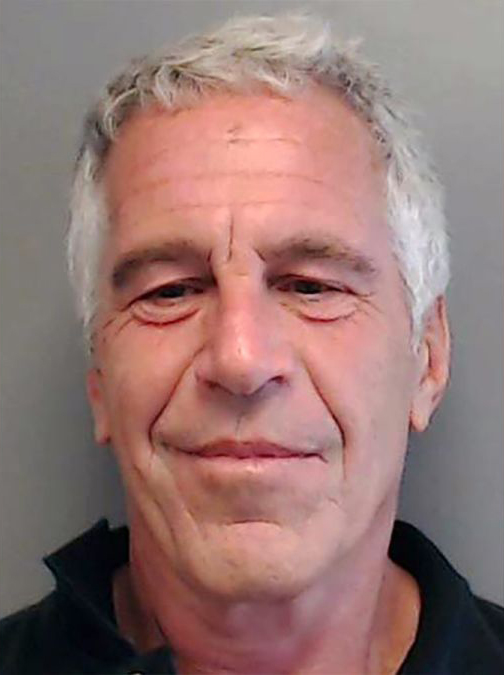
Mugshot of Jeffrey Epstein taken in July 2013.—WIKIMEDIA COMMONS/STATE OF FLORIDA

Millions of files related to the late sex offender Jeffrey Epstein suggest the existence of a “global criminal enterprise” that carried out acts meeting the legal threshold of crimes against humanity, according to a panel of independent experts appointed by the United Nations Human Rights Council.

The experts said crimes outlined in documents released by the US Justice Department were committed against a backdrop of supremacist beliefs, racism, corruption, and extreme misogyny.

The crimes, they said, showed a commodification and dehumanization of women and girls.

“So grave is the scale, nature, systematic character, and transnational reach of these atrocities against women and girls, that a number of them may reasonably meet the legal threshold of crimes against humanity,” the experts said in a statement.

The experts said the allegations contained in the files require an independent, thorough and impartial investigation, and said inquiries should also be launched into how it was possible for such crimes to be committed for so long.

The US Justice Department did not immediately respond to a request for comment.

A law, approved by Congress with broad bipartisan support in November, requires all Epstein-related files to be made public.

The UN experts raised concerns about “serious compliance failures and botched redactions” that exposed sensitive victim information. More than 1,200 victims were identified in the documents that have been released so far.

“The reluctance to fully disclose information or broaden investigations, has left many survivors feeling retraumatized and subjected to what they describe as ‘institutional gaslighting,'” the experts said.

The Justice Department’s release of documents has revealed Mr. Epstein’s ties to many prominent people in politics, finance, academia, and business – both before and after he pleaded guilty in 2008 to prostitution charges, including soliciting an underage girl.

He was found hanged in his jail cell in 2019 after being arrested again on federal charges of sex trafficking of minors. His death was ruled a suicide. —  Reuters

Financial system resources hit P36.9T in 2025

BW FILE PHOTO

By Katherine K. Chan, Reporter 

THE TOTAL RESOURCES of the Philippine financial system climbed by 8.08% year on year to nearly P37 trillion at the end of 2025, preliminary central bank data showed.   

Resources held by banks and nonbank financial institutions (NBFIs) rose to P36.932 trillion last year from P34.172 trillion in 2024, according to data released by the Bangko Sentral ng Pilipinas (BSP).

These resources include funds and assets such as deposits, capital, and bonds or debt securities.

Banks’ resources topped P30 trillion in 2025, as it jumped by 8.67% to P30.706 trillion from P28.256 trillion in 2024.

Of the total, universal and commercial banks had the bulk of the sector’s resources at P28.572 trillion, up 8.07% from P26.438 trillion in the previous year.

Thrift banks’ resources increased by 24.43% to P1.456 trillion at end-2025 from P1.17 trillion at end-2024.

Digital banks’ resources also surged by an annual 41.98% to P172.5 billion at end-2025 from P121.5 billion previously.

Latest available data also showed that resources of rural and cooperative banks stood at P505.9 billion as of end-September 2025. This was 4.02% lower than the P527.1 billion seen for the entire 2024.

On the other hand, nonbanks had P6.226 trillion worth of resources in the first nine months of 2025, exceeding 2024’s total of P5.916 trillion by 5.25%.

There was no available end-2025 data for rural banks and nonbanks.

Nonbanks include investment houses, finance companies, security dealers, pawnshops, and lending companies.

Institutions such as nonstock savings and loan associations, credit card companies, private insurance firms, the Social Security System, and the Government Service Insurance System are also considered NBFIs.

Michael L. Ricafort, chief economist at Rizal Commercial Banking Corp., said the sustained growth in bank lending and deposits as well as the industry’s continued profitability boosted the full-year financial resources.

“This is nearly twice the economic growth of 4.4% in 2025 (and was) again largely due to the continued double-digit growth in bank loans, sustained growth in bank deposits, continued net income growth of banks, which are among the most profitable industries in the country consistently for many years,” he said in a Viber message.

Since May 2024, bank lending has grown at a double-digit pace monthly. The streak was only broken in December last year, when banks’ loan growth eased to a 22-month low of 9.2%.

Meanwhile, the latest available BSP data showed that bank deposits rose by 7.58% year on year to P21.066 trillion as of September from P19.581 trillion previously.

Recent policy easing also allowed banks to benefit from higher trading gains and investment earnings, Mr. Ricafort noted.

Since August 2024, the central bank has so far reduced key borrowing costs by a total of 200 basis points (bps) to its lowest in over three years at 4.5%.

On the other hand, the US Federal Reserve’s benchmark rate currently stands at 3.5%-3.75% range following a cumulative 175 bps in cuts since September 2024.

Jonathan L. Ravelas, a senior adviser at Reyes Tacandong & Co., also noted that the rise of banks and nonbanks’ financial resources last year “reflected resilience and confidence in the system.”

Mr. Ravelas said resources’ growth this year will be driven by banks’ lending to priority sectors such as infrastructure and consumption as well as the impact of capital market activity, trust funds and insurance on NBFIs.

“In 2026, growth will likely be more measured but still solid, with banks focusing on targeted lending to priority sectors like infrastructure and consumption, while nonbanks benefit from capital market activity, trust funds, and insurance,” he said via Viber. “The story this year shifts from rapid accumulation to disciplined, higher‑quality growth.”

Meanwhile, Mr. Ricafort said further monetary policy easing would “lead to higher trading gains and other investment gains, as well as greater demand for loans, that would again be the major growth drivers for total assets and resources of the banking system and the overall financial system.”

The Monetary Board is widely expected to trim the key policy rate by another 25 bps at its meeting on Thursday to bring it to 4.25%, based on a BusinessWorld poll of 16 analysts.


BSP fine-tunes monetary operations

BW FILE PHOTO

By Katherine K. Chan, Reporter

THE BANGKO SENTRAL ng Pilipinas (BSP) has limited its term deposit facility (TDF) and short-term securities to a single tenor each as it aims to enhance monetary policy transmission and push banks to better manage their liquidity.

“When we consulted with banks they (said they) can manage their liquidity positions even with fewer facilities,” BSP Deputy Governor Zeno Ronald R. Abenoja told BusinessWorld on the sidelines of an event last week.

“So, it’s really to improve the transmission of monetary policy and then also encourage banks to manage their liquidity on their own.”

Mr. Abenoja assured that the central bank’s decision to narrow the offerings of its facilities to single tenors was merely “fine-tuning” and not prompted by any market disruption.

“The banks knew about it well in advance. So, we discussed it beforehand,” he said. “So, (it was just) tweaking (and) small, fine-tuning. There aren’t any disruptions.”

The central bank uses facilities such as the overnight reverse repurchase (RRP) facility, TDF and BSP bills to mop up excess liquidity in the financial system and better guide market rates towards the target RRP rate.

The BSP first opened weekly auctions for the TDF in 2016 and the short-term securities in 2020.

For the TDF, it initially offered the seven-day and 28-day tenors and later added the 14-day papers in February 2018.

However, the BSP has not auctioned off the 28-day term deposits for over five years to give way to its weekly offerings of securities with the same tenor.

Meanwhile, the central bank began offering only a 28-day tenor for the BSP bills before adding the 56-day bill in 2023.

In November last year, the BSP stopped issuing the 14-day TDF, leaving only a single seven-day tenor. Since then, it has also limited its auction for the BSP bills to just the 28-day papers.

Mr. Abenoja told this paper that the central bank initially opted to decrease its monetary operations amid the anticipated high demand for liquidity during the holiday season.

In its monetary policy report (MPR) for December 2025, the BSP also said this was done to “rationalize the number of liquidity facilities and concentrate on tenors that would enhance monetary policy transmission.”

As of mid-November 2025, the BSP’s monetary operations have absorbed P1.5 trillion in liquidity from the market. Of this, 42.4% was siphoned off through BSP securities, 34.6% from overnight reverse repurchase agreements, 17.6% via the overnight deposit facility, and 5.4% through the term deposit facility.

BSP Governor Eli M. Remolona, Jr. earlier said they are gradually shifting away from the issuance of short-term papers to manage liquidity as they want to boost activity in the money market.

Mr. Abenoja also noted that short-term rates are now near the central bank’s target policy rate, indicating that the existing instruments are effectively transmitting monetary policy.

“So, as long as you see money market rates — for example, those from BVAL (Bloomberg Valuation Service) or IBCL (Interbank Call Loan) — remain close to the policy rates with corresponding term premia, if it’s longer than the overnight (rate), then the scale of the operation, the volume and the instruments being used could be appropriate,” he said.

Still, the BSP deputy governor added that they could auction off the longer tenors again if they find gaps in monetary policy transmission.

According to the latest MPR, the interest rates in both facilities had fully reflected a total of 175 basis points (bps) in rate cuts.

The BSP has so far delivered a cumulative 200-bp rate cuts since it began its easing cycle in August 2024, which brought the benchmark policy rate to an over three-year low of 4.5%.

The Monetary Board will have its first policy meeting this year on Thursday. A BusinessWorld poll of 16 analysts showed that they are expected to trim the policy rate anew by 25 bps to 4.25%.

SBMA reviews Cerberus’ unsolicited proposal for Subic airport development

A PLANE is seen during sunrise in this photo. — REUTERS/MICHAELA REHLE

By Ashley Erika O. Jose, Reporter

THE P5.31-billion unsolicited proposal of US-based investment company Cerberus Asia Pacific Investments, LLC (Cerberus) to manage, operate, and upgrade Subic Bay International Airport (SBIA) is now being reviewed by the Subic Bay Metropolitan Authority (SBMA) after the go signal from the Public-Private Partnership (PPP) Center.

“This unsolicited project was endorsed by the (PPP) Center to the IA (implementing agency) after being determined complete… The Subic Bay International Airport PPP is currently undergoing the approval process of SBMA,” the PPP Center told BusinessWorld on Tuesday.

According to the PPP Center, the SBMA will be the approving body for the project.

If approved, the airport project will be under an operate-add-transfer contract arrangement.

Once the SBMA approves the project, it will begin negotiations with the project proponent. The government will then formalize the Original Proponent Status and initiate the Swiss Challenge process.

The Swiss Challenge is a process where other companies can submit better offers, but the original proponent has the right to match them.

Cerberus Capital Management is an investment firm managing approximately $65 billion in assets. Its global network of affiliates includes Cerberus Asia Pacific, which focuses on investments in logistics, infrastructure, technology, and energy.

Cerberus already operates part of a 310-hectare lot of a former South Korean-owned shipyard located west of the airport for which it had submitted an unsolicited bid.

“In theory, competitive bidding is king. In the reality of the SBIA, Cerberus is the catalyst we need. It is time to choose strategic results over procedural delays,” Rene S. Santiago, former president of the Transportation Science Society of the Philippines, said in a Viber message.

Nigel Paul C. Villarete, a senior adviser on public-private partnerships at the technical advisory group Libra Konsult, said that solicited bidding would be more feasible and faster, as it enables the government to define the contract’s parameters and coverage.

“Many of our public facilities should be operated by the private sector to attain a lot of the efficiencies that they can do, which are often difficult to attain within the government realm,” Mr. Villarete said.

For Mr. Villarete, a government-led solicited procurement process will always be preferable.

However, since an unsolicited proposal has already been submitted, the government’s role is to enter into negotiations, introduce the necessary changes and amendments, and only then present the proposal to the public for challenge, he said.

“There should be a negotiation period for the two parties to discuss any amendments required by the government before this is published for challenge,” he said.

Cerberus’ proposal covers the rehabilitation of SBIA assets and the development of new facilities to expand capacity and attract new tenants.

The company has also committed to invest “considerable financial resources” and utilize its real estate management capabilities in developing the airport.

In its proposal the company said that it will maintain the existing leases but only for the “early years” of its concession period.

“Cerberus plans to maintain the status quo of existing operations by honoring existing leases and retaining incumbent employees. In parallel, Cerberus will invest significant capital expenditure to improve SBIA’s infrastructure and operations, whilst building new hangars and storage facilities to reestablish SBIA as a major hub for commercial cargo operations and to expand SBIA’s government logistics operations,” it said.

The company added that it will monitor and evaluate airport fees to optimize SBMA’s returns under the revenue-sharing agreement, while supporting efforts to attract and manage both existing and new airport tenants.

This revenue-sharing scheme would be the determining factor if the proposed 25-year concession agreement were extended, PPP Center said.

“This arrangement enables SBMA to share in the upside of the airport’s growth while ensuring that SBMA remains entitled to receive the lion’s share of annual revenues from airport fees until the concessionaire meets and exceeds agreed annual revenue targets,” it said.

At present, the SBMA manages and operates the SBIA, which serves as the secondary and diversion airport for the country’s primary airport, Ninoy Aquino International Airport. SBIA handles corporate jets, cargo, and general aviation.

DA to set up Philippines’ first agri-insurance pool

FARMERS manage their patch of land in Bustos, Bulacan, Aug. 13, 2025. — PHILIPPINE STAR/MIGUEL DE GUZMAN

By Vonn Andrei E. Villamiel

THE Department of Agriculture (DA), with support from the World Bank, is setting up the country’s first agricultural co-insurance pool to expand private sector participation in agricultural insurance and improve coverage for semi-commercial and commercial farmers.

The planned co-insurance pool is part of an $870-million World Bank-supported program that aims to increase access to credit and insurance for farmers, fisherfolk, and agri-micro, small and medium enterprises (MSMEs) in the Philippines.

“The DA wants to encourage private insurers to engage in agricultural insurance,” Israel Q. Dela Cruz, business development and marketing department manager at the Philippine Crop Insurance Corp. (PCIC), told BusinessWorld in an interview.

“At the moment, PCIC is the only main agricultural insurer, along with two other private insurers,” he added.

The proposed co-insurance pool will allow private insurers and the PCIC to jointly offer standardized insurance products while sharing risks and operating costs through a common platform.

The program is modeled after agricultural insurance pool schemes such as Spain’s Agroseguro and Turkey’s Agricultural Insurance Pool or TARSİM, but PCIC said the Philippine version will not operate as a separate legal entity and instead function as a coordinating mechanism.

The DA is expecting at least five private insurers to join the program, although more than 10 companies have already expressed interest during consultations, Mr. Dela Cruz said.

The co-insurance program aims to benefit around 750,000 farmers by the time it concludes in 2030. It will be funded through $70 million in World Bank loan proceeds over five years.

Part of the funding will be allocated to a “first loss” facility to absorb early claims and reduce private insurers’ risk exposure as they enter the sector.

“That means if there are payouts in the first year, they will be covered by the program. Of course, private insurers tend to hesitate, especially in the agricultural insurance business, because they may fear having to pay out large claims right away,” Mr. Dela Cruz said.

A portion of the budget will also cover partial premium subsidies for selected farmer segments and startup and operating costs.

Meanwhile, Mr. Dela Cruz said a pool manager will be selected to oversee the scheme’s operations, including supervising a technical support unit that will handle underwriting, marketing, claims assessment, financial management, and organizational functions.

“Options currently being explored for the pool manager include the National Reinsurance Corp., PCIC, or a private sector insurer,” the World Bank said in an earlier project document.

Personnel from the PCIC and participating private insurers are expected to be assigned to the technical support unit, which will serve as the operational arm of the pool.

The DA is also setting up an agri-risk management office that will study appropriate subsidy levels and guide risk analysis for the program, including determining how much premium support may be provided to eligible farmer segments.

Mr. Dela Cruz said preparatory work is ongoing, including drafting product designs, forming committees, and preparing terms of reference, but full implementation will depend on the approval of the program loan.

“Since it’s a program loan, it has to be approved by the Department of Economy, Planning, and Development. Only then can we start the project,” he said.

Mr. Dela Cruz said the government is targeting approval around June or July, with operations expected to begin soon after.

Meralco may take a look at Semirara coal bid — Pangilinan

SEMIRARAMINING.COM

MANILA ELECTRIC CO. (Meralco) is open to participating in the government bidding for the coal operating contract on Semirara Island, which has been held by Semirara Mining and Power Corp. (SMPC), its chairman said.

“Better if Meralco or MGEN (Meralco PowerGen Corp.) take a look at it,” Meralco Chairman Manuel V. Pangilinan told reporters on Monday.

The government plans to open bidding for the contract this year.

MGEN is the power generation arm of Meralco and operates a diverse portfolio of power generation assets, including thermal and renewable energy technologies.

Mr. Pangilinan said the company is capable of operating a mine-mouth project, a power station located adjacent to a coal mine that allows the direct transport of fuel from the mine to the plant through a conveyor belt.

He said this setup could help localize the fuel supply chain and reduce freight costs.

SMPC has held the coal operating contract for nearly 50 years, allowing it to explore, develop, and mine coal on Semirara Island.

The company obtained the contract in 1977, granting it mining rights for 35 years, which were later extended by 15 years.

With the contract set to expire in 2027, the company has sought approval from the Department of Energy (DoE) to renew the contract for an additional 13 years.

Energy Secretary Sharon S. Garin said the contract should be put out to bidding rather than renewed, following a legal opinion from the Department of Justice.

SMPC said on Monday that it intends to participate in the bidding if the DoE formally initiates an auction, citing its long operational experience on Semirara Island.

“SMPC’s decades of experience in managing complex engineering projects, coupled with its established operations, technical expertise, and extensive equipment fleet developed through its long-standing operations in Semirara Island, provide a strong competitive advantage, which we have communicated to the DoE,” it said.

SMPC, the power generation and coal-mining unit of the Consunji group, is the Philippines’ largest coal producer and the only power company in the country that owns and mines its own fuel source.

Meralco’s controlling shareholder, Beacon Electric Asset Holdings, Inc., is partly owned by PLDT Inc. Hastings Holdings, Inc., a unit of PLDT Beneficial Trust Fund subsidiary MediaQuest Holdings, Inc., has an interest in BusinessWorld through the Philippine Star Group, which it controls. — Sheldeen Joy Talavera

ADVERTISEMENT
ADVERTISEMENT