Home Blog Page 2822

Malixi jumps to No. 5 in World Amateur Golf Ranking

RIANNE MALIXI — CHAMPIONSHIPS.USGA.ORG

RIANNE MALIXI soared to a high No. 5 in the World Amateur Golf Rankings following her triumph at the US Women’s Amateur in Oklahoma over the weekend.

Ms. Malixi, who upgraded her silver in the 2023 edition of the prestigious tournament with a 3 and 2 clincher over American Asterisk Talley in the 36-hole finale, climbed five spots from her old standing en route to reaching the highest ranking by a Filipina golfer.

Toting an average of 1191.1809 points, the 17-year-old Ms. Malixi is hot on the tail of England’s Lottie Woad, who continues to hold pole position with 1339.3273 points, and the next highest players, Spain’s Julie Lopez Ramirez (1307.1521), Korea’s Minsol Kim (282.2250) and the United States’ Zoe Campos (1202.1809).

Ms. Malixi, who is set to compete in Korea next, has been enjoying a banner year highlighted by three victories and two runner-up finishes.

She started her ascent by ruling the Women’s Australian Master of the Amateurs in January. After placing second in the Junior Invitational at Sage Valley in the US in March and the Royal Junior in Japan in April, Ms. Malixi struck gold at the US Girls’ Junior in California last month — only the second time for a Pinay to reign supreme after Princess Superal’s breakthrough in 2014 — before completing her twin kill in the USGA season by annexing the US Women’s tiara three weeks later. — Olmin Leyba

Carlos Yulo will have new foreign coach — Carrion

CARLOS EDRIEL P. YULO

SOON, Paris Olympics hero Carlos Edriel Yulo and the national gymnastics team will have a new foreign coach.

Gymnastics Association of the Philippines President Cynthia Carrion said she had already a few people in mind to help Mr. Yulo as well as other aspirants from the country qualify and possibly strike gold again in the 2028 Los Angeles Olympics.

“I have to see who is the best coach and there are so many who now want to coach Carlos (Yulo) after the Paris Olympics,” said Ms. Carrion.

“Olympics is over so they’re now free to choose which country they want to go to.”

“I have a Bulgarian coach who is very, very good. I have an Australian, I have a Japanese,” she added.

Ms. Carrion did not name the Bulgarian and the Australian but the Japanese mentor Ms. Carrion was referring to was Tomoharu Sano, who flew to the country last February but got injured and was forced to return home.

Ms. Sano was supposed to fill in for another Japanese Munehiro Kugimiya after the latter had a falling out with Mr. Yulo, whom he has been handling since 2016, last year due to personal reasons.

Filipino Aldrin Castañeda went on to handle Mr. Yulo as his coach.

Ms. Carrion said Mr. Yulo will also have a say in the coaching selection.

“Carlos will have to choose also, not just me. They have to have rapport. In fact, I brought a Japanese coach (Mr. Sano), they have a rapport but he got injured unfortunately,” said Ms. Carrion. — Joey Villar

Brownlee, Durham, Hollis-Jefferson lead imports in PBA Season 49 Governors’ Cup

JUSTIN BROWNLEE — FIBA

A TRIUMVIRATE of certified achievers — Justin Brownlee, Rondae Hollis-Jefferson and Allen Durham — banner the mix of old and new faces reinforcing the 12 teams in the Philippine Basketball Association (PBA) Season 49 Governors’ Cup that tips off Sunday.

Three-time Best Import Mr. Brownlee returns to the Barangay Ginebra fold after sitting out the Season 48 Commissioner’s Cup while serving suspension for his doping case post-Asian Games.

Mr. Hollis-Jefferson, who beat Mr. Brownlee for both the crown and the Best Import accolade in the 2023 PBA Governors’ Cup, reunites with TNT in seeking a title repeat.

Back after a long absence for Meralco is the burly Mr. Durham, whose first three tours resulted in Best Import awards but bridesmaid finishes each time, all at the hands of the Mr. Brownlee-led Gin Kings.

JB, AD and RHJ along with Aaron Fuller, who is reinforcing Rain or Shine after previous stints with NLEX, Blackwater and TNT, and Antonio Hester of Terrafirma make up the returning cast among the imports in the season-opening conference.

Former NBA players Glenn Robinson III (Magnolia), Jordan Lavell Adams (San Miguel Beer), Myke Henry (NLEX), Brian Scotty Hopson (Converge) and Ricky Ledo (Blackwater) as well as fellow debutants Taylor Johns (NorthPort) and Jayveous McKinnis (Phoenix) are out for a Cinderella finish in Asia’s first pro league.

Mr. Durham, who spent the last three years in Japan and won the B. League title in 2023, and Mr. Robinson, the 2017 NBA slam dunk champion, will be the first to hit the court as Meralco and Magnolia clash in the lone game on opening night at the Smart Araneta Coliseum

The Governors’ Cup will feature innovations such as a group competition and a four-point shot, among others, that league officials feel is important in making the games more exciting.

The Bolts and the Hotshots will compete with the FiberXers, the Dyip, the Batang Pier and the Tropang Giga in Group A while the Gin Kings, the Beermen, the Bossing, the Fuel Masters, the Road Warriors and the Elasto Painters will duke it out in Group B.

The teams will face their group-mates twice then Top 4 finishers of each bracket will advance to the crossover best-of-five quarterfinal series. Victors will proceed to the best-of-seven semis then the last two squads standing will go on to dispute the diadem in another race-to-four contest. — Olmin Leyba

Farm Fresh blasts Solar Spikers in straight sets

PVL

Games Friday
(MOA Arena)
1 p.m. — ZUS Coffee vs Chery Tiggo
3 p.m. — Petro Gazz vs PLDT
5 p.m. — Choco Mucho vs Creamline

FARM Fresh found a way to neutralize Russian supernova Marina Tushova to turn back Capital1 Solar Spikers, 25-17, 25-23, 25-20, on Thursday to keep its quarterfinal bid alive in the Premier Volleyball League (PVL) Reinforced Conference at the PhilSports Arena.

The Foxies held Ms. Tushova to just 18 points after averaging a conference-high 33 points and 42 in the last three outings where she had outputs of 45, 32 and a new league record 49.

“We scouted her well (Ms. Tushova),” said Farm Fresh spiker Trisha Tubu, who chipped in 12 points that helped significantly import Yen Murillo after the latter led the team with 15 hits.

The crucial win, their third in seven assignments, sent the Foxies straight into the magic eight after loitering out of it for quite some time now.

It also ended a two-game slide.

Farm Fresh’s Japanese coach Shota Sato said he kept the faith even though the losses were piling up.

“I just trust the players,” said Mr. Sato through an interpreter.

For Farm Fresh to remain in the quarters hunt, it must hurdle its last elimination round opponent in sister team Akari Tuesday.

“We just have to play better in our next game,” said Mr. Sato. — Joey Villar

Unrivaled

When Women’s National Basketball Association All-Stars Breanna Stewart and Napheesa Collier introduced Unrivaled in late May, the premise was simple. They sought to provide the league’s marquee names with an alternative to employment in tournaments outside the United States during the offseason, particularly after the turn of the year and until the start of training camp in April. By remaining Stateside, these players would then be able to steer clear of the controversial prioritization clause in the collective bargaining agreement.

To be sure, Unrivaled has a unique selling proposition. It’s a 3v3 league of six teams, with five players on each team. Games are slated to be played on a compressed court measuring 70×50 feet. And with former ESPN and Turner executives John Skipper and David Levy heading negotiations for media and advertising rights, it figures to ride on the increasing popularity of women’s sports. Add to this the promise of equity stakes and competitive salaries for the 30 players, and it’s easy to see why there is a scramble behind the scenes to be part of the league.

Clearly seeing the marketing benefits provided by sustained interest in Unrivaled, those behind it have seen fit to slowly name the handpicked players on social media. And with each introduction comes heightened pressure for hopefuls; less and less slots are becoming available. Normally, casual observers are not privy to what goes on behind the curtains. In this case, all and sundry got a peek after the Sky’s Chennedy Carter made a fuss as to why she had not yet received an invite from the league, and then posted on social media what appears to be privileged communication from her representation.

Carter’s willingness to highlight the issue in public is no surprise considering her outsized personality. Which, it must be noted, has already landed her in hot water before — not including her infamous body-check of ultra-popular Fever rookie Caitlin Clark in a match on June 1. Whether it will eventually lead to her being given a spot in Unrivaled remains to be seen. From a business standpoint, however, her unpredictable nature should give decision makers pause. For all her admitted skills with a ball in her hands, her off-court antics make her an iffy proposition — especially since co-ownership is included in the deal.

How all this winds up is anybody’s guess. In any case, Unrivaled is a can’t-miss proposition that stands as a boon for all stakeholders of the women’s game.


Anthony L. Cuaycong has been writing Courtside since BusinessWorld introduced a Sports section in 1994. He is a consultant on strategic planning, operations and human resources management, corporate communications, and business development.

WHO declares mpox a global public health emergency

THE World Health Organization (WHO) logo is seen on the exterior of entry door at WHO Headquarters in Geneva, Switzerland, on July 19, 2023. — WHO/PIERRE ALBOUY

THE WORLD Health Organization (WHO)  on Wednesday declared mpox a global public health emergency for the second time in two years, following an outbreak of the viral infection in Democratic Republic of Congo that has spread to neighboring countries.

An emergency committee met earlier on Wednesday to advise WHO Director-General Tedros Adhanom Ghebreyesus on whether the disease outbreak constitutes a “public health emergency of international concern,” or PHEIC.

PHEIC status is WHO’s highest level of alert and aims to accelerate research, funding and international public health measures and cooperation to contain a disease.

“It’s clear that a coordinated international response is essential to stop these outbreaks and save lives,” said Mr. Tedros.

Mpox can spread through close contact. Usually mild, it is fatal in rare cases. It causes flu-like symptoms and pus-filled lesions on the body.

The outbreak in Congo began with the spread of an endemic strain, known as clade I. But a new variant, clade Ib, appears to spread more easily through routine close contact, including sexual contact.

It has spread from Congo to neighboring countries, including Burundi, Kenya, Rwanda and Uganda, triggering the action from the WHO.

“The detection and rapid spread of a new clade of mpox in eastern DRC, its detection in neighboring countries that had not previously reported mpox, and the potential for further spread within Africa and beyond is very worrying,” Mr. Tedros added.

Mr. Tedros said on Wednesday that WHO had released $1.5 million in contingency funds and plans to release more in the coming days. WHO’s response plan would require an initial $15 million, and the agency plans to appeal to donors for funding.

Earlier this week, Africa’s top public health body declared an mpox emergency for the continent after warning that the viral infection was spreading at an alarming rate, with more than 17,000 suspected cases and more than 500 deaths this year, mainly among children in Congo.

Professor Dimie Ogoina, chair of WHO’s mpox emergency committee, said all members unanimously agreed that the current upsurge of cases is an “extraordinary event,” with a record number of cases in Congo.

Vaccines and behavior change helped stop the spread when a different strain of mpox spread globally, primarily among men who have sex with men, and WHO declared an emergency in 2022.

In Congo, the transmission routes need further study, WHO said. No vaccines are yet available, although efforts are underway to change that and work out who best to target. The agency also appealed to countries with stockpiles to donate shots. — Reuters

Japan ends megaquake alert a week after Kyushu tremor

JAPAN called off an alert for an elevated risk of a megaquake a week after a powerful tremor off the southwestern island of Kyushu prompted the government to warn it could be a sign of a larger seismic event to come.

The warning about the danger of an earthquake around the Nankai Trough was lifted at 5 p.m., after no changes in seismic activity were observed, disaster management minister Yoshifumi Matsumura told reporters.

A quake in the area, where the Philippine sea plate subducts under the Eurasian continental plate, could be more destructive than the March 2011 earthquake and tsunami that devastated northeastern Japan. The Nankai Trough extends along the coast of the country’s southwestern prefectures.

“The special warning may have ended but that doesn’t mean there’s no possibility of a large-scale tremor,” Mr. Matsumura said, adding that it is important to maintain preparedness in a country that’s prone to earthquakes.

The warning prompted some travelers to cancel hotel bookings in the affected region at peak season, domestic media said, while there were also reports of panic buying of water and other emergency supplies. Prime Minister Fumio Kishida canceled a planned trip to Central Asia, while telling reporters the warning didn’t imply a quake would occur within a fixed period of time.

Larger earthquakes have followed smaller ones in the past. Foreshocks started two days before Japan was hit with a magnitude-9 earthquake in 2011, the most powerful recorded in the nation. The tremor and resulting tsunami killed almost 20,000 and triggered a meltdown and radiation leakage at the Fukushima Dai-ichi nuclear power plant. — Bloomberg

Weary Argentines have mixed feelings as world’s worst inflation eases

REUTERS

BUENOS AIRES — Argentines, feeling the pinch of the world’s highest annual inflation rates, are feeling both hopeful and weary as monthly price increases dip to their lowest in over two years amid tough austerity measures under President Javier Milei.

Inflation in July came in at 4%, Argentina’s INDEC statistics agency reported on Wednesday, the lowest since the start of 2022. In the 12 months through July, however, inflation topped 263% — making it still the highest recorded in the world.

The South American country is trying to emerge from a severe economic crisis which ushered libertarian outsider Mr. Milei into power late last year as voters opted for a radical new approach to restore stability.

Mr. Milei’s sharp cost-cutting campaign has helped bolster the state’s embattled finances, allowed the central bank to rebuild reserves, and tamped down inflation — though it has taken a heavy toll on economic activity. Poverty levels have also risen.

“I am tired, but this is something different to what we have seen before, that’s for sure,” said Miguel Jamui, a 69-year-old retired worker, who is hopeful Mr. Milei’s maverick approach will start to yield results.

Mr. Milei’s policies have helped bring down monthly inflation from over 25% in December to now 4% in July, though the country has slid into recession and subsidy cuts have pushed up prices of certain services and goods.

Many Argentines still feel their purchasing power is dwindling despite inflation slowing, with poverty affecting half the population and over seven million children living in poverty, according to a study released this week by UNICEF.

Mr. Milei’s government argues that fiscal responsibility is essential to stabilize the economy and cautions that things will get tougher for Argentines before improving.

Maria Ruiz, a 43-year-old teacher, said she was still having to tighten her belt due to the economic crisis.

“It’s incredible that every time you try to maintain a standard of living, you fall, you fall, you fall,” Ms. Ruiz said near the iconic Obelisco monument in central Buenos Aires where shop windows were full of promotions to attract customers.

“I see that merchants are trying to survive with promotions or whatever they can, but the truth is, it’s not enough.” — Reuters

Japan firms see Harris presidency as better for business than Trump, Reuters survey shows

US VICE-PRESIDENT Kamala Harris delivers remarks during a campaign event at West Allis Central High School in West Allis, Wisconsin, US, July 23, 2024. — REUTERS

TOKYO — More Japanese companies believe a Kamala Harris presidency in the U.S. would be better for their businesses than a second Donald Trump administration, a Reuters survey showed on Thursday, reflecting the respondents concerns about protectionism and policy unpredictability.

The outcome of November’s U.S. presidential election is being closely watched by countries around the world. But Japan is a close ally of Washington, with tens of thousands of U.S. troops stationed there, and its businesses would feel the impact of a renewed U.S.-China trade war since both are among its top trading partners.

Some 43% of Japanese firms said they preferred Ms. Harris in light of their corporate strategies and business plans while 8% picked Mr. Trump.

A total of 46% said either candidate would be fine, with the remaining 3% saying they preferred neither.

“There is a possibility that trade war, economic friction and security threats will be brought about under another Trump administration, forcing us to change our business strategy,” a manager at a ceramics manufacturer wrote in the survey.

Japan’s relations with the Trump administration were at times strained by his demands for more payments towards military assistance and by trade tensions.

With Ms. Harris, “we can expect current policies to be maintained by and large. That would give us better visibility into the future,” an official at a chemicals firm said.

Asked what change will likely be necessary under a Trump administration, 34% said their foreign exchange strategy would need to be reviewed, while 28% said their supply chains would be realigned and 21% said they would redce their China operations.

Mr. Trump has floated the idea of a 10% universal tariff on U.S. imports, which could disrupt international markets, and a tariff of at least 50% on Chinese goods.

Nikkei Research reached out to 506 companies from July 31 to Aug. 9 on behalf of Reuters for the survey, with 243 firms responding.

CHINA SLOWDOWN
Regardless of who wins the U.S. election, 13% of Japanese companies are considering reducing operations in China, while 3% are looking into expanding their businesses, with 47% planning to maintain their current exposure, the survey showed.

Among those thinking about paring down operations in China, 35% said they saw no prospects for economic recovery, 29% cited tough price competition and another 29% pointed to economic security risks as reasons to cut back.

China’s economy grew much slower than expected in the second quarter and its exports rose at their slowest pace in three months in July, adding to concerns about the outlook for its vast manufacturing sector.

Major Japanese companies that have announced cutbacks in their China operations in recent months include Honda Motor 7267.T and Nippon Steel 5401.T.

The survey also showed 24% of respondents saw recent rounds of intervention in the foreign exchange market by Japanese authorities as appropriate, compared with 9% that found the moves inappropriate and 64% that believed they were unavoidable.

The yen kept falling earlier this year despite intervention in April and May, touching a 38-year low of 161.96 to the dollar on July 3. Japanese authorities are suspected to have stepped in again in mid-July to put a floor under the yen.

“The extreme weakness in the yen had to be corrected. It just couldn’t be helped,” an official at an electronics company said.

Asked if the Bank of Japan should raise interest rates to shore up the yen, 51% said such a step was allowed only when exchange rates fluctuated excessively, while 22% said they didn’t support a monetary policy change aimed at affecting the foreign exchange market.

On expectations for the yen, 32% saw it trading in a range of 145 to 150 yen to the dollar at the end of the year, while 25% predicted the Japanese currency to be firmer at 140 to 145 yen, while 22% saw it trading between 150 to 155 yen.

During the period of the survey, the yen was volatile and touched its strongest level since the start of the year before reversing course. It has since continued to weaken. — Reuters

US Navy’s newest air-to-air missile could tilt balance in South China Sea

PHILSTAR FILE PHOTO

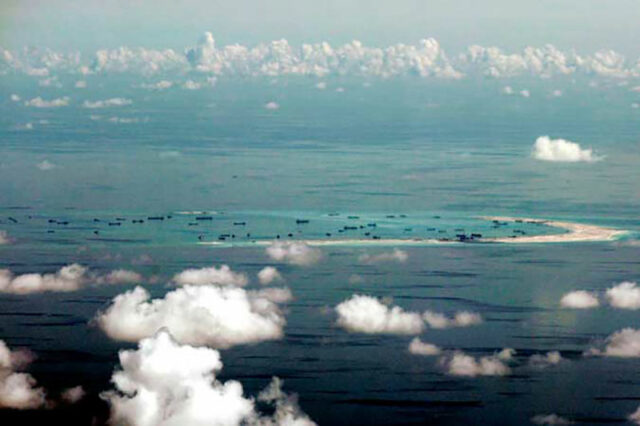
SINGAPORE — The U.S. Navy’s deployment of new extremely long-range air-to-air missiles in the Indo-Pacific could erase China’s advantage in aerial reach, experts say, part of an intensifying focus on projecting power amid high tensions in the region.

The AIM-174B, developed from the readily available Raytheon SM-6 air defense missile, is the longest-range such missile the United States has ever fielded and was officially acknowledged in July.

It has three key advantages: it can fly several times farther than the next-best U.S. option, the AIM-120 AMRAAM; it does not require new production lines; and it is compatible with the aircraft of at least one ally, Australia.

Crucially, a weapon such as the AIM-174B, which can attack aerial targets as far away as 400 km (250 miles), outranges China’s PL-15 missile, allowing U.S. jets to keep threats farther from aircraft carriers, and safely strike “high-value” Chinese targets, such as command-and-control planes.

“The United States can ensure the safety of their important assets, such as carrier groups, and launch long-range strikes on PLA targets,” said Chieh Chung, a researcher at a Taipei-based thinktank, the Association of Strategic Foresight, using an abbreviation for the People’s Liberation Army.

The West has not easily been able to do that until now.

The AIM-120, the standard long-range missile for U.S. aircraft, has a maximum range of about 150 km (93 miles), which

requires the launching aircraft to fly deeper into contested territory, exposing aircraft carriers to greater danger of anti-ship attacks.

Any type of South China Sea conflict, within the so-called First Island Chain, which runs roughly from Indonesia northeast to the Japanese mainland, means the U.S. Navy would operate within few hundred kilometers of its Chinese adversary.

Supporting Taiwan in an invasion would pull the Navy in even closer.

The AIM-174B changes that equation, keeping PLA carrier-hunting aircraft out of firing range and even endangering their planes attacking Taiwan, Cheih said. That increased the likelihood the United States would get involved in a major conflict in the region, he added.

“The big thing is that it lets the United States push in a little bit further” into the South China Sea during a conflict, said a senior U.S. defence technical analyst, who declined to be identified because the matter is a sensitive one.

“And it’s going to potentially change Chinese behaviour because it’s going to hold large, slow, unmanoeuvrable aircraft at greater risk.”

RANGE ADVANTAGE
For decades, the United States’ advantage in stealth fighters, first with the F-117 and then with the F-22 and F-35, meant that missiles such as the AIM-120 were all that was needed.

The U.S. military also leaned into developing the AMRAAM as a cheaper alternative to a new missile, drastically improving its performance over decades, said Justin Bronk, an airpower and technology expert at London’s Royal United Services Institute.

The SM-6 is estimated to cost about $4 million each, says the Missile Defense Advocacy Alliance, while an AMRAAM costs about $1 million.

European nations, which lacked access to stealth technology until recent years, developed the ramjet-powered Meteor missile, with a range of 200 km (124 miles), produced by MBDA.

MBDA did not respond to a request for comment.

The advent of Chinese stealth aircraft such as the J-20, and more important, the PL-15 missile it can carry internally – with a range of 250 km (155 miles) or more – eroded the U.S. edge, said Kelly Grieco, a senior fellow at the Stimson Center.

Now a stealthy Chinese aircraft could theoretically spot non-stealthy U.S. aircraft and shoot them down well outside the range where they could even fight back, she said.

Even U.S. stealth aircraft might be forced to fly dangerously close to fire their missiles.

“If a Chinese fighter can outrange an American fighter, it means they can get the first shot,” she said. “It’s hard to outrun something that’s travelling at Mach 4.”

The AIM-174B was developed to quickly address that need.

The secretive Lockheed Martin AIM-260, a separate U.S. Air Force program to develop an extremely long-range air-to-air missile small enough for stealth aircraft to carry internally, has been in development for at least seven years.

Lockheed Martin declined to comment on the project.

China is developing missiles with longer range than the PL-15, Bronk said, but the radar of launching aircraft may be unable to spot targets at such distances.

“If you go too big and too heavy with the missiles, you end up trading off fuel” for the aircraft, he added.

AVAILABILITY
Using Raytheon’s SM-6, originally designed for a ship-launched air defense role, means production lines are already available. Funding has already been earmarked for more than 100 SM-6 missiles a year.

Raytheon declined to comment on how many AIM-174Bs would be produced or if existing SM-6s would be converted.

So far it has only been shown on U.S. Navy F/A-18E/F Super Hornet aircraft, which are operated by the U.S. and Australian militaries.

The United States sees Australia as a crucial ally and location for projecting power into the South China Sea, and is investing hundreds of millions of dollars in military infrastructure there.

Australia’s defense ministry said it “works closely with the U.S. to understand capability options available for Australian consideration”.

The U.S. Defense Department referred questions about the AIM-174B to the U.S. Navy.

The Navy said the missile was “operationally deployed” but declined to comment on whether it would be supplied to allies, whether it would be integrated onto other aircraft, and how many AIM-174Bs it wanted each year.

The versatility of the SM-6, which has also been used to hit ships, land targets and missiles, opens up possibilities beyond the AIM-174B, said Peter Layton, a defense and aviation expert at the Griffith Asia Institute.

For instance, if fitted with an anti-radar seeker, it could attack and disrupt surface-to-air missile batteries from extremely long range.

For now, though, adding the AIM-174B to the U.S. Navy’s arsenal, even if not yet in large numbers, changes the calculus of a regional conflict, the senior technical analyst said.

“If this is enough to push (China’s high-value) aircraft way back, then you don’t need many,” the analyst added.

“Because the threat has caused the adversary to change their behavior … It makes a South China Sea scenario easier.” — Reuters


PayMongo launches Digital Wallet to empower SMEs in PH

Paymongo, a leading digital financial service for Filipino entrepreneurs, recently launched the PayMongo Wallet, designed to make digital transactions easier for small and medium enterprises (SMEs) in the Philippines.

PayMongo CEO Jojo Malolos revealed the PayMongo Wallet is set to revolutionize digital financial transactions for small and medium enterprises (SMEs) in the Philippines, offering a seamless, secure, and inclusive solution.

“PayMongo Wallet streamlines online business operations and enhances financial management, helping Filipino SMEs thrive in the digital age,” Malolos said.

Malolos explained that in a market where SMEs constitute a significant portion of businesses, the PayMongo Wallet is designed to support these enterprises as they adapt to an evolving digital economy. “Our goal is to help SMEs stay competitive in a digital-first world,” Malolos added.

Malolos said that the PayMongo Wallet is a game-changer for local businesses. “In today’s digital age, having smooth and secure financial transactions is a must for any business. It’s not just about convenience; it’s about creating a better experience for both merchants and their customers while ensuring top-notch online security,” Malolos revealed.

PayMongo Wallet Key Features

Malolos explained that PayMongo Wallet is packed with features to make financial management a breeze, including Cash Flow Management, Transaction Tracking, Faster Payouts, and Flexible Platform integrations. 

For Cash Flow Management, Malolos said that to efficiently manage finances, whether cashing in or sending money to any bank. “This feature streamlines fund management,” Malolos said.

Malolos highlighted the Transaction Tracking feature, which provides SMEs with a centralized view of all financial transactions, essential for audits and accounting. “Every transaction is documented, making it easy for businesses to stay on top of their finances,” Malolos revealed.

Another feature is Faster Payouts, which receive payouts quicker, bypassing traditional clearing schedules, according to Malolos. “This ensures quicker access to funds, which is crucial for smooth operations,” Malolos explained.

Malolos also emphasized that the PayMongo Wallet has a Flexible Platform Integration, which offers a robust API that integrates seamlessly with merchants’ platforms, providing a customizable and scalable financial tool. “Whether you need a disbursement solution or a wallet, PayMongo can adapt to your specific needs, offering a customizable and scalable financial tool,” Malolos said. 

Enhanced Security

PayMongo Co-Founder and Chairperson Luis Sia said that PayMongo has reinforced the security of its platform to safeguard business finances as it adheres to stringent security standards of the Bangko Sentral ng Pilipinas (BSP), including PCI-DSS and SOC2 compliance.

“This proactive approach to risk management underscores our commitment to protecting merchants and their transactions against cyber threats,” Sia said.


Spotlight is BusinessWorld’s sponsored section that allows advertisers to amplify their brand and connect with BusinessWorld’s audience by publishing their stories on the BusinessWorld Web site. For more information, send an email to online@bworldonline.com.

Join us on Viber at https://bit.ly/3hv6bLA to get more updates and subscribe to BusinessWorld’s titles and get exclusive content through www.bworld-x.com.

PLDT Group’s Cathy Yang wins Gold Stevie® at inaugural Technology Excellence Awards

In what is the first annual Stevie® Awards for Technology Excellence — considered the “Olympics for technology,” PLDT Group’s Cathy Yang has been feted Gold Stevie® Winner, clinching the highest recognition under the category, “Executive of the Year — Communication Technology.”

The Stevie® Awards for Technology Excellence celebrate the remarkable accomplishments of individuals, teams, and organizations shaping the future of technology across all industry sectors. More than 100 professionals worldwide participated in the judging process to select this year’s honorees.

Judges have recognized Yang and her team’s role in leveraging corporate communications through innovation and technology, propagating safe spaces online, by liaising with international partners such as UNICEF in integrating child rights into the business. In December 2022, Yang’s invitation by the King and Queen of Sweden to represent PLDT Group and the Philippines in the Global Child Forum (GCF) in Stockholm has become testament to the positive influence PLDT Group wields through strategic communications on child protection. Among global child rights advocates, Yang is the only Philippine and Southeast Asian representative chosen to share PLDT Group’s best practices on child protection initiatives.

In 2023, PLDT has been recognized as a Leader in the GCF’s latest global children’s rights and business benchmark, a global assessment and report on the state of children’s rights across 1,108 companies, in eight sectors and six regions. The application of a child rights lens into policies from inside PLDT Group and outwards to the communities it operates has helped become the bedrock of Yang and her team’s strategic communications, in a whole-of-nation approach to preventing the proliferation of online sexual abuse and exploitation of children.

Winners of the awards — named the Stevies® from the Greek word meaning “crowned,” will be recognized during a gala awards dinner on Sept. 16 at the Marriott Marquis Hotel in New York City.

More than 600 nominations from organizations of all sizes in 21 nations and territories were submitted this year for consideration in a wide range of tech-related categories, including Company of the Year, Educational or Research Institution of the Year, Technical Innovation of the Year, Technology Breakthrough of the Year, and more in a variety of industry groupings including Advertising, Marketing, and PR, Aerospace Technology, Biotechnology, Business Technology, and Healthcare Technology, among others.

Details about the Stevie® Awards for Technology Excellence and the list of 2024 Stevie® winners are available at www.StevieAwards.com/Tech.


Spotlight is BusinessWorld’s sponsored section that allows advertisers to amplify their brand and connect with BusinessWorld’s audience by publishing their stories on the BusinessWorld Web site. For more information, send an email to online@bworldonline.com.

Join us on Viber at https://bit.ly/3hv6bLA to get more updates and subscribe to BusinessWorld’s titles and get exclusive content through www.bworld-x.com.

ADVERTISEMENT
ADVERTISEMENT