Home Blog Page 266

China’s humanoid robots take center stage for Lunar New Year showtime

A HUMANOID ROBOT performs a dance with robot dogs dressed in lion costumes on the first day of the Lunar New Year of the Horse, at the Niangniang Temple in Beijing, China, Feb. 17, 2026. — REUTERS/MAXIM SHEMETOV

BEIJING — China’s most-watched TV show, the annual CCTV Spring Festival Gala, on Monday showcased the country’s cutting-edge industrial policy and Beijing’s push to dominate humanoid robots and the future of manufacturing.

Four rising humanoid robot startups — Unitree Robotics, Galbot, Noetix and MagicLab — demonstrated their products at the gala, a televised event and touchstone for China comparable to the Super Bowl for the United States.

The program’s first three sketches prominently featured humanoid robots, including a lengthy martial arts demonstration where over a dozen Unitree humanoids performed sophisticated fight sequences waving swords, poles and nunchucks in close proximity to human children performers.

The fight sequences included a technically ambitious one that imitated the wobbly moves and backward falls of China’s “drunken boxing” martial arts style, showing innovations in multi-robot coordination and fault recovery — where a robot can get up after falling down.

The program’s opening sketch also prominently featured Bytedance’s artificial intelligence (AI) chatbot Doubao, while four Noetix humanoid robots appeared alongside human actors in a comedy skit and MagicLab robots performed a synchronized dance with human performers during the song “We Are Made in China.”

IPOS PLANNED
The hype surrounding China’s humanoid robot sector comes as major players including AgiBot and Unitree prepare for initial public offerings (IPOs) this year, and domestic AI startups release a raft of frontier models during the lucrative nine-day Lunar New Year public holiday.

Last year’s gala stunned viewers with 16 full-size Unitree humanoids twirling handkerchiefs and dancing in unison with human performers.

Unitree’s founder met President Xi Jinping weeks later at a high-profile tech symposium — the first of its kind since 2018.

Mr. Xi has met five robotics startup founders in the past year, comparable to the four electric vehicle and four semiconductor entrepreneurs he met in the same timeframe, giving the nascent sector unusual visibility.

The CCTV show, which drew 79% of live TV viewership in China last year, has for decades been used to highlight Beijing’s tech ambitions, including its space program, drones and robotics, said Georg Stieler, Asia managing director and head of robotics and automation at technology consultancy Stieler.

“What distinguishes the gala from comparable events elsewhere is the directness of the pipeline from industrial policy to prime-time spectacle,” Mr. Stieler said.

“Companies that appear on the gala stage receive tangible rewards in government orders, investor attention, and market access.”

“It’s been just one year — and the performance jump is striking,” said Mr. Stieler, adding that the robots’ impressive motion control showed Unitree’s focus on developing robot “brains” — the AI-powered software that enables them to complete fine motor tasks that can be used in real-world factory settings.

CHINA’S STRENGTHS
Behind the spectacle of robots running marathons and executing kung fu kicks and backflips, China has positioned robotics and AI at the heart of its next-generation AI+ manufacturing strategy, betting that productivity gains from automation will offset pressures from its ageing workforce.

“Humanoids bundle a lot of China’s strengths into one narrative: AI capability, hardware supply chain, and manufacturing ambition. They are also the most ‘legible’ form factor for the public and officials,” said Beijing-based tech analyst Poe Zhao.

“In an early market, attention becomes a resource.”

China accounted for 90% of the roughly 13,000 humanoid robots shipped globally last year, far ahead of US rivals including Tesla’s Optimus, according to research firm Omdia.

Morgan Stanley projects that China’s humanoid sales will more than double to 28,000 units this year.

Elon Musk has said he expects his biggest competitor to be Chinese companies as he pivots Tesla toward a focus on embodied AI and its flagship humanoid Optimus.

“People outside China underestimate China, but China is an ass-kicker next level,” Mr. Musk said last month. — Reuters

BHP profit beats forecasts as copper tops iron ore earnings on AI demand

REUTERS

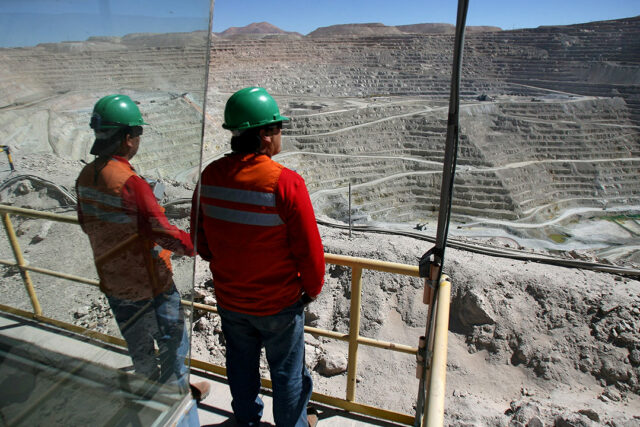
MELBOURNE — BHP Group reported a stronger-than-expected half-year underlying profit driven by copper, which for the first time surpassed iron ore in the top global miner’s earnings, as prices for the red metal surged on artificial intelligence (AI)-fueled demand.

BHP’s shares jumped 7% to an all-time high, with investors applauding a much stronger-than-expected dividend and the prospect of sizeable payouts ahead, despite falling iron ore prices.

The strong result comes as demand for copper is soaring driven by rapid growth in power use for AI data centers and the shift to cleaner energy, which is spurring competition among mining majors for high‑quality copper assets.

BHP, the world’s top copper producer, highlighted its own copper growth options and played down the need for acquisitions, having walked away last year from an approach to buy Anglo American.

First-half underlying attributable profit rose 22% to $6.20 billion, beating the Visible Alpha consensus of $6.03 billion. BHP declared an interim dividend of 73 cents per share, ahead of market estimates of 63 cents, representing a payout ratio of 60%.

“It was a good result,” said Andy Forster, portfolio manager at Argo Investments, a BHP shareholder. “They smashed everyone’s expectations from a dividend perspective.”

Copper, including byproducts such as gold, contributed $7.95 billion to BHP’s operating earnings in the six months ending Dec. 31, higher than iron ore’s $7.50 billion and making up 51% of the group’s total underlying operating earnings of $15.46 billion.

That was largely driven by a 32% jump in realized prices for copper, along with soaring prices for the precious metals. A record first-half iron ore production alongside higher prices also boosted the miner’s profits.

The push to focus on copper comes amid an expected easing in prices for iron ore as supply grows over the coming years, while inflation is also boosting production costs. Iron ore prices hit a seven-month low this week.

Unit costs for iron ore grew by 7% to $19.41 per metric ton in the half year.

‘NO BURNING NEED’ FOR TAKEOVERS
BHP Chief Executive Officer Mike Henry said on a media call given its organic growth options, the company did not feel pressure to pursue mergers and acquisitions for copper growth.

“For the discrete few opportunities that might come along that fit the very strict criteria that we have, we’ve got the wherewithal to pursue them, but we’re not feeling any burning need to,” he said.

Rio Tinto, the world’s largest iron ore producer, was in talks to buy Glencore, a deal that would have had major implications for the global copper sector, but walked away earlier this month citing disagreement over valuation.

BHP has been pushing to boost its copper output towards the end of the decade. In January, it lifted the bottom end of its copper production forecast for this year to between 1.9 million and 2 million tons, citing strong operational performance across its copper assets.

On Tuesday, it flagged an $18-billion multi-year investment plan to develop copper, gold, and silver mining projects in northern Argentina, at its Vicuna Corp. joint venture with Canada’s Lundin Mining. It said the unit has the potential to produce more than 500,000 tons of copper a year at peak production next decade.

Mr. Henry said “tough negotiations” with China over iron ore supply continued as the state buyer, CMRG, tries to extract better terms for Chinese steelmakers. He expressed confidence that the issues will be resolved, although it will take time.

BHP flagged it had seen a price impact from CMRG’s ban on its Jimblebar fines product in its quarterly report in January but did not offer further details in its earnings report.

The miner announced a silver streaming agreement with Wheaton Precious Metals for an upfront payment of $4.3 billion at completion, to deliver silver from its share of output at Peru’s Antamina mine.

That payment is part of a targeted $10 billion that BHP aims to raise from existing assets, which could help boost its dividend payout for the full year, Mr. Henry said. — Reuters

Luxury stocks’ volatility highlights AI jitters, hedge fund positioning

A Louis Vuitton store is seen in the Makati central business district in this file photo. — REUTERS

PARIS/LONDON — As luxury companies like LVMH and Gucci owner Kering struggle to recover from a two-year slowdown, they are navigating increasingly sharp share price swings stoked by hedge fund bets and investor nerves over artificial intelligence (AI)-rattled markets.

Sales of expensive handbags and designer clothing have slid at many top brands including Dior and Gucci after a post-pandemic boom, and investors are now keenly tuned in to any signals of the sector returning to growth.

So far, it’s a mixed picture. In addition, recent broader AI-related selloffs on the US stock market risk dampening the spending power of high-end consumers, while hedge funds’ wagers on luxury stocks are exacerbating price moves.

Shares in LVMH, the world’s biggest luxury group with a €260-billion ($308.49-billion) market cap, suffered their biggest one-day fall since 2020 late last month after Chief Executive Officer (CEO) Bernard Arnault struck a cautious tone for the year ahead, dashing hopes of a swift recovery. LVMH’s previous market update, in October, had driven its shares up 12% — the best day in more than two decades.

HEDGE FUNDS SHORT LUXURY
Luxury stocks and the wider consumer discretionary sector were among the most shorted going into this results season, according to hedge fund data provider Hazeltree.

A high number of short positions — where investors place bets that a share price will fall — can drive big price swings, with better-than-expected results driving short-sellers to rush for the exits.

Kering shares jumped 11% last week after the group’s fourth-quarter revenue fell slightly less than expected and new CEO Luca de Meo talked of “early, fragile” signs of recovery.

“Two factors are driving the volatility in luxury stocks like Kering,” said Michael Oliver Weinberg, a hedge fund investor and special advisor to the Tokyo University of Science Endowment.

“First, indexation has locked up capital in passive ‘buy and hold’ positions,” he said, referring to how chunks of stock are tied up in index funds, leaving a smaller amount to be traded by active funds, triggering bigger moves.

“Second, the market is now dominated by multi-manager hedge funds trading specifically against news and data points when they have a research or information edge.”

AI BUBBLE RISK FOR LUXURY STOCKS
The growing sway of hedge funds has driven greater volatility in European stocks more broadly in recent years.

But luxury’s reliance on spending by the wealthy also exposes it more than most to the US stock market, which, after a blistering bull run, is seeing increasingly wild swings driven by AI trends.

Kering CEO Mr. De Meo has said the stock market is a barometer for Americans’ luxury spending and flagged an AI market correction as a risk for European luxury groups.

“Many Americans have savings held in stocks, so if the market holds up well, consumption will keep driving growth. If there’s a crash, an AI bubble, etcetera, then we’ll talk again,” Mr. De Meo told journalists last Tuesday after reporting results.

“But for now it’s looking good.”

While hedge funds trade the swings in sentiment, longer-term investors in luxury companies are having to hold on tight.

“In these record high markets that are very concentrated with high valuations, clearly people are extremely nervous and everybody is wanting to hit the sell button,” said Christopher Rossbach, managing partner at J. Stern & Co in London, which holds LVMH shares.

“You have to look at the company fundamentals and look through the noise because there are significant cyclical issues that have hit luxury companies, but they are working through them,” he added.

Some investors are looking to switch bets between luxury names, hoping to cash in on turnaround stories. While struggling Kering surged after sales fell less than expected, Birkin bag maker Hermes — which has come through the slowdown unscathed — gained just 2.5% after another solid quarter of growth. Hermes trades at 45 times forward earnings, more than twice the valuation of LVMH.

“You’re seeing quite significant share price moves as the nuance is slightly different (at each company),” said Emily Cooledge, head of luxury research at Rothschild & Co Redburn. “And because we’re at that fragile tipping point moment.” Reuters

Crypto company Nexo returns to US three years after clash with regulators

REUTERS

PARIS — Crypto company Nexo has relaunched in the United States, it said on Monday, three years after leaving the country and paying a $45-million fine following clashes with regulators.

Co-founded by former Bulgarian lawmaker Antoni Trenchev, Nexo paid the fine to settle charges brought by US regulators over a crypto lending product, which the Securities and Exchange Commission (SEC) said should have been registered as a security.

Nexo did not admit or deny the SEC’s findings under the settlement.

In a statement on Monday, Nexo said it was returning to the US in partnership with a listed crypto company, Bakkt, and will sell crypto-backed loans as well as yield-generating products to US customers.

“Nexo discontinued the product covered by the 2023 SEC order for US investors as required,” a spokesperson for the company said.

“The current US offering is structured differently and is delivered through appropriately licensed US partners, including, where applicable, an SEC-registered investment adviser for advisory services,” they added.

A spokesperson for the SEC declined to comment.

NEXO’S CONTACTS WITH THE TRUMP FAMILY
Mr. Trenchev had lunch with US President Donald J. Trump in July at his Scottish golf resort, where Nexo was the lead sponsor of a golf championship. There, they discussed politics and their “joint vision for crypto in the US,” according to a post on X by Mr. Trenchev.

Once a crypto skeptic, Mr. Trump reversed his stance before returning to the White House. Soon after he took office last year, the SEC ended a years-long crackdown on crypto companies.

Nexo hosted Donald Trump, Jr., the president’s eldest son, at a “Trump Business Vision 2025” event in the Bulgarian capital, Sofia, last April.

Responding to a question from Reuters about those contacts, the Nexo spokesperson said the company’s return to the US was “based on our ability to offer products in a compliant structure” and was not related to its interactions with the Trump family.

“Our sports partnerships and event participation are not connected to our regulatory or operational status in the US,” Nexo’s spokesperson said.

The Trump Organization family business has seen a sharp increase in income after delving into crypto with its own company, World Liberty Financial.

Some government and ethics experts have said the family’s development of crypto initiatives as Mr. Trump oversees US crypto policy constitutes a conflict of interest. The White House has said that no conflict of interest exists. Reuters

Goldman Sachs plans to drop DEI from board-candidate criteria, WSJ reports

REUTERS

GOLDMAN SACHS is preparing to eliminate race, gender identity, sexual orientation, and other diversity-related factors from the criteria its board uses to assess prospective candidates, The Wall Street Journal (WSJ) reported on Monday, citing people familiar with the matter.

Since taking office last year, US President Donald J. Trump has launched a broad campaign against diversity, equity, and inclusion (DEI) practices in both the government and the private sector, alleging that these programs are discriminatory.

Several corporate giants including Morgan Stanley and Citi have softened their diversity commitments amid pressure from the Trump administration.

Goldman’s decision follows a request from the conservative activist nonprofit National Legal and Policy Center, a small shareholder in the bank, the WSJ report said, adding that the group submitted a proposal last September urging the firm to remove the DEI criteria.

Reuters could not immediately verify the WSJ report.

Goldman Sachs declined a Reuters request for comment.

Last year, the Wall Street bank removed an entire “diversity and inclusion” section from its annual filing, after ending its four-year-old diversity policy that required companies to have at least two diverse board members before being advised on initial public offerings.

The board’s governance committee currently identifies qualified candidates based on four primary criteria, including a broad definition of diversity that covers viewpoints, background, professional and military experience, as well as other demographic considerations, according to the WSJ report on Monday.

The committee now plans to remove references to those additional demographic factors, including race, gender identity, ethnicity and sexual orientation, the report said. — Reuters

US and Iran set for high-stakes nuclear talks in Geneva as threat of war looms

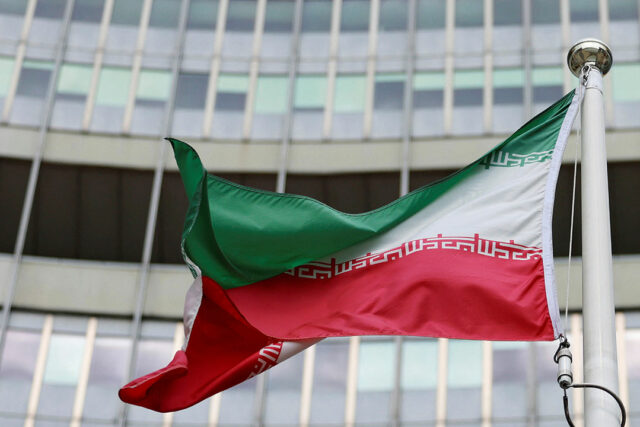
THE Iranian flag flutters outside the IAEA headquarters in Vienna, Austria, June 9, 2025. — REUTERS/LISA LEUTNER

GENEVA — The US and Iran hold indirect talks in Geneva on Tuesday aimed at resolving their long-running nuclear dispute, with little clear indication of compromise as Washington masses a battle force in the region.

US envoys Steve Witkoff and Jared Kushner will take part in the negotiations, which are being mediated by Oman, a source briefed on the matter told Reuters, alongside Iranian Foreign Minister Abbas Araqchi.

US President Donald Trump said that he would be involved “indirectly” in the Geneva talks and that he believed Tehran wanted to make a deal.

“I don’t think they want the consequences of not making a deal,” Mr. Trump told reporters aboard Air Force One on Monday. “We could have had a deal instead of sending the B-2s in to knock out their nuclear potential. And we had to send the B-2s.”

Tehran knows that a previous attempt to revive talks was under way in June last year when Washington’s ally Israel launched a bombing campaign against Iran, and was then joined by US B-2 bombers that struck nuclear targets. Tehran has since said it has halted uranium enrichment activity.

The US military is preparing for the possibility of weeks of operations against Iran if Mr. Trump orders an attack, two US officials told Reuters.

Iran itself began a military drill on Monday in the Strait of Hormuz, a vital international waterway and oil export route from Gulf Arab states, who have been appealing for diplomacy to end the dispute.

IRAN-US NUCLEAR TALKS UNDER SHADOW OF PROTESTS AND WAR
Tehran and Washington renewed negotiations on February 6 on their decades-long dispute.

Washington and its close ally Israel believe Iran aspires to build a nuclear weapon that could threaten Israel’s existence. Iran says its nuclear program is purely peaceful, even though it has enriched uranium far beyond the purity needed for power generation, and close to what is required for a bomb.

Since the June strikes, Iran’s Islamic rulers have been weakened by street protests, put down at a cost of thousands of lives, against a cost-of-living crisis driven in part by international sanctions that have strangled Iran’s oil income.

Unlike last time, the US has now placed what Mr. Trump calls a massive naval armada in the region.

Washington has sought to expand the scope of talks to non-nuclear issues such as Iran’s missile stockpile. Tehran says it is willing only to discuss curbs on its nuclear program – in exchange for sanctions relief – and that it will not give up uranium enrichment completely or discuss its missile program.

On Monday, US Secretary of State Marco Rubio told a news conference in Budapest that it was hard to do a deal with Iran, but the US was willing to try.

Iran’s Mr. Araqchi on Monday met Rafael Grossi, head of the International Atomic Energy Agency, in Geneva to discuss cooperation with the IAEA and technical aspects of the impending talks with the US.

On Tuesday afternoon, Mr. Witkoff and Mr. Kushner will participate in three-way talks with Russia and Ukraine as Washington attempts to coax Ukraine and Russia into an agreement to end Moscow’s four-year-old invasion of Ukraine, the source said. — Reuters

‘Hell and back’: mass rape survivor Gisele Pelicot recounts her ordeal in memoir

MIKA BAUMEISTER-UNSPLASH

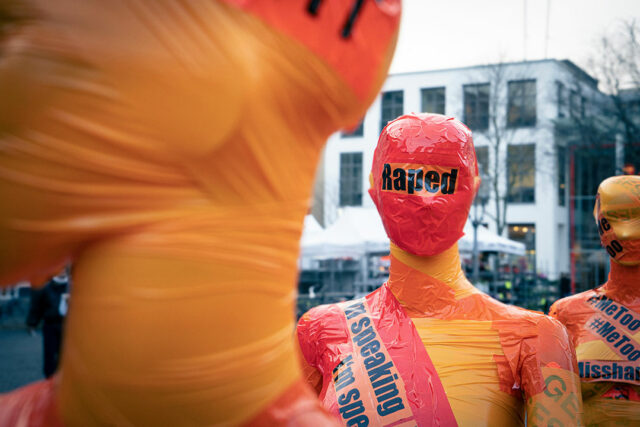
GISELE PELICOT, the French woman whose husband was convicted of inviting dozens of men to rape her unconscious body, has released her memoir, recounting the horrors she endured and why she chose to go public in a trial that shocked the world.

“A Hymn to Life”, published on Tuesday, retraces the 2024 mass-rape case that turned Ms. Pelicot, 73, into a global symbol in the fight against sexual violence – and which spurred France to revamp its rape law.

Explaining her decision to waive her right to anonymity, she wrote: “No one would ever know what they had done to me… No one beyond those involved in the trial would see their faces, look them up and down and wonder how to pick out the rapists among their neighbors and colleagues.”

‘HELL AND BACK’
Describing the moment she learned her husband had drugged and raped her for years, she wrote that police had initially asked if she and her then-husband were swingers. When she had replied that they weren’t, she was shown images of herself, unconscious in bed with unknown men.

“The officer says a number. He tells me fifty-three men had come to my house to rape me,” the memoir reads.

She then recounts how she went home and hung out her husband’s washing. “I was like a dog waiting by the garden gate for its master,” she wrote.

She also describes the difficult task of telling friends and, especially, her children, and how she was aware that her daughter Caroline was about to “go through hell and back.”

In addition to her now ex-husband Dominique Pelicot, 50 men were convicted of raping Gisele Pelicot.

‘FAITH IN PEOPLE … IS MY REVENGE’
During the trial, Gisele Pelicot never directly addressed Dominique Pelicot but she wrote that she planned to visit him in prison to seek answers.

“Did you ever think, ‘I must stop’? Did you abuse our daughter? Did you commit the most abject crime of all? Do you have any idea of the hell we’re living in? … Did you kill? … I’ll ask him all these questions. I need answers; he owes me that much.”

Ms. Pelicot says she has drawn strength from the thousands of letters she has received from women around the world and from the women waiting outside the courtroom.

“Not long after the trial began, I started to be presented with a bundle of correspondence at the end of each day … I preferred to read their letters rather than the newspapers; they gave me the chance to listen to women’s voices,” she wrote.

“How could I tell the women … that their presence outside the courtroom eased for me what was happening inside.”

In her book, Ms. Pelicot also describes how she found love again with a man she met through mutual friends.

The evening she met him, she recalled in the book she “was light-headed with happiness.”

“I needed to love again. I wasn’t afraid. … I still have faith in people. Once, that was my greatest weakness. Now it is my strength. My revenge.” — Reuters

UK jobless rate hits highest in over a decade outside pandemic

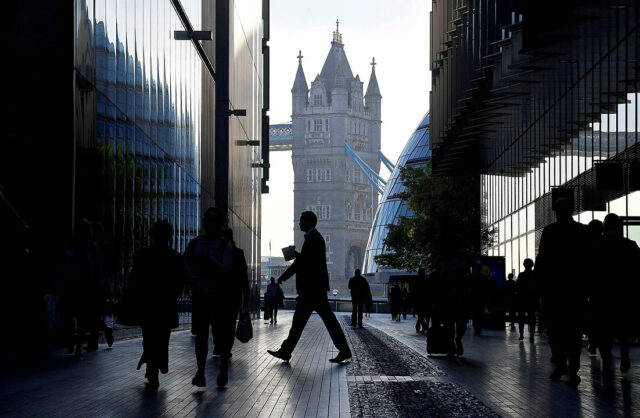
REUTERS/TOBY MELVILLE/FILE PHOTO

LONDON — Britain’s jobless rate edged up late last year to its highest in over a decade outside the pandemic period and wage growth slowed further, data showed on Tuesday, adding to investor bets on a UK interest rate cut next month.

The unemployment rate rose to 5.2% in the last three months of 2025, the highest since 2015 not including the pandemic, according to the data from the Office for National Statistics. It hit 5.3% in late 2020 and stood at 5.1% in the three months to November last year.

The jobless rate is calculated from a survey that the ONS is in the process of overhauling after response rates dipped too low during the pandemic. However, analysts say the quality of the data has improved in recent months.

Sterling fell by more than half a cent against the dollar after the figures were published.

“Today’s data raises the prospect of the Bank of England resuming cutting interest rates in March,” Yael  Selfin, chief economist at KPMG UK, said.

Investors priced a roughly 73% chance of a quarter-point rate cut on March 19 at the BoE’s next meeting, up from 65% on Monday.

The data from the ONS showed weaker inflationary heat from growth in workers’ earnings.

Annual wage growth, excluding bonuses, slowed to 4.2% in the last three months of 2025 compared with the same period a year earlier, matching forecasts by most economists in a Reuters poll and down from 4.4% in the three months to November.

The BoE is watching pay as a gauge of how long Britain’s above-target inflation is likely to last.

Earlier this month, the central bank said previously strong wage growth in the private sector was starting to reflect the weakening of the jobs market.

Private sector annual wage growth excluding bonuses slowed to 3.4% in the three months to December, down from 3.6% in the three months to November.

Last week ONS data showed weaker-than-expected growth in the overall economy in the October-to-December period, hurt in part by speculation about tax increases in finance minister Rachel Reeves’ budget at the end of November.

There were some signs in the most recent figures included in Tuesday’s data release that the labor market might be stabilizing after taking a hit on Ms. Reeves’ increase last April in a tax paid by employers.

The number of people in payrolled employment fell by 11,000 people in January from December.

In December, payrolls fell by a revised 6,000, the smallest drop since August last year and a much softer fall than a provisional estimate of a plunge of 43,000. — Reuters

Australia rules out helping families of IS militants leave Syrian camp

STOCK PHOTO | Image by Rebecca Lintz from Pixabay

SYDNEY — Australian Prime Minister Anthony Albanese said on Tuesday his government would not help Australians in a Syrian camp holding families of suspected Islamic State militants return home, with the government open to prosecutions if they make it back.

“We have a very firm view that we won’t be providing assistance or repatriation,” Mr. Albanese told ABC News.

Thirty-four Australians released on Monday from a camp in northern Syria were returned to the detention center due to “technical reasons,” two sources told Reuters on Monday.

Dubbed “IS brides” by local media – though the cohort also includes children – they are expected to travel to Damascus before eventually returning to Australia, despite objection from ruling and opposition lawmakers.

A spokesperson for Home Affairs Minister Tony Burke said Australia’s security agencies had been monitoring the situation in Syria, and said those who had broken the law would be prosecuted.

“People in this cohort need to know that if they have committed a crime and if they return to Australia they will be met with the full force of the law,” he said.

Islamic State is a listed terror organization in Australia, with membership of the group punishable by up to 25 years in prison. Australia also has the power to strip dual nationals of citizenship if they are an Islamic State member.

SURGE IN RIGHT-WING POPULISM
The return of relatives of suspected IS militants is a political issue in Australia, that has seen a surge in popularity of the right wing, anti-immigration One Nation party led by Pauline Hanson.

“They hate Westerners, and that’s what it’s all about. You say there’s great Muslims out there, well I’m sorry, how can you tell me there are good Muslims?” Hanson said in an interview on Sky News on Monday, following news of the suspected Islamic State family members return.

The comments were criticized by members of Ms. Hanson’s party.

A poll this week found One Nation’s share of the popular vote at a record high of 26%, above the combined support for the traditional center-right coalition currently in opposition.

Sarah Henderson, a senator in the Liberal party that has seen its vote eroded by One Nation, said on Tuesday that Australians with sympathies towards Islamic State should be barred from reentering the country.

“If these are people who subscribed to ISIS ideology, who subscribe to this extremist ideology, then they should not be returning to Australia,” she told ABC.

Australian citizens have a legal right to enter the country under both local and international law. — Reuters

EU ill-prepared for worsening climate change, advisers say

STOCK PHOTO | Image by Jcomp from Freepik

BRUSSELS — The European Union is not prepared for worsening climate change and should urgently step up its investments to protect people and infrastructure from mounting floods, wildfires, and severe heatwaves, its independent advisers said on Tuesday.

Climate change has made Europe the world’s fastest-warming continent, according to the World Meteorological Organization, driving more frequent and intense heatwaves, flooding, coastal destruction and storms.

The economic damage to European infrastructure and buildings from weather and climate extremes is now 45 billion euros ($53.34 billion) per year, five times higher than in the 1980s, EU data show.

While the EU has ambitious targets to cut greenhouse gases – the main cause of climate change – its efforts have fallen short on adapting to the extreme weather climate change is already fueling, according to the EU’s advisers, the European Scientific Advisory Board on Climate Change.

“It is a lack of coherence, a lack of coordination, and also a lack of budget,” said the advisory board’s chair, Ottmar Edenhofer.

Without stronger preparations, extreme weather will further harm the EU’s competitiveness, straining public budgets and increasing security risks, the advisers said.

They recommended the EU agree to prepare, across all member states, for risks associated with 2.8 to 3.3°C of warming by 2100.

This should be used to develop policies to help people and businesses adapt, the advisers said – for example, ensuring housing is not built in flood-exposed areas, planning support for drought-hit farmers, or designing cities to help people stay cool when temperatures spike.

The average global temperature is now 1.4C higher than in pre-industrial times. Countries’ latest national climate pledges, if achieved, would still lead to 2.3 – 2.5°C of global warming this century, according to the UN.

The EU advisers said another key area is investing in public early warning systems and increasing insurance coverage, for example, by considering EU-level reinsurance. Only a quarter of climate-related economic losses in the EU are currently insured.

The European Commission will propose a new strategy on “climate resilience” later this year, following weather disasters including 2023 floods in Slovenia whose reconstruction costs equaled 11% of the country’s GDP, and Europe’s worst wildfire season on record last year. — Reuters

Heavy rain batters New Zealand’s South Island, triggers flood warnings

STOCK PHOTO | Image by Hermann Traub from Pixabay

SYDNEY — Heavy rain pummeled New Zealand’s South Island on Tuesday, triggering flooding and forcing the closure of roads and bridges, as a powerful storm that caused widespread destruction in the capital Wellington since the weekend moved south.

New Zealand’s weather bureau said a low-pressure system off the east coast could bring further bursts of heavy rain through Tuesday, warning that rivers and streams could rise rapidly and that landslips were possible.

Large waves and dangerous sea conditions are also expected, MetService New Zealand said in its latest update.

A local state of emergency was declared on the Banks Peninsula near Christchurch, New Zealand’s second largest city, after flooding, fallen trees and landslides disrupted communities, and cut communication and power in some areas.

“We anticipated the weather easing off, but unfortunately that hasn’t happened, and isn’t forecast to begin easing until 6:00 p.m. (0500 GMT),” Christchurch Mayor Phil Mauger said.

Mauger urged residents to conserve water as the wild weather continued, while some households were told to boil water for drinking after flooding damaged a water treatment facility.

The tourist town of Akaroa, about 90 kilometers (56 miles) northwest of Christchurch, was cut off.

Local cafe owner Cameron Gordon said the water had reached the walls of his business. “Worst I’ve seen in my 20 years by quite some margin,” he told NZME media group.

Online images showed collapsed sections of road, flooded streets and fast-rising streams across the region.

The storm earlier caused widespread disruption across large parts of the country’s North Island, where flights were cancelled, major highways closed and power cut to tens of thousands of residents. Several people in Wellington on the North Island remained without electricity on Tuesday, New Zealand media reported. — Reuters

Philippines says takes exception to China embassy comment on job losses 

Job seekers line up at a job fair in Manila. — PHILIPPINE STAR/EDD GUMBAN

MANILA — The Philippines takes “strong exception” to a statement by the Chinese Embassy in Manila that the simmering diplomatic spat between the two countries could result in millions of jobs being lost, the foreign ministry said, adding such comments could be seen as coercive.

The Philippines and China have had repeated maritime confrontations in the contested South China Sea, and there have been sharp exchanges recently between the Chinese Embassy and Philippine officials.

Some senators have said China’s ambassador should be recalled, remarks that prompted the embassy to warn last week that any serious damage to bilateral ties would “cost millions of jobs.”

“We take strong exception to the embassy’s tone, which appears to imply that such cooperation could be withheld as a form of leverage or retaliation,” the Department of Foreign Affairs said in a statement issued late Monday.

“In the current atmosphere, this framing risks being perceived as coercive and undermines constructive bilateral dialogue,” it added, and called on Chinese diplomats to “adopt a responsible and measured tone in public exchanges.”

The Chinese Embassy did not immediately respond to a request for comment. Tuesday is a holiday in China and the Philippines for the Lunar New Year.

The Philippines has accused China of aggressive actions inside its exclusive economic zones in the South China Sea, including dangerous maneuvers, water-cannoning, and disrupting resupply missions.

China, in turn, has accused the Philippines of intruding into what it claims as its territory. — Reuters