Home Blog Page 2653

UnionBank, DLS-CSB launch Innovation Garage

L-R: UnionBank President and CEO Edwin R. Bautista; DLS-CSB VP for Advancement Brother Agustine Boquer, FSC; UnionBank SVP — Head of Corp. Reputation & Media Management James Ileto; UnionBank CHRO, Sustainability & CSR Head Michelle E. Rubio; and DLS-CSB Vice-Chancellor for Academics Angelo Marco U. Lacson during the ribbon-cutting ceremony at the Innovation Garage

Union Bank of the Philippines (UnionBank), through its UBPXcellerator Program led by the bank’s Human Resources team, has crossed another milestone in its advocacy of “teching-up” Filipinos with the launch of the UB Innovation Garage in partnership with the De La Salle-College of Saint Benilde (DLS-CSB).

Located at The Atrium DLS-CSB Campus, the Innovation Garage is a learning facility where students can learn from experts and gain knowledge on topics ranging from emerging technologies to management skills and design thinking and everything in between, so that they can thrive professionally in the digital world.

As part of the partnership, DLS-CSB and experts from UnionBank’s learning and development team will be running the classes to be conducted in the Innovation Garage. UnionBank’s Human Resources team will also work with DLS-CSB for student mentorship opportunities and placements, and even help top-performing students become part of the UnionBank family as professionals, where they can further improve their knowledge and skills.

During the ribbon-cutting ceremony for the learning facility last July 17, UnionBank President and Chief Executive Officer Edwin Bautista said that when the bank was looking for a partner for the Innovation Garage, DLS-CSB was a clear candidate as the school was a popular choice among students looking to get into creative and/or digital-leaning careers.

“With the innate creativity of the Filipinos, we could be among the best in Southeast Asia if not the world, and this is one area where we can compete with the very best. And so, when we thought about who we can help, DLS-CSB felt like a natural choice,” Mr. Bautista said. “I hope that with this [Innovation Garage], you can be the Center of Excellence not just for the La Sallian schools, but a Center of Excellence for the country.”

The launch of the Innovation Garage is the latest development in UnionBank and DLS-CSB’s long-running partnership that started in 2018. Other notable efforts borne from the partnership include numerous Xcellerator courses offered to DLS-CSB students, as well as an elective in Data Science and Artificial Intelligence inspired by UnionBank’s participation at the Singapore Fintech Festival.

Going local: Maybe the way to become food secure is to think small

FREEPIK

By Joseph L. Garcia, Senior Reporter

ACCORDING to the Second Quarter 2024 National Social Weather Survey by the Social Weather Stations, 17.6% of Filipino families experienced “involuntary hunger” (being hungry and not having anything to eat) at least once in the past three months. This is a rise of 3.4 percentage points in the hunger rate from 14.2% in the last survey in March this year.

The figure sounds dire, especially when one considers that it is the highest since the lockdowns of 2020, when the hunger rate in September was at 30.7%.

The solutions to hunger are complex for they will involve employment stability and a systemic overhaul, but one of them includes easy access to food. One of these solutions may be in our own backyard (literally).

Carlomagno Aguilar is the co-founder and Chief Farmer and Head Farm Consultant at FarmYields, Inc. FarmYields is a platform that matches local farmers with consumers, as well as a consultancy that offers farm development for idle land. Meanwhile, John Sherwin Felix is the one-man team behind Lokalpedia, a social media page that documents and archives local Filipino produce. Together, their work — farm-to-table supply chains and promoting heirloom produce — may aid in reducing the hunger rate.

FARM TO TABLE
Farm-to-table produce (it’s in the name: the produce comes to your plate directly from the farm, with little business and processing in between) has long been a pet of high-end restaurants, ensuring that those who can pay are assured of very fresh food. But it isn’t just fancy restaurants who can benefit from an arrangement like this.

Mr. Aguilar said in an e-mail to BusinessWorld, “When I started farming way back in 2010, I partnered with a sisig joint (not a high-end restaurant). I only grow hot peppers needed by the restaurant and I deliver their orders every morning. If every farmer can do this kind of arrangement, it will be beneficial for both farmers and consumers.”

Mr. Aguilar believes that farm-to-table supply chains can be applied to local communities that grow local vegetables. In his native Pampanga, farm-to-table practices are already utilized by eat-all-you-can restaurants that source vegetables like okra, eggplant, chilies, squash, and kangkong (swamp cabbage), among others, from nearby farmers. “If we identify communities and we get data on how much local vegetables they need, then farms can grow those crops only. It’s a matter of communication between farmers and consumers.”

By knowing exactly what and how much is needed, farmers can avoid growing bumper crops that they cannot sell or not enough so there is a shortage.

“Farm-to-table will only work if the market and the farmers communicate with each other. Farmers do not know what to grow in a specific season. They only grow what was dictated by byaheros (middlemen). The byaheros will then supply the seedlings, fertilizer and other inputs needed by the farmers,” he said. “If the Department of Agriculture (DA) has accurate data on what crop is needed on a specific month, then the farmers will have a guide on what to grow. If this happens, there will be no shortage and there will be stability of pricing.”

CLOSER TO FARMERS, DIVERSIFYING DIETS
Mr. Felix thinks that there’s also another information and communication gap that contributes to food insecurity issues. Having just landed from documentation trips in La Union and Palawan, Mr. Felix said in a Zoom interview with BusinessWorld, “Documenting our traditional ingredients and food helps (in) at least one of the many problems of food security by providing information that the public can use. You can’t protect and promote something that you do not know.”

For example, Mr. Felix’s area of expertise are indigenous crops and plants in the Philippines. He gives an example of trees or plants with food potential that are being cut down or destroyed because the public doesn’t know about them.

Mr. Felix believes that one of the reasons for food insecurity is monocropping; that is, planting the same, singular crop on the same land, year after year. This then leads to biodiversity loss, among other issues.

While there are many people we could point fingers at, one of the fingers points back at us, the consumer.

For example, a community that eats a lot of chicken will contribute to a rise in demand for poultry — the demand for poultry in turn will create demand for farmers to plant corn for feed. “Ikaw iyong nagdidikta ng kinu-cultivate nila (you dictate what they cultivate),” said Mr. Felix, speaking of the consumer. Monocropping might lead to fast cash for the farmer, but Mr. Felix says, the practice leads to vulnerability to crop disease and catastrophe damage (and long-term loss). Since consumer demand dictates supply, the onus for food security is not only in the hands of the farmers, but also on the plates of the consumer.

I-diversify natin iyong diets natin (let’s diversify our diets),” said Mr. Felix. “At sa farmers naman, i-diversify rin nila iyong kanilang crops na tinatanim (and as for farmers, they should diversify the crops they plant).”

THE ROLE OF GOVERNMENT
An infographic from the Philippine Statistics Authority showed that the country imported 469.33 thousand metric tons of rice (amounting to $233.26 million) in January this year. The top supplier of rice — the Philippines’ staple food — is Vietnam, with an estimated $130.05 million worth of imports. According to a BusinessWorld story, the Philippines had imported 2.44 million metric tons of rice by July.

“Even with rice, we have more areas to grow rice — but many farmers choose not grow rice anymore due to its [lack of] profitability. They’d rather grow corn that is used for feeds because the selling price is higher compared to rice. That has been the clamor of farmers. If we buy their rice at a better price, the more farmers will grow rice and we will be more independent with our own produce,” said Mr. Aguilar.

Sounds easy, but Mr. Felix points out that farmers should be empowered first. “More than diversifying our consumption, I think we need to have closer relationships with the farmers; and we need to empower them,” he said. “Para makatulong talaga tayo sa farmers, sa kanila dapat binibigay iyong decision making (For us to really help the farmers, the decision making should be given to them).”

The Bureau of Plant Industry (BPI), under the DA, has projects related to concerns of food security, namely in the issues tackled here: farm-to-table farming and heirloom produce. “The Bureau of Plant Industry, exercising the mandates to ensure the availability of high-quality seeds, advanced farming technologies, safety and integrity of plant food, and support to plant industry through proactive biosecurity, contributes to the protection of endemic farm-to-table sources as a measure to aid in attaining sustainability and food security,” they said.

The DA, collecting data from various connected agencies, was the primary respondent to BusinessWorld’s queries and requests for information, and sent these — including the BPI’s statement — through the office of its spokesperson, Assistant Secretary Arnel de Mesa.

According to the BPI’s letter, the Bureau conserves plant genetic resources (including endemic and indigenous crops), thereby securing access to sources of desirable traits for varietal development. There are also projects conducted to generate technologies to support crop production such as protective cultivation and urban farming, technologies adaptive to various conditions such as limited planting area and adverse climatic conditions. Additionally, research on sustainable pest management is being done to provide eco-friendly alternatives to reduce losses due to pests and diseases.

“BPI also provides certified organic vegetable seeds and vermicompost to support farmers and the public engaging in organic farming practices,” they said.

Aside from that, they also have training programs and provide technical assistance for farmers.

The Second Quarter 2024 National Social Weather Survey cited above showed that the experience of hunger was highest in Metro Manila, with 20% of the families surveyed reporting hunger. This does not have to be so.

The BPI told BusinessWorld, “There are indeed farming technologies that are actually out scaled through a project supported by the DA-Bureau of Agricultural Research. The project covered the urban and peri-urban areas, and this was a highly participatory approach wherein the beneficiaries were trained as trainers, and co-owned the project to perpetuate production of vegetables in their respective areas.” They added, “Urban farming makes it possible to reduce the carbon footprint of vegetables by making it available locally, with less damage incurred during handling and transport.”

FROM IDLE LAND TO FARM
Mr. Aguilar discussed the work of converting idle land to arable land. The first is doing a soil test. “It’s important to know the status of the soil in terms of organic matter, pH level and the presence of nutrients like phosphorus and potassium. It’s like getting laboratory tests for your body before a doctor can give you a diagnosis and prescription,” he said.

One should also check the farm’s elevation, to know which crops will be good to grow. “Are upland vegetables suitable or should you get a heat-resistant variety of seeds?,” he said. The distance between the farm and the market shouldn’t be too far, or else, it might affect the quality of the produce, he pointed out.

A new farm should also have a reliable water source, a good security system (“Pilferage is a big issue when harvesting,” he said), and farmers who know what to do. “It’s good to get farmers within the community to give employment to the community members as well. And the people around the community know better about the farm than anybody else,” he said.

Mr. Felix thinks that fixing the problems in the rural areas helps solve hunger in the cities. “Kung hindi okay iyong rural communities, hindi rin magiging okay iyong dito sa metro. Sila iyong big chunk of our food producers (if the people in the rural areas aren’t okay, then neither will we be okay in the metro. The people in the rural areas are a big chunk of our food producers).”

Asked if there is a crop that could be propagated nationwide to combat food insecurity, Mr. Felix said that the answer isn’t that simple. “The Philippines is an archipelago with different ecosystems, habitats, and even different preferences. To push a certain food sa ibang lugar na mahirap naman tumubo (in different places where they’re difficult to grow), I don’t think it’s feasible,” he said. “The best practice is to encourage cultivation of region-specific crops… the best practice is to promote what is local to the community.”

In a pinch, however, he suggests the binahian shrub. The Lokalpedia page says that the young shoots can be eaten “raw or cooked and are often added to various dishes such as tinola and munggo (chicken soup and mung bean soup) just like the common malunggay (moringa).” It can be propagated easily through cuttings, and can even be grown in pots.

THE PROBLEM OF GENTRIFICATION
Mr. Felix also discussed the question of the gentrification of heirloom produce: again, it’s a systemic issue, but fingers can again be pointed to middlemen and the market.

Crops are sold at a higher price, and sometimes rebranded in bigger, more expensive markets, and the difficulty of their procurement is sometimes used to inflate their prices.

“One of the best ways to avoid gentrification is to support our local and public markets,” he said. However, he warns against the privatization of public markets (under the guise of modernization). That drives up rent prices, and thus, food prices. “May pattern na talaga ng pagkamkam ng mga MSMEs and public spaces (there is really a pattern of grabbing MSMEs and public spaces).”

It seems that most of the concerns Mr. Felix raises can start to be solved by one of his statements: “Dapat maging informed consumer tayo. Dapat alam natin kung saan nanggagaling iyong pagkain (We should become informed consumers. We should know where food comes from).”

Solutions Mr. Aguilar says that can come from the government include the use of government-owned free lands (with proper documentation to prevent issues of squatting and land grabbing), market matching (the use of data to match farmers with what nearby consumers need), and mechanization.

“Proper mechanization will increase the productivity of farmers. That includes hand tractors, solar pumps, quality seeds, proper storage; logistics from farm to market,” he said. “I know this is too much, but it has been practiced in other countries where the government highly supports (their) farmers.”

Meanwhile, the Agriculture department told BusinessWorld that going big is the way to go.

The DA “believes (food security) is achievable with the right investments to implement effective strategies and achieve transformative growth. Over the past few decades, piecemeal investments in agriculture have prevented the realization of the country’s full agricultural potential. Fortunately, under the Marcos administration, a larger portion of the national budget has been allocated to agriculture and food security. For the country to be fully food secure, Philippine agriculture must undergo transformation. Food security encompasses more than just producing sufficient food; it also involves affordability, quality and safety, sustainability, and adaptation. Therefore, a multi-faceted approach is required, involving the government, the private sector, civil society, and all value chain actors.”

It has a four-year plan called “Masaganang Bagong Pilipinas” that aims to achieve food security by boosting agricultural production to ensure access to affordable and nutritious food; and develop the agriculture and fisheries sector into a profitable industry for farmers, fisherfolk, and all stakeholders involved in the value chain. These involve expanding agri-fishery areas for increased production, modernization, developing post-harvest systems and infrastructure, and strengthening research and development in the involved sectors.

“The DA recognizes that the path to becoming fully food secure is not easy, especially with challenges such as the negative effects of climate change and population growth. However, despite these challenges, the Department believes that through collective effort, the goal of food security can be achieved.”

Philippines needs catch-up plan to boost manufacturing value

PHILIPPINE STAR/BOY SANTOS

By Kyle Aristophere T. Atienza, Reporter

THE PHILIPPINE ECONOMY beat expectations by growing by 6.3% in the second quarter amid increased state spending ahead of an election season, when cash flows to poverty-stricken areas.

But the expansion was mainly driven by sectors whose workers are paid low, including construction, which accounted for 16% of the growth.

The building sector was followed by wholesale and retail trade, repair of motor vehicles and motorcycles at 5.8%, and financial and insurance activities at 8.2%.

Such a growth anatomy has been common for a country without a solid manufacturing base, which is needed for growth to hit double digits, according to a De La Salle University School of Economics report in June.

The Philippine economy would probably by 5.5-5.6% this year, against the government’s 6-7% target, it said.

Meeting most targets under the Philippine Development Plan for 2023 to 2028 including cutting poverty to 8.8-9% will be delayed, with over 50% of the country’s workers still employed in low-paying agriculture, wholesale and retail trade, and construction, it added.

Jesus Felipe, a professor and research fellow at De La Salle School of Economics, said the Philippines has failed to develop manufacturing, which has helped its Southeast Asian peers become economic powerhouses.

By simply visiting ordinary markets, one would get a hint of how the Philippines lacks firms that produce products which compete in international markets and that create jobs which require high skills.

When one’s inside a basic Filipino home, “everything here is imported,” from basic appliances to furniture, said Mr. Felipe, who has advised Asian, Latin-American and African governments on long-term growth. “One should ask, why aren’t these products being manufactured by Filipino companies?” he said by telephone.

The share of the manufacturing sector in the country’s workforce — the number of people employed in manufacturing divided by the total number of workers in the country — is only 8%.

The manufacturing industry employs only 8% of the country’s workforce. While the number of workers is increasing, many of them are in sectors with low-paying jobs. “In particular, services are generating employment faster than manufacturing,” Mr. Felipe said.

To revise the trend, the government should support manufacturing startups and develop niches. An important step is a government-led incubation program for manufacturing companies, he added.

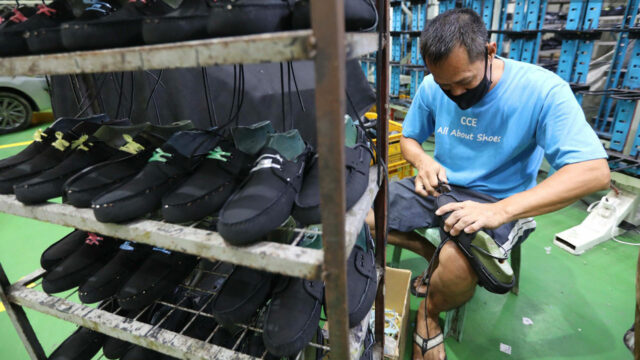
For example, the government could focus on the Marikina shoe industry by selecting dozens of local players that can compete with the likes of Italy’s Salvatore Ferragamo, which has strong markets in Indonesia and Switzerland, Mr. Felipe said.

“The Marikina shoe industry cannot go back to making P500 shoes,” he said. “That’s a dead end. The story is, can we have 30 very good companies that can compete with Ferragamo? That should be the objective — 30 companies, top of the line.”

The government can help them compete globally by upgrading their organizational capabilities and helping them acquire equipment and machinery.

“It’s about selecting 10, 15, 20 brands and say, in the next five years, ‘We’re going to help you upgrade these producers that already exist,’” he said. “We are going to make them competitive, which means that they can export to the world economy.”

SUPPLY CHAINS
Mr. Felipe said the Philippines should learn from post-war South Korea, which achieved an “economic miracle” by helping local companies become global manufacturers. South Korea now has Samsung Electronics, which has a revenue of over $234 billion (P13 trillion), and Hyundai Motor Co., whose sales have reached $110.4 billion.

The Philippines has been focused on foreign direct investments (FDIs) and ambitious targets, including becoming a leader in artificial intelligence, that it had failed to manufacture basic materials that do not require foreign technology.

“Do we need foreign technology to manufacture glasses? No, we don’t. To manufacture plates? No. Spoons, forks, tables? If the country cannot manufacture these products, you know what I would do? I would close it. It’s a failure as a nation.”

“We already have a shoe industry here. What we need to do is to upgrade it. We already have furniture makers. So what do we need to do? Make sure that these furniture makers do very nice things that can compete with Italian designers in five years.”

Amid heightened geopolitical tensions, many multinational companies including Chinese firms have been diversifying their supply chains and manufacturing operations away from China, which is also facing serious economic challenges.

The Philippines under the government of President Ferdinand R. Marcos, Jr. is capitalizing on the so-called friendshoring trend, in which companies select partners in countries that are geographically closer and align politically, economically and socially with their own.

He has pursued more than 20 international trips since coming to power in 2022 — 11 of these last year — to attract investments and security support for the country.  This year, he has had three overseas trips so far.

Data from the Philippine central bank showed FDI net inflows fell by 36.9% to $556 million in April from a year ago, the lowest in 10 months.

A report by Nomura Global Markets Research in May said the Philippines and Indonesia, despite being among the fastest-growing economies in the region with “favorable demographics and strong reform prospects,” have been laggards in terms of benefiting from supply chain diversification.

“This likely reflects in part their starting positions: both countries have weak forward and backward linkages to regional supply chains… and smaller manufacturing bases with the share of manufacturing output to total GDP (gross domestic product) declining,” it said.

Unfortunately, the Philippines has failed to capitalize on its electronics industry, its largest export sector, amid supply chain diversification across the region, according to the report.

Electronic products account for 58.6% of Philippine manufactured goods and more than half of total exports. Exports were up 0.8% to $3.59 billion in March.

The Philippines may not be benefitting significantly from the diversification trend, but it has a good future with its “growing market,” said George N. Manzano, who teaches trade at the University of Asia and the Pacific.

“There will be plenty of market opportunities,” he said in an e-mail, noting that the Philippines should further capitalize on its electronics sector to attract investments in heavy industries.

FDI
“As much as Vietnam is getting lots of investments, there will come a time when it falls short of labor and middle manager resources,” Mr. Manzano said. The Philippines’ service sector is likely to benefit from the diversification trend, in which Vietnam has been considered as a key player.

The Philippines’ manufacturing sector growth heavily relies on FDIs, which amounted to only $9.2 billion in 2022, behind Thailand ($10 billion), Malaysia ($15.1 billion), Vietnam ($17.9 billion), Indonesia ($21.7 billion) and Singapore ($140.8 billion).

This was despite the passage of laws liberalizing the Philippine economy, including the Corporate Recovery and Tax Incentives for Enterprises Act, which cut the corporate income tax for domestic and foreign corporations to 25% from 30%.

In 2021, the Philippines passed a law that amended the country’s 85-year-old Public Service Act, allowing full foreign ownership in domestic shipping, telecommunications, shipping, railways and subways, airlines, expressways and tollways, and airports.

Vietnam had FDIs worth $112 billion from 2010 to 2019, compared with $57 billion for the Philippines. Its merchandise exports in 2019 hit $300 million, more than four times the $70 million for the Philippines.

Mr. Manzano said high power costs, red tape and physical connectivity issues remain threats to the Philippines’ ambition of becoming a manufacturing hub.

“The problem is that the government never had any comprehensive ‘catch-up’ program to match the technologies of other countries,” said Leonardo A. Lanzona, an economics professor from the Ateneo Center for Economic Research and Development.

“Technologies and global linkages everywhere in the world have been shifted, and yet we are stuck with infrastructure, domestic integration and economic protectionism,” he said in an e-mail.

While semiconductors exports have boosted Philippines participation in the global value chain, it “remains a low value-added activity,” he added.

“We need to upgrade and create our value chain,” Mr. Lanzona said. “As a first step, we should allow more foreign firms in the country to ‘learn by doing.’ And then we should innovate and leapfrog in order to reach higher value-added products.”

“FDI can help a little bit, but definitely not the solution to our problem,” Mr. Felipe said. “Foreign companies come here, and they don’t bring any knowledge that is transferred to Filipino companies.”

“That’s not the solution. The solution is there must be Filipino companies producing.”

MPIC delivers new high with 27% increase in Core Income to P12.5 billion

Metro Pacific Investments Corporation’s (“MPIC” or the “Company”) Consolidated Core Net Income rose 27% to a record-high P12.5 billion in the first half of 2024 compared with P9.9 billion in the same period last year.

Improved financial and operating results from MPIC’s holdings delivered a 20% increase in contribution from operations to P14.8 billion. This was mainly driven by strong growth in energy sales at Meralco, billed volumes at Maynilad Water, and traffic on the toll roads complemented by higher tariffs.

Among the Company’s core businesses, Power contributed the largest share at P10.1 billion or 68% of Net Operating Income (“NOI”), while Toll Roads and Water contributed P3.2 billion and P2.5 billion, respectively, representing 38% of NOI.

Reported Net Income rose 23% to P12.5 billion from P10.2 billion in 1H 2023.

STAND-ALONE PERFORMANCE OF CORE OPERATING COMPANIES

POWER:

MERALCO

Financial and Operational Highlights

• Total Revenues rose 6% to P237.5 billion, mainly due to higher energy sales by the distribution utility, which grew 9% to 26,954 GWh. This was slightly offset by the lower energy fees at Global Business Power which resulted from lower plant availability of its Cebu Energy Development Corporation power plant.

• The six-month sales volumes got a boost from second-quarter sales, which hit a new record with monthly volumes breaching the 5,000 GWh level in May, largely driven by double-digit growth in Residential and Commercial segments. Demand in the Meralco franchise area peaked at 9,323 MW in April, up by 10% from the 8,438 MW peak demand experienced in May of 2023.

• Consolidated Core Net Income increased 21% to P23.2 billion, driven by continuing contributions from power generation, retail electricity supply, and other non-power businesses.

• Reported Net Income improved 26% to P22.4 billion.

TOLL ROADS:

METRO PACIFIC TOLLWAYS CORPORATION

Financial and Operational Highlights

• Toll Revenues rose 18% to P15.4 billion due to a combination of toll rate increases and traffic growth in all markets.

• Average daily vehicle entries
o Philippines — rose 7% to 693,175
o Vietnam — increased 1% to 78,390
o Indonesia — declined 1% to 1,203,631

• Core Net Income improved further by 25% to P3.4 billion, boosted by the higher share in net earnings of equity-accounted Vietnam toll roads.

WATER:

MAYNILAD

Financial and Operational Highlights

• Revenues grew 23% to P16.4 billion, reflecting 4% growth in billed volumes and a 19.8% adjustment in tariff in early January.

• Core Net Income rose 29% to P5.6 billion, broadly consistent with Revenue growth and augmented further by lower operating expenses.

BALANCE SHEET HIGHLIGHTS — MPIC PARENT

• Cash and cash equivalents and short-term investments amounted to P14.4 billion.

• Net debt amounted to P61.5 billion versus P62.6 billion in December 2023.

DIVIDENDS

The Board of Directors has approved the declaration of interim dividends of P0.10 (10.00 centavos) per common share, payable on September 19, 2024, to all shareholders of record as of September 2, 2024. This represents 25% of Core Income.

NEW ACQUISITION

In July 2024, Metro Pacific Agro Ventures (MPAV) announced its entry into agreements to acquire 100% of Universal Harvester Dairy Farms, Inc. (UHDFI) in a bid to continue its mission to provide fresh, high-quality dairy products for the Filipino people.

UHDFI, located in Maramag, Bukidnon, operates under the Bukidnon Milk Company brand, producing fresh milk, flavored milk, yogurt, and cheese products, with presence primarily focused on key cities in Visayas and Mindanao. Moreover, UHDFI is the largest state-of-the-art dairy production facility in the country, the showcase model for the community, private sector, and government partnership, and also a major supplier of products for the National Dairy Authority’s (NDA) Milk Feeding Program, primarily focused on ensuring schoolchildren have regular access to high-quality fresh milk.

MPAV’s acquisition, which values UHDFI at over P700 million, comes after its previous investment in The Laguna Creamery, Inc. (TLCI), known for popular brands Carmen’s Best ice cream and Holly’s Milk. Since partnering with MPAV, TLCI has doubled its sales in just two years; by combining the resources of TLCI and UHDFI, MPAV aims to establish a national dairy champion with farms across the country, a nationwide reach, and a comprehensive range of products.

MPAV’s continued investment in the dairy industry supports an underserved segment of the economy. In March 2024, the NDA reported that the country continues to import 98 percent of its milk demand. At current rates, the NDA envisions reaching a milk production target of just 5% of local demand by 2028.

CONCLUSION

“Our power, toll roads, and water business continued to deliver double-digit growth in earnings on the back of strong volumes and the impact of long overdue tariff adjustments,” said MPIC Chairman, President, and CEO Manuel V. Pangilinan.

“With MPIC continuing to maintain a low cost of capital in a rising interest rate environment, the Company is poised to maintain its strong growth trajectory for the rest of the year.”


Spotlight is BusinessWorld’s sponsored section that allows advertisers to amplify their brand and connect with BusinessWorld’s audience by publishing their stories on the BusinessWorld Web site. For more information, send an email to online@bworldonline.com.

Join us on Viber at https://bit.ly/3hv6bLA to get more updates and subscribe to BusinessWorld’s titles and get exclusive content through www.bworld-x.com.


Spotlight is BusinessWorld’s sponsored section that allows advertisers to amplify their brand and connect with BusinessWorld’s audience by publishing their stories on the BusinessWorld Web site. For more information, send an email to online@bworldonline.com.

Join us on Viber at https://bit.ly/3hv6bLA to get more updates and subscribe to BusinessWorld’s titles and get exclusive content through www.bworld-x.com.

PLDT Home rolls out new Fiber Unli All plans with unli mobile calls and 2x faster speeds

PLDT Home is revolutionizing family connectivity with its new Fiber Unli All Plan 1399. This plan has unlimited mobile calls and double internet speeds, ensuring everyone stays connected effortlessly.

PLDT Home Fiber Unli All Plans features unlimited mobile calls so that the whole family can enjoy free calls and texts from mobile to mobile, unlimited calls from mobile to landline, landline to landline, and landline to mobile. To enjoy this feature, customers can nominate five (5) Smart or TNT numbers.

The Fiber Unli All 1399 delivers speeds of up to 100 Mbps, which is twice as fast as the previous plan at 50 Mbps. 

The Fiber Unli All Plan 1399 delivers great value for money — combining in one bundle unlimited mobile calls and high-speed internet with unlimited Cignal TV — which allows customers to enhance their lifestyle while spending less for their digital services. 

Keeping Family Connected 

What’s great about the PLDT Home Fiber Unli All plans — they come in two value-packed options to suit the size and needs of the household. The average Filipino household is estimated to have four members, but no two homes have the same internet requirements. Families with young children and teenagers may require more bandwidth for their online leisure activities, while households with work-from-home set up and multiple smart devices may demand higher internet bandwidth.

There are two (2) Fiber Unli All options — the enhanced PLDT Home Fiber Unli All Plan 1399 now at 100 Mbps and Plan 1799 at 200 Mbps. Now customers have more options best suited to their whole family’s internet usage.

PLDT Home Fiber Unli All Plans ensure that Filipino households get the most value for their money by having the right services that they need for the whole family.

The bundle offers endless entertainment from Cignal TV’s diverse array of viewing options. With access to a vast selection of channels — including popular movies, TV shows, sports, and kids’ programming — there’s something for everyone in the family to enjoy.

Whether it’s movie night for the singles in their condo, or a family catching up on the latest sports events like the Olympic Games Paris 2024, or keeping the kids entertained with their favorite cartoons and educational shows, Cignal TV guarantees that all members of the household stay engaged and entertained. 

PLDT Home Fiber Unli All plans are really designed to keep the whole family connected. To check out the new PLDT Home Fiber Unli All plans, visit https://www.pldthome.com/internet.


Spotlight is BusinessWorld’s sponsored section that allows advertisers to amplify their brand and connect with BusinessWorld’s audience by publishing their stories on the BusinessWorld Web site. For more information, send an email to online@bworldonline.com.

Join us on Viber at https://bit.ly/3hv6bLA to get more updates and subscribe to BusinessWorld’s titles and get exclusive content through www.bworld-x.com.

Proposed natural gas law seen to lure investors

BW FILE PHOTO

By Sheldeen Joy Talavera, Reporter

THE PASSAGE of the proposed Philippine Natural Gas Development Act may attract investors to the country’s natural gas sector, but ongoing South China Sea disputes over resource-rich zones pose challenges, according to analysts.

“Hopefully, the Senate Bill 2793, once passed, will encourage both foreign and local E&P (exploration and production) companies to look for fossil gas in the Philippines,” Pedro H. Maniego, Jr., senior policy advisor of think tank Institute for Climate and Sustainable Cities, said in a Viber message on Saturday, noting the huge investment required.

The Philippines is under pressure to find other sources of indigenous energy as the Malampaya gas field, the country’s sole natural gas provider, nears depletion.

The Malampaya gas field, which supplies a fifth of the country’s power requirements, is expected to run out of easily recoverable gas using current techniques by 2027.

Upstream oil and gas firm PXP Energy Corp. was ordered to put on hold its exploration activities at the Reed Bank due to tensions with China.

“While the bill may improve the enabling conditions for natural gas sector investments in the Philippines, the sector’s most significant impediment is the country’s ongoing maritime dispute with Beijing in areas within and near identified natural gas exploration zones,” Terry L. Ridon, a public investment analyst, said in a Viber message.

“The dispute will make it difficult for Manila to explore and exploit these areas on its own or with other foreign partners,” he added.

Mr. Maniego said that the Philippines “occupies a low position in the global energy market with its minuscule production of coal, oil, and gas.”

The country’s neighbors in Southeast Asia were able to find substantial deposits in their maritime areas, he noted.

“Finding fossil gas to augment our requirements will raise the country’s standing. Unfortunately, the identified viable deposits are located in the disputed zones in the West Philippine Sea claimed by China,” Mr. Maniego said.

He said that the exploration of fossil fuels requires significant investment and could only be conducted by “companies with ample financial and technical resources.”

Meanwhile, Mr. Ridon said that generation facilities that use indigenous natural gas should still compete with other generation facilities on the basis of price.

This would ensure that the lowest cost of power remains the most important mandate under the Electric Power Industry Reform Act.

“The mere use of indigenous natural gas should not be the basis of priority dispatching in our energy system,” Mr. Ridon said.

‘RIGHT SIGNAL’
Sen. Pilar Juliana “Pia” S. Cayetano, chair of the Senate committee on energy, said the swift passage of Senate Bill No. 2793 would send the “right signal” to investors.

“It seeks to declare that the Philippines is open and will have very clear-cut policies on natural gas and indigenous natural gas development,” she said during the recent interpellation for the bill.

SB 2793, Ms. Cayetano said, would “promote awareness and create an environment that will open up opportunities for investors.”

She noted that legislative efforts to support natural gas exploration have been minimal since its peak in the 1970s, when more than 150 wells were drilled.

“This was when Malampaya was discovered,” she said.

The Philippines, she added, has effectively abandoned exploration of existing natural gas resources.

The proposed measure addresses the gaps in policies, legal support, and incentives for investors to restart their exploration of local gas resources, she noted.

“Natural gas is called a transition fuel, and we have proof that there is, it’s available in the Philippines,” Ms. Cayetano said.

“So by passing this law, it’s like erecting a billboard on EDSA globally and tell them that the Philippines is prioritizing natural gas,” she also said. “If you are an expert in natural gas, you’re welcome to come here. We have good business opportunities.”

Service Contract No. 38 governing the Malampaya gas field has been extended for 15 more years. 

The Malampaya consortium, led by Prime Energy Resources Development B.V., has pledged to drill two new wells to prolong the gas field’s lifespan and generate new gas by 2026. 

Retail outlook still bright despite high vacancies, inroads by e-commerce

RAWPIXEL.COM

By Justine Irish D. Tabile, Reporter

THE RETAIL INDUSTRY is still expected to grow this year despite the rise in vacancies and competition from electronic commerce (e-commerce).

Yukiko Tsukamoto, partner at Bain & Co., said that she is still optimistic about seeing growth in the industry as most retailers have returned to pre-pandemic levels.

“Consumption has remained strong despite inflation. We believe there is significant opportunity as consumer spending grows,” she said.

The Philippine Statistics Authority (PSA) reported that headline inflation increased to 4.4% in July, bringing average inflation in the seven months to July to 3.7%.

Meanwhile, household final consumption, which accounts for over 70% of the economy, rose 4.6% in the second quarter, slowing from 5.5% a year earlier.

Bain & Co. reported in July that the Asia-Pacific lagged its pre-pandemic share of global retail sales growth, averaging 29% between 2019 and 2021.

The Asia-Pacific accounted for 34% of global growth between 2021 and 2023 but remains below the 59% posted in 2017-2019.

Still, Ms. Tsukamoto said Bain & Co. sees significant growth upside for Philippine bricks-and-mortar retailers.

In particular, she sees an opportunity for grocers to increase their market share against wet markets.

“Wet markets remain a major source of fresh groceries for many Filipino households, comprising two-thirds of the grocery market compared to 20-30% in Singapore and 40-50% in Malaysia,” she said.

She added that grocers could also make themselves more competitive by improving the in-store customer experience and capturing data on and analyzing consumer shopping behavior.

For non-grocery retailers, she said the opportunities lie in non-shopping experiences and leveraging data.

“For non-grocers, in-store customer experience with more focus on the non-shopping experience to differentiate against online retailers and capturing customer data and understanding shopping behavior will be essential for growth,” she added.

E-COMMERCE VS BRICK AND MORTAR
Philippine Retailers Association (PRA) President Roberto S. Claudio, Sr. said that brick-and-mortar businesses view the growing e-commerce market as a threat.

“E-commerce has gained a major foothold among consumers, to the detriment of brick-and-mortar stores. Convenience, product availability, and speed contributed to this phenomenon,” Mr. Claudio told BusinessWorld via Viber. 

“Pre-pandemic e-commerce accounted for only 3-5% of total retail sales. In 2023, this figure went up to 20-25%,” he added.

The Department of Trade and Industry (DTI) tallied 86.98 million internet users in the Philippines, with internet penetration at 73.6%.

Citing a report by Google, Temasek, and Bain & Co., the DTI said the Philippine internet economy was $24 billion in gross merchandise value (GMV) last year and is expected to grow to $80-$150 billion by 2030.

“You can see that the growth is very high, and our population is around 111-110 million, many of whom are young. So, the potential of e-commerce is big,” DTI Digital PH Group Undersecretary Mary Jean T. Pacheco told BusinessWorld.

However, she said there remains significant upside opportunity to increase spending online, by persuading the market further of the convenience and security of online platforms.

“There is still an issue of trust, and this is the reason why we are very happy that we have laws like the Internet Transactions Act, which idea is to build trust in e-commerce,” she said.

Mr. Claudio said that the government should focus on the overall retail industry and not just e-commerce by leveling the playing field.

“E-commerce is just one small component of retail; in fact, 75% of the total retail industry is still brick and mortar,” he said.

“And remember, the government is not yet generating income from e-commerce businesses because it does not know how to tax the foreign retailers, since they do not have offices and registrations here,” he added.

Earlier, the PRA raised concerns about the uneven playing field caused by the differing tax regimes each industry operates under.

“We are required to pay a 12% value-added tax. But these retailers who are e-commerce or online are going to pay only 1% withholding tax … For us, in brick and mortar, it’s completely unfair,” he added.

Niks Fojas, TikTok Shop Category Lead for Fast Moving Consumer Goods, said e-commerce platforms allow small brands to compete with larger rivals.

“We have found that small and medium enterprises (SMEs) often find it challenging to compete with established brands in traditional retail spaces,” Ms. Fojas told BusinessWorld via e-mail.

“Through Shoppertainment, we aim to empower SMEs to grow further and contribute to the economy by providing them with a digital storefront to showcase their products and reach a nationwide audience,” she added.

According to Ms. Fojas, there are over two million Philippine businesses on TikTok Shop, mostly SMEs.

“These SMEs have harnessed the power of Shoppertainment to grow their brand and customer base by incorporating digital strategies from TikTok Shop to extend their reach and engage with a broader audience beyond their offline stores,” she added.

RETAIL VACANCY RATES
Aside from threats posed by e-commerce to brick-and-mortar stores, property analyst firm Colliers Philippines said vacancies in the retail property segment have been rising on increased supply.

“If you look at the malls, the vacancies are at about 15%, so this is still an elevated vacancy compared to about 9-10% pre-pandemic,” Joey Roi Bondoc, director and head of research at Colliers, told BusinessWorld in an interview.

He said that the vacancies rose following the closure of many stores during the pandemic, among other reasons.

“Much of the increase is due to the new retail spaces being completed. That is what really drove the 15% vacancy in Metro Manila,” he added.

Colliers reported that the vacancy rate in the first quarter was 15.5%, which it projects to increase to about 17% by the end of the year due to the substantial delivery of new retail space across Metro Manila.

“There will be 160,000 square meters of new retail space every year from 2024 up to 2026. So, that’s still pretty substantial,” he said.

“And, of course, it will take time before that new retail space will be absorbed by the market. Because of that, we’re projecting retail vacancy to increase through 2024,” he added.

However, Mr. Bondoc said that despite ample supply, Colliers remains positive on retail due to an improving economy.

“I think the key indicators are the young mobile workforce, the demographic sweet spot, rising purchasing power, the Philippines as one of the fastest-growing economies in Southeast Asia, remittances, and possible interest rate cuts,” he said.

“One major reason also why malls are very popular in the Philippines is that we don’t have a lot of parks. Our public spaces are our malls … That is why the mall culture here in the Philippines will continue to thrive,” he added.

Fourth Wall Research Director John Brylle L. Bae said that the rise of e-commerce should not be viewed as a threat to brick-and-mortar businesses as the impact varies for each type of product and service.

“The trust factor is crucial for certain purchases, requiring consumers to see the product in person,” he told BusinessWorld via e-mail.

“For example, despite the growth of e-commerce, Filipino consumers, regardless of income class, often prefer buying a brand-new 16-inch television from a mall to ensure quality. Trust is key, especially with high-cost items,” he added.

THE OMNICHANNEL FUTURE
PRA’s Mr. Claudio said that the new retail is “serving the customer in whatever (way) he or she wants,” as many brick-and-mortar retailers are now shifting part of their operations to e-commerce.

“If the customer wants to be served at home, we must extend the best store experience. Omnichannel will be the future of retailing,” he said.

However, he said that malls will have to innovate and become centers for entertainment and community activity as well as shopping to survive.

“People’s quest for social interaction remains. Brick-and-mortar shopping will survive, and e-commerce will simply augment the customers’ options on how to shop,” he added.

TikTok Shop’s Ms. Fojas said that the fundamental shift in consumer-brand interactions stemming from changing consumer needs can be addressed by implementing an omnichannel approach.

“By embracing omnichannel strategies, businesses can provide a consistent and engaging experience across platforms, ensuring they meet customers’ evolving preferences and needs,” she said.

This, she said, is why content is crucial in ensuring that brands build stronger customer connections.

“But even as we continue our efforts to enable businesses to enjoy greater opportunities to build and expand, we are also mindful of maintaining a safe and positive shopping experience,” she added.

Citing the Chef Tony’s Popcorn brand as an example, Ms. Fojas said the popcorn shop posted 48% growth in total GMV during the 6.6 sale in mid-June.

“Notably, its mixed flavors saw a 26.4% GMV uplift, with a triple-digit growth of 307% for other varieties like Jalapeno Cheddar, Golden Caramel, and Sour Cream Jack Cheddar,” she said.

Chef Tony’s Popcorn joined TikTok Shop in October.

Fourth Wall’s Mr. Bae said the future of retail will likely be omnichannel, especially in the Philippines.

“Mall culture in the Philippines is deeply rooted, making it unlikely that e-commerce will completely replace malls. Malls are integral to family bonding in this culture,” he added.

Bain & Co.’s Ms. Tsukamoto said that the shift to omnichannel retailing is inevitable, particularly for non-grocery stores.

“Consumers will expect retailers to understand them well and will expect to shop whenever they want. Shoppers will seek out retailers for the overall experience, not merely for making purchases,” she added.

Mr. Bondoc of Colliers said though e-commerce poses a challenge, some retailers are already complementing it.

“It is not exactly a big challenge. Right now, what retailers and mall operators are doing is complementing their retail spaces with an online presence — an omnichannel strategy,” he said.

“One good example of this is Uniqlo; for example, there are items that are not available online, so you will be really compelled to visit the store,” he added.

He said there has also been a proliferation of pop-up stores for products that were previously only available online.

“So that will also result in retail space take-up. So I think it is a good mix as it is complementing the need for physical mall space,” he added.


The ESG Roadmap: From initial setup to sustained impact and compliance

Vecteezy

The emergence of environmental, social, and governance (ESG) criteria has left employees, investors, and customers growing increasingly concerned with how corporations evaluate the sustainability and ethical impact of investments. With ESG fast becoming a standard in business operations, companies are realizing how they assess their success beyond profit and sales.

Like most causes in life and business, the first step towards an enterprise’s ESG journey is always the hardest. This is because companies and their owners are uncertain about the standard and how it can become beneficial to their businesses in the short and long term.

While their frameworks vary depending on global financial institutions, ESG refers to an investing principle that prioritizes the environment, social impact, and governance at the corporate level. Some investors use these standards to screen organizations’ business practices and performance on various sustainability and ethical issues.

Some of the few benefits of adopting an ESG framework, according to online data plat-form Statista, include enhanced brand reputation; attracting and retaining clients; improved community around buildings; and cost efficiency. In addition, results from the platform indicate that 39% of investors are willing to accept a lower rate of return in exchange for ESG-related benefits.

Embracing ESG

According to global consultancy firm CapGemini, businesses looking to begin their adherence toward an ESG framework must first evaluate their companies qualitatively and quantitatively. Examining an organization’s readiness for change as well as finding out the enterprise’s emissions, wastes, and other data related to ESG are crucial initial steps.

“Once that is understood, an ambition and strategy can be created for how to stand up the program, over what timeframe and resources are required to execute a successful program,” CapGemini Sustainability Lead Greg Bentham explained on a video from the company’s YouTube channel.

Furthermore, choosing the most suitable ESG framework for a company is another way to begin integrating a standard. As some frameworks are more aligned with specific industries, selecting the right ESG criteria can provide a clearer roadmap that helps embed sustainability and ethical practices into a business strategy.

Additionally, Forbes noted that successful ESG programs “start at the top,” with leadership from the boardroom, as it helps the rest of the workforce align with their goals. Forbes also mentioned that modernizing compliance change management may help in tracking ESG regulations and help better manage risks.

Moreover, once a company has started an ESG framework, figuring out how to run the program will be essential to long-term success. Companies would have to decide how they staff the program and how they manage risks from outside factors based on the ESG framework of their business.

Integrating ESG into a business requires a strategic and all-hands-on-deck approach from the boardroom to the workforce. Through the steps mentioned above, companies can begin their journey toward becoming more sustainable and impactful.

Sustaining ESG

Organizations usually comply with their ESG through corporate social responsibilities, business strategies, or practices integrated into their core operations. To ensure that an ESG initiative not only takes root but flourishes, companies would have to check off several boxes that focus on commitments, assessments, data, and long-term strategy.

Mr. Bentham mentioned that securing the commitment of the leadership of the company in the ESG framework and investments along with continuous reinforcements to their employees can help businesses further their ESG plans.

“Furthermore, [we should engage] with the customers as to why we’re doing it so that we gain momentum and we drive accountability from stakeholders as to what we are doing,” he added.

To encourage more accountability within the business, writing an annual report to their consumers, investors, and stakeholders can be an effective way to assess where the company is at in terms of its ESG goals compared to competitors. In the Philippines, publicly listed companies (PLCs) that have a public float of at least 50% are required to submit their annual ESG reports to the Securities and Exchange Commission.

With companies such as Sustainalytics and the Asia Corporate Governance Association keeping track of the ESG scores of businesses, setting goals and milestones based on self and third-party ESG assessments will give businesses a direction to focus their attention on and build a strategy that can get their scores higher.

After receiving feedback, gaining assessments, and setting goals, setting up a long-term ESG strategy based on the data gathered will give companies actionable steps to improve their ESG performance. While compliance systems, regulations, and demands change over time, a well-structured ESG strategy ensures that companies remain adaptable and resilient.

Embarking on and sustaining an ESG initiative can be daunting at the start and difficult to maintain in the process. However, with a clear strategy, strong leadership, and ongoing commitment to sustainability and ethical leadership, companies can overcome these challenges. Ultimately, companies who have integrated ESG into the core of their operations not only ensure compliance but also drive meaningful, long-term impact and create value for all stakeholders. — Jomarc Angelo M. Corpuz

Young entrepreneurs recognized in 2024 RVR Siklab Awards

RVR Siklab Awardees 2024 (L-R): Alvin C. Ong, Victor Mari C. Baguilat, Jr., Ann Adeline G. Dumaliang, Ariestelo A. Asilo, and Rafael Ignacio S. Dionisio

Aside from Ramon V. del Rosario Nation Building Awardee, the late Ambassador Howard Q. Dee, five individuals were honored in this year’s Ramon V. del Rosario (RVR) Awards for having exemplified outstanding corporate citizenship and a fervent commitment to nation-building across various industries — proving that business can indeed be a force for good.

In addition to the Award for Nation Building, the RVR Awards also recognizes promising entrepreneurs for impacting their communities and industries through their businesses or social enterprises with the Siklab Award.

One of the awardees is Ariestelo A. Asilo, co-founder and chief executive officer (CEO) of Varacco, Inc. and the president of ThinnkFarm. ThinnkFarm and Varacco provide livelihood to 400 coffee farmers in Cavite and Mindanao. Mr. Asilo was recognized in 2021 as one of the 50 Best Small Businesses for the United Nations’ “Good Food for All.” His leadership not only empowers farmers, but also inspires the Filipino youth.

Victor Mari C. Baguilat, Jr. is the founder, CEO, and creative director of Kandama Social Enterprise. Mr. Baguilat founded Kandama to empower indigenous Ifugao women weavers by connecting their traditional hand-loomed fabrics to the global market. Kandama has been featured in fashion events in New York, Paris, Melbourne, and Hong Kong. It provides sustainable livelihood while preserving the precious weaving tradition of these communities.

Also among this year’s awardees is Rafael Ignacio S. Dionisio, co-founder and president of Make A Difference (MAD) Travel. MAD Travel partners with the Aeta community to build forests of native and fruit trees in Zambales. MAD Travel creates fulfilling experiences that enable communities to develop sustainable products. The company also supported local farmers and entrepreneurs through and despite the challenges brought on by the COVID-19 pandemic.

Ann Adeline G. Dumaliang, managing trustee of the Masungi Georeserve, co-founded Masungi Georeserve, a conservation area that is home to over 500 species. Her innovative approach combines conservation, eco-tourism, education, and community engagement. Masungi has planted 100,000 native trees and established ranger stations to protect the watershed that benefits millions.

Completing the list is Alvin C. Ong, founder and CEO of Fredley Group of Companies, a food & beverage company behind brands like Macao Imperial Tea and Nabe. Coming from humble beginnings of packing hangers, Mr. Ong built a billion-peso empire of more than 260 restaurants and 3,000 employees all while adopting inclusive hiring practices for differently abled people.

“Our awardees will do this nation an even greater service by telling your stories especially to our young idealistic youth who day-in and day-out are bombarded by negative information giving them less and less reason to be hopeful,” PHINMA Chairman and Chief Executive Officer Ramon R. del Rosario, Jr. said in his remarks during the ceremonies held last Aug. 20 at The Fifth at Rockwell. “We will fill that void with your stories of entrepreneurial peace-building, agriculture and tourism innovation, cultural preservation, environment protection and inclusive growth.”

PLDT group partners with First Gen for renewable energy

PHOTO FROM JGSUMMIT.COM.PH

PANGILINAN-LED PLDT Inc. and its wireless subsidiary Smart Communications, Inc. tapped First Gen Corp. to power their network facilities with renewables.

“We are once again tapping First Gen’s geothermal energy supply to increase the renewable component of the energy mix of our critical facilities in Mindanao,” PLDT Vice-President and Sector Head for Property and Facilities Leo Gonzales said in a media release on Sunday.

Lopez-led First Gen will power the group’s six network facilities in Mindanao with renewable energy (RE), allowing it to reduce its power costs, the company said.

Among the telco facilities that will be powered with renewables is PLDT Ponciano, the company’s regional facility that caters to VITRO Davao, its data center in Mindanao.

“This switch will also make VITRO Davao the first data center of the telco firm to be powered 100% by RE,” it said.

“This enables us to future-proof our facilities, reduce our operational expenses, and support the government’s Green Energy Option Program (GEOP) in the region,” Mr. Gonzales said.

Launched in 2018, GEOP is a voluntary policy mechanism that allows users who consume at least 100 kilowatts to source power from qualified electricity retailers supplying RE.

The expansion of PLDT’s partnership with First Gen allows the company to generate P23 million in savings on energy and operational costs, PLDT said.

PLDT added that it would also allow the company to reduce its greenhouse gas emissions by nearly 13,000 tons per year.

Last year, PLDT and Smart signed a power supply partnership with First Gen to power their network facilities in Cebu, Samar, and Iloilo with geothermal energy.

PLDT said it also expects to further expand its energy supply mix by tapping into other energy sources like solar and wind energy sources.

For 2024, the company plans to shift more facilities to renewable energy, PLDT noted.

“In addition to the transition to RE, PLDT and Smart have been venturing into the adoption of green technologies and various resource optimization initiatives for their network sites, business offices, and key facilities nationwide,” PLDT said.

First Gen is a power generation company with a diversified energy portfolio including natural gas, geothermal, hydro, wind, and solar. It is targeting to grow its RE portfolio to up to 13 gigawatts by 2030.

Hastings Holdings, Inc., a unit of PLDT Beneficial Trust Fund subsidiary MediaQuest Holdings, Inc., has a majority stake in BusinessWorld through the Philippine Star Group, which it controls. — Ashley Erika O. Jose

Maya named PH’s Best Digital Bank in top global recognitions

Maya has once again earned top global awards for revolutionizing banking for every Filipino, from the unbanked to the unhappily banked.

For the second straight year, Maya was recognized as the Best Digital Bank and Best Mobile Banking App in the Philippines at the World’s Best Digital Bank Awards 2024 by Global Finance Magazine. Recently, it was named the Best Virtual Bank in the Philippines for 2024 by FinanceAsia Awards in Hong Kong and New Virtual Bank in the Philippines at the Retail Banking Awards in Singapore.

Maya also ranked 3rd in the Philippines in Statista and CNBC’s inaugural Best Banks — Asia Pacific 2024 report and made Forbes Magazine’s World’s Best Banks 2024 list for the second year.

Shailesh Baidwan, Maya Group President and Co-Founder of Maya Bank, said, “Every day, we’re driven to make banking simple, intuitive, and useful for everyone. In just over two years, we’ve shown that digital banking with Maya is the fastest and easiest way to boost the financial health of Filipinos. These new recognitions from our peers truly validate our efforts.”

Addressing Banking Challenges

In the Philippines, where banks symbolize upward mobility and financial security, traditional banking is often inconvenient, leaving many without easy access to financial accounts or credit services.

Fintech solutions have stepped up to address these banking woes, helping raise the number of Filipinos with financial accounts from 29% in 2019 to 56% in 2021, thanks to digital payments. Despite these advances, 52% of Filipino adults still save at home, and 57% rely on informal borrowing in 2021, according to the Bangko Sentral ng Pilipinas. 

Maya revolutionized traditional banking with simple, intuitive, and transparent products. With just one ID, Filipinos can save, borrow, spend, invest, and earn rewards all within one app — a first in the Philippines.

Reinventing savings in the Philippines, Maya is the first to offer flexible deposit products, such as time deposit, that allow users to start small and build over time. It is also the pioneering bank to offer higher interest rates the more they use Maya for everyday spending. As of end-June 2024, deposit balance grew by 32% YoY to P32.8 billion.

Recognized as the country’s #1 Digital Bank in the Philippines, Maya holds the largest market share in deposit balances among digital banks at 38% as of March 2024. It also boasts the highest monthly active users according to data.ai and the highest user ratings on major app stores.

Maya revolutionized unsecured lending by creating an AI-driven credit scoring model that uses payments and other alternative data, allowing it to lend profitably with speed and at scale.

As of end-June 2024, Maya has provided loans to over a million borrowers, with total loan disbursements life-to-date reaching P47 billion. Maya has expanded unsecured credit disbursement to customers, with 59% of its borrowers taking a bank loan for the first time.


Spotlight is BusinessWorld’s sponsored section that allows advertisers to amplify their brand and connect with BusinessWorld’s audience by publishing their stories on the BusinessWorld Web site. For more information, send an email to online@bworldonline.com.

Join us on Viber at https://bit.ly/3hv6bLA to get more updates and subscribe to BusinessWorld’s titles and get exclusive content through www.bworld-x.com.

PHL counting on renewables as energy crisis looms 

FREEPIK

By Sheldeen Joy Talavera, Reporter

WITH the sole indigenous natural gas source responsible for 20% of Luzon’s power needs expected to run dry, the looming energy crisis is sending the Philippines on a mad scramble to adopt renewable energy before the lights start going out.

The Philippines continues to be dependent on coal for baseload power, even after banning new coal-fired power plants. Coal accounted for over 60% of the power generation mix last year, and could continue to make up a significant share with many recently built coal-fired power plants up and running.

Despite the continued reliance on coal-fired power, the government has set ambitious goals to increase the share of renewable energy in the power generation mix. Renewable energy includes wind, solar, biomass, geothermal, ocean energy, and hydropower, which comes from naturally replenishing resources.

State of power plants in the Luzon grid“While this highlights that the Philippines is still heavily reliant on fossil-based commodities, we are also seeing the significant potential for the expansion of renewable energy projects in the country,” Angelo Kairos T. Dela Cruz, executive director of think tank Institute for Climate and Sustainable Cities, said in an e-mail.

Mr. Dela Cruz said the Philippines is moving towards “a more sustainable and resilient energy landscape” under the Clean Energy Scenario (CES) of the Philippine Energy Plan 2020-2040, developed by the Department of Energy (DoE).

Renewable energy currently holds a 22% share of the power generation mix. The CES targets are a 35% share by 2030 and 50% by 2040.

Judging by policy and regulatory improvements, the Philippines has taken great strides in pushing for more new renewable energy capacity, according to Jose M. Layug, Jr., president of the Developers of Renewable Energy for Advancement, Inc.

“The Philippines has leapfrogged its neighbors in ensuring transition to cleaner forms of energy,” Mr. Layug said via Viber.

The DoE has been promoting renewable energy adoption via the Green Energy Auction (GEA) Program, Green Energy Option Program, net metering, and renewable energy portfolio standards.

“These initiatives aim to incentivize investment in renewable energy projects and create an enabling environment for their development,” Mr. Dela Cruz said.

The Energy department is targeting two rounds of the GEA this year, featuring various renewable energy technologies, particularly projects involving integrated renewable energy and energy storage systems.

To date, it has awarded 5.4 gigawatts of new renewable energy capacity via the auction program.

For 2024, the DoE expects more than 4,000 megawatts of renewable and conventional power projects to come online, thereby bolstering the power supply.

Analysts said that there is still a need to consider the limitations of variable forms of renewable energy to ensure stable and reliable electricity.

Mr. Layug said the push towards the renewable energy targets should be “calibrated yet aggressive.”

“While we install more renewable energy plants, the DoE is fully aware of the need for baseload power and ancillary services to address intermittence. We will move forward with (sustainability) and resilience, taking into account the consumer interest,” he said.

The Philippines’ grid planning has traditionally been focused on centralized baseload power plants, “which typically run on fossil fuels,” Mr. Dela Cruz said.

“This approach makes it challenging to integrate variable renewable energy sources like solar and wind into the grid effectively, as instead of baseload facilities, which are inflexible, what we need to complement variable renewable energy is flexible generation,” he added.

Eric T. Francia, president and chief executive officer of ACEN Corp., said that there is a need to recognize the limitations of the system given the intermittency of variable forms of renewable energy.

“The good news is that battery storage costs are improving. I hope to see supportive policies to accelerate the scaling up of energy storage, thereby unlocking the full potential of renewables,” Mr. Francia said via Viber.

ACEN, the energy arm of the Ayala group, currently controls about 4.8 gigawatts of attributable capacity in operation and under construction, as well as signed agreements and successful competitive tenders amounting to over one gigawatt.

The company said it has effectively exceeded its original goal of five gigawatts of renewables by 2025.

Philippines falls in Energy Transition IndexBUILDING THE RENEWABLE ENERGY PORTFOLIO
With the Philippines highly vulnerable to climate change, some companies have integrated renewable energy into their portfolios to reduce emissions of greenhouse gasses and other pollutants.

Renewable energy accounted for most of the committed projects in the pipeline for the year, dominated by solar energy with capacity of 1,720.27 megawatts as of the end of May.

SP New Energy Corp. (SPNEC) is building the P200-billion Terra Solar project which could become one of the world’s largest solar farms.

The solar project in Nueva Ecija and Bulacan consists of a 3,500-megawatt solar power plant and a 4,000-megawatt-hour energy storage system. It is expected to generate more than five billion kilowatt-hours of electricity yearly.

“This will be one of the largest solar projects not just in Asia, but in the world,” SPNEC Chairman Manuel V. Pangilinan has said. “It’s a big project. It has attracted a lot of interest from foreign investors because it’s big. It’s transformative for the Philippines.”

Antonio Miguel B. Alcantara, chief executive officer of Alsons Power Group, said accelerating the shift toward sustainable energy is essential.

“This shift will require building new power plants, improving our electrical grids, and establishing reliable interconnections between islands to facilitate the integration of renewable energy sources and improve overall energy access,” Mr. Alcantara said via Viber.

Alsons Power, the power arm of the Alcantara group, is set to commence with commercial operations of its P5.5-billion hydropower project in Sarangani province in September — its first renewable energy project.

It has a pipeline of nine hydropower projects which the company aims to complete over the next five years.

Currently, Alsons has three diesel power plants and a thermal plant with a combined capacity of 468 megawatts.

“Along with the development, implementation, and operation of our power projects comes our drive to integrate ourselves into our host communities. We do this through our community relations programs that focus on the environment, education, and community development,” Mr. Alcantara said.

Under the Energy Regulation No. 1-94, host communities are ensured to get a reasonable share of the profit from power plants operating in their areas.

ACCESS TO FINANCING
Renewables still face challenges due to limited access to financing and permitting issues that could hinder the industry’s expansion.

“The limited access to financing slows down the development and expansion of renewable energy initiatives due to inability to secure adequate funds,” the DoE said.

Mr. Dela Cruz said that while renewable energy plants require substantial upfront investment, obtaining loans and financing can be challenging, particularly for small industry players.

“Limited access to affordable capital and uncertainty surrounding financial returns can deter potential investors from actively participating in renewable energy,” he said.

The Philippines will need up to P31 trillion to hit its energy targets by 2040, according to the DoE.

Aside from financing, the DoE said obtaining permits remains “complex,” which it is trying to address through the Energy Virtual One-Stop Shop (EVOSS).

“While we have made progress in ease of doing business with EVOSS, there is still room for improving processes and reducing permits needed to build power plants. We need to have vibrant and mutually cooperative government collaboration: national and local,” Mr. Layug said.

Despite the challenges, the Energy department said it is still on track on achieving its renewable energy goal, committing to expand the portfolio.

“We are actively developing waste-to-energy resources, expanding rooftop solar installations, and exploring the potential of ocean and tidal energy, ensuring a diverse and resilient energy mix for the future,” the agency said.

“These efforts underscore our dedication to achieving national renewable energy targets, reducing carbon emissions, and securing a sustainable energy future for all,” it added.