Home Blog Page 2606

Style (07/22/24)


Puma’s Palermo with Rosé

PUMA and K-pop star Rosé from South Korean musical quartet BLACKPINK are unveiling their first official campaign. For the campaign, the star wears the Palermo shoe in Cobalt and Black, showcasing the shoe’s bright, playful colors and classic terrace gum sole. Puma’s partnership with Rosé will center around the brand’s catalog of silhouettes such as the “Rewrite the Classics” program, which celebrates Puma’s most timeless footwear shapes and brings them into a new generation. The Puma Palermo is available now from Puma.com, Puma flagship stores, and selected Puma stockists, with more colorways coming soon.


Lavojoy products with essential oils

LAVOJOY has a line of bath products — shampoo and conditioner, among others — which use some essential oil to make them special. Lavojoy products were formulated in Australia together with Ron Guba, an expert in the therapeutic use of essential oils. Lavojoy also collaborated with French master perfumer Anne Flipo to develop the scents and aromas of its products. Products by Lavojoy include shampoos, conditioners, body washes, and body serums. Lavojoy is exclusively available at Watsons, SM Beauty, Lazada, Shopee and TikTok Shop.


Fendi makes lollipop holders for Chupa Chups

BLENDING craftsmanship and irony, Fendi unveils its latest accessory created in collaboration with Chupa Chups: the Fendi x Chupa Chups lollipop holder. This unique piece made its viral debut on the Fendi Women’s Autumn/Winter 2024-2025 runway.  This was conceived by Silvia Venturini Fendi, Artistic Director of Accessories and Menswear. Available in the form of a charm attached to the Peekaboo ISeeU Soft, Simply Fendi, and By The Way Selleria bags as seen on the runway, or as a necklace, the lollipop holder can be adjusted through the leather strap to ensure it is never out of reach. This “sweet” accessory is made in soft leather that bears the Selleria macro-stitching — a symbol of the brand’s 100-year long history and a tribute to Roman master saddlers — and is adorned with the signature FF logo in metal. A magnetic closure enables a smart opening and closing, while hiding the lollipop inside. Available in an extensive palette ranging from soft hues to vibrant pop tones, the lollipop holder adds a cheerful twist to any look. Warm beige and dove grey complement aquamarine and deep red shades, while dark teal and plum hues follow the palette of the collection. Adding exclusivity to this collector’s item whilst paying homage to the Maison’s legacy, this accessory comes with five co-branded and limited-edition lollipops — a symbolic reference to the five Fendi sisters. Wrapped in a distinctive FF logo cover, the special lollipops combine the iconic FENDI pattern with the Chupa Chups lollipop logo. The lollipop holder is now available in Fendi boutiques worldwide and on fendi.com.

Q&A: ‘We’re very, very confident about the brand’

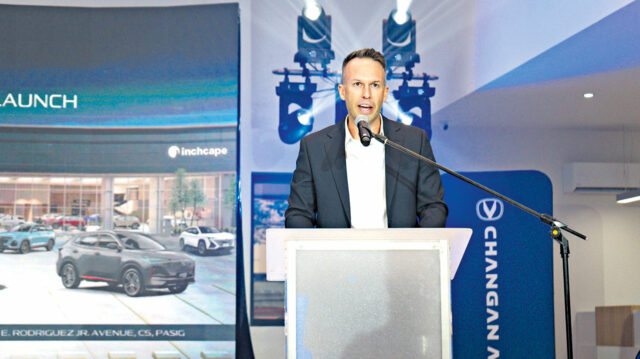
Alex Hammett delivers a speech at the formal opening of Changan Auto Pasig. — PHOTO BY KAP MACEDA AGUILA

Inchcape Managing Director for South Asia and Pacific Alex Hammett has lofty ambitions for Changan Auto

Interview by Kap Maceda Aguila

SHORTLY AFTER Inchcape Philippines’ inauguration of the flagship showroom of Changan Auto in the country, we spoke with the global auto distributor’s Managing Director for South Asia and Pacific Alex Hammett.

He said that Inchcape’s overarching responsibility is to “create great experiences for both customers and partners by leveraging in-market expertise, unique technology, and advanced data analytics,” which is reflected in how the company is moving on the ground in the country.

Mr. Hammett described the first half 2024 as “very fruitful,” on the back of a dealer forum and the launch of the Changan CS15 crossover at the Manila International Auto Show (MIAS) — underscoring a vision of providing more Filipinos “smart mobility options.” He expressed bullishness for the brand amid a very pronounced influx of Chinese auto brands.

Here are excerpts from our exclusive interview with Mr. Hammett.

VELOCITY: This is a very huge facility for Changan Auto. Why decide to establish such a large dealership?

ALEX HAMMETT: “(Inchcape) represents Changan now in five countries. We’re incredibly confident about the brand. But this property is quite scale — not only the showroom, but the entire complex because it’s going to be a real integral part of our operations in the Philippines. And so while it does have a 10-car showroom for our full lineup of Changan vehicles, and we have a full service center, this property also houses our body and paint operations, our new parts distribution center that will be multi-branded for all of our dealers across the country, as well as the very scale training academy to make sure that our sales associates and our technicians are world-class.

What’s the growth plan like for Changan Auto in terms of dealerships?

We have some plans for locations down south like Cagayan de Oro, Dumaguete, and Davao later this year. We also have plans to get our network up to 29 dealerships by yearend.

The local auto industry in the Philippines has seen quite an influx of brands, mainly coming from China. How does Changan Auto intend to compete in this kind of environment? What do you think are the key things that will drive sales for the brand?

It’s a really good question. Because the Philippines is a left-hand-drive market, a lot of Chinese products can come into the market quite simply. And I believe there are about 32 brands now in the Philippines, and they’re all competing for a small space, making it extremely competitive. But as I said, we have a global partnership with Changan, and we operate in a lot of markets in Latin America. And what we can say is, we’ve seen this in other markets, and we’re confident we can do that here in the Philippines.

Changan has a full lineup from the CS15 all the way up to the Uni-K; the product range is fantastic. Also, the quality of the products is world-class and they constantly win JD Power China’s IQS (Initial Quality Study) and they have since 2018. So, it’s great value for money. It’s great quality product, and with the power of Inchcape, we’re very, very confident about the brand.

Farmers call for tight biosecurity as trials for ASF vaccine continue

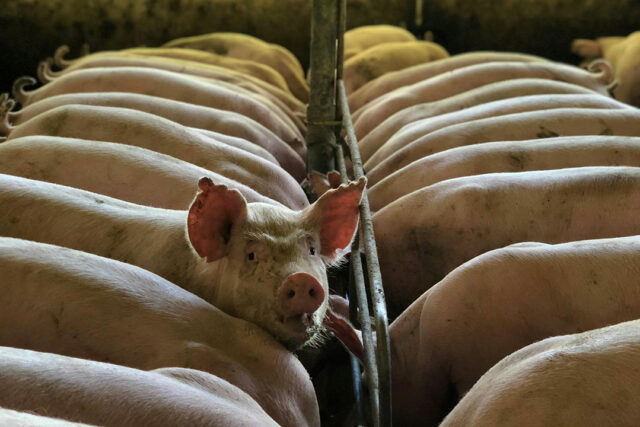
STOCK PHOTO | Image by Barbara Barbosa from Pexels

HOG FARMERS are urging the government to implement tighter biosecurity measures to help curb the spread of the African Swine Fever (ASF) in the Philippines as they wait for the government’s approval for the commercial use of a vaccine.

“For now, we push for the strictest biosecurity, based on their capacities, of all our hog raisers,” Alfred Ng, vice-chairman of the National Federation of Hog Farmers, Inc. said in a Viber message.

“We support the announcement of the DA (Department of Agriculture) of controlled vaccination trials with strict monitoring as we do not want the indiscriminate use of vaccine as it is still being tested,” Mr. Ng added. “We all want to have an ASF vaccine soon, but it should be one that has passed all guidelines set forth by experts.”

The decision to use these vaccines should also be left to hog raisers based on their own appreciation of their safety and efficacy, he said.

There were 20 municipalities across nine provinces with active cases of ASF as of July 12, according to the Bureau of Animal Industry.

Last week, Agriculture Assistant Secretary and Spokesperson Arnel V. de Mesa said the government has allocated about P350 million for the procurement of ASF vaccines for a trial run.

He added that the vaccine for controlled vaccination is expected by September after getting approval from the Food and Drug Administration.

“If the results are favorable, then commercial vaccination will follow,” Mr. De Mesa said.

Agriculture Secretary Francisco P. Tiu Laurel, Jr. earlier said the ASF vaccine to be tested by the government would be procured from Vietnam.

Leonardo Q. Montemayor, chairman of the Federation of Free Farmers, said the ASF vaccine from Vietnam is only being used by their local farmers.

“To my knowledge, no other country is vaccinating its hogs,” Mr. Montemayor said in a Facebook Messenger chat.

He added that the government should exercise due diligence and caution before approving an ASF vaccine for commercial use.

Meanwhile, the government should also fast-track the construction of First Border Inspection sites that will examine all refrigerated containers that will enter the country, Mr. Ng said.

The DA plans to put up these facilities, which are meant to ensure imported agricultural goods are disease-free and minimize smuggling risks, in Bulacan, Manila, Subic, and General Santos.

Imported agri-fishery products need to undergo examination by food regulators overseeing the animal, plant, meat, and fisheries industries.

Meanwhile, the DA’s Integrated National Swine Production Initiatives for Recovery and Expansion (INSPIRE) program aims to increase the population of hogs in ASF-hit areas.

Under the modified INSPIRE program, the repopulation program will now focus on the construction of multiplier facilities and production farms using artificial insemination.

Hog production declined 4.3% year on year to 419,370 metric tons in the first quarter, data from the Philippine Statistics Authority showed. — A.H. Halili

CrowdStrike’s global outage doesn’t have to be a recurring nightmare

ALPHA-FLICKR

ONE OF THE MOST disturbing things about Friday’s devastating global outage of IT systems is how routine such ruinous events have become.

In the last few years, similar glitches from companies like Amazon.com, Inc. have temporarily shut down systems across the globe, and this latest issue comes as a result of a botched software update from cybersecurity firm CrowdStrike Holdings, Inc., whose link to mega customer Microsoft Corp. has led to worldwide problems — including chaos in airports, stock exchanges, and hospitals, though a fix has now been deployed.

This time the scale is unprecedented. That should spur Microsoft and other IT firms to do more than simply administer a band-aid. Policy makers could address the world’s over-reliance on just three cloud providers too. Today’s reality, where a single bug can harm millions of people at once, doesn’t have to be the status quo.

There’s a recommendation for you too, dear reader: Do something nice for your IT people today. Bring them donuts, coffee, or something stronger if it’s late enough, because they’re in for a rough weekend as resolving Friday’s shutdown becomes a slow, complicated process. Network technicians and engineers have been scrambling to address the blue screen of death that has popped up on Windows computers around the world, effectively making them useless. It’s forced airlines to write their flight times on white boards and issue hand-written paper tickets; one TV news station in Britain was forced to go off the air.

The glitch is due to an update of CrowdStrike’s Falcon software, ironically designed to prevent harm from viruses and cyber threats and described as a “tiny, single, lightweight sensor.” Falcon counts Microsoft as a key customer and crucially, has privileged access to one of the most fundamental cores of an operating system like Windows, known as the kernel.

In theory, this is a good idea. If CrowdStrike’s tool didn’t have this access, then any malicious hacker who got root access could simply deactivate CrowdStrike’s anti-virus software and run rampant.

But it’s now obvious there’s a flip side to having that kind of privileged access, if CrowdStrike itself makes an error.

That’s why blame shouldn’t just fall on CrowdStrike (whose shares had fallen by more than 20% early Friday morning) but also on Microsoft for arguably not designing a more resilient operating system. Damningly, Apple, Inc. and Linux’s operating systems were not impacted by the glitch at all, according to a blog post from CrowdStrike on Friday. And neither appear to give Falcon such privileged access to their kernel, which now looks unwise. Microsoft didn’t respond to a request for comment.

This wasn’t a cyberattack, but, like previous outages, the result of the Byzantine complexity of cloud IT processes. The cybersecurity industry has done a stellar job in the last decade in marketing itself as a salvo to all manner of frightening threat actors, but one downside may be that companies have neglected basic IT hygiene as that infrastructure becomes more intricate. “Over the last few years, most of our customers have ended up spending more on cybersecurity than on IT,” Palo Alto Networks, Inc. Chief Executive Officer Nikesh Arora said earlier this year.

One technical solution might go back, naturally enough, to the age-old trick of “turning it off and on again.” Joao Alves, head of engineering at online marketplace Adevinta, tweeted that the tech industry will likely demand that cloud providers, “double boot for OS and kernel-modules upgrades.” In plain English, that means restart a system twice when updating software. The first boot applies the update, and the second makes sure the system is stable before fully activating the changes. Microsoft didn’t reply to questions at the time of writing about whether it has such processes in place.

But these are only piecemeal solutions. The bigger problem is the supply chain itself for cloud computing and, by extension, cybersecurity services, which has left too many companies and organizations vulnerable to a single point of failure. When just three companies — Microsoft, Amazon, and Alphabet, Inc.’s Google — dominate the market for cloud computing, one minor incident can have global ramifications.

European lawmakers are furthest ahead in addressing the market stranglehold that these so-called hyperscalers have with its new Data Act, which aims to lower the cost of switching between cloud providers and improve interoperability.

US lawmakers should get in the game too. One idea might be to force companies in critical sectors like healthcare, finance, transportation, and energy to use more than just one cloud provider for their core infrastructure, which tends to be the status quo. Instead, a new regulation could force them to use at least two independent providers for their core operations, or at least ensure that no single provider accounts for more than about two-thirds of their critical IT infrastructure. If one provider has a catastrophic failure, the other can keep things running.

As painful as Friday’s outage has been, it’d be a waste to not use it as a catalyst to stop what is fast becoming a recurring nightmare.

BLOOMBERG OPINION

MPIC’s mWell app goes global, targets OFWs

MWELL.COM.PH

METRO PACIFIC Investments Corp. (MPIC) has announced the global expansion of its health and wellness mega app, mWell, to extend healthcare services to overseas Filipino workers (OFWs) and their families.

In a statement on July 17, MPIC said that the expansion ensures OFWs have access to healthcare services regardless of their location.

The app is now used in 140 countries with over 84,000 users from South America, Africa, Asia, North America, Oceania, and Europe, the company said.

“We are here to help our OFWs conveniently consult online with Filipino doctors who understand their needs and can provide the medical advice they need right away,” said June Cheryl “Chaye” Cabal-Revilla, chief finance, risk, and sustainability officer of MPIC and president and chief executive officer (CEO) of mWell.

MPIC noted that paying for mWell Pins through Ding, an international mobile recharge service provider, is now available.

OFWs can book video consultations, see doctors, and pay for services within the app.

Ding allows users to send prepaid value to a mobile phone globally, making it easy for migrant workers to send health passes to their families in the Philippines.

The mWell Healthsavers Plan 499 covers one checkup, while Plan 899 includes two doctor consultations.

MPIC also said that the mWell and PLDT Global partnership with SandBox Middle East allows access to health passes in the United Arab Emirates.

The health passes are sold at SandBox’s sari-sari convenience stores in Al Karama and Port Saeed, Dubai. A flagship store is opening in Burjman this August, featuring an mWell Kiosk for teleconsultations.

“SandBox Middle East, through its partnership with PLDT Global, is proud to be a selected partner of mWell in providing Filipino expats in the United Arab Emirates with excellent and affordable healthcare from home,” said SandBox Middle East CEO Lito German.

“This is another significant milestone in our quest to empower Overseas Filipino Workers by providing easy access to home-based products and services through our BayaDIRECT platform,” he added.

Additionally, a partnership with the Overseas Workers Welfare Administration and Tindahan ni Bossing (TINBO), PLDT Global’s online marketplace for overseas Filipinos, has been established to support OFWs as they leave the country.

“Our partnership with mWell reflects PLDT Global’s commitment to empowering overseas Filipinos through TINBO by providing access to essential services,” said Albert V. Villa-Real, President and CEO of PLDT Global.

mWell is an integrated digital platform that enables OFWs to consult with family doctors, specialists, and mental health experts 24/7. Services include consultations with internal medicine specialists, cardiologists, endocrinologists, ophthalmologists, and more.

MPIC is one of the three key Philippine units of Hong Kong-based First Pacific Co. Ltd., the others being Philex Mining Corp. and PLDT Inc. Hastings Holdings, Inc., a unit of PLDT Beneficial Trust Fund subsidiary MediaQuest Holdings, Inc., holds a majority share in BusinessWorld through the Philippine Star Group, which it controls. — Aubrey Rose A. Inosante

T-bill, bond rates to track secondary mart levels

BW FILE PHOTO

RATES of Treasury bills (T-bills) and bonds (T-bonds) to be auctioned off this week may inch higher, mirroring the slight upward correction in secondary market yields following weeks of decline amid increased expectations of a rate cut by the Bangko Sentral ng Pilipinas (BSP) as early as next month.

The Bureau of the Treasury (BTr) will auction off P20 billion in T-bills on Monday, or P6.5 billion each in 91- and 182-day papers and P7 billion in 364-day debt.

On Tuesday, the government will offer P25 billion in reissued 20-year T-bonds with a remaining life of 19 years and 10 months.

Yields on the T-bills and T-bonds on offer this week could track the slight rise in secondary market yields on Friday, Rizal Commercial Banking Corp. Chief Economist Michael L. Ricafort said in a Viber message.

Mr. Ricafort noted that secondary market rates inched up last week but still remained relatively low due to mounting bets of a BSP rate cut by August.

Secondary market rates rose week on week due to higher US Treasury yields recently, a trader said in an e-mail.

The trader added that the 20-year T-bonds on offer this week could fetch rates ranging from 6.4% to 6.5%.

“We believe that the BTr might do a partial award or reject if bids get higher than secondary yields, given its aggressive tap award in last week’s 10-year auction.”

At the secondary market on Friday, the rates of the 91-day, 182-day, and 364-day T-bills went up by 5.1 basis points (bps), 3.84 bps, and 5.73 bps week on week to end at 5.7355%, 6.0223%, and 6.1053%, respectively, based on PHP Bloomberg Valuation Service Reference Rates data published on the Philippine Dealing System’s website. The 20-year bond likewise rose by 1.76 bps week on week to 6.3828%.

BSP Governor Eli M. Remolona, Jr. last month said the Monetary Board may deliver its first rate cut in over three years at its Aug. 15 review — the only policy meeting scheduled in the third quarter — as they expect inflation to continue easing this semester.

Meanwhile, the BTr on Tuesday raised P30 billion as planned via the bonds as total bids reached P96.605 billion, or more than thrice the amount on the auction block. The bonds, which have a remaining life of nine years and six months, were awarded at an average rate of 6.212%. Accepted yields ranged from 6.18% to 6.223%.

To accommodate the strong demand, the BTr opened its tap facility window, from which it accepted another P30 billion in bids. This brought last week’s total award to P60 billion, and the total outstanding volume for the series to P201.9 billion.

Last week, the BTr raised P22.6 billion from the T-bills it offered, higher than the P20-billion program, as total bids reached P46.736 billion, or more than twice the amount placed on the auction block.

Broken down, the Treasury borrowed P6.5 billion as programmed from the 91-day T-bills as tenders for the tenor reached P15.51 billion. The average rate of the three-month papers rose by 1.9 bps to 5.717% from the previous week. Accepted rates ranged from 5.702% to 5.74%.

Meanwhile, the government awarded P9.1 billion in 182-day securities, higher than the P6.5-billion plan, as bids for the tenor reached P17.525 billion. The average rate for the six-month T-bill stood at 5.978%, inching up by 1 bp week on week, with accepted rates at 5.95% to 5.998%.

Lastly, the Treasury raised the planned P7 billion via the 364-day debt papers as demand totaled P13.701 billion. The average rate of the one-year debt decreased by 0.1 bp to 6.072%. Accepted yields were from 6% to 6.09%.

On the other hand, the reissued 20-year bonds to be offered on Tuesday were last auctioned off on June 26, where the government raised P30 billion as planned at an average rate of 6.86%, 1.5 bps below the 6.875% coupon rate.

The BTr wants to raise P215 billion from the domestic market this month, or P100 billion from T-bills and P115 billion via T-bonds.

The government borrows from local and foreign sources to help fund its budget deficit, which is capped at P1.48 trillion or 5.6% of gross domestic product for this year. — A.M.C. Sy

New Burberry chief faces tough choices on high-end ambitions

BURBERRY’S Medium Knight Bag in Ruby. — INT.BURBERRY.COM

PARIS — Burberry’s new boss Joshua Schulman faces an immediate strategy dilemma.

Last Monday, the former head of Coach was appointed to replace Jonathan Akeroyd, becoming the fourth chief executive officer (CEO) of the £2.6 billion ($3.36 billion) British fashion house in 10 years.

Chairman Gerry Murphy vowed on the same day to continue Burberry’s upmarket push to compete with upper tier European luxury labels including Louis Vuitton, Chanel and Dior.

The message disappointed those looking for stronger reassurance that the maker of iconic tartan trench coats will be able to reverse years of underperformance, with some expecting Mr. Schulman to focus on lower-priced products. Shares were trading at 722 pence by 0830 GMT on Friday, down around 19% since before the announcement.

In a call with journalists that Monday, Mr. Murphy described the abrupt top management shuffle as part of “a nudge of the tiller and adjustment rather than a fundamental change of strategy.”

The label’s struggles to reignite sales underscore the challenge of building new expectations around historic brands — especially when inflation-hit shoppers are less inclined to browse stores, as seen at larger rival Gucci, owned by the Kering conglomerate.

Burberry is a case in point. Under Marco Gobbetti, who ran the group between 2017 and 2021 and hired designer Riccardo Tisci, the company had started to focus on trying to elevate its products to the top end of luxury fashion, without much financial success.

Outgoing CEO Mr. Akeroyd, who took the helm in 2022, pinned a further attempt at Burberry’s turnaround on higher-margin accessories, like the medium-sized Knight leather bag — currently priced at £2,090 ($2,701.12) — launched by designer Daniel Lee last year.

Mr. Lee’s edgy designs generated some buzz around the label, but the drive into the higher echelons of luxury has left investors hanging. Underlying sales were down 21% year on year in the 13 weeks to end June. Burberry has scrapped its dividend and warned it expects to post an operating loss in the first half of its fiscal year.

Shares in Burberry have halved in value in the past decade while LVMH’s have meanwhile risen nearly 400%. They have also underperformed Kering’s shares even as the conglomerate’s star brand Gucci struggles.

Mr. Murphy said Burberry had gone too fast, too far with new styles, and pledged to focus on the British house classics, adding that shoppers prefer more familiar looks during economic downturns.

Some luxury experts believe the British brand should pursue a different route.

Bernstein analyst Luca Solca said he initially read Mr. Schulman’s appointment as an opportunity for the label to draw on his background in American accessible luxury to refocus on more basic, lower-priced items.

The executive, who headed mid-range brand Coach from 2017 to 2020, is credited with relaunching the label’s highly popular Tabby handbag, which sells for as much as $750 and has been a major growth driver.

The US brand increased its global market share to 2.9% from 2.8% in the decade to 2023 while Burberry’s shrunk to 2.4% over the same period, GlobalData figures show.

But after Mr. Murphy’s comments on strategy, Mr. Solca said: “We tempered our excitement.”

Burberry’s leadership change left many analysts unconvinced Burberry will regain market share soon.

The company said it would redirect marketing to iconic items while seeking to cut costs. But the potential of such new priorities to be transformational “remains unclear,” said Citi analyst Thomas Chauvet, predicting consensus estimates for 2025 earnings before interest and tax (EBIT) of £298 million could be halved.

“I wouldn’t expect any turnaround to be rapid,” said Art Hogan, chief market strategist at wealth management firm B Riley Financial. — Reuters

Miles to go before you rouse from sleep

PHOTO BY KAP MACEDA AGUILA

Scania, GV Florida activate executive buses for long-distance trips

By Kap Maceda Aguila

LONG TRIPS to and from Metro Manila and provincial destinations can be taxing on the body, even aboard newer air-conditioned buses. A fixed sitting position can quickly become uncomfortable after a few hours on the road.

Now, GV Florida Transport, Inc., a major bus operator in Northern Philippines, is seeking to start addressing this situation, or at least provide an option for those considering a more comfortable alternative.

It recently acquired a total of 23 Scania K360 buses from official Scania distributor and service provider in the Philippines, BJ Mercantile, Inc. (BJM), to augment its fleet. While 19 units are a mix of Deluxe and Super Deluxe configurations, the remainder are rendered as sleeper buses — executive coaches featuring seats that can fully recline — on top of other amenities such as free Wi-Fi, snacks and water, use of blankets and headphones, and complimentary shoe bags to stow footwear. A maximum of 23 passengers can be accommodated in a 2+2 configuration (lower and upper bunks). Steps are electronically deployed to make access to the top bunk easier, and then they can be stowed out of sight after. Each passenger has a small entertainment screen which features a number of movies and songs. There are dual cup holders, as well as charging ports for small devices. If the passenger so pleases, he or she can close an aisle curtain for privacy. The bus also has a toilet located in the middle right side of the vehicle.

“These are the first Scania sleeper buses in the market right now,” said BJM Vice-President Leilani Lim-Tan to “Velocity” after the unveiling of the buses and their formal turnover to GV Florida executives. “They’ve been professionally interior-designed, with the colors and everything.” The first executive coaches will be conscripted for duty to and from Metro Manila to Tuguegarao City in Cagayan, with an expected fare of P1,800 each way. We are told that passengers will be given a free meal at the GV Florida stop in Tarlac.

This marks the first time GV Florida is purchasing Scania buses, and Mrs. Lim-Tan explained that decision to choose the Swedish brand was made by Virgilio “Jun” Florida, Jr. after riding a Scania bus. “He was very happy and satisfied about how the bus performed,” she narrated. “During one of the trips, he actually got behind the wheel himself. He felt how the bus handled, how much power the engine had, its excellent braking system. He also saw the fuel efficiency of the bus.”

The Scania K360 boasts safety features such as electronic stability program, secondary brakes, hill hold function, cruise control, adjustable-height air suspension, CCTV cameras and dashcam. It’s powered by a Euro 5-compliant, 360hp direct-injection engine. This is mated to so-called Scania Opticruise, a semi-automatic gearbox with manual mode. The bus has multiple driving modes — Economy, Standard, and Power; and can deliver high torque at low revs for more miserly fuel consumption “without any performance loss.”

Mrs. Lim-Tan revealed that there’s “a lot of potential” in the bus sector today. “It was the most affected during the time of the pandemic, and it was the one that was able to bounce back really fast.”

As for truck sales, the executive described it as “not doing as well as it did last year or 2022,” and conceded that it is “something we can’t do anything about because the world economy is down… Hopefully, next year it bounces back, so the focus can also include trucks. Our focus has been on trucks since day one. It’s only now that we’re being given a break in the bus industry.”

The timing of a suddenly robust bus sector is thus very much welcome to take up the slack. “You know, in one of the conversations I had with bus operators, they said that today, it’s like peak season throughout the year,” intimated Mrs. Lim-Tan. “Before, there were peak and off-peak periods. They’ve seen how people have started to travel again. They are more comfortable about riding buses or even airplanes. That’s the best thing that has happened.

“We’re focusing on the comfort of the passengers and the satisfaction of the bus operators. How we perform in after-sales is crucial. I always say that a sale is only step one; after-sales are steps two to 10 or even more.” She added that many public-utility buses on the road now are “already aging,” and thus need to be replaced, in view of the 15-year rule defined by the LTFRB (Land Transportation Franchising and Regulatory Board).

“So, with that, we’re hoping to get more partners with us as we unveil more of our buses in the market,” insisted the BJM official.

Brazil halts some poultry exports after Newcastle disease case

REUTERS

SAO PAULO — The world’s top chicken exporter Brazil has voluntarily halted poultry exports to some countries after a case of Newcastle disease was detected in the state of Rio Grande do Sul, its agriculture ministry said on Friday.

The move comes as local authorities try to contain the viral disease after around 7,000 birds died on a chicken farm in Brazil’s southernmost state. The flock’s remaining 7,000 birds were culled to comply with health protocols, according to meat lobby group ABPA.

From a sample of 12 birds from the flock, government investigators found at least one positive case of Newcastle, ABPA, which represents exporters such as JBS and BRF, said.

Newcastle causes respiratory problems in birds and sometimes leads to death.

The temporary export restrictions could affect 50,000 to 60,000 metric tons of Brazilian poultry exports “in the worst-case scenario,” ABPA said. Brazil produces 1.2 million tons and exports 430,000 tons of poultry products, on average, per month.

The restrictions range, depending on the destination country, from all Brazilian poultry exports to products only from Rio Grande do Sul, the agriculture ministry said.

The restrictions affect sales to 44 nations including China, Argentina, the European Union, Japan and Saudi Arabia, the ministry said.

Rio Grande do Sul accounts for 15% of Brazilian poultry production and exports, according to ABPA.

The agriculture ministry declared an animal health emergency in Rio Grande do Sul due to the Newcastle case.

Notification by countries of Newcastle cases is mandatory under guidelines from the World Organisation for Animal Health.

The last previous confirmed cases of Newcastle in Brazil occurred in 2006 in subsistence birds in the states of Amazonas, Mato Grosso and Rio Grande do Sul, according to the ministry. Subsistence birds meet a family’s need for food and are not kept for trade. — Reuters

The P89.9 billion taken from PhilHealth are member contributions, not government subsidies

FREEPIK

Pickpockets? When the final deliberations on the 2024 General Appropriations Act (GAA) were made, no one noticed the provision that would allow Department of Finance (DoF) to take away “excess funds” from Government-Owned or -Controlled Corporations (GOCCs) to be put in a General Fund. But by including the Philippine Health Insurance Corp. (PHIC) or PhilHealth among the GOCCs with “excess funds,” the Government is taking member contributions, not government subsidies.

Congress and the DoF have conveniently mislabeled PhilHealth funds as government subsidies when these are contributions from the formal and informal sectors as well as contributions from taxes to cover premiums of indigents (the 4Ps or Pantawid Pamilyang Pilipino Program), senior citizens, and sponsored members.

In its last report in 2022, the PhilHealth President noted contributions of P216.799 billion, P80 billion of which came from taxes converted into membership contributions of the poor and senior citizens. So, when the PhilHealth Board agreed to follow the DoF Circular, they were actually giving away contributions of its 104,098,583 members, not a government subsidy.

The DoF and Congress, which approved the GAA provision, have a lot of explaining to do to the 23,721,597 indirectly contributing members and 15,322,860 dependents who will pay for their premiums this year, amounting to about P80 billion.

It is astounding that the PhilHealth Board completely misunderstood its role. As Department of Health (DoH) Secretary Ted Herbosa said in the 2022 annual report of PhilHealth: “Never forget: we at PhilHealth are stewards of the People’s money, funds that we must promptly and efficiently use to pay for health services that save lives.”

But then again, in the next sentence in the annual report, Secretary Herbosa showed that he was also unaware about the role that government has in providing premiums for the poor and senior citizens: “The premium payments of our direct contributors, as well as the subsidy provided by the National Government for our indirect contributors, are all meant to pay for benefits.”

That sentence completely negates the principle of solidarity in social health insurance that those who can pay should contribute to cover the benefits of the poor who cannot contribute, and that is done through general taxation, including taxes that Filipinos paid for under the Sin Tax laws.

To realize the grave implications of the transfer of P89.9 billion away from our healthcare system, let’s review the history of universal healthcare.

When former DoH Secretary Francisco Duque III signed the Implementing Rules and Regulations (IRR) of the Universal Health Care (UHC) Law in 2019, he stated that the UHC would require P1.5 trillion by 2025 to realize the original intent of Dr. Alberto “Quasi” del Gallego Romualdez, Jr., the father of health reform in the Philippines.

The P1.5 trillion would expand the spending of PhilHealth to about 30% of Current Health Expenditure. (In 2022, PhilHealth spending declined to 13.6% of Current Health Expenditure from a high of 19.4% in 2015.)

To date, despite the taxes used to cover the premiums of the 4Ps and others that have been provided since 2011 (thanks to the sin taxes), the goal of meeting the P1.5 trillion for UHC has not yet been fully achieved.

In 2011, PhilHealth launched the Kalusugang Pangkalahatan program. Then President Benigno “Noynoy” Aquino praised PhilHealth for an unprecedented 23% increase in its membership and 82% coverage of the population in 2011, simply by providing for the premiums of 10 million household heads covered by the 4Ps and the national household targeting system in one swoop, a record unmatched to date.

The UHC Law has the essential feature of the local and national governments providing complementary healthcare through the decentralized health system.

Quasi Romualdez launched health sector reform over a quarter century ago after taking the helm at the DoH in 1998. His vision was to cut the cost of healthcare of Filipino families so that government and health insurance would cover up to 70% of health costs (leaving 10% for private health costs). The Filipino would only pay P2 for every P10 spent on healthcare which would be widely available and of good quality.

During his 28 months in office, Quasi broke three restraints that the health sector needed to overcome to transform the traditional healthcare delivery system in the Philippines:

1. He obtained Presidential action through Executive Order (EO) 205, which directed National and Local government cooperation to set up local health systems, citing Section 33 of the Local Government Code (LGC), which allowed local government units (LGUs) to undertake cooperative undertakings among themselves for common benefit.

2. He took the first steps to achieve Universal Health Care by reducing by 10 percentage points the out-of-pocket spending of Filipinos from 50% in 1995 to 40.5% in 2000. This was an achievement that has not been repeated when health spending achieved the World Health Organization target of 5% of GDP.

3. Quasi opened the doors to a dialogue between national and local governments for health, increasing local government spending on health to 19.3% of per capita health expenditure by 2000 from 15.9% in 1995. Nationally, he increased DoH spending on health by two percentage points (19.2% in 1995 to 21.2% in 2000) and increased PhilHealth’s share in covering health costs by 2.6 percentage points, from 4.2% in 1995 to 6.8% in 2000.

Quasi got that all done without the benefit of a Sin Tax Law and the UHC Law. Let us break down what he had to overcome during his term.

Ending the myth of inviolable “Local Government Autonomy” or “Local Fiscal Autonomy.”

Whenever national agencies draft executive orders or memoranda to be issued by the President, the ultimate opinion on any executive issuance affecting local governments is usually left to the Department of Budget and Management (DBM) and the Department of the Interior and Local Government (DILG).

Once the agencies opine that any section might infringe on “local autonomy” (DILG) or “fiscal autonomy” (DBM), such recommendations are simply disapproved. The opinions of these agencies have led to unconstitutional lawmaking (Section 284 of the Local Government Code, amended by the Mandanas-Garcia ruling) and questionable Executive Orders.

In the Mandanas-Garcia ruling by the Supreme Court in 2019, the Court made the distinction between local fiscal autonomy and supervision by the National Government through the President:

“For sure, fiscal decentralization does not signify the absolute freedom of the LGUs to create their own sources of revenue and to spend their revenues unrestrictedly or upon their individual whims and caprices. Congress has subjected the LGUs’ power to tax to the guidelines set in Section 130 of the LGC and to the limitations stated in Section 133 of the LGC. The concept of local fiscal autonomy does not exclude any manner of intervention by the National Government in the form of supervision if only to ensure that the local programs, fiscal and otherwise, are consistent with the national goals.”

As long as the Chief Executive refuses to act because of fears of infringing on “local fiscal autonomy” the gridlock on the Mandanas-Garcia ruling and by extension, the UHC will remain.

The DoH continues to treat the UHC as a project, requiring pilot projects and mature LGUs to come up with policy recommendations. When former Secretary Duque signed the UHC’s (IRR) in 2019 he foresaw a five-year period of progressive implementation, requiring a budget of P1.5 trillion.

When COVID-19 hit the country four months later, the DoH leaders thought the time had come to implement the structural reform required by the UHC Law, but this remains unimplemented.

With COVID under control by 2022 and with a new administration, the gridlock has remained. Reforming the UHC is but a second priority.

It is probably time to consider reviving EO 205 of former President Joseph “Erap” Estrada to jumpstart the process of health sector reform.

Fostering a spirit of cooperation and trust between the DoH and local governments.

Many national health leaders lack the confidence and trust that then Health Secretary Romualdez had with local governments. The DoH has not given much attention to reforms to develop and strengthen local health systems as a prerequisite to improved health financing. The DoH continues to engage only a few LGUs in a “progressive” approach. And the private sector is ignored although it owns half of the health facilities registered under PhilHealth.

By re-invoking Section 33 of the LGC and the UHC itself in a revised EO 205, the DoH Secretary can make a clear appeal to the President to allow the DoH and LGUs to work cooperatively on health structure reform without amending the LGC.

In 2012, a review of the Health Sector Policy Support Project 1, which has been the foundation of health financing reform, was done. This review saw that the Inter-Local Health Zones or ILHZs (not much different from the local structure described in the UHC Law) could implement local health reform without amending the Local Government Code.

By working with mandatory ILHZs, the DoH can stop experimenting on sandbox theory and directly implement the UHC. It would only require an Executive Order and avoid amending the current law and even the Local Government Code.

The most important task of the leader of the health sector: Taking on the role of health reformer.

With four years remaining in his term, Secretary Herbosa has the opportunity to take on the mantle of health sector reform from his mentor, Quasi Romualdez. He has potentially more time than Mr. Romualdez had in his time as DoH Secretary.

Under his leadership he needs to lead the three actors in health reform to achieve UHC, namely a.) the National Government’s apex and tertiary end of the health sector, b.) the local government’s primary healthcare function and secondary level of care, and, c.) the facilitative role of PhilHealth as the single payor of a solidarity-based health insurance.

Secretary Ted, panahon na (it is time). The health sector needs to show up and stand out. The immediate step though is to stop the transfer of PhilHealth funds to the National Government. Before we all lose faith in the government’s ability to reform the health system through the UHC law.


Juan “Jeepy” A. Perez III, M.D. specializes in public health administration, primary healthcare, and has worked with nine Health Secretaries and three NEDA Secretaries since 1992. He occasionally writes for Action for Economic Reforms.


GT Capital receives 4 Alpha Southeast Asia awards

THE TY Family’s GT Capital Holdings, Inc. received four major awards at the 14th Institutional Investor Corporate Awards of Hong Kong-based magazine Alpha Southeast Asia, held on July 9 in Singapore.

The awards recognized the company’s investor relations and corporate social responsibility efforts.

GT Capital was cited for having the best annual report in the Philippines for its 2023 integrated report, according to an e-mailed statement.

The conglomerate was also recognized as one of the top Philippine companies with the most consistent dividend policy, ranking second among nominees in this category.

GT Capital’s investor relations initiatives secured the third spot in the most organized investor relations category. The conglomerate also placed third in the most strategic corporate social responsibility category.

Nominees for the Institutional Investor Corporate Awards were ranked based on the results of the 14th annual institutional investor poll. This poll sought to identify the region’s top corporates based on their financial management, corporate governance, integrated reporting, corporate social responsibility, and investor relations.

Alpha Southeast Asia is the first and only institutional investment magazine focusing on Southeast Asia.

GT Capital is a listed conglomerate with business interests in banking, automotive assembly, importation, dealership, and financing, property development, life and general insurance, and infrastructure.

Its core companies include Metropolitan Bank & Trust Co., Toyota Motor Philippines Corp., Federal Land, Inc., Philippine AXA Life Insurance Corp., and Metro Pacific Investments Corp. (MPIC).

MPIC is one of three key Philippine units of First Pacific Co. Ltd., the others being Philex Mining Corp. and PLDT Inc.

Hastings Holdings, Inc., a unit of PLDT Beneficial Trust Fund subsidiary MediaQuest Holdings, Inc., holds a majority stake in BusinessWorld through the Philippine Star Group, which it controls. — Revin Mikhael D. Ochave

Central bank approves framework for merchant payment acceptance

BW FILE PHOTO

THE BANGKO SENTRAL ng Pilipinas (BSP) has approved a regulatory framework for merchant payment acceptance activities to protect both customers and merchants from risks.

“The Bangko Sentral recognizes that enabling merchants to accept different forms of payments for the sale of goods and/or services in a safe and efficient manner is vital in facilitating the smooth flow of funds in the economy and contribution to the wide adoption of digital payments in the country,” it said in a circular.

The Monetary Board approved the framework in a resolution dated July 11. New sections will be added to the Manual of Regulations for Payment Systems.

Under the circular, merchant payment acceptance activities (MPAA) are defined as the set of services provided to a merchant to receive payment for sale of goods and/or services.

“In general, services include merchant acquisition; providing the means to accept various payment instruments and collect, secure, transmit and process payment information; and providing support services related to the payment,” it added.

Operators of payment systems (OPS) engaged in or planning to engage in MPAA are expected to comply with the requirements of the framework and must also observe governance and risk management measures commensurate to the activities they perform, according to the circular.

“For digital payments to thrive, minimum standards and good practices must be established to safeguard the funds received from customers of merchants; and protect the rights and interests of end users (i.e., merchants) that deal with operators of payment systems that engage in MPAA.”

It also seeks to mitigate risks related to settlement, operations, information technology, anti-money laundering and countering terrorism and proliferation financing, and end-user protection.

Operators of payment systems must also secure authority from the BSP prior to engaging in merchant acquisition.

However, banks and electronic money issuers-nonbank financial institutions that intend to engage in merchant acquisition as part of their normal or allowed business operations do not need to apply for a separate license from the BSP.

The rules also set the minimum required capital for operators granted a merchant acquisition license (MAL) at P5 million if the average monthly value of collected funds transferred to merchants in the applicable period is less than P100 million.

If the average monthly value is P100 million and above, the minimum required capital is at P10 million.

“The minimum required capital shall be computed as paid-in capital stock plus additional paid-in capital, deposit for stock subscription, retained earnings, and undivided profits, less intangible assets,” it added.

The framework also sets rules for the governance of merchant acquisition services, including merchant due diligence, risk assessment, monitoring, and dispute resolution, among others.

Operators must also ensure “timely and complete funds settlement” with merchants.

“The settlement period shall be agreed upon by the OPS-MAL and the merchant, but shall not be longer than two business days from the day the funds are received by the OPS-MAL for transfer to a merchant,” it said.

“In the event that the payment cycle stated in the merchant agreement is more than the agreed maximum number of days as stated above, an OPS-MAL shall submit justification, including supporting documentation, to the appropriate supervising department, subject to prior approval of the Bangko Sentral,” it added.

Pricing mechanisms must be “reasonable, transparent, market-based and proportional to the cost of services offered in order to sustain the business operations of parties involved,” the BSP said.

The framework also details the reportorial requirements for operators, including annual audited financial statements and other documents.

Operators must also create an information technology risk management system that is “risk-based, commensurate with the size, nature, types of products and services, and complexity of its information technology operations.”

“There shall be a robust and effective information technology and security risk management framework and process, including corresponding governance structures and controls, to ensure financial stability, operational resilience, and end-user protection,” it added. — Luisa Maria Jacinta C. Jocson