Home Blog Page 2547

NEA likely to miss 2024 electrification target
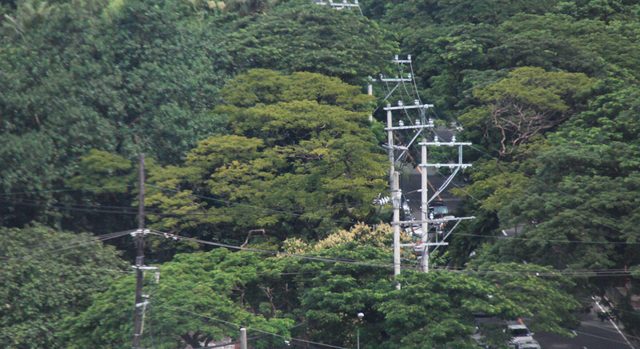
THE National Electrification Administration (NEA) said it will fall short of its 2024 target to electrify 91% of all households, citing inadequate funding.

“Based on the available budget for fiscal year 2024, we will not be able to achieve 91% electrification, but we will only attain 89.36% household electrification rate,” NEA Administrator Antonio Mariano C. Almeda told a Senate budget hearing on Wednesday.

“Assuming funding is not increased, the NEA will be hard-pressed to achieve 100% electrification by 2028,” he added.

The NEA is primarily responsible for rural electrification, bringing electricity to missionary or economically unviable parts of the countryside.

The government hopes to achieve total electrification by 2028.

In the proposed 2025 budget, the NEA is seeking funding of P23.77 billion, including P19.66 billion for electrification projects.

The requested funding is intended to support energization of more than 3,000 sitios, reliability improvement projects, line enhancement of some barangays, installation of nearly 250,000 solar home systems, and rehabilitation and reconstruction of calamity-stricken distribution facilities of electric cooperatives.

Citing the evaluation of the Department of Budget and Management, Mr. Almeda said that the level of subsidy was reduced to P1.86 billion or only 9% of those proposed, which covers the energization of only 594 sitios and four barangays, while procuring 3,700 solar home systems.

“The biggest challenge in the attainment of 100% rural electrification is the inadequate government subsidy to finance the energization of the remaining unenergized areas,” Mr. Almeda said.

Meanwhile, Energy Undersecretary Rowena L. Guevara said that the department will soon be issuing the terms of reference for the upcoming green energy auctions (GEA).

GEA-3 involves geothermal, pumped storage hydro, run-of-river hydro, and impounding hydro projects with a total capacity of 4,399 megawatts (MW).

The GEA program aims to promote renewable energy as a major source of energy through competitive selection. Renewable energy developers compete for incentivized fixed power rates by offering their lowest price for a certain capacity.

“We’re going to be issuing the terms of reference soon… the performance or non-performance of projects will be included,” Ms. Guevara said.

GEA was first conducted in 2022 and attracted 1,966.93 MW worth of bids for renewables, while GEA-2 was held in 2023 and resulted in the award of 3,440.76 MW. — Sheldeen Joy Talavera

IP use by political campaigns could reveal candidates’ integrity, IPOPHL says

PHILSTAR FILE PHOTO

THE Intellectual Property Office of the Philippines (IPOPHL) said the use or misuse of intellectual property (IP) by political campaigns should reveal to voters whether candidates can act with integrity.

“Candidates’ respect for IP rights is a litmus test of their integrity and trustworthiness as future public servants,” IPOPHL Director General Rowel S. Barba said. 

“I don’t think any voter would like to see any copyright owner and artist, especially their favorite artists, deprived of their right to have a say on the use of their work for a political campaign,” he added.

IPOPHL said that candidates have enough time to seek permission from artists “before transforming their works into catchy campaign jingles, slogans, and merchandise to build their political brand.”

The campaign period officially starts next week.

Mr. Barba said that non-compliance may result copyright infringement lawsuits.

IPOPHL Bureau of Copyright and Related Rights Director Emerson G. Cuyo said that the candidates may contact accredited collective management organizations (CMOs) to secure the licenses for the transformation and public performance of works.

“(CMOs) could help facilitate negotiations and licensing arrangements for the transformation, use, or public performance of songs and music, which are the most common types of copyrighted work transformed for local political campaigns,” he added. — Justine Irish D. Tabile

ADB Laguna lakeshore loan expected soon

THE Asian Development Bank (ADB) said it expects to approve $1.2 billion representing the first tranche of the Laguna Lakeshore Road Network (LLRN) project loan before year’s end.

“We are in the last stages of having the Laguna Lakeshore Road Network Project presented to our board for approval,” ADB Country Director for the Philippines Pavit Ramachandran told reporters on the sidelines of an event on Monday.

“We’re looking to have the Laguna Lakeshore Road Network approved later this year.”

Other funders are the Export-Import Bank of Korea ($904.35 million) and the Asian Infrastructure Investment Bank ($188.18 million).

Targeted for completion by 2027, the LLRN consists of a 37.5-kilometer primary road and a 12.0-kilometer viaduct connecting Lower Bicutan, Taguig and Tunasan, Muntinlupa.

It includes a 25.5-kilometer shoreline viaduct and embankment from Tunasan to Calamba, Laguna, and connecting roads to other towns in Laguna.

The LLRN is expected to improve road connectivity from the capital region to areas directly south of it, boosting economic activity in the area.

The ADB will also approve a $500-million contingent disaster facility this year, a stand-by fund that would allow provide access to emergency funds during calamities.

Also for approval this year is a $500-million loan to support public financial management reforms.

For 2025, the ADB is supporting the construction of the Metro Rail Transit Line 4 (MRT-4) as well as flood management projects nationwide. 

“We will be supporting the MRT-4 next year. We have a number of flood disaster resilience projects in several river basins…Tagum, Abra, other river basins in Mindanao and Luzon and other areas.”

The government is seeking a $1-billion loan from the ADB to help fund the MRT-4. It is also proposing $537.4 million in loans from the AIIB.

The MRT-4 is a 10-station commuter railway of about 12.7 kilometers from the Epifanio de los Santos Avenue (EDSA)-Ortigas Ave. junction to Taytay, Rizal. It is expected to serve more than 400,000 passengers daily.

Also up for approval is the $500-million Climate Change Action Program, which would support the transition to a climate-resilient and low-carbon economy.

ADB loans to the Philippines are expected to hit at least $24 billion until 2029, according to the bank’s Country Partnership Strategy.

“Our Country Partnership Strategy is really very focused on supporting the Philippines in its efforts to intensify climate action… Primarily, I think the focus here is on climate resilience and climate adaptation,” Mr. Ramachandran said. 

The ADB is also assisting the government in identifying new public-private partnership projects, and is helping the Bangsamoro Autonomous Region in Muslim Mindanao in drafting its own revenue code, he added. — Beatriz Marie D. Cruz

ERC on track to complete rate reset for grid operator

THE Energy Regulatory Commission (ERC) said it is on track to complete the rate reset process for the National Grid Corp. of the Philippines (NGCP).

At a Senate budget hearing on Wednesday, ERC Commissioner Catherine P. Maceda said the commission is preparing to publish the final draft determination for the NGCP’s fourth regulatory period (RP) within the month.

“We are outlining the draft final determination and hopefully that can be posted within this month,” Ms. Maceda said.

The rate reset process is usually a “forward-looking” exercise that requires the regulated entity to submit forecast expenditures and proposed projects over a five-year regulatory period. The ERC assesses the actual performance of the entity and adjusts rates as needed.

The fourth regulatory period covers the years 2016 to 2022, and includes the lapsed period of two years.

According to the ERC, the 4th RP is “unique because it covers a past period, thus requiring evaluation of historical data on NGCP’s expenditures and performance.”

In November, the ERC capped the revenue that the NGCP is allowed to generate at P36.7 billion a year, well below the annual average of P77.56 billion it applied for Phase 1, based on the commission’s partial initial determination.

The draft final determination will be posted to allow for public comment, Ms. Maceda said.

“The commission will review (the public comment) before deciding on the final determination,” she said. — Sheldeen Joy Talavera

S. Korea trade deal seen producing import tariff savings of up to 30%

REUTERS

PHILIPPINE IMPORTS from South Korea across more than 600 tariff lines are expected to realize tariff savings of up to 30% once the Philippines-South Korea free trade agreement (FTA) takes effect, the Department of Trade and Industry (DTI) said.

DTI Export Marketing Bureau Director Bianca Pearl R. Sykimte added that the deal features substantial Philippine concessions on South Korean motor vehicle parts.

“Korean exports for these products amount to more than $300 million,” Ms. Sykimte said on the sidelines of the Philippines-Korea Business Forum at the Manila Hotel on Monday.

“Importers of these products will benefit from additional tariff savings of about 3%-30% compared to what were provided under the ASEAN-Korea FTA and Regional Comprehensive Economic Partnership (RCEP),” she added.

She said that the impending bilateral FTA will also benefit exporters of banana, canned pineapple and pineapple juice, avocado, guava, papaya, okra, tuna, oysters, blue crab, and octopus, among others.

“The tariffs of these products under the ASEAN-Korea FTA and RCEP are 3%-27% higher compared to those negotiated under our bilateral FTA,” she said.

Aside from market access, she said that the FTA will also allow for economic and technical cooperation between the two countries to strengthen trade, investment, and economic relations.

“Both sides agreed to cooperate in various areas, including industry development, innovation, creative and cultural industries, intellectual property standards, and e-commerce, among others,” she said.

She said that the cooperation may be in the form of information exchange, sharing of best practices, human resource development, exchange of experts, trade and investment promotion, technical assistance, and transfer of technology.

Meanwhile, she said that the Export Development Council is still working on the recalibration of the Philippine Export Development Plan (PEDP).

“We hope that it will come out before the end of the year … because we are still discussing internally the things we need to consider,” she said.

“But still, we are optimistic that we will meet the Philippine Development Plan (PDP) target,” she added.

The PEDP projects merchandise and services exports for 2024 of $143.4 billion, much higher than the $107-billion export target under the PDP.

The Philippine Statistics Authority reported that goods exports in the first seven months amounted to $42.66 billion, a 2.6% increase from a year earlier. — Justine Irish D. Tabile

Indonesia, Vietnam eyed as alternative sources of ginger

SAAD.DA.GOV.PH

FARM GOODS importers have been asked to consider ordering ginger from Indonesia or Vietnam to ensure that the needs of the food industry are met with ginger from China still expensive, the Department of Agriculture (DA) said.

“I’ve asked the importers to look for other sources other than China that have much cheaper prices. We have identified Indonesia and Vietnam,” Agriculture Secretary Francisco P. Tiu Laurel, Jr. told reporters.

The Bureau of Plant Industry (BPI) projects ginger imports of 13,725 metric tons (MT) this year, based on the Sanitary and Phytosanitary Import Clearances (SPSICs) issued as of Oct. 3.

Ginger landed so far totaled 4,248 MT as of that date, with most imports from China.

“Ginger prices in China remain high because it is still not the harvest season. That is why the price of ginger in (the Philippines) is high, because we don’t have that much supply,” Mr. Laurel added. 

The retail price of ginger in Metro Manila markets was reported at between P140 and P300 per kilogram, according to DA price monitors as of Oct. 8.

Separately, Agriculture Assistant Secretary and Spokesperson Arnel V. de Mesa said that the BPI had issues SPSICs for Vietnamese and Indonesian ginger amounting to 50 MT each.

“Most of our imports are from China. When they increase prices, it will definitely affect us. We’re opening up Vietnam and Indonesia so that at least we don’t have only one source,” Mr. De Mesa told reporters.

He said ginger imports from Vietnam and Indonesia are expected to arrive in the next two months.

He cited solid demand for ginger from makers of herbal tea and turmeric tea.” — Adrian H. Halili

UAE’s Masdar pitched on RE investments in PHL


THE Department of Trade and Industry (DTI) said it met with Masdar, the United Arab Emirates (UAE) developer of future-energy projects, to explore investing in renewable energy (RE) in the Philippines.

In a statement on Wednesday, Trade Secretary Cristina A. Roque touted the Philippines as “a rapidly emerging key player in the Asian renewable energy market.”

“We are delighted to partner with Masdar to accelerate the development of solar, wind, and geothermal projects, which are vital to achieving our sustainability and energy security goals,” she added.

Masdar has a goal of developing up to 2 gigawatts of renewable energy capacity in ASEAN by 2025.

In the Philippines, Masdar is exploring opportunities to invest in solar, wind, and geothermal power projects.

“We welcome Masdar’s vision to invest in the Philippines as it aligns perfectly with the vision of President Ferdinand R. Marcos, Jr. for a greener future,” Ms. Roque said.

The Philippine target for the share of RE in the power mix is 35% by 2030 and 50% by 2040. — Justine Irish D. Tabile

Finding ways to reimburse your taxes

One of the greatest fears a commuter occasionally faces is riding a bus on a Monday morning, only to find out that all the cash he has consists of a thousand peso bill. Since there is no option but to pay the fare, he’ll need to pay hoping that he gets change for the P20 cost of the rider. With the destination drawing closer, he starts to feel uneasy about his P980 in change.

Such a situation is not unusual in taxation. At times, taxpayers find themselves paying taxes in excess of what is required. Just like the commuter who hopes to get proper change, the taxpayer also has remedies available to him. The Tax Code provides for two kinds of tax refund: (1) refund of unutilized creditable input VAT under Section 112; and (2) the recovery of any erroneously paid or illegally collected taxes under Section 229. It’s important to know the difference between these, as the applicable rules and requirements will depend on it.

In the Supreme Court (SC) case of Manila Peninsula Hotel, Inc. vs. Commissioner of Internal Revenue (Manila Peninsula case), an opportunity to clarify the differences between the two remedies arose when the taxpayer filed for a tax refund under Section 229 over what it argued to be erroneously paid or illegally collected VAT from its sales to Delta Air.

In its decision, the SC differentiated the provisions according to their nature. Section 112 pertains to unutilized creditable input VAT arising from expenses that are attributable to zero-rated sale transactions. In other words, this is a tax cost incurred by, and legally paid by, a VAT-registered seller of goods, property, or services which are considered zero-rated transactions. In this type of refund case, the input VAT collected is deemed correct and proper. Any input VAT passed over cannot be regarded the same as taxes erroneously paid or collected. This tax refund is a legislative grace in the form of a tax exemption, which is construed against the taxpayer.

On the other hand, Section 229 is limited to recovering taxes that are “erroneously, illegally, excessively, or in any manner wrongfully collected.” A wrongful payment must be present, whether partly or wholly, and should not be legally due. Relating this case to other SC cases, it can be observed that Section 229 is anchored on the principle of unjust enrichment. There is no obligation to pay taxes but, nevertheless, it was paid to and collected by the government. In other words, unlike the other type of refund, Section 229 applies only in instances where there is wrongful payment.

To illustrate how unjust enrichment occurs in the latter type of refund, let’s assume a scenario where a parent company performs management services for its subsidiary. By mistake, the subsidiary withheld taxes on compensation from the management services performed by the parent company’s employees. Since there is no employer-employee relationship between the subsidiary and the parent company’s employees, the subsidiary erroneously withheld tax on compensation and the government has unjustly received taxes. The government received taxes on compensation income when there was no legal duty to collect or right to receive such taxes in the first place, effectively resulting in its unjust enrichment. In this case, Section 229 is a remedy to refund the taxes erroneously paid by the subsidiary.

Another difference between the two remedies is the period to file for a refund before the Commissioner of Internal Revenue (CIR) and the Court. In line with the amendments introduced in the Tax Code by the Ease of Paying Taxes Act, it’s important to distinguish how the refund should be filed. At the administrative level, the refund of unutilized creditable input VAT must be filed within two years after the close of the taxable quarter when the zero-rated sales were made. The CIR is given 90 days to decide on the application, and within 30 days from the denial of the CIR or the lapse of the 90-day period due to inaction from the CIR, the taxpayer may resort to a judicial claim for refund before the Court of Tax Appeals (CTA).

In contrast, for tax refund cases involving taxes erroneously, illegally, excessively, or in any manner wrongfully collected, the application for refund must be filed before the CIR within two years from the payment of the erroneously or excessively collected taxes. Unlike unutilized input VAT, the reckoning point here is the date of actual payment of tax. Moreover, the CIR is given 180 days (not 90) to decide on the tax refund case. Nonetheless, the same rule applies for the judicial elevation, i.e., it should be filed within 30 days from receipt of denial or lapse of the period to decide. For both kinds of refund, the judicial claim assumes the existence of prior administrative application.

As a final note, it is important to understand the differences between the two modes of tax refund as this will dictate the proper procedure to follow. Is it a state privilege to grant or a state burden to reimburse? Either way, it is good to know that our laws give us the chance to get our rightful change back, whether it be from bus fares or taxes. Nonetheless, to do so, taxpayers should be well aware of the rules so that they do not miss out on their right to recover what is due to them.

The views or opinions expressed in this article are solely those of the author and do not necessarily represent those of Isla Lipana & Co. The content is for general information purposes only, and should not be used as a substitute for specific advice.


Francis Jeffrey C. Valerio is an associate of the Tax department of Isla Lipana & Co., the Philippine member firm of the PwC global network.

francis.jeffrey.valerio@pwc.com

Florida residents flee looming catastrophe as Milton approaches

CLOUDS roll over Tampa Bay in downtown St. Petersburg, Florida, which could sustain a level of storm surge during the arrival of Hurricane Milton, US, Oct. 8, 2024. — REUTERS

TAMPA, Florida — Floridians on Wednesday had one final day to evacuate or hunker down ahead of the Category 5 Hurricane Milton, potentially one of the most destructive ever to hit the Gulf Coast of Florida.

With more than one million people in coastal areas under evacuation orders, those fleeing for higher ground clogged highways and gas stations ran out of fuel, further rattling a region still recovering from the devastating impacts of Hurricane Helene less than two weeks ago.

The storm was on a collision course for the Tampa Bay metropolitan area, home to more than three million people, though forecasters said the path could vary before the storm makes landfall late Wednesday night or early Thursday morning.

The storm is on a rare west-to-east path through the Gulf of Mexico and is likely to bring a deadly storm surge of 10 feet (3 meters) or more to much of Florida’s Gulf Coast.

Officials from US President Joseph R. Biden to Tampa Mayor Jane Castor warned people in evacuation zones to get out or risk death.

Michael Tylenda, who was visiting his son in Tampa, said he was heeding that advice.

“If anybody knows anything about Florida, when you don’t evacuate when you’re ordered to, you can pretty much die,” Mr. Tylenda said. “They’ve had a lot of people here stay at their homes and they end up drowning. It’s just not worth it. You know, the house can be replaced. The stuff can be replaced. So it’s just better to get out of town.”

Milton packed maximum sustained winds of 160 mph (260 kph), the US National Hurricane Center said, putting it at the highest level on the five-step Saffir-Simpson scale.

While wind speeds could drop and downgrade Milton to a lesser category, the size of the storm was growing, putting ever more coastal areas in danger.

At 10 p.m. CDT (0300 GMT), the eye of the storm was 405 miles (650 km) southwest of Tampa, moving northeast at 12 mph (19 kph).

Milton was expected to maintain hurricane strength as it crosses the Florida peninsula, posing storm surge danger on the state’s Atlantic Coast as well.

About 2.8% of US gross domestic product is in the direct path of Milton, said Ryan Sweet, chief US economist at Oxford Economics. Airlines, energy firms and a Universal Studios theme park were among the companies beginning to halt their Florida operations as they braced for disruptions.

Milton became the third-fastest intensifying storm on record in the Atlantic, growing from a Category 1 to a Category 5 in less than 24 hours.

“These extremely warm sea surface temperatures provide the fuel necessary for the rapid intensification that we saw taking place to occur,” said climate scientist Daniel Gilford of Climate Central, a nonprofit research group. “We know that as human beings increase the amount of greenhouse gasses in the atmosphere, largely by burning fossil fuels, we are increasing that temperature all around the planet.”

More than a dozen coastal counties issued mandatory evacuation orders, including Tampa’s Hillsborough County. Pinellas County, which includes St. Petersburg, ordered the evacuation of more than 500,000 people. Lee County said 416,000 people lived in its mandatory evacuation zones.

Mobile homes, nursing homes and assisted living facilities also faced mandatory evacuation.

In Fort Myers, mobile home-dweller Jamie Watts and his wife took refuge in a hotel after losing their previous trailer to Hurricane Ian in 2022.

“My wife’s happy. We’re not in that tin can,” Mr. Watts said.

“We stayed during Ian and literally watched my roof tear off my house and it put a turmoil in us. So this time I’m going to be a little safer,” he said.

Bumper-to-bumper traffic choked roads leading out of Tampa on Tuesday, when about 17% of Florida’s nearly 8,000 gas stations had run out of fuel, according to fuel markets tracker GasBuddy. — Reuters

ASEAN holds summit in Laos as Thailand floats new plan for Myanmar crisis

THE Association of Southeast Asian Nations (ASEAN) Summit is being held in Laos. — REVOLI S. CORTEZ/PPA POOL

VIENTIANE, Laos — Southeast Asian leaders met in Laos on Wednesday for a summit expected to find ways of tackling a worsening civil war in Myanmar, with Thailand set to propose a new path for a political solution after a regional peace effort made scant progress.

Chaos has prevailed in Myanmar since a 2021 military coup sparked a nationwide rebellion and a civil war that has ravaged the nation of 55 million. The ruling junta has so far refused to hold talks with its opponents, whom it calls terrorists.

Thailand offered this week to host an “informal consultation” of the 10 members of the Association of Southeast Asian Nations (ASEAN) in December to try to find a way out of the intractable conflict that has displaced millions of people.

“We want to see a political solution,” Nikorndej Balankura, a spokesperson of Thailand’s foreign ministry, told reporters.

“Thailand is ready to coordinate with all other member countries so there would be a concerted ASEAN effort that could lead to peace in Myanmar.”

Thailand’s initiative would complement existing ASEAN peace efforts, but may not immediately involve countries beyond the region, he added.

The proposal, floated at Tuesday’s meeting of ASEAN foreign ministers, comes as the bloc runs low on options to tackle the Myanmar crisis.

There has been no progress on its “Five-Point Consensus” peace plan unveiled months after the coup, or a drive by Indonesia to persuade anti-junta groups to start dialogue.

In previous months, Thailand has suggested that Myanmar’s other influential neighbors, China and India, might play a role in the peace effort, but the latest plan is limited to the ASEAN bloc.

Any decision on whether Myanmar’s ruling generals or their opponents would be invited to the informal talks would be up to ASEAN chair Laos and the other member states, Mr. Nikorndej added.

‘VIRTUALLY ZERO PROGRESS’
Myanmar’s civil war and troubles in the disputed South China Sea are key issues set to dominate the ASEAN leaders’ meeting in Vientiane, which will be followed by two days of summits with premiers and top diplomats from regional and world powers.

US Secretary of State Antony Blinken, Indian Prime Minister Narendra Modi, Japanese premier Shigeru Ishiba, Chinese premier Li Qiang and Russian Foreign Minister Sergei Lavrov are among those set to attend.

Opening Wednesday’s summit, Laos Prime Minister Sonexay Siphandone said ASEAN faced many challenges and had its own ways to tackle them.

“Laos deems that ASEAN’s past successes are due to our understanding of among each other,” he said. “We help each other, and co-operate with each other, with an ASEAN way and principles. “

Ahead of Mr. Blinken’s trip, the United States’ top diplomat for East Asia, Daniel Kritenbrink, told reporters there had been “virtually zero progress” in efforts to get Myanmar’s junta to reduce violence, free political prisoners and talk to the democratic opposition. 

“The secretary will continue to emphasize to partners in the region that we must keep up pressure on the regime,” he said, of Mr. Blinken’s visit.

Since ASEAN has barred the Myanmar generals from its summits until they can meet requirements of the peace plan, the country is represented in Laos by a senior foreign ministry official.

Mr. Nikorndej said Myanmar’s representative urged ASEAN foreign ministers on Tuesday to understand and sympathize with the military government and use more “moderate language” in discussing the crisis.

ASEAN must not bend to accommodate the junta’s demands, including recognizing its own five-step “roadmap” for what is expected to be a one-sided election, however, former Thai diplomat Korbsak Chutikul warned.

“Care must be exercised not to be roped into going along with Myanmar’s own five-point plan, like to hold elections next year for a semblance of legitimacy,” Mr. Korbsak added. — Reuters

Most Taiwanese believe China unlikely to invade in coming five years — poll

REUTERS

TAIPEI — Most Taiwanese believe China is unlikely to invade in the coming five years but do see Beijing as a serious threat to the democratic island, a poll by Taiwan’s top military think tank showed on Wednesday.

Over the past five years or so, China’s military has significantly ramped up its activities around Taiwan, which Beijing views as its own territory over the strong objections of the government in Taipei, and has never renounced the use of force to bring the island under its control.

The survey of around 1,200 people conducted last month by the Institute for National Defence and Security Research showed 61% of people think it was “unlikely or very unlikely” that China would attack Taiwan in the coming five years.

“Most people do not think China’s territorial ambitions will manifest themselves in the form of attacking Taiwan,” said Christina Chen, an INDSR researcher.

Taiwan’s people are also concerned about other Chinese threats, including military drills and propaganda campaigns, she said.

“Most people see China’s territorial ambitions as a serious threat,” Ms. Chen said.

The poll presents a contrast to a warning by the head of US Central Intelligence Agency, who said last year that Chinese President Xi Jinping had ordered his military to be ready to conduct an invasion of Taiwan by 2027.

“That means Taiwanese people are aware of the threat but remain calm and rational with the expectations of an imminent war,” the INDSR said.

More than 67% of respondents to the poll said they would fight back if China attacked, but were split almost evenly on whether Taiwan’s armed forces were capable of defending the island, half expressing confidence and half no confidence.

Lee Kuan-chen, another INDSR researcher, said Taiwan’s military should continue to boost its defense capacity to build public trust.

The poll also showed a split in opinion on whether the United States would help defend Taiwan.

While some 74% believed the US government was likely to “indirectly” help Taiwan by providing food, medical supplies and weapons, only 52% thought the US military would dispatch its armed forces to intervene, the poll showed.

Lee said Taiwan’s government should be more transparent about Taiwan-U.S. security cooperation.

“That way, people will not have expectations that are too high or too low on U.S. assistance,” Lee said.

U.S. President Joe Biden has upset the Chinese government with comments that appeared to suggest the United States would defend Taiwan if it were attacked, a deviation from a long-held U.S. position of “strategic ambiguity”. — Reuters

North Korea’s Army says to completely cut road and rail links to South Korea

A NORTH KOREAN SOLDIER looks toward the south as a South Korean soldier stands guard in the truce village of Panmunjom inside the Demilitarized Zone (DMZ) separating the two Koreas, South Korea, Aug. 28, 2019. — REUTERS/KIM HONG-JI/POOL

SEOUL — North Korea’s Army said it will completely cut off roads and railways connected to South Korea starting from Wednesday, and fortify the areas on its side of the border, state media KCNA reported.

The announcement heralds a further escalation in activity close to the demarcation line separating the two Koreas, which had been rare in recent years until this year.

North Korea had already been installing landmines and barriers and creating wasteland along the heavily militarized border for months this year despite accidents, South Korea’s military said in July.

The General Staff of the Korean People’s Army said in a statement carried by KCNA that this was a response to war exercises that have been held in South Korea, which it called “the primary hostile state and invariable principal enemy,” as well as frequent visits by US strategic nuclear assets in the region.

South Korea’s defense ministry said in a statement that the United Nations Command (UNC) has been notified of the matter, but declined to give specifics.

South Korea is in close communication and cooperation with UNC concerning North Korea’s announcement, the ministry added.

The US-led UNC is a multinational military force and oversees affairs in the Demilitarized Zone (DMZ) between the two Koreas, which remain technically at war. — Reuters